

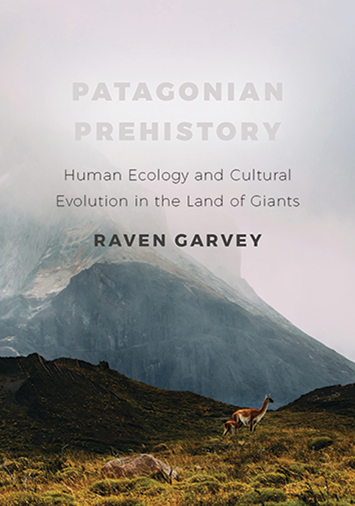
This book addresses the prehistory of Patagonia (35–55°S). The author argues that Patagonia and its archaeological record should be seen as indispensable in studies of hunter-gatherers, human ecology and cultural evolution. This is because it is one of the few places in the world where groups maintained a clearly extractive economy, based on hunting and gathering, and a relatively egalitarian social organisation until the European conquest, and because it is the furthest place in the Americas from Siberia, from where the continent's first inhabitants migrated.
The study focuses on three key periods for regional populations: the initial colonisation of the territory during the Pleistocene–Holocene transition (Chapter 4), population dynamics during the Middle Holocene (Chapter 5) and the long-term maintenance of a foraging economy during the Late Holocene, until the Spanish conquest, c. AD 1550 (Chapter 6). The author approaches these topics by combining two evolutionary paradigms: human behavioural ecology and co-evolutionary theory (Chapter 3). Archaeological data are evaluated through macroecological, microeconomic (the diet breadth model, marginal value theorem and ideal free distribution) and co-evolutionary models.
The author provides a clear introduction (Chapter 1) that details the organisation of the book, the main content of each chapter, the objectives of the volume, and its theoretical and methodological framework. Next, Garvey describes the characteristics of the physical environment, emphasising human-environmental interactions (Chapter 2). Throughout the study, the author emphasises the need to estimate empirically the impact of the environment on human adaptation through theoretical and methodological models. This chapter provides general information about the climatic conditions, which have generated a mosaic of very different environments in Patagonia. Based on the environment, physical characteristics, available resources and the cultural influence on carrying capacity, Garvey asserts that Patagonia is only marginal in the sense that it is geographically isolated (Chapters 2 and 7).
The book's main database comprises 1840 radiocarbon dates, which include the author's own studies, as well as dates from publications by other researchers (Chapter 2). The dates cover a broad period spanning the last 15 000 years. Figures 2.19 and 2.20 (pp. 48–49) clearly illustrate the unequal spatial and temporal distribution of the data; the frequency of dates increases with time. Although this may indicate population growth, the author invites us to consider the effects produced by research bias and taphonomy. Garvey suggests that small populations with slow growth were the result of reciprocal relationships between demography and technology (Chapter 7).
The book fully covers the many hypotheses for the initial colonisation of the Americas (Chapter 4), which brings focus to current discussions and the difficulty of finding early sites. Garvey highlights the impact of a lack of research in vast portions of this region, as well as the poor preservation of early sites. The volume evaluates the available archaeological data on the initial occupation of Patagonia with two ideal free-distribution models: calorie maximisation and risk minimisation. The theoretical assumptions and archaeological expectations of each model are explained in detail. The results suggest that the steppe—rich in hunting resources—was the first region to be colonised around 15 000 cal BP, while the forests were occupied later, c. 10 500 cal BP. The analysis questions the speed of the initial colonisation by interrogating new lines of evidence. Clothing, for example, is considered to be part of the subsistence toolkit, since it brings people a series of advantages. There is an absence of evidence for clothing production tools, such as needles and awls, in Patagonia. This, combined with the evidence of physiological adaptations to cold among Fuegian groups, suggests that colonisation was sufficiently slow for this technology and knowledge to be lost along the way.
Population dynamics during the Middle Holocene (9000–4500 cal BP) is the second major topic (Chapter 5). The archaeological record of Patagonia is intermittent, and the author evaluates its gaps by examining a case study in the extreme north of Patagonia (in the south of the Province of Mendoza). The study reviews current proposals that explain a contemporaneous drop in date frequency, which suggests a population decrease or widespread spatial reorganisation in occupation. Garvey argues that the lack of data is due to research biases, as radiocarbon dating has focused on rockshelters, while long-term sites near available water may have been lost due to shifting water courses. The gaps in the Middle Holocene dates, therefore, may be due either to biased sampling, which favours rockshelters over other settlement types because they offer better preservation (and therefore misses occupation elsewhere), or to a reduced occupation of rockshelters, because they are too far from water.
Regarding subsistence, the reasons for the non-invention or non-adoption of agriculture in Patagonia are explored in Chapter 6. Garvey highlights the intriguing nature of this area, the inhabitants of which interacted with farmers to the north (up to a latitude of 34°S) for nearly 2000 years; the area was never subsumed by the Inca empire, which stopped advancing when it reached the northern border of Patagonia. The author evaluates proposals that seek to explain this phenomenon, focusing on the dichotomy of impossible farming vs. unnecessary farming, and proposing an alternative explanation: that the shift to a production economy requires radical social and cultural transformations that constitute an ‘adaptive peak’. This entails individual risk management, storage and a private property system.
This volume is an important contribution to studies of the human occupation of Patagonia in particular, and of hunter-gatherer groups in general, as the author addresses central themes for anthropology. It is an excellent book that seeks to understand the diverse adaptations of human groups that arise from the interactions between culture, demography and environment.


