Metabolic syndrome (MetS) is a clustering of cardiometabolic risk factors including abdominal obesity, elevated blood pressure, dyslipidemia, and insulin resistance (Alberti, Zimmet, & Shaw, Reference Alberti, Zimmet and Shaw2006; Cornier et al., Reference Cornier, Dabelea, Hernandez, Lindstrom, Steig, Stob and Eckel2008). Approximately a quarter of the world's population meets diagnostic criteria for MetS (Cornier et al., Reference Cornier, Dabelea, Hernandez, Lindstrom, Steig, Stob and Eckel2008; Grundy, Reference Grundy2016; Park et al., Reference Park, Zhu, Palaniappan, Heshka, Carnethon and Heymsfield2003), and its prevalence is projected to continue to rise (Grundy, Reference Grundy2008; Hossain, Kawar, & El Nahas, Reference Hossain, Kawar and El Nahas2007). Furthermore, MetS is often comorbid with several conditions that can be disabling in their own right, including psychopathology (e.g., depression), sleep apnea, and reproductive disorders (Grundy, Reference Grundy2008). MetS is also associated with greater mortality risk, with those diagnosed with MetS having a 2-fold increased risk of cardiovascular events or death (Gami et al., Reference Gami, Witt, Howard, Erwin, Gami, Somers and Montori2007) and a fivefold increased risk of incident type 2 diabetes mellitus (Cornier et al., Reference Cornier, Dabelea, Hernandez, Lindstrom, Steig, Stob and Eckel2008), which increases odds of mortality 1.8-fold (Emerging Risk Factors Collaboration, 2011).
Socioeconomic disparities in MetS prevalence have been observed worldwide, in both developed countries, such as the United States (Park et al., Reference Park, Zhu, Palaniappan, Heshka, Carnethon and Heymsfield2003), United Kingdom (Brunner et al., Reference Brunner, Marmot, Nanchahal, Shipley, Stansfeld, Juneja and Alberti1997), and Finland (Silventoinen, Pankow, Jousilahti, Hu, & Tuomilehto, Reference Silventoinen, Pankow, Jousilahti, Hu and Tuomilehto2005), and developing nations, such as Korea (Park, Yun, Lee, Cho, & Park, Reference Park, Yun, Lee, Cho and Park2007) and Tunisia (Gannar et al., Reference Gannar, De León, Díaz, Del, Rodríguez, Rodríguez and Attia2015). There is also increasing recognition that these disparities emerge early in life (Faienza, Wang, Fruhbeck, Garruti, & Portincasa, Reference Faienza, Wang, Fruhbeck, Garruti and Portincasa2016; Pervanidou & Chrousos, Reference Pervanidou and Chrousos2012), and that early disadvantage forecasts adult patterns of disease (Choi, Lee, Chun, & Lee, Reference Choi, Lee, Chun and Lee2014; Gustafsson & Hammarström, Reference Gustafsson and Hammarström2012; Gustafsson, Persson, & Om, Reference Gustafsson, Persson and Om2011; Lehman, Taylor, Kiefe, & Seeman, Reference Lehman, Taylor, Kiefe and Seeman2005; Non et al., Reference Non, Rewak, Kawachi, Gilman, Loucks, Appleton and Kubzansky2014; Tamayo, Christian, & Rathmann, Reference Tamayo, Christian and Rathmann2010). Most studies, however, show that early life socioeconomic status (SES) predicts MetS independently of adult SES (Chichlowska et al., Reference Chichlowska, Rose, Diez-Roux, Golden, McNeill and Heiss2009; Langenberg, Kuh, Wadsworth, Brunner, & Hardy, Reference Langenberg, Kuh, Wadsworth, Brunner and Hardy2006; Lawlor, Ebrahim, & Smith, Reference Lawlor, Ebrahim and Smith2002; Lehman et al., Reference Lehman, Taylor, Kiefe and Seeman2005; Non et al., Reference Non, Rewak, Kawachi, Gilman, Loucks, Appleton and Kubzansky2014; Parker et al., Reference Parker, Lamont, Unwin, Pearce, Bennett, Dickinson and Craft2003; Schooling et al., Reference Schooling, Jiang, Lam, Zhang, Cheng and Leung2008, but see Lucove, Kaufman, & James, Reference Lucove, Kaufman and James2007, for a contrary result). In an earlier analysis of the data set used in the present report, we found a stronger role for early life SES in explaining adult metabolic risk compared to current SES (Hostinar, Ross, Chen, & Miller, Reference Hostinar, Ross, Chen and Miller2017). MetS prevalence was assessed in four groups of adults who, by design, were stratified by early life and current SES. Across three distinct operational definitions of MetS, we found consistent evidence that those experiencing low early life SES exhibited greater metabolic risk in adulthood relative to high early life SES individuals, whereas the main effects of current SES were nonsignificant across all models tested. This finding motivated our current follow-up exploration of possible moderating and mediating pathways explaining the association between low early life SES and metabolic risk.
Although prior research suggests an association between low early life SES and increased risk for MetS, not all individuals exposed to low early life SES go on to develop MetS. For example, analyses from the national Midlife in the United States study found an association between early life disadvantage and MetS prevalence in adulthood (Miller, Lachman, et al., Reference Miller, Lachman, Chen, Gruenewald, Karlamangla and Seeman2011). However, the later metabolic risks were only apparent in about 50% of those exposed to low childhood SES (Miller, Lachman, et al., Reference Miller, Lachman, Chen, Gruenewald, Karlamangla and Seeman2011). Findings like these suggest that vulnerability and protective factors exist that moderate the metabolic risks of disadvantaged youth (Chen & Miller, Reference Chen and Miller2013). In particular, parental nurturance and positive caregiving may be one such protective factor. For instance, early life maternal warmth buffers against the effects of low SES on allostatic load in adolescence (Evans, Kim, Ting, Tesher, & Shannis, Reference Evans, Kim, Ting, Tesher and Shannis2007), proinflammatory signaling in adulthood (Chen, Miller, Kobor, & Cole, Reference Chen, Miller, Kobor and Cole2011), and metabolic risk in middle and old age (Miller, Lachman, et al., Reference Miller, Lachman, Chen, Gruenewald, Karlamangla and Seeman2011). In adolescents, perceived emotional support from parents, peers, and mentors buffers against cardiometabolic risk associated with neighborhood poverty (Brody, Lei, Chen, & Miller, Reference Brody, Lei, Chen and Miller2014, but see Doom, Gunnar, & Clark, Reference Doom, Gunnar and Clark2016, for contrary evidence). These observations raise questions about the psychobiological characteristics that early caregiving instantiates.
Research on early life attachment patterns has shown that receiving sensitive, responsive, and consistent caregiving teaches children that they live in a safe, predictable environment where their needs will be met (Ainsworth, Bell, & Stayton, Reference Ainsworth, Bell, Stayton and Richards1974). This leads to secure attachment patterns, which are linked to a wide range of positive developmental outcomes later on, including better emotion-regulation skills, higher self-esteem, and competent social relationships across multiple contexts (Carlson, Sroufe, & Egeland, Reference Carlson, Sroufe and Egeland2004; Sroufe, Egeland, Carlson, & Collins, Reference Sroufe, Egeland, Carlson and Collins2005). Children who are securely attached to their parents also show dampened hypothalamus–pituitary–adrenal (HPA) stress responses when their parents are present (for a review, see Hostinar, Sullivan, & Gunnar, Reference Hostinar, Sullivan and Gunnar2014). Furthermore, animal models support a causal role of high-quality early caregiving in programming fear and stress-response systems later in life via epigenetic mechanisms (Meaney & Szyf, Reference Meaney and Szyf2005). Conversely, children experiencing insensitive or abusive care are more likely to show patterns of cognitive processing and social–emotional development that suggests they are hypervigilant to threat (Cicchetti & Valentino, Reference Cicchetti, Valentino and Masten2007; Dodge & Pettit, Reference Dodge and Pettit2003; Pollak, Reference Pollak2008).
In turn, frequent activations of threat-response systems like the HPA axis, autonomic nervous system (ANS), and immune system are thought to contribute to metabolic dysfunction through multiple mechanisms (Abraham, Brunner, & Eriksson, Reference Abraham, Brunner and Eriksson2007; Brunner et al., Reference Brunner, Hemingway, Walker, Page, Clarke, Juneja and Marmot2002; Dallman, Reference Dallman2010; Hotamisligil, Reference Hotamisligil2006; Kyrou & Tsigos, Reference Kyrou and Tsigos2009). For example, elevated levels of glucocorticoids promote increased motivation for food and storage of fat in abdominal regions rather than subcutaneously (Abraham et al., Reference Abraham, Brunner and Eriksson2007; Dallman, Reference Dallman2010); dysregulation of the ANS can contribute to high blood pressure and insulin resistance (Abraham et al., Reference Abraham, Brunner and Eriksson2007; Kyrou & Tsigos, Reference Kyrou and Tsigos2009); and low-grade inflammation and obesity can potentiate each other over time (Hotamisligil, Reference Hotamisligil2006; Kyrou & Tsigos, Reference Kyrou and Tsigos2009). There is also increasing recognition of bidirectional transactions between the brain and peripheral physiology (i.e., HPA axis, ANS, and immune system) such that neural and peripheral threat-response systems can amplify each other's activity over time (Gianaros & Manuck, Reference Gianaros and Manuck2010; Nusslock & Miller, Reference Nusslock and Miller2016). These findings suggest that factors that shape threat vigilance might play an important role in explaining individual differences among those growing up in low-SES environments, leaving some vulnerable and others protected against metabolic risk.
Though we have emphasized threat vigilance as an individual difference factor (i.e., a moderator), it could also be conceptualized as a mediator of the SES–MetS association. In this scenario, children raised in low-SES contexts develop enhanced vigilance to threat, which in turn negatively affects components of MetS over time. There is some empirical support for this mediational scenario. Low SES has been linked to heightened threat responses at multiple levels of analysis, including psychological processes, peripheral physiology, and neural activity patterns. Psychologically, low-SES children, adolescents, and young adults show a higher propensity to provide threatening interpretations of ambiguous situations (Chen, Langer, Raphaelson, & Matthews, Reference Chen, Langer, Raphaelson and Matthews2004; Chen & Matthews, Reference Chen and Matthews2001, Reference Chen and Matthews2003). Physiologically, they also tend to exhibit greater cardiovascular reactivity to acute stressors or challenges (Gump, Matthews, & Räikkönen, Reference Gump, Matthews and Räikkönen1999; Jackson, Treiber, Turner, Davis, & Strong, Reference Jackson, Treiber, Turner, Davis and Strong1999; Treiber, Harshfield, Davis, Kapuku, & Moore, Reference Treiber, Harshfield, Davis, Kapuku and Moore1990) and greater cortisol output (Evans & English, Reference Evans and English2002; Lupien, King, Meaney, & McEwen, Reference Lupien, King, Meaney and McEwen2000). At the neural level, SES indices have also been associated with structural or functional alterations in neural regions involved in threat processing and regulation, including the amygdala, hippocampus, and prefrontal cortex (Brito & Noble, Reference Brito and Noble2014; Hackman & Farah, Reference Hackman and Farah2009; Hackman, Farah, & Meaney, Reference Hackman, Farah and Meaney2010; McEwen & Gianaros, Reference McEwen and Gianaros2010). In particular, low childhood SES has been associated with greater amygdala reactivity to threatening cues (fearful or angry facial expressions; Gianaros et al., Reference Gianaros, Horenstein, Hariri, Sheu, Manuck, Matthews and Cohen2008; Javanbakht et al., Reference Javanbakht, King, Evans, Swain, Angstadt, Phan and Liberzon2015; Muscatell et al., Reference Muscatell, Morelli, Falk, Way, Pfeifer, Galinsky and Eisenberger2012). Low-SES individuals also exhibit lower activation of prefrontal areas during emotion-regulatory tasks (Kim et al., Reference Kim, Evans, Angstadt, Ho, Sripada and Swain2013), suggesting that top-down cognitive mechanisms may not control negative affect as effectively. A few studies have linked threat responses to health-relevant outcomes and explicitly found evidence for a mediation model, whereby threat responsivity mediates the association between low SES and components of MetS, such as blood pressure (Chen et al., Reference Chen, Langer, Raphaelson and Matthews2004; Chen & Matthews, Reference Chen and Matthews2001; Gump et al., Reference Gump, Matthews and Räikkönen1999).
The Present Study
Most theories of how low early life SES promotes poor health across the life span propose a role for threat responses and their neurobiological correlates (e.g., Evans & Kim, Reference Evans and Kim2010; McEwen & Gianaros, Reference McEwen and Gianaros2010; Miller, Chen, & Parker, Reference Miller, Chen and Parker2011; Taylor, Lerner, Sage, Lehman, & Seeman, Reference Taylor, Lerner, Sage, Lehman and Seeman2004). However, it is unresolved whether threat vigilance acts as a moderator or mediator of the association between low early life SES and MetS risk. The current study tested both moderator and mediator models of threat vigilance to further understand associations between early life SES and adult cardiometabolic risk in a sample of 325 healthy participants.
Method
Participants
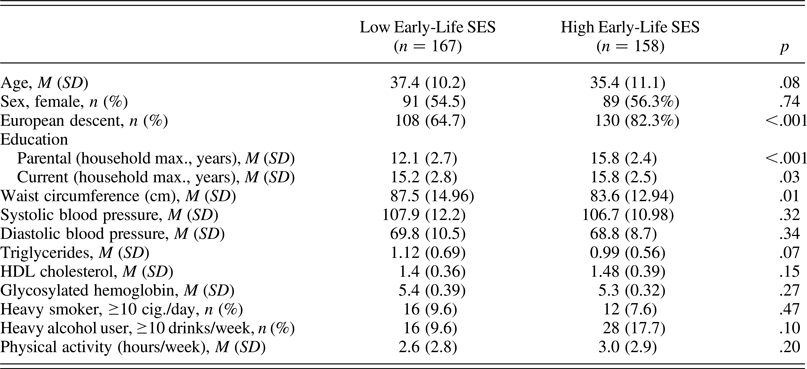
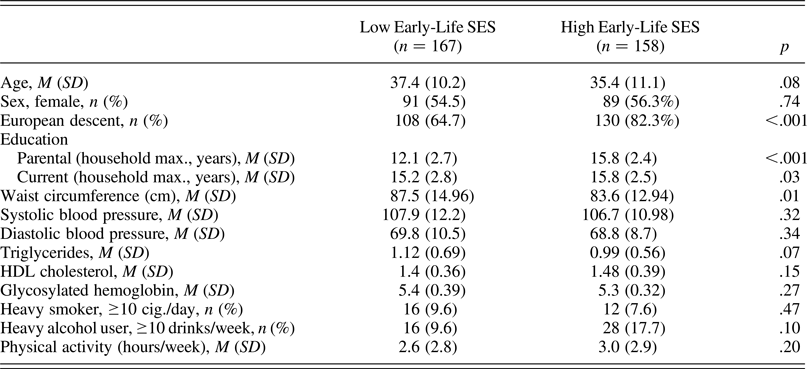
The study recruited 360 participants from Vancouver, British Columbia, Canada through postings in local media and public transit. Recruitment and testing was conducted between February 2009 and May 2012. Only 9.7% of the sample (N = 35) had missing data for any of the variables of interest in the present analysis; thus, results are presented for N = 325. These 325 participants were between the ages of 15 and 55 (M = 36.4 years, SD = 10.7; 55.4% female; 73.2% Caucasian, 14.8% Asian, and 12% other) and recruited to fit into one of four groups defined by early life (low vs. high) and adulthood (low vs. high) SES (see Measures section and participant characteristics in Table 1). To minimize confounding by health status, participants had to be (a) free of infectious disease in the 2 weeks before testing, as evidenced by self-report and a normal complete blood count, and (b) without a history of serious and chronic medical illnesses including, but not limited to, cancer, diabetes mellitus, heart disease, stroke, autoimmune disease, HIV/AIDS, hepatitis, chronic obstructive pulmonary disorder, asthma, schizophrenia, bipolar disorder, and dementia. Participants who presented with acute infections were rescheduled after the signs had resolved. Candidates were also screened out if they were not fluent in English, if they were pregnant, or if they had been pregnant in the prior year.
Characteristics of the sample (N = 325)
Of the 2,880 individuals who responded to study advertisements, 417 met all of the eligibility criteria described above, and volunteered to participate after learning about the study details. A total of 360 subsequently attended their scheduled laboratory session and 325 (90.3%) had complete measures for the research questions included in this report. The project was approved by the University of British Columbia's Research Ethics Board, and all participants gave written informed consent.
Procedure
All participants completed laboratory sessions between 8:00 a.m. and 10:00 a.m. following an overnight fasting period. After study details were explained, participants gave written consent, and had blood drawn by antecubital venipuncture to measure MetS components (see below). Participants also completed a battery of self-report measures and behavioral tasks, and had their height, weight, and waist circumference measured (see details in Measures).
Measures
SES
Participants were recruited based on their early life and current SES, as defined by occupational status ratings derived from the United Kingdom's National Statistics Socio-Economic Classification. This system is used widely in epidemiology and has been updated regularly since 1911, allowing for comparability to previous research. It is also well suited to the Canadian social structure. Occupational status was also chosen because it is often a more visible aspect of SES than educational attainment, and people can more reliably recall their parents' occupations than income or education.
The National Statistics Socio-Economic Classification system is highly standardized, coding occupational status using industry, occupation title, occupation description, self-employment status, supervisor status, and number of employees in the company/organization. It also provides specific procedures in case one piece of information among these is unavailable. Occupations were graded on an 8-point scale, which was reduced into three superordinate categories of low, middle, and high SES. Volunteers from either low or high SES categories for both childhood and current SES were enrolled. Low SES included routine and manual occupations, those who never worked, and the long-term unemployed. This included positions such as cleaners, laborers, and transportation operatives. High SES included higher managerial and professional occupations, such as architects, engineers, and medical practitioners. For early life SES, we coded parental occupational status during the participant's first 5 years of life, using the higher of mother's versus father's ratings. To classify current SES, we coded their occupational status over the past 5 years, as well as that of their romantic partner (the higher of the two ratings was used). A small minority of the subjects in our study were ages 15–23 (10.5%) and were full-time students, financially supported by their families. For these cases, we used parental occupation to categorize current SES, unless the subject was financially independent. All recruiters received extensive training prior to using this system. Coding consistency was regularly checked, and discrepancies were resolved by consensus.
Metabolic outcomes
Blood pressure was assessed with an automated oscillometric device (BpTRU, VSM Medtech, Burnaby, British Columbia, Canada) while participants were seated in a comfortable chair. An initial reading was taken to acclimate participants to the procedure, but these data were not used in analysis. Three subsequent readings were taken at 2-min intervals, and their average was used for analysis. Cronbach αs for systolic blood pressure and diastolic blood pressure measures were 0.93 and 0.95, respectively.
Waist circumference (cm) was read at the midpoint between the upper iliac crest and lower costal margin at the midaxillary line. Measures were taken at least twice, or until a consistent measure was obtained.
Fasting blood samples were obtained for the assessment of glycosylated hemoglobin, triglycerides, and HDL cholesterol. A trained phlebotomist collected overnight fasting blood samples via antecubital venipuncture into Serum Separator and EDTA-treated tubes (Becton-Dickinson, Oakville, Ontario, Canada). Serum Separator tubes were left standing for 60 min prior to being centrifuged at 1000 g for 10 min, as per manufacturer's instructions. Serum was harvested and stored at –30 °C. EDTA-treated whole blood samples were stored at 4 °C. Samples were assayed in batch at St. Paul's Hospital Clinical Trials Laboratory, Vancouver, Canada. Glycosylated hemoglobin was measured in whole blood from EDTA-treated tubes via a Bio Rad D-10 ion exchange chromatography method (Bio-Rad Laboratories Inc., Hercules, CA). Assays yield the percentage of hemoglobin that is glycosylated out of total hemoglobin, with greater values indicating higher blood glucose exposure over the past 3 months. The lower range of detection was 1.2%, with an interassay coefficient of variation of 1.2%. Triglycerides were determined enzymatically on a Hitachi 747 (KyowaMedex, Tokyo) after hydrolysis to glycerol. This method has an interassay coefficient of variation of 1.1%. Fasting HDL was assayed in serum. Standard enzymatic techniques using cholesterol esterase and cholesterol oxidase were used, after low-density, intermediate density, and very-low density lipoproteins had been precipitated through centrifugation. Assays were done on a Hitachi 911 instrument (Kyowa Medex, Japan). The interassay coefficient of variation was 5.1%, and the lower limit of detection was 0.189 mmol/L.
We used the worldwide definition of MetS provided by the International Diabetes Federation (IDF; Alberti et al., Reference Alberti, Zimmet and Shaw2006; Cornier et al., Reference Cornier, Dabelea, Hernandez, Lindstrom, Steig, Stob and Eckel2008), which recommends racial/ethnic and sex-specific cutoffs to evaluate the presence of MetS components and overall syndrome diagnosis. The five MetS components (central adiposity, raised blood pressure, triglyceride and glucose levels, and low HDL levels) were assessed during laboratory visits. As recommended by IDF, waist circumference cutoffs for central adiposity were ≥94 cm for men and ≥80 cm for women of Europid and African descent, and ≥90 cm for men and ≥80 cm for women of Asian (including Asian Indian) descent, for Ethnic South and Central Americans, and Aboriginal Canadians. The 18 participants of mixed racial backgrounds fit the same diagnostic classification regardless of which racial origin was used for the cutoff. Following IDF criteria, the cutoff for raised blood pressure was defined as systolic readings ≥130 or diastolic readings ≥85 mmHg. Cutoffs for blood-derived biomarkers were as follows: triglyceride levels ≥1.7 mmol/l, and HDL levels <1.03 mmol/L in males and <1.29 mmol/l in females. The fifth criterion specified by IDF is raised plasma glucose (≥100) or a diagnosis of diabetes. We deliberately excluded individuals with diabetes from participation, and raised plasma glucose was not measured. In its place, we use glycosylated hemoglobin, which research shows is an accurate surrogate when a cutoff of ≥5.7% is used (Ong et al., Reference Ong, Tso, Lam, Cherny, Sham and Cheung2010).
For analyses, we considered three sets of outcome variables: a binary variable indicating whether the participant met the IDF case definition for MetS; a count of the MetS components for which the participant met IDF cutoffs; and a continuous measure of metabolic function obtained by extracting factor scores reflecting the common variance of the five continuous metabolic measures. Maximum likelihood factor analysis (SPSS Statistics 22) indicated that the five component measures loaded highly on a single factor (eigenvalue = 2.24; explained 44.9% of variance). Factor loadings for waist circumference, blood pressure (an average of z-scored systolic and diastolic blood pressure), triglyceride levels, HDL cholesterol (reversed), and HbA1c levels were 0.74, 0.59, 0.62, 0.41, and 0.41, respectively. Using these different outcome measures also allows comparability with prior literature, which sometimes uses the sum of MetS components (e.g., Davis et al., Reference Davis, Usher, Dearing, Barkai, Crowell-Doom, Neupert and Crowell2014) and in other instances uses factor analysis to capture multisystem dysregulation (e.g., Wiley, Gruenewald, Karlamangla, & Seeman, Reference Wiley, Gruenewald, Karlamangla and Seeman2016).
Threat vigilance
To assess threat vigilance, participants completed a modified version of the Weapons Identification Procedure (Payne, Reference Payne2001, Reference Payne2006). The original paradigm was designed to tap into automatic processing of racial cues by quantifying the tendency to misidentify neutral objects (e.g., hand tools) as threatening (e.g., guns) after being primed with images of faces belonging to different racial groups. False-positives occur when participants misidentify a tool as a gun (Payne, Reference Payne2001). Results showed that the race of the primes influences the perceptual identification of weapons, or in other words, there was a racial bias in the misidentification of weapons (Payne, Reference Payne2001).
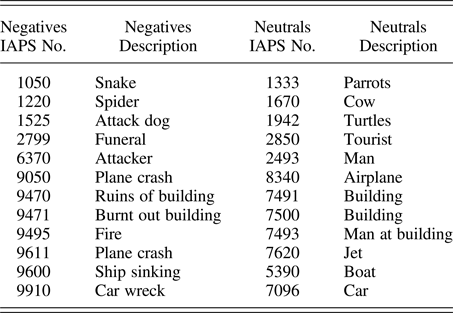
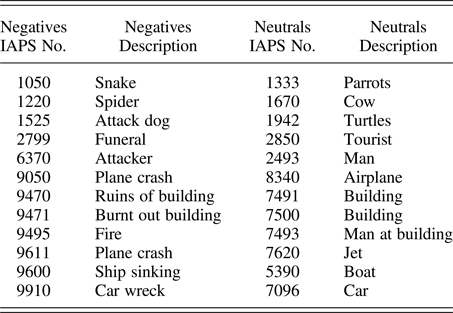
Because our interest in this study was in threat vigilance more broadly rather than racial bias, we replaced the original primes with other images from the International Affective Picture System (IAPS). Table 2 describes the 12 negative and 12 neutral primes we incorporated from the IAPS. In studies by the IAPS developers (Lang, Bradley, & Cuthbert, Reference Lang, Bradley and Cuthbert2008), all of the negative images we used had a mean valence rating below 3.5 on a scale from 1 to 9, and all neutral ones were in the 5.50–6.50 range. The negative and neutral primes were matched for content (see Table 2). Participants completed 208 trials, with 52 trials presented for each of the four possible combinations of prime (neutral or negative) and target image (gun or tool). In line with standard quality-control practices (Payne, Reference Payne2001), we excluded trials with reaction times less than 100 ms or more than 1000 ms from analysis. False-positives (i.e., identifying guns when tools are shown) that occur after a neutral image provide a measure of general threat vigilance tendencies or the tendency to perceive threat even when not primed by anything potentially threatening (NL false-positive rate). False-positives that occur after a negative image reflect a response after activating threat systems (by the negative image in the prime [NEG false-positive rate]).
Negative and neutral primes from the International Affective Picture System used in the Weapons Identification Procedure
The NEG false-positive rate ranged from 0% to 100% (M = 17.01%, SD = 15.8%). The NL false-positive rate was comparable but slightly lower, with the same range of 0% to 100% (M = 15.9%, SD = 15.1%). In a pilot study, test–retest reliability for this measure over a 1-month period was 0.79. This measure was previously validated with self-report measures and shows correlations with other performance-based measures of implicit bias and cognitive control (Chan, Chen, Hibbert, Wong, & Miller, Reference Chan, Chen, Hibbert, Wong and Miller2011; Payne, Reference Payne2001, Reference Payne2006).
Covariates
Subjects provided information about basic demographics (age, sex, and race/ethnicity) and health behaviors (smoking, alcohol use, and exercise). We included these factors as covariates to rule out their possible role as confounds for the association between early life SES and MetS risk. Given the racial/ethnic distribution of the sample (72.9% European descent, 13.8% Asian descent, 5% or less in any other ethnic group), the variable was recoded (1 = European descent, 0 = non-European) to maximize statistical power for race/ethnicity effects. Using a previously validated instrument (Miller, Cohen, Rabin, Skoner, & Doyle, Reference Miller, Cohen, Rabin, Skoner and Doyle1999), we collected information on daily smoking and alcohol use. Participants reported the number of cigarettes they smoked each day and the number of alcoholic drinks they consumed per week. A drink was considered a bottle or can of beer, a glass of wine, or a shot of hard liquor (Cohen, Tyrrell, Russell, Jarvis, & Smith, Reference Cohen, Tyrrell, Russell, Jarvis and Smith1993). Regular physical activity was measured with the well-validated Paffenbarger Activity Scale (Paffenbarger, Blair, Lee, & Hyde, Reference Paffenbarger, Blair, Lee and Hyde1993), which estimates weekly hours of brisk physical activity. Demographics and health behavior variables (smoking, alcohol use, and physical activity) were used as covariates in all analyses including metabolic outcomes. To isolate the independent contributions of early life SES, all models also adjusted for current SES.
Data analysis
Data preparation
Variables were examined for outliers and their approximation of the normal distribution before analyses. Values that exceeded 4 SD from the mean were Winsorized and replaced with the value at the 99.9th percentile (waist circumference: n = 3; triglyceride levels: n = 4; HbA1c: n = 1; diastolic blood pressure: n = 1; Weapons Identification Procedure NEG false-positive rate: n = 5; NL false-positive rate: n = 6). Most variables approximated the normal distribution. In contrast, variables indexing the count of MetS components, daily cigarette smoking, alcohol use, weekly physical activity, and Weapons Identification Procedure false-positive rates had a pronounced right skew. Cigarette use, alcohol consumption, and count of MetS components variables were too skewed to be corrected with mathematical transformations, and were therefore converted into new scales by recoding the values at the tail end of the distributions. For smoking, the new variable was coded as 0 = nonsmoker, 1 = fewer than 10 daily cigarettes, and 2 = 10 or more cigarettes per day. For alcohol use, it was 0 = zero drinks per week, 1 = fewer than 10 drinks per week, and 2 = 10 or more drinks per week. For MetS component counts, meeting criteria for three or more symptoms was coded as a 3. For the Paffenbarger index of physical activity, a square-root transformation of the total number of hours of brisk physical activity per week was sufficient to reduce skewness and kurtosis and normalize the distribution, thus the square root of the variable was used in analyses. For the two false-positive variables from the Weapons Identification Procedure, a logarithmic transformation was applied (log 10) to normalize their distributions.
Missing data
Only 9.7% (N = 35) of participants were missing data on any of the variables of interest here. Thus, data imputation was not necessary given that estimates are not likely to be biased when the rate of missingness is less than 10% (Bennett, Reference Bennett2001).
Statistical analyses
Our first aim was to test the potential role of threat vigilance as a moderator of the association between early life SES and metabolic risk. To test this aim, we conducted moderation analyses using regression models implemented with the SPSS PROCESS macro (Hayes, Reference Hayes2013). NEG false-positive rate and NL false-positive rate were the two indices of threat vigilance that were tested in separate models as the moderator, early life SES as the predictor, and the three metabolic risk indices were the outcomes in separate analyses. Logistic regression was used for the analysis predicting the binary MetS diagnosis, and multiple linear regression for the count of MetS components and for MetS factor scores. To probe any significant statistical interactions indicative of moderation, we tested the significance of simple slopes at high and low values of the moderator (we chose the widely used values of +1 SD and –1 SD of the moderator). We also computed regions of significance using the Johnson–Neyman technique (Johnson & Neyman, Reference Johnson and Neyman1936) implemented using the SPSS process macro (Hayes, Reference Hayes2013), which is a technique that provides the full range of values of the moderator for which the independent and dependent variable are significantly associated, rather than reporting single values through simple slopes analysis.
Our second aim was to estimate the viability of indirect pathways between early life SES and each of the three MetS indices via threat vigilance. This was assessed through regression-based mediation analysis implemented with the SPSS PROCESS macro (Hayes, Reference Hayes2013). This macro conducts a series of regression models and estimates an indirect effect based on the coefficients from each regression model. Bootstrap bias-corrected confidence intervals (CIs) based on 10,000 samples were used for making inferences about indirect effects in mediation analyses (Hayes, Reference Hayes2013). This is because the estimates for the indirect effects are seldom normally distributed; thus normal theory significance testing is not recommended (Hayes, Reference Hayes2013). If the CI for the estimate contained zero, we concluded that we could not rule out a null effect. However, if the CI did not include zero, then we interpreted the effect as significant. All the analyses adjusted for the set of covariates described above (sociodemographic characteristics and health behaviors).
Results
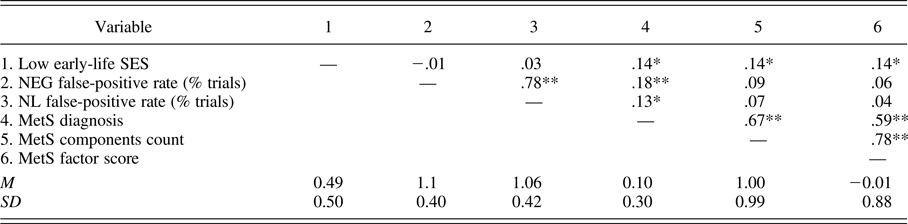
Bivariate correlations and descriptive statistics for the main study variables are shown in Table 3. All of the metabolic risk indicators were associated with low early life SES, as previously reported (Hostinar et al., Reference Hostinar, Ross, Chen and Miller2017). NEG false-positive rate was not associated with early life SES, r (323) = –.01, p = .84, and neither was NL false-positive rate, r (323) = .03, p = .66. Finally, false-positive rates in both conditions were significantly and positively associated with MetS diagnosis: for negative condition, r (323) = .18, p =.001; for neutral condition, r (323) = .13, p = .02. Associations of false-positive rates with the count of MetS components and MetS factor scores were also positive but did not reach statistical significance (ps >.10; Table 3).
Bivariate associations among primary variables and descriptive statistics
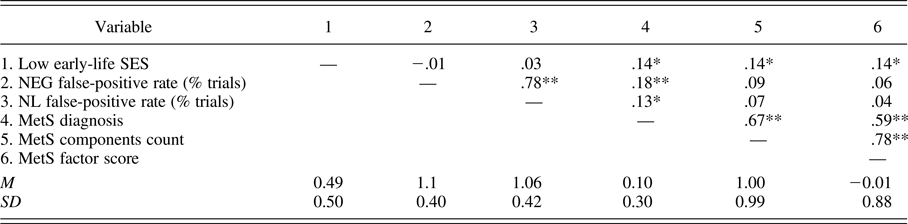
Note: SES, socioeconomic status; NEG, after negative prime; NL, after neutral prime; MetS, metabolic syndrome.
*p < .05. **p < .01.
Testing the moderation model
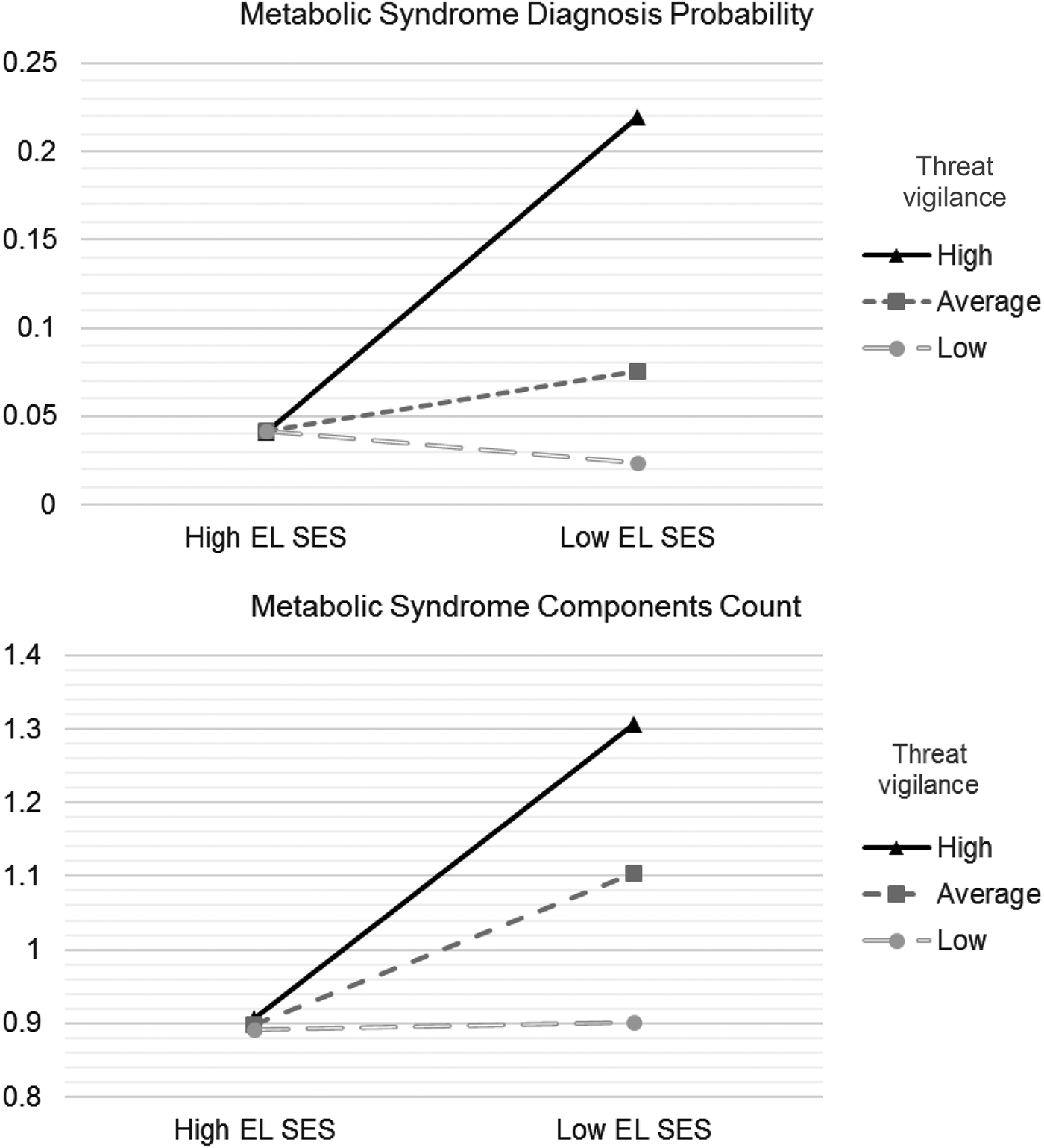
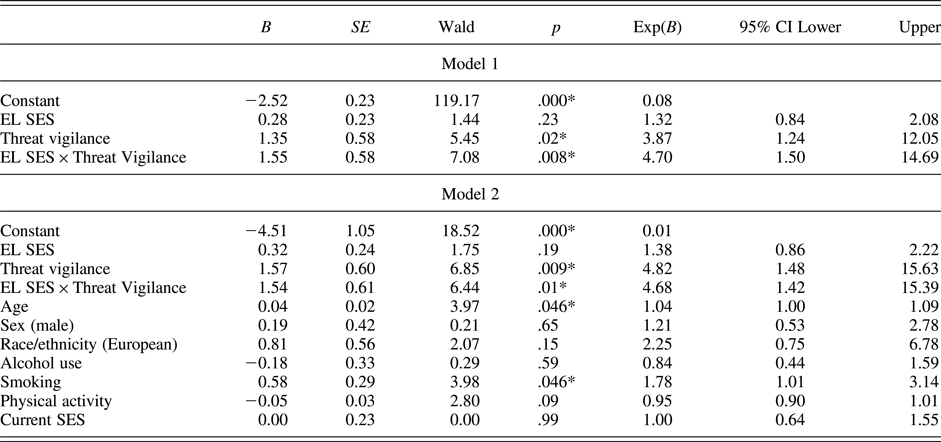
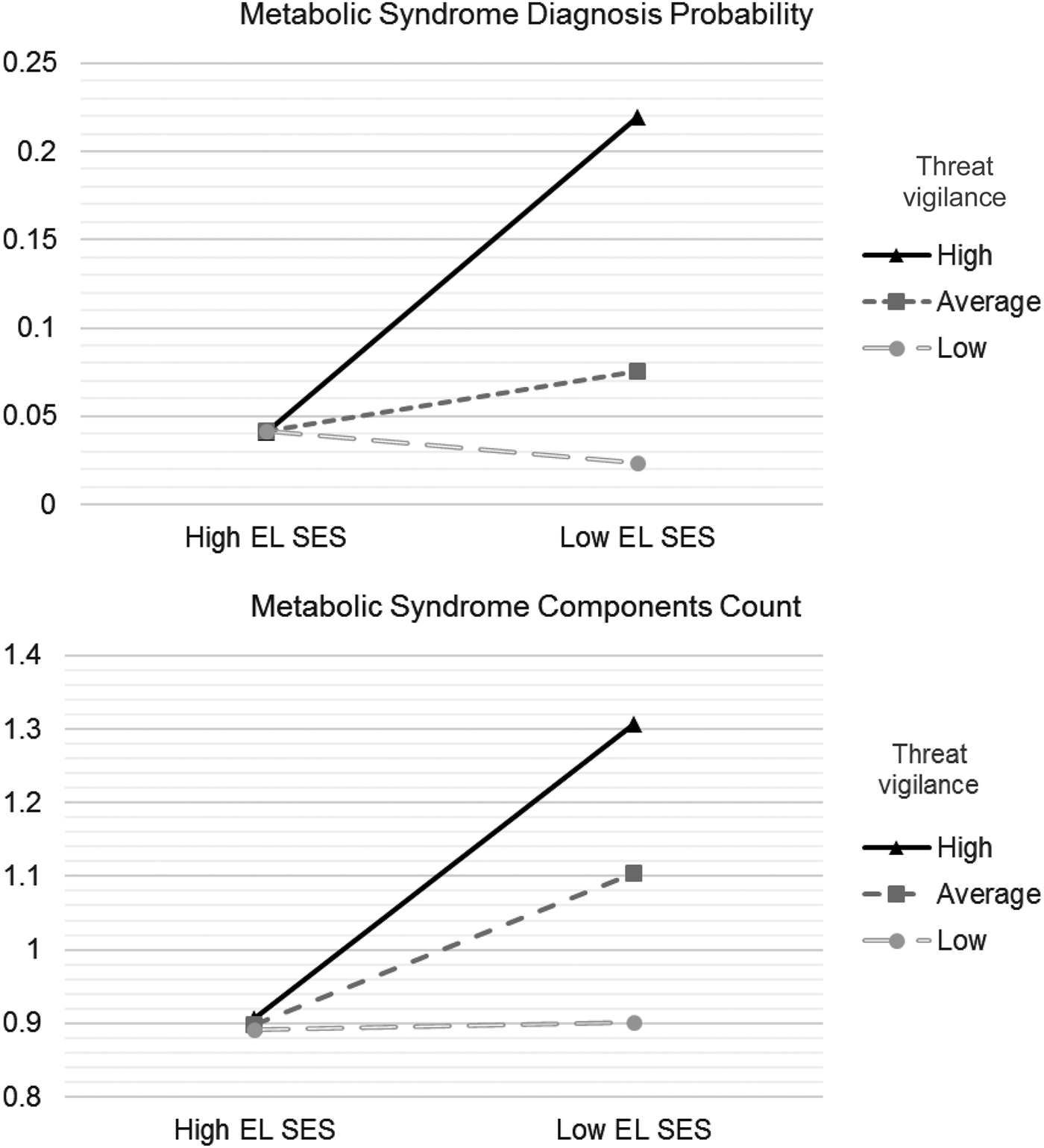
For our first aim, we tested the moderating role of threat vigilance for the association between early life SES and MetS risk. We report results for NEG false-positive rate, followed by analyses with NL false-positive rate. When using logistic regression to predict the binary MetS diagnosis, there was a significant main effect of threat vigilance indexed by NEG false-positive rate, B = 1.57, SE = 0.60, odds ratio (OR) = 4.82, CI [1.48, 15.63], p = .009, and a significant interaction of early life SES and threat vigilance, B = 1.54, SE = 0.61, OR = 4.68, CI [1.42, 15.39], p = .01 (see Table 4). This was independent of covariates, among which only smoking and age had significant effects (p = .046 for both), predicting higher metabolic risk. Simple slopes analysis indicated that low early life SES was associated with higher odds of MetS diagnosis at high (+1 SD) levels of threat vigilance, B = 0.94, SE = 0.31, OR = 2.56, CI [1.40, 4.69], p = .002, but not low (–1 SD) levels of threat vigilance, B = –0.30, SE = 0.38, OR = 0.74, CI [0.35, 1.55], p = .43 (Figure 1). When examining the region of significance for the association, low early life SES and MetS diagnosis were only significantly associated for those whose threat vigilance was in the top 44% of scores. An identical interaction emerged in analyses using NL false-positive rate, B = 1.2, SE = 0.53, OR = 3.29, CI [1.17, 9.26], p = .02. As above, early life SES was only associated with greater odds of MetS for those with the highest 48.6% of NL false-positive rates.
Metabolic risk was higher for those at high (+1 SD) versus average or low (–1 SD) levels of threat vigilance if they were exposed to low early life socioeconomic status (EL SES). (a) Metabolic syndrome diagnosis probability. (b) Number of metabolic syndrome components.
Logistic regression results (N = 325) predicting metabolic syndrome diagnosis (binary outcome)
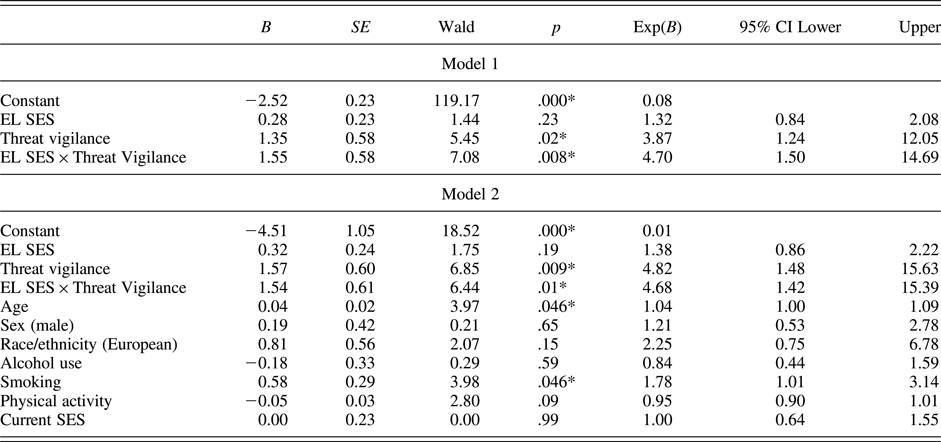
Note: Threat vigilance is indexed by false-positive rates across negative prime trials in this analysis. EL SES, early-life socioeconomic status.
*p < .05.
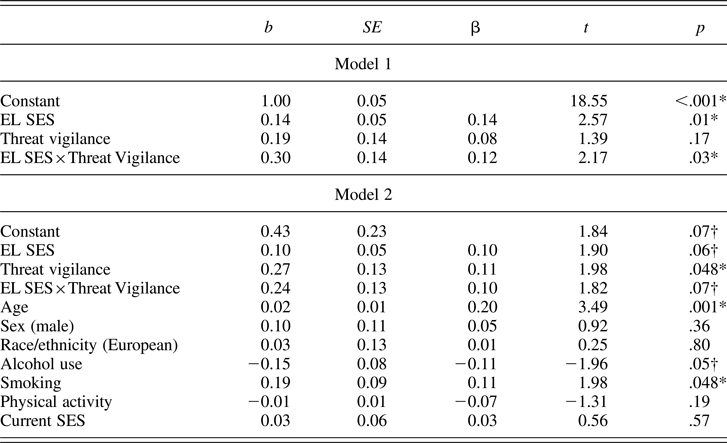
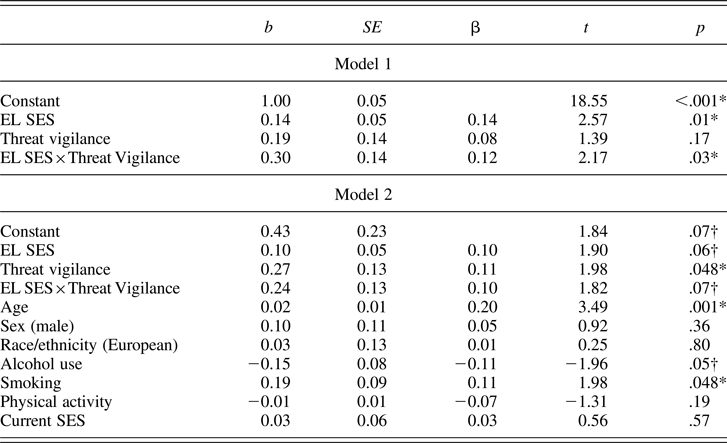
We observed similar results when using linear regression models predicting the count of MetS components (see Table 5). When considering threat vigilance indexed by NEG false-positive rate, there was a significant interaction of early life SES and threat vigilance (b = 0.30, SE = 0.14, p = .03), in addition to a significant main effect of early life SES (b = 0.14, SE = 0.05, p = .01) and nonsignificant effect of threat vigilance (b = 0.19, SE = 0.14, p = .17). The interaction became marginally significant when adjusting for our panel of covariates (b = 0.24, SE = 0.13, p = .07). Among the covariates, only age (p = .001), alcohol use (p = .051), and smoking (p = .048) had effects below p = .10 (all of them predicted a higher MetS component count; Table 5). Follow-up simple slopes analysis revealed that low early life SES was significantly associated with a higher count of MetS components for those with high (+1 SD) levels of threat vigilance (b = 0.20, SE = 0.08, p = .01), but not for those with low (–1 SD) levels of threat vigilance (b = 0.01, SE = 0.08, p = .94; Figure 1). Low early life SES and MetS components were only positively associated for those having the highest 52.3% of threat vigilance scores according to the region of significance obtained for this effect. Similar results emerged with threat vigilance indexed by NL false-positive rate (interaction of early life SES and threat vigilance, b = 0.22, SE = 0.13, p = .08). However, probing revealed the same basic pattern, with early life SES significantly associated with elevated metabolic risk only among those with the highest 55.1% of threat vigilance scores.
Multiple regression results predicting metabolic syndrome components count (N = 325)
Note: EL SES, early-life socioeconomic status.
†p < .10. *p < .05.
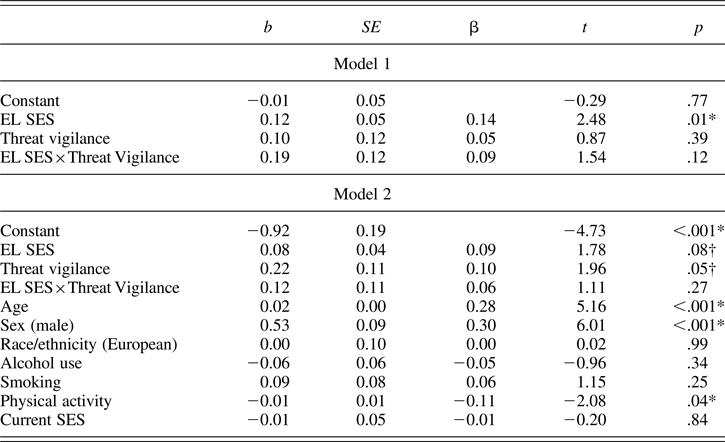
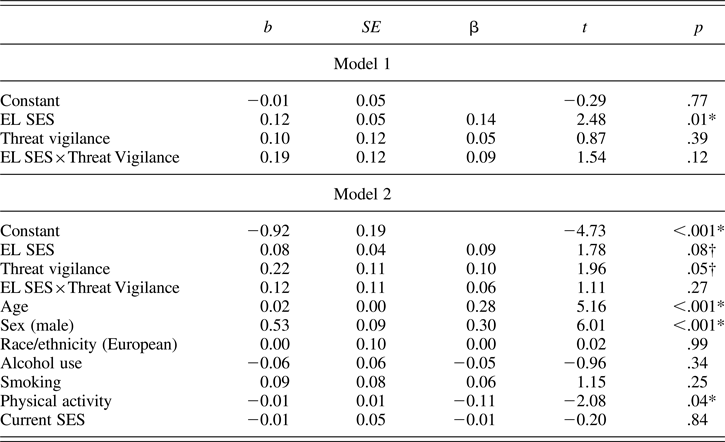
We next repeated the analysis with a continuous MetS score derived from factor analysis as the outcome. Unlike the two operational definitions above, it uses the full range of scores on each component, taking a more dimensional view of the phenomenon. With this definition, the interaction of early life SES and threat vigilance (first indexed by NEG false-positive rate) was not significant in unadjusted analyses (b = 0.19, SE = 0.12, p = .12) or after adjustment for our panel of covariates (b = 0.12, SE = 0.11, p = .27; see Table 6 for full models). In the adjusted analysis, both early life SES and threat vigilance had marginal effects (b = 0.08, SE = 0.05, p = .08, and b = 0.22, SE = 0.11, p = .05, respectively). In analyses including threat vigilance indexed by NL false-positive rate, there was a significant interaction of early life SES and threat vigilance in unadjusted analyses (b = 0.23, SE = 0.12, p = .045), which became nonsignificant after covariate adjustment (b = 0.15, SE = 0.11, p = .15); thus, simple slopes were not probed further.
Multiple regression results predicting metabolic syndrome factor scores (N = 325)
Note: EL SES, early-life socioeconomic status.
†p < .10. *p < .05.
Mediation models
For our second aim, we estimated the viability of mediational paths involving threat vigilance using the PROCESS macros. None of the models supported a mediational scenario, primarily due to the nonsignificant associations between early life SES and threat vigilance (b = –0.001, SE = 0.02, p = .96). For each of the three measures of MetS risk, no significant mediation by threat vigilance was observed. For threat vigilance following negative primes, all indirect effects included zero in their CI: MetS diagnosis, b = −0.002, SE = 0.05, CI [–0.11, 0.10]; count of MetS components, b = –0.0004, SE = 0.007, CI [–0.02, 0.01]; MetS factor scores, b = –0.0003, SE = 0.006, CI [–0.01, 0.01]. The same result emerged for indirect effects via threat vigilance following neutral primes: MetS diagnosis, b = 0.02, SE = 0.04, CI [–0.05, 0.12]; MetS components count, b = 0.004, SE = 0.007, CI [–0.01, 0.02]; MetS factor scores, b = 0.003, SE = 0.005, CI [–0.005, 0.02].
Discussion
The global prevalence of MetS is rising (Grundy, Reference Grundy2008) and disproportionately affects those from low SES backgrounds (Cornier et al., Reference Cornier, Dabelea, Hernandez, Lindstrom, Steig, Stob and Eckel2008; Saland, Reference Saland2007). Extant evidence suggests that these metabolic health disparities begin in childhood (Faienza et al., Reference Faienza, Wang, Fruhbeck, Garruti and Portincasa2016; Lehman et al., Reference Lehman, Taylor, Kiefe and Seeman2005; Pervanidou & Chrousos, Reference Pervanidou and Chrousos2012; Tamayo et al., Reference Tamayo, Christian and Rathmann2010), and persist into adulthood (Choi et al., Reference Choi, Lee, Chun and Lee2014; Gustafsson & Hammarström, Reference Gustafsson and Hammarström2012; Gustafsson et al., Reference Gustafsson, Persson and Om2011; Lehman et al., Reference Lehman, Taylor, Kiefe and Seeman2005; Non et al., Reference Non, Rewak, Kawachi, Gilman, Loucks, Appleton and Kubzansky2014; Tamayo et al., Reference Tamayo, Christian and Rathmann2010). However, not all individuals from a low early life SES background go on to develop MetS, and much less is known about the vulnerability and protective factors that might moderate or mediate these risks. The present study sought to examine whether threat vigilance might serve as one such moderator or mediator for the association between low early life SES (birth to 5 years old) and adult metabolic risk.
Our analyses supported a moderator role of threat vigilance, rather than a mediator role. Specifically, we found a significant interaction of early life SES and threat vigilance in explaining risk of meeting MetS diagnostic criteria (binary outcome). The statistical interaction was such that low early life SES was only associated with elevated metabolic risk in those with the highest 40% to 50% of threat vigilance scores. In contrast, those with low levels of threat vigilance had lower metabolic risk, comparable to that of high early life SES individuals. This distribution is consistent with findings that roughly half of middle-aged and older adults who report experiencing low childhood SES do not exhibit MetS, whereas roughly half do (Miller, Lachman, et al., Reference Miller, Lachman, Chen, Gruenewald, Karlamangla and Seeman2011). A similar pattern emerged for MetS components count, but the interaction became nonsignificant after adjustment for our panel of covariates. Nevertheless, a priori–planned simple slopes analysis revealed a similar pattern as the previous analyses (Figure 1). Results were in the same direction but became nonsignificant in the analysis involving MetS factor scores.
One interpretation of the statistical interaction we observed is that a proportion of those growing up with disadvantage possess protective factors that buffer their psychological and physiological responses to threat (for reviews of studies documenting such social buffering effects for various biological outcomes in low SES individuals, see Chen & Miller, Reference Chen and Miller2013; Hostinar et al., Reference Hostinar, Sullivan and Gunnar2014). Attenuated threat responses might in turn prevent deleterious metabolic outcomes by reducing adrenocortical, autonomic, and inflammatory mediators, which can unfavorably alter various metabolic processes (Abraham et al., Reference Abraham, Brunner and Eriksson2007; Brunner et al., Reference Brunner, Hemingway, Walker, Page, Clarke, Juneja and Marmot2002; Dallman, Reference Dallman2010; Hotamisligil, Reference Hotamisligil2006; Kyrou & Tsigos, Reference Kyrou and Tsigos2009). A direct measure of early life parenting quality was not available in this study to test this possibility. However, this hypothesis is supported by animal models (Meaney, Reference Meaney2010; Meaney & Szyf, Reference Meaney and Szyf2005) and accumulating evidence in humans (Cicchetti & Blender, Reference Cicchetti and Blender2006; Fisher et al., Reference Fisher, Beauchamp, Roos, Noll, Flannery and Delker2016; Gunnar & Quevedo, Reference Gunnar and Quevedo2007) that high-quality early life maternal care is associated with less fearful and less stress-reactive phenotypes. Future studies will have to simultaneously assess maternal warmth and threat vigilance in addition to metabolic health and childhood SES to examine these possibilities.
We found almost identical results when using the false-positive rate after negative primes or false-positive rate after neutral primes as measures of threat vigilance. Because these two measures were highly correlated (r = .77, p < .001; Table 3), it is difficult to interpret these patterns with any certainty. They could signify the importance of threat vigilance in both emotionally neutral and activated situations. Alternatively, this could be a statistical artifact of our measure, which may not have fully captured differences in threat vigilance across contexts. From a theoretical standpoint, it will be important for future studies to conduct this task in a neuroimaging environment to explicitly test how neural activity after negative versus neutral primes moderates the effect of low SES. Negative IAPS images activate different neural networks compared to neutral IAPS images (e.g., they elicit greater activity in the amygdala and hippocampus; Aldhafeeri, Mackenzie, Kay, Alghamdi, & Sluming, Reference Aldhafeeri, Mackenzie, Kay, Alghamdi and Sluming2014). More research is needed to understand whether these differences in neural activity matter for explaining the effect of low SES on health.
We did not find evidence supporting a mediational model, primarily due to nonsignificant associations between early life SES and threat vigilance. This result is inconsistent with a number of studies documenting greater threat responses in low SES youth psychologically (Chen et al., Reference Chen, Langer, Raphaelson and Matthews2004; Chen & Matthews, Reference Chen and Matthews2001), physiologically (Gump et al., Reference Gump, Matthews and Räikkönen1999; Jackson et al., Reference Jackson, Treiber, Turner, Davis and Strong1999; Treiber et al., Reference Treiber, Harshfield, Davis, Kapuku and Moore1990), and at the neural level (Gianaros et al., Reference Gianaros, Horenstein, Hariri, Sheu, Manuck, Matthews and Cohen2008; Javanbakht et al., Reference Javanbakht, King, Evans, Swain, Angstadt, Phan and Liberzon2015; Muscatell et al., Reference Muscatell, Morelli, Falk, Way, Pfeifer, Galinsky and Eisenberger2012). This discrepancy is unlikely due to limited variation or range restriction in behavioral threat responses in the current study. False-positive rates spanned the entire range, from 0% to 100%, and significant associations between threat vigilance measures and MetS diagnosis suggest that range restriction was unlikely. The different results might arise from national differences in exposure to threatening circumstances for those experiencing low SES. Most prior studies linking low childhood SES to heightened threat responses have been conducted in the United States. The present study, however, was conducted in Canada, where rates of gun-related deaths are estimated to be 7 times lower than in the United States (Grinshteyn & Hemenway, Reference Grinshteyn and Hemenway2016). As such, it is possible that low early life SES individuals in Canada are less prone to developing hypervigilance to handguns, relative to those in the United States, given the comparative rarity of gun violence in Canada.
Although moderation and mediation models were tested independently, these models are not mutually exclusive conceptually or statistically. It is possible that associations between early life SES and adult MetS risk are both moderated and mediated by threat vigilance, with different studies finding support for one or the other depending on various study characteristics. For example, results might be shaped by the type of socioeconomic adversities that are more frequent in the sample (e.g., material deprivation vs. threats to safety and well-being), the developmental stages when SES, threat responses, and health outcomes are assessed; and the timing and duration of poverty exposure. In particular, although the majority of individuals experience continuity of SES through life, the present study intentionally oversampled participants who experienced social mobility (half the participants experienced mobility from early life to adulthood). Even though this approach has the advantage of supplying greater statistical power to formally test the role of social mobility (for these analyses, see Hostinar et al., Reference Hostinar, Ross, Chen and Miller2017), it may also underestimate the effects of early life socioeconomic disadvantage in this sample compared to other studies and the population at large, where the majority of individuals experience continuity of SES throughout their life. Upwardly mobile individuals may have had access to family and neighborhood protective factors that facilitated their academic success and ascension on the social ladder, and at the same time buffered their threat responses. Consistent with this interpretation, we found that in this sample upwardly mobile individuals (with low early life and high current SES) exhibited lower threat vigilance than those experiencing low SES continuously from early life to adulthood (p = .007 for false-positive rate after negative primes and p = .04 after neutral primes). However, more research is needed to fully test the buffering processes considered at play. Future research should consider the role of social mobility, developmental stage, and timing and duration of poverty exposure to clarify these patterns.
The present study has a number of strengths, including the observational, computerized assessment of threat vigilance and the relatively large sample compared to other research assessing both biomarkers and behavior. The study is also not without limitations. First, the cross-sectional design precludes any definitive inferences about causality or the temporal ordering of phenomena. Multiwave, prospective research will be needed to substantiate these findings and shed light on how they unfold developmentally. Nevertheless, reverse causality is an unlikely explanation for some of the associations we observed (e.g., it is difficult to imagine how levels of threat vigilance or metabolic risk in adulthood could affect parental occupational status many years prior). Second, the self-reported and retrospective assessment of early life SES may be a source of measurement error due to memory problems or other sources of response bias. This limitation was mitigated by selecting occupational status as a proxy measure of SES (vs. household income or parental educational level), since occupation is a more stable, visible, and easier to recall measure of SES than other indices. A third limitation is the concurrent assessment of our mediators and outcomes, which may underestimate mediation effects. Future studies should assess threat vigilance trajectories throughout development and prospectively examine their associations with subsequent health outcomes. Fourth, the marginally significant result in analyses predicting MetS component counts and nonsignificant result when predicting MetS factor scores suggest that our panel of covariates might be overly conservative. This is because several health behaviors (cigarette smoking, alcohol use, and physical activity) are plausible mediators between low SES and metabolic risk, and thus these adjusted analyses may be underestimating the total effects we report. For this reason, we also presented unadjusted results for each analysis. Fifth, another limitation was the use of only one measure of threat vigilance in the present study. Even though we validated this measure in prior work (e.g., there were significant associations between threat vigilance assessed in the same manner and angry or fearful responses subsequent to viewing childhood family photographs; Chan et al., Reference Chan, Chen, Hibbert, Wong and Miller2011), future studies could benefit from assessing threat vigilance at multiple levels of analysis within the same study (e.g., self-report, behavioral, psychophysiological, and neural measures) in order to replicate and extend our results.
Despite these limitations, this study inspires several avenues of research designed to reveal when and how low early life SES is linked to greater metabolic risk, as moderated by threat vigilance. Which characteristics make individuals more likely to respond to cues of low social status with heightened threat responses? What types of neighborhoods and life experiences foster high versus low threat vigilance and risky versus resilient metabolic health pathways for low-SES individuals? Do social buffers such as early life maternal warmth exert beneficial effects on metabolic health indirectly, by reducing threat vigilance, or are there more direct pathways? Answering these questions will bring us closer to understanding equifinality and multifinality (Cicchetti & Rogosch, Reference Cicchetti and Rogosch1996) in metabolic and cardiovascular health outcomes for those experiencing early life disadvantage. It will also guide interventions to help minimize health disparities by suggesting targets that are both modifiable and influential agents in the pathways from early life socioeconomic disadvantage and adult metabolic risk.
Another implication of these findings for interventions is that minimizing children's exposure to threatening circumstances and environments might reduce health disparities, in addition to being a socially desirable goal. Preventing child maltreatment, reducing the incidence of gun violence within homes and neighborhoods, and promoting a sense of physical and emotional safety in contexts where children spend a substantial portion of their time (e.g., schools) are some of the avenues through which the health gap between low-SES and high-SES children might be reduced. In addition, promoting supportive family relationships through clinical and educational interventions may be one way to buffer children's threat responses and prevent the development of persistently high vigilance to threat. If the associations observed in the current study are causal in nature, then minimizing threat vigilance for low-SES children might promote favorable outcomes for metabolic health and these benefits might persist across the life span.