Introduction
Parathyroid carcinoma is a rare malignancy,Reference Perrier, Arnold, Costa-Guda, Busaidy, Nguyen and Chuang1 estimated to consist of 0.005 per cent of all cancersReference Campennì, Giovinazzo, Pignata, Di, Santoro and Curtò2, Reference Wei and Harari3 and to be the cause of less than 1 per cent of primary hyperparathyroidism.Reference Perrier, Arnold, Costa-Guda, Busaidy, Nguyen and Chuang1, Reference Campennì, Giovinazzo, Pignata, Di, Santoro and Curtò2 Due to its rarity, parathyroid carcinomas are incompletely understood, with some reviewers reporting fewer than 1000 documented casesReference Wei and Harari3 and a recent systematic review finding only 79 cases between 1898 and 2018.Reference Alberti, Smussi, Zamparini, Turla, Laini and Marchiselli4 As a result, the creation of guidelines for the management of parathyroid carcinoma has been difficult.
Worldwide, parathyroid carcinoma is the rarest endocrine cancer.Reference Perrier, Arnold, Costa-Guda, Busaidy, Nguyen and Chuang1 Unlike parathyroid adenomas, parathyroid carcinomas appear to affect both genders equally and are common in patients 40–60 years old.Reference Campennì, Giovinazzo, Pignata, Di, Santoro and Curtò2, Reference Alberti, Smussi, Zamparini, Turla, Laini and Marchiselli4 For sporadic cases of parathyroid carcinoma, the main risk factors include previous head and neck irradiation and in rare cases long-standing secondary/tertiary hyperparathyroidism.Reference Alharbi, Asa, Szybowska, Kim and Ezzat5, Reference Ferraro, Sgaramella, Di, Prete, Logoluso and Minerva6 Several genetic syndromes have been linked to parathyroid carcinoma, including hyperparathyroidism–jaw tumour syndrome, multiple endocrine neoplasia type 1 and type 2a, and familial isolated hyperparathyroidism.Reference Alharbi, Asa, Szybowska, Kim and Ezzat5–Reference Christakis, Busaidy, Cote, Williams, Hyde and Silva7
Most cases of parathyroid carcinoma present with severe hypercalcaemia and primary hyperparathyroidism.Reference Perrier, Arnold, Costa-Guda, Busaidy, Nguyen and Chuang1, Reference Wei and Harari3, Reference Erickson, Mete, Juhlin, Perren and Gill8–Reference Sharretts, Kebebew and Simonds11 Outside of these cases, diagnosing parathyroid carcinoma can be difficult.Reference Perrier, Arnold, Costa-Guda, Busaidy, Nguyen and Chuang1, Reference Long and Sippel9 An ultrasound scan is currently regarded as the best initial imaging modality,Reference Perrier, Arnold, Costa-Guda, Busaidy, Nguyen and Chuang1, Reference Campennì, Giovinazzo, Pignata, Di, Santoro and Curtò2, Reference Long and Sippel9 with findings such as cystic structures, irregular borders, and calcification being signs of suspicious malignancy.Reference Perrier, Arnold, Costa-Guda, Busaidy, Nguyen and Chuang1, Reference Campennì, Giovinazzo, Pignata, Di, Santoro and Curtò2 If these are present, further axial imaging such as computed tomography (CT), magnetic resonance imaging (MRI) or positron emission tomography–computed tomography (PET–CT) scans can be used for evaluation and surgical planning.Reference Perrier, Arnold, Costa-Guda, Busaidy, Nguyen and Chuang1, Reference Campennì, Giovinazzo, Pignata, Di, Santoro and Curtò2, Reference Long and Sippel9
Microscopically, no specific histological hallmark features for parathyroid carcinomas have been found.Reference Perrier, Arnold, Costa-Guda, Busaidy, Nguyen and Chuang1, Reference Sharretts, Kebebew and Simonds11 Current guidelines recommend looking for angioinvasion, lymphatic invasion, perineural invasion, invasion into adjacent anatomic structures or histologically/cytologically documented metastatic disease to help guide diagnosis.Reference Erickson, Mete, Juhlin, Perren and Gill8 Genetic markers for parathyroid carcinoma are thought to include CDC73, CCND1 and PI3K/AKT/mTOR; CDC73 is the most common mutated gene in hyperparathyroidism–jaw tumour syndrome.Reference Perrier, Arnold, Costa-Guda, Busaidy, Nguyen and Chuang1, Reference Alberti, Smussi, Zamparini, Turla, Laini and Marchiselli4, Reference Sharretts, Kebebew and Simonds11
Surgical resection is described in the literature as the gold standard treatment for parathyroid carcinoma, with no current role for chemotherapy or radiotherapy in its management.Reference Perrier, Arnold, Costa-Guda, Busaidy, Nguyen and Chuang1, Reference Alberti, Smussi, Zamparini, Turla, Laini and Marchiselli4, Reference Verdelli, Tavanti and Corbetta12 Despite this, recurrence rates have been reported to be 50–60 per cent at 2–5 years following treatment.Reference Alberti, Smussi, Zamparini, Turla, Laini and Marchiselli4 For patients with unsuccessful surgical management, the most common cause of fatalities is uncontrolled hypercalcaemia, which often proves to be resistant to medical treatment.Reference Alberti, Smussi, Zamparini, Turla, Laini and Marchiselli4, Reference Long and Sippel9
As a tertiary centre, we wanted to determine the most frequently used treatment methods and patient outcomes for cases of parathyroid carcinoma. To this end, we reviewed all the cases of parathyroid carcinoma treated by our unit in the past 15 years.
Methods
A retrospective review was conducted to identify patients diagnosed with and treated for parathyroid carcinoma between 1 January 2007 and 31 December 2022 at our tertiary centre. Patients were identified by searching our local histological database for specimens diagnosed with parathyroid carcinoma using coding. Following this, a general search of all the parathyroid sample reports from the period was analysed to find any specimens that had been incorrectly coded.
Once identified, the patient’s clinical record was analysed to obtain demographic information, investigation and/or radiology results and the overall outcomes of their management. The primary outcome of our review was to determine the survival rate and the rate of recurrence and metastasis following treatment. Patients included in the study were not subjected to any harm and all patients had their privacy protected by ensuring the anonymity of the data collected.
Results
Fourteen patients were identified in the period between 1 January 2007 and 31 December 2022 who had been diagnosed with and treated for parathyroid carcinoma in our centre. The median age of diagnosis was 67 years old, with the youngest patient being 31 years old and the oldest being 86 years old. The gender ratio for the cohort was 43 per cent to 57 per cent (6:8 patients) for males and females, respectively.
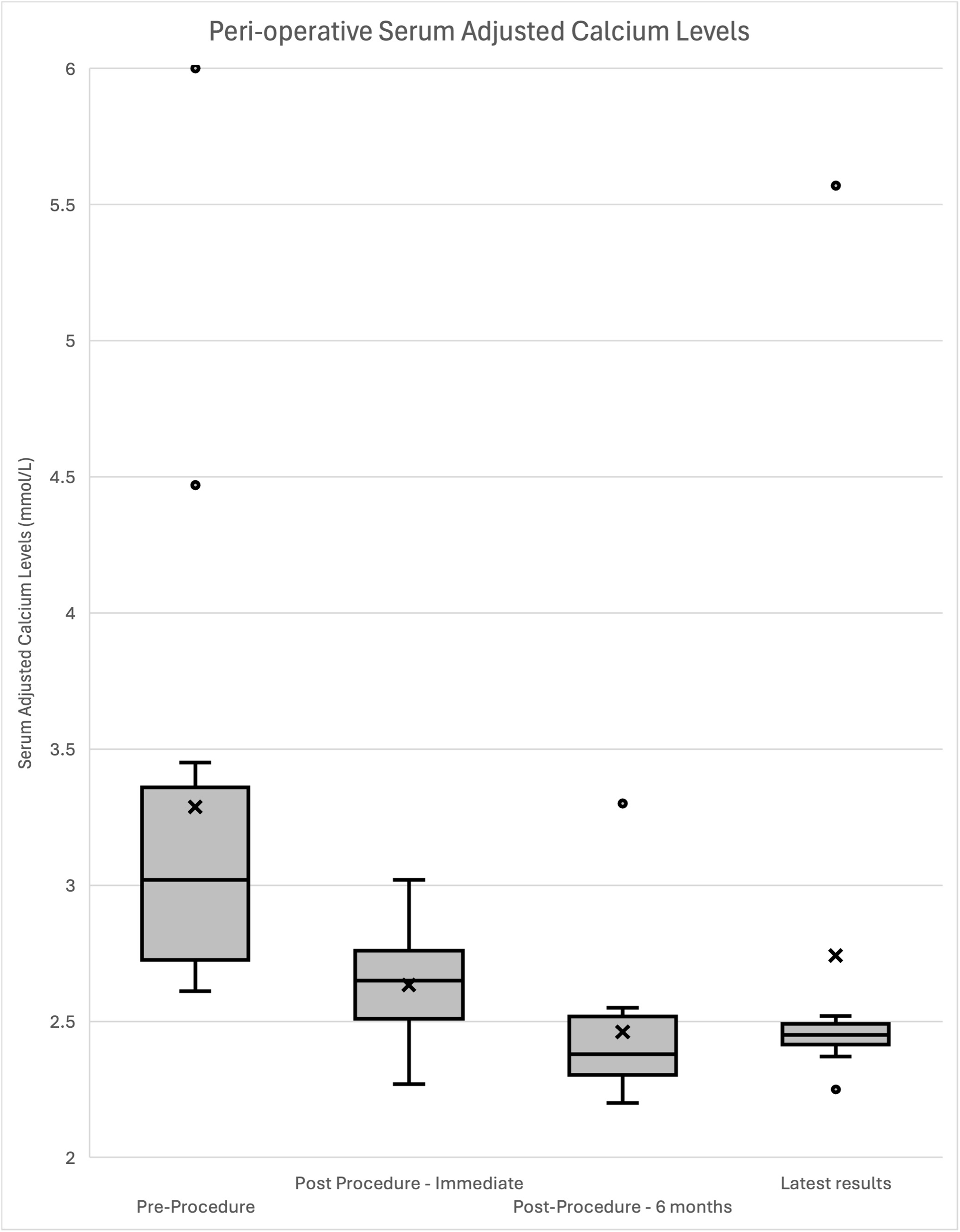
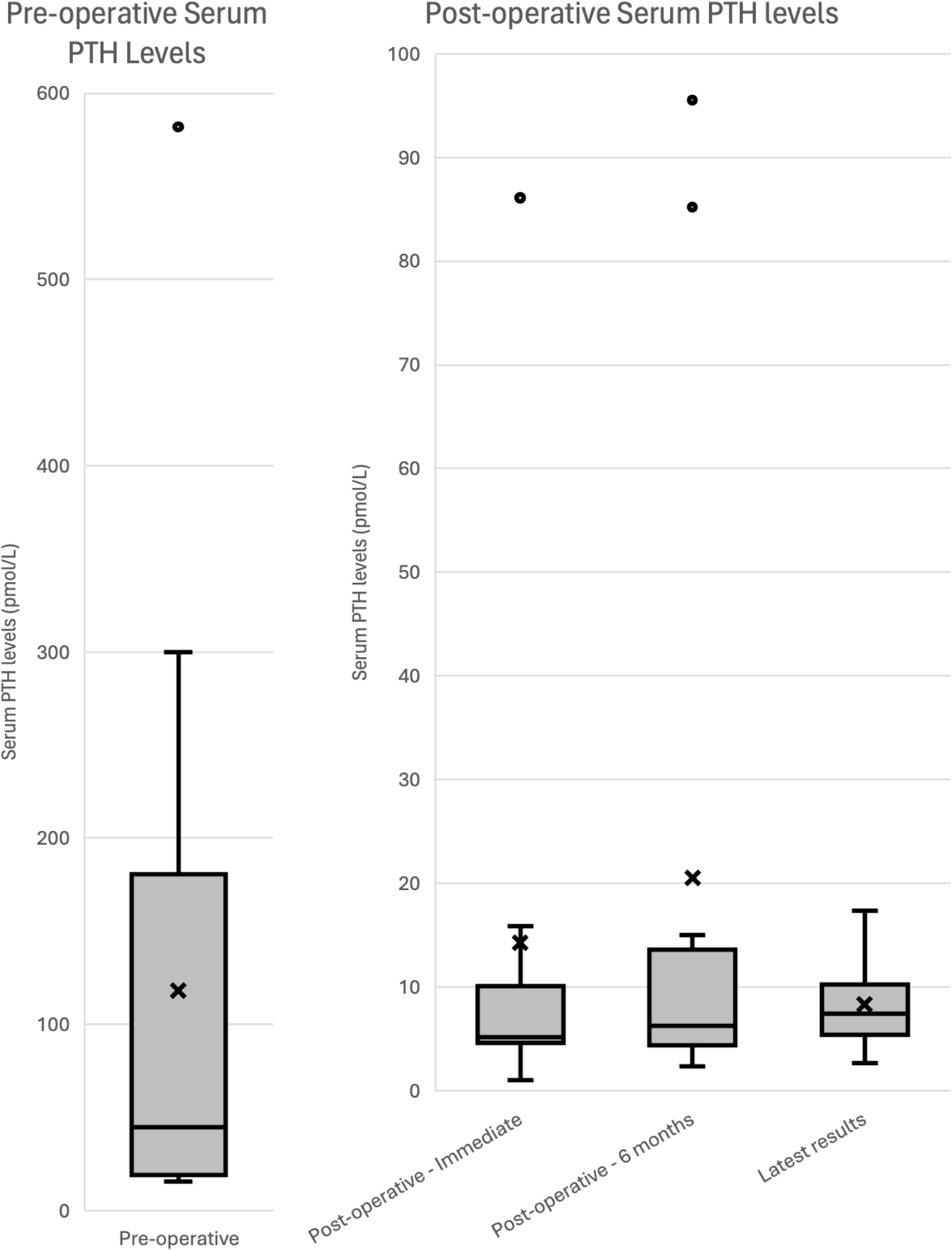
On initial presentation, 11 (79 per cent) patients had signs and symptoms suggestive of hypercalcaemia. Of these, five patients (45 per cent) required hospital admission to control their hypercalcaemia. All patients were hypercalcaemic on blood tests, with the median adjusted calcium level being 3.02 mmol/l and the highest adjusted calcium value being 6.00 mmol/l (Figure 1). Parathyroid hormone (PTH) levels were similarly raised; the median PTH value was 44.65 pmol/l and the maximum value was 582 pmol/l (Figure 2).
Box and Whisker Plot. Peri-operative Serum Adjusted Calcium Levels (mmol/L) - includes pre-procedure, immediate post-procedure and 6 months post-procedure samples, and the latest results.

Box and Whisker Plot. Pre-operative Serum PTH levels (pmol/L). Post-operative Serum PTH levels (pmol/L) - includes immediate post-procedure sample, 6-month post-procedure sample and the latest results.

Ultrasound imaging was performed in four patients, with the most common axial imaging before treatment being PET scans, performed in seven patients. Based on these blood results and imaging findings, parathyroid carcinoma was suspected in these patients, who were offered surgery. Two patients were found to have metastatic disease, with one patient having lesions in the liver, lung, and bone whilst the other patient had mediastinal disease.
Following assessment, all patients in the cohort received surgery as their primary treatment. The mean time from the patient’s initial assessment to surgery was 55 days and the primary procedure performed for all patients was a parathyroidectomy. An ipsilateral thyroidectomy was performed during the initial procedure in three patients and was delayed in one patient. An additional patient required mediastinal exploration during the initial procedure due to the extent of the disease on imaging. Follow-up procedures were needed for three patients, two to achieve better resection margins and one for recurrence. Only one patient received palliative radiotherapy following surgery and no patients received chemotherapy.
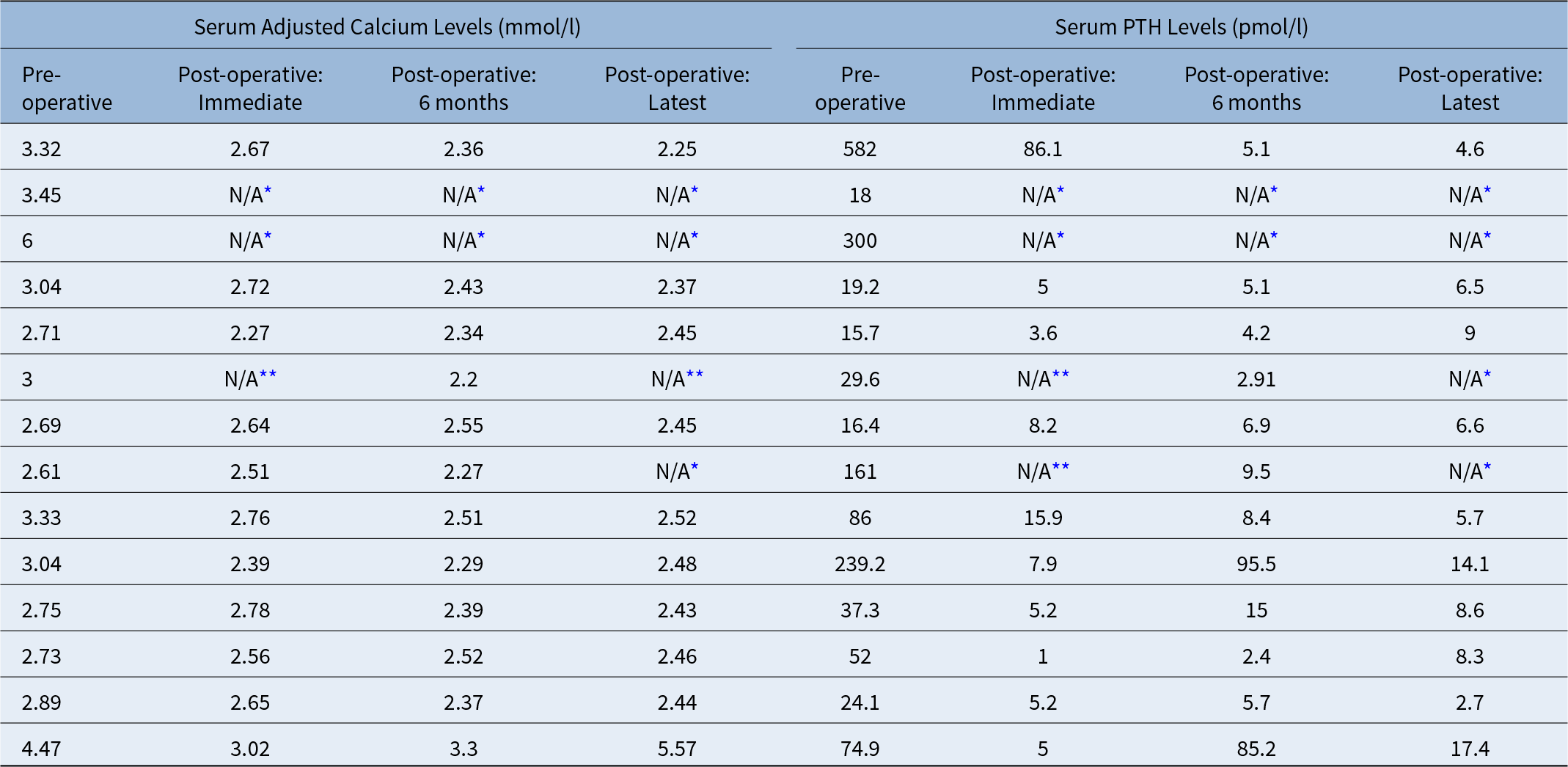
Immediately after surgery, the median adjusted calcium levels were 2.65 mmol/l and the median PTH value was 5.2 pmol/l. The most updated findings for the patient’s biochemistry results are presented in Table 1. There was one case of a loco-regional and metastatic recurrence, with positive lymph node disease with extra-nodal spread in levels 2–6 and metastasis in the trachea and oesophagus. At the time of writing, there were no other recorded episodes of recurrence in the cohort.
Most-updated biochemistry results

* N/A = results not available as these patients had passed away; N/A** = no record of results found; PTH = parathyroid hormone.
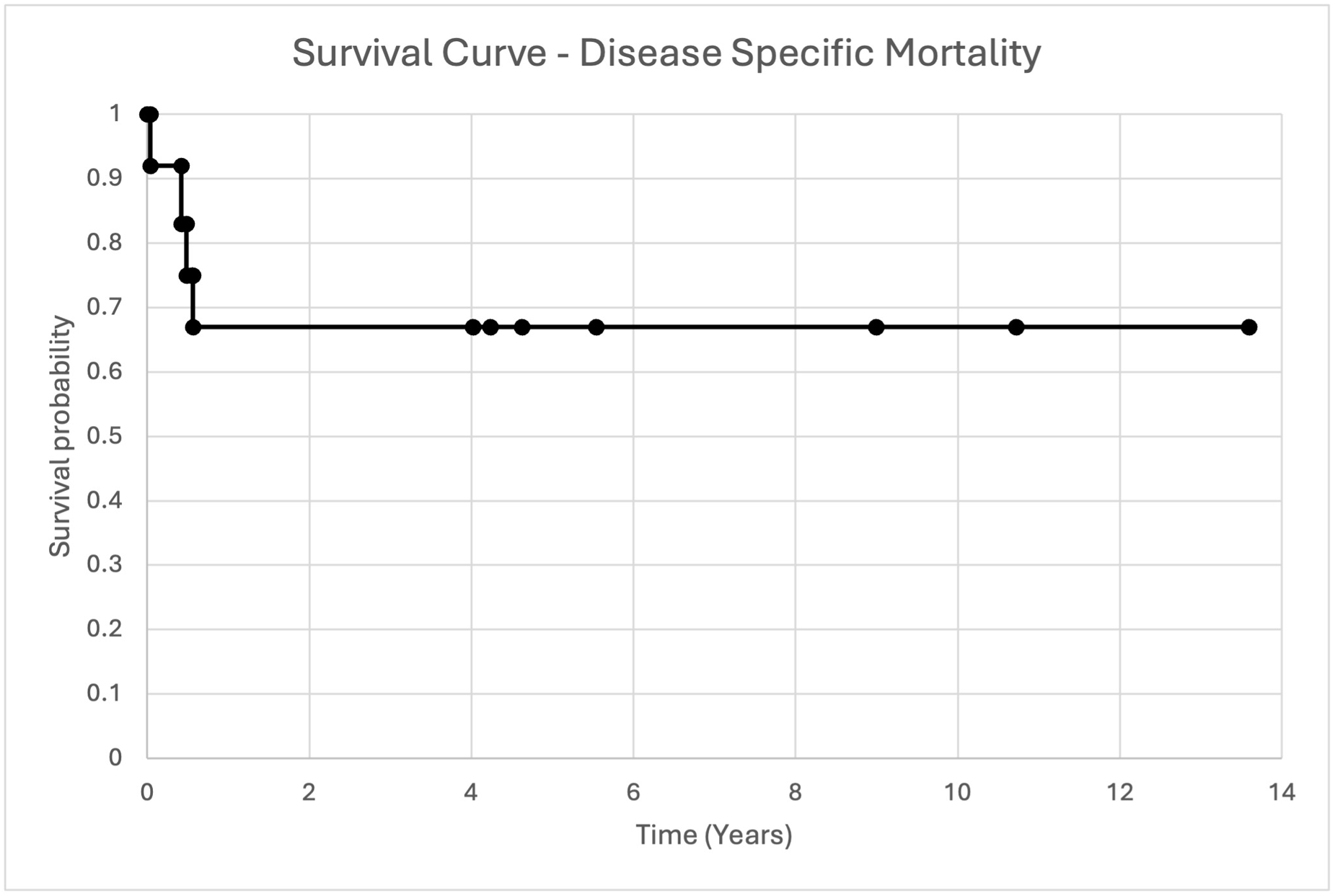
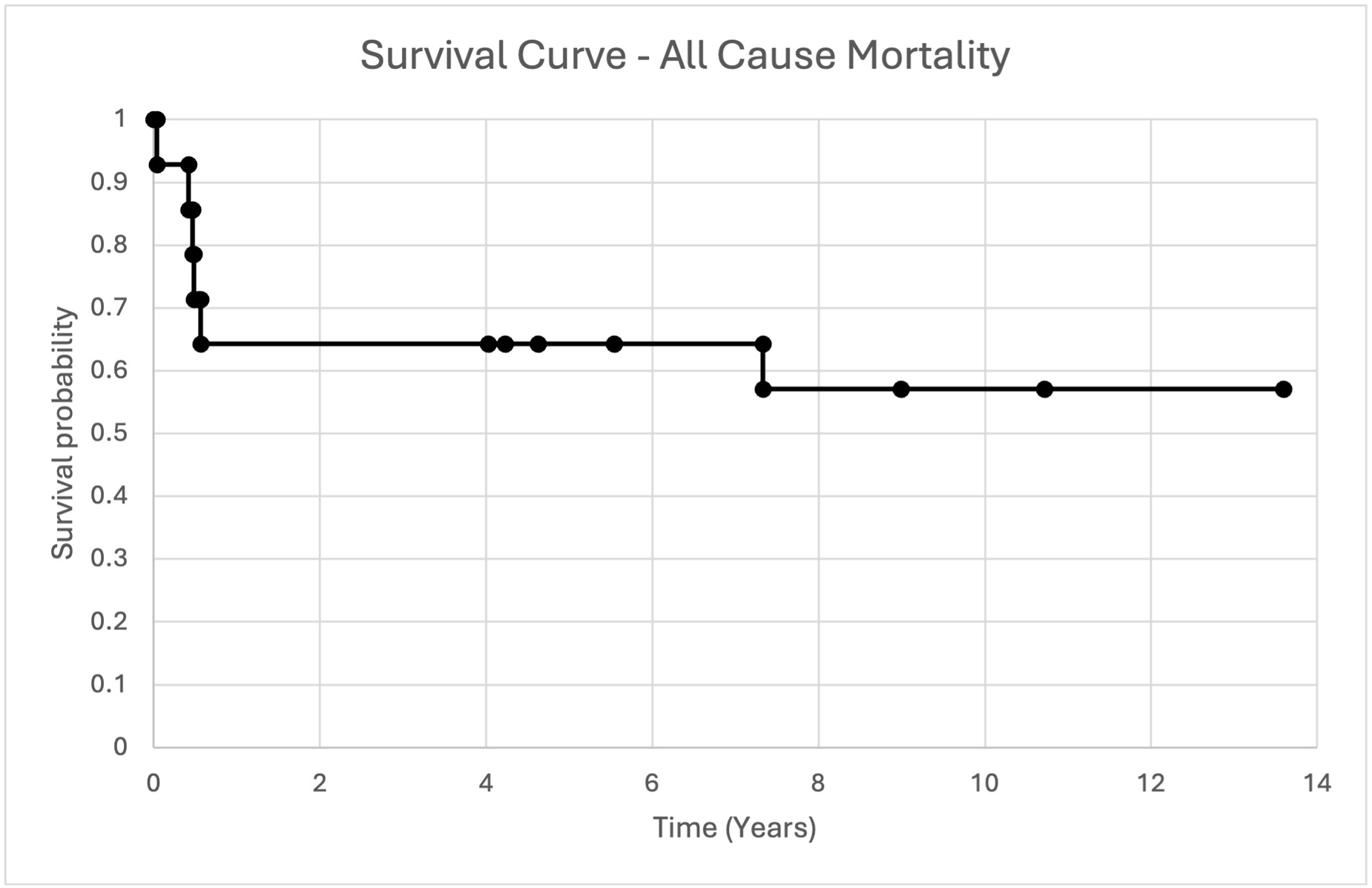
After a median follow-up period of 2.52 years, six patients had passed away: four of the causes related to parathyroid carcinoma. The causes of death included uncontrolled hypercalcaemia (2/4, 50 per cent), end-stage liver failure secondary to hungry bone syndrome (1/4, 25 per cent) and metastatic spread of disease (1/4, 25 per cent). Unrelated causes of death included one case of advanced gastric cancer and a case of metastatic sarcoma. The disease-specific mortality was 33 per cent (4/12) whilst the all-cause mortality was 43 per cent (6/14), with 5-year and 10-year disease survival rates of 67 per cent (Figure 3).
Survival Curve. Disease-specific mortality - time from diagnosis to death from disease (Parathyroid Carcinoma), median 5 months (range 0 - 6 months).

Survival Curve. All-cause mortality - time from diagnosis to death from any cause, median 5 months (range 0 - 87 months).

Discussion
The management of parathyroid carcinoma is challenging due to the lack of specific pre-operative clinical features distinguishing it from parathyroid adenomas.Reference Long and Sippel9 Within the literature, severe hypercalcaemia and hyperparathyroidism are the primary features for a majority of parathyroid carcinoma cases,Reference Wei and Harari3, Reference Erickson, Mete, Juhlin, Perren and Gill8–Reference Sharretts, Kebebew and Simonds11 with studies citing that serum calcium levels above 3 mmol/l and serum PTH levels more than three times the upper limit of normal are highly suspicious for parathyroid carcinoma.Reference Erickson, Mete, Juhlin, Perren and Gill8 These findings were seen in most of our cohort, with eight patients having adjusted calcium levels above 3 and most PTH levels being more than three times the upper limit of normal.
Other than biochemistry results, palpable neck lumps and cervical lymphadenopathy have been reported in 40–70 per cent and 15–30 per cent of parathyroid carcinoma cases respectively,Reference Wei and Harari3 with a neck lump greater than 3 cm in diameter being highly suspicious of parathyroid carcinoma.Reference Long and Sippel9, Reference Hsu, Sippel, Chen and Schneider13 Skeletal and renal symptoms have also been reported, with some case series suggesting renal and skeletal disease being present in up to 50 per cent of all parathyroid carcinoma patients.Reference Sohail, Ayub, Abbas, Sheikh, Qureshi and Usman14 Whilst signs and symptoms of bony and renal disease were seen in most of our patient cohort, palpable neck lumps and cervical lymphadenopathy were not commonly seen. Overall, the clinical presentation findings from our cohort support severe hypercalcaemia and hyperparathyroidism being the primary presenting symptoms of parathyroid carcinoma.
Surgical resection with good margins is widely considered the gold standard treatment for parathyroid carcinoma,Reference Perrier, Arnold, Costa-Guda, Busaidy, Nguyen and Chuang1, Reference Alberti, Smussi, Zamparini, Turla, Laini and Marchiselli4, Reference Long and Sippel9 with a recent systematic analysis demonstrating that surgery was associated with better survival outcomes.Reference Alberti, Smussi, Zamparini, Turla, Laini and Marchiselli4 The extent of surgical resection required for the management of parathyroid carcinoma remains controversial. Some authors advocate for an en-bloc resection, in which the ipsilateral thyroid lobe and isthmus are removed, the trachea is skeletonised, and any skeletal muscle immediately related to the tumour is removed.Reference Perrier, Arnold, Costa-Guda, Busaidy, Nguyen and Chuang1, Reference Alberti, Smussi, Zamparini, Turla, Laini and Marchiselli4, Reference Long and Sippel9, Reference Sharretts, Kebebew and Simonds11 Due to limited data, debate exists within the literature on whether to perform concomitant neck dissection following resection.Reference Long and Sippel9 Overall, it is thought that lymph node involvement in parathyroid carcinoma is predominantly in the central neck compartment and rarely in the lateral neck.Reference Schulte, Talat, Miell, Moniz, Sinha and Diaz-Cano15 As such, the prevailing opinion is to perform neck dissections when positive lymph node disease has been identified.Reference Medas, Erdas, Loi, Podda, Pisano and Nicolosi16 Otherwise, most authors do not recommend the need for an ipsilateral neck dissection by default.Reference Perrier, Arnold, Costa-Guda, Busaidy, Nguyen and Chuang1, Reference Sharretts, Kebebew and Simonds11 Without an en-bloc resection, authors have reported recurrence rates approaching 50 per cent.Reference Perrier, Arnold, Costa-Guda, Busaidy, Nguyen and Chuang1
In contrast, other authors have reported that the extent of surgery does not appear to influence patient outcomes and mortality.Reference Wei and Harari3, Reference Harari, Waring, Fernandez-Ranvier, Hwang, Suh and Mitmaker17, Reference Young, Wu, Li, Yeh and Livhits18 Youngs et al.Reference Young, Wu, Li, Yeh and Livhits18 conducted a retrospective cohort study of patients treated for parathyroid carcinoma involving 136 patients and found that the addition of an ipsilateral thyroidectomy did not improve survival. Similarly, a retrospective review conducted between 1966 and 2009 involving 37 patients reported that the extent of the initial procedure did not significantly affect mortality.Reference Harari, Waring, Fernandez-Ranvier, Hwang, Suh and Mitmaker17
In our institution, most patients underwent a parathyroidectomy as the primary procedure. Only three patients received an ipsilateral thyroidectomy during the initial procedure due to findings during the operation suggestive of thyroid involvement, with a further patient receiving a delayed thyroidectomy following a multidisciplinary team (MDT) discussion. Despite this, we only recorded one case of recurrence following the initial treatment in our cohort. This finding may reflect that en-bloc resection in the initial procedure may not always be required in cases of parathyroid carcinoma. However, the number of patients is too small to make a meaningful statistical analysis. Operation findings with MDT input should guide the decision of whether to proceed.
Outside of surgery, there is no evidence that other treatments are effective. Parathyroid carcinomas are considered radio-resistantReference Sharretts, Kebebew and Simonds11 and the use of adjuvant radiotherapy is debated. Whilst some case studies have reported that adjuvant radiotherapy can reduce the risk of loco-regional recurrence,Reference Sawhney, Vaish, Jain, Mittal, Ankathi and Thiagarajan10, Reference Sharretts, Kebebew and Simonds11 a large retrospective analysis in the USA did not demonstrate any survival benefit of radiotherapy.Reference Limberg, Stefanova, Ullmann, Thiesmeyer, Bains and Beninato19 Considering these conflicting data, further multi-centre studies will be required to see if any subgroups of patients may benefit from radiotherapy.
Similarly, little evidence exists to support the use of chemotherapy in the management of parathyroid carcinomas, with the lack of effective biological models increasing the difficulty in identifying effective chemotherapy agents.Reference Perrier, Arnold, Costa-Guda, Busaidy, Nguyen and Chuang1 Several chemotherapeutic regimes have been reported in the literature, including agents such as dacarbazine or cyclophosphamide. Unfortunately, these only achieve short-term remission and are from studies with small numbers of patients.Reference Long and Sippel9, Reference Sharretts, Kebebew and Simonds11, Reference Akirov, Asa, Larouche, Mete, Sawka and Jang20
Survival rates for parathyroid carcinoma within the literature have been cited to be 85 per cent at 5 years and 49–77 per cent at 10 years.Reference Sawhney, Vaish, Jain, Mittal, Ankathi and Thiagarajan10 In our institution, the 5- and 10-year survival rates for parathyroid carcinoma were lower (67 per cent), with most of the mortalities occurring within a year of diagnosis. This finding may reflect the older age of our population, with the median age of diagnosis being 67 years old and two of the patients passing away due to causes unrelated to parathyroid carcinoma. Within the literature, poorer prognoses have been linked to the presence of distal metastatic lesionsReference Alberti, Smussi, Zamparini, Turla, Laini and Marchiselli4 and disease recurrence within 36 months of the original diagnosis.Reference Magnabosco, Brescia, Júnior, Neto, Arap, Junior, Ledesma, Alves, Kowalski, Martin and Montenegro22 This was seen in the disease-specific deaths within our cohort with the patient who suffered recurrence within a year of diagnosis passing away soon after.
Management of recurrence disease consists of surgical resection of recurrent and metastatic lesions;.Reference Long and Sippel9 Locoregional recurrence is common, with the lungs being the most common location for distal metastasis.Reference Sawhney, Vaish, Jain, Mittal, Ankathi and Thiagarajan10 A common problem in late-stage parathyroid carcinoma is medically resistant hypercalcaemia.Reference Alberti, Smussi, Zamparini, Turla, Laini and Marchiselli4, Reference Triggiani, Castellana, Basile, Renzulli and Giagulli21 Current management options include bisphosphonates, denosumab and cinacalcet, but unfortunately, it has been reported that these lose effectiveness with time.Reference Alberti, Smussi, Zamparini, Turla, Laini and Marchiselli4 In our cohort, patients with advanced disease deteriorated within a year of diagnosis so we were unable to make any conclusions regarding the use of these medical agents.
To summarise, our retrospective single-centre case series provides useful insights into managing parathyroid carcinoma. In keeping with literature findings, it demonstrates that key presenting symptoms in parathyroid carcinoma include severe hypercalcaemia and significantly elevated PTH levels. This case series also proves the effectiveness of prompt surgical management and may indicate that a parathyroidectomy is all that is required to achieve good outcomes.
Limitations of this case series include low numbers due to the condition’s rarity and that it represents the experience and outcomes of a single centre. Further research into this condition may require multi-centre prospective studies due to its low incidence and the development of good biological models to investigate alternatives to surgical management.
• Parathyroid carcinoma, an endocrine malignancy characterised by severe hypercalcaemia and primary hyperparathyroidism, is poorly understood due to its rarity
• Surgical treatment remains the gold standard of management for parathyroid carcinoma, although the extent of surgical resection required remains under discussion
• Data from this case series suggests that achieving low recurrence rates and good outcomes may not always require an en-bloc resection and/or ipsilateral thyroidectomy
• A multi-disciplinary team approach should be adopted to increase the chance of favourable patient outcomes due to the complexity of managing this condition
Acknowledgements
We would like to thank Dr Xenia Tyler (consultant histopathologist) and Will Potter for their help in identifying patients. In addition, we would like to thank John Losasso from the Norfolk and Norwich University Hospital Library and Knowledge Service, who helped conduct the literature search and obtain the original articles for this paper.
Funding
This study received no funding from any research-funding bodies. There were no competing financial interests.