Typhoid fever and Paratyphoid fever are life-threatening intestinal infectious diseases caused by Salmonella enteric serotype Typhi (S. Typhi) and Salmonella enteric serotype Paratyphi (S. Paratyphi), respectively. Humans are the only host and bacteria reservoir, and the transmission of S. Typhi and S. Paratyphi occurs by means of the ingestion of water or food contaminated by feces of infected persons or asymptomatic carriers. Reference Als, Radhakrishnan and Arora1–Reference Dougan and Baker3 Safe water, food, and hand hygiene are, therefore, the most important measures to prevent typhoid fever and paratyphoid fever effectively. The incubation period can range from 3 to 60 d with an average of 14 d for typhoid and 2-15 d for paratyphoid. The signs and symptoms of the diseases include persistent fever, fatigue, headaches, gastrointestinal reaction, and some life-threatening complications, such as intestinal bleeding, perforation, and consequent peritonitis. Reference Gibani, Britto and Pollard4,Reference Gu, Yan and Jiang5
Globally, typhoid and paratyphoid are still significant contributors to morbidity and mortality, especially in developing countries. Reference Bhutta, Stanaway and Breiman2,Reference Buckle, Walker and Black6 According to the research of Mogasale et al., almost half of typhoid and paratyphoid morbidity and mortality are from low- and middle-income countries in 2010, with 11.9 million cases and 129,000 deaths. Reference Mogasale, Maskery and Ochiai7 China was an endemic area with an incidence rate ranged between 10 and 50 per 100,000 populations before 1990. With the implementation of the Patriotic Health Campaign and improving drinking water and lavatories by the Chinese government, there has been a marked reduction in enteric diseases in China. The incidence rate of typhoid and paratyphoid dropped to 0.65/100,000 and 0.21/100,000, respectively, in 2015. There are also approximately 10 outbreaks of typhoid or paratyphoid occurred in China every year. Reference Liu, Zhao and Chen8,Reference Yan, Liang and Wei9 In 2010, a large-scale outbreak involving 601 cases of paratyphoid fever caused by hospital-derived transmission occurred in Yuanjiang county in southern China. Reference Yan, Yang and Wang10 Outbreaks of typhoid and paratyphoid fever have rarely occurred in economically developed areas of China.
On December 5, 2016, staff of Wuxi Centers for Disease Control and Prevention (CDC) noticed an abnormal report of paratyphoid fever at Qingyang town in eastern China. Between December 3, 2016, and January 13, 2017, a total of 40 Qingyang residents were reported as paratyphoid fever cases. Subsequently, an epidemiologic investigation was conducted for this paratyphoid outbreak. The objectives of this study were to identify the source and vehicle of this outbreak to implement control measures timely and effectively.
Methods
Study Area
Qingyang town is administered by Wuxi city, in which the per capita gross domestic product of citizens exceeded 20,000 U.S. dollars. The town is located on the southern bank of the Yangtze River with a subtropical monsoon climate. It covers an area of 68 square kilometers and governs 15 villages and 4 residential communities with a total population of approximately 90,000. According to the data from the China Information System for Disease Control and Prevention, a total of 5 typhoid patients and 1 paratyphoid patient were reported at Qingyang town from 2006 to 2015. Although clean tap water is supplied for every family, for economic reasons, the residents still have a habit of using shallow well water in daily life. The main reason is that shallow well water is free, so some people prefer to use shallow well water in daily life.
Case Definition and Epidemiological Investigation
In the current epidemiologic investigation, a suspected case was defined as a resident of Qingyang town who had a fever (≥38°C) of unknown origin for ≥3 d since November 8, 2016, with headache, fatigue, and gastrointestinal reaction. A probable case include the suspect case criteria with at least 1 of the followings: (1) unexplained sustained fever or recurrent fever ≥39°C for ≥5 d; (2) any signs of apathy, relative bradycardia, roseolas, and hepatosplenomegaly; (3) eosinopenia and normal or decreased total white blood cell count; (4) TO antigen was ≥ 1:80, and TH antigen titer was ≥ 1:160 in the Widal reaction. Confirmed cases were defined as those suspected or probable cases with isolation of S. Paratyphi from the stool or blood culture. 11 Once a suspected case was reported, the blood sample was collected and referred to the microbiology laboratory at Wuxi CDC for blood culture. For confirmed cases, an epidemiological investigation was conducted to find out potential risk for paratyphoid. The questionnaire content included exposure history about food and water consumption, and personal hand hygience habits. The questionnaire was checked after an investigation, and the data were recorded in double-track ways by EpiData 3.1 software for analysis.
Case-Control Study
To test the deduction generated from the epidemical investigation, this study performed a 1:1 matched case-control study on January 3, 2017. Controls were classmates of confirmed paratyphoid fever cases’ healthy classmates, colleagues or neighbors who never had any symptoms of paratyphoid from December 2016 to January 2017. They were randomly selected and matched by gender and age (±5 y).The interviews used a structured questionnaire to collect the information on the street-vended food exposure from the case group and control group.
Laboratory Investigations
The investigators collected environmental samples of street-vendors using water and suspected food and vegetables for bacteria culture. Bacterial isolation and identification referred to professional standard methods in diagnostic criteria for typhoid and paratyphoid fever. 12 Pulsed-field gel electrophoresis (PFGE) was performed on the strains cultured in environmental samples and patients’ samples to identify the source and vehicle of this outbreak. PFGE was conducted according to the standard protocol developed by the United States CDC for molecular typing, the results were analyzed using BioNumerics software (version 2.5, Applied Maths, Kortrijk, Belgium).
Ethical Considerations
This investigation was performed in response to a public health emergency, and based on the Regulation on the Urgent Handling of Public Health Emergencies, 13 formal ethical approval was not required. But verbal consent was obtained from all participants before the interview and sampling. Parents or guardians of participants under 15 y granted consent on their behalf and accompanied them during the interview. Consent was recorded on the questionnaire using the participant’s and/or guardian’s signature. All participants were informed of their rights according to the law outlined above. The study can confirm that all data, including all questionnaires and samples, were gathered following the Guideline for Paratyphoid Outbreak
Reports and Investigation, issued by the Department of Health of Jiangsu Province, China. No additional data were acquired by the authors, and no participant identifying information was associated with the reported data.
Statistical Analysis
Descriptive epidemiologic analyses were performed to generate hypotheses on risk factors for paratyphoid, the spatial distribution of the cases was illustrated by Google Earth. In analyzing the data from the case-control study, conditional logistic regression was used to account for the matched case-control study design and to reduce confounding. Data analyses were conducted by R3.5.1, the case-control study was using the “survival” package. Statistical significance was designated as a P < 0.05.
Results
Descriptive Epidemiology
The index case of this paratyphoid outbreak, a 28-y-old male worker, was reported on December 3, 2016. By January 13, 2017, a total of 40 lab-confirmed paratyphoid fever cases were reported in Qingyang town. Among all the cases, 18 were males and 22 were females, with a male-to-female ratio of 1:1.22. The age of paratyphoid patients ranged from 8 to 63 y old, with a median age of 17. Over half of the cases (24/40; 60.00%) were students, and 20 (20/24; 83.33%) of them were Qingyang High School students. There were also 12 workers diagnosed with paratyphoid fever and reported.
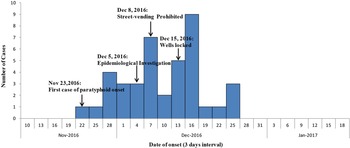
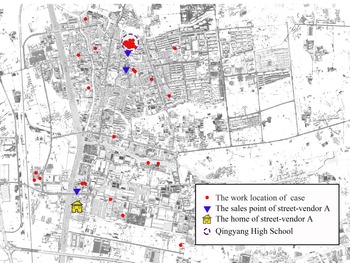
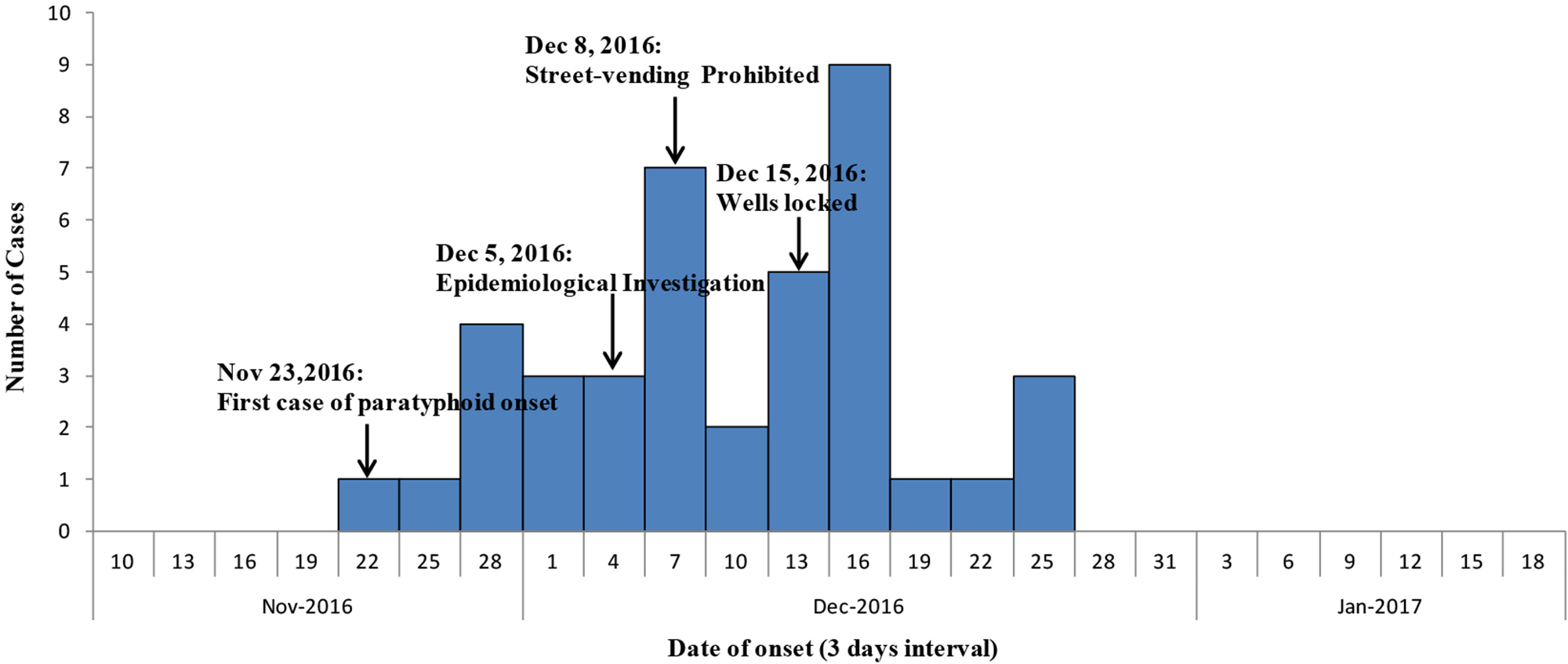
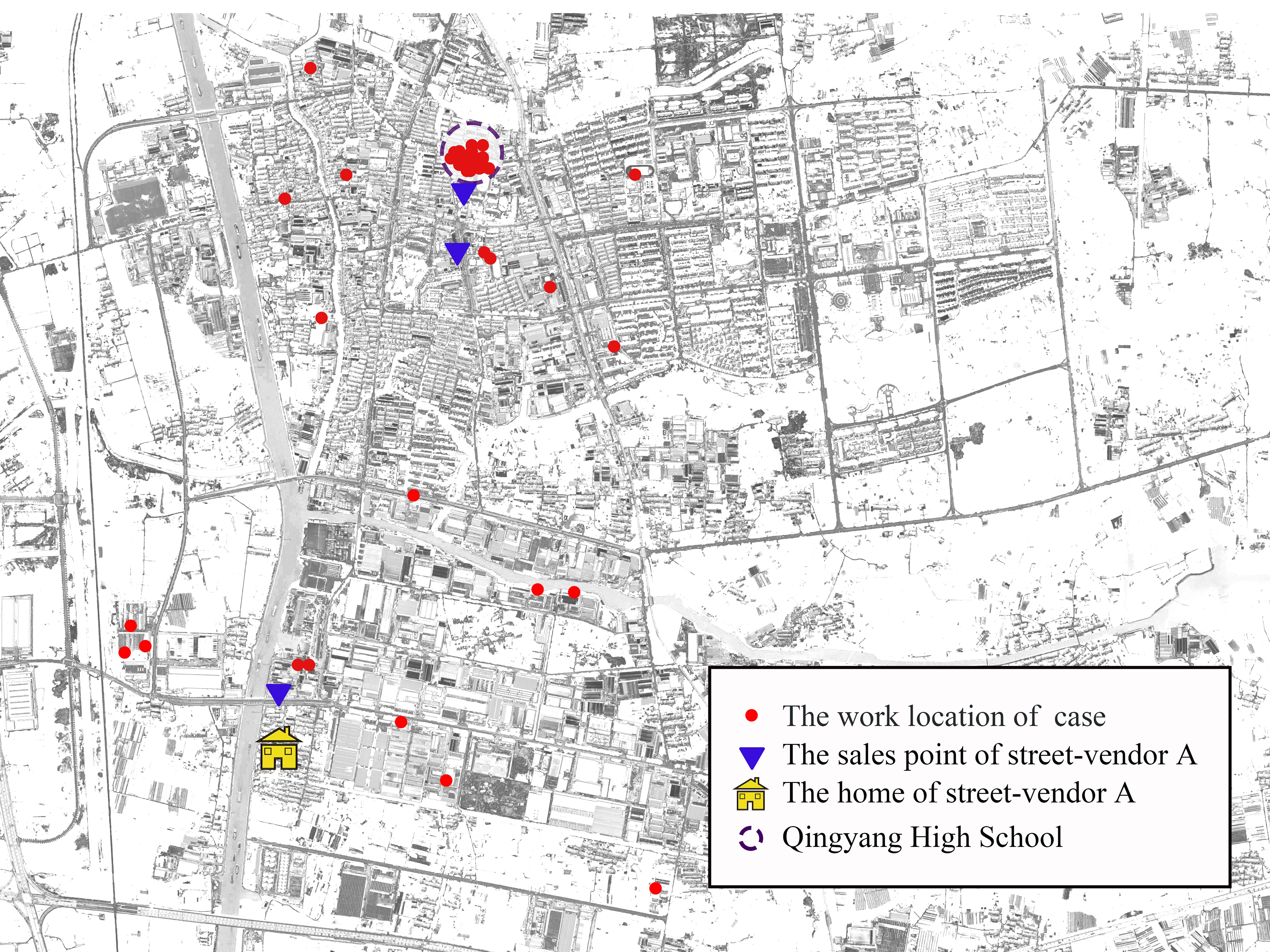
As shown in Figure 1, the first case began showing symptoms on November 23, 2016. Subsequently, the number of patients had increased. On December 8, 2016, the selling of street-vending food was prohibited. The number of paratyphoid cases decreased rapidly in the ensuing days. The spatial distribution of the cases are presented in Figure 2. Two populated areas of paratyphoid cases were observed, with 1 located in Qingyang High School and the second area around the other sale point of street-vendor A. In the research team hypothesis-generating investigation of patients, consumption of street-vended food Chinese egg pancakes made in unhygienic conditions was often reported. In the first 2 wk before onset, 77.50% (31/40) patients had eaten Chinese egg pancakes. Therefore, we hypothesized that street-vended food was the most potent vehicle of this outbreak.
The epidemic curve for the paratyphoid outbreak at Qingyang town in China.
The map of paratyphoid cases at Qingyang town in China.
Clinical Symptoms
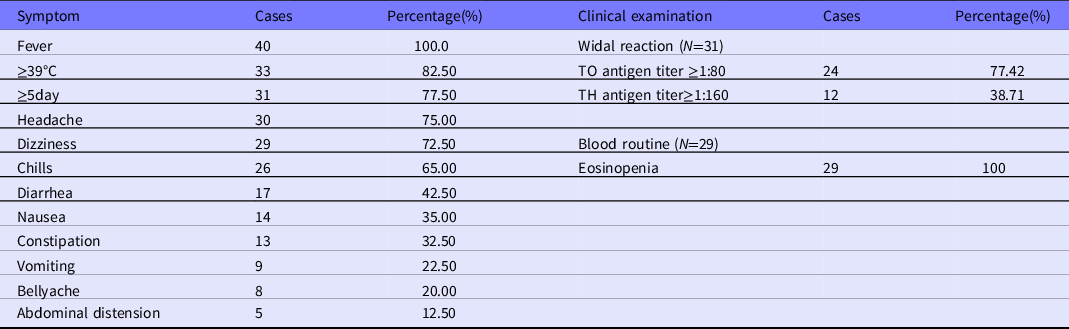
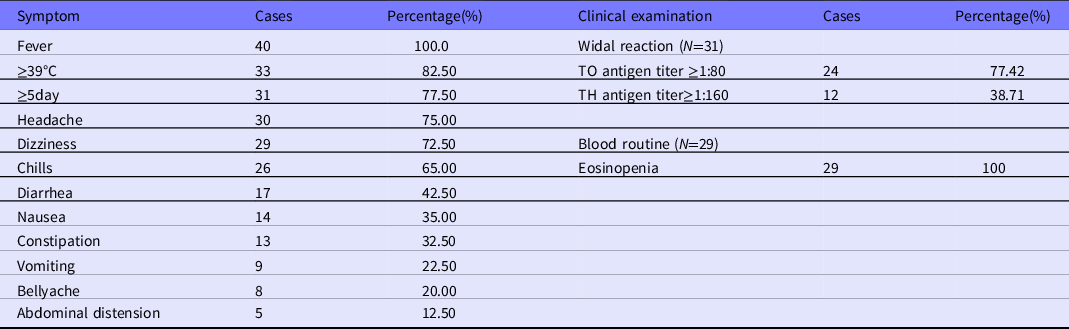
All paratyphoid cases were mild, with no severe cases and death. They all had a fever with a mean duration of 7 d (range, 3-15 d), and most of them (33/40; 82.5%) had a body temperature over 39°C (Table 1). Other predominant signs and symptoms were headache (75.0%), dizziness (72.5%), chills (65%), diarrhea (42.5%), nausea (35.0%), and constipation (32.5%). Among 31 cases with Widal reaction, 77.42% (24/31) cases’ TO antigen titer ≥1:80, and 38.71% (12/31) cases’ TH antigen titer ≥ 1:160. All cases were cured with standardized treatment and discharged.
Clinical features of paratyphoid cases at Qingyang town ( N =40)
Case-Control Study
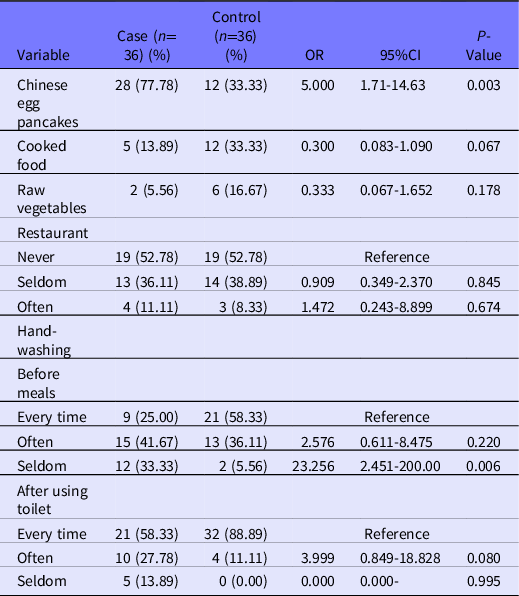
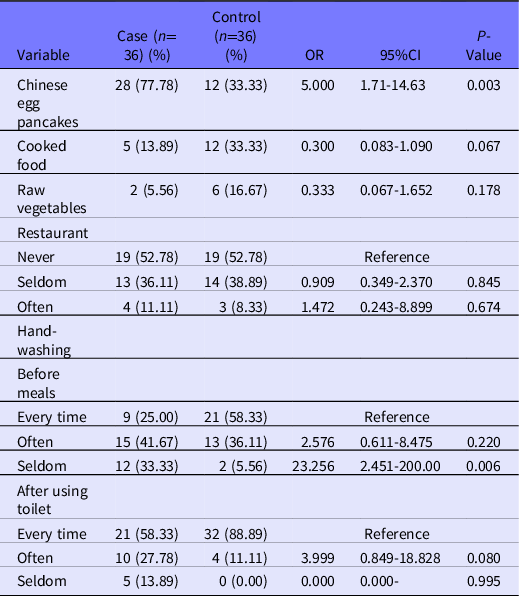
For the 1:1 case-control study on January 3, 2017, 36 paratyphoid cases and 36 healthy controls were enrolled. Table 2 shows the results of the risks associated with the paratyphoid outbreak. We found that 77.78% of paratyphoid cases compared with 33.33% of healthy controls consumed locally street-vended food Chinese egg pancakes (odds ratio [OR] = 5.00; 95% confidence interval [CI]: 1.710-14.630). For a habit of hand-washing every time before meals, it was a protective behavior with 25.00% of cases compared with 58.33% of healthy controls (OR = 23.256; 95% CI: 2.451-200.000).
1:1 Conditional logistic regression analysis of factors associated with the paratyphoid outbreak at Qingyang town in China
Laboratory Investigations
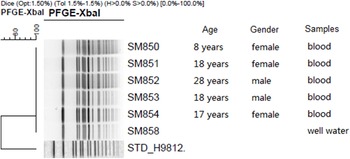
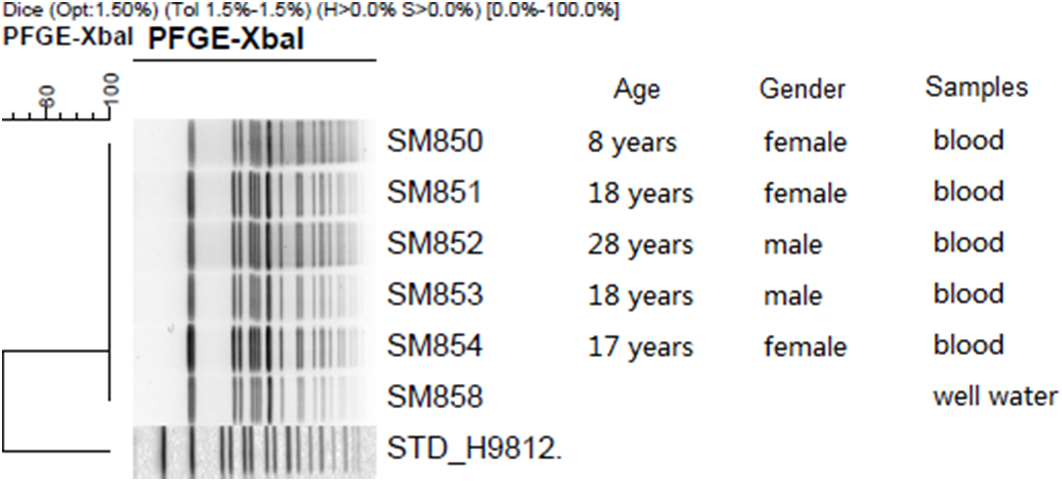
The investigators collected 15 water samples and 67 food samples from 2 suspected street-vendors around Qingyang High School and Qingyang food market. Laboratory testing of 67 food samples failed to recover any S. Paratyphi. On December 15, S. Paratyphi was cultured from a well water sample, which was collected from the home of street-vendor A. The PFGE patterns showed that isolates from paratyphoid cases and isolate of well water were homologous (Figure 3).
PFGE patterns of the S. Paratyphi A isolates from 5 cases and well water of street-vendor A.
Intervention and Termination of the Outbreak
Once the abnormal increase in the number of paratyphoid fever was identified, the following control measures were taken to interrupt the transmission of paratyphoid at Qingyang town. Citywide active surveillance of paratyphoid fever was carried out to timely find cases. Standard procedures of paratyphoid treatment and isolation were performed immediately for all patients. Bacteria culture of stool was performed on close contacts of confirmed cases. On December 8, 2016, local authorities started prohibiting street-vending. For environmental disinfection, the residence of patients was defined as an infected premise, and local CDC staff sterilized all the infected premises and other places that might be contaminated by paratyphoid patients; meanwhile, CDC staff developed comprehensive disinfection across the village, including wells, septic-tanks, dustbins, and pools. And at our recommendation, local authorities closed all wells. The citywide public health education was also performed, especially in schools. On December 27, 2016, the outbreak was controlled using the above control measures.
Discussion
The current investigation found the cause of the paratyphoid outbreak to be the consumption of local street-vended food Chinese egg pancakes in the Qingyang town in China. Although the strain was not recovered from the food, S. Paratyphi A was cultured from a well water sample of street-vendor A, which was used to wash the ingredients of Chinese egg pancakes.
According to the global burden of typhoid fever, waterborne typhoid and paratyphoid fever affect millions of people every year. Especially in developing countries, large-scale outbreaks of the disease were sometimes occurred with consuming contaminated water and incompletion sanitation system. Reference Als, Radhakrishnan and Arora1,Reference Crump, Luby and Mintz14–Reference Polonsky, Martínez-Pino and Nackers17 From January to June in 2015, a large and persistent outbreak of typhoid fever was reported in Uganda, with 10,230 suspected, 1038 probable, and 51 confirmed cases, the reason was identified as consuming contaminated water and street-vended beverages. Reference Kabwama, Bulage and Nsubuga15 Although the drinking water, sanitary protection, public health measures, and food safety control and supervision have been greatly improved, the outbreaks of typhoid or paratyphoid still occurred in China every year. Reference Gu, Yan and Jiang5 The reasons are as follows: First, people in hilly and rural areas still drink well water or groundwater, which are also used to wash food and irrigate vegetables. These unprotected sources of water are easily contaminated by unsafe disposal of excreta and solid waste. In 2010, Yuanjiang CDC reported a large-scale paratyphoid outbreak involving 601 cases, caused by untreated hospital wastewater to irrigate vegetables. Reference Yan, Yang and Wang10 In the current outbreak of paratyphoid fever, although clean tap water is supplied for every family, some residents prefer to use shallow well water in daily life, like washing food and clothes or tidying the rooms, because shallow well water is free. Second, consumption of street-vended food with unhygienic conditions is common in China, particularly in rural areas and schools. According to an analysis of epidemiological characteristics and risk factors of typhoid and paratyphoid outbreaks in China from 2004 to 2007, Reference Gao and Zhang18 most outbreaks occurred in rural areas (44.16%) and schools (33.77%), especially in township middle schools (53.84%). Therefore, except strengthening health promotion, the government should continue to improving drinking water and lavatories in urban villages and rural areas. In addition, local authorities should close all shallow wells and public water pumps to protect people from those unprotected sources of water. And in the high-incidence season of intestinal infectious disease, the government could conduct food safety special rectification regularly, especially around the school.
Although the ingestion of contaminated water or food plays a crucial role in the transmission of typhoid and paratyphoid, Reference Yan, Yang and Wang10,Reference Kabwama, Bulage and Nsubuga15,Reference Gao and Zhang18 close contact transmission patterns should not be neglected. In the current outbreak, some cases were in close contact with the paratyphoid case before onset. And the epidemic curve of this outbreak showed 4 peaks, and the interval between peaks was approximately 1 average incubation period for paratyphoid. It may be suggested that not only a point source but also a person-to-person by close contact transmission pattern might exist in this outbreak. Because paratyphoid cases commonly have mild clinical symptoms, Reference Gibani, Britto and Pollard4,Reference Gu, Yan and Jiang5 patients will not get standard procedures of treatment immediately. It could lead to disease spread by person-to-person transmission pattern. Therefore, once typhoid and paratyphoid cases were detected, all patients must be kept in isolation promptly, and the close contacts should be monitored and investigated to avoid effectively and swiftly spreading of the disease.
In the case-control study of the current outbreak, a habit of hand-washing every time before meals was a protective behavior. However, over half of the cases were students, and most of them were High School students. It indicated that a serious deficiency of health education occurs in schools of China. In an analysis of typhoid and paratyphoid outbreaks in China from 2004 to 2007, 26 outbreaks occurred in schools, particularly in township middle schools (53.84%). Students in those schools had a habit of drinking raw water and eating street-vended food around schools. Reference Gao and Zhang18 It suggested that school health professionals should regularly conduct health education of personal hygiene practice and a healthy diet to prevent infectious diseases, especially in a high-incidence season of intestinal infectious disease.
Furthermore, there were still some limitations of the study: First, the antibiotic susceptibility testing of all isolates from cases in this outbreak was not conducted. According to an analysis of the drug resistance of S. Typhi and S. Paratyphi in Jiangsu Province, Reference Zhuang, Zhang and Tang19 the pathogen was sensitive to ciprofloxacin and resistant to nalidixic. However, in the paratyphoid outbreak in Yunnan Province, Reference Yan, Yang and Wang10 patients infected with S. Paratyphi A experienced poor response or failure treatment with ciprofloxacin. It indicated that a drug-resistant susceptibility test on every patient who had a positive culture is very important to realize the changes of bacterial resistant profile to failure therapy especially at or above the provincial level. Second, there were not enough resources to perform genomic analyses. Whole-genome sequencing can provide more accurate information than PFGE to track the origins and dynamics of outbreaks. In addition, genomic analyses could also reveal pathogen evolution and the genes which confer antibiotic resistance on bacteria. Finally, in the investigation of the outbreak, the data were based on self-reports, therefore, recall bias of cases and controls could not be avoided.
Conclusions
In S. Paratyphi A outbreaks, augmentation of resources early in the investigation including environmental testing, whole genome sequencing, and susceptibility testing would efficiently and effectively provide for identification of the processes that contributed to the outbreak and allow for remediation of the causes. Remediation of potential causes should be implemented pending confirmation from the investigation. Contaminated well water and Chinese egg pancakes were the likely source and vehicle of this outbreak. According to our recommendation, local authorities closed all wells and prohibited street-vending. Health education, especially handwashing, and food safety supervision should be promoted to prevent such outbreaks, particularly in schools.
Acknowledgments
The authors are thankful for the support from Jiangsu Province Center for Disease Control and Prevention.
Author Contributions
Drs Zhang and Sha contributed equally to this work. Conceptualization, Ping Shi and Chao Shi; Methodology, Dan Sha, Lin Ji; Software, Qi Zhang; Investigation, Yujun Chen, Jianxiang Yao, Yumeng Gao, Juan Liu; Writing original draft preparation, Qi Zhang; writing review and editing, Chao Shi and Qi Zhang.
Funding statement
This work was supported by Wuxi Project of Health and Family Planning (No. MS201817), Wuxi Suitable Technical Project of Health and Family Planning (No. T201819), Project of Public Health Research Center at Jiangnan University (JUPH201817 and JUPH201847), Wuxi Development Medical Disciplines (FZXK2021010), and Top Talent Support Program for young and middle-aged people of Wuxi Health Committee (BJ2020100).
Conflicts of interest
None.