Introduction
There are few published studies documenting the impact of interventions intended to alter gender norms on family planning (Boender et al., Reference Boender, Santana, Santillán, Hardee, Greene and Schuler2004; Rottach et al., Reference Rottach, Schuler and Hardee2009). Most of the exceptions are studies of interventions designed to educate men about family planning, engage them in discussions about it and encourage them to discuss it with their wives (Terefe & Larsen, Reference Terefe and Larson1993; Amatya et al., Reference Amatya, Akhter, McMahan, Williamson, Gates and Ahmed1994; Shattuck et al., Reference Shattuck, Kerner, Gilles, Hartmann, N'gombe and Guest2006; Hartmann et al., Reference Hartmann, Gilles, Shattuck, Kerner and Guest2012); these studies did not address gender norms directly, and did not work with couples. Here findings are presented from a study testing a short-duration intervention designed specifically to influence the inequitable gender norms that constrain the practice of family planning.
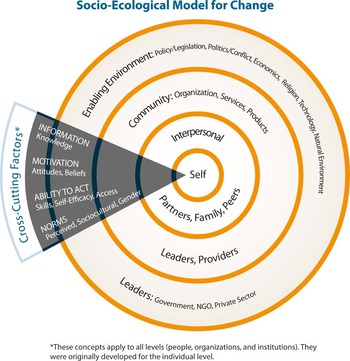
In 2011–2012, the C-Change Project (a USAID-supported project implemented by FHI 360) conducted an intervention study with Asociación Pro Bienestar de la Familia de Guatemala (APROFAM) to test the hypothesis that communication strategies promoting gender equity in the context of reproductive health will contribute to gender-equitable attitudes and practice of family planning in traditional, rural settings. C-Change employs an ecological framework of social and behaviour change communication (SBCC) that examines the factors contributing to health and social problems at various levels, from characteristics of the broader environment, such as the governmental level, which can enable or inhibit change, to the level of the individual (Fig. 1). Cross-cutting these levels are factors such as information, motivation, ability to act and the norms that may support or constrain action. In this case, APROFAM's experience in rural areas of Guatemala suggested that gender norms contributed to high fertility and closely spaced births by discouraging contraceptive use, constraining women from making decisions regarding the timing of their pregnancies and the size of their families, discouraging couple communication about family planning and distancing men, who have more decision-making power, from reliable family planning information and services. APROFAM was already providing reproductive and sexual health information and services (described below) at the community level and wanted to identify strategies to address these gender norms. The intervention was inspired in part by the work of Instituto Promundo, based in Brazil, which has shown success in reducing HIV/AIDS risk behaviours by holding interactive discussion sessions with groups of young men, in which the men are encouraged to examine and question prevailing stereotypes and norms of masculinity (Barker et al., Reference Barker and Buxton2004, Reference Barker, Leach and Mitchell2006; Pulerwitz & Barker, Reference Pulerwitz, Barker and Segundo2006). The APROFAM intervention addressed the inequitable gender norms that influence individual attitudes and behaviours related to sexuality and family planning by engaging couples and peers in community settings, with the sanction of local leaders, in recognizing and reconsidering their gender attitudes.
C-Change social and behaviour change model. Adapted from C-Modules: A Learning Package for Social and Behavior Change Communication (C-Change, FHI 360, Washington DC).

The objective of this paper is to investigate the effects of the intervention on three main outcomes: gender attitudes, knowledge of modern contraception and contraceptive use.
Setting
Guatemala has made significant progress in expanding access to family planning in recent years, but the country lags behind its regional neighbours, and there are sizeable gaps between indigenous and non-indigenous women related to contraceptive prevalence, fertility rates and unmet need for family planning. According to the 2008 National Survey of Maternal and Child Health, the total fertility rate (TFR) in the country declined from 4.4 children per woman in 2002 to 3.6 in 2008 (Guatemala Ministerio de Salud, 2009). In that year, the TFR was 4.2 among rural, and 4.5 among indigenous women, compared with just 2.9 among urban, and 3.1 among non-indigenous women. (Indigenous people comprise about 42% of the country's population.) That year, the contraceptive prevalence rate was only 46% among rural and 40% among indigenous women, compared with 66% among urban, and 63% for non-indigenous women. Unmet need for family planning among indigenous women was 30% among indigenous women – twice as high among non-indigenous women (15%); it was 25% among all rural women.
One explanation for the lower contraceptive prevalence rates and higher unmet need among mostly rural indigenous Guatemalans is a legacy of suspicion related to the brutal civil war that lasted over three decades, from 1960 to 1996, in which many villages were destroyed and indigenous people killed. To some extent, government-run family planning programmes are still seen as part of a ladino plot to diminish the indigenous population (Bertrand et al., Reference Bertrand, Seiber and Escudero2001; Ishida et al., Reference Ishida, Stupp, Turcios-Ruiz, William and Espinoza2012). Inegalitarian gender norms are thought to be another factor. Women's ability to make decisions about their own reproduction is limited by the fact that men have more decision-making power on issues of family planning and use of services (Netzer & Mallas, Reference Netzer and Mallas2008; Guatemala Ministerio de Salud, 2009). Other gender equity indicators are consistent with this picture. For example, the percentage of women classified as economically active among ages 15+ was 48% for women compared with 88% for men (Population Reference Bureau, 2011). Although school attendance is compulsory in Guatemala starting at age 7, indigenous girls in particular are educationally disadvantaged; according to government data from 2000, primary school completion rates for indigenous girls are 58% those of indigenous boys, with only 20% of indigenous girls age 18 having completed primary school (Hallman et al., Reference Hallman, Peraca, Catino, Ruiz, Lewis and Lockheed2007). The 2013 Human Development Report of the United Nations Development Program (UNDP, 2013) ranked Guatemala 114 of 186 countries (186 being the highest level of inequality) on its Gender Inequality Index, which synthesizes a variety of indicators.
The project was fielded in 30 rural communities in the western highlands, in the departments of Sacatepéquez, Chimaltenango, Sololá, Huehuetenango and San Marcos. Communities were selected from rural areas where APROFAM, a private, non-profit, Guatemalan IPPF affiliate founded in 1964, provides mobile services and trains promotores (female and male community-based volunteers promoting sexual and reproductive health) to help overcome barriers and increase access to reproductive health services. Since 1975, APROFAM has operated a community-based distribution programme to provide information, education and communication services on sexual and reproductive health in rural communities combined with the provision of family planning methods. The programme includes a network of 3400 voluntary promoters (men and women), 55 educators (men and women) and four field supervisors. The Rural Development Program works in co-ordination with APROFAM mobile medical units. These units include a team of physicians and nurses that travel across the country, providing temporary and permanent family planning methods as well as other reproductive health services. The voluntary promoters carry out more than 100,000 visits per year, providing personalized education and information to rural families on the different components of reproductive health, selling condoms and oral contraceptives at nominal prices, referring pregnant women and children under 5 years of age to local health centres and identifying and referring women interested in long-acting methods to mobile clinics. Educational talks and meetings are also carried out in hospitals, health centres, markets, co-operatives and other public places, approximately 5512 times a year, to provide information and education on maternal and child health, cervical cancer prevention, STI prevention, family planning and others topics. After the talk, personalized and confidential counselling is given upon request, in Mayan languages when appropriate.
The study included communities speaking Quiché and Kakchiquel, two predominant Mayan languages. In aggregate, the communities had approximately equal numbers of indigenous and non-indigenous inhabitants. The latter were included in the study because they live in the same communities and face similar resource constraints as indigenous inhabitants.
Methods
Interventions
The interventions consisted of a series of six interactive workshop sessions with couples: two for the men, two for the women and two for both members of the couple – four workshop sessions per individual, over the period of a month. The reason for this arrangement is that APROFAM field staff felt that if the initial sessions included both men and women, the women might feel too shy to speak up but that, after the women had become used to the interactive format of the sessions, mixed-gender groups would be feasible. Also, certain topics were more suited to women-only sessions: for example, strategies for communicating effectively with male partners. A total of about 1200 individuals were recruited for the workshops – an average of 20 couples in each of the 30 communities. The workshops were conducted in March and April of 2012. APROFAM conducted mobile clinics in all sites, soon after the workshops were complete in the intervention sites and soon after the baseline survey in the control sites.
Participants were recruited by promotores, who visited homes and also asked people to spread the word among others in the communities. To be eligible, an individual was supposed to live in the community and be married or in civil union, with the wife between 18 and 40 years of age, and both members of the couple had to agree to participate. They were also supposed to be well known and respected within their community and have good communication with others. APROFAM hoped that selection of such people as participants would facilitate the spread of the ideas discussed in the workshops to other members of the communities (but this possibility was not addressed in the research design because of the short time available for the study). In practice the age criterion was relaxed in some cases to avoid discrimination against older women, and there were a few cases in which only one member of the couple attended the workshop. The workshop sessions were led by trained facilitators, selected from among APROFAM's educators. Priority was given to those familiar with the communities in question and/or those who spoke the prevalent Mayan dialects. The facilitators used a manual developed by the C-Change Project that incorporates games, role plays and other exercises. Its purpose is to raise awareness of gender inequality and the gender issues that act as barriers to sexual and reproductive health, and to encourage gender-equitable attitudes and interest in family planning. The manual adapted material from a number of sources, including Stepping Stones, the EngenderHealth Men as Partners manual and the Population Council's Sakhi Saheli manual (Welbourn, Reference Welbourn2007; EngenderHealth and Promundo, 2008; Population Council, 2008). The facilitators also distributed information sheets on contraceptive methods. For example, one role play session was designed to strengthen women's ability to negotiate contraceptive use with their male partners. The facilitator asked three women to volunteer to be women and three to volunteer as their male partners. She then put them in pairs and asked another volunteer to be a baby for the third pair. Each pair was given 10–15 minutes to create a small play about sex, fear of pregnancy and family planning, using one of three scenarios. One was the following:
Role play 3
A man proposes sex but the wife says the baby is in the room. The man asks why she always wants to sleep with the baby, who is already 3 years old. As the man tries to convince the wife to loosen her skirt, the baby starts crying and the husband threatens to find another woman to have sex with him. The wife gives in, reasoning loudly that it is better she accepts than have him go to another woman.
The women then performed their plays in front of the group. After each play, the facilitator asked the rest of the group to briefly discuss the following questions:
-
• Is this dialogue realistic?
-
• Who is in control?
-
• Does the man seem to care whether his partner gets pregnant?
-
• Can the woman understand whether he wants her to get pregnant?
-
• Does the woman seem to care whether she gets pregnant?
-
• Can the man understand whether she wants to get pregnant?
-
• Is there a risk of an unplanned pregnancy?
-
• Do they have a good relationship?
-
• What would make this situation better?
Study design
Communities were randomly assigned to intervention and control groups, stratifying by department, as follows. First, APROFAM selected nine communities in each of five departments in the western highlands, based on the availability of an APROFAM educator familiar with the communities and/or speaking the local Mayan dialect, who could be trained to facilitate the workshops. In each department, the nine communities were randomly assigned to three groups: Group 1 (intervention group), Group 2 and Group 3, resulting in a total of fifteen communities in each of the three groups, across the five departments.
The interventions in the Group 2 communities were delayed so they could serve as control sites. Group 3, where service statistics alone were to have been used to assess change in contraceptive use, was subsequently dropped because of time constraints and problems with the service statistics data. In the remaining two groups, surveys were undertaken to measure changes in gender attitudes among workshop participants, comparing changes among participants in the intervention group with future participants in the control group, where changes might be attributed to the Hawthorne effect (the possibility that simply asking about gender attitudes in the survey could bring about change) or to extraneous factors. The simultaneous recruitment of participants in the control communities was a strategy to minimize selection bias. In this way, participants would not be compared with groups of people who might not have been willing to attend the workshops.
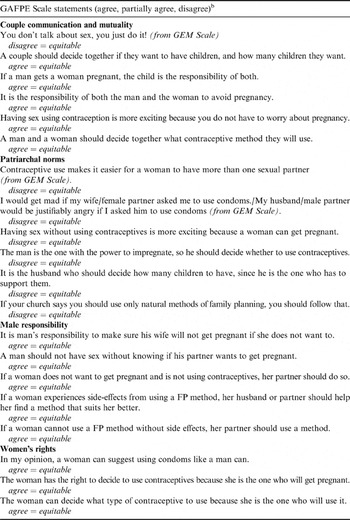
Gender attitudes were measured using the Gender and Family Planning Equity (GAFPE) Scale, containing 20 items (Table 1). Three were drawn from the Gender Equitable Men (GEM) Scale (Pulerwitz & Barker, Reference Pulerwitz and Barker2008) and the rest designed for this project to reflect gender norms that influence family planning. The selection of items was influenced by extensive discussions with local field staff of APROFAM and the items all reflected attitudes that arguably could have been influenced by the interventions. Informal pre-tests were conducted with indigenous clients of an urban APROFAM clinic to verify that they were understood as intended and that study participants would be willing to respond to them. The 20 items, statements reflecting norms and practices related to sexuality and family planning that were either equitable or inequitable, were read to participants, who were asked whether they agreed, partially agreed or disagreed with each statement. For example, ‘You don't talk about sex, you just do it’ (yes=inequitable) measured couple communication; ‘It is a man's responsibility to make sure his wife will not get pregnant if she does not want to’ (yes=equitable) measured constructive male engagement; ‘It is the husband who should decide how many children to have, since he is the one who has to support them’ (yes=inequitable) measured male dominance in family planning decision-making; and ‘If your church says you should use only natural family planning methods, you should follow that’ (yes=inequitable) measured respect for a patriarchal institution. One point was given for each response that indicated an equitable attitude and zero for an inequitable or partially equitable attitude. After all responses were tallied, points were summed to create a continuous gender equity score for each individual, at baseline and at follow-up. The individuals who expressed the most gender-equitable attitudes thus accumulated the greatest number of points.
C-Change Gender and Family Planning Equity (GAFPE) Scale a

a Scale developed by Sidney Ruth Schuler, Senior Advisor for Research and Gender.
b One point is assigned for each equitable response and points are summed to derive equity score.
The two other outcome variables were knowledge of modern contraceptive methods and modern contraceptive use. To measure knowledge, respondents were asked what modern contraceptive methods they knew about, first unprompted, then prompted. For each method named, the respondent received a point. Points were summed to create a continuous knowledge variable. A dichotomous contraceptive knowledge variable was also created, with the cut-off point based on the distribution of the summed knowledge variable: knowledge of five or more modern methods. Modern contraceptive use was measured using a dichotomous variable indicating whether or not the respondent was currently using a modern contraceptive method; these included tubal ligation, vasectomy, oral contraceptive pills, emergency contraceptive pills, IUDs, injectables, implants, male and female condoms and spermicide gel.
Survey implementation
The baseline survey was administered by APAES to all participants in the intervention and in the control group. It was administered verbally, face-to face, in Spanish or in a Mayan dialect, depending on the preference and language ability of the respondent. The duration was approximately 45 minutes. The follow-up survey was conducted about 2 months after the baseline survey in each site. A total of 1122 interviews were completed in the baseline survey, and 603 individuals were re-interviewed for the follow-up survey. To qualify for the follow-up survey in the intervention sites, the potential respondent had to have been interviewed in the baseline survey and participated in at least one of the workshops. Using these criteria, it was possible to re-interview 55.4% (328) of the baseline sample. Among those not interviewed, 10% had participated in the workshops but either refused a second interview or were not available for re-interview, and 35% did not participate in any of the workshops. In the control group, where workshops had not yet been held, 59% (275) of the baseline sample were re-interviewed in the follow-up survey.
Data analysis
The programs SPSS v.21 and SAS v.9.3 were used to analyse the survey data. Variables measuring gender attitudes and contraceptive knowledge and use were compared within the intervention and control groups, and levels of change were compared between the groups. In descriptive bivariate analyses of the individual items in the GAFPE Scale, differences in the level of change – positive and negative ‘equity points’ – were calculated by subtracting the mean scores of the control group from those of the intervention group. Negative numbers indicated that the intervention group had fewer equity points than the control group or that control group scores dropped by fewer points than the intervention group between baseline and follow-up. Positive numbers show gains in equity points for the intervention group, relative to the control group. An aggregate GAFPE indicator for each respondent was created by summing the equity points for the individual items. Tests of significance were conducted using mixed effect models. A linear mixed model was used to assess changes in the aggregate GAFPE indicator, and a logistic mixed model was used for contraceptive knowledge and use, as these were measured dichotomously. Models included random effects to account for the community-level randomization and repeated measures per participant. Study group (i.e. intervention and control) and time of the assessment (i.e. baseline and follow-up) were included as fixed effects in the model. No additional covariates were included since time-invariant factors as well as unobserved heterogeneity are controlled for when the interest is on the comparison of change in outcomes between the study groups (i.e. difference in difference) and the same individuals are followed up (i.e. panel data) (Cheng, Reference Cheng2003). The analysis for contraceptive use included non-pregnant women only. Since the focus of this study is on the assessment of changes, the analysis was restricted to participants interviewed at both baseline and follow-up.
Results
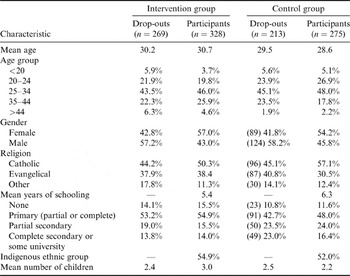
On average, 66% of those recruited (395/600) in the intervention group attended a session. In addition, a few people who did not initially register later joined. A total of 1122 interviews were completed in the baseline survey and 603 re-interviewed in the follow-up. In an analysis of drop-outs at baseline, Table 2 presents a comparison of participant characteristics between those who completed both surveys and those who dropped out. More males than females dropped out in both study groups, while participants with higher numbers of children completed the surveys significantly more in the intervention than in the control group. Differences between the drop-outs and those completing the surveys were also noted in the religion distribution in the control group.
Socio-demographic characteristics and analysis of drop-outs compared with participants, by group at baseline, Guatemala

Participant characteristics at baseline
At baseline, the intervention group was slightly older, somewhat less educated and had more children than the control group (Table 2). The mean age of participants in the intervention group was 31, and 29 in the control group. On average, the men were 2 years older than the women (not shown). The mean number of living children per couple was 3.0 in the intervention group and 2.2 in the control group. In addition, 10.1% of the women in the intervention group and 9.6% in the control group were pregnant. A little over 50% of the respondents in the intervention group and 57% of those in the control group were Catholic; 38% and 31%, respectively, were Evangelical. The remainder said they did not attend a particular church. Slightly over half of the participants in both groups considered themselves to be indigenous (Mayan). Spanish was as predominant as native languages, spoken by 55% of the participants. Kakchiquel and Quiche were the respective languages of 15% and 1%.
Gender equity scores
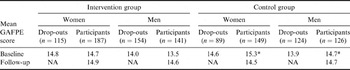
In the baseline survey, women in both the intervention group and the control group had considerably higher gender equity scores than the men (Table 3). Both men and women in the control group had significantly higher scores than their counterparts in the intervention group. In the follow-up survey, the scores of both women and men in the intervention group increased; men's scores registered a more dramatic gain, but remained slightly below those of the women. In the control group, men's mean score did not change, while women's mean score dropped by more than one point, to a level slightly below that of the men. Although the scores of both women and men in the control group started at considerably higher levels than the scores of the intervention group, the follow-up survey scores of women in the intervention group exceeded those of women in the control group, and the scores of men in the intervention group nearly caught up with those in the control group. Table 3 also shows that there were no significant differences between participants and drop-outs in the intervention group, but that both male and female drop-outs from the control group had significantly lower scores than participants.
Mean scores a on GAFPE Scale, by group at baseline and follow-up, Guatemala

a The lowest possible value on this scale is 0 and the highest possible value is 20.
There were no significant differences between participants and drop-outs in the intervention group. In the control group, the scores of both male and female participants were significantly higher than those of the drop-outs (p<0.05).
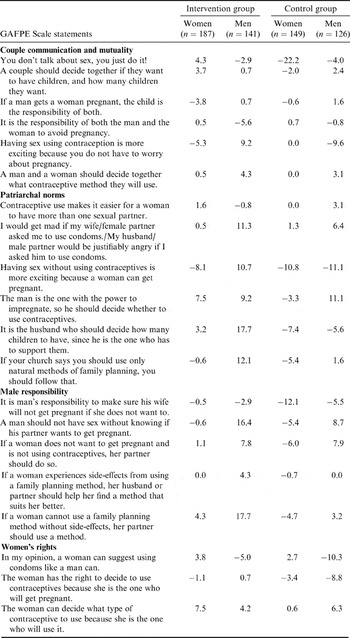
There was considerable variation between baseline and follow-up in the responses across the 20 individual components of the GAFPE Scale (Table 4). The control group showed a greater increase in the percentage of equitable responses on some variables, and the intervention group on others; the percentages of equitable responses went down for some items. For the women in the intervention group, the greatest percentage change in a positive (equitable) direction relative to the control group was observed for the statement: ‘You don't talk about sex, you just do it’. The percentage of equitable responses in the control group fell 22.2% points, while it increased 4.3% points in the intervention group (26.5 percentage point difference between the groups). The second comparative gain for women in the intervention group was on the statement: ‘It is a man's responsibility to make sure his wife will not get pregnant if she does not want to’ (11.6 percentage points). The next largest comparative gain for women in the intervention group was on two statements addressing men's and women's roles in decision-making relating to fertility and contraception: ‘The man is the one with the power to impregnate, so he should decide whether to use contraceptives’ (10.8 percentage points) and ‘It is the husband who should decide how many children to have, since he is the one who has to support them’ (10.6 percentage points). The greatest gains among men in the intervention group compared with the control group were on statements on mutual decision-making: ‘It is the husband who should decide how many children to have, since he is the one who has to support them’ (23.3 percentage point change in equitable direction); contraceptive use and sexual pleasure: ‘Having sex without using contraceptives is more exciting because a woman can get pregnant’ (21.8 percentage points), ‘Having sex using contraception is more exciting because you do not have to worry about pregnancy’ (18.8 percentage points); and men's responsibility to use condoms if a partner experiences side-effects from contraceptive methods: ‘If a woman cannot use a family planning method without side-effects, her partner should use a method’ (14.5 percentage points). The next largest comparative gain was on the statement about following church teachings on the use of contraception: ‘If your church says you should use only natural family planning methods, you should follow that’ (10.5 percentage points). There was no item on which women or men in the control group had a percentage gain in the equitable direction of 10% or more relative to the intervention group.
GAFPE Scale statements, percentage change in equitable responses from baseline to follow-up, by group and gender, Guatemala

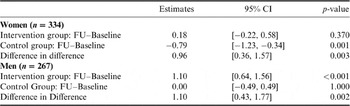
Table 5 presents the results of the linear mixed model analysis for the comparison of changes in equity scores. The table presents mean changes from baseline to intervention in each group and the difference in these changes between the groups. The differences in the change in gender equity scores between the two groups are highly significant, both for men and for women (difference in difference estimates). Among women, the difference between groups was mainly driven by a drop in the mean equity scores in the control group, while in men equity scores increased in the intervention group as expected.
Linear mixed model estimates of intervention effect on gender attitudes, Guatemala

FU, follow-up.
Knowledge of modern contraceptive methods
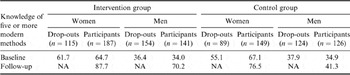
About one-third of the men and two-thirds of the women in the intervention and control groups at baseline knew of five or more modern contraceptive methods (Table 6). Differences in baseline knowledge between the groups were not significant. Levels of knowledge of modern contraceptive methods increased among both women and men in both groups in the follow-up survey, but increases in the intervention group were considerably greater than those in the control group. From baseline to follow-up, the increase in the proportion of the intervention group who knew of five or more modern contraceptive methods was 23 percentage points for women and 36 percentage points for men – more than double the baseline levels. Increases in the control group were 10 and 6 percentage points, respectively, for women and men, and there were no significant differences between participants and drop-outs (Table 6).
Knowledge of five or more modern contraceptive methods (%), by group at baseline and follow-up, Guatemala

There were no significant differences between participants and drop-outs in either group.
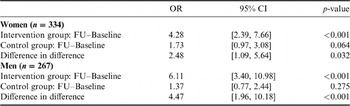
Table 7 shows comparisons of odds ratios estimated with mixed effect logistic models. The differences in the levels of change in contraceptive knowledge from baseline between the two groups were highly significant for both men and women (difference in difference estimates). Given the logistic model approach, the estimates of change from baseline are given as odds ratios for each group and the difference in difference estimates are obtained as ratios of the two odds ratio estimates. Women in the intervention group were 4.3 times more likely at endline to know at least five contraceptive methods than they were at baseline. A smaller increase in the likelihood of this level of knowledge was observed in the control group, but was not found significant. The difference in difference estimate was significant indicating a greater likelihood of better contraceptive knowledge in the intervention as compared with the control group. The results for men show similar patterns.
Mixed logistic models of treatment effect on family planning knowledge, Guatemala

Contraceptive use
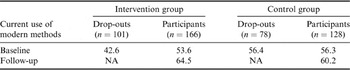
Baseline levels of modern contraceptive use were moderately high: 53.6% in the intervention group and 56.3% in the control group (Table 8). In the follow-up survey, the rates increased in both the intervention and the control groups; the increase was considerably more in the intervention group: 10.9 percentage points, compared with 4.0 percentage points in the control group. These analyses excluded women who were pregnant at baseline or at follow-up. When the increase in modern contraceptive use was compared between the groups (difference in difference estimate), the test was not statistically significant (Table 9).
Current use of modern contraceptive methods (%), by group at baseline and follow-up, Guatemala

There were no significant differences between participants and drop-outs in either group.
Mixed logistic model estimates of intervention effect on current family planning use among couples a Guatemala

a Restricted to non-pregnant women (n=292).
Discussion
Gender attitudes
In aggregate, although the GAFPE scores of both women and men in the control group started at considerably higher levels than scores of the intervention group, the follow-up survey scores of women in the intervention group exceeded those of women in the control group, and the scores of men in the intervention group nearly caught up with those in the control group.
The differences in the levels of change in gender equity scores between the two groups were highly significant, both for men and for women. The significance of the differences between the two groups of women, however, was mostly due to the fact that the gender equity scores in the control group dropped between the baseline and follow-up surveys. For the two groups of men, the difference reflects a higher rate of increase in the scores of the intervention group. This suggests that the intervention had a positive effect on men's gender attitudes. The conclusion regarding the effects of the intervention on women's gender attitudes is less clear but, arguably, the effect was positive. One possible explanation of the findings is that the women thought about gender issues during the interval between the two surveys more than men did, and the follow-up survey results were more reflective of their true attitudes. Thus, the attitudes of women in both groups may not have been as gender equitable as the baseline survey suggests, and those of the women in the control group therefore appeared to drop, whereas the scores for women in the intervention group rose slightly because of the influence of the workshops. Despite the observed positive effects in gender attitudes that could be associated with the intervention, it should be acknowledged that the final gender attitudes scores ended up at similar levels at follow-up for all groups. In addition, the final mean score increase associated with the intervention was only about one point, which should be assessed with respect to its programmatic significance.
As for the individual items, for women in the intervention group, the greatest comparative gain in percentage points was on the statement: ‘You don't talk about sex, you just do it,’ perhaps reflecting an influence of the workshop's emphasis on couple communication. The second was on the statement: ‘It is a man's responsibility to make sure his wife will not get pregnant if she does not want to.’ These responses may have been influenced by sessions dealing with women's rights and men's responsibilities. Next were two statements addressing men's and women's roles in decision-making relating to fertility and contraception. This theme was woven through several of the workshop sessions. Close behind was the statement: ‘If your church says you should use only natural family planning methods, you should follow that,’ an item reflecting the often patriarchal nature of the church in Guatemala. The church was not specifically referenced in any of the workshop sessions, but there was a strong emphasis on personal responsibility and the benefits of family planning.
The greatest gains among men in the intervention group were on statements on mutual decision-making, contraceptive use and sexual pleasure, and men's responsibility to use condoms if a partner experiences side-effects from contraceptive methods. The next largest comparative gain was on the statement about following the church on the use of contraception. All of these topics were addressed in the workshop sessions with the exception of the item alluding to the patriarchal role of the church, as noted above. There was no item on which women or men in the control group gained as many percentage points, relative to the intervention group, as the women and men in the intervention group gained, relative to the control group, on the above items.
Knowledge of modern contraceptive methods
Gender attitudes can limit family planning knowledge among men by, for example, identifying family planning as a women's concern, thus discouraging men from seeking information. Ironically, even when this is the case, the potential identification of women who are interested in matters of sexuality and family planning as ‘loose’ women may inhibit women from actively seeking family planning information. The findings suggest a substantial effect of the intervention on knowledge of contraceptive methods. The increase in the intervention group was more than 50%, nearly 29 percentage points. Knowledge also increased in the control group, perhaps due to a testing effect (i.e. some respondents may have learned the names of contraceptive methods from the survey itself), but only by 8 percentage points. One reason for this increase in contraceptive knowledge may have been that workshop participants were given a brochure explaining the different contraceptive methods available. And during and immediately following the workshops in the intervention communities, APROFAM promotores reported a surge of interest in learning more about available contraceptive methods. It thus appears that participants were interested enough to read the brochures and also became more active in seeking out knowledge about family planning as a result of the workshops.
Contraceptive use
Traditional gender norms can inhibit demand for contraception by defining either men's or women's worth as a function of their fertility. Such norms can also constrain women who may want to limit their fertility from accessing contraceptives because they limit women's economic resources and decision-making power. The analysis showed a substantial increase in modern contraceptive use in the intervention communities: 10.9 percentage points in an interval of less than 2 months. This is a large increase, and would be considered remarkable even if it occurred over a year or more. But as the rate of modern contraceptive use in the control group increased by 4 percentage points during the same period and the sample size was relatively small, when comparing the increase of modern contraceptive use between the groups, the test was not statistically significant. These results suggest that the workshops may have influenced modern contraceptive use, but also that contraceptive use is increasing overall. It is possible that the 6.9 percentage point difference in the increase in contraceptive prevalence between the two groups would have been significant had the sample sizes been larger.
Study limitations
The potential for this intervention study to yield positive results regarding contraceptive use was limited by the short time between the interventions and follow-up survey, and the relatively small size of the sample. The brevity of the interventions may also have negative implications for the long-term sustainability of the results. A strength of the intervention, but a potential limitation of the research, is that both members of the couple had to agree to participate to be included in the study, potentially biasing the study sample towards those with more equitable gender attitudes; however, it is not clear that gender attitudes that are more equitable in the first place are more likely to improve further than less equitable gender attitudes are likely to improve.
Also of concern is the sizeable percentage of participants lost to follow-up (41% in the control group and 45% in the intervention group). A comparison of baseline characteristics of drop-outs vs individuals who were re-interviewed at follow-up (Table 1), however, shows only small differences. The most notable were: participants in the intervention group had a slightly higher mean number of children (3.0, compared with 2.4 among the drop-outs), women participants in the control group had higher GAFPE scores than the drop-outs (15.3 compared with 14.6), participating men in the control group had somewhat higher gender GAFPE scores than the drop-outs (14.7 compared with 13.9) but male participants in the intervention group had somewhat lower scores than the drop-outs and female participants in the intervention group had a higher level of modern contraceptive use than the drop-outs (53.6% compared with 42.6%), although the levels of use among drop-outs and participants in the control group were almost identical (56.3%, 56.4%). With the possible exception of contraceptive use in the intervention group, these differences appear to be random. Thus it is possible that individuals who were more interested in family planning and likely to use modern contraceptives were less likely to drop out of the intervention and the follow-up survey. As this study looks at changes in both intervention and control groups and takes advantage of the panel data, the differences between the participants and the drop-outs are unlikely to have much effect on the comparative analyses focused on a population that would probably participate in this type of intervention. However, the high level of drop-out limits the generalizability of the findings. These findings should be taken into account in recruitment and retention efforts if the intervention is expected to reach a larger target population.
Conclusions
Notwithstanding the above limitations of the study, overall, the findings confirm the hypothesis that the promotion of gender equity in the context of reproductive health will contribute to gender-equitable attitudes regarding sexuality and family planning. The workshops had a significant effect on both men's and women's gender attitudes, although the interpretation of the decline in equity points among the women in the control group is open to debate. These results, and the enthusiasm of the participants in the interactive workshops, suggest that, as predicted, community-level social and behaviour change communication (SBCC) strategies can be effective for addressing gender norms in the realm of sexuality and family planning.
While the effect of the interactive workshops on contraceptive use fell short of statistical significance, the effect on knowledge of contraceptive methods was large and statistically significant. The randomized design of the study, the use of phased interventions to minimize selection bias, and the statistical methods that control for the cluster effect (caused by randomly assigning communities rather than individuals to the intervention and control groups) all contribute to the robustness of the results.
The results are all the more impressive given the brevity of the intervention – only four workshop sessions per individual, over the period of only a month, which contributes to its scalability. The widely promoted PROMUNDO Program H model for reducing inequitable gender attitudes and HIV risk behaviours among young men, as implemented in Brazil and India, entailed weekly sessions over a period of 6 months, and stipends to ensure continued participation (Barker et al., Reference Barker and Buxton2004, Reference Barker, Leach and Mitchell2006).
Given its relative simplicity and modest time requirements, there is ample scope to further refine this pilot communication intervention for promoting gender equity and family planning, expand it through APROFAM and potentially other organizations in Guatemala, as well as adapt and test it in other cultural contexts where gender inequality is a barrier to sexual and reproductive health. The results of this study suggest that such efforts would be well worthwhile. Further research should address the longer term impact of such interventions on gender attitudes and behaviour change and determine whether the interventions need to be repeated to maximize impact and better establish the effects on contraceptive use.
Acknowledgments
The authors are grateful to their colleagues at APROFAM in Guatemala, in particular Mirian de los Angeles Lopez, Head of Social Programs, Dinora Amparo Cerritos, Project Coordinator, Joel Yus Cujcuj, Education Coordinator, Gerardo de Leon, Head of Monitoring and Evaluation, and former Executive Director Sergio Alejandro Penagos Guzman; APAES' Director Mario Andrade López and Sergio Pocong Guacamaya, Survey Field Coordinator; qualitative research consultants Stephanie Roche and Samuel Vinci; consultants Jill Gay and Fredrick Nyagah, who collaborated with Sidney Schuler in the development of the facilitators’ manual; and Ann Fitzgerald of C-Change/Guatemala for her generous advice and support and Rachel Lenzi of the Communication for Change (C-Change)/Washington for her collaboration in the research. This study was made possible by the generous support of the American people through the United States Agency for International Development (USAID) under the terms of Agreement No. GPO-A-00-07-00004-00. The contents are the responsibility of the C-Change project, managed by FHI 360, and do not necessarily reflect the views of USAID or the United States Government.