1. Introduction
Detrital zircons present high physicochemical resilience during weathering and erosion of source rocks, transportation and deposition of sediments, and diagenetic processes (Cawood et al. Reference Cawood, Hawkesworth and Dhuime2012; Gehrels, Reference Gehrels2014). Zircons can be easily and quickly obtained from clastic rocks. The rapid development of zircon U–Pb dating made it a powerful tool for provenance tracing (Cawood et al. Reference Cawood, Hawkesworth and Dhuime2012; Gehrels, Reference Gehrels2014). Further analyses of Lu–Hf isotopes in zircons reveal detailed information about the source terranes (Hawkesworth & Kemp, Reference Hawkesworth and Kemp2006; Beranek et al. Reference Beranek, van Staal, McClelland, Israel and Mihalynuk2013). The weighted mean age of the youngest cluster of zircons helps determine the depositional age of clastic rocks (Dickinson & Gehrels, Reference Dickinson and Gehrels2009). The zircon U–Pb age patterns help distinguish the tectonic settings of clastic rocks (Cawood et al. Reference Cawood, Hawkesworth and Dhuime2012). Therefore, the U–Pb–Hf isotopic analysis of detrital zircons is effective for provenance tracing and tectono-palaeogeographic reconstruction (e.g. Liu et al. Reference Liu, Zhao, Han, Zhu, Wang, Eizenhöfer, Zhang and Tsui2018).
In Central to East Asia, an ancient, giant orogen called the Central Asian Orogenic Belt (CAOB) was formed by the interaction between the Palaeo-Asian Ocean and its surrounding North China, Tarim and Siberian cratons (Fig. 1a; Sengör et al. Reference Sengör, Natal’in and Burtman1993; Jahn et al. Reference Jahn, Wu and Chen2000; Kröner et al. Reference Kröner, Windley, Badarch, Tomurtogoo, Hegner, Jahn, Gruschka, Khain, Demoux, Wingate, Hatcher, Carlson, McBride and Martínez Catalán2007; Windley et al. Reference Windley, Alexeiev, Xiao, Kröner and Badarch2007; Wilhem et al. Reference Wilhem, Windley and Stampfli2012; Li et al. Reference Li, Wang, Wilde and Tong2013; Xiao et al. Reference Xiao, Windley, Sun, Li, Huang, Han, Yuan, Sun and Chen2015, Reference Xiao, Song, Windley, Li, Han, Wan, Zhang, Ao and Zhang2020; Wang et al. Reference Wang, Tong, Zhang, Li, Huang, Zhang, Guo, Yang, Hong, Donskaya, Gladkochub and Tserendash2017; Zhou et al. Reference Zhou, Wilde, Zhao and Han2018). It has a long lifespan from the Neoproterozoic to Mesozoic periods with multiple stages of terrane accretion and crustal growth (Windley et al. Reference Windley, Alexeiev, Xiao, Kröner and Badarch2007; Wilhem et al. Reference Wilhem, Windley and Stampfli2012; Xiao et al. Reference Xiao, Windley, Sun, Li, Huang, Han, Yuan, Sun and Chen2015, Reference Xiao, Windley, Han, Liu, Wan, Zhang, Ao, Zhang and Song2018; Zhou et al. Reference Zhou, Wilde, Zhao and Han2018). The CAOB directed the continental formation and its resource-energy response in Northern China (Xiao et al. Reference Xiao, Shu, Gao, Xiong, Wang, Guo, Li and Sun2008, Reference Xiao, Song, Windley, Li, Han, Wan, Zhang, Ao and Zhang2020; Han et al. Reference Han, He, Wang and Guo2011; Xu et al. Reference Xu, Charvet, Chen, Zhao and Shi2013; Zhou & Wilde, Reference Zhou and Wilde2013; Lu et al. Reference Lu, Zhang, Niu, Liu, Chen and Wei2017, Reference Lu, Niu and Jiang2018). However, great efforts were made to reveal the tectonic evolution of the eastern (Inner Mongolia–Daxing’anling) and western (Tianshan) segments of the CAOB (Mueller et al. Reference Mueller, Rogers, Jin, Wang, Li, Chronic and Mueller1991; Xiao et al. Reference Xiao, Windley, Hao and Zhai2003; Charvet et al. Reference Charvet, Shu and Laurent-Charvet2007, Reference Charvet, Shu, Laurent-Charvet, Wang, Faure, Cluzel, Chen and De Jong2011; Chen et al. Reference Chen, Jahn and Tian2009, Reference Chen, Han, Ji, Zhang, Xu, He and Wang2010; Song et al. Reference Song, Xiao, Han, Li, Qu, Guo, Lin and Wang2013; Eizenhöfer et al. Reference Eizenhöfer, Zhao, Zhang and Sun2014; Ren et al. Reference Ren, Han, Xu, Zhou, Liu, Zhang, Chen, Su, Li, Li and Li2014; Alexeiev et al. Reference Alexeiev, Biske, Wang, Djenchuraeva, Getman, Aristov, Kröner, Liu and Zhong2015; Klemd et al. Reference Klemd, Gao, Li and Meyer2015; Wilde, Reference Wilde2015; Ao et al. Reference Ao, Xiao, Windley, Mao, Han, Zhang, Yang and Geng2016; Li et al. Reference Li, Chung, Wilde, Wang, Xiao and Guo2016, Reference Li, Brouwer, Xiao, Wang, Lee, Luo, Su and Zheng2017), with less attention paid to the middle segment of the CAOB.
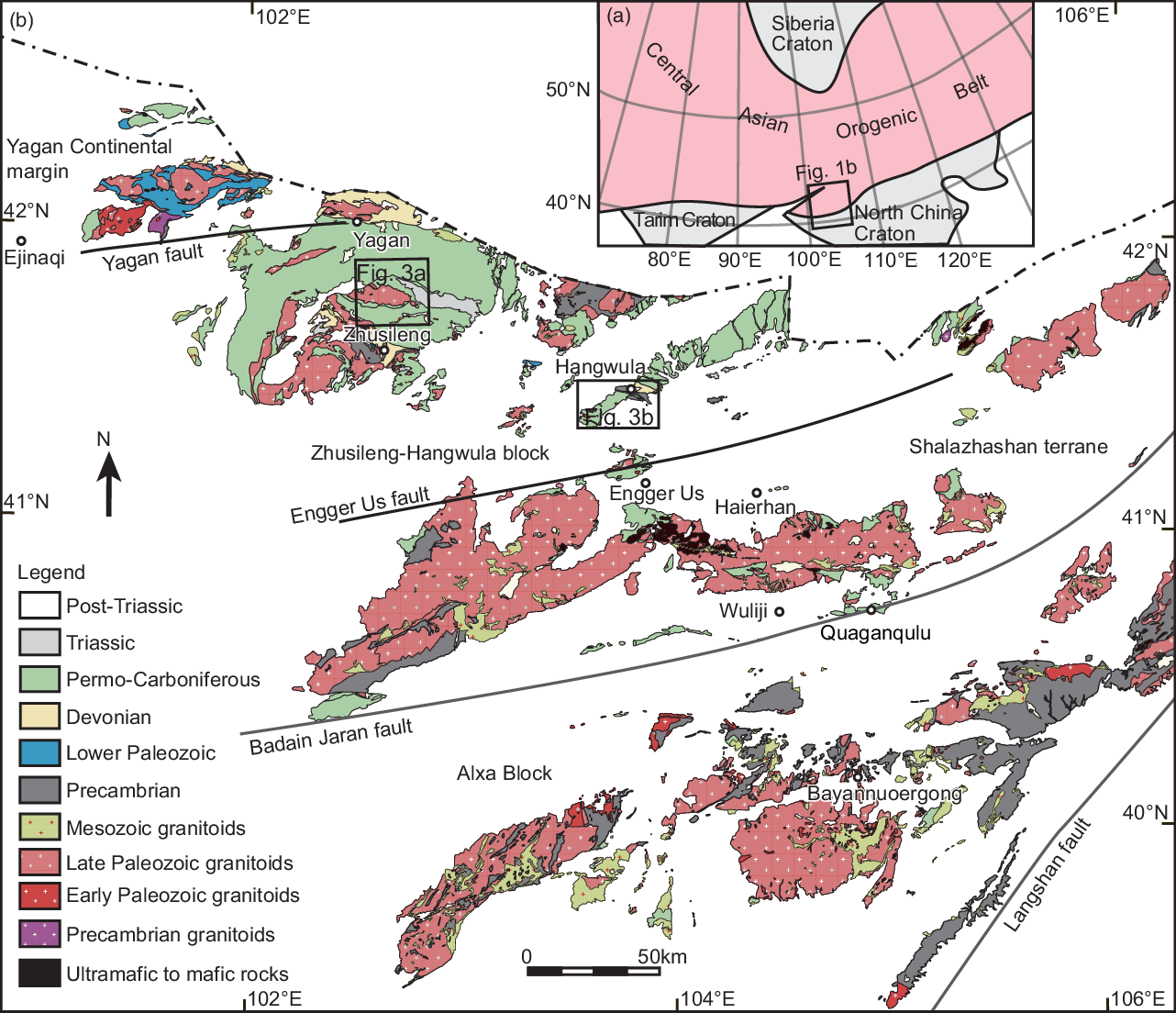
(a) Map showing the location of the Central Asian Orogenic Belt (modified after Jahn, Reference Jahn, Malpas, Fletcher, Ali and Aitchison2004); and (b) map showing the geology and tectonic architecture of the Alxa area (modified after Liu et al. Reference Liu, Zhao, Han, Eizenhöfer, Zhu, Hou and Zhang2017 a,b).

The northern Alxa orogenic belt (NAOB) in the middle segment of the CAOB is a junction between the North China Craton, Tarim Craton and Mongolian microcontinents (Fig. 1a, b; Wu & He, Reference Wu and He1993; Wu et al. Reference Wu, He and Zhang1998; Liu et al. Reference Liu, Zhao, Han, Zhu, Wang, Eizenhöfer, Zhang and Tsui2018). Thus, it is definitely important to understand the tectonic evolution of the CAOB (Wu & He, Reference Wu and He1993; Shi et al. Reference Shi, Wang, Zhang, Castro, Xiao, Tong, Zhang, Guo and Yang2014; Zheng et al. Reference Zheng, Wu, Zhang, Xu, Meng and Zhang2014; Zhang et al. Reference Zhang, Pease, Meng, Zheng, Wu, Chen and Gan2017; Liu et al. Reference Liu, Zhao, Han, Zhu, Wang, Eizenhöfer, Zhang and Tsui2018). However, we are still far from an agreement on the Permo-Carboniferous tectonic setting of the NAOB. Three different perspectives have been proposed: (a) a rift/extensional setting based on basin analysis, provenance analysis and geochemical analysis of volcanic rocks (Dang et al. Reference Dang, Zhao, Lin, Wu, Kang, Ge, Wu and Liu2011; Jiang et al. Reference Jiang, Li, Chen, Wei and Li2011; Lu et al. Reference Lu, Zhang, Niu, Liu, Chen and Wei2017, Reference Lu, Niu and Jiang2018; Shi, G. Z. et al. 2018; Du et al. Reference Du, Zhang, Xu, Yang, Wang and Wang2020); (b) a tectonic transitional setting from subduction and accretion to extension based on studies of the petrogenesis of granitoids (e.g. Zhang, Reference Zhang2013; Liu et al. Reference Liu, Zhao, Han, Eizenhöfer, Zhu, Hou and Zhang2017 a,b); and (c) a continuous subduction setting based on the study of basic to ultrabasic rocks and volcano-sedimentary rocks (Feng et al. Reference Feng, Xiao, Windley, Han, Wan, Zhang and Lin2013; Song et al. Reference Song, Xiao, Collins, Glorie, Han and Li2018). These arguments have hindered the tectono-palaeogeographic reconstruction of the NAOB during the Permo-Carboniferous period. Therefore, more work is urgently needed to address the above issues.
Provenance analysis can help to constrain the closure time of ancient oceans and is important for tectono-palaeogeographic reconstructions (Gehrels, Reference Gehrels2014; Eizenhöfer et al. Reference Eizenhöfer, Zhao, Zhang and Sun2014; Liu et al. Reference Liu, Zhao, Han, Zhu, Wang, Eizenhöfer, Zhang and Tsui2018). Detrital zircon geochronology combined with zircon Hf isotopes is a robust method for tracing source terranes (Gehrels, Reference Gehrels2014). Detrital zircon age patterns combined with stratigraphic analysis are useful for tectonic discrimination (Cawood et al. Reference Cawood, Hawkesworth and Dhuime2012; Chen et al. Reference Chen, Shi, Jiang, Zhang, Li and Wang2016). Recently, Chen et al. (Reference Chen, Wu, Zhang, Fanning and Zhang2020 a) conducted a provenance study of the Permo-Carboniferous clastic rocks in the southern part (Wuliji and Haierhan areas) of the NAOB. As an improvement, we selected the Permo-Carboniferous clastic rocks in the northern part (Zhusileng and Hangwula areas) of the NAOB to study their provenance and tectonic implications. Further integration of provenance analysis across the northern and southern parts of the NAOB allows the tectono-palaeogeographic reconstruction of the NAOB during the Permo-Carboniferous period.
2. Tectonic background
2.a. Engger Us fault
The Engger Us fault is a huge and deep fault extending northeast (Wu & He, Reference Wu and He1993). It is located in the middle of the NAOB and is a key boundary between the northern and southern parts of the NAOB (Fig. 1b). Along this fault, an ophiolitic complex was previously considered to represent the oceanic relics of the Palaeo-Asian Ocean and the final amalgamation site of the NAOB (Wu & He, Reference Wu and He1993). The basalts have been dated to 302 ± 14 Ma by Zheng et al. (Reference Zheng, Wu, Zhang, Xu, Meng and Zhang2014) and to 290 ± 2 Ma by Shi, G. Z. et al. (2016). During early Palaeozoic time, the Palaeo-Asian Ocean was wide and deep and subduction initiated (Zhang, Reference Zhang2013). During late Palaeozoic to Mesozoic times, it was totally consumed (Wu & He, Reference Wu and He1993; Zhang, Reference Zhang2013; Chen et al. Reference Chen, Wu, Zhang, Fanning and Zhang2020 a). Based on geological comparisons, the Engger Us fault was considered to be the boundary between the Tarim Craton and the North China Craton (Wang et al. Reference Wang, Wang, Liu, Wang and Wu1993).
2.b. Tectonic units north of the Engger Us fault
The Zhusileng–Hangwula block shows a close affinity to the microcontinents in southern Beishan (Wu & He, Reference Wu and He1993; Liu et al. Reference Liu, Zhao, Han, Zhu, Wang, Eizenhöfer, Zhang and Tsui2018; Chen et al. Reference Chen, Wu, Gan, Zhang and Fu2019). The Precambrian rocks were identified as representing its basement (GSBG, 1981; NXBG, 1981; Wang et al. Reference Wang, Zheng, Gehrels and Mu2001). The Cambrian to Devonian shallow marine sequences are nearly continuous and unconformably overlain by the Permo-Carboniferous strata (GSBG, 1981; NXBG, 1981). The early and late Palaeozoic granitoids were dated to 383–446 Ma (Wang et al. Reference Wang, Wang and Wang1994; Li, Reference Li2006; Zhang et al. Reference Zhang2013) and 272–278 Ma (Han et al. Reference Han, Zhang, Zhao, Ren, Xu, Chen, Zhang, Zhou and Song2010; Zeng, Reference Zeng2014), respectively.
The Yagan continental margin is probably the southern margin of the Mongolian microcontinents (Zhang et al. Reference Zhang, Pease, Meng, Zheng, Thomsen, Wohlgemuth-Ueberwasser and Wu2016). The Precambrian metamorphic rocks and granitoids represent the Precambrian basement (Zhang et al. Reference Zhang, Pease, Meng, Zheng, Thomsen, Wohlgemuth-Ueberwasser and Wu2016). The Palaeozoic magmatic rocks show a transition in tectonic setting from subduction during early to middle Palaeozoic times to post-collision during the Permo-Carboniferous period (Wu & He, Reference Wu and He1993; Zhang, Reference Zhang2013; Zheng et al. Reference Zheng, Wu, Zhang, Feng, Xu, Meng and Zhang2013).
The mafic rocks along the Yagan fault were considered to represent an ocean between the Zhusileng–Hangwula block and the Yagan continental margin (Wu & He, Reference Wu and He1993). This ocean was probably closed before late Devonian time, leading to the welding of the Zhusileng–Hangwula block and the Yagan continental margin (Zhang, Reference Zhang2013; Liu et al. Reference Liu, Zhao, Han, Zhu, Wang, Eizenhöfer, Zhang and Tsui2018).
2.c. Tectonic units south of the Engger Us fault
The Alxa Block is characterized by a range of metamorphic and magmatic rocks from the Precambrian to Palaeozoic Era (IMBGMR, 1991), and it was previously considered to be the western part of the North China Craton. However, the Neoproterozoic magmatism that was found in this block, and not in the North China Craton, divided the Alxa Block from the North China Craton (Geng & Zhou, Reference Geng and Zhou2010). The Permian magmatic rocks are widespread in the Alxa Block and have confusing geochemical features, which gave rise to the controversy about its tectonic setting (Dan et al. Reference Dan, Li, Wang, Tang and Liu2014, Reference Dan, Wang, Wang, Liu, Wyman and Liu2015; Liu et al. Reference Liu, Zhao, Han, Eizenhöfer, Zhu, Hou and Zhang2017 a,b).
The Shalazhashan terrane evolved in a microcontinent represented by the Mesoproterozoic metamorphic and magmatic rocks (Shi, X. J. et al. 2016). During late Palaeozoic time, it was a magmatic arc associated with the southward subduction of the Palaeo-Asian Ocean, an identification mainly based on the geochemical analysis of granitoids (Shi, X. J. et al. 2014, 2016; Liu et al. Reference Liu, Zhao, Han, Eizenhöfer, Zhu, Hou, Zhang and Wang2017 b). However, the Permo-Carboniferous volcanic, clastic and carbonate rocks are considered to have formed in a rift setting (Bu et al. Reference Bu, Niu, Wu and Duan2012).
The ophiolitic mélange along the Badain Jaran fault is considered to be caused by back-arc extension associated with the southward subduction of the Palaeo-Asian Ocean (Zheng et al. Reference Zheng, Wu, Zhang, Xu, Meng and Zhang2014) or by intracontinental rifting during the Permo-Carboniferous period (Bu et al. Reference Bu, Niu, Wu and Duan2012; Shi, G. Z. et al. 2016; Yin et al. Reference Yin, Zhou, Zhang, Zheng and Wang2016).
3. Stratigraphy and sampling
The Permo-Carboniferous strata are widely exposed in the northern Alxa area. They unconformably overlie the Precambrian and lower to middle Palaeozoic rocks (IMBGMR, 1991; Lu et al. Reference Lu, Zhang, Niu, Liu, Chen and Wei2017). They are mainly composed of clastic, carbonate and volcanic rocks, and were mostly deposited in neritic to littoral environments (Li et al. Reference Li, Lu and Chen2011; Lu et al. Reference Lu, Zhang, Niu, Liu, Chen and Wei2017). Lu et al. (Reference Lu, Zhang, Niu, Liu, Chen and Wei2017) suggested that no angular unconformities occurred between neighbouring formations of the Permo-Carboniferous strata.
The lower Carboniferous strata are composed of siltstone, sandstone, conglomerate and intermediate–acidic volcanic rocks in the Zhusileng–Hangwula block (GSGB, 1981). The lower Carboniferous strata are named the Baishan Formation in the Zhusileng area and Haobiru Formation in the Hangwula area (GSGB, 1981). The lower Carboniferous strata of the Yagan continental margin are mainly composed of volcanic rocks in the lower part and sandstone and siltstone interbedded with siliceous rocks, marble and conglomerate in the upper part (GSBG, 1980). The lower Carboniferous strata are not present in the Shalazhashan terrane and the Alxa Block.
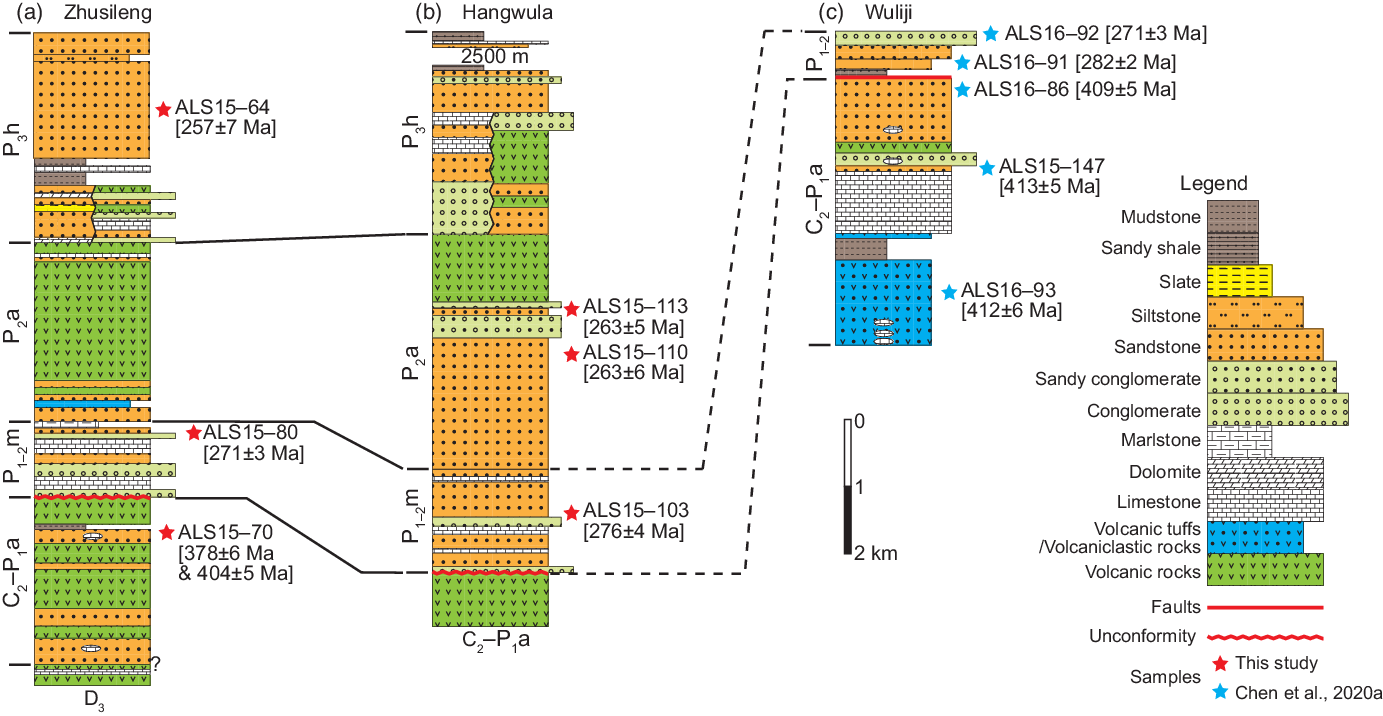
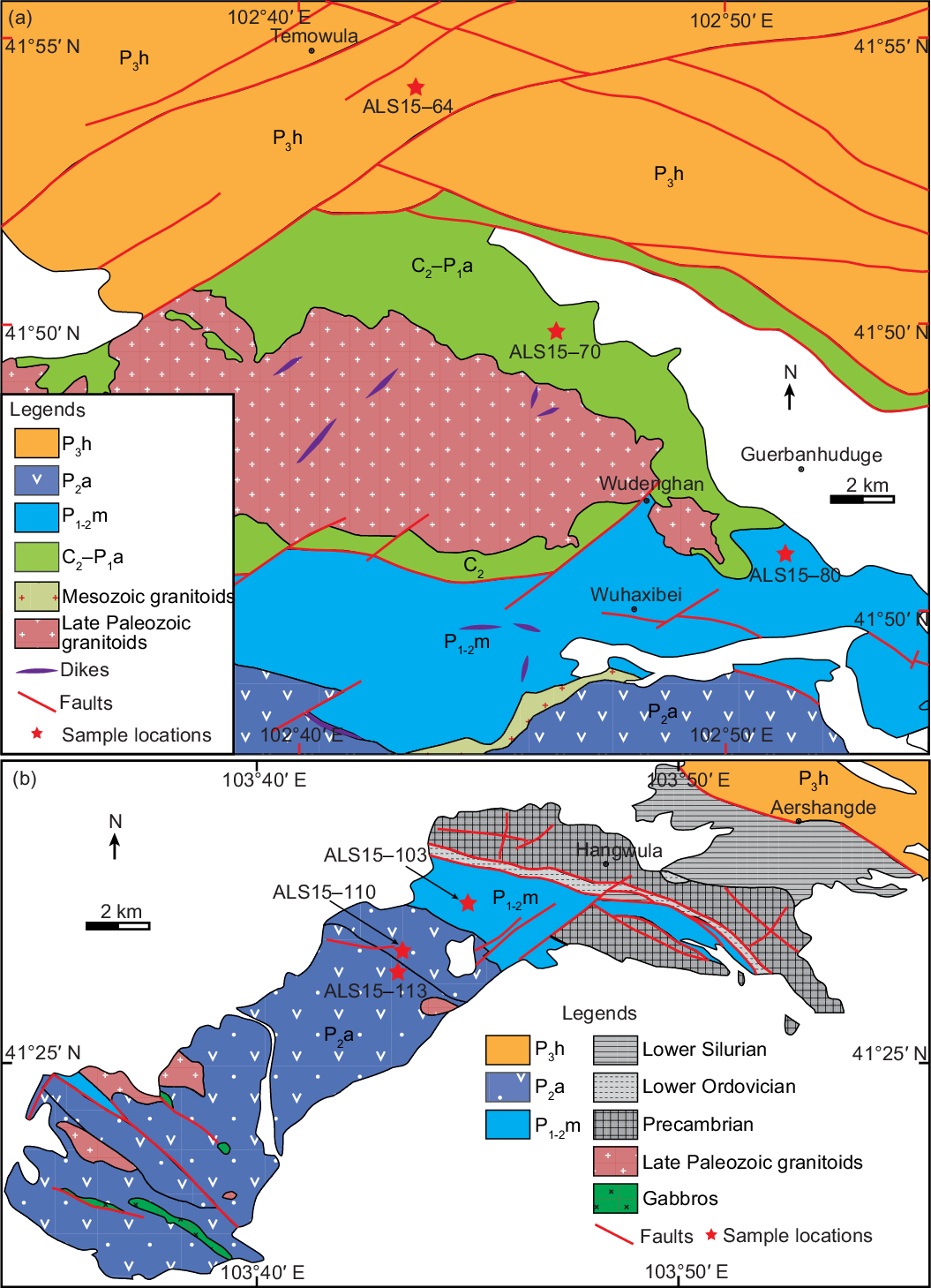
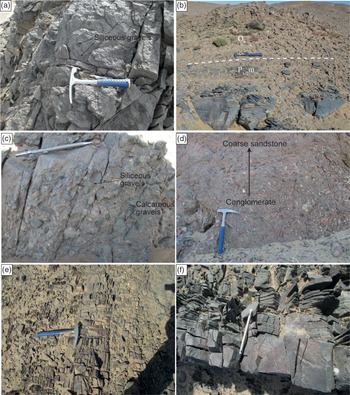
The upper Carboniferous to lower Permian Amushan Formation is mainly composed of volcanic, carbonate and clastic rocks (Fig. 2). It is widespread in the northern Alxa area across the Shalazhashan terrane, the Zhusileng–Hangwula block and the Yagan continental margin (Fig. 1b). The typical stratigraphic section of the Amushan Formation is preserved in the Wuliji area. In this area, the Amushan Formation can be divided into three sections: volcanic rocks, tuffs and tuffaceous sandstone in the lower part, thick limestone interbedded with calcareous sandstone in the middle part, and intermediate–fine sandstone in the upper part (NXBG, 1979; Yin et al. Reference Yin, Zhou, Zhang, Zheng and Wang2016). In the Zhusileng area, the Amushan Formation is composed of clastic rocks interbedded with volcanic rocks and limestone lenses (Figs 2, 3a; GSBG, 1981). The bottom part is composed of gravel-bearing sandstone, which contains round siliceous gravels with diameters between 2 and 3 cm (Fig. 4a). Sample ALS15–70 was collected from the Amushan Formation in the Zhusileng area (Figs 2, 3a). In the Yagan continental margin, the Amushan Formation is mainly composed of volcanic rocks and tuffs interbedded with clastic rocks (GSBG, 1980).
Lithological columns of the Permo-Carboniferous strata in (a) Zhusileng (after GSBG, 1981), (b) Hangwula (after NXBG, 1981), and (c) Wuliji (after NXBG, 1979; Chen et al. Reference Chen, Wu, Zhang, Fanning and Zhang2020 a). The sampling locations and the weighted mean age of the youngest zircons as a group are marked for each sample. For sample ALS15–70, the ages of the youngest two zircons are shown.


Field photos showing the Permo-Carboniferous clastic rocks in the Zhusileng and Hangwula areas. Pencil for scale is ~15 cm long and hammer for scale is ~30 cm long.

The Permian deposits are widespread in the northern Alxa area across the Shalazhashan terrane, the Zhusileng–Hangwula block and the Yagan continental margin, but are more limited than the Amushan Formation (Fig. 1b; IMBGMR, 1991). In the Zhusileng–Hangwula block, the lower to middle Permian Maihanhada Formation is mainly composed of conglomerate, sandy conglomerate, sandstone, siltstone and limestone (Fig. 2; GSBG, 1981; NXBG, 1981). In the Hangwula area, the Maihanhada Formation is in fault contact with the Precambrian and the lower Ordovician rocks (Figs 3b, 4b). A conglomerate layer was found in the bottom (Fig. 4c). The gravels are mainly composed of well-rounded siliceous gravels and less-rounded calcareous gravels (Fig. 4c). The gravels are mainly 2–3 cm in diameter with no preferred directional alignment (Fig. 4c). In the lower to middle part of the Maihanhada Formation, a transgressive succession from conglomerate to coarse sandstone was identified (Fig. 4d). The Maihanhada Formation transforms into a thin-bedded fine sandstone with a stable trend and no deformation at the top (Fig. 4e). The Maihanhada Formation was formed in a subsiding basin which was rapidly filled with sediments (Li et al. Reference Li, Lu and Chen2011). Sample ALS15–103 was taken from the Maihanhada Formation in the Hangwula area (Figs 2, 3b). In the Zhusileng–Hangwula block, the middle Permian Aqide Formation is mainly composed of sandstone, siltstone, conglomerate and volcanic rocks interbedded with limestone (Fig. 2; GSBG, 1981; NXBG, 1981). In the Hangwula area, a thick medium to fine sandstone layer with original horizontal bedding was found in the lower part of the Aqide Formation (Figs 2, 3f). Samples ALS15–110 and ALS15–113 were taken from this formation (Figs 2, 3b). The upper Permian Haersuhai Formation is mainly composed of conglomerate, sandstone and siltstone interbedded with limestone and volcanic rocks (GSBG, 1981; NXBG, 1981). The Haersuhai Formation is surprisingly thick with a thickness of more than 3 km, especially in the Hangwula area. Sample ALS15–64 was collected from the Haersuhai Formation in the Zhusileng area. In the Yagan continental margin, the Permian strata are composed of volcanic and clastic rocks with carbonate lenses and plant fossils (GSBG, 1980). In the Wuliji area, a lower to middle Permian succession separated from the Amushan Formation changes from silty shale and sandstone to gravel-bearing sandstone and conglomerate (Zhang et al. Reference Zhang2013). The preserved Permo-Carboniferous strata in the Yagan continental margin, the Zhusileng–Hangwula block and the Wuliji area exhibit thicknesses of >8 km, >14 km and >4 km, respectively (NXBG, 1979, 1981; GSBG, 1980, 1981).
4. Sample description and analytical methods
4.a. Sample description
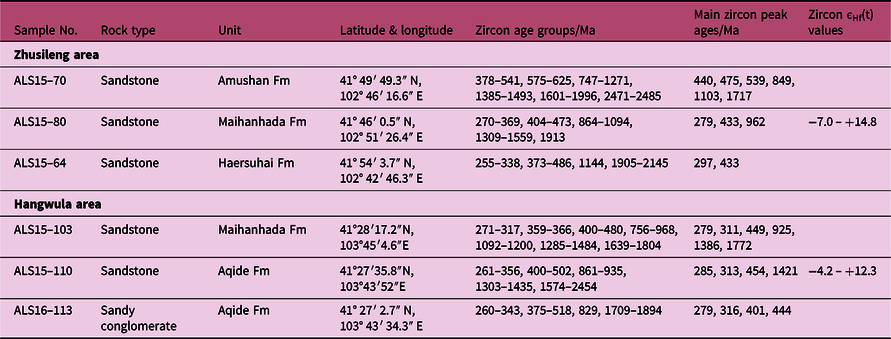
The sampling locations and units, rock types and key results for the dated samples are listed in Table 1.
Summary of the sampling locations and units, rock types and key results for the dated samples

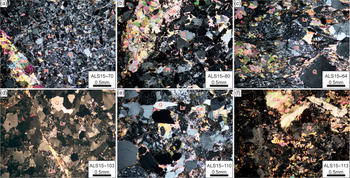
ALS15–70 (Amushan Fm, Zhusileng; Fig. 5a): This sample is a medium- to fine-grained sandstone. It is mainly composed of quartz, feldspar and lithic fragments. Calcite fills the voids. The detrital grains are small, poorly rounded and moderately sorted. This indicates moderate to short transportation.
Photomicrographs showing the samples (a) ALS15–70, (b) ALS15–80, (c) ALS15–64, (d) ALS15–103, (e) ALS15–110, and (f) ALS15–113. Abbreviations: Q – quartz; Pl – plagioclase; Lv – lithic fragment; Lm – metamorphic fragment; Cal – calcite.

ALS15–80 (Maihanhada Fm, Zhusileng; Fig. 5b): This sample is a medium- to fine-grained sandstone. Quartz content is moderate, feldspar content is low and lithic fragment content is moderate to high. Calcite fills the voids. Detrital particles are poorly rounded and sorted.
ALS15–64 (Haersuhai Fm, Zhusileng; Fig. 5c): This sample is a coarse-grained sandstone. Quartz content is low, feldspar content is moderate and lithic fragments are abundant. Dispersed calcite fills the voids. The plagioclase particle in the middle of the thin-section was slightly deformed but shows no evidence of metamorphism.
ALS15–103 (Maihanhada Fm, Hangwula; Fig. 5d): This sample is a medium- to coarse-grained sandstone. Quartz content is moderate to high, feldspar content is low and lithic fragment content is moderate. Detrital particles are coarse and exhibit mostly linear contacts. Detrital particles are poorly rounded and sorted.
ALS15–110 (Aqide Fm, Hangwula; Fig. 5e): This sample is a coarse sandstone. Quartz content is moderate, feldspar content is low and lithic fragment content is moderate. Calcite fills the voids. Detrital particles are poorly rounded and sorted.
ALS15–113 (Aqide Fm, Hangwula; Fig. 5f): This sample is a calcareous sandy conglomerate. Quartz content is low, feldspar content is moderate, lithic fragment content is moderate and calcite is abundant. Detrital particles are poorly rounded and sorted.
4.b. Analytical methods
The zircon grains used in this study were manually separated from heavy minerals. The heavy minerals were obtained from crushed rocks using density separation and conventional electromagnetic techniques. After mounting the samples, the zircon grains were polished to show their internal structure using the cathodoluminescence (CL) imaging technique. The concentrations of U, Th and Pb of each selected zircon grain were measured at Peking University and used to calculate the zircon U–Pb age. A laser ablation inductively coupled plasma mass spectrometer (LA-ICP-MS) was used. The diameter, energy density and frequency of the laser beam was 32 μm, 10 J/cm2 and 5 Hz, respectively. The zircons 91500 and Plesovice and glasses NIST610, 612 and 614 were used as standard samples. The instrument operation and analytical processes were standardized using Chen et al. (Reference Chen, Zhang, Qian, Li, Ji and Wu2020 b) as a reference. The Lu–Hf isotopic compositions were obtained at the Tianjin Centre, China Geological Survey. A New Wave 193 nm FX laser ablation (LA) system combined with a Neptune multicollector inductively coupled plasma mass spectrometer (MC-ICP-MS) was used. The diameter, energy density and frequency of the laser beam was 50 μm, 10–11 J/cm² and 8–10 Hz, respectively (Geng et al. Reference Geng, Li, Zhang, Zhou and Li2011). Zircon GJ-1 (600 Ma) was used as the standard sample (Jackson et al. Reference Jackson, Pearson, Griffin and Belousova2004). The zircon U–Pb and Hf isotopic data for the clastic rocks are provided in online Supplementary Material Tables S1 and S2, respectively.
5. Results
5.a. Zircon CL images
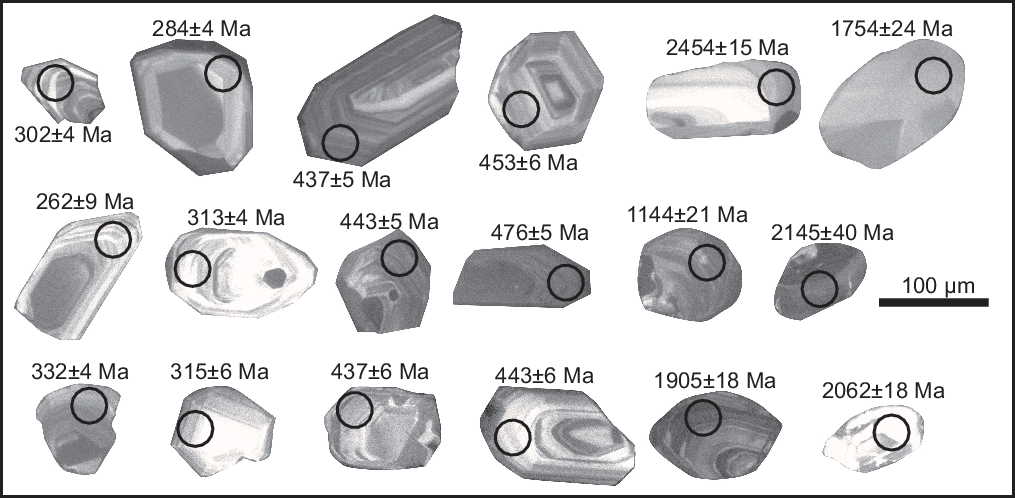
Among the CL images of hundreds of zircon grains from five samples (ALS15–64, 70, 103, 110 and 113), typical zircons from the Precambrian, early to middle Palaeozoic and Permo-Carboniferous periods were selected for morphological analyses (Fig. 6). Most of the Precambrian zircon grains were euhedral to subhedral, demonstrated rounded shapes and poor zoning, and showed a magmatic origin with varying levels of metamorphism. Some zircons of this age demonstrated obvious zoning, indicating their magmatic origin. Most of the early to middle Palaeozoic zircon grains demonstrated obvious zoning, indicating their magmatic origin. Most of the Permo-Carboniferous zircon grains demonstrated obvious zoning, and were euhedral to subhedral, indicating their magmatic origin. Some of them were fractured probably owing to transportation.
Cathodoluminescence images showing the morphology and internal structure of the zircons from the samples.

5.b. Zircon U–Pb ages
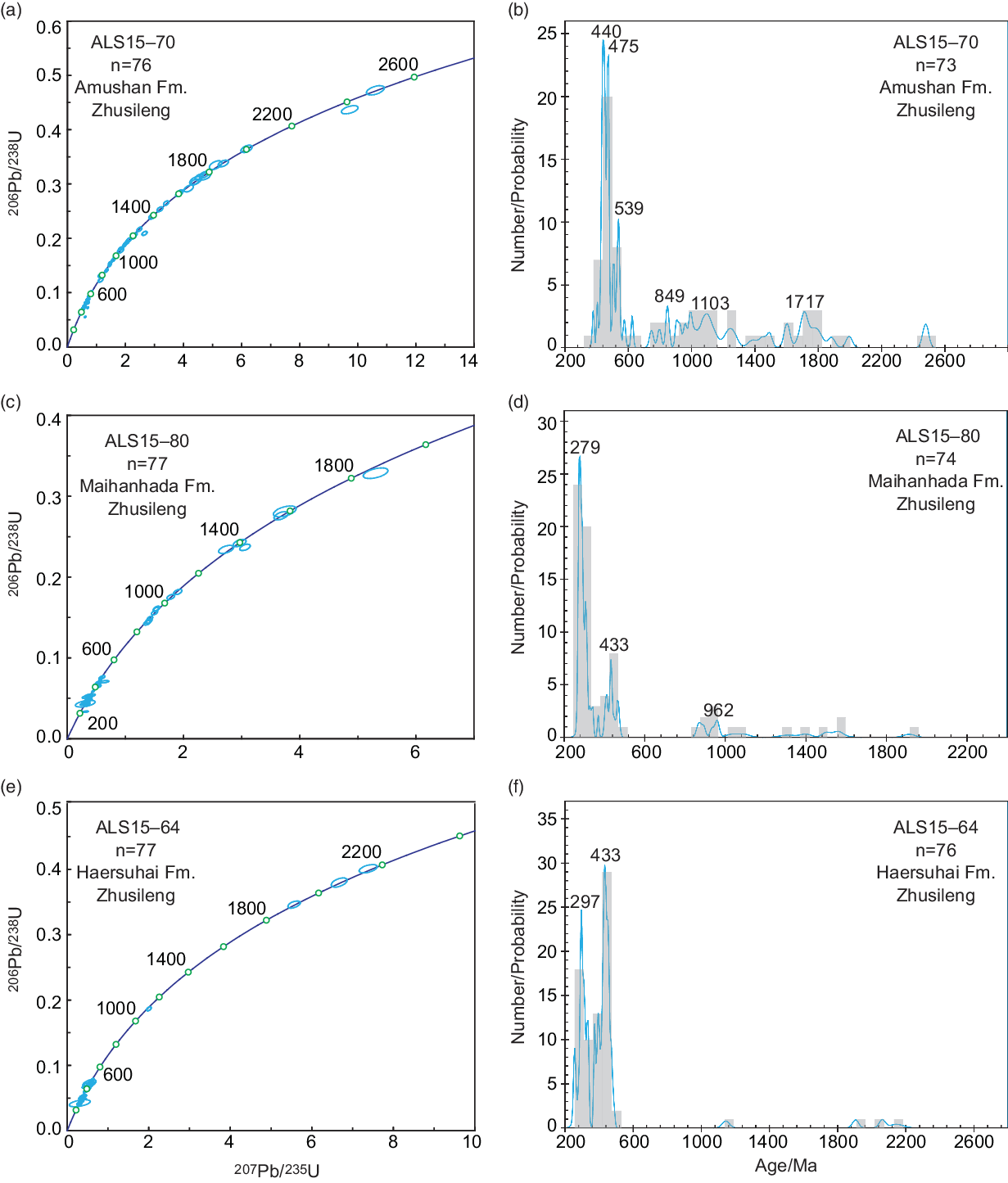
ALS15–70 (Amushan Fm, Zhusileng; Fig. 7a, b): For U–Pb isotopic analysis, 76 zircons were selected, of which 73 analyses were concordant. Their ages varied between 378 Ma and 2485 Ma, which define the following age clusters: (a) 378–541 Ma (36 analyses) with the predominant age peak at 440 Ma and two secondary age peaks at 475 Ma and 539 Ma, (b) 575–625 Ma (2 analyses), (c) 747–1271 Ma (19 analyses), (d) 1385–1493 Ma (3 analyses), (e) 1601–1996 Ma (11 analyses), and (f) 2471–2485 Ma (2 analyses).
Diagrams showing the concordant degree of each U–Pb isotopic analysis and zircon age distributions for samples ALS15–70, ALS15–80 and ALS15–64.

ALS15–80 (Maihanhada Fm, Zhusileng; Fig. 7c, d): For U–Pb isotopic analysis, 77 zircons were selected, of which 74 analyses were concordant. Their ages varied between 270 Ma and 1913 Ma, which define the following age clusters: (a) 270–369 Ma (47 analyses) with a significant age peak at 279 Ma, (b) 404–473 Ma (13 analyses) with an age peak at 433 Ma, (c) 864–1094 Ma (8 analyses), (d) 1309–1559 Ma (5 analyses), and (e) 1913 Ma (1 analysis).
ALS15–64 (Haersuhai Fm, Zhusileng; Fig. 7e, f): For U–Pb isotopic analysis, 77 zircons were selected, of which 76 analyses were concordant. Their ages varied between 255 Ma and 2145 Ma, which define the following age clusters: (a) 255–338 Ma (28 analyses) with a significant age peak at 297 Ma, (b) 373–486 Ma (44 analyses) with a significant age peak at 433 Ma, (c) 1144 Ma (1 analysis), and (d) 1905–2145 Ma (3 analyses).
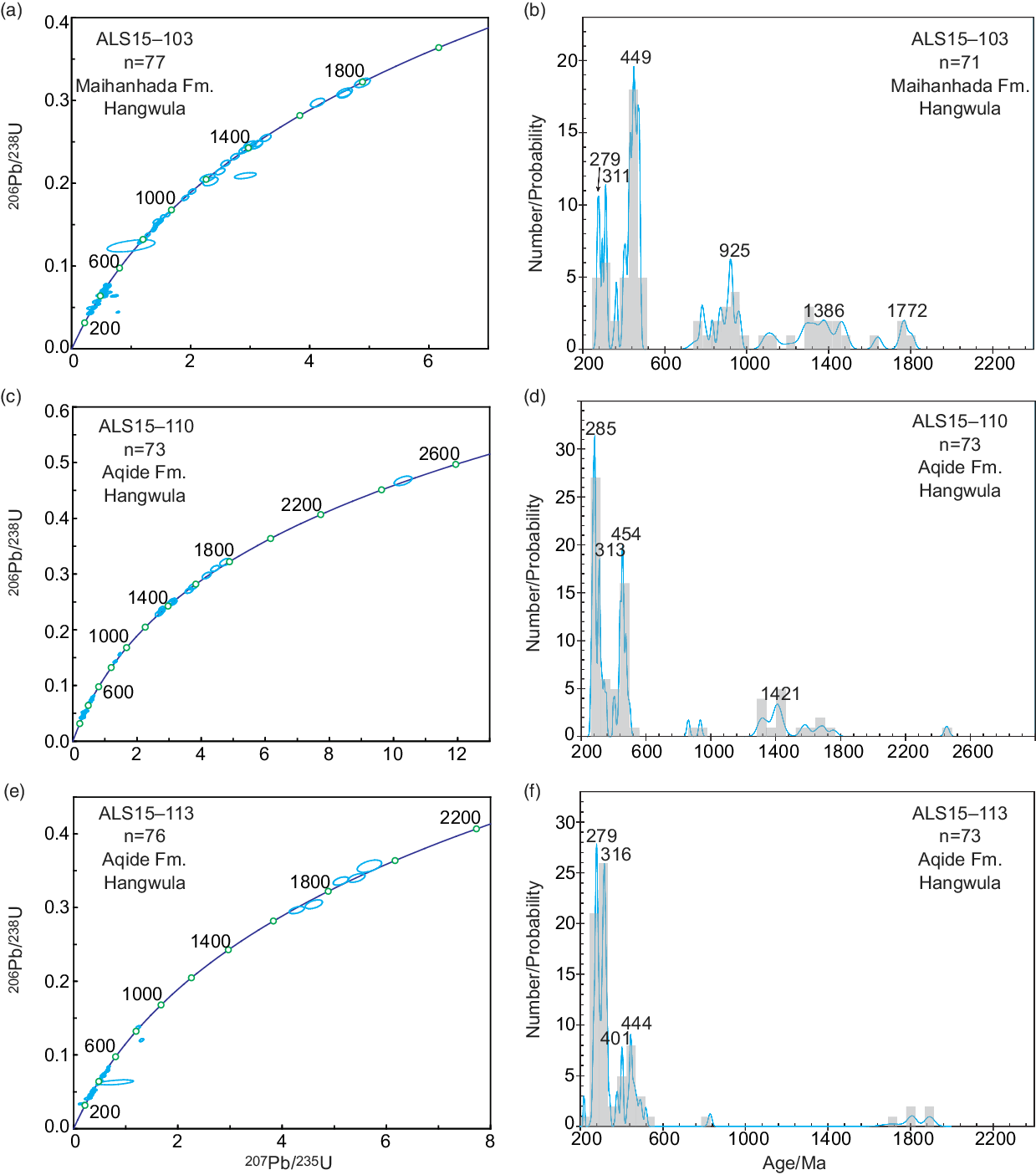
ALS15–103 (Maihanhada Fm, Hangwula; Fig. 8a, b): For U–Pb isotopic analysis, 77 zircons were selected, of which 71 analyses were concordant. Their ages varied between 271 Ma and 1804 Ma, which define the following age clusters: (a) 271–317 Ma (11 analyses) with two age peaks at 311 Ma and 279 Ma, (b) 359–366 Ma (2 analyses), (c) 400–480 Ma (28 analyses) with a significant age peak at 449 Ma, (d) 756–968 Ma (13 analyses) with an age peak at 925 Ma, (e) 1092–1200 Ma (3 analyses), (f) 1285–1484 Ma (10 analyses), and (g) 1639–1804 Ma (4 analyses).
Diagrams showing the concordant degree of each U–Pb isotopic analysis and zircon age distributions for samples ALS15–103, ALS15–110 and ALS15–113.

ALS15–110 (Aqide Fm, Hangwula; Fig. 8c, d): For U–Pb isotopic analysis, 73 zircons were selected, all of which were concordant. Their ages ranged from 261 Ma to 2454 Ma, which define the following age clusters: (a) 261–356 Ma (33 analyses) with a predominant age peak at 285 Ma and a secondary age peak at 313 Ma, (b) 400–502 Ma (22 analyses) with a significant age peak at 454 Ma, (c) 861–935 Ma (2 analyses), (d) 1303–1435 Ma (10 analyses), and (e) 1574–2454 Ma (6 analyses).
ALS15–113 (Aqide Fm, Hangwula; Fig. 8e, f): For U–Pb isotopic analysis, 76 zircons were selected, of which 73 analyses were concordant. The youngest isolated zircon, dated as 218 ± 3 Ma, may have been caused by a later thermal event. Other zircons yielded ages ranging from 260 Ma to 1894 Ma, which can be divided into the following age clusters: (a) 260–343 Ma (48 analyses) with age peaks at 279 Ma and 316 Ma, (b) 375–518 Ma (18 analyses) with age peaks at 444 Ma and 401 Ma, (c) 829 Ma (1 analysis), and (d) 1709–1894 Ma (5 analyses).
5.c. Zircon Hf isotopes
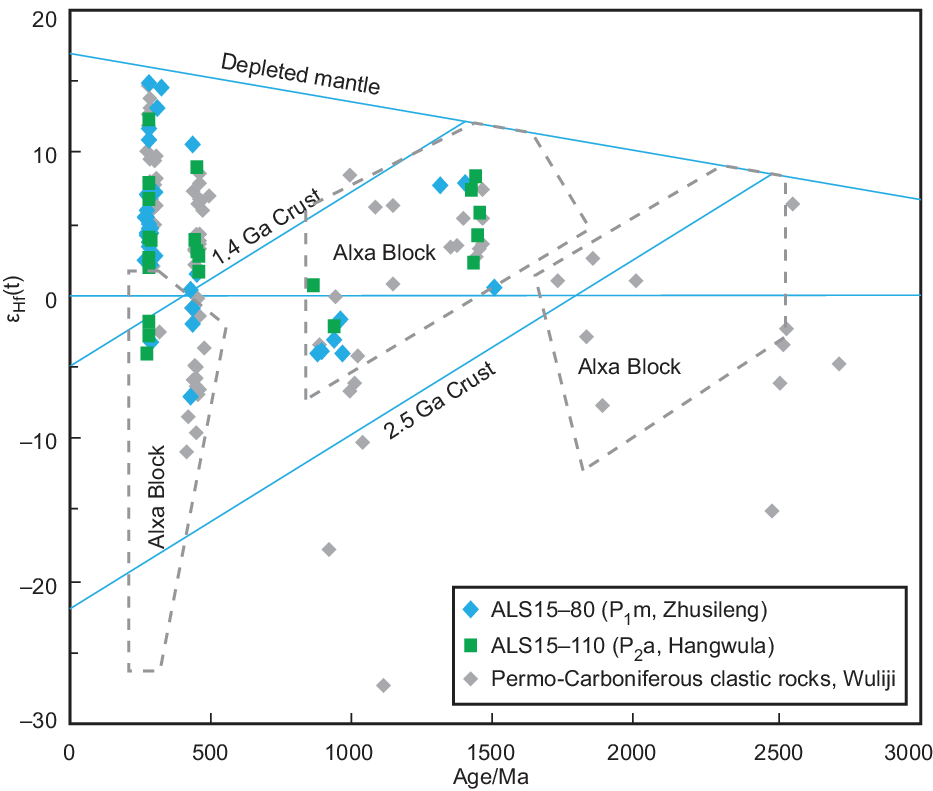
ALS15–80 (Maihanhada Fm, Zhusileng): Hf isotopic analysis was conducted on 38 zircons, and all of them are valid. They yield ϵHf(t) values between −7.0 and +14.8. The Mesoproterozoic zircons yield positive ϵHf(t) values, while the Neoproterozoic zircons have negative ϵHf(t) values. The early Palaeozoic zircons exhibit positive and negative ϵHf(t) values, while most Permo-Carboniferous zircons exhibit positive ϵHf(t) values.
ALS15–110 (Aqide Fm, Hangwula): Hf isotopic analysis was conducted on 22 zircons, all of which are valid. They yield ϵHf(t) values between −4.2 and +12.3. All the Mesoproterozoic zircons exhibit positive ϵHf(t) values, while the Neoproterozoic zircons yield near-zero ϵHf(t) values. The early Palaeozoic zircons exhibit positive ϵHf(t) values, while the Permo-Carboniferous zircons have positive and negative ϵHf(t) values.
6. Discussion
6.a. Timing of deposition
The depositional time constraints of the Permo-Carboniferous clastic rocks are the basis for the subsequent discussion. For the Amushan Formation, the two youngest zircons in sample ALS15–70 collected in the Zhusileng area had U–Pb ages of 378 ± 6 Ma and 404 ± 5 Ma, similar to those in the Wuliji area (Fig. 2). This indicates a post-Devonian time of deposition for the Amushan Formation. The volcanic rocks of the Amushan Formation yielded late Carboniferous zircon U–Pb ages, limiting their formation age to the late Carboniferous period (Lu et al. Reference Lu, Wei, Li and Wei2012; Chen et al. Reference Chen, Shi, Jiang, Zhang, Li and Wang2016). The fossil assemblages in the limestone layers/lenses and the overlying clastic rocks of the Amushan Formation were mostly formed during the late Carboniferous to early Permian period (NXBG, 1979; GSBG, 1980, 1981; Bu et al. Reference Bu, Niu, Wu and Duan2012; Lu et al. Reference Lu, Wei, Li and Wei2012). Thus, the Amushan Formation is believed to have been deposited from late Carboniferous to early Permian time.
For the Maihanhada Formation, the five youngest zircons in sample ALS15–103 exhibited a weighted mean age of 276 ± 4 Ma, and the six youngest zircons in sample ALS15–80 exhibited a weighted mean age of 271 ± 3 Ma. For the Aqide Formation, the three youngest zircons in sample ALS15–110 exhibited a weighted mean age of 263 ± 6 Ma, and the three youngest zircons (except for the youngest zircon with an age of 218 ± 3 Ma, which was probably affected by the subsequent thermal events) in sample ALS15–113 demonstrated a weighted mean age of 263 ± 5 Ma. For the Haersuhai Formation, the five youngest zircons in sample ALS15–64 demonstrated a weighted mean age of 257 ± 7 Ma. The decreasing ages of the youngest zircon groups in the early to the late Permian samples from the Maihanhada, Aqide and Haersuhai formations are consistent with their stratigraphic arrangement. Moreover, fossil assemblages from the early to middle Permian were found in strata equivalent to the Maihanhada Formation in the Haierhan area, indicating an early to middle Permian age for its formation (Bu et al. Reference Bu, Wu, Duan, Jiang, Shi and Chen2013). The fossils of brachiopods and ammonoids found in the Aqide Formation indicate a middle Permian age for its formation (GSBG, 1981; NXBG, 1981). The Haersuhai Formation between the middle Permian Aqide Formation and the Triassic deposits was probably formed in late Permian time (NXBG, 1981). Our constraints on depositional time based on zircon U–Pb geochronology are consistent with previous constraints based on fossil assemblages and stratigraphic relationships.
6.b. Provenance
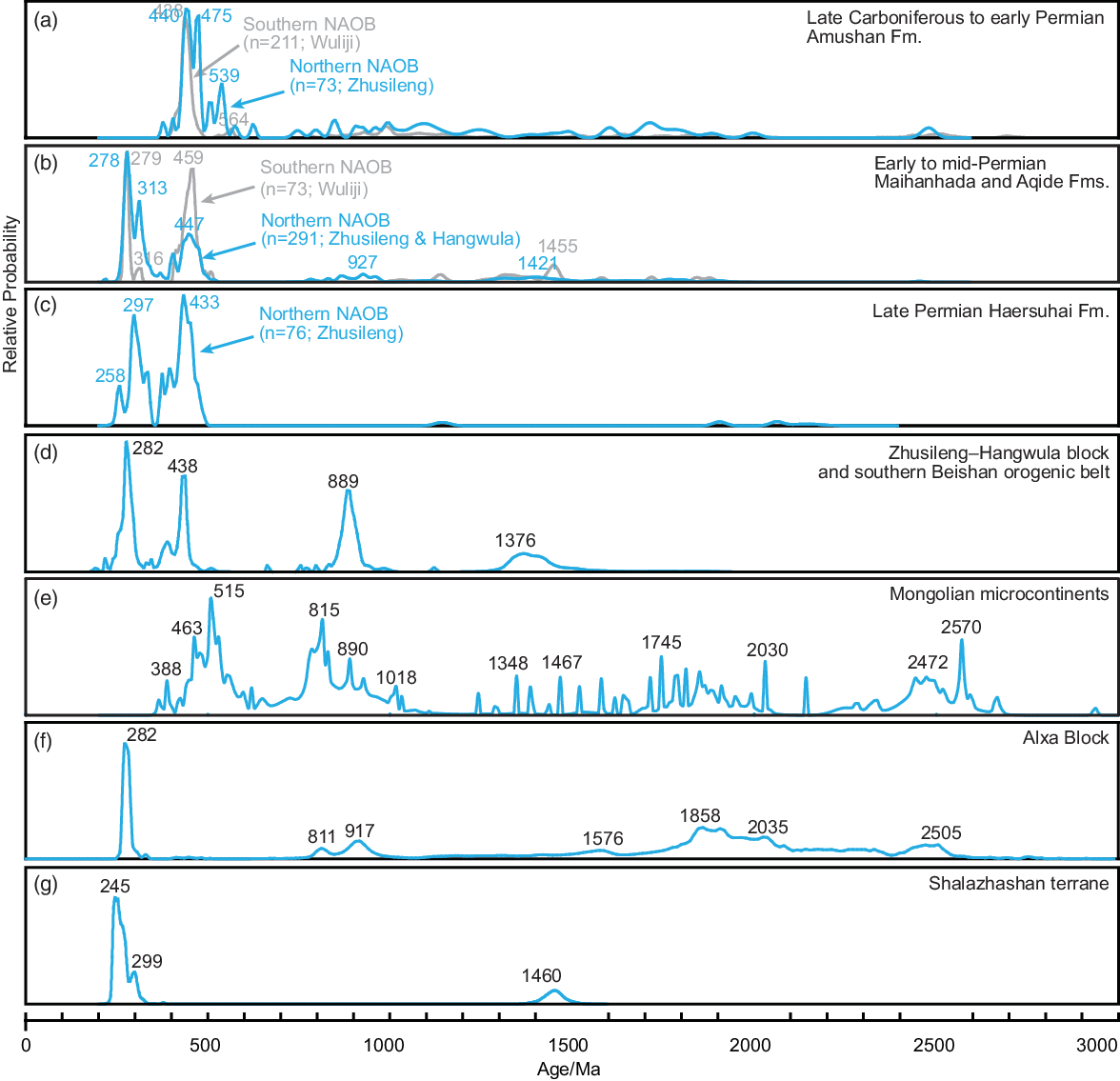
The Permo-Carboniferous clastic rocks in the Zhusileng and Hangwula areas are mostly immature, moderately to poorly sorted and poorly rounded, indicating that the depositional sites were close to the source regions. Their heavy mineral assemblages indicate that the source rocks were acidic to basic magmatic rocks and low- to high-grade metamorphic rocks (Shi et al. Reference Shi, Chen, Jiang, Niu and Han2013). The petrographic features and heavy mineral assemblages helped reveal the composition of the source rocks. However, zircon U–Pb dating of the clastic rocks and their comparison with potential source terranes was more effective in differentiating the source terranes. The Zhusileng–Hangwula block as the eastern extension of the southern Beishan orogenic belt (Wu & He, Reference Wu and He1993; Chen et al. Reference Chen, Wu, Zhang, Fanning and Zhang2020 a), the Yagan continental margin as the southern margin of the Mongolian microcontinents (Zhang et al. Reference Zhang, Pease, Meng, Zheng, Thomsen, Wohlgemuth-Ueberwasser and Wu2016), the Alxa Block and the Shalazhashan terrane may be the potential source terranes. For a detailed comparison, Figure 9 shows the zircon age distributions for the terranes mentioned above and the Permo-Carboniferous clastic rocks in the northern Alxa area.
Zircon age distributions for (a–c) the Permo-Carboniferous clastic rocks in the northern (Zhusileng and Hangwula; this study) and southern (Wuliji; Chen et al. Reference Chen, Wu, Zhang, Fanning and Zhang2020 a) NAOB, (d) the Zhusileng–Hangwula block and southern Beishan orogenic belt, (e) the Mongolian microcontinents, (f) the Alxa Block, and (g) the Shalazhashan terrane. Data for the Alxa Block, the Shalazhashan terrane and the Zhusileng–Hangwula block (southern Beishan orogenic belt) are taken from Chen et al. (Reference Chen, Wu, Zhang, Fanning and Zhang2020 a) and references therein. Data for the Mongolian microcontinents are taken from Rojas-Agramonte et al. (Reference Rojas-Agramonte, Kröner, Demoux, Xia, Wang, Donskaya, Liu and Sun2011) and references therein.

The clastic rocks from the upper Carboniferous to lower Permian Amushan Formation in the northern NAOB (Zhusileng) contain abundant Palaeozoic zircons (with age peaks at 440 Ma, 475 Ma and 539 Ma) and some Precambrian zircons (Fig. 9a). The most significant age peak at 440 Ma is coincident with the age peak of the Zhusileng–Hangwula block and the southern Beishan orogenic belt at 438 Ma. The age peaks of 475 Ma and 539 Ma are close to the age peaks of 463 Ma and 515 Ma of the Mongolian microcontinents. The Zhusileng–Hangwula block locally can further provide detrital zircons with Mesoproterozoic and Neoproterozoic ages. The Mongolian microcontinents can further provide detrital zircons with Palaeo-, Meso- to Neoproterozoic ages. The Yagan continental margin (as the southern margin of the Mongolian microcontinents) merged with the Zhusileng–Hangwula block before late Devonian time (Zhang, Reference Zhang2013). Therefore, the local Zhusileng–Hangwula block and the nearby Yagan continental margin are considered to be the source regions for the clastic rocks. In contrast, the most significant age signal exhibited by the early Palaeozoic zircons from the clastic rocks is absent or small in the northern Alxa Block and Shalazhashan terrane. In addition, the palaeogeographic analysis shows that the transgressive direction in the Zhusileng and Hangwula areas was towards the southeast (IMBGMR, 1991), which locates the source area to the northwest. Since the Alxa Block and the Shalazhashan terrane are in the opposite direction to the transgression, they rarely provided large amounts of detritus to the clastic rocks. A detailed comparison of zircon ages and ϵHf(t) values suggests that the Amushan Formation clastic rocks in the southern NAOB (Wuliji) were dominantly derived from the Alxa Block, the Shalazhashan terrane and the Zhusileng–Hangwula block (Chen et al. Reference Chen, Wu, Zhang, Fanning and Zhang2020 a), with some zircons (with an age peak of 564 Ma) possibly from the Mongolian microcontinents.
For the clastic rocks from the lower to middle Permian Maihanhada and Aqide formations in the northern NAOB (Zhusileng and Hangwula), the Permo-Carboniferous age signal (peaks at 278 Ma and 313 Ma) was greatly enhanced. Homochronous volcanic activities were intensive and widespread throughout the northern Alxa area, as shown in the age spectra of the Zhusileng–Hangwula block, the Shalazhashan terrane, the Alxa Block and the lower to middle Permian clastic rocks in the Wuliji area. The most remarkable age peak of 278 Ma corresponds to the age peak of 282 Ma for the Zhusileng–Hangwula block, suggesting that the lower to middle Permian clastic rocks were intensively affected by the local volcanism. The Zhusileng–Hangwula block and the Yagan continental margin are still considered to be the source of the Precambrian to early Palaeozoic zircons in the clastic rocks. The age peaks of 278 Ma, 313 Ma and 447 Ma of the lower to middle Permian clastic rocks in the northern NAOB (Zhusileng and Hangwula) are consistent with the age peaks of 279 Ma, 316 Ma and 459 Ma of the lower to middle Permian clastic rocks in the southern NAOB (Wuliji). The zircon ϵHf(t) values of the lower to middle Permian clastic rocks in the northern NAOB (Zhusileng and Hangwula) plot inside the same fields exhibited by the Permo-Carboniferous clastic rocks in the southern NAOB (Wuliji) (Fig. 10). This similarity indicates the exposure of a unified continent and a significant impact from the Permo-Carboniferous volcanism with mostly juvenile features.
Zircon ϵHf(t) values for the Permian clastic rocks collected from the Zhusileng and Hangwula areas. The zircon ϵHf(t) values for the Permo-Carboniferous clastic rocks collected from the Wuliji area are taken from Chen et al. (Reference Chen, Wu, Zhang, Fanning and Zhang2020 a). The ϵHf(t) fields for the Alxa Block were compiled from Zhang et al. (Reference Zhang, Wang, Zhang, Tong, Zhang, Shi, Guo, Huang, Yang, Huang, Zhao, Ye and Hou2015).

The Precambrian age signal is significantly weakened in the clastic rocks from the upper Permian Haersuhai Formation in the northern NAOB (Zhusileng), indicating continuous exposure and erosion of the Precambrian basement rocks. The Zhusileng–Hangwula block and the Yagan continental margin are still believed to be the source of abundant early Palaeozoic zircons and some Precambrian zircons. As shown in the age spectra, the clastic rocks received a large amount of the Permo-Carboniferous volcanic debris. Furthermore, the age peaks of 258 Ma and 297 Ma for the Haersuhai Formation are similar to the age peaks of 245 Ma and 299 Ma for the Shalazhashan terrane. This similarity makes the Shalazhashan terrane an alternative source for the clastic rocks.
6.c. Tectonic setting
Zircon U–Pb age patterns help identify the tectonic environment in which clastic rocks were formed (Cawood et al. Reference Cawood, Hawkesworth and Dhuime2012). Clastic rocks deposited in extensional basins exhibit a high proportion of detrital zircons that are noticeably older than their depositional time, with a few or no detrital zircons close to their depositional time (Cawood et al. Reference Cawood, Hawkesworth and Dhuime2012). The provenance analysis showed that the clastic rocks from the upper Carboniferous to lower Permian Amushan Formation were essentially derived from the Precambrian and lower Palaeozoic rocks, with no Carboniferous zircons close to the deposition time. The Carboniferous greywacke collected from the Zhusileng–Hangwula block (by Liu et al. Reference Liu, Zhao, Han, Zhu, Wang, Eizenhöfer, Zhang and Tsui2018) contained abundant early Palaeozoic zircons, some Precambrian zircons and a small number of Carboniferous zircons with ages close to the depositional time. These features of the zircon age distributions are similar to extensional basins (Cawood et al. Reference Cawood, Hawkesworth and Dhuime2012) and support an extensional setting for the Zhusileng–Hangwula block, at least during late Carboniferous time. For the Permian clastic rocks, the source of the Precambrian to Palaeozoic zircons and tectonic setting were inherited from the upper Carboniferous clastic rocks. In the northern NAOB, the Permian clastic rocks are dominated by Permo-Carboniferous zircons. In the southern NAOB and Alxa Block, they are dominated by Permo-Carboniferous zircons as well, though with different interpretations of their tectonic setting, from arc-related basins to intracontinental rift basins (Song et al. Reference Song, Xiao, Collins, Glorie, Han and Li2018; Shi et al. Reference Shi, Song, Wang, Huang and Li2019; Chen et al. Reference Chen, Wu, Zhang, Fanning and Zhang2020 a). Homochronous volcanic rocks in the Alxa area are probably the source of the increasing Permo-Carboniferous zircons. As confirmed by geochemistry, the Permo-Carboniferous volcanic rocks were formed in an extensional environment (Dang et al. Reference Dang, Zhao, Lin, Wu, Kang, Ge, Wu and Liu2011; Jiang et al. Reference Jiang, Li, Chen, Wei and Li2011). For the Permian clastic rocks, most of the Permo-Carboniferous zircons yield positive ϵHf(t) values, while some of them yield negative ϵHf(t) values (Fig. 10). These indicate a dominant juvenile crustal addition with some crustal reworking during Permo-Carboniferous time.
Our zircon age patterns for the Permo-Carboniferous clastic rocks and provenance analysis support the viewpoint of an extensional setting. However, some authors argued for a subduction-related setting for the NAOB during the Permo-Carboniferous period (Song et al. Reference Song, Xiao, Collins, Glorie, Han and Li2018). Continental arc models were proposed for the northern and southern NAOB owing to the northward and southward subduction of the Palaeo-Asian Ocean, respectively (Liu et al. Reference Liu, Zhao, Han, Zhu, Wang, Eizenhöfer, Zhang and Tsui2018). However, after reviewing a large volume of literature, no Carboniferous arc-related plutonic rocks have been reported in the northern NAOB. The 311 Ma acidic volcanic rocks in the Yagan continental margin also show a post-collisional geochemical affinity (Pearce et al. Reference Pearce, Harris and Tindle1984), similar to the Carboniferous volcanic rocks across the NAOB with an intraplate geochemistry (Jiang et al. Reference Jiang, Li, Chen, Wei and Li2011), though they were interpreted as having formed in a continental arc setting by Liu et al. (Reference Liu, Zhao, Han, Zhu, Wang, Eizenhöfer, Zhang and Tsui2018). In the southern NAOB, late Carboniferous plutons have only been reported sporadically (Shi, Reference Shi2012; Yang et al. Reference Yang, Zhang, Wang, Shi, Zhang, Tong, Guo and Geng2014) and are not sufficient for the reconstruction of a magmatic arc belt. Furthermore, no evidence of a subduction-related accretionary complex and high-pressure metamorphic rocks have been identified (Shi, G. Z. et al. 2016). The Permian granitoids and volcanic rocks are widely exposed across the NAOB. Distinguishing their tectonic setting based on their mixed geochemical characteristics is confusing. The Permian magmatism recorded by the zircon ϵHf(t) values of the clastic rocks (Fig. 10) showed similar crustal indicators of a dominant juvenile addition in the northern and southern NAOB. This similarity may have been caused by a unitary regime of asthenospheric upwelling (Dan et al. Reference Dan, Li, Wang, Tang and Liu2014, Reference Dan, Wang, Wang, Liu, Wyman and Liu2015). The middle to upper Devonian molasse deposits indicate the termination of ancient orogens (Wang et al. Reference Wang, Wang and Wang1994). The unconformity between the Permo-Carboniferous strata and Precambrian to lower Palaeozoic rocks indicates that they developed on Precambrian basements and ancient orogens (Lu et al. Reference Lu, Zhang, Niu, Liu, Chen and Wei2017). The Permo-Carboniferous strata preserved in the northern Alxa area are unexpectedly thick (NXBG, 1979, 1981; GSBG, 1980, 1981) and were likely formed in an extensional environment without strong compression. They were mainly deposited in shallow marine and coastal environments with several transgressions as a response to extensional settings (Li et al. Reference Li, Lu and Chen2011; Shi, J. Z. et al. 2018). Furthermore, in-depth basin analyses and recent breakthroughs in oil and gas drilling from the Permo-Carboniferous strata support an extensional environment (Lu et al. Reference Lu, Zhang, Niu, Liu, Chen and Wei2017, Reference Lu, Niu and Jiang2018). In summary, the NAOB entered an extensional stage at least from the late Carboniferous period.
6.d. Tectono-palaeogeographic reconstruction
Based on the above discussion and previous studies, a tectono-palaeogeographic reconstruction was proposed for the NAOB spanning the late Carboniferous to Permian period (Fig. 11).
Tectono-palaeogeographic reconstruction for the (a) late Carboniferous, (b) early to middle Permian, and (c) late Permian of the NAOB.

6.d.1. Late Carboniferous
The Zhusileng–Hangwula block and the Yagan continental margin were welded together before late Devonian time (Zhang, Reference Zhang2013), and both presented as the source regions for the upper Carboniferous clastic rocks in the Zhusileng area. The upper Carboniferous clastic rocks in the Wuliji area received detritus from the Alxa Block, the Shalazhashan terrane and the Zhusileng–Hangwula block, indicating the amalgamation of these three terranes before late Carboniferous time (Chen et al. Reference Chen, Wu, Zhang, Fanning and Zhang2020 a). The remnant marine basin with a continental crustal basement was considered the initial sedimentary environment for the Carboniferous deposits (Lu et al. Reference Lu, Zhang, Niu, Liu, Chen and Wei2017, Reference Lu, Niu and Jiang2018). Accompanied by the massive eruption of volcanic rocks and crustal extension, a maximal transgressive event occurred (IMBGMR, 1991; Li et al. Reference Li, Lu and Chen2011). The marine basins extended from the Zhusileng–Hangwula block and Yagan continental margin to the Wuliji area, where thick shallow marine carbonates and clastic rocks were deposited (IMBGMR, 1991; Li et al. Reference Li, Lu and Chen2011). The upper Carboniferous to lower Permian mafic rocks reported by Zheng et al. (Reference Zheng, Wu, Zhang, Xu, Meng and Zhang2014) and Shi, G. Z. et al. (2016) along the Engger Us fault are likely to be newly formed by asthenospheric upwelling.
6.d.2. Early to middle Permian
The unexpectedly thick lower to middle Permian Maihanhada and Aqide formations in the Zhusileng and Hangwula areas were deposited in a turbulent deepening marine basin (Li et al. Reference Li, Lu and Chen2011), which received debris from the Zhusileng–Hangwula block and the Yagan continental margin continuously. Long-term erosion of the Precambrian basement rocks weakened their ability to supply Precambrian detritus. As a result of extensive eruption of Permian volcanic rocks, their ability to supply homochronous detritus dramatically increased. The lower to middle Permian clastic rocks in the Wuliji area continuously received debris from the Alxa Block, the Shalazhashan terrane and the Zhusileng–Hangwula block. The early Permian gabbro reported by Zheng et al. (Reference Zheng, Wu, Zhang, Xu, Meng and Zhang2014) in the Quaganqulu area was likely associated with limited oceanic crusts newly formed in an extensional environment (Yin et al. Reference Yin, Zhou, Zhang, Zheng and Wang2016). Until middle Permian time, marine molasse deposits show that seawater gradually regressed from the Quaganqulu area (Zhang et al. Reference Zhang2013).
6.d.3. Late Permian
The upper Permian deposits were formed in a relatively stable marine basin but were limited in the Zhusileng, Hangwula, and Yagan areas (IMBGMR, 1991). Owing to the continuous basin filling from the Zhusileng–Hangwula block, the Yagan continental margin and likely the Shalazhashan terrane, the water level gradually diminished, and some areas turned into lake basins with fossil plants (GSBG, 1980). By the end of the Permian period, the water eventually regressed from the northern Alxa area (IMBGMR, 1991).
7. Conclusion
Based on an integrated provenance analysis and a comprehensive study of the Permo-Carboniferous strata in the northern Alxa area, we can draw the following conclusions:
-
(a) The Permo-Carboniferous clastic rocks in the Zhusileng and Hangwula areas were dominantly derived from the local Zhusileng–Hangwula block and the nearby Yagan continental margin.
-
(b) Zircon U–Pb age patterns, volcanic rock geochemistry and basin analysis showed that the NAOB entered an extensional stage at least from late Carboniferous time.
-
(c) A tectono-palaeogeographic reconstruction was proposed for the NAOB evolving from a late Carboniferous transgression with crustal extension, to early to middle Permian rapid basin filling, and a late Permian marine regression.
Supplementary material
To view supplementary material for this article, please visit https://doi.org/10.1017/S0016756820000965
Acknowledgements
We appreciate the reviewer J. Charvet and another anonymous reviewer for their comments and suggestions, which are important for us to revise the original manuscript. The National Natural Science Foundation of China (41902224, 41372225), China Postdoctoral Science Foundation (2018M640275) and Fundamental Research Funds for the Central Universities (2412019QD002) are acknowledged for their financial support.