1. Introduction
Since its inception in 1995, the World Trade Organization (WTO) has served as the central forum for negotiating and regulating multilateral trade. Over the course of nearly three decades, WTO Ministerial Conferences have provided member states with a platform to articulate national trade agendas, express positions on global trade rules, and shape the direction of collective negotiations. These conferences, as the organization’s highest decision-making body, have accumulated an extensive corpus of ministerial statements: official records, of member engagement, that are discursive, public, and policy relevant.
Despite the sheer volume and strategic significance of these statements, the textual records of WTO Ministerial Conferences remain largely underutilized in empirical research. While previous studies have documented patterns of legal disputes, coalition building, or negotiation outcomes, relatively little is known about how systematically, and substantively, members have engaged in these conferences over time. This study addresses this gap by analyzing a comprehensive corpus of over 1,500 ministerial statements submitted by WTO members between 1996 and 2024. In particular, the degree to which member participation fluctuates in response to broader political or economic shifts, or how such participation reflects deeper negotiation alignments, has been assessed primarily through anecdotal or descriptive means.
By treating these texts as observable manifestations of institutional engagement, this research aims to quantify how members have used the WTO ministerial platform – how frequently they participate, how intensely they engage, and how the content of their speeches signal their negotiation stances. This approach – one that complements legal, institutional, oroutcome-oriented perspectives with a novel focus on participation behavior embedded in discourse – enables a systematic assessment of the WTO’s deliberative dynamics.
Guided by this objective, the study poses three core questions about the nature and evolution of member engagement at the WTO Ministerial Conferences. First, how have members’ engagement patterns – captured through the frequency and length of their submitted ministerial statements – shifted over time? This question seeks to identify temporal trends in how actively members utilize the ministerial platform, particularly in relation to key institutional events such as the launch and suspension of the Doha Development Agenda (DDA). Second, to what extent are these patterns shaped by members’ economic profiles, including trade volume and gross domestic product (GDP) per capita? By linking engagement metrics to structural economic indicators, the study examines whether the platform has functioned as a representative forum or one skewed toward economically dominant participants. Third, can members’ negotiation positions be inferred from the textual content of their statements, and how do these positions relate to their levels and trajectories of engagement? Applying established text-as-data techniques, the study estimates members’ discursive alignment – especially along the developed–developing country divide – and assesses how this alignment correlates with shifts in engagement over time.
Together, these questions aim to uncover not only who engages, but also how and under what conditions, offering a more nuanced understanding of the behavioral foundations of multilateral trade governance. Addressing the above questions is crucial because they refer directly to core concerns in the global trading system: who participates, on what terms, and with what consistency. In a forum where formal equality coexists with deep structural asymmetries, tracking changes in engagement over time provides essential insight into the WTO’s evolving legitimacy and responsiveness. This is especially salient as the organization enters its fourth decade amid growing concerns about the erosion of multilateralism and renewed momentum for institutional reform. By empirically tracing long-term engagement patterns, the study contributes not only to scholarly debates but also to policy discussions on how the WTO can remain a vital and inclusive platform in a rapidly changing global order.
To answer the questions, the study applies a quantitative text-as-data approach to the corpus of ministerial statements, drawing on both metadata (such as the submitting member, year, and word count) and linguistic features. The metadata are used to construct measures of engagement frequency and intensity, enabling a structured assessment of how consistently and substantively members have participated in the Ministerial Conference over time. Beyond these participation metrics, the study applies established text-mining techniques to analyze the content of the statements. Term Frequency–Inverse Document Frequency (TF-IDF) is used to identify salient themes and track how attention to core issues, such as development, agriculture, or market access, has shifted across negotiation cycles. To estimate members’ negotiation alignments, particularly along the developed–developing country spectrum, the study uses the wordscore method, leveraging reference texts from key coalition members. This allows for a replicable, language-based classification of member positions based on their own statements, rather than relying on external proxies such as GDP or geographic grouping.
While text-based methods are not without limitations – including the potential loss of contextual nuance or stylistic variation – the structured and formulaic nature of WTO ministerial statements mitigates many of these concerns. Given the study’s objective of tracing institutional engagement patterns across time and member groups, computational text analysis provides an appropriate and scalable toolset that complements more interpretive or case-specific accounts of WTO dynamics.
The analysis reveals three main findings about the nature and evolution of member engagement in WTO Ministerial Conferences. First, engagement levels – measured by the frequency and length of submitted statements – have fluctuated significantly over time, with higher participation during active negotiation phases (such as the early Doha years) and notable declines following key moments of institutional disappointment, including the suspension of the DDA. These temporal patterns are reflected not only in participation rates but also in speech intensity and its variance across members, suggesting shifts in collective expectations toward the WTO. Second, engagement is systematically correlated with members’ economic profiles. Countries with larger trade volumes and higher GDP per capita tend to participate more frequently and intensively. However, this relationship is not deterministic: some economically smaller members consistently made substantial use of the platform, while others with greater economic weight remained relatively passive. This indicates that institutional engagement cannot be explained by structural factors alone and warrants closer attention to political alignment and strategic interest. Third, text-based estimation of negotiation positions – using the wordscore method – shows a clear temporal shift in alignment and engagement across the developed–developing country divide. While developed members were more actively engaged in the WTO’s early years, developing countries took on a more prominent role during the height of the Doha Round. After the breakdown of negotiations, both groups exhibited a decline in engagement, but the decline was sharper and more prolonged among developing members. This asymmetric disengagement reflects uneven levels of disappointment and resilience within the institution.
Taken together, these findings highlight how engagement at the WTO is shaped by a combination of institutional momentum, economic capacity, and negotiation alignment. They underscore the value of speech-based indicators as proxies for institutional vitality and reveal how political and economic asymmetries manifest not only in outcomes but also in participation behavior over time.
This study engages with and contributes to four strands of literature on the World Trade Organization (WTO) and international organizations. First, it builds on foundational work on WTO law, trade liberalization, and institutional design (Rose, Reference Rose2004; Subramanian and Wei, Reference Subramanian and Wei2007; Bagwell et al., Reference Bagwell, Bown and Staiger2016). While these studies assess the WTO’s economic effects or legal frameworks, they often overlook how member behavior evolves within the institution. Historical and reform-oriented accounts (Van Grasstek, Reference VanGrasstek and Lamy2013; Jones, Reference Jones2015; Parizek, Reference Parizek2019) offer valuable context but rely primarily on qualitative interpretations. Second, the study engages with research on member participation within the WTO. Previous studies have examined procedural and legal forms of engagement, such as dispute settlement participation (Davis and Bermeo, Reference Davis and Bermeo2009), delegation and attendance patterns (Lavelle, Reference Lavelle2003), or archival documentation (Wilkinson and Scott, Reference Wilkinson and Scott2008). While informative, these approaches do not capture how members express and position themselves through public discourse. This study addresses that gap by focusing on ministerial statements as direct, self-authored expressions of institutional engagement. Third, the study contributes to the growing literature applying computational text analysis to international politics. Previous work has analyzed UN General Debate speeches (Baturo et al., Reference Baturo, Dasandi and Mikhaylov2017; Bailey et al., Reference Bailey, Strezhnev and Voeten2017) and treaty texts (Alschner et al., Reference Alschner, Seiermann and Skougarevskiy2018), but WTO ministerial discourse has been largely ignored. By employing TF-IDF and wordscore techniques on a structured corpus of over 1,500 speeches, this research introduces new data and methodology to the study of international trade institutions. Fourth, this work connects to broader efforts to assess the vitality and evolution of international organizations. Studies such as Gray (Reference Gray2018) and Debre and Dijkstra (Reference Debre and Dijkstra2023) rely on external visibility or institutional activity as proxies for organizational life. In contrast, this study provides a behaviorally grounded, internally sourced measure of vitality by analyzing members’ own participation over time.
In sum, the study contributes both empirically and methodologically. Empirically, it provides the first longitudinal analysis of WTO ministerial engagement using over 1,500 speeches, uncovering how political alignment, economic weight, and institutional junctures shape participation. Methodologically, it demonstrates how textual data, often underutilized in trade scholarship, can serve as a powerful tool to assess multilateral governance dynamics. By offering a systematic, replicable approach to measuring participation, the study opens new avenues for integrating discourse-based indicators into the evaluation of international institutions.The structure of this paper is organized as follows. Section 2 outlines the general background of the WTO Ministerial Conference and details the data collection process used in this study. Section 3 presents the findings of the analysis, highlighting changes in participation dynamics and the influence of economic factors on member speech. Section 4 examines speech dynamics through a detailed analysis using a well-established text-mining methodology to measure the political positions of member statements, providing a nuanced view of the negotiation landscape. Finally, concluding remarks synthesize the study’s findings and discuss their implications for understanding WTO dynamics.
2. Institutional Context and Data Overview
This section provides essential background on the WTO Ministerial Conferences (MCs), along with a description of the primary data used in the analysis – the ministerial statements – and an overview of the text-mining techniques applied. It also offers a brief account of the broader dynamics of MC discussions by examining how the emphasis on key terms has evolved over time. As the WTO’s highest decision-making body, the Ministerial Conference serves as the main forum in which all members have the opportunity to deliver formal policy statements on an equal footing, typically during plenary sessions. This makes it a uniquely consistent setting for observing patterns of engagement across countries and over time.
2.1 Data Collection and Preprocessing
The corpus analyzed in this study consists of 1,531 ministerial statements retrieved from the WTO’s online document database,Footnote 1 covering the period from 1996 to 2024. From an initial set of 1,905 documents bearing the official designation WT/MIN(year)/ST, the analysis excludes revisions, addenda, corrigenda, as well as statements submitted by observers who are not members of the WTO or are representative of other organizations.Footnote 2 The final corpus thus focuses exclusively on self-authored statements by individual WTO members, allowing for a more consistent assessment of national-level engagement. Revisions are documents that have been resubmitted (e.g., rev1 and rev2) in case of substantial content modification after the initial submission to the member, and the final revision is adopted as the document to be analyzed. An addendum is a document that adds only the relevant parts if there is any missing content after submission. The relevant parts are combined with the submission and reflected in the analyzed document. A corrigendum is a document that organizes errata in the case of simple typographical errors in the first draft, and the final analysis document is built by updating the analysis document to reflect its contents.
Certain preprocessing tasks were performed on the collected statements, such as removing numbers and punctuation marks, unifying cases, removing stop words, and tokenizing them word-by-word. To capture the context of a term and observe its evolution during each conference, I organized the token units into unigrams, bigrams, and trigrams.Footnote 3
2.2 Overview of WTO Ministerial Conferences
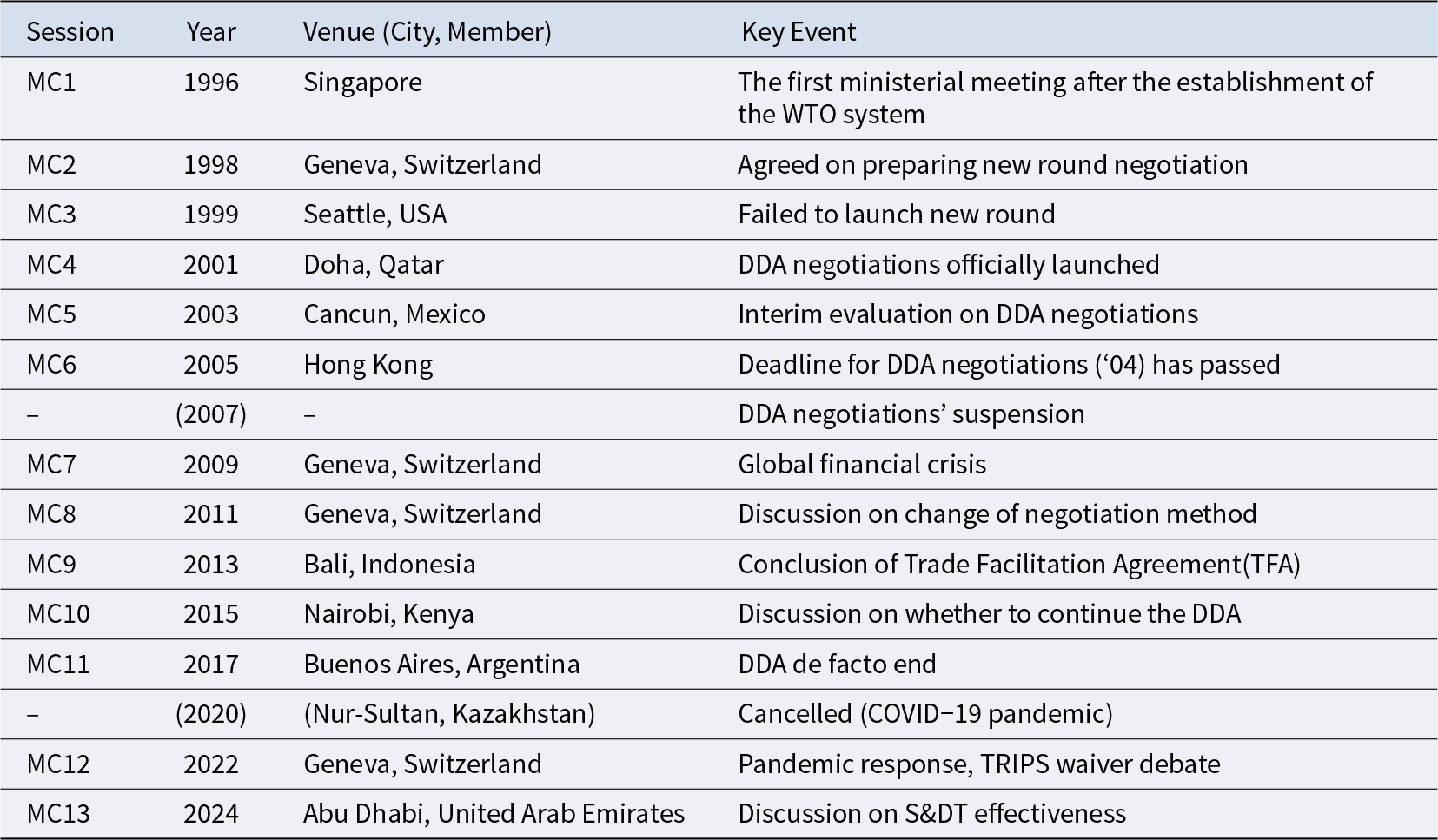
The WTO Ministerial Conference has been held 13 times as of 2025, starting in Singapore in December 1996 and most recently in Abu Dhabi in February 2024, with specific years and venues summarized in Table 1.
Key features of WTO Ministerial Conferences (MC)

In principle, conferences should have met at least 14 times in 29 years but have met slightly fewer times. This is because two meetings (the second and third) were held one year apart in the run-up to the start of the DDA negotiations, but two meetings were not held – one in 2007 due to the suspension of the DDA negotiations and the other in 2020 due to the COVID-19 pandemic. Regarding venues, Geneva, Switzerland, where the WTO headquarters are located, accounted for almost one-third of the total, with four meetings. Except for the Seattle Ministerial in 1999, which was held in the early stage of the WTO’s existence, most meetings were held mainly by a second major trading group,Footnote 4 such as Singapore, Mexico, Hong Kong, Indonesia, Kenya, and Argentina.Footnote 5
The WTO ministerial discussions can be summarized as follows, emphasizing key milestone meetings surrounding the DDA negotiations. In 1996, the inaugural Ministerial Conference of the World Trade Organization (WTO) was held in Singapore, marking the first significant assembly after the establishment of the WTO system. At the 2nd Ministerial Conference in Geneva in 1998, members agreed on preparing a new round of negotiations, setting the stage for more ambitious discussions. However, at the 3rd Ministerial Conference in Seattle in 1999, the initiation of a new round of negotiations, predominantly led by developed members, failed because of substantial opposition from civil society and developing nations. This opposition reflects concerns about the implications of global trade policies that are perceived to favor developed members disproportionately. Consequently, the conference did not succeed in launching the anticipated new trade rounds. The subsequent 4th Ministerial Conference in Doha in 2001 marked a shift in focus toward the WTO, leading to the official launch of the DDA. This agenda explicitly emphasizes development issues, aiming to address disparities affecting developing members within the global trade system.
An interim evaluation of the DDA negotiations was undertaken at the 5th Ministerial Conference in Cancun in 2003. This conference notably concluded with the decision not to include the so-called Singapore issues – a set of trade-related topics (trade facilitation, competition, government procurement, and investment) developed members had hoped to advance as part of the negotiation agenda. The exclusion of these issues was indicative of the ongoing tensions between developed and developing members, and the conference concluded with little progress on major negotiation points, leading to widespread disappointment among members. Continuing unresolved issues led to the 6th Ministerial Conference in Hong Kong in 2005, where discussions persisted but did not conclude successfully. The lack of agreement at this conference ultimately led to the temporary suspension of negotiations in 2007.
In response to the global financial crisis of 2009, there was a renewed emphasis on cooperation among WTO members, which led to the resumption of the DDA negotiations and ministerial meetings. A strategic adjustment was made to prioritize negotiations on agendas in which early results could be achieved. This approach facilitated the conclusion of the Trade Facilitation Agreement (TFA) at the 9th Ministerial Conference in 2013, which marked the first multilateral trade agreement since the establishment of the WTO. After the success of the TFA, discussions at subsequent ministerial meetings, including the 10th Ministerial Conference in Nairobi, began to focus on how to conclude the DDA negotiations. At the 11th Ministerial Conference in Buenos Aires, the DDA was effectively abandoned, and new topics, such as e-commerce and fisheries subsidies, were brought to the forefront. The 12th Ministerial Conference, held in Geneva in 2022, was significant for addressing global crises, including the COVID-19 pandemic and its economic fallout. One of the most contentious topics was the partial TRIPS waiver for COVID-19 vaccines, which revealed sharp divisions between developed and developing members over intellectual property rights and equitable access to vaccines. Finally, at the 13th Ministerial Conference in Abu Dhabi, discussions revisited the effectiveness of Special and Differential Treatment (S&DT) provisions, reflecting ongoing calls for WTO reforms and efforts to address unresolved developmental issues initially highlighted by the DDA process.
2.3 Keyword Trends and Thematic Shifts
Before turning to the core empirical analysis of participation patterns and negotiation alignment, this subsection offers a brief exploratory look at how the content of ministerial statements reflects shifting attention to key policy themes over time. Using the Term Frequency–Inverse Document Frequency (TF-IDF) method,Footnote 6 it highlights changes in thematic emphasis, particularly around major negotiation cycles such as the Doha Round, as a preliminary illustration of the discursive terrain covered by members. Although limited in scope, this initial analysis captures the issue-level dimension of engagement and complements the more detailed examinations that follow.TF-IDF identifies the relative importance of terms by measuring their frequency within a document while adjusting for their prevalence across the full corpus. This allows for a clearer view of those topics that stood out in each meeting. In the subsections that follow, changes in the TF-IDF rankings of selected keywords are tracked across Ministerial Conferences, with a focus on terms that reflect core themes in WTO negotiations. Combined with the meta-level information presented in Table 1, this analysis offers insight into how the substantive focus of the meetings has evolved over time, as reflected in the shifting prominence of specific terms in members’ statements.The selected keywords aim to provide an intuitive understanding rather than support a rigorous analytical framework. These include the most commonly used terms in the statements (e.g., WTO general), terms that may symbolize key issues in the DDA negotiations (e.g., development), terms related to established negotiation agendas (e.g., agriculture), and terms associated with areas that were unsuccessfully proposed for inclusion (e.g., Singapore issues).Footnote 7
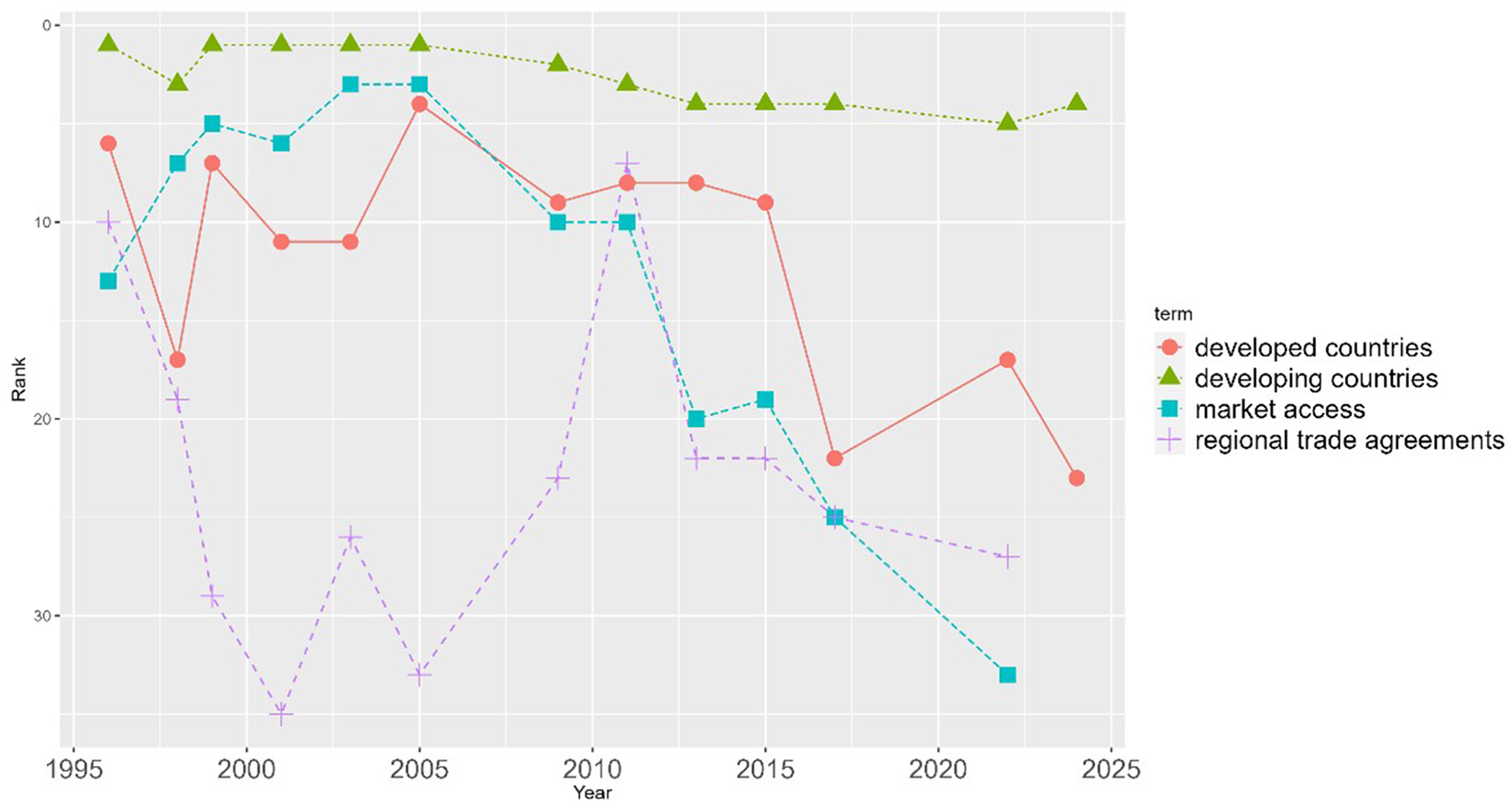
Figure 1(a) shows the change in ranking of the four terms generally used in WTO discussions. The term ‘developed countries’ or ‘developing countries’ is one of the most frequently used terms in all meetings and has remained among the top terms even after the IDF penalty. While the ranking of ‘developing countries’ is consistently high, that of ‘developed countries’ has been erratic, especially after the 2015 Nairobi Ministerial, where it dropped significantly. ‘Market access’, closely related to trade liberalization, has steadily declined since the Hong Kong Ministerial in 2005. ‘Regional trade agreements’, often referred to as an alternative to multilateralism, declined steadily in the early years of the WTO, rose rapidly after 2006, when the DDA negotiations were suspended, and gradually declined throughout the 2010s.
Keyword ranking trends by Ministerial Conference: WTO General

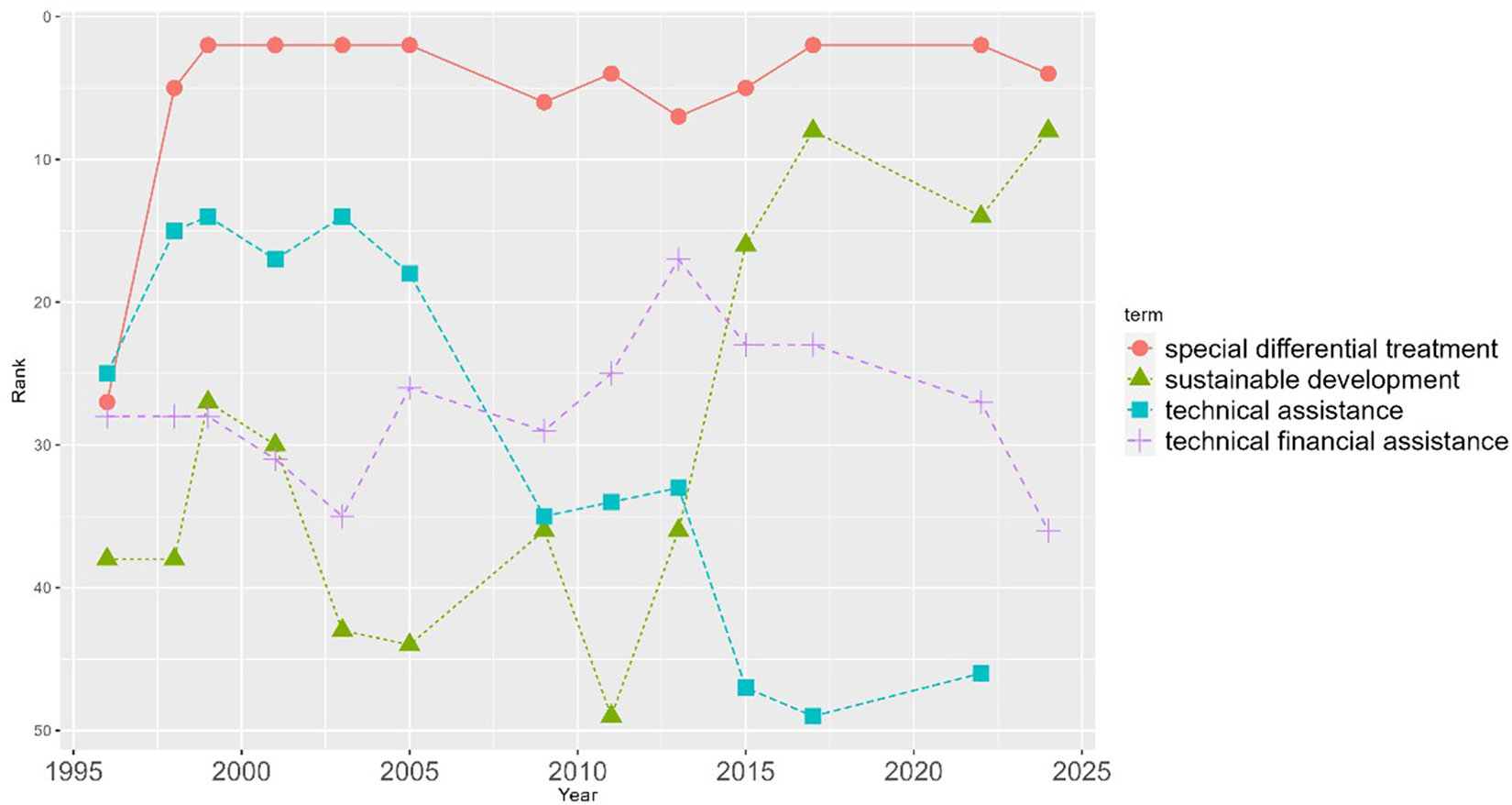
Since the WTO’s inception, the DDA has been the centerpiece of Ministerial Conferences, and as the name suggests, development issues are at the core of the DDA. Figure 1(b) shows how the rankings of development-related terms evolved. ‘Special differential treatment’ has consistently been ranked high since the 2nd Ministerial Conference in 1998, when it was agreed to prepare for the New Round of negotiations, although there was a slight drop after 2005 when the DDA negotiations were suspended. ‘Technical assistance’ was initially ranked in the top 20 but has experienced a steady decline since the suspension of negotiations; instead, ‘technical financial assistance’ has demonstrated a crossover trend, though with a decline since the COVID-19 pandemic. Although primarily associated with trade and environmental areas, the term ‘sustainable development’ has notably risen in prominence within development discussions since the 2010s.
Keyword ranking trends by Ministerial Conference: Development

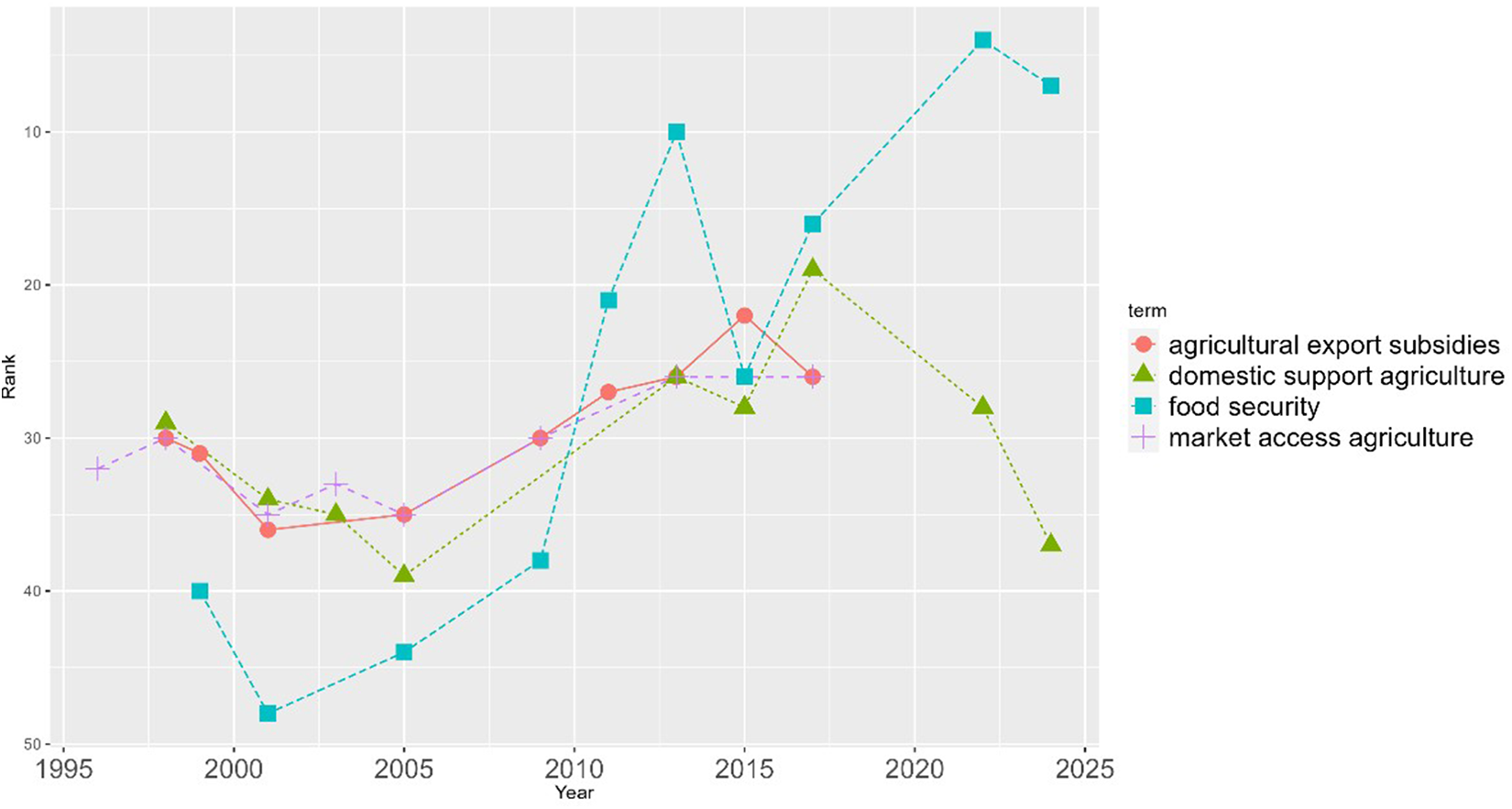
Another theme surrounding the DDA negotiations is the issue of agriculture, one of the so-called ‘built-in agendas’ in the Uruguay Round that was supposed to be covered by default in subsequent negotiations.Footnote 8 As shown in Figure 1(c), frequently mentioned keywords related to ‘agriculture’ have included ‘market access agricultural products’, ‘domestic support’, and ‘agricultural export subsidies’. At the same time, ‘food security’ has quickly become a keyword of interest in recent years since the DDA negotiations resumed after the 7th Ministerial Conference in 2009.
Keyword ranking trends by Ministerial Conference: Agriculture

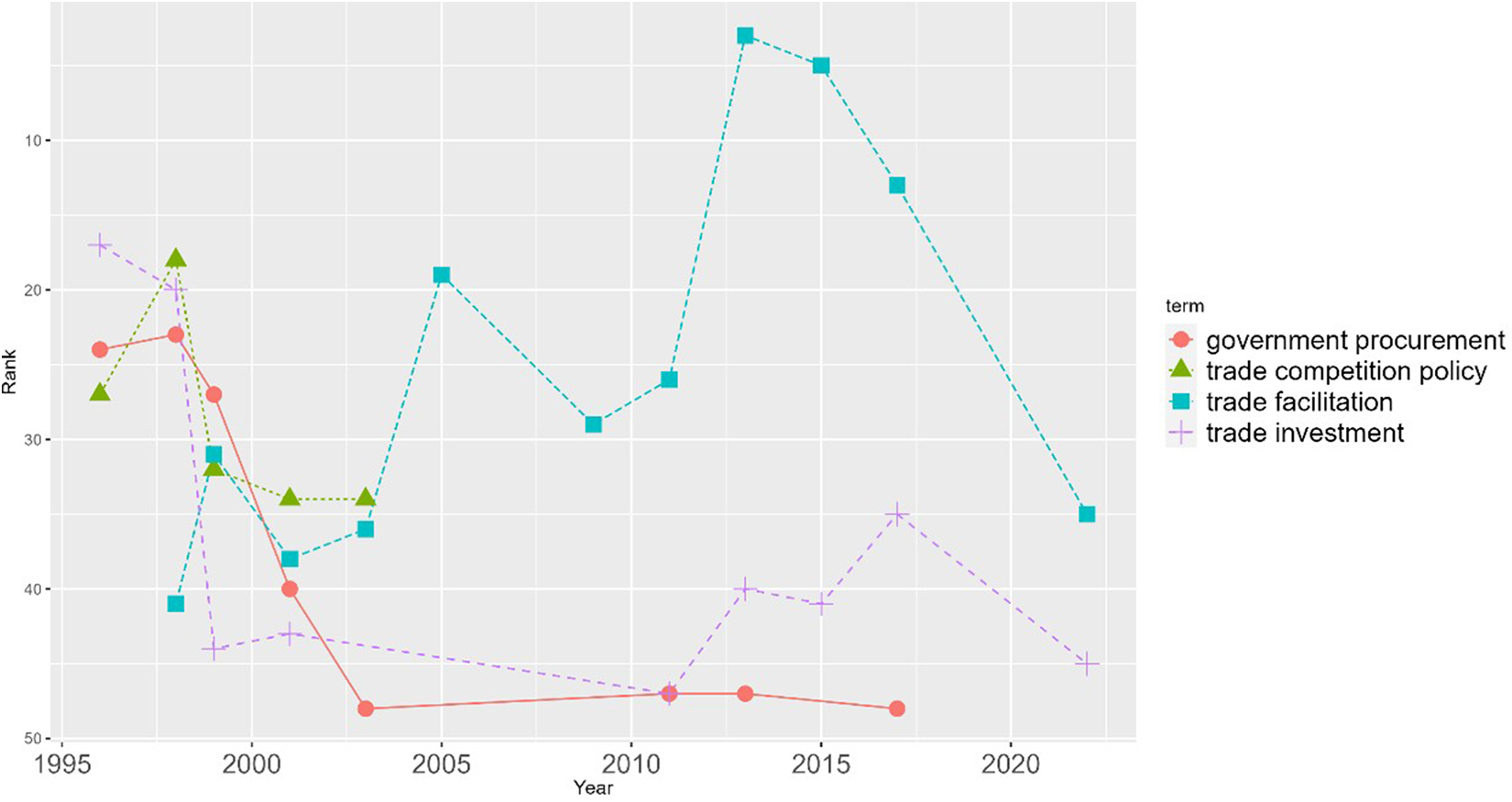
The new agenda items members mainly wanted to discuss in the New Round were Singapore issues. Figure 1(d) shows that except for trade facilitation, other issues dropped sharply or disappeared from the rankings around the 5th Ministerial Conference in 2003 when the final decision was not to include Singapore in the DDA. ‘Trade facilitation’ maintained its momentum following the conclusion of the Trade Facilitation Agreement at the 9th Ministerial Conference in 2013.
Keyword ranking trends by Ministerial Conference: Singapore Issues

Through the above keyword-focused overview, the following trends are observed: a diminishing interest in trade liberalization, particularly driven by developed members with market access, sustained attention to development issues with a methodological shift from technical assistance to technology and financial support, and changes in the agricultural agenda moving away from subsidies to domestic, and, more recently, to a focus on food security. While the Singapore issues have been excluded from the negotiation agenda, interest in government procurement remains due to revisions in the plurilateral agreement. While analyzing how changes in each keyword relate to members’ engagement in the WTO is beyond the scope of this study, what we can confirm here is that the ministerial statements effectively reflect a commonsense understanding of the WTO discussions and can therefore serve as valuable data for understanding members’ attitudes toward the WTO as an international forum.
3. Engagement at the WTO Ministerial Conference
This section examines two dimensions of engagement: frequency, captured by whether and how often members deliver statements; and intensity, proxied by the length of those statements. These indicators, derived from ministerial statements, provide a basis for assessing, not only how member’s engagement has varied over time and across institutional moments, but also how active the WTO has been as a forum for international trade deliberation.
3.1 Oveall Engagement: Utilization of Speaking Opportunities
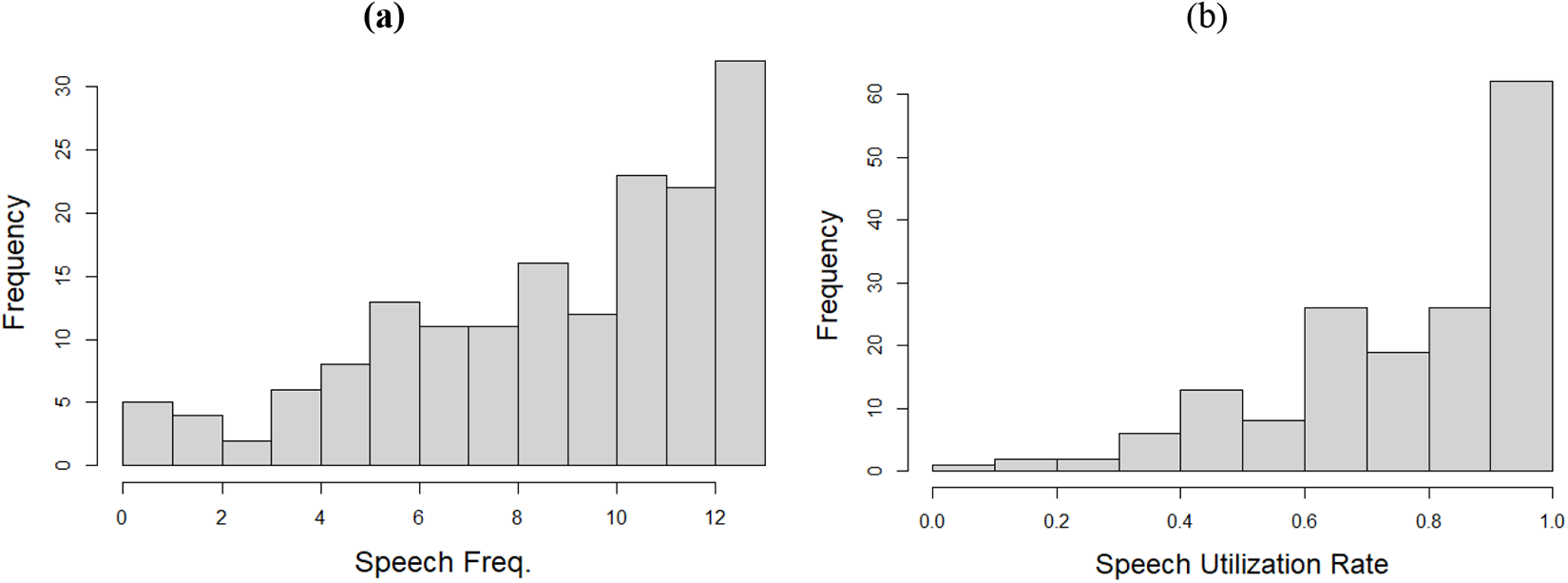
When measuring the engagement level of a meeting, it is natural to examine how many members speak when given the opportunity. Figure 2(a) illustrates how frequently members have submitted spoken statements across the 13 Ministerial Conferences, showing that most members participated in a majority of available sessions – with a median participation count of 10. This suggests relatively broad, though uneven, engagement over time. However, this speech frequency may be slightly distorted because the members had different years of WTO accession. Given the continuous evolution of the WTO membership from 76 at its inception in 1995 to 164 in 2024,Footnote 9 not all members spoke the same number of times. A more accurate measure of a member’s engagement is their speech utilization rate, which is the proportion of speaking opportunities utilized relative to those available, adjusted for varying times of accession among members.Footnote 10
Speech frequency and utilization rate

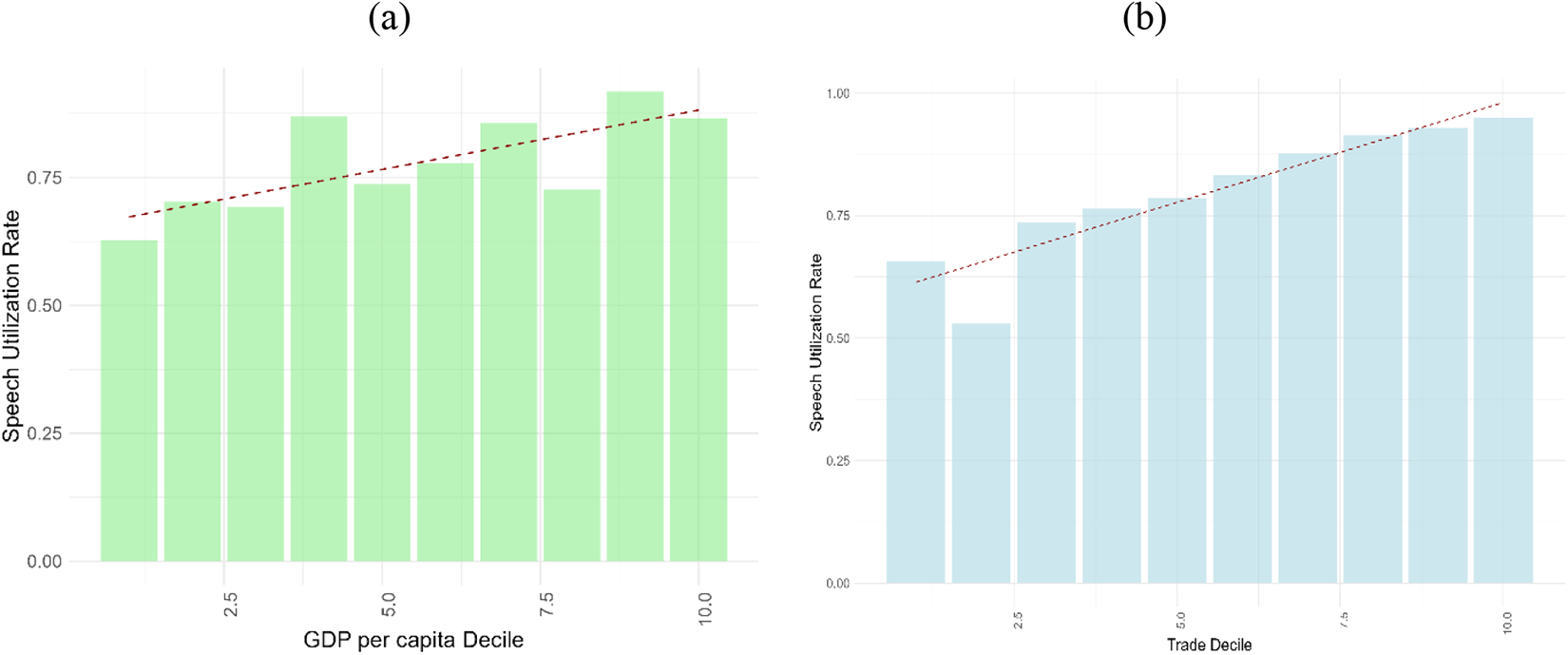
Figure 2(b) presents members’ speech utilization rates, defined as the proportion of speaking opportunities utilized relative to eligibility. The distribution is moderately skewed, with over three-quarters of members speaking in at least two-thirds of the sessions, while a smaller subset engaged only sporadically. Of the 164 members, 39 used all their speaking opportunities, of which 32 were original WTO members.Footnote 11 Although over three-quarters of the members (123 out of 164) made statements in at least two-thirds of their opportunities, more than 10% (17 members) still utilized less than half of their speaking opportunities.Footnote 12 This may indicate that members with low utilization rates, typically developing countries, are likely to face capacity constraints that limit their engagement in discussions at international forums. To further explore which member characteristics are associated with higher speech utilization, correlations with their economic variables, such as GDP per capita and total trade, are presented in Figure 3.
Economic indicators and their correlation with speech utilization rates

Panel (a), which depicts GDP per capita as a proxy for economic development, exhibits a general trend of a positive correlation with speech utilization, implying that members that are more developed utilize more speaking opportunities. This correlation becomes more evident in panel (b), which considers a member’s total trade amount. This finding indicates that the WTO has served as a forum in which members that represent large trade flows are more likely to be actively engaged, particularly in utilizing speaking opportunities. An important point to consider, though outside the scope of this study, is the potential link between economic interests and capacity. While this study focuses on engagement and its correlation with economic indicators, future research could decompose the size of capabilities and economic interests – factors influencing engagement in international forums – and identify member-specific characteristics.
3.2 Temporal Patterns: Non-Participation Rate over Time
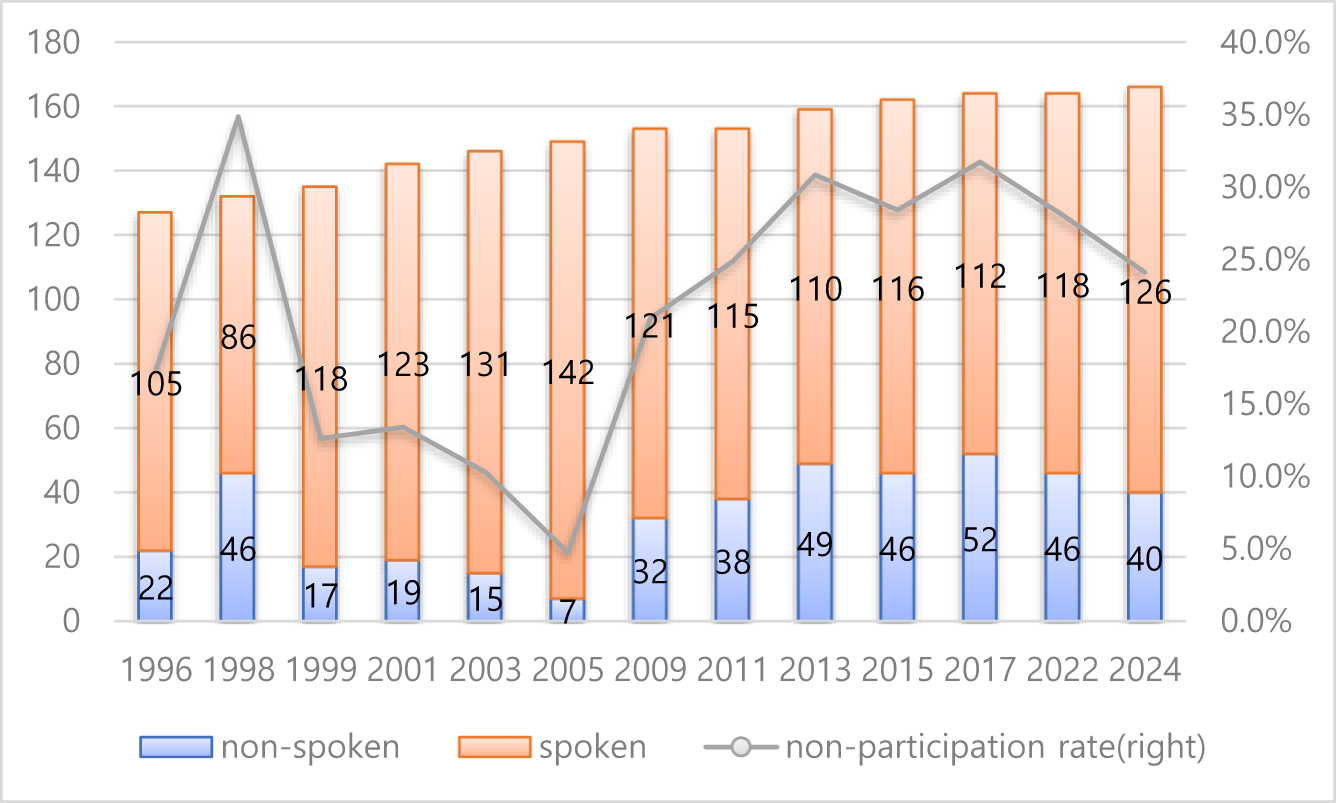
While the overall level of engagement provides a general sense of members’ activity, the speech utilization rate does not reveal when their engagement increases or decreases over time. Understanding when engagement changes is important for examining the dynamics of members’ involvement in the forum. To capture these temporal shifts, we analyze the proportion of members who did not speak, termed the non-participation rate, in the conference’s plenary session. Figure 4 shows, by conference year, the number of members who spoke and those who did not. The dotted line indicates the proportion of non-speaking members in each year, adjusted to account for the year of each member’s WTO accession.
Trend in non-participation rate

From the 1st Ministerial Conference in 1996 to the 13th Ministerial Conference in 2024, the overall average non-participation rate was 22%. The highest non-participation rate was 35% at the 2nd Ministerial Conference in Geneva, when more than one-third of the members did not speak, and the lowest was 4.7% at the 6th Hong Kong Ministerial Conference, just before the DDA negotiations were suspended. The rate remained low from 1999 to 2005 when the New Round was attempted and negotiations were underway; however, after the negotiations broke down, the rate increased rapidly and remained above approximately 25% up to the present. These temporal fluctuations in engagement align with key institutional moments, such as the launch of the Doha Development Agenda in 2001 and its subsequent suspension, as well as the shifting role of the Ministerial Conference in WTO governance.
The above results of frequency, utilization, and participation rates show that high-income or high-trade-volume members speak more often, which is perhaps expected given their greater capacity to engage in international organizations (Hamilton and Whalley, Reference Hamilton and Whally1987). Notably, these observations are intuitively confirmed through the newly constructed objective data, which opens up possibilities for further research. A more rigorous analysis will be required to explore the underlying factors influencing these patterns of engagement, including the role of economic power, political influence, and institutional capacity.
3.3 Engagement Intensity: Statement Length as a Proxy
If other conditions are equal, it is reasonable to anticipate that the greater the interest or expectations of the members, the more there will be to discuss, and, accordingly, the longer the speeches will be. In this context, the length of each member’s speech serves as a proxy for how intensively they engage in these discussions – referred to here as engagement intensity. This intensity is measured by the number of words in each statement, under the assumption that longer speeches reflect greater rhetorical investment or perceived importance of the forum.Footnote 13
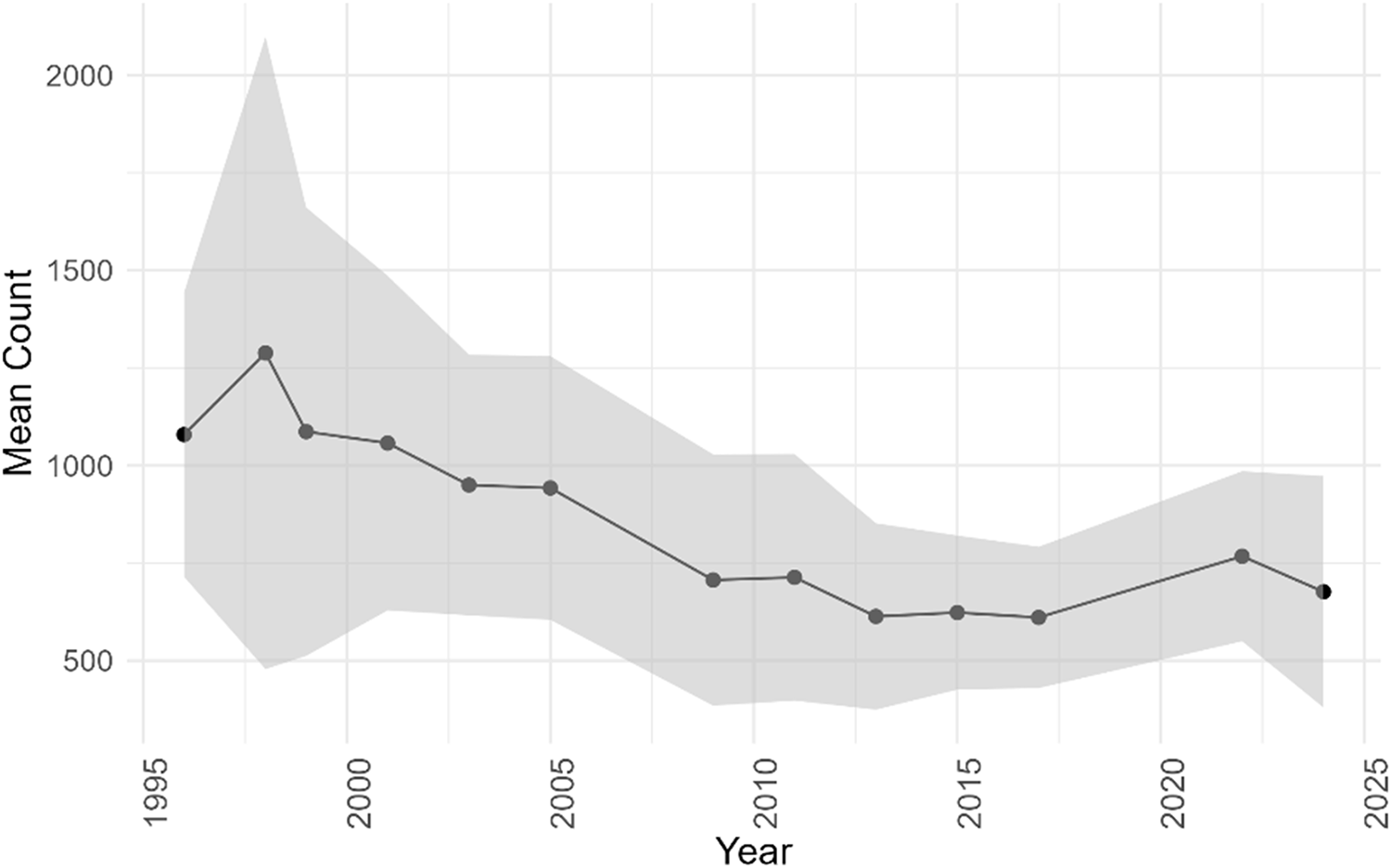
In Figure 5, the solid line represents the change in the average speaking intensity of the members by conference year. The grey shading around this line indicates the standard deviation of the intensity among members in a given year. A higher standard deviation indicates a significant disparity between members who spoke at length and those who spoke briefly, reflecting a blend of active and passive interests. In contrast, a lower standard deviation suggests a more uniform level of interest among members – if the average speech length is long in this case, it may imply that most members share a high level of engagement with the forum. Conversely, when both the standard deviation is low and the average length is short, it suggests that members generally lack substantial issues to discuss in depth, pointing to a lower level of interest or expectations regarding the forum.Footnote 14
The trend in average and standard deviation of members’ engagement intensity

The average length of member statements during the 13 conferences was 849 words. Over time, there has been a steady decline in the average length since the WTO’s establishment, starting with an average of 1,079 words at the 1st Ministerial Conference, reaching a high of 1,288 words at the 1998 2nd Ministerial Conference, before reaching a low level of 611 words at the 11th Ministerial Conference, and then rising again to 768 words at the 12th Ministerial Conference in 2022, which was interrupted by the corona virus pandemic. However, this was not enught to bring the average back to its previous level. In addition to the average length, another indicator of collective behavior is the standard deviation of the statement length.
The average standard deviation in statement length over the entire period was 355 words, with a general downward trend over time. It began at 364 words – close to the overall average – but peaked during the 2nd and 3rd Ministerial Conference, just prior to the launch of the DDA, before declining once negotiations commenced. Between 2001 and 2005, when the DDA negotiations were active, the average statement length remained relatively high, with a moderate level of variation. After 2011, following the effective breakdown of the Doha Round after MC5 in 2003 and subsequent shifts in negotiation strategy, both the average and standard deviation declined, signaling broader disengagement and reduced differentiation in rhetorical effort among members. This pattern aligns with key institutional junctures. For instance, the sharp drop in both average length of statements and their variation after the 5th Ministerial Conference suggests growing disillusionment with the DDA process. Conversely, a partial rebound in intensity around the 12th Ministerial Conference may reflect renewed engagement driven by the COVID-19 pandemic and evolving global trade conditions. Notably, 1998 (2nd Ministerial Conference) – which saw the highest non-participation rate – also recorded the highest standard deviation (809 words), indicating low average engagement alongside divergent expectations among those who did speak. In contrast, the 11th Ministerial Conference had the shortest average statement length and the lowest standard deviation (181 words), reflecting uniformly low rhetorical engagement and limited expectations regarding the forum.
While the discussion above focuses on aggregate trends, considerable heterogeneity remains at the member level. Some countries consistently delivered longer or shorter statements across conferences, while others exhibited notable fluctuations depending on the political or thematic context of each meeting. Descriptive statistics on members with the highest and lowest average statement lengths – as well as the most volatile patterns – are provided in the Appendix.
3.4 Voice–Trade Alignment: Trends in Representation among Top Traders
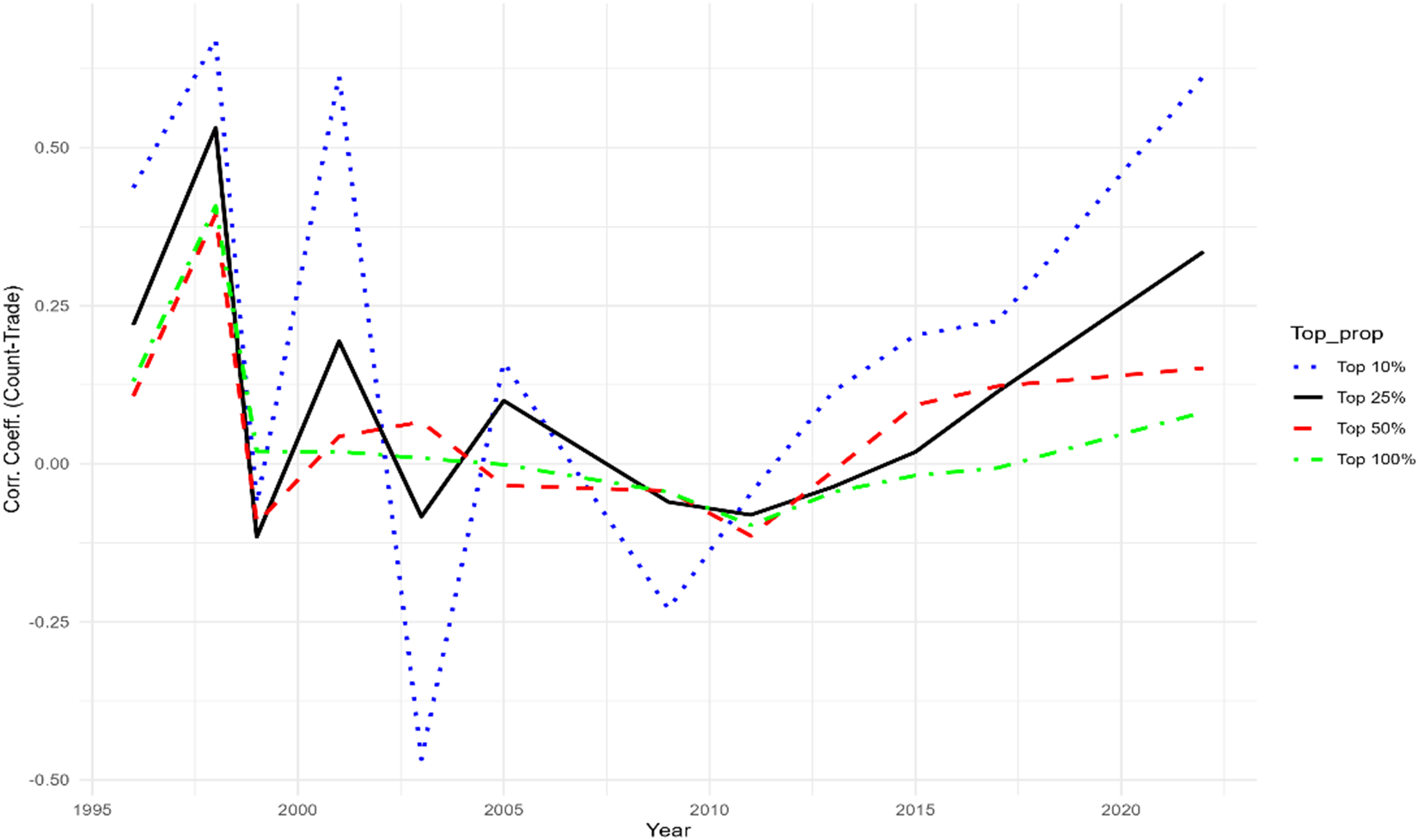
To assess how well engagement intensity represents the trade interests of members, I examine the correlation between engagement intensity and trade volume by members in Figure 6. Specifically, to understand the changes in the trade representation of engagement intensity in the WTO, the figure shows how the correlation changes annually between each member’s share of voice (proportion of total speech length) and their share of global trade. To confirm the characteristics of the correlation, I present cases corresponding to the top 100%, 50%, 25%, and 10% of traded shares, examining the commonalities and differences.
Trend in the Correlation between Share of Voice and Share of Global Trade from Top Traders

Fluctuations correspond to key moments in the WTO negotiations, such as preparatory phases, negotiation launches, and significant conferences, which exhibit an overall U-shaped trend over time. In addition, the extent to which the correlation exhibited a U shape became clearer as the top percentage threshold increased.
Specifically, an overall downward trend was observed, following a spike at the 2nd Ministerial Conference when preparations for the New Round of negotiations were underway, a sharp drop at the 3rd Ministerial Conference when the New Round failed to take off in Seattle, and a rise again at the fourth meeting when DDA negotiations began in Doha. These trends are consistent, albeit to varying degrees, regardless of the scope of top trading partners. A notable difference is that the trade representation of the top 25% of world trade economies declined after the disappointing 5th Ministerial Conference on the DDA negotiations in Cancun and has been at its lowest level ever since, especially for the top 10% members. The data highlight a downturn in trade representation post-Cancun, followed by a notable resurgence during the 2009 financial crisis, suggesting a reinvigorated engagement that coincides with global economic events. There has been a noticeable rebound in trade representation since the 7th Ministerial Conference in 2009 during the global financial crisis, and the higher the threshold for top members, the larger the rebound. The rebound timing also varies slightly depending on the top percentage of the trade share. For the top 10%, the rebound started after 2009, while for both the top 25% and the top 50%, it started after 8th Ministerial Conference in 2011, when they started considering changes in the negotiation approach. The observed patterns highlight the WTO’s pivotal role in facilitating discussions among key global traders, especially during crucial economic junctures, demonstrating a weakening trend of trade representation after the failure of the DDA negotiations, followed by a resurgence after the global financial crisis. This trend of restoring trade representation in WTO discussions may also result from changes in the composition of major trading members. Certainly, the above explanation is based on an intuitive connection of major WTO events over time. A more rigorous analysis, drawing on documentary evidence, would be required for a more comprehensive explanation.
In this section, I have examined the frequency and duration of speeches made by members at the WTO Ministerial Conferences, revealing insightful patterns regarding their engagement and interest levels.
Overall, the patterns observed in speech frequency and intensity reveal that member engagement at WTO Ministerial Conferences is shaped by both structural factors, such as trade volume and economic capacity, and evolving institutional dynamics. While a notable proportion of members maximize their speaking opportunities, utilization rates vary, with economically stronger members tending to participate more consistently. This tendency suggests a higher level of interest in, or expectations from, the forum’s outcomes.Footnote 15 The intensity of engagement, proxied by statement length, further complements this picture – although not uniformly correlated with economic strength, longer speeches often reflect deeper rhetorical investment and shifting levels of member commitment over time. Together, these findings highlight important variation in how members engage with the WTO as a deliberative forum and set the stage for the next section, which examines whether and how members’ negotiation positions, as inferred from their statements, help explain these patterns.
4. Engagement and Negotiation Alignment
The dynamics among WTO members, particularly during the DDA negotiations, have been shaped by the interaction between developed and developing members (VanGrasstek and Pascal, Reference VanGrasstek and Lamy2013). This section examines whether members’ negotiation positions, estimated from the textual content of their ministerial statements, are systematically associated with differences in engagement intensity. Using the wordscore method, I map members’ alignment along the developed–developing spectrum and analyze how these positions correspond with participation behaviors.Footnote 16
4.1 Understanding Wordscore: A Methodological Overview
Wordscore estimates the political position of other documents (referred to as ‘virgin texts’) by scoring their position using documents whose stance on a policy dimension is already known (referred to as ‘reference texts’). A detailed explanation of this methodology can be found in Benoit and Laver (2003), who briefly describe the analysis procedure. It first estimates a score for each word type appearing in the ‘reference text’, a document whose position is already well known. It then estimates a score for each word type appearing in the text and combines these word scores to compute a score for each target text (sometimes called a ‘virgin text’). The score estimate for a document is the average of the scores for the words in that document and the score for a word is the average of the document scores weighted by the posterior probability of the word occurring in each document. Posterior probability is calculated as the probability of seeing a word when reading a document.
The score for each word was calculated based on its relative frequency in the reference text. The formula for each word’s score is as follows:
 \begin{equation*}s_j = \frac{\sum\limits_{i=1}^{R} p_{ij} v_i}{\sum\limits_{i=1}^{R} p_{ij}}\end{equation*}
where  ${s_j}$ is the score of word j,
 ${p_{ij{\text{ }}}}$is the relative frequency of word j in text i,
 ${v_i}$ is the known positional score of reference text i, and R is the number of reference texts. The score of the target text was then calculated as the weighted average of the scores of the words in the text. The formula used is as follows:
 \begin{equation*}T = \frac{\sum\limits_{j = 1}^J{f_j}{s_j}}{{\sum\limits_{j = 1}^J{f_j}}}\end{equation*}
where T is the score of the target text;  ${f_j}$ is the frequency of word j in the target text;
 ${s_j}$ is the score of word j; and J is the number of unique words in the target text.
This method classifies members based on document characteristics, aligning them with members that are generally recognized as group leaders. This approach offers a classification based on the words and context within a member’s own statements, allowing them to self-reveal their negotiation position. Unlike other factors (e.g., GDP per capita), which are typically used to classify members, this method directly reflects the member’s own perspective. Despite its potential, this approach remains underdeveloped in international forum research, highlighting the value of using members’ statements to gain a clearer understanding of their positions in negotiations.
4.2 Identifying Position of Members: A Wordscore-Driven Approach
To represent the WTO members’ positions on the DDA negotiations on a one-dimensional scale from the developed to the developing groups, I used the ministerial statements as reference texts of the members known to have led the developed and developing groups at the Doha Ministerial in 2001. The statements made at the ministerial meeting where the launch of the New Round was finalized can be seen as representing the default positions of members going into full-scale negotiations.
The initial stage of coalition formation in the WTO Doha Development Agenda (DDA) negotiations is well documented.Footnote 17 It was predominantly led by a group known as the QUAD, which included four advanced economies, with the United States and European Union playing particularly pivotal roles. However,, as Efstathopoulos (Reference Efstathopoulos2012) notes, ‘Brazil and India were the only developing members to consistently participate in all major ministerial stages of the Doha Round from 2001 to 2008’, and a coalition of developing members formed around them to try to influence the negotiations to reflect development issues better. In this context, I assigned a value of 1 to the statements of the United States and the European Union as reference texts of the developed group and –1 to those of Brazil and India.Footnote 18 Then, I calculated the wordscore of other members’ statements to see how close they were to the developed or developing group in their negotiating positions.
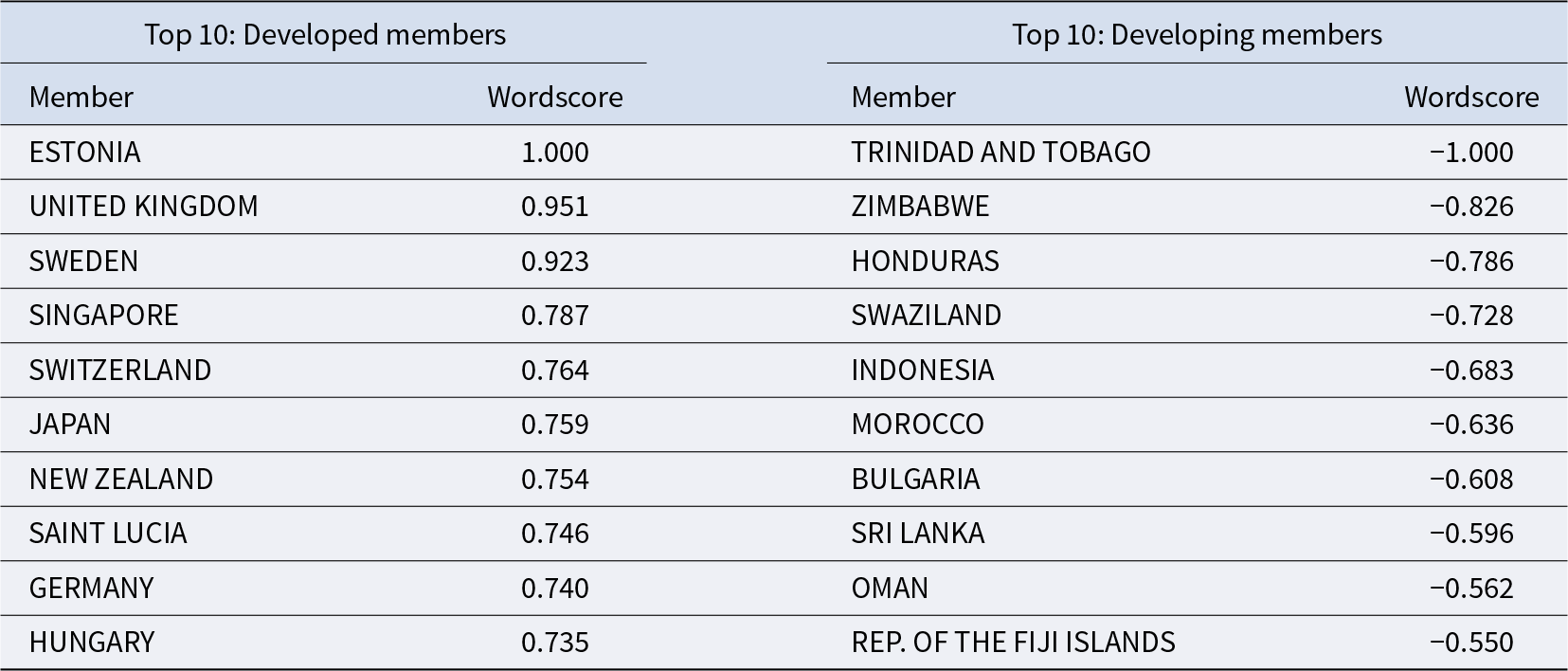
The closer a statement’s wordscore is to 1, the closer it is to a document in the ‘developed members’, and the closer it is to –1, the closer it is to a document in the ‘developing members’. Table 2 lists each group’s top 10 wordscore members and their normalized values for 2001. In general, I can observe that member states with a wordscore closer to 1 are the more developed members, while those closer to –1 are the more developing members in GDP per capita.Footnote 19 Unless otherwise specified, hereafter, ‘developing group’ and ‘developed group’ refer to classifications based on the proximity of the wordscore to 1 or –1.
Top 10 members by position according to Wordscore

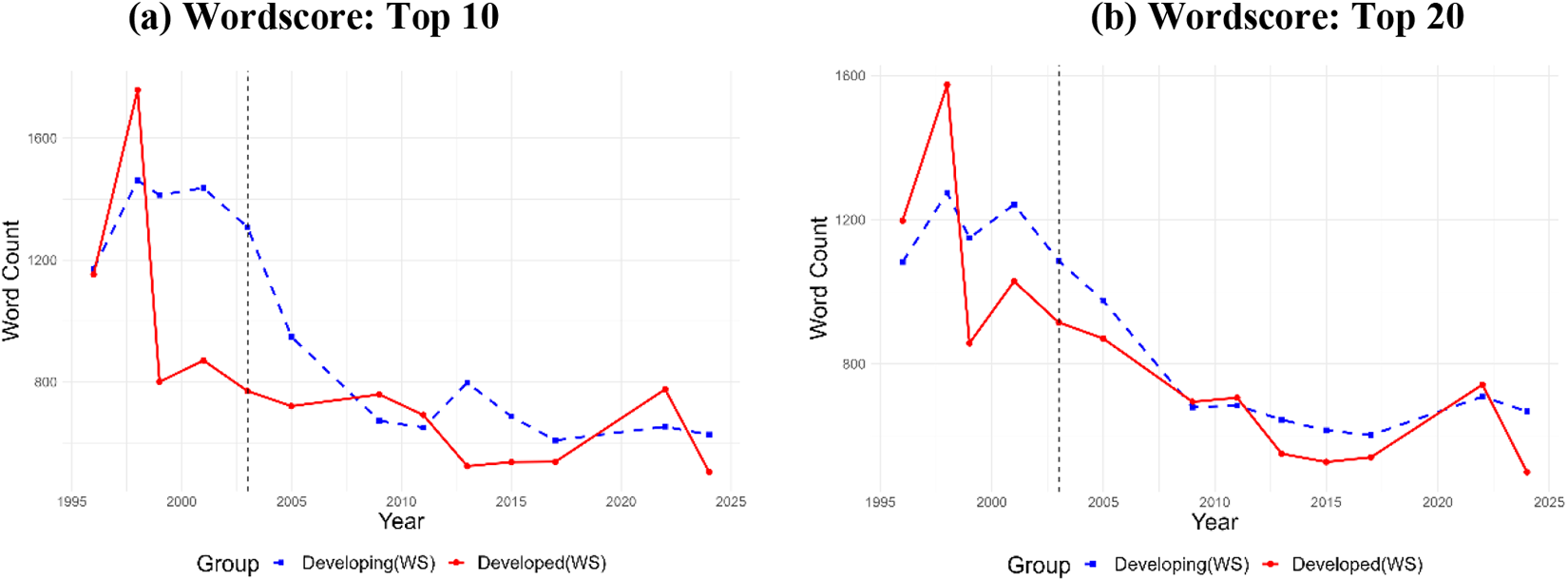
To examine changes in the involvement of members that dominate WTO ministerial discussions, I analyzed the variation in the intensity over time of engagement by the top 10 and 20 members of each group, as shown in panels (a) and (b) of Figure 7, respectively. Each member’s position was assessed on its statements at the Doha Conference.
Trend in engagement intensity for top developing and developed members

In the early years of the WTO, developed groups engaged more intensively than developing groups. However, after experiencing strong opposition from developing members and civil society at the 3rd Ministerial Conference in Seattle in 1999, when the New Round failed to be launched, the developed group’s intensity declined sharply.Footnote 20 In contrast, the developing group maintained a consistently high intensity throughout the DDA negotiations. Since 2003, there has been a noticeable pattern of reduced engagement from developed and developing members, as indicated by the dashed vertical line in Figure 7. The 5th Ministerial Conference in Cancun in 2003 ended without an agreed declaration for the first time since the WTO’s inception, resulting in a chairperson’s statement being issued in lieu of a declaration. After a hiatus in negotiations following the 6th Ministerial Conference in Hong Kong in 2005, the global financial crisis led to a resumption of meetings, during which the downward trend in engagement from both developed and developing members slowed. However, after the 9th Ministerial Conference in Bali in 2013, which resulted in the early harvest of the DDA negotiations, developed members saw a further decline in their speech intensity. These patterns were more pronounced in the top 10 (panel (a)) than in the top 20 (panel (b)).
These observations reflect a broader historical context, highlighting a shift in WTO discussion engagement that began to manifest significantly after the Seattle Ministerial Conference, particularly in developed members. This downward trend in engagement persisted at subsequent major conferences, including Cancun and Hong Kong, where developing members in particular showed a marked decline in participation, reflecting their disappointment with the outcomes. These trends indicate a ‘dynamic shift in how different groups of members participate in the WTO, influenced by their negotiation positions. The convergence of engagement levels between developed and developing members, especially evident around the time of the Bali Ministerial Conference in 2013, underscores the narrow gap in discussion engagement. This change can be seen as a response to the evolving dynamics within the WTO, where the previously dominant positions held by developed members are increasingly challenged by developing members. The Bali package, achieved under these conditions, represents a critical juncture at which compromises lead to more balanced but weaker engagement across members.
4.3 A Simple Regression Analysis: Engagement Changes by Position
In this subsection, I briefly examine whether the level of engagement in WTO forums varies depending on a member’s negotiation group, particularly in relation to key events such as the failure of the DDA negotiations. The decision to engage in the forum is influenced by a variety of factors, but theoretical research on this matter remains limited. Therefore, I focus on the most straightforward approach using just a few variables to see if any noticeable differences exist between the groups. Rather than trying to answer why these differences occur, my main goal here is to demonstrate that using a novel dataset, such as member statements, opens the door to further analysis in this area.
To examine changes in the engagement of developed and developing groups in WTO discussions after the failure of DDA negotiations, I conducted a simple econometric analysis, as shown in Equation (1).Footnote 21
 \begin{equation}Intensit{y_{it}} = {\beta _0} + {\beta _1}MC + {\beta _2}Positio{n_{it}} + {\beta _3}MC \times Positio{n_{it}} + {\varepsilon _{it}}\end{equation}
where  $MC \in \left\{ {Cancun,{\text{ }}HK} \right\}$,
 $Position \in \left\{ {wordscore,{\text{ }}gdppc} \right\}$.
In this model, the dependent variable  $Intensit{y_{it}}$, represents the number of words used in ministerial statements by member i in year t, defined as speech intensity. MC is a dummy variable indicating the critical Ministerial Conferences, specifically the 2003 Cancun or 2005 Hong Kong (HK) Conferences, which serve as turning points in the DDA negotiations. The variable takes the value of 1 from the year of the respective conference onward, and 0 otherwise. The variable
 $Positio{n_{it}}$ denotes the negotiation position of member i in year t, measured using wordscore. Additionally, I used GDP per capita, an alternative widely used to distinguish between developed and developing members on economic grounds.
 ${\varepsilon _{it}}$ captures idiosyncratic shocks.
This model examines whether member engagement in WTO discussions systematically varies over time based on their negotiation positions. If  ${\beta _1}$ is negative, it suggests that members reduce their engagement in WTO discussions after a critical Ministerial Conference (MC). A negative
 ${\beta _2}$ indicates that members closer to the developed group tend to have lower levels of engagement. The coefficient for interaction term,
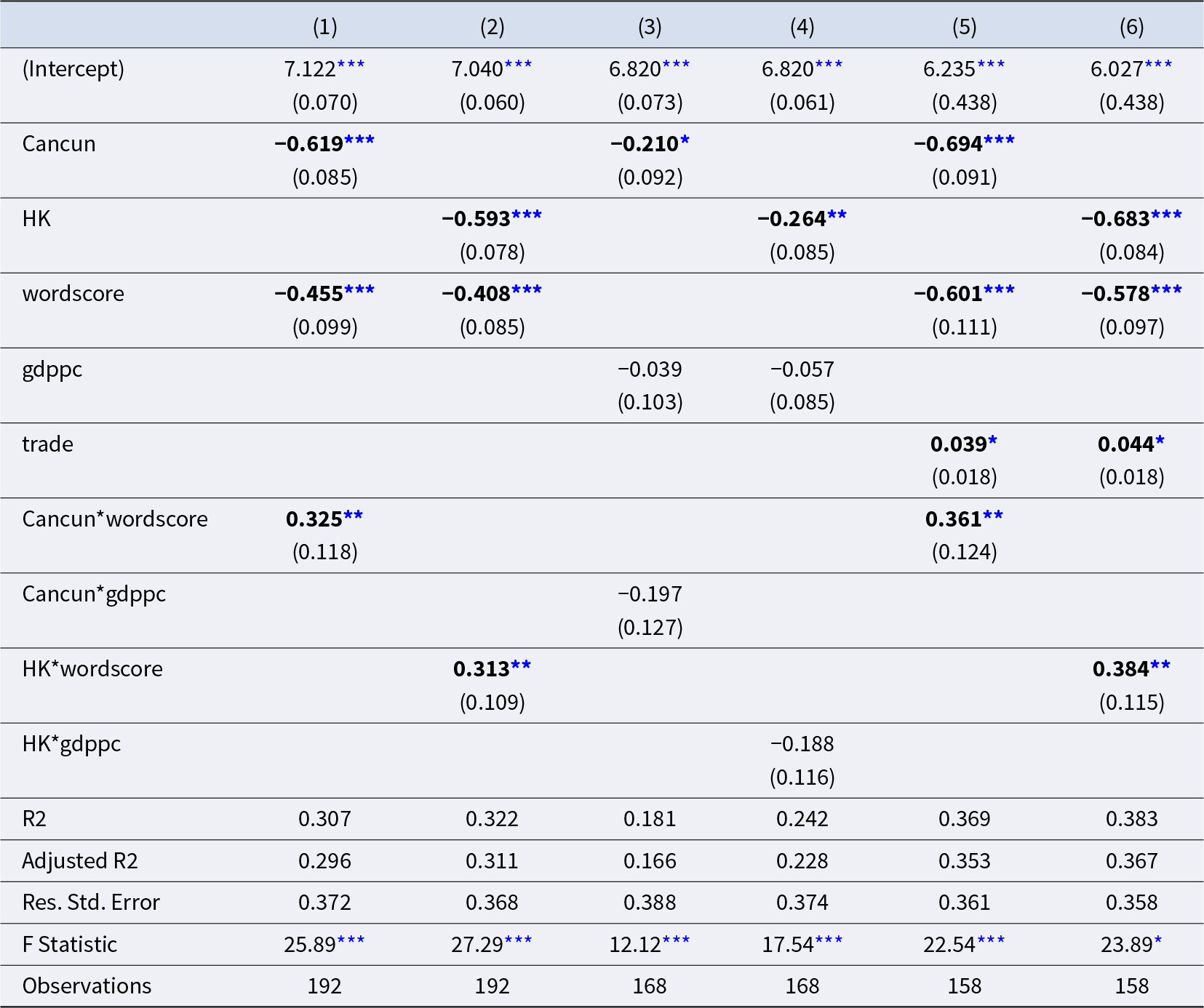
 ${\beta _3}$, elucidates how the intensity changes post-MC based on the negotiation positions. Specifically, it shows how engagement differed among members depending on their alignment with either developed or developing member groups in the aftermath of the pivotal DDA negotiations. Table 3 presents the results of the analysis using Equation (1).Footnote 22
Regression results for the impact of WTO conferences on member engagement

*Note: p<0.05,
** p<0.01;
*** p<0.001 standard deviations in parentheses
Both dummy variables for critical conferences (‘Cancun’ and ‘HK’) show significant negative coefficients, indicating that these events were turning points that reduced the length of statements, suggesting a dampened engagement from the members following these conferences.
Moreover, the interaction terms ‘Cancun*wordscore’ and ‘HK*wordscore’ have positive coefficients, implying that while there was a general decrease in speech intensities following these conferences, members with negotiation positions closer to the developed status had less of a decrease compared to those more aligned with the developing status. This moderating effect shows that the impact of these conferences on engagement was not uniformly distributed across all members but varied according to their developmental alignment.
The variable ‘wordscore’, reflecting the negotiation position measured by wordscore, and ‘gdppc’, representing per capita GDP, both influence engagement intensities but in different magnitudes and significance. The ‘wordscore’ variable in columns (1) and (2) consistently shows a negative coefficient across the models, which is notably stronger than the coefficients for ‘gdppc’ in columns (3) and (4), where the effects are minor and not statistically significant. This comparison suggests that a member’s negotiation position (as captured by word scores) has a greater influence on their level of engagement in discussions than their economic variables. Furthermore, this finding highlights that a member’s attitude in an international forum is shaped by multiple factors, rather than being solely determined by a single dimension (e.g., GDP per capita). It also underscores the value of using higher-dimensional data, such as linguistic expressions in documents, to more comprehensively infer these positions. In addition, to account for other factors that may influence engagement across Ministerial Conferences, columns (5) and (6) introduce Trade – defined as the logged value of trade – as a control variable. The positive and statistically significant coefficients for Trade suggest that members with higher trade flows are more likely to be actively involved in WTO discussions, reinforcing the paper’s earlier arguments.
Table 3 illustrates that the legacy of key WTO conferences, such as Cancun and Hong Kong, has had a lasting impact on how members participate in ministerial discussions, with members showing different engagement patterns based on their negotiation stances. Failed negotiations have led to significant disappointment among WTO members, resulting in a noticeable decrease in their involvement with the organization. The extent of this decline in engagement was not uniform across all members and was more pronounced in developing members than in developed ones. This observed disparity in engagement patterns may be attributed to various factors, including diplomatic capabilities, power dynamics, and shifts in the global trade landscape.Footnote 23 However, based on the observable data in this study, the findings suggest that developed members, having already adjusted their expectations following setbacks such as those in Seattle, have maintained relatively stable involvement in WTO discussions. However, developing members, who adjusted their expectations later, experienced greater and more prolonged disappointment, which seems to have affected their longer-term engagement with the WTO. While the analysis here is limited to a few key dimensions, it highlights the potential of member statements to reveal nuanced insights into participation patterns, which could serve as a foundation for more in-depth future research.
While this study only considered statements from Ministerial Conferences and simplified negotiation groups based on the developed–developing member dichotomy, future research could explore the dynamics between negotiation groups on specific agendas by analyzing WTO councils and committees documents, offering a deeper understanding of member interactions and enriching the study of international negotiation dynamics within the WTO.
5. Conclusion
How vital is the WTO, and how has its role as a deliberative forum evolved over time? This study addresses this question through an empirical analysis of over 1,500 ministerial statements submitted between 1996 and 2024. By quantifying both the frequency and rhetorical intensity of member participation, it offers systematic evidence of how members have engaged with the WTO Ministerial Conference – the only setting in which all members publicly articulate their trade policy positions.
The findings suggest that while the WTO has long facilitated broad-based participation, engagement patterns are far from uniform. Over 10% of members have spoken in fewer than half of the opportunities available to them, and both participation frequency and intensity are positively associated with members’ GDP per capita and trade volume. Engagement increased during active periods of the Doha Development Agenda (DDA) negotiations but declined substantially after their suspension – particularly among developing countries. However, this decline has not been irreversible: the 2013 Bali Conference, following the conclusion of the Trade Facilitation Agreement, marked a notable surge in rhetorical intensity among developing members, and participation rose again at the 12th Ministerail Conference in 2022 amid renewed global uncertainty following the COVID-19 pandemic and the Russia–Ukraine war. These trends indicate that engagement within the WTO is responsive to both internal institutional momentum and external geopolitical shocks. Beyond documenting who speaks and how often, this study examines what members say, and how those discursive positions relate to engagement behavior. Using a wordscore approach, the analysis reveals a dynamic alignment structure along the developed–developing divide. Developed members exhibited a stable but gradually weakening rhetorical presence, whereas developing members showed delayed but shifts that were more volatile in intensity,suggesting differing modes of political investment in the forum. Together, these findings offer insight into the broader question of what sustains participation in multilateral trade governance. While formal equality remains a core principle, actual engagement is shaped by structural asymmetries, negotiation momentum, and rhetorical positioning. The WTO’s legitimacy as a deliberative forum depends not only on its legal authority but also on its ability to attract sustained and diverse participation. The evidence suggests that maintaining this vitality may depend less on consensus around ambitious goals and more on enabling iterative, inclusive progress through adaptable approaches.
This study represents one of the first systematic empirical efforts to analyze WTO ministerial statements as data. However, it has limitations. Excluding group statements may under-represent members, especially developing countries, that primarily engage through coalitions. The reference texts used in estimating alignment are simplified proxies and may miss rhetorical nuance. Moreover, while the regression analysis demonstrates the potential of this dataset, it does not exhaust its analytical scope.
Future research can build on this foundation by incorporating group-level engagement, refining alignment methods, and conducting analyses that are more comprehensive. Most importantly, developing theoretical frameworks that account for discursive participation – its determinants, institutional implications, and strategic uses – will be essential for advancing our understanding of deliberative dynamics in multilateral trade governance. As the WTO confronts renewed calls for reform in a fragmented global order, empirically grounded, theory-informed analysis will be crucial for assessing its evolving role in the international system.
Acknowledgements
I thank the National Research Foundation of Korea for funding, Professor Yongho Kang for valuable comments. Hong-Ju Jeong provided excellent research assistance. I am especially grateful to the two anonymous referees for their kind and thoughtful feedback.
Funding statement
This work was supported by the Ministry of Education of the Republic of Korea and the National Research Foundation of Korea (NRF-2022S1A5A2A01045851).
Statement of competing interests
The data that support the findings of this study are openly available in Harvard dataverseat https://doi.org/10.7910/DVN/O9CDL8.
Appendix
This appendix provides supplementary descriptive statistics that complement the analyses presented in the main text. It includes member-level distributions of engagement frequency, intensity, and variability, focusing on those members who consistently exhibited high or low levels of participation across Ministerial Conferences.
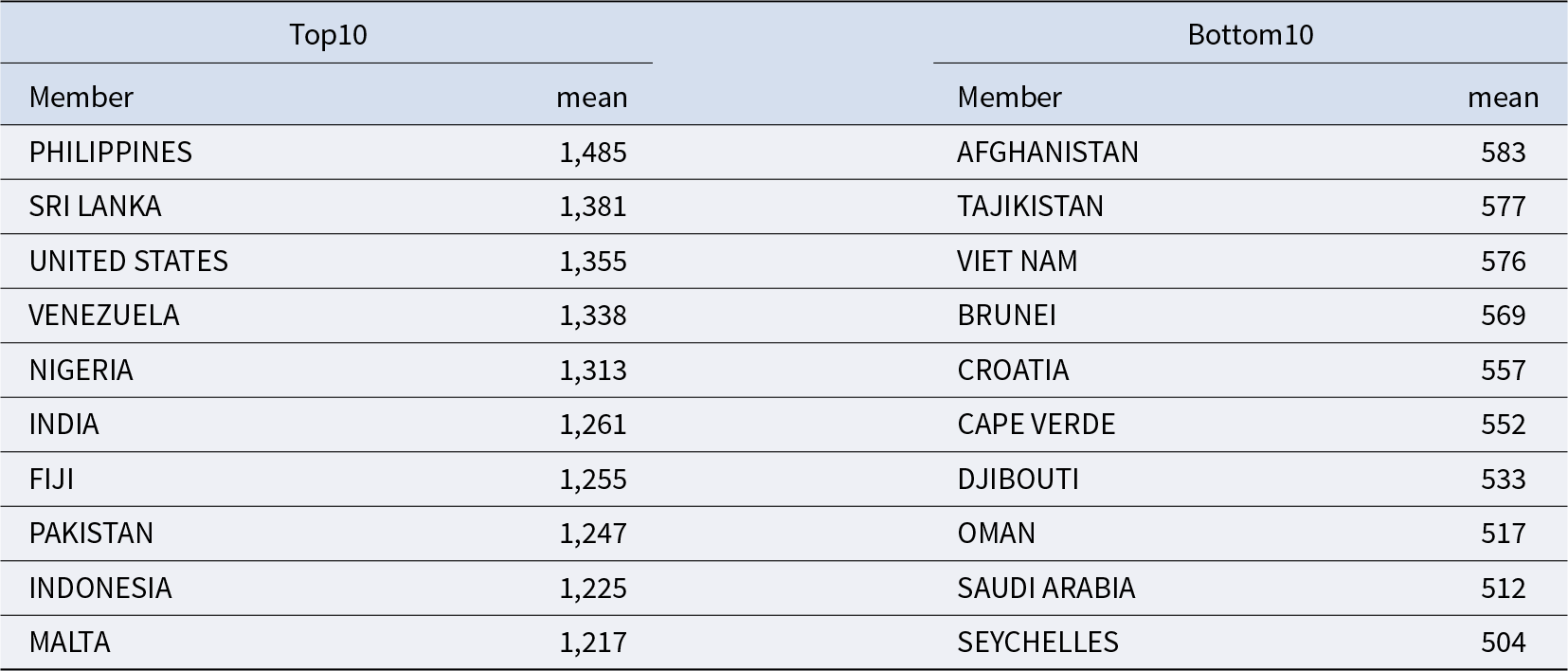
Top and bottom 10 members for average statement length

On average, the Philippines, Sri Lanka, the United States, and Venezuela used the hightest number of words in their statements, whereas the Seychelles, Saudi Arabia, and Oman used the fewest. The average number of top and bottom performers was nearly three times higher.
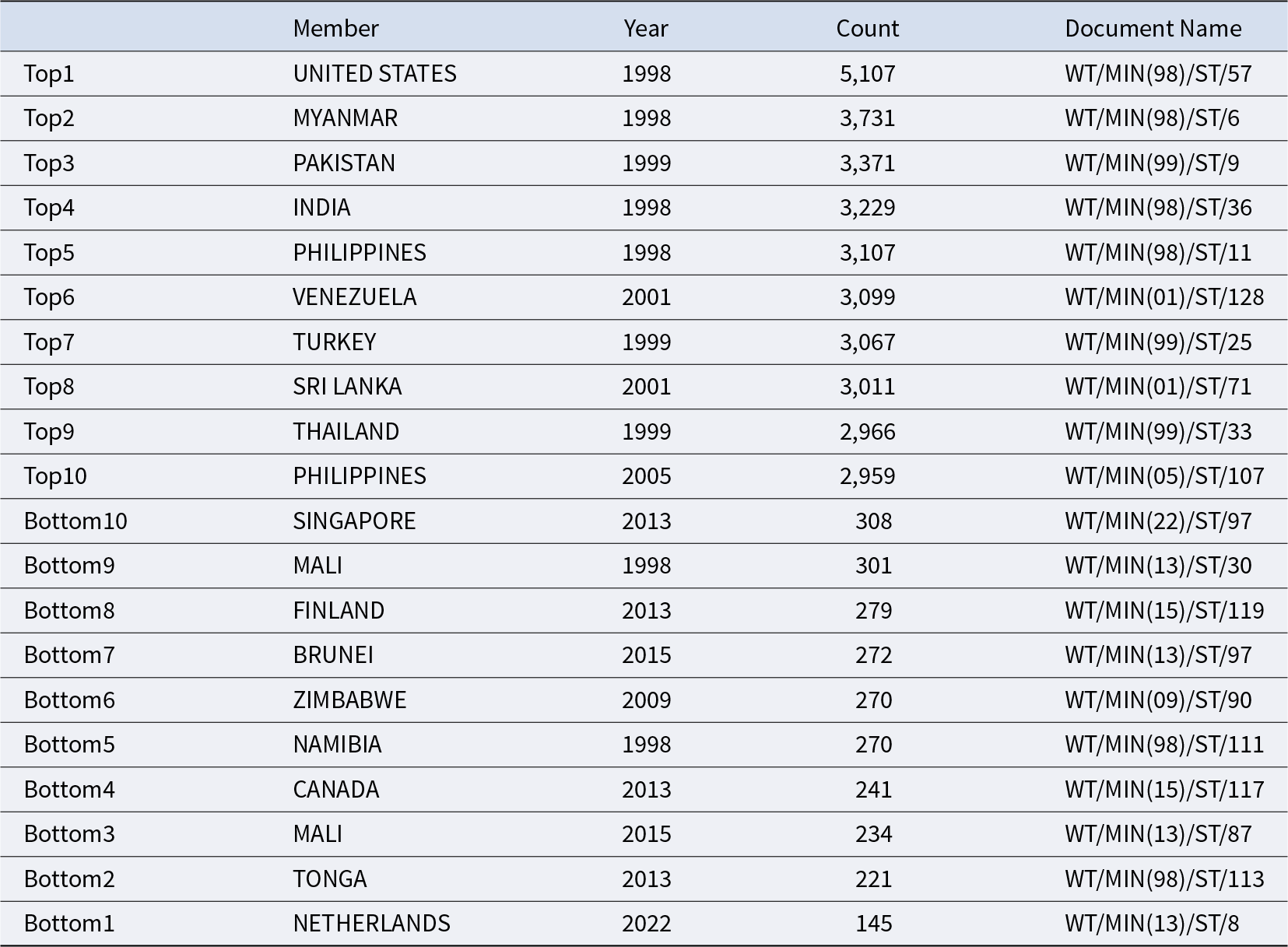
Top and bottom 10 length statements

The longest statement was 5,107 words from the United States in 1998, and the shortest was 145 words from the Netherlands in 2022. These are 5.9 and 0.17 times the overall average, respectively. This pattern is similar to the evolution of the average length of speeches by all members, with longer speeches occurring in the early years of the WTO and shorter speeches occurring after the DDA negotiations were suspended. However, other factors, such as the capacity of member countries, cultural differences in communication styles, and language barriers, could also influence the length of speeches. For instance, developing countries may face limitations in resources and diplomatic support, which could potentially result in shorter speeches. The length of an individual member’s speech may also be influenced by the member’s speaking habits, besides its level of interest in the forum. If these habits remain consistent, years in which the member speaks longer than their average speech length can be considered as indicating higher interest in the forum during that year. One important point to note is that speech frequency and speech length are distinct concepts, meaning that there may be members who speak briefly despite high speech utilization, and conversely, members who speak at length even if they do not speak frequently.
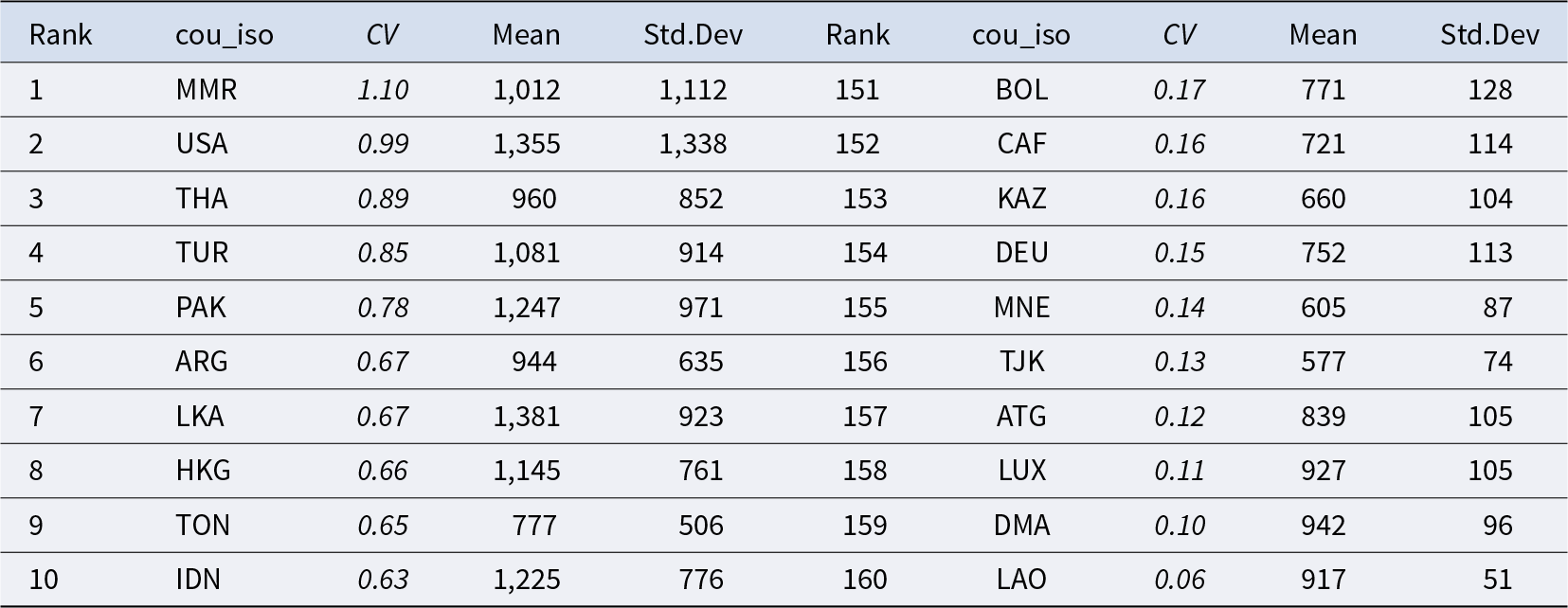
Top and Bottom 10 Length Statements

Myanmar, the United States, and Thailand exhibited the greatest volatility in speech length. This implies that these members are the most sensitive to the issues of the conference, speaking longer or shorter depending on the topics discussed. However, countries such as Laos, Luxembourg, and Germany tend to speak at a consistent length regardless of the conference topics. In general, a larger mean can result in a larger standard deviation. Therefore, in addition to presenting the standard deviation, I also provide the coefficient of variation (CV), which is the standard deviation divided by the mean. The coefficient of variation was calculated for a total of 160 members, excluding members whose standard deviation could not be calculated due to a small number of speaking chances.