Introduction
The Middle East and North Africa region (MENA) is composed of 20 countries extending from Morocco in the West to Yemen in the East. The population of these countries was over 430 million in 2007 and is expected to reach nearly 700 million in the year 2050 (UN Population Division, 2007), an increase of over 60%. Countries in the MENA region are net importers of poultry feed ingredients. The sustainability of poultry production in this region heavily depends on feed prices since feed consists of around 70% of the total production cost (Daghir, Reference DAGHIR2008).
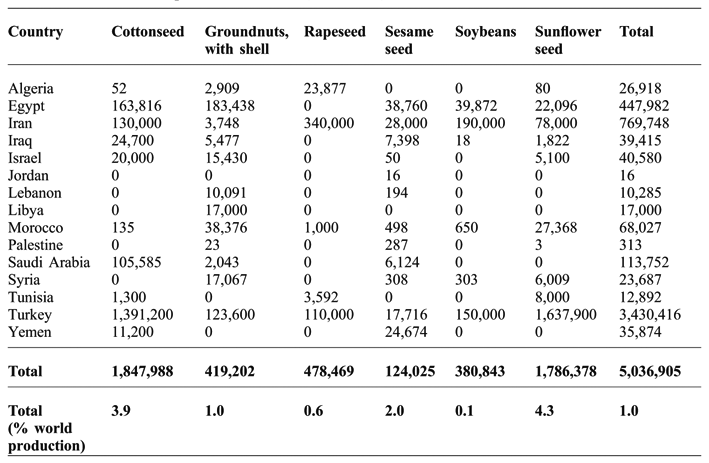
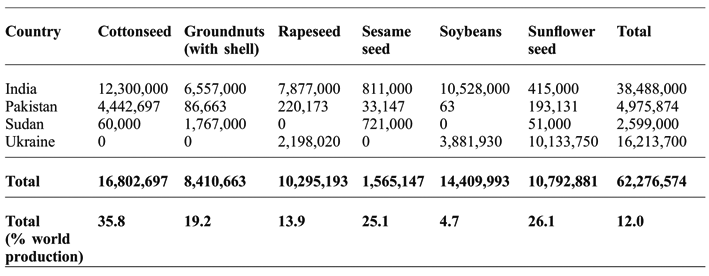
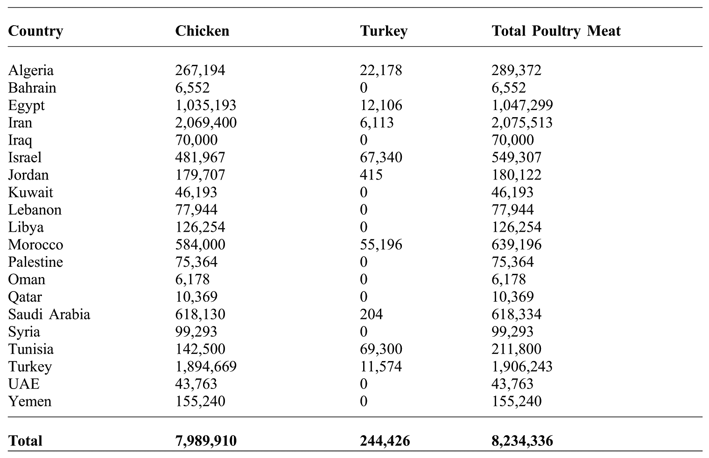
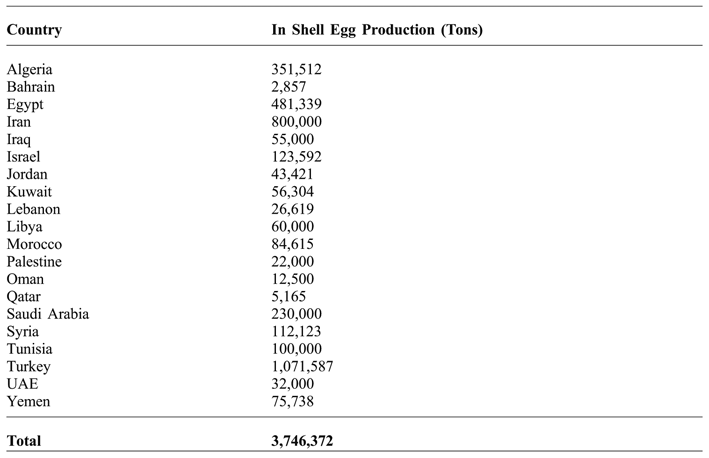
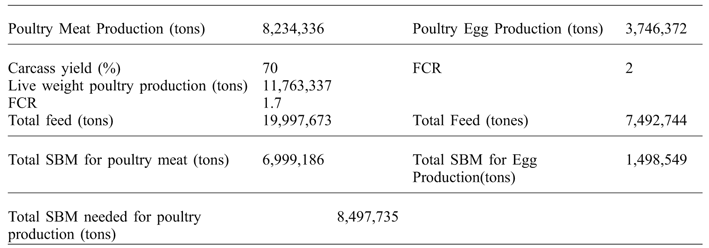
Protein is the most expensive component of a poultry ration after energy. In the MENA region, poultry feed prices are consistently increasing because of their dependency on imported corn and soybean meal (OECD/FAO, 2016). In order to decrease the dependency of the poultry feed sector on these two major feed commodities, it is necessary to find locally produced alternative protein and energy sources. The MENA region produces about 8.2 million tons of poultry meat and over 3.7 million tons of eggs per year. This level of production requires about 8.5 million tons of SBM, out of which the region produces only 381,000 tons. A combined total of 4.6 million tons of CSM, peanut meal, sunflower meal, sesame meal and rapeseed meal are produced in the region. This means that even if all of these meals are used by the poultry industry, we would still need to import approximately 3.9 million tons of SBM to cover present day demands since some meal are higher and others are lower in protein. It is noteworthy that the neighbouring countries of India and Pakistan are high producers of these meals and their combined production amounts to about 33 million tons per year.
This review will deal with alternative sources for SBM and summarises recent findings on the nutritive value of the five main protein supplements produced in the region as possible replacements for SBM. In addition, the availability of the five most important protein supplements in the MENA region is covered, followed by prices of these supplements and the possible savings in feeds produced for broilers and laying hens when these protein supplements replace part of the SBM in these rations.
Nutritional profiles
cottonseed meal (CSM)
CSM is a useful source of supplementary protein in many regions of the world, and the MENA region produces nearly two million tons of CSM per year. The highest producer is Turkey with about 1.4 million tons ( Table 1 ), and neighbouring countries like India and Pakistan are high producers with about 16 million tons per year ( Table 2 ). Work on CSM has been reviewed by several researchers throughout the years and the most recent were by Nagalakshmi et al. (Reference NAGALAKSHMI, RAO, PANDA and SASTRY2007) and Świątkiewicz et al. (Reference ŚWIĄTKIEWICZ, ARCZEWSKA-WŁOSEK and JÓZEFIAK2016). Both of these workers emphasised (Daghir, Reference DAGHIR2008) that CSM should be analysed for gossypol content, cyclopropenoid fatty acids, fibre and protein content before use. CSM is known to be low in lysine and methionine compared to SBM. The varieties of cotton seed produced in the MENA region are high in gossypol and therefore CSM may contain high levels of gossypol, cyclopropenoid fatty acids, malvalic and sterculic, which cause pink discoloration in egg whites. Besides being toxic to the birds, free gossypol causes yolk discoloration. In some areas of the world, however, gossypol-free varieties are produced and hull-less, 50% protein CSM gives excellent results for broilers. CSM is a rich source of protein ranging from 30-50% on a dry matter basis. Świątkiewicz et al. (Reference ŚWIĄTKIEWICZ, ARCZEWSKA-WŁOSEK and JÓZEFIAK2016) concluded his review by saying “CSM is an acceptable ingredient for poultry diets and could be fed at 10-15%, partially replacing soybean meal in a cost-effective way” with the caveat that this holds as long as levels of free gossypol are below 0.01% in the diet.
Recently, Bahraini et al. (Reference BAHRAINI, SALARI, SARI, FAYAZI and BEHGAR2017) compared the effects of electron beam (EB) and gamma ray (GR) irradiation treatments on chemical composition, protein quality and protein digestibility of CSM. Both EB and GR irradiation reduced gossypol and crude fibre and increased protein digestibility but had no effect on protein quality of the meal.
MENA oil cake production in tons (FAO, 2014).

Oil cake production in MENA neighbouring countries in tons (FAO, 2014).

Bryden and Li (Reference BRYDEN and LI2003) reported that Australian solvent-extracted CSM can be used in broiler starter diets at levels of 20% and in finisher diets at 30% when formulated on the basis of digestible amino acids, and Abdulrashid et al. (Reference ABDULRASHID, JOSEPH, MOHAMMED and ADAMU2013) came to the same conclusion. Batonon-Alavo et al. (Reference BATONON-ALAVO, FARUK, LESCOAT, WEBER and BASTIANELLI2015) conducted a meta-analysis to determine the effect of replacing SBM with CSM in broiler diets. The database included 29 experiments published from 1990 to 2013. CSM substitution at 40% of the SBM was found to increase feed intake and reduce growth performance.
Gamboa et al. (Reference GAMBOA, CALHOUN, KUHLMANN, HAQ and BAILEY2001) used expander solvent CSM in broiler diets at 0, 7, 14, 21, and 28%. Diets were formulated to have similar levels of digestible methionine and lysine as that of the 0% CSM control diet. Results showed that expander solvent CSM could be fed to broilers up to 21% of the diet if amino acid digestibility was used in diet formulation. Pieniazek et al. (Reference PIENIAZEK, STIPANOVIC, PUCKHABER, WEDEGAERTNER, FARNELL, BYRD and LEE2015) studied the effect of using pressed, dehulled CSM on performance in broilers and the retention of gossypol in their tissues. The CSM was included at 5 and 10% of the diet and at the conclusion of the study, there were no differences in body weight or in feed conversion. Gossypol was not found in breast or thigh tissues from birds fed any of the CSM diets. However, gossypol was found in some of the liver samples. The authors concluded that CSM can be included at 10% in broiler diets without negative effects on growth.
Fermented CSM has been tested to determine its effects on ileal and caecal bacterial microbiota of broilers. Results showed that inclusion of fermented CSM could promote the beneficial bacteria in the intestinal tract of broilers (Sun et al., Reference SUN, TANG, FANG, YAO, WU, WANG and FENG2013a). In another study, the same workers (Sun et al., Reference SUN, TANG, YAO, WU, WANG and FENG2013b) used fermented CSM at 0,4, 8 and 12% in place of soybean meal for broilers. They showed that levels of 4 and 8% improved body weight gains, caecal microflora, intestinal morphology and digestive enzyme activity.
He et al. (Reference HE, ZHANG, WANG, WU, YUE and QI2015) fed low gossypol CSM to laying hens at levels of 5.0, 9.8, 14.4, and 18.9% of the diet. They found that feed intake and egg weight were significantly reduced at the 18.9% level. They recommended that low gossypol CSM can be used at 9.8% of the diet without any adverse effect on egg production and quality or health of layers. Egg producers, however, are always concerned about feeding CSM to layers because of the possible effect on egg quality. Low-gossypol CSM can be used in place of most of the SBM in diets for broiler breeder pullets. Qi et al. (Reference QI, SUN, GUO, LIU, DUAN, WANG, ZENG, QI and ZHANG2017) observed that hens fed a diet with 6% CSM in place of SBM laid eggs with unique physical and chemical characteristics and lower nutritional values. The yolks of hard-cooked eggs of the CSM group were harder and more elastic than those of the control. Yuan et al. (Reference YUAN, SONG, ZHANG, JIANG, ZHANG, AZZAM and ZOU2014) studied the effect of expanded CSM on laying hen performance and found that free gossypol in CSM can be reduced by 68% through this process. They concluded that the expanded CSM can be used in laying hen rations at a level of 10% of the total diet as a replacement for SBM.
peanut meal (groundnut)
The MENA region produces about 419,000 tons of peanut meal per year with Egypt and Turkey being the highest producers. The neighbouring countries of India and Sudan produce about 8.2 million tons which is nearly 19% of the world production of peanut meal. Peanut meal levels of inclusion in the US are about 3-4% in broiler diets, due to limited availability of this meal. However, most broiler integrators in US are not using peanut meal in their diets.
The composition of peanut meal varies greatly from one country to another and from one manufacturer to another. Batal et al. (Reference BATAL, DALE and CAFÉ2005) reported that in 17 samples collected from the south-eastern US, crude protein can vary from 40.1-50.9% and nitrogen-corrected metabolisable energy from 2273-3009 kcal/kg. Feed manufacturers should conduct analyses on peanut meal shipments not only from different countries, but also from different suppliers in the same region. Mean values for fat, fibre and ash were 2.5, 8.3, and 5.0%, respectively (Batal et al., Reference BATAL, DALE and CAFÉ2005).
In formulating rations with high levels of peanut meal, it needs to be remembered that peanut meal is low in methionine and lysine and high in arginine compared to SBM (Daghir, Reference DAGHIR2008). Costa et al. (Reference COSTA, MILLER, PESTI, BAKALLI and EWING2001) compared the performance of broilers fed SBM vs. those on peanut meal supplemented with limiting amino acids including threonine, at different protein levels. Performance of birds fed peanut meal was similar to SBM at the highest protein level (24%) fed. They concluded that peanut meal could be used as a protein source for broilers under appropriate economic conditions.
Peanut meal is susceptible to contamination by Aspergillus flavus which is the producer of aflatoxins. Kana et al. (Reference KANA, GNONLONFIN, HARVEY, WAINAINA, WANJUKI, SKILTON and TEGUIA2013) reported on aflatoxin contamination of peanut meal from different agroecological zones in Cameroon. They found that most samples were positive for aflatoxin with concentrations ranging from 39-950 ug/kg.
Zhang and Adeola (Reference ZHANG and ADEOLA2017) studied the energy values of peanut flour meal for broilers using the regression method and found that the gross energy of this meal was higher than that of canola meal and CSM and the nitrogen corrected metabolisable energy values were also higher than canola meal, CSM and bakery meal. These authors concluded that chickens can utilise a considerable amount of energy from this meal compared to other meals in this study.
The use of peanut meal in layer rations was studied by Pesti et al. (Reference PESTI, BAKALLI, DRIVER, STERLING, HALL and BELL2003) who concluded that peanut meal is an excellent source of protein for layers, provided the amino acid limitations are met, particularly lysine which is much lower than in SBM (1.8 vs.3.0%). Onimisi et al. (Reference ONIMISI, KAHUWAI, MOSES and OLADIPO2016) conducted feeding trials on peanut meal supplemented with enzymes for laying hens. They found that utilisation was significantly improved by the use of enzymes, particularly a combination of protease and carbohydrase enzymes. They concluded that production costs can be lowered and thus income increased by using peanut meal with enzyme supplementation compared with SBM without enzymes.
sunflower seed and meal
Sunflower is one of the most important oilseeds produced in the MENA region. Its production is equal to that of CSM, with Turkey accounting for around 90% of sunflower seed production in MENA region. In the US, sunflower production is second only to soybean. Sunflower is the 4th most important oil seed crop in the world after SBM, rapeseed and CSM, and the total world yearly production exceeds 40 million tons (FAOSTAT). Although it has some limitations for use in poultry rations, such as high fibre levels and relatively low level of lysine, it is free of any known antinutritional factors. The crude protein and fibre contents of sunflower meal vary from 29-45% and from 14-32%, respectively, depending on the dehulling and oil extraction process. The use of this meal has been limited to less than 15% in broiler rations because of its high fibre, low energy, and lysine contents. Moghaddam et al. (Reference MOGHADDAM, ARSHAMI and IRANIAN2016) reported that supplementing limiting amino acids and oil addition to SFM based diets can increase its inclusion levels to 20%.
Using sunflower seed and meal at different levels in broiler and layer rations has been studied by several workers. Daghir (Reference DAGHIR2008) reviewed this work and concluded that sunflower meal can be used up to 10% in broiler rations and 15% in layer rations, while sunflower seed can be used up to 15% for broilers and up to 20% for layers. Results on the use of sunflower seed and meal vary a great deal from one country and region to another because of differences in varieties and processing methods. Zatari and Sell (Reference ZATARI and SELL1990) reported that SFM can be used up to 10% in broiler diets supplemented with lysine and fat while Mushtaq et al. (Reference MUSHTAQ, SARWAR, AHMAD, NISA and JAMIL2006) reported that this meal can be used up to 20% with enzyme supplementation and added lysine. Aftab (Reference AFTAB2009) studied the use of combinations of different oil seed meals for broilers along with exogenous enzyme supplementation and found that birds fed the sunflower meal-based diet had significantly higher body weight gain and lower feed conversion as compared to those fed rapeseed meal or CSM-based diets. This author concluded that in low-ME broiler diets formulated on a digestible amino acid basis, up to 20% sunflower meal can be used safely in the diet. Mushtaq et al. (Reference MUSHTAQ, SARWAR, AHMAD, MIRZA, AHMAD, NOREEN, MUSHTAQ and KAMRAN2009) in a detailed study on enzyme and lysine supplementation on broiler diets containing either 20 or 30% sunflower meal concluded that enzyme additions have a positive response in low nutrient density and high SFM diets. Kalmendal et al. (Reference KALMENDAL, ELWINGER, HOLM and TAUSON2011) studied the effects of different levels of high-fibre sunflower cake on intestinal digestion and health in broiler chickens and found that birds can thrive on feeds with insoluble fibre contents far exceeding those used in practice and that high fibre sunflower cake has a positive effect on digestion and intestinal health.
The most recent review on sunflower meal was by Alagawany et al. (Reference ALAGAWANY, FARAG, ABD EL-HACK and DHAMA2015) who concluded that this meal is an acceptable component of poultry rations and can be fed at 25% in broiler and 20% in layer rations. These authors cautioned, however, that replacement of SBM with SFM may affect dietary inclusions of essential amino acids and synthetic lysine may need to be increased. They pointed out that high levels of SFM can be used successfully with appropriate diet formulation adjustments for energy and the amino acids lysine and methionine.
The use of sunflower seed and meal for laying hens has been studied by several workers. Shi et al. (Reference SHI, LU, TONG, ZOU and WANG2012) reported that the use of sunflower seed meal in laying hen rations in place of SBM at levels of up to 25% of the diet are feasible with no effect on performance or egg fatty acid content. Ali et al. (Reference ALI, ABDALLA and ABASAID2011) fed laying hens 0, 13 and 26% sunflower meal in place of peanut meal in isonitrogenous and isocaloric diets since this meal was cheaper than peanut meal in Egypt. Sunflower meal fed at 13% of the diet in place of peanut meal improved feed intake, body weight, egg numbers, egg mass and feed conversion. The main concern of feeding sunflower meal or seed to laying hens is the possible development of egg shell stains after the eggs are laid (Uwayjan et al., Reference UWAYJAN, AZAR and DAGHIR1983). Laudadio et al. (Reference LAUDADIO, CECI, LASTELLA and TUFARELLI2014) studied the effects of feeding low-fibre fraction of air-classified sunflower meal on laying hen performance and egg yolk cholesterol. SFM was fed at a level of 16% in place of SBM. They suggested that the replacement of conventional SBM with low-fibre SFM is possible in diets for laying hens and it can improve egg quality and reduce egg yolk cholesterol.
De Morais Oliveira et al. (Reference DE MORAIS OLIVEIRA, DE ARRUDA, SILVA, DE SOUZA, DE QUEIROZ, DA SILVA MELO and HOLANDA2016) studied the performance, egg quality and profitability of Naked Neck laying hens fed different levels of SFM in place of SBM. Treatments included SFM at 10, 20 and 30% in place of SBM with the necessary amino acid supplementation. Results showed no difference in performance, but egg quality and yolk colour were significantly affected. The authors concluded that partial replacement of SBM with SFM in diets for laying hens is economically feasible provided the amino acid profile is corrected.
Araújo et al. (Reference ARAÚJO, ALBINO, ROSTAGNO, PESSOA, CRUZ, LELIS, CARNEIRO and VIEIRA2015) evaluated the performance of old (64-79 weeks) laying hens fed diets with SFM levels of 0, 8, 16 and 24% and supplemented with an enzyme complex. They found that the best economic efficiency per dozen eggs was obtained with the 16% SFM and the enzyme inclusion. However, for egg mass output, the diet with 24% SFM and no enzyme addition had the best economic efficiency.
Amerah et al. (Reference AMERAH, VAN DE BELT and VAN DER KLIS2015) studied the effect of different levels of sunflower meal and an enzyme combination of endoxylanase and B-glucanase on broiler performance, carcass quality, gizzard development and digesta viscosity. Birds were fed 0, 5, and 6% SFM during the starter period and 0, 8 and 12% during the grower/finisher period. Birds fed the high SFM treatment had lower body weight gains compared with the medium and low treatments. Enzyme supplementation improved feed conversion, but did not recover the reduction in weight gain caused by high inclusion of SFM. Dhakal et al. (Reference DHAKAL, SAH, KARKI, YADAV and TIWARI2015) further studied the effects of enzyme supplementation on broiler diets containing SFM in place of SBM. They concluded that 35% of SBM can be replaced with SFM if supplemented with a suitable enzyme (Microzyme).
sesame meal
The leading countries in the production of sesame in the MENA region are Egypt and Iran and among the biggest producers of this seed in the world are the neighbouring countries of India, Sudan and Pakistan. The yearly production of sesame in the MENA region is a little less than 130,000 tons while that of India, Sudan and Pakistan it is over 1.5 million tons. Sesame meal produced in Sudan analyses about 48-52% protein. Sesame is known to be deficient in lysine, but high in methionine, cystine and tryptophan. Thus, a combination of SBM and sesame meal can prove to be superior to SBM alone (Daghir, Reference DAGHIR2008). This has been shown to be true many years ago (Daghir et al., Reference DAGHIR, ULLAH and ROTTENSTEN1967) in broiler rations supplemented with 0.32% lysine. Rama Rao et al. (Reference RAMA RAO, RAJU, PANDA, POONAM, SUNDER and SHARMA2008) fed sesame meal in place of SBM to broilers, replacing the SBM by different levels of sesame up to total substitution levels. They found that body weight gain, feed efficiency, ready-to-cook yield, and abdominal fat were not affected by replacing 67% of the SBM protein by sesame meal. Rahimian et al. (Reference RAHIMIAN, TABATABAIE, TOGHIANI, VALIOLLAHI, KHEIRI, RAFIEE and MIRI2014) studied the effect of using sesame meal with addition of the phytase enzyme to broiler diets. They found that sesame meal with enzyme addition improved feed intake but had no effect on feed conversion. The levels of calcium and phosphorous in blood and tibia were increased by the use of sesame and the enzyme addition.
Onunkwo et al. (Reference ONUNKWO, AGUSI and OKORO2015) fed different levels (0, 10, 15, and 20%) of hydraulic extracted sesame seed cake to layers starting at 21 weeks of age. They found that the 15% level gave the most optimum performance in terms of egg numbers and percent-hen day.
Farran et al. (Reference FARRAN, UWAYJAN, MISKI, AKHDAR and ASHKARIAN2000) studied the use of sesame hulls for broilers and layers and concluded that sesame hulls can be used in broiler starter diets at levels up to 8% of the diet and up to 14% in layer diets. Cheva-Isarakul and Tangtaweewipat (Reference CHEVA-ISARAKUL and TANGTAWEEWIPAT1993) reported that sesame meal can replace 50% of the SBM for layers or about 8% of the diet. Mamputu and Buhr (Reference MAMPUTU and BUHR1995) found that for broilers, sesame meal can be used up to 15% of the protein, while for layers it is possible to include it at levels of 18%. Diarra and Usman (Reference DIARRA and USMAN2008) studied feeding soaked sesame seed meal to layers and found that replacing SBM with 12.5% of soaked sesame meal in the diet of laying hens had no adverse effect on performance. In the US, sesame is used in areas where it is available at levels not exceeding 10% in broiler diets (Jacob, Reference JACOB2015).
Mahmoud et al. (Reference MAHMOUD, OBEIDAT and ISHMAIS2015) fed graded levels of roasted sesame hulls to broilers up to 42 days and found that up to 12%, there was an improvement in growth compared to the corn-soybean based diet. Carcass characteristics and meat quality were not affected and were similar to control.
rapeseed/canola meal
Rapeseed is also known as canola which is the name given to rape cultivars with low levels of glucosinolate and erucic acid. Canola is also referred to as 00 rapeseed varieties. Countries of the European Union combined produce 13.8 million tons of rapeseed per year, followed by China with a production of 11 million and Canada of 4.7 million and finally India with 3.0 million (USDA, 2017). Table 1 shows that countries of the MENA region combined produce a little less than 500,000 tons per year.
Several studies have been conducted on the use of rapeseed and/or canola meal in broiler and layer rations. Aftab (Reference AFTAB2009) found that rapeseed or canola meal in broiler diets formulated on a digestible amino acid basis can be used at 20% of the diet. Khajali and Slominski (Reference KHAJALI and SLOMINSKI2012) concluded that the levels of glucosinolates have declined significantly in canola meals in recent years to the extent that they can now be used at levels of 20% in both broiler and layer rations. Both canola and rapeseed contain high levels of sulphur compared to SBM (0.5% in SBM and 1.5% in rapeseed). High levels of rapeseed can cause leg problems in broilers and reduced calcium absorption in layers (Khajali and Slominski, Reference KHAJALI and SLOMINSKI2012). When using rapeseed in poultry rations, one should consider the anion-cation balance of the ration. De Vries et al. (Reference DE VRIES, PUSTJENS, KABEL, KWAKKEL and GERRITS2014) studied the effects of wet milling and extrusion in combination with pectinases on the degradability of rapeseed meal for broilers. Wet milling and extrusion did not affect digestibility of dry matter, crude fat, crude protein or non-glucose polysaccharides (NGP). Pectinases, however improved degradability of NGP. The authors concluded that the processing technologies studied did not facilitate accessibility of non-starch polysaccharides to pectinase enzymes that were added to the feed. Internationally, the feeding levels recommended for rapeseed meal are 2-3% for broilers and 5% for layers.
Canola meal does not have the same nutritional problems as rapeseed meal and is considered far more superior to rapeseed because of genetic improvements that have been introduced. An et al. (Reference AN, JUNG, OH, KANG, LEE and LEE2016) tested different levels of canola meal in broiler diets and found that this meal can replace SBM at levels up to 15% with no detrimental effects on growth or physiological responses studied. They recommended, however, that using this meal at high levels could impair growth at early ages and lower breast meat yields. Aljuobori et al. (Reference ALJUOBORI, ZULKIFLI, SOLEIMANI, ABDULLAH, LIANG and MUJAHID2016) included extruded canola meal in broiler diets up to 30% for birds raised at high temperature and found no adverse effects of this meal on growth performance of heated stressed birds. They concluded that the absence of detrimental effects could be associated with the lack of triiodothyronine elevation by the extruded meal. Toghyani et al. (Reference TOGHYANI, GIRISH, WU, IJI and SWICK2017) in a pair-feeding study tried to determine if reduced feed intake in broilers fed high canola meal accounted for the reduced growth and whether this lower growth can be improved by increasing dietary amino acid levels. The result showed that reduced growth could partially be corrected by increasing amino acid levels.
Gopinger et al. (Reference GOPINGER, XAVIER, ELIAS, CATALAN, CASTRO, NUNES and ROLL2014) evaluated the effects of different levels of canola meal on growth performance and nutrient digestibility in broilers and concluded that this meal can be added up to 16.7% in diets for broilers without any detrimental effects on any performance parameters. It can be added even at a higher level of 20% without any negative effect on crude protein digestibility.
Methods of processing have been shown to affect feeding value. Ahmed et al. (Reference AHMED, ZULKIFLI, FARJAM, ABDULLAH and LIANG2014) showed that extrusion process improves the value of canola meal and enhances both metabolisable energy and amino acid digestibility. Hashemi and Beiki (Reference HASHEMI and BEIKI2014) examined the impact of processing on canola meal and found that to improve the apparent metabolisable energy and nitrogen retention of this meal, the best combination of conditions was 60°C exposure for 30 minutes and wet treatment without ammonium bicarbonate. Mutucumarana et al. (Reference MUTUCUMARANA, RAVINDRAN, RAVINDRAN and COWIESON2014) reported that the use of canola meal in broiler diets decreases phosphorous retention and the decrease is proportional to increases in non-phytate phosphorous concentration.
Work is continuing on the development of new varieties of canola meal that are high in protein and low in fibre. Gorski (Reference GORSKI2015) compared a new canola meal variety with the conventional meal in both broiler and layer rations. The conventional meal gave a significant negative effect at levels in excess of 10% during the starter phase from 2-21 days. Differences however disappeared by day 44 with levels up to 24% in feed. In laying hens, there were no differences between the conventional and the new canola meal variety with levels up to 24%. The authors concluded that an increased protein, low fibre new canola meal variety can be used in broiler and laying hen diets when diets are formulated to be equal in ME and digestible amino acids.
Economic study
Oilseed crops are a major high value agriculture commodity that are used to supply the increasing demand for edible oils and renewable industrial oils. There are about 40 different oilseed crops that yield edible oil for human consumption, but few are leading in world trade worldwide. Soybean (Glycine max) is the major dominating oilseed crop that accounts for more than 50% of total oilseed crops produced followed by rapeseed (Brassica napus) and sunflower (Helianthus annuus) (Sharma et al., Reference SHARMA, GUPTA and MONDAL2012). The increase in oilseed production was possible due to the breeding of high yield varieties and the increased production per unit area (Bajjalieh, Reference BAJJALIEH2004). However, the recent rising demand for sustainable agriculture, including the replacement of monoculture with crop rotation systems, has increased the need for diversification and incorporation of alternative oilseed crops that are adapted to climate change while having a lower carbon footprint.
Oilseed crops were historically exploited for the purpose of extracting edible oil leaving oilseed meals as a by-product. Oilseed meals, usually high in protein, are efficiently utilised by the animal feed industry as a major protein source in animal feed. According to FAO, recently, the rising demand for protein meals has been the main driver behind the increase in oilseed production. This increased demand for protein meals is mainly due to the increased demand for soybean meal over all other seeds because of its higher protein content (OECD/FAO, 2016).
It is projected that vegetable oil prices will decrease whereas protein meal prices will increase due to the saturation in food demands in emerging economies, reduced growth in biodiesel, and the increased demand on protein meals in developing countries driven by growth in poultry, and milk production.
Global protein meal production was around 317 Mt in 2016 and is projected to increase by 2.2% per year reaching 386 Mt in 2025. Soybean meal dominates the world protein meal production accounting for more than two-thirds of the global production. It is believed that by 2025, 97% of SBM production will be concentrated in Argentina, Brazil, China, the European Union, India, and the United States (OECD/FAO, 2016).
This economic study is aimed at comparing the economic advantage of using alternative protein sources that will decrease the dependency on soybean meal. The inclusion rate of soybean meal was calculated to be 35% and 20% in broiler and layer rations, respectively. Based on these calculations, the MENA region use of soybean meal was estimated to be around 7 million tons for broilers and 1.4 million tons for layers based on 2014 production figures (Tables 3, 4 and 5).
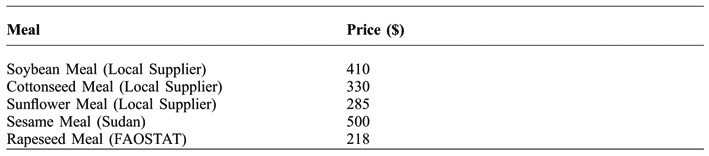
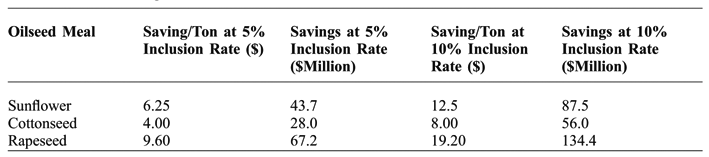
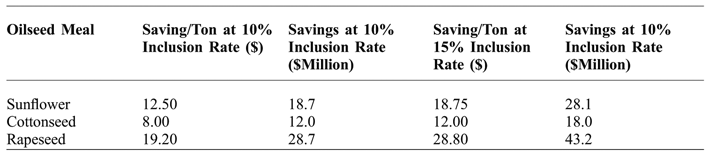
Cottonseed, sunflower and peanut oilseed meals were included in this study. However, sesame meal was not included in this economic study since it has a higher price compared to soybean meal and its use is limited to countries that have difficulty in importing soybean meal such as Sudan. The inclusion rate of the alternative oilseed meals for broiler diets was assumed to range between 5%-10%. While in layer diets, a higher oilseed meal inclusion rate of 10%-15% was used. Table 6 shows the prices of oilseed meals used in this economic study as of January, 2016. Tables 7 and 8 summarise the possible savings that can be earned from using the three alternative meals at different inclusion rates in broiler and layer diets respectively. The highest saving was recorded in rapeseed meal use. This study did not include the indirect economic and environmental advantages that can be gained when using alternative protein sources grown locally, such as transportation cost, environmental footprint cost and other indirect costs.
MENA poultry meat production in tons (FAO, 2014).

MENA in shell egg production in tons (FAO, 2014).

Total SBM needed for poultry production in MENA assuming 35% and 20% SBM inclusion rate in broiler and layer diets respectively.

Oilseed meal prices as off January 2016.

Annual savings in the utilisation of different oilseed meals in broiler diets.

Annual savings in the utilisation of different oilseed meals in Layer diets.

Conclusions
The MENA region produces 5 million tons of CSM, peanut meal, sesame meal, sunflower meal and rapeseed meal per year that can potentially replace part of the 6.4 million tons of SBM needed for the production of poultry meat and eggs produced in the region. Nutritional studies reviewed showed that these five meals can be improved considerably through the use of improved varieties, enzyme supplementation, processing, handling and storage in order to enable their use in place of SBM at relatively high levels. CSM should be checked for gossypol content, cyclopropenoid fatty acids, fibre and protein content before use. Good quality CSM can be fed at 10-15% in place of SBM in broiler rations, but should not exceed 10% for layers. The two major limitations of using peanut meal in poultry rations are its low level of lysine and the possible contamination with aflatoxins. The use of SFM has been limited to less than 15% in broiler rations because of high fibre, low energy and lysine contents. For layers, SFM can be fed at levels as high as 25%. Sesame meal can be used in both broiler and layer rations at levels of 15-20%. Canola meal which has low levels of glucosinolates is superior to rapeseed and can be used at levels of 20% in both broiler and layer rations. Enzyme supplementation to diets containing varying levels of these oil seed meals has been shown to improve performance in most studies reported.
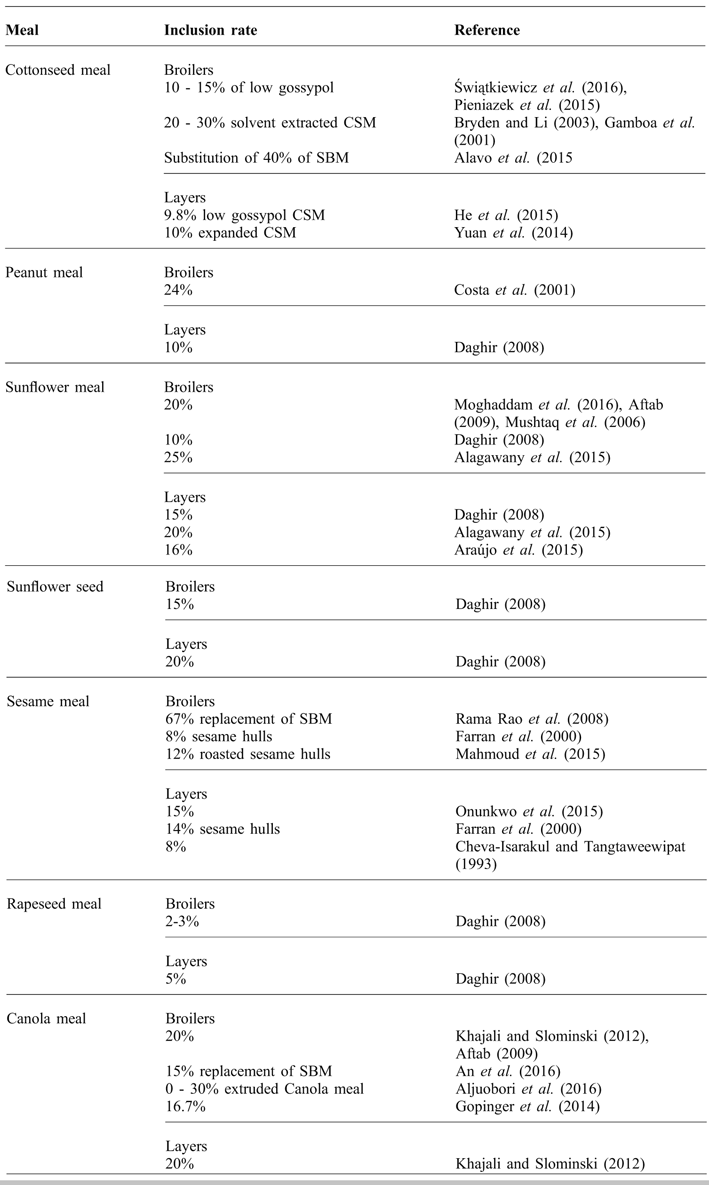
Table 9 summarises the inclusion rates of the seven meals reviewed in this paper. The table shows that there is a great deal of disagreement in usage levels among authors which is probably due mainly to variation in quality of these meals used in the studies.
The economic study revealed that including these meals at 5% in broiler rations can produce an average saving of $46 million and at 10% of nearly $93 million per year.
As for layers, the use of these meals can produce an average saving of $20 million when used at 10% and $30 million when used at 15%.
The poultry industry in the MENA region can become less dependent on SBM imports if these oil seed meals produced are processed, stored and handled properly.
Recommended levels of inclusion of protein meals as % of diet.