

André Leroi-Gourhan (1911–1986) was one of the most influential French archaeologists of the twentieth century. Originally trained as an anthropologist, he devoted most of his career to the study of the European Palaeolithic and, specifically, Upper Palaeolithic cave art from southern France and northern Spain. There is a widespread consensus that he made significant contributions in a number of fields, including technology, lithic studies, archaeological excavation and the study of Palaeolithic art and symbolism. Furthermore, some of his books (such as Le geste et la parole (Reference Leroi-Gourhan1964, Reference Leroi-Gourhan1965a) and Préhistoire de l'art occidental (Reference Leroi-Gourhan1965b)) are today considered classics of archaeological literature.
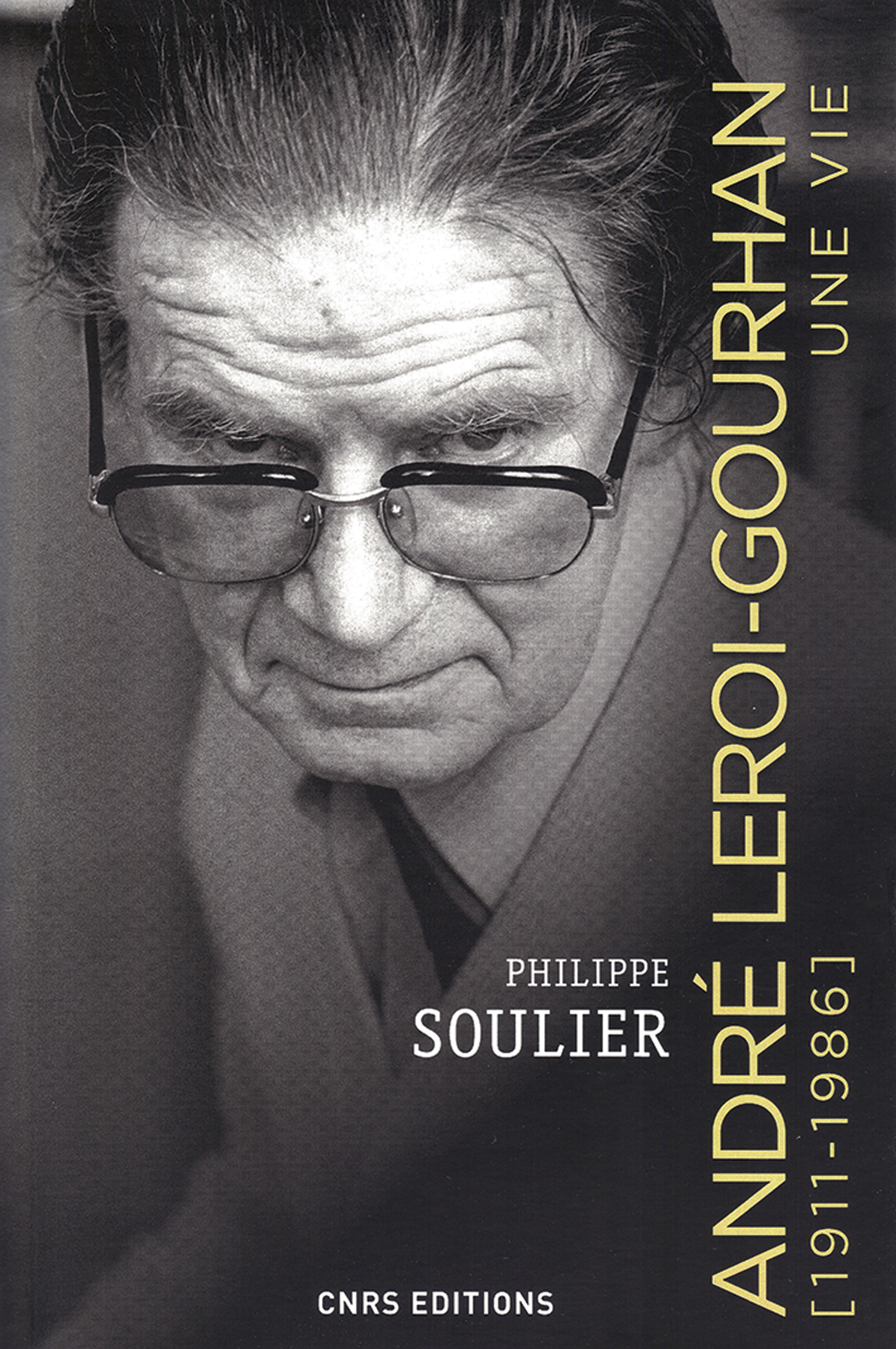
While Leroi-Gourhan's work has received increasing attention during the last 30 years, we still have a very fragmentary knowledge of his life. Given this lacuna, the publication of Philippe Soulier's biography constitutes a very welcome addition to studies of Leroi-Gourhan and his work. Leroi-Gourhan had a particularly rich and productive life, and made significant contributions to a range of different areas of research. This productivity complicates the task of retracing his career, but Soulier meets the challenge, tracing in a meticulous and detailed way the main events of Leroi-Gourhan's life, from his beginnings as a student of ethnology and linguistics in the École Pratique des Hautes Études, to his years as professor at the prestigious Collège de France. Based on an extensive analysis of unpublished sources (including a number of documents dispersed among several archives in France), as well as personal communications from Leroi-Gourhan's relatives and colleagues, this book constitutes an exhaustive and well-documented biography that, without a doubt, will become a reference work for scholars interested in Leroi-Gourhan's work.
Soulier's biography is particularly relevant because it generates new avenues of research on Leroi-Gourhan's work. In particular, it sheds light on relatively unknown periods of his life and career (especially his formative years), and it establishes a number of important connections between Leroi-Gourhan and his predecessors. This is particularly relevant because, broadly speaking, Leroi-Gourhan's work has been interpreted (in France and elsewhere) as innovative and groundbreaking. In the field of prehistoric art, for example, scholars agree that Leroi-Gourhan's work in the 1960s created new ways of examining prehistoric images and representations. Similarly, archaeologists have recognised that he developed innovative ways of excavating and recording archaeological sites (notably at Pincevent), and pioneered new terms and concepts (such as chaîne opératoire), that transformed the study of Palaeolithic technologies. Without denying the innovation of his work, it is fair to say that Leroi-Gourhan was certainly not ideologically advanced for his time. Quite the contrary; as Soulier's book demonstrates, many of his most important ideas about technology, art, religion and ‘primitive people’ are rooted in views that were popular during the second half of the nineteenth century. As Soulier notes on the first page of his book, Leroi-Gourhan's work was greatly influenced by the ideas of ethnologists and sociologists (such as Paul Rivet and Marcel Mauss) who, in turn informed by the work of Émile Durkheim, shaped anthropological research in France during the first years of the twentieth century. Leroi-Gourhan's views on technology were greatly influenced by Marcel Mauss's definition of material culture as the profound expression of the human mind. Similarly, Mauss's conception of the religious meaning of aboriginal art was at the core of Leroi-Gourhan's understanding of prehistoric aesthetics. While the idea that Leroi-Gourhan was influenced by Mauss and other nineteenth-century anthropologists is certainly not new (see, for example, the work of Nathan Schlanger (Reference Schlange2006), and of Françoise Audouze (Reference Audouze2002)), Soulier reconstructs in a meticulous way the French academic milieu and professional genealogy that links Leroi-Gourhan with his predecessors. Another factor essential to an understanding of Leroi-Gourhan's work (and one that has been omitted in most analyses) is his Catholicism. During the years from 1940–1960, Leroi-Gourhan was particularly active in debates held by Catholic intellectuals in Lyon and Paris. In fact, as Soulier explains, Leroi-Gourhan's religious beliefs pervaded not only his life, but also, and more importantly, his work. He developed a progressive view of culture according to which the most significant cultural manifestations, including technology and art, had evolved from very simple forms to highly complex manifestations. According to Leroi-Gourhan, there is a ‘tendency’ (une tendance) explaining the development of all human creations that is connected to the progressive mastery over the external milieu, as he explained in L'homme et la matière Reference Leroi-Gourhan1943). Leroi-Gourhan's idea of tendency, not dissimilar to Bergson's idea of ‘vital force’ (l’élan vital), is entrenched in the religious doctrine of design and purpose in the material world. As these examples demonstrate, Leroi-Gourhan's work was firmly rooted in the conception of science and religion that was popular at the end of the nineteenth century.
While Soulier's book constitutes a great addition to Leroi-Gourhan studies, there are aspects of this biography that are limiting. Soulier pays little attention to the numerous papers and articles about Leroi-Gourhan published outside France (especially in the UK and the USA). This may limit the impact of his book in the English-speaking world. Soulier also presents an almost exclusively positive portrait of Leroi-Gourhan that very much affirms his place in the hall of fame of French scientists. There are, however, some controversial aspects to his career, including the ways in which he negotiated his hegemonic position in the field of prehistoric art, that deserve more detailed examination.
To conclude, although a more critical approach might have been taken to some aspects of Leroi-Gourhan's legacy, Soulier's biography constitutes a central study for understanding the life and career of one of the most preeminent French prehistorians as well as the cultural context out of which French archaeology developed during the second half of the twentieth century.


