


1 Introduction
Multinomial logit (MNL) remains a common approach for researchers estimating models with nominal outcomes. Twenty-six papers published in The American Political Science Review, The American Journal of Political Science, and The Journal of Politics from 2014 to 2018 used MNL for some part of the analysis, compared to four that used multinomial probit. The vast majority of these papers come from American and comparative politics. Only two of these papers focus on international relations, but MNL is used extensively in international relations research. The corresponding numbers for the top IR journals, International Organization, International Studies Quarterly, and The Journal of Conflict Resolution, are 35 that used MNL and 3 that used multinomial probit.Footnote 1
There is notable variation in the analysis and presentation of MNL results. Articles regularly present predicted probabilities of particular outcomes, but many base inferences on the statistical significance of MNL coefficients, even though the coefficients only capture the effect of observing an option relative to a “baseline” (or “reference”) outcome. Fourteen of the 24 articles in the top 3 general journals and 15 of the 26 articles in the top IR journals using MNL for primary analysis base inferences on MNL coefficients. Researchers should recognize that analysis based upon the statistical significance of these coefficients can lead them to report nonsignificant effects as significant and to overlook significant effects. I argue that researchers using MNL should match the quantities analyzed with their question of interest and focus upon the statistical, as well as substantive, significance of predicted probabilities.
In this brief note, I outline the problem with relying upon MNL coefficients for inference. While the survey of the top general journals suggests that MNL is used (and sometimes misinterpreted) most commonly in American and comparative politics, my examples come from IR research to demonstrate how proper interpretation of MNL results concerns scholars in all quantitative subfields of political science. I present one example of how reliance upon MNL coefficients can lead researchers to overlook important results. I follow with another example of how researchers focusing upon significant MNL coefficients to draw inferences about the effects of covariates upon the relative probability of observing an outcome against a specific baseline can also lead researchers to misinterpret results. I conclude with recommendations for researchers using MNL.
2 Analyzing MNL Results
The fundamental aspects of MNL are covered elsewhere (e.g., Greene, Reference Greene2012), and I refer to them only as needed in order to focus upon matters that arise in analyzing results, but a critical aspect is that a covariate’s effect upon the probability of observing each outcome is a function of all of the estimated coefficients. Most researchers seem to comprehend this by reporting changes in the predicted probabilities, but many papers ignore this when evaluating statistical significance. A central part of analysis and presentation of MNL results should be the calculation of substantively meaningful differences in predicted probabilities and their standard errors, using either simulation (e.g., Tomz, Whittenberg, and King, Reference Tomz, Whittenberg and King2003) or approximation (e.g., Fox and Andersen, Reference Fox and Andersen2006).
MNL coefficients are unreliable for assessing statistical significance because the coefficients depend upon the choice of a “baseline” outcome that determines which specific log odds ratio is estimated. Choose a different baseline and some set of coefficients and standard errors will change.Footnote 2 The standard errors of MNL coefficients also vary with different baselines because they are related to the number of observations in the two relevant categories. A baseline category with relatively few observations can produce elevated standard errors for all coefficients. The choice of baseline, however, does not affect predicted probabilities and their standard errors.
To see the difference, consider  $Y=\{A,B,C\}$, where Y is the dependent variable and
 $A,B,C$ are the possible outcomes, and
 $x_t=1$ and
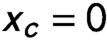 $x_c=0$ refer to treatment and control conditions whose effect on Y is examined. If
 $Y=A$ is the baseline, then the MNL coefficient for B is simply:
 $$ \begin{align} \ln \left[\frac{\Pr(B|X=x_t)/\Pr(A|X=x_t)} {\Pr(B|X=x_c)/\Pr(A|X=x_c)}\right]. \end{align} $$
This might be useful if the relevant question is the treatment’s effect upon  $\Pr (B)$ relative to
 $\Pr (A)$, but not if the relevant question is the treatment’s effect upon
 $\Pr (Y=B) = \Pr (B|X=x_t)- \Pr (B|X=x_c)$. The problem with using Equation (1) to evaluate the effect of a treatment upon
 $\Pr (B)$ is that a substantively or statistically significant change in the ratio can be entirely a function of a significant change in
 $\Pr (A)$. Conversely, a significant change in
 $\Pr (B)$ can be overlooked if the treatment has a similar effect upon
 $\Pr (A)$ or even a considerable effect upon
 $\Pr (B)$ that is proportionally equal to a very small effect upon
 $\Pr (A)$. For example, if the treatment changes
 $\Pr (B)$ from .25 to .50, while changing
 $\Pr (A)$ from .01 to .02, the MNL coefficient would be zero, despite the considerable effect of the treatment upon
 $\Pr (B)$. A coefficient and its standard error do not necessarily provide any information about the substantive or statistical significance of the covariate’s effect upon the expected probability of particular outcomes.
2.1 Example 1: Problems with Focusing upon Coefficients
An example where focusing upon MNL coefficients can lead researchers to overlook significant effects that affect their conclusions comes from Gelpi (Reference Gelpi2017). Gelpi (Reference Gelpi2017) uses MNL to evaluate the effect of information from events and messages upon individuals’ beliefs about the war in Iraq. Participants in an experiment receiving different events and cues information placed on a scale their opinions regarding whether the troop surge was a success, whether the US would succeed in Iraq, and whether there should be a timetable for the withdrawal of troops.Footnote 3 Gelpi (Reference Gelpi2017, 1824) states plainly that he relies upon the statistical significance of the MNL coefficients for hypothesis testing, writing “multinomial logit coefficients can tell us which treatment effects are statistically significant” and presenting changes in predicted probabilities primarily for treatments with statistically significant MNL coefficients, though without confidence intervals for those changes.
Critically, the question of interest concerns the treatments’ effects upon respondents’ probabilities of choosing a category that reflects their attitudes toward the war. The significance of the coefficients cannot provide a meaningful value for the quantity of interest because none of the options provides an obvious baseline for comparing the other options. Gelpi (Reference Gelpi2017) uses “somewhat approve” as a baseline for analyzing attitudes toward troop withdrawal in Iraq, but this is no more relevant than “somewhat disapprove.” The experimental research design, however, provides obvious values for the other variables when calculating the predicted effects of each treatment. Gelpi sets the values of all other treatments to zero, indicating no exposure to another stimulus.
After concluding his analysis, Gelpi (Reference Gelpi2017, 1832) writes, “the results reveal little evidence of any impact for elite opinion at all in this experiment,” as the only instance where the MNL coefficient for elite opinion had a statistically significant effect in a sensibly interpretable direction was when respondents who “strongly approved” of President Bush exposed to a cautious message from Bush were more likely to “somewhat disapprove” of a timetable for withdrawal. Gelpi’s (Reference Gelpi2017) focus upon the statistical significance of MNL coefficients, however, overlooks a significant effect of this message upon the attitudes of respondents who “somewhat approved” of President Bush. Evaluation of the predicted probabilities shows that these respondents had a .177 (se = .073) lower predicted probability of “strongly disapproving” and a .157 (se = .076) greater probability of “somewhat disapproving” of a timetable than those not exposed to a cautious message (Table 1). This means that the cautious message influenced respondents’ attitudes about a timetable in both cases where Gelpi’s (Reference Gelpi2017) “surprising opinions” hypothesis predicts they would and with substantively greater effects than from “surprising events.” From this, we might instead conclude that elite opinion had greater influence than events upon participants’ attitudes toward withdrawal. The supplemental results also provide analysis that suggests revising another conclusion about the effect of positive events upon attitudes toward the likelihood of success in Iraq.
Positive events, cautious cues, and a timetable for withdrawal in Iraq.

Note: Entries are the change in the predicted probability (and standard error) of each response for a respondent receiving the “positive events” or “cautious Bush” treatment compared with a respondent who did not receive any treatment.
2.2 Example 2: Problems with Interpretation Against the Baseline
While many researchers are concerned with the effect of a covariate upon the change in the probability of particular outcomes, others choose a specific baseline because their question concerns the change in the occurrence of one outcome rather than another. Researchers interested in relative odds may seem on safer ground using coefficients for inference, but even these researchers should calculate changes in the predicted probabilities of relevant outcomes in order to understand better the changes in the underlying probabilities. A significant log odds ratio resulting from a large change in the probability of only one outcome may produce a substantively different interpretation than one where both probabilities change significantly.
Greenhill and Oppenheim (Reference Greenhill and Oppenheim2017) examine the effect of trust upon acceptance of rumors in conflict zones. They use MNL to assess the hypothesis that “as distrust of the implicated entity rises, the more likely it is that a rumor will be perceived as possibly or definitely true” against a baseline of disbelief (663). A similar hypothesis relates to threat of conflict. Greenhill and Oppenheim (Reference Greenhill and Oppenheim2017, 668) present risk ratios, “which estimate the relative risk of being in the neutral (agnostic) or receptive (belief) category, relative to the baseline state of disbelief.” Like Greenhill and Oppenheim (Reference Greenhill and Oppenheim2017), researchers often argue that risk ratios have a more intuitive interpretation, as the percentage change in probabilities of one outcome relative to the baseline. Risk ratios, however, are only transformations of MNL coefficients and have similar problems with interpretation.
In Greenhill and Oppenheim’s (Reference Greenhill and Oppenheim2017) analysis, the coefficient for the effect of distrust or threat is often significant for either none or only one of the response categories and reflects the statistical significance of the marginal effect of the predicted probabilities; although, often at a lower level of significance. In two cases, the coefficients for distrust or threat are statistically significant for both response categories, and the authors interpret these instances as indicating higher odds of being in both categories compared to the baseline: “threat perception increase[s] the odds of being in both the agnostic and receptive categories” (668).
This interpretation of the risk ratio, however, can be misleading. Threat perceptions increase both the probabilities of a rumor of a Thai coup as being plausible and being accepted; although, at levels of statistical significance below the 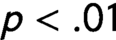 $p<.01$ reported for the coefficients and with little change in the probability of accepting the rumor (Figure 1a). The marginal effect of accepting the rumor at the lowest and highest levels of threat of conflict is .018 (se = .009),
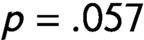 $p=.057$. Both coefficients for the effect of distrust in the Philippines upon beliefs about a rumor concerning government corruption are statistically significant, but examination of changes in the predicted probabilities reveals that there is no change in accepting the rumor is true given changes in respondents’ trust in local officials (Figure 1b). The increase in the odds that people accept the rumor relative to denying the rumor as distrust increases is entirely a function of the decreasing probability that respondents deny the rumor. The difference of accepting the rumor at the lowest and highest levels of distrust is .004 (se = .052).
Interpretations against baseline.
Note: Figures show the predicted probabilities of each response for respondents, with 95% confidence intervals for those probabilities.

These examples illustrate an important point. Interpretations of odds against a baseline often imply that a significant coefficient indicates a change in the probabilities of both alternatives, but the change in the predicted probability of one alternative with a significant coefficient may be no different than the change in the predicted probability with a nonsignificant coefficient. Because we often rely upon significance levels for testing hypotheses, these cases demonstrate the importance of examining changes in predicted probabilities, even when researchers are interested only in the effect of a covariate upon the odds of one category against a baseline.
3 Conclusion
Most researchers understand the basic points in this note, but do not always apply them. Researchers should think carefully about their primary quantities of interest when conducting analysis and recognize what specific outputs of their analysis can actually tell them. A focus upon the statistical significance of predicted probabilities and marginal effects provides several benefits. First, even researchers who present standard errors or confidence intervals for predicted probabilities or marginal effects often do so only after basing their conclusions upon the significance of MNL coefficients. Second, reviewers evaluating papers should reasonably question inferences based solely upon MNL coefficients. Inferences based upon the predicted probabilities or marginal effects can be consistent with those drawn from MNL coefficients, but absent the information about precision of the predicted probabilities, reviewers cannot necessarily distinguish valid inferences from invalid ones. As political methodologists, we should encourage the use of methods that most accurately represent statistical relationships of interest. Finally, there is a practical matter that researchers often present lengthy tables of MNL coefficients, even when the analysis only addresses one or two covariates. Presenting those details in a supplemental appendix and drawing readers’ attention in the main text only to the important quantities of interest would improve the communication of one’s results.
The survey of articles using MNL in the three major general and three major IR journals indicates that researchers are becoming more attentive to these matters, but too many articles still overlook these points. It is worth mentioning that as researchers pay more attention to the statistical significance of predicted probabilities, significance levels can vary depending upon the values of the explanatory variables used to generate predicted probabilities. Hanmer and Kalkan (Reference Hanmer and Kalkan2013) show that differences in predicted probabilities and their standard errors can change when researchers hold other variables at the values observed in the data rather than at their means. People fixated on specific levels of statistical significance may find this disconcerting, but any problems of inference arising from these differences are likely to be much smaller than those that can arise from basing inferences on different baselines and nonrelevant quantities of interest. This concern notwithstanding, this note provides a friendly reminder to researchers to consider these larger issues when analyzing and presenting MNL results.
Acknowledgments
The author would like to thank Bora Jeong for her valuable research assistance and the anonymous reviewers at Political Analysis for their very useful suggestions.
Data Availability
Replication materials are provided in Paolino (Reference Paolino2020).
Conflicts of Interest
There are no conflicts of interest to disclose.
Supplementary Materials
For supplementary material accompanying this paper, please visit https://doi.org/10.1017/pan.2020.35.



