Self-regulation – the ability to manage emotions, behavior, and cognitive processes – is considered a fundamental component of early childhood development. Regulatory capabilities influence a range of outcomes across the life course, including physical and mental health, social-emotional competence, academic achievement, and employment (Wagner et al., Reference Wagner, Latimer, Adams, Carmichael Olson, Symons, Mazzucchelli, Jirikowic, Watkins, Cross, Carapetis and Carapetis2020). Further, self-regulation skills are critical to ongoing learning behaviors, achievement, adjustment, and well-being. Poor self-regulation is characterized by the inability to harness cognitive, emotional, and motivational resources to achieve goals and is hypothesized to contribute to unhealthy behaviors across the lifespan (Miller et al., Reference Miller, Gearhardt, Fredericks, Katz, Shapiro, Holden, Kaciroti, Gonzalez, Hunter and Lumeng2018). In children, poorer self-regulation is associated with increased risk for ADHD, conduct disorder, and anxiety disorders (Woodward, et al., Reference Woodward, Lu, Morris and Healey2017). Given the importance of self-regulatory skills for health and well-being, there have been increased efforts to identify early markers of and predictors for poor self-regulation. Evidence suggests that maternal experiences, including adversity and psychopathology, are contributing influences.
Infant stress reactivity and regulation
Over the first year of life, infants develop both reactive and regulatory mechanisms related to stress, which are shaped by the social norms and environment they experience in interaction with their temperament characteristics (Posner & Rothbart, Reference Posner and Rothbart2000). These systems are complex and can be observed in physiological, attentional, emotional, behavioral, cognitive, interpersonal, and social processes (Calkins & Fox, Reference Calkins and Fox2002). Infant reactivity can be understood as the ways in which an infant responds emotionally, physiologically, and attentionally to changes in their internal and external environment; more specifically, negative emotionality is conceptualized as the tendency to react to stimuli with negative affect (e.g., fussing, crying, frustration), whereas positive emotionality refers to responses such as positive affect, activity level, approach behaviors, and vocal activity (Rothbart & Bates, Reference Rothbart, Bates, Eisenberg and Damon2006). Infant regulation refers to the physiological, behavioral, and psychological ways in which an infant attempts to regulate these responses, through both internal and external (e.g., parental or dyadic) means (Geeraerts, et al., Reference Geeraerts, Backer and Stifter2020). Developing an adaptively reactive and regulated stress system is imperative for exhibiting appropriate behaviors and functioning (Calkins & Fox, Reference Calkins and Fox2002; Posner & Rothbart, Reference Posner and Rothbart2000), with data suggesting that early differences in regulation of attention (Colombo & Mitchell, Reference Colombo and Mitchell2009; Rose, et al., Reference Rose, Feldman and Jankowski2002; Rose, et al., Reference Rose, Feldman and Jankowski2012; Wass, et al., Reference Wass, Scerif and Johnson2012) and emotionality (Nigg, Reference Nigg2017) impact a range of cognitive and psychological outcomes. While children gradually develop internalized self-regulatory mechanisms throughout childhood and adolescence, parent–infant dyadic regulation processes are critical predecessors of self-regulatory capacities (Lobo & Lunkenheimer, Reference Lobo and Lunkenheimer2020; Lunkenheimer et al., Reference Lunkenheimer, Kemp, Lucas-Thompson, Cole and Albrecht2017).
Behavioral and psychological regulation rely heavily on maturation of biophysiological regulatory systems for stress reactivity, with significant involvement of the autonomic nervous system (ANS) (Gardner et al., Reference Gardner, Karmel, Freedland, Lennon, Flory, Miroshnichenko, Phan, Barone and Harin2006; Geva, et al., Reference Geva, Zivan, Warsha and Olchik2013). Development of the ANS and other physiological stress response systems (e.g., hypothalamic–pituitary–adrenal [HPA] axis) in early life is affected by both environmental (Alexander et al., Reference Alexander, Kuepper, Schmitz, Osinsky, Kozyra and Hennig2009) and endophenotypic (Boyce & Ellis, Reference Boyce and Ellis2005) influences. As bioindicators of stress reactivity and regulation, various metrics of ANS functioning have been studied for the past several decades, both as predictors of later outcomes and as concurrent biomarkers of behavioral expression (Kreibig, Reference Kreibig2010; Levenson, Reference Levenson2014). Thus, identifying specific early exposures that shape ANS functioning may expand our understanding of risk processes involved in the development of maladaptive infant stress reactivity and regulation systems.
The Still-Face Paradigm (SFP) (Weinberg & Tronick, Reference Weinberg and Tronick1996) is a well-established protocol for assessing infant behavioral and physiological stress responses. In this task, the mother is asked to interact normally with her infant, interspersed with set periods of withholding interaction (the “still-face” episodes), which serves as a stressor for the infant. During the SFP, infants reliably demonstrate both behavioral and physiological stress responses (Bosquet Enlow et al., Reference Bosquet Enlow, Carter, Hails, King and Cabrera2014; Conradt & Ablow, Reference Conradt and Ablow2010; Moore et al., Reference Moore, Hill-Soderlund, Propper, Calkins, Mills-Koonce and Cox2009; Ritz et al., Reference Ritz, Schulz, Rosenfield, Wright and Bosquet Enlow2020). Affective and behavioral responses during the still-face episodes typically include increases in negative affect (frustration, anger, sadness, fear, general distress), decreases in positive affect, and increases in behaviors that indicate attempts at self-soothing or regulation of distress (Mesman et al., Reference Mesman, van IJzendoorn and Bakermans-Kranenburg2009). Standardized behavioral coding systems have been developed to objectively assess infant affective and behavioral responses during the SFP. Respiratory sinus arrhythmia (RSA), a specific index of the ANS system, is also commonly assessed during the SFP. RSA is a measure of the beat-to-beat variation in heart rate, in synchrony with respiration, and is interpreted as an indicator of cardiac parasympathetic activity, a commonly used measure of stress management (Grossman & Taylor, Reference Grossman and Taylor2007). The expected response to a physical or psychological stressor, including in infants, is inhibition of the parasympathetic nervous system (PNS), as well as activation of the sympathetic nervous system (Ritz et al., Reference Ritz, Schulz, Rosenfield, Wright and Bosquet Enlow2020; Ziegler, Reference Ziegler2012). Inhibition of the PNS allows for an increase in heart rate and blood flow throughout the body to support a stress response (Contrada & Baum, Reference Contrada and Baum2010; Ziegler, Reference Ziegler2012). In general, inhibition of the PNS in response to stressors or emotional triggers is associated with more optimal development and behavior (Blair & Peters, Reference Blair and Peters2003; Marcovitch et al., Reference Marcovitch, Leigh, Calkins, Leerks, O'Brien and Blankson2010; Scrimin et al., Reference Scrimin, Patron, Lanfranchi, Moscardino, Palomba and Mason2019). In contrast, overactivation of the PNS has been associated with poorer child developmental outcomes (Beauchaine, Reference Beauchaine2015; Ginty et al., Reference Ginty, Phillips, Der, Deary and Carroll2011; Marcovitch et al., Reference Marcovitch, Leigh, Calkins, Leerks, O'Brien and Blankson2010; Scrimin et al., Reference Scrimin, Patron, Lanfranchi, Moscardino, Palomba and Mason2019); some evidence suggests that underactivation of the PNS may be linked with less optimal outcomes as well (Beauchaine, Reference Beauchaine2015).
As a complement to laboratory-based methods of assessing infant stress functioning in response to a structured task, parent rating scales have been used to assess infants’ characteristic behaviors across a variety of settings. A commonly used measure of these behaviors is the Infant Behavior Questionnaire-Revised (IBQ-R) (Gartstein & Rothbart, Reference Gartstein and Rothbart2003), a parent rating scale of infant temperament centered around behavioral indicators of reactivity and regulation. Despite the wealth of literature assessing markers of infant reactivity to and regulation of stress, only a few studies offer examination of parent ratings of infant stress reactivity and regulation in conjunction with the SFP. Braungart-Rieker et al. (Reference Braungart-Rieker, Garwood, Powers and Notaro1998) found associations between infant negative temperament as measured via the IBQ-R and lower levels of infant self-comforting behaviors during the SFP at age 4 months. In contrast, Tarabulsy et al. (Reference Tarabulsy, Provost, Deslandes, St-Laurent, Moss, Lemelin, Bernier and Dassylva2003) did not find links between maternal ratings of infant negative temperament and infant affect or self-soothing behaviors during the SFP. More recent evidence suggests that markers of positive temperament from the IBQ-R may be associated with the use of self-soothing strategies during the SFP (Planalp & Braungart-Rieker, Reference Planalp and Braungart-Rieker2015). These studies provide evidence that parent ratings may correspond modestly with observed behaviors during the SFP but also may diverge, with each method potentially offering different information regarding infant regulatory development. Moreover, there remains a significant gap in the literature, with virtually no research investigating the association between temperament-related reactivity and regulatory behaviors in everyday life and behavioral and physiological markers of the stress response to an acute stressor in infants. Incorporating both behavioral and physiological measures of stress functioning in infants is a key component to better understanding these processes, as both physiological and behavioral functioning during infancy have implications for later mental health outcomes (e.g., Feldman, Reference Feldman2015).
Maternal trauma and child regulation
Studies indicate that infants and children of mothers with a history of exposure to trauma or adversity are at increased vulnerability for a range of stress management and regulation difficulties, including behavioral dysregulation (Chemtob et al., Reference Chemtob, Nomura, Rajendran, Yehuda, Schwartz and Abramovitz2010; Pat-Horenczyk et al., Reference Pat-Horenczyk, Zamir, Yochman, Schiff, Brickman, Lerner and Brom2020), poor social-emotional functioning (McDonnell & Valentino, Reference McDonnell and Valentino2016), and alterations in stress physiology (Bosquet Enlow et al., Reference Bosquet Enlow, Kullowatz, Staudenmayer, Spasojevic, Ritz and Wright2009; Brand et al., Reference Brand, Brennan, Newport, Smith, Weiss and Stowe2010). Notably, these associations are observed even when the children have not experienced maltreatment or trauma themselves. Various strands of research implicate several potential mechanisms for these intergenerational effects. For example, a large body of research suggests that parenting styles and behaviors can differ between families with and without a maternal history of trauma or adversity (Banyard, et al., Reference Banyard, Williams and Siegel2003; Cohen, et al., Reference Cohen, Hien and Batchelder2008; MacMillan et al., Reference MacMillan, Lewis, Watson, Jansen and Galbally2020) and that more negative parenting behaviors may mediate associations between maternal trauma history and child outcomes, including self-regulation behaviors (Bailey et al., Reference Bailey, Deoliveira, Wolfe, Evans and Hartwick2012; Collishaw et al., Reference Collishaw, Dunn, O'Connor and Golding2007; Delker, et al., Reference Delker, Noll, Kim and Fisher2014).
More recently, studies have begun to accumulate that implicate a role for processes in the prenatal period. For example, a prospective study demonstrated that maternal exposure to childhood maltreatment is associated with reduced neonatal cortical gray matter volume (Moog et al., Reference Moog, Entringer, Rasmussen, Styner, Gilmore, Kathmann, Heim, Wadhwa and Buss2018), suggesting that maternal traumatic events experienced prior to pregnancy confer intergenerational effects during pregnancy and do not operate solely via differences in the postnatal environment or parenting practices. Studies have specifically linked prenatal stress exposure to accelerated ANS development during gestation (Bosquet Enlow et al., Reference Bosquet Enlow, Kullowatz, Staudenmayer, Spasojevic, Ritz and Wright2009; DiPietro et al., Reference DiPietro, Kivlighan, Costigan, Rubin, Shiffler, Henderson and Pillion2010). Infant RSA has been shown to be sensitive to maternal adversity, trauma, and stress experienced during, as well as prior to, pregnancy (DiPietro et al., Reference DiPietro, Novak, Costigan, Atella and Reusing2006; Gray et al., Reference Gray, Jones, Theall, Glackin and Drury2017). Further, individuals who experience traumatic events, particularly early in life, have been found to be at increased risk for exposure to additional stressful or negative events in later life, potentially creating cyclical patterns whereby repeated stressors or trauma increase risk for further exposures, including during pregnancy (Bandoli et al., Reference Bandoli, Campbell-Sills, Kessler, Heeringa, Nock, Rosellini, Sampson, Schoenbaum, Ursano and Stein2017; McLaughlin, et al., Reference McLaughlin, Conron, Koenen and Gilman2010).
Maternal psychological symptoms during pregnancy and infant reactivity/regulation
One specific prenatal mechanism through which maternal trauma history may negatively influence offspring development is maternal psychological symptoms. Psychological difficulties are well-established sequalae of traumatic experiences both in the general population (Brown et al., Reference Brown, Berenz, Aggen, Gardner, Knudsen, Reichborn-Kjennerud, Kendler and Amstadter2014; McLaughlin et al., Reference McLaughlin, Alvarez, Fillbrunn, Green, Jackson, Kessler, Sadikova, Sampson, Vilsaint, Williams and Williams2019) and in pregnant women (Meltzer-Brody et al., Reference Meltzer-Brody, Bledsoe-Mansori, Johnson, Killian, Hamer, Jackson, Wessel and Thorp2013; Robertson-Blackmore et al., Reference Robertson-Blackmore, Putnam, Rubinow, Matthieu, Hunn, Putnam, Moynihan and O’Connor2013). Importantly, data suggest that women are at increased risk for developing or experiencing increased severity of psychological symptoms in pregnancy, and women with a history of trauma may be particularly vulnerable to such mental health challenges (Flynn, et al., Reference Flynn, Blow and Marcus2006; Marcus, et al., Reference Marcus, Flynn, Blow and Barry2003; Meltzer-Brody et al., Reference Meltzer-Brody, Bledsoe-Mansori, Johnson, Killian, Hamer, Jackson, Wessel and Thorp2013; Powers et al., Reference Powers, Woods-Jaeger, Stevens, Bradley, Patel, Joyner, Smith, Jamieson, Kaslow and Michopoulos2020). Moreover, maternal psychological symptoms in pregnancy appear to influence fetal neurobehavioral maturation (Monk et al., Reference Monk, Fifer, Myers, Sloan, Trien and Hurtado2000), and there is evidence that children of mothers with a history of psychological symptoms in the pre- and perinatal phases are at increased risk for difficulties with self-regulation later in life (Choe, et al., Reference Choe, Olson and Sameroff2013; Davis et al., Reference Davis, Glynn, Schetter, Hobel, Chicz-Demet and Sandman2007; Davis et al., Reference Davis, Snidman, Wadhwa, Glynn, Schetter and Sandman2004; Gustafsson et al., Reference Gustafsson, Sullivan, Nousen, Sullivan, Huang, Rincon, Nigg and Loftis2018; McGrath, et al., Reference McGrath, Records and Rice2008). Although much of this literature has focused on the effects of perinatal mood and anxiety disorders, the presence of other psychopathology in this period, including posttraumatic stress disorder (PTSD) symptoms, has also been associated with increased infant behavioral regulation difficulties (e.g., Bosquet Enlow et al., Reference Bosquet Enlow, Kitts, Blood, Bizarro, Hofmeister and Wright2011; Bosquet Enlow et al., Reference Bosquet Enlow, Kullowatz, Staudenmayer, Spasojevic, Ritz and Wright2009).
Sex differences
Research in the field of developmental origins of health and prenatal stress has increasingly suggested that there may be differential effects of maternal stress and psychopathology depending on fetal or infant sex assignment. Prior literature has suggested that female offspring are more likely than males to show anxiety, depressive, or stress behavioral responses following prenatal stress or maternal psychopathology exposures, whereas males are more likely to demonstrate exposure effects on cognitive abilities (e.g., learning, memory) (Glover & Hill, Reference Glover and Hill2012; Van den Bergh et al., Reference Van den Bergh, van den Heuvel, Lahti, Braeken, de Rooij, Entringer, Hoyer, Roseboom, Räikkönen, King and Schwab2020). Infant sex is also relevant for understanding the development of physiological stress systems. Tibu et al. (Reference Tibu, Hill, Sharp, Marshall, Glover and Pickles2014) demonstrated that associations between prenatal anxiety exposure and infant stress reactivity during the SFP vary by sex, with girls showing increased reactivity and boys showing decreased reactivity. That said, there is limited evidence demonstrating consistent differences by sex in baseline ANS/RSA functioning or in response to specific tasks such as the SFP (Jones-Mason, et al., Reference Jones-Mason, Alkon, Coccia and Bush2018), necessitating further exploration of these patterns by sex assigned at birth.
Current study
Although there is literature supporting associations between maternal adversity/trauma and impaired child self-regulation, limited research has examined the intergenerational effects of maternal history of trauma/adversity on the development of infant stress reactivity and regulation. The goal of the present study was to assess associations among maternal lifetime trauma history, psychological symptoms in pregnancy, and behavioral and physiological markers of infant stress reactivity and regulation.
Based on extant research and theory, we first hypothesized that greater maternal lifetime trauma exposure is associated with increased infant stress reactivity and poorer infant stress regulation. We used a comprehensive approach to characterizing infant stress reactivity and regulation, including observed physiological (RSA) and behavioral (negative mood) responses during an acute laboratory stressor (i.e., the SFP), as well as maternal ratings of infant behavioral and affective reactivity and regulation (IBQ-R) in daily life. Second, we hypothesized that maternal lifetime trauma history is associated with increased maternal psychological symptoms (anxiety, depression, PTSD) in pregnancy. Finally, we hypothesized that maternal psychological symptoms in pregnancy mediate associations between maternal lifetime trauma exposures and infant behavioral and physiological stress reactivity and regulation. Analyses included tests for differential effects by infant sex assigned at birth. Given that prior exposure to adversity increases likelihood of later exposure, we considered the role of negative life events during pregnancy in analyses. We further considered the contributions of postnatal maternal psychological symptoms in post hoc analyses to assess for specificity of any observed prenatal effects.
Method
Participants
Participants were mother–infant pairs, drawn from the ongoing PRISM study, a prospective pregnancy cohort designed to assess the role of maternal and child stress on child development. Pregnant women were recruited from prenatal clinics in New York, NY, and Boston, MA. Eligibility criteria included: (a) English- or Spanish-speaking; (b) age ≥18 years at enrollment; (c) single gestation birth. Exclusion criteria included (a) maternal endorsement of drinking ≥7 alcoholic drinks/week prior to pregnancy recognition or any alcohol following pregnancy recognition; (b) HIV positive status, which would influence/confound biomarkers of interest; (c) pregnancy loss, or (d) the presence of a major congenital or genetic disorder identified during pregnancy or at birth. Based on screening data, there were no differences in race/ethnicity, education, or income between women who enrolled in PRISM and those who declined. The current analyses include 1077 mother–infant dyads who provided data from the pregnancy assessment, 677 of whom also completed infant behavior rating assessments. Mothers and infants were also invited to attend a laboratory visit where they participated in an acute stressor task, which resulted in usable infant behavioral data for n = 412 and physiology data for n = 248 at the time of the current analyses. Reasons for lack of available behavioral and/or RSA data varied, including families unwilling or unable to participate in the postnatal assessment and/or laboratory visit (e.g., COVID restrictions); infant refusal to wear the equipment necessary for collecting RSA data; infant unable to complete at least the first still-face test (i.e., first three episodes) due to fussiness, sleepiness, or maternal request to end the visit early; technological issues (e.g., physiology data too noisy to be considered sufficiently reliable and valid for inclusion in analyses); and data not fully processed at the time of manuscript preparation for inclusion. To minimize sampling bias, all cohort participants with any available data were included in analyses.
Procedures
Maternal sociodemographics were assessed shortly following recruitment in mid-pregnancy (23.8 ± 9.1 weeks gestational age). Within 2 weeks of enrollment, trained research assistants administered interviews inquiring about maternal lifetime stress and trauma exposures; current anxiety, depression, and PTSD symptoms; and exposure to negative life events during pregnancy. When the infants were 6 months of age, mothers completed a parent rating assessment of infant temperament and reports of current anxiety, depression, and PTSD symptoms during a home visit. Approximately 1 week later, mother–infant dyads were invited to complete standardized laboratory protocols, including the Repeated Still-Face Paradigm (SFP-R), during which behavioral and physiological data were gathered. Study procedures were approved by the relevant institutions’ human studies ethics committees. Mothers provided informed consent in their preferred language prior to initiation of study activities.
Measures
Maternal lifetime stress and trauma exposures
Maternal exposure to potentially stressful and traumatic events was measured using the Life Stressor Checklist-Revised (LSC-R) (Wolfe, Kimerling, Brown, et al., Reference Wolfe, Kimerling, Brown, Chrestman and Levin1997). The LSC-R assesses exposure to 30 events (e.g., experiencing a serious accident, natural disaster), including experiences particularly relevant to women (e.g., sexual assault, interpersonal violence). The LSC-R has established test–retest reliability and validity in diverse populations (McHugo et al., Reference McHugo, Caspi, Kammerer, Mazelis, Jackson, Russell, Clark, Liebschutz and Kimerling2005; Wolfe et al., Reference Wolfe, Kimerling, Brown, Chrestman and Levin1997). During pregnancy, mothers were asked to report on their lifetime exposure to each event up until the point of the interview. A continuous exposure score was derived by summing the number of endorsed events, with higher scores indicating exposure to more events (possible range 0–30).
Maternal psychological symptoms during pregnancy
Maternal anxiety, depressive, and posttraumatic stress symptoms were assessed during pregnancy and again at the 6-month infant assessment.
Anxiety
Maternal anxiety symptoms were measured using the Trait Scale of the Spielberger State-Trait Anxiety Inventory (STAI; Spielberger, et al., Reference Spielberger, Gorsuch and Lushene1970). The STAI Trait Scale is a 10-item measure of the respondent’s general feelings of worry and anxiety. Each item was scored for severity from 1 to 4 and then summed to provide a total score (possible range 10–40). The STAI has demonstrated high internal consistency (α = .92), stability, and validity in the peripartum period (e.g., Adhikari et al., Reference Adhikari, Patten, Williamson, Patel, Premji, Tough, Letourneau, Giesbrecht and Metcalfe2021; Grant, et al., Reference Grant, McMahon and Austin2008). The Trait Scale was chosen as an estimate of the respondent’s general dispositional anxiety around the time of assessment (e.g., during pregnancy for the prenatal assessment).
Depression
Maternal depressive symptoms were measured using the Edinburgh Postnatal Depression Scale (EPDS; Cox, et al., Reference Cox, Holden and Sagovsky1987). The EPDS is a 10-item self-report questionnaire designed to measure the presence of depressive symptoms in the past 7 days in women during the perinatal period. Each EPDS item was scored for severity from 0 to 3 and then summed to provide a total score (possible range 0–30). The EPDS has demonstrated high internal consistency (α = .87) and validity for detecting major depression in the perinatal period (Cox et al., Reference Cox, Holden and Sagovsky1987; Gibson et al., Reference Gibson, McKenzie-McHarg, Shakespeare, Price and Gray2009).
PTSD
Maternal PTSD symptoms were assessed using the PTSD Checklist for DSM-IV, Civilian version (PCL-C; Weathers et al., Reference Weathers, Litz, Herman, Huska and Keane1993). The PCL-C is a standardized self-report rating scale for PTSD comprising 17 items that correspond to the key symptoms of PTSD. The participant was asked to rate on a scale from 1 to 5 how much she was bothered by each symptom in the prior month. The item scores were summed to create a total symptom severity score (possible range 17–85). The PCL-C has high internal consistency for the total symptom severity scale and good test–retest reliability and convergent validity with a number of other PTSD scales and with the Clinician-Administered PTSD Scale, a structured clinical interview for PTSD (Weathers, et al., Reference Weathers, Keane and Davidson2001); it has also been found to have good consistency in pregnant populations (α = .90) (Gelaye et al., Reference Gelaye, Zheng, Medina-Mora, Rondon, Sánchez and Williams2017).
Infant stress reactivity and regulation
We assessed several dimensions of infant reactivity and regulation using three different types of measurement: maternal-completed inventories of infant negative emotionality and regulating behaviors in everyday life; observation ratings of infant negative mood in response to an acute stressor task in a laboratory setting, coded by independent raters; and physiological responses to an acute stressor task in a laboratory setting. Specifically, infant stress reactivity was assessed through (a) maternal ratings of negative emotionality indexed by the Negative Affectivity factor score of the IBQ-R; (b) observed levels of negative mood during the SFP-R stressor episodes; and (c) changes in RSA from pretask baseline or preceding recovery episodes in response to SFP-R stressor episodes. Infant stress regulation was assessed through (a) maternal ratings of infant and dyadic regulation, indexed by the Orienting/Regulation factor score of the IBQ-R; (b) observed levels of negative mood during the SFP-R recovery episodes; and (c) changes in RSA from SFP-R stressor episodes to the subsequent SFP-R recovery episodes.
Infant behavioral stress reactivity and regulation in daily life (maternal report)
Two factor scores from the IBQ-R (Gartstein & Rothbart, Reference Gartstein and Rothbart2003) were used as indicators of infant stress reactivity and regulation. The 191-item IBQ-R is a reliable and validated measure of infant temperament, rationally derived based on a definition of temperament as constitutionally based individual differences in reactivity and self-regulation (Gartstein & Rothbart, Reference Gartstein and Rothbart2003; Parade & Leerkes, Reference Parade and Leerkes2008). The IBQ-R has demonstrated good internal consistency (Parade & Leerkes, Reference Parade and Leerkes2008) and has been found to provide complementary information to laboratory observations regarding infant reactivity and regulation (Forman et al., Reference Forman, O'Hara, Larsen, Coy, Gorman and Stuart2003). Mothers rated the frequency that their infant engaged in specific day-to-day behaviors in the prior week using a 7-point scale, with responses ranging from 1 (never) to 7 (always). Scores were summed across items according to IBQ-R scoring criteria to create 14 scales assessing a variety of behavioral domains. These 14 scales load onto three factors: labeled by the developers as (1) Negative Affectivity, consisting of the scales Sadness, Distress to Limitations, Fear, and Falling Reactivity/Rate of Recovery from Distress (reverse-scored); (2) Orienting/Regulation, consisting of the scales Low Intensity Pleasure, Cuddliness, Duration of Orienting, and Soothability; and (3) Surgency/Extraversion, consisting of the scales Approach, Vocal Reactivity, High Intensity Pleasure, Smiling and Laughter, Activity Level, and Perceptual Sensitivity (Gartstein & Rothbart, Reference Gartstein and Rothbart2003). Internal consistency ratings of the factors were high, with Cronbach’s alpha values ranging from .91 to .92 (Gartstein & Rothbart, Reference Gartstein and Rothbart2003). The current analyses used the Negative Affectivity and Orienting/Regulation factors as indicators of infant stress reactivity and regulation, respectively. The Negative Affectivity factor reflects stress reactivity, in that it estimates levels of negative emotions (intensity, frequency), as well as how the child responds to limitations (physical or otherwise) and their tendencies to remain distressed following an incident; higher Negative Affectivity score reflect more negative emotionality. The Orienting/Regulation factor estimates how much the child is able to respond to soothing and physical closeness with a parent, demonstrate pleasure or contentedness without becoming overly aroused or excited, and orient to a stimulus, all of which reflect regulatory capacity; higher Orienting/Regulation scores reflect greater orienting and/or regulation.
Infant negative mood and behavior during acute stressor (laboratory observation)
Independent trained coders scored maternal, infant, and dyadic behaviors during the SFP-R using a modified version (Bosquet Enlow et al., Reference Bosquet Enlow, King, Schreier, Howard, Rosenfield, Ritz and Wright2014) of the Parent-Child Interaction Rating Scales (PCIRS; Sosinsky et al., Reference Sosinsky, Marakovitz and Carter2004), a detailed scoring scheme created for the Connecticut Early Development Project. PCIRS scales were adapted from several well-validated behavioral coding schemes, including the NICHD Study of Early Child Care’s 24-month and 36-month Mother–Child Interaction Rating Scales (MCIRS) for the Three-Boxes Procedure (NICHD Early Child Care Research Network, 1998); the Caregiver–Child Affect, Responsiveness, and Engagement Scales (C-Cares; Tamis-LeMonda et al., Reference Tamis-LeMonda, Ahuja, Hannibal, Shannon and Spellmann2001); the Parent-Child Early Relational Assessment (PCERA; Clark, Reference Clark1999); and the Emotional Availability Scales (Biringen et al., Reference Biringen, Robinson and Emde1994). The PCIRS was developed for use in a mother–toddler sample and adapted in consultation with the PCIRS developers for use with mother–infant dyads during the SFP-R.
For this study, the PCIRS Infant Negative Mood scale was used as an index of stress reactivity and regulation during the SFP-R. The Infant Negative Mood scale assesses the extent to which (i.e., frequency and intensity) the infant cried, whimpered, fussed, frowned, screamed, tensed body while crying, or otherwise expressed discontentment, anger, or hostility and/or displayed signs of anxiety, fear, wariness, and/or hypervigilance. For the current analyses, Negative Mood levels during the still-face episodes were used to index stress reactivity, with higher levels indicating greater negative emotional reactivity to the stress of the still-face episode; Negative Mood levels during the Recovery episodes were used to index stress regulation, with lower levels indicating better regulation following cessation of the preceding stressor still-face episode.
Infant physiological and behavioral stress reactivity and regulation in response to an acute stressor (laboratory observation)
Repeated Still-Face Paradigm (SFP-R). Mother–infant dyads participated in the SFP-R (Haley & Stansbury, Reference Haley and Stansbury2003; Tronick et al., Reference Tronick, Als, Adamson, Wise and Brazelton1978). The original SFP is a videorecorded observational procedure that has been well validated in sociodemographically diverse samples to assess infant affective, behavioral, and physiological reactivity to brief, moderate levels of stress (Adamson & Frick, Reference Adamson and Frick2003; Mesman et al., Reference Mesman, van IJzendoorn and Bakermans-Kranenburg2009). The standard SFP involves three 2-minute episodes during which the infant is seated in an infant seat across from the mother. The mother is instructed to play with her infant for 2 minutes (“play,” or baseline; P) such that they are in a neutral, content state at the time of the stressor onset. The play episode is followed by a still-face episode, during which the mother is instructed to maintain a neutral facial expression and avoid touching or vocalizing at the infant (“still-face,” or stressor; SF1). The still-face episode is hypothesized to be a stressor for the infant because the mother is no longer providing behavioral cues needed for the infant to maintain an organized social and affective state (Weinberg & Tronick, Reference Weinberg and Tronick1996). The mother is then instructed to resume playing with the infant during a reunion episode (“reunion,” or recovery; R1), which provides an opportunity for the infant to recover, with the mother’s assistance, from stress elicited by the still-face episode. The repeated version (SFP-R) includes a second still-face episode (still-face 2; SF2) and reunion episode (reunion 2; R2), administered immediately after cessation of the first reunion episode, to introduce a more sustained level of challenge. The still-face episodes were curtailed if the infant displayed one minute of continuous fussing or 30 s of continuous crying to prevent the infant from becoming excessively distressed. The SF2 and R2 episodes were only administered if the infant had returned to a non-distressed state by the end of R1. Previous research has demonstrated that the SFP-R effectively activates the infant ANS (Bosquet Enlow et al., Reference Bosquet Enlow, Carter, Hails, King and Cabrera2014; Ritz et al., Reference Ritz, Bosquet Enlow, Schulz, Kitts, Staudenmayer and Wright2012; Ritz et al., Reference Ritz, Schulz, Rosenfield, Wright and Bosquet Enlow2020).
Infant RSA. Before beginning the SFP-R, the infant was fitted with an ambulatory respiratory inductance plethysmography device (BioRadio, Great Lakes NeuroTechnologies), which continuously measured respiration and cardiac activity throughout the procedure via two inductance bands and a 3-lead ECG (Ritz et al., Reference Ritz, Dahme, Dubois, Folgering, Fritz, Harver, Kotses, Lehrer, Ring, Steptoe and Van de Woestijne2002). ECG recordings were visually inspected for ectopic beats and sequences with excessive movement artifacts that visibly masked the R-wave and thus led to its misspecification or omission. Video recordings of the infant were used simultaneously when necessary (e.g., to confirm excessive motion), and affected sequences were deleted using the VivoSense biosignal analysis software (Vivonoetics, Newport Coast, CA). Mean distances between adjacent R-waves were calculated for each episode. RSA was extracted to estimate cardiac vagal activity as an indicator of parasympathetic influences on the heart. Inductance band output was volume calibrated using the Qualitative Diagnostic Calibration procedure (Sackner et al., Reference Sackner, Watson, Belsito, Feinerman, Suarez, Gonzalez, Bizousky and Krieger1989). As previously described (Bosquet Enlow et al., Reference Bosquet Enlow, Carter, Hails, King and Cabrera2014; Ritz et al., Reference Ritz, Bosquet Enlow, Schulz, Kitts, Staudenmayer and Wright2012; Ritz et al., Reference Ritz, Schulz, Rosenfield, Wright and Bosquet Enlow2020), for each SFP-R episode, we calculated the time-domain peak-valley index of RSA (Grossman et al., Reference Grossman, Karemaker and Wieling1991) within each breathing cycle as the difference between the longest and shortest cardiac interbeat interval (IBI) using dedicated MATLAB-based software (rsaToolox v2.0.1) (Schulz et al., Reference Schulz, Ayala, Dahme and Ritz2009). The software excludes breaths that are too short for at least two full IBIs and sets RSA to 0 for breaths that do not meet peak-valley criterion (which is IBIminimum preceding IBImaximum) (Grossman & Taylor, Reference Grossman and Taylor2007; Grossman, Reference Grossman1992; Rother et al., Reference Rother, Witte, Zwiener, Eiselt and Fischer1989). High correlations (r ≥ .92) between the time-domain peak-valley index and frequency-domain high-frequency heart rate variability index have been reported (Grossman et al., Reference Grossman, Van Beek and Wientjes1990). We averaged RSA across the breathing cycles within each episode, resulting in up to five RSA data points per infant (one for each episode). RSA amplitude is strongly associated with tidal volume (VT) and total respiratory cycle time (TTOT) in both adults and infants (Grossman & Taylor, Reference Grossman and Taylor2007; Ritz et al., Reference Ritz, Bosquet Enlow, Schulz, Kitts, Staudenmayer and Wright2012). To adjust for these respiration-related variables, we calculated the transfer function of RSA per liter VT and performed a within infant regression of this index, after natural log transformation to normalize the distribution on TTOT. We then added each infant’s resulting residual value for a given episode to the grand mean across episodes to obtain respiration-adjusted natural-log-transformed RSA values for each episode (P, SF1, R1, SF2, R2). Adjustment for respiration has been shown to improve the expected prediction of stress-related changes in vagal tone among infants (Ritz et al., Reference Ritz, Bosquet Enlow, Schulz, Kitts, Staudenmayer and Wright2012). Greater reductions in RSA in response to stressful stimuli indicate greater parasympathetic withdrawal. Thus, during SF1 and SF2, which were designed to elicit moderate infant stress in response to maternal disengagement, we expected reductions in RSA relative to P as well as to R1 and R2.
Changes in RSA during the SFP-R were calculated to reflect infant physiological stress reactivity and regulation; because RSA values at baseline are variable between individuals, it is the difference scores between episodes that indicate physiological responses to the different episode conditions (i.e., stressor or recovery), rather than the absolute RSA values in each episode. Specifically, infant reactivity to stress was indexed by calculating intraindividual differences between RSA values during the neutral baseline (P) episode and the first stressor task (SF1) and between the first recovery period (R1) and subsequent stressor task (SF2). Infant physiological stress regulation was indexed by calculating intraindividual differences between RSA values during the recovery periods and the preceding stressor period (R1-SF1, R2-SF2).
Infant activity level. Independent trained coders scored infant activity level during the SFP-R in 10-second intervals from videos using a 4-point scale: 0 = quiet motor (e.g., no movement other than slow moving of fingers), 1 = slow/mild movements (e.g., slow bending but not lifting of limbs), 2 = moderate movements (e.g., slow lifting of limbs), 3 = pronounced movements (e.g., forceful lifting of limbs) (Bosquet Enlow et al., Reference Bosquet Enlow, Carter, Hails, King and Cabrera2014); scale modified from Bazhenova et al., Reference Bazhenova, Plonskaia and Porges2001. Interval-specific scores were averaged and multiplied by 100, resulting in a possible score range of 0–300. Inter-rater reliability was high (ICC = 0.92). We a priori selected infant activity level during the SFP-R for adjustment in analyses involving RSA to minimize the influence of motor activity, which often accompanies distress, on RSA measures.
Covariates
We considered as covariates variables commonly associated with maternal and child outcomes, including maternal age, education, race/ethnicity, and smoking during pregnancy, and infant gestational age at birth, age at 6-month assessment, and sex assigned at birth. Maternal, gestational, and child ages were treated as continuous variables. Maternal education was scored as less than high school diploma, high school diploma/GED, some college/Associate’s degree, college degree, or graduate degree. Maternal race/ethnicity was scored as White, Black, Hispanic/Latina, and other racial group and was treated as a categorical variable. Child sex assigned at birth was a dichotomous variable (male/female). Maternal exposure to negative life events during pregnancy, assessed via the Crisis in Family Systems-Revised (CRISYS-R; Shalowitz, et al., Reference Shalowitz, Berry, Rasinski and Dannhausen-Brun1998), was also included as a covariate in analyses. The 63-item CRISYS-R inquires about exposure to negative life events during the prior 6 months (Berry et al., Reference Berry, Quinn, Shalowitz and Wolf2001) and was used to assess exposures over the course of pregnancy. It is suitable for sociodemographically diverse populations, has good test–retest reliability, has been validated in English and Spanish in samples of parents, and has been utilized as a measure of prenatal stressor exposures (Bosquet Enlow et al., Reference Bosquet Enlow, Devick, Brunst, Lipton, Coull and Wright2017). The items encompass 11 domains (financial, legal, career, stability in relationships, medical issues pertaining to self, medical issues pertaining to others, safety in the community, safety in the home, housing problems, difficulty with authority, discrimination), with multiple items assessing each domain. Research suggests increased vulnerability when exposed to negative events across multiple domains (Myers, Reference Myers2009). Thus, the number of domains with one or more negative events endorsed was summed to create a negative life events domain score (possible range 0–11), as done in prior research (Bosquet Enlow et al., Reference Bosquet Enlow, Devick, Brunst, Lipton, Coull and Wright2017; Cowell et al., Reference Cowell, Bellinger, Coull, Gennings, Wright and Wright2015). For analyses including infant RSA scores, infant length and weight at the time of assessment and activity level during the SFP-R episodes also were included as covariates. Finally, given evidence that maternal psychological symptoms may vary in intensity over the course of pregnancy, we considered gestational age at the time of the prenatal assessment as a potential covariate.
Data analytic plan
Statistical analyses were performed using STATA 16.1 (StataCorp, 2019). Full information maximum likelihood was used to account for missing data; accordingly, all cohort participants who had data for at least one measure were included in analytic models (see Table 1 for ns for primary variables). First, descriptive and correlational analyses were run. Bivariate correlational analyses tested associations among the primary variables. Correlation analyses also tested for associations between gestational age at the prenatal assessment and maternal prenatal symptom scores to determine if analyses should control for gestational age at the prenatal assessment. Next, primary analyses were run, adjusted for a priori determined covariates, including maternal age, race/ethnicity, educational status, and smoking during pregnancy and infant sex, gestational age at birth, and age at the time of the infant assessment. Analyses utilizing infant RSA scores additionally included infant length, weight, and activity level during the SFP-R as covariates. Linear regressions tested for associations between maternal lifetime trauma exposure and infant behavioral and physiological markers of stress reactivity and regulation. Pathway analysis was used to examine indirect effects of maternal lifetime trauma exposure effects on infant behavioral and physiological markers of stress reactivity and regulation through maternal psychological symptoms during pregnancy. Separate models were run for each psychological symptom type (i.e., anxiety, depression, PTSD) and for each of the infant outcomes. We ran post hoc analyses on statistically significant pathway models to determine the specificity of prenatal psychological symptoms as mediators. Specifically, we added scores reflecting postnatal psychological symptoms along the pathways between maternal trauma and our infant outcomes. We describe a decomposition of the indirect effect of maternal trauma on infant outcomes as the contribution stemming from prenatal psychological symptoms alone, postnatal psychological symptoms alone, and the combined prenatal to postnatal pathway. Finally, sex differences in pathway analyses were tested with infant sex (male/female) as a dichotomous moderator. Confidence intervals (95%) for indirect effects were calculated by bootstrap (1000 replications). Standardized betas are reported throughout. All analyses were two-tailed (α = .05).
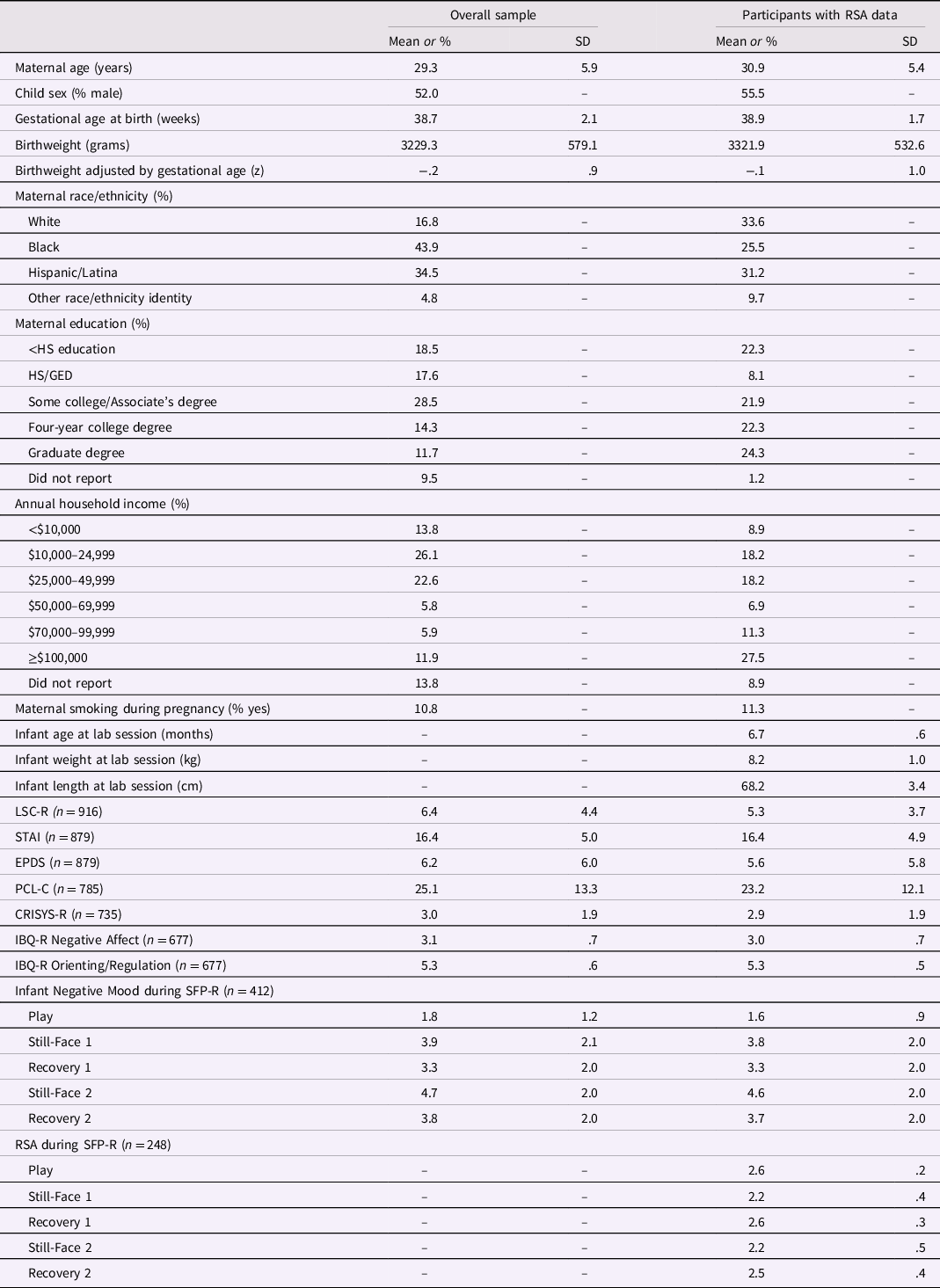
Descriptive statistics for overall sample (N = 1077) and participants with RSA data (n = 248)

Note. LSC-R = Life Stressor Checklist-Revised; STAI = Spielberger State-Trait Anxiety Inventory; EPDS = Edinburgh Postnatal Depression Scale; PCL-C = PTSD Checklist for DSM-IV, Civilian version; CRISYS-R = Crisis in the Family Systems-Revised; IBQ-R = Infant Behavior Questionnaire-Revised; SFP-R = Revised Still-Face Paradigm; Infant Negative Mood during SFP-R = Negative Mood scale of the Parent-Child Interaction Rating Scales (PCIRS); RSA = respiratory sinus arrhythmia.
Results
Descriptive statistics and preliminary analyses
Table 1 presents sample characteristics and descriptive data for the main study variables. As shown in Table 1, the sample was racially/ethnically and socioeconomically diverse, and infant birthweight and gestational age at birth were within typical ranges for healthy pregnancies. At the group level, the sample displayed the expected negative mood and RSA patterns of responding to the SFP-R, specifically minimal negative mood during the baseline play episode, relative increases in negative mood and decreases in RSA during the still-face episodes, and relative decreases in negative mood and increases in RSA during the subsequent reunion episodes, with RSA returning to near “baseline” (i.e., play) levels during the reunion episodes.
Participants with and without PCIRS data and with and without RSA data were compared on the main study variables of interest. Compared to participants without PCIRS data, participants with PCIRS data had lower scores on maternal trauma history (LSC-R), maternal PTSD symptoms during pregnancy (PCL-C), maternal depression symptoms during pregnancy (EPDS), and maternal ratings of infant negative affect (IBQ-R NA); there were no group differences on maternal trait anxiety symptoms during pregnancy (STAI), maternal exposure to negative life events during pregnancy (CRISYS-R), or maternal ratings of orienting/regulation (IBQ-R O/R). Compared to participants without RSA data, participants with RSA data had lower scores on maternal trauma history (LSC-R) and maternal PTSD symptoms during pregnancy (PCL-C), as well as lower maternal ratings of negative affect (IBQ-R NA); there were no group differences on maternal trait anxiety symptoms during pregnancy (STAI), maternal depression symptoms during pregnancy (EPDS), maternal exposure to negative life events during pregnancy (CRISYS-R), maternal ratings of infant orienting/regulation (IBQ-R O/R), or infant negative mood during the SFP-R.
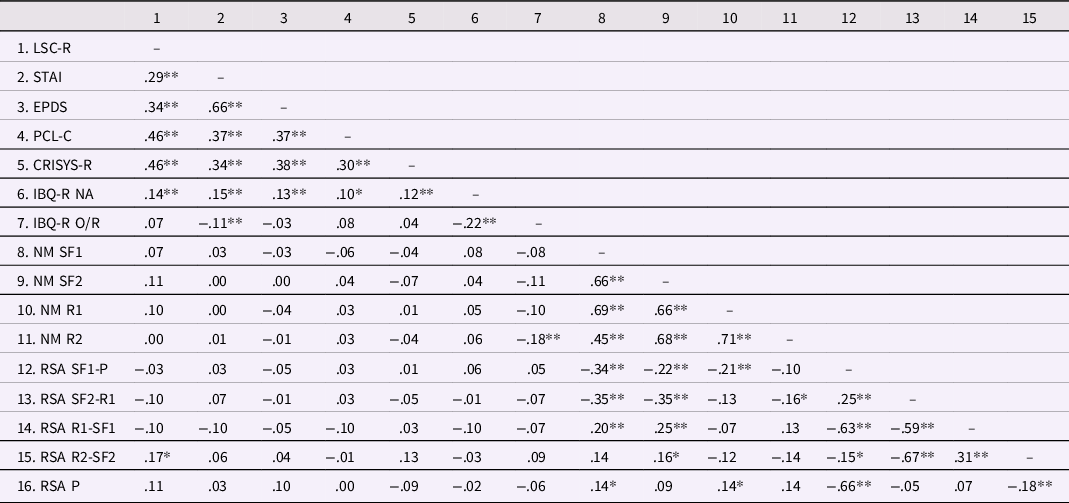
Table 2 presents the correlation coefficients among the primary variables. As shown in Table 2, greater maternal lifetime trauma exposure, maternal negative life events during pregnancy, and maternal trait anxiety, depressive, and PTSD symptoms in pregnancy were positively associated with one another (all ps < .01). Maternal lifetime trauma and greater maternal exposure to negative life events during pregnancy were associated with higher maternal ratings of infant negative affectivity on the IBQ-R. Maternal lifetime trauma was associated with larger changes in infant RSA between the second stressor and the subsequent recovery (R2-SF2). Maternal ratings of orienting/regulation were negatively associated with infant negative mood during the recovery period following the second stressor episode during the SFP-R task: higher levels of behavioral orienting/regulation in daily life were associated with lower levels of negative mood during the second recovery period. There were no other associations between maternal characteristics or ratings of infant behavior with observed infant behavior during the SFP-R. Correlations between RSA markers of stress reactivity (SF1-P and SF2-R1) and negative mood during the respective SFP-R stressor episodes indicated associations between greater RSA responses to the stressor and higher levels of negative mood. RSA markers of stress reactivity (SF1-P and SF2-R1) were also associated with negative mood during recovery periods of the SFP-R, with greater RSA responses to the stressor associated with higher levels of negative mood during the recovery episodes. Correlations between RSA markers of stress regulation (R1-SF1 and R2-SF2) and negative mood during the SFP-R still-face stressor episodes indicated that higher levels of RSA regulation during the recovery periods were associated with higher levels of negative mood during the preceding stressor periods. Correlations between RSA markers of stress regulation/recovery (R1-SF1 and R2-SF2) and negative mood during the respective SFP-R recovery episodes were not statistically significant. None of the other RSA measures were associated with maternal characteristics or maternal ratings of infant reactivity or regulation (all ps > .05). Gestational age at the time of the prenatal assessment was not associated with scores on any of the maternal rating scales completed during pregnancy (LSC-R, STAI, PCL-C, EPDS; all ps > .05), and thus was not considered as a covariate in the primary analyses.
Correlation coefficients among main study variables

Note. LSC-R = Life Stressor Checklist-Revised; EPDS = Edinburgh Postnatal Depression Scale; STAI = Spielberger State-Trait Anxiety Inventory; PCL-C = PTSD Checklist for DSM-IV, Civilian version; CRISYS-R = Crisis in the Family Systems-Revised; IBQ-R = Infant Behavior Questionnaire-Revised; NA = Negative Affect factor score; O/R = Orienting/Regulation factor score; NM = negative mood during the Repeated Still-Face Paradigm (SFP-R), as rated by the Negative Mood scale of the Parent-Child Interaction Rating Scales (PCIRS); SF1 = still-face 1 episode; SF2 = still-face 2 episode; R1 = reunion 1 episode; R2 = reunion 2 episode; RSA = respiratory sinus arrhythmia; P = play episode.
* p < .05;
** p < .01.
Primary analyses
All models tested in primary analyses included covariates as described above.
Linear regression
Although preliminary correlational analyses indicated a number of significant associations among the main study variables, when covariates were added to the linear regression models, maternal lifetime trauma exposure was no longer directly associated with maternal ratings of infant negative affectivity on the IBQ-R. However, with the inclusion of covariates, maternal lifetime trauma history was associated with decreased infant physiological regulation in response to the still-face stressor during the first phase of the SFP-R (R1-SF1), with higher levels of trauma exposure predicting lower infant regulation of their RSA response to the first SFP-R stressor (β = −.19, p = .02). There were no other associations between maternal trauma history and infant RSA variables. Maternal IBQ-R ratings were not associated with infant RSA changes during the SFP-R (all ps > .05). There were no significant associations between maternal trauma history and observed infant negative mood during either the stressor or recovery episodes of the SFP-R (all ps > .05).
Pathway analysis
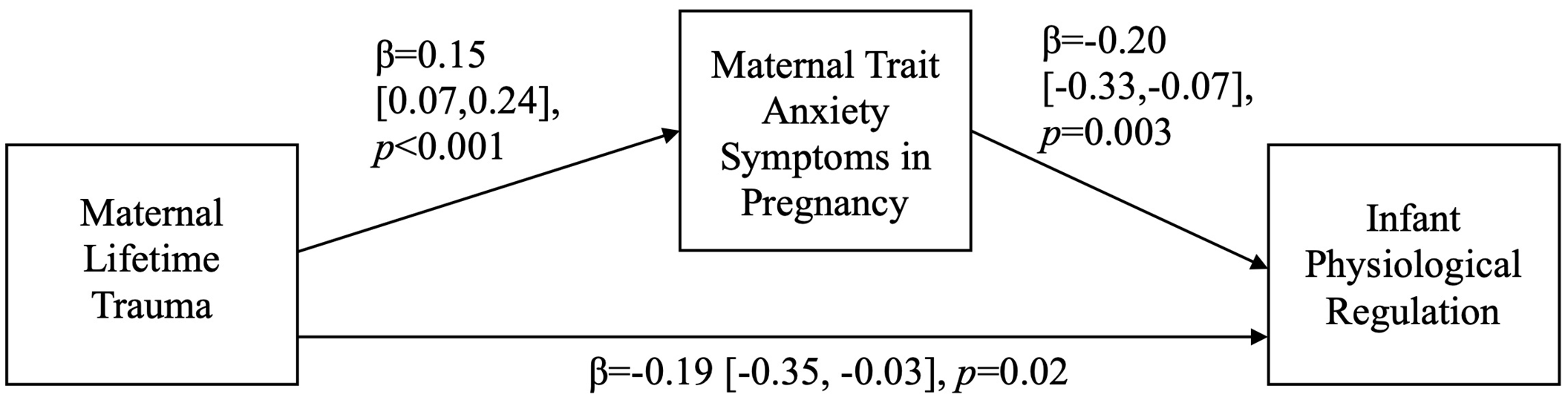
In pathway analyses adjusted for covariates, maternal trauma history was again directly associated with lower infant physiological regulation after the first stressor task (R1-SF1) (β = −.19, p = .02), such that greater maternal trauma was associated with less infant RSA recovery following the first still-face episode. This effect was partially mediated via an indirect effect of maternal trait anxiety symptoms during pregnancy (β = −.03, p < .05; Figure 1), indicating that greater maternal lifetime trauma exposure was associated with increased trait anxiety during pregnancy, which, in turn, was associated with less infant RSA recovery following the stressor of the first phase of the SFP-R. Indirect effects of maternal lifetime trauma via trait anxiety symptoms in pregnancy on other infant RSA measures during the SFP-R were not significant. There also were no significant indirect effects of maternal lifetime trauma via trait anxiety symptoms in pregnancy on infant negative mood during the SFP-R.
Mediation model relating maternal lifetime trauma exposure, maternal trait anxiety symptoms during pregnancy, and infant physiological regulation.Note. Indirect effect of maternal lifetime trauma exposures on infant physiological regulation via maternal anxiety symptoms in pregnancy: β = −.03, p < .05, 95% CI = −.07, −.01. Solid black lines indicate significant paths. All parameter estimates presented are standardized. Maternal lifetime trauma indexed by the Life Stressor Checklist-Revised; maternal trait anxiety symptoms in pregnancy indexed by the Spielberger State-Trait Anxiety Inventory, Trait Scale; infant physiological regulation assessed as respiration-adjusted respiratory sinus arrhythmia (RSA) values measured during the repeated Still-Face Paradigm (SFP-R), specifically indexed as the difference in values between the first stressor period (SF1) and subsequent recovery period (R1). This model included the following covariates: maternal age, race/ethnicity, educational status, and smoking during pregnancy and infant sex, gestational age, activity level during the SFP-R, and length, weight, and age at the time of the SFP-R.

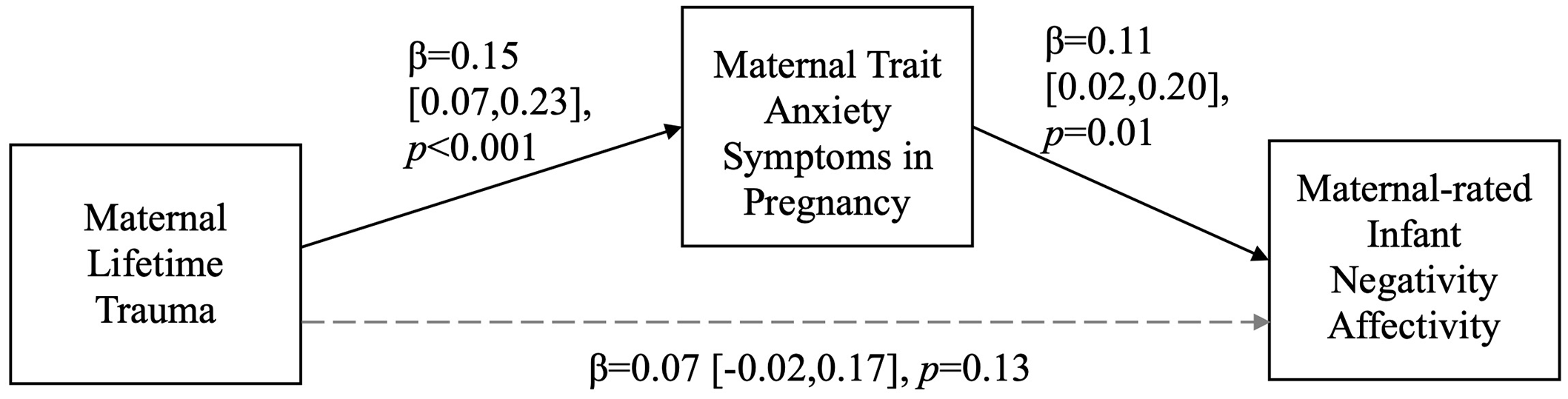
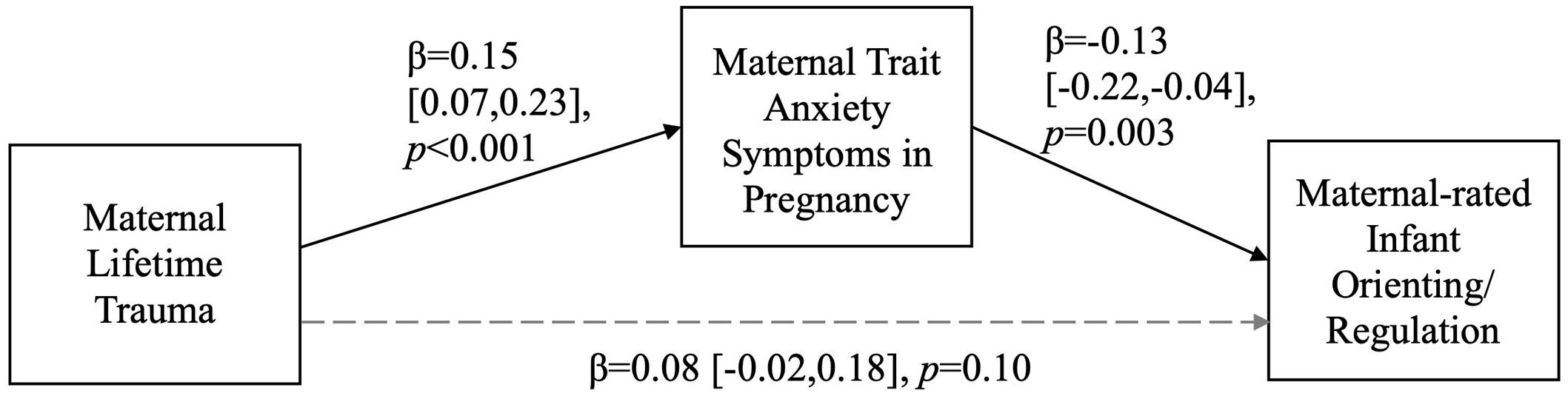
Although maternal trauma history was not directly associated with maternal IBQ-R ratings of infant reactivity or regulation when all relevant covariates were included in the models (all ps > .05), there were significant indirect effects of maternal trauma history on maternal IBQ-R ratings of infant negative affectivity (β = .02, p < .05; Figure 2), and orienting/regulation (β = −.02, p < .05; Figure 3) via maternal symptoms of trait anxiety during pregnancy, such that maternal trauma exposure was associated with increased trait anxiety during pregnancy, which, in turn, was associated with higher maternal ratings of infant negative affectivity and lower maternal ratings of infant orienting/regulation.
Mediation model relating maternal lifetime trauma exposure, maternal trait anxiety symptoms during pregnancy, and maternal ratings of infant negative affectivity. Note. Indirect effect of maternal lifetime trauma exposures on maternal-rated infant negative affectivity via maternal anxiety symptoms in pregnancy: β = .02, p < .05, 95% CI = .004, .04. Solid black lines indicate significant paths; gray dashed lines indicate nonsignificant paths. All parameter estimates presented are standardized. Maternal lifetime trauma indexed by the Life Stressor Checklist-Revised; maternal trait anxiety symptoms in pregnancy indexed by the Spielberger State-Trait Anxiety Inventory, Trait Scale; maternal-rated infant negative affectivity indexed by the Infant Behavior Questionnaire-Revised Negativity Affectivity factor score. This model included the following covariates: maternal age, race/ethnicity, educational status, and smoking during pregnancy and infant sex, gestational age, and age at the time of assessment.

Mediation model relating maternal lifetime trauma exposure, maternal trait anxiety symptoms during pregnancy, and maternal ratings of infant orienting/regulation. Note: Indirect effect of maternal lifetime trauma exposures on maternal-rated infant orienting/regulation via maternal anxiety symptoms in pregnancy: β = −.02, p < 0.05, 95% CI = −0.04, −.01. Solid black lines indicate significant paths; gray dashed lines indicate nonsignificant paths. All parameter estimates presented are standardized. Maternal lifetime trauma indexed by the Life Stressor Checklist-Revised; maternal trait anxiety symptoms in pregnancy indexed by the Spielberger State-Trait Anxiety Inventory, Trait Scale; maternal-rated infant orienting/regulation indexed by the Infant Behavior Questionnaire-Revised Orienting/Regulation factor score. This model included the following covariates: maternal age, race/ethnicity, educational status, and smoking during pregnancy and infant sex, gestational age, and age at the time of assessment.

There were no significant indirect effects of maternal lifetime trauma on IBQ-R, PCIRS, or infant RSA scores via maternal depressive or PTSD symptoms during pregnancy.
In secondary analyses, we explored the effects of maternal postnatal trait anxiety, reported when infants were 6 months of age using the Trait Scale of the STAI, on the indirect effects of maternal trauma on both RSA recovery and IBQ-R scores via maternal trait anxiety symptoms in pregnancy. Our decomposition of the indirect effects showed that the negative association between maternal trauma and RSA recovery was entirely explained by the prenatal anxiety alone pathway (β = −.04, 95% CI [−.09, −.01], p < .05; postnatal alone and prenatal to postnatal pathways both βs = .006, ps > .05). The decomposition of the indirect effects for the IBQ-R ratings was more mixed. For infant negative affectivity, 44% (β = .012) of the indirect effect was explained through the postnatal anxiety only pathway, 41% (β = .011) was explained through the prenatal to postnatal anxiety pathway, and 15% (β = .004) was explained through the prenatal anxiety only pathway. For infant orienting/regulation, 50% (β = −.013) of the indirect effect was explained by prenatal anxiety alone, 27% (β = −.007) by postnatal anxiety alone, and 23% (β = −.006) through the prenatal to postnatal anxiety pathway.
Moderation by infant sex
All statistically significant pathway models were tested for sex differences via interaction terms for paths predicting infant outcomes (i.e., IBQ-R ratings, RSA scores). Because maternal trait anxiety emerged as the only significant mediator, only the anxiety models were tested for sex differences. There were no significant differences by infant sex assigned at birth on direct or indirect effects (via trait anxiety during pregnancy) of maternal trauma history on IBQ-R ratings or on infant RSA scores (all ps > .05).
Discussion
Adversity and trauma are well-established risks to public health, impacting physical and mental well-being not only in the individual, but across generations. However, the specific mechanisms through which these effects are transmitted intergenerationally are not well understood. Stress reactivity and regulation in infancy have emerged as particular outcomes of interest in this cascade, given that they are associated with physical and mental health, social-emotional competence, academic achievement, and employment later in life. Obtaining a better understanding of factors that contribute to these critical foundations of development is an important component of identifying both the children most vulnerable to deleterious effects of maternal trauma and the mechanisms through which these effects are transmitted.
The goals of this study were to test (a) whether maternal trauma history confers negative effects on infant reactivity to and regulation of stress during an acute stressor task or in daily life, and (b) whether maternal psychological symptoms in pregnancy serve as a mechanism through which these effects are conferred. To index different components of infant stress reactivity, we used markers of infant negative affectivity in daily life, as rated by mothers; of infant negative mood during an acute stressor, the still-face episodes of the SFP-R, as coded by independent raters; and of infant physiological stress reactivity, that is, changes in RSA in response to the still-face episodes of the SFP-R. To index different components of infant stress regulation, we used maternal ratings of infant orienting/regulation in daily life; of infant negative mood during the recovery periods of the SFP-R; and of RSA recovery following the stressor of the still-face episodes of the SFP-R. When testing our first hypothesis, we found that higher maternal lifetime trauma was associated with greater infant negative affect as indexed by maternal ratings; however, the magnitude of this associations was attenuated when a measure of negative life events during pregnancy was included in the model. These findings suggest that the intergenerational effects of maternal trauma history on the infant stress response may be tied to negative life events occurring during pregnancy, as exposure to more negative life events during pregnancy was associated with both increased maternal lifetime trauma and higher infant negative affect ratings. Early history of adversity has been associated with higher levels of stressful events in adulthood and has been theorized to lower one’s tolerance to stress and trauma exposures later in life (Bandoli et al., Reference Bandoli, Campbell-Sills, Kessler, Heeringa, Nock, Rosellini, Sampson, Schoenbaum, Ursano and Stein2017; McLaughlin et al., Reference McLaughlin, Conron, Koenen and Gilman2010). Thus, women who have experienced greater lifetime adversity may be at particular risk for elevated stressors and negative life event exposures during pregnancy. Moreover, maternal stress during pregnancy has long been associated with negative infant outcomes, as both a primary predictor and as a mechanism through which maternal experiences transmit effects (Graignic-Philippe et al., Reference Graignic-Philippe, Dayan, Chokron, Jacquet and Tordjman2014; Huizink & de Rooij, Reference Huizink and de Rooij2018).
When testing our second hypothesis, there were several key findings. There was a direct effect of maternal lifetime trauma on infant physiological regulation (i.e., RSA) in response to an acute stressor, such that maternal trauma exposure was associated with reduced infant physiological recovery during the first recovery period of the SFP-R. There was also a partial mediation of this direct effect of maternal trauma exposure on reduced infant physiological regulation via higher maternal trait anxiety during pregnancy (see Figure 1). These findings suggest that, in addition to maternal anxiety and stress exposures, there are likely other mechanisms implicated in the programming and development of biological stress regulatory systems during pregnancy and the early infancy period; putative mechanisms include disruptions in maternal stress physiology (e.g., cortisol and the HPA axis) (Cowell et al., Reference Cowell, Khoury, Petty, Day, Benitez, Cunningham, Schulz, Ritz, Wright and Enlow2021), the maternal immune system (Hantsoo et al., Reference Hantsoo, Kornfield, Anguera and Epperson2019), and placental cellular aging (Jones et al., Reference Jones, Esteves, Gray, Clarke, Callerame, Theall and Drury2019).
Regarding infant affective and behavioral outcomes, there was no direct effect of maternal lifetime trauma history on maternal ratings of infant negative affectivity or orienting/regulation when covariates were included in the models. However, there were significant indirect effects of maternal trauma history on both types of maternal ratings via maternal trait anxiety symptoms during pregnancy, even when controlling for negative life events during pregnancy. Specifically, greater maternal trauma was associated with greater infant negative affectivity and lower infant orienting/regulation, both via elevated maternal trait anxiety symptoms during pregnancy. Moreover, for both observed infant physiological regulation (RSA) during the SFP-P first recovery episode and maternal ratings of infant orienting/regulation in everyday life, the indirect effect of maternal trauma history via elevated maternal trait anxiety in pregnancy predicted poorer infant regulation abilities. There were no significant direct or indirect associations among maternal trauma, psychological symptoms during pregnancy, and observed infant negative mood during the SFP-R.
Following our main hypothesis testing, we conducted additional post hoc analyses to explore the effects of postnatal maternal trait anxiety at the time of the laboratory assessment on the indirect effects described above. We found that the negative association between maternal trauma and RSA recovery/regulation was entirely explained by the prenatal trait anxiety alone pathway, suggesting that prenatal trait anxiety confers a specific vulnerability to decreased physiological recovery from an acute stressor. Similarly for maternal ratings of orienting/regulation, prenatal anxiety was the primary driver, with postnatal trait anxiety alone and the prenatal to postnatal trait anxiety path both accounting for much smaller proportions. In contrast, for maternal ratings of infant negative affectivity, postnatal maternal trait anxiety appeared to account for the largest contribution, with the direct prenatal to postnatal trait anxiety path also a significant contributor; prenatal anxiety accounted for a small proportion of the variance.
Taken together, these findings suggest that prenatal trait anxiety confers specific vulnerabilities for the development of infant stress regulation competencies, as reflected in both decreased physiological recovery following an acute stressor task and lower orienting and affective regulation behaviors in everyday life. While maternal postnatal trait anxiety was associated with concurrent maternal ratings of infant orienting and affective regulation behaviors, it was not the primary driver of these findings. In contrast, maternal postnatal trait anxiety was the largest predictor of infant negative affectivity, with maternal prenatal trait anxiety conferring additional vulnerability. These findings highlight potential differential risk from exposure to maternal trait anxiety in the pre- versus postnatal periods on specific components of the infant stress response, with implications for the identification of at-risk or vulnerable groups and the design of targeted interventions to potentially mitigate these effects.
Another set of findings to emerge from this study is the relations between “parallel” measures of infant stress reactivity and regulation. We found that higher maternal ratings of infant orienting/regulation behaviors in everyday life were associated with lower levels of infant negative mood in the second recovery episode of the SFP-R, suggesting associations in the expected direction between these different measures of infant stress regulation. Because of the importance of dyadic regulation, rather than explicit self-regulation, for young infants who are managing their response to a stressor, improved orienting abilities may allow the infant to seek out and connect with their mother more easily or efficiently during the recovery periods (Braungart-Rieker et al., Reference Braungart-Rieker, Garwood, Powers and Notaro1998; Conradt & Ablow, Reference Conradt and Ablow2010). In turn, this may promote dyadic regulation of the infant’s stress response, subsequently yielding lower levels of negative affect once the stressor has remitted. There was limited correspondence between maternal ratings of infant negative affectivity or orienting/regulation in daily life and observed infant negative mood during the still-face episodes of the SFP-R. This is somewhat consistent with prior research examining these different dimensions of behavioral reactivity and regulation (Braungart-Rieker et al., Reference Braungart-Rieker, Garwood, Powers and Notaro1998; Planalp & Braungart-Rieker, Reference Planalp and Braungart-Rieker2015; Tarabulsy et al., Reference Tarabulsy, Provost, Deslandes, St-Laurent, Moss, Lemelin, Bernier and Dassylva2003), suggesting that these types of assessments may be capturing distinct yet related components of the stress response system in infants (e.g., responses to everyday events versus an acute stressful task).
The findings from this study suggest both direct and indirect effects of maternal lifetime trauma exposures on biological aspects of offspring regulatory capabilities in response to acute stressors or arousal and behavioral aspects of orienting and regulation in daily life, with a substantive contribution from maternal trait anxiety symptoms during pregnancy. Maternal trait anxiety symptoms in the postpartum period, in contrast, appeared to confer vulnerability for greater infant negative affectivity in daily life, a component of stress reactivity. These findings bring together separate bodies of literature that have shown increased psychopathology in response to trauma exposure and associations between maternal psychopathology during pregnancy and negative infant stress and behavior regulation outcomes (Choe et al., Reference Choe, Olson and Sameroff2013; Davis et al., Reference Davis, Glynn, Schetter, Hobel, Chicz-Demet and Sandman2007; Davis et al., Reference Davis, Snidman, Wadhwa, Glynn, Schetter and Sandman2004; Gustafsson et al., Reference Gustafsson, Sullivan, Nousen, Sullivan, Huang, Rincon, Nigg and Loftis2018; McGrath et al., Reference McGrath, Records and Rice2008). While much of the extant literature has assessed the effects of perinatal depression on infant outcomes, our findings suggest that prenatal trait anxiety may have particular effects in the context of infant distress/arousal regulation, as it was a mediator of effects of maternal lifetime trauma on both maternal ratings of infant behavioral regulation of distress or arousal in everyday life and objectively measured infant physiological regulation during the recovery phase of an acute stressor task. Our post hoc analyses exploring potential contributions from postnatal anxiety to this model further suggested that prenatal trait anxiety confers unique risks for infant regulation of attention (i.e., orienting) and affective and physiological stress responses. In contrast, postnatal anxiety appeared to be a primary contributor to infant negative affectivity, a key aspect of stress reactivity. These findings point to the importance of isolating and specifying maternal factors that influence infant outcomes so that interventions can be appropriately targeted. The current findings suggest that maternal negative life event exposures and trait anxiety symptoms are mechanisms by which maternal lifetime trauma history is intergenerationally transmitted, with differential effects of prenatal versus postnatal anxiety on infant stress regulation versus reactivity components. These findings highlight maternal psychological functioning in the perinatal period, and more specifically trait anxiety, as a potential primary focus for treatment, especially in women who have experienced trauma and stress exposures.
Other prenatal and early life factors likely mediate maternal trauma history effects on infant ANS development. Some prior literature examining differential effects of maternal childhood adversities and prenatal stress on infant RSA during the SFP identified separate effects of the two types of maternal exposures (i.e., preconception traumatic events and prenatal stress) on infant RSA outcomes (Gray et al., Reference Gray, Jones, Theall, Glackin and Drury2017). Specifically, in Gray et al.’s study, prenatal stress was associated with a suppressed infant RSA response following the stressor, whereas maternal childhood adversities were associated with a lower overall RSA, interpreted as a lower “physiologic start point.” Different maternal exposures were used in our study (i.e., lifetime trauma exposures, negative life events in pregnancy, and trait anxiety in pregnancy versus childhood adversity and stress in pregnancy). We did not find associations between our maternal trauma exposure or psychopathology measures and infant baseline RSA during the Play episode (see Table 2); thus, we did not find evidence for lower overall RSA in relation to maternal exposures or psychological symptoms. In combination, these studies indicate the importance of carefully operationalizing the type and timing of exposures to understand offspring effects and point to the possibility of multiple pathways through which maternal lifetime trauma experiences and psychological symptoms during pregnancy may impact fetal and infant development. Determining the specific effects and mechanisms of each type of risk factor is particularly important when designing and implementing interventions.
Some nonsignificant results are important to mention. When exposure to negative life events during pregnancy was considered, there were no significant direct associations of maternal lifetime trauma history or psychological symptoms in pregnancy with any measure of infant stress reactivity, either physiological or behavioral, assessed during the acute stressor phase of the SFP-R or via maternal ratings of infant negativity. These findings, in combination with the significant direct and indirect effects observed when examining infant physiological recovery from reaction to an acute stressor task, suggest that infants of mothers with elevated lifetime trauma histories may not necessarily demonstrate greater RSA responses to acute stressors, but may have more difficulty regulating their stress responses once activated. This pattern of findings is consistent with other studies that have demonstrated specific challenges with behavioral and physiological stress regulation but not stress reactivity in infants of trauma-affected mothers (Bosquet Enlow et al., Reference Bosquet Enlow, Kitts, Blood, Bizarro, Hofmeister and Wright2011; Bosquet Enlow et al., Reference Bosquet Enlow, Kullowatz, Staudenmayer, Spasojevic, Ritz and Wright2009). Thus, children of mothers with a trauma history and/or psychopathology in pregnancy may benefit from programs that specifically promote the development of dyadic and self-regulatory skills. Also noteworthy is that approximately 24% of infants who participated in the SFP-R were unable to participate in the second still-face and reunion episodes due to failure to return to a non-distressed state during the first reunion. We have previously shown that infants unable to complete the second SFP-R trial show more pronounced ANS reactivity to and poorer recovery from the first trial (Ritz et al., Reference Ritz, Schulz, Rosenfield, Wright and Bosquet Enlow2020). Thus, the infants included in analyses focused on reactivity to and recovery from the second still-face episode likely did not include the infants in the sample with the most difficulty with stress regulation. This fact may explain why the main findings were observed when using the first but not the second still-face trial.
In contrast to one of our secondary hypotheses, there was no evidence of sex differences in the effects of maternal trauma or anxiety on infant behavioral or physiological stress responses. These findings are similar with the majority of research using the SFP-R, which, to date, has found that sex effects in the SFP-R are inconsistent at best. While a few select studies have demonstrated sex differences in response to the task (Haley & Stansbury, Reference Haley and Stansbury2003; Tibu et al., Reference Tibu, Hill, Sharp, Marshall, Glover and Pickles2014), both the majority of individual studies and meta-analyses or systematic reviews of ANS functioning during the SFP-R have indicated that sex differences are rare (Conradt & Ablow, Reference Conradt and Ablow2010; Jones-Mason et al., Reference Jones-Mason, Alkon, Coccia and Bush2018; Mesman et al., Reference Mesman, van IJzendoorn and Bakermans-Kranenburg2009; Moore et al., Reference Moore, Hill-Soderlund, Propper, Calkins, Mills-Koonce and Cox2009). Looking more broadly, there is more evidence documenting sex differences in the effects of maternal stress across other infant behavioral and physiological outcomes (e.g., Glover & Hill, Reference Glover and Hill2012; Van den Bergh et al., Reference Van den Bergh, van den Heuvel, Lahti, Braeken, de Rooij, Entringer, Hoyer, Roseboom, Räikkönen, King and Schwab2020); however, as is the case with SFP-R findings, these sex differences are not consistently found, even when identical measures are used. Notably, a prior study in this cohort found that maternal hair cortisol in pregnancy, a potential indicator of maternal physiological stress, was associated with sex differences in infant RSA over the course of the SFP-R (Cowell et al., Reference Cowell, Khoury, Petty, Day, Benitez, Cunningham, Schulz, Ritz, Wright and Enlow2021). Thus, sex differences in the associations between maternal trauma and stress history and the developing infant stress regulatory system may depend on numerous factors, including the timing of maternal exposures, the timing of maternal and infant assessments, and the specific maternal and infant measures involved (e.g., maternal report of infant behavior, physiology of various maternal and infant stress systems [e.g., ANS, HPA], observed infant behavior) involved. Our lack of sex-differential findings in the current study suggests that the specific processes assessed here may function similarly across sexes. Future research should continue to assess for sex differences in intergenerational effects of maternal trauma and psychological symptoms during pregnancy on the development of the infant stress response to specify the pathways that exhibit sex-specific effects.
We did not find associations between maternal ratings of infant negative affectivity or orienting/regulation and the related physiological metrics, with the exception of the association between higher maternal ratings of infant orienting/regulation and lower observed levels of infant negative mood during the final recovery period of the SFP-R. There are several possible reasons for this relative lack of associations. First, these measures are designed to assess related but separate constructs: parental reports of behaviors that are considered indicators of negative emotionality (i.e., frustration, sadness, fear) and efforts to manage stress/arousal (using both dyadic regulation and emerging self-directed abilities) in everyday life across multiple contexts, versus singular point-in-time physiological or behavioral markers of an acute stress reaction and subsequent regulatory capacity to a standardized laboratory stressor. The extant literature examining associations between the IBQ-R or other parent ratings of infant behavior and objective assessments during the SFP is inconsistent in demonstrating associations even at the behaviorbehavior level. For example, positive and negative infant affect as rated by parents have been associated with higher and lower (respectively) use of self-soothing or self-comforting behaviors during the SFP in some studies (Braungart-Rieker et al., Reference Braungart-Rieker, Garwood, Powers and Notaro1998; Planalp & Braungart-Rieker, Reference Planalp and Braungart-Rieker2015), but not in others (Tarabulsy et al., Reference Tarabulsy, Provost, Deslandes, St-Laurent, Moss, Lemelin, Bernier and Dassylva2003). Further, there is a paucity of published research examining parent ratings of behavior in association with infant physiological stress metrics, suggesting that these constructs are not frequently studied together. Our findings suggest that, rather than being directly correlated, physiological stress response systems and externally visible stress management behaviors may be complementary, working in concert to adapt to changing circumstances, possibly with other components (e.g., psychological and emotional manifestations) (Campbell & Ehlert, Reference Campbell and Ehlert2012). For example, physiological components may occur first, with the behavioral manifestation following shortly behind, as is the case in Porges’ polyvagal theory: decreases in RSA indicate a decrease of parasympathetic activity in preparation to mount a sympathetic and behavioral/emotional stress response (Porges, Reference Porges2003). Alternatively, infants may mount a strong physiological response only when they do not anticipate or expect the stressor, based on their history of caregiver interactions, or are not experiencing success in engaging their caregiver via behavioral signals (e.g., crying) to assist in dyadic regulation of their distress.
Some of our other correlational findings may lend insight into the complex and nuanced relations between physiological and emotional or behavioral components of the stress response system. We found that higher levels of infant negative mood during the stressor periods of the SFP-R were associated with greater physiological stress responses during these stressor periods as well as during the recovery periods. Possibly, infants who exhibit greater emotional responses to acute stressors need to exert greater physiological regulatory responses to manage their reaction. We also found that greater physiological reactivity during each of the stressor episodes was associated with greater negative mood in the subsequent recovery episode (e.g., a greater RSA response during SF1 was associated with higher negative mood during R1). This pattern suggests possible diminished recovery/regulation of the affective stress response when high levels of physiological reactivity are activated. Additional research that deeply interrogates the joint contributions of physiological, emotional, cognitive/attentional, and behavioral processes to stress reactivity and regulation across development is necessary.
Strengths of the study are worth noting. We used three different approaches (i.e., physiological metrics, standardized behavior coding, parent ratings) to capture components of the infant stress response. Utilizing multiple methods is key to furthering our understanding of the different dimensions of stress regulation, particularly as they relate to prediction of future outcomes. Another strength is that, while this study focused on measures of maternal psychological symptoms in pregnancy to test potential prenatal mechanisms by which maternal trauma affects infant outcomes, we also incorporated assessment of postnatal symptoms in post hoc analyses. Further consideration of both pre- and postnatal maternal psychological symptoms in future studies is encouraged, particularly given that our findings suggest that symptoms during each period may have differential or possibly interactive effects on infant outcomes through multiple pathways. Explicating the nature of such effects may help guide the development of more effective and targeted screening and intervention efforts.
Another strength is our measurement of RSA. We adjusted RSA for respiration, which has been shown to result in a more sensitive index of vagal activity that better predicts vagal modulation in response to stress (Ritz et al., Reference Ritz, Bosquet Enlow, Schulz, Kitts, Staudenmayer and Wright2012). In adults, a range of paced breathing frequencies is typically used as baseline calibration for respiratory adjustments. Such a technique cannot be applied with infants; however, our approach of using a within-individual correction based on the transfer function is aligned with adjustment approaches suggested for adults (Ritz et al., Reference Ritz, Bosquet Enlow, Schulz, Kitts, Staudenmayer and Wright2012). We also controlled for infant activity level during the SFP-R to increase the likelihood that observed changes in RSA were due to the stress of the protocol rather than to physical activity. Additionally, the study sample included a racially, ethnically, and socioeconomically diverse sample of pregnant women, an understudied demographic despite their increased risk for experiencing adversity and psychological sequelae. The sample was a community multisite sample, and thus the findings may have wide generalizability; however, the findings may not generalize to clinical samples (e.g., mothers who meet criteria for a psychological disorder). Future research should explore how the hypothesized associations operate in clinical groups. Other strengths include the prospective collection of data and the availability of a rich covariate dataset.
This study had some limitations. First, because we relied on maternal self-report for lifetime trauma exposures and psychological symptoms in pregnancy and the postnatal period and for ratings of infant temperament, there is a risk of reporter bias inflating associations between maternal and infant ratings (Brewin, et al., Reference Brewin, Andrews and Gotlib1993; Davis et al., Reference Davis, Glynn, Schetter, Hobel, Chicz-Demet and Sandman2007). Encouragingly, retrospective reports of trauma exposure are generally found to be fairly accurate, and inaccuracies tend to involve underreporting rather than overreporting (Hardt & Rutter, Reference Hardt and Rutter2004; McHugo et al., Reference McHugo, Caspi, Kammerer, Mazelis, Jackson, Russell, Clark, Liebschutz and Kimerling2005; Wolfe, et al., Reference Wolfe, Kimerling, Wilson, Keane and Keane1997), which would lead to smaller observed effect sizes than the true effect sizes. Additionally, recent evidence suggests that maternal psychopathology minimally biases maternal reports of child emotional and behavioral problems (Olino et al., Reference Olino, Michelini, Mennies, Kotov and Klein2021). Further, the IBQ-R was designed to avoid asking parents to provide subjective judgments about their child, but rather inquires about multiple examples of concrete, observable infant behaviors (Gartstein & Rothbart, Reference Gartstein and Rothbart2003) to reduce biased responding. Moreover, the inclusion of infant negative mood and RSA during the SFP-R provided standardized observational measures of infant affective, behavioral, and physiological reactivity and regulation not subject to maternal bias.
Another potential limitation was this study’s use of the Trait subscale of the STAI. Notably, this measure has been used frequently in perinatal research (Meades & Ayers, Reference Meades and Ayers2011). This subscale asks respondents to indicate how often they experience various markers of anxiety based on how they “generally feel,” rather than giving a specific recent timeframe in which to report symptoms (as do the EPDS and PCL-C, our other symptom reports). Studies of reliability and validity of the STAI in nonpregnant populations tend to find fairly stable test–retest reliability for the Trait subscale across time (Barnes, et al., Reference Barnes, Harp and Jung2002). In contrast, the Trait subscale has been found to fluctuate somewhat over pregnancy and tends to decrease in the postpartum period, thus appearing to capture general anxiety symptoms that do not appear to be unchanged over long periods and instead may be uniquely experienced during the prenatal period (Giakoumaki et al., Reference Giakoumaki, Vasilaki, Lili, Skouroliakou and Liosis2009; Gimbel et al., Reference Gimbel, Blue, Allshouse, Silver, Gimbel, Grobman, Haas, Simhan, Mercer and Hatfield2021; Gunning et al., Reference Gunning, Denison, Stockley, Ho, Sandhu and Reynolds2010; Haddad, et al., Reference Haddad, Morris and Spielberger1985; Hundley et al., Reference Hundley, Gurney, Graham and Rennie1998; Meades & Ayers, Reference Meades and Ayers2011). However, using a measure designed to capture trait anxiety, rather than a reporting of anxiety symptoms in a specific timeframe, may limit our ability to conclude that the symptoms were reflective of anxiety symptoms specific to pregnancy. Future studies could mitigate this limitation by using an anxiety symptom inventory to assess anxiety levels in a recent delimited period of time. Another potential limitation is the number of models that were needed to fully evaluate our research questions. In order to mitigate the risk of type II error, our statistical approach did not include use of multiple comparison correction. However, it should be noted that the increased risk for type I error means that these findings should be reproduced in future research.
Finally, as noted in the Introduction, both hypo- and hyperreactivity of the PNS to stress have been associated with poorer child developmental outcomes; clinical cutoffs for “healthy” moderate levels of RSA are not established to guide analyses. Moreover, studies that have examined associations of maternal stress and psychopathology with infant ANS responsivity have reported mixed findings. For example, Bush and colleagues (Bush et al., Reference Bush, Jones-Mason, Coccia, Caron, Alkon, Thomas, Coleman-Phox, Wadhwa, Laraia, Adler and Adler2017) found that infants born to mothers reporting both more stressful life events and moderate-to-high levels of perceived stress during pregnancy showed heightened RSA reactivity to and weaker recovery from the SFP. However, Field and colleagues (Field et al., Reference Field, Diego, Hernandez-Reif, Schanberg, Kuhn, Yando and Bendell2003) found that elevated anxiety during pregnancy was associated with lower infant vagal tone and reduced vagal withdrawal following stress. Thus, more research is needed to establish the nature of the potential impact of maternal traumatic experiences and psychopathology in pregnancy on the developing fetal stress regulatory system. The current analyses employed a linear approach to test associations between the maternal predictors and infant outcomes. Given that early adverse environmental exposures may increase risk of both hypo- and hyperreactive infant stress response profiles, future research should consider other statistical approaches that can address various directional associations. Such studies should also carefully consider the timing of the maternal exposures, the infant age at assessment, the specific ANS indicators measured (e.g., RSA, heart rate variability, sympathetic nervous system measures), the stress-response procedure employed (e.g., SFP, frustration procedure), and the sociodemographic characteristics of the study samples, as these characteristics may influence the magnitude and nature of observed associations (Cowell et al., Reference Cowell, Khoury, Petty, Day, Benitez, Cunningham, Schulz, Ritz, Wright and Enlow2021).
In conclusion, the current findings highlight potential contributory mechanisms in the development of maladaptive infant stress response and regulation abilities, which have been associated with increased risk for ADHD and internalizing, externalizing, and conduct problems, and with poorer cognitive and academic outcomes in childhood. Post hoc analyses further indicated the potential for differential vulnerabilities in the development of the stress response following exposure to prenatal versus postnatal maternal trait anxiety, which may be helpful in both the identification of children at risk for difficulties with stress reactivity versus regulation as well as the targeting of appropriate intervention services for mothers during pregnancy and/or the postpartum period. This study adds to the small but growing literature assessing early life predictors of later self-regulatory capacity. Given the high rates of trauma and adversity in the general population, these findings are important in helping to elucidate intergenerational effects of these experiences. Additional research is needed to explicate further the multiple underlying mechanisms involved in the associations identified here so that appropriate interventions to address these intergenerational effects may be developed. Prenatal exposure to biophysiological processes associated with maternal stress and trauma, including maternal–fetal HPA axis dysregulation, inflammatory cytokines, dysregulated endocrine processes, oxidative stress, epigenetic processes, and/or the maternal–fetal microbiome, may serve as key mediating factors in the cascade of effects of maternal trauma on infant neurodevelopment and stress regulation (Coussons-Read, Reference Coussons-Read2013; Cowell et al., Reference Cowell, Khoury, Petty, Day, Benitez, Cunningham, Schulz, Ritz, Wright and Enlow2021; Dowell, et al., Reference Dowell, Elser, Schroeder and Stevens2019; Glover et al., Reference Glover, O'Donnell, O'Connor and Fisher2018; McGowan & Matthews, Reference McGowan and Matthews2018). By identifying connections between maternal experiences and infant stress response capacity, this study highlights important risk factors for maladaptive child outcomes that can be identified during pregnancy, potentially offering earlier identification of families at risk. In concert with future research that can further identify putative mechanisms in this cascade, targeted interventions to reduce the likelihood of maladaptive outcomes can be developed and implemented.
Acknowledgements
This research was supported by grants from the National Heart, Lung, & Blood Institute (R01HL095606; R01HL114396), the Eunice Kennedy Shriver National Institute of Child Health and Human Development (R21HD080359), the National Institute of Environmental Health Sciences (P30ES023515), the Office of the Director, National Institutes of Health (UG3OD023337), and the Program for Behavioral Science in the Department of Psychiatry at Boston Children’s Hospital. None of the funding agencies had any role in the study design, the collection, analysis or interpretation of data, the writing of the manuscript, or the decision to submit the manuscript for publication. The content is solely the responsibility of the authors and does not represent the official views of any granting agency. The authors wish to thank research study staff and participants. There are no conflicts of interest to report.