



1. THE CHALLENGE
A social planner is facing a set of alternative policies that will affect people's well-being in different ways and there is risk – i.e. each person's well-being may be affected in one way or another depending on what state of the world actualizes. There are many types of policies that fit this pattern. Here are three examples from different spheres of policy making. First, the government takes a vote on alternative alcohol policies. A lenient policy will provide affordable alcohol, will permit people to purchase and enjoy alcoholic drinks freely, but some people will face the risk of alcohol-related diseases, injuries and casualties. A more stringent policy will make alcohol less affordable and accessible, but will cut back on alcohol-related risks. Second, a medical board is charged with determining an allocation of available transplant organs to potential recipients. Depending on who will and will not get an organ, chances of survival and future quality of life will be very different for the people who are currently on the waiting list. And third, a military strategist assesses different battle plans which will affect the risks of injuries and fatalities to different troops in different ways.
We can represent such policies in an abstract way, viz. as prospects. A prospect is a matrix in which the rows represent persons and the columns represent states of the world with a probability function defined over the states. If a particular state j of the world actualizes, then person i will be facing a particular outcome oij. Each entry in the matrix contains a utility value uij = u(oij) reflecting the risk attitudes of person i (for i = 1, . . ., n) towards the outcome in state j (for j = 1, . . ., m). Utilities are interpersonally comparable and defined on a ratio scale with the worst outcome that a person might expect in the type of prospects that are under consideration represented by zero. For example, for organ allocations, zero would be the utility of imminent death. More will be said about the interpretation of the utility values in section 3. Let a personal prospect be one row of such a matrix – i.e. a description of the prospect as it affects a particular person.
One technique for comparing prospects is to construct a utilitarian ranking on grounds of a utilitarian value function.Footnote 1 There is an ex ante and an ex post route to constructing the utilitarian value function, both yielding the same value for the prospect on this function.
Here is the ex ante route. The social planner first calculates the expectation of the utility for each personal prospect and subsequently calculates the mean of these expectations. Hence the value of a prospect L is vUTIL(L) = ∑ni = 1wi∑mj = 1pjuij for i = persons 1, . . ., n, j = states 1, . . ., m, and wi = 1/n. (I assume throughout that all persons i have equal weight wi, though this assumption can readily be relaxed.)
Now for the ex post route. By simple algebra, ∑ni = 1wi∑mj = 1pjuij = ∑mj = 1pj∑ni = 1wiuij. The right hand side of the equation is the ex post route. The social planner first calculates the social utility of each state, i.e. the mean utility of each state, and subsequently the expectation of these social utilities.
The utilitarian ranking is defined by the utilitarian value function:
 \begin{equation}
L^* \ngeqslant L^\# \Leftrightarrow v_{UTIL} (L^* ) \geq v_{UTIL} (L^\# )\end{equation}
However, real-life social planners may not want to order prospects in this manner. To see this, consider the prospects L* and L# in Tables 1 and 2.
Prospect L*.

Prospect L#.

A simple interpretation of these prospects runs as follows. In prospect L*, there is a 30% chance that person 1 will receive $20 and person 2 $2, and there is a 70% chance that person 1 will receive $1 and person 2 $4. In prospect L# both persons will receive $5 for sure. Both persons are risk neutral in money, i.e. their utility functions display constant marginal utility for money.
How should we rank these prospects? On the utilitarian value function vUTIL, L* ≻ L# since vUTIL(L*) = 5.05 > 5 = vUTIL(L#). However, it would not seem unreasonable for a social planner to rank L# ≻ L*. To justify her choice, she might point to her concerns for the poorly off relative to certain distributional features of the prospect. She might point out that, on L*, (i) no matter what happens, there will be inequalities with some people ending up poorly off; (ii) there is risk involved for both and both may end up poorly off; (iii) society may end up poorly off if state 2 actualizes; (iv) person 2 is poorly off in that she faces a poor expectation.
Our challenge is the following: Can we give some systematic account of these concerns for the poorly off? How can we measure these concerns? My aim is to construct a method to compare uncertain prospects that takes into account these concerns for the poorly off relative to distributional features of the prospect. This method will permit us to register a social planner's concerns and determine an ordering over prospects. It will also permit us to take a social planner's ordering over prospects and unveil what her concerns are. Finally, it will permit us to cast light on some actual policy issues and on the debate about Parfit's Priority View. An historical overview of the literature on the assessment of risky prospects, including references to recent work, can be found in Fleurbaey (Reference Fleurbaey2010: 649–52). See also McCarthy (Reference McCarthy2006, Reference McCarthy2008) and Adler (Reference Adler2012).
2. PRO-POORLY-OFF CONCERNS
A utilitarian can say that, overall, the people are poorly off in a prospect on grounds of the fact that it confers low average expected utility. But there are other ways of being poorly off in a prospect when we attend to distributional concerns. There are various distributions that may matter. We generalize our observations concerning L* and L#.
(i) Intra-State Distribution. A person may be poorly off in that a state may actualize in which heFootnote 2 is at a low utility level, relative to the utility levels that other persons are at in this state.
(ii) Intra-Personal-Prospect Distribution. A person may be poorly off in that a state may actualize in which he is at a low utility level, relative to the utility level that he would have been at, had other states actualized.
(iii) Inter-State Distribution. A collective may be poorly off in that a state may actualize in which the mean utility level is low, relative to the mean utility levels that it would have been at, had other states actualized.
(iv) Inter-Personal-Prospect Distribution. A person may be poorly off in that he may have a low expectation of utility, relative to the expectations of other persons.
Now how can we take into account these concerns for the poorly off? Let us take a simple case in which we have a prospect for two people and two states that have equal probability p(S1) = p(S2) = .5. This information is expressed in Table 3.
A Simple Prospect.

Let us also assume in this section that a social planner is motivated by at most one pro-poorly-off concern. I will lay out a method to represent the extent to which a social planner is motivated by each such pro-poorly-off concern. In section 4 I will model a social planner who is motivated by multiple concerns.
Intra-state distribution
Suppose that we have a distribution of utility <u 1j = 16, u 2j = 4> for persons 1 and 2 in state j. When a social planner considers this state j, she may not have any special concern for the poorly off: She just cares about the mean utility in this state. Hence she considers the distribution <u 1j = 16, u 2j = 4> to be equally good as the distribution <u 1j = 10, u 2j = 10>: the goodness of the state equals the mean utility for her. Alternatively, she may have a special concern for the more poorly off person 2. If she is single-mindedly concerned about the more poorly off, then she would find the distribution <u 1j = 16, u 2j = 4> to be equally good as <u 1j = 4, u 2j = 4>: The goodness of the state is no better than the utility of the person who is worse off. And we can envision a range of positions in between these extremes, e.g. she might take <u 1j = 16, u 2j = 4> to be equally good as <u 1j = 9, u 2j = 9>.
A social planner may also be indifferent between <u 1j = 16, u 2j = 4> and, say, <u 1j = 16, u 2j = 16>. Then she is single-mindedly concerned with the better off person. Or she may be indifferent between <u 1j = 16, u 2j = 4> and, say, <u 1j = 12, u 2j = 12>. Then she is not single-mindedly concerned with the better off, but still more concerned with the better off than a utilitarian would be. One could model such attitudes as well, but we will restrict ourselves here to social planners who are more concerned with the poorly off than a utilitarian.
Take the distribution <u 1j = x, u 2j = x> with a particular number x in the interval [4, 10] such that the social planner is indifferent between <u 1j = 16, u 2j = 4> and <u 1j = x, u 2j = x>. Then we call x the equally-distributed equivalent (EDE) of the distribution <u 1j = 16, u 2j = 4>. Following Fleurbaey (Reference Fleurbaey2010), who is in turn following Kolm (Reference Kolm, Guitton and Margolis1968) and Atkinson (Reference Atkinson1970: 250) on the measurement of income inequality, the EDEj is a measure of the goodness of the state j in the eyes of the social planner in so far as she is motivated by the intra-state distribution concern.
We define a one-parameter function that has the following properties: The parameter α ranges from 0 to 1 and expresses the strength of the social planner's intra-state distribution concern. The output of this function is the EDEj of the state j. Hence, for α = 0, it should yield EDEj =  $\overline {u_{.{j}} } $, i.e. the mean utility of the state j, and for α = 1, it should yield EDEj = min(u 1j, u 2j). For intermediate values of α, the function should be continuous and strictly decreasing.
The following function does precisely this:
 \begin{eqnarray}
\chi _\alpha ( < u_1 , \ldots ,u_n > ) = \varphi _\alpha ^{ - 1} \left(\displaystyle\frac{1}{n}\sum \limits_{i = 1}^n \varphi _\alpha ( {u_i }) \right)\,{\rm with}\,\varphi _\alpha (u_i ) = u_i ^{\left( {1 - \frac{\alpha }{{\left( {1 - \alpha } \right)}}} \right)} \\
\quad\quad\quad\quad\quad\quad\quad\quad\quad\quad\quad\quad\quad\quad\quad {\rm for}\,u_i \in (0,\infty )\,{\rm and}\,\alpha {\rm }[0,1).^3\nonumber
\end{eqnarray}
Other functions also satisfy these desiderata. In section 5, I will discuss the choice of a separable function rather than a rank-order dependent function such as the single-parameter Gini in Donaldson and Weymark (Reference Donaldson and Weymark1980: 74).
We start with a simple example. Set α = 1/3 and note that φα= 1/3(x) = x 1/2 = √x and φα= 1/3−1(x) = x 2. Then χα= 1/3 (<u 1j = 16, u 2j = 4>) = (.5√16+.5√4)2 = 9. Notice furthermore that χα= 0(<u 1j = 16, u 2j = 4>) = 10, χα→ 1(<u 1j = 16, u 2j = 4>) = 4, and χα (<u 1j = 16, u 2j = 4>) is a strictly decreasing function of α ∈ [0, 1).
So α is a measure of the strength of the concern that the social planner has for the poorly off relative to intra-state distribution. The greater the value of α is, the lower the EDEj and hence the goodness of state j moves away from the mean utility in the direction of the utility of the worst off person in the state. To distinguish this parameter α from the α-parameters below, we will name it ‘αEDE’. And hence,
 \begin{equation}
EDE_j = \chi _{\alpha _{EDE} } ( {<}u_{1j} ,u_{2j}{>} )\end{equation}
A social planner who is solely concerned with intra-state distribution will order one prospect above another just in case the expectation of the goodness of the former prospect's states exceeds the expectation of the goodness the latter prospect's states. Or, in other words, she is concerned in this manner just in case the expectation of the EDEjs for states j = 1, 2 in the former prospect exceeds the expectation of the EDEjs for states j = 1, 2 in the latter prospect.
 \begin{eqnarray}
&& L^* {{\ngeqslant} \ {}_{EDE}} L^\# \Leftrightarrow v_{EDE} (L^* ) \geq v_{EDE} (L^\# ) \\
&& \quad {\rm with}\,\, v_{EDE} \left( L \right) = \sum \limits_{j = 1}^2 p_j EDE_j = \sum \limits_{j = 1}^2 .5EDE_j \quad {\rm for}\,j = {\rm states}\,1,2.\nonumber
\end{eqnarray}
This is an ex post evaluation. The social planner first determines the value of each social state and then calculates the expectation of the value of a social state.
The three other concerns can be measured in the same way, mutatis mutandis.
Intra-personal-prospect distribution
The social planner considers the distribution over person i’s utilities in different states of the world. Take, by means of example, a distribution <ui 1 = 16, ui 2 = 4> for person i in states 1 and 2. The risk absent equivalent (RAEi) is the goodness of person i's personal prospect in the eyes of the social planner who is motivated by the intra-personal-prospect distribution concern. The RAEi of <ui 1 = y, ui 2 = z> is the value x such that the social planner would find <ui 1 = x, ui 2 = x> an equally good personal prospect as <ui 1 = y, ui 2 = z>. In the same way as before, I appeal to the χα function with αRAE as a measure of the strength of this concern characterizing the social planner. Hence,
 \begin{equation}
RAE_i = \chi _{\alpha _{RAE} } ( {<} u_{i1} ,u_{i2} {>} )\end{equation}
A social planner who is solely concerned about the Intra-Personal-Prospect Distribution will order one prospect above another just in case the mean of the RAEis for persons i = 1, 2 in the former exceeds the mean of the RAEis for persons i = 1, 2 in the latter.
 \begin{eqnarray}
&& L^* {{\ngeqslant} {}_{RAE}} L^\# \Leftrightarrow v_{RAE} (L^* ) \ge v_{RAE} (L^\# )\\
&& \quad {\rm with}\,\, v_{RAE} \left( L \right) = \sum \limits_{i = 1}^2 w_i RAE_i = \sum \limits_{i = 1}^2 .5RAE_i \quad {\rm for}\,i = {\rm persons}\,1,2 \nonumber
\end{eqnarray}
This is an ex ante evaluation. The social planner first considers the value of a personal prospect and then, assuming equal weights, she calculates the mean value.
Otsuka and Voorhoeve (Reference Otsuka and Voorhoeve2009) and Otsuka (Reference Otsuka2015) argue that a social planner has strong reason to conform her judgement to the judgements of the persons in the prospect. They take the utilities in the matrix to reflect the risk attitudes implied by each person's ideally rational, fully informed (save for which state will actualize) and self-interested preferences. To say that i's personal prospect is <ui 1 = 16, ui 2 = 4> is to say that the person in question would be indifferent (if fully informed) and should be indifferent (if ideally rational) between <ui 1 = 16, ui 2 = 4> and <ui 1 = 10, ui 2 = 10> when attending to her self-interest. This, they claim, provides the social planner with strong reason not to rank <ui 1 = 10, ui 2 = 10> over <ui 1 = 16, ui 2 = 4>. ‘Moreover’, Otsuka (Reference Otsuka2015: 5) claims, ‘this reason is not decisively outweighed by any countervailing reason that either [the social planner] or [the person] has’. (See also my discussion in section 7.)
I disagree. There is a difference between embracing risk for oneself and for others. It is perfectly reasonable for a person to choose more conservatively for other people than these people would choose for themselves even assuming that the choices of these people would be ideally rational and fully informed. The justification for this is as follows. Good people tend to be more strongly emotionally affected when things go wrong and states actualize in which other people have to endure bad outcomes than when things go wrong and they themselves have to endure such bad outcomes. If they made the choices themselves they can accept these outcomes and take responsibility for them. They gambled and they lost. But it is harder for good people to shake off gambling and losing for someone else. This should make it permissible to choose more conservatively than the person in the prospect would have chosen. It is not obligatory to do so, but it is by no means unreasonable.
Hence, the persons affected by the decisions of a social planner should accept that it is perfectly reasonable for a social planner to make more conservative decisions than they would have made for themselves. The social planner might say: ‘I fully understand that you would want to accept a particular risk. Furthermore, even if I were in your shoes, I might be equally willing to do so. But you have to understand that I cannot take such risks on your behalf – I cannot afford running the risk of having such bad outcomes happen on my watch.’ So the social planner may display an amount of risk aversion (expressed in the parameter αRAE) that is supplementary to the risk aversion of the persons in the prospect which is already expressed in the utility measures.
Inter-state distribution
The social planner considers the distribution over the goodness values of states in her own eyes. I stipulated that the social planner takes on at most one pro-poorly-off concern. Hence she does not have any intra-state distribution concerns and the goodness of state j is just the mean utility  $\overline {u_{.{j}} } $= .5 u 1j + .5 u 2j. (We might say that
 $\overline {u_{.{j}} } $ equals the EDEj- for αEDE = 0.) Again, we can proceed in the same way. The Risk-Absent State Equivalent (RASE) is the goodness of the prospect in the eyes of the social planner who is motivated by the inter-state distribution concern. The RASE of <
 $\overline {u_{.1} } $= y,
 $\overline {u_{.2} } $= z> is the value x such that the social planner would find <
 $\overline {u_{.1} } $= x,
 $\overline {u_{.2} } $= x> an equally good prospect as <
 $\overline {u_{.1} } $= y,
 $\overline {u_{.2} } $= z>. In the same way as before, I appeal to the χα function with αRASE as a measure of the strength of this concern characterizing the social planner. Hence,
 \begin{equation}
RASE = \chi _{\alpha _{RASE} } ( {<} \overline {u_{.1} } ,\, \overline {u_{.2} } {>} ).\end{equation}
A social planner who is solely concerned about the inter-state distribution will order one prospect over another just in case the RASE of the former exceeds the RASE of the latter.
 \begin{eqnarray}
&& L^* {{\ngeqslant} \ {}_{RASE}} L^\# \Leftrightarrow v_{RASE} (L^* ) \geq v_{RASE} (L\# )\\
&& \quad {\rm with}\,v_{RASE} \left( L \right) = RASE \nonumber
\end{eqnarray}
Clearly, this is an ex post evaluation.
Inter-personal-prospect distribution
The social planner considers the distribution over the goodness values of personal prospects. Since she has at most one pro-poorly-off concern, she does not have any intra-personal-prospect distribution concerns, and hence the goodness of the personal prospect of person i is just i's expected utility E[ui.] = .5ui 1 + .5ui 2. (We might say that E[ui.] equals RAEi -for αRAE = 0.) And again we can proceed in the same way. The Equally-Distributed Personal-Prospect Equivalent (EDPPE) is the goodness of the prospect in the eyes of the social planner who is motivated by the inter-personal-prospect distribution concern. The EDPPE of < E[u 1.] = y, E[u 2.] = z> is the value x such that the social planner would find <E[u 1.] = x, E[u 2.] = x> an equally good prospect as <E[u 1.] = y, E[u 2.] = z>. In the same way as before, I appeal to the χα function with αEDPPE as a measure of the strength of this concern characterizing the social planner. Hence,
 \begin{equation}
EDPPE = \chi _{\alpha _{EDPPE} } ( {<} E[u_{1.} ],E[u_{2.} ] {>} )\end{equation}
A social planner who is solely concerned about the inter-personal-prospect distribution will order one prospect above another just in case the EDPPE of the former exceeds the EDPPE of the latter.
 \begin{eqnarray}
&& L^* {{\ngeqslant} \ {}_{EDPPE}} L^\# \Leftrightarrow v_{EDPPE} (L^* ) \ge v_{EDPPE} (L^\# )\\
&&\quad {\rm with}\,v_{EDPPE} \left( L \right) = EDPPE\nonumber
\end{eqnarray}
Clearly, this is an ex ante evaluation.
3. HARD CASES
To see how these concerns fare, I introduce four prospects. I call them ‘hard cases’ because they put these different concerns into a stark contrast. I assume once again that states are equiprobable. The value vUTIL of these prospects equals .5 and hence a utilitarian would be indifferent between them.
• Equal Distribution. In this prospect, each person faces a certain personal prospect of utility .5.
• Fair Lottery. In this prospect, a fair coin will be tossed. If heads, person 1 will end up with utility one and person 2 will end up with utility zero. If tails, person 1 will end up with utility zero and person 2 with utility one. This is a lottery with prizes that are fully negatively correlated.
• Lucky State. In this prospect, a fair coin will be tossed. If heads, then persons 1 and 2 will each end up with utility one. If tails, they will each end up with utility zero. This is a lottery in which prizes are fully positively correlated. (It is not any less fair or any less of a lottery than Fair Lottery, but these names are just mnemonic aids.)
• Favoured Person. In this prospect, person 1 faces a certain personal prospect of utility one and person 2 of utility zero.
We can present these prospects by means of the matrices with persons in the rows and states in the columns in Table 4.
Hard cases.

Diamond (1967) presents Favoured Person and Fair Lottery. Chew and Sagi (Reference Chew and Sagi2012) present all four cases, provide an interpretation, and rank Equal Distribution ≻ Lucky State ≻ Fair Lottery ≻ Favoured Person:
One can view these preferences as being concerned with the same type of example given by Diamond [(1967)], where a mother wishes to allocate a good between her two children, and is restricted to an average allocation of z/2 per child. The mother would most prefer to give each child z/2 for sure. If this cannot be achieved, then to avoid envy and the potential for conflict amongst the children, she would prefer that each child receives the same amount in each state (. . .) The least desirable allocation is the one in which one child is maximally favored for sure. (2012: 1518)
The example is actually due to Machina (Reference Machina1989: 1643), who, like Diamond, only covers the comparison between Favoured Person and Fair Lottery.
How do these hard cases square with the different concerns for the poorly off that a social planner may have? That is, in each hard case, which concerns are met and which are not?
In Equal Distribution, all concerns are met. The utilities are well-distributed across persons within each state (intra-state distribution), the utilities are well-distributed across states for each person (intra-personal-prospect distribution), the mean utilities of states are well-distributed across states (inter-state distribution) and expected utilities are well-distributed across persons (inter-personal-prospect distribution).
In Fair Lottery, two concerns are met and two concerns are not met. The mean utilities of states are well-distributed across states (inter-state distribution) and the expected utilities are well-distributed across persons (inter-personal-prospect distribution). But the utilities are not well-distributed across persons within each state (intra-state distribution) and the utilities are not well-distributed across states for each person (intra-personal-prospect distribution).
Observations in the same style can be made for Lucky State and Favoured Person. Our cases and concerns that are met and not met are summarized in Table 5.
Concerns Met (Y) and not Met (N) in Hard Cases.

How does a social planner who is solely concerned with the intra-state distribution rank these hard cases? I have done the calculations with her degree of concern set at αEDE = 1/3 in Table 6. This result can be generalized: For any value of αEDE > 0 we obtain the same ordering.
Ordering of Hard Cases by a Social Planner Solely Concerned with Intra-State Distribution.

We can now calculate all value functions vEDE, vRAE, vRASE and vEDPPE with their respective α-parameters greater than 0 and construct the orderings for social planners who are solely concerned with respectively intra-state distribution, intra-personal-prospect distribution, inter-state distribution and inter-personal-prospect distribution. I have summarized the results in Table 7.
Orderings of Hard Cases by Social-Planners with Single Concerns.

We can read the orderings that we obtain in Table 7 off of Table 5. For example, as we see in Table 5, the concern for intra-personal-prospect distribution is met in Equal Distribution and Favoured Person, but not in Fair Lottery and Lucky State. And indeed, as we see in Table 7, vRAE generates the ordering Equal Distribution ~ Favoured Person ≻ Fair Lottery ~ Lucky State. Similar reasoning applies to the three other value functions.
At this point, I can say something more about the interpretation of utilities in a prospect. We need to assume that there exists a welfare evaluation of outcomes, i.e. of actualizations of states for persons, from the perspective of the person in question within a given prospect. This evaluation need not be fully independent of the outcomes of other people or the outcomes in other states. First, there may be certain features of other people's outcomes that affect a person's assessment of her own welfare. If one person lives and everyone else dies, then the welfare of the survivor will need to take into account the loneliness that she will be facing. Or if there are huge inequalities, then also the rich will need to take into account the costs of social segregation. Second, there may be certain features of the outcomes in non-actualized states that affect a person's welfare in the actualized state. If the outcomes in other states are violent death, then surviving in the actualized state may well be surviving with shell-shock. Depending on the outcomes in other states, the outcome in the actualized state may include regret and rejoicing. All these features enter into the utility of a person in a state, as expressed in the prospect.
What the social planner brings to the evaluation is a risk aversion and inequality aversion that comes with decision-making for others. This type of risk aversion and inequality aversion needs to be bracketed from the welfare assessments that enter into the utility values in the prospect, since otherwise we would be counting the social planner's preferences twice. For example, in Chew and Sagi's story of the mother and the children (Reference Chew and Sagi2012), the utility values for the children cannot take into account a child's prospective empathy with the mother's ill feelings on grounds of having lost a gamble for the child or having placed the child in a situation of inequality. The assumption is that it is possible to specify welfare values that do precisely bracket such prospective empathy from the people in the prospect towards the social planner.
4. AN ALL THINGS CONSIDERED METHOD
We have modelled social planners who display single pro-poorly-off concerns. Now we need to add some complexity. First, the social planner may display any combination of concerns: She may care about all four concerns; She may care about some subset; and there are gradations – e.g. she may care much about one concern, minimally about a second and not at all about the other two. Furthermore, we can generalize the method for any number of persons, any number of states, and any vector of probability weights.
What determines the relative weights of the social planner's concerns? There may be objective and subjective factors. As for objective factors: Once we give actual content to these prospects, certain concerns may be more or less morally salient in the evaluation. Information about levels of well-being is not enough to determine what concerns should be more and less weighty. I will take up this issue in section 6. As for subjective factors: We can leave some room for cultural or personal preferences in the relative weights that these concerns carry in particular situations.
So how do we proceed from here? What we have learned is that in the evaluation of prospects, there are four distributional concerns a social planner might care about. What we would like to do is to construct an all things considered value function that rests on four parameters – each parameter corresponding to one of these concerns with larger parameter values indicating greater concern.
How can we do this? I first distinguish between an ex post social planner and an ex ante social planner.
An ex post social planner first calculates the goodness of states and then proceeds to calculate the goodness of the prospect by amalgamating over the goodness of states. She may have two concerns, viz. concerns for the poorly off in the intra-state distribution and in the inter-state distribution. In our earlier discussion of the social planner who cares solely about inter-state distribution, we assumed that the goodness of a state j in her eyes is simply the mean utility  $\overline {u_{.{j}} } $. But if she also cares about intra-state distribution, then the goodness of a state in her eyes is the EDEj. Hence we need to calculate the Risk-Absent State Equivalent (RASE) with the EDEjs rather than with the
 $\overline {u_{.{\rm j}} } $s as arguments. So for an ex post social planner:
 \begin{eqnarray}
&&L^* {{\ngeqslant} \ {}_{expost}} L^\# \Leftrightarrow v_{expost} (L^* ) \ge v_{expost} (L^\# )\\
&&\quad {\rm with}\,v_{expost} \left( L \right) = RASE\left( { {<} EDE_1 ,EDE_2 {>} } \right)\nonumber
\end{eqnarray}
An ex ante social planner first calculates the goodness of personal prospects and then proceeds to calculate the goodness of the prospect by amalgamating over the goodness of personal prospects. She may have two concerns, viz. concerns about the poorly off in the intra-personal-prospect distribution and in the inter-personal-prospect distribution. In our earlier discussion of the social planner who cares solely about inter-personal-prospect distribution, we assumed that the goodness for a person i in the social planner's eyes is simply the expected utility E[ui.]. But if the social planner also cares about intra-personal-prospect distribution, then the goodness for a person in the social planner's eyes is the RAEi. Hence we need to calculate the Equal-Distributed Personal-Prospect Equivalent (EDPPE) with the RAEis rather than the E[ui.]s as arguments. So for an ex ante social planner:
 \begin{eqnarray}
&&L^* {{\ngeqslant} \ {}_{exante}} L^\# \Leftrightarrow v_{exante} (L^* ) = v_{exante} (L^\# )\\
&&\quad{\rm with}\,v_{exante} \left( L \right) = EDPPE\left( { {<} RAE_1 ,RAE_2 {>} } \right)\nonumber
\end{eqnarray}
How should we think about the relationship between ex ante and ex post calculations? One way to think about this is that one should evaluate prospects either ex ante or ex post – but the two methods of evaluation should not be mixed. There are two such non-mixing positions. There is the stronger position which states that there is at most one method of evaluation which is correct for all sets of prospects. Or there is the weaker position which states that, for any particular set of prospects, at most one method of evaluation can be correct – but different methods can be fitting for different sets of prospects.
I disagree with any of these non-mixing positions. I want to propose a more ecumenical approach. Social planners may well be characterized by multiple concerns. The respective strengths of the two ex post concerns are captured by αEDE and αRASE. The respective strengths of the two ex ante concerns are captured by αRAE and αEDPPE. Let the all things considered (ATC) value of a prospect in the eyes of a social planner be a weighted sum of her ex post and ex ante evaluations:
 \begin{eqnarray}
&&L^* {{\ngeqslant} \ {}_{ATC}} L^\# \Leftrightarrow v_{ATC} (L^* ) \ge v_{ATC} (L^\# )\\
&&\quad {\rm with}\,v_{atc} \left( L \right) = \vartheta v_{expost} \left( L \right) + \left( {1 - \vartheta } \right)v_{exante} \left( L \right).\nonumber
\end{eqnarray}
How should we set the weighting parameter ϑ? One response is that the ϑ-parameter reflects the social planner's disposition to evaluate prospects on ex post grounds rather than ex ante grounds and that this disposition is sui generis, i.e. it is not determined by the strength of her respective concerns. A social planner may display any mix of both dispositions. The ϑ-parameter then needs to be specified independently of the α-parameters.
Another response is that the ϑ-parameter is determined by the relative strength of the social planner's ex post concerns in the total set of ex post and ex ante concerns. We could then define ϑ as follows. If at least one of αEDE, αRAE, αRASE, or αEDPPE > 0, then
 \begin{equation}
\vartheta = \frac{{\alpha _{EDE} {\rm } + {\rm }\alpha _{RASE} }}{{\alpha _{EDE} {\rm } + {\rm }\alpha _{RASE} + \alpha _{RAE} {\rm } + {\rm }\alpha _{EDPPE} }}\end{equation}
and ϑ may take any value in [0,1] otherwise.Footnote 4
My own sympathy is with the latter response. I do not see how a social planner could care greatly about, say, ex post concerns, but not give any weight to an ex post evaluation of the prospect. The extent to which a social planner gives more or less weight to the ex post evaluation than to the ex ante evaluation is determined by the relative strength of the parameters.
So we can now move from the social planner's concerns to an ordering over the prospects. The social planner registers the strength of her various pro-poorly-off concerns and the value function vATC(L) will determine an ordering over prospects. This can be done for prospects with multiple people, multiple states, and any probability distribution defined over states.
But we can also turn around this direction. We can provide the social planner with a set of prospects and ask her to construct an ordering over these prospects. Subsequently we represent the ordering over the set of prospects as a set of equalities and inequalities between the values of each prospect as defined by the value function vATC following (4.3) and (4.4). E.g. L 1 ≽ L 2 ~ L 3 is represented as vATC(L 1) > vATC(L 2) = vATC(L 3). vATC is a four-parameter value function. We then determine what combinations of parameter values <αEDE, αRASE, αRAE, αEDPPE> can generate these equalities and inequalities.
For some rankings, there may not be any such combination. That is, no set of concerns for the poorly-off could generate such rankings. To take a simple case, no set of parameter values could yield a ranking with a sure prospect (e.g. Equal Distribution) in which everyone is better off being ranked below a sure prospect in which everyone is worse off.
For other rankings, there may be multiple combinations of parameter values contained in a subset of the four-dimensional space [0, 1)4. These combinations characterize the range of concerns of the social planner that may generate her ordering over the prospects. Mathematical computation programs can be invoked in a standard way to determine what combinations of parameter values yield particular rankings. For example, in Mathematica, we can fix the value of the fourth parameter and display the admissible remaining parameter values graphically by means of the function RegionPlot3D.
Alternatively, one could use the technique in an anthropological vein. Different cultures may order risky prospects differently and one could use the technique as a characterization of the constraints on the risk attitudes that are prevalent in the culture.
The social planner can move back and forth between her parameter assessments and her orderings. She may self-identify as caring more or less about certain distributional features while her orderings of prospects may not reflect this self-assessment. When noticing such inconsistencies, she can strive for coherence either by correcting her self-assessment of what distributional features she cares about or by correcting her orderings.
The technique is a standard application of reflective equilibrium. We move from general principles to judgements about particular cases and from judgements about particular cases back to the principles that cover them. We try to make our principles coherent with our judgements by making adjustments on both ends. In our case the general principles are the pro-poorly-off concerns and the judgements in the particular cases are the orderings over prospects. The only difference with standard reflective equilibrium reasoning is that the exercise requires computational techniques to implement.
I propose to call this approach to ranking risky prospects the ‘Distribution View’. It is a view which permits the social planner to bring various distributional concerns to the task and it is not dogmatic in favouring one set of concerns or its concomitant ranking over another.
5. SEPARABILITY
Diamond's seminal article (1967), discussed in Sen (Reference Sen1970: 143–6), ends with the line: ‘I am willing to accept the sure-thing principle for individual choice but not for social choice, since it seems reasonable for the individual to be concerned solely with final states while society is also interested in the process of choice.’ (1967: 766) In other words, he is willing to accept Separability of States for single-person prospects, but not Separability of States for multiple-person prospects. Let us see how this fits in with our analysis.
The argument for Separability of States for multiple-persons prospects runs as follows. Consider Table 8. Within each pair, it makes no difference to Person 1 or Person 2 whether Prospect 1 or Prospect 2 is implemented if State 2 actualizes. It does make a difference to Person 1 and Person 2 if State 1 actualizes. Furthermore, if we just attend to State 1, Person 1 and Person 2 are affected in the same way by the choices in Pair 1 and Pair 2. Hence, since the persons are affected by the choices in the same way if State 1 actualizes and since State 2 makes no difference, the social planner should respect Separability of States, i.e. Prospect 1 is weakly preferred to Prospect 2 in Pair 1 just in case Prospect 1 is weakly preferred to Prospect 2 in Pair 2.
Separability of States for Two-Person Prospects.

Diamond rejects Separability of States for multiple-person prospects because the social planner is also ‘interested in the process of choice’. Prospect 1 of Pair 1 and Prospect 2 of Pair 2 is our Fair Lottery. Prospect 2 in Pair 1 and Prospect 1 in Pair 2 is our Favoured Person. If the social planner prefers the allocation of a benefit by means of a fair lottery rather than by means of simply assigning it to a favoured person then she violates Separability of States. She will do so if she is sensitive to the inter-personal-prospect distribution. This is essentially Diamond's point expressed in our framework.
The social planner will also violate Separability of States if she is sensitive to the intra-personal-prospect distribution. In that case she will strictly prefer Prospect 2 in Pair 1 and Prospect 1 in Pair 2.
Diamond does not object to Separability of States for single-person prospects. So let us see how plausible this principle is. Consider Table 9. In each prospect, there are three equiprobable states. In each pair, Prospect 2 offers a leaky transfer which is a kind of insurance policy on the outcome in State 1 at some cost to the outcome in State 2. Prospect 2 offers a little something extra (viz. ε) if State 1 actualizes, but at the cost of tε if State 2 actualizes with t > 1. Furthermore, t and ε are sufficiently small so that 1 – tε > ¾ > 1/2 + ε. In Pair 1 State 3 offers a fixed 0 whereas in Pair 2 it offers a fixed 3/4.
Separability of States for Single-Person Prospects.

With Diamond, we might say that the third state ought to be irrelevant to the choices of the social planner since the utility in this third state within each pair is fixed. If the social planner believes that a leaky transfer improves the prospect in Pair 1 then she should also believe that it improves the prospect in Pair 2 and vice versa. The social planner should respect Separability of States in single-person prospects. Now this position is not uncontroversial and we will critically assess it below.
Before doing so, I would like to show that a parallel argument can plausibly be made for the Separability of Persons. We start with a violation of Separability of Persons in two-person risky prospects. Consider Table 10 with two pairs of prospects. Within each pair, Person 2 is unaffected. If we just attend to person 1, the social planner faces the same choices in Pair 1 and Pair 2. Then Separability of Persons requires that the Social Planner should weakly prefer Prospect 1 to Prospect 2 in Pair 1 just in case she weakly prefers Prospect 1 to Prospect 2 in Pair 2.
Separability of Persons for Risky Prospects.

Our framework permits violations of this Separability of Persons. If we are sensitive to the intra-state distribution we prefer Prospect 1 to Prospect 2 in Pair 1, but Prospect 2 to Prospect 1 in Pair 2 (i.e. we prefer Lucky State to Fair Lottery).Footnote 5 If we are sensitive to the inter-state distribution we will prefer Prospect 2 to Prospect 1 in Pair 1, but Prospect 1 to Prospect 2 in Pair 2 (i.e. we prefer Fair Lottery to Lucky State).
Compare this to Separability of Persons for a certain three-person prospect in Table 11. Parallel to Diamond's position on the Separability of States for single-person prospects, we might say that Person 3 is irrelevant to the choices of the social planner, since his utility within each pair is fixed. Person 3 is unaffected by the choice of the social planner and hence there is no reason for the social planner to let Person 3's utility make a difference to her choice.
Separability of Persons for a Certain Prospect.

This is the position that underlies our model: Separability of States and Persons may be violated for two-person risky prospects; This is entirely consistent with requiring Separability of States for Single-Person Prospects and Separability of Persons for Certain Prospects. The transform that we invoked in (2.1) respects Separability of States for Single-Person Prospects and Separability of Persons for Certain Prospects and hence it matches Diamond's position on the Separability of States and our adaptation of this position to the Separability of Persons. Sensitivities to various aspects of the distribution in multiple-person risky prospects may violate Separability of States and Persons for multiple-person risky prospects.
However, we have set up our Single-Person Prospect choices and our Certain Prospect choices so that we open up the way for a critical stance. Let us start with the Separability of Persons.
In Table 11, for certain values of t and ε, the social planner might say: I am willing to endorse the leaky transfer in Pair 2, since the benefit goes to the worst off person and this justifies the loss of average utility. But I am not willing to do so in Pair 1, since to justify the loss of average utility there should be a benefit to the worst off and the worst off person does not get any benefit in this case.
We can make a similar argument for Table 9. For certain values of t and ε, the social planner might say: I am willing to endorse the leaky transfer in Pair 2, since the leaky transfer provides a kind of insurance for when the worst outcome would come to pass and this justifies the loss of expected utility. But I am not willing to do so in Pair 1, since to justify the loss of expected utility, I would like to see that the worst outcome be insured, not the second best outcome.
Again, we wish to be ecumenical about this kind of concern. If the social planner displays such sensitivities, violating Separability of Persons for Certain Prospects and Separability of States for Single-Person Prospects, we wish to respect this and incorporate these sensitivities in our model. How can we do so?
Let us start with sensitivities violating Separability of Persons for certain prospects. Donaldson and Weymark (Reference Donaldson and Weymark1980: 74) define the following single-parameter Gini family which yields an equally distributed equivalent that is rank-order sensitive:
 \begin{equation}
\xi _\delta ( {<} u_1 , \ldots ,u_n {>} ){\rm } = {\rm }\frac{{\sum \nolimits_{i = 1}^n [ {i^\delta - \left( {i - 1} \right)^\delta } ]\tilde u_i }}{{n^\delta }}\end{equation}
with 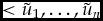 $ < \tilde u_1 , \ldots ,\tilde u_n $> being a reordering of the utilities in <u 1, . . ., un> so that
 $\tilde u_1 \ge \ldots \ge \tilde u_n $. Now δ ∈ [1,∞) measures the rank-order sensitivity to the intra-state distribution. For δ = 1, the value of the function is the expectation of the prospect; as δ → ∞, the value of the function approaches the lowest utility
 $\tilde u_n $; and the function is monotonically decreasing. This function is rank-order sensitive. The rank-order of the utilities between which there is a leaky transfer changes from Pair 1 to Pair 2 in Table 11. It is indeed possible to set the parameters of δ, ε and t so that Prospect 2 is strictly preferred in Pair 2, but Prospect 1 is strictly preferred in Pair 1, violating the Separability of Persons. For example, the values t = 4 and ε = .04 and δ = 2 yield such a reversal.
So if the social planner displays rank-order sensitivities for certain prospects, then we can calculate the EDEjs by means of the function ξδ. (For consistency and for computational purposes we would actually substitute ‘1/(1 − δ)’ for ‘δ’ in ξδ in (5.1) so that δ ∈ [0, 1).) She may also display such sensitivities in determining the value of a prospect on grounds of the values of individual prospects, i.e. in calculating the EDPPE. Again we can invoke the function ξδ.
Now we can make exactly the same move for Separability of States for single-person prospects. If the social planner displays rank-order sensitivities in determining the value of single-person prospects, then we calculate the RAEis by means of the function ξδ. If she displays rank-order sensitivities in determining the value of the prospect on grounds of the values of the states, i.e. in calculating the RASE, we can invoke the function ξδ.Footnote 6
Are rank-order sensitivities irrational in determining the EDEjs or the EDPPE? Are they irrational in determining the RAEis and the RASE? One might object that they are rational for the EDEjs and the EDPPE, but not for the RAEis and RASE. The argument is that, at the end of the day, multiple real people will actually end up with allocations of utility values, but only one state will be realized and the others are water under the bridge. I do not see this. The social planner's argument that she preferred to see leaky transfers benefit the worst off persons did not seem any more convincing to me than that she preferred to see leaky transfer provide an insurance for the worst outcomes that may actualize.
However, if one disagrees with this, I would have no qualms. Our model permits us to assign either separable or rank-order sensitivities for any of the distributions to the social planner to generate orderings. Or when moving in the direction from orderings to sensitivities we can determine the set of separable and rank-order sensitivities that can generate such orderings. In each case, the model can be adapted to one's views about rationality. Or, alternatively, we may also bracket the question of rationality and take a behavioural stand.
6. APPLICATIONS
I will now show how my theoretical framework can be used to cast light on some actual policy questions and on the debate on Prioritarianism in moral philosophy. For more discussion of how different distributional concerns have more or less weight depending on the context of application of risky prospects, see Bovens (Reference Bovens2015).
a. Unequal expectations and survival rates. Ubel et al. (Reference Ubel, DeKay, Baron and Asch1996) confronted prospective jurors, medical ethicists and experts in decision-making with the following choice. There are two tests for colon cancer – one is more expensive but highly effective, the other one is cheaper but less effective. The tests will be administered to a low-risk population. The cheap test can be administered to everyone. The expensive test can be administered to only half of the population who will be chosen at random. We may reasonably expect that the more expensive test will prevent 1100 deaths and that the cheaper test will prevent 1000 deaths in the population at large. Results of the experiment were as follows: Prospective jurors and medical ethicists were more inclined to favour the cheaper test, whereas the experts in decision-making were more inclined to favour the more expensive test.
The typical prospective juror and medical ethicist are concerned about the inter-personal-prospect distribution. On the cheap test, there is equality throughout in the expectations. On the more expensive test, once the random device has determined the allocation, there is inequality in the expectations. Subjects who favour the cheaper tests are subjects who are concerned about the poorly off relative to the inter-personal-prospect distribution. And indeed, we can model these subjects by setting αEDPPE sufficiently high and setting all other parameters at 0. This will yield an ordering that ranks the cheaper test over the expensive test.
To connect this to our earlier discussion, let us revisit the social planner who is solely concerned with the inter-personal-prospect distribution and hence adopts the value function vEDPPE. This social planner orders Fair Lottery above Favoured Person. And this is indeed the distinction that is at work here. On the more expensive test, once the random device has determined the allocation, there are favoured people, whereas on the cheaper test, the lottery of who will die and who will live leaves expectations equal throughout.
There are two readings of our typical experts in decision-making. On one reading, these experts are not sensitive (or not sufficiently sensitive) to the poorly off in the inter-personal-prospect distribution and simply prefer the policy that provides the highest expected survival rate, even if the greater risk is focused on those persons who were so unlucky not to receive the test. On the other reading, these experts do care about the inter-personal-prospect distribution, but, they would say, one should evaluate prospects prior to the time when the random device was set in motion. At that point there were no inequalities in the expectations – the more expensive test simply provided a greater fatality chance reduction to all than the cheaper test.
To distinguish between both interpretations, one might envision a case in which the more expensive test can only be administered to say, the urban population, but not to the rural population, whereas the cheaper test can be administered to the whole population. I expect that our experts in decision-making who previously favoured the more expensive test would now be split. Those who fit the former reading would continue to favour the more expensive test, whereas those who fit the latter reading would now shift and favour the cheaper test.
In a democratic society, a policy maker should be sensitive to the fact that some people are willing to allow somewhat greater fatality rates in order to have a policy that preserves equality in expectations. And it is not sufficient that such equality is warranted by a random device, since, after the random device has been consulted, there is inequity in the system. Some people prefer a process that does not introduce inequities at any time, not even by invoking random devices. What constitutes a reasonable trade-off between equity and a higher survival rate cannot be decided once and for all: It will be dependent on the local culture and on the particular issue at hand.
b. Ex ante pareto and ex post inequalities. In ‘Decide as you would with full information! An argument against ex ante Pareto’, Fleurbaey and Voorhoeve (Reference Fleurbaey, Voorhoeve, Eyal, Hurst, Norheim and Wikler2013) compare a Routine Screening policy with a No Routine Screening policy for breast cancer. No Routine Screening simply involves less frequent screening than Routine Screening. Routine Screening slightly reduces the expected fatality rates from breast cancer but it does come at the cost of continual interference with women's lives: There are psychological and physical harms caused by the tests and by the worries that come with false positives. The US Preventive Services Task Force in 2009 decided that the expected costs of routine screening actually outweighed the benefits by a small margin and they recommended against it. Fleurbaey and Voorhoeve object to the Task Force's recommendation.
To see how Fleurbaey and Voorhoeve's reasoning plays out within my framework, let us stylize the case. Suppose that there are three persons and three equiprobable states of the world. With No Routine Screening, precisely one person will die in each state. With Routine Screening, nobody will die, but a cost of (1/3 + ε) is imposed on survivors for small ε. Then we can represent both policies Tables 12 and 13.
Suppose that the social planner is concerned solely about the poorly off in the intra-state distribution – say, we set the αEDE at 1/3. Then the EDEj equals 2/3–ε in Routine Screening and (1/3√1+ 1/3√1+1/3√0)2 = 4/9 in No Routine Screening in each state j. Hence the vEDE of Routine Screening (i.e. 2/3–ε) exceeds the vEDE of Routine Screening (i.e. 4/9). So a social planner who is single-mindedly concerned about the poorly off in the intra-state distribution will prefer Routine Screening to No Routine Screening.Footnote 7
Suppose that the social planner is unconcerned about the poorly off in any form or shape. In this case, we calculate vUTIL of both prospects which equals 2/3 on No Routine Screening and 2/3–ε on Routine Screening and so No Routine Screening will come to be preferred. The Task Force's recommendation squares with this recommendation.
There is a certain draw to Fleurbaey and Voorhoeve's position. As the title of their article suggests, we should decide as we would with full information. No matter what state actualizes, the social planner may prefer the more equal distribution in Routine Screening to a state in which there are casualties, as in No Routine Screening. Hence, she should prefer Routine Screening to No-Routine-Screening. This is a reasonable position even if all prefer No Routine Screening on grounds of their greater expectations.
However, let us change the interpretation of these prospects. Suppose that we are deciding on a Lenient Alcohol Policy or a Strict Alcohol Policy. On Lenient Alcohol Policy, non-problem-drinkers can enjoy their pint at a reasonable price, but there are casualties of alcoholism. On Strict Alcohol Policy, we avoid these casualties, but at the cost of interfering with the pleasures of non-problem-drinkers. Lenient Alcohol Policy can then be stylized by the No-Routine-Screening matrix in Table 12 and the Strict Alcohol Policy can be stylized by the Routine-Screening matrix in Table 13.
No Routine Screening.

Routine Screening.

In all these cases, there is a conflict in policy making between ex ante Pareto and an ex post concern for the poorly off in the intra-state-distribution. Ex ante Pareto will rank prospect L NRS above L RS because each person i's expectation on L NRS (viz. 2/3) is greater than i's expectation on L RS (viz. 2/3–ε). A social planner with an ex post concern for the poorly off in the intra-state-distribution will rank L RS above L NRS, because for all states j = 1, 2, 3, she prefers Sj on L RS to Sj on L NRS, due to the fact that some people are poorly off in Sj on L NRS and not on L RS.
My intuitions on whether a social planner should prefer Routine Screening to No-Routine Screening are less clear than Fleurbaey and Voorhoeve’s. I am not sure that we should just overrule ex ante Pareto in the breast cancer screening case. I tend to be more ecumenical in this matter. Indeed, I can see that a person might be so motivated, but I can equally understand someone who feels a greater pull from the direction of the ex ante Pareto.
But suppose that we grant Fleurbaey and Voorhoeve's judgement in the breast cancer screening case. Then I still remain unconvinced that we should also favour a strict policy on alcohol. In the case of alcohol policy, I am more inclined to respect ex ante Pareto and favour Lenient Alcohol Policy.
So what is the difference between these cases? Why am I less willing to overrule the unanimous judgement of the persons in the prospect in the alcohol policy case than in the screening case? The formal structure of these problems hides certain features that are relevant to moral decision-making. Here is one such difference. In the case of screening for breast cancer, the probabilities are determined by the lottery of one's body or of the environment. But in the case of alcoholism, it may be true that 1/3 will become alcoholics on Lenient Alcohol Policy, but there is still an element of choice and responsibility that enters into the route towards alcoholism. This is the reason why I am less willing to overrule ex ante Pareto. People who succumb to breast cancer do so due to no fault of their own and hence health inequalities in the ex post calculus carry more weight. But people who are alcoholics typically carry at least some responsibility for their predicament and hence health inequalities in the ex post calculus carry less weight – and, in particular, they do not carry enough weight to counter the unanimous strict preference for Lenient Alcohol Policy.Footnote 8
7. THE PRIORITY VIEW
On Parfit's ‘Priority View’ or Prioritarianism, it is better to provide a slightly smaller benefit to a person at a lower level of utility rather than a slightly greater benefit to a person at a higher level of utility. Parfit (Reference Parfit1997) defends his view initially in the context of decision-making under certainty. But how does this view fare in the context of uncertain prospects? Rabinowicz (Reference Rabinowicz2002) has a proposal for a Prioritarian evaluation of uncertain prospects. Otsuka and Voorhoeve (Reference Otsuka and Voorhoeve2009) claim to have decisive objections to Prioritarianism within the context of uncertain prospects. In response to Otsuka and Voorhoeve, Parfit (Reference Parfit2012) spells out what he takes Prioritarianism to be committed to in this context. I will taxonomize and cast light on their respective positions by incorporating them in my approach.
Let us first turn to Otsuka and Voorhoeve (Reference Otsuka and Voorhoeve2009). They compare the following range of cases:
Comparison (i). Alice may either end up at a low level of utility or at a high level of utility depending on a flip of a fair coin. A social plannerFootnote 9 has to decide between providing a slightly smaller benefit if she ends up poorly off or a slightly greater benefit if she ends up well off.
Comparison (ii). A social planner has to decide between providing a slightly greater benefit to Alice who is at a high level of utility rather than a slightly smaller benefit to Bob who is at a low level of utility.
Comparison (iii). Both Alice and Bob may either both end up at a low level of utility or both end up at a high level of utility, depending on the flip of a fair coin. A social planner has to decide between providing a slightly smaller benefit if they end up poorly off or a slightly greater benefit if they end up well off.
Comparison (iv). Both Alice and Bob may either end up at a low level of utility or at a high level of utility depending on the flip of a fair coin and these chances are perfectly anti-correlated. A social planner has to decide between providing a slightly smaller benefit to the person who ends up poorly off (whoever it may be) or a slightly greater benefit to the person who ends up well off (whoever it may be).
I have presented these comparisons in Table 14. The size of a benefit is the size of the utility difference to the beneficiary. δ is the utility difference that Otsuka and Voorhoeve's ‘slightly greater benefit’ makes and ε is the utility difference that their ‘slightly smaller benefit’ makes. Alice takes up the top row and Bob the bottom row. States are equiprobable.
Comparisons by Otsuka and Voorhoeve (Reference Otsuka and Voorhoeve2009), Parfit (Reference Parfit2012) and Rabinowicz (Reference Rabinowicz, Egonsson, Josefsson, Petersson and Rønnow-Rasmussen2001).

Otsuka and Voorhoeve grant that the social planner should provide the smaller benefit in comparison (ii). However, she has ‘strong reason’ (Otsuka Reference Otsuka2015: 5) not do so in comparison (i), as I indicated in section 2. She should not provide the smaller benefit in comparison (i) because the utility information embedded in the specification of the size of the benefits reflects the ideally rational and self-interested preferences of the beneficiary and the social planner should respect these preferences. Furthermore, she should provide the greater benefit in (iii), since this is just a variation on (i) in which the number of people is doubled. Finally, in case (iv) she should provide the smaller benefit as well since she ‘should show appropriate concern for all those who, simply due to brute bad luck, will end up worse than others’ (Otsuka and Voorhoeve Reference Otsuka and Voorhoeve2009: 197).
In his response to Otsuka and Voorhoeve (Reference Otsuka and Voorhoeve2009), Parfit (Reference Parfit2012) agrees with their judgements in cases (ii) and (iv), but not in cases (i) and (iii). He believes that the social planner should provide the smaller benefit to the poorly off in cases (i) and (iii) as well (Reference Parfit2012: 405, 408). She should overrule the judgement(s) of the person(s) in the prospect and make sure that the smaller benefit goes to the poorly off person if the state containing the poorly off person or persons were to actualize.
Rabinowicz (Reference Rabinowicz2002) provides the following value function for Prioritarianism. To determine the value of a prospect, we construct strictly concave and increasing utility transforms φ of each entry in the prospect, sum the utility transforms for each state to calculate the social utility of the state and then construct the expectation of the social utility of a state. Hence, in a two-person prospect with equiprobable states:
 \begin{equation}
v_{RAB} \left( L \right) = \sum \limits_{j = 1}^2 p_j \sum \limits_{i = 1}^2 \varphi ( {u_{ij} } ) = \sum \limits_{j = 1}^2 .5\sum \limits_{i = 1}^2 \varphi ( {u_{ij} } )\end{equation}
This value function generates rankings that coincide with Parfit's rankings in comparisons (i) through (iv).
Now consider the prospects in the left column of Table 14 on rows (ii), (iii) and (iv). Add to this a fourth prospect, viz. the certain prospect in which both Alice and Bob receive (1+δ)/2, as represented in Table 15. I stipulated that utilities are measured on a ratio-scale. Hence we can construct transforms by multiplying these prospects by 1/(1+δ). Note that the transform of the prospect in the left column of row (ii) is Favoured Person, of row (iii) is Lucky State, of row (iv) is Fair Lottery, and of our fourth prospect in Table 15 is Equal Distribution. How do Otsuka and Voorhoeve, Parfit and Rabinowicz rank these prospects?
Certain Prospect.

Rabinowicz's ranking is straightforward. We apply the value function vRAB which generates the ranking Equal Distribution ≽ Lucky State ~ Fair Lottery ~ Favoured Person.
Otsuka and Voorhoeve and Parfit require more interpretation. Let us start with Otsuka and Voorhoeve's rankings:
(a) Equal Distribution and Lucky State. Otsuka and Voorhoeve (Reference Otsuka and Voorhoeve2009) believe that the social planner has strong reason to respect the strict preferences of Alice and Bob in comparison (iii). Similarly, she should respect the indifference of Alice and Bob between (1+δ)/2 for sure or a 50–50 chance (1+δ) and 0. Hence Otsuka and Voorhoeve are indifferent between Equal Distribution and Lucky State.
(b) Lucky State and Fair Lottery. Otsuka and Voorhoeve rank Lucky State over Fair Lottery: In their discussion of anti-correlated risk, i.e. in Fair Lottery cases, they call upon our concern for ‘the legitimate claims of that half of the group who will, ex post, due to bad brute luck, end up very badly off and worse off than others’ (Reference Otsuka and Voorhoeve2009: 197 emphasis added), underlining the badness of this prospect. In Lucky State, nobody will be worse off than others.
(c) Fair Lottery and Favoured Person. Otsuka and Voorhoeve (Reference Otsuka and Voorhoeve2009) do not make any pronouncement on a ranking over Fair Lottery and Favoured Person. So we need to look in some of their other writings. Otsuka (Reference Otsuka2012) ranks Fair Lottery strictly above Favoured Person and examines what could ground such a ranking. Voorhoeve and Fleurbaey (2012) propose a strict ranking of Fair Lottery ≻ Favoured Person based on fairness and as a means to respect the separateness of persons.Footnote 10 In a single-authored piece, Fleurbaey (Reference Fleurbaey2010: 654, 675) provides an axiomatic justification for, in my terminology, a single parameter value function with vEDE, on which, as we saw in Table 7, Fair Lottery ~ Favoured Person. He tentatively argues that the fact that an outcome came about due to a lottery should be incorporated into the utility values. So let us settle for the weak claim that for Fleurbaey, Otsuka and Voorhoeve, Fair Lottery ≽ Favoured Person.
We turn to Parfit's rankings:
(a) Equal Distribution and Lucky State. A Prioritarian social planner should prefer Equal Distribution to Lucky State. To see this, suppose that both Alice and Bob's individual prospects were <(1+δ)/2; 0>. We can now either provide Alice and Bob with benefits of (1+δ)/2 each if they end up well off (so that each will face an individual prospect of <(1+δ); 0>) or with benefits of (1+δ)/2 each if they end up poorly off (so that each will face an individual sure prospect of <(1+δ)/2; (1+δ)/2>). Then the Prioritarian social planner should strictly prefer the latter, since it is better to provide a fixed benefit to a person at a low level of utility rather than at a high level of utility. Hence she will strictly rank Equal Distribution over Lucky State.Footnote 11
(b) Lucky State and Fair Lottery. The textual evidence is not completely watertight, but I think that a case can be made that Parfit would rank Lucky State ~ Fair Lottery. Two passages are relevant.
First, Parfit discusses the following case. Take Fair Lottery and Lucky State as your starting points. Suppose that in each case you have a choice between either providing a smaller benefit to the worse off or a larger benefit to the better off. Egalitarians, according to Parfit, have a stronger reason to prefer benefitting the worse off in the case of Fair Lottery than Lucky State, since it reduces the inequality within states; Prioritarians, however, have an equally good reason to do so in both cases, since from each person's ‘point of view, there is no difference between these cases.’ (2012: 416, n. 17) Now return to the original Fair Lottery and Lucky State. From each person's point of view, there is no difference between these prospects either. So we would expect Parfit to defend Lucky State ~ Fair Lottery.
Second, Parfit writes: ‘When we compare the strength of two people's claims to receive some benefit, it is often enough to know how well off, or badly off, these two people are. In such cases, we do not need to know how these people's levels of well-being compare with the levels of other people . . .’ (2012: 439) He does defend Separability of Persons here, but the phrasing is in terms of certain prospects and it is not clear that he would be willing to extend the principle to risky prospects. If he does, this would provide an additional argument for Lucky State ~ Fair Lottery as we saw in Section 5.
(c) Fair Lottery and Favoured Person. Parfit would have the social planner strictly prefer Fair Lottery to Favoured Person, on grounds that it is valuable to give people equal chances to become well off (Parfit Reference Parfit2012: 431) and on grounds that we should be concerned about people who are poorly off in their expectations (Parfit Reference Parfit2012: 432).
Summing up, Rabinowicz and Parfit and Fleurbaey/Otsuka/Voorhoeve disagree about ranking the hard cases:
(R) Equal Distribution ≻ Lucky State ~ Fair Lottery ~ Favoured Person
(FOV) Equal Distribution ~ Lucky State ≻ Fair Lottery ≽ Favoured Person
(P) Equal Distribution ≻ Lucky State ~ Fair Lottery ≻ Favoured Person
We can check what quadruples of α-parameters would yield these orderings on my value function vATC. Mathematical computation yields the following results:
The (R) ordering holds if and only if the ex post parameters are equal, i.e. αEDE = αRASE, and the ex ante parameters are equal, i.e. αRAE = αEDPPE, and at least one of these values is greater than 0. Rabinowicz's position is ordinally equivalent to a position with equal-strength ex ante distributional concerns, equal-strength ex post distributional concerns, and at least one of these concerns is present.
The (FOV) ordering holds if and only if αEDE > 0, αRAE = αRASE = 0, and αEDPPE ≥ 0. Fleurbaey, Otsuka and Voorhoeve are concerned about the poorly off in the intra-state distribution. They also want to respect the expectations of the persons as well as the social expectations, i.e. they want the risk-absent equivalent for persons and for states to be set at zero. For Fair Lottery ~ Favoured Person, we set αEDPPE = 0. If we wish to move to a strict preference for Fair Lottery ≻ Favoured Person in (FOV), then we need to secure a concern for the poorly off in the inter-personal-prospect distribution, i.e. we need a strict inequality in αEDPPE > 0.
The (P) ordering holds if and only if αEDE = αRASE ≥ 0 and αEDPPE > αRAE ≥ 0 and at least one of the weak inequalities is a strict inequality. In addition, note that Parfit does prefer a smaller benefit in the one person case (i). This requires that we set αRAE > 0 since the intra-personal-prospect distribution is the only relevant distribution in the one-person case. So we can obtain the ordering in question by adding a sufficiently strong concern for the inter-personal-prospect distribution, i.e. αEDPPE > αRAE. This squares with Parfit's insistence that we should favour people with lower expectations (2012: 432). In addition, the ordering remains unaffected when we choose to add equally strong ex post distributional concerns for the intra-state and the inter-state distributions.
We can sum up the positions as follows. Rabinowicz's ordering is attained on grounds of equally strong ex ante concerns or equally strong ex post concerns. Fleurbaey, Otsuka and Voorhoeve's ordering is attained on grounds of an ex post concern for the intra-state distribution and possibly an ex ante concern for the inter-personal-prospect distribution. Parfit's ordering is attained on grounds of ex ante concerns for both the intra-personal-prospect distribution and the inter-personal-prospect distribution, with the latter concern being stronger than the former, and, furthermore, these ex ante concerns may but need not be mixed with ex post concerns of equal strength.
One can actually gain more insight why the particular orderings come about due to certain distributional concerns by looking back at Table 5. Consider Rabinowicz's ranking (R) with equal ex post parameters, equal ex ante parameters and at least one parameter greater than 0.
First, why do the ex post parameters have to be equal and why do the ex ante parameters have to be equal? Focus on Lucky State and Fair Lottery. For reductio, suppose that αEDE > αRASE. Then Lucky State ≻ Fair Lottery, since, on our supposition, we care more about Intra-State Distribution than about Inter-State Distribution and Lucky State meets the former but not the latter and Fair Lottery meets the latter but not the former. But, we know that, on (R), Lucky State ~ Fair Lottery. Hence it cannot be the case that αEDE > αRASE. A similar reductio argument shows that it cannot be the case that αEDE < αRASE. So, given Lucky State ~ Fair Lottery, αEDE = αRASE. By a parallel argument, starting from Fair Lottery ~ Favoured Person, αRAE = αEDPPE.
Second, why do the ex post parameters or the ex ante parameters (or both) have to be larger than zero? Suppose that they are all zero. Then none of the concerns would matter and we would be indifferent between all four cases, which contradicts (R). Hence, at least one must be greater than zero.
In a similar vein, one can construct arguments to explain why the orderings (FOV) and (P) yield constraints on the α-parameters, i.e. on the social planner's respective distributional concerns.
8. SUMMARY
I have developed a comprehensive model that captures various distributional concerns in the evaluation of uncertain prospects.
Ex ante evaluations can register a concern for the intra-personal-prospect distribution and a concern for the inter-personal-prospect distribution. Ex post evaluations can register a concern for the intra-state-distribution and a concern for the inter-state-distributions. I extend Fleurbaey's method for calculating the Equally Distributed Equivalent (2010) to all of these distributional concerns and construct an all things considered value function that integrates ex ante and ex post concerns.
The model permits us to register distributional concerns and generate an ordering over a set of prospects. It also lets us start from an ordering over a set of prospects and extract a characterization of the range of distributional concerns that may underlie it. We can thus move back and forth between a social planner's distributional concerns and his orderings over prospects until reflective equilibrium is reached.
I apply the model to a range of ‘hard cases’ and show how alternative orderings over these cases reflect different distributional concerns on the side of the social planner.
I make use of a transform which satisfies Separability of Persons for certain prospects and Separability of States for single-person prospects. If we find this unreasonable we can substitute rank-order sensitive transforms which violate these constraints.
The model casts light on Ubel et al.'s poll results that show a tension between the aim of maximizing survival rates and the aim of equalizing the expectation of survival in choosing between medical tests and on Fleurbaey and Voorhoeve's critique of ex ante Pareto reasoning in determining alternative regimes of cancer screening.
Finally, when applied to the hard cases, the model captures Rabinowicz's interpretation of Parfit's Prioritarianism for risky prospects, the objection of Otsuka and Voorhoeve to Prioritarianism for risky prospects, and Parfit's defence of Prioritarianism for risky prospects.
ACKNOWLEDGEMENTS
I am grateful for discussions with Matthew Adler, Richard Bradley, Marc Fleurbaey, Veselin Karadotchev, Alexandru Marcoci, Michael Otsuka, Wlodek Rabinowicz, Jane von Rabenau, Alex Voorhoeve and an anonymous editor of the journal. The work was partially supported by the Swedish Collegium for Advanced Studies (SCAS) in Uppsala, Sweden.



