


The first article in the American Political Science Review that dealt primarily with political parties appeared in 1911. In it, Alfred Dennis noted similarities between British and American politics and remarked:
…for the central problem in England, dominating all others, is how to deal with new perils and tendencies and with inherited problems and traditions in the face of the demands of an increasing democracy. (Dennis 1911, 509)
The last article in the first century of the Review to deal primarily with parties appeared in August 2005. In it, William T. Bianco and Itai Sened presented a new methodology for assessing the influence of party leadership on legislative roll-call data. Like many articles of its day, it was empirical and highly quantitative, utilizing mathematical formulae and graphics, and typical, too, was its focus on only one aspect of party, its role in legislative bodies. The article included no normative considerations.
This brief synopsis of these two articles illustrates much about the trajectory of parties research over a century. In the early years, as political scientists sought to understand the functioning of the state, a knowledge of parties seemed essential. Scholars such as Lord Bryce (1893–1895) and Woodrow Wilson (1908) may have been critical of how parties functioned, but none denied the centrality of parties to the performance of democratic government. Scholarship reflected that knowledge, as parties and party systems were examined holistically, and discussions of current political trends often centered on parties. A century later, scholars focus on particular aspects of parties—in the familiar triad, parties in the electorate, parties in government, or (less commonly in recent years) parties as organizations. In relatively few cases do articles on parties examine how they and the broader polity function.
PARTIES RESEARCH IN THE JOURNALS: AN OVERVIEW
There are few more ubiquitous political institutions than political parties, present in nearly all modern polities, famously protean, and amenable to nearly every methodological trend that American political science has undergone in the past century.
Historians of American political science generally distinguish three eras since the founding of the discipline: a pre-behavioral period (here defined as through 1949) in which political science was expected to serve democracy by improving political processes and socializing citizens; the behavioral era (1950–1965) in which the empirical and usually quantitative study of political behavior was ascendant; and the recent era (since 1966) in which normative and theoretical criticisms of the theory and practice of behavioralism led to a search for new approaches, most prominently rational choice and historical institutionalism. The study of political parties has drawn on nearly all of these approaches, notably behavioralism, which still characterizes most parties research. In the prebehavioral period, scholars saw the party system as a fulcrum with which to leverage significant change in the wider political system, and therefore the early issues of the Review were filled with news about the direct primary and other attempts to improve politics via party reform. Behavioralism was well suited to the study of people in partisan contexts, as parties in essence are composed of, and attempt to influence, aggregates of people, from voters to party activists to legislators. Perhaps because of this hand-in-glove fit between parties and behavioralism, the antibehavioralist reaction had little effect on the kinds of research that parties scholars conducted.
However, rational choice, which best fits circumscribed and rule-bound arenas, seems as suited as behavioralism to the study of parties. Such arenas, which provide a framework in which the rules are known and strategies for achieving goals can be formulated with relative clarity, include the electoral process, party institutions such as caucuses and conventions, and legislative bodies. It is not by chance that many of the most influential rational choice studies deal with party politics. Indeed, it is arguable that in an earlier period, E. E. Schattschneider's and V. O. Key, Jr.'s work was informed by rational-choice assumptions.
Historical institutionalism has focused more on the policymaking process than on political inputs, but there is no reason in principle why parties with their organizational dimension cannot be subjected to this approach, and indeed, most early work in the related field of American political development focused on the party realignment paradigm (Burnham 1970; Chambers and Burnham 1967; Key 1955).
Whatever the methodological approach, parties research has evolved from the holistic treatment of party as a phenomenon to be understood in its entirety, and as a vehicle with which to understand the polity, to the use of specific aspects of party as case studies in the application of the behavioral or rational-choice approach. That transition is reflected in the incidence and content of articles on parties in major journals. To identify those trends, I have catalogued the incidence and contents of articles that dealt primarily with parties in six major journals that a preliminary examination identified as publishing a substantial number of such articles.1
The journals are the American Political Science Review (APSR), American Politics Quarterly/American Politics Research (APQ/APR), the British Journal of Political Science (BJPS), Comparative Political Studies (CPS), the Journal of Politics (JOP), and the Midwest Journal of Political Science/American Journal of Political Science (MWJ/AJPS). For the most recent decade, I added Party Politics (PP) to this list when appropriate.
Ascertaining the percentage of articles in each issue that dealt with political parties requires making some difficult operational decisions about both the numerator and the denominator. Such questions as what constituted an article and which articles were party-related required developing two sets of algorithms. I counted as an article any entry on the contents page that was identified (usually with an author or authors) as a separate entry, including review essays but not book reviews. Identifying which articles dealt primarily with parties was challenging, due to the near-ubiquity of parties in politics. Parties scholars are fond of quoting Schattschneider (1942, 1), that “Modern democracy is unthinkable save in terms of the parties.” But as wits have added, modern dictatorship is also unthinkable without parties. Casting the net broadly would pull in vast numbers of articles that were not primarily about parties, as commonly understood: nearly all articles about voting behavior deal with partisanship, usually the highest correlate of the vote, and most articles about legislatures deal with parties, which organize them. It would overstate the incidence of party-centered articles to cast the net in this fashion. Instead, I have interpreted party narrowly, as the organizations formed to win elections and influence public policy. Consequently I have classified as “party-related” all articles whose title (1) included the word “party” or a form of that word, (2) included the name of a specific party or party type, or (3) included a term such as “ticket-splitting,” “divided government” or “coalition government” that can be understood only in partisan terms.2
Space precludes more detail about methodology, but the author will be happy to share such details with interested readers.
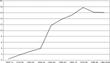
Figure 1 shows the percentage of articles in each decade that were party-related. The graph shows a steep rise after the World War II, when the behavioral revolution took hold, and a leveling off at about one-sixth of the articles since the 1970s.

Percentage of Articles That Were about Political Parties, Mean of Six Major Political Science Journals, by Decade, 1906–2005.
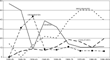
Figure 2 shows the aspect of party that was the main subject of each article. Most of the category labels—Organization, Mass Behavior, and Legislatures—are self-explanatory, and “General” refers to articles that cut across a variety of aspects or dealt systemically with the party system (such as the determinants or consequences of the number of parties). The incidence of such articles, as well as those that focus on party organization, has declined over the past century, whereas those dealing with mass behavior and, less dramatically, legislatures, have become more numerous. The timing of these latter trends fits neatly with the advent of behavioralism, and in recent decades there has been substantial stability in the proportions of party-related articles devoted to each aspect of partisanship. In short, most such articles deal with the behavior of voters and legislators.

Percentage of Party-Related Articles That Dealt with Particular Aspects, Mean of Seven Major Political Science Journals, by Decade, 1906–2005.
As for subfield, I classified each article as American, comparative (and area studies), or theory (both normative and empirical). The proportion of theoretical articles has usually been well under ten percent since the 1930s. Until the late 1960s, slightly less than half of all party-related articles in the “Americanist” journals—the APSR, JOP, and MWJ/AJPS3
APQ/APR was not used in these calculations, as all of its articles dealt with parties in the United States.
Space limitations preclude presentation of the data on subfields, but the author will be happy to share them with interested readrs.
ERAS OF RESEARCH ON PARTIES
The trends just identified can be placed in the context of more general changes in the study of politics, and the following is a brief overview of the place of parties research in that broader environment. I will use the division of the past century into the three eras that I mentioned earlier.
Pre-Behavioral Era (1906–1949)
The study of political parties played a prominent role quite early in the development of modern American political science. At the turn of the last century, the University of Wisconsin, Amherst, and William and Mary had courses or other curricular units on parties (Haddow 1939, 200–11). At Columbia a decade or so later, Charles Beard was one of the first to emphasize party conflict in his courses, and inspired, among others, Peter Odegard and E. E. Schattschneider, while Edward Sait offered graduate courses in party politics (Millett 1955, 266–67).
Figure 2 showed that the early work on parties was more holistic than that of later periods. Most articles in this period dealt with a party or party system in general terms, or with party organization, which is perhaps the most central dimension of party by most definitions. This is not to say that most of the holistic treatments were of transcendent quality. In this period, numerous articles were broad overviews of the current political scene, like the Dennis article that I mentioned at the outset of this essay. The prevalence of studies of organizations in the early period may reflect the poking-and-soaking nature of much of the early research.
The swan song of this period was arguably the most important work on parties ever to appear in any political science journal, the multiauthored report, “Toward a More Responsible Two-Party System” (APSA 1950). For all its defects, it addressed serious questions of democratic governance, considered the political system panoramically, did not shy away from normative concerns, and inspired what has been perhaps the greatest volume of literature ever provoked by a party-related publication. This accomplishment came precisely at the moment when American political science in general and parties research in particular were taking a different turn.
The Behavioral Revolution (1950–1965)
In the middle of the twentieth century, a committee of the American Political Science Association (APSA) reported that courses on parties were the fourth most numerous, outranked only by the broader fields of comparative government, international relations and public administration, and that the 14 new courses on parties made the field rank ninth in growth (APSA 1951, 104–105). In the 1960s, Heinz Eulau and James March (1969, 81–82) found that the field of parties and elections tended to attract younger scholars.
Equally telling is the fact that parties scholars ranked high in professional esteem. In the early 1960s, Albert Somit and Joseph Tanenhaus (1964, 65–67) surveyed political scientists as to “which political scientists have made the most significant contributions to the discipline” (emphasis theirs). Respondents were asked to divide their responses between pre-1945 and post-1945. Parties scholars Charles Merriam and V. O. Key, Jr., headed the two lists, respectively. The top 18 names on the pre-1945 list also included Woodrow Wilson, E. Pendleton Herring, Arthur Holcombe, Harold Gosnell, and E. E. Schattschneider; those on the post-1945 list included David Truman (ranked second), Schattschneider, and James MacGregor Burns. In all, one-third of the pre-1945 names and one-fifth of the post-1945 names were of parties scholars. In the mid-1970s, Walter Roettger (1978) found similar results for the latter period. Using another measure of professional prestige, presidents of the Association, yields a similar impression. Before 1950, about one-fifth of APSA presidents were at least in part parties scholars; since then, more than one-third have been. However, in many cases parties research was only part of what made those scholars prominent; the reputations of scholars such as Seymour Martin Lipset, Aaron Wildavsky, and Theodore Lowi are based only in small part on their work on political parties.
As I have noted, during the behavioral period the incidence of discursive overviews of parties declined, as did studies of party organization, and more tightly focused empirical studies, especially of the electorate, increased. Beginning in the late 1960s, most articles dealt with voters or legislators, and most focused on methodological issues rather than normative concerns.
Recent Period (1966–2005)
Before long, rational-choice approaches to parties began to appear in journals; perhaps the earliest example of the influence of rational choice was Donald Stokes's (1963) well-known critique of Anthony Downs's (1957) unidimensional model of party competition. Three years later came Gerald Garvey's (1966) consideration of the effect on non-voting on the ability of elections to reflect social consensus. Garvey's Review article took a form that would some day become familiar: simplified assumptions, eight graphs, and six equations. Similar articles began appearing in other journals over the next several years. After that, articles utilizing the rational choice approach were more frequent, although they have never constituted even ten percent of party-related articles in any decade.
The creation of the APSA's organized section on Political Organizations and Parties in 1984 gave parties specialists an institutional home, and a way to gauge the proportion of parties scholars in the discipline. For most of the years since 1985, the section's membership has hovered around 4% of the total APSA membership, making it one of the largest organized sections.
THE PLACE OF PARTIES RESEARCH IN POLITICAL SCIENCE
Whatever the reputation of individual scholars, it seems clear that as a field of research, the study of political parties is no longer as central to the discipline as it was at the time when a large portion of the Review was devoted to the responsible parties report. Indeed, the recent counterpart of the 1950 report, American Democracy in an Age of Rising Inequality (APSA 2004), spent only a single page on parties, under the telling heading “Contemporary Political Parties Exacerbate Inequalities.” None of the 15 scholars on the committee was a specialist in political parties.
Some of the loss of centrality of the parties literature may have resulted from a perception that much parties research is narrow-gauged, methodologically unimaginative, and theoretically thin. Regardless of whether this criticism is justified, whether there are enough exceptions to invalidate it, and whether the same indictment can justifiably be leveled at other subfields, it has probably affected attitudes toward parties research. In addition, as Leon Epstein (1983) pointed out, parties scholars tend to be champions of parties, either as they are or as they could be. Those political scientists who are critical of current politics in general may see much parties research as apologetic of that status quo. Emerging concerns about race and gender seem to be bypassed by many parties specialists, despite some excellent works. Finally, as parties seemed to decline in recent decades, they may have seemed to many scholars to be less worth studying.
Contributing to the impression of lack of breadth is the fact that articles about parties and party systems have tended to be more narrowly focused in recent decades. This impression may be especially strong when one observes only journal articles. Indeed, in nine overviews of the parties literature from the past 40 years, journal articles comprised only 28% of the works cited, with the bulk going to books and book chapters.5
Clarke and Stewart 1998; Crotty 1991; Eckstein 1968; Epstein 1975, 1983; Janda 1993; Mair and Mudde 1998; Schlesinger 1968; and Stokes 1999.
Figure 2 shows that most recent parties research has focused on selected facets of party politics, notably voting behavior, electoral change, mass partisanship, and legislative behavior (including coalition-building in multiparty parliaments). Two areas that have been relatively understudied in journals are public policy-making and campaign finance. This is not to slight the quality of the books and articles that have focused on these subjects, but only to suggest that these subjects are worthy of more research than has hitherto appeared.
Moreover, it is doubtful that scholars of American political parties have taken full advantage of the theoretical opportunities presented by the apparent revival of parties both in government and among the masses (Hetherington 2001). For most of American history, a decentralized polity coexisted with decentralized and programmatically divided parties. One scholar described the system in the following terms:
[The founders] allowed themselves to become more interested in providing checks to government than in supplying it with energy and securing to it the necessary certainty and consistency of action. They set legislature against executive, and the courts against both, separated the three in sphere and power, and yet made the agreement of all three necessary to the operation of government….
Have we had enough of the literal translation of Whig theory into practice, into constitutions? Are we ready to make our legislatures and our executives our real bodies politic, instead of our parties? If we are, we must think less of checks and balances and more of coordinated power, less of separation of functions and more of the synthesis of action.
As political scientists, we have an obligation not only to examine circumscribed aspects of the party process, for which there are countless studies, but also to utilize such studies to develop macro-level and panoramic analyses of the political process. The latter are fodder for neither journal articles nor even extended essays, but rather book-length treatments that echo Wilson's from 1908, or David Truman's (1951) magisterial analysis of American politics from a pluralist perspective. The closest equivalent we have in the parties literature are various collections of essays, each of which treats a different aspect of the political process. One author discusses Congress, another party organization, and so forth, but there is no single intelligence that integrates these pieces into a unified analytical overview. Such a work should combine the empirical grounding of the studies of recent decades with the synthetic sweep of earlier periods. Above all, such a work should deal with the critical normative questions: In what ways is a more partisan, more ideologized polity conducive to better democratic governance, and in what ways is it not? Ira Katznelson (2005) has applauded political science's recent “return to the big issues of how to organize and sustain decent regimes in the face of many varieties of human depredation and challenges to the best legacies of Enlightenment,” and “a renewed joining of positive and normative purpose.” Parties scholars should claim a key role in that endeavor, but their potential has not been realized.
In the pages of political science journals over the past century, there is much parties research that reflects the most influential concepts and approaches of political science, and much that has expanded our understanding of political parties. It is time to combine the best of holistic approaches to parties with the best of empirical research to understand the contemporary period.
Special thanks are due to James Bourbeau.



Comments
No Comments have been published for this article.