Introduction
The terms “precision medicine” and “personalized medicine” manifest significant conceptual overlap and many authors tend to use them interchangeably. The use of the term “personalized” is older, since a diagnostic and treatment approach tailored to the needs of the individual is as ancient as humanity itself.
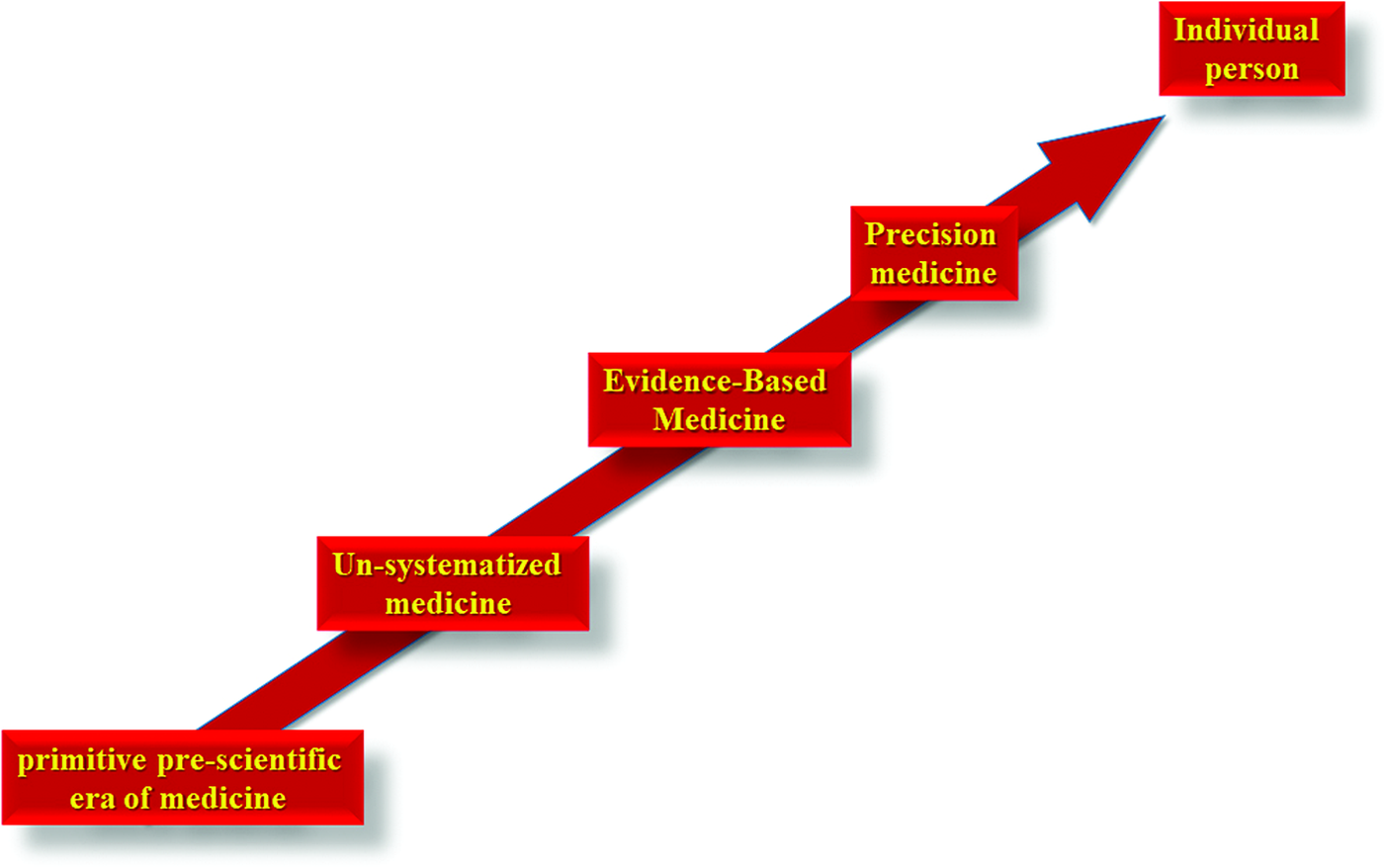
However as a concept, “personalized medicine” constitutes the end product which is yet to appear, in a long journey of the human kind in the seas of health sciences (Figure 1). According to this approach personalized medicine is the result of precision since absolute precision leads to personalization and because each person significantly differs from all the others. This was a goal already since the era of Hippocrates.Reference Dance 1
The evolution of precision and personalized medicine.

The original term, “personalized medicine,” was changed to “precision medicine” to emphasize that its technologies and treatments are not developed for each individual patient, as the term personalized suggests, but rather that a high level of exactness in measurement will be achieved such that, eventually, it will be personalized. It can be conceptualized as a highly sophisticated and intricate classification system, where infinitesimal categories will, ideally, attain perfection in a detailed multidimensional classification.Reference Hamburg and Collins 2
Starting in the prehistoric era of human kind, the long journey of medicine initially considered humans as parts of the universe (cosmos) and applied metaphysical and cosmologic interpretations of health and disease and subsequently a similar kind and level of interventions.Reference Dance 1
-
(a) Prescientific period:
-
• the era of the absolute nonspecific and
-
• divine supernatural powers exerted their effects on humanity as a whole and the result was disease.
-
(b) Scientific period:
-
• reason and the empirical method replaced religion and the supernatural,
-
• knowledge was not sufficiently systematized,
-
• the target groups became more narrow and defined,
-
• little specific and deep knowledge existed, and
-
• the treatment concerned populations rather than persons.
-
(c) The personal doctor-patient relationship was based on statistical knowledge derived from population data, resulting in
-
• very frequent treatment failures and even worse and
-
• worsening of the clinical picture.
-
(d) The arrival of the evidence based period in the late 20th century, introduced the
-
• systematic research, study and analysis of all available data and
-
• intense effort to eliminate all sources of biases.
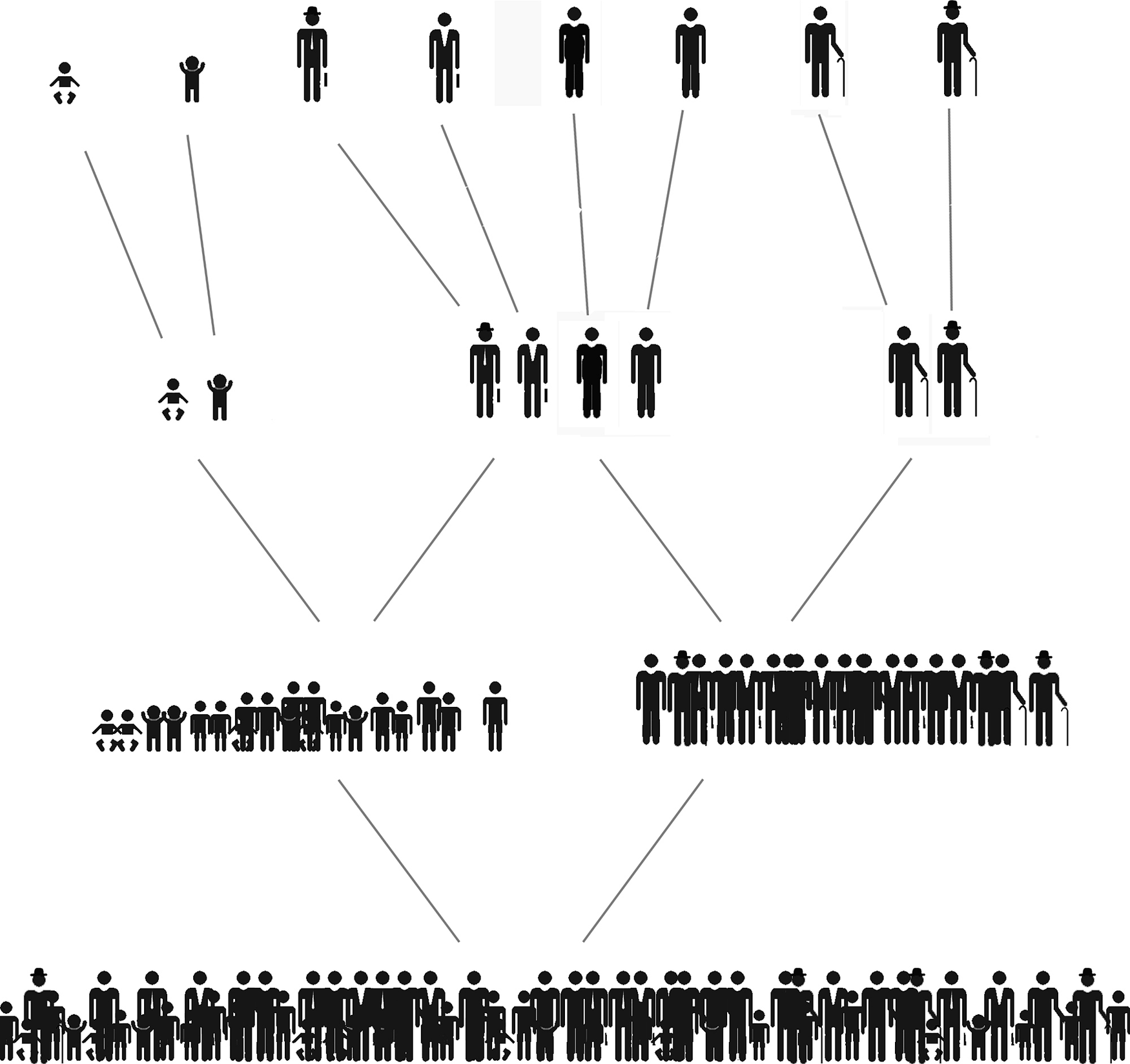
This evidence-based effort is still under way and is by no means complete; on the contrary it is still at its beginning. The expectation is that it will set the foundations for the recognition of more and more specific conditions and factors which will gradually narrow the target group and eventually will lead to the single person approach, thus heralding the era of truly personalized medicine somewhere in the not-so-near future (Figure 2).Reference Chambers, Feero and Khoury 3
From large to more defined groups and eventually to individual person-oriented diagnosis and treatment.

Precision Medicine
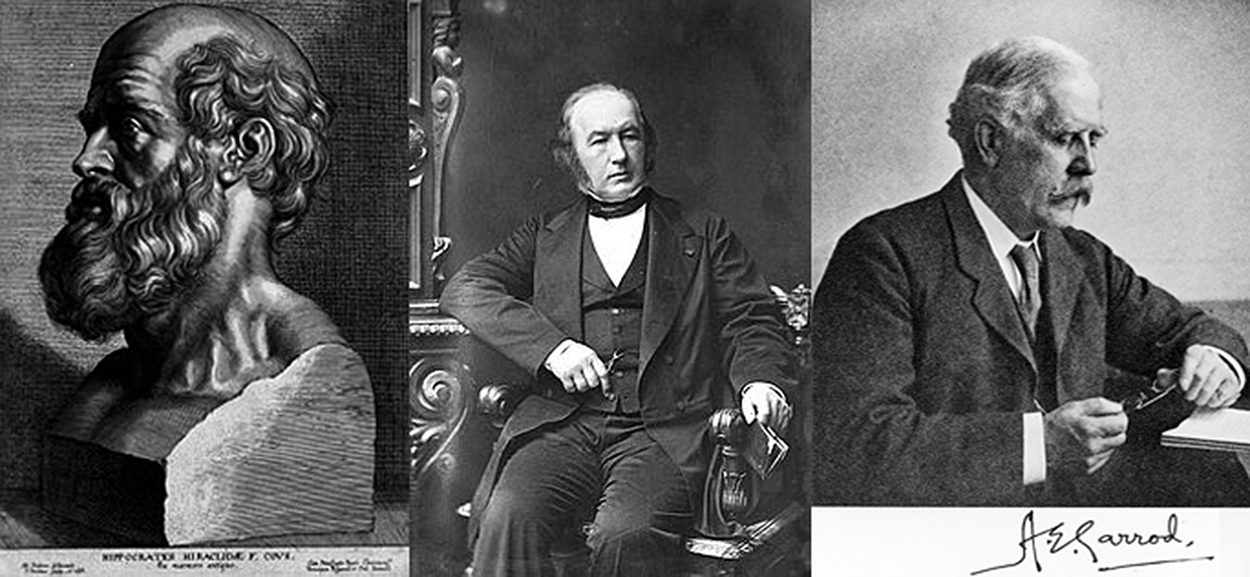
The hunt for precision in medical treatment is not new; it exists since thousands of years. It dates back to ancient Greece and Hippocrates and Claude Bernard (1813-1878) during the 19th century, but the real father of precision medicine is Archibald Garrod (1857-1936), who introduced the concept and its principles in 1902 (Figure 3).Reference Dance 1 , Reference Perlman, Govindaraju and Archibald 4 One of the core principles is the “unique disease principle,” a term used to denote the finding of heterogeneity in etiology and pathogenesis as well as treatment response within a specific medical condition.
Hippocrates (c.460–370 BC), Claude Bernard (1813–1878) and Archibald Garrod (1857–1936).

Precision medicine refers to:
-
• Individually tailored health care.
-
• Treatment on the basis of the specific needs in terms of symptoms and disability.
-
• With the least danger of adverse events and failure.
Can be achieved mainly by:
-
• Taking into consideration the persons’ unique characteristics.
-
• Clinical picture.
-
• Biochemical findings.
-
• Molecular and cellular mechanisms.
-
• Imaging data.
-
• Genetics.Reference Dudley and Karczewski 5
-
• Pharmacogenomics is a distinct fieldReference Mancinelli, Cronin and Sadee 6 and has to do more with
-
⁃ The idiosyncratic characteristics of the patient.
-
⁃ The patient’s reaction to treatment.
-
⁃ Not directly with the disease itself.
-
-
• Epigenetics: Genes are not the only field in genetic research capable of producing biomarkers. 7 Since approximately 98% of the human genome is not translated into protein, epigenetic mechanisms play a determining role in health and disease.Reference Bird 8
-
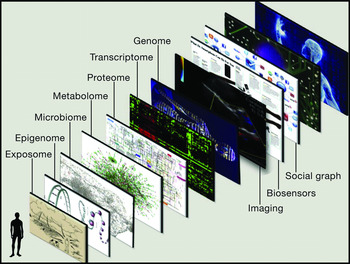
• “Other Omics” data (Figure 4).
Geographic information system of a human being. Image reproduced from Topol EJ. Cell. 2014;157(1):241–53. Reproduced after permission.

Demands and utilizes:
-
• Information technology.
-
• Giga-datasets.
-
• Sophisticated methods of analysis.
The utilization and the analysis of these giga-datasets demand the use of advanced systems.Reference Kelkar and Reineke 9 Traditional methods of statistical analysis are inadequate to fully consider the high complexity these datasets manifest, making absolutely necessary the use of artificial intelligence systems with the development of machine learning algorithms.Reference Mesko 10 , Reference Yahata, Kasai and Kawato 11
Develops:
More appropriate pathways to
-
• Prevention.
-
• Treatment of acute phases.
-
• Maintenance treatment.
-
• Rehabilitation techniques.
Results in the improvement of:
-
• Prevention.
-
⁃ Lower prevalence and incidence.
-
⁃ More benign course.
-
-
• Treatment and care of clinical conditions.
-
⁃ Higher response and remission rates.
-
⁃ Lower rates of adverse events.
-
-
• Restoration of health.
-
• Avoiding disability and restoration of functioning.
-
• Prolonging of survival.
-
• Better quality of life.
-
• Ideally will lead to a more favorable cost-benefit ratio.
While the application of precision medicine is promising, the ability to provide it to patients in routine everyday clinical practice is limited.
Limiting factors are:
-
• Relevant tests do not exist for the majority of diseases and patients.
-
• Our knowledge base is extremely limited.
When such procedures are available, a radical change in medical training will be necessary, since doctors will increasingly find themselves in the need to interpret and take into consideration a vast variety of results from tests and methods with which they had little contact during their residency years or their formal training.Reference Chambers, Feero and Khoury 3 Thus, such an evolution will not just be quantitatively “more precise” than contemporary psychiatry, but instead it will be radically qualitatively different, in accord with the development of a “paradigm shift” as coined by Thomas Kuhn (1922-1996) in order to refer to a fundamental change in the basic concepts and experimental practices of a scientific discipline.Reference Kuhn 12 Such a paradigm shift has already occurred in oncology (Figure 5).
The Kuhn cycle of the paradigm shift in science.

The need for coordination and funding of research on the topic led to the announcement of The Precision Medicine Initiative which involves the U.S. National Institutes of Health (NIH) as well multiple other research centers. The announcement was made by U.S. President Barack Obama during his 2015 State of the Union address and included his intention to support it with 215 million USD. In 2016 the initiative was renamed “All of Us” and an initial pilot project it had enrolled about 10 000 people by January 2018. 13 – 20
This massive participation rose among other concernsReference Cutler, Rosen and Vijan 18 , Reference Roesler, Tyler, Canady and Zhong 21 pertaining to the:
-
• Protection of patient data.
-
• Cost-benefit ratio.
-
• Cost might be too high for most of the target populations.
-
• Many subpopulations might never be the focus of research.
-
• Reimbursement from insurance institutions either state or private.
-
• Intellectual property issues.
Personalized Medicine
As already said, “personalized medicine” is one step beyond precision medicine, with the ultimate aim to tailor the prevention but also the diagnostic as well the treatment methods and procedures to the characteristics of the individual patient.Reference Hamburg and Collins 2
Advantages of an individualized approach:
-
• Patients should receive treatments that are effective.
-
• Treatment is better tolerated.
-
• Harmful treatment options are avoided.
-
• Lower health care costs.
-
• Optimization of health care spending.
The ultimate goal of personalized medicine is the production of
-
• Personalized medication.
-
• Personalized treatment options in general.
-
• Adjustment of treatment characteristics to the needs and the idiosyncrasy of the individual patient in terms of
-
⁃ Dosage.
-
⁃ Compound selection.
-
⁃ Mode of administration.
-
⁃ Accompanying issues (eg, diet, etc.)
-
In this frame, a medication deemed ineffective for the general illness population could be proven effective at the subgroup or individual patient level on the basis of specific biological indices and vice versa.
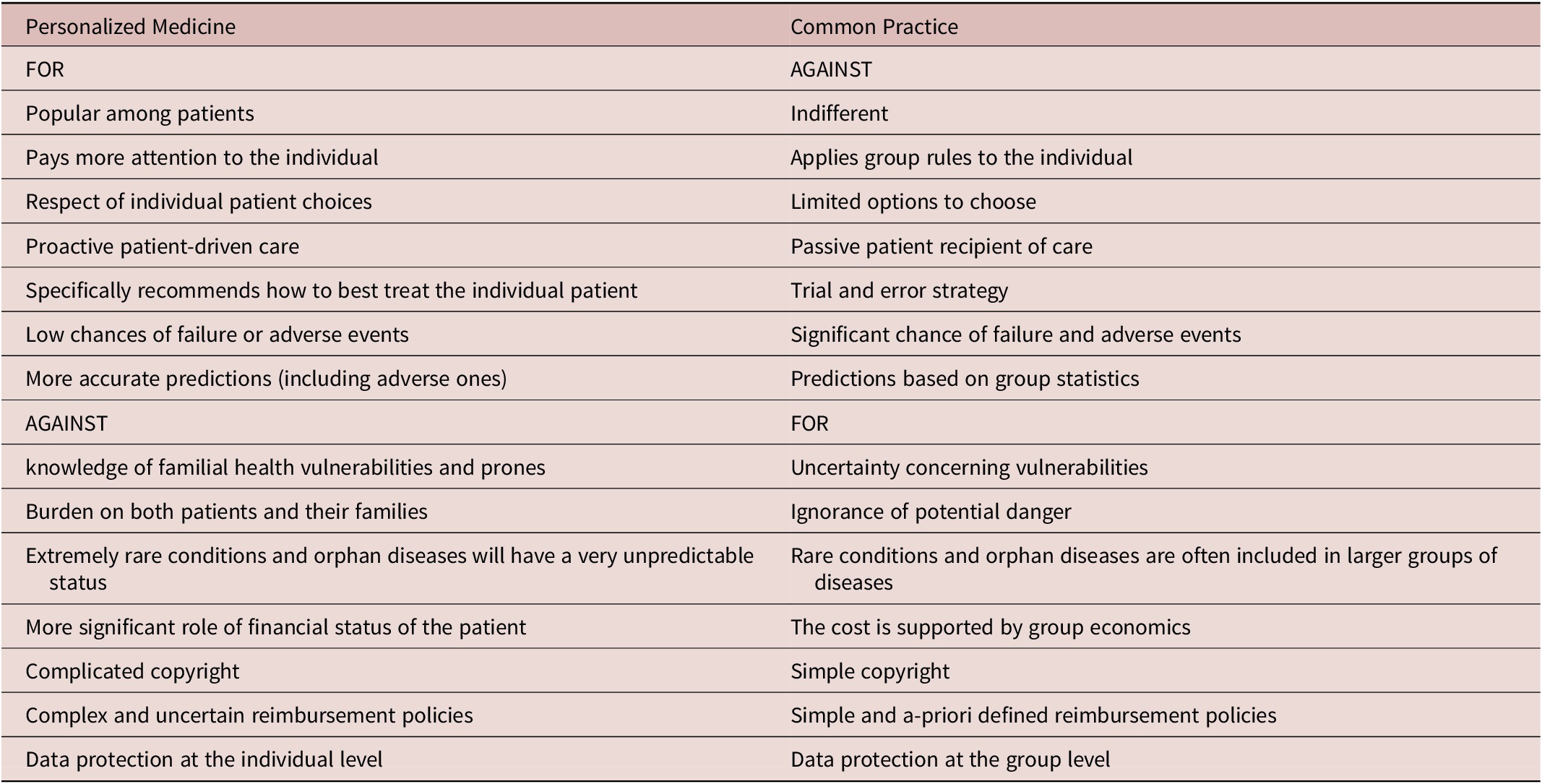
The radical difference between precision and personalized medicine is that while precision medicine can accumulate knowledge on the basis of research on groups of subjects, personalized medicine faces the problem that every person possesses a unique pattern and combination of biological features, including genetics, anatomy, physiology and developmental and degenerative trajectories (Table 1).
Contrasting Differences Between Personalized Medicine and Common Practice as It is Performed Today.

Apart from the sociocultural and political consequences, a truly personalized medicine will test the relationship of medicine with hard science. The epistemological question is straightforward: can personalized medicine really exist? In theory as well as probably in reality, each person differs from every other person that had ever lived on Earth. Thus, the accumulation of data from person to person demands at least a minimum abstracted approach, a minimum common denominator among persons. The knowledge that comes from the data gathered in these very well defined and studied groups could be applied to the members of the groups and probably to a very limited number of persons outside this specifically defined group.Reference Fisher, Shortell and Savitz 22 But this is precision, not personalized medicine. Our current scientific approach to medicine is based on the study, diagnosis and treatment of groups; this is not simply a necessity due to lack of deeper knowledge. It is an inherent characteristic of our methods and processes.
Precision and Personalized Psychiatry (3P)
Mental disorders are
-
• Common.
-
• Are related to high levels of disability.
-
• High rates of somatic comorbidity.
-
• Increased mortality.
The above occur in spite of the existence of efficacious treatment options which improve symptomatology and to a certain degree are able to restore functioning and preserve quality of life. One additional problem is somatic comorbidity; mental patients are at increased risk to manifest certain somatic disorders, mainly cardiovascular, and when ill their treatment is often suboptimal both because of their reluctance to engage in proper treatment procedures and health behaviors but also because the presence of stigma often constitutes them second class citizens and patients.Reference Collins, Patel and Joestl 23
As a result, worldwide, in terms of disability-adjusted life years (DALYs)Reference Benyamina, Blecha and Reynaud 24
-
• Mental disorders are ranked as the fourth cause of DALYs.
-
• Are responsible for 6.35% of total DALYs.
-
• In Europe and the United States, they are the leading causes of disability accounting for 8.75% and 12.5% respectively.
-
• Schizophrenia relates with 15.5 million DALYs.
-
• Bipolar disorder follows with 9 million DALYs.
-
• Depression is the leading cause with 54 million DALYs.
-
• Anxiety disorders account for approximately 3 to 7 million DALYs.
-
• Suicide is the leading cause of death among teenagers and adults under 35 with an estimated of 2 million deaths and 10 to 20 million nonfatal attempts every year worldwide.
These statistics point to the need for better treatment and care and an approach tailored to the needs of the individual patient.Reference Insel 25 But while precision and personalized medicine have at least a robust conceptual context, the issue is far more complicated with psychiatry, where most fundamental questions are still unanswered.Reference Alda 26 This seems an oxymoron taken into consideration the long history of personalized approach in psychiatry especially in the frame of psychoanalysis. However, in modern scientific terms psychiatry has not yet benefited from the advancement technology brought in diagnosis and treatment as is the case with other clinical specialties. For this reason, in the event psychiatry manages to embrace the precision approach, this will be even more transformative than in other fields of medicine since it will lead to informed decisions at a qualitatively different level.Reference Collins, Patel and Joestl 23 , Reference Insel 25 , Reference Friston 27
Currently the biggest problems psychiatry faces are:
-
• Definition of mental disorder is problematic.Reference Kendler 28
-
• Most psychiatric disorders represent a mix of diagnostic categories.
-
• Psychopharmacological treatments have been discovered in a nonsystematic, serendipitous way.
-
• Mental disorders have not always been considered to be diseases of the brain.
-
• Their neurobiological substrate has been questioned in favor for a psychosocial etiopathogenesis.
-
• Available treatments seem to concern broad categories rather than specific disorders.
-
• Psychiatry relies on a detailed clinical assessment with careful consideration of the clinical picture, long-term course, previous treatment history and family/genetic history but these data are often incomplete, conflicting, vague and unreliable and need face to face contact.Reference Andersson and Titov 29
-
• Clinical predictors of treatment response or side effects do not exist.
-
• Biological markers are not clinically useful.Reference Arranz and Leon 30 , Reference Barnett and Smoller 31
-
• The research data are insufficient.
-
• Often over-interpreted.
-
• In many instances, the data suggest a less than desirable response rate.
On the other hand, this shift in paradigm, if and when it happens in psychiatry, it will certainly help in the creating of a stronger identity and will lead to a significant, if not radical, epistemological change in the field of psychiatry.Reference Fernandes, Williams, Steiner, Leboyer, Carvalho and Berk 32
A historical example of extreme personalized approach in psychiatry is psychoanalysis. According to this theory and practice, no matter the specific presenting problem, the person is analyzed usually through free-association or similar techniques and subsequently a working psychological model is developed by the therapist to direct the treatment. The various scientific organizations in the field have developed established procedures and models for the practice of psychoanalytical therapy, but in spite of the existence of some kind of guidance, the analyst-patient relationship and “fit” is always crucial. As a result, psychoanalysis deviates from the scientific method and is largely based on idiosyncratic processes and to a large extent on an arbitrary way of decision making. Thus, although historically it is the first and massive effort of psychiatry to apply a precise and personalized approach, today it cannot considered as reliable and valid since it does not conform to contemporary scientific standards.
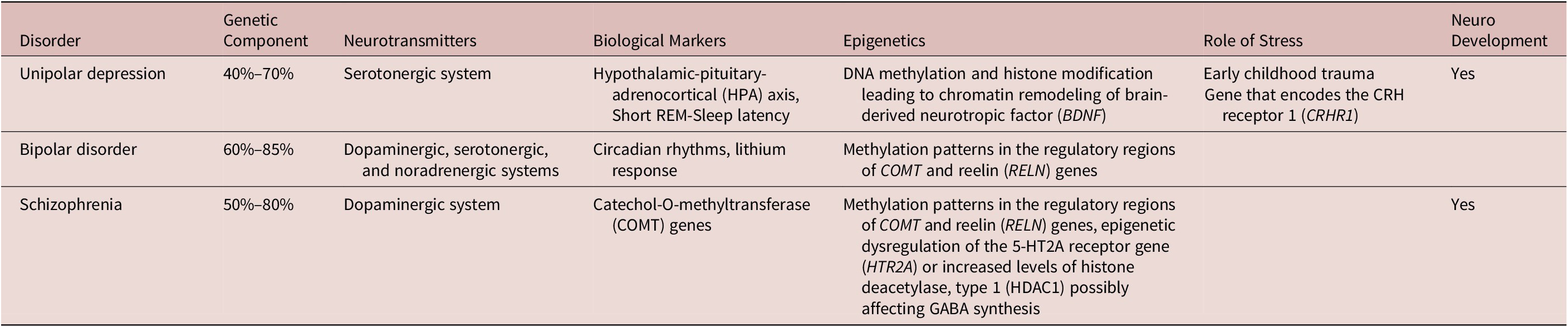
For these reasons, the introduction of objective neurobiological markers will constitute a radical paradigm shift for psychiatry since it will certainly lead to a more reliable and valid diagnostic approach and subsequently to a more informed treatment planning. 7 , Reference Arranz and Leon 30 –Reference Kraemer, Schultz and Arndt 35 A neurobiology-based taxonomy of mental disorders would also be of prime importance but our current knowledge base does not permit optimism for the near future although important proposals on this direction have already been made, with the Research Domain Criteria by the National Institute of Mental Health being the most advanced so far (Table 2).Reference Insel 25
Basic Neurobiological Characteristics Today Considered as Significant Features of Major Mental Disorders.

Our basic knowledge on the major mental disorders has improved dramatically over the last few decades. Today we have a fair understanding of the way the human brain works and what is probably dysfunctional in mental disorders.Reference Binder, Nemeroff, Hemby and Bahn 36 – 39
Of prime importance in precision and personalized psychiatry will be the pharmacogenetics study of patients, since genetic changes in drug-metabolizing genes could held responsible for a differential response to medication at least in a subgroup of mental patients. The most studied group of drug-metabolizing enzymes are the cytochrome P450 (CYP) enzyme family.Reference Mancinelli, Cronin and Sadee 6 , Reference de Leon 40
In terms of pharmacogenetics patients could be classified as being:
-
• poor metabolizers,
-
• intermediate metabolizers,
-
• extensive metabolizers, and
-
• ultra-rapid metabolizers,
Conclusion
Precision and personalized psychiatry like all precision medicine will be a laborious and costly task; thus the partnership of scientists with industry and the commercialization of new methods and technologies will be an important element for success. Additionally, the governments should succeed in their obligation to provide with the appropriate legal framework which will both support development and progress but also will protect the rights and the privacy of patients and their families. Eventually, while wishes and perspectives are appealing, it is only after materialization and application in the everyday clinical practice that precision and personalized psychiatry will fulfill its promises and role. The collaboration among academia, industry and governments is absolutely necessary since each one of them has unique and complementary roles, abilities and interests.
Disclosures
Stephen M. Stahl, MD, PhD, Dsc (Hon.) is an Adjunct Professor of Psychiatry at the University of California San Diego, Honorary Visiting Senior Fellow at the University of Cambridge, United Kingdom and Director of Psychopharmacology for California Department of State Hospitals. Over the past 36 months (January 2016 to December 2018) Dr. Stahl has served as a consultant to Acadia, Adamas, Alkermes, Allergan, Arbor Pharmaceutcials, AstraZeneca, Avanir, Axovant, Axsome, Biogen, Biomarin, Biopharma, Celgene, Concert, ClearView, DepoMed, Dey, EnVivo, EMD Serono, Ferring, Forest, Forum, Genomind, Innovative Science Solutions, Intra-Cellular Therapies, Janssen, Jazz, Lilly, Lundbeck, Merck, Neos, Novartis, Noveida, Orexigen, Otsuka, PamLabs, Perrigo, Pfizer, Pierre Fabre, Reviva, Servier, Shire, Sprout, Sunovion, Taisho, Takeda, Taliaz, Teva, Tonix, Trius, Vanda, Vertex, and Viforpharma. He has been a board member of RCT Logic and Genomind. He has served on speakers bureaus for Acadia, Astra Zeneca, Dey Pharma, EnVivo, Eli Lilly, Forum, Genentech, Janssen, Lundbeck, Merck, Otsuka, PamLabs, Pfizer Israel, Servier, Sunovion, and Takeda, and he has received research and/or grant support from Acadia, Alkermes, AssureX, Astra Zeneca, Arbor Pharmaceuticals, Avanir, Axovant, Biogen, Braeburn Pharmaceuticals, BristolMyer Squibb, Celgene, CeNeRx, Cephalon, Dey, Eli Lilly, EnVivo, Forest, Forum, GenOmind, Glaxo Smith Kline, Intra-Cellular Therapies, ISSWSH, Janssen, JayMac, Jazz, Lundbeck, Merck, Mylan, Neurocrine, Neuronetics, Novartis, Otsuka, PamLabs, Pfizer, Reviva, Roche, Sepracor, Servier, Shire, Sprout, Sunovion, TMS NeuroHealth Centers, Takeda, Teva, Tonix, Vanda, Valeant, and Wyeth.
Konstantinos N. Fountoulakis has received grants and served as consultant, advisor or CME speaker for the following entities: AstraZeneca, Bristol-Myers Squibb, Eli Lilly, Ferrer, Gedeon Richter, Janssen, Lundbeck, Otsuka, Pfizer, the Pfizer Foundation, Sanofi-Aventis, Servier, Shire, Rafarm and Innovis.