Introduction
Cardiopulmonary resuscitation (CPR) involves a set of basic and advanced vital support procedures conducted to recover spontaneous throb, respiration, and cardiac functions in patients with cardiac arrest (CA). Reference Link, Berkow and Kudenchuk1 Despite the many advancements in CPR, mortality and morbidity rates remain fairly high after CA. The course of patients after CPR varies from mild or moderate symptoms to a permanent vegetative state or death. Decisions regarding when to start CPR, how long CPR administration will last, how it will end, and any pre-determining patient conditions after CPR are important in the management of these critical patients. Therefore, reliable parameters are needed to assist physicians. Some clinical scales, electrophysiological techniques, and imaging methods can be used as early predictors of recovery after CA. Despite these methods, patients with CA encounter serious hardships. Reference Link, Berkow and Kudenchuk1,Reference Turedi, Gunduz and Mentese2
Early and accurate prediction of survival to hospital discharge following resuscitation after CA is a major challenge. Certain biomarkers have been reported as early predictors of prognosis after CA. Reference Turedi, Gunduz and Mentese2-Reference Calderon, Guyette, Doshi, Callaway and Rittenberger4 As biomarkers can provide clinicians with early information on the severity of organ dysfunction and can facilitate decision making towards a prognostic endpoint, interest in this area has increased recently. Reference Scolletta, Donadello, Santonocito, Franchi and Taccone3 The 2015 updated CPR guidelines stated for the first time that biomarkers can be used for prognostic purposes, but that none of those identified so far are sufficient by themselves. This is because no specific threshold levels or narrow confidence intervals have been determined to predict poor neurological outcomes in the studies conducted. Therefore, new and useful biomarkers are needed. Reference Callaway, Donnino and Fink5 Copeptin is a 39-amino acid glycosylated neuropeptide derived from the C-terminus of the vasopressin prohormone that is synthesized in the hypothalamus; it is secreted from the neurohypophysis in equimolar amounts as that of arginine vasopressin (AVP). The exact function of circulating copeptin is unknown. Reference Morgenthaler, Struck, Alonso and Bergmann6 Many physiological and pathological stimuli such as pain, hypoglycemia, hypoxemia, stroke, infection, and shock induce the release of copeptin. Elevated serum copeptin levels have been associated with a poor prognosis in several diseases including pneumonia, myocardial infarction, diabetes, heart failure, and stroke. Reference Dobsa and Edozien7 However, few studies have investigated the relationship between serum copeptin levels and prognosis in patients with non-traumatic out-of-hospital CA (OHCA) undergoing CPR. Reference Aarsetøy, Aarsetøy, Hagve, Strand, Staines and Nilsen8,Reference Broessner, Hasslacher and Beer9
Thus, this study aimed to investigate the role of the serum copeptin level in predicting the return of spontaneous circulation (ROSC) and short-term survival of patients with non-traumatic OHCA who underwent CPR.
Methods
Study Design and Setting
This study was conducted in accordance with the 1989 Declaration of Helsinki and was approved by the Ethics Committee of the Haseki Research and Training Hospital, University of Health Sciences, Istanbul, Turkey (trial registration no. 1341). This study was funded by the Health Sciences University Board of Scientific Research Projects (no. 2018/078).
From September 2018 through February 2019, 76 consecutive adult patients (22 females and 54 males, aged 20–77 years) who were brought by Emergency Medical Services (EMS) ambulance to the Department of Emergency Medicine, Health Sciences University Haseki Research and Training Hospital due to non-traumatic OHCA were enrolled in this prospective randomized and cross-sectional study. In addition, 63 age- and sex-matched healthy volunteers were enrolled. Patients were provided Advanced Cardiac Life Support upon presenting to the hospital, according to the current 2015 American Heart Association (Dallas, Texas USA) Guidelines Update for Cardiopulmonary Resuscitation and Emergency Cardiovascular Care. Reference Link, Berkow and Kudenchuk1 After vital functions were monitored, written informed consent was obtained from the authorized representative of the patient. Healthy volunteers were informed about the study protocol, and written consent was obtained from all participants prior to their participation in the study.
The patients were divided into two groups based on whether they had ROSC or not. Subsequently, the ROSC group was divided into two sub-groups: those who survived less than 24 hours and those who survived over 24 hours. Serum copeptin, high-sensitivity cardiac troponin (hs-cTnI), creatine kinase-muscle/brain (CK-MB), and blood gas levels were compared between the groups.
Blood Sampling
Venous blood samples (5 mL) were drawn from the antecubital vein at the time of admission without the use of medications, serum infusions, or diagnostic imaging techniques that can affect the serum copeptin level. Blood samples were collected in heparinized tubes and stored immediately on ice at 4 °C. Plasma was separated by centrifugation at 4,000 rpm for five minutes and stored at −40 °C until use. All serum samples were brought to ambient temperature before analysis.
Serum Copeptin Measurement
Serum copeptin levels were measured by enzyme-linked immunosorbent assay (ELISA) using a human copeptin antibody (catalogue no. YLA1139HU; Shanghai YL Biotech Co.; China). In ELISA technique, the sample containing antigen (Ag) to be measured is first added to the solid phase surface (plate wells) coated with the antibody (Ab) formed against the antigen called the capture antibody and incubated for a period of time for binding with the Ab. Then, the solid phase is washed, other proteins are removed from the medium, and an antibody linked to a different enzyme than the bonded antibody is added. The second antibody reacts with a different epitope on the bound antibody to create an Ab–Ag–Ab–enzyme sandwich complex. Excess unbound antibody is removed from the medium by washing, and the enzyme substrate is added and converted into the product. The concentration of the product formed is measured spectrophotometrically and is directly proportional to the antigen concentration. Here, the solid phase was covered with antigen instead of antibody, and a specific enzyme-linked antibody targeting the antibody to be measured was used as the second reagent.
Data Analysis
The required sample size was calculated by power analysis prior to data collection. It was estimated that at least 76 participants and 63 controls would be required to detect significant differences regarding ROSC in patients who underwent CPR, with a power of 95% and an alpha error of five percent. All analyses were conducted using SPSS statistical software (version 15.0 for Windows; IBM Corp.; Armonk, New York USA). Numerical data (eg, copeptin, troponin, glucose, and blood gas levels) are expressed as means (standard deviation), minimums, maximums, and medians; categorical variables (sex and age) are presented as numbers (n). Intergroup comparisons (controls versus patients) were conducted using chi-squared and Student’s t-tests for normally distributed data, and the Mann-Whitney U-test for non-normally distributed data. Predictive factors were determined using logistic regression analysis with the forward method to determine the cut-off copeptin level. The significance level was set at P <.05.
Results
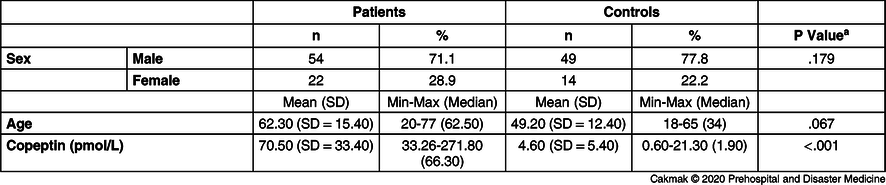
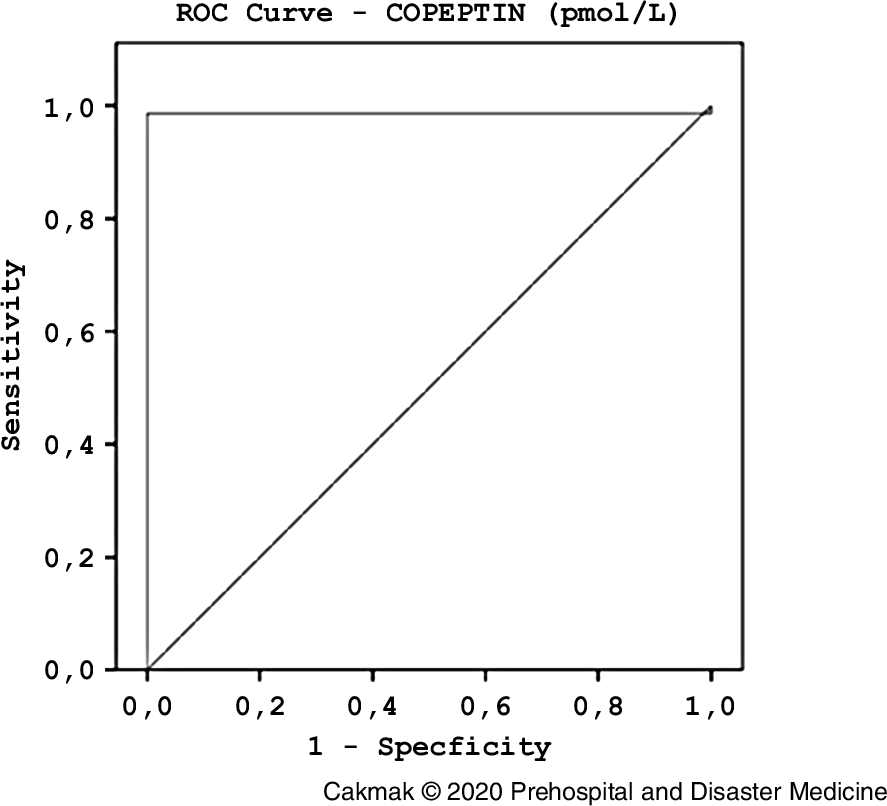
The mean age of the 76 patients was 62.30 (SD = 15.40; range 20–77) years, and 54 (71%) were male. The mean age of the 63 healthy volunteers was 49.20 (SD = 12.40; range 18–65) years, and 49 (78%) were male. There was no significant difference between patients and controls in terms of age (P = .067) or sex (P = .179). However, the mean serum copeptin level was significantly higher in the patients than the controls (P <.00; Table 1). Receiver operating characteristic analysis identified a cut-off copeptin level of 27.29pmol/L for distinguishing the patients from controls, with 98.7% sensitivity and 100.0% specificity (area under the curve 0.987; 95% CI, 0.961–1.000; Figure 1).
Comparisons of Mean Age, Sex, and Serum Copeptin Level Between the Patient and Control Groups
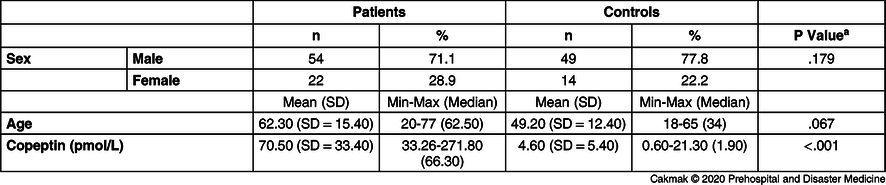
Note: Data are expressed as numbers, percentages, mean (SD), or minimum and maximum values.
a Intergroup comparisons (controls versus patients) were conducted using the chi-square, independent sample t-test, and Mann–Whitney U tests, as appropriate.
Specificity and Sensitivity of the Serum Copeptin Level for Distinguishing Patients with OHCA From the Controls Using Receiver Operating Characteristics (ROC) Curves (Area Under the Curve [AUC] 0.987; 95% Confidence Interval [CI] 0.961–1.000).

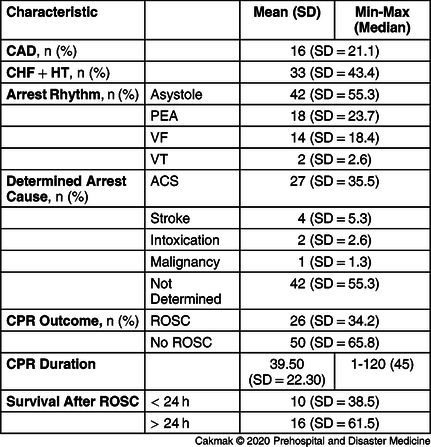
In the patient group, the heart rhythms associated with CA were asystole in 42 (55.3%) patients, pulseless electrical activity (PEA) in 18 (23.7%) patients, ventricular fibrillation (VF) in 14 (18.4%) patients, and ventricular tachycardia (VT) in two (2.6%) patients. In 26 (34.2%) patients who received CPR, ROSC occurred; however, ROSC was not provided in 50 patients. Of the patients with ROSC, 10 (38.5%) died within 24 hours, and 16 (61.5%) survived longer than 24 hours after ROSC. The clinical characteristics of the patients are listed in Table 2.
Clinical Characteristics of the Patients with Cardiac Arrest
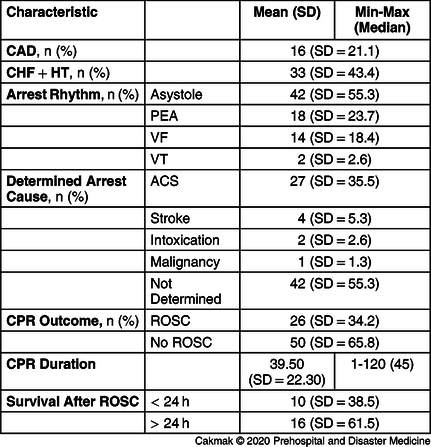
Note: Data are expressed as numbers, percentages, mean (SD), or minimum and maximum values.
Abbreviations: ACS, acute coronary syndrome; CAD, coronary artery disease; CHF, congestive heart failure; CPR, cardiopulmonary resuscitation; HT, hypertension; PEA, pulseless electrical activity; ROSC, return of spontaneous circulation; VF, ventricular fibrillation; VT, ventricular tachycardia.
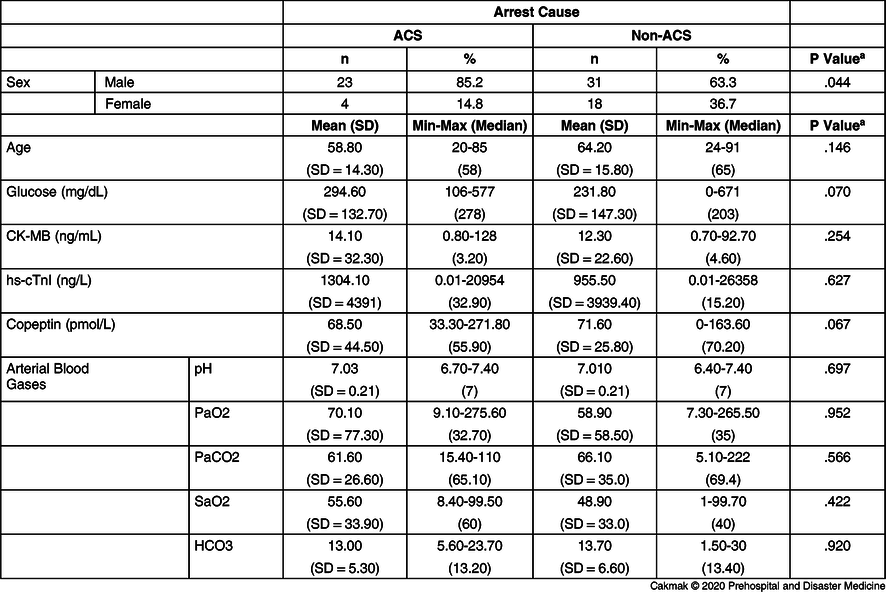
There was a significant difference between the patients diagnosed with acute coronary syndrome (ACS) and those without ACS in terms of sex (P = .044) but not age (P = .146). There was also no significant difference in the mean serum glucose, CK-MB, hs-cTnI, or copeptin level between these two patient groups (P = .070; P = .254; P = .627; and P = .067, respectively; Table 3). Furthermore, arterial blood gas analysis revealed no significant differences in pH, pO2, pCO2, SaO2, and HCO3 between the groups (P = .246; P = .366; P = .361; P = .083; and P = .253, respectively; Table 3).
Comparisons of Age, Sex, Serum Glucose, CK-MB, Troponin, Copeptin, and Arterial Blood Gas Levels in Patients Diagnosed with Cardiac Arrest Due to Acute Coronary Syndrome (ACS) versus Non-ACS Causes
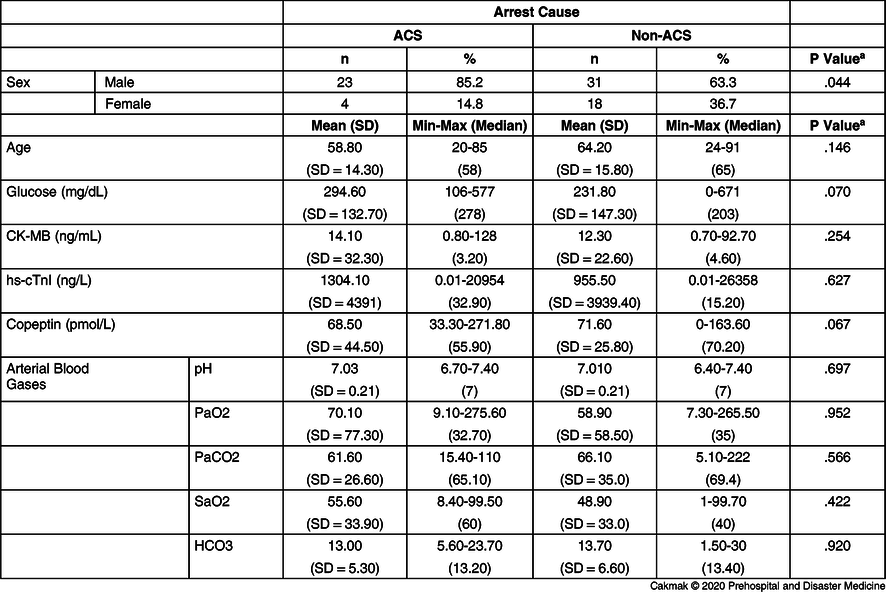
Note: Data are expressed as numbers, percentages, mean (SD), or minimum and maximum values.
Abbreviations: ACS, Acute Coronary Syndrome; CK-MB: creatine kinase-muscle/brain; hs-cTnI: high-sensitivity cardiac troponin.
a Independent sample t-tests and chi-square tests were used for age and sex comparisons, respectively, between the ACS and non-ACS groups. Mann–Whitney U test was used to compare serum glucose, CK-MB, hs-cTnI, copeptin and arterial blood gas levels between groups.
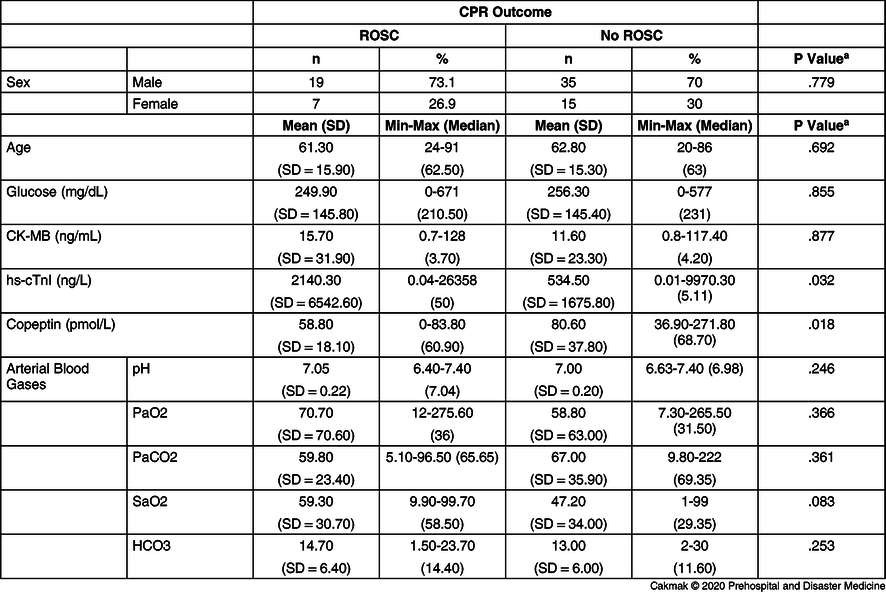
The mean serum copeptin level was significantly lower in the ROSC group than non-ROSC group (P = .018; Table 4). Additionally, the mean serum hs-cTnI level was significantly higher in the ROSC group than non-ROSC group (P = .032; Table 2). There was no significant difference in age or sex between the groups (P = .692 and P = .779, respectively; Table 2). Similarly, there were also no significant differences in the mean serum glucose and CK-MB levels, or arterial blood gas levels, between the ROSC and non-ROSC groups (all P >.05; Table 4).
Comparisons of Age, Sex, Serum Glucose, CK-MB, hs-cTnI, Copeptin, and Arterial Blood Gas Levels Between Patients with ROSC and those Without ROSC
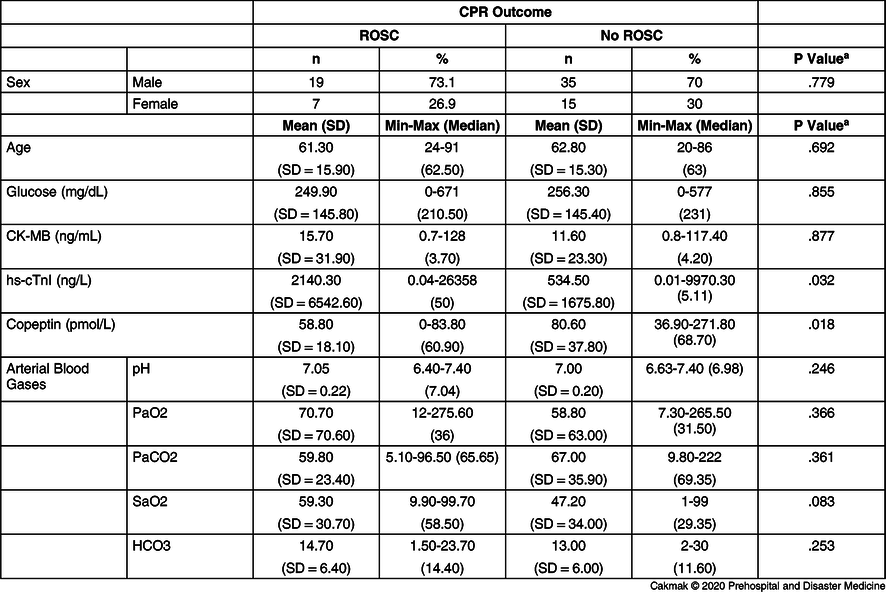
Note: Data are expressed as numbers, percentages, mean (SD), or minimum and maximum values.
Abbreviations: CPR, cardiopulmonary resuscitation; CK-MB: creatine kinase-muscle/brain; hs-cTnI, high-sensitivity cardiac troponin; ROSC, return of spontaneous circulation.
a Intergroup comparisons (ROSC versus non-ROSC groups) were made using the chi-square, independent sample t-test, or Mann–Whitney U test, as appropriate.
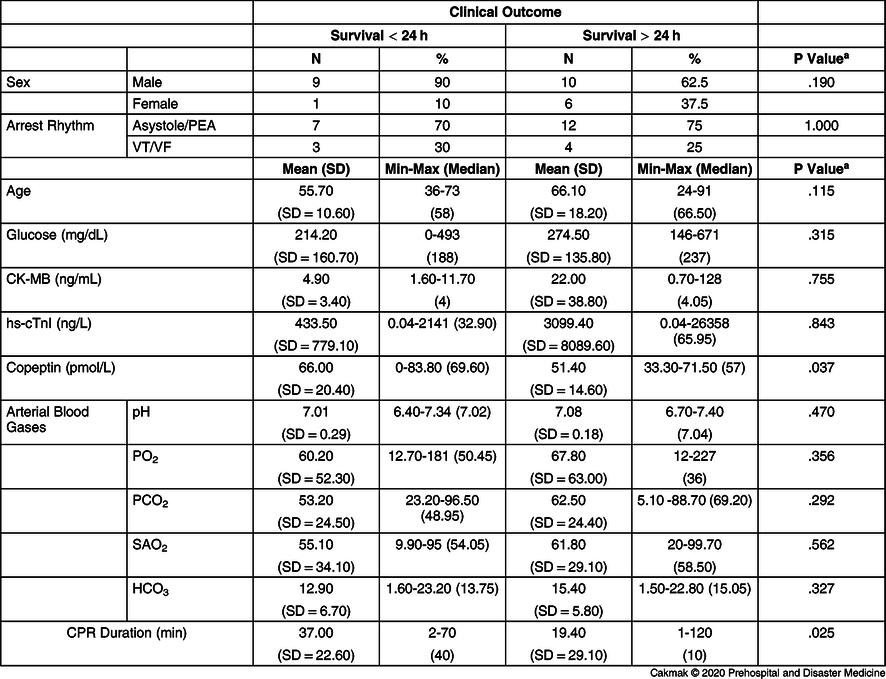
The mean serum copeptin level was significantly lower in patients who survived >24 hours compared with patients who survived <24 hours after ROSC (P = .037; Table 3). Moreover, the mean CPR duration was significantly shorter in those surviving >24 hours (P = .025; Table 3). There was no significant difference in age or sex between these two groups (P = .115 and P = .190, respectively; Table 5). Similarly, there were no significant differences in mean serum glucose, CK-MB, or arterial blood gas levels between the groups (all P >.05; Table 5). Comparisons of age, sex, and arterial blood gas, serum glucose, CK-MB, troponin, and copeptin levels of the patients who survived <24 hours versus >24 hours are shown in Table 5.
Comparisons of Mean Age, Sex, Serum Glucose, CK-MB, hs-cTnI, Copeptin, and Arterial Blood Gas Levels between Patients Surviving <24 hours and Those Surviving Longer than 24 Hours after ROSC
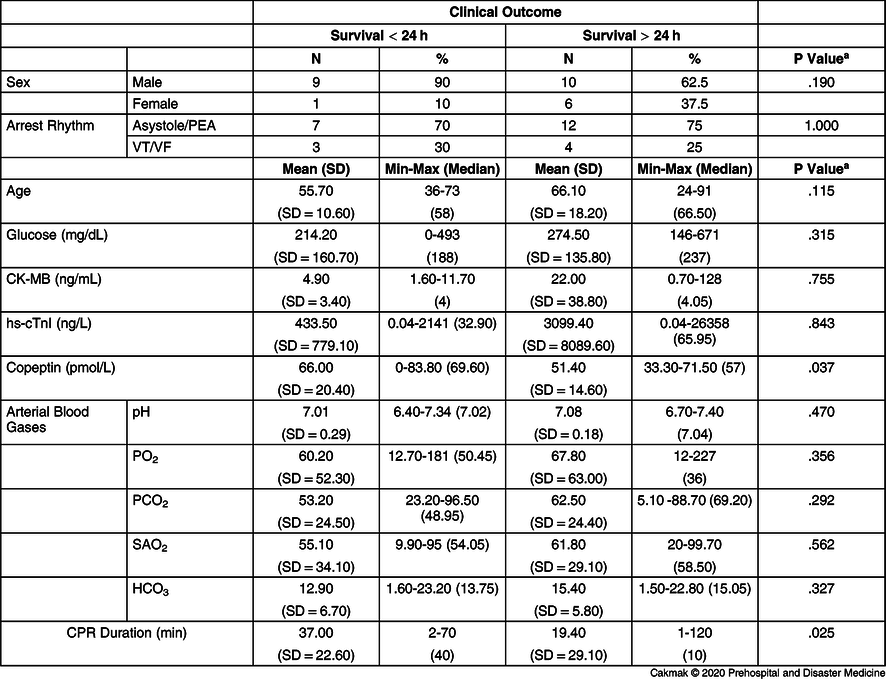
Note: Data are expressed as numbers, percentages, mean (SD), or minimum and maximum values.
Abbreviations: CPR, cardiopulmonary resuscitation; CK-MB: creatine kinase-muscle/brain; hs-cTnI, high-sensitivity cardiac troponin; PEA, pulseless electrical activity; ROSC, return of spontaneous circulation; VF, ventricular fibrillation; VT, ventricular tachycardia.
a Intergroup comparisons (patients surviving <24 hours versus >24 hours after ROSC) were conducted using the chi-square and Mann–Whitney U tests, as appropriate.
Discussion
This is the first clinical study to investigate the value of the serum copeptin level in predicting ROSC and short-term prognosis of adult patients with non-traumatic OHCA. The key findings are as follows: (1) the patients with OHCA were mostly male and frequently had a non-ACS cause of arrest; (2) PEA and asystole rhythm were often the main CA rhythms in OHCA; (3) compared with the control group, the serum copeptin level was significantly higher in patients with OHCA who received CPR, and a cut-off level of 27.29pmol/L had a 98.7% sensitivity and 100.0% specificity for distinguishing these patients from the controls; (4) compared with patients without ROSC, the mean serum copeptin level was significantly lower and the troponin level significantly higher in patients with ROSC; and (5) the serum copeptin level was significantly lower and the CPR duration significantly shorter in patients provided ROSC surviving >24 hours compared with <24 hours.
Sudden CA can occur at any time and has a high mortality rate. Reference Nolan10 In the USA, >300,000 cases of OHCA occur per year, and the two main arrest rhythm types are tachyarrhythmia (can be shocked) and non-tachyarrhythmia (cannot be shocked). Reference Keller and Halperin11 Although there are many potential causes of CA, the most frequent is ischemic cardiovascular disease. Death from CA accounts for approximately 50% of all deaths due to heart disease. Reference Benjamin, Muntner and Alonso12 The cause of CA was not determined in more than one-half (n = 42; 55%) of the patients with OHCA in this study. The defined causes of CA were ACS in 27 (77.0%) patients, stroke in four (5.3%) patients, and intoxication in two (2.6%) patients.
In the medical literature, there are differences in the first recorded rhythm in OHCA. Reference Keller and Halperin11 Although VF and VT were reported as the most frequent initial rhythms in certain studies, Reference Eftestol, Sunde and Steen13,Reference Finn, Jacobs, Holman and Oxer14 they were less frequent in other studies. Reference Bunch, White, Friedman, Kottke, Wu and Packer15,Reference Cobb, Fahrenbruch, Olsufka and Copass16 In recent decades, the frequency of the initial rhythm, as an important phase of OHCA has changed, in that the incidence of tachyarrhythmic rhythms, including VF and VT, has gradually but significantly decreased in many studies of OHCA cases. Reference Bunch, White, Friedman, Kottke, Wu and Packer15-Reference Herlitz, Andersson and Bång18 The most frequent initial rhythm in patients receiving CPR in the current study was asystole and PEA (79%), which is consistent with the current literature. The relative increase in the incidence of OHCA with tachyarrhythmic rhythms such as PEA and asystole might be attributable to medical and surgical treatments developed for partially ischemic heart diseases, as well as the common use of implantable cardiac defibrillators. In addition, effective treatment and underlying risk factors of these patients and the widespread use of beta-blockers may have contributed to the reduced rate of arrest rhythms depending on VF or VT.
Survival from prehospital CA in patients undergoing CPR is critically dependent upon response time. It was reported that a CPR period >25 minutes in patients with OHCA significantly reduced survival. Reference Vukmir19 In the current study, the mean resuscitation period was significantly longer in patients who survived <24 hours compared with those who survived >24 hours after ROSC (37.00 [SD = 22.60] and 19.40 [SD = 29.10] minutes, respectively).
Hypoxic brain damage causes cardiovascular abnormalities, systemic ischemia, multiple organ failure post-CA, and consequently, “post-CA syndrome.” The severity of post-CA syndrome varies according to the reason for arrest, arrest duration, and ischemic area width. Many factors affect patient prognosis after CA. However, the timing and optimal approach for determining prognosis are controversial due to heterogeneity among patients with CA. Reference Annborn, Nilsson and Dankiewicz20 The use of biomarkers is increasing to help clinicians determine prognosis and evaluate organ function disorders in patients with CA. Reference Scolletta, Donadello, Santonocito, Franchi and Taccone3,Reference Callaway, Donnino and Fink5 Thus, certain biomarkers have been reported as valuable early marker of post-CPR prognosis in CA patients. Reference Aarsetøy, Aarsetøy, Hagve, Strand, Staines and Nilsen8,Reference Broessner, Hasslacher and Beer9,Reference Geri, Dumas and Chenevier-Gobeaux21,Reference Ristagno, Latini and Plebani22 Copeptin is released simultaneously with AVP in response to osmotic or hemodynamic stimuli from the neurohypophysis, but its physiological function remains unknown. Because it is released into the circulation under endogenous stress, copeptin was reported as a potential promising biomarker for predicting the diagnosis and prognosis of various diseases. Reference Dobsa and Edozien7 For example, Zuo, et al Reference Zuo and Ji23 reported that serum copeptin can be safely used to estimate short-term prognosis in aneurysmal subarachnoid hemorrhage cases. Yoshikawa, et al Reference Yoshikawa, Shiomi and Kuwahara24 demonstrated that copeptin predicted long-term clinical outcomes in patients with heart failure. In a pilot study that included 62 patients with OHCA, Annborn, et al Reference Annborn, Nilsson and Dankiewicz20 concluded that the combination of CT-proAVP (copeptin), procalcitonin, pro-atrial natriuretic peptide (proANP), and troponin T with serum neuron specific enolase could be beneficial for improving early prognostication of long-term outcome following OHCA.
French study by Geri, et al Reference Geri, Dumas and Chenevier-Gobeaux21 in a tertiary-care CA center with 298 patients, a high serum copeptin level on both the first and third days after hospital admission was associated with one-year mortality. To similar conclusions arrived Broessner, et al Reference Broessner, Hasslacher and Beer9 in their work; they found that levels of copeptin and proANP peaked during the first 48 hours after resuscitation in 134 CA patients, and that the increased levels were highly predictive of poor clinical outcomes. Consistent with those findings, the current study demonstrated that the mean serum copeptin level was significantly higher in patients with OHCA compared with healthy controls (P <.001), despite no significant difference in age or sex between the two groups. In this ROC analysis, a cut-off serum copeptin level of ≥27.29pmol/L had 98.7% sensitivity and 100.0% specificity in distinguishing the patients from the controls. In addition, the mean serum copeptin was significantly lower (P = .018), and the troponin level significantly higher (P = .032), in the ROSC than non-ROSC group. Unlike previous studies on copeptin, Reference Broessner, Hasslacher and Beer9,Reference Geri, Dumas and Chenevier-Gobeaux21 this study determined a valuable role of the serum copeptin level in predicting ROSC following CPR. Taken together, these findings suggest that copeptin plays an important role in the pathophysiology that can reliably predict ROSC.
Copeptin used in combination with hs-cTnI has been demonstrated to be a very early diagnostic marker in patients with ACS. Reference Slagman, Searle, Müller and Möckel25 However, its value in determining the underlying cause of sudden CA and prognosis is less known. Reference Aarsetøy, Aarsetøy, Hagve, Strand, Staines and Nilsen8,Reference Ristagno, Latini and Plebani22 In a recent study by Aarsetøy, et al, Reference Aarsetøy, Aarsetøy, Hagve, Strand, Staines and Nilsen8 the role of serum copeptin hs-cTnI and NT-proBNP levels in sudden CA etiology and prognosis was evaluated in 77 patients with OHCA caused by VF. Of these biomarkers, only an elevated NT-proBNP level was associated with the development of CA due to heart disease. Consistent with that study, the current study found no significant difference in the mean serum glucose, CK-MB, hs-cTnI, or copeptin level in patients with CA caused by ACS versus another factor. However, when the survival of the patients provided ROSC after CPR was evaluated, serum copeptin levels of patients who survived >24 hours were found to be statistically lower compared with those who survived <24 hours. These results demonstrate that serum copeptin levels may predict poor clinical outcomes in patients with OHCA and therefore serve as a new biomarker predicting ROSC.
Recent clinical data implicate that blood gas analysis can poorly predict subsequent ROSC in patients with OHCA. Reference Fusada, Shiraishi, Suzuki and Fudoji26-Reference Türkdogan, Zorlu, Guven, Ekinozu, Eryigit and Yılmaz29 In line with previous data, Reference Fusada, Shiraishi, Suzuki and Fudoji26,Reference Kim, Lee and Ryoo28,Reference Türkdogan, Zorlu, Guven, Ekinozu, Eryigit and Yılmaz29 in the current study, no significant difference in blood gas analysis including pH, PaO2, PaCO2, SaO2, or HCO3 was observed between patients who provided ROSC and those who did not. The current study also found no significant effect of the blood gas analysis in patients provided ROSC with respect to short-term mortality. Taken together, these findings suggest that blood gas analysis has no impact on CPR outcomes in patients who experienced OHCA.
Limitations
There are some limitations to this study, the most important being the small sample size and single center design. In addition, there was conflicting information regarding the time between CA onset and arrival at the emergency department by EMS ambulance, and the authors were unable to clearly identify the time from OHCA occurrence to hospital admission of patients. As a result, the time could not be recorded between CA and hospital admission in patients with OHCA or the transport duration; thus, the relationships between these factors and the serum copeptin level were not evaluated.
Conclusions
Serum copeptin has a high specificity and sensitivity, with a cut-off value of 27.29pmol/L, for predicting patients with OHCA. Decreased copeptin and increased troponin levels can provide useful information to estimate ROSC in patients undergoing CPR. In addition, increased copeptin levels is common in CA patients and is associated with poor outcome after OHCA. Thus, the serum copeptin level might be a useful biomarker predicting the short-term prognosis of patients with ROSC. The data obtained in the current study suggest that the serum copeptin level plays an important role in CA pathophysiology and clinical outcomes. Further randomized and controlled studies with larger sample sizes are needed to confirm the current findings.
Acknowledgement
The authors are grateful for all participating volunteers for their cooperation and support. Moreover, they would like to thank all the EMS Ambulance services for their fruitful collaboration in the data collection.
Conflicts of interest/funding
This study was funded by the University of Health Sciences (Istanbul, Turkey) Board of Scientific Research Projects (no. 2018/078). The authors declare no conflicts of interest.