


Introduction
Cross-border relations between Myanmar and Manipur—a former kingdom and state in present-day India—have a rich history. These relations are usually conceived of in two ways: (i) historic community-to-community connections animating familial, cultural, and gastronomic ties, and (ii) official connections capitalizing on recently improved relations between India and Myanmar evident in cooperation—or at least talk of cooperation—in security operations against insurgents, economic ties, and cross-border infrastructure, including possible gas pipelines.Footnote 1 This article focuses on a third domain of cross-border relations: medical connections which here refer to the infrastructure, facilities, and networks that enable the movement of patients and medical samples across the border—from western Myanmar to Imphal city, Manipur, and back again—and the formal and informal approaches to governing these connections. Non-state actors, mostly private hospitals and clinics and the health entrepreneurs that created and financed them, have been instrumental in generating the flow of bodies and body parts between Myanmar and Manipur, first bypassing, then enmeshing, national and local state actors and agencies. In a stretch of border where governance by state actors has been difficult for decades, cross-border medical connections have placed new pressures on the state in both India and Myanmar to respond with a more progressive border regime. These connections between patients, doctors, technicians, couriers, and fixers offer an alternative reading of everyday life in this borderland and of changes taking place in Myanmar and Manipur, both of which can be considered lands in ‘transition’.
The article has five sections and a short conclusion. The first section discusses the article's approach and the challenges of researching cross-border mobility in this particular borderland. The second section outlines the main modes of cross-border connection between Manipur and Myanmar. The third and fourth sections detail cross-border medical mobility, drawing out details of the facilities, networks, and infrastructure in the endogenous private medical sector in Manipur. I give attention to two reputable facilities that have a strong association with Myanmar: the 200-bed Shija Hospital and the Babina Diagnostics network of clinics and collection centres. The fifth section analyses the vulnerabilities of cross-border medical mobility, with particular attention given to the frequent blockades of Imphal by non-state actors. The conclusion outlines four contributions that cross-border medical mobility makes to the study of border governance in Myanmar's transition, especially in the country's west.
Approaching the borderlands
Research for this article took place in Manipur on multiple visits from 2011 to 2016 for a project on Imphal city and its recalibration from a frontier to a gateway—a recalibration that signals a turn towards state control of the border, at least in theory. As part of this project I spent time conducting ethnographic work in the city's public and private hospitals, bringing me into the world of patients travelling from Myanmar and other parts of the borderland to Imphal for treatment. I use ethnographic material gained in medical facilities and interviews with health entrepreneurs and medical administrators. I draw heavily upon two lengthy interviews with figureheads of the private medical sector who represent facilities that deal frequently and openly with patients from Myanmar. All names used are pseudonyms. This material is combined with data on blockades and events that have impacted on cross-border medical mobility and underscore the complex inter-legalities of border governance in Myanmar's west.
Conducting research on cross-border medical mobility was a challenge, especially when moving from the ‘mappable’ to the ‘unmappable’ relationships at play.Footnote 2 Fragmented authority and varied degrees of control over space make a challenging research context throughout these borderlands.Footnote 3 The territories between Imphal city and the border at Moreh are subject to high levels of surveillance by the Indian armed forces in some patches and underground groups in other patches. Movement through these patches is possible, but pausing to conduct research is much more difficult, especially as different areas are periodically subject to shut down and the imposition of extraordinary laws, including Section 144 of the Indian Penal Code which prohibits the assembly of more than five people, not to mention the Armed Forces Special Powers Act (AFSPA) 1958, discussed below. Further, the Myanmar side of the border is similarly militarized and permission to conduct research safely and ethically is difficult to secure. The mobility patterns of patients themselves also make research on the Myanmar side difficult. Patients come from towns and villages across a vast geographic range. It would be difficult to know where to start on the Myanmar side of the border to establish a comprehensive mapping of patient mobility, although following patients back home after treatment in Imphal is an avenue for further research, albeit one fraught with ethical and practical challenges.
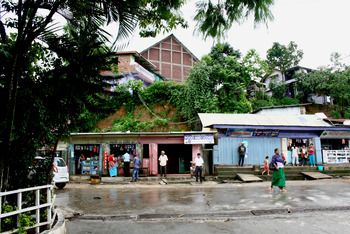
Patients are a vulnerable group, and cross-border mobility—some of which is of questionable legality—multiplies this vulnerability. During my time in Imphal I encountered many patients from Myanmar on the wards and in guesthouses in and around the hospitals and discussed the logistics of bringing them to Imphal for care with multiple respondents in the health sector (see Figure 1). Some of the patients from Myanmar in Imphal come unofficially or through arrangements made between local authorities. Other Myanmar nationals, especially Chins, come for treatment from within India (many of whom live in neighbouring Mizoram), where they have a tenuous legal status. And while I was curious about the experiences of patients from Myanmar, interviewing them would create undue risks, especially for patients already trying to keep a low profile. Administrators in the private health sector, who were my gatekeepers for doing fieldwork in hospitals and clinics, were also unenthusiastic about it. These attitudes are illustrative of the ambiguities surrounding cross-border medical mobility in the border zone, in that it encompasses both licit and illicit mobilities and no one is entirely sure which is in play at any given moment.
Patients and families in the cluster of businesses around Shija Hospital, Langol. Source: Photo by the author, 2013.

Secondary data also pose limitations. Patient numbers from Myanmar are very difficult to ascertain. Health indicators from the region are poor.Footnote 4 Myanmar census data report significant migration to India from the districts of Kalay, Tamu, and Hkamti in Sagaing RegionFootnote 5—districts with large ethnic minority populations—as well as from the Chin state.Footnote 6 It is unclear how reliable these figures are and whether they also account for short-term cross-border movement for medical treatment, shopping, or border business. If not, numbers could be much higher. While medical mobility is an everyday occurrence, many of the tactics used to get patients from Myanmar infringe Indian immigration and security regimes. However, there are important ambiguities. The interlegalities of the border zone—the complex, contentious, and constitutive relations between legalitiesFootnote 7—mean different authorities take charge of different patches of land and the goods and people moving across these patches at different times. This makes it difficult to pin down which authority is in control of which patch and when. As such, it is difficult to know which rules are being violated. In addition, financing the private health sector depends upon all manner of connections with the murky world of elites in Manipur—some within the government, such as elected members of the legislative assembly or bureaucrats in government departments, and some outside the government, such as local business figures, current and former members of underground groups, and even members of the armed forces. Any of these figures may help to facilitate mobility but this is not discussed openly. To contend with these limitations, this article focuses on the flows of bodies and body parts from Myanmar to Manipur and back, and the infrastructure that enables these flows.
Movement across international borders for medical treatment is a global phenomenon. The literature focuses on the emergence of a global medical market, parallel medical systems within a single national or local context, the international mobility of medical professionals and volunteers, variations in biomedical cultures, the legal geographies of drugs and patents, and the movement of patients for medical care, which is the focus here.Footnote 8 Key points of differentiation are between patients who travel for more affordable care, such as Americans travelling to Mexico or those engaging in so-called ‘medical tourism’;Footnote 9 patients who travel for care that is available through a particular technology, specialization, or lax regulation in a global medical marketplace, such as stem-cell technology in China or plastic surgery in Brazil;Footnote 10 and patients who travel for care that is non-existent at home owing to poverty, underdevelopment, and conflict.Footnote 11 Much of this work focuses on movement from the Global north to the Global south and the systems created and abandoned in this process.Footnote 12 There is a growing body of work on mobility within the Global south,Footnote 13 including within Asia, though it often focuses on elite and middle-class mobility, often by air. Although not without its risks, burdens, debt, and tragedy, it is nevertheless different to the land-based journeys through the borderland discussed here. As Kangas argues in her survey of the field, analyses should ‘include the non-citizens, those left out of nations and possibly overlooked in the global community; we can become so caught up in tracing patients’ varied transnational journeys that we risk ignoring those who lack mobility and entitlements to health care’.Footnote 14
Connell takes this a step further, arguing that far more patients in Asia and Africa move across ‘nearby’ international borders for medical care. He notes this kind of medical mobility is ‘primarily regional, centred on needs rather than wants, sometimes of the desperate and frustrated, where social networks, familial support and loans may be crucial’.Footnote 15 Procedures are diverse, including seemingly mundane rather than specialist treatments, and travel is driven by ‘inadequate infrastructure, skilled practitioners and pharmaceuticals, corruption and inadequate diagnoses’.Footnote 16 Connell makes mention of patients from Myanmar travelling to Thailand through Mae Sot, noting that medical travellers blend in with refugees and labour migrants, and posits that within:
… familiar cultural and linguistic settings, distinctive, asymmetrical border regions have emerged, characterized by complex bidirectional flows, cheap accommodation and food outlets, and a flourishing informal economy of care (informal agents, pharmaceutical purchases, accommodation, taxis, and associated trade), with national boundaries increasingly blurred and erased, where states are permissive and regulation weak.Footnote 17
While many of these attributes exist for patients crossing the border into Manipur for medical treatment, especially the ‘informal economy of care’, no equivalent of Mae Sot exists in Myanmar's west. Border governance is far more ad hoc. The flows are rarely bidirectional, there is limited linguistic commonality (especially in Imphal), and national boundaries require some deft navigation. As travellers continue along this route, they enter territories that are not controlled, checked, or taxed by the Indian state or military, but by insurgent organizations representing different Naga and Kuki groups.
Cross-border connections
Manipur's population is usually categorized in three indigenous communities: the valley-dwelling Meitei and the hill-dwelling Naga and Kuki communities, along with many smaller groups. The history of connections (and extreme violence) between the erstwhile Manipuri kingdom (Kangleipak) and various kingdoms in upper Burma is well chronicled.Footnote 18 Much of this written history focuses on established polities in the valleys and plains—the Meiteis—and their written records. This approach bypasses connections between upland communities that make up a substantial area of the borderland, connections that are brought to light in the paradigmatic work of Willem van SchendelFootnote 19 and later James Scott.Footnote 20 This work has shaped scholarship on the border zone for a decade, drawing attention to shared cultural, agricultural, gastronomic, and even political and media practices, as well as the limits to these connections.Footnote 21
I mention this well-chronicled history here to make a number of points of relevance to this article. First, there is a powerful political and social history of anti-India sentiment in Manipur and the flip side of this has been attempts to revive connections with Myanmar, especially between the former courts in Imphal and Mandalay, evident in official visits by state-level politicians from both countries, the creation of a Myanmar Studies Centre at Manipur University, and public enthusiasm for better connections with Myanmar. At the popular level there are ongoing attempts to demonstrate ties to Myanmar, mostly to Bamar communities, through shared linguistics, similar cosmological beliefs such as lai/nat worship, diet, as well as frequent discussion of the fabled Meitei diaspora in Myanmar, primarily in Mandalay.Footnote 22 Naga communities live on both sides of the border, especially in the Hkamti district of Sagaing Region (including the Naga Self-Administered Zone), while Kuki communities have linguistic and cultural ties to the Zo/Zomi/Chin tribes in the Chin state and in neighbouring Mizoram on the Indian side of the border.
Second, decades of militarization and counter-insurgency impacted negatively on development in Manipur, including Imphal, contributing to severe economic dependency on Delhi, a dysfunctional civilian government that is unable to meet the basic needs of the people, and a steady brain drain to other parts of India.Footnote 23 Decades of separatist conflicts by a succession of left-wing rebel groups since the 1950s was followed by inter-ethnic tensions and violence from the 1990s.Footnote 24 Initially confined to the countryside, these conflicts shook Imphal throughout the 1980s and 1990s, leading to the imposition of curfews, checkpoints, and the notorious AFSPA from 1980–2004. The armed forces still occupy the city, still administer various public buildings, and still have a major influence on its political and social life.Footnote 25 Furthermore, between 20–30 underground groups are active in Manipur. Some are loose networks engaged in smuggling, trafficking, kidnapping, extortion, and in the murky world of Imphal's infrastructure development, contracting, racketeering, and social services, including health and medical care. This makes Imphal an unlikely site for the creation of a transnational medical hub, but also suggests that the existence of this hub has little to do with the capabilities of the civilian government.
Third, with unresolved territorial disputes in the surrounding hill areas populated by Naga and Kuki communities, the continued presence of the Indian military and paramilitary throughout the state, and a revived anti-immigrant movement in Imphal, passage into Manipur from surrounding polities, including Myanmar, remains hazardous, especially for patients already suffering poor health.
Fourth, and in contrast to the action on the main roads, crossing the border in the hill areas is common and barely noticeable. Pastors, insurgents, workers, smugglers, shoppers, and students cross the border through back roads and navigate their way to villages and towns, especially in areas where the border is not demarcated.
Despite this past—or perhaps because of it—Manipur is at the centre of official plans to recalibrate Manipur and the entire northeast border region under the Indian government's Look East Policy, recently redesignated the Act East Policy, which emphasizes land connections between India and Southeast Asia.Footnote 26 Asian Highway 1, formerly National Highway 102, runs through Assam, Nagaland, and down into Imphal and out to the Moreh-Tamu border crossing and onwards—at least in the imagination of its proponents—to Mandalay, Bangkok, and Singapore. Since the border was opened in 1995 there have been numerous agreements between India and Myanmar,Footnote 27 many of which make reference to cross-border cooperation. A 2017 agreement included a plan to distribute ‘border passes’ to residents living within 16 kilometres of the border on the Myanmar side, but it has been deferred several times since.Footnote 28
It is Myanmar's transition from military dictatorship to democratic polity,Footnote 29 from central rule to regional governance,Footnote 30 from closed to open economy,Footnote 31 from ‘cronyism to oligarchy’Footnote 32—even if vaguely conceptualized—that encourages action on connectivity within Manipur. In Manipur, Myanmar's transition is viewed almost unequivocally as opportunity, even if the precise nature of these opportunities is rarely articulated. It is into this context that cross-border medical mobility has increased, revealing an adjacent form of connectivity not entirely separate from existing connections, though driven by a different set of actors from both the community-to-community connections and the official government-level pipe dreams.
Manipur's private medical facilities
Imphal's private medical sector has emerged in the last two decades. At last count the city had between 25–30 registered private health facilities. These range from fully equipped hospitals, such as Shija, City Hospital, and Imphal Hospital, to smaller clinics, many of which serve as ‘overflow’ facilities for the better hospitals or which seek to attract confused patients by imitating the better-known facilities. Using Ferguson's conceptualization of ‘mimesis’ as a shadowing that claims similarity to powerful/original things and systems but remains different in certain ways, DalstromFootnote 33 discusses the ways in which private health facilities in the Mexican border town of Nuevo Progresso mimic health facilities in the United States, creating a shadow health system familiar to American patients in terms of standards, but different—and improved—in terms of better service and care. In Imphal the mimetic medical sector is located not across an international border but in close proximity to the sector it seeks to imitate, often across the road, on the same city block, and sharing a similar name or building façade.
In this section I will focus on two facilities: Shija Hospital in the city's northwest fringe at Langol and Babina Diagnostics in the east of the city at Soibam Lekai. These two sites, where I was able to do the most ethnographic work between 2011–2016, are the longest running private facilities and the most proactive in dealing with patients and samples from Myanmar. Their success as private medical facilities has enmeshed the local state (Manipur) and the national state (India) into new border regimes, while also challenging the legitimacy and sovereignty of the same state actors and agencies.
Shija Hospital, the largest private medical facility in Imphal, was started in 1996 in the swampy forest of Langol Lamkahi. Shija employs around 600 staff and has 200 in-patient beds. It houses a specialist centre offering services such as obstetrics, cosmetic surgery (rhinoplasty and blepharoplasty), and cardiology. The hospital has an ambulance service, bus service, and nursing college. At the rear of the compound is a blood bank and transfusion centre—the only one in the region—funded by the Ministry for Development of the North-East Region (MDONER), the Indian government's special ministry and coordinating agency to orchestrate development of the region.
I met with Shija's founder and director Dr Singh back in 2013. He and his wife had resigned from the Regional Institute of Medical Sciences (RIMS), the main public hospital in Imphal, to start a clinic at the present site in Langol, an area on the edges of the city covered in forest and swamp. The early years were a struggle and coincided with instability and violence in Imphal itself. The hospital had to overcome poor roads, no electricity, few patients, and limited trust in the private health system. Dr Singh insisted that the public system was so poor that he had to break away from it to provide better care and give medical professionals a chance at a career.
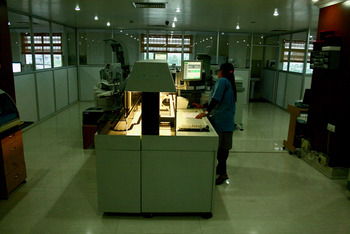
Dr Thongjam, the founder of Babina Diagnostics, narrated a similar rationale. Like many doctors of his generation, he had studied outside the state and was warned against returning when Manipur began to unravel in the 1980s. He started a small diagnostics clinic in 1983 with a rented microscope and now has 60 collection centres throughout the borderland and one unofficial centre across the border in Myanmar. Babina Diagnostics’ main facility is built on top of a marsh in Soibam Leikai, in the east of Imphal. While touring the labs with Dr Thongjam he gave me a rundown of the available equipment, what it does, and where it comes from (Germany, Japan, Korea). With the equipment, staff can perform electrocardiograms (ECGs), magnetic resonance imaging (MRIs), cat scans, x-rays, and ultrasounds (see Figure 2). He introduced me to the technicians, who talked about where they had trained and why they had come back to live in Manipur. While the main diagnostic centre is in Imphal, there are others in the surrounding states of Nagaland, Meghalaya, and Assam. Through this network they claim to see 1,000 patients a day who can then be referred to other doctors. Anyone who cannot be tested in the regional centres comes to Imphal, and Babina has a fleet of vehicles and motorcycle couriers who transport samples in and out of the city. Increasingly, Babina is seeking to establish a presence in the preventive healthcare market, offering packages (labelled ‘platinum’, ‘gold’, silver’, and ‘basic’, and priced accordingly) for various tests and check-ups.
Part of the Babina interior. Note the emphasis on technology and a local workforce. Source: Photo by the author, 2014.

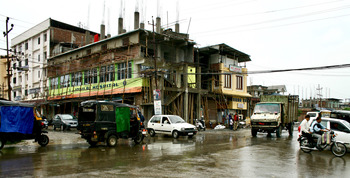
For medical professionals the private sector provides more career advancement, professional development opportunities, and access to new technology. It is seen as a meritocracy compared to the bureaucratic, conservative, and corrupt public sector. A common refrain in contemporary Imphal is that the private sector brings ‘home’ Manipuri doctors and other health workers who for decades have left the state en masse (see Figure 3). Health workers and medical/nursing students are Manipur's most valuable and far-reaching resource.Footnote 34 Data from the National Rural Health Mission show that Manipur has almost double the required number of doctors in primary health facilities, double the required number of female health workers/assistants, as well as surplus pharmacists and technicians, though their numbers are limited in rural areas.Footnote 35
‘Mimetic’ growth: two new ‘hospitals’ across the street from Babina in Porompat. Source: Photo by the author, 2013.

Even distancing the sector from the state is complicated. There is a convergence between state and non-state, public and private, licit and illicit within the sector. As noted above, Shija Hospital has received funds from the Delhi-based MDONER (for the blood bank) and the Manipur government (after the hospital was established). Several state organizations also empanel it, meaning that patients employed by certain state agencies in Manipur, Nagaland, and Mizoram have the cost of their treatment subsidized (usually by capping the cost). Yet the market for medical care within Manipur and neighbouring states is limited, especially for technologically advanced private care. Facilities like Shija and Babina have advanced equipment, but a small pool of patients to utilize it. Accessing a larger pool of patients requires cross-border expansion into Myanmar.
Moving bodies and body parts
Outside each ward at Shija is a whiteboard recording the name of every patient and their home town. These include neighbourhoods in Imphal, towns elsewhere in Manipur and the frontier, and Tamu on the Myanmar side of the international border. On a tour of the wards I was told that whenever someone has come from Myanmar, even if they are from towns and cities hundreds of kilometres within Myanmar territory, staff write ‘Tamu’ so all staff members in the hospital know the patient may not speak Manipuri. Writing ‘Tamu’ also suggests that the patient is from the border zone (even if they are not) and is thus eligible to be in Imphal seeking treatment, though patients often remain well past the limit of allowed days.
To increase patient numbers, the private health sector is pushing the Indian and Manipur governments for a visa-on-arrival system for patients from Myanmar, even if they do not have a passport, a need not currently addressed by the proposed border pass system. In the meantime, the hospital uses its own networks to bring in patients. On one visit to Shija in 2013, staff from the hospital's public relations office explained the process of bringing patients across the border. Agents on the Myanmar side gather together the information about patients and house them in Tamu. Shija sends a minibus to Moreh (on the Manipur side of the border) to collect the patients. I was shown a sheet of paper with passport photos of one bus load of patients from Myanmar glued to the left-hand side of the paper with their names, home towns, and ailments handwritten in a column on the right. Sheets of paper like this are presented at the border, and when the patients return through the border, these are checked off.
For Babina the cross-border flows involve bodily samples from biopsies and medical images coming into Imphal, and sometimes being returned, as well as diagnoses travelling back electronically through the internet, by phone, and as written English-language reports. Babina collects samples and images through what was described by one of the administrators in the head office as an ‘unofficial’ clinic on the Myanmar side of the border at Tamu. The clinic goes by a simple Burmese name; we can call it ‘Myint’. At Myint, patients give blood, tissue samples, and have medical images taken. Some patients, seeking an additional diagnosis, also bring samples and images with them to the clinic, obtained in other hospitals or clinics. These are labelled and held in thermal boxes at Myint until drivers from Babina arrive. The frequency of these trips varies, based on how much there is to collect, how urgent the need for diagnosis is, and whether the road from Imphal is blocked or subject to bandhs (strikes). These vehicles deliver the samples to Babina in Soibam Leikai and they enter the workflow of the diagnostic clinic. Once a diagnosis is ready, it is either uploaded for the patient to access through a webpage (in English)—though uptake of this has been gradual—or communicated by phone to staff in Myint, while the physical copies are sent back on the next minibus run. The diagnosis is communicated to the patient through a verbal translation from English to Bamar at Myint. Where medical treatment is needed, Babina might recommend additional tests or admission to one of the hospitals in Imphal and the staff at Myint liaise with the necessary facility once the patient agrees.
There are also official cross-border medical exchanges in the other direction. Doctors from Shija run health camps in Monywa, a town over 300 kilometres inside Myanmar. Shija undertakes regular ‘Smile Train’ missions—a travelling entourage of surgeons doing free cleft palate operations—in western Myanmar and government officials from Sagaing Region have visited Shija and discussed building a government-funded lodge for patients. What is striking about this are the positions being performed. The doctors from Manipur, cast as a dysfunctional state and India's turbulent frontier, take on the role of technologically advanced donors extending medical care to a (perceived) disadvantaged population across the border.
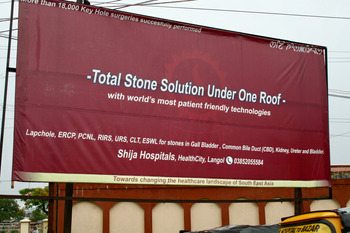
Shija's slogan is ‘Towards Changing the Health Landscape of Southeast Asia’ (see Figure 4). It appears on their promotional material and on billboards in Imphal and other cities on the frontier. The hospital makes no attempt to locate itself within India, rather it repositions itself, and to some extent Manipur, within Southeast Asia and projects a catalytic role in improving healthcare provision across the border. Of course, all of this depends upon the road between Myanmar and Imphal being open, a circumstance that is far from guaranteed as blockades of the highway have grown in frequency and legitimacy as a political tactic used by all of Manipur's main ethnic communities.
A billboard for Shija Hospital outside the Jawaharlal Nehru Institute of Medical Sciences public hospital. Note the list of procedures available, the location in ‘South East Asia’, and the almost exclusive use of English. Source: Photo by the author, 2014.

Dead zone
Patients from Myanmar boost the private medical sector in Imphal, and the private medical sector meets the needs of patients across the border. Despite this meeting of care and need, routes in and out of Imphal are precarious, making transnational medical travel uncertain. Actors engaged in ethnic politics in Manipur have regularly utilized blockades of the main highways into the city as a political tool since 2010, though there are older examples going back to the 1990s.Footnote 36 The longest running blockades in the last decade include the Mao Gate incident in 2010 (lasting approximately 90 days), the Sadar Hills District blockade in 2011 (approximately 110 days), and the 2017 United Naga Council Blockade (139 days). The ‘success’ of the blockades in terms of their longevity, though not necessarily their outcome, presented different political groups with a powerful tool. As Jilangamba writes, blockades and the reaction to them—counter blockades and protests in Imphal against people entering from the hill areas—produce ‘threatening and one-dimensional choices (that) not only encourage ethnic tensions, but also limit political expression only to ethnic-based articulations’.Footnote 37
Blockades have two main impacts on the mobility of patients and medical samples moving to and from Myanmar. First, they prevent patients from reaching Imphal to seek care, including after they have already begun the journey from their home towns and villages, leaving them stranded in Tamu and elsewhere along the way. For those in poor health this can be a difficult time and the decision to continue or turn back is dependent on funds, handlers, and fixers who organize their passage to and from Imphal, and the information that comes through from Manipur about the situation. Similarly, the blockades can leave patients stranded in Imphal after receiving treatment, unable to return to the border. After leaving hospital, stranded patients lose daily contact with the hospital administration and need to find accommodation in lodges and guesthouses, where they must wait in uncertainty until it is time to leave, relying upon a network of strangers to assure their safe passage. Counter-blockades that target members of the ethnic communities deemed responsible for the original blockade increase tensions and violence between ethnic groups in the city. Counter-blockades stop the movement of targeted ethnic communities out of Imphal, usually during the imposition of blockades on the main roads which stop flows into Imphal from the rest of India and/or from the border. For visiting patients from Myanmar this makes it difficult to move around the city lest they are mistakenly identified and targeted.
Second, the blockades disrupt the flow of medical supplies into Imphal. Even if the road to Myanmar is open, blockades of the highways to the rest of India pose additional problems. Fuel shortages can be severe during the blockades, which interrupts transport from the centre of town to the hospitals, making it hard for patients and staff to move back and forth. The longer the blockades, the stronger the possibility of shortages. During these times the cost of treatment can rise unexpectedly for patients already undergoing care. This applies to local patients as well as those from Myanmar. However, given that many Myanmar patients arrive informally and are dependent on the hospital for their passage to and from the border, not to mention language difficulties for some (though not all), their capacity to make decisions about treatment in the face of escalating costs is further compromised.
Some critical supplies are simply unavailable, threatening treatment and life itself. Hospitals can run low on drugs, supplies, and adequate medical waste disposal. For a time in 2011 the two main public hospitals suspended surgical operations owing to lack of oxygen—a circumstance that furthered a lack of faith in the public system.Footnote 38 In my interview with Dr Singh from Shija Hospital, he discussed the challenges of oxygen supply during the same 2011 Sadar Hills blockade. With no capacity to produce and store oxygen at the time, the hospital was dependent on supplies arriving by road. As the situation fluctuated throughout the months of the blockade—some supplies being allowed one week and then not the next—the hospital ran critically low. The solution was to bring in oxygen by air, dramatically increasing costs. On a visit to Shija and its surrounds in 2016, I visited their oxygen storage facility being built a kilometre or so from the hospital in the last remaining rice fields around Langol. With a local oxygen supply, the hospital is far less vulnerable to blockades and, along with the blood bank, Shija can also supply other hospitals. It is important to note, however, that blockades are not absolute. Different vehicles are allowed through, and Dr Thongjam noted that Babina's vehicles carrying thermal boxes with tissue and blood samples are usually allowed to pass. But it can be hard to anticipate. Some routes, especially that from the border to Imphal, has sections controlled by different, often rival, groups. Goodwill from one does not always mean goodwill from another, even in the course of a single journey.
In late 2017, the aforementioned border agreement between Myanmar and India included some references to medical cooperation—mostly in terms of Indian funds and expertise (that is, not from Manipur) to build and upgrade hospitals within Myanmar (Sittwe and Monywa upgrades and a proposed new hospital at Nay Pyi Taw) as well as to easing mobility across the border for ‘border residents’. Details of the agreement have been difficult to find, but according to the Indian media and a statement by the Ministry of External Affairs, the agreement sought to finalize ‘agreement on border crossing which will help in regulating and harmonizing movement of people across the common land border and thus promote bilateral trade and tourism’.Footnote 39 Media reports detail that the agreement seeks to ‘streamline free movement’ of people living in a 16-kilometre radius of either side of the border.Footnote 40 Writing in The Diplomat, Parameswaran notes that the agreement is ‘designed both to facilitate regulation and harmonization of the movement of people and to provide connectivity and enhance interaction between those from India's north-eastern states and the people of Myanmar. However, no specifics were provided about the actual terms of the agreement.’Footnote 41 Other outlets noted that the distribution of border passes was part of enhanced security. Writing in The Hindu, Singh comments that ‘both the countries had been intending to put a system in place after India raised the issue of movement of extremists and smugglers freely across the border’,Footnote 42 and that the system put in place would be closer to the draconian policing of movement found along the Bangladesh border.
In March 2018 news surfaced that Myanmar had delayed signing the agreement, following several months of reports of tensions over encroachment along the border.Footnote 43 In May 2018 the agreement was finally signed, and it came into effect from August of the same year.Footnote 44 In early 2020 talk of the long-rumoured bus route from Imphal to Mandalay surfaced once again,Footnote 45 but as the passengers will need an existing visa, it caters more to tourists than medical travellers, particularly as it will bypass western Myanmar and go directly to Mandalay. Even with a formal agreement between the governments of Myanmar and India to provide formal cross-border mobility for healthcare, there is little to suggest that India can guarantee the movement of people through the patches of territory between the border and Imphal. To be sure, the private medical sector in Imphal covets such an agreement, but even if it is put into operation, mobility for patients and samples will still depend on navigating blockades and checkpoints by state, non-state, and quasi-state actors. Borderland governance is very different on the ground when compared to agreements made in Nay Pyi Taw or Delhi. It appears that, for the time being, non-state actors will continue to facilitate cross-border mobility.
Conclusion
To conclude, I argue that there are four main contributions that cross-border medical mobility between Myanmar and Manipur can make to the study of Myanmar's borders and adjacent polities. First, movement of patients and medical samples is primarily—but not solely—from Myanmar to Manipur for treatment or diagnosis. These connections project particular ways of thinking about each place: western Myanmar as poor and remote, Manipur as advanced and networked. Whether this is an accurate reflection of medical and health infrastructure in western Myanmar is difficult to say, and perhaps beside the point. Myanmar is viewed as a new market for medical care and diagnostics, especially the western Sagaing Region and Chin state, putting new pressures on old methods of border governance. Within India the idea of Manipur as developed and advanced is a misnomer; it contradicts dominant ways of seeing the state, both from afar and from within, where the moniker of being ‘underdeveloped’ is pervasive in local politics and individual perceptions of place. Since the mid-1990s, the border with Myanmar has been the panacea for underdevelopment and remoteness, bringing goods—especially consumer goods and illicit goods (including narcotics and wildlife but also mundane things like beer and untaxed building materials) and now patients—to Manipur.
Second, both Manipur and western Myanmar can be considered in ‘transition’, territories being recalibrated by political dynamics emanating from elsewhere. Of the two, Manipur's transition is less well known. Arguably, Manipur has been in perpetual transition since the British invasion in 1891: from kingdom to princely state to a brief period of (nominal) independence (1947–49) to union territory (1956) to state (1972).Footnote 46 However, it is the transition from insurgency and counterinsurgency that has shaped the state's political, economic, and social life from the 1960s to a (relatively) more stable and peaceful era in the early 2010s that is most relevant for the health sector.
In Manipur the transition from insurgency to peace is not linear nor is it complete. The fissures and intensity of conflict continue to shift. Certain conflicts have eased, while others have flared up. Urban areas are growing, yet a significant factor in their growth is settlements of internally displaced persons (IDPs). Imphal East and Imphal West districts have had extraordinary laws (AFSPA) lifted, yet a military presence remains interwoven in everyday life. Other districts, like Ukhrul and Churachandpur, have experienced intensified military operations in the 2010s. The brain drain continues, yet there is also a noticeable return migration, bringing capital and expertise back into the local economy. The last decade has seen a number of non-military initiatives by the Indian government aimed at better integrating Manipur into the national fold, including the Smart Cities Mission which has granted Imphal a sizeable injection of finance for a digital retrofit.Footnote 47 Like other border states in the northeast, Manipur is being liberalized and subject to the advance of Indian capitalism and investment; ‘new’ India seeks a foothold in territories where ‘old’ India has been staunchly resisted or never really took hold.
Although Myanmar's transition has been more widely discussed (see above), there has been limited analysis of how this plays out in the country's west, in Chin state and the western tracts of the Sagaing Region close to the border, a multi-ethnic and multi-faith area with a sizeable military presence. Different ‘transition dynamics’ shape aspects of life on each side of the border, yet in this case Manipur and western Myanmar are connected through medical ties.
Third, patients and samples move through territories controlled by paramilitary forces, underground groups, and different tribal councils. Routes are sometimes blocked, passage treacherous, roads conditions poor, and ill health worsened by uncertain journeys. Patients and samples might be stuck at the border or stuck in Imphal unable to return to Myanmar; blockades have periodically shut off Imphal for several months at a time since 2010. Furthermore, medical necessities like drugs, oxygen, and other supplies can be caught up in the blockades, separating patients and medical staff from their supply chains. Here the complex inter-legalities of the borderlands test the limits of conventional governance, exacerbating the vulnerabilities facing those dependent on cross-border connections.
Fourth, the movement of patients and samples back and forth in this border zone draws attention to the slow, gritty, and risky cross-border medical mobility of the poor. Rather than seeking to minimize cost, patients utilize Manipur's health infrastructure out of necessity and most likely at high financial cost, providing insights into the contours of cross-border medical care in sites and times of transition, where accessible medical facilities and infrastructure are produced by the ad hoc endogenous private sector rather than by governments.
Unlike wealthier Myanmar citizens who can travel to Singapore or Thailand for treatment, often at great cost and financed by personal debt, medical travel from western Myanmar to Imphal and back again is not travel to a stable, safe, and settled polity. So why do patients come? Clearly, there is a significant need for medical care in western Myanmar that warrants taking risks, granting trust to agents and private medical facilities in Manipur, and circumventing official migration channels—whether knowingly or unknowingly. The private medical sector in Manipur pursues patients in Myanmar to overcome the limits of its own small market. Driven by non-state actors initially, state agents have become enmeshed in the expansion and financing of the private health sector, in visits and inspections by local government from both sides of the border, and in bilateral talks about cross-border medical mobility at the national level. Yet goodwill alone will not guarantee mobility through the borderlands, given the complex inter-legalities governing certain patches of territory en route. As the frequent blockades of routes in and out of Imphal have shown, deeper connectivity exacerbates vulnerability, subjecting patients and medical professionals to the dynamics of political action beyond their control.