The increasing severity and frequency of floods, tsunamis, typhoons, and other extreme weather events associated with climate change is resulting in an increasing number of people being displaced by disasters in the Asia-Pacific region. The impacts of disasters tend to exacerbate existing inequalities by impacting most heavily upon the vulnerable in society. Disasters act as a brake on economic and human development at the household level by destroying livestock, crops, homes, and tools, and at the national level when roads, bridges, hospitals, schools, and other facilities are damaged.Footnote 1 Disasters do not equitably affect populations: the poor, the unemployed, and those living in densely populated urban slum regions are most at risk when a disaster strikes. Such groups tend to lack economic resilience mechanisms such as insurance or personal savings which can be used to recover from the impacts of disaster. As such, these groups tend to feel the impacts of the disaster more intensely and for a longer period of time due to their limited resource base, greater exposure to the spread of disease from living in substandard conditions, and disrupted livelihood and education activities.Footnote 2
It is recognized that climate change acts as a threat multiplier in relation to disaster, with nine out of every ten disasters now climate-related.Footnote 3 Temporary or permanent displacement is one of the most damaging consequences of disaster, and the exacerbating influence of climate change means that displacement is an increasingly significant concern. One of the current challenges in providing protection for those displaced by natural disasters (whether climate-related or not) is identifying the appropriate protections which apply and co-ordinating their implementation.Footnote 4
In circumstances of disaster-induced displacement there are two sets of protection mechanisms which may apply: those relating to displacement and those relating to disaster response. Disaster response mechanisms can cover the full range of impacts of a natural disaster, from the initial emergency response phase through to recovery and rebuilding. Displacement frameworks, on the other hand, address human displacement caused not only by disaster but by a range of environmental, political, social, or economic causes. These two frameworks can clearly overlap where displacement is caused by natural disaster, and both are connected by a common grounding in human rights principles.
When considering the application of displacement protections, a distinction must be drawn between internal displacement and cross-border displacement. It is well recognized that persons who cross international borders as a result of disaster displacement are currently not adequately protected under international law. These people do not qualify as “refugees”Footnote 5 and have limited access to protection from their state of nationality once they leave its territory. The significant challenges of protecting these persons have been extensively addressed in the literature and are not a specific focus of this paper.Footnote 6 The paper focuses on persons who are displaced internally as a result of disaster, using the definition provided in the Guiding Principles on Internal DisplacementFootnote 7 (Guiding Principles) which define internally displaced persons (IDPs) as:
[P]ersons or groups of persons who have been forced or obliged to flee or to leave their homes or places of habitual residence, in particular as a result of or to avoid the effects of armed conflict, situations of generalized violence, violations of human rights or natural or human-made disasters and who have not crossed an internationally recognized State border.Footnote 8
As well as protections found in the Guiding Principles and other instruments relevant to internal displacement, persons displaced by natural disaster can also call upon protections contained in a number of disaster response instruments. These have been developed largely as operational guidelines to assist state and non-state actors in managing disaster response. As every disaster is different in terms of scale and impact, disaster response instruments allow for flexibility in implementation. Despite their different focuses, both displacement and disaster instruments share a link to human rights principles, seeking to ensure protection of the rights of persons affected.
This paper takes a rights-based approach to its analysis of disaster-driven displacement. Human rights-based approaches comprehend a range of techniques for applying human rights laws and principles. In their most legal form they can incorporate litigation for violations of binding human rights law in either domestic or international tribunals. This paper adopts a less formal approach, which envisages the use of international human rights law as well as expressions of human rights principles which can be located in other areas such as refugee law and international humanitarian law. These principles can be used to identify areas where action is required, as well as to help formulate appropriate responses.
In the context of disaster displacement, a rights-based approach requires identification of the human rights which are at risk when disaster displacement occurs, and a consideration of who bears responsibility for ensuring that these rights are upheld.Footnote 9 Fundamental to a human rights-based approach is the recognition that, even in the worst case of disaster or displacement, people remain entitled to the fundamental human rights which are guaranteed to them under international law.Footnote 10 Initially, human rights principles provide a useful mechanism for identifying, categorizing, and prioritizing the needs of individuals and communities affected by disaster. The rights guaranteed by international human rights law can be used as a guide to pinpoint the ways in which people are particularly vulnerable before and after disasters occur, and to identify the sorts of services which are required. They can also facilitate a better understanding of vulnerability, as in many cases vulnerability to disaster is founded in inadequate human rights protections more broadly. In such cases, the impact of disaster can be understood as part of ongoing social, economic, or cultural problems which require structural and multifaceted reform, rather than as purely an environmental problem.
Human rights-based approaches can also complement disaster management expertise to help identify specific areas which need to be prioritized, allowing for disaster response to be tailored in a way which addresses the most urgent and essential needs first and ensures that the ongoing needs of displaced persons are met. Human rights also play an important role in the way disaster response strategies are delivered, by imposing key minimum standards for service delivery and assistance on both state and non-state actors. In particular, principles of non-discrimination, freedom of information, and participation apply to ensure that aid is delivered in an equitable and accountable manner, free of corruption or partiality. During the disaster recovery period, rights to liberty, autonomy, and security of the person are also crucial to ensuring that displacement is managed in a way which upholds human dignity and protects against further harm.
As well as identifying the rights which are likely to be impacted upon in times of disaster, a rights-based approach also considers who the duty-bearers are in relation to those rights. The international principle of state sovereignty has traditionally been interpreted as leaving human rights enforcement to national governments, though some debate has arisen in the disaster context regarding the responsibilities of the international community when a national government does not have the capacity or the will to assist its citizens following disasters.Footnote 11 The International Law Commission’s Draft Articles on Protection of Persons in the Event of Disasters (ILC Draft Articles) provide that “the affected state by virtue of its sovereignty has the duty to ensure the protection of persons and provision of disaster relief and assistance on its territory”.Footnote 12 It is, however, recognized that states will sometimes lack the capacity to respond to disasters, and the ILC Draft Articles state that there is a legal duty on the affected state to seek assistance from other states, the United Nations, other competent intergovernmental organizations (IGOs), and relevant non-governmental organizations (NGOs), as appropriate.Footnote 13
This paper analyzes the application of rights-based approaches to disaster displacement in the Asia-Pacific region in order to assess whether the current framework is sufficient or should be supplemented with a new, specifically focused instrument. It begins by exploring the occurrence of disasters and displacement in the region, demonstrating not only that disaster-induced displacement is increasingly prevalent, but also that economic and social conditions in many countries mean that the impact of displacement is often prolonged and more severe. This is followed by an analysis of international law to identify the human rights principles which apply, and the nature of states’ duties. In particular, the paper will examine the nature of state practice in the Asia-Pacific region and evaluate the level of protection available. It will also examine several soft-law instruments relating to both internal displacement and disaster to assess the extent to which they protect the rights of IDPs. Using the examples of the Indian Ocean tsunami and Cyclone Nargis in Myanmar, the paper will illustrate the human rights implications of disaster-induced displacement and the challenges of enforcing human rights in such circumstances. The paper will finally critique the suggestion that the doctrine of the responsibility to protect (R2P) might apply in situations of disaster displacement in the face of inability or unwillingness on the part of sovereign states to fulfil their obligations. After identifying a range of hard- and soft-law instruments which establish human rights principles applicable to disaster-induced displacement, the paper concludes that, despite deficiencies and challenges in their implementation, a rights-based approach could be enhanced by greater engagement with existing human rights treaties and greater implementation of soft-law principles, and that no new instrument is required.
I. DISASTER-INDUCED DISPLACEMENT IN THE ASIA-PACIFIC REGION
The Asia-Pacific region is the most disaster-prone area in the world, and the impacts of disasters are also felt most seriously in this region.Footnote 14 There is no single definition of disaster at the international level, and this paper uses the broad definition proposed by the ILC: “Disaster means a calamitous event or series of events resulting in widespread loss of life, great human suffering and distress, or large-scale material or environmental damage, thereby seriously disrupting the functioning of society.”Footnote 15 Between 1970 and 2011 almost two million people were killed in disasters in the Asia-Pacific region, which accounts for seventy-five percent of all disaster-related fatalities globally. The most frequent types of hazard in the region are hydro-meteorological events (flooding, cyclones, and landslides) which, while not increasing in number, are generally increasing in severity.Footnote 16
The human story of this increased severity is a rise in the number of people being exposed to these events. Rapid economic growth, residential development, and population expansion in the region are significant contributing factors to the increased number of “at risk” people in the region. In 1970, the population of the region was 2.2 billion, which had grown to 4.2 billion by 2010, a virtual doubling in size in thirty years. Over the same period, the number of people exposed to flooding has increased from 29.5 million to 63.8 million, and the number of people residing in cyclone-prone areas has grown from 71.8 million to 120.7 million.Footnote 17 Forty-four percent of the population reside in urban areas, and it is predicted that this will increase to sixty-four percent by 2050. Of the 305 urban agglomerations presently in the Asia-Pacific region, 119 are situated in coastal areas.Footnote 18 Urban settlements are often overcrowded, leading to shortages of clean water and adequate sanitation, which increases the risk of health emergencies such as outbreaks of communicable diseases. Furthermore, urban populations face higher risks of food insecurity due to lack of space for livelihood generation activities, and as such are more susceptible to food price hikes.Footnote 19 Compounding this vulnerability, inadequate governance arrangements at the onset of a disaster may lead to the development of humanitarian crises in densely populated urban townships.Footnote 20
The Asia-Pacific region has the highest levels of disaster-induced displacement and is underprepared to respond to disasters. In 2013, 19.1 million people were displaced in Asia and 18,000 in Oceania.Footnote 21 The early months of 2015 have already seen large levels of disaster displacement within the region, with an estimated 3,300 people displaced by Cyclone Pam in Vanuatu, and 2.8 million displaced by the 7.8 magnitude earthquake which hit Nepal. The average levels of displacement are expected to increase over the new few decades as a result of population growth (particularly in Africa), rapid urbanization, and the location of communities, homes, and livelihood activities in hazard-prone regions.Footnote 22 The influence of climate change is predicted to increase the likelihood and extent of displacement in these regions. Displaced persons face increased risks of impoverishment and human rights abuses through the loss of shelter, livelihoods, food security, and the disruption of education and social support networks, compounding existing marginalization. Human rights violations of IDPs are usually not intended or planned; rather they arise from inappropriate policies, insufficient resources/capacity, neglect, or oversight.Footnote 23
When homes and livelihoods are destroyed, and when displacement is recurrent or remains unresolved for prolonged periods of time, situations of protracted displacement arise. The United Nations High Commissioner for Refugees (UNHCR) defines a “protracted” situation as one that has existed for at least five years, where groups of refugees or IDPs of more than 25,000 people have been kept in restricted areas and denied their rights to work or move freely.Footnote 24 Over half of the world’s protracted refugees and IDPs reside in Asia, with double the number of IDPs compared with refugees in the region.Footnote 25 The UNHCR has recognized that protracted displacement is a betrayal of human rights and “wastes lives by perpetuating poverty and squanders precious resources of host countries, donors and refugees”.Footnote 26 IDPs who remain in protracted displacement situations face higher rates of family separation and sexual and gender-based violence, particularly affecting women and children.Footnote 27 Further, discrimination in the provision of goods and assistance and the violation of economic, social, and cultural rights tend to become more systemic over time.Footnote 28 Michael Smith writes that the international community has been slow to address the specific protection needs of IDPs, and notes that one reason for this is that many IDPs tend to fall outside the “protracted” definition due to repeatedly being moved from location to location, and therefore have not attracted sufficient international attention. Smith characterizes such populations as protracted, despite not neatly fitting the UNHCR definition.Footnote 29 There is at present a limited understanding of the period of time taken for disaster displacement victims to recover, and this is likely to remain the case for some time, given the difficulty in tracking all impacted by disasters and the problems of identifying with clarity those who fall within the definition of “protracted displacement”. What is known is that human rights risks increase the longer people are displaced.Footnote 30
The international community seeks to find “durable solutions” for IDPs. A durable solution is defined in the Inter-Agency Standing Committee’s Operational Guidelines on the Protection of Persons in Situations of Natural Disasters as a situation “where internally displaced persons no longer have any specific assistance and protection needs that are linked to their displacement and can enjoy their human rights without discrimination on account of their displacement”. It can be achieved through:
1. Sustainable reintegration at the place of origin (return);
2. Sustainable local integration in areas where internally displaced persons take refuge (local integration); or
3. Sustainable integration in another part of the country (settlement elsewhere in the country).Footnote 31
Even where durable solutions to displacement can be identified, human rights issues can be ongoing. IDPs who return home, locally integrate, or settle elsewhere in the country usually face continuing problems and human rights risks, requiring support beyond the acute crisis period of a disaster. Achieving a durable solution takes time and requires co-ordinated efforts by many institutions to address the humanitarian, development, and human rights concerns of the displaced, and to prevent and prepare for further displacement.Footnote 32
High levels of disaster-induced displacement and the predicted increasing frequency of disaster displacement places huge pressure on limited local, national, and international resources. Recurrent displacement acts to undermine development gains, and increases the human rights risks faced by vulnerable populations.Footnote 33 Catastrophic Typhoon Haiyan, which struck the Central Philippines on 8 November 2013, impacted over thirteen million people and left four million people displaced.Footnote 34 The global community was quick to offer support for this event, with notable contributions by the Asian Development Bank, which offered US$900 million in assistance,Footnote 35 and the top five country donations coming from Australia (US$30 million), the UK (US$24 million), the US (US$20 million), Japan (US$10 million), and Denmark (US$6.9 million).Footnote 36 Despite this generous assistance, recovery in the Philippines will be slow, and the high probability of future severe weather events indicates that there will be a shortage of funds globally to support IDPs.Footnote 37 The following sections will examine the international frameworks which exist to address disaster-induced displacement and through which international efforts can be co-ordinated.
II. RIGHTS-BASED PROTECTIONS APPLCABLE TO INTERNAL DISPLACEMENT
Disaster-induced displacement has the potential to infringe a wide range of human rights. The key international instrument which identifies the human rights implications of internal displacement is the Guiding Principles.Footnote 38 The Guiding Principles define the rights of IDPs and the obligations of governments towards them. They have become recognized as the international standard for the protection of IDPs, and have been implemented in domestic law and used by human rights and humanitarian NGOs.Footnote 39 As a soft-law instrument, the Guiding Principles are not binding on states, but they draw heavily on international human rights treaties, which do impose legal obligations on States Parties.Footnote 40 The effectiveness of both the Guiding Principles and human rights law relies on the extent to which states have ratified the relevant treaties, and on their willingness and capacity to uphold them. During a disaster, states may be unable to comply with all their human rights obligations, even if they are willing to do so. At the same time, however, there have been examples where states have appeared unwilling to comply with human rights law, irrespective of their capacity to do so. This section will first identify the relevant human rights law which applies in times of disaster-induced displacement, cross-referencing those protections with the relevant provisions of the Guiding Principles. It will then examine the extent to which human rights treaties have been ratified in the Asia-Pacific region, before considering some examples which help to illustrate the range of issues which must be taken into account when adopting a human rights-based approach to disaster-induced displacement.
The human rights which may be affected by disaster-induced displacement can be found in the major United Nations human rights conventions, such as the International Covenant on Civil and Political Rights (ICCPR)Footnote 41 and the International Covenant on Economic Social and Cultural Rights (ICESCR).Footnote 42 They are also found in a number of treaties designed to protect the rights of certain groups, such as the Convention on the Rights of the Child (CRC),Footnote 43 the Convention for the Elimination of All Forms of Discrimination Against Women (CEDAW),Footnote 44 the Convention for the Elimination of All Forms of Racial Discrimination (CERD),Footnote 45 and the Convention on the Rights of Persons with Disabilities (CRPD).Footnote 46
Where natural disasters lead to displacement, the human rights consequences are significant. As will be shown, a number of specific human rights can be affected, both by the disaster itself and by governments’ management of the post-disaster period and any resulting displacement. Given these risks, states have an obligation to protect citizens against displacement wherever possible.Footnote 47 This involves an obligation to prevent and avoid conditions which might lead to displacement, including ensuring that communities are prepared for disaster so that the risk of displacement is minimized. Where it is not possible to avoid displacement, the human rights impacts can be prolonged for months or years. States have an obligation to take steps to minimize the negative human rights impacts of disaster and displacement, and this may include a duty to request and accept assistance from the international community.Footnote 48
Of specific relevance to the context of displacement is the right to an adequate standard of living, which includes the rights to food and water.Footnote 49 A related right is the right to a livelihood.Footnote 50 These rights are threatened whenever a natural disaster destroys crops or affects agricultural land, contaminates water supplies, or forces people to relocate away from their means of subsistence. For persons experiencing displacement, the rights to an adequate standard of living and to a livelihood require protection. Displaced persons may find themselves dependent on the state or on family, friends, or NGOs for basic necessities such as food and water. Under international human rights law, states have an obligation to ensure that these basic needs are provided for.
The right to housing is also particularly affected by disaster-induced displacement.Footnote 51 In the initial impact of a natural disaster the right is impinged where homes are flooded or destroyed. Where people are forced to flee their homes due to unsafe conditions, their right to housing is clearly compromised. States have an obligation to ensure that these displaced persons are provided with appropriate accommodation, and that such accommodation is suitable for long-term occupation in the event that displacement is prolonged.Footnote 52 As noted above, natural disasters can have a particularly serious impact on persons whose housing conditions are already insecure, such as the homeless or those living in overcrowded conditions, slums, or other makeshift housing. The right to housing can therefore be used to identify persons who are likely to be vulnerable to the effects of a natural disaster, in particular those who are at risk of displacement.
International law also guarantees the right to the highest attainable standard of health (including mental and emotional health).Footnote 53 During a natural disaster, the risk of injury raises obvious concerns in terms of the right to health, and states must ensure that any injuries sustained during a disaster are properly attended to. Following a disaster, the right to health is implicated by the increased risk of disease due to unsanitary conditions and the spread of water-borne diseases, as well as malnutrition. Persons who are already suffering from ill-health and who require regular treatment or hospitalization may suffer increased negative impacts from the disruption of health services or limited access to health-care providers caused by displacement. Managing these risks can be problematic where persons are displaced, particularly where there is little official involvement. Where displacement is unregulated, conditions may be unhealthy, and it may be difficult for individuals to access medical assistance. Where persons are accommodated in evacuation centres, camps, or other officially organized shelter, authorities must ensure that conditions in such facilities are adequate to protect the right to health, and that persons receive the care they require.
As well as protecting the basic rights of displaced persons to food, water, shelter, and health care, human rights principles also apply to protect the liberties of displaced persons and to ensure their participation in decisions which affect them. The rights to liberty and security of the personFootnote 54 and freedom of movementFootnote 55 must be respected in the context of displacement. Initially these rights would require states to refrain from detaining persons or limiting their movement beyond what is justified by the emergency situation.Footnote 56 In this context, states may only require persons to evacuate where it is necessary in order to protect their safety and health.Footnote 57 Further, the state’s interest in providing assistance to victims of a natural disaster must be balanced against the affected persons’ rights to personal liberty and freedom to move within their own countries as they choose. This includes freedom to travel in and out of camps, and to make their own decisions regarding return and resettlement.Footnote 58 At all times, the right of displaced persons to security of the person must be protected.Footnote 59 Displaced persons, especially women and children, are vulnerable to trafficking and violence, but international human rights law obliges states to ensure that all that camps are safe and that all persons are protected from harm.Footnote 60
The Guiding Principles on Internal Displacement also highlight the importance of protecting property rights during periods of displacement.Footnote 61 Prolonged separation from property can lead to concerns over protection of property and loss of tenure rights. This risk is amplified where displacement is caused by natural disaster, and the disaster may have destroyed legal records or landmarks used for demarcation, creating potential conflicts over land ownership.Footnote 62 Human rights principles oblige states to take steps to protect property in situations where owners are forced to leave personal property or land.
The ICCPR recognizes the family as the fundamental unit of society which must be protected, and Walter Kälin refers to the family as a “cornerstone of psychosocial support, particularly for children”.Footnote 63 Family members who are separated by displacement should be united as soon as possible,Footnote 64 and where reunification is not possible, special steps must be taken to ensure that children are protected.Footnote 65 The right to education must also be recognized in a displacement context.Footnote 66 Kälin notes that returning to school as quickly as possible is important not only for children’s continuing education but also for their psychosocial wellbeing and for minimizing their exposure to risks such as trafficking.Footnote 67
The right to freedom of expression and information,Footnote 68 and the right to political participation,Footnote 69 also apply to disaster-related displacement. These rights require that states make information available pertaining to any ongoing elements of the natural disaster as well as the response, so that people are able to make free and informed decisions. This extends to the right to participate in decisions which affect their welfare while displaced, as well as in the planning and management of return or resettlement after displacement.Footnote 70
Another principle of human rights law which is relevant to natural disasters and displacement is the right to be free from discrimination.Footnote 71 In the delivery of disaster assistance aimed at the fulfilment of the other human rights outlined above, all individuals are entitled to assistance which does not discriminate on the grounds of age, sex, disability, religion, ethnicity, or social status.Footnote 72 While international law allows for some rights to be limited in an emergency situation such as a natural disaster, those rights may not be limited solely on the ground of race, colour, sex, language, religion, or social origin.Footnote 73 With respect to displacement, states must safeguard against discrimination within the population of displaced persons, including between those who are housed within camps or evacuation centres and those who are staying with family.Footnote 74 Discrimination in the provision of assistance can also be an issue in communities with existing patterns of discrimination or ethnic conflict, and states must ensure that all persons are given the assistance and protections they require.Footnote 75 Together, rights of freedom of information and participation and of non-discrimination combine to help ensure that disaster response strategies, including management of displacement, are delivered in a manner which is free from corruption or partiality. In order to ensure that assistance is delivered to those who are most vulnerable, it is essential that processes are transparent and accountable. Human rights principles can be employed in this context to identify the needs of persons affected, and to ensure that those needs are addressed in an appropriate, timely, and equitable manner.
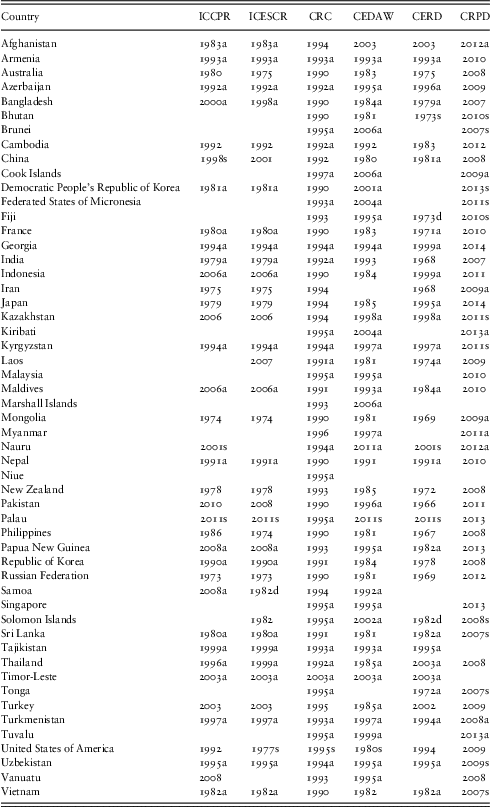
Under international human rights law, states undertake obligations to respect, protect, and fulfil human rights.Footnote 76 These obligations are owed to all persons within a state’s jurisdiction or under its control. This clearly applies to all persons displaced internally following a natural disaster, where the territorial state has the primary obligation to protect the rights of such persons.Footnote 77 Such obligations also extend to impose a duty on states to seek international assistance, and to accept it when offered, when they are unable to meet the needs of the population internally.Footnote 78 Further, international law provides a range of enforcement measures which can be used to ensure states comply with their obligations, including reporting to international committees, and in some cases individual complaints mechanisms.Footnote 79 However, the extent to which a state is obliged, and the capacity for such obligations to be enforced, depends on whether the state has ratified the relevant treaties. As will be seen, human rights ratification in the Asia-Pacific region is significant, but there are some noticeable gaps in protection. Ratification is no guarantee that human rights will be protected during internal displacement, as states may lack the resources to attend to human rights sufficiently, or they may be unwilling to take the necessary steps, as will be illustrated below. Furthermore, many countries in the region have instances of human rights abuses in non-disaster periods, suggesting that human rights risks become amplified once a disaster strikes. The ratification of the key human rights treaties by states within the region is summarized in Table 1.
Ratifications of human rights treaties in the Asia-Pacific region (a = accession; s = signature only).

An examination of human rights treaty ratifications in the Asia-Pacific region indicates that, while the coverage of core treaties is fairly widespread, there are a number of noticeable inadequacies. Notably, the take-up of the core human rights treaties has been slow among Pacific Island states. The Cook Islands, the Federated States of Micronesia, Fiji, Kiribati, the Marshall Islands, Niue, Tonga, and Tuvalu are parties to neither the ICCPR nor the ICECSR. Nauru has signed but not ratified the ICCPR, while the Solomon Islands and Vanuatu have each ratified only the ICESCR and ICCPR, respectively. This is significant as it means that in the South Pacific, where natural disasters are common and the risk of displacement is increasing, many of the relevant human rights outlined above are not protected by international law.
There are a number of coastal states in the Southeast Asian region which are not parties to either the ICCPR or the ICESCR, including Brunei, Malaysia, Myanmar, and Singapore. Given that the IPCC predicts that severe weather events will increase in intensity and frequency throughout the Southeast Asian region,Footnote 80 such deficiencies in human rights protections potentially leave people in these states vulnerable to a range of negative impacts without international legal protections or enforcement mechanisms.
This analysis suggests that we should encourage the greater participation of these states in the United Nations human rights framework, which would help strengthen human rights protections throughout the region, and not only with respect to natural disasters. However, an examination of recent disaster responses illustrates that even where ratification of human rights treaties is reasonably widespread, there can still be challenges with the implementation of protections. These problems relate to the willingness and capacity of states to provide the necessary assistance in times of disaster to ensure human rights are fulfilled. Two examples will be analyzed below to illustrate these issues, but first the international disaster response framework will be examined to assess the extent to which it protects human rights.
III. RIGHTS-BASED PROTECTIONS APPLICABLE TO NATURAL DISASTER
In addition to instruments which focus on the challenges of internal displacement, the international disaster response framework also has application in situations of disaster-induced displacement. There is no legally binding instrument dealing solely with disaster response at the international level. Instead, there are a myriad of soft-law instruments at international, regional, and national levels. The regulation of disaster relief and response involves a wide variety of United Nations agencies including the World Food Programme, the World Health Organization, and the Office for the Coordination of Humanitarian Affairs, and no single institution at the international level has policy ownership of this area.Footnote 81
One of the major criticisms of disaster response frameworks relates to the duplication and fragmentation of governance arrangements at both the international and regional levels. Poor governance arrangements delay the delivery of aid and are further hindered by poor infrastructure and inadequate co-ordination among state agencies, intergovernmental organizations, and non-governmental organizations.Footnote 82 In recognition of the difficulties of co-ordinating disaster response, the ILC Draft Articles propose a legal duty to co-operate in the disaster response context by requiring states to co-operate among themselves and with the UN, the International Federation of Red Cross and Red Crescent Societies, the International Committee of the Red Cross, and other relevant IGOs and NGOs.Footnote 83 Non-state bodies such as IGOs and NGOs are accorded responsibility for delivering many of the front-line services during disaster response initiatives, given their demonstrated capacity to respond to natural disasters. The ILC Draft Articles are one of several soft-law instruments which apply to natural disasters. The number of instruments, combined with the acknowledged challenges of co-ordinating assistance, raises the question of whether there is a need for a single legally binding (hard-law) instrument to streamline obligations.Footnote 84 However, there are many benefits to adopting a soft-law approach, and the current range of instruments has much to offer.
Soft law commonly develops in areas where it is too politically difficult or impractical to develop legally binding international standards. The benefits associated with soft law include the following:
∙ Soft-law instruments are easier and less costly to negotiate;
∙ Soft-law instruments impose lower “sovereignty costs” on states in sensitive areas;
∙ Soft-law instruments provide greater flexibility for states to cope with uncertainty and to learn over time;
∙ Soft-law instruments deal better with diversity; and
∙ Soft-law instruments are directly available to non-state actors, including international secretaries, state administrative agencies, substate public officials and business associations, and NGOs.Footnote 85
To date, disaster response frameworks have remained “soft” in nature for three reasons. First, it is very difficult to specify standards or time periods that should apply to rescue and recovery efforts, given the wide diversity of each state’s capacity to respond to natural disasters. Despite examples like that of Cyclone Nargis discussed below, most states do endeavour to respond to natural disasters promptly and to the best of their abilities. However, as identified above with respect to human rights obligations, the extent to which states can protect their citizens varies according to circumstances and states’ attitudes towards the importance of the human rights regime. Consequently, it is unlikely that states would willingly commit to legally binding standards for disaster response above and beyond existing international obligations.
Second, as every disaster is unique, flexible and diverse responses are required, making soft-law instruments a more practical policy choice. Flexibility is also necessary to cater to the various domestic structures for dividing responsibility and authority between national, subnational, and local governments. While it may be possible to draft response and recovery guidelines for a given type of disaster, for example a flood or cyclone, it would be very difficult to create legally binding rules at the international level which purport to allocate distributing responsibility to particular government agencies. Third, many of the most useful international disaster response guidelines have been drafted by non-state actors. This allows for the vast experience and expertise of NGOs to inform practical guidelines, but it has the consequence that the resulting instruments remain voluntary.
Among the numerous disaster response polices, guidelines, and agreements which exist at the international level, three instruments have been selected for analysis here.Footnote 86 The instruments have been chosen either because of their specific focus on the Asia-Pacific region or their use of human rights principles. However, none of these instruments has been drafted with a particular focus on the rights of disaster displacement victims. Each instrument has been drafted by a different type of institution (public policy think tank, international NGO, or regional intergovernmental organization). Consequently, the three instruments present different approaches to disaster response, and adopt a human rights-based approach to varying degrees. They will each be analyzed in terms of their ability to address the human rights needs of persons displaced by natural disaster. The three instruments selected are:
∙ The Inter-Agency Standing Committee’s Operational Guidelines on the Protection of Persons in Situations of Natural Disasters (IASC Guidelines);Footnote 87
∙ The International Federation of Red Cross and Red Crescent Societies’ Guidelines for the Domestic Facilitation and Regulation of International Disaster Relief and Initial Recovery Assistance (IDRL Guidelines);Footnote 88 and
∙ ASEAN’s Agreement on Disaster Management and Emergency Response (ASEAN Agreement).Footnote 89
The IASC Guidelines and the accompanying operational manual (IASC Manual)Footnote 90 were drafted by the Brookings Institute (a public policy think tank) and have been adopted by the Inter-Agency Standing Committee as the gold standard in respect of disaster response policies protecting human rights. They were compiled in order to fill a gap in protection identified on the basis that existing disaster response instruments were largely operational in nature and as such did not explicitly recognize the human rights protection standards which apply in the disaster response period.Footnote 91 The IASC Manual adopts a strong rights-based approach, stating that: “[N]eglecting the human rights of those affected by natural disasters means overlooking the fact that such people do not live in a legal vacuum, but in countries with laws, rules and institutions that should protect their rights.”Footnote 92
The IASC Guidelines acknowledge that while human rights should be furthered in all instances, the practical circumstances associated with disaster relief and recovery efforts mean that it may be impossible to simultaneously guarantee all rights to all individuals at all times. The Guidelines therefore divide human rights into four categories of rights, which may be prioritized in order to ensure the fundamental needs of all persons are met in the immediate response. The four groups are:
∙ Group A: Rights related to the protection of life, security, physical integrity, and family ties;
∙ Group B: Rights related to basic necessities, such as food, health, shelter, and education;
∙ Group C: Rights related to more long-term economic and social needs, such as housing, land, property, and livelihoods; and
∙ Group D: Rights related to other civil and political protection needs (such as documentation, movement, the re-establishment of family ties, freedom of expression and opinion, and participation in elections).
The first two categories are understood to be most relevant during the initial emergency phase, but the Guidelines make clear that all four categories are essential in order to ensure that human rights are adequately protected for all those affected by natural disaster.Footnote 93 In respect of promoting the rights of displaced persons, the IASC Guidelines specifically recognize in the opening general principles that people displaced by disasters should be treated in accordance with the 1998 Guiding Principles on Internal Displacement.Footnote 94 Furthermore, the Guidelines specifically recognize the following instances where a rights-based approach should be applied to assist displaced individuals or communities in the disaster context:
∙ In respect of Group A rights, it is recommended that regular visits be made to displacement camps by national human rights bodies to monitor the conditions with a particular focus on preventing gender-based violence.Footnote 95 Furthermore, the Guidelines provide that any temporary displacement camps that are established should be civilian in nature and that those residing in these camps should have freedom of movement.Footnote 96
∙ In respect of Group B rights, the Guidelines emphasize the importance of non-discrimination in the provision of humanitarian assistance to those displaced, and focus on preparing the host community for the settlement of those persons.Footnote 97
∙ In respect of Group D rights, the Guidelines lay out some conditions for finding “durable solutions” and provide that those displaced by disasters should be able to choose freely whether they want to return to their homes and places of origin, to integrate locally in the area to which they have been displaced, or to settle elsewhere in the country. Appropriate measures, such as consultation, information campaigns, and go-and-see visits should be taken to enable such persons to take an informed decision in this regard.Footnote 98 Such solutions are considered to be “sustainable” if the individual feels safe and secure, has access to adequate housing, and can return to normal life with access to water, basic services, schools, livelihood, employment, and markets without discrimination.Footnote 99
The IDRL Guidelines are expressly non-binding, but have been created with the aim of providing a model for states in order to assist them in strengthening their disaster laws, policies, and procedures. The Guidelines draw from a number of existing international instruments,Footnote 100 and they establish a framework for allocating responsibility among the affected state, assisting actors, and other states, as well as specifying the division and intended use of resources.Footnote 101 The Red Cross plays a large role in co-ordinating the actions of all institutions involved in disaster response, and the Guidelines were created to address issues associated with the quality and co-ordination of disaster relief, as well as procedural aspects and “red tape”. In relation to procedural matters, the Guidelines address:
∙ Restrictions and delays in customs clearance for relief goods and equipment;
∙ Imposition of duties, tolls, and other taxes on relief items and activities;
∙ Difficulties and delays in obtaining and renewing necessary visas and permits for humanitarian personnel;
∙ Problems obtaining legal recognition of foreign professional qualifications for specialized personnel (particularly medical staff); and
∙ Difficulties in legal registration for foreign humanitarian organizations, leading to restrictions in opening bank accounts and hiring local staff.Footnote 102
In relation to the quality and co-ordination of internationally provided disaster relief, the Guidelines address:
∙ Importation of unnecessary or inappropriate relief items;
∙ Failure to co-ordinate with domestic authorities and other relief providers;
∙ Use of inadequately trained personnel;
∙ Failure to consult with beneficiaries; and
∙ Culturally unacceptable behaviour and proselytizing.Footnote 103
In terms of promoting a rights-based approach to disaster, the Guidelines specifically state that they do not change or affect the meaning or implementation of any existing international human rights law, suggesting support for the use of rights-based approach.Footnote 104 The Guidelines do not provide any specific guidance on assisting those displaced by disasters.
The Asia-Pacific region has a further soft-law instrument concerning disasters, the ASEAN Agreement on Disaster Management and Emergency Response (ASEAN Agreement).Footnote 105 This Agreement is operational in nature and seeks to promote regional co-operation to respond to disasters. Given these objectives, it is perhaps not surprising that the ASEAN Agreement contains no references to a rights-based approach and contains no particular references to the rights of those displaced by disasters. The approach adopted is consistent with the emphasis on non-intervention and co-operation which has characterized other regional security measures in Asia. However, as the analysis above demonstrates, there are some significant gaps in the legal protection of human rights in the Asia-Pacific region, and a more specific engagement with the human rights aspects of disaster induced displacement is required in order to ensure that states are committed to protecting the rights of their citizens affected by disaster.
The IASC Guidelines clearly provide the strongest protection for the human rights of those affected by disasters out of the three instruments assessed, yet barriers remain to full and sufficient protection of human rights in circumstances of disaster-induced displacement. One of the largest challenges in assisting those displaced by disasters is a lack of awareness of such standards among states and those assisting on the frontlines. There is limited data available on the use and implementation of these Guidelines within the Asia-Pacific region, and it is suggested that further research is needed to understand how these Guidelines are used or not used in the region. The standards contained in the IASC Guidelines provide a comprehensive overview of how the rights of displaced populations should be protected, but there has to date been inadequate implementation of these Guidelines. This can be attributed both to a lack of knowledge of the standards and a lack of incorporation of such standards within national disaster response frameworks. The non-binding nature of the IASC Guidelines may also contribute to their limited application. Roberta Cohen and Megan Bradley argue that community leaders, governmental authorities, military forces, IGOs, and NGOs all require training in the practical measures to protect the rights of affected populations and to prevent discrimination in the aid distribution process.Footnote 106
IV. EXAMPLES: THE INDIAN OCEAN TSUNAMI AND CYCLONE NARGIS
Two examples will be considered here in order to help understand the significance of human rights protections relevant to disaster-induced displacement, and the areas where stronger protections are needed. The first example is the tsunami which struck the coastline around the Indian Ocean on 26 December 2004. More than a million people were displaced by the tsunami and more than 240,000 were killed.Footnote 107 The tsunami had a profound effect on the human rights of the survivors. Not only did they endure disruptions to basic services, food, water, shelter, and health care, but the disaster left them vulnerable to a variety of other abuses, including human trafficking, sexual and gender-based violence, arbitrary arrests, recruitment of children into fighting forces, and discrimination in the distribution of aid.Footnote 108 While the tsunami generated an overwhelming response from relief agencies, international organizations, other governments, and NGOs, a lack of co-ordination in the way aid was distributed resulted in some communities not receiving the help they needed, while others received more than they required.Footnote 109
The response to the tsunami also demonstrated the fact that natural disasters and displacement exacerbate existing human rights problems, and that successful responses must take pre-existing contexts into account. For example, tensions in Indonesia and Sri Lanka between governments and separatist groups created barriers to distributing aid to affected communities. In Sri Lanka, this occurred because there was no agreement between the government and the Liberation Tigers of Tamil Eelam which would allow for aid to be distributed in Tamil-held areas.Footnote 110 In Indonesia, the military controlled the relief programme in Aceh province in order to address security concerns relating to the Free Aceh Movement. Residents in the area had already experienced repressive military presence and this made many reluctant to seek out assistance or to live in military controlled temporary housing.Footnote 111
Discrimination in the provision of assistance was also a significant problem in the aftermath of the Indian Ocean tsunami. In India, existing discrimination against Dalits (untouchables) prevented members of this caste from accessing assistance.Footnote 112 In Thailand, Burmese migrant workers were reluctant to seek out assistance, due to their experiences of discrimination and for fear of arrest based on their immigration status.Footnote 113 It was also reported that some groups, especially women and certain ethnic groups, were discriminated against in the distribution of disaster relief.Footnote 114 Such discrimination compounded the human rights abuses which these groups were already experiencing prior to the tsunami. In countries where there were already large numbers of IDPs, such as in Sri Lanka, persons displaced by the tsunami who were placed in the same camps were reportedly given more favourable treatment than those already residing there.Footnote 115 IDP camps were also places of great risk, with reports of soldiers raiding camps to kidnap children to serve in fighting forces, or inflicting violence against people living there, particularly women.Footnote 116
Government corruption was also a driver of the inequitable distribution of aid, with reports that some government agents siphoned off relief supplies for themselves and their families, or directed aid towards particular villages and not others.Footnote 117 Lack of accountability for these acts, combined in some places with years of weak human rights enforcement, created a lack of trust in the government, so that some people didn’t seek out assistance even where it was available.Footnote 118
The circumstances of the Indian Ocean tsunami illustrate how pre-existing human rights contexts influence the effectiveness of responses to disaster induced displacement. Political tension and discrimination influenced the way in which disaster relief was distributed, and a lack of transparency, accountability, and co-ordination often led to inequality, with some individuals and groups being unable to access the services they needed. The experiences there demonstrated the importance of upholding fundamental human rights principles, such as non-discrimination and respect for human dignity, in disaster management.
The second example considered here is Cyclone Nargis, which made landfall in Myanmar on 2 May 2008. The storm itself was one of the most destructive to have hit the country, but it was the government’s response to the disaster which generated most debate. In the days following the disaster, the Myanmar government restricted access to the most affected areas and denied visas to foreign humanitarian aid officers.Footnote 119 While some food, water, and medicines were accepted into the country, the government insisted on distributing such goods itself. Reports suggested that supplies were being seized by government officers and that some were being sold on the black market.Footnote 120 The international community expressed strong concerns that those displaced by the cyclone were not able to access basic necessities and health care, and that lives would be needlessly lost because of the government’s obstructive approach.Footnote 121 After more than two weeks of negotiations with the United Nations and other states, foreign aid workers were finally allowed into Myanmar to deliver disaster relief.
The example of Cyclone Nargis demonstrates clearly that no matter how germane human rights principles are to situations of disaster-induced displacement, their effectiveness depends crucially on the willingness of the nation-state to provide assistance or to allow the provision of foreign aid. The principles of state sovereignty and territorial integrity work to locate the principal responsibility for human rights protections with the territorial state, but also to restrict other states from being able to intervene without consent.Footnote 122 Myanmar has not ratified either the ICCPR or the ICESCR, but it has ratified other human rights treaties which are relevant following a natural disaster (see Table 1). While arguably human rights law extends to impose an obligation on states to request and accept international assistance when they are not able to fulfil human rights themselves,Footnote 123 the example of Cyclone Nargis demonstrates that the practical effectiveness of human rights law is ultimately dependent on the state’s will to implement it.
The examples of Cyclone Nargis and the Indian Ocean tsunami demonstrate the sorts of human rights implications that can occur following a natural disaster. In particular, they show the need for strong human rights protections in the way that disasters and displacement are managed. They also indicate that ratification of human rights treaties is not in and of itself enough to ensure that the rights of persons affected by natural disaster and displacement are upheld, as the full protection of human rights depends on the states being both able and willing to provide human rights protection, or to seek international assistance where they are unable to provide such protections themselves. Where a government refuses to assist or to accept international relief, issues arise as to how the human rights of internally displaced persons can be protected.
V. APPLICABILITY OF THE DOCTRINE OF THE RESPONSIBILTY TO PROTECT
In the aftermath of Cyclone Nargis, the Myanmar government’s blockade of international assistance led to calls for the invocation of the doctrine of R2P.Footnote 124 The doctrine is based on the premise that, as a corollary of enjoying the benefits of sovereignty, states bear the primary responsibility for protecting their citizens.Footnote 125 If a state fails to discharge its obligation of protection, that duty can be transferred to the international community, which is entitled to intervene on behalf of the affected population. Typically, this right of intervention is considered to be limited to egregious violations of human rights, such as genocide, crimes against humanity, and war crimes, and is to be implemented through existing mechanisms of collective security found in the United Nations Charter.Footnote 126 Some authors have called for the expansion of the doctrine to cover situations where a state’s failure to respond to disaster-induced displacement has similarly serious impacts.Footnote 127
There are some conceptual similarities between the doctrine of R2P and the Guiding Principles on Internal Displacement. The concept of “sovereignty as responsibility” was a core principle influencing the drafting of the Guiding Principles, and was used to help persuade states to endorse the principles.Footnote 128 There are, however, a number of differences between the approach of the Guiding Principles and the doctrine of R2P which indicate that the applicability of R2P to situations of internal displacement should not be assumed. The Guiding Principles stress that states have the primary obligation to protect their citizens and that they should seek assistance from the international community where it is required.Footnote 129 However, they do not go so far as to authorize or encourage intervention by other states when the territorial state does not comply with these duties. Further, while displacement may be a consequence of serious crimes like genocide and crimes against humanity, it may also occur as a result of a range of other factors, and states’ willingness to act may similarly be influenced by a variety of considerations. Mooney notes that the purposes behind the development of R2P and the Guiding Principles have significant differences, and that linking R2P to internal displacement too closely could “risk confusing the latter with intervention in internal affairs and undermine the wide acceptance of the Principles that has been so carefully cultivated”.Footnote 130
While the doctrine of R2P could offer a solution for situations such as that which occurred following Cyclone Nargis, there are a number of factors which suggest that its expansion to include natural disaster is neither likely nor recommended. As a political doctrine which emphasizes responsibility, R2P can be effective in drawing attention to problems of international concern and mobilizing action. However, its conceptualization of responsibility as a basis for international intervention raises a number of questions about its suitability for many situations of natural disaster. Allowing the doctrine to apply in times of natural disasters arguably undermines the weight of R2P as an exceptional doctrine designed to deal with the worst cases of government abuse.Footnote 131 The principles of sovereignty and non-interference are among the highest rules of international law, and operate to make the exercise of R2P an exceptional occurrence. The threshold for when it could apply to justify intervention in situations of natural disaster would need to be extremely high, and there would inevitably be questions of proof and causation which might render it inoperable. Further, there are concerns that expanding the scope of the doctrine might open it up to misuse, whereby states invoke the doctrine as a smokescreen for political action or to intervene in matters which are properly within the domestic jurisdiction of the territorial state. From a practical perspective it would be extremely difficult to provide humanitarian aid to a state which is refusing it, and few states or NGOs would likely be willing to send their workers in to face the risk of possible prosecution or violence.Footnote 132
For these reasons it is argued that the doctrine of R2P ought not to be pursued as a solution to situations where states are reluctant to allow international assistance following natural disasters. As the example of Cyclone Nargis demonstrates, while the Myanmar government was slow to act, it did eventually allow the international relief effort to proceed. Although the delay undoubtedly exacerbated the situation and caused needless human rights violations, including loss of life, had the international community intervened by force there may have been even more serious consequences. It is therefore preferable to work towards strengthening other protections and building capacity so that states are both willing and able to address displacement when it occurs, and are supported by international mechanisms where necessary.
VI. CONCLUSION
Displacement as a result of natural disaster presents numerous human rights concerns, relating to both the impact of the initial disaster and dislocation, as well as to the manner in which disaster relief is distributed and displacement managed. Under international law, states are obliged to respect, protect, and fulfil the rights of those persons within their territory, and the primary responsibility for protecting the rights of internally displaced persons falls on the territorial state. This study has demonstrated that, while ratification of the major international human rights conventions is relatively widespread throughout the Asia-Pacific region, there are some significant deficiencies in protection, and it is argued that all states should be encouraged to accede to any human rights treaties to which they are not yet parties.
Greater ratification of human rights treaties could help to reduce vulnerability to disaster, by addressing the systemic and structural factors which currently limit capacity and resilience. But even where states have ratified human rights treaties, there remain issues relating to the practical implementation and enforcement of human rights protections, and it is clear that ratification of human rights treaties alone is unlikely to be sufficient to address the full range of issues. In some instances, states lack the resources to adequately respond to disasters and to protect IDPs. In these situations, states have an obligation to seek out and to accept international assistance.
The various soft-law instruments on disaster and internal displacement provide useful practical guidance on how international disaster relief ought to be co-ordinated and distributed. By adopting these guidelines and implementing them into domestic laws and procedures, states can be better prepared to respond to disaster when it strikes. Further research is needed to understand how states within the Asia-Pacific region regard and use these soft-law instruments.
These instruments give effect to a rights-based approach by incorporating several human rights standards and identifying potential threats to human rights. By implementing these instruments, states can adopt an approach to disaster displacement which is consistent with human rights principles, while at the same time is practically useful and context-specific. It is argued, therefore, that between existing human rights law and the specific soft-law instruments on disaster and displacement, states have access to the necessary principles and strategies to ensure that human rights are protected in times of natural disaster. While there is no specific international instrument which addresses the problem of disaster-induced displacement, pursuing such an instrument would be a time-consuming and costly exercise which is unlikely to achieve much more than is already available under the existing framework. Instead, it is argued that efforts should focus on better implementation of the instruments which currently exist. Through a combination of greater ratification of human rights conventions and more thorough implementation of soft-law instruments, it is possible for the rights of persons displaced by natural disaster to be protected and for long-term and sustainable solutions to displacement to be located.