Introduction
Non-suicidal self-injury (NSSI), defined as the direct and deliberate damage of one's body tissue without suicidal intent (e.g. cutting and hitting oneself; International Society for the Study of Self-Injury, 2022), is a growing public health concern in colleges across the world. Lifetime prevalence of NSSI is estimated to be 17–20% among college students, with 12-month prevalence close to 8% and 0.8–2.3% meeting DSM-5 disorder criteria (Kiekens et al., Reference Kiekens, Hasking, Claes, Mortier, Auerbach, Boyes and Bruffaerts2018b, Reference Kiekens, Hasking, Bruffaerts, Alonso, Auerbach, Bantjes and Kessler2021a; Swannell, Martin, Page, Hasking, & St John, Reference Swannell, Martin, Page, Hasking and St John2014). From a developmental perspective, the college years mark the transition from adolescence to emerging adulthood, constituting a period of continued growth and exploration (Arnett, Reference Arnett2015). However, this is also a time characterized by psychosocial risk and increased vulnerability for NSSI (Bruffaerts et al., Reference Bruffaerts, Mortier, Kiekens, Auerbach, Cuijpers, Demyttenaere and Kessler2018; Hamza, Goldstein, Heath, & Ewing, Reference Hamza, Goldstein, Heath and Ewing2021a; Kiekens et al., Reference Kiekens, Hasking, Claes, Boyes, Mortier, Auerbach and Bruffaerts2019). Young people who self-injure are at risk for several adverse outcomes, including reduced academic functioning (Kiekens et al., Reference Kiekens, Claes, Demyttenaere, Auerbach, Green, Kessler and Bruffaerts2016), difficulties in key developmental tasks (Gandhi et al., Reference Gandhi, Luyckx, Maitra, Kiekens, Verschueren and Claes2017; Robinson et al., Reference Robinson, Garisch, Kingi, Brocklesby, O'Connell, Langlands and Wilson2018), and suicidal thoughts and behaviors (STB; Hamza & Willoughby, Reference Hamza and Willoughby2016). Findings such as this underscore the importance of timely intervention to prevent NSSI and potential future outcomes (e.g. suicide attempts).
The college years are increasingly recognized as a window of opportunity to implement risk screening for self-injurious behaviors (Mortier et al., Reference Mortier, Demyttenaere, Auerbach, Cuijpers, Green, Kiekens and Bruffaerts2017a, Reference Mortier, Kiekens, Auerbach, Cuijpers, Demyttenaere, Green and Bruffaerts2017b), address stigma (Hamza et al., Reference Hamza, Robinson, Hasking, Heath, Lewis, Lloyd-Richardson and Wilson2021b), and provide evidence-based interventions (Lewis et al., Reference Lewis, Heath, Hasking, Whitlock, Wilson and Plener2019). For example, a recent study observed one-year incidence rates of NSSI in the 6–10% range and demonstrated the potential of screening approaches for detecting students at risk for an onset of NSSI (Kiekens et al., Reference Kiekens, Hasking, Claes, Boyes, Mortier, Auerbach and Bruffaerts2019). While these findings regarding college NSSI onset are encouraging, secondary preventive efforts focusing on persistent NSSI might also be needed as most begin NSSI in adolescence (Gandhi et al., Reference Gandhi, Luyckx, Baetens, Kiekens, Sleuwaegen, Berens and Claes2018) – suggesting that for many emerging adults, it might be too late to prevent NSSI onset by the time they enter college. This highlights the importance of a good understanding of the course of persistent NSSI (Glenn, Jaroszewski, Milner, Kearns, & Nock, Reference Glenn, Jaroszewski, Milner, Kearns, Nock and Bromet2015), which is a prerequisite to clarifying risk factors and identifying students at high risk for ongoing NSSI. To this end, future work needs to extend previous knowledge in three critical ways. First, surprisingly little is known about the basic patterns of NSSI persistence. The few studies that have considered persistence patterns reported substantial variation. In a cross-national survey, 44% of those with a history of NSSI reported NSSI in the last 12 months (Kiekens et al., Reference Kiekens, Hasking, Bruffaerts, Alonso, Auerbach, Bantjes and Kessler2021a). Prospective studies with one-year follow-up assessments observed that 25–63% of youth who begin to self-injure as adolescents continue to self-injure in college (Glenn & Klonsky, Reference Glenn and Klonsky2011; Hamza & Willoughby, Reference Hamza and Willoughby2014). For instance, Hamza and Willoughby (Reference Hamza and Willoughby2014) found that out of a convenience sample of 439 first-year students with lifetime NSSI, 30.5% reported NSSI at baseline but not follow-up (i.e. desist pattern), 9.6% reported NSSI only at follow-up (i.e. relapse pattern), and 15.5% reported NSSI at both time points (i.e. persistence pattern). Yet, most students (44.4%) indicated having ceased NSSI. However, as these studies included only one follow-up assessment, more work is needed to clarify patterns of NSSI persistence during the college period.
Second, scholars recently found that half of adolescents with stable repetitive NSSI report self-injury through their mid-twenties (Daukantaite et al., Reference Daukantaite, Lundh, Wangby-Lundh, Clareus, Bjarehed, Zhou and Liljedahl2020), but also observed that the probability of stopping NSSI is highest between ages 18–21 (Turner, Helps, & Ames, Reference Turner, Helps and Ames2022). This highlights the need to understand better what differentiates emerging adults who persist from those that cease NSSI. Identified risk factors include: emotional problems, problems with parents, borderline personality features, low emotion regulatory capabilities, and NSSI characteristics (including more frequent NSSI and a higher number of methods; Daukantaite et al., Reference Daukantaite, Lundh, Wangby-Lundh, Clareus, Bjarehed, Zhou and Liljedahl2020; Glenn & Klonsky, Reference Glenn and Klonsky2011; Hamza & Willoughby, Reference Hamza and Willoughby2014; Kiekens et al., Reference Kiekens, Hasking, Bruffaerts, Claes, Baetens, Boyes and Whitlock2017). While some of these factors may represent an underlying vulnerability for NSSI, more work is needed to determine their salience for clinically meaningful NSSI persistence patterns. Importantly, as these initial prospective studies relied on small samples of students with persistent NSSI (n = 30–69), they could not develop integrative models to help guide the deployment of resources to those in need of interventions at college entrance. Third, future work is needed to evaluate whether students who report persistent NSSI are at increased risk of mental disorders and STB compared to those who ceased NSSI. For instance, previous work has shown that individuals who engage in NSSI are more likely to attempt suicide (on average three years later; Hamza & Willoughby, Reference Hamza and Willoughby2016; Kiekens et al., Reference Kiekens, Hasking, Boyes, Claes, Mortier, Auerbach and Bruffaerts2018a) than those without a history of NSSI. However, it remains unclear whether students with persistent NSSI are more likely to experience these outcomes than those who ceased NSSI.
The present study aims to address these gaps in the literature using a longitudinal sample of college students from the Leuven College Surveys (LCS), part of the WHO World Mental Health International College Student Initiative (Cuijpers et al., Reference Cuijpers, Auerbach, Benjet, Bruffaerts, Ebert, Karyotaki and Kessler2019). Our objectives were to (1) estimate NSSI persistence patterns during the first two college years, (2) investigate risk factors and identify high-risk students for NSSI persistence at college entrance, and (3) provide information about the prospective association between NSSI persistence patterns during the first two years and mental disorders, role impairment, and STB in the third college year. Consistent with a person-centered approach that considers heterogeneity in patterns of change (Hamza & Willoughby, Reference Hamza and Willoughby2014), we differentiated between a ceased (i.e. no NSSI in college), sporadic (i.e. 12-month NSSI in only one college year) and repetitive NSSI course (i.e. 12-month NSSI in both college years). Students with a sporadic course reported a relapse (i.e. NSSI only in year 2) or desisted NSSI (i.e. NSSI only in year 1), while the repetitive course was characterized by a low-frequency (i.e. NSSI at least once yearly, but not repetitively ⩾5 NSSI acts) and high-frequency pattern (i.e. repetitively ⩾5 NSSI acts). The high-frequency pattern matched the proposed frequency criterion for DSM-5 NSSI disorder (American Psychiatric Association, 2013). Building upon previous work, we investigated more than 50 predictors for these meaningfully different prospective patterns across sociodemographic variables, childhood-adolescent traumatic experiences, perceived stress and lack of social support, 12-month mental disorders, role impairment, and pre-college NSSI characteristics.
Method
Procedure and sample
The LCS is an overlapping panel design, with the present report presenting unpublished results from three cohorts with four waves of data obtained between September 2014 and May 2020. Recruitment involved three different phases and strategies at baseline. In the first phase, all incoming students were invited to participate as part of a routine psycho-medical checkup, with participants completing the survey on a desktop computer in the waiting room of the student health center. The second phase included secured electronic links sent to non-respondents of the first phase using customized emails. The third phase was identical to the second but emphasized a raffle for €20 store coupons. Each phase included reminders, with eight as the default maximum number of contacts. The third cohort was invited entirely via customized emails as the university no longer organized routine psycho-medical checkups from 2017 onwards. Students were contacted for the follow-up surveys at 12, 24, and 36 months after the baseline assessment. Personalized emails with unique electronic links to the follow-up surveys were sent, including up to seven reminder emails, with additional raffles for store coupons for students that stayed in the study.
A total of 5915 incoming students completed the baseline survey (N = 13 103, Response Rate = 45.1%; 56.9% female, Mage = 18.3, s.d. = 1.1). Representativeness indicators were calculated for each cohort and ranged from 0.84 to 0.89, suggesting that sample data are sociodemographically representative of the population cohorts (Schouten, Cobben, & Bethlehem, Reference Schouten, Cobben and Bethlehem2009). Of these, 3072 respondents participated in at least one follow-up survey (69.7% conditional response rate after adjusting for college attrition). Specifically, 1305 students participated in one follow-up survey, 922 in two follow-up surveys, and 845 in three follow-up surveys. This resulted in 2263 surveys at follow-up one, 1824 surveys at follow-up two, and 1597 surveys at follow-up three. Males who had completed vocational high school education had a higher likelihood of dropping out of the study (online Supplementary Table S1). Informed consent was obtained for each survey, and the University's Ethical Review Board approved the study.
Measures
Sociodemographic information
Sociodemographic variables included sex assigned at birth, age, nationality, parental financial situation, parental educational level, family composition, subject area enrollment, and high school track.
NSSI prevalence, characteristics, and persistence
Using the self-report version of the well-validated Self-Injurious Thoughts and Behaviors Interview (SITBI; Nock, Holmberg, Photos, and Michel, Reference Nock, Holmberg, Photos and Michel2007), lifetime NSSI was assessed with a checklist of 13 NSSI methods (e.g. cutting, burning, hitting) and an ‘other’ category. This measure has good construct validity (κ = 0.74–1.0) and excellent test-retest reliability for the presence of NSSI (κ = 1.0; Nock et al., Reference Nock, Holmberg, Photos and Michel2007). The online version has also demonstrated excellent test-retest reliability for lifetime NSSI (κ = 0.94), with most people reporting being more honest and accurate about their self-injury history online than in person (Fox et al., Reference Fox, Harris, Wang, Millner, Deming and Nock2020a). Additional questions assessed age of onset, lifetime and past 12-month frequency of NSSI thoughts and behaviors, the future likelihood of NSSI, presence of urges, and medical treatment history for NSSI. Based on the four-function model (Bentley, Nock, & Barlow, Reference Bentley, Nock and Barlow2014), respondents rated affective and social functions of NSSI (0 = little; 4 = very much/severe, cutoff >0). NSSI disorder was determined using proposed DSM-5 criteria (cf. Kiekens et al., Reference Kiekens, Hasking, Claes, Mortier, Auerbach, Boyes and Bruffaerts2018b). Finally, we determined the course and persistence of NSSI among incoming students with lifetime NSSI based on the reported past-year frequency of NSSI behavior during the 12 and 24-months follow-up assessments (coded as none, 1–4 acts, or ⩾5 acts).
Childhood-adolescent trauma
Traumatic experiences before the age of 17 were assessed at college entrance using 19 items based on the WHO Composite International Diagnostic Interview-3.0 (CIDI; Kessler & Ustun, Reference Kessler and Ustun2004), the Adverse Childhood Experience Scale (Felitti et al., Reference Felitti, Anda, Nordenberg, Williamson, Spitz, Edwards and Marks1998), and the Bully Survey (Swearer & Cary, Reference Swearer and Cary2003). Seven types of trauma were assessed: parental psychopathology, physical abuse, emotional abuse, sexual abuse, neglect, bullying victimization (including verbal, indirect, physical, and cyberbullying), and dating violence. Previous studies revealed an excellent fit of the factor structure of the used items (Mortier et al., Reference Mortier, Demyttenaere, Auerbach, Cuijpers, Green, Kiekens and Bruffaerts2017a), with the response option ‘rarely’ used as the cutoff (‘never’, ‘rarely’, ‘sometimes’, ‘often’, ‘very often’) for experiencing each traumatic event except bullying where ‘sometimes’ was used in analyses (Nansel et al., Reference Nansel, Overpeck, Pilla, Ruan, Simons-Morton and Scheidt2001).
Severe stress and lack of social support
We assessed current perceived stress using the MIDUS self-report scale (Kessler, Mickelson, Walters, Zhao, & Hamilton, Reference Kessler, Mickelson, Walters, Zhao, Hamilton, Brim, Ryff and Kessler2004). Eight items assessed perceived stress in life overall and seven different life areas: financial situation, own health, love life, relationships with family, relationships with people at work/school, health and wellbeing of loved ones, and other problems experienced by loved ones. Items were answered on a 5-point Likert scale ranging from none to very severe, with ‘severe’ as the cutoff for identifying students with severe stress in a particular life domain in analyses. Using the Social Network section of the WHO CIDI-3.0 (Kessler & Ustun, Reference Kessler and Ustun2004), students rated on a 4-point Likert scale (‘a lot’, ‘some’, ‘a little’, and ‘not at all’) whether they could rely on family and friends if they had a problem, with ‘some’ used as the cutoff for identifying students with a lack of social support (Kiekens et al., Reference Kiekens, Hasking, Claes, Boyes, Mortier, Auerbach and Bruffaerts2019). Current perceived stress and social support were reassessed during the follow-up assessments.
Mental disorders and impairment
The WHO CIDI Screening Scales (Kessler et al., Reference Kessler, Calabrese, Farley, Gruber, Jewell, Katon and Wittchen2013a; Kessler & Ustun, Reference Kessler and Ustun2004) were used to assess 12-month DSM-IV mood (major depressive and bipolar disorder) and anxiety (generalized anxiety and panic disorder) disorders. Clinical reappraisal studies generally indicate good concordance with structured clinical interviews (AUCs in the 0.70–0.78 range; Kessler et al., Reference Kessler, Calabrese, Farley, Gruber, Jewell, Katon and Wittchen2013a, Reference Kessler, Santiago, Colpe, Dempsey, First, Heeringa and Ursano2013b), except for panic disorder, which demonstrated fair concordance in college students (AUC = 0.6; Ballester et al., Reference Ballester, Alayo, Vilagut, Almenara, Cebria, Echeburua and Alonso2019). The Alcohol Use Disorders Identification Test (AUDIT; Saunders, Aasland, Babor, de la Fuente, & Grant, Reference Saunders, Aasland, Babor, de la Fuente and Grant1993) was used to assess alcohol use disorder, with the version that we used (Babor, Higgings-Biddle, Saunders, & Monteiro, Reference Babor, Higgings-Biddle, Saunders and Monteiro2001) showing good concordance with clinical diagnosis (AUCs in the 0.78–0.91 range; Reinert & Allen, Reference Reinert and Allen2002). Additional items from the CIDI 3.0 were used to screen for an intermittent explosive disorder, eating disorder, psychotic disorder, and post-traumatic stress disorder. The 10-item McLean Screening Instrument for Borderline Personality Disorder (MSI-BPD; Zanarini et al., Reference Zanarini, Vujanovic, Parachini, Boulanger, Frankenburg and Hennen2003) was used to screen for Borderline Personality Disorder. The MSI-BPD cutoff of 7 has been shown to have high sensitivity and specificity for BPD among individuals younger than 25 (>0.90; Zanarini et al., Reference Zanarini, Vujanovic, Parachini, Boulanger, Frankenburg and Hennen2003). Finally, role impairment during the past year was assessed with a revised version of the Sheehan Disability Scale (Leon, Olfson, Portera, Farber, & Sheehan, Reference Leon, Olfson, Portera, Farber and Sheehan1997; Ormel et al., Reference Ormel, Petukhova, Chatterji, Aguilar-Gaxiola, Alonso, Angermeyer and Kessler2008), which assesses impairment in home management/chores, college-related and other work, close personal relationships, and social life. Impairment in these domains was defined as a ⩾7 rating in analyses (Alonso et al., Reference Alonso, Mortier, Auerbach, Bruffaerts, Vilagut, Cuijpers and Kessler2018). Twelve-month mental disorders (except borderline personality disorder) and role impairment were reassessed during the follow-up assessments.
Suicidal thoughts and behaviors
Using a modified version of the Columbia Suicidal Severity Rating Scale (Posner et al., Reference Posner, Brown, Stanley, Brent, Yershova, Oquendo and Mann2011), 12-month STB was assessed at college entrance: ideation (i.e. having thoughts of killing yourself or wishing you were dead), plan (i.e. thinking about how you might kill yourself or working out a plan of how to kill yourself), and attempt (i.e. purposefully hurt yourself with at least some intent to die). Twelve-month STB was reassessed during the follow-up assessments.
Statistical analysis
Data were weighted to adjust for differences between survey respondents and non-respondents at baseline by calculating nonresponse propensity weights based on sociodemographic variables (Kiekens et al., Reference Kiekens, Claes, Demyttenaere, Auerbach, Green, Kessler and Bruffaerts2016). Multivariate imputation (MI) by chained equations was used to adjust for survey attrition and nonresponse within surveys under a missing at random assumption (van Buuren, Reference van Buuren2007). Using the R-package mice (Van Buuren & Groothuis-Oudshoorn, Reference Van Buuren and Groothuis-Oudshoorn2011), the final data consisted of 100 imputed datasets. All estimates were pooled using Rubin's rules (Rubin, Reference Rubin1987), with MI-adjusted standard errors obtained through the Taylor series linearization method. A series of logistic regression models were estimated to understand the associations between baseline predictors and patterns of NSSI persistence (i.e. 12 and 24 months after the baseline assessment) among students reporting a lifetime history of NSSI at college entrance. Measures of association were reported as odds ratios and associated 95% confidence intervals using Firth's penalized likelihood estimation (Heinze, Reference Heinze2006). To decrease the likelihood of interpreting significant results due to chance as true effects, we conducted global significance tests for polytomous variables and considered individual coefficients significant only if the global test was significant.
Bivariate models included each predictor separately for NSSI persistence patterns, controlling for relevant sociodemographic covariates. The best-fitting multivariate models within a particular risk domain were chosen using the Bayesian Information Criterion (Selig, Shaw, & Ankerst, Reference Selig, Shaw and Ankerst2020), with final integrative models including all significant predictors across risk domains. Individual cumulative risk probabilities were calculated based on these final integrative prediction models. Predicted probabilities were discretized into deciles (10 groups of equal size ordered by percentiles) and cross-classified with observed cases to visualize the concentration of risk associated with high composite predicted probabilities. Sensitivity was defined as the proportion of persistent cases found among predefined proportions of students with the highest predicted probabilities. Positive predictive value (PPV) was defined as the probability of persisting NSSI when estimated among predefined proportions of respondents with the highest predicted probabilities. The leave-one-out cross-validation method was used to correct the overestimation of prediction accuracy when estimating and evaluating model fit in a single sample (Efron, Reference Efron1988).
Finally, we investigated the associations of NSSI persistence patterns during the first two follow-up assessments with 12-month mental disorders and STB at follow-up three (36 months after the baseline assessment). Multivariate logistic models controlled for sex, autoregressive effects, and comorbidities at college entrance in predicting these clinical outcomes during the third college year. Population-level estimates were estimated using population-attributable risk proportions (PARPs; Kessler et al., Reference Kessler, Harkness, Heeringa, Pennell, Zaslavsky, Borges, Nock, Nock, Borges and Ono2012). PARPs estimate the proportion of cases that could be prevented if it were possible to fully eliminate (presumed) causal risk factor(s). Analyses were performed with SAS (version 9.4) and R (version 3.6.1).
Results
Persistence patterns of NSSI during the first two college years
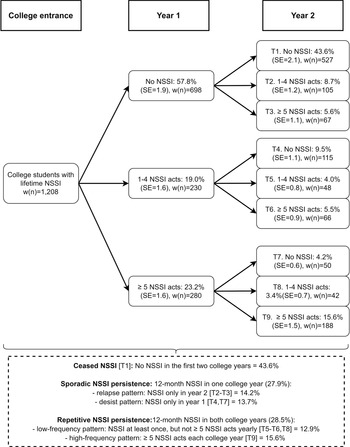
In total, 1208 students (20.4%, s.e. = 0.5%) reported lifetime NSSI at college entrance. Figure 1 presents the course of NSSI for these students. Although four out of ten students (43.6%, s.e. = 2.1) with a history of pre-college NSSI reported NSSI cessation, most (56.4%) students reported NSSI persistence during the first two college years. Of these, 27.9% (s.e. = 1.8) followed a sporadic and 28.5% (s.e. = 1.7) a repetitive NSSI course. Specifically, 14.2% (s.e. = 1.6) relapsed and 13.7% (s.e. = 1.5) desisted NSSI from year-1-to-year-2, whereas 12.9% (s.e. = 1.3) reported a low frequency and 15.6% (s.e. = 1.5) a high-frequency repetitive pattern. Of all sociodemographic variables, females were significantly more likely to follow a repetitive course (OR = 1.7–2.1; online Supplementary Table S2). Therefore, sex assigned at birth was included as a covariate in all analyses.
The course of NSSI during the first two college years (first and second follow-up assessment) among students with a lifetime history of NSSI at college entrance (baseline assessment).

Risk factors and prediction of sporadic and repetitive NSSI persistence
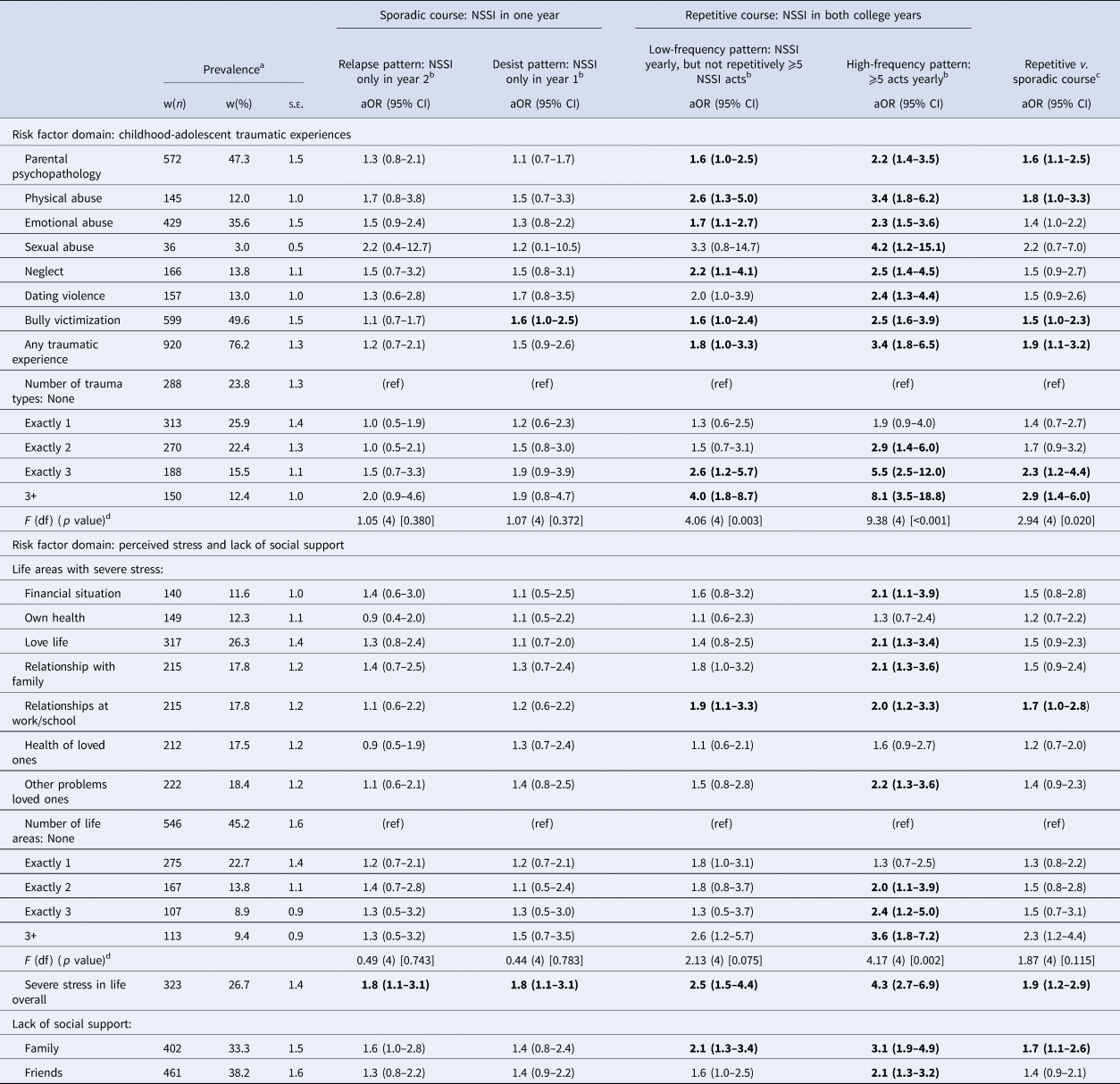
Inspecting risk domains to predict sporadic and repetitive NSSI persistence revealed several notable findings (Tables 1–3). First, childhood-adolescent traumatic experiences were generally associated with an increased risk of a repetitive NSSI course (ORs = 1.6–4.2; Table 1) but did not predict whether students relapsed or desisted NSSI. Students with a repetitive course also reported more traumatic experiences than those with a sporadic NSSI course (Table 1). Second, five of the seven life areas and the number of life areas with severe stress were associated with only high-frequency repetitive NSSI (ORs = 2.0–3.6). Furthermore, while severe life stress was associated with all persistence patterns (Table 1), this effect appeared stronger for students with a repetitive than sporadic course (OR = 1.9). The latter was also observed for lack of family support (OR = 1.7).
Trauma, perceived stress, and lack of social support as predictors of NSSI persistence patterns during the first two college years (n = 1208)

a Prevalence estimates of candidate risk factors at college entrance among 1208 students with a history of NSSI at college entrance.
b Each cell displays the result of a separate bivariate model, including the variable specified in the row as a predictor and controlling for sex assigned at birth, with the ceased course without NSSI in college as the reference group.
c Each cell displays the result of a separate bivariate model, including the variable specified in the row as a predictor and controlling for sex assigned at birth, with the repetitive course as the predicted outcome and the sporadic course as the reference group.
d Omnibus F-test to evaluate joint-significance of categorical predictors across 100 imputed datasets. w(n) = weighted number of cases, w(%) = weighted proportion, aOR = Adjusted Odds Ratio, df = degrees of freedom. Significant odds ratios are shown in bold (α = 0.05).
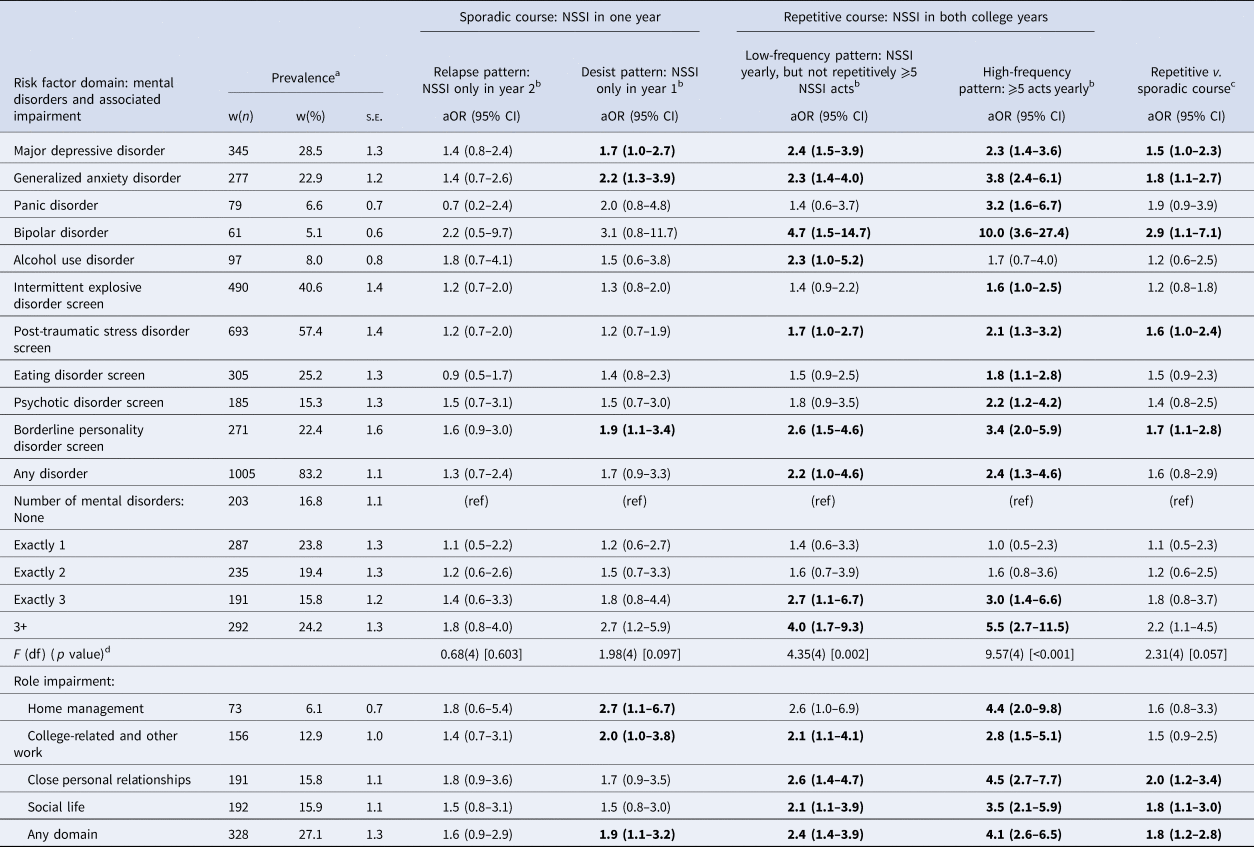
Twelve-month mental disorders and role impairment as predictors of NSSI persistence during the first two college years (n = 1208)

a Prevalence estimates of candidate risk factors at college entrance among 1208 students with a history of NSSI at college entrance.
b Each cell displays the result of a separate bivariate model, including the variable specified in the row as a predictor and controlling for sex assigned at birth, with the ceased course without NSSI in college as the reference group.
c Each cell displays the result of a separate bivariate model, including the variable specified in the row as a predictor and controlling for sex assigned at birth, with the repetitive course as the predicted outcome and the sporadic course as the reference group.
d Omnibus F-test to evaluate joint-significance of number of mental disorders across 100 imputed datasets. w(n) = weighted number of cases, w(%) = weighted proportion, OR = Adjusted Odds Ratio, df = degrees of freedom. Significant odds ratios are shown in bold (α = 0.05).
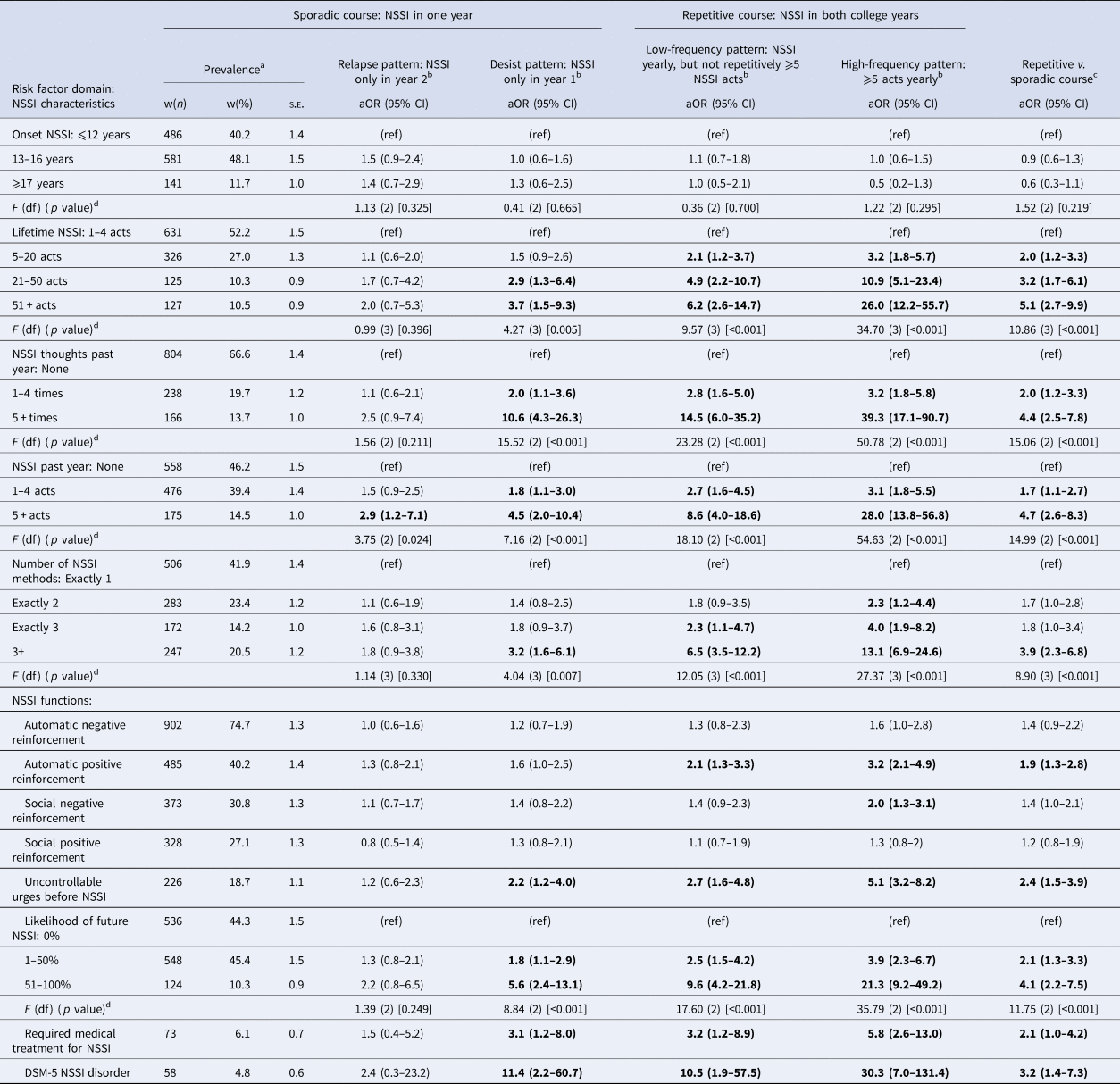
Non-suicidal self-injury characteristics as predictors of NSSI persistence during the first two college years (n = 1208)

a Prevalence estimates of candidate risk factors at college entrance among 1208 students with a history of NSSI at college entrance.
b Each cell displays the result of a separate bivariate model, including the variable specified in the row as a predictor and controlling for sex assigned at birth, with the ceased course without NSSI in college.
c Each cell displays the result of a separate bivariate model, including the variable specified in the row as a predictor and controlling for sex assigned at birth, with the repetitive course as the predicted outcome and the sporadic course as the reference group.
d Omnibus F-test to evaluate joint-significance of categorical predictors across 100 imputed datasets. w(n) = weighted number of cases, w(%) = weighted proportion, OR = Adjusted Odds Ratio, df = degrees of freedom. Significant odds ratios are shown in bold (α = 0.05).
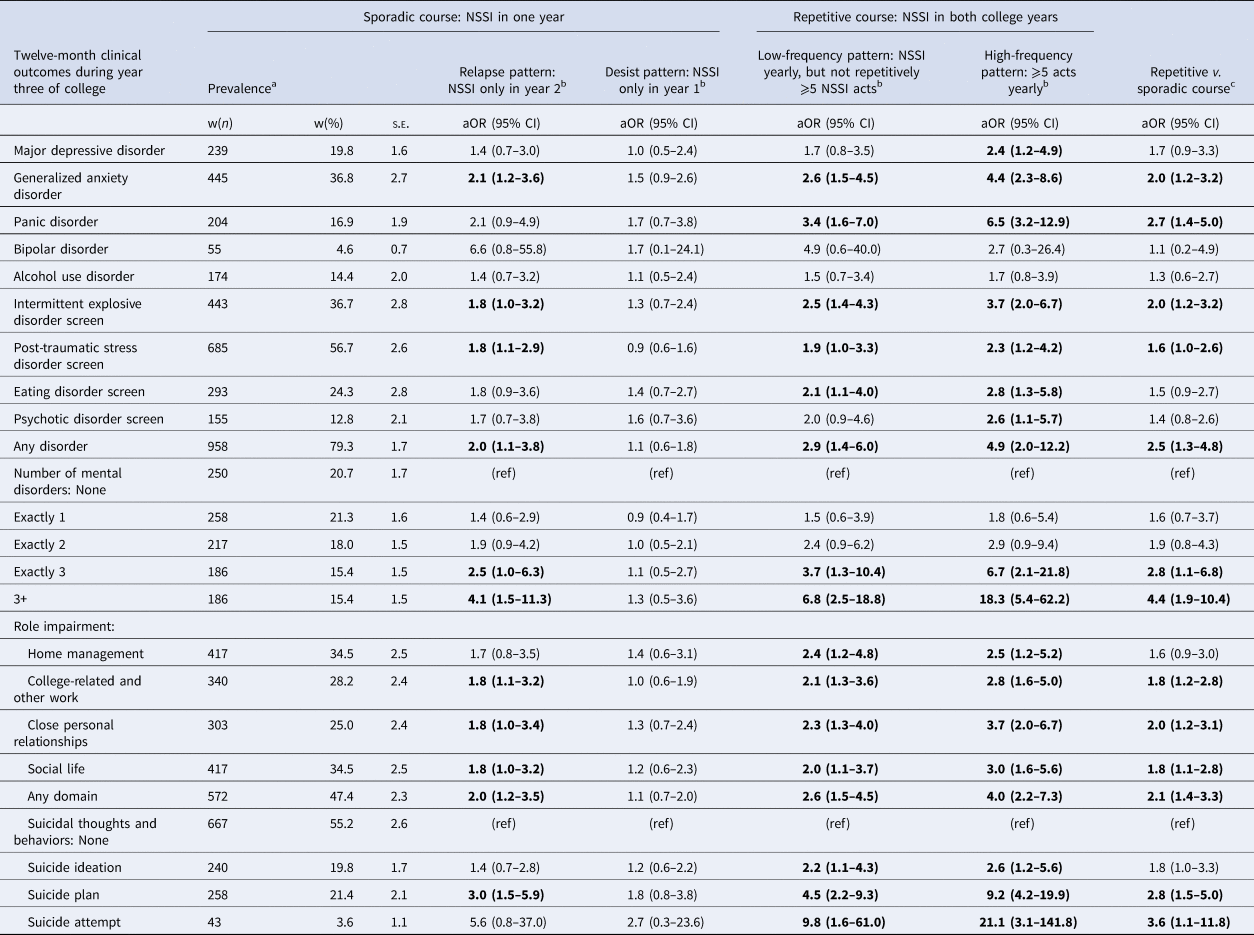
Third, most mental disorders were associated with a repetitive course (ORs from 1.6 for intermittent explosive disorder to 10.0 for bipolar disorder; Table 2), and three mental disorders (i.e. major depressive disorder, generalized anxiety disorder, and borderline personality disorder) predicted 12-month NSSI only in year 1 (i.e. desist pattern). However, mental disorders at college entrance were not significantly associated with a relapse of NSSI from year-1-to-year-2. A similar finding was observed for role impairment. Given this pattern of findings, we performed additional analyses investigating whether psychosocial risk factors at the first follow-up could predict which students relapse and desist NSSI from year-1-to-year-2 (online Supplementary Tables S3 and S4). The presence of mental disorders at follow-up one did also not predict relapse, but severe life stress and impairment in maintaining personal relationships were significantly associated with a relapse over the next year (ORs = 2.0–2.2). Similarly, students who reported more stress and mental disorders, as well as lack of family support and impairments in various domains, were more likely to persist than desist from year-1-to-year-2. Finally, pre-college NSSI characteristics (except age of onset) were significantly associated with an increased risk of NSSI persistence (Table 3), with the highest odds for the high-frequency repetitive pattern. The most substantial bivariate effects in predicting repetitive NSSI persistence were observed for 5+ NSSI thoughts (ORs = 14.5–39.3) and acts (ORs = 8.6–28.0) in the past year, high likelihood (+50%) of future NSSI (ORs = 9.6–21.3), and NSSI disorder (ORs = 10.5–30.3). While some pre-college characteristics were also associated with NSSI in the first year (i.e. desist pattern), only past-year NSSI (5+ acts) was associated with a relapse pattern.
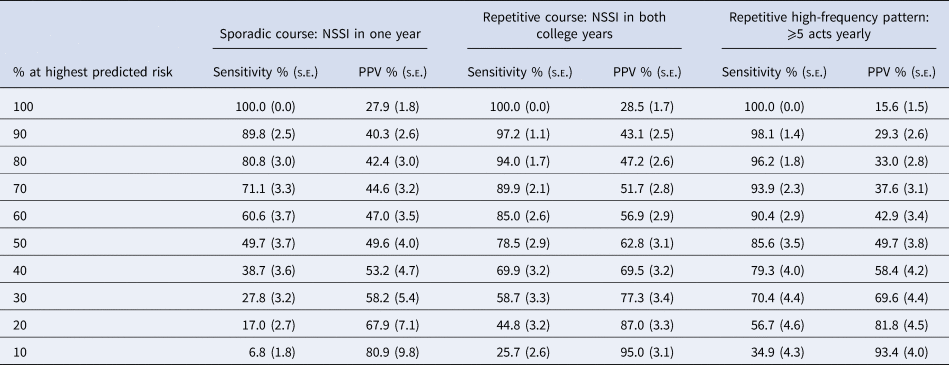
We then constructed multivariate risk prediction models that included selected factors across these different risk domains (online Supplementary Tables S5–S8). Most risk factors became non-significant in the integrative multivariate models (online Supplementary Tables S9 and S10), except for NSSI thoughts, acts, and methods. The generated cumulative risk probabilities showed mediocre performance for detecting a sporadic course (cross-validated AUC = 0.62) and good performance for detecting incoming students at risk for repetitive NSSI persistence (cross-validated AUC = 0.83; Table 4), with the highest accuracy for the high-frequency pattern (cross-validated AUC = 0.88). Sensitivity estimates for different proportions of students at the highest predicted risk show that an intervention that, for instance, targets the 10–20% at highest risk would effectively reach 34.9–56.7% of students that would engage in high-frequency repetitive NSSI persistence with relatively few false positives (PPV = 81.8–93.4). Sensitivity was lower for sporadic persistence, with 6.8–17.0% cases among 10–20% at the highest risk, although PPV remained relatively high (67.9–80.9) in these high-risk strata.
The concentration of risk for NSSI persistence patterns in different proportions of students at the highest predicted risk

Note: see the final integrative models with selected predictors across risk domains in online supplementary materials (Supplementary Tables S9 and S10). Model-based AUC values were 0.66 (0.02) for the sporadic course, 0.85 (0.02) for the repetitive course, and 0.91 (0.02) for repetitive high-frequency persistence. Cross-validated AUC values were 0.62 (0.03), 0.83 (0.02), and 0.88 (0.02), respectively. Sensitivity = proportion of persistent NSSI cases found among row% of responders at highest predicted risk, based on cross-validated predicted probabilities. Positive Predictive Value = probability of persistent NSSI when being among row% of responders at highest predicted risk, based on cross-validated predicted probabilities.
Twelve-month clinical outcomes in the third college year
Table 5 shows the prospective associations between NSSI persistence patterns during the first two years and 12-month mental disorders, role impairment, and STB during the third college year. Students with a repetitive course were at increased risk for various types and a greater number of mental disorders and role impairments relative to peers who ceased NSSI (ORs = 1.9–18.3), with consistently higher odds for the high-frequency repetitive pattern. Similarly, even after controlling for mental disorders and STB at college entrance, repetitive NSSI persistence predicted 12-month suicide ideation (ORs = 2.2–2.6), plans (ORs = 4.5–9.2), and attempts (ORs = 9.8–21.1) in the third college year. Students with a repetitive course were also at higher risk for most clinical outcomes than those with sporadic persistence. However, there was a stark difference in the risk pattern of the two sporadic groups. While students who relapsed were at risk for three out of nine mental disorders (i.e. generalized anxiety, intermittent explosive, and post-traumatic stress disorders), various role impairments, and making suicide plans, no single clinical outcome was elevated for students that desisted NSSI from year-1-to-year-2. Finally, we calculated PARPs among students with lifetime NSSI. This revealed that 7.1% of mental disorders (5.1% for repetitive NSSI), 20.3% of severe impairment (15.4% for repetitive NSSI), 44.9% of suicide plans (33.8% for repetitive NSSI), and 69.6% of suicide attempts (53.0% for repetitive NSSI) in the third college year might have been preventable if it were possible to detect and treat all students with persistent NSSI.
NSSI persistence patterns during the first two college years as predictors of 12-month outcomes during year three of college (n = 1208)

a Prevalence estimates of 12-month clinical outcomes in year three of college among 1208 students with a history of NSSI at college entrance.
b Each cell displays the result of a separate multivariate model, including the NSSI persistence pattern specified as predictor with the ceased course without NSSI in college as the reference group, and controlling sex assigned at birth and the following 12-month covariates at baseline (college entrance): major depressive disorder, generalized anxiety disorder, panic disorder, bipolar disorder, alcohol use disorder, intermittent explosive disorder screen, post-traumatic stress disorder screen, eating disorder screen, psychotic disorder screen, borderline personality disorder screen, number of mental disorders, STB (only in the prediction of suicide ideation, plan, and attempt during year three), and severe impairment (only in the prediction of severe role impairment during year three).
c Each cell displays the result of a separate multivariate model, with the repetitive course as the outcome and the sporadic course as the reference group, and controlling sex assigned at birth and the following 12-month covariates at baseline (college entrance): major depressive disorder, generalized anxiety disorder, panic disorder, bipolar disorder, alcohol use disorder, intermittent explosive disorder screen, post-traumatic stress disorder screen, eating disorder screen, psychotic disorder screen, borderline personality disorder screen, number of mental disorders, STB (only in the prediction of suicide ideation, plan, and attempt during year three), and severe impairment (only in the prediction of severe role impairment during year three). w(n) = weighted number of cases. w(%) = weighted proportion. OR = Adjusted Odds Ratio. Significant odds ratios are shown in bold (α = 0.05).
Discussion
This prospective study provides new information about the patterns, predictors, and subsequent clinical outcomes of NSSI persistence during college. Several key findings emerged that require further comment. First, more than half of students with a history of NSSI reported persistent NSSI during the first two college years. Although most students reported a sporadic course (27.9%) or a low-frequency repetitive pattern (12.9%), we identified a smaller group (15.6%) with a high-frequency repetitive pattern consistently above the DSM-5 frequency threshold for NSSI disorder. Second, few psychosocial risk factors were associated with a sporadic course, but many were (weakly) associated with a repetitive NSSI course. Third, pre-college NSSI characteristics (i.e. frequency of thoughts, behavior, and number of methods) predicted the course of NSSI most powerfully, with integrative models providing good performance for detecting incoming students at risk for a high-frequency repetitive pattern. Fourth, students with a repetitive NSSI course or a relapse were at risk for adverse clinical outcomes.
A critical finding is that most emerging adults with a history of NSSI report persistent NSSI during their college years. That this typically constitutes sporadic or low-frequency repetitive NSSI is consistent with the observation that most young people's path to recovery involves temporary setbacks and (re)lapses (Lewis & Hasking, Reference Lewis and Hasking2021). However, the fact that 15.6% reports a more chronic course with repetitively 5 or more NSSI acts and strongly elevated odds of future suicidal plans and attempts is cause for concern. Previous studies have shown that young people who engage in NSSI - compared to peers without a lifetime history of NSSI - are at risk for mental illness and STB (Daukantaite et al., Reference Daukantaite, Lundh, Wangby-Lundh, Clareus, Bjarehed, Zhou and Liljedahl2020; Hamza & Willoughby, Reference Hamza and Willoughby2016; Kiekens et al., Reference Kiekens, Hasking, Bruffaerts, Alonso, Auerbach, Bantjes and Kessler2021a; Wilkinson, Qiu, Neufeld, Jones, & Goodyer, Reference Wilkinson, Qiu, Neufeld, Jones and Goodyer2018). Our data add that these clinical outcomes are most likely for students with persistent repetitive NSSI. According to the Interpersonal Theory of Suicide (Van Orden et al., Reference Van Orden, Witte, Cukrowicz, Braithwaite, Selby and Joiner2010), NSSI may pose a causal risk to suicide because repeated tissue damage would prepare an individual to make a suicide attempt - potentially through mechanisms that lead to reduced pain sensitivity - by building up a capability for suicide (Willoughby, Heffer, & Hamza, Reference Willoughby, Heffer and Hamza2015). While the processes that account for these associations require more investigation, we observed that up to half of suicide attempts in year three might potentially be attributable to persistent repetitive NSSI and its perpetuating factors among students with lifetime NSSI.
A primary objective of this study was to clarify psychosocial risk factors of NSSI persistence. In line with several early studies and those that focused on NSSI incidence in college (Glenn & Klonsky, Reference Glenn and Klonsky2011; Hamza & Willoughby, Reference Hamza and Willoughby2014; Kiekens et al., Reference Kiekens, Hasking, Bruffaerts, Claes, Baetens, Boyes and Whitlock2017, Reference Kiekens, Hasking, Claes, Boyes, Mortier, Auerbach and Bruffaerts2019), students with childhood-adolescent trauma, life stress, lack of support from family and friends, mental disorders, and role impairments were more likely to engage in persistent repetitive NSSI. In addition, we found that students who experience severe life stress and impairment in personal relationships during college were more likely to relapse and less likely to desist NSSI, indicating that they may still temporarily rely on self-injury for its intra- and interpersonal regulating properties (Hamza et al., Reference Hamza, Goldstein, Heath and Ewing2021a; Taylor et al., Reference Taylor, Jomar, Dhingra, Forrester, Shahmalak and Dickson2018). Importantly, however, few predictors remained predictive of the course of NSSI persistence once NSSI thoughts and behavior were considered, which implies that questioning the recency and frequency of these NSSI characteristics might already provide clinically valuable information to gauge the risk of future NSSI.
The prospective model we developed predicted a repetitive course during the college period with good accuracy. Together with a recently developed prediction model for NSSI onset patterns (Kiekens et al., Reference Kiekens, Hasking, Claes, Boyes, Mortier, Auerbach and Bruffaerts2019), these findings suggest that web-based screening through a virtual survey platform at college entrance might be a promising approach for detecting students at risk for a repetitive NSSI course characterized by subsequent adverse outcomes. Specifically, by focusing on the 20% at highest risk, we could effectively reach most (57%) students with a high-frequency repetitive pattern characterized by subsequent mental disorders, impairment, and STB during the following years (Mortier et al., Reference Mortier, Kiekens, Auerbach, Cuijpers, Demyttenaere, Green and Bruffaerts2017b). Furthermore, these high-risk strata would effectively include relatively few false positives (i.e. less than two out of ten students), underscoring the meaningfulness of providing interventions to those students. However, while the number of false positives remained somewhat acceptable for sporadic persistence, sensitivity was considerably lower. This might be because these students use NSSI infrequently when confronted with brief periods of intense distress, which we could not capture with the present design. Future cohort studies incorporating real-time monitoring (i.e. measurement burst designs; Nestler, Reference Nestler2021) could evaluate whether more fine-grained information on short-term change can improve risk detection for different NSSI profiles among young people (Kiekens, Robinson, Tatnell, & Kirtley, Reference Kiekens, Robinson, Tatnell and Kirtley2021b).
Importantly, students with less frequent NSSI should not be left without resources, as our findings show they are still at risk of future clinical outcomes. These findings align with rising calls that NSSI recovery is a non-linear process that also constitutes ongoing thoughts and ambivalence about stopping NSSI (Gray, Hasking, & Boyes, Reference Gray, Hasking and Boyes2021; Kelada, Hasking, Melvin, Whitlock, & Baetens, Reference Kelada, Hasking, Melvin, Whitlock and Baetens2016; Kruzan & Whitlock, Reference Kruzan and Whitlock2019; Lewis & Hasking, Reference Lewis and Hasking2020). A relevant finding was that students who desisted NSSI - in contrast to those with repetitive NSSI or a relapse - had a similar risk pattern to students who ceased NSSI, illustrating the clinical importance of working towards NSSI cessation in treatment. Although research into the prevention and treatment of NSSI has historically received relatively little attention (Cuijpers et al., Reference Cuijpers, Miguel, Ciharova, Aalten, Batelaan, Salemink and Karyotaki2021; Fox et al., Reference Fox, Huang, Guzmán, Funsch, Cha, Ribeiro and Franklin2020b), the study findings highlight the relevance of investigating a stepped-care model for NSSI (Plener, Reference Plener2020). For instance, transdiagnostic emotion-focused interventions may be appropriate for those who engage in sporadic or low-frequency repetitive NSSI (Bentley, Nock, Sauer-Zavala, Gorman, & Barlow, Reference Bentley, Nock, Sauer-Zavala, Gorman and Barlow2017). In contrast, brief NSSI-specific interventions may serve as a first-line treatment for individuals who engage in high-frequency repetitive NSSI (Kaess et al., Reference Kaess, Edinger, Fischer-Waldschmidt, Parzer, Brunner and Resch2020), such that more costly specialized high-intensity therapies are available for those who need them (Steinhoff et al., Reference Steinhoff, Ribeaud, Kupferschmid, Raible-Destan, Quednow, Hepp and Shanahan2021). Given that the benefits of screening depend on the accessibility of effective interventions, making better use of mobile technologies will also be critical within a stepped-care model for NSSI. While several digital interventions for NSSI have been developed, most have not been evaluated empirically (Arshad, Gauntlett, Husain, Chaudhry, & Taylor, Reference Arshad, Gauntlett, Husain, Chaudhry and Taylor2020; see Franklin et al., Reference Franklin, Fox, Franklin, Kleiman, Ribeiro, Jaroszewski and Nock2016 for an exception). Future work in this area holds promise to help address self-injury among young people (Coppersmith et al., Reference Coppersmith, Dempsey, Kleiman, Bentley, Murphy and Nock2021; Kruzan, Whitlock, & Bazarova, Reference Kruzan, Whitlock and Bazarova2021).
Limitations and future research directions
Several limitations should be considered when interpreting the study findings. First, although we observed good sample representativeness and used adequate missing data handling techniques, there remains a possibility of nonresponse bias regarding unmeasured variables. Second, we used validated screeners instead of clinical interviews, which means prevalence rates of mental disorders should be interpreted cautiously. Third, some constructs were assessed with single-item measures for evaluating a broad range of risk factors; hence, replication using more extended measures is warranted. Fourth, as we assessed the number of times people self-injured rather than days in the past year (as stated in DSM-5), future work would benefit from using the number of days as the frequency criterion. Fifth, based on the present design, it cannot be determined whether prospective associations reflect causal processes, which means that PARPs should only be understood relatively. Sixth, while we focused on stress sources in different areas of life, future studies should incorporate specific college-related stressors such as adjustment to the new environment and academic pressure. Finally, as we used sex assigned at birth, future work is also warranted to evaluate whether people with different gender identities are at higher risk of NSSI persistence. These limitations notwithstanding, the current study provides previously unavailable longitudinal information about the persistence of NSSI in college students. Perhaps the most critical finding is that while most emerging adults with a childhood-adolescent onset of NSSI continue to self-injure during their college years, it is possible to detect students at risk for repetitive NSSI persistence patterns characterized by subsequent mental disorders, impairment, and STB.
Supplementary material
The supplementary material for this article can be found at https://doi.org/10.1017/S0033291722003178.
Acknowledgements
The authors wish to thank the student services of KU Leuven for their assistance in data collection.
Financial support
This research was supported in part by grants from the Research Foundation Flanders [11N0514N (PM), 11N0516N (PM), 1114717N (GK), 1114719N (GK), 12ZZM21N (GK)] and King Baudouin Foundation [2014-J2140150-102905 (RB)]. Mark Boyes is supported by the National Health and Medical Research Council, Australia (Investigator Grant 1173043). The funding sources had no role in the design and conduct of the study; collection, management, analysis, interpretation; preparation, review, or approval of the manuscript; and decision to submit the manuscript for publication. A complete list of all World Mental Health International College Student (WMH-ICS) Initiative publications can be found at: http://www.hcp.med.harvard.edu/wmh/college_student_survey.php
Conflicts of interest
In the past 3 years, Dr Kessler was a consultant for Cambridge Health Alliance, Canandaigua VA Medical Center, Holmusk, Partners Healthcare, Inc., RallyPoint Networks, Inc., and Sage Therapeutics. He has stock options in Cerebral Inc., Mirah, PYM, and Roga Sciences. The other authors have no interests to declare.
Ethical standards
The authors assert that all procedures contributing to this work comply with the ethical standards of the relevant national and institutional committees on human experimentation and with the Helsinki Declaration of 1975, as revised in 2008.