Introduction
Sorghum, Sorghum bicolor (L.) Moench, is a major cereal crop in the semi-arid tropics, but grain yields on the smallholder farms are generally low (500–800 kg/ha compared with potential yields of >10 tonnes/ha), with insect pests constituting a major constraint to increased production (Sharma, Reference Sharma1993). Of more than 150 insect species that damage sorghum, the spotted stemborer Chilo partellus (Swinhoe) (Lepidoptera: Noctuidae) is a major pest in Asia and eastern and southern Africa (Jotwani et al., Reference Jotwani, Young and Teetes1980). It attacks all the aboveground parts of the sorghum plant, from the second week after seedling emergence until crop harvest. Feeding by the young larvae results in pinholes and elongated lesions on the whorl leaves. Early infestation may also destroy the growing point, resulting in the drying of two to three central leaves, commonly known as deadheart. In addition, leaf feeding reduces plant vigour, affects photosynthetic efficiency, delays flowering and leads to a reduction in grain filling and yield. Older larvae (third instar) leave the whorl leaves and bore into the stem at the plant base, causing extensive stem tunnelling that not only affects nutrient supply to the developing grain, but also results in partially or completely chaffy panicles. Stemborer damage also results in losses in fodder yield and quality (Bardner and Fletcher, Reference Bardner and Fletcher1974; Sharma, Reference Sharma, Pande and Parthasarathy Rao2003). Global sorghum crop losses due to stemborer damage have been estimated at over US $300 million annually (ICRISAT, 1992; Sharma et al., Reference Sharma, Singh and Nwanze1997). In general, yield losses range between 5 and 10%, especially when the infestation occurs early.
Stemborer damage in sorghum is a complex interaction between the insect and the host plant. In addition to its effects on the plant, the survival, development and fecundity of the borer are also affected by the resistance mechanisms of the plant (Singh et al., Reference Singh, Rana, Reddy and Rao1983; Dabrowski and Kidiavai, Reference Dabrowski and Kidiavai1983; Rana et al., Reference Rana, Singh, Jaya Mohan Rao, Reddy and Rao1984, Reference Rana, Singh and Rao1985; Singh and Rana, Reference Singh and Rana1984, Reference Singh and Rana1989; Sharma and Nwanze, Reference Sharma and Nwanze1997). The use of insecticides for stemborer control is often uneconomical and beyond the reach of resource-poor farmers. As such, host plant resistance (HPR) offers the best option for minimizing losses due to stemborers (Davies, Reference Davies1981). HPR also assumes great significance in sweet sorghums, which are now being exploited as a source of ethanol for energy.
Genotypic resistance to stemborer damage in sorghum is based on leaf feeding, number of deadhearts, exit holes, tunnel length, effect of the host plant on survival and development of the insect and recovery resistance (production of auxiliary tillers following borer damage to the main shoot) (Ajala and Saxena, Reference Ajala and Saxena1994; Sharma and Nwanze, Reference Sharma and Nwanze1997; Sharma et al., 2007).
The expression of HPR varies depending on the time of infestation (Alghali, Reference Alghali1985, Reference Alghali1987; Jarvis et al., Reference Jarvis, Zeigler and Guthrie1986; Klenke et al., Reference Klenke, Russell and Guthrie1986; Taneja and Nwanze, Reference Taneja, Nwanze and Nwanze1989; MacFarlane, Reference MacFarlane1990; Thome et al., Reference Thome, Smith and Mihm1994), interplant variation (Harris, Reference Harris1962), recovery resistance, ability to withstand stemborer damage (Flattery, Reference Flattery1982), compensation in grain yield (Heinrich et al., Reference Heinrich, Francis and Eastin1983; van den Berg et al., Reference van den Berg, van Rensburg and Pringle1990) or a combination of two or more of these parameters.
Selection for resistance to C. partellus based on a single parameter is therefore difficult, as a sorghum genotype resistant to one form of damage may be susceptible to another (Alghali, Reference Alghali1987; Ajala et al., Reference Ajala, Odulaja and Saxena1993). However, there is considerable interaction among the parameters associated with a reduction in the grain yield due to stemborer damage (Ajala and Saxena, Reference Ajala and Saxena1994). The accumulation of resistance traits through phenotypic recurrent selection accounts for the high grain yields observed in some borer-resistant selections.
To achieve an overall improvement in the level of genotypic resistance that protects all stages of plant growth, resistance to more than one damage variable is required (Ampofo, Reference Ampofo1986; Saxena, Reference Saxena1990). Thus it is important to develop approaches that eventually improve the efficiency of selecting borer-resistant genotypes in a high-yielding background. The selection criteria should measure the combined effect of different components of HPR, an approach that requires the use of appropriate indices that result in simultaneous selection for resistance per se, as well as grain yield performance.
A fundamental limitation to selection is the difficulty in weighing the various damage traits used to calculate selection indices. Antibiosis against larvae and tolerance for grain yield loss are considered important for genotypic resistance to stemborer damage (Anglade, Reference Anglade, Gallais and Bannerot1992; Anglade et al., Reference Anglade, Gouesnard, Boyat and Panouille1996). Several indices have been used for crop improvement under stress, based on grain yield performance under stress and non-stress environments, to select resistant genotypes (Fischer and Maurer, Reference Fischer and Maurer1978; Ortega et al., Reference Ortega, Vasal, Mihm, Hershey, Maxwell and Jennings1980; Rosielle and Hamblin, Reference Rosielle and Hamblin1981; Samper, Reference Samper1984; Graham, Reference Graham1984; Ampofo, Reference Ampofo1986; Fernandez, Reference Fernandez and George Kuo1993; Schneider et al., Reference Schneider, Rosales-Serna, Ibarra-Perez, Cazares-Enriquez, Acosta-Gallegos, Ramirez-Vallejo, Wassimi and Kelly1997). The susceptibility of a genotype is often measured as a function of the reduction in grain yield under infested conditions, while taking into account the variable yield potential of the genotypes. The present study compared the utility of ten selection indices based on tolerance, antibiosis and grain yield potential, and response for identifying sorghum genotypes that perform well under borer-infested conditions.
Materials and methods
Plant material
A total of 25 sorghum genotypes comprising 15 germplasm accessions, three landraces, one commercial hybrid, four improved varieties, and one resistant and one susceptible check (Table 1) were evaluated for resistance to C. partellus under artificial infestation during the rainy and post-rainy seasons at the International Crops Research Institute for the Semi-Arid Tropics (ICRISAT), Patancheru, Andhra Pradesh, India. All the genotypes were planted in four-row plots, each 2 m long with ridges 75 cm apart, in a randomized complete block design with three replications. The plots were fertilized with a basal application of 40 kg N and 40 kg P2O5 per ha. The seedlings were thinned to a spacing of 10 cm by maintaining a population of 20 seedlings per 2 m row. At the flowering stage, the panicles were covered with pollination paper bags, which were subsequently replaced with nylon bags (30 mesh) at the milk stage to prevent bird damage. In each plot, two rows were infested with stemborer neonates, as described below. The remaining two rows served as an uninfested control.
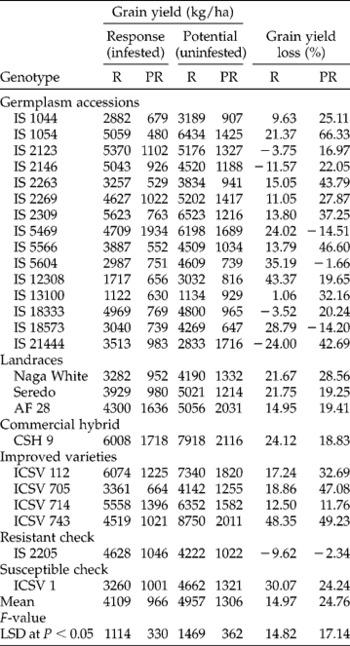
Grain yield potential and response of sorghum genotypes under Chilo partellus infested and uninfested conditions during the rainy (R) and post-rainy (PR) seasons (ICRISAT, Patancheru, India)

Stemborer rearing and infestation
Artificial diet developed at ICRISAT was used for mass rearing the C. partellus (Taneja and Leuschner, Reference Taneja and Leuschner1985). At 18 days after seedling emergence, the plants were artificially infested with five to seven freshly emerged neonate larvae using a ‘bazooka’ applicator, between 08.00 and 11.00 h (Sharma et al., 1992). Leaf feeding data were recorded on a rating scale of 1–9 (where 1 ≤ 10% leaf area damaged and 9 ≥ 80% leaf area damaged), and the percentage of plants with deadhearts was recorded at 15 and 40 days after infestation.
Grain yield
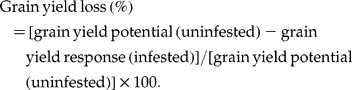
At physiological maturity, all the panicles were harvested and threshed from the borer-infested and uninfested plots separately, and represented as grain yield response and potential (in kg/ha), respectively. Grain yield loss was calculated as the difference between grain yields from the infested and uninfested plots of each genotype, according to Walker (Reference Walker1981, Reference Walker1983):
Selection indices
The following selection indices were used to characterize the test genotypes into different categories of resistance or susceptibility, based on grain yield performance under stemborer-infested and uninfested conditions, with the exception of functional plant loss index (FPLI), which is based solely on leaf feeding damage and deadheart formation during the vegetative stage of the sorghum crop. The following abbreviations were used in the formulae given below:
GYI (IN) = grain yield of Ith genotype under borer infestation;
GYI (UN) = grain yield of Ith genotype under uninfested conditions;
GYI (SC) = grain yield of susceptible check under borer infestation;
LFS = leaf feeding score; and
DH (%) = deadheart percentage.
1. FPLI was calculated by modifying the methods of Morgan et al. (Reference Morgan, Wilde and Johnson1980), Ortega et al. (Reference Ortega, Vasal, Mihm, Hershey, Maxwell and Jennings1980), and Panda and Heinrichs (Reference Panda and Heinrichs1983) as:

Mean grain yield under borer-infested conditions and the FPLI of each genotype under borer infestation have been used to categorize the genotypes for expression of resistance to C. partellus (Ortega et al., Reference Ortega, Vasal, Mihm, Hershey, Maxwell and Jennings1980; Ampofo, Reference Ampofo1986; Kumar, Reference Kumar1994).
2. Antibiosis index (ABI) was calculated as:

High ABI values indicated high levels of resistance to the stemborer.
3. Mean productivity index (MPI) was calculated as:

MPI is based on arithmetic mean, and, therefore, has an upward bias wherein there are large differences between grain yield under borer-infested and uninfested conditions (Rosielle and Hamblin, Reference Rosielle and Hamblin1981). MPI favours genotypes with high grain yield performance and low stress tolerance.
4. Mean relative performance (MRP) was calculated as:

MRP indicates selection for tolerance based on differences in grain yield performance under borer-infested and uninfested conditions. Selections for tolerance based on MRP suggest selection of genotypes with low loss in grain yield and low grain yield performance under borer-infested and uninfested conditions.
5. Geometric mean productivity (GMP) (Samper, Reference Samper1984; Samper and Adams, Reference Samper and Adams1985; Ramirez-Vallejo and Kelly, Reference Ramirez-Vallejo and Kelly1998) was calculated as:

GMP accounts for large differences in performance between borer-infested and uninfested conditions than does the simple arithmetic mean, and identifies genotypes with high grain yield potential and adaptation to borer infestation.
6. Relative efficiency index (REI) was calculated by modifying the formula of Graham (Reference Graham1984) and Rosales-Serna et al. (Reference Rosales-Serna, Ramírez-Vallejo, Acosta-Gallegos, Castillo-González and Kelly2000) to:

REI can be used to classify genotypes based on grain yield under borer-infested and uninfested conditions. The index is suitable for genotypes with high grain yield potential and tolerance to borer damage.
7. Tolerance index (TOL) (Rosielle and Hamblin, Reference Rosielle and Hamblin1981) was calculated as:

Selection based on TOL favours genotypes with low grain yield potential under infestation and higher grain yield response under borer infestation. A larger value of TOL represents greater sensitivity to borer infestation and greater yield reduction.
8. Fischer's and Maurer's stress susceptibility index (FMSSI) has been used to select for drought tolerance (Fischer and Maurer, Reference Fischer and Maurer1978) and was modified to estimate relative susceptibility to stemborer damage.
Stemborer susceptibility index (SSI) was calculated as:

Using SSI, FMSSI for each genotype was calculated as:

FMSSI separates the effects of grain yield potential and borer susceptibility in terms of grain yield response under borer infestation. However, selection based on FMSSI favours genotypes with low grain yield potential and high yield response. Thus FMSSI values that are < 1.00 or >1.00 indicate high or low tolerance to stemborer infestation, respectively.
9. Fernandez stress tolerance index (FSTI). Based on grain yield reduction adjusted to stemborer intensity in a particular environment, FSTI (Fernandez, Reference Fernandez and George Kuo1993) was estimated as:

A high FSTI value for a genotype indicated high tolerance to stemborer damage and high grain yield potential.
10. Schneider's stress severity index (SSSI) was derived by modifying the formula of Schneider et al. (Reference Schneider, Rosales-Serna, Ibarra-Perez, Cazares-Enriquez, Acosta-Gallegos, Ramirez-Vallejo, Wassimi and Kelly1997) as:

SSSI estimates the relative tolerance for yield reduction of a genotype relative to the population mean reduction in grain yield response due to stemborer damage. It is useful for the identification of both stable and responsive sorghum genotypes with better grain yield response under borer infestation.
Statistical analyses
Data were subjected to ANOVA for each parameter, and the significance of differences between the genotypes was tested by the F-test, whereas the significance of differences between the genotypic means was judged using least significant difference at P ≤ 0.05. Data were also subjected to correlation and regression analyses to elucidate the relationship between the selection indices and their association with grain yield performance and loss.
Results
Grain yield performance under borer-infested and uninfested conditions
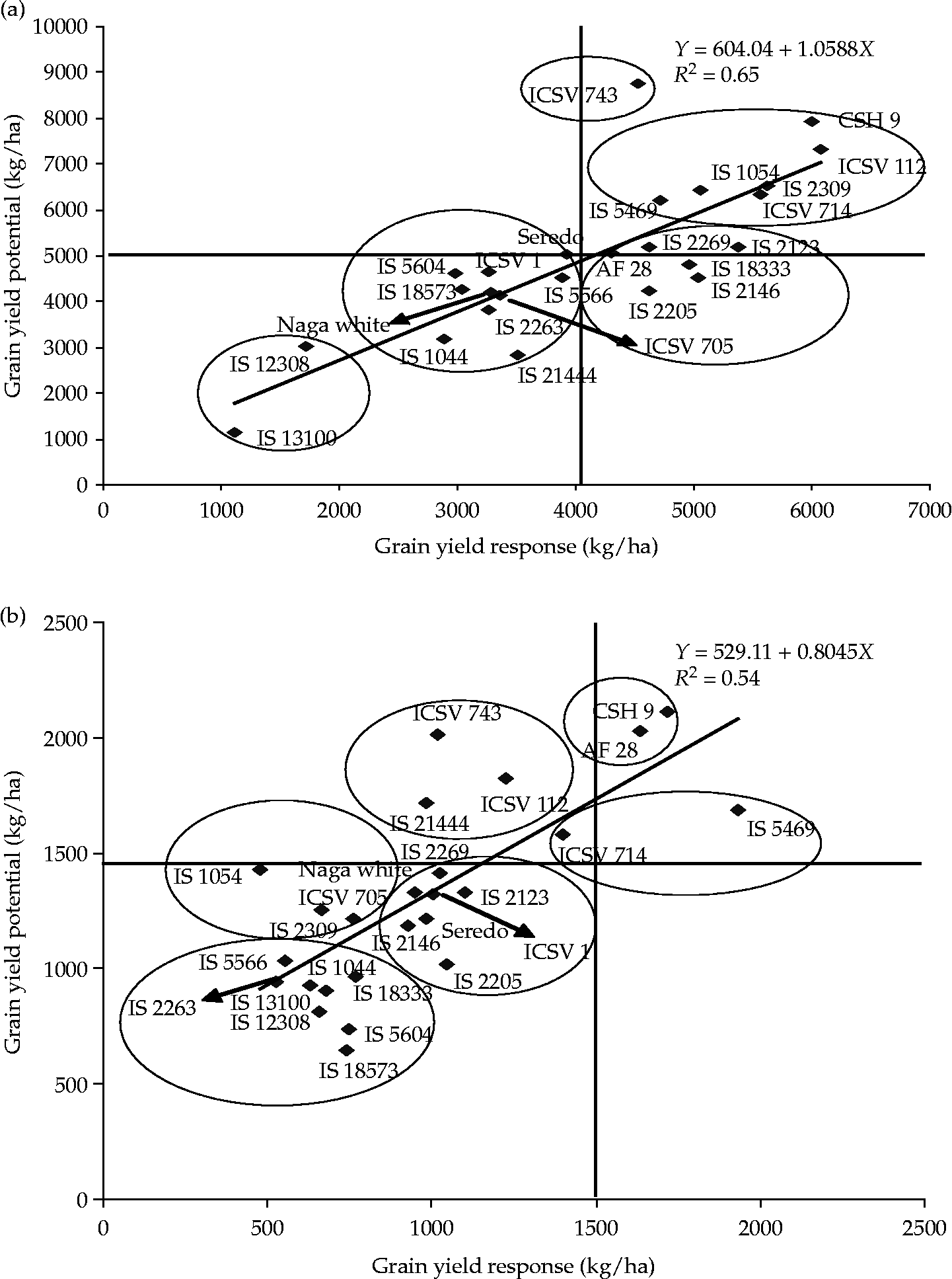
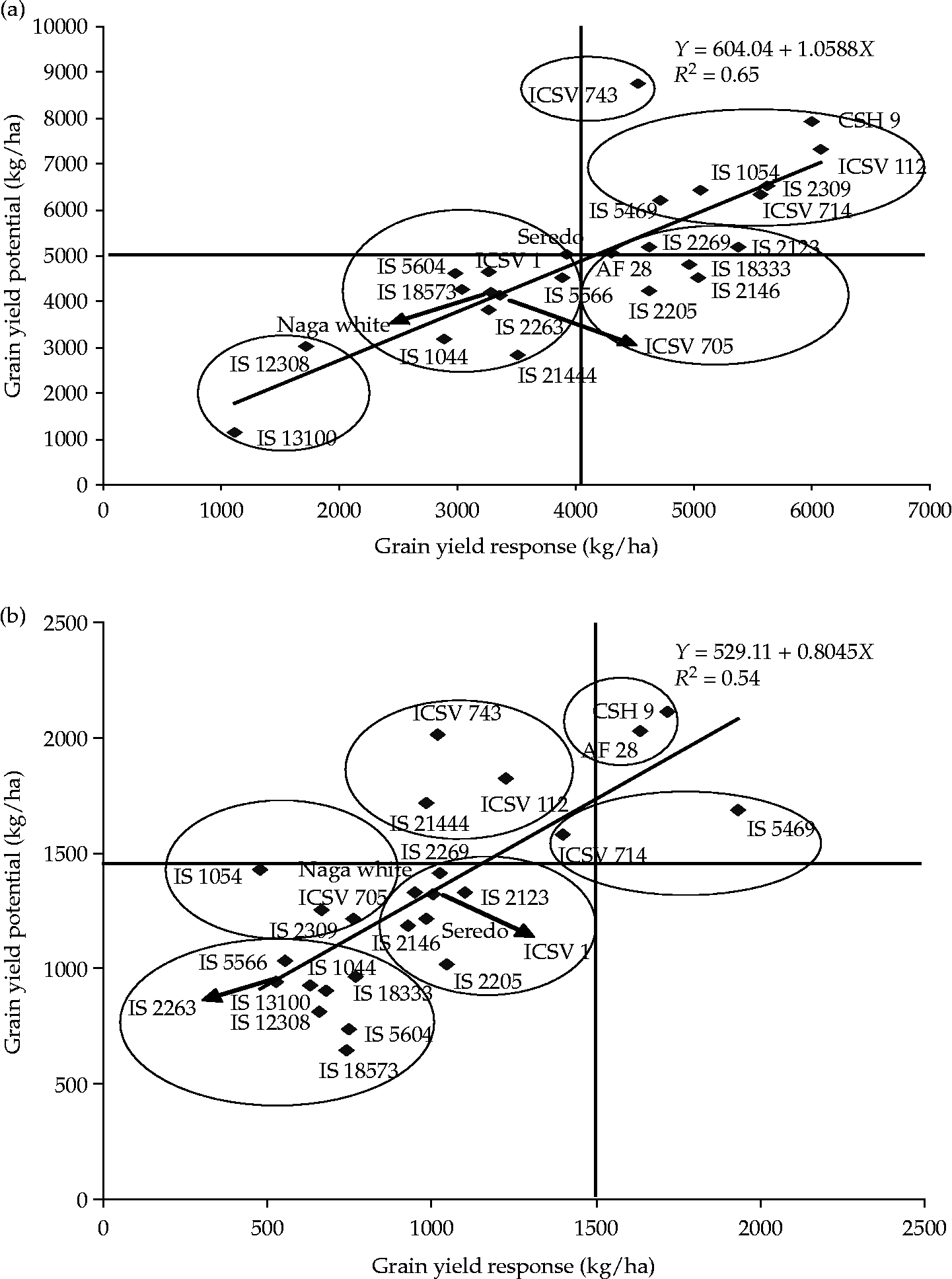
Differences in grain yield responses and potentials among the test genotypes were significant (Table 1). Yield potentials varied from 1134 to 8750 kg/ha during the rainy season and from 647 to 2116 kg/ha in the post-rainy season. Yield responses varied between 1122 and 6074 kg/ha, and between 480 and 1934 kg/ha in the rainy and the post-rainy seasons, respectively. Grain yield response and potential were positively correlated under stemborer-infested and uninfested conditions during the rainy (r = 0.65*) and post-rainy (r = 0.54*; * significant at P = 0.05) seasons.
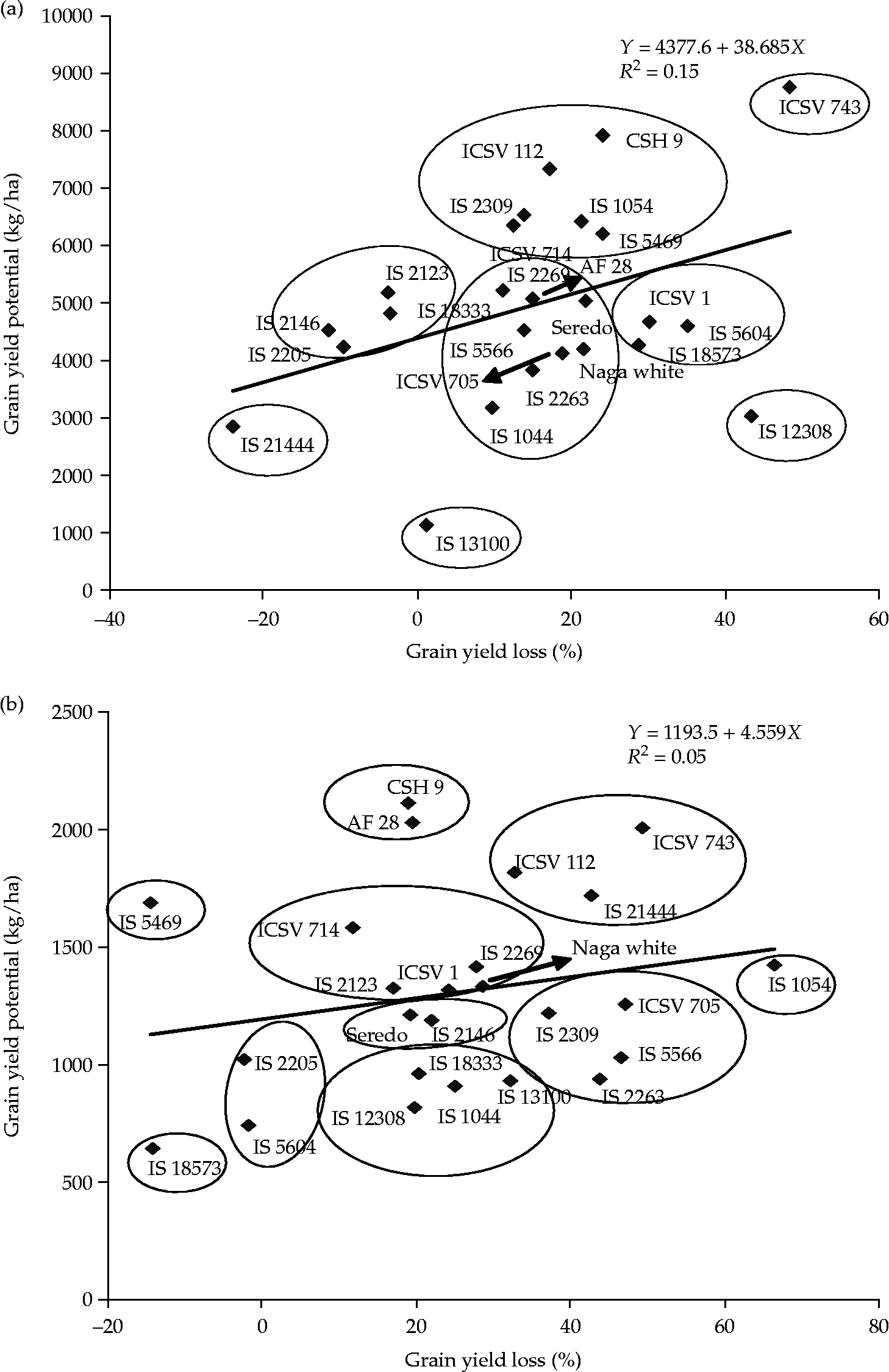
Genotypes ICSV 743, CSH 9, ICSV 112, IS 2309, IS 1054, ICSV 714 and IS 5469 showed high yield potential and yield response under uninfested and borer-infested conditions during the rainy season (Fig. 1a). Both the potential yield and the response were very low for IS 12308 and IS 13100, while IS 2269, IS 2146, IS 2123 and IS 2205 exhibited moderate levels of yield under borer-infested and uninfested conditions. During the post-rainy season, CSH 9, AF 28, IS 5469, ICSV 112, IS 21444 and ICSV 714 showed high yield potential and response, while IS 18573, IS 5604, IS 12308, IS 13100, IS 1044, IS 2263 and IS 5566 exhibited low yield potential and low yield response (Fig. 1b). Genotypes IS 2269, IS 2123, IS 2146, Seredo, ICSV 1 and IS 2205 exhibited moderate yields under stemborer-infested and uninfested conditions.
Relationship between grain yield potential (uninfested conditions) and grain yield response (under Chilo partellus infestation) during the (a) rainy and (b) post-rainy seasons
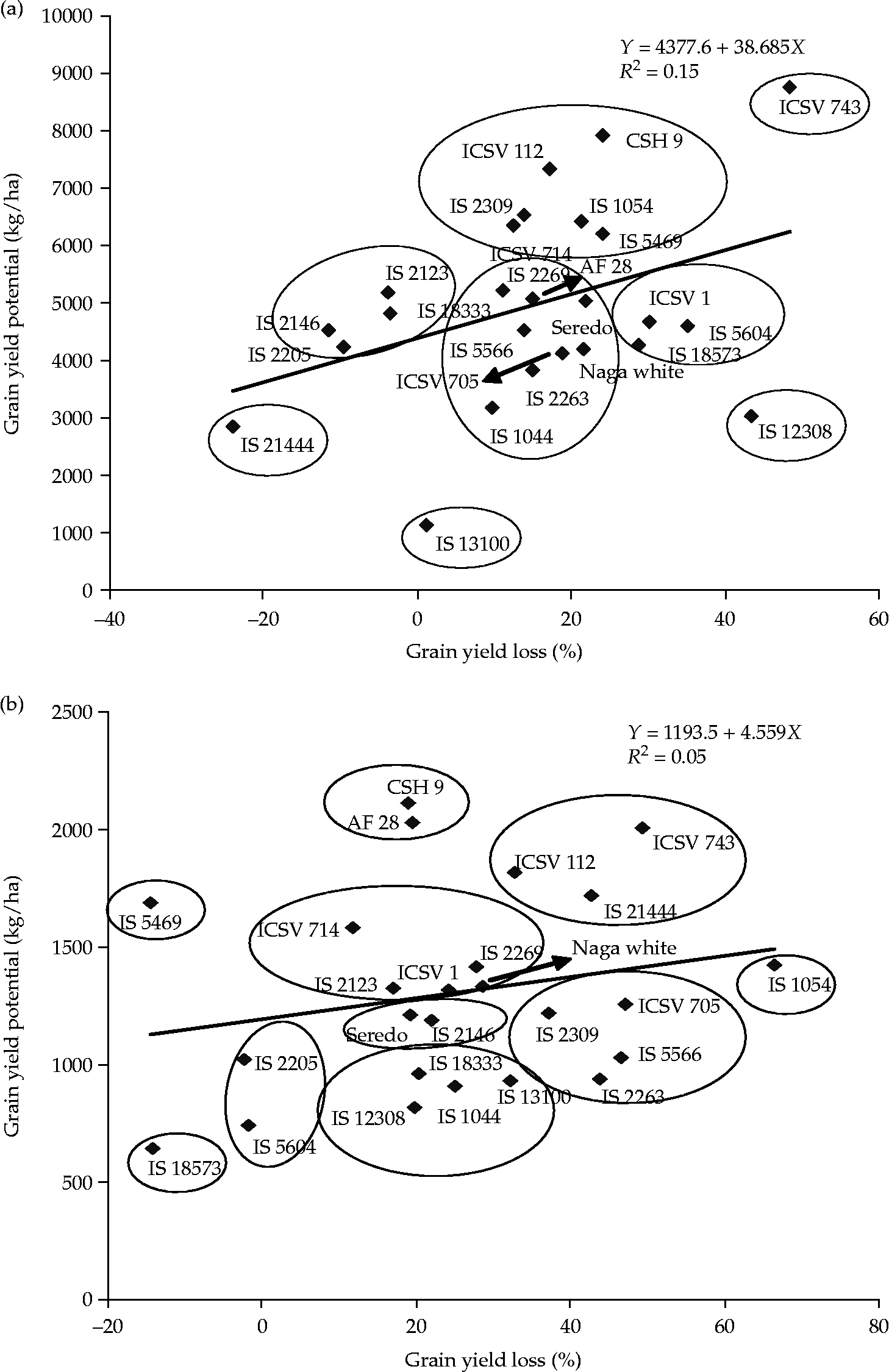
There was a very poor relationship between grain yield potential and loss in grain yield (r = 0.05–0.15). However, genotypes IS 2123, IS 2146, IS 18333 and IS 21444 in the rainy season, and IS 5469, IS 5604, IS 2205, IS 5469 and IS 18573 in the post-rainy season showed an increase of 1.7–24.0% in grain yield response, indicating that recovery (tolerance) is an important component of resistance in these genotypes to damage by C. partellus (Table 1). Accession IS 21444 had low grain yield potential but exhibited high compensation in grain yield under borer infestation, while genotypes IS 12308, IS 18573, IS 5604, ICSV 1, Naga White and Seredo exhibited low yield potential and also suffered high grain yield loss during the rainy season (Fig. 2a). IS 1054, IS 5469, IS 2309, ICSV 714 and IS 2269 exhibited moderate grain yield potential and suffered low losses (10–20%) in grain yield; IS 2123, IS 18333, IS 2146 and IS 2205 suffered no appreciable loss in grain yield and also showed moderate levels of yield potential under stemborer-infested and uninfested conditions. During the post-rainy season, genotypes IS 5469, CSH 9, AF 28 and ICSV 714 showed high yield potential and also displayed good compensation in grain yield under borer infestation (Fig. 2b). On the other hand, genotypes ICSV 743, IS 21444 and ICSV 112 exhibited high grain yield potential but suffered high grain yield losses under borer infestation.
Relationship between grain yield potential (under uninfested conditions) and grain yield loss due to Chilo partellus damage during the (a) rainy and (b) post-rainy seasons
Selection indices
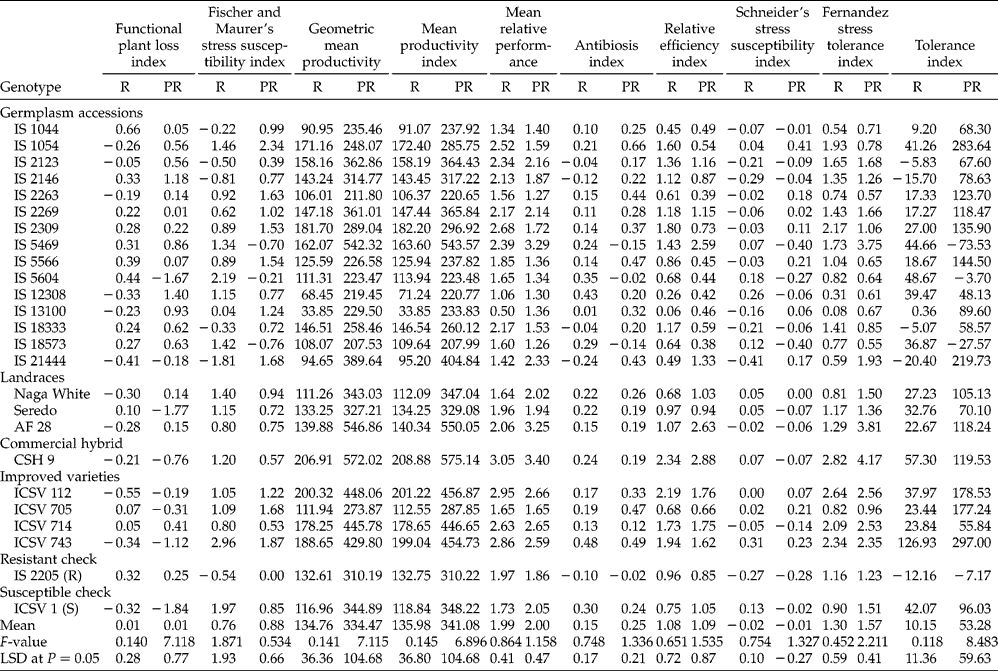
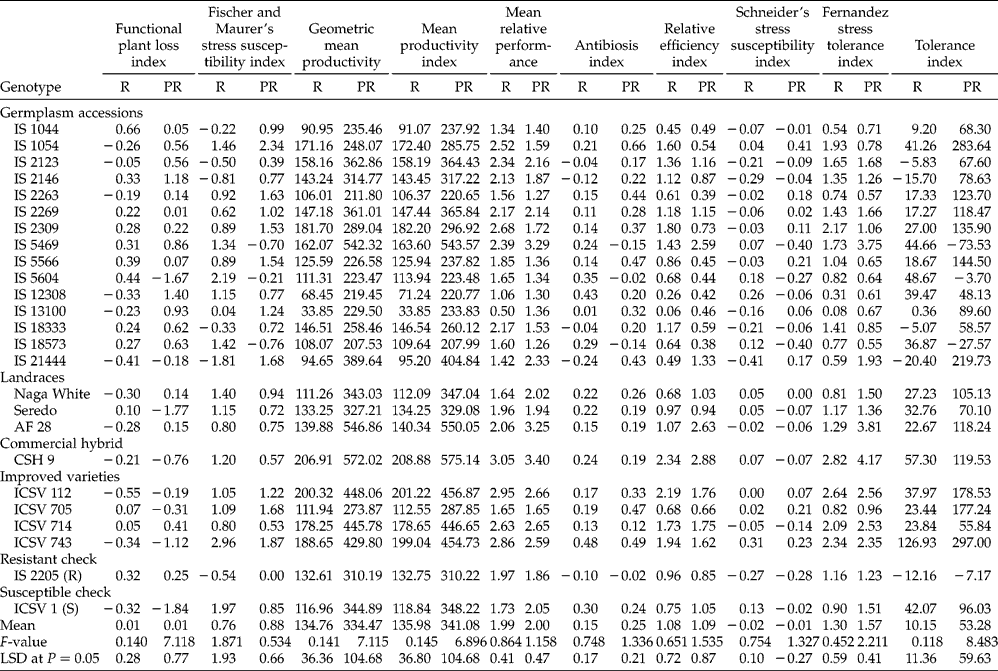
The selection indices based on grain yield potential and response are given in Table 2. There were significant differences between the genotypes based on different selection indices.
Selection indices based on grain yield performance of sorghum under Chilo partellus infested and uninfested conditions during the rainy (R) and post-rainy (PR) seasons
FPLI
There were significant differences between the test genotypes for FPLI, which provides a reasonable estimate of resistance at the vegetative stage for each genotype in relation to grain yield response, under borer infestation. CSH 9, IS 1054, AF 28 and ICSV 743 displayed antibiosis, while IS 1044, IS 5604 and IS 18573 showed tolerance to C. partellus damage during the rainy season. Both antibiosis and tolerance were observed in IS 13100 and IS 12308, while IS 5604 and ICSV 705 displayed both tolerance and antibiosis in the post-rainy season.
ABI
The ABI values were significantly low for IS 2123, IS 2146, IS 18333, IS 21444 and IS 2205 in the rainy season, and IS 5469, IS 5604, IS 18573 and IS 2205 in the post-rainy season (Table 2), suggesting that these genotypes had a high degree of antibiosis combined with tolerance mechanism of resistance to stemborer damage.
MPI
The MPI was high in IS 1054, IS 2309, AF 28, CSH 9, ICSV 714 and ICSV 743 during the rainy season, and IS 5469, AF 28 and CSH 9 during the post-rainy season (Table 2). Based on productivity and grain yield loss, genotypes ICSV 743, CSH 9, IS 1054 and IS 5469 exhibited high productivity but also suffered high grain yield losses in the rainy season, while ICSV 705, IS 1054, IS 5566 and IS 2263, with low productivity, suffered high grain yield loss in the post-rainy season.
MRP
The MRP values were significantly high in IS 2309, CSH 9, ICSV 112 and ICSV 743 in the rainy season, and in IS 5469, AF 28 and CSH 9 in the post-rainy season (Table 2). However, the MRP values were low ( < 1.45) for IS 1044, IS 12308 and IS 21444, and high (>2.63) for ICSV 714, IS 2309, ICSV 743, ICSV 112 and CSH 9 during the rainy season. Based on MRP values and grain yield loss, CSH 9, IS 1054 and IS 5469 showed high productivity but suffered high grain yield loss. IS 21444, IS 2146, IS 2123, IS 18333 and IS 2205 showed high tolerance in the rainy season, while ICSV 112, ICSV 743 and IS 21444 exhibited high productivity and high grain yield loss. Genotypes IS 18573, IS 2205 and IS 5604 displayed moderate grain yield potential and also exhibited tolerance to stemborer damage during the post-rainy season (Tables 1 and 2).
GMP
There were significant differences in GMP among the test genotypes. ICSV 743, CSH 9, IS 1054 and IS 5469 exhibited high productivity, and also suffered high loss in grain yield; ICSV 112, ICSV 714, IS 2309, IS 2269, IS 18333, IS 2123, IS 2146 and IS 2205 showed moderate-to-high productivity, and suffered low loss in grain yield during the rainy season. During the post-rainy season, ICSV 112, ICSV 743 and IS 21444 showed high productivity but also suffered high grain yield loss, while IS 5469, ICSV 714, CSH 9 and AF 28 showed high productivity and suffered low loss in grain yield.
REI
The REI values were high for IS 2309, CSH 9, ICSV 112, ICSV 714 and ICSV 743 during the rainy season, and for IS 5469, AF 28 and CSH 9 in the post-rainy season. These genotypes had a high grain yield potential and also showed adaptation to borer damage (Tables 1 and 2).
TOL
Selection based on TOL indicated that ICSV 743 had low tolerance and suffered high losses in grain yield, while high tolerance to stemborer damage was observed in IS 21444 during the rainy season. In addition, ICSV 705, IS 5566, IS 2309 and IS 2263 exhibited high tolerance and suffered modest losses in grain yield due to stemborer damage during the post-rainy season (Tables 1 and 2).
FMSSI
There were significant differences in FMSSI among the genotypes tested. Based on FMSSI values and grain yield loss, genotypes IS 5604, ICSV 743 and ICSV 1 had low levels of tolerance associated with high grain yield losses. IS 2123, IS 2146, IS 2205 and IS 21444 exhibited high tolerance and suffered low loss in grain yield during the rainy season. During the post-rainy season, ICSV 743, IS 2309, ICSV 705, IS 21444, IS 2263, IS 1054 and IS 5566 not only showed low tolerance, but also suffered high grain yield loss, while IS 5604, IS 2205, IS 5469, ICSV 714 and IS 18573 exhibited high tolerance during the post-rainy season.
FSTI
There were significant differences among the test genotypes for FSTI. Grouping of genotypes based on grain yield loss and FSTI indicated that CSH 9, ICSV 112 and ICSV 743 had low tolerance, associated with high grain yield loss in both the rainy and post-rainy seasons. Genotypes IS 2146, IS 2205, IS 2123 and IS 18333 exhibited high levels of tolerance to stemborer damage in the rainy season. IS 2205, IS 5604 and IS 18573 showed high tolerance to borer damage in the post-rainy season.
SSSI
IS 12308 and ICSV 743 showed highly positive SSSI values during the rainy season, suggesting that they suffered high stress and high grain yield loss. IS 21444, IS 2146, IS 2205, IS 2123, IS 18333 and IS 13100 had negative SSSI values, indicating that they experienced low stress and low grain yield loss. Similarly, positive SSSI values in IS 1054, ICSV 743, ICSV 705 and ICSV 112 during the post-rainy season indicated that they are prone to stress caused by stemborer damage and also suffered greater grain yield loss (Table 2).
Association of selection indices with grain yield performance under borer-infested and uninfested conditions
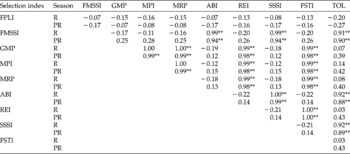
There were highly significant and positive correlations between GMP and MPI with MRP, REI and FSTI. Higher GMP and FSTI values indicated greater tolerance to borer infestation, as observed for drought tolerance (Fernandez, Reference Fernandez and George Kuo1993).
FMSSI was positively correlated with ABI, SSSI and TOL (Table 3). Similarly, positive correlations were observed between ABI and SSSI and TOL, between REI and FSTI, and between SSSI and TOL. FPLI did not show any association with other selection indices or with grain yield performance under borer-infested and uninfested conditions, including grain yield loss; hence it may not be a reliable criterion for use in the selection for HPR to C. partellus, as it is based on damage at the vegetative stage.
Relationship between selection indices and grain yield performance of sorghum under Chilo partellus infested and uninfested conditions during the rainy (R) and post-rainy (PR) seasons

FPLI, functional plant loss index; FMSSI, Fischer's and Maurer's stress susceptibility index; GMP, geometric mean productivity; MPI, mean productivity index; MRP, mean relative performance; ABI, antibiosis index; REI, relative efficiency index; SSSI, Schneider's stress severity index; FSTI, Fernandez stress tolerance index; TOL, tolerance index.
Correlation coefficients significant at *P = 0.05 and **P = 0.01.
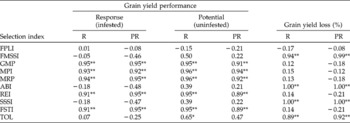
FMSSI, ABI, SSSI and TOL exhibited strong correlation with grain yield loss due to borer infestation, in both rainy and post-rainy seasons, but correlation coefficients with grain yield were non-significant (except for TOL, which was significantly correlated with grain yield during the rainy season under uninfested conditions) (Table 4). GMP, MPI, MRP, REI and FSTI exhibited highly significant association with grain yield but had no association with grain yield loss.
Association between selection indices and grain yield performance and grain yield loss for sorghum under Chilo partellus infested and uninfested conditions during the rainy (R) and post-rainy (PR) seasons

FPLI, functional plant loss index; FMSSI, Fischer's and Maurer's stress susceptibility index; GMP, geometric mean productivity; MPI, mean productivity index; MRP, mean relative performance; ABI, antibiosis index; REI, relative efficiency index; SSSI, Schneider's stress severity index; FSTI, Fernandez stress tolerance index; TOL, tolerance index.
Significant at *P = 0.05 and **P = 0.01.
Discussion
Selection based on a combination of indices may provide a more useful criterion for improving stemborer resistance in sorghum. However, an indication of the association between different indices and/or loss in grain yield is useful in finding the degree of overall linear association between any two attributes. This could be used to identify superior genotypes for borer-infested and uninfested conditions. The FSTI and GMP were reasonably reliable for identifying genotypes with high yield potential and good response to stemborer damage. The FSTI, REI, GMP, MRP and MPI were useful in identifying genotypes with high yield potential under both borer-infested and uninfested conditions. However, when the severity of stemborer damage is high, TOL, SSSI, ABI and FMSSI were more useful for discriminating tolerant/resistant cultivars, although none of the indicators could clearly identify genotypes with high yield potential under both infested and uninfested conditions.
An optimal selection criterion should be able to distinguish genotypes exhibiting high yield potential and suffering low loss in grain yield, but the selection indices based on tolerance and antibiosis mechanisms such as FPLI, TOL, MPI, MRP, SSSI, ABI and FMSSI did not provide good separation of the genotypes exhibiting high yield potential and suffering low loss in grain yield. GMP was found to be better than MPI in separating genotypes exhibiting high yield potential and suffering low loss in grain yield. Thus breeding for improved grain yield response in sorghum can be realized under stemborer infestation, while maintaining high grain yield potential.
TOL did not distinguish between the genotypes exhibiting high yield potential and suffering low grain yield loss. Clarke et al. (Reference Clarke, De Pauw and Townley-Smith1992) made similar observations for TOL for drought tolerance in wheat. Under borer infestation, selections for high grain yield response using TOL would be ineffective to breed for resistance to C. partellus, since the stemborer infestation under natural conditions is often uneven and sporadic.
FMSSI has been widely used by researchers to identify genotypes that are sensitive or tolerant to drought (Fischer and Maurer, Reference Fischer and Maurer1978). Genotypes with low FMSSI values are considered stress tolerant, and such genotypes exhibit lower reduction in grain yield under stress compared with non-stress conditions. MPI can be related to grain yield response only when infestation is not too severe. Genotypes with a high MPI have similar performance in both stress and non-stress conditions. However, genotypes with relatively low yields under borer infestation exhibited high MPI values. MPI was highly correlated with grain yield performance, REI and FSTI, but not with TOL. Genotypes with high MPI values may not have low TOL values, and selecting superior genotypes may be difficult. These observations are in agreement with the results obtained for drought tolerance (Rosielle and Hamblin, Reference Rosielle and Hamblin1981; Clarke et al., Reference Clarke, De Pauw and Townley-Smith1992). There was a large variation in index based on GMP of the genotypes tested, and it was strongly correlated with both yield potential and grain yield response under stemborer infestation. A highly significant correlation between MPI and GMP suggested that GMP is a good indicator of genotypic performance under stemborer infestation. FMSSI tends to favour low-yielding genotypes, but to a much smaller extent than selection for TOL. FSTI was highly correlated with GMP, MPI, MRP and REI. FSTI is also correlated with both grain yield potential and response, and these indices accounted for large differences in grain yield performance of the genotypes between borer-infested and uninfested conditions, and are similar to drought tolerance, as reported by Rosielle and Hamblin (Reference Rosielle and Hamblin1981).
Selections based solely on grain yield response provided an estimate of tolerance to stemborer damage but may be associated with low grain yield potential under uninfested conditions. Similar observations have been reported for drought tolerance in dry bean Phaseolus vulgaris under stress and unstressed conditions (Samper, Reference Samper1984; Samper and Adams, Reference Samper and Adams1985). Therefore, FSTI and GMP seem to be more useful for resistance to stemborer damage in sorghum, as FSTI discriminates the genotypes with high yield and stress tolerance potential. A general linear model regression of grain yield response on FMSSI revealed a positive correlation during the rainy and post-rainy seasons (r = 0.89** and 0.98**, respectively; ** significant at P = 0.01). However, FMSSI did not differentiate between potentially borer-tolerant genotypes and those that possess low overall yield potential.
Although a potential selection criterion to differentiate the role of antibiosis and tolerance (components of resistance) to C. partellus damage, FPLI showed no relationship with grain yield performance under borer-infested and uninfested conditions. However, FPLI has a great bearing since the leaf-feeding injury reflects antixenosis and/or early-stage antibiosis to stemborer larvae, which restricts the establishment of the borer larvae on the plant, and thus its population build-up.
Breeding for high grain yield response under borer infestation is quite difficult, since selections based on resistance to stemborer damage are often associated with low grain yield potential. Negative association between grain yield and FMSSI has been observed under drought conditions in wheat (Fischer and Maurer, Reference Fischer and Maurer1978), maize (Fischer et al., Reference Fischer, Johnson and Edmeades1983, Reference Fischer, Edmeades and Johnson1989), lentil (Hamdi and Erskine, Reference Hamdi and Erskine1986) and sunflower (Fereres et al., Reference Fereres, Gimenez and Fernandez1986). FMSSI has been considered to be of limited value as a selection criterion for measuring tolerance to drought in wheat (Clarke et al., Reference Clarke, De Pauw and Townley-Smith1992) and common bean (White and Singh, Reference White, Singh, van Schoonhoven and Voysest1991; Schneider et al., Reference Schneider, Rosales-Serna, Ibarra-Perez, Cazares-Enriquez, Acosta-Gallegos, Ramirez-Vallejo, Wassimi and Kelly1997), as it does not differentiate between potential drought-resistant genotypes and those possessing overall high yield potential. The use of FMSSI is inherently problematic, as it measures tolerance to the borer rather than grain yield response. Intrinsically low-yielding genotypes exhibit low FMSSI values, since only a small difference in grain yield exists between borer-infested and uninfested conditions. On the other hand, genotypes with a large reduction in grain yield may have superior yielding capacity under both conditions (White and Singh, Reference White, Singh, van Schoonhoven and Voysest1991; Clarke et al., Reference Clarke, De Pauw and Townley-Smith1992). Selection indices based solely on grain yield response under borer infestation are poor estimators of resistance (Samper, Reference Samper1984; Samper and Adams, Reference Samper and Adams1985).
Genotypes with small differences in grain yield performance under borer-infested and uninfested conditions had relatively low FMSSI and high GMP and REI values, suggesting that selection should not be based on a single index as this will result in the selection of genotypes with similar grain yields and low grain yield losses. Strong correlations between GMP and REI indicated that both these indices could be used to select for low grain yield loss and high productivity. However, the selection of genotypes with high grain yield potential and adaptation to borer infestation may be achieved by combining selection indices related to the mean grain yield performance under borer-infested and uninfested conditions (GMP and REI) and low grain yield losses under borer infestation.
Selection based solely on grain yield response under borer infestation is a poor estimator of resistance; the resistance may be associated with reduced grain yield potential under uninfested conditions, as observed in breeding for drought resistance (Samper, Reference Samper1984; Samper and Adams, Reference Samper and Adams1985). These observations are consistent with those reported for drought tolerance in mungbean (Fernandez, Reference Fernandez and George Kuo1993), maize (Farshadfar and Sutka, Reference Farshadfar and Sutka2003) and durum wheat (Golabadi et al., Reference Golabadi, Arzani and Maibody2006). A significant and positive correlation between grain yield and MPI and FSTI indicated that the first dimension separated the high-yielding genotypes from the low-yielding ones, and the second one separated the borer-tolerant and susceptible genotypes. Thus most of the genotypes exhibiting high yield potential and suffering low loss in grain yield had high FSTI values, while others had moderate FSTI values. Therefore, FSTI could be used to distinguish the high-yielding genotypes under borer-infested and uninfested conditions. Grain yield reduction due to stemborer damage showed a strong association with FMSSI, ABI, SSSI and TOL. However, GMP, MPI, MRP, REI and FSTI were better predictors for grain yield. These indices can be combined with those associated with grain yield performance under borer-infested and uninfested conditions, since each type of index assesses different biological mechanisms (e.g. tolerance, adaptation and/or productivity).
The effectiveness of selection indices depends on the borer-induced stress severity, and potential yield greatly influences yield response under stemborer-infested conditions. Similar observations have been reported for drought tolerance (Blum, Reference Blum1996; Pantuwan et al., Reference Pantuwan, Fukai, Cooper, Rajatasereekul and O'Toole2002). It is also important to consider phenological characteristics of sorghum genotypes, such as time to flower and maturity, and grain yield performance under borer-infested and uninfested conditions, when screening and breeding for resistance to C. partellus.
Acknowledgements
We thank Mr K.V. Hari Prasad, Mr G. Pampapathy, Mr V. Venkateswara Rao, Mr S.V.N. Chandra, Mr J. Raja Rao, Mrs Ponnamma and Mrs Vimala for their help in insect rearing and field observations. We also thank Mr Suraj Sharma for his help in drawing the graphs.