





1. Introduction
In the context of second-language (L2) writing instruction, peer feedback, also known as peer response, peer assessment, or peer review, is a critical educational practice in which learners evaluate and comment on the quality and level of their peers’ writing (Topping, Reference Topping2010). This process can take various forms, including written comments, oral discussions, or digital interactions, and it is a collaborative learning strategy that encourages active participation and reflection. This practice has gained significant attention in L2 writing research due to its potential to enhance writing performance and development for both receivers and providers of feedback (Cao et al., Reference Cao, Yu and Huang2019; Fan & Xu, Reference Fan and Xu2020). For receivers, peer feedback offers immediate, personalized comments that teachers may not always have the time or capacity to provide. This immediacy accelerates the revision process and encourages active engagement with writing (Cao et al., Reference Cao, Yu and Huang2019). For providers, evaluating peers’ work reinforces their own understanding of writing conventions and critical thinking, positioning them as active participants in knowledge construction (Berggren, Reference Berggren2015). While challenges such as peer expertise, training requirements, and cultural differences exist (Yu & Lee, Reference Yu and Lee2016), these can be addressed through thoughtful implementation. By providing structured training, clear guidelines, and appropriate teacher support, educators can help learners overcome these challenges and make the most of peer feedback in their writing development.
Despite a surge of research on peer feedback across diverse writing contexts, the literature lacks a critical review of studies on peer feedback in L2 writing since Yu and Lee’s (Reference Yu and Lee2016) comprehensive analysis, especially one that addresses gaps in practical implications. Vougan and Li (Reference Vougan and Li2023) conducted a meta-analysis aggregating the quantitative results of 26 empirical studies to examine the effectiveness of peer feedback in improving L2 writing and to identify factors that moderate its effectiveness. However, their focus on quantitative methods limits insights into qualitative dimensions and broader pedagogical applications. Yu (Reference Yu2024) presented a critical discussion of the research findings on peer assessment in L1 and L2 writing regarding the three assessment paradigms (assessment of, for, and as learning). The aim of Yu’s (2024) study is to illustrate whether and how peer assessment has served the purposes of assessment of, for, and as learning, respectively, in various writing instructional contexts. As research in this area continues to grow, a critical review of the most recent scholarship would further illuminate best practices and guide future directions in peer feedback research and application.
The rapid evolution of L2 writing contexts since Yu and Lee’s (Reference Yu and Lee2016) review further underscores the urgency of a new critical synthesis. Over the past decade, peer feedback research has expanded across diverse settings, including online classrooms, multilingual environments, and AI-integrated platforms. These shifts demand an updated analysis of how technology, globalization, and pedagogical innovations reshape peer feedback practices. For example, translanguaging strategies that leverage learners’ full linguistic repertoires during peer interactions have gained traction, yet institutional resistance to non-target language use persists. Similarly, generative AI (GenAI) tools like ChatGPT and DeepSeek introduce both opportunities and ethical dilemmas, such as balancing efficiency with critical thinking. However, while this diversity enriches the field, there is a need for an integrative and critical review that could synthesize key developments and map future directions, as scholars approach peer feedback through varied theoretical lenses (e.g., sociocultural theory [SCT], cognitive psychology, translanguaging frameworks) and with divergent research foci, such as students’ behavioral and emotional engagement with feedback, the cultivation of feedback literacy, and the efficacy of technology-assisted peer review systems (e.g., EvaluMate). Though valuable, this diversity complicates efforts to reconcile contradictory findings or map pedagogical implications. A contemporary review is thus essential to reconcile these developments with established theories, identifying unifying patterns to guide future research.
Methodological advancements further justify a new review of peer feedback in L2 writing. Recent studies employ mixed-methods designs, longitudinal analyses, and multimodal data collection (e.g., screen recordings of digital feedback sessions), offering richer insights into learners’ cognitive and affective processes. However, fragmentation in research foci, such as disproportionate attention to textual outcomes over sociocultural impacts, reveals gaps that a critical review could address. A critical synthesis would not only map methodological trends but also advocate for holistic approaches that capture peer feedback’s multidimensional effects.
Given the proliferation of research on peer feedback since Yu and Lee’s (Reference Yu and Lee2016) comprehensive analysis, there is a pressing need for a critical review article to synthesize recent findings and key developments in the literature, identify and address inconsistencies in outcomes, and highlight emerging trends and gaps. Against this background, this paper evaluates the methodologies employed in the 44 selected studies, identifies gaps, and suggests directions for future research. Additionally, it critically reviews these studies published between 2015 and 2024, synthesizing and interpreting findings across key themes. By synthesizing empirical, theoretical, and pedagogical advancements, this review article aims to equip educators with evidence-based strategies to navigate cultural, technological, and methodological complexities. It also counters claims of redundancy by highlighting innovations absent in earlier analyses, ensuring the field remains responsive to the evolving realities of L2 writing classrooms. This critical review is guided by the following research questions:
(1) How have new theoretical perspectives/frameworks been applied in studies on peer feedback between 2015 and 2024, and how have they advanced knowledge in the field?
(2) What research methodologies have been employed in the studies on peer feedback between 2015 and 2024?
(3) What themes and issues have emerged in peer feedback research over the past decade (2015–2024)?
(4) What trends and gaps can be identified in the reviewed studies?
To facilitate comparison and enhance readability, we have adopted the same organizational structure as Yu and Lee (Reference Yu and Lee2016), which directly aligns with each research question. First, we synthesize current and emerging theoretical perspectives that inform research on peer feedback in L2 writing, exploring how these theories have been applied in studies on peer feedback between 2015 and 2024 (RQ1). Second, we examine the research methodologies employed in the reviewed studies (RQ2). Third, we analyze the studies to identify new themes and issues that have emerged in peer feedback research over the past decade (2015–2024), highlighting key trends, points of convergence, divergence, and notable gaps (RQ3). Finally, we identify trends in methodological approaches and pinpointing gaps in the field (RQ4) and conclude by offering recommendations for future research directions, drawing on insights from all research questions.
2. Literature search and data analysis
Studies related to peer feedback in L2 writing were identified through digital databases, including PsycINFO, ERIC, Google Scholar, Scopus, and Web of Science. Echoing the aim of the review, the search terms used were a combination of linguistic variations of “peer feedback” and “second language (L2) writing.” To retrieve more relevant studies, we also searched through well-established journals in the pertinent field, including Journal of Second Language Writing, Assessing Writing, and Assessment & Evaluation in Higher Education. The preliminary search resulted in over 2,000 studies that included the relevant descriptors in the title, abstract, or keywords. To ensure research quality and rigor, we primarily selected studies in refereed journals, excluding conference proceedings and technical reports. Moreover, building upon the review by Yu and Lee (Reference Yu and Lee2016), which covered studies published between 2005 and 2014, the scope of this review is restricted to studies published from 2015 to 2024. After excluding those published outside the period from 2015 to 2024, 226 studies were chosen for further consideration.
Among the 226 articles, 8 could not be located or accessed. To guarantee the quality of the remaining studies, 45 non-peer-reviewed articles were excluded, resulting in a total of 173 articles. The titles, abstracts, and keywords of these studies were reviewed, leading to further exclusion of 14 articles not situated in L2 writing contexts and 11 without empirical data. To confirm the eligibility of the remaining 148 articles, we extracted the relevant texts from the studies that discussed theoretical frameworks, conceptual models, or underlying assumptions. The second and third authors first independently conducted open coding on the relevant texts to identify initial concepts or theories. Through iterative discussions, these codes were grouped and refined into broader and coherent thematic patterns. We compared the initial themes with those theoretical domains from Yu and Lee (Reference Yu and Lee2016) and identified emerging theoretical frameworks since 2015 as the inclusion criteria for the current review, leading to the final 44 peer-reviewed empirical studies. Finally, the generated theoretical themes were examined and verified by an expert in peer feedback in L2 writing.
Such an inductive and theory-informed process identified four central updated theoretical perspectives – (1) reconceptualizing feedback models in higher education: from transmission to dialogue, (2) multidimensional impact of peer feedback, (3) sociocultural and translanguaging frameworks in peer feedback, and (4) affective dimensions of feedback and AI-mediated feedback, which in turn shaped the major research topics from contemporary research, representing a key finding of this review. These topical areas included, but were not limited to, new pedagogical foci (e.g., the role of the feedback giver), technological integrations (e.g., AI-assisted peer feedback), and evolving conceptual interests (e.g., feedback literacy, emotion, and translanguaging practices). This focus on timely phenomena ensured our review captured the current state of the field. For instance, the conceptualizations of feedback literacy and translanguaging practices were included as newly emerging theoretical underpinnings in the L2 writing field, while the role of feedback practitioners’ emotions has also emerged as a predominant focus in recent studies. Though peer feedback as a pedagogical activity for improving feedback receivers’ proficiency in the L2 writing classroom has been well addressed in Yu and Lee (Reference Yu and Lee2016), recent studies shift their foci to the perspective of peer feedback givers. Meanwhile, the integration of technology, particularly AI tools within peer feedback processes, has been regarded as one of the timely topics within the L2 writing field. Thus, the final inclusions are the 44 peer-reviewed empirical studies focusing on the above-mentioned latest issues within L2 writing peer feedback. The detailed process is illustrated in Figure 1.
The process of article selection.

Figure 1 Long description
Identification, Articles included through the database search, left parenthesis n equals 226 right parenthesis. Arrow down to, Articles successfully located or accessible, left parenthesis n equals 218 right parenthesis. Arrow right to, Excluded, left parenthesis n equals 8 right parenthesis, Not successfully located or accessible. Screening, Arrow down to, Articles published in a peer reviewed journal, left parenthesis n equals 173 right parenthesis. Arrow right to, Excluded, left parenthesis n equals 45 right parenthesis, Not published in a peer reviewed journal. Arrow down to, Articles situated in L2 writing contexts, left parenthesis n equals 148 right parenthesis. Arrow right to, Excluded, left parenthesis n equals 25 right parenthesis, Not situated in L2 writing contexts and without empirical data collection. Eligibility, Arrow down to, Articles with empirical data collection, left parenthesis n equals 44 right parenthesis. Arrow right to, Excluded, left parenthesis n equals 104 right parenthesis, Not addressing the emerging theoretical underpinnings or timely research topics. Arrow down to, Final database, left parenthesis n equals 44 right parenthesis.
To synthesize the 44 identified studies, a content analysis approach was first employed. Basic information about each study, including publication year, peer feedback means, research method, participants and research contexts, and theoretical or conceptual framework, was extracted into Table 1, providing an overview of peer feedback research in L2 writing from 2015 to 2024. To answer our research questions, we then employed an inductive thematic analysis approach (Braun & Clarke, Reference Braun and Clarke2006).
A review of research contexts, theoretical perspectives, and research methodologies (n = 44)

Table 1 Long description
The table categorizes 44 peer-feedback writing studies by theme, citation, feedback mode, research method, participant context, and theoretical framework. Seven themes are listed, with the largest groups on the impact of peer feedback and on technology or AI tools, while smaller clusters address engagement, feedback literacy, emotions, translanguaging, and learning from giving feedback. Across themes, participants are most often undergraduate EFL students in China, with fewer studies in Japan, Iran, Hong Kong, Macau, Vietnam, South Africa, Sweden, Estonia, and the United States, including some foreign-language contexts such as Spanish and Korean. Written peer feedback on essays is the most common format, sometimes combined with oral, online, voiced, anonymous, or asynchronous modes; several studies examine platform-based or AI-supported peer review. Methods span quantitative quasi-experiments and surveys, qualitative case studies and ethnographies, and mixed-methods designs that combine questionnaires, interviews, journals, and analysis of peer comments. Sociocultural theory and related Vygotskian or interactionist perspectives appear frequently, alongside engagement frameworks, feedback literacy models, self-efficacy, control-value theory, translanguaging, and community of inquiry. Because the table summarizes study characteristics rather than outcomes, it supports comparisons of research focus and design patterns but does not indicate which approaches were most effective.
Notes: EFL = English as a foreign language; ESL = English as a second language.
To ensure a focused critical synthesis, we prioritized those introducing novel theoretical perspectives (e.g., sociocultural and translanguaging frameworks), excluding replications of established theories without providing new insights into our understanding of peer feedback. Moreover, we identified timely research topics (e.g., AI integration, emotions of feedback givers) while excluding studies that merely focus on the basic efficacy of peer feedback without offering new perspectives. This approach helps highlight the advancements of our review beyond Yu and Lee (Reference Yu and Lee2016). We extracted all explicit and implicit statements about theoretical foundations to address RQ1 (Theories) and RQ2 (Methods). The second and third authors independently coded these datasets. Initial codes were descriptive, tagging the specific theory or concept named (e.g., “mentions sociocultural theory,” “uses agency as a framework,” “draws on formative assessment principles,” or “no explicit theory stated”). For the research methods, we extracted explicit methodological data from each study. For RQ3 (Research Themes) and RQ4 (Trends/Gaps), we extracted key findings and conclusions. The same authors independently coded this data to capture the core focus of each study’s results (e.g., “students value affective support in peer feedback,” “technology improves feedback efficiency,” and “feedback givers develop metacognition”). The authors then collaboratively reviewed and collated the initial codes, grouping them into potential overarching themes. For example, codes like “sociocultural theory,” “activity theory,” and “community of practice” were grouped under the candidate theme “Sociocultural perspectives.” Finally, we reviewed the candidate themes against the coded data to ensure they accurately represented the studies as a coherent pattern. For instance, the distinction between “students’ emotion” and “emotion management under feedback literacy” was rigorously maintained to avoid conflation. This iterative process led to the refinement and consolidation of the final seven themes.
Table 1 presents the seven themes and summarizes the research contexts, theoretical perspectives, and research methodologies used in peer feedback research across written, verbal, and online formats. Most of these studies investigate the influences of peer feedback on students’ writing proficiency, critical thinking, and engagement, often employing mixed-methods designs that integrate quantitative and qualitative data. The participants are primarily secondary school and undergraduate students, with research conducted in diverse geographical contexts, including the Chinese Mainland, the USA, Japan, Iran, and other regions.
3. Theoretical/conceptual issues on peer feedback research
Yu and Lee (Reference Yu and Lee2016) examined theoretical frameworks and emerging themes in peer feedback research within L2 writing from 2005 to 2014, analyzing how these studies advanced scholarly understanding of the field. Their review highlighted the role of multidisciplinary theories drawn from domains such as second-language acquisition (SLA), cognitive and psycholinguistics, education, and applied linguistics in shaping peer feedback research. Specifically, peer feedback in L2 writing pedagogy is grounded in diverse theoretical foundations, including SCT (Vygotsky, Reference Vygotsky1978), collaborative learning theories (Storch, Reference Storch2004; Swain & Lapkin, Reference Swain and Lapkin2002; Villamil & de Guerrero, Reference Villamil, de Guerrero, Hyland and Hyland2006), process writing theory (Liu & Hansen, Reference Liu and Hansen2002), and interactionist SLA perspectives (Swain, Reference Swain and Byrnes2006; Zhu & Mitchell, Reference Zhu and Mitchell2012). Collectively, these frameworks have informed methodological approaches, contextual interpretations, and analytical priorities in peer feedback studies during this period.
In the past decade (2015–2024), peer feedback research, primarily conducted in higher education contexts, has continued to be guided by multidisciplinary theories from the fields of writing and composition studies, applied linguistics, educational technology, and educational psychology. These theories have provided insights into the new developments in theoretical and conceptual understanding of peer feedback in L2 writing. This section explores four key theoretical perspectives shaping contemporary peer feedback research in L2 writing: reconceptualizing feedback models in higher education: from transmission to dialogue (Section 3.1), multidimensional impact of peer feedback (Section 3.2), sociocultural and translanguaging frameworks in peer feedback (Section 3.3), and affective dimensions of feedback and AI-mediated feedback (Section 3.4).
3.1. Reconceptualizing feedback models in higher education: from transmission to dialogue
Contemporary scholarship redefines peer feedback as a situated social practice, emphasizing its embeddedness in cultural, institutional, and relational contexts, and the conceptualization of feedback has shifted from a teacher-centered monologue to a student-oriented dialogue. Traditionally, feedback research emphasized its instructional value in improving student performance, treating learners as passive recipients, and often using experimental designs to test effectiveness (e.g., Bitchener & Knoch, Reference Bitchener and Knoch2010; Q. Liu & Brown, Reference Liu and Brown2015; Storch & Wigglesworth, Reference Storch and Wigglesworth2010). In contrast, the contemporary student-centered approach emphasizes learners’ active role, valuing their beliefs, judgment, and appropriations when interpreting and using feedback from diverse sources. This perspective is central to feedback literacy, which explores how students perceive, evaluate, and utilize feedback to enhance learning (e.g., Carless & Boud, Reference Carless and Boud2018; Molloy et al., Reference Molloy, Boud and Henderson2020; Yu & Liu, Reference Yu and Liu2021). Consequently, recent discussions highlight feedback’s dialogical nature – an interactive exchange where meanings are negotiated, and understanding is co-constructed between giver and receiver (Carless et al., Reference Carless, Salter, Yang and Lam2011, p. 397). This paradigmatic shift also aligns with broader pedagogical trends toward learner-centered approaches in L2 writing, where constructs like student engagement (i.e., behavioral, cognitive, and affective engagement) (Fan & Xu, Reference Fan and Xu2020; Han & Hyland, Reference Han and Hyland2015; Zhang & Hyland, Reference Zhang and Hyland2023) underscore learners’ agency in peer feedback processes.
3.2. Multidimensional impact of peer feedback in L2 writing
While early L2 writing research narrowly equated feedback efficacy with observable outcomes like text revisions or linguistic accuracy (e.g., grammar improvements), contemporary studies adopt multidimensional frameworks to capture the holistic impact of peer feedback on L2 writers. These frameworks, adopting a multidimensional lens, highlight how feedback fosters cognitive gains (e.g., metacognitive awareness of writing strategies), affective outcomes (e.g., increased confidence in revision), and social growth (e.g., collaborative skills) among L2 writers (Henderson et al., Reference Henderson, Ajjawi, Boud, Molloy, Henderson, Ajjawi, Boud and Molloy2019; C. Liu & Yu, Reference Liu and Yu2022; Yu & Liu, Reference Yu and Liu2021). This shift reflects a broader recognition of feedback as a catalyst for learner agency and self-authorship in L2 contexts.
Informed by theoretical and empirical feedback research in L2 writing and higher education, Liu and Yu (Reference Liu and Yu2022) propose a multidimensional framework regarding the impact of L2 writing feedback distributed among three dimensions: writing, writing process, and writers. Applied to peer feedback in L2 writing, this conceptual framework captures and integrates the multiplexity of peer feedback impact, informing how peer interactions can improve writing through collaborative revisions that enhance text coherence, refine the writing process by fostering iterative peer review strategies, and develop writers by promoting agency through active participation in feedback loops. This application reflects broader paradigm shifts in peer feedback research. The field is moving from monologic to dialogic practices, where peers engage in reciprocal, meaning-focused exchanges. It is also shifting from a model of information transmission to one of learner agency, where L2 writers take ownership of their feedback practices (Molloy et al., Reference Molloy, Boud and Henderson2020). Finally, the shift is from isolated acts to sociocultural interactions, where peer feedback is embedded in communities of practice (Storch, Reference Storch2018). By framing peer feedback within Liu and Yu’s (Reference Liu and Yu2022) multidimensional framework, research now treats it not just as scaffolding but as a mediated social practice. This practice involves a complex interplay of textual, cognitive, and social forces that shape L2 writers’ trajectories as autonomous writers and critical thinkers.
3.3. Sociocultural and translanguaging frameworks in peer feedback
While SCT and translanguaging originate from different traditions, they converge in framing peer feedback as a socially mediated, learner-centered practice. Their complementary relationship clarifies how peer feedback enhances both academic performance and the overall learning experience. SCT still remains central to understanding peer feedback in L2 writing, framing it as a co-constructed process mediated by language, scaffolding, and the zone of proximal development (Storch, Reference Storch2018). SCT-informed studies elucidate how peer feedback fosters cognitive and affective development through collaborative interactions, particularly through the act of giving feedback, which enhances metacognitive awareness and critical evaluation skills (Yu & Lee, Reference Yu and Lee2015). These frameworks help clarify the ways in which peer feedback enhances academic performance and enriches the learning experience through both social interactions and cognitive processes.
Complementing SCT, translanguaging frameworks have reshaped peer feedback practices in multilingual L2 writing contexts by leveraging learners’ full linguistic repertoires during peer interactions (García & Li, Reference García and Li2014). This practice aligns with the SCT view of learning as socially mediated but actively challenges monolingual norms, thus expanding the tools available for mediation and co-construction. Translanguaging, or codemeshing as Canagarajah (Reference Canagarajah2011) refers to it, has been defined as “the ability of multilingual speakers to shuttle between languages, treating the diverse languages that form their repertoire as an integrated system” (p. 401). Translanguaging challenges rigid language boundaries by emphasizing the fluid integration of multilingual speakers’ full linguistic repertoires (e.g., L1, L2, gestures) to facilitate communication, learning, and identity negotiation. In peer feedback settings, translanguaging strategies – such as providing explanations in learners’ L1, incorporating bilingual annotations, or encouraging cross-linguistic comparisons – enhance the specificity and effectiveness of peer feedback, deepening metalinguistic awareness and reducing cognitive overload by bridging learners’ existing linguistic knowledge with L2 writing goals (Canagarajah, Reference Canagarajah2011; García & Kleyn, Reference García and Kleyn2016; Sun & Zhang, Reference Sun and Zhang2022). Additionally, translanguaging strategies yield affective benefits, including reduced anxiety and increased confidence, particularly for learners with limited L2 proficiency, by validating their multilingual identities and creating inclusive peer feedback environments (Kim, Reference Kim2023a Reference Kim2023b; Saeli & Rahmati, Reference Saeli and Rahmati2023; Sun & Zhang, Reference Sun and Zhang2022).
3.4. Affective dimensions and AI-mediated peer feedback in L2 writing
Research on affective dimensions and AI-mediated peer feedback is rooted in the foundational fields of educational psychology and educational technology, respectively, and together they are reshaping the landscape of L2 writing feedback. Affective dimensions, which have been illuminated in educational psychology and positive psychology, have significantly shaped L2 writers’ engagement with peer feedback, demonstrating how emotions such as anxiety, trust, and motivation mediate learners’ receptivity to peer feedback in L2 writing classrooms (Bharuthram & Van Heerden, Reference Bharuthram and Van Heerden2023; Su & Huang, Reference Su and Huang2022; Zhu et al., Reference Zhu, Yu and Zheng2023). Control-value theory and feedback literacy frameworks (Guo, Reference Guo2024; Pekrun, Reference Pekrun2006) reveal bidirectional relationships between feedback positivity, learner motivation, and self-regulation. Interventions integrating emotion-regulation training complement cognitive strategies by helping L2 writers manage anxiety and build confidence during peer feedback exchanges, fostering resilient engagement with peer reviews. Recently, some researchers have called for increased scholarly attention to learners’ emotional experiences within the context of peer feedback and L2 writing (Zhou et al., Reference Zhou, Zheng and Tai2020). This call arises from the increasingly recognized understanding that feedback itself constitutes an emotionally laden process (Fong & Schallert, Reference Fong and Schallert2023).
Concurrently, the advent of GenAI has introduced transformative tools like ChatGPT into peer feedback ecosystems, and these AI-mediated platforms enhance peer feedback efficiency and diversify linguistic input (Guo et al., Reference Guo, Zhang, Li and Yu2024a, Reference Guo, Pan, Li and Lai2024b). However, concerns about over-reliance on AI reducing critical thinking in peer feedback contexts persist. L2 writers may prioritize AI-generated suggestions over peer input, potentially undermining the dialogic nature of peer feedback. Emerging frameworks, such as hybrid feedback literacy, advocate for balanced human–AI collaboration in peer feedback settings, where L2 writers critically evaluate AI suggestions while actively engaging with peer feedback practices to retain agency over revisions. By integrating affective supports and AI tools, peer feedback in L2 writing becomes a dynamic process that leverages emotional resilience and technological innovation to enhance learners’ development as autonomous writers with skills to navigate and utilize modern digital competencies.
Overall, these theoretical and conceptual perspectives outlined in this section collectively address the complexity of peer feedback as a cognitive and socially mediated practice in L2 writing. The evolving conceptualization of feedback, from scaffolding for linguistic development to a multidimensional mediator of cognitive, affective, and sociocultural growth, reflects its centrality in shaping L2 writers’ identities as critical thinkers and autonomous learners. This development necessitates pedagogical practices that leverage dialogic frameworks, translanguaging strategies, and affective supports to harness peer feedback’s transformative potential in L2 writing classrooms, fostering collaborative and inclusive learning environments.
4. Researching peer feedback: contextual and methodological issues
This section begins by describing the dataset characteristics, followed by an analysis of the contexts and methodologies of the reviewed studies.
Regarding the research context (Table 2), studies of peer feedback in L2 writing in the last decade have shown a marked shift toward East Asian EFL contexts, with a substantial majority (over half) of the reviewed studies conducted in the Chinese Mainland (n = 24, 54.55%), followed by Japan (n = 4, 9.09%), Hong Kong (n = 3, 6.82%), and Macau (n = 3, 6.82%). Other Asian EFL contexts, such as Iran (n = 2, 4.55%), South Korea (n = 1, 2.27%), and Vietnam (n = 1, 2.27%), have also seen a moderate increase in peer feedback research. The growing research interest in Asian EFL contexts may be attributed to the greater emphasis on English writing and education in EFL contexts (Geng et al., Reference Geng, Yu, Liu and Liu2022). In contrast, relatively fewer studies were conducted in ESL contexts, and there is only one (2.27%) from South Africa. This underscores the trend that while earlier peer feedback studies were more commonly situated in ESL environments, contemporary research has increasingly been grounded in EFL contexts, particularly in Asia. This trend not only broadens the contextual scope of peer feedback research but also highlights the need to attend to specific sociocultural and institutional factors that shape peer feedback practices in L2 writing in these regions.
Overview of research contexts

Table 2 Long description
The table counts how many studies were conducted in different research contexts and locations. EFL settings dominate with 40 studies in total, led by Mainland China with 24. Other EFL locations are much smaller: Japan has 4, Hong Kong SAR and Macao SAR have 3 each, Iran has 2, and Sweden, South Korea, Estonia, and Vietnam have 1 each. ESL research appears only once, in South Africa. Non-EFL contexts total 3 studies, all in the United States: 2 on Spanish as a foreign language and 1 on Korean as a foreign language. Overall, the distribution is heavily concentrated in Mainland China, with limited representation elsewhere. Counts reflect number of studies, not study size or quality, so they do not indicate strength of evidence across contexts.
Three studies (6.82%) were conducted in non-EFL/ESL contexts, specifically in the USA, focusing on Spanish/Korean as foreign languages. These studies foreground issues such as interpersonal interaction and digital feedback platforms, reflecting different educational priorities and learner needs. Moreover, the emergence of peer feedback research in non-EFL/ESL learning contexts, such as Spanish/Korean as foreign languages, points to a gradual expansion of peer feedback scholarship beyond its traditional focus on English writing, as noted by Yu and Lee (Reference Yu and Lee2016). This diversification of research contexts calls for more comparative and longitudinal studies that explore how peer feedback is shaped by various linguistic and cultural factors. Future research may benefit from examining how context-specific beliefs and language policies mediate the uptake and effectiveness of peer feedback practices across diverse L2 contexts.
The methodological landscape of the reviewed studies, detailed in Table 3, was dominated by mixed-methods approaches (50%, n = 22). Qualitative studies formed a significant portion (27.27%, n = 12), with case study design being the predominant choice within this category. Quantitative research was employed in 22.73% (n = 10) of the studies, half of which utilized a quasi-experimental framework. Notably, action research was scarcely represented, appearing in only one instance (Xu & Yu, Reference Xu and Yu2018).
Overview of research methodologies

Table 3 Long description
The table summarizes how 44 studies are distributed across research design types, reporting both counts and percentages. Mixed-methods is the largest category with 22 studies, accounting for half of all studies. Qualitative designs include 12 studies, a little over one quarter of the total. Quantitative designs include 10 studies, a little under one quarter. Mixed-methods exceeds qualitative by 10 studies and exceeds quantitative by 12 studies. Qualitative is slightly more common than quantitative by 2 studies. Percentages appear to be rounded, so small differences may be due to rounding rather than exact proportions.
Building on the earlier review of research on peer feedback in L2 writing (Yu & Lee, Reference Yu and Lee2016), studies in the last decade continue to employ a diverse array of research methodologies, including qualitative, quantitative, and increasingly, mixed-methods designs. However, several noteworthy shifts have occurred in the methodologies employed in these studies, particularly in response to technological developments and growing emphasis on contextual, affective, and cognitive dimensions of peer feedback.
Among the qualitative studies in this review, the case study approach remains dominant (75%), particularly in investigating the effectiveness of peer feedback and the contextual and individual factors that influence its implementation in various L2 writing contexts (Gao et al., Reference Gao, Schunn and Yu2019; Yallop et al., Reference Yallop, Taremaa and Leijen2021; Yu, Reference Yu2019). Most studies employed a small sample size, typically ranging from two to ten individuals or cases. Though several studies did not explicitly indicate a qualitative inquiry approach, data collection in these studies typically included semi-structured interviews, drafts and revised texts, peer feedback artifacts, personal reflections, stimulated recalls, and video recordings of peer feedback interactions. Compared with earlier work, recent studies tend to follow iterative and recursive analysis procedures, with thematic analysis and content analysis being the most frequently used methods. These methods are used not only to examine the textual and linguistic aspects of peer feedback (Gao et al., Reference Gao, Schunn and Yu2019; Yallop et al., Reference Yallop, Taremaa and Leijen2021) but also to explore learners’ multidimensional engagement with peer feedback (Tian & Zhou, Reference Tian and Zhou2020; Yu et al., Reference Yu, Zhang, Zheng, Yuan and Zhang2019), as well as how peer feedback is mediated by individual, contextual (e.g., Chinese culture), motivational, and technological factors (Choi et al., Reference Choi, Schallert, Jee and Ko2021; Tian & Zhou, Reference Tian and Zhou2020).
Responding to the call for more exploratory and ecological studies in the L2 writing field (Yu & Lee, Reference Yu and Lee2016), qualitative studies have moved beyond conventional case study to incorporate ethnographic and exploratory practice methodologies (e.g., Yallop et al., Reference Yallop, Taremaa and Leijen2021). For instance, Yallop et al.’s (Reference Yallop, Taremaa and Leijen2021) ethnographic case study drew on retrospective interviews and analysis of peer comments to construct grounded theories of peer feedback interaction. From a social constructivist perspective (Garrison et al., Reference Garrison, Anderson and Archer2010), their qualitative exploration emphasized that learning happens within the interaction of social presence, cognitive presence, and teaching presence throughout the peer feedback process. Their grounded theory approach identified and categorized prominent components that have noticeable influences on doctorate students’ feedback practice, thereby offering deeper insights into affective and interpersonal dynamics of the peer feedback process.
These methodological developments echo and extend the earlier recognition of classroom-based and context-sensitive inquiry into peer feedback (Yu & Lee, Reference Yu and Lee2016). Though these exploratory studies have deepened our understanding of learners’ engagement with peer feedback, revision outcomes, interaction patterns, and its pedagogical values, they still focused on the short-term effects of peer feedback in specific writing groups (Tajabadi et al., Reference Tajabadi, Ahmadian, Dowlatabadi and Yazdani2023). Therefore, more longitudinal qualitative studies are needed to uncover the long-term effects of peer feedback on learners’ writing development.
In quantitative studies, questionnaires and surveys are commonly used. However, compared with the earlier body of work that focused on establishing causal relationships between feedback types and text quality, recent quantitative studies tend to use questionnaires and surveys to explore learner perception (Lee, Reference Lee2015), engagement (Zou et al., Reference Zou, Xie and Wang2023), and context-sensitive variables (Chen & Cui, Reference Chen and Cui2022; Ma, Reference Ma2020). For instance, Lee (Reference Lee2015) adopted a questionnaire to measure Hong Kong secondary students’ preferences for teacher versus peer feedback. More recent studies have used similar instruments to explore the effects on improving the writing proficiency and L2 learning of online peer feedback (Ma, Reference Ma2020), the enhancement of cohesion and coherence in continuation writing tasks through the integration of automated writing evaluation (AWE) and peer feedback (Chen & Cui, Reference Chen and Cui2022), and comparison on the promotion of students’ critical thinking tendency, and their engagement in writing among technology-enhanced peer, teacher, and self-feedback (Zou et al., Reference Zou, Xie and Wang2023). However, these findings remain tentative given the limited number (i.e., 26) of empirical studies comparing peer feedback with other feedback sources in L2 writing. The analyses further indicate that peer feedback tends to be more effective for supporting revisions than to produce new compositions and is particularly beneficial for content development rather than language aspects. As such, more studies with extended treatment durations are needed to explore the potential long-term effects of peer feedback on students’ L2 writing.
While experimental and quasi-experimental designs were widely employed to establish causal links between peer feedback practices and student writing outcomes in peer feedback research in earlier years, such research designs have become less prominent in recent years. The current review identified only a limited number of studies that adopted experimental or quasi-experimental methodologies. Among the reviewed quasi-experimental studies that investigate and compare the effectiveness of different types of peer feedback on students’ L2 writing proficiency, participants were typically divided into experimental and control groups evenly, each receiving different feedback treatments over one semester of an L2 writing course. In many cases, students in the experimental group engaged in peer assessment or peer feedback activities, while those in the control group received teacher feedback or no feedback at all (Ruegg, Reference Ruegg2018; Weng et al., Reference Weng, Ye and Xue2023; Zheng et al., Reference Zheng, Cui, Li and Huang2018). In Ruegg (Reference Ruegg2018), EFL students in the teacher feedback group gained significantly greater gains in writing self-efficacy than those in the peer feedback group. In terms of the interventions on students’ feedback literacy, Weng and her co-authors (Weng et al., Reference Weng, Ye and Xue2023) found that peer feedback activities could significantly improve students’ feedback literacy on appreciation of feedback and their ability to make judgments, while no significant changes were noticed in their utilization and understanding of feedback sources. Similarly, peer feedback has been manifested to significantly improve students’ feedback literacy behavior in providing, seeking, and using feedback information as well as managing affect, particularly for students with lower proficiency. Some researchers also examined the impact of training by comparing experimental groups that received either trained or untrained peer feedback (Altstaedter, Reference Altstaedter2018). Beyond the EFL context, peer feedback has been tested in other foreign-language classrooms as well. For example, Bueno-Alastuey et al. (Reference Bueno-Alastuey, Vasseur and Elola2022) assigned students into two experimental groups to examine the effect of collaborative writing and peer feedback on students’ Spanish-as-a-foreign-language writing assignments.
Additionally, a significant trend in the last decade is the increased use of mixed-methods designs to investigate peer feedback in L2 writing classrooms (Wei et al., Reference Wei, Cheong, Zhu and Lu2024) and technology-assisted or online settings (Zou et al., Reference Zou, Xie and Wang2023). These studies typically combine quantitative and qualitative data to both assess the variability and reliability of different types of peer feedback and provide an in-depth understanding and interpretation of peer feedback in L2 writing within the situated contexts. Among these mixed-methods studies, many adopted questionnaires as the major quantitative tool to reveal students’ perceptions of peer feedback (Ma, Reference Ma2020), preferences for peer feedback or other types of feedback (Lee, Reference Lee2015), as well as the frequency and intensity of emotions during peer feedback (Su & Huang, Reference Su and Huang2022). Experimental designs were also dominantly used to compare the multidimensional effects of peer feedback with those of other types of feedback (Chen & Cui, Reference Chen and Cui2022; Gao et al., Reference Gao, Schunn and Yu2019; Lee & Evans, Reference Lee and Evans2019; Sun & Zhang, Reference Sun and Zhang2022). Qualitative data sources, on the other hand, mainly involved semi-structured interviews, peer feedback documents, and textual analyses of students’ revised essays (Su & Huang, Reference Su and Huang2022; Tajabadi et al., Reference Tajabadi, Ahmadian, Dowlatabadi and Yazdani2023). These qualitative findings complement the quantitative results by providing richer accounts of learners’ beliefs, perceptions, and experiences of peer feedback and their influence on their L2 writing. Meanwhile, they uncover the factors that influence learners’ practices or strategies in the peer feedback process to revise their writing (Sun & Zhang, Reference Sun and Zhang2022). Given its capacity to balance breadth and depth, mixed-methods research holds promise for addressing unresolved issues such as the role of peer feedback training, the effectiveness of multimodal or asynchronous feedback environments, and the longitudinal influence of peer feedback on learners’ L2 writing development.
As previously noted by Yu and Lee (Reference Yu and Lee2016), studies on peer feedback in naturalistic L2 writing classroom contexts remain scant in the last decade. Only one study to date has adopted action research or exploratory practice to examine peer feedback as a pedagogical tool, especially in virtual online writing settings. Xu and Yu (Reference Xu and Yu2018) conducted an action research project with 26 undergraduate majoring business English majors at a Chinese university. Their findings manifested how blog-based peer feedback could be implemented in EFL writing classrooms as a pedagogical and collaborative learning activity. The study also highlighted the importance of providing peer feedback training to enhance students’ engagement with peer feedback tasks. This classroom-based and pedagogically oriented study uncovered the essence of peer feedback to improve writing proficiency while acknowledging students’ social-affective dispositions. However, there remains a lack of longitudinal studies that explore the sustained effects of peer feedback in naturalistic L2 writing classrooms, including both traditional and online settings.
5. A critical review of research themes and findings
This section synthesizes and critically reviews the findings from the 44 studies included in the database. Seven major themes have been identified. To facilitate comparison and improve clarity, Figure 2 outlines these themes and compares them with those reported in Yu and Lee (Reference Yu and Lee2016). The evolution of research themes from 2015 to 2024 represents a significant paradigm shift, moving beyond a mechanistic view of peer feedback to one that is holistic, student-centered, and socioculturally aware. First, earlier research often treated peer feedback as a discrete, linear event focused primarily on the textual outcome. The contemporary themes, however, reveal an understanding of peer feedback as a complex ecosystem. This is evident in the recognition that “emotions and student engagement” (affective dimensions) are not separate concerns but are prerequisites that directly enable or hinder the development of “feedback literacy” (cognitive and skill-based dimension). Furthermore, the focus on “learning from giving feedback” underscores that the process is not just about improving a single piece of writing but about the long-term cognitive and metacognitive development of the writer. This integrates the cognitive, affective, and behavioral domains into a unified model.
Comparison of themes between the current review and Yu and Lee (Reference Yu and Lee2016).

Figure 2 Long description
Infographic comparing themes for peer feedback in L2 writing across two time periods using two circular diagrams connected by an arrow. A) Circular diagram with center text, 2005 to 2014. Outer segments read: Computer mediated peer feedback. Peer feedback training. Cultural issues in peer feedback. Peer interaction and group dynamics. Student stances and motives. Benefits of peer feedback for feedback givers. Effectiveness of peer feedback compared with teacher and self feedback. B) Arrow text reads, Peer feedback in L2 writing. C) Circular diagram with center text, 2015 to 2024. Outer segments read: Student engagement with peer feedback. Peer feedback and student feedback literacy. Learning from giving peer feedback. Translanguaging and peer feedback. Emotions and peer feedback. Technology, AI tools, and peer feedback. The impact of peer feedback on student writers.
Second, the new themes place students’ agency, identity, and internal experience at the forefront. Instead of asking “Is peer feedback effective?” research now asks “How does it impact the student writer?” This reframes the student from a passive recipient of feedback to an active agent. The emphasis on “feedback literacy” empowers students by giving them the skills to navigate feedback processes independently. Similarly, exploring “student engagement and emotions” acknowledges that the success of feedback is contingent on the student’s personal investment and emotional response, making the process inherently subjective and centered on the individual’s learning journey. Finally, this era of research explicitly situates peer feedback within broader social, cultural, and technological contexts. The theme of “translanguaging and peer feedback” is a direct challenge to monolingual ideologies, recognizing that students use their full linguistic repertoires as a sociocultural resource for meaning-making and collaboration. This acknowledges the learner’s whole identity and cultural background. Concurrently, the focus on “technology and AI tools” positions digital environments and artificial intelligence as active participants that mediate social interactions and shape feedback practices rather than neutral mediums. This situates peer feedback within the evolving sociocultural reality of modern education. In essence, these themes collectively argue that peer feedback cannot be understood in isolation. It is a deeply personal, socially mediated, and technologically situated process that shapes, and is shaped by the student as a whole – as a thinker, writer, and social agent.
The major themes in recent peer feedback research (2015–2024) collectively illustrate a shift toward a holistic, student-centered view of the process. At its core, the field investigates the fundamental impact of peer feedback on student writers, which is mediated by key internal and interactive factors. Crucially, student engagement with peer feedback and their emotions surrounding it are now understood as prerequisites for its success. This engagement is both fostered and manifested through the development of student feedback literacy and the act of learning from giving peer feedback, which reinforces the agency of the student. Furthermore, contemporary research highlights the tools and contexts that enable this entire process: translanguaging empowers students to leverage their full linguistic repertoires, while technology and AI tools provide new mediated environments for these interactions to occur. Together, these themes form an integrated ecosystem where cognitive, affective, and social dimensions interact to shape the L2 writer’s experience.
5.1. The impact of peer feedback on student writers
Studies exploring the impact of peer feedback on L2 student writers primarily employ quantitative quasi-experimental designs, mixed-methods approaches (e.g., questionnaires, thematic analysis, recorded dialogues), and text analysis, conducted in undergraduate EFL contexts in China, Japan, and Iran, as well as Spanish-as-a-foreign-language settings in the USA (Altstaedter, Reference Altstaedter2018; Bueno-Alastuey et al., Reference Bueno-Alastuey, Vasseur and Elola2022; Chen & Cui, Reference Chen and Cui2022; Gao et al., Reference Gao, Schunn and Yu2019; Ruegg, Reference Ruegg2018; Tajabadi et al., 2023; Weng et al., Reference Weng, Ye and Xue2023; Yu et al., Reference Yu, Jiang and Zhou2020; Zhou et al., Reference Zhou, Zheng and Tai2020). The reviewed studies predominantly examine written peer feedback, with some studies incorporating oral and online feedback modes, to assess its multidimensional effects on writing outcomes and learner development.
Recent studies have generally recognized peer feedback as a valuable pedagogical tool for student writers, highlighting its overall positive effects on the quantity of peer comments (Altstaedter, Reference Altstaedter2018), language accuracy and proficiency (Gao et al., Reference Gao, Schunn and Yu2019), writing motivation and confidence (Weng et al., Reference Weng, Ye and Xue2023), and metacognitive awareness and self-efficacy (Ruegg, Reference Ruegg2018). However, it should be noted that peer feedback may have a limited effect on improving L2 students’ writing quality. For instance, Gao et al. (Reference Gao, Schunn and Yu2019) found that while peer feedback moderately facilitated revisions, it often addressed basic rather than complex writing issues, such as the use of counterargumentation. This suggests that peer feedback alone may not effectively target higher-order writing problems, potentially limiting its overall impact on writing quality.
Building upon the interactional dynamics of peer feedback, Tajabadi et al. (2023) investigated the nature and outcomes of peer interaction patterns in EFL writing tasks. Their study revealed that interaction patterns significantly influenced the extent and focus of feedback exchanged between peers. Collaborative pairs provided more extensive and higher-quality feedback, especially on content and organization of the texts, while dominant or passive interactions were less productive in promoting effective feedback exchange. These findings underscore the need to cultivate collaborative interaction patterns to optimize the effectiveness of peer feedback in enhancing writing performance, suggesting that fostering balanced and reciprocal interactions may be more effective than simply increasing the quantity of peer feedback provided.
Recent studies have frequently compared the impact of peer feedback with other types of feedback, such as teacher feedback (Ruegg, Reference Ruegg2018) and AWE feedback (Chen & Cui, Reference Chen and Cui2022). For example, when compared to students who received AWE feedback, those who engaged in peer feedback showed greater improvement in their use of cohesive devices and the cohesion of information in their revised drafts (Chen & Cui, Reference Chen and Cui2022). Although scholars have advocated for peer feedback training to improve writing and its revision quality, Altstaedter (Reference Altstaedter2018) found that training students to provide peer feedback did not significantly enhance writing quality more than those without training, with both showing markedly higher writing quality in their revisions. This suggests that the effects of peer feedback may hinge more on the nature of peer feedback than on the provision of training itself. Thus, further research is warranted to explore how peer feedback quality and interaction dynamics intersect to impact students’ writing outcomes.
The motivational impact of peer feedback is another critical dimension that has garnered increasing scholarly attention. Weng et al. (Reference Weng, Ye and Xue2023) employed an experimental design to examine whether peer feedback could enhance EFL students’ motivation in L2 writing. The study revealed that peer feedback significantly boosted students’ confidence in L2 writing and their positive attitudes toward writing courses, although it had minimal effect on reducing writing anxiety. Similarly, Yu et al.’s (Reference Yu, Jiang and Zhou2020) large-scale study explored the differential effects of distinct feedback strategies, suggesting that peer feedback was particularly effective in boosting student motivation and engagement, while teacher process-oriented feedback and teacher written corrective feedback tended to diminish motivation. Nevertheless, peer feedback is not without its challenges. For instance, Zhou et al. (Reference Zhou, Zheng and Tai2020) highlighted the social-affective dimensions of peer feedback, revealing that students’ perceived disrespect during feedback exchanges undermined their willingness to engage with peer assessment. This finding is particularly significant given that peer feedback is often positioned as a formative assessment tool intended to promote learning. Addressing students’ negative affective responses to peer feedback may therefore be essential to ensuring its effectiveness, particularly in contexts where students are unfamiliar with peer assessment practices or lack sufficient training in constructive peer feedback delivery.
From the assessment-as-learning (AaL) perspective, researchers have explored the impacts of peer feedback on students’ writing self-efficacy and metacognitive development in self-evaluating their L2 writing ability. Empirically, current findings on the effects of peer assessment on writing self-efficacy have not reached a consensus. While some studies found that students’ self-efficacy in English writing can be significantly improved by synchronous discussion between the assessors and assesses (e.g., Zheng et al., Reference Zheng, Cui, Li and Huang2018), Ruegg (Reference Ruegg2018) demonstrated that the impact of peer feedback on the self-efficacy of students who received peer feedback was less pronounced than that of those who received teacher feedback. To optimize the effects of peer feedback for AaL purposes, future empirical studies are needed to explore how writing self-efficacy beliefs are influenced by diverse types of peer assessment or feedback activities, as well as their relevant individual differences and contextual factors.
Moreover, the AaL perspective highlights the potential of peer feedback to cultivate metacognitive awareness and critical thinking skills. Despite this potential, empirical evidence remains limited regarding the specific ways in which peer feedback fosters metacognitive development in primary and secondary L2 writing contexts. Lee (Reference Lee2017) emphasized the importance of promoting learner-centered assessment practices to encourage students’ critical evaluation of their own and others’ writing. Nevertheless, further research is necessary to delineate the mechanisms through which peer feedback contributes to metacognitive growth, particularly in underexplored contexts such as secondary EFL classrooms.
Furthermore, while peer feedback has been extensively studied in English-language contexts, its role in other foreign-language classrooms has still received comparatively little attention. Notably, Bueno-Alastuey et al. (Reference Bueno-Alastuey, Vasseur and Elola2022) addressed this gap by examining peer feedback in a Spanish-as-a-foreign-language writing course, finding that peer feedback contributed to improvements in writing proficiency, syntactic complexity, and overall writing quality. These findings suggest that peer feedback may hold potential benefits across diverse language-learning contexts, although further studies are needed to verify its effects involving less commonly taught languages and varied educational settings.
Overall, while the effectiveness of peer feedback in promoting students’ writing development is well-documented, its impact is not uniformly positive or straightforward. The nature of interaction patterns, the type and quality of feedback, and the affective and cognitive responses of student writers all appear to mediate its effects. Further research that integrates these dimensions and explores peer feedback across diverse language-learning contexts in a longitudinal way would provide valuable insights for both theory and pedagogy in this line of scholarship.
5.2. Student engagement with peer feedback
In the past decade, a growing number of studies have examined students’ engagement with peer feedback in L2 writing, indicating that students’ engagement contributes to their learning and academic success. Research on student engagement with peer feedback in L2 writing primarily employs mixed-methods approaches (e.g., questionnaires, interviews, journals) and qualitative case studies, conducted mainly with undergraduate EFL students in China and Iran, alongside secondary and postgraduate EFL learners in the Chinese Mainland and Macau (Cheng & Zhang, Reference Cheng and Zhang2024; Fan & Xu, Reference Fan and Xu2020; Saeli & Rahmati, Reference Saeli and Rahmati2023; Tian & Zhou, Reference Tian and Zhou2020; Yu et al., Reference Yu, Zhang, Zheng, Yuan and Zhang2019; Zhang & Hyland, Reference Zhang and Hyland2023; Zhang et al., Reference Zhang, Schunn, Chen, Li and Li2023). These studies explore various peer feedback modes, including written, oral, online, and voiced feedback.
Student engagement with peer feedback has been conceptualized as a multidimensional construct composed of affective/emotional, cognitive, and behavioral dimensions (Saeli & Rahmati, Reference Saeli and Rahmati2023; Zhang & Hyland, Reference Zhang and Hyland2023; Zheng & Yu, Reference Zheng and Yu2018). Most studies have focused on the behavioral dimension, typically measured through students’ revision efforts in response to feedback and visible techniques to improve writing quality (Zheng & Yu, Reference Zheng and Yu2018). However, focusing solely on the behavioral dimension has been critiqued as insufficient for capturing the multifaceted nature of engagement with peer feedback because emotions and cognition are also crucial elements influencing students’ interactions with peer feedback (Fan & Xu, Reference Fan and Xu2020). Yu and his colleagues (Yu, Reference Yu2019) explored the interrelation of the three sub-constructs through a qualitative case study. Their findings revealed that students’ affective engagement, whether positive or negative, significantly impacted their behavioral and cognitive engagement with peer feedback. For instance, it was found that students’ rational affective engagement promoted their behavioral and cognitive engagement, while negative affective responses led to fewer behavioral and cognitive engagement. Moreover, Fan and Xu (Reference Fan and Xu2020) found that the type of peer feedback (form-focused vs. content-focused) shaped students’ multidimensional engagement with the feedback process. Specifically, form-focused peer feedback elicited more positive affective engagement and substantial behavioral and cognitive engagement, whereas content-focused feedback prompted less cognitive and behavioral engagement due to its complexity.
Along this research line, Zhang et al. (Reference Zhang, Schunn, Chen, Li and Li2023) highlighted that engagement with peer feedback can be cultivated over time through accumulative experience. Their mixed-methods study pointed out that undergraduate students with more extensive experience in giving peer feedback exhibited higher behavioral engagement, in spite of their less positive affective engagement at the beginning. For secondary students or those with limited proficiency, teacher scaffolding played a crucial role in facilitating engagement with peer feedback. Cheng and Zhang (Reference Cheng and Zhang2024) revealed that teachers’ systematic instruction in pre-feedback sessions, multiple feedback practices, and post-feedback reinforcement helped secondary learners understand and use peer feedback more effectively, improving their cognitive engagement and revision strategies. Likewise, Zhang and Hyland (Reference Zhang and Hyland2023) highlighted the vital role of teachers in cognitive engagement with peer feedback. Their study focused on how two L2 students engaged with peer feedback during the revision process and identified two distinct patterns of engagement: deep engagement, characterized by self-regulated revising practices, and surface engagement, driven by other-regulated revision operations. The study emphasized the importance of cognitive and metacognitive strategies in effectively engaging with peer feedback, suggesting that instructional scaffolding can play a crucial role in promoting students’ deeper cognitive engagement. Additionally, Saeli and Rahmati (Reference Saeli and Rahmati2023) suggested that translanguaging practices could further support students’ cognitive engagement in peer feedback activities. By allowing students to discuss peer feedback in both their L1 and L2, teachers can alleviate students’ cognitive burden of interpreting complex feedback, thus enhancing their affective and cognitive engagement, especially with content-focused feedback.
Moreover, research has compared students’ engagement with peer feedback with other feedback. A naturalistic case study (Tian & Zhou, Reference Tian and Zhou2020) examined how five Chinese EFL learners engaged with peer, automated, and teacher feedback in an online writing course. The study revealed that peer feedback addressed both surface- and meaning-level issues, making it a more versatile source of feedback compared to automated feedback. Learners’ engagement with peer feedback was influenced by their proficiency levels and perceived usefulness of the feedback. Higher-proficiency learners tended to rely less on peer feedback over time, while lower-proficiency learners incorporated more peer feedback to address surface-level errors. These findings suggest that peer feedback can play a significant role in bridging the gap between automated and teacher feedback, particularly when learners are provided with adequate training in offering and receiving constructive feedback.
Taken together, these studies reveal that engagement with peer feedback is a complex, multifaceted process shaped by emotional, cognitive, and contextual factors. Addressing this complexity requires not only a broader conceptualization of peer feedback engagement but also targeted pedagogical interventions that actively foster cognitive and emotional connections with peer feedback. This may include explicit training in metacognitive strategies, opportunities for reflective practice, and scaffolding that helps learners navigate all dimensions of engagement with peer feedback more effectively.
5.3. Peer feedback and student feedback literacy
In recent years, the concept of student feedback literacy has garnered scholarly attention, with a particular focus on how peer feedback activities can contribute to its development across various grade levels and contexts (Dong et al., Reference Dong, Gao and Schunn2023; Weng et al., Reference Weng, Zhao and Chen2024; Zhang et al., Reference Zhang, Liu and Yu2024). This strand of research primarily employs mixed-methods approaches, including both surveys and interviews, alongside one quasi-experiment and one purely quantitative study, conducted exclusively with undergraduate EFL students in China (Dong et al., Reference Dong, Gao and Schunn2023; Gao & Chen, Reference Gao and Chen2025; Weng et al., Reference Weng, Zhao and Chen2024; Zhang et al., Reference Zhang, Liu and Yu2024).
Within the L2 writing discipline, several studies have examined the effects of peer feedback on student feedback literacy through quantitative measures (e.g., Dong et al., Reference Dong, Gao and Schunn2023; Zhang et al., Reference Zhang, Liu and Yu2024). For instance, Zhang et al. (Reference Zhang, Liu and Yu2024) found that interventions combining peer feedback with other types of feedback sources had a significant positive effect on students’ literacy in appreciating feedback, acknowledging different feedback sources, and managing affect. However, these interventions had a limited impact on developing students’ abilities to make judgments and take action based on feedback. Criticizing the overwhelmingly scholarly attention given to the construct of students’ understandings, capacities, and dispositions in receiving peer feedback, Dong et al. (Reference Dong, Gao and Schunn2023) conceptualized peer feedback literacy within the Chinese EFL writing context as students’ capacities and attitudes in both providing and receiving peer feedback on their writing. Their measurement tool for peer feedback literacy contains four components, including feedback-related knowledge and abilities, cooperative learning ability, appreciation of peer feedback, and willingness to participate. Their study highlighted the potential of peer feedback to foster students’ development of feedback literacy (Dong et al., Reference Dong, Gao and Schunn2023). Although limited in number, some recent studies have incorporated qualitative data into their investigations. For example, Weng et al.’s (Reference Weng, Zhao and Chen2024) mixed-method study examined the impacts of peer feedback on students’ writing feedback literacy. The results, drawn from surveys and interviews, revealed that peer feedback activities significantly improved students’ appreciation of feedback and their ability to make judgments. However, there were no significant changes in other dimensions, such as acknowledging different sources of feedback, managing affect, and taking actions based on feedback.
Adding a crucial layer to the ongoing discussion on student feedback literacy, Gao and Chen (Reference Gao and Chen2025) explored how online community-based multi-peer feedback facilitated the development of culturally situated feedback literacy among Chinese EFL learners. Their findings indicated that openly shared and asynchronous multi-peer feedback enabled students to engage in multiple rounds of comparison and self-reflection, thereby constructing community norms and enhancing self-regulation in feedback-giving practices. Moreover, the interactive nature of multi-peer feedback not only encouraged open criticism as a form of in-group cohesion but also motivated students to establish their own standards for affective appropriateness. This process, as noted by Gao and Chen (2024), was particularly salient in the culturally specific context of a teacher-centered EFL classroom, where students had to negotiate between expressing critical feedback and maintaining social harmony. By highlighting the dynamic interplay between community norms, self-reflection, and affective appropriateness, their study underscores the importance of integrating culturally sensitive practices into peer feedback training to cultivate more comprehensive and culturally situated feedback literacy among L2 writing learners.
Overall, the rise of “feedback literacy” as a construct underscores the need to conceptualize peer feedback not merely as a skill but as a dynamic competency intertwined with self-regulation, emotional resilience, and intercultural communication (Liu & Yu, Reference Liu and Yu2022).
5.4. Emotions and peer feedback
Research on emotions in peer feedback in L2 writing primarily employs qualitative approaches. One exception is a mixed-methods study using questionnaires and qualitative analysis of personal letters (Su & Huang, Reference Su and Huang2022). These studies involved students from diverse contexts, including undergraduate ESL students in South Africa, undergraduate EFL students in China, and postgraduate EFL students in Macau and the Chinese Mainland (Bharuthram & Van Heerden, Reference Bharuthram and Van Heerden2023; Li & Reynolds, Reference Li and Reynolds2023; Su & Huang, Reference Su and Huang2022; Zhu et al., Reference Zhu, Yu and Zheng2023). These studies all focus on written peer feedback.
Informed by positive psychology and educational psychology theories, researchers have increasingly paid attention to students’ emotional experiences in peer feedback of L2 writing. A couple of empirical studies aimed to fill the gap in understanding learners’ academic emotions, specifically within peer feedback contexts, and how these emotions mediate the relationship between receiving peer feedback and making subsequent revisions.
These studies further emphasize that learners’ perceived value and emotional responses (e.g., distrust, feeling disrespected) heavily influence their acceptance and uptake of peer feedback, with students often holding divergent views on the effectiveness of giving versus receiving it, as noted by Kaufman and Schunn (Reference Kaufman and Schunn2011), Zhou et al. (Reference Zhou, Zheng and Tai2020), and Cao et al. (Reference Cao, Yu and Huang2019).
In L2 writing contexts, Li and Reynolds (Reference Li and Reynolds2023) underscored the importance of emotional regulation among feedback givers, identifying five key factors that shape their regulation strategies: goals and objectives, previous experience with feedback, time limitations, the intimacy of relationships, and the perceived importance of the various sections of a research proposal. Their findings suggest that peer feedback provision is not merely a cognitive process but also a highly contextualized emotional experience, wherein students’ affective responses are regulated to align with both personal goals and social expectations.
In a related line of inquiry, other studies have examined how peer feedback affects learners’ emotional well-being in the context of L2 writing. For instance, Bharuthram and Van Heerden (Reference Bharuthram and Van Heerden2023) explored the spectrum of emotions experienced by L2 learners during peer feedback. They found that most students reported positive emotions, including joy, interest, acceptance, and trust, suggesting that peer feedback can foster a sense of connectedness and mutual support. However, these emotions appeared to be contingent on the perceived value of feedback received and the familiarity with their peer reviewer, indicating that feedback quality and peer dynamics play a critical role in shaping emotional responses. Moreover, to sharpen the distinctions between feedback givers and receivers, Su and Huang (Reference Su and Huang2022) investigated the emotional experiences of 32 Chinese graduate students when providing and receiving peer feedback. The findings revealed that feedback givers often reported higher levels of positive emotions, like enjoyment, satisfaction, and enthusiasm, whereas receivers might experience fewer positive emotions. This suggests that the role of feedback givers may serve as a form of social and academic validation, reinforcing the feedback giver’s self-perceived competence. The contrast highlights the potential asymmetry in emotional responses between givers and receivers, which may have implications for how peer feedback is structured and facilitated in L2 writing classrooms. For instance, L2 writing instructors should design activities for students to switch roles dynamically and balance their emotional loads.
While positive emotions such as enjoyment and trust have been frequently reported, the negative emotional responses aroused by peer feedback warrant further attention. An array of studies has suggested that learners’ negative emotions in writing, such as dissatisfaction, worry, and writing anxiety, can be aroused by peer feedback for various reasons. Interestingly, while negative emotions tend to hinder the process of peer feedback, leading to the rejection of feedback or refusal to make revisions, Zhu and her colleagues (Zhu et al., Reference Zhu, Yu and Zheng2023) also noted that negative emotions, such as annoyance and guilt, did not necessarily impede students’ revision efforts.
The psychological dynamics of peer feedback, including the emotional impact of receiving critique from peers, is an under-researched area. Learners may experience anxiety or resistance when their work is evaluated by classmates, which can affect their willingness to engage with the feedback process. Understanding how to frame feedback in a way that fosters growth rather than discouragement is essential for maximizing the benefits of peer feedback. Therefore, peer feedback, as a pedagogical activity, has complex emotional impacts on learners, and future studies may delve into this process to explore how to maximize its positive effect on learners’ emotions and minimize its side effects, taking into account both individual differences and contextual settings.
5.5. Translanguaging and peer feedback
Language is widely recognized as a crucial means for fostering language development via social interaction (Vygotsky, Reference Vygotsky1978). Concurrently, new theories of language have blurred the boundary between different languages and acknowledged the linguistic repertoire within individuals (Li, Reference Li2018). Given these perspectives, it is essential to examine the role of translanguaging in peer feedback activities in L2 writing. Studies examining translanguaging in peer feedback in L2 writing contexts employ mixed-methods approaches, including text analysis, quasi-experiments, interviews, and stimulated recalls, conducted with undergraduate EFL students in Japan and China (Kim, Reference Kim2023a; Reference Kim2023b; Kim & Chang, Reference Kim and Chang2022; Sun & Zhang, Reference Sun and Zhang2022; Yu, 2022). These investigations focus on written peer feedback, often incorporating L1 and L2 use in face-to-face, written, online, or anonymous modes.
Translanguaging, derived from the Welsh term “trawsieithu” coined by Cen Williams, describes a pedagogical practice where both the L1 (English) and L2 (Welsh) are systematically used in classrooms to maximize the linguistic resources of teachers and learners to tackle problems and construct knowledge (Williams, Reference Williams1994). While originally applied in the Welsh-English bilingual context in Williams (Reference Williams1994), translanguaging has since broadened to include multilingual practices involving any L1, L2, or L3. This practice operates “without regard for socially and politically defined language names and labels” (Li, Reference Li2018, p. 19). Translanguaging allows teachers and students to leverage their linguistic and non-linguistic repertoires to complete specific tasks and achieve certain goals (Canagarajah, Reference Canagarajah2011; García & Li, Reference García and Li2014; Li, Reference Li2018), which can enhance students’ engagement and comprehension during the learning process and shorten the distance between teachers and students.
Despite the potential of translanguaging in L2 classrooms, only a handful of studies thus far have given attention to the role of translanguaging in peer feedback activities in L2 writing. Among the limited research, scholars have primarily focused on learners’ use of L1 and their perceptions of translanguaging in peer feedback practice. For instance, Kim (Reference Kim2023a) investigated the use of L1 and L2 among advanced- and low-proficiency Japanese EFL students during peer feedback. The results showed that L1 was preferred by low-proficiency students in peer feedback who often offered general complimentary comments to meet affective needs. In contrast, high-proficiency learners seldom used L1 and instead used L2 to provide form-focused corrective feedback to address the practical need of improving their peers’ writing accuracy.
In general, students had positive perceptions of L1 use in peer feedback. Kim and Chang (Reference Kim and Chang2022) examined L2 students’ translanguaging practices in peer feedback for L2 writing, and their results showed that most participants used not only translanguaging but also symbols (e.g., carets for insertions or lines for deletions) in peer feedback. For example, in classroom practice, low-proficiency students often used L1 (i.e., Japanese) for polite suggestions to mitigate criticism, or questions to point out issues, blending languages for affective support or clarity. While L1 was used to give corrective feedback across all categories (form, content, organization, administration) except mechanics, L2 was used in feedback focused on form. Students made flexible language choices in feedback due to various factors such as the ease of referring to concepts/expressions learned in L2, replacing complicated L1 orthography, the reviewers’ limited L2 proficiency levels, or the affective need to mitigate negative feedback, and so forth.
Another strand of research examines the effects and benefits of translanguaging on learners. For instance, in the Chinese EFL context, Yu (Reference Yu2016) explored how 18 university students used both L1 and L2 in their peer-written feedback process. The study identified positive effects of using the L1, as students could use their native language to mediate the cognitive resources in their working memory, allowing them to provide more detailed feedback on content. Furthermore, Sun and Zhang (Reference Sun and Zhang2022) investigated the role of translanguaging in online peer feedback and its potential contribution to students’ L2 writing performance. The results revealed that translanguaging in online peer feedback was more effective in enhancing students’ L2 writing performance in the first round of online peer feedback compared with English-only online peer feedback. This may be due to the deployment of both linguistic and non-linguistic repertoire, which promotes meaning negotiation and idea exchange. L1 use is less cognitively demanding, thus enabling students to produce more specific comments on global aspects of writing, such as content and organization. Affectively, the use of emoticons in translanguaging might enhance personal relationships among students, and students tend to be more willing and candid in using translanguaging to provide feedback for writing. In pedagogical terms, this can be manifested as students incorporating their L1 with L2 phrases and emoticons to negotiate content revisions, fostering rapport and deeper idea exchange in online peer feedback activities. Kim (Reference Kim2023b) explored the effects of L1 on Japanese students’ peer feedback in L2 writing. The study revealed that students’ L1 repertoire played a significant role in their use of mitigation strategies when providing negative feedback. This finding suggests that the softened form of criticism in peer feedback was transferred from learners’ L1 repertoire.
Overall, recent research on translanguaging in peer feedback has illustrated its positive effects on learners’ L2 writing performance and affective outcomes. Despite calls for both teachers and students to engage in translanguaging for meaning-making and knowledge construction, this line of research remains sparse and is primarily limited to theoretical aspects. More empirical studies are necessary to explore the experience of translanguaging in peer feedback and how it may influence learners’ writing development and the peer feedback process in L2 writing classrooms in multilingual and multicultural contexts.
5.6. Learning from giving peer feedback
Research on learning from providing peer feedback in L2 writing has utilized qualitative case studies, mixed-methods approaches with text analysis and interventions, and quantitative quasi-experiments, and it has been conducted with secondary EFL students in Sweden, as well as undergraduate and postgraduate EFL students in China, Hong Kong, and Macau (Berggren, Reference Berggren2015; Cao et al., Reference Cao, Yu and Huang2019; Chen & Gao, Reference Chen and Gao2024; Lee, Reference Lee2015; Yu, Reference Yu2019). These studies explore written peer feedback, including intra-feedback and online community-based modes.
Several empirical studies have highlighted that providing peer feedback in L2 writing can be beneficial across many aspects, fostering students’ various cognitive, reflective, and linguistic gains. Yu’s (Reference Yu2019) qualitative case study involving postgraduate students in the Macau EFL context illustrated that providing feedback on peers’ dissertations not only enhanced students’ academic writing skills but also promoted their critical thinking, self-reflection, and awareness of the thesis genre. This aligns with Berggren’s (Reference Berggren2015) findings, where Swedish secondary-level EFL students became more conscious of the audience and the genre through the peer feedback process. Focusing on junior secondary students in Hong Kong, Lee (Reference Lee2015) observed that intra-feedback practices (i.e., peer feedback on peer feedback) could enhance students’ reflective awareness and task engagement. Intra-feedback not only reinforced mastery goal orientations but also served as an additional layer of cognitive training, as students had to critically evaluate their peers’ feedback, thereby consolidating their understanding of effective feedback practices. These studies underscore that peer feedback could be a promising pedagogical tool, as providing peer feedback can promote students’ higher-order cognitive and reflective skills.
In addition to cognitive and reflective gains, research has explored students’ affective gains from providing peer feedback. For instance, Chen and Gao’s (Reference Chen and Gao2024) study revealed that the asynchronous nature of the task allowed students to engage in multiple rounds of reflective knowledge building, thereby fostering both affective and cognitive engagement. Notably, their study highlighted that students viewed feedback provision as a means of establishing their own voices and identity as feedback givers, which contributed to their academic self-concept and confidence in academic writing.
Extending this line of inquiry, Gao et al. (2023) adopted a quantitative approach to examine how providing and receiving feedback jointly impacted revision outcomes among Chinese EFL university students. Their findings revealed that both giving and receiving peer feedback significantly contributed to revision quality, with providing feedback being more beneficial for high proficiency learners. The act of offering constructive peer feedback (e.g., suggesting solutions) prompted students’ deeper cognitive processing, potentially because students had to apply evaluative criteria while formulating feedback, thus internalizing those criteria for their own writing. Interestingly, Gao et al. (2023) further noted that while both feedback quality and quantity mattered, the effect of feedback quality was more pronounced for low proficiency students, suggesting that structured feedback training could be particularly valuable for less proficient L2 writers.
Despite the reported benefits of peer feedback in enhancing students’ learning outcomes in various aspects of L2 writing, some studies have highlighted contextual and individual factors that can influence the effectiveness of peer feedback. For instance, Cao et al. (Reference Cao, Yu and Huang2019) found that Chinese EFL undergraduate students’ learning as feedback givers was shaped by factors such as engagement with evaluation criteria, motivation for peer feedback, differences in writing ability within the group, and group dynamics. Similarly, Gao et al. (2023) indicated that students’ proficiency levels affected the extent to which they could effectively utilize peer feedback, with low proficiency students benefiting more from the feedback provision process than their counterparts.
5.7. Technology, AI tools, and peer feedback
Studies of technology and AI tools in peer feedback for L2 writing primarily employ mixed-methods approaches, including surveys, interviews, and quasi-experiments, alongside qualitative case studies and quantitative analyses, conducted mainly with undergraduate students in EFL contexts in the Chinese Mainland, Hong Kong, Vietnam, South Korea, and ESL contexts in USA, as well as postgraduate EFL students in Hong Kong and Estonia (Choi et al., Reference Choi, Schallert, Jee and Ko2021; Guo et al., Reference Guo, Zhang, Li and Yu2024a, Reference Guo, Pan, Li and Lai2024b; Ma, Reference Ma2020; Pham, Reference Pham2022; Xu & Yu, Reference Xu and Yu2018; Yallop et al., Reference Yallop, Taremaa and Leijen2021; Zheng et al., Reference Zheng, Cui, Li and Huang2018; Zou et al., Reference Zou, Xie and Wang2023). These studies investigate written and oral peer feedback, often using AI-supported systems, online platforms, and synchronous/asynchronous modes.
In recent years, increasing studies have shifted the focus from traditional face-to-face peer feedback to technology-assisted and AI-supported peer feedback in L2 writing contexts (Pham, Reference Pham2022). Although still emerging, existing research suggests that AI tools, when integrated into peer feedback systems, can significantly enhance both feedback quality and writing performance. For instance, Guo et al. (Reference Guo, Pan, Li and Lai2024b) conducted an experimental study in the Chinese EFL context, where undergraduate students used an AI chatbot to generate feedback in an online peer review system. The study demonstrated that AI-supported feedback led to greater improvements in both the quality of peer feedback and students’ own writing performance compared to traditional peer feedback. Similarly, Guo et al. (Reference Guo, Zhang, Li and Yu2024a) introduced an AI-supported peer review system named EvaluMate, in which a chatbot provided feedback on students’ peer review comments. The findings demonstrated that AI supervision facilitated more effective peer feedback by encouraging students to employ strategies such as introducing new points, adding details, and using illustrative examples in response to AI-generated feedback. This underscores the potential of AI as a scaffold for training students to produce higher-quality peer feedback.
Beyond AI tools, research has explored the establishment of the process guidelines for web communication to facilitate students’ online peer feedback beyond institutional spaces, such as on a Wiki platform (Ma, Reference Ma2020). Within this line of research, scholars have compared the asynchronous peer feedback with face-to-face peer feedback and found that synchronous discussion between peers could significantly improve undergraduate students’ EFL writing performance, especially in content, affective, and meta-cognitive feedback quality, as well as meta-cognitive awareness of writing (Zheng et al., Reference Zheng, Cui, Li and Huang2018). In terms of dyadic interactions during online peer feedback, interpersonal dynamics played a significant role in students’ responses to and incorporation of peer feedback in a telecollaborative writing group (Choi et al., Reference Choi, Schallert, Jee and Ko2021). Additionally, Yallop et al. (Reference Yallop, Taremaa and Leijen2021) found that asynchronous written feedback comments in a doctorate writing group were influenced by affective components, such as hedging devices, which impacted how authors interpreted and implemented feedback. This highlights the importance of considering affective factors in developing more effective technology-assisted peer feedback practices.
Despite these positive findings, the effectiveness of technology-assisted peer feedback is not always consistent. For instance, Zou et al. (Reference Zou, Xie and Wang2023) found that although technology-assisted peer and self-feedback significantly promoted undergraduate EFL students’ critical thinking tendency, and behavioral and emotional engagement in collaborative writing tasks, teacher feedback remained more effective in enhancing cognitive engagement. To enhance students’ engagement with technology-assisted peer feedback as a collaborative pedagogical activity in EFL writing classrooms, peer feedback training programs have been recommended, as demonstrated in an action research study conducted at a Chinese university (Xu & Yu, Reference Xu and Yu2018). Given the crucial role of teachers in peer feedback activities, these training programs could consider teacher mediation to address the challenges that students may face during technology-assisted peer feedback, such as guiding equitable use of tools and ensuring ethical implementation of AI and technology.
6. Implications and directions for future research
While SCT remains foundational, new theoretical and conceptual paradigms in higher education and writing instruction driven by advances in educational psychology, applied linguistics, and educational technology like student-centered feedback model, translanguaging, digital literacies, student engagement with feedback, and feedback literacy challenge and/or complement traditional paradigms and have reshaped understandings of peer feedback’s role in L2 writing development. By illustrating the seven research themes informed by these emerging multidisciplinary theoretical and conceptual perspectives, this review could interrogate how these theories intersect, such as exploring how digital tools mediate translanguaging practices in peer interactions, and advance scholarship on peer feedback in the past decade.
Over the past decade, increasing scholarly attention has been paid to peer feedback in L2 writing across different modes and contexts, with clear implications for classroom practice. Overall, peer feedback is not merely a pedagogical activity that allows learners to evaluate and comment on the writing quality of their peers’ work; it has evolved into a multifaceted assessment mechanism that supports both the evaluation and development of L2 students’ writing skills across diverse settings. Peer feedback plays a prominent role in L2 writing classrooms as it can promote students’ self-awareness and metacognitive reflections during the L2 writing process (Ruegg, Reference Ruegg2018; Zheng et al., Reference Zheng, Cui, Li and Huang2018) and significantly improve their writing proficiency and feedback literacy (Dong et al., Reference Dong, Gao and Schunn2023; Weng et al., Reference Weng, Zhao and Chen2024). In addition, students’ active engagement in the peer feedback process could enhance individual motivation, strengthen group dynamics (Fan & Xu, Reference Fan and Xu2020), and enhance their academic competence and writing skills. Specifically, peer feedback could be implemented as part of AaL pedagogical activities to enhance learners’ engagement, metacognition, and critical thinking (Lee, Reference Lee2017).
Recent studies have highlighted that peer feedback can have both positive and negative effects on learners’ emotions in writing (Zhou et al., Reference Zhou, Zheng and Tai2020). To cope with negative emotions and challenges in peer feedback processes (Zhu et al., Reference Zhu, Yu and Zheng2023), teachers need to be aware that the development of student feedback literacy, especially the sub-domain on managing affect (Dong et al., Reference Dong, Gao and Schunn2023; Zhang et al., Reference Zhang, Liu and Yu2024), can be developed through carefully facilitated peer feedback processes in an L2 classroom. AI-supported peer feedback systems, such as those using chatbots to provide structured feedback prompts, may further support L2 writers’ emotional safety by reducing anxiety through scaffolded feedback interactions (Guo et al., Reference Guo, Zhang, Li and Yu2024a). It is also crucial for teachers to foster an emotionally supportive learning environment, enabling students to take part in peer feedback activities with a strong sense of psychological safety.
From the perspective of giving peer feedback, students’ role as feedback givers could be emphasized through various peer feedback activities, enabling them to benefit from the process of providing feedback by improving their writing performance, academic skills, and their feedback literacy (Yu, Reference Yu2019). To enhance feedback literacy, under the latest research trend of translanguaging, empowering students to utilize their full linguistic resources can foster better meaning negotiation and affective engagement in the peer feedback process, ultimately contributing to learners’ L2 writing development (Sun & Zhang, Reference Sun and Zhang2022). Integrating AI tools may further develop feedback literacy by guiding students to produce higher-quality feedback, thereby enhancing their own writing performance and engagement (Guo et al., Reference Guo, Pan, Li and Lai2024b).
6.1. Advancing technology-mediated peer feedback
Despite substantial growth in the field over the last decade, to advance peer feedback research, future studies should address several emerging gaps and issues. Beyond conventional in-class peer feedback activities, technology-mediated peer feedback has also shown positive impacts on students’ writing development and knowledge acquisition, though its effectiveness may vary compared to traditional methods (Pham, Reference Pham2022). As the integration of AI-driven tools (e.g., ChatGPT, DeepSeek) becomes more prevalent in L2 writing contexts, future research should move beyond the superficial labeling of “AI.” Instead, it should engage meaningfully with ongoing scholarly discourses on peer feedback, aligning with recent theoretical advancements and emerging paradigms in this area. For instance, longitudinal studies could examine how AI-mediated peer feedback can be used in multilingual classrooms. Incorporating these theoretical lenses in multidisciplinary fields can enhance the interpretive depth of research and ensure that investigations into AI-mediated peer feedback remain critically informed and responsive to the evolving landscape of L2 writing scholarship.
6.2. Exploring AaL and teachers’ roles
Adopting an AaL perspective, research has highlighted that peer assessment positively influences students’ self-efficacy and their cognitive abilities in evaluating their own writing. This suggests that engaging in peer assessment enhances students’ metacognitive awareness and reflective practices throughout the L2 writing process. Although research has underscored the importance of peer feedback from an AaL perspective, few empirical studies have implemented peer feedback within the AaL framework. Such research could provide valuable insights into how peer assessment can foster learner-centered assessment practices and develop critical thinking in L2 writing (Lee, Reference Lee2017). In addition, this review has shown that limited studies have focused on teachers’ roles in the peer feedback process, indicating a gap in understanding how teachers can effectively support peer feedback practices in L2 writing to promote students’ L2 writing development (Han & Xu, Reference Han and Xu2020). Future research should focus on the role of L2 writing teachers in facilitating productive peer feedback processes, with specific attention to how they implement, guide, and support peer feedback activities in naturalistic L2 writing classrooms. This could also include research on teacher training programs that design various pedagogical practices to help teachers scaffold peer feedback in diverse L2 writing contexts.
6.3. Bridging the research–practice gap
Despite the proliferation of research on peer feedback in the past decade, the research–practice gap persists in the field of peer feedback in L2 writing (Lee, Reference Lee2013; Lee et al., Reference Lee, Mak and Burns2016). Research-driven approaches to L2 writing assessment and feedback are sometimes dismissed as contextually inappropriate, pedagogically impractical, or operationally challenging, hindering their implementation in naturalistic classroom settings (Sato & Loewen, Reference Sato and Loewen2022). Consequently, many evidence-based peer feedback strategies remain underutilized in real-world L2 classrooms. This divide is exacerbated by L2 writing teachers’ skepticism toward students’ evaluative expertise, concerns about learners’ language proficiency, and perceptions that peer feedback is time-consuming or unnecessary. Additionally, many teachers often lack the knowledge and skills to effectively engage students in peer feedback or integrate AI technology into the process. To bridge this gap, scholars have advocated for practice-oriented solutions such as practice-based research, teacher-led inquiry, and fostering collaboration and knowledge exchange between researchers and practitioners. Effective dialogue and partnership between these stakeholders should occur at all stages of research and practice. For existing findings, prioritizing knowledge dissemination through professional development, direct engagement with academic research, and structured researcher–teacher collaborations is critical (Larsen-Freeman, Reference Larsen-Freeman2015; McKinley, Reference McKinley2019; Rose, Reference Rose2019; Spada & Lightbown, Reference Spada and Lightbown2022). Such efforts can align theoretical insights with classroom realities, ensuring research addresses teachers’ needs and contextual constraints while empowering educators to adopt innovative peer feedback practices. Future efforts might specifically target action research projects where teachers codesign peer feedback activities with researchers in authentic classroom settings, using longitudinal data to assess their impacts and barriers.
6.4. Enhancing research methodologies
In terms of research methodology, a growing body of empirical studies has employed mixed-methods designs, combining quantitative measures with qualitative interpretation to reveal students’ perceptions and experiences of peer feedback in L2 writing. Quantitative approaches typically rely on scales and questionnaires to examine the effects of peer feedback interventions on writing performance or to explore the associations among various constructs in relation to peer feedback in L2 writing. While these tools offer useful insights into the general trends and correlations, they often fall short in capturing causal relationships or tracing how peer feedback influences learners’ development over time. As such, more longitudinal quantitative studies are needed to track developmental changes over time and to better understand the long-term impact of peer feedback on students’ L2 writing outcomes. Qualitative approaches, in contrast, provide a more detailed understanding of the contextual factors influencing the peer feedback process and engagement. Echoing Yu and Lee (Reference Yu and Lee2016), the review of methodology highlights a scarcity of diverse qualitative approaches, including but not limited to narrative inquiry and phenomenology for uncovering the nuances of learners’ experiences, feelings, and their storylines throughout the peer feedback process. Furthermore, with the prevalence of AI- or AWE-assisted peer feedback, digital ethnography is also another promising option to examine how learners utilize different digital tools during online or virtual peer feedback processes.
Building on Yu and Lee (Reference Yu and Lee2016), this review has synthesized 44 empirical studies from 2015 to 2024, identifying seven key themes as related to peer feedback in L2 writing, including the impact of peer feedback, student engagement, feedback literacy, student emotions, translanguaging strategies, learning from giving feedback, and technology/AI tools, which reflect the evolving dynamics of peer feedback in L2 writing. By integrating dialogic, sociocultural, and translanguaging frameworks, alongside methodological advancements, this review offers practical implications for educators and outlines future research directions, such as the need for longitudinal studies and addressing gaps between research and practice. As peer feedback remains a cornerstone of L2 writing pedagogy and assessment, we envisage continued growth in this research field to explore AI-mediated peer feedback, culturally sensitive practices, and teacher facilitation, ensuring alignment with the diverse needs of L2 writers.
Disclosure statement
We acknowledge the use of ChatGPT in the preparation of this paper. ChatGPT prompts such as “correct grammar and spelling errors” were used for proofreading. The output from ChatGPT was applied to proofread the manuscript, without altering the content or findings.
Competing interests
The authors declare that they have no conflicts of interest.
Shulin Yu is Associate Professor at Faculty of Education, University of Macau. His research interests include L2 writing, classroom feedback and assessment, and L2 teacher education. His publications have appeared in Language Teaching, Journal of Second Language Writing, Language Teaching Research, TESOL Quarterly, System, Teachers and Teaching, Teaching and Teacher Education, Assessment and Evaluation in Higher Education, Teaching in Higher Education, Studies in Higher Education, and Assessing Writing. Email: shulinyu@um.edu.mo.
Chenggang Liang (Corresponding author) is an associate professor at the School of Foreign Studies, South China Agricultural University. He obtained his Ph.D. from the University of Macau and master’s degree from the University of Edinburgh, UK. His research interests focus on L2 writing, L2 education, parental involvement in children’s language learning, and educational psychology. His publications have appeared in Language Teaching Research, Applied Linguistics, Language Awareness, etc. Email: chenggang.liang@connect.um.edu.mo.
Kaihao Yuan is an assistant professor at University International College, Macau University of Science and Technology. His research interests include L2 writing, feedback literacy, and EFL teacher education and development. He has published several journal articles on Journal of Second Language Writing, Language Teaching Research, RELC Journal, and Asia-Pacific Education Researcher. Email: khyuan@must.edu.mo
Icy Lee is a professor at the National Institute of Education, Nanyang Technological University. Her research interests include L2 writing, classroom writing assessment and feedback, writing teacher expertise, assessment for/as learning, and teacher professional development. Her international refereed publications, numbering over 150 and comprising books, book chapters, and journal articles, have appeared in more than 20 academic journals, such as Assessing Writing, Journal of Second Language Writing, Language Teaching, Language Teaching Research, System, and TESOL Quarterly. Email: icy.lee@nie.edu.sg
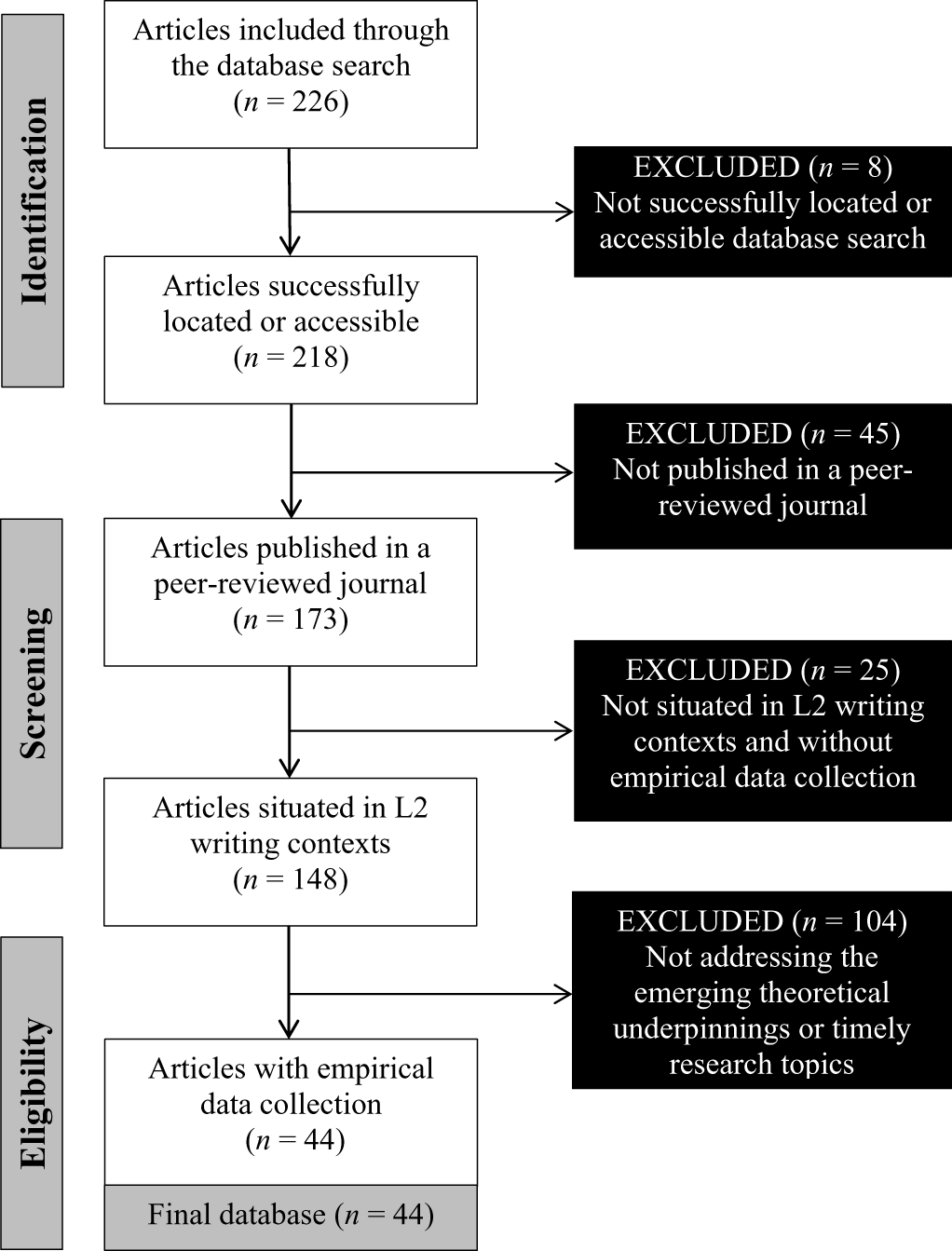


 Open access

