Introduction
Maternal psychological morbidity is a global public health challenge, with potential impact on children’s development, especially through reduced parenting or caregiving capacity.Reference Howard, Molyneaux and Dennis 1 – Reference Herba, Glover, Ramchandani and Rondon 4 Maternal psychological morbidity is concerning, not only because of its high costs to health services,Reference Bauer, Parsonage, Knapp, Iemmi and Adelaja 5 but because of its impact on the mother’s own health and on the health and development of her children.Reference Howard, Molyneaux and Dennis 1 , Reference Gelaye, Rondon, Araya and Williams 2 Two recent reviews from both high-income countries (HIC)Reference Stein, Pearson and Goodman 3 and low- and middle-income countries (LMIC)Reference Herba, Glover, Ramchandani and Rondon 4 illustrate that maternal psychological morbidity is highly prevalent and contributes significantly to burden of disease. Despite the documented heavy burden in LMIC, maternal psychological morbidity often remains under-researched, undetected and untreated in these settings.
The impact of maternal psychological morbidity on children has been reported following fetal, early and later life exposures to maternal psychological disorders, including but not limited to depression, with varying effects throughout childhood.Reference Stein, Pearson and Goodman 3 , Reference Kingston and Tough 6 , Reference Van Der Waerden, Galéra and Larroque 7 Historically maternal depression has been more widely studied,Reference Howard, Molyneaux and Dennis 1 but recent literature has begun to examine the impact of maternal anxiety, finding specific and significant impacts on later child development.Reference Pearson, Bornstein and Cordero 8 Perinatal depression and anxiety are highly comorbid although there is much less literature on anxiety, and there is evidence that both are associated with adverse fetal, birth and child outcomes. These include preterm birth, low birth weight, disorganized attachment, poor infant growth, child emotional difficulties, poorer child cognitive outcomes and increased risk of child mental illness.Reference Stein, Pearson and Goodman 3 , Reference Ding, Wu and Xu 9 – Reference Grote, Bridge and Gavin 11 Some studies have shown that antenatal anxiety, independent of antenatal depression, is associated with lower academic performance in later childhood. Importantly, in Africa specifically, where children are frequently cared for by alternative primary caregivers, there is evidence to suggest that psychological morbidity amongst non-maternal caregivers (fathers, grandparents or aunts) also have effects on children.Reference Hancock, Mitrou, Shipley, Lawrence and Zubrick 12
Common mental disorders such as depression and anxiety are of particular interest in the context of parenting. Generally depression is characterized by symptoms of low mood, loss of interest and suicide ideation, whereas anxiety is characterized by worry, restlessness and feeling panicky. Both depression and anxiety are known to lead to cognitive and perceptual difficulties, such as rumination, and avoidant coping which can lower capacities for caregiving.Reference Rochat, Netsi, Redinger and Stein 13 Parenting stress,Reference Abidin 14 although not a disorder per se, may be characterized by depression and anxiety symptoms which are specifically focussed on the parenting role, and may influence the parent’s self-perceptions and confidence in parenting, may cause difficulties in the parent–child relationship, and may lead to the parent holding negative perceptions of the child and their needs. An emerging literature has focussed on parenting stressReference Rochat, Netsi, Redinger and Stein 13 and its contribution to parenting or caregiving behaviour, in particular given its associations with later parental neglect and abuse, particularly in high risk families.Reference Pereira, Vickers and Atkinson 15 Parenting stress is an important psychological construct,Reference Abidin 14 reflecting the extent to which mental health difficulties affect parenting capacities and quality of the parent–child relationship. In HIC parenting stress is linked to child neglect and abuse;Reference Pereira, Vickers and Atkinson 15 the few studies conducted in Africa report high levels of parenting stress,Reference Åsander, Björkman, Belfrage and Faxelid 16 including among HIV-positive mothers.Reference Allen, Finestone and Eloff 17 – Reference Rochat, Arteche, Stein, Mitchell and Bland 19
HIV infection, common in childbearing women in Africa, has been associated with co-morbid psychological morbidity,Reference Sowa, Cholera, Pence and Gaynes 20 – Reference Rochat, Richter, Doll, Buthelezi, Tomkins and Stein 23 which in turn has been associated with poor HIV outcomes, including disease progression and reduced treatment adherence.Reference Nachega, Uthman, Anderson and Peltzer 24 , Reference Sin and DiMatteo 25 Interventions targeting mental health may mitigate these effects, with significant benefit for parents, children and society;Reference Stein, Pearson and Goodman 3 particularly in HIV-affected populations where the public health benefits of interventions likely span multiple health domains.Reference Stein, Desmond and Garbarino 26 , Reference Collins, Holman, Freeman and Patel 27 Given these combined effects on both maternal and child health, and on child development, research is urgently needed to inform targeting and timing of interventions in relation to mental health in areas where risk is high and resources scarce.Reference Patel, Chowdhary, Rahman and Verdeli 28
We examined psychological morbidity, including parenting stress and associated factors in a longitudinal population-based sample of HIV-positive and negative mothers with primary school-aged children in rural South Africa, focussing on the timing of HIV diagnosis and exposure to the pregnancy/postnatal home visiting programme to support exclusive breastfeeding.
Methods
Ethics permission was granted by the Biomedical Research Ethics Committee, University of KwaZulu-Natal, South Africa (BF184/12). Written informed consent was obtained from mothers and, where appropriate, designated primary caregivers who completed the mental health assessments.
The Africa Health Research Institute (AHRI) was formed in 2016 following a merger between the Africa Centre for Population Health (Africa Centre) and the KwaZulu-Natal Research Institute for TB-HIV (KRITH). AHRI hosts a longitudinal Demographic Surveillance SystemReference Tanser, Hosegood and Bärnighausen 29 (DSS) with surveillance of households and individuals including vital events, household composition, care-giving practices, socio-economic circumstances and HIV status. Since 2015, AHRI links demographic data to patient clinical records from 11 primary health care clinics within a defined Population Intervention Platform Surveillance Area (PIPSA). The AHRI data platform was used as a sampling frame for this population based research, identifying all mothers who had delivered a child in the period 2001–2006 for eligibility screening. The PIPSA community spans a geographical area of ~840 km2 of the Hlabisa health sub-district in rural northern KwaZulu-Natal, South Africa. The larger sub-district includes 18 primary health clinics, of which 11 are in PIPSA, and one district-level hospital. The study population is predominantly rural, with one peri-urban township, and high HIV prevalence.Reference Tanser, Bärnighausen, Grapsa, Zaidi and Newell 30 A successful Prevention of Mother-to-Child Transmission (PMTCT) of HIV programme was implemented in 2001,Reference Le Doaré, Bland and Newell 31 and an HIV treatment programme, with provision of free drugs and clinical care, in 2004.Reference Houlihan, Bland and Mutevedzi 32
The Siyakhula Cohort (SC)Reference Rochat, Houle, Stein, Pearson, Newell and Bland 33 is nested within the PIPSA platform, with data on HIV-exposure in fetal and early life. Using the population platform as a sampling frame, 2515 potential child participants were identified, of whom 1592 children met eligibility criteria. Mothers and their children were eligible for enrolment in SC if the child was HIV-negative, aged 7–11 years, born and still resided in the sub-district, if their mother’s HIV status during pregnancy was known, if she received her antenatal care for the child in the sub-district, and both mother and child were still alive. Mother–child pairs were eligible to be included in SC if they received antenatal care in any one of the 18 sub-district clinics in the period 2001–2006.
In SC, at birth, all mothers benefited from the PMTCT programme, while a subgroup (n=890) participated in an additional exclusive breastfeeding intervention, the Vertical Transmission Study (VTS).Reference Coovadia, Rollins and Bland 34 The VTS was a non-randomized, prospective, intervention cohort study (2001–2006) which included antenatal and postnatal home-based breastfeeding support by lay counsellors.Reference Bland, Coovadia, Coutsoudis, Rollins and Newell 35 These 890 women all received the VTS intervention, while the remaining women (n=616) in SC were not part of VTS but were resident in the sub-district at the time of VTS (2001–2006). Non-VTS women received the standard of care PMTCT programme. The sample thus reflects two groups of women: those who received VTS (n=890) and those who received the standard of care PMTCT (n=616).Reference Rochat, Houle, Stein, Pearson, Newell and Bland 33
Each group (VTS and non-VTS) includes women who are HIV positive and negative:
-
i. VTS HIV-positive pregnancy (327), positive post (166), negative (395), missing (2).
-
ii. Non-VTS HIV-positive pregnancy (138), positive post (106), negative (372).
The primary aim of SC was to examine the longitudinal effects of exclusive breastfeeding on child development in HIV-negative children.Reference Rochat, Houle and Stein 36 Child development measures included objective measures of cognition, executive function and physical growth as well as children’s mental health collected by parent report.Reference Rochat, Houle, Stein, Pearson, Newell and Bland 33 The sampling frame for the SC is thus the HIV-negative child. HIV-positive children were not included in the SC as their developmental trajectories are known to be distinct and influenced by HIV disease processes.
Given that the child’s mental health would most likely be affected by the mental health of their current primary caregiver, rather than that of the biological mother per se, if a biological mother no longer identified herself as the primary caregiver, efforts were made to collect mental health data from the primary caregiver of the SC child. Thus in this cohort, if someone other than the biological mother was identified as the primary caregiver to the study child, that caregiver was consented into the study and completed the mental health assessments.
Measurements
Maternal and child HIV status (from pregnancy/birth to 2 years postnatally) was prospectively documented in the VTS; and for both VTS and DSS mothers, HIV status from pregnancy onwards was available from the DSS and the Road-to-Health Card (RTHC; a parent-held child health record). Thus, maternal HIV status in pregnancy and in the current SC were verified from data in the VTS, DSS, RTHC and maternal self-report. If a SC mother did not know her own, or her child’s, current HIV status, at follow-up 7–11 years post-birth, wherever possible, HIV testing was facilitated at the nearest clinic, in line with standards of care in the health district. Maternal HIV status was defined as:
-
i. HIV-negative: mothers currently HIV-negative.
-
ii. HIV-positive pregnancy: mothers tested HIV-positive in pregnancy.
-
iii. HIV-positive since pregnancy: mothers were HIV-negative in pregnancy but HIV-positive at the time of the current data round (2012–2014).
Psychological morbidity was assessed using standardized psychological measures, widely used in Africa, including with HIV-positive populations. Cronbach’s α was used to examine reliability in this research.
Depression and anxiety were assessed using two scales from the Patient Health Questionnaire (PHQ). The Depression Scale (PHQ-9)Reference Kroenke, Spitzer, Williams and Löwe 37 and the General Anxiety Scale (GAD-7)Reference Kroenke, Spitzer, Williams and Löwe 37 were developed from the mood and anxiety modules of the Primary Care Evaluation of Mental Disorders, a diagnostic tool used in primary health care settings. The PHQ-9 and GAD-7 can be scored using standardized risk cut-offs or a clinical algorithm which assesses whether the participant/patient meets minimum Diagnostic and Statistical Manual diagnostic requirements for symptoms (present/absent) and frequency.
PHQ-9: A nine-item scale examining diagnostic criteria for major depressive episodes, completed by either self-report or interview format. Scores are allocated (0–3) for the response categories ‘not at all’, ‘several days’, ‘more than half the days’, ‘nearly every day’. If any symptoms are endorsed, a single severity item is completed. In this research the PHQ-9 was delivered in interview format, including the item on suicide ideation. Mothers reporting suicide ideation were referred to a psychologist in the local health services. The scale was reliable in this research (Cronbach’s α 0.81).
GAD-7: A seven-item scale, enquiring about the diagnostic criteria for generalized anxiety; using same scoring categories as the PHQ-9, also completed in interview format. The scale was reliable in this research (Cronbach’s α 0.81).
Parenting Stress Index (PSI)-36: Parenting stress was assessed using PSI-36, a 36-item scale measuring stress related to the parental role, the parent–child relationship and the degree to which the parent finds the child difficult.Reference Abidin 14 Statements are scored 1 (strongly disagree) to 5 (strongly agree). It was delivered in interview format. The scale was reliable in this research (Cronbach’s α 0.89).
Maternal IQ: Maternal IQ was assessed using the Standard Ravens Progressive Matrix.Reference Raven, Raven and Court 38 Noting that this assessment was only completed by biological mothers and not alternative primary caregivers.
All assessments were conducted with mothers, or where appropriate the identified alternative primary caregivers, in their homes, by trained research assistants. Assessment by mental health professionals was not feasible due to resource constraints. Regular supervision and quality assurance checks were conducted by a clinical psychologist (T.J.R.) and psychiatrist (A.S.) and three masters-level psychology graduates.
Data analysis
To be included in the final analytic data set for this secondary analysis, a mental health assessment, along with two key variables needed to be available:
-
i. Pregnancy and current HIV status (n=2 missing);
-
ii. Data to confirm whether the mental health assessment was that of a mother or alterative caregiver (n=1 missing).
A total sample 1506 mental health assessments were available from SC. Of these, two mothers did not have current HIV status available and were removed from the analytic data set. A further one assessment had a missing variable to indicate if the mental health data belonged to either a mother or a primary caregiver, and was also removed. This reduced the analytic sample to 1503 individuals with valid data, including 1265 mothers and 238 caregivers.
We determined clinical risk of depression using the PHQ-9 diagnostic algorithm requiring at least one Criteria A (mood, loss of interest) and 2–4 Criteria B (weight, sleep, agitation/retardation, fatigue, guilt, concentration, suicidality) for >half the days. We determined clinical risk of anxiety using the GAD-7 diagnostic algorithm requiring meeting Criteria A (anxiety) and ⩾3 symptoms from Criteria B (worry, restlessness, fatigue, concentration, irritability, sleep) for >half the days. As moderate psychological symptoms may affect parenting capacity, we tested the models using a standardized cut-off (⩾10) for comparative purposes, examining whether similar risks operate for moderate v. severely reported risk.
To determine parenting stress, items are scored into subscales, with each subscale score ranging from 12 to 60. The PSI-36 Total Stress score is a composite score of the three subscales (scores range 36–180) with higher scores indicating higher parental stress.Reference Haskett, Ahern, Ward and Allaire 39 A cut-off ⩾90 is considered elevated parenting stress. We used the 90th percentile cut-off to determine clinically relevant risk of parenting stress. We present models for elevated (⩾90/50th percentile) parenting stress.
For psychometric scales with missing items, we imputed a respondent’s missing item values using their mean value across their completed items (excluding completely missing scales). In total, 104 items were imputed across the three scales (of 1504, 7%).
Models
Analyses were completed using STATA version 14. We assessed clinical psychological morbidity separately for mothers and caregivers. For mothers, we used complete case logistic regression including 1206 mothers who had all data available for the following variables: age, education, IQ, HIV status, employment, relationship status, number of dead children, exposure indicator (VTS/DSS), number of resident adults and children (including the mother and study child), fridge ownership, urban residence, exposure to crime, overnight hospitalizations since the child’s birth, TB status (ever diagnosed), and use of any chronic medication. For HIV-positive mothers we examined associations with antiretroviral therapy (ART) status (on ART, not on ART and not eligible, and not on ART and eligible); we found no significant associations between ART status and psychological morbidity and therefore include only HIV status in the final model. We also examined comorbidity of clinical depression and anxiety as outcomes, showing similar associations, and report comorbid associations descriptively only.
For alternative caregivers, we have limited data; in logistic regression we included caregiver age, education and relationship to the mother. For consistency, in Table 1b we report caregiver characteristics by maternal HIV status.
Results
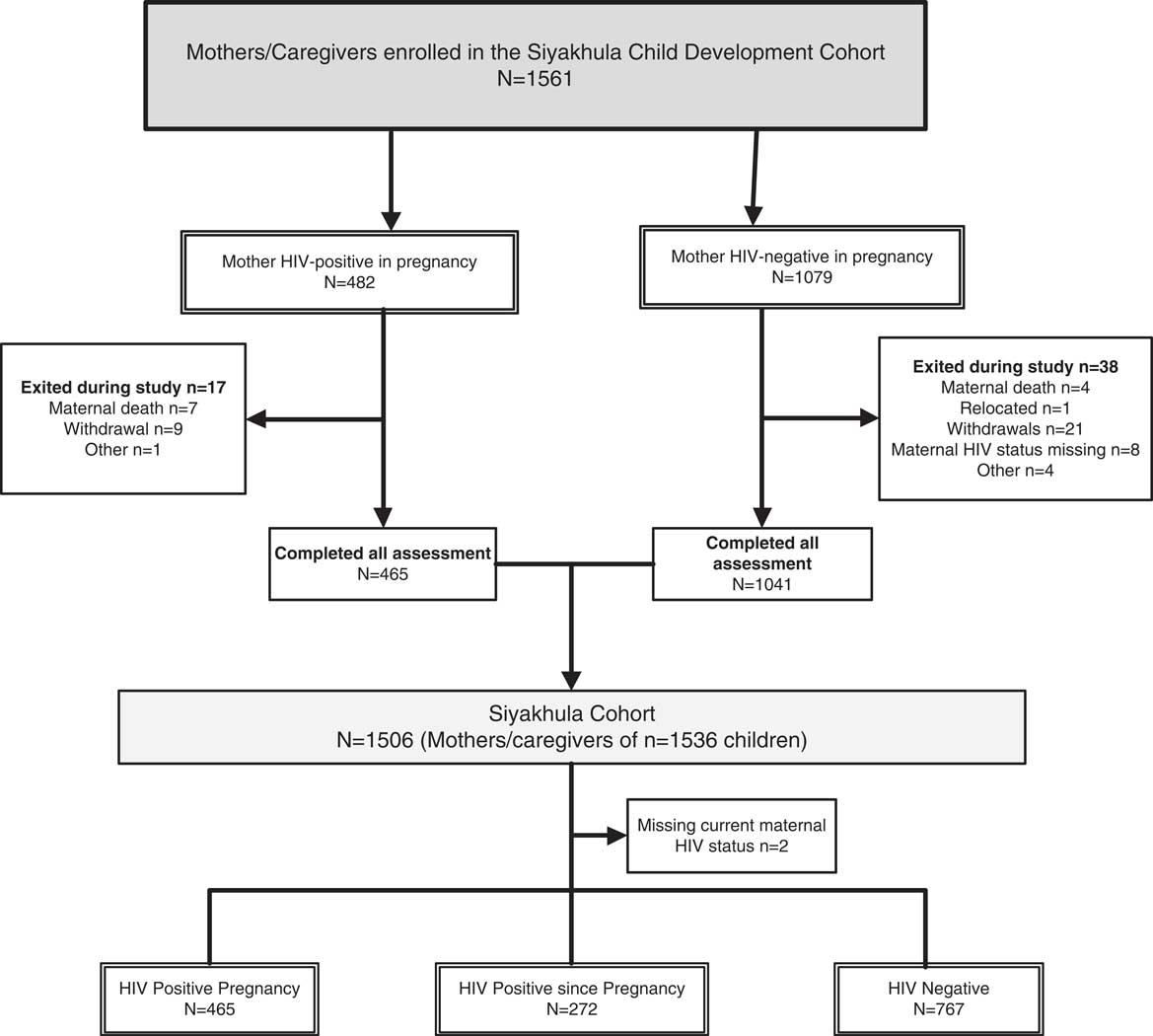
The cohort (Fig. 1) included 1561 eligible mothers, of whom 1506 mothers with 1536 children aged 7–11 years completed all assessments: 890 mothers from the VTS; 616 mothers from the DSS, whose children were born and resident in the DSS at the time of the VTS. Two mothers were excluded as they had missing HIV status, the remaining 1504 were grouped as follows: HIV-negative (n=767); HIV-positive in pregnancy (n=465); HIV-positive since pregnancy (n=272). Most mothers were the primary caregiver of the child (239 alternative caregivers).
Consort diagram of mothers enrolled in the cohort by HIV status.

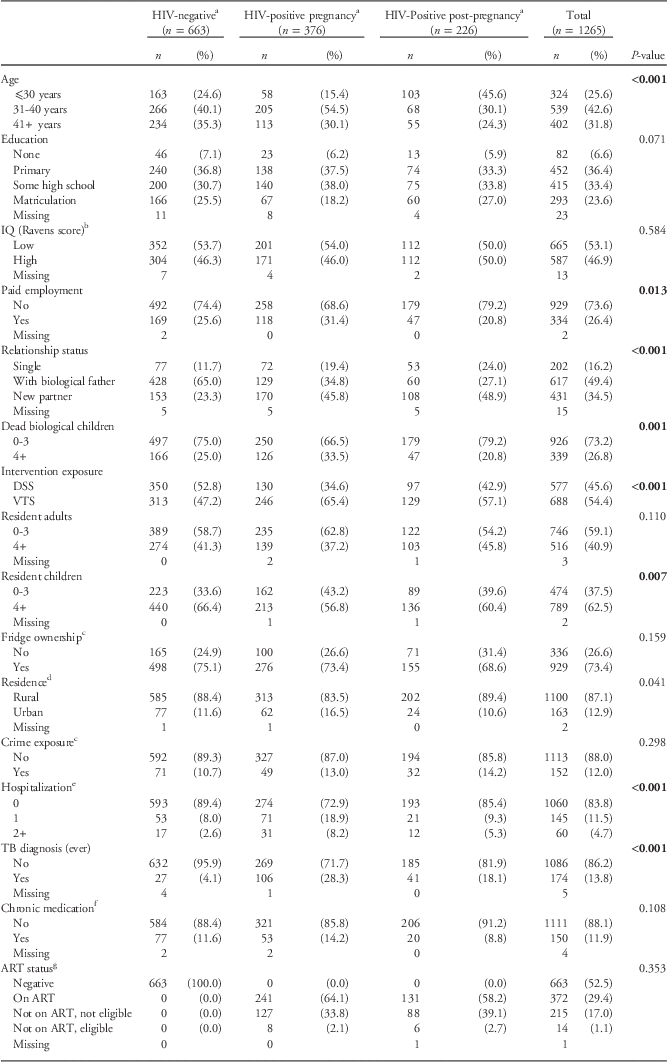
At the most recent assessment, most mothers were in their thirties, with some education (Table 1a). Mothers who were HIV-positive since pregnancy were younger, had fewer deceased children, and were more likely to have a new partner than the other groups. Almost half the HIV-positive mothers reported being with a new partner, while two-thirds of HIV-negative women were still in a relationship with the biological father of the index child.
Sample descriptive for mothers by HIV status (n=1265)

ART, antiretroviral therapy.
All measures based on current status at time of interview.
Bold values are statistically significant at P<0.050.
a Maternal HIV status in pregnancy and in the current Siyakhula data were verified from data in the Vertical Transmission Study (VTS) and Demographic Surveillance System (DSS), the Road-to-Health Card and maternal self-report.
b Binary indicator split on the median. Assessed using the Standard Ravens Progressive Matrix.
c Collected as part of a socio-economic status questionnaire.
d Based on household location.
e Self-report hospitalization for inpatient care, for at least one night.
f Self-report being on any chronic medication.
g Based on self-report. Not eligible defined as recent CD4 count ⩾350; eligible defined as recent CD4 count <350.
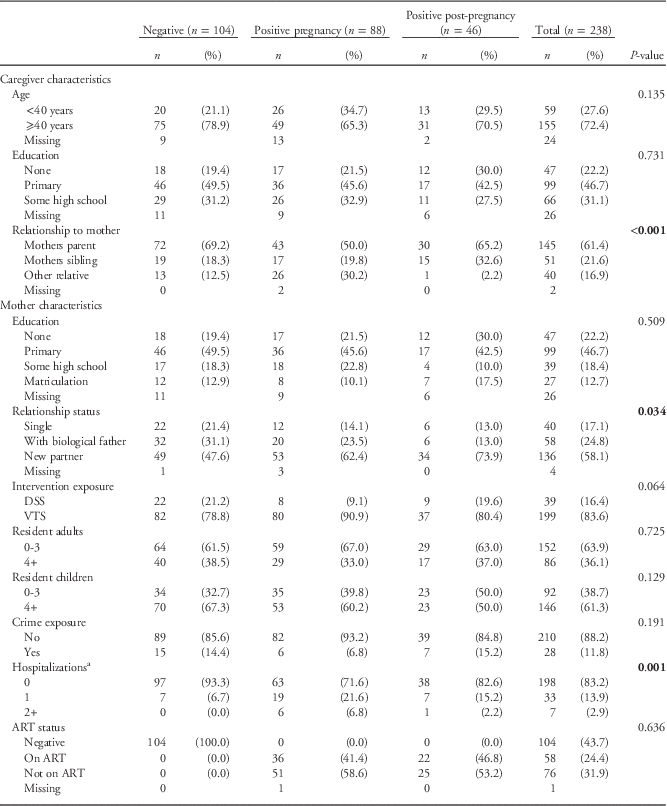
Alternative primary caregivers tended to be older with slightly lower education than caregiving mothers (Table 1b). The alternative caregivers for children of HIV-negative mothers were most commonly the children’s grandparents, while those for children of HIV-positive mothers were grandparents, the mother’s siblings or other relatives.
Sample descriptive for 238 mothers and their child’s alternative caregivers (grouped by mothers HIV status)

VTS, Vertical Transmission Study; DSS, Demographic Surveillance System; ART, antiretroviral therapy.
Bold values are statistically significant at P<0.050.
a Hospitalization for inpatient care, for at least one night.
Psychological morbidity
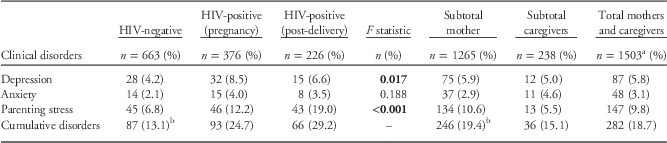
Psychological morbidity was more common in HIV-positive than negative mothers (Table 2), with over one-quarter of HIV-positive and 13% of HIV-negative women meeting criteria for one or more clinical disorders. Clinical depression and anxiety were co-morbid in some mothers (16 out of 112, 6%).
Clinical depression, anxiety, and parenting stress amongst mothers and caregivers by HIV status of the mother

a Of 1503 out of 1506 with valid mental health data and known HIV status.
b Out of these 246 women 112 met criteria for either depression or anxiety and 16 out of 112 (6%) met criteria for both.
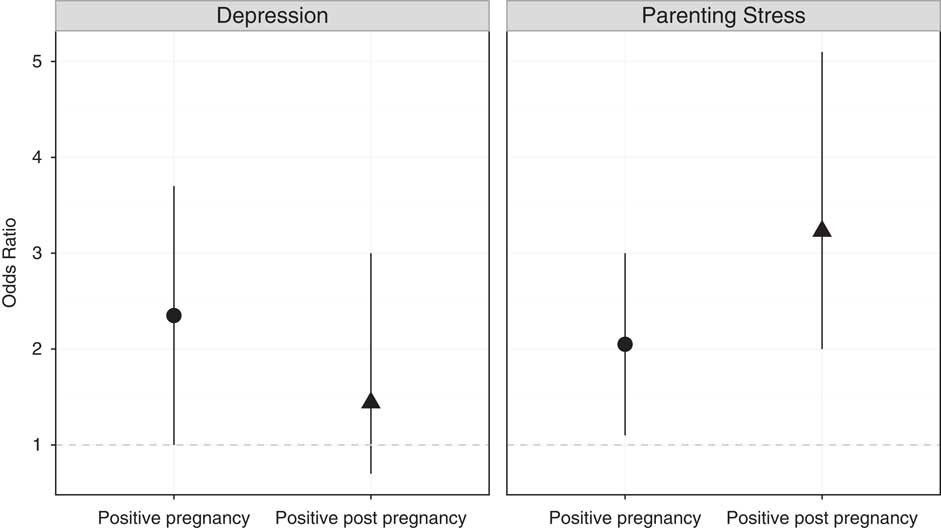
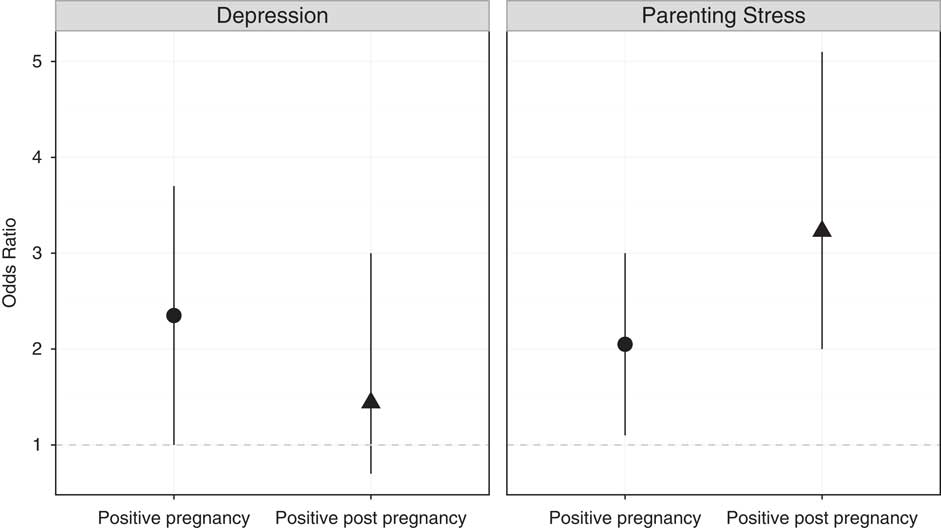
HIV in mothers was strongly associated with odds of clinical depression and parenting stress, varying by timing of infection (Fig. 2).
Depression and parenting stress odds ratio.
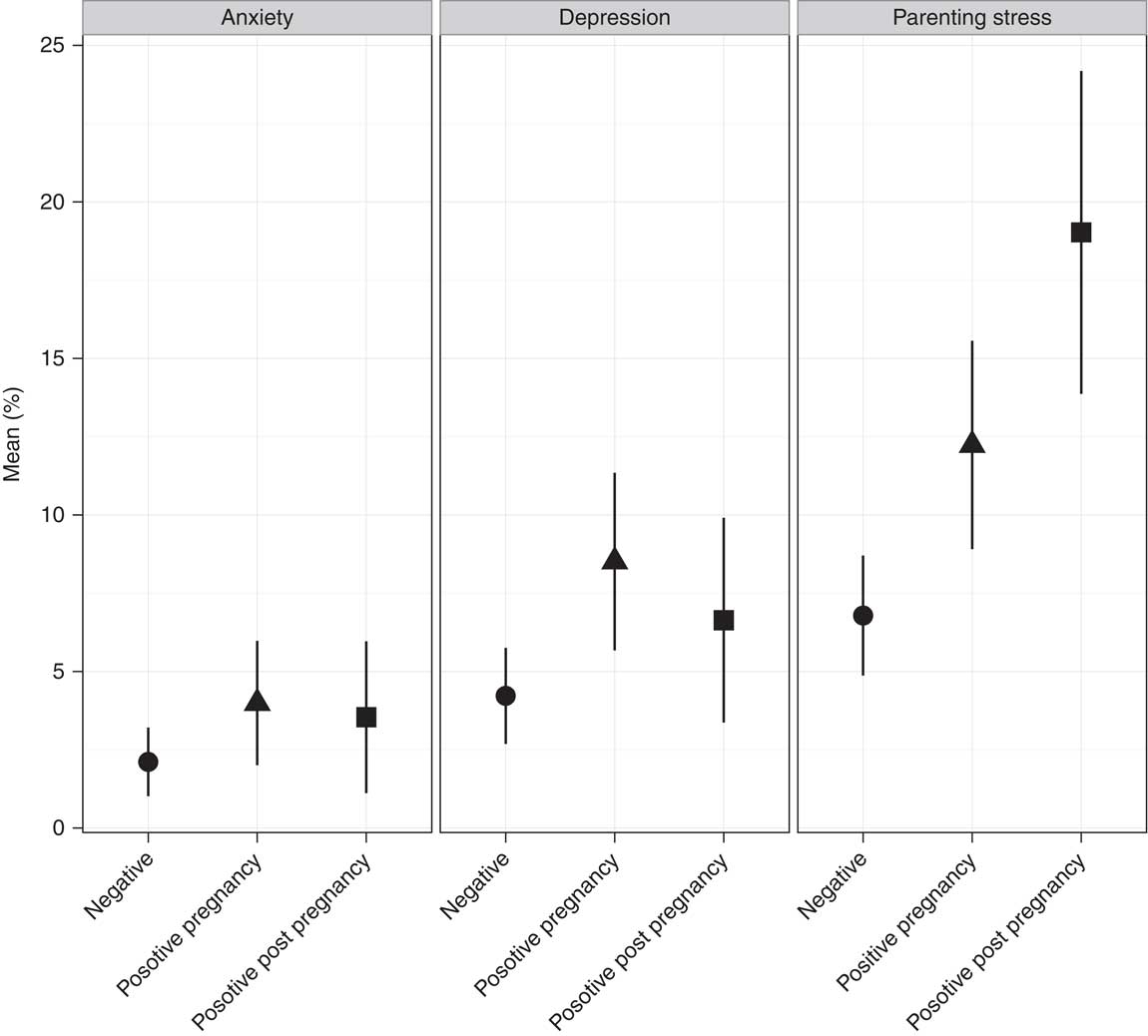
In all three groups, rates of clinical parenting stress were higher than of depression or anxiety. In the HIV-positive group, parenting stress was double that of the HIV-negative group (Fig. 3).
Prevalence of clinical depression, anxiety and parenting stress amongst mothers by HIV status.

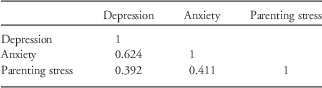
Depression and parenting stress were not highly correlated, and appear to reflect differing psychological constructs (Table 3).
Correlation matrix for clinical depression, anxiety and parenting stress amongst mothers

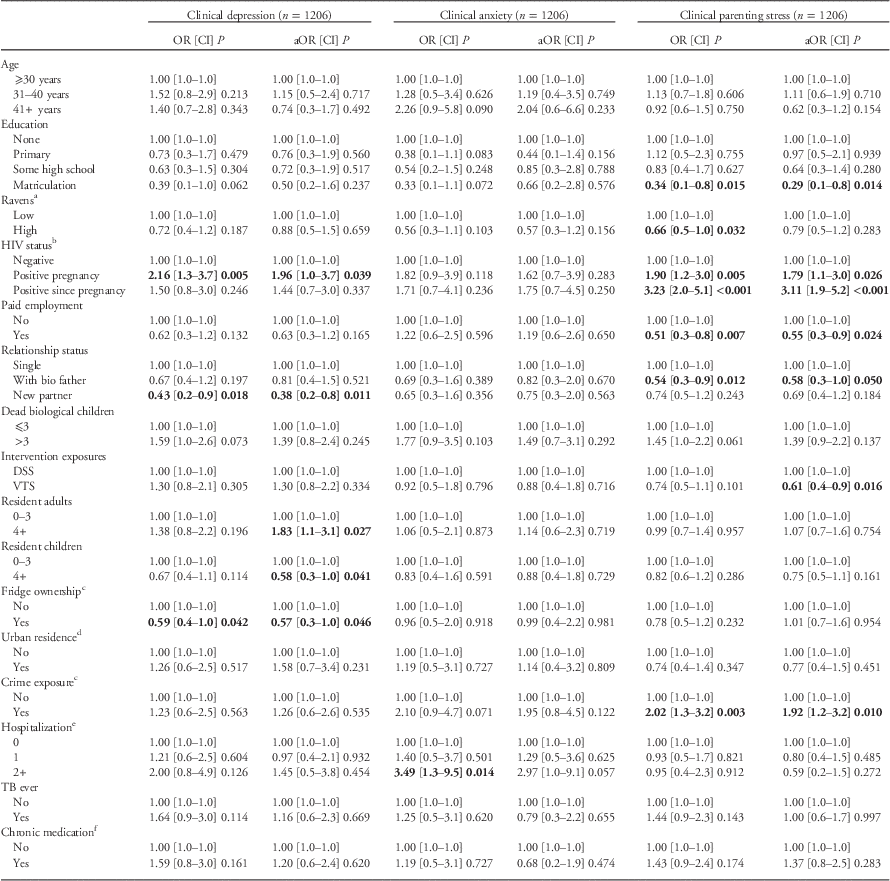
In multivariable analysis (Table 4), compared to being HIV-negative, being diagnosed with HIV in pregnancy doubled the odds of depression (and 1.8 times the odds of clinical parenting stress), but the association with anxiety did not reach statistical significance. Being HIV-positive since pregnancy was associated with triple the odds of clinical parenting stress (Table 4).
Factors associated with clinical disorders in mothers

OR, odds ratio; CI, confidence interval; aOR, adjusted odd ratio; VTS, Vertical Transmission Study; DSS, Demographic Surveillance System.
All measures based on current status at time of interview.
Bold values are statistically significant at P<0.050.
a Binary indicator split on the median. Assessed using the Standard Ravens Progressive Matrix.
b Maternal HIV status in pregnancy and in the current Siyakhula data were verified from data in the VTS and DSS, the Road-to-Health Card and maternal self-report.
c Collected as part of a socio-economic status questionnaire.
d Based on household location.
e Self-report hospitalization for inpatient care, for at least one night.
f Self-report being on any chronic medication.
Different factors increased or decreased the odds of depression or parenting stress. Being with a new partner was associated with reduced odds of depression, while residing in a household with four or more adults increased depression odds, and a higher number of resident children halved the odds of depression (Table 4).
The family’s exposure to crime doubled the odds of parenting stress; higher maternal education, maternal employment and still being in a relationship with the biological father of the index child reduced the odds of parenting stress. As compared with DSS mothers, VTS mothers had significantly reduced odds of parenting stress (40% less likely).
Since a diagnosis of HIV during or post-pregnancy increased the odds of parenting stress and VTS reduced odds of parenting stress, we further explored the interaction between maternal HIV status, parenting stress and exposure to the VTS intervention, and it did not result in an improvement in model fit (P=0.24).
Anxiety in mothers was not associated with HIV status (Table 4). Reporting two or more hospitalizations in the past year increased odds, but in unadjusted analysis only.
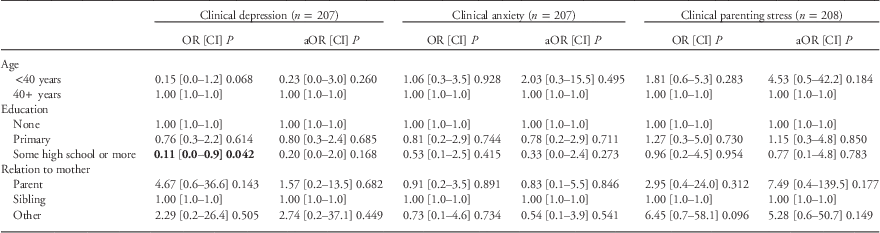
Alternative caregivers had similar rates of depression (5.5%), lower rates of parenting stress (5.5%) and higher anxiety (4.6%) than mothers (Table 2) Having at least some high school education decreased the odds of caregiver clinical depression by 90% compared with no education (Table 5). None of the variables explored were significantly associated with clinical anxiety or parenting stress in the caregivers.
Logistic regressions of clinical depression, anxiety and parenting stress on age, education and relation to mother: caregivers only

OR, odds ratio; CI, confidence interval; aOR, adjusted odd ratio.
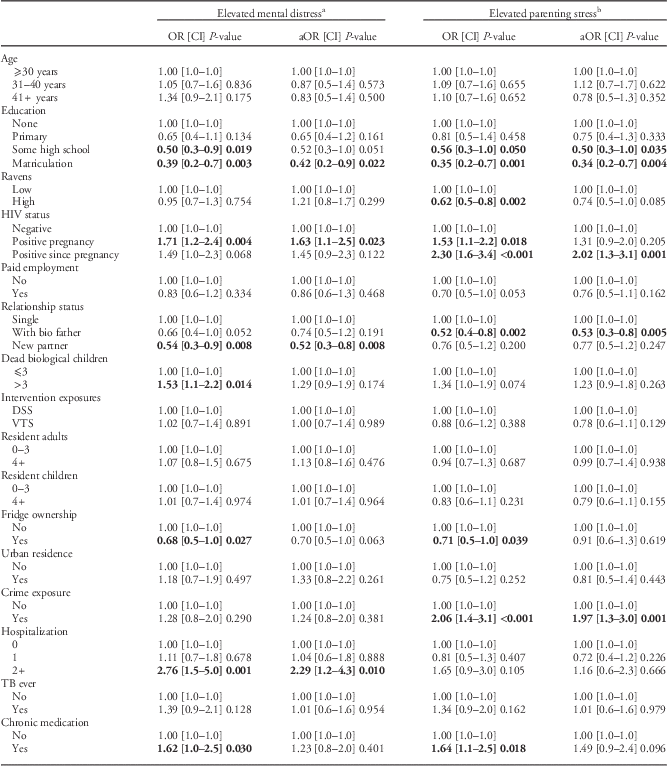
Similar factors were associated with elevated mental distress and parenting stress (Table 6).
Logistic regressions of elevated mental distress and parenting stress on mother and household characteristics

OR, odds ratio; CI, confidence interval; aOR, adjusted odd ratio; VTS, Vertical Transmission Study; DSS, Demographic Surveillance System.
Bold values are statistically significant at P<0.050.
a Patient Health Questionnaire (PHQ)-9 scores can range 0–27 (10–14 moderate risk; 15–19 moderate to severe; 20–27 severe) for General Anxiety Scale-7 scores can range from 0–21 (5 moderate risk; 10 moderate to severe; 15 severe). The PHQ-9 has been found to have acceptable diagnostic properties for detecting major depressive disorder for cut-off scores between 8 and 11. We use the most common cut-off for risk ⩾10 on either depression, or anxiety or both as an indicator of elevated mental health risk.
b Parenting stress at a score of ⩾90 or the 50th percentile was used to determine elevated parenting stress.
Discussion
This research adds to our understanding of psychological morbidity in Africa by reporting on a spectrum of mental disorders (depression, anxiety and parenting stress) in HIV-positive and HIV-negative mothers of primary school-aged children, relative to the timing of HIV infection. We demonstrate that timing of HIV infection acquisition may play an important role in a mother’s vulnerability to psychological morbidity. A decade post-delivery,Reference Mkwanazi, Rochat and Bland 40 women diagnosed with HIV infection in pregnancy have increased vulnerability to clinical depression and parenting stress, whereas women with a diagnosis of HIV infection after delivery have increased vulnerability to parenting stress. Depression and parenting stress were not very highly correlated suggesting they represent differing psychological stressors in this context.
Depression in mothers has been shown to be important not only because of its impact on social functioning but because it is associated with increased difficulties in the children.Reference Stein, Pearson and Goodman 3 , Reference Herba, Glover, Ramchandani and Rondon 4 It is important to understand factors that raise the risk for maternal depression. Possible explanations for the association between a diagnosis of HIV antenatally and later maternal depression include: HIV diagnosis during pregnancy is a negative life eventReference Rochat, Tomlinson, Bärnighausen, Newell and Stein 22 , Reference Rochat, Bland, Tomlinson and Stein 41 which may initiate a vulnerability to maternal depression, particularly in the context of poor support; and/or vulnerability to depression may precede HIV infection in pregnancy,Reference Rochat, Tomlinson, Bärnighausen, Newell and Stein 22 with HIV and depression sharing common risk factors.Reference Mitchell, Wight, Van Heerden and Rochat 42 In this case, the observed association reflects that a history of depression leads to greater vulnerability to further episodes of depression.Reference Rochat, Tomlinson, Bärnighausen, Newell and Stein 22 , Reference Hammerton, Mahedy and Mars 43 Identification and treatment of depression during pregnancy may have important preventative effects.Reference Rochat, Tomlinson, Newell and Stein 44
Since HIV-positive mothers appear to remain vulnerable to depression over time, relying on pregnancy or postnatal screening for depression alone is insufficient;Reference Rochat, Netsi, Redinger and Stein 13 this has also been demonstrated to be important outside of the context of HIV.Reference Woolhouse, Gartland, Mensah, Giallo and Brown 45 Instead mental health screening should be integrated into broader HIV and other health programmes across the life course,Reference Rochat, Bland, Coovadia, Stein and Newell 46 particularly since clinical depression is known to negatively impact treatment outcomesReference Nachega, Uthman, Anderson and Peltzer 24 , Reference Sin and DiMatteo 25 on antenatal care in subsequent pregnancies, and may interfere with caregiving capacity.Reference Stein, Pearson and Goodman 3 Understanding contextual factors associated with later clinical depression, including length of HIV infection, disease progression and treatment effects,Reference Sin and DiMatteo 25 , Reference Ickovics, Hamburger and Vlahov 47 provides opportunities to intervene. Further, having a new partner at the time of the survey rather than being single was associated with reduced odds of clinical depression, highlighting the importance of providing partner, and family-friendly HIV and health services.Reference Rochat, Bland, Coovadia, Stein and Newell 46 , Reference Fotso, Higgins-Steele and Mohanty 48 Currently, most screening for depression in Africa occurs in antenatal care, which is often considered partner-unfriendly.Reference Yargawa and Leonardi-Bee 49 Screening is only cost effective where interventions can be made available, and in turn interventions need to consider the timing and developmental stage of the child,Reference Black, Walker and Fernald 50 as well as HIV disease stage, given that mothers may have different needs around the time of their diagnosis, their treatment initiation, and the longer-term management of illnesses, each of which may place different demands on them as parents.Reference Rochat, Netsi, Redinger and Stein 13 Most mothers in Southern Africa are diagnosed in the perinatal period;Reference Rochat, Tomlinson, Bärnighausen, Newell and Stein 22 , Reference Rochat, Richter, Doll, Buthelezi, Tomkins and Stein 23 , Reference Stein, Krebs and Richter 51 when interventions might primarily focus on supporting adjustment to the medical and psychological demands of being HIV-positive.Reference Rochat, Tomlinson, Bärnighausen, Newell and Stein 22 Several successful interventions have been documented in Southern Africa, most delivered though home-visiting programmes using lay professional staff, thus reducing the burden on already over scribed health services.Reference Rotheram-Borus, Richter and Van Rooyen 52 – Reference Richter, Rotheram-Borus and Van Heerden 54 These interventions tend to focus on health education to enhance parental health behaviours, HIV awareness and support around maternal health (including education on the link between adherence and mental health), child health as well as information on reducing vertical transmission. Adherence to ART,Reference Nachega, Uthman, Anderson and Peltzer 24 support for breastfeeding,Reference Rollins, Bhandari and Hajeebhoy 55 such as that delivered by lay counsellors VTS,Reference Bland, Coovadia, Coutsoudis, Rollins and Newell 35 and providing child stimulation, such as is provided by lay professionals in the WHO Child Care for Development, may be particularly suited to the early years of life.Reference Richter, Daelmans and Lombardi 56 In later years, mothers may face challenges related to periods of illness often coinciding with middle and later childhood where support for parent–child communication about HIV and HIV disclosure may then become particularly salient,Reference Rochat, Netsi, Redinger and Stein 13 , Reference Rochat, Mitchell, Stein, Mkwanazi and Bland 57 likewise successful interventions have been documented using lay counsellor home visiting models.Reference Rochat, Arteche, Stein, Mitchell and Bland 19 , Reference Rochat, Stein, Cortina-Borja, Tanser and Bland 58
We show, for the first time in a Southern African population of parents of primary school-aged children, that parenting stress (above the clinical threshold) rather than depression or anxiety, contributes most to psychological distress in all mothers. While some stress is a normal part of the parenting experience, parenting stress occurs when parenting demands begin to exceed the psychological and social capacities and resources of the parent.Reference Allen, Finestone and Eloff 17 , Reference Rochat, Arteche, Stein, Mitchell and Bland 19 Parenting stress is concerning because it is strongly associated with dysfunctional parenting behaviours and poor child outcomes, including child neglect.Reference Abidin 14 Interestingly, parenting stress is more strongly associated with a later (or more recent) diagnosis of HIV, which suggests that becoming HIV-positive during the course of parenthood may introduce specific risks which are qualitatively different from learning that you are HIV-positive during pregnancy. It is plausible that mothers who are diagnosed with HIV during pregnancy receive additional parenting support through the provision of PMTCT services, which helps them adjust to their role as an HIV-positive parent, while mothers who are diagnosed later, particularly beyond pregnancy, may receive less support at the time of their diagnosis. This is further supported by the finding that exposure to the VTS interventionReference Bland, Coovadia, Coutsoudis, Rollins and Newell 35 (which provided additional support to PMTCT services, including home visiting postnatally, and nurse-led clinic visits to 24 months) significantly reduced odds of parenting stress, suggesting that – as has been shown in thisReference Rochat, Houle and Stein 36 and other adverse settingsReference Yousafzai, Obradović and Rasheed 59 – early interventions have long-lasting effects on parenting capacity and may enable mothers to cope better with later stressors such as a newly diagnosed HIV infection or exposure to crime. Elsewhere we have demonstrated that exclusive breastfeeding in the VTS cohort led to lower behavioural problems in children and these factors are likely interrelated.Reference Rochat, Mitchell, Stein, Mkwanazi and Bland 57 Interestingly, the VTS intervention was not associated with reduced odds of later depression or anxiety, suggesting that its value is in providing specific parenting support, which may have been too generic and health orientated in its nature, to impact on affective or anxious symptomology.
In line with existing literature,Reference Herba, Glover, Ramchandani and Rondon 4 exposure to crime in the past year doubled the odds of parenting stress, whereas maternal education and paid employment reduced the odds. As with depression, the supportive role of the biological father, both in the relationship with the mother and as co-parent to the child, was particularly important in reducing parenting stress.
Although anxiety is known to be highly prevalent in pregnancy and to have specific effects on children,Reference Pearson, Bornstein and Cordero 8 we found that levels were low in this cohort. The direction of associations of variables with anxiety were similar to those reported in the literature,Reference Biaggi, Conroy, Pawlby and Pariante 60 but these were not statistically significant. We find that caregiver anxiety is twice the rate of anxiety in mothers, concerning given that growing evidence suggests that caregiver mental health can have an impact on caregiving capacity.Reference Hancock, Mitrou, Shipley, Lawrence and Zubrick 12 Further research is needed to examine this issue, in particular since very limited data on caregivers were available in this study and the relatively small sample size of alternative caregivers in this research.
Strengths of this research are that it examines a wide spectrum of mental disorders in HIV-positive and uninfected mothers of primary school-aged children, relative to the timing of HIV infection. Longitudinal studies of HIV-positive women are scarce and the longer-term impact of an HIV diagnosis during pregnancy on a mother’s later mental health and parenting capacity is under-researched, despite it contributing to a significant public health burden. The limitations of this research include the lack of a pregnancy or postnatal measure of mental health or the use of a clinical interview method to provide a diagnosis at the current time point. While we are able to control for some of the robust factors commonly associated with parenting stress in the literature (maternal education, IQ, employment, exposure to crime) it is possible that characteristics inherent to the mother, which were not measured in this study (such as the mother’s personality traits and her desire for parenting), may confound later parenting stress outcomes.
Implications
The expansion of HIV treatment in Africa presents an important opportunity for integrating mental health, parental support and care into these mostly bio-medical programmes. Directing public health investments requires an understanding of how HIV infection impacts on maternal parenting capacities, and an acknowledgement that men, and fathers in particular, play an important role in supporting women in their role as parents.
Future research should consider the challenges inherent in programmes which target only pregnant or postnatal women, with less attention paid to women diagnosed in the course of parenting; similarly many studies focus on depressive syndromes, while few pay attention to parenting stress in the context of HIV, which more directly reflects distress and dysfunction in the parenting role.
Acknowledgements
The authors are grateful to all women and children enrolled in the study; the field and data management team, in particular Samu Dube and Joanie Mitchell; Colin Newell, Kobus Herbst, Dickman Gareta and Ant Snyman for data management during the study and analyses. The authors acknowledge the contribution and support of the original VTS investigators not directly involved in this publication: Hoosen Coovadia, Anna Coutsoudis and Nigel Rollins. The authors thank the Community Engagement Office of AHRI and Community Advisory Board for their guidance throughout the study and the Hlabisa and KwaZulu-Natal Department of Health for research permission and health facility-based support of research procedures. Authors’ contributions: T.R. contributed to securing funding, study design and implementation of the research; she participated in data analysis and interpretation, drafted and critically revised the manuscript. B.H. led data analysis and interpretation, drafted and critically revised the manuscript. A.S. contributed to securing funding, study design and participated in the interpretation of data and critically revised the manuscript. R.P. participated in data analysis and interpretation and critically revised the manuscript. M.-L.N. participated in the interpretation of data and critically revised the manuscript. R.B. contributed to securing funding, study design and implementation of the research; participated in the interpretation of data and critically revised the manuscript.
Financial Support
The reenrolment and assessment of the cohort was funded by Grand Challenges Canada, Saving Brains (Grand Challenges 0063-03). The sponsor of the study (Grand Challenges, Canada) required a standard set of core metrics across all 11 funded cohorts, including socio-demographic and economic variables and data on child cognition. Other than this the funder played no role in study design, data collection, data analysis, data interpretation or writing the manuscript. The Africa Centre for Population Health, now called the AHRI, where the research took place is funded by the Wellcome Trust (Grant Numbers: Previous Africa Centre 097410/Z/11/Z Current AHRI 201433/Z/16/Z). The DSS is co-funded by the South African Department of Science and Technology through the DST/MRC South African Population Research Infrastructure Network (SAPRIN). The original VTS was funded separately (Wellcome Trust, UK 063009/Z/00/2). The support of the DST-NRF Centre of Excellence (CoE) in Human Development towards data analysis is acknowledged. Opinions expressed and conclusions arrived at are those of the authors and are not necessarily to be attributed to the funders. T.R. receives salary support from the Human Sciences Research Council in South Africa and is supported by the Newton Advanced Fellowship Scheme (AF160108) through the University of Bristol. T.R. and A.S. receive support from an MRC Public Health Intervention Development scheme grant (MC_PC_14096).
Conflicts of Interest
None.
Ethical Standards
Ethics permission was granted by the Biomedical Research Ethics Committee, University of KwaZulu-Natal, South Africa (BF184/12). Written informed consent was obtained from mothers and, where appropriate, designated primary caregivers who completed the mental health assessments.