For the first time in a study in 1994, the term “Natech events” was used to describe technological accidents triggered by a natural disaster. Reference Showalter and Myers1 After that, some researchers used the term to describe the events leading to the leakage of hazardous materials from industrial facilities following natural hazards. 2–Reference Krausmann, Renni, Campedel and Cozzani7 In fact, Natech events include coincident events, encompassing the synergistic impacts of both natural and technological hazards, detrimental consequences of which are greater and more complex than the consequences ensuing either of these events alone. Reference Krausmann, Cruz and Salzano8 Generally, industries implement preventive, preparedness, response, and recovery plans to deal with the disasters caused by natural and technological hazards; however, these measures and plans are rarely integrated into a framework of natural and technological risk management. 2,Reference Necci9 Natech events are often associated with fire, explosion, or hazmat release. Reference Yu, Cruz and Hokugo10 The release of hazardous and highly toxic substances in industrial scales in areas vulnerable to natural hazards, especially where there are dense populations and accelerated industrial development, can lead to unique and worrying human and environmental hazards. Reference Young11 The human hazards of a coincident risk event are not limited to workplace personnel and may also affect the residents of the community surrounding the facility. Reference Steinberg, Sengul and Cruz12 This means that these communities will simultaneously encounter at least 2 hazards. Reference Yu, Cruz and Hokugo10 Natural hazards complicate Natech events not only by releasing toxic substances but also by affecting response capacities. Reference Reitherman13 In addition, due to the extent of the area affected by the natural hazard, Natech events usually encompass a wide geographical area as well. Reference Steinberg, Sengul and Cruz12 The importance of these events is such that in the Sendai framework for disaster risk reduction, a major section has been dedicated to the integrated risk management of all hazards, as well as the challenges of the technological events caused by natural hazards. 14
Refineries and petrochemical industries, due to processing, producing or storing large amounts of various toxic, flammable, and explosive chemicals via complex chemical processes, are among industries that have a high potential for catastrophic technological disasters. Establishment of these industries in areas prone to natural hazards increases their vulnerability. In the past decades, natural hazards, especially earthquakes, in addition to direct effects on communities, have created numerous Natech disasters by affecting chemical industries, especially refineries and petrochemical complexes. Some examples of Natech events include fire in a refinery; the release of acrylonitrile and the intentional release of ammonia after the Kocaeli earthquake in Izmit, Turkey (1999) Reference Steinberg, Cruz, Vardar-Sukar and Ersoz15–Reference Girgin17 ; release of hazardous materials after the Northridge earthquake (California) Reference Lindell and Perry18 ; the release of toxic, flammable, and explosive substances following the Wenchuan earthquake in China (2008) Reference Krausmann, Cruz and Affeltranger19 ; refinery fire; and the formation of a toxic cloud due to sulfur ignition after the Great East Japan Earthquake and Tsunami (2011). Reference Krausmann and Cruz3
There are multiple challenges in the management of chemical disasters following an earthquake. 2,Reference Krausmann, Cruz and Salzano8,Reference Necci9 In fact, chemical disasters caused by earthquakes are much more dangerous than the chemical disasters ensuing a normal operation of chemical industrial units. Moreover, earthquakes affect a wide geographical area, and due to possible damage and failure of preventive safety mechanisms in industries, can lead to even more catastrophic consequences such as the release of hazardous materials, fire, explosion, and simultaneous damage to 1 or more separate chemical units. Consequently, the risk caused by such chemical disasters alone is a major barrier for response teams to conduct relief and rescue operations, posing rescuers and injured people at excessive risks.
In this regard, due to the probability of the incidence of a large earthquake in the metropolis of Tehran, which is the center of many economic, social, political, and industrial activities, as well as having the experience of previous destructive earthquakes, being located among active seismic faults and proximity to hazardous chemical industries, especially refineries, which increase the risk of Natech events such as hazmat release, fires, and explosions, there is a substantial need for planning disaster management procedures to overcome challenges. Thus, in disaster management studies, by taking a forward-looking approach, it is possible to draw a picture of the conditions occurring after a disaster for decision-makers and planners. In addition, by analyzing the existing capabilities and abilities and determining the match or mismatch of this image with reality, the effects of various conditions on disaster management systems and consequently the preparedness of the target population can be estimated. Reference Jahangiri, Eivazi and Mofazali20
Therefore, the aim of this study was to analyze the consequences of the Natech event of the release of H2S toxic gas from a refinery around Tehran following a possible earthquake originating from the Ray fault. The impacts of this event were assessed on the health of the urban community and the vulnerability of surrounding residential areas. Also, response capacities in various dimensions were investigated in affected areas.
Methods
Study Design
The present research was an applied study that was conducted in 2 phases in 2020. During the first phase, a review was conducted to identify the consequences of Natech events on community health, and during the second phase, Natech risk consequence assessment was performed on the surrounding community in terms of the exposed population, structural vulnerability, and response capacity.
Setting
Iran is located in the Alpine-Himalayan seismic belt, exposing wide parts of northern, central, and southern regions of the country from small to great earthquakes. Reference Saffari21 The geographical position of Tehran metropolis on the southern slopes of the Alborz mountain range is such that it is surrounded on 3 sides by several faults such as Mosha fault (in the east), North Tehran fault (in the north), North and South Ray faults, and Kahrizak and Parchin (in the south). Reference Saffari21–Reference Hassani23 In addition, according to the JICA report and the latest seismic micro zoning maps of Iran (Iran 2800 regulations) Reference Hassani23 and the latest Global Seismic Hazard Map, Reference Kamranzad, Memarian and Zare22 Tehran is one of the 20 metropolises in the world and one of the 17 metropolises with a population of over 10 million people, which is located in a region with a high relative risk for earthquakes. Reference Kamranzad, Memarian and Zare22,Reference Hassani23 Among the mentioned faults, the North Tehran and North Ray faults are the most important active and inverse ones in the region. Reference Hassani23 The documents and seismic records of the faults of the south of Tehran show the occurrence of a high number of powerful and destructive earthquakes (magnitudes of 7.1, 7.2, and 7.6 Richter) in the shahre-Rey, each of which has been associated with many casualties. Reference Saffari21–Reference Berberian24
The facility under study was a refinery in the south of Tehran, located between the northern and southern Rey-Ivanki faults in the north and the Kahrizak-Pishva faults in the south, which are among large seismic faults in Iran. Geographically, the refinery is currently located adjacent to numerous chemical industrial facilities, surrounded by scattered agricultural lands and rural communities. In recent decades, increasing population, urbanization, and the gradual development of residential areas in the north (District 20), northeast (District 20 suburb areas), and west (District 19 suburb areas) have caused the proximity of these areas to the refinery and other chemical industrial facilities.
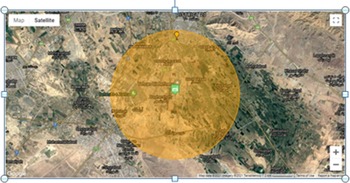
With more than half a century of industrial activities, these facilities process, produce, and store a variety of petroleum products containing large amounts of toxic, flammable, and explosive chemicals through a complex chemical process. In the refinery SRP unit, H2S is collected from other units by chemical processes, and after being concentrated up to 98%, a part of that is transferred to the sulfur separation unit and the other part to the adjacent facilities. In this study, we analyzed the consequences of toxic gas release from the H2S 98% vessel due to an earthquake on the adjacent areas offsite. Considering the geographical location and the history of previous catastrophic earthquakes, among several earthquake risk scenarios in Tehran, the scenario of the activation of the Ray fault in the south of Tehran with the magnitude Mw = 7.5 (equivalent to MMI: 10 (X) at the modified Mercalli scale) was chosen for consequence analysis. In this regard, Figure 1 shows the Natech risk map and the geographical extent of the area exposed to H2S gas release at ERPG-2 concentration following an earthquake scenario with a radius of 6.5 km from the vessel.
Natech risk map for H2S release.

According to the AIHA (2007), the ERPG-2 value is the maximum concentration in the air below, which nearly all individuals can be exposed to for up to 1 hour without experiencing or developing irreversible or other serious health effects or symptoms impairing an individual’s ability to take protective actions. Reference Association25
Study Phases
The first phase was a review study. The Web of Science, PubMed, Scopus, Google Scholar, SID, and Magiran databases were used to search and survey the Natech event documents encompassing gas release from chemical process industries during an earthquake. By taking the opinions of experts in the field of disaster management and health safety and environment, search terms and keywords were selected, and then the search strategy was compiled as follows:
[Natech AND (“Natural Hazard” OR Earthquake) AND (“Chemical Release” OR “Hazmat Release” OR “Toxic Release” OR “Industrial Release”) AND (“Oil Refinery” OR “Petrochemical Industries” OR “Chemical Industries”) AND (“Response Capacity” OR Search & Rescue OR Evacuation)].
Inclusion and Exclusion Criteria
The articles, instructions, books, and conference papers related to industrial disasters and especially chemical disasters after earthquakes, which had been published in either Persian or English in the period of 1980–2020, were included.
The studies involving industrial disasters caused by other natural or technological hazards and studies whose full texts were unavailable or had been written in languages other than Persian and English were excluded.
The second phase of the study included a Natech risk consequence assessment, during which the consequences of the Natech risk on the community around the facility were investigated in terms of the exposed population, vulnerability, and response capacities.
Data Collection Tools and Methods
Considering that the H2S gas is heavier than the air, the Worst-Case Scenario and the condensed model of RMP (or the US EPA-1999 Risk Management Plan Guide) 26 was utilized to determine the end-point distance of H2S release at the ERPG-2 concentration. Rapid-N software was used to simulate atmospheric gas dispersion.
National census statistics were used to extract information on the number of at-risk populations and households living in the H2S release area, as well as to determine structural vulnerability and response capacities in terms of resources lifelines, accessibility (passages and roads), and emergency evacuation capacity in the range of Natech risk maps. 27 The latest information published by the municipality, emergency evacuation maps, Reference municipality28 and previously published studies was used to determine the features of urban districts.
Consequence Analysis
Considering the geographical location and a history of destructive earthquakes, among various earthquake scenarios in Tehran, the scenario of the activation of the Ray fault in the south of Tehran with the magnitude, Mw = 7.5 (equivalent to MMI: 10 (X) applying the modified Mercalli scale), was designated as the consequence analysis criterion for the release of H2S 98% toxic gas from the vessel into the adjacent area offsite following an earthquake. In this regard, Figure 1 shows the Natech risk map and the geographical extent of the area influenced by exposure to the released H2S gas at the ERPG-2 concentration with a radius of 6.5 km from the vessel.
The Natech risk map and the extent of the geographical area of gas release with a radius of 6.5 km from the vessel were determined on Tehran’s map. The characteristics of the study area were analysed in terms of physical structures and exposed population.
The criteria used to measure structural vulnerability were defined in 3 categories: (1) major damage leading to remarkable havoc or destruction, (2) moderate damage leading to moderate destruction requiring repairs, and (3) minor damage requiring no repairs. Reference Hassani23
Response capacity was assessed in 4 dimensions: (1) planning in terms of the emergency response plan, management capacity, and preparedness; (2) resources including trained employees, financial resources, equipment, and facilities; (3) accessibility to emergency response centers, urban transport condition, vulnerability, and obstruction of roads with debris; and (4) evacuation capacity with emphasis on safe evacuation locations and safe and wide evacuation routes in the area affected by the Natech risk.
Ethical Consideration
This study was a part of a doctoral dissertation approved by Shahid Beheshti University of Medical Sciences, Tehran, Iran, under the code of IR. SBMU. PHNS.REC.1398.040.
Results
The findings of this study have been presented in 3 sections: exposure to the Natech risk, vulnerability, and response capacities of the community.
Exposure to the Natech Risk
The exposed geographical area
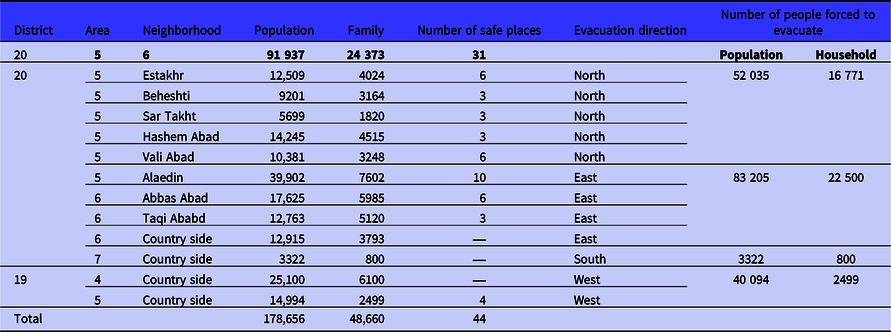
Locating the Natech risk area upon the activation of the South Ray fault on the geographical map of Tehran shows that the southern regions of the city, especially Districts 19 and 20, are exposed to H2S gas release with the ERPG-2 concentration (ie, 30 ppm). The Natech risk area encompassed from the north and northeast regions in District 20, an urban area with 6 neighborhoods and 2 suburb areas with 3 neighborhoods, to the west in District 19, 2 suburb areas with dispersed communities. In addition to residential areas, farmlands and numerous chemical-industrial facilities around the refinery fell into the geographical area exposed to the Natech risk of H2S gas release. Table 1 shows the number of populations and households affected by the Natech risk in separate urban districts and suburb areas.
The number of residents (people and households), safe locations, and evacuation directions in separate urban areas affected by the Natech risk

The exposed people
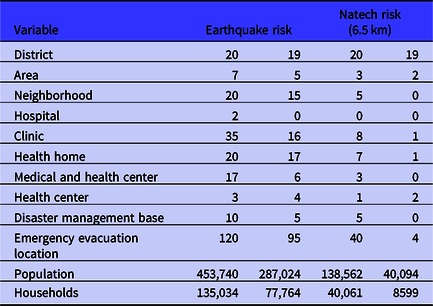
The population exposed to H2S gas release included 138 562 (30.53%) and 40 094 (14%) people and also 40 061 (29.66%) and 8599 (11%) households of the total population and households in Districts 20 and 19, respectively (Table 2). It should be noted that these values are limited to the population dwelling in these areas, and not their 1 million floating population. This means that this population is simultaneously affected by direct (ie, earthquake) and indirect (ie, H2S gas release due to the impact of the earthquake on chemical facilities at the concentration of 30 ppm) damages.
The population and the infrastructure of the area influenced by the earthquake and Natech risk in a separate district

Vulnerability
Physical vulnerability of residential buildings
Analyzing the statistics from the National Census and Seismic Risk Assessment Studies on the Gas Network of Tehran clearly illustrate the structural status and vulnerability of Districts 19 and 20 to the Natech risk of H2S gas release at the ERPG-2 concentration (ie, 30 ppm) following an earthquake. According to available data, residential buildings in Tehran in terms of type are mainly apartments (86.53%) and then non-apartment (12.72%). In terms of the materials used, 57.33% have steel frames, 33.79% have been built by reinforced concrete, and 8.15% by brick and iron, stone and iron, brick and wood, stone and wood, concrete blocks with any roof, all bricks or stone and brick, all wood, clay and wood, or clay and mud. If the Ray fault is activated, the rate of damage to residential buildings in District 20, which is located between the 2 faults of the north and south of Rey, will reach 78.6% depending on the types of buildings and the type of the materials used. On the other hand, the passage of the North Ray fault under the central and densely populated parts of the city with a large number of poorly structured buildings, can lead to the major damage of about 24% and moderate damage of also 24% of all exposed buildings, meaning the destruction of about 350 000 residential units. In terms of the number of vulnerable buildings, there was not much difference between the earthquakes scenario caused by either the South or North Ray fault, so it can be said that the entire south of Tehran is always exposed to considerable structural damage due to the abundance of semi-skeleton buildings (steel and brick), which is the most vulnerable type of building. On the other hand, the number of the buildings constructed by steel and reinforced concrete, which have the least vulnerability to major damage, is much less than semi-skeleton buildings in this area. This means that the entire population of the area, especially those who are trapped under the rubble of damaged buildings and even those who live in the buildings rescued from the earthquake, are at the risk of exposure to H2S gas toxicity due to the infiltration of contaminated air.
Response Capacity
The response capacity of the area affected by the Natech risk was assessed in the 4 dimensions of planning, resources, accessibility, and emergency evacuation capacity.
Planning
This dimension shows a picture of emergency response planning, management capacity, and preparedness of the responsible institutions following a disaster. An investigation on Districts 19 and 20, as the areas affected by the Natech risk, indicated that there were plans for emergency response measures for an earthquake, including search operations for survivors and rescuing the people trapped under the debris, accommodation and supply of essential food and non-food items, providing emergency treatment and health care and other accountability services. As well, responsible institutions had designed preparedness plans, including risk identification, vulnerability determination, developing response mechanisms, training and information, regular practices, and other preparedness-related measures. However, not only were there no preparedness and emergency response plans to simultaneously deal with the earthquake and subsequent toxic chemical release, but also no serious action had been taken by responsible institutions in terms of the identification and assessment of possible Natech events.
Resources
Health infrastructures, lifelines (of water, electricity, gas, and telecommunications), budget, trained response forces, and response equipment were among the resources assessed in this study.
Health infrastructures
An assessment on the area influenced by the Natech event of H2S gas release showed that many health infrastructures, as the most important resources, are currently (at the time of conducting this study) occupied with full capacity to provide services to coronavirus disease (COVID-19) patients. This means that even if their buildings remain undamaged, these centers will not only face a high number of injured due to the earthquake but also a large number of the people poisoned by the H2S gas. However, even if the building is not damaged by the earthquake, due to its permeability to the air contaminated with the toxic gas, the staff and patients of these centers must be evacuated and transferred to safe neighboring areas that are free from gas pollution. The neighboring areas that are themselves severely affected by the earthquake must fulfill the needs of their own crowds of people. Table 2 shows the types of health infrastructure that, in addition to earthquakes, are at risk for gas emission (ie, Natech hazards).
Lifelines
Seismic risk assessment studies on the gas network of Tehran show that despite the extent of the lifelines of water, electricity, gas, and telecommunications in the city, the lifelines of District 20 will suffer serious damage upon an earthquake caused by the activation of the Ray fault model. Such an earthquake will severely damage water pipelines at nearly 400 points, gas pipelines at nearly 40 points, as well as electricity transmission (nearly 2 km cable) and telecommunication (nearly 1.5 km cable) lines.
Budget, equipment, and trained response forces
The responsible institutions had the budget, plans, and executive strategies for providing the equipment necessary to respond to an earthquake and trained, experienced personnel to perform emergency response operations, including search and rescue, accommodation, emergency evacuation, treatment, and health. Also, emergency teams had been prepared to address the disruption of lifelines and perform other emergency operations. These institutions also had periodic practices to increase the skills of their operations forces. However, none of the above was true for the Natech risk of H2S gas release. The health centers’ personnel adjacent to industrial areas, especially in District 20 which is at the risk of H2S release following an earthquake, lack adequate equipment, as well as therapeutic protocols and training courses for self-protection and dealing with a large number of the people poisoned by released toxic gases. Emergency response teams, including search and rescue teams, also lacked the equipment, instructions, and special training required to protect themselves and rescue those exposed to the Natech risk of H2S gas release.
Accessibility
Assessing this dimension was conducted in terms of accessibility to emergency response centers, operation fields, vulnerability, and the obstruction of roads with debris.
District 20 has narrow urban passages with a width of less than 6 meters, causing serious problems in case of the occurrence of an earthquake. These passages are simply blocked by the debris of destroyed buildings, hindering the transportation system and access to emergency centers, as well as the access of response teams to operational fields. The result will be delayed search and rescue operations and hampered emergency evacuation process, adding up to the damage and casualties of the earthquake. Disruption of and delay in response operations when residents, especially those trapped under the debris, and response teams are exposed to the additional risk of H2S gas release (at the ERPG-2 concentration corresponding to 30 ppm), will increase the damage, leading to more casualties and more devastating health effects.
Evacuation capacity
This dimension was assessed based on the JICA-2004 recommendation 29 with emphasis on the 2 parameters of safe evacuation places and safe and wide evacuation routes.
Emergency evacuation
According to the studied Natech risk event scenario (ie, toxic gas release and considering a high ratio of moderately or completely destructed buildings, along with the permeability of undamaged buildings or those with minor damage to H2S-contaminated air (a concentration of 30 ppm), emergency evacuation will be inevitable for all the exposed residents of Districts 19 and 20. Managing emergency evacuation operations, especially within a short time, for a large number of people and households who are exposed to toxic gas release in the Natech risk area is a challenging issue. Obviously, the 44 safe locations in the area, which are often open spaces, although suitable for emergency evacuation during an earthquake, are highly unsafe and dangerous upon a Natech risk event due to the release of a toxic gas. Table 1 shows the geographical direction of the emergency evacuation for the residents of each neighborhood by population and household according to the geographical condition of the areas covered in the present Natech risk assessment process.
Discussion
The results of the present study showed that considering the high seismic vulnerability of buildings in the southern regions of Tehran, the total population of the residential areas in the north, northeast, and west of the refinery, as well as scattered surrounding rural communities within a radius of 6.5 km from the H2S gas vessel would be directly affected by earthquake and indirectly by the release of H2S gas at a concentration of 30 ppm. In addition, it seemed that there were no plans for the identification, assessment, preparedness, and simultaneous emergency response to the earthquake and subsequent chemical gas release. Health infrastructures, even if buildings remain undamaged during the earthquake, is not a safe place for the referral of people and emergency accommodation because of permeability to toxic gas-contaminated air. Moreover, safe evacuation sites, which are often located open spaces, are highly unsafe and dangerous. Narrow urban thoroughfares and severe damage to the lifelines of water, electricity, gas, and telecommunications would hinder public access to medical facilities and safe places during emergency evacuation, as well as the access of response teams to the operational field.
Physical Vulnerability
Numerous studies have been conducted in Iran on earthquake risk assessment and the consequences of the activation of Tehran’s southern faults, but these studies have generally focused only on earthquake consequences, and few studies have assessed multi-hazard risks, especially Natech risks and their consequences.
According to JICA-2000 studies, the Ray fault has the potential to trigger the most destructive earthquake in Tehran. 30 The studies conducted, in order to prepare a general risk assessment map via combining the risk, exposure, and vulnerability maps, indicate that the southern half of Tehran, in comparison with the northern half, is more vulnerable to the risks associated with a great earthquake in the city. Reference Kamranzad, Memarian and Zare22,Reference Hassani23 District 20 of Tehran with 137 hectares of vulnerable areas is one of the 10 districts of the city that are the most susceptible to earthquake consequences compared to other areas in terms of physical damage, human casualties, and social and economic destruction. Reference Kamranzad, Memarian and Zare22,Reference Hassani23,30,Reference Amini Hosseini, Hosseini and Jafari31 In the JICA studies conducted based on 1996 data, it has been estimated that District 20 would be severely damaged by approximately 70%. 30 Habibollahi et al. by citing new data estimated that the damage leading to complete destruction and collapse of buildings would be more than 65%, while the damage associated with extensive destruction, complete destruction, and collapse of buildings was more than 85%. Reference Hajibabaee, Amini-Hosseini and Ghayamghamian32 The other studies assessing seismic vulnerability due to the activation of the Ray fault have estimated that 27.8% of schools in Tehran will experience severe damage because of old structures. Reference Panahi, Rezaie and Sciences33,Reference Kheradmand, Jahangiri and Sohrabizadeh34
Health Consequences on the Exposed Population
There is no accurate estimation on the number of casualties and injuries due to Natech events, independent of that related to earthquakes or other natural hazards. Few studies have addressed some of the health effects on operation and response forces, as well as on people, including the signs of acute poisoning in operation forces and workers, Reference Young11,Reference Girgin17 response teams inside and around the facility Reference Young11,Reference Girgin17 and the people living close to the chemical facility, Reference Girgin17 along with casualties and injuries, Reference Krausmann and Cruz3,Reference Steinberg, Cruz, Vardar-Sukar and Ersoz15,Reference Girgin17 increased incidence of cancer, Reference Girgin17 coma, Reference Girgin17 and chemical burns. Reference Young11 Long-term health effects have remained unknown due to lack of information. Reference Girgin17
The results of the above studies support our findings, indicating that during rescue operations, the entire population living in the affected area are simultaneously exposed to the consequences of the earthquake and the inhalation of toxic gases. Therefore, managers and rescuers face 2 major health challenges: first, rescuing the injured people trapped under the debris caused by the earthquake; and, second, dealing with releasing toxic gases. The H2S gas is a toxic substance that causes acute and chronic symptoms, which can lead to damage to the central nervous system, respiratory system, gastrointestinal tract, and endocrine system. Also, prolonged exposure to low concentrations of this gas can lead to poisoning and respiratory failure, presenting with asthma and chronic obstructive pulmonary disease (COPD).
Response Capacity Challenge
Numerous studies have particularly addressed the complexity of managing the disasters caused by the release of hazardous materials following an earthquake and its impact on response capacities. In a study conducted in Tehran on seismic risk, District 20 (the area affected by the Natech risk in the present study), without taking into consideration the response capacity and only based on physical, human, social, and economic risk indicators, the relative seismic risk index (RSRi) sat on the second place. After including the response capacity index (planning, evacuation capacity, resources, and accessibility), this district was designated as the seventh region with the highest RSRi. This positive change (from 2 to 7 on the relative seismic risk index) is due to the acceptable rank of planning indicators (the existence of crisis management bases) and evacuation capacity (access to open spaces) in District 20. Reference Hajibabaee, Amini-Hosseini and Ghayamghamian32
Numerous studies have been conducted to investigate and document the causes, effects, and consequences of the release of hazardous materials following earthquakes. These studies have revealed the challenges of Natech risk management in terms of preparedness and response (especially in resource management), organizational behavior, disruption of response operations due to damaged lifelines, forced cessation of firefighting operations, search and rescue operation following forced emergency evacuation, the lack of coordination and communication inter-sectoral, inadequate knowledge and practice, and the lack of an emergency response plan for Natech risks due to the release of toxic materials following earthquakes. Reference Krausmann and Cruz3,Reference Steinberg, Cruz, Vardar-Sukar and Ersoz15,Reference Girgin17 The findings of these studies provide valuable lessons for designing chemical risk management plans and emergency response programs in earthquake-prone areas. Reference Krausmann and Cruz3,Reference Steinberg and Cruz16
Planning challenge
A study on the risk scenario of hydrogen fluoride release (a highly corrosive acid gas) from a refinery close to the Southern California urban area after a severe earthquake suggested that even in communities with significant development plans, many residents are relatively unprepared for earthquakes, hazardous material release, and Natech events despite efforts by the refinery and government for informing the public about such (chemical release) risks. Reference Steinberg, Basolo and Burby35
Another study conducted on the facilities affected by the 1999 Izmit earthquake in Turkey showed that all the facilities that had emergency management plans, including staff training (clerks and workers), had appropriate responses to the release of hazardous materials, fire, and explosion. Although a small number of these facilities had emergency management plans for earthquakes, Reference Steinberg, Cruz, Vardar-Sukar and Ersoz15,Reference Steinberg and Cruz16 none of these plans considered the simultaneous management of earthquakes and chemical substance release. Reference Steinberg and Cruz16 In addition, the existing plans had been rarely practiced, leading to their ineffective and confused execution. Reference Steinberg and Cruz16
Another unique challenge in emergency response programs was the ignoring of earthquake scenarios, leaving workers and managers unprepared for dealing with hazardous materials’ release, fire, and explosions. Such a complicated condition would result in severe damage to equipment, simultaneous release of multiple substances, loss of electricity and water supplies, failure of boilers and coolant systems, the lack of communications, obstruction of transportation routes, public confusion, and the lack of response personnel. Reference Sengul, Santella, Steinberg and Cruz5,Reference Steinberg, Cruz, Vardar-Sukar and Ersoz15 Even if emergency management plans existed, these plans had been rarely practiced, and emergency responders were faced with challenges such as unfamiliarity with safety protocols of toxic release during earthquakes and uncertainty about the effectiveness of protective methods and emergency responses procedures. Reference Steinberg and Cruz16 The Natech event management process may be further complicated by the disruption of information and communication systems, the mass media, and the lack of an organizational structure to coordinate response measures, as well as ineffective communications among the government, industrial units, non-governmental organizations, emergency managers and responders, and at least some residents of the area, leading to misunderstandings, confusion, loss of valuable resources and time, which finally result in the lack of a rapid and effective response to the crisis. 14,Reference Steinberg, Cruz, Vardar-Sukar and Ersoz15 In fact, the region was not prepared for an earthquake of this magnitude, combined with the simultaneous release of multiple hazardous materials. Reference Krausmann and Cruz3,Reference Steinberg and Cruz16 In addition, some studies indicated that organizations with good knowledge about disasters performed poorly in practice in terms of vulnerability assessment, planning, and training, even when facing an earthquake alone. Reference Sohrabizadeh, Jahangiri and Shafiei Moghaddam36
Our study also showed that there was no planning for emergency preparedness and response to the simultaneous risk of earthquake and subsequent chemical release. Accordingly, responsible organizations had taken no serious action to identify and assess the possible consequences of Natech incidents.
Resource challenge
A study on previous Natech events has demonstrated that simultaneous responses to earthquakes and hazardous material release, fires, and explosions bring a competition for recruiting the resources required for emergency responses, creating barriers to search and rescue, as well as firefighting operations. Reference Krausmann and Cruz3,Reference Steinberg and Cruz16 In the present study, resource challenges were assessed from the perspectives of resource management, organizational behavior, health infrastructure, lifelines, and environmental consequences.
Resource management
The necessity of responding simultaneously to earthquakes and disasters such as the release of hazardous materials, fires, and explosions leads to an inevitable competition for the recruitment of the resources required for emergency responses to each disaster. In the 1999 Izmit earthquake, half of the resources (including personnel and equipment) organized for search and rescue operations and firefighting in urban areas were deployed to the refinery for firefighting. Reference Steinberg and Cruz16 In addition to the loss of operational specialized personnel in facilities Reference Scawthorn and Johnson37 and the need for specialized response teams to deal with the hazardous materials released during the earthquake, Reference Showalter and Myers1,Reference Steinberg, Cruz, Vardar-Sukar and Ersoz15,Reference Steinberg and Cruz16 organizational behaviors have been partly accountable for the shortage or lack of access to personnel to respond to the emergency condition. Reference Reitherman13,Reference Steinberg and Cruz16
Organizational behavior
Agitation, fear, leaving the duty, escape, confusion, immobility, inability to act, and resistance against evacuation have all been among the behaviors reported from operation forces, response teams, and authorities during Natech events. The most important reasons for such behaviors have been the lack of planning on how to respond to the earthquakes associated with the release of hazardous materials, the lack or shortage of information on hazardous materials, insufficient protective equipment (eg, face masks and protective clothing), Reference Girgin17 lack of coordination, communication, and information, Reference Showalter and Myers1,Reference Steinberg, Cruz, Vardar-Sukar and Ersoz15,Reference Steinberg and Cruz16 ambiguity in information and authority, concerns over one’s family fate, and so forth. In 1 study dealing with the reasons for fear, escape, and leaving duty behaviors, 4 main factors were reported, including the perception of a dangerous and immediate threat, the existence of a limited number of escape routes, knowing about the obstruction of escape routes, and the lack of communication and information about the situation. Reference Lindell and Perry38
Health infrastructure
In the 1999 Izmit earthquake, on the one hand, the lack of communication and information prevented health officials from being informed about the chemical properties of acrylonitrile and how to manage and cure its toxic effects. On the other hand, hospitals and clinics, which were crowded with injured patients, were unable to effectively provide care and treat poisoned people. In contrast to most hazardous industrial facilities that benefit from trained medical units for responding to emergencies, the staff of urban health infrastructures such as local clinics and hospitals are usually unaware of the properties of hazardous chemicals and their health consequences and clinical symptoms. Therefore, these centers should be equipped with appropriate therapeutic supply to act properly in the early phases of a crisis. Limited human and therapeutic resources and poor communications in hospitals with already hospitalized patients further complicate responding to Natech events.
In a study conducted in Iran, it was noted that in addition to a weak infrastructure, the health sector for providing a quick and timely response to the crisis would face challenges such as the diversity of operational teams, the lack of proper planning to identify capacities and services, reluctance for teamwork, ineffective vertical and horizontal communications, and insufficient financial, human, physical, and information resources. These shortcomings can waste valuable time, manifesting as the lack of or poor participation, as a main challenge in the health sector. Reference Yousefian, Sohrabizadeh and Jahangiri39
The present study also showed similar challenges in the health infrastructures, as one of the essential elements of response capacity, of District 20 (the area affected by gas release). First, the exposure of the staff of these centers to the toxic gas could lead to their poisoning and the deactivation of the center. Second, the referral of the injured of the earthquake and chemical gas poisoned people to these centers will raise the risk of contracting the COVID-19 infection and lead to the spread of the pandemic, deteriorating their health status. Third, even if these centers can respond to earthquake victims, to respond to the individuals poisoned by the H2S gas, they require to be completely aware of the signs and symptoms of the poisoning and equipped with relevant protocols of service provision and necessary medical instruments.
Lifelines
Numerous studies have described the complexity and challenges of managing the disasters following the release of hazardous materials from the refineries and facilities affected by earthquakes, including loss of electricity, telecommunications, and water systems or water, leading to a slower response operation to the release of hazardous substances and increasing the risk of exposure of people to these substances. Reference Krausmann and Cruz3,Reference Reitherman13,Reference Steinberg, Cruz, Vardar-Sukar and Ersoz15,Reference Steinberg and Cruz16,Reference Lindell and Perry18,Reference Steinberg, Basolo and Burby35,Reference Lindell and Perry40 This challenge was also observed in our study. Considering lifelines, District 20 (the area affected by gas release) is one of the areas with a high vulnerability to earthquakes, which can delay emergency responses, especially search and rescue along with firefighting operations.
Environmental consequences
The release of hazardous materials such as acrylonitrile following the Izmit earthquake in 1999 not only had direct health impacts, but also promoted indirect health impacts through endangering the surrounding environment. In this regard, within a radius of 200 meters around the leaked acrylonitrile tank and in the settlements around the facility, all birds, wild and domestic animals, plants, and trees were destroyed. Reference Girgin17,Reference Zanbak41 Upon the entrance of acrylonitrile into the Izmit gulf, many fish were also killed. Reference Girgin17 With the contamination of agricultural products of the farms surrounding the refinery with acrylonitrile, not only public health was inflicted, but also crops and agricultural activities were affected, leading to environmental pollution, the recovery of which required 5 years of continuous decontamination. Reference Girgin17
Accessibility challenge
During many Natech events, the vulnerability and obstruction of roads after earthquakes hinder people’s access to emergency response centers, as well as rescuers’, firefighters’, and operation forces’ access to operational fields. The disruption of these operations Reference Krausmann and Cruz3,Reference Reitherman13,Reference Steinberg, Cruz, Vardar-Sukar and Ersoz15,Reference Lindell and Perry18,Reference Krausmann, Cruz and Affeltranger19,Reference Steinberg, Basolo and Burby35,Reference Lindell and Perry40 further complicates the management of the disasters ensuing the release of hazardous substances.
This challenge was also observed in our study. The narrow thoroughfares of District 20, which are prone to be obstructed during an earthquake, can disrupt and delay public access to emergency centers, as well as the access of response teams to operational fields. Also, the emergency evacuation of residents, especially those trapped under the debris and response teams, is delayed. In addition, they are exposed to the double risk of H2S gas toxicity (at the ERPG-2 concentration corresponding to 30 ppm).
Evacuation capacity challenge
Studying Natech events shows that out of 102 evaluated disasters that led to evacuation, only 15% were related to earthquakes, hurricanes, tornadoes, and floods; 35% were due to release in fixed facilities; 25% were related to the release of natural gases; and, finally, 21% were due to the release of petroleum products. Reference Sengul, Santella, Steinberg and Cruz5 Emergency evacuation is a challenging issue in Natech risk management, which has been discussed from 4 dimensions: disrupted and ceased rescue and firefighting operations, unnecessary evacuation, frequent evacuation, and evacuation behavior.
Disrupted or ceased rescue and firefighting operations
In the 1999 Izmit earthquake in Turkey and in order to prevent explosion, the government issued a forced evacuation order just a few hours after the earthquake due to a fire in the refinery, leading to acrylonitrile gas release from the acrylic fiber production plant, followed by damage to relevant facilities and the intentional release of the ammonia (within 48 hours) from the fertilizer production plant. Reference Steinberg, Cruz, Vardar-Sukar and Ersoz15,Reference Girgin17,Reference Scawthorn and Johnson37 While search and rescue teams were working with people to save the lives of those trapped under the debris, they were forced to leave the area and injured people behind. Reference Steinberg, Cruz, Vardar-Sukar and Ersoz15,Reference Girgin17,Reference Scawthorn and Johnson37 After 2 days, the rescue operation was resumed, and this was while the chances of survival of the survivors trapped under the debris were greatly reduced due to the inhalation of toxic gases. Reference Steinberg, Cruz, Vardar-Sukar and Ersoz15,Reference Girgin17,Reference Scawthorn and Johnson37 It is unclear, which may remain so forever, how many people would have been saved if the search operation had not been canceled. Reference Steinberg, Cruz, Vardar-Sukar and Ersoz15 On the other hand, the evacuation order frightened many firefighters at the refinery, which made them leave the duty. These firefighters actually did not know much about the properties of the released hazardous materials and had not been trained to respond to the release of such materials following an earthquake. Therefore, this event severely reduced the firefighting capacity, leaving the fire out of control. Reference Steinberg and Cruz16
Unnecessary evacuation
Despite the request of the acrylic fiber plant (acrylic nitrile) to evacuate an area with a radius of 1.2 km (45 km2) Reference Steinberg and Cruz16 and the request of the refinery to evacuate an area with a radius of 5 km (78 km2), Reference Steinberg, Cruz, Vardar-Sukar and Ersoz15,Reference Girgin17 the evacuation order was issued for an area with approximately 100 times larger (ie, several hundreds of kilometers), so that even the cities that were more than 10 km away from the facilities were evacuated. Reference Girgin17 It seems that limited awareness, misunderstanding, and inadequate communication through informal channels, along with the chaos caused by the earthquake, contributed to the unnecessary evacuation of these areas. Reference Girgin17 Following the issuance of the evacuation order when there were no radio communications, people were personally notified by local security forces and began to leave the area after more than 20 hours of exposure. Reference Girgin17
Frequent evacuations
During the Great East Japan Earthquake and Tsunami (2011), several evacuation orders were issued for a number of reasons. The first evacuation order was for the earthquake and tsunami. The second evacuation order was related to Natech events (ie, the possibility of an LPG tank farms explosion upon fire spreading, sulfur ignition, and the formation of a toxic cloud), Reference Krausmann and Cruz3 leading to the forced evacuation of an area with a 2-km radius around the refinery. Despite the reduced risk of natural hazards, the second evacuation order was issued partly due to the earthquake and tsunami, as well as due to crowded shelters or a shortage of essential items for the families whose members required special needs. However, the third and fourth evacuation orders were not related to the natural disaster or the Natech events. Reference Yu, Cruz and Hokugo10,Reference Yu and Hokugo42
Evacuation behavior
Households’ evacuation behaviors when dealing with the Natech events were assessed from several dimensions, including risk perception, location, evacuation orders and alarming sources, demographic variables (age and household size), wind direction, and training. Understanding households’ evacuation behaviors can help managers to design and expand emergency strategies to better protect the population against the Natech risk. Reference Yu and Hokugo42 In a study conducted on the Great East Japan Earthquake and Tsunami (2011), it was found that risk perception was a key factor in understanding the evacuation decision-making process, and that the households’ response time to Natech threats was shorter and faster when receiving an evacuation order than when they were meant to reach such a decision by themselves. Reference Yu, Cruz and Hokugo10,Reference Yu and Hokugo42 Although proximity to an emergency site does not necessarily lead to a faster response, Reference Yu and Hokugo42 it does create a great tendency to evacuate from places, unlike the residents of more remote areas who were more inclined to shelter in place. Reference Yu, Cruz and Hokugo10 Older people and large households were more willing to evacuate quicker than younger people and small households, respectively. Reference Yu, Cruz and Hokugo10,Reference Yu and Hokugo42 Wind direction also influenced the understanding of the risk by households and their evacuation response to the Natech disaster. Reference Yu, Cruz and Hokugo10 The majority of the residents had no experience of evacuating or training for Natech disasters. Reference Yu, Cruz and Hokugo10
In another study, it was mentioned that if emergency evacuation (via suitable routes and to appropriate open spaces and safe public buildings) was executed within the first 72 hours after the earthquake, it can play an important role in saving the lives of people and reducing their vulnerability, especially prone groups, in facing fire, severe aftershocks, or landslides. Reference Amini Hosseini, Hosseini and Jafari31 However, in the present study, by determining the area affected by toxic gas release (a radius of 6.5 km), unnecessary evacuation can be prevented. Nevertheless, due to the great vulnerability of adjacent areas and the need for evacuating all residents in the areas exposed to toxic gases, measures should be taken to avoid frequent evacuations. In addition, evacuation time for the population living in the areas affected by the Natech risk of gas release at the EPRG-2 concentration is limited to about 1 hour. In addition, all the safe places considered for emergency evacuation after an earthquake will be unsafe and even harmful in the case of a Natech event.
Conclusion
The probability of a major earthquake in the metropolis of Tehran, which is the center of many economic, social, political, and industrial activities, along with a history of previous destructive earthquakes, being enclosed among active seismic faults and adjacent to hazardous industries, which are associated with the risk of Natech events such as the release of toxic substances, fire, and explosion, makes planning for the management of these events inevitable. Both short-term and long-term plans can help with coping and resilience with such events. Some of proposed short-term solutions and measures include identifying vulnerable industries to natural hazards, identifying areas with potential risk of Natech events, updating safe routes and locations in the existing emergency evacuation map in the area, informing and awareness of the people living in areas with high seismic risk and adjacent to industrial facilities about the risk of Natech events, training appropriate individual and social behaviors when dealing with such disasters, development of health and treatment protocols for dealing with Natech disasters, training the medical staff working in these centers and providing them with adequate amounts of appropriate drugs and diagnostic and therapeutic equipment, development of search and rescue and emergency evacuation protocols in the case of Natech disasters, and training of and equipping human resources with appropriate protective equipment. On the other hand, applying the results of such studies for land use planning, considering Natech risks when enacting construction regulations, creating incentive policies for seismic retrofit of the builders and hazardous industries are some of the long-term measures that can be implemented. Given the relative novelty of Natech risk management and Natech disaster risk reduction management, more research is needed in these fields. The results of the present study can be useful not only for understanding the Natech risks ensuing an earthquake in Tehran, but also for prioritizing measures to boost the resilience of surrounding communities.
Acknowledgments
This research was a part of a PhD thesis approved by Shahid Beheshti University of Medical Sciences with the ethics code of IR.SBMU.PHNS.REC.1398.040.
Funding statement
This research was supported by the National Iranian Oil Refining and Distribution Company.
Conflicts of interest
There are no conflicts of interest.