CHDs are the most common developmental anomaly in newborns.Reference Hoffman and Kaplan 1 The aetiology of most CHDs is not known, with only 9.5–15% having an identified genetic aetiology.Reference Oyen, Poulsen and Boyd 2 , Reference Hartman, Rasmussen and Botto 3 The main known risk factors for CHDs are as follows: diabetes mellitus,Reference Rowland, Hubbell and Nadas 4 maternal age >35 years,Reference Miller, Riehle-Colarusso and Siffel 5 paternal age >35 years,Reference Olshan, Schnitzer and Baird 6 and maternal body mass index >30.Reference Mills, Troendle and Conley 7 Despite the almost universal pregnancy surveillance programme in Western countries, the birth prevalence of CHDs has not changed much in the past 20 years.Reference van der Linde, Konings and Slager 8
Conotruncal defects are a unique CHDs subgroup, unified by the defect during the embryonic development of the outflow tract.Reference Restivo, Piacentini and Placidi 9 The main defects include tetralogy of Fallot, transposition of the great arteries, double-outlet right ventricle, and truncus arteriosus. Other rare types of conotruncal defects include pulmonary atresia with ventricular septal defect, interrupted aortic arch, and aorto-pulmonary window. The known risk factors for developing conotruncal defects are CHDs in siblings,Reference Adams, Mulinare and Dooley 10 genetic chromosomal abnormalities,Reference Johnson, Hing and Wood 11 paternal age >30,Reference O’Malley, Shaw and Wasserman 12 high parity,Reference Francannet, Lancaster and Pradat 13 low birth weight, prematurity,Reference Lary and Paulozzi 14 , Reference Grech 15 and maternal diabetes.Reference Loffredo, Wilson and Ferencz 16 , Reference Ferencz, Rubin and McCarter 17 The birth prevalence of CHDs and conotruncal defects vary geographicallyReference Sayasathid, Sukonpan and Somboonna 18 – for example, in Europe,Reference Dolk and Loane 19 the birth prevalence of conotruncal defects is 6.6/10,000 live births, in AsiaReference Wu, Chen and Lu 20 9.3, and in Atlanta, Georgia,Reference Reller, Stricklland and Richle-Colarusso 21 7.6. The southern Israel population comprises two main ethnic groups, a predominantly urban population of Jews (544,000, 75%) and a rural population of Bedouin Arabs (186,000, 25%). The latter has a lower socio-economic status, an abortion rate 2.5 times lower than the Jewish population, 22 and a very high rate of consanguineous marriages (70%) defined as 1st or 2nd degree relatives.Reference Nabih, Ahmad Sheikh and Aid 23 Previous studies from southern Israel have demonstrated high birth prevalence of congenital pathologies such as in the central nervous systemReference Jaber, Merlob and Shohat 24 associated with a high rate of consanguinity.
In this population-based study, we aimed to evaluate the birth prevalence of conotruncal defects and identify maternal and fetal factors associated with this pathology.
Materials and methods
Population and setting
The study was performed at Soroka University Medical Center, a tertiary 1000-bed teaching hospital providing medical care to the population of southern Israel. Soroka University Medical Center is the only hospital in the area, serving a population of 730,000 residents. All deliveries in the region are referred to Soroka University Medical Center, which attends to ~13,000 births annually, and Bedouin Arabs have a higher birth rate ([median, range] 6, 1–16) compared with Jews (4, 1–13). 22
Starting from 1991, Soroka University Medical Center has managed a comprehensive Birth Registry accounting for all deliveries in the geographical region.
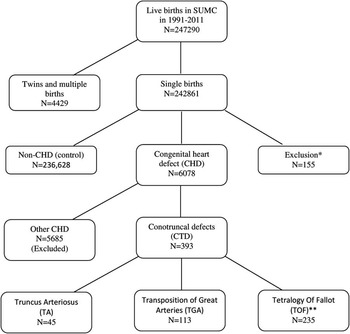
The study population included all singleton live births between 1991 and 2011, and we included only newborns with a normal chromosome set in our study (Fig 1).
Study design. *Missing data. **Including double-outlet right ventricle. SUMC=Soroka University Medical Center.

The conotruncal defects group included the following birth pathologies: tetralogy of Fallot, transposition of the great arteries, and truncus arteriosus, and was compared with healthy singleton newborns; newborns with other CHDs were excluded. Double-outlet right ventricle was included in the tetralogy of Fallot group as it presents most of the time as a subtype of tetralogy of Fallot.
The following maternal and newborn data were collected: maternal and newborn demographics, birth weight, gestational age, death date, gravidity and parity, ethnic group, CHDs in siblings, birth and pregnancy complications, fetal complications and morbidities, and maternal morbidities.
The present study was approved by the institutional review board committee of the Soroka University Medical Center (institutional review board number 0037-12-SOR).
Definitions
The various CHDs were coded according to ICD9 codes 398, 425, and 745–747. Lack of prenatal care was defined as lack of prenatal visits or first prenatal visit in the third trimester. Intra-uterine fertilisation and assisted reproductive technology were coded according to ICD9 codes V26.8, V26.89, V26.81, and V23.85. Grand multipara was defined as a woman with five or more live births. Recurrent miscarriage was defined as a woman with three or more miscarriages.
Data analysis
The conotruncal defects were divided to three groups: tetralogy of Fallot, transposition of the great arteries, and truncus arteriosus.
The method of analysis for continuous variables was parametric, using t-test and one-way analysis of variance. Non-parametric procedures – Mann–Whitney and Wilcoxon’s tests – were used if parametric assumptions could not be satisfied even after data transformation. Categorical variables were tested using Pearson’s χ2 test for contingency tables or Fisher’s Exact test, as appropriate. Correlations between variables were tested using Pearson’s or Spearman’s tests, depending on the variables’ distribution.
Secular trends for birth prevalence were analysed as follows: all live births and conotruncal defects births were summed annually, for each year between 1991 and 2011. The birth prevalence of conotruncal defects was calculated per 10,000 healthy births per year.
The multivariate analysis was carried out with generalised estimating equations with logistic link function – unstructured correlation matrix – as each mother could have more than one newborn included in the analysis. Models were adjusted for ethnicity, CHDs in siblings, diabetes mellitus, maternal age >35 years, recurrent miscarriages, gender, lack of prenatal care, and grand multipara.
The data were analysed using IBM SPSS Statistics software version 20.0. All statistical tests and/or confidence intervals, as appropriate, were assessed at α=0.05 (two-sided).
Results
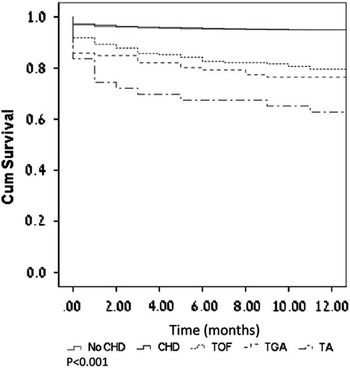
Between 1991 and 2011, there were 247,290 live births in Soroka University Medical Center. There were 242,861 singleton deliveries with 6078 of the newborns diagnosed with CHDs (2.5%). Among the newborns diagnosed with CHDs, 393 had conotruncal defects: tetralogy of Fallot (n=235), transposition of the great arteries (n=113), and truncus arteriosus (n=45). The 1st year survival rate for tetralogy of Fallot was 79.6%, for transposition of great arteries – 76.4%, and for truncus arteriosus 62.8% (Fig 2).
The 1st year survival of CTD compared with other CHD, and patients without any CHD among live-born singleton births among Bedouin Arabs and Jews in SUMC, southern Israel, 1991–2011. CTD=conotruncal defect; SUMC=Soroka University Medical Center; TA=truncus arteriosus; TGA=transposition of the great arteries; TOF=tetralogy of Fallot.

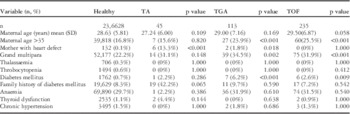
Table 1 summarises the maternal characteristics of the population; each conotruncal defect type was compared with healthy newborns.
Maternal characteristics among live-born singleton births in SUMC, southern Israel, 1991–2011.

CTD=conotruncal defect; SUMC=Soroka University Medical Center; TA=truncus arteriosus; TGA=transposition of the great arteries; TOF=tetralogy of Fallot
Maternal characteristics of the population stratified by the CTD status of their newborn and the exact pathology. Each CTD type was compared with the healthy newborns group
Maternal characteristics
The proportion of mothers older than 35 years of age was significantly higher among mothers of newborns with transposition of the great arteries or tetralogy of Fallot compared with mothers of healthy newborns (23.9%, 25.5 versus 16.8% for transposition of the great arteries, tetralogy of Fallot, and healthy newborns, respectively).
Recurrent miscarriages were more common in the tetralogy of Fallot group compared with healthy newborns (10.2 versus 5.3%, respectively). It appeared that maternal CHD was associated with truncus arteriosus: 13.3% of the mothers of newborns diagnosed with truncus arteriosus had CHDs compared with 0.1% among mothers of healthy newborns. Maternal diabetes was more prevalent among mothers of newborns with transposition of the great arteries (6.2%) compared with mothers of healthy newborns (0.7%).
Gestational period
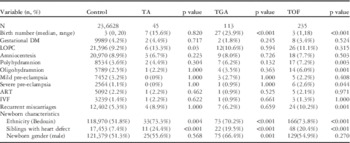
Gestational period and newborn characteristics are shown in Table 2. The rate of lack of prenatal care was slightly higher among newborns with truncus arteriosus compared with healthy newborns (13.3 versus 9.2%, respectively), whereas in all other groups it did not differ from the healthy newborn cohort. The rates of assisted fertility or in vitro fertilisation pregnancies were similar between controls and the conotruncal defects group. In addition, the rates of pregnancy complications such as eclampsia, pre-eclampsia, and gestational diabetes were similar in all study groups.
Gestational period characteristics among live-born singleton births in SUMC, southern Israel, 1991–2011.

ART=assisted reproductive treatment; CTD=conotruncal defect; DM=diabetes mellitus; IVF=in vitro fertilisation; LOPC=lack of prenatal care; SUMC=Soroka University Medical Center; TA=truncus arteriosus; TGA=transposition of the great arteries; TOF=tetralogy of Fallot
All variables of pregnancy refer to current pregnancy
Each CTD type was compared with the healthy newborns group
Newborn characteristics
Transposition of the great arteries was associated with male newborn predominance (66.4 versus 51.3%, p=0.001). Having a sibling with any CHD was associated with an increased risk for conotruncal defects: 7.4% among healthy newborns compared with 24.4% in truncus arteriosus, 19.5% in transposition of the great arteries, and 20.4% in the tetralogy of Fallot group (p<0.001). All conotruncal defect types were associated with Bedouin ethnicity: although Bedouin Arab newborns comprised 51.8% of healthy newborns, they constituted above 70% in each conotruncal defect type.
Multivariate analysis
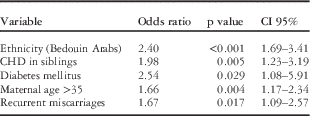
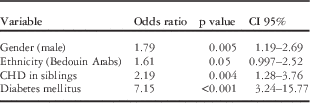
We used generalised estimation equations logistic regression models for multivariate analysis of the predictors associated with tetralogy of Fallot (Table 3) and transposition of the great arteries (Table 4). We ran separate models and compared each conotruncal defect group with healthy newborns. Given the low birth prevalence of truncus arteriosus in our study (n=45), multivariate analysis was not feasible in this group.
The association between maternal characteristics and TOF: results from a generalised estimation equation logistic regression.

LOPC=lack of prenatal care; TOF=tetralogy of Fallot
Adjusted for: gender, LOPC, and number of children
The association between maternal characteristics and TGA: results from a generalised estimation equation logistic regression.

LOPC=lack of prenatal care; TGA=transposition of great arteries
Adjusted for: LOPC, number of children, maternal age >35
Table 3 displays the model for tetralogy of Fallot, the most frequent birth defect within the conotruncal defect group. Bedouin ethnicity, CHDs in siblings, recurrent miscarriages, maternal diabetes, and maternal age above 35 years were associated with tetralogy of Fallot birth prevalence. Similarly, factors associated with transposition of the great arteries included male fetus, presence of siblings with CHDs, and Bedouin ethnicity.
Secular trend
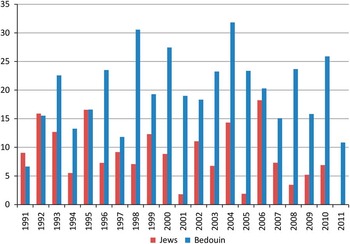
Figure 3 displays the annual birth prevalence rate of conotruncal defects per 10,000 live births between 1991 and 2011. The birth prevalence remained stable during these 20 years without any significant increase or decrease in birth prevalence.
CTD birth prevalence per 10,000 live births a year among live-born singleton births in SUMC, southern Israel, 1991–2011. CTD=conotruncal defect; SUMC=Soroka University Medical Center.

Worldwide birth prevalence
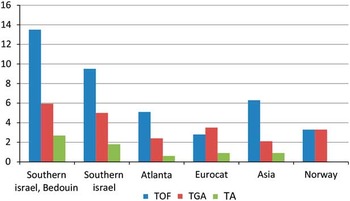
Figure 4 displays the worldwide geographical trends in birth prevalence of conotruncal defects and the birth prevalence in southern Israel, which is much higher than that reported in other countries. Specifically, the Bedouin Arab population has the highest birth prevalence of conotruncal defects among all countries with reported data.
Worldwide geographic change in birth prevalence of CTD and the birth prevalence per 10,000 live births. CTD=conotruncal defect; TA=truncus arteriosus; TGA=transposition of the great arteries, TOF=tetralogy of Fallot.Reference Dolk and Loane 19 – Reference Reller, Stricklland and Richle-Colarusso 21 , Reference Leirgul, Fomina and Brodwall 28

Ethnicity-related factors
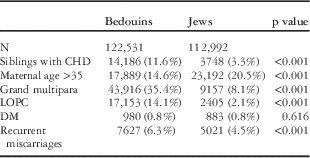
Table 5 displays the comparison of factors associated with conotruncal defects between Bedouin Arab and Jewish populations. The Bedouin Arabs have a higher birth rate than Jews; although they comprise about 25% of the population in southern Israel, the births are almost evenly divided between the two groups; this is also reflected by the high rate of grand multipara in the Bedouin Arabs (35.4 versus 8.1%, p<0.001). The Bedouin Arabs have a higher rate of siblings with CHDs (11.6 versus 3.3%, p<0.001) and recurrent miscarriages (6.3 versus 4.5%, p<0.001). In contrast, the proportion of mothers who are older than 35 years of age was higher in the Jewish population (20.5 versus 14.6%, p<0.001).
Comparison of characteristics among live-born singleton births among Bedouin Arabs and Jews in SUMC, southern Israel, 1991–2011.

DM=diabetes mellitus; LOPC=lack of prenatal care; SUMC=Soroka University Medical Center
Discussion
Main findings
This study shows that the birth prevalence of conotruncal defects in southern Israel is high compared with birth prevalence rates reported in other countries. In a large population-based study, we found that the factors associated with higher risk for conotruncal defects were diabetes mellitus, recurrent miscarriage, maternal age >35, and the coexistence of siblings with CHDs.
Worldwide birth prevalence of conotruncal defects
To our knowledge, the conotruncal defects birth prevalence found in our study was high compared with conotruncal defects birth prevalence reported in the world – 11.8/10,000 live births with significant ethnicity differences: 8.4 in the Jewish population and 20.2 in the Bedouin Arab population. It should be emphasised that no statistical fluctuation was done on the data, and the rates were calculated straightforward. Although in the Jewish population, the rates are similar to the ones reported in other population-based studies from around the world, the Bedouin Arab population has twofold higher birth prevalence. Recent studies reported a variability of birth prevalence of conotruncal defects per 10,000 live births: Europe – 7.2,Reference Dolk, Loane and Game 25 Atlanta, Georgia – 8.1,Reference Bjornard, Riehle-Colarusso and Gilboa 26 Asia, Taiwan – 9.3,Reference Wu, Chen and Lu 20 Denmark – 11.5,Reference Øyen, Poulsen and Boyd 27 and Norway – 11.0.Reference Leirgul, Fomina and Brodwall 28 The last two studies reported high birth prevalence and describedReference Øyen, Poulsen and Boyd 27 , Reference Leirgul, Fomina and Brodwall 28 factors that may be associated with higher birth prevalence, such as better prenatal surveillance, genetics, and the increasing prevalence of diabetes mellitus among women of childbearing age. Similar to others, we found that the following factors are associated with conotruncal defects in our population: diabetes mellitus, recurrent miscarriage, maternal age >35 years, and siblings with CHDs.
Ethnicity-related factors
We found a clear difference in conotruncal defects prevalence between Jews and Bedouin Arabs. Multivariate analysis with adjustment for lack of prenatal care and other potential confounders showed that the odds ratio for conotruncal defects was 2.34 in Bedouin Arabs compared with Jews. Although both ethnic groups are covered by universal medical insurance and have unlimited and free-of-charge access to prenatal care, these groups differ in several ways. First, the more traditional Bedouin Arab population is in transition from semi-nomadic to settled lifestyle and has a high rate of consanguinity. Second, although the Bedouin Arabs have medical insurance, they do not appear to access prenatal care well as shown in Table 5. We did not find lack of prenatal care to be associated with higher risk for conotruncal defects, suggesting that other factors in this population contribute to the higher rates of conotruncal defects.
Consanguinity and genetics
We believe that family clustering and high conotruncal defects prevalence in Bedouin Arabs hint at a potential genetic component associated with the disease. We have shown that having a sibling with CHDs may increase the odds ratio for conotruncal defects to 2. Furthermore, we have found a higher prevalence of siblings with the disease among Bedouin Arabs. Finally, in our population, recurrent miscarriage was associated with higher conotruncal defects prevalence. Together, these findings suggest a genetic component of CHDs and conotruncal defects. The Bedouin Arab population is characterised by a high consanguinity rate. Although in other Arab populations of Israel, the consanguinity rate is 16%,Reference Jaber, Halpern and Shohat 29 the Bedouin consanguinity rate is 70%.Reference Nabih, Ahmad Sheikh and Aid 23 In contrast, the Jewish population consanguinity rate is negligible. Several studies have shown that the rate of congenital malformations among the offspring of consanguineous marriages is ~2.5 times higher than that among the offspring of unrelated parents.Reference Kulkarni and Kurian 30 , Reference Jaber, Merlob, Bu, Rotter and Shohat 31 More specifically, consanguinity is known to be associated with conotruncal defects and CHDs.Reference Grjibovski, Magnus and Stoltenberg 32 Furthermore, studies show that the prevalence of conotruncal defects and CHDs decreases in areas where successful public campaigns led to a decrease in consanguinity.Reference El-Shafei, Rao and Sandhu 33 , Reference Magnus, Berg and Bjerkedal 34 Nevertheless, only 9–15% of CHDs have known genetic cause.Reference Fung, Manlhiot and Naik 35 Only 6% of patients with CHDs have chromosomal defectsReference Zhang, Zhang and Ren 36 such as trisomy 13, 18, 21,Reference Harris, Francannet and Pradat 37 , Reference Garne, Nielsen and Hansen 38 microdeletion 22q11 syndrome,Reference Beauchesne, Warnes and Connolly 39 transcription and single gene.Reference Sayasathid, Sukonpan and Somboonna 18 Truncus arteriosus, and tetralogy of Fallot are associated with DiGeorge syndrome and velocardiofacial syndrome.Reference Boudjemline, Fermont and Le Bidois 40 – Reference Driscoll 42 Together with a known increase in conotruncal defects prevalence, this relatively low explained disease aetiology suggests different mechanisms behind the disease origin,Reference Jaber, Merlob, Bu, Rotter and Shohat 31 such as polygenyReference Nora 43 , Reference Csáky-Szunyogh, Vereczkey and Kósa 44 and environmental effects.
To our knowledge, this is the first population-based longitudinal analysis of conotruncal defects prevalence in an Israeli population. The unique structure of health care with a single obstetric and neonatal care provider and comprehensive medical records going back to early 1990s allows a real and precise calculation of birth prevalence of the defects in the population. Moreover, we were able to analyse maternal and extended family factors that can potentially influence the risk of conotruncal defects occurrence. The uniqueness of our population comprising two distinct ethnic groups – Jewish and Bedouin Arab – with the latter being characterised by very high consanguinity allows to identify family clusters of conotruncal defects birth prevalence. This in turn lays out a basis for further genetic research.
Limitations
Our analysis has several limitations. We were not able to create a standard pedigree due to the lack of health data for other than paternal generations. We did not have data, neither at the patient level nor from the literature, to perform a comparison with other countries with similar populations. Inherent to epidemiological studies, we have not assessed the question of causality, but rather a question of association. Therefore, genetic analysis in selected families will be a mandatory further step.
Second, we did not have data about abortions and postmortem, and therefore no data about heart defect rates in abortions.
Conclusion
The Bedouin Arabs have one of the highest birth prevalence of conotruncal defects in the world, and high consanguinity rate may be the main explanation. Therefore, a routine fetal echocardiogram and genetic consultation should be suggested to families with high consanguinity rate. Naturally, further educational efforts are needed in order to decrease consanguinity and its related outcomes.
Acknowledgement
None.
Financial Support
This research received no specific grant from any funding agency, commercial, or not-for-profit sectors.
Conflicts of Interest
None.
Ethical Standards
The research was approved by the Institutional Review Board Committee of the Soroka University Medical Center (Institutional Review Board number 0037-12-SOR).