Background
Beta-lactam antibiotics, which include penicillins, cephalosporins, carbapenems, and monobactams, share a common core beta-lactam ring and are often first-line treatments for bacterial infections due to their efficacy, safety, low cost, and tailored activity. Reference Castells, Khan and Phillips1–Reference Pichichero and Zagursky3 Though generally well tolerated, one adverse effect associated with these antibiotics is the potential for an allergic reaction. The prevalence of reported penicillin allergy ranges from 6% to 25% across various treatment populations, with benign cutaneous reactions being the most common. Reference Castells, Khan and Phillips1 According to the 2022 AAAAI Practice Parameter, the prevalence of self-reported penicillin allergy is approximately 10% in the general population, but true IgE-mediated penicillin allergy is much lower, estimated at approximately 1%. Reference Khan, Banerji and Bernstein2 Severe reactions requiring emergent care are rare but have significantly influenced the selection of future antibiotics for patients with a history of reported allergies. Reference Khan, Banerji and Bernstein2,Reference Boesch, Eischen, Ries, Quinn, Dave and Beezhold4
Structural similarities among beta-lactams have generated concern for cross-reactivity within the class, leading to the avoidance of cephalosporins in patients with a reported penicillin allergy label. Reference Bogus, McGinnis and Vergin5 The use of alternative classes of antibiotics has been demonstrated to generate suboptimal outcomes including increased risk of treatment failure, surgical site infections, secondary Clostridioides difficile infection, and increased colonization with antibiotic-resistant organisms. Reference Boesch, Eischen, Ries, Quinn, Dave and Beezhold4,Reference Macy, McCormick and Adams6–Reference Macy and Contreras8 Recent studies suggest that the actual risk of cross-reactivity between penicillins and cephalosporins is lower than previously estimated. Reports assess the risk of a reaction for patients with a historical reaction to penicillin to be <2% when prescribed a cephalosporin and <1% for patients prescribed a carbapenemReference Romano, Gaeta, Valluzzi, Caruso, Rumi and Bousquet 9 . and 6,8 In 2022, the Drug Allergy Practice Parameter provided updated guidance on the administration of cephalosporins to patients with various phenotypes of penicillin allergy. This includes the recommendation that for patients with a history of an unverified non-anaphylactic penicillin allergy, any cephalosporin can be administered routinely. In contrast, for patients with a history of anaphylaxis to penicillin, a non-cross-reactive cephalosporin, such as cefazolin, can be administered routinely without prior testing. This was a significant shift in the prior guidance and underscores the importance of fully understanding a patient’s reaction history to penicillin and the structural side chain similarities before avoiding all cephalosporins. Reference Khan, Banerji and Bernstein2 Furthermore, the experience reported in the literature from other health systems suggests the removal of cross-reactivity alerts between classes can reduce the use of second-line agents without a substantial increase in severe adverse effects. Reference Khan, Banerji and Bernstein2,Reference Bogus, McGinnis and Vergin5 Considering this evolving evidence and national guidance, our institution implemented a change in November 2022 in the local electronic medical record (EMR) system to limit cross-reactivity alerts between beta-lactam classes, specifically removing alerts for potential cross-reactivity between penicillins and cephalosporins, except in cases of reactions classified as anaphylaxis or anaphylactic shock. This study’s main objective is to assess the impact of removing cross-reactivity precautions for all non-anaphylactic reactions to beta-lactam antibiotics on outpatient antibiotic prescribing practices.
Methods
This retrospective, single-center cohort study aimed to analyze the impact of adjusting beta-lactam cross-reactivity alert triggers within the EMR for patients with beta-lactam allergy labels. The study was conducted over the period from November 15, 2021, to November 15, 2023, and included all adult and pediatric patients with documented penicillin allergies. A 1-year period prior to the implementation date of November 15, 2022, was compared to the 1-year period after the implementation date. Our institutional guidelines support the use of cephalosporins in patients with a history of anaphylactic reactions to penicillin, acknowledging the lower risk of cross-reactivity than previously estimated. It was necessary to retain the cross-reactivity alert for anaphylactic penicillin allergies due to the logic built into the Epic EMR system. Removing this alert would have unintentionally affected alerts for other medications that we intended to keep in place. All outpatient prescriptions within the health system were processed through the Epic EMR system, ensuring that every prescription was subject to these alerts. No alternative prescribing systems were used for outpatient prescriptions. The primary objective was to measure the number of antibiotic prescriptions generated for cephalosporins pre- and post-alert limitation. Secondary objectives also compared the following pre- and post-implementation: quantity of reduction in allergy alerts viewed by clinicians in the EMR, quantity of non-cephalosporin antibiotic orders, safety measures of intramuscular epinephrine use for allergies triggered by cephalosporin administration, and adverse events matched to our population. The study received approval from the University of Iowa Institutional Review Board.
Data collection and processing
Inclusion criteria included patients with a documented penicillin allergy seen during outpatient encounters who were prescribed an antibiotic. For this analysis, only alerts triggered by a penicillin allergy, without a concurrent cephalosporin allergy label at the time of data retrieval, were included. As such, encounters with cephalosporin allergies entered before the alert triggered were removed from the analysis. Additionally, any new penicillin allergies documented after the antibiotic prescription were excluded, as these would not have influenced the alert at the time of prescribing.
Data extracted included encounter identifiers, patient demographics, and prescription details. To ensure accuracy, data were cross-referenced with penicillin allergy entry dates including medical record number (MRN), patient name, prescriber name, allergy entry date, and profile creation date. This cross-reference allowed the determination of whether the penicillin allergy was recorded in the patient’s EMR at the time of the alert. All records were de-identified prior to statistical analysis. Duplicate antibiotic orders were removed to account for therapy adjustments, such as dose changes due to renal function. Each patient’s demographic information was recorded once per group (pre-implementation and post-implementation), allowing for multiple appearances of the same MRN across different groups but only once per group. Antibiotic prescription data were collected from the EMR for patients with a penicillin allergy within the study timeframe. These antibiotics were then categorized into broad antibiotic categories.
Alert data
Alert data were extracted for instances where a penicillin allergy triggered an alert upon prescribing a cephalosporin. Alerts were categorized into pre- and post-implementation groups and further classified by antibiotic class. This approach ensured that only relevant alerts were considered, capturing instances where a penicillin allergy was present, and a cephalosporin allergy was not present at the time of the alert trigger.
Adverse events
Adverse events were monitored and reviewed by a trained pharmacist with extensive experience in adverse drug event surveillance, having coordinated such activities since 2002. Data sources included reports submitted to the organization’s adverse event reporting system (Riskonnect), updates in allergy documentation within the EMR, administration of designated antidote medications during recent antibiotic therapy, reports submitted to the drug information center, and adverse drug events encountered during routine chart reviews.
Antibiotic-related reactions were categorized into pre- and post-implementation groups, specifically focusing on cephalosporin reactions. During chart review, the pharmacist confirmed that adverse events were directly associated with antibiotic therapy by examining the event’s timing in relation to antibiotic administration. An allergist and a drug allergy pharmacist further investigated these events for adjudication of the allergy label.
Statistical analysis
Data were collected and analyzed using Excel to calculate proportions, ratios, and percentages for each population group. Chi-square tests were conducted to compare proportions between pre- and post-implementation groups. All statistical analyses were conducted using Excel and GraphPad 10 , 11 , and a P-value of <.05 was considered statistically significant.
Results
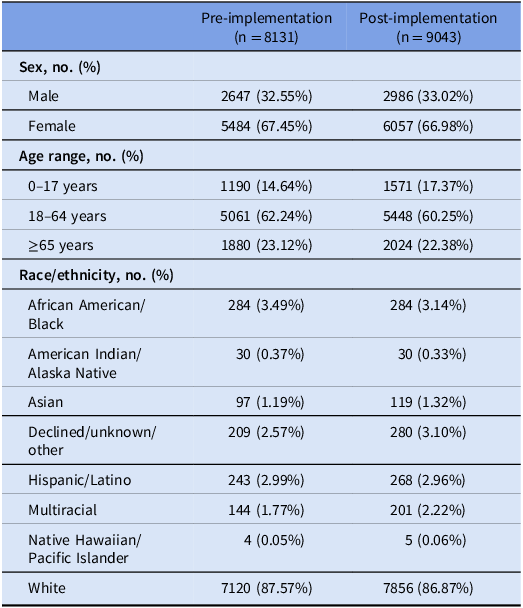
A total of 17,174 patients were included in the analysis: 8,131 in the pre-implementation cohort and 9,043 in the post-implementation group. Pre- and post-implementation demographics, including age, gender, and race/ethnicity, are detailed in Table 1.
Pre- and post-implementation demographics by age, gender, and race/ethnicity

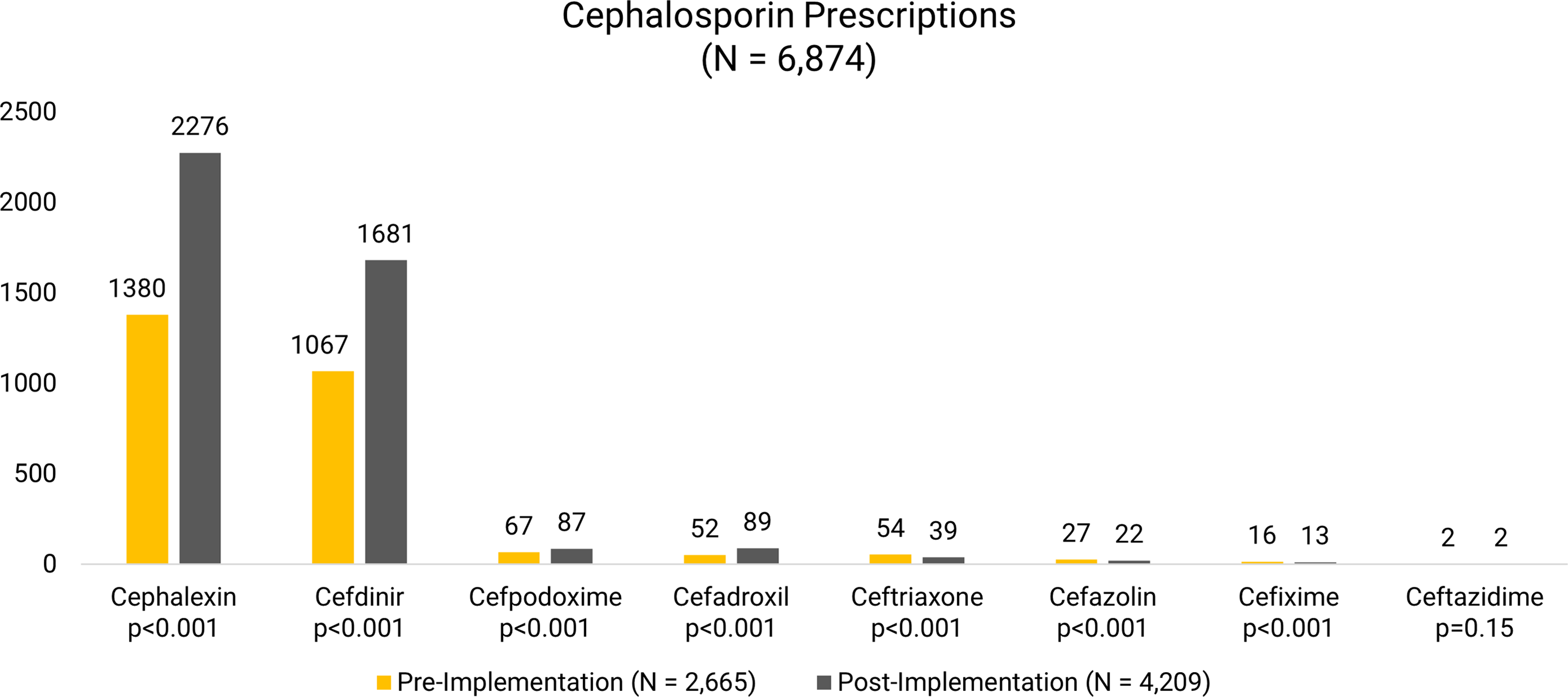
Cephalosporin prescriptions increased by 1,541, representing an increase from 23% to 32% of all antibiotic prescriptions for outpatients with penicillin allergy labels (Figure 1, P < .001). The most significant increases were observed in prescriptions for cephalexin and cefdinir, with cephalexin prescriptions rising from 1,380 pre-implementation to 2,276 post-implementation (P < .001) and cefdinir prescriptions increasing from 1,067 to 1,681 (P < .001). These results confirm a significant shift in prescribing patterns following the implementation of the alert limitation (Figure 2).
Percentage of antimicrobial prescriptions pre- and post-implementation. This figure illustrates the percentage distribution of different antimicrobial prescriptions in the pre- and post-implementation periods. Abbreviations: AG, aminoglycosides; CARB, carbapenems; CEPH, cephalosporins; CLND, clindamycin; FQ, fluoroquinolones; LZD, linezolid; MACR, macrolides; MTZ, metronidazole; MISC, miscellaneous (including oral vancomycin); NFT, nitrofurantoin; PCN, penicillins; SULF, sulfonamides; TETR, tetracyclines; VAN, vancomycin.

Cephalosporin prescriptions pre- and post-implementation. This figure shows the increase in cephalosporin prescriptions in the post-implementation period compared to the pre-implementation period.

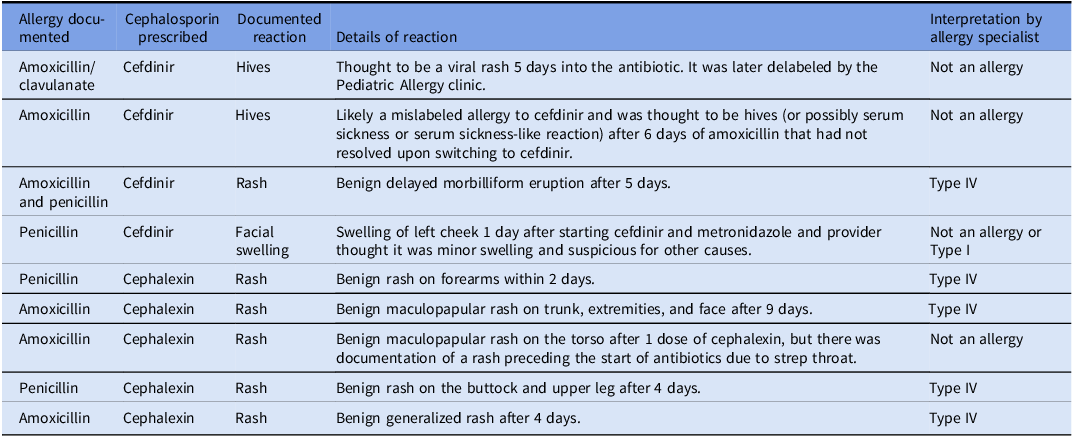
There was a nonsignificant, numeric increase in detected adverse events, from 5 in the pre-implementation period to 9 in the post-implementation period, representing a rise from 0.036% of cephalosporin prescriptions to 0.058% (P = .5465). Of the 9 reactions during the post-implementation period, 6 were reported as a rash, 2 as hives, and 1 as localized cheek swelling. After review of the records, 4 were deemed not to be an allergic reaction to the cephalosporin, with 1 of these as a possible Type I IgE-mediated reaction based on the timing. None of the reactions were related to the R1-structural similarity between the penicillin allergy label and the cephalosporin prescribed. There were no severe reactions, and no documented administrations of intramuscular epinephrine or emergency room visits to patients prescribed a cephalosporin in the setting of penicillin allergy label. A detailed breakdown of the cephalosporin reactions documented in the study and adjudicated by an allergist and pharmacist trained in drug allergy is provided in Table 2.
Reported cephalosporin reactions

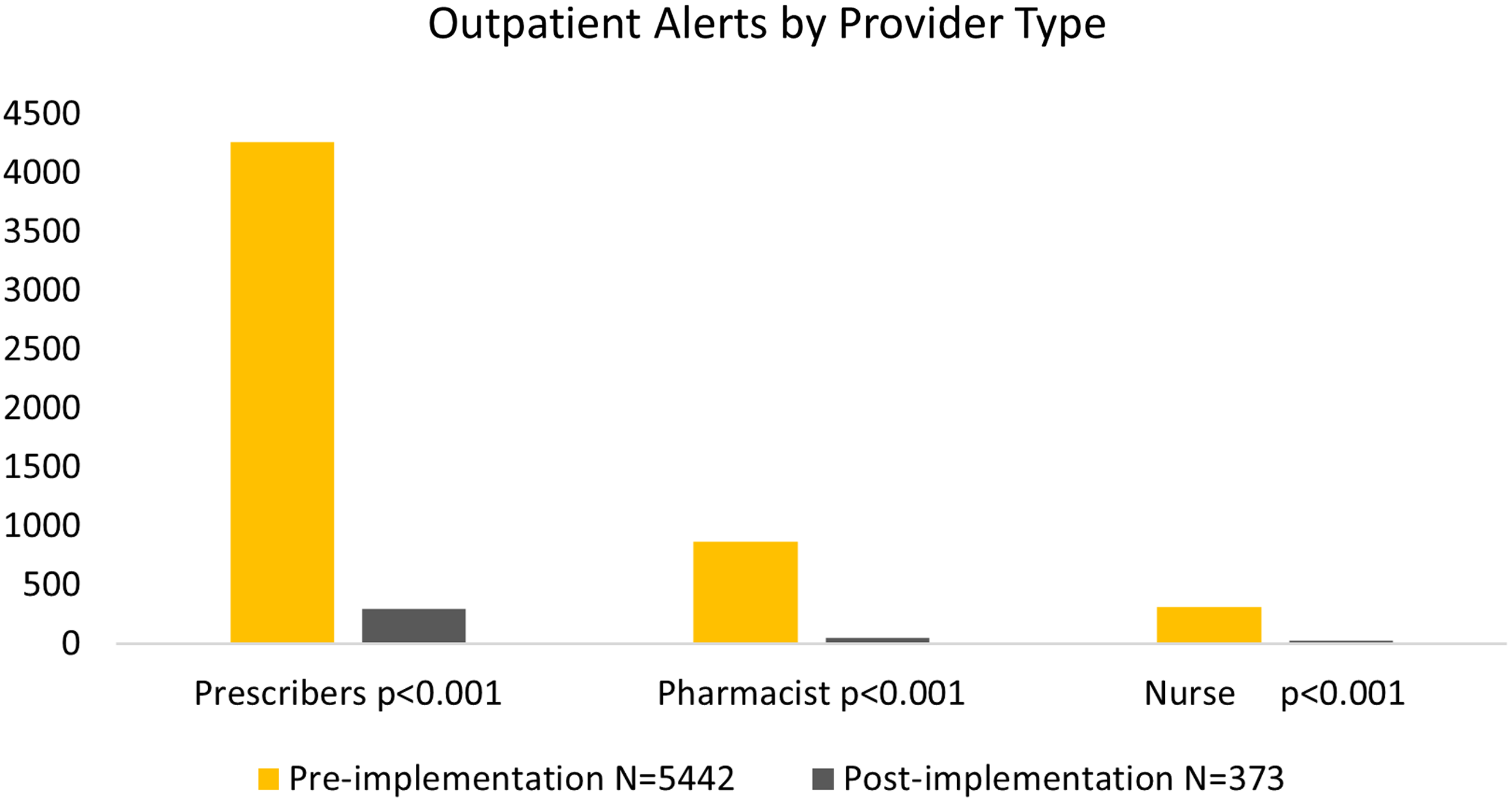
Figure 3 outlines the proportional change in alerts presented to each category of healthcare professional in the post-implementation cohort compared to the pre-implementation cohort. As demonstrated in the figure, there was an overall 93.18% decrease in alerts after the removal (P < .001). Specifically, the number of alerts shown decreased from 5,442 to 373, with significant reductions observed across all provider types. For example, alerts shown to prescribers decreased from 4,264 to 298. A significant difference in the proportions of alerts shown (decreased by 92.89%) before and after the implementation was observed (P < .001), indicating a statistically significant difference in alert suppression rates pre- and post-implementation.
Reduction in outpatient alerts by provider type pre- and post-implementation. This figure demonstrates the reduction in outpatient alerts categorized by provider type (eg, prescribers, pharmacist) following the modification of cross-reactivity alerts.

Analyses were also conducted to assess the impact of the implementation on antimicrobial prescriptions across different classes (Figure 1). Although an increase in cephalosporin prescriptions was seen, notable significant reductions were observed in clindamycin (P < .001), fluoroquinolones (P = .004), and sulfonamides (P < .001), highlighting significant changes in prescribing patterns across several antibiotic classes.
Discussion
This study demonstrates the successful and safe removal of a large portion of cross-reactivity alerts in the EMR among patients with penicillin allergies who were prescribed a cephalosporin in the outpatient setting. The alert reduction led to an 8% absolute increase in cephalosporin prescribing without a statistically significant increase in reported adverse events. Reassuringly, there was no evidence that anaphylaxis occurred, nor was there any necessity for emergent countermeasures such as emergency room visits or intramuscular epinephrine administration. All reported reactions were benign cutaneous reactions or questionable as true allergic responses and were all managed with minimal or no intervention. Most of these reactions are thought to be Type IV delayed morbilliform eruptions that would not be related to cross-reactions. Of the 2 reactions that might have been Type I IgE-mediated, the administered cephalosporin did not share a similar R1 side chain and may represent the possibility that some patients will be allergic to both penicillin and cephalosporins at baseline. Notably, approximately half of the cephalosporin prescriptions in this study were for cephalexin, which has structural similarities to penicillins. Despite these similarities, no significant increase in adverse events was observed, further supporting the safety of removing these cross-reactivity alerts. Considering the increase in cephalosporin use, a proportional increase in reactions might have been expected, but this was not observed. Considering the increase in cephalosporin use, a proportional increase in reactions is expected.
Overall, this study provides reassuring safety data, demonstrating that cross-reactive cephalosporin alerts can be substantially reduced for outpatients with a penicillin allergy label. Increased rates of cephalosporin prescribing even with agents that have structural similarity with commonly prescribed penicillins, such as cephalexin sharing a side chain with ampicillin, were not associated with any significant increase in severe adverse reactions in the outpatient setting. Reference Boesch, Eischen, Ries, Quinn, Dave and Beezhold4,Reference Macy, McCormick and Adams6
This study adds to the literature provided by Macy and colleagues, demonstrating the safe removal of cross-reactivity alerts. Reference Macy, McCormick and Adams6 Though our intervention did retain some exclusions for patients with a noted history of anaphylaxis or anaphylactic shock to penicillins, it was still able to affect a sizable number of patients. The decision to retain cross-reactivity alerts for these patients was due to an IT limitation: removing the alerts for anaphylaxis would have inadvertently affected cross-reactivity alerts for other non-beta-lactam medications, potentially compromising patient safety. It is also likely that the mix of antibiotics utilized differs slightly from those in other studies that have focused on whole health systems or individual antibiotics like cefazolin. Reference Boesch, Eischen, Ries, Quinn, Dave and Beezhold4,Reference Macy, McCormick and Adams6 This helps provide reassurance specific to the outpatient setting where patients are not under direct observation and may not have the same access to emergent treatment for anaphylaxis if necessary. Reference Bogus, McGinnis and Vergin5,Reference Macy12 Though clinical efficacy outcomes were not directly evaluated in this study, the higher rates of beta-lactam utilization likely improved the rates of guideline adherent therapy for commonly encountered infections. Reference Macy12
There are several limitations to this study. This is a retrospective cohort study with intrinsic potential for unmeasured confounders. One such confounder identified was medication shortages that could have affected antibiotic prescribing patterns during the study timeframe. Additional changes in clinical practice or provider mix could have also independently affected prescribing rates and thus not been directly attributable to intentional changes within the EMR. Indication for antibiotics was also not included in the data collection presenting an additional opportunity for imbalance between the 2 cohorts. Despite those potential confounders playing a role in the antibiotic selection, the safety metrics would remain meaningful regardless of how the decision was made to utilize a cephalosporin in the setting of a penicillin allergy label.
Another limitation is that the reaction data rely at least partially on human reporting of events and chart documentation, so absolute reaction rates are likely underestimated. However, our methodology included multiple avenues for capturing safety events, and importantly, this methodology was completely consistent across the cohorts including collection by a single person who was blinded to the intent of the study at the time of their independent case review. It is also suspected that reactions of higher severity would be the most likely to be captured effectively with reporting systems.
Lastly, as this study retrospectively assessed medications prescribed in the outpatient setting, there was no way to effectively assess patient adherence to antibiotic prescriptions. It is possible that some prescriptions were never actually delivered to the patient, but like other limitations, this should have been consistent between the pre- and post-implementation cohorts.
Conclusion
Through modification of the cross-reactive alerts between beta-lactam classes, a significant decrease in alerts was observed along with an increase in overall cephalosporin prescriptions in the outpatient setting. A statistically insignificant increase in adverse effects was observed, with none requiring emergent intervention.
The removal of penicillin cross-reactivity alerts appears to be a safe and effective strategy to optimize antibiotic use in patients with a history of penicillin allergy. This study supports a more balanced approach to managing such patients, potentially improving antibiotic stewardship and patient outcomes. Future research should focus on long-term monitoring of adverse events, further analysis of prescribing patterns, and exploration of the implications of these findings for clinical practice and guideline development.
Financial support
There was no funding support from any entity associated with this project.
Competing interests
All authors report no conflicts of interest relevant to this article.