As a result of social and economic changes that have taken place in recent decades, an increasing number of men and women to have must work to support their families (Gatrell et al., Reference Gatrell, Burnett, Cooper and Sparrow2014). As a result, both partners work outside the home and also share family responsibilities (Greenhaus et al., Reference Greenhaus, Callanan, Godshalk, Greenhaus, Callanan and Godshalk2000). Researchers have therefore devoted greater attention to the different ways in which work and family life are integrated (Allen et al., Reference Allen, Cho and Meier2014).
One of the modalities of this integration is associated with the work–family interface, which can be defined as a process in which work demands and resources influence family functioning, and vice versa (Demerouti et al., Reference Demerouti, Bakker and Voydanoff2010). Based on this definition, ten Brummelhuis and Bakker (Reference ten Brummelhuis and Bakker2012) proposed the Work–Family Resource Model, according to which work–family conflict (a process influenced by the demands coming from one of these contexts) and work–family enrichment (a process influenced by the resources from one of these contexts) are interconnected processes that must be addressed together. In other words, the resources and demands inherent to the family or work can exert themselves simultaneously, causing individuals to simultaneously experience the processes of work–family conflict and work–family enrichment (Grzywacz & Bass, Reference Grzywacz and Bass2003). However, studies that consider the simultaneous negative and positive aspects of the work–family interface remain scarce (Pereira et al., Reference Pereira, Vieira and Matos2017). To contribute to further clarification of this topic, the present study tested both the work–family conflict and the work–family enrichment process. Thus, we simultaneously analyzed how the demands (perceived demands) and a resource (social support) of one domain influence the outcome of the other domain (family satisfaction or job satisfaction).
Regarding the directions of the work–family interface processes, various authors have argued that conflict and enrichment are bi-directional; that is, they can occur from work to family or from family to work (Eby et al., Reference Eby, Casper, Lockwood, Bordeaux and Brinley2005; ten Brummelhuis & Bakker, Reference ten Brummelhuis and Bakker2012). However, studies addressing both directions (work-to-family effects and family-to-work effects) are scarce (Pereira et al., Reference Pereira, Vieira and Matos2017). Seeking to contribute toward a better understanding of this subject, the present investigation therefore employed two different studies to test the processes of conflict and enrichment from work to family as well as the processes of conflict and enrichment from family to work.
According to the Work–Family Resource Model (ten Brummelhuis & Bakker, Reference ten Brummelhuis and Bakker2012), personal resources mediate the relationships of the demands and the contextual resources of one domain with the outcomes of the other domain. This model also postulates that when personal resources are volatile (such as attention and positive affect), work–family conflict and enrichment become daily processes. Thus, the demands and resources of one domain (e.g., work) influence the daily outcomes of the other domain (e.g., family) through a change in volatile personal resources. However, research has ignored the temporal (i.e., daily) nature of work–family interactions due to the difficulty in analyzing the daily relationships of work with family or family with work using a single questionnaire (Martinez-Corts et al., Reference Martinez-Corts, Demerouti, Bakker and Boz2015). Therefore, one of the objectives of the present investigation was to examine the daily processes of conflict and enrichment from work to family and from family to work.
The Work–Family Resource Model also includes a broader view of results achieved in one or the other domain, which can be productive (efficiency and effectiveness, such as meeting goals at work or efficient performance of domestic tasks in the family), behavioral (behavior of the individual that affects their results, such as absenteeism at work or provision of a safe and stable domestic environment in the family) or attitudinal (beliefs and feelings that are valued by the individual, such as job and family satisfaction). The present study sought to analyze how the different directions of the work–family interface process can affect the individual’s beliefs and feelings. In this sense, job satisfaction and family satisfaction were included as possible attitudes in the investigated processes. Thus, we analyzed the ways in which perceived demands at work and in the family, as well as social support received at work and in the family, can alter individuals’ positive affects from one day to the next, and, as a result, cause changes in the individuals’ satisfaction with the other domain.
The Work–Family Resource Model (ten Brummelhuis & Bakker, Reference ten Brummelhuis and Bakker2012) also argues that the relationships of demands and contextual resources with personal resources can be moderated by key resources, which consist of more stable personality traits that facilitate the acquisition of more resources and the outflow of demands. However, the moderating role of key resources in such relationships has been neglected in extant research. We found only one study that tested such a role (Tement, Reference Tement2014). In this sense, the present study adopted the problem-solving strategy of coping as a key resource in order to gain a better understanding of how durable personality traits can change the relationships of resources and contextual demands with volatile personal resources. The problem-solving strategy of coping was adopted as a key resource in line with the Work–Family Resource Model, according to which these resources constitute some individuals’ motivation to deal with difficult circumstances and solve problems (ten Brummelhuis & Bakker, Reference ten Brummelhuis and Bakker2012).
In addition, coping can emerge as a trait and, according to Lazarus and Folkman (Reference Lazarus and Folkman1984), it can be conceptualized as an individual variable represented by the ways people commonly react to stress. As a trait, it can be said that a person "copes well" or "copes badly," and that coping works as a moderator. Thus, for people who "cope well," some positive relationships are strengthened whereas some negative relationships are weakened (Frese, Reference Frese, Appley and Trumbull1986).
Based on these arguments, it can be said that the present study expands the work–family interface literature in several ways, such as by addressing both conflict and enrichment work–family process in daily studies and by using key resources to test those relationships. Furthermore, we replace explicit measures of the work–family interface (such as the Work–Family Conflict Scale and the Work–Family Enrichment Scale), which focus strictly on diagnosing how work and family affect each other positively or negatively. As a practical contribution, organizations can benefit from the findings obtained here by developing interventions that help employees balance the realms of work and family, thereby increasing their quality of life both at work and at home.
The Daily Processes of Work-to-Family Conflict and Enrichment
According to ten Brummelhuis and Bakker (Reference ten Brummelhuis and Bakker2012), work–family conflict and enrichment are daily processes in which temporal contextual demands consume volatile personal resources, while contextual resources produce those volatile personal resources. The consumption or production of personal resources in one domain immediately impacts daily outcomes in the other domain.
Thus, for example, an individual who is assigned too many tasks at work and must work late as a result (work demand) tends to feel more tired that day than on other days (personal resources consumption). As a result, when getting home, they usually have less time and energy to participate in their family life (family outcome). On the other hand, the individual who receives emotional support from their spouse (family resource) on a specific day tends to exhibit a more positive mood (personal resource), and, upon arriving at work, will probably perform better that day (work outcome).
The daily processes of work–family conflict and enrichment have been analyzed in various studies (Bakker et al., Reference Bakker, Du and Derks2019; Brosch & Binnewies, Reference Brosch and Binnewies2018; Du et al., Reference Du, Derks and Bakker2018; Haar et al., Reference Haar, Roche and ten Brummelhuis2018; Ilies et al., Reference Ilies, Wilson and Wagner2009). However, only two of these studies (Brosch & Binnewies, Reference Brosch and Binnewies2018; Du et al., Reference Du, Derks and Bakker2018) refer to the Work–Family Resource Model. The study by Brosch and Binnewies (Reference Brosch and Binnewies2018) investigated the daily relationship of the work-to-life direction. Their results showed that daily time pressure was positively related to work–life conflict and negatively related to work–life enrichment; the daily psychological climate was negatively associated with work–life conflict and positively with work–life enrichment. Such relationships were mediated by vigor.
A study by Du et al. (Reference Du, Derks and Bakker2018), on the other hand, focused on the direction from family to work. Their findings showed that the resources of morning work were positively related to flourishing in the afternoon, when the levels of daily family problems were low, and that this relationship was not significant when the levels of daily family problems were high. In addition, daily rumination was found to diminish the relationship between morning work resources and afternoon flourishing. It is noteworthy that the two studies mentioned each addressed only one direction of the work–family interface. Seeking to extend this line of investigation and adopting the diary study methodology, the present study jointly addresses both directions of the daily processes of work–family conflict and enrichment by investigating the relationships among perceived demands, social support, positive affects, problem-solving coping strategies and satisfaction. As previously mentioned, these variables have not yet been studied simultaneously. To achieve this goal, the present study was divided into two studies that analyzed the work-to-family and the family-to-work interfaces. These studies are detailed below.
Study 1: The Daily Process of Work-to-family Conflict and Enrichment
According to the Work–Family Resource Model (ten Brummelhuis & Bakker, Reference ten Brummelhuis and Bakker2012), the work-to-family conflict is the process by which the presence of contextual demands at work tends to limit the use of work resources, which can negatively affect family outcomes. In the present study, the contextual demand adopted was the perceived demand at work, which can be defined as a perceptual construct about the individual’s perception of excessive responsibilities at work (Boyar et al., Reference Boyar, Carr, Mosley and Carson2007). Family satisfaction was adopted as an outcome variable and can be conceptualized as a cognitive process of positive evaluation of family life (Pavot & Diener, Reference Pavot, Diener and Fernández-Ballesteros2003).
According to the Work–Family Resource Model (ten Brummelhuis & Bakker, Reference ten Brummelhuis and Bakker2012), individual exhaustion would be expected when the individual perceives their work responsibilities as excessive (work demands) on a specific day. Consequentially, that person would be less capable of seeing their home environment as being pleasant. In other words, the demands of a day’s work can yield negative reactions and cause dissatisfaction at home (family outcome).
Consistent with such assumptions, empirical studies have indicated negative relationships between work demands and family well-being (Achour et al., Reference Achour, Grine, MohdNor and MohdYusoff2015; Liu et al., Reference Liu, Kwan, Lee and Hui2013; Skomorovsky et al., Reference Skomorovsky, Hujaleh and Wolejszo2015). Based on these considerations, the following hypothesis was formulated:
H 1: Perceived demands at work are negatively related to family satisfaction.
The process of enrichment from work to family, in turn, occurs when work resources positively influence (i.e., increase) family outcomes (ten Brummelhuis & Bakker, Reference ten Brummelhuis and Bakker2012). The present study adopted social support at work (i.e., the support an individual receives from their boss and coworkers) as a resource (Karasek & Theorell, Reference Karasek and Theörell1990). Thus, it would be expected that social support received on a particular working day would follow the individual home and incline them to positively evaluate their family life; that is, to feel more satisfied with their family (family outcome).
In accordance with these statements, various studies have demonstrated the positive relationships between social support at work and family well-being (Gabardo-Martins et al., Reference Gabardo-Martins, Ferreira and Valentini2021; Thompson & Prottas, Reference Thompson and Prottas2006). Within this framework, the following hypothesis was formulated:
H 2: Social support at work is positively associated with family satisfaction.
In addition, according to the Work–Family Resource Model (ten Brummelhuis & Bakker, Reference ten Brummelhuis and Bakker2012), personal resources are characterized as links between the domains of work and family. In this connection, these resources may become exhausted due to demands at work, or they may increase when work resources are available. In the current study, positive affects (i.e., individuals’ positive emotional reactions to life events) were used as a personal resource (Diener, Reference Diener1984).
It can be predicted, then, that the individual who perceives their work responsibilities as excessive on a particular day (work demand) tends not to experience many positive emotions that day (personal resource); that is, they will not enjoy all the benefits of positive affects, which could ultimately reduce their family satisfaction (family outcome). In line with these assumptions, empirical studies have demonstrated the mediating effect of personal resources on the relationships between contextual demands and well-being (Slöetjes, Reference Slöetjes2012). In light of this connection, the following hypothesis was formulated:
H 3: Positive affect mediates the negative relationship of perceived work demands with family satisfaction.
On the other hand, it can be assumed that people who feel supported by managers and co-workers on a given day (work resource) will develop more positive emotions on that day (personal resource), which, in turn, would incline them to experience greater satisfaction in the family (family outcome). In line with such assertions, some empirical research has highlighted the mediating role of personal resources in the relationships between contextual resources and well-being (Carlson et al., Reference Carlson, Hunter, Ferguson and Whitten2014; Gabardo-Martins et al., Reference Gabardo-Martins, Ferreira and Valentini2017a; Song et al., Reference Song, Kong and Jin2013; Tement, Reference Tement2014). Based on these considerations, the following hypothesis was formulated:
H 4: Positive affect mediates the positive relationship of social support at work with family satisfaction.
The Work–Family Resource Model (ten Brummelhuis & Bakker, Reference ten Brummelhuis and Bakker2012) also suggests that key resources (personality traits, which are more stable than personal resources) act as moderators in the relationships of contextual demands at work and contextual resources at work with personal resources. From this perspective, key resources tend to attenuate the negative relationships between contextual demands at work and personal resources, as well as enhancing the positive relationships between contextual work resources and personal resources. The present study adopted coping skills as a key resource. Coping was chosen as a key resource because, when an individual experience a stressful period (for example, at work or in the family), different constructs can influence positive affect; this influence can be determined by an individual’s ability to use coping strategies (Folkman & Moskowitz, Reference Folkman and Moskowitz2000).
Coping skills have been defined by Folkman and Lazarus (Reference Folkman and Lazarus1985) as thoughts and actions that individuals use to manage the internal or external demands inherent to a specific stressful situation. According to those authors, coping can be divided into eight factors, namely: confrontation, withdrawal, self-control, social support, responsibility acceptance, avoidance, problem-solving and positive reevaluation. In the present study, the problem-solving factor alone was used as a key resource, because, according to ten Brummelhuis and Bakker (Reference ten Brummelhuis and Bakker2012), the key resources constitute the motivation that enables some individuals to deal with stressful situations and solve problems more successfully than others. Moreover, an individual’s success at using the problem-solving strategy can strengthen the adaptive functions of positive affects (Folkman & Moskowitz, Reference Folkman and Moskowitz2000).
In the case of the work-to-family conflict process, it is expected that individuals who use problem-solving coping strategies in stressful work situations (key resource) on a particular day tend to perceive less overload on that day due to the demands associated with excess responsibilities (demand at work). As a result, the influence of these demands on such individuals’ positive emotions (personal resource) on that day would be weaker. Various empirical studies that confirm these assumptions have shown that the relationships of contextual demands with personal resources are weaker in individuals with positive personality characteristics (Novaes et al., Reference Novaes, Ferreira and Valentini2018; ten Brummelhuis et al., Reference ten Brummelhuis, ter Hoeven, Bakker and Peper2011). Thus, the following hypothesis was formulated:
H 5: Problem-solving coping strategies moderate the relationship between perceived demands at work and positive affects, in the sense that this relationship is weaker in individuals who use such strategies.
On the other hand, in the case of the work–family enrichment process, it would be expected that the individual who can solve the problems caused by stressful situations on a particular workday (key resource) would tend to make better use of the social support received from co-workers on that day (work resource). Thus, the relationship of social support with the individual’s positive affects (personal resource) would be strengthened on that day. Empirical studies have corroborated this hypothesis by showing that the relationships of contextual resources with personal resources are stronger among those with positive personality characteristics (Novaes et al., Reference Novaes, Ferreira and Valentini2018; Tement, Reference Tement2014; ten Brummelhuis et al., Reference ten Brummelhuis, ter Hoeven, Bakker and Peper2011). Based on these considerations, the following hypothesis was formulated:
H 6: Problem-solving coping strategies moderate the relationship between social support at work and positive affect, in the sense that this relationship is stronger in individuals who use such strategies.
Method
Sample and Procedures
The investigation was submitted to the Research Ethics Committee of the authors’ institution and, after approval, data collection was performed online. To this end, a form was created in the Google Docs application containing the instruments used in the investigation, and participants expressed their agreement by filling out the Informed Consent Form. Workers were invited to participate in the survey voluntarily through the Facebook application. The inclusion criterion of the sample was that the individual was working and was married and/or had children at the time of applying the instruments, because the purpose of this study was to investigate daily fluctuations in work–family relationships. In response to the invitation, 150 people agreed to participate in the survey by sending their WhatsApp mobile number via Facebook message. Of this total, 103 answered all instruments administered daily for ten consecutive working days.
The sociodemographic questionnaire was administered only on the first day of the investigation, whereas the other instruments were forwarded every day of the week, starting on Monday and ending on Friday, for two consecutive weeks. Participants received reminders to complete the questionnaire and were asked to answer it at the end of each workday. Thus, the variables were assessed about an hour after people returned home from work. To this end, a table was generated with each working participant’s information, so that the link to the questionnaire was sent at the correct time for each one. It is worth considering that, perhaps for Brazilian cultural reasons, most respondents left their jobs at 5:00 p.m.
The sample consisted of 103 male and female workers from 17 Brazilian states and the Federal District, with a majority responding from the states of São Paulo (24.3%), Rio de Janeiro (20.4%) and Rio Grande do Sul (11.7%). Of those participants, 64.1% were women. With regard to marital status, a majority of the participants (58.3%) were married and 35.9% were single. Most of the participants (81.6%) reported having children. Of the total participants, 52.4% worked in the private sector, with 34% working in the field of education, 17.5%, in services and 14.6% in the health field; the rest were distributed among industry, research, and other fields. With regard to organizational level, 61.2% were administrative/operational employees, with the rest being distributed among supervisors, freelancers, directors/owners and managers. The participants’ ages ranged from 20 to 61 years (M = 33.68; SD = 9.13), and the total length of employment ranged from 1 to 44 years (M = 10.81; SD = 8.25). Each participant responded to the questionnaire for ten days, totaling 1,030 responses.
Instruments
Data were collected daily through instruments designed to measure each of the study variables. The items were adapted to evaluate the daily fluctuations of the variables. Thus, the phrase “Today…” was added at the beginning of each item, and all items were phrased in the past tense.
Perceived work demands were measured by the work factor of the Brazilian version of the Perceived Work and Family Demands Scale (Boyar et al., Reference Boyar, Carr, Mosley and Carson2007), validated by Gabardo-Martins and Ferreira (Reference Gabardo-Martins and Ferreira2019). This consists of five items to be answered using a five-point Likert scale, ranging from strongly disagree (1) to strongly agree (5). Item example: "Today, my job demanded all my attention." The subscale exhibited internal consistency indices in the form of Cronbach’s alpha ranging from .88 to .97 (M = .93) in the ten days of application.
Social support at work was measured by the Social Support at Work subscale of the Perceived Organizational Support Scale (Tamayo et al., Reference Tamayo, Pinheiro, Tróccoli and Paz2000), consisting of five items, answered using a five-point Likert scale, ranging from never (1) to always (5). Item example: “Today, my group has been concerned about the welfare of co-workers.” The subscale exhibited internal consistency indices in the form of Cronbach’s alpha ranging from .91 to .97 (M = .95) in the ten days of application.
Positive affect was accessed through the Positive Affects subscale of the Affects Scale (Zanon et al., Reference Zanon, Bastianello, Pacico and Hutz2013), consisting of ten items, answered using a five-point Likert scale, ranging from does not fit me at all (1) to describes me perfectly (5). Item example: "I felt confident today." The subscale exhibited internal consistency indices in the form of Cronbach’s alpha ranging from .90 to .97 (M = .95) in the ten days of application.
Family satisfaction was measured by the Family Satisfaction Scale (Aryee et al., Reference Aryee, Fields and Luk1999), consisting of six items, answered using a five-point Likert scale, ranging from strongly disagree (1) to strongly agree (5). Item example: “Today I am excited about my family.” The scale exhibited internal consistency indices in the form of Cronbach’s alpha ranging from .88 to .96 (M = .93) in the ten days of application.
Problem-solving coping strategies were accessed by the problem-solving factor of the Coping Strategy Inventory (Savóia et al., Reference Savóia, Santana and Mejias1996). The subscale consists of four items, answered using a four-point Likert scale, ranging from I did not use this strategy (1) to I used it extensively (4). Item example: “Today I made a plan and followed it.” The subscale exhibited internal consistency indices in the form of Cronbach’s alpha ranging from .80 to .96 (M = .92) in the ten days of application. To collect sociodemographic information, a questionnaire was used to elicit data about the following: age, gender, marital status, whether the respondent had children, state of residence and total time of employment.
Data Analysis Procedures
The data had a hierarchical structure that aggregated daily assessments (intra-subject level) by individual (inter-subject level). Data analysis was performed using the Multilevel Structural Equation Modeling (MSEM) using the Mplus program (version 7.11). Initially, Multilevel Confirmatory Factor Analysis (MCFA) was performed for each instrument to test whether the one-factor structure of each instrument would be confirmed. Next, a test model of five distinct and correlated factors was run to ensure that the five latent variables were represented by their relevant items. The factor loadings were set as equal between the levels to maintain measurement invariance (Kim et al., Reference Kim, Dedrick, Cao and Ferron2016).
Then, the analysis of correlations at the intra-subject and inter-subject levels was run and the structural model was tested to verify the hypotheses. In this test, the independent variables (perceived work demand and social support at work) and the moderating variable (problem-solving coping strategy) were set as observed variables by averaging the respective items. In all tested models, the time variable was inserted at the intra-subject level, as recommended by Hox and Bechger (Reference Hox and Bechger1998), for analysis of multilevel models of repeated measures. To estimate the mediating variable (positive affect) and the dependent variable (family satisfaction), three parcel items were created for each variable. To compose the parcels, the correlations between the items were considered, as were the differences in intercepts. This last rule was considered to maintain the variability of the endorsement in each portion. The use of observed variables and parcel items is justified by the number of parameters to be estimated in a latent moderation model (Valentini et al., Reference Valentini, Mourão and Franco2018).
The parameters of the models were estimated using the Robust Maximum Likelihood (RML) method, which was found to be robust to the violation of the assumption of normal data distribution. Following Byrne’s (Reference Byrne2010) suggestion, the following fit indices were analyzed: chi-square (which tests the difference between the empirical matrix and the theoretical model matrix; the higher the value of χ2, the worse the fit); Root-Mean-Square Error of Approximation (RMSEA; must be below .08, accepting values up to .10); Tucker–Lewis Index (TLI; models with values above .90 are considered acceptable); and Comparative Fit Index (CFI; values above .90 are considered acceptable).
The variables “gender,” “having or not having a child,” “marital status,” and “age” were entered as control variables. These control variables were included to prevent their interference in the relations between the independent variables and the criterion variable.
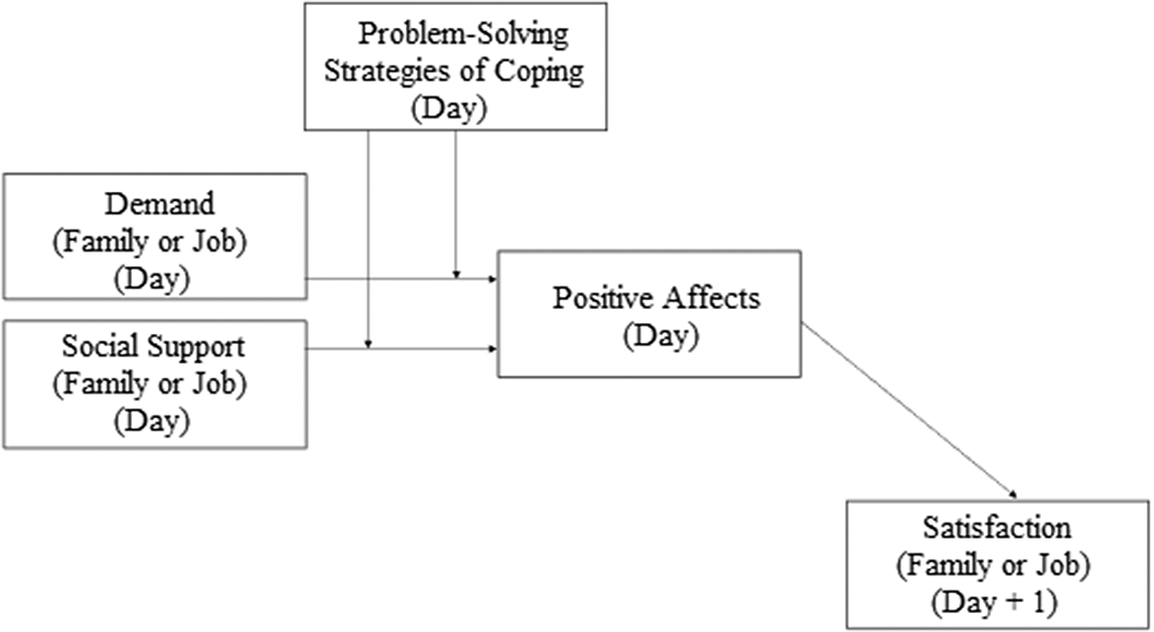
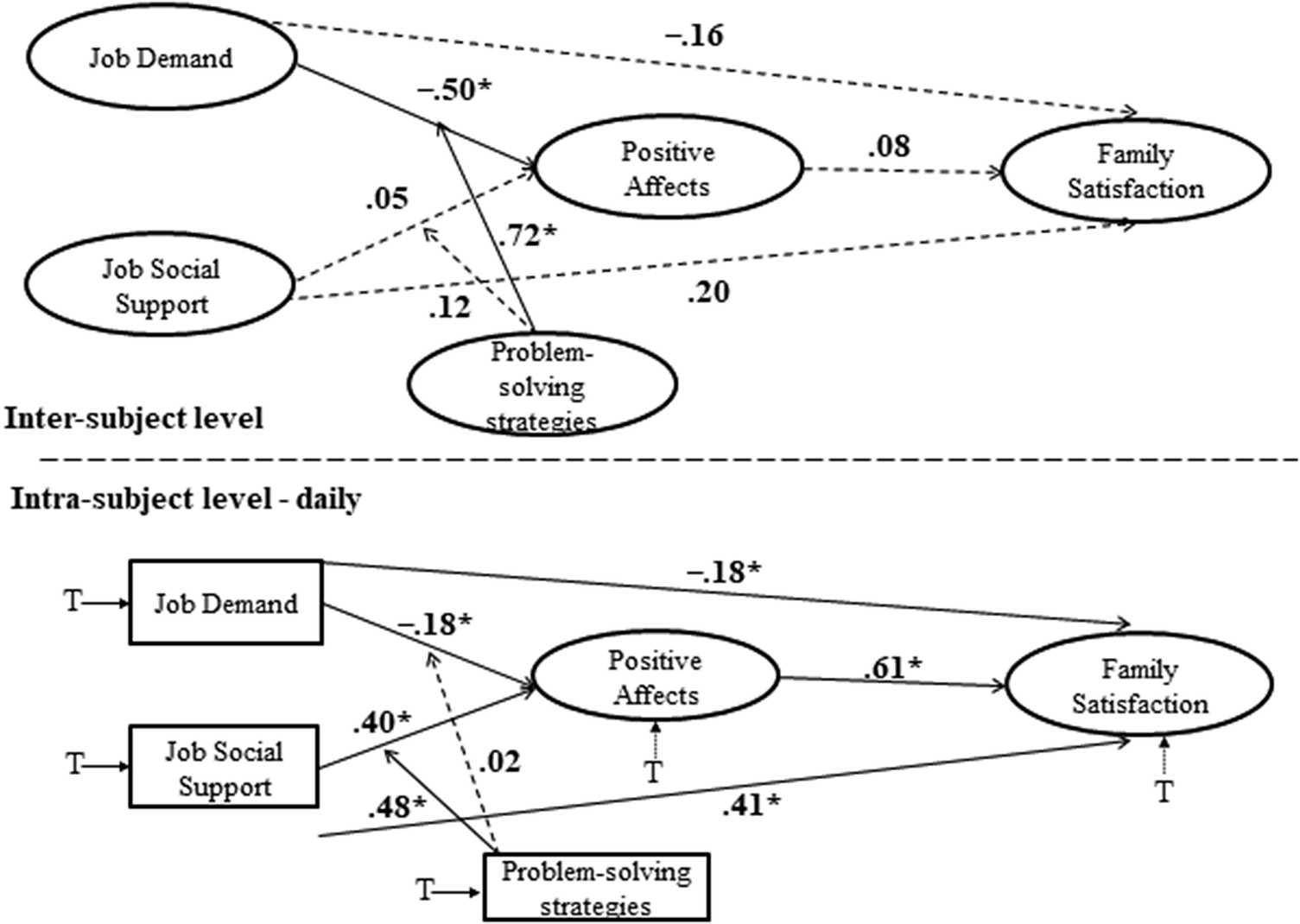
We used Cross-Lagged Panel Analysis to test the prediction of work satisfaction at the time T, using variables at time T–1. Figure 1 shows the graphical representation of the model tested in the Cross-Lagged Panel Analysis in Study 1. In this analysis, the independent mediator and moderator variables were group-mean centered.
Graphical Representation of the Models Tested in the Cross-Lagged Panel Analysis

Results
Multilevel Confirmatory Factor Analysis (MCFA)
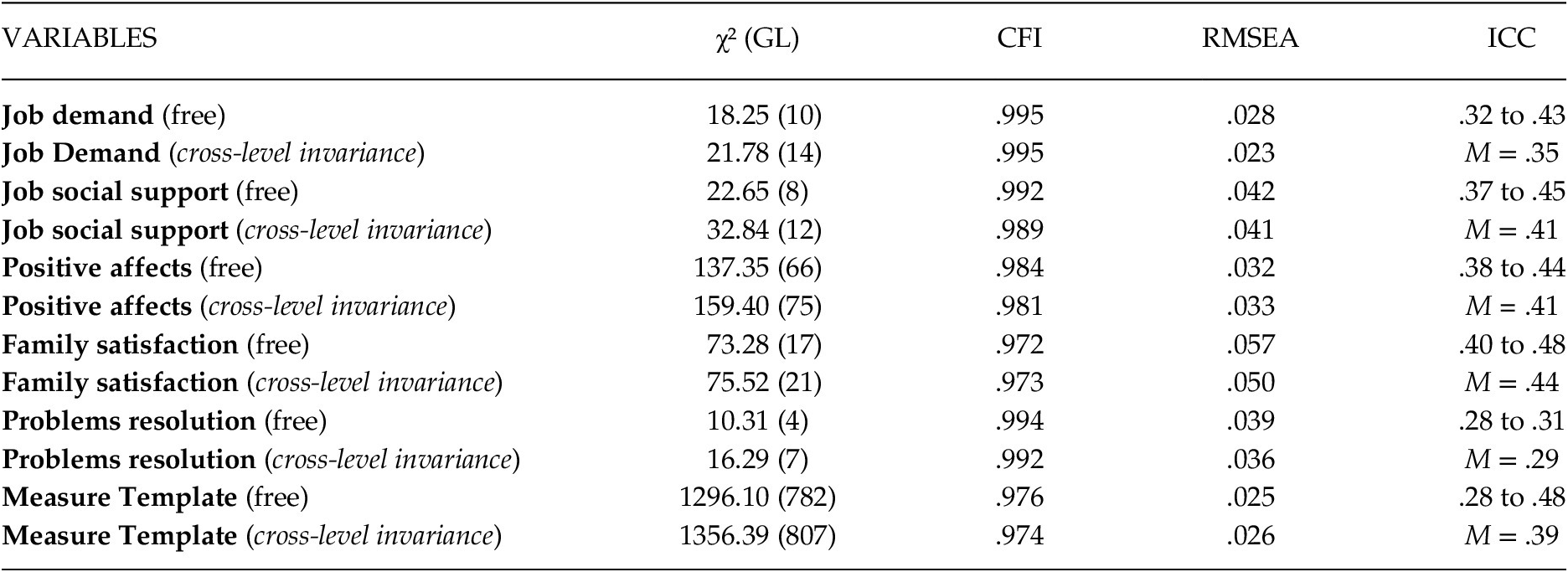
As suggested by Kim et al. (Reference Kim, Dedrick, Cao and Ferron2016), for each variable and for the measurement model, two MCFAs were run: The first tested a model with free loadings between the levels, and the second tested a model with restricted factor loadings as equal between levels (cross-level invariance). As can be seen in Table 1, all models presented adequate goodness of fit. The table also presents the results of the Intraclass Correlation Estimates (ICC), which indicated an adequate clustering effect for using the Multilevel Structural Equation Modeling in subsequent analyses.
MCFAs and ICC Results in the Work to Family Interface

Hypothesis Test
Initially, correlations at the intra-subject and inter-subject levels were analyzed; these results are shown in Table 2. In the test of relationships among the variables, it was verified that “gender,” “having or not having a child,” “marital status,” and “age” did not significantly affect the main results. Thus, the final analyses were performed without those control variables.
Correlation in the Study of the Work to Family Interface

Note. Number of workers = 103. The lower diagonal shows the correlations between variables at the intra-subject level. In the upper diagonal, correlations are presented at the level enter-subject.
* p < .05. **p < .001.
The hypotheses of this research suggest that one part of the variance in family satisfaction can be explained by daily variations within the individual, while another part can be attributed to variations among individuals. Model 1 tested the direct effect of independent variables on family satisfaction at both levels. At the intra-subject level, perceived work demand had a significant and negative relationship with family satisfaction (β = –.38; p < .001), whereas social support at work showed a significant and positive relationship with family satisfaction (β = .76; p < .001). However, those variables did not show significant relationships with the dependent variable at the inter-subject level. These results indicate that only daily fluctuations of the independent variables were associated with the daily fluctuations of the DV, even controlling the effect to the inter-subject level, which supports Hypotheses 1 and 2.
Model 2 tested the mediating effect of positive affects on the relationships between independent variables and family satisfaction. At the intra-subject level, the results showed that the relationships between perceived work demand (β = –.42; p < .001) and social support at work (β = .68; p < .001) with positive affects were significant, as was the relationship of positive affects (β = .41; p < .001) with family satisfaction. In addition, the relationships of perceived work demand (β = –.21; p < .001) and social support at work (β = .48; p < .001) with family satisfaction were partially mediated by positive affects, because the indirect effects (perceived work demands – positive affects – family satisfaction = –.42; p < .001; social support at work – positive affects – family satisfaction = .65; p < .001) were significant. In the presence of the moderator variable, the conditional indirect effects were: perceived work demands – positive affects – family satisfaction = –.80; p < .001; social support at work – positive affects – family satisfaction = .27; p < .001. These relationships, however, were not significant at the inter-subject level. These findings provide evidence that daily fluctuations of positive affects partially mediate the relationships of daily fluctuations in perceived work demand and social support at work with daily fluctuations in family satisfaction, which sustained Hypotheses 3 and 4.
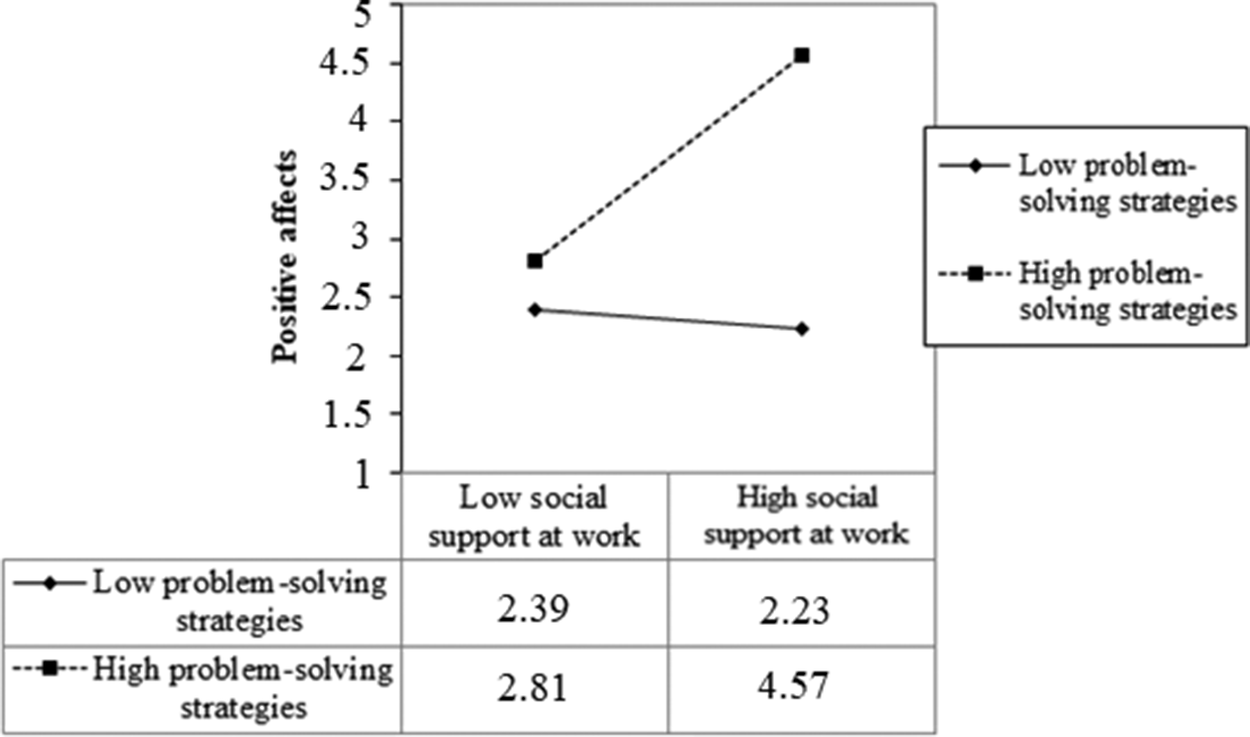
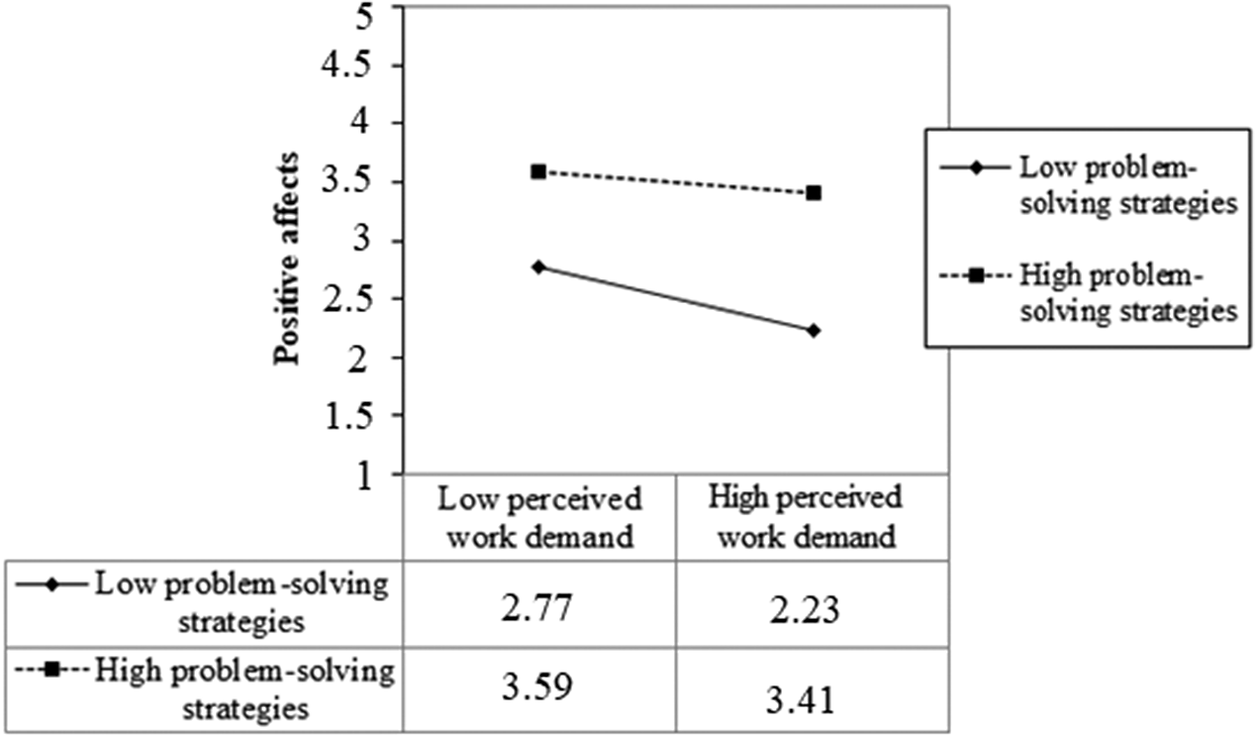
In Model 3, we tested problem-solving coping strategies as a moderator of the relationships between the independent variables and the mediating variable. At the intra-subject level, problem-solving coping strategies did not moderate the negative relationship of perceived work demand with positive affects, but did moderate the positive relationship of social support at work with positive affects (β = .48; p < .001), strengthening it (Figure 2). However, at the inter-subject level, the use of problem-solving coping strategies moderated the negative relationship of perceived work demand with positive affects (β = .72; p < .001), making it weaker (Figure 3), although it did not moderate the positive relationship of social support at work with positive affects. In order to better understand how to interpret the moderating effects, the effects of simple slopes were tested using the procedures indicated by Preacher et al. (Reference Preacher, Curran and Bauer2006); these effects are shown in Figures 2 and 3. These results indicate that daily fluctuations in the use of problem-solving coping strategies did not moderate the relationship of daily fluctuations of perceived work demand with positive affects, which did not support Hypothesis 5. Moreover, these results indicate that daily fluctuations in the use of problem-solving coping strategies moderated the relationship between daily social support fluctuations at work and positive affects, making it stronger, which supports Hypothesis 6. The time variable inserted at the intra-subject level had no significant association with the dependent variable. Nevertheless, maintaining this parameter in the model is important for controlling the variance of the intra-individual level. To help interpret the effect sizes, Figure 4 shows the entire model and standardized regression parameters.
Problem-Solving Strategies of Coping as a Moderator in the Relation between Social Support at Work and Positive Affects at the Intra-Subject Level

Problem-Solving Strategies of Coping as a Moderator in the Relation between Perceived Work Demand and Positive Affects at the Inter-Subject Level

Graphical Representation of the Final Model, with Standardized Parameters
Note. Model adjustment indices: χ²(df) = 188.49 (66); CFI = .97; TLI = .96; RMSEA = .04.
* significant (p < .05); the item portion of the mediating variable and of the dependent variable have been omitted.

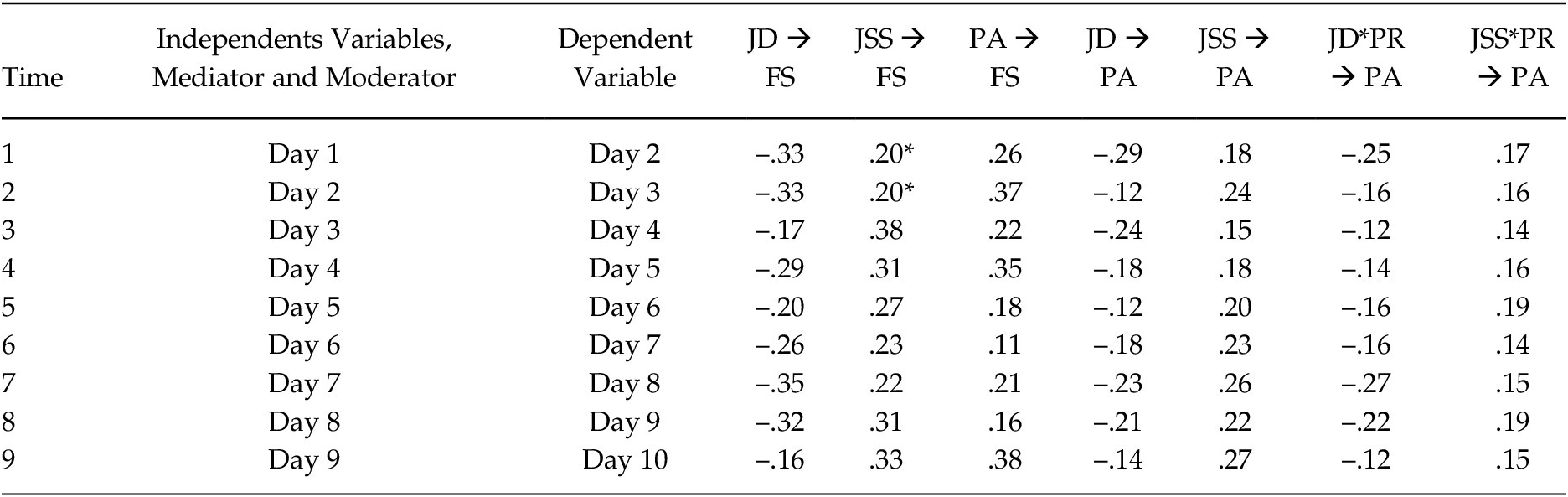
Considering perceived work demand, social support at work, positive affects and problem-solving strategies of coping variables tested in one day, and family satisfaction tested the following day, Cross-Lagged Panel Analysis demonstrated that perceived work demand, social support at work and positive affects have significant relationships with family satisfaction. Moreover, perceived work demand and social support at work showed significant relationships with positive affects. These latter relationships were moderated by problem-solving coping strategies over the nine different times tested; these results are shown in Table 3.
Results of Cross-Lagged Panel Analysis, in the Study of the Work to Family Interface

Note. JD = Job Demand; JSS = Job Social Support; PA = Positive Affects; FS = Family Satisfaction; PR = Problems Resolution. * Not significant.
Study 2: The Daily Process of Family-to-work Conflict and Enrichment
Unlike Study 1, which dealt with the daily processes of conflict and enrichment from work to family, this second study addressed the opposite direction; that is, it analyzed the daily processes of conflict and enrichment from family to work. With regard to the family-to-work conflict, the perceived demands of the family, which refers to how much responsibility individuals perceive themselves to have towards their family (Boyar et al., Reference Boyar, Carr, Mosley and Carson2007), was adopted as the contextual demands of the family. To represent the outcome of the work context, job satisfaction was chosen, which can be described as a pleasant or positive emotional produced by evaluation of work experiences (Parvin & Kabir, Reference Parvin and Kabir2011).
According to the Work–Family Resource Model (ten Brummelhuis & Bakker, Reference ten Brummelhuis and Bakker2012), it would be expected that when the individual perceives themselves as having a high level of family responsibility on a given date (family demands), this tends to negatively affect the individual’s daily work outcomes, in the sense that they do not feel satisfied in their work environment (work outcome). In line with such assertions, empirical studies have found a negative relationship between family demands and well-being at work (Achour et al., Reference Achour, Boerhannoeddin and Khan2011; Achour et al., Reference Achour, Grine, MohdNor and MohdYusoff2015; Araújo & Veiga, Reference Araújo and Veiga2015). Thus, the following hypothesis was formulated:
H 7: Perceived family demands are negatively associated with job satisfaction.
Considering the process of enrichment from family to work, the perceived social support in the family—which refers to how much support individuals perceive themselves to receive from their family members (Zimet et al., Reference Zimet, Dahlem, Zimet and Farley1988)—was used as the contextual resource of the family. According to the Work–Family Resource Model (ten Brummelhuis & Bakker, Reference ten Brummelhuis and Bakker2012), the daily social support offered by family members would be expected to incline the individual to experience family life as satisfying on the days they received such support (family resource). Such resources acquired in the family context would be transferred to the work context, thus promoting job satisfaction (work outcome).
In line with these statements, a number of studies have shown the positive relationship between social support in the family and well-being at work (Gabardo-Martins et al., Reference Gabardo-Martins, Ferreira and Valentini2017a; Tement, Reference Tement2014). Drawing on this connection, the following hypothesis was formulated:
H 8: Perceived social support in the family is positively associated with job satisfaction.
The present study also adopted positive affects as a personal resource. In this connection, it was assumed that an individual who perceives, on a given day, that they have many responsibilities in their family (family demand) may experience a decrease in their positive emotions on that day (personal resource), which would lead to a reduction in job satisfaction (work outcome). In line with these comments, empirical studies have shown the mediating role of personal resources in the relationships between contextual demands and well-being (Slöetjes, Reference Slöetjes2012). The following hypothesis was therefore formulated:
H 9: Positive affect mediates the negative relationship of perceived family demands at job satisfaction.
In contrast, in the case of enrichment from family to work, one would expect that individuals who feel support from their family members on a given day (family resource) will experience more positive emotions on that day (personal resource), leading to greater satisfaction in the work context (work outcome). In line with such statements, some empirical research has highlighted the mediating role of personal resources in the relationships between contextual resources and well-being (Carlson et al., Reference Carlson, Hunter, Ferguson and Whitten2014; Gabardo-Martins et al., Reference Gabardo-Martins, Ferreira and Valentini2017a; Song et al., Reference Song, Kong and Jin2013; Tement, Reference Tement2014). Based on these considerations, the following hypothesis was formulated:
H 10: Positive affect mediates the positive relationship of perceived social support in the family at job satisfaction.
The key resource adopted in the study of the family-to-work interface was also the problem-solving coping strategies. According to the Work–Family Resource Model (ten Brummelhuis & Bakker, Reference ten Brummelhuis and Bakker2012), it is to be expected that a person who uses problem-solving strategies to deal with stressful family situations (key resource) suffers less impact from daily family demands. Consequently, these demands would have less impact on their positive emotions that day (personal resource).
Corroborating such assertions, various empirical investigations have shown that the relationships between contextual demands and personal resources are weaker in individuals with positive personality characteristics (Novaes et al. Reference Novaes, Ferreira and Valentini2018; ten Brummelhuis et al., Reference ten Brummelhuis, ter Hoeven, Bakker and Peper2011). Thus, the following hypothesis was formulated:
H 11: Problem-solving coping strategies moderate the relationship between perceived demands in the family and positive affects, weakening this relationship for individuals who use such coping strategies.
On the other hand, in the work-to-family enrichment process, one may assume that an individual who can solve the problems caused by stressful situations on a given day (key resource) tends to take better advantage of the social support received from their family members on that day (family resource). Thus, the daily relationship of social support with positive affects (personal resource) would be strengthened. Empirical studies have confirmed such statements by showing that the relationship of contextual resources to personal resources is stronger among those with positive personality characteristics (Novaes et al., Reference Novaes, Ferreira and Valentini2018; Tement, Reference Tement2014; ten Brummelhuis et al., Reference ten Brummelhuis, ter Hoeven, Bakker and Peper2011). The following hypothesis was therefore formulated:
H 12: Problem-solving coping strategies moderate the relationship between perceived social support in the family and positive affects, strengthening this relationship for individuals who use such coping strategies.
Method
Sample and Procedures
The data collection procedures in this study were the same as those used in the first study. In addition, the present study also used the same data analysis procedures as the first study. However, the sample used in this study was different from the sample used in the first study, as described below.
The sample consisted of 101 male and female workers from 15 states in Brazil and the Federal District, with a majority responding from the states of São Paulo (23.8%), Rio de Janeiro (19.8%) and Minas Gerais (13.9%). A majority of the respondents were women (64.4%). With regard to marital status, a majority were married (59.4%), while 30.7% were single. Most respondents (80.2%) reported having children. Of the total participants, 56.4% worked in the private sector, with 28.7% in services, 24.7% in education, 18.8% in the health field, and the rest distributed among industry, research and other fields. With regard to the organizational level, 60.4% were administrative/operational employees, with the rest distributed among supervisors, freelancers, directors/owners and managers. Participants’ ages ranged from 20 to 62 years (M = 33.77; SD = 8.46), and total length of employment ranged from 1 to 50 years (M = 11.57, SD = 9.37). Each participant responded to the questionnaire for ten days, totaling 1,010 responses.
Instruments
As in the previous study, data were collected on a daily basis using instruments that measured the study variables. Thus, the sentence “Today…” was also added at the beginning of each item, and the items were phrased in the past tense. In addition, the sociodemographic questionnaire and the instruments for measuring positive affects (Internal Consistency Indices calculated by Cronbach’s alpha ranging from .93 to .97, with an average of .96 over the ten days of application) and the problem-solving coping strategies (Internal Consistency Indices calculated by Cronbach’s alpha ranging from .79 to .96, with an average of .92 over the ten days of application) were the same as those used in the first study.
The perceived demands of the family were measured by the family factor of the Brazilian version of the Perceived Work and Family Demand Scale (Boyar et al., Reference Boyar, Carr, Mosley and Carson2007), validated by Gabardo-Martins and Ferreira (Reference Gabardo-Martins and Ferreira2019). This factor consists of four items to be answered using a five-point Likert scale, ranging from strongly disagree (1) to strongly agree (5). Item example: “I had a lot of responsibilities in my family today.” The subscale exhibited internal consistency indices in the form of Cronbach’s alpha ranging from .84 to .95 (M = .92) in the ten days of application.
The perceived social support of the family was assessed by the family factor of the Brazilian version of the Multidimensional Perceived Social Support Scale (Gabardo-Martins, Ferreira, & Valentini, Reference Gabardo-Martins, Ferreira and Valentini2017b). This factor consists of four items to be answered using a seven-point Likert scale, ranging from strongly disagree (1) to strongly agree (7). Item example: “Today my family has truly tried to help me.” The subscale exhibited internal consistency indices in the form of Cronbach’s alpha ranging from .93 to .97 (M = .96) in the ten days of application.
Job satisfaction was measured by the Job Satisfaction Scale (Silva & Ferreira, Reference Silva and Ferreira2009), which consists of five items answered using a five-point Likert scale, ranging from strongly disagree (1) to strongly agree (5). Item example: “Today, I was satisfied with my current work.” The scale exhibited internal consistency indices in the form of Cronbach’s alpha ranging from .92 to .96 (M = .94) in the ten days of application.
Results
Multilevel Confirmatory Factor Analysis (MCFA)
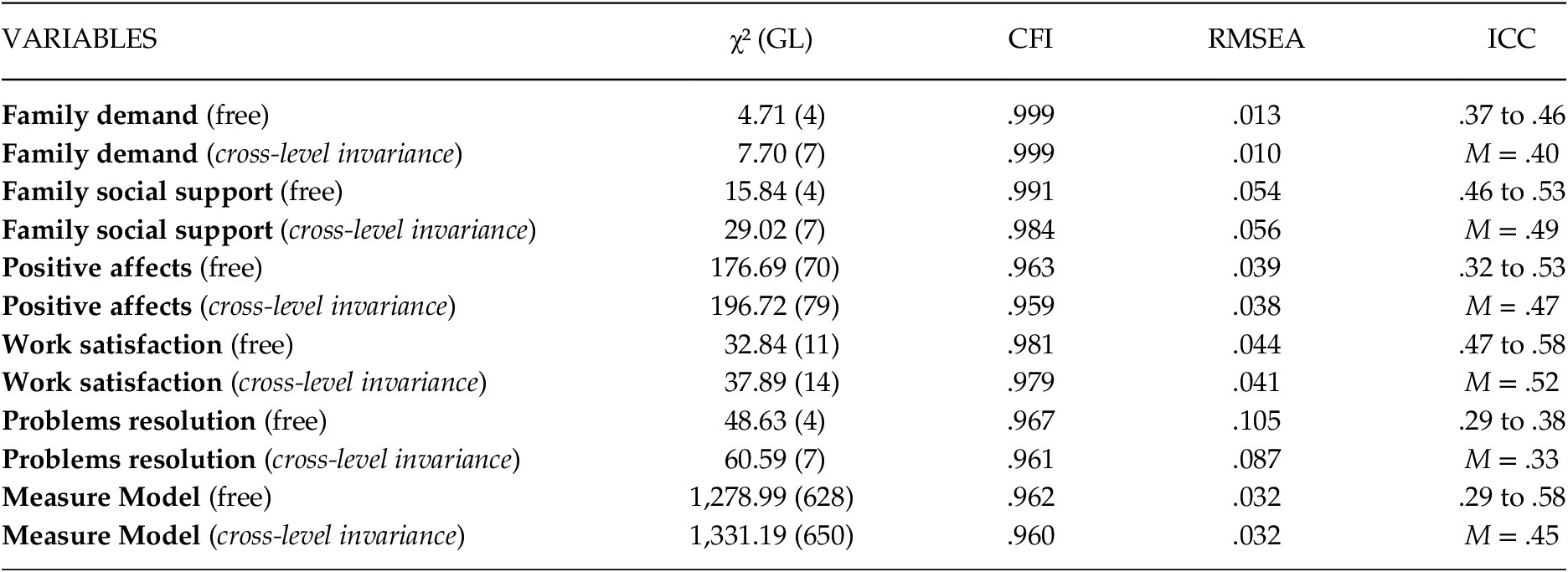
First, the internal structure of each scale and the cross-level invariance were tested. Table 4 presents the results of these models, showing that they presented adequate goodness of fit. The results of the ICC estimates indicated an adequate clustering effect for the use of Multilevel Structural Equation Modeling in later analyses.
MCFAs and ICC Results, in the Study of the Family to Work Interface

Hypothesis Test
Initially, the analysis of correlations at the intra-subject and inter-subject levels was run; these results are shown in Table 5. In the test of relationships among the variables, it was verified that “gender,” “having or not having a child,” “marital status,” and “age” did not significantly affect the main results. Thus, the final analyses were performed without those control variables.
Correlations in the Study of the Family to Work Interface

Note. Number of workers = 101. The lower diagonal shows the correlations between variables at the intra-subject level. In the upper diagonal, correlations are presented at the level enter-subject.
* p < .05. ** p < .001.
The hypotheses of this investigation imply that one part of job satisfaction variance can be explained by daily variations in the individual, while another part can be attributed to variations among individuals. In Model 1, the direct effect of independent variables on job satisfaction was tested. At the intra-subject level, the perceived family demand was significantly and negatively related to job satisfaction (β = –.42; p < .001), with family social support presenting a significant and positive relationship with the criterion variable (β = .64; p < .001). At the inter-subject level, only family social support showed a significant relationship with job satisfaction (β = .56; p < .001). These results indicate that daily fluctuations in the independent variables (perceived family demand and family social support) are related to the daily fluctuations in the dependent variable (job satisfaction), which supports Hypotheses 7 and 8.
In Model 2, we tested the mediating effect of positive affects on the relationships between the independent variables and job satisfaction. At the intra-subject level, the relationships of perceived family demand (β = –.45; p < .001) and social support at work (β = .63; p < .001) with positive affects were significant. The relationship of positive affects (β = .58; p < .001) with job satisfaction was significant as well. In addition, the relationship of perceived family demand (β = –.14; p > .05) with job satisfaction was fully mediated by positive affects, whereas the relationship of family social support (β = .29; p < .001) with family satisfaction was partially mediated by positive affects, because the indirect effects were significant (perceived family demand – positive affects – job satisfaction = –.55; p < .001; family social support – positive affects – job satisfaction = .53; p < .001). In the presence of the moderator variable, the conditional indirect effects were: perceived family demand – positive affects – job satisfaction = –.85; p < .001; family social support – positive affects – job satisfaction = .20; p < .001. These findings therefore demonstrate that daily fluctuations of positive affects mediate the relationships of daily fluctuations in perceived family demand and social support in the family with daily fluctuations in job satisfaction, which supports Hypotheses 9 and 10.
Although not predicted in the hypotheses, the findings obtained at the inter-subject level indicated that the relationship of social support in the family (β = .48; p < .001) and the affects was significant, as was the relationship of positive affects (β = .57; p < .001) with job satisfaction. In addition, positive affects partially mediated the association of social support in the family (β = .24; p < .001) with job satisfaction. However, perceived family demand was not significantly associated with job satisfaction or positive affect.
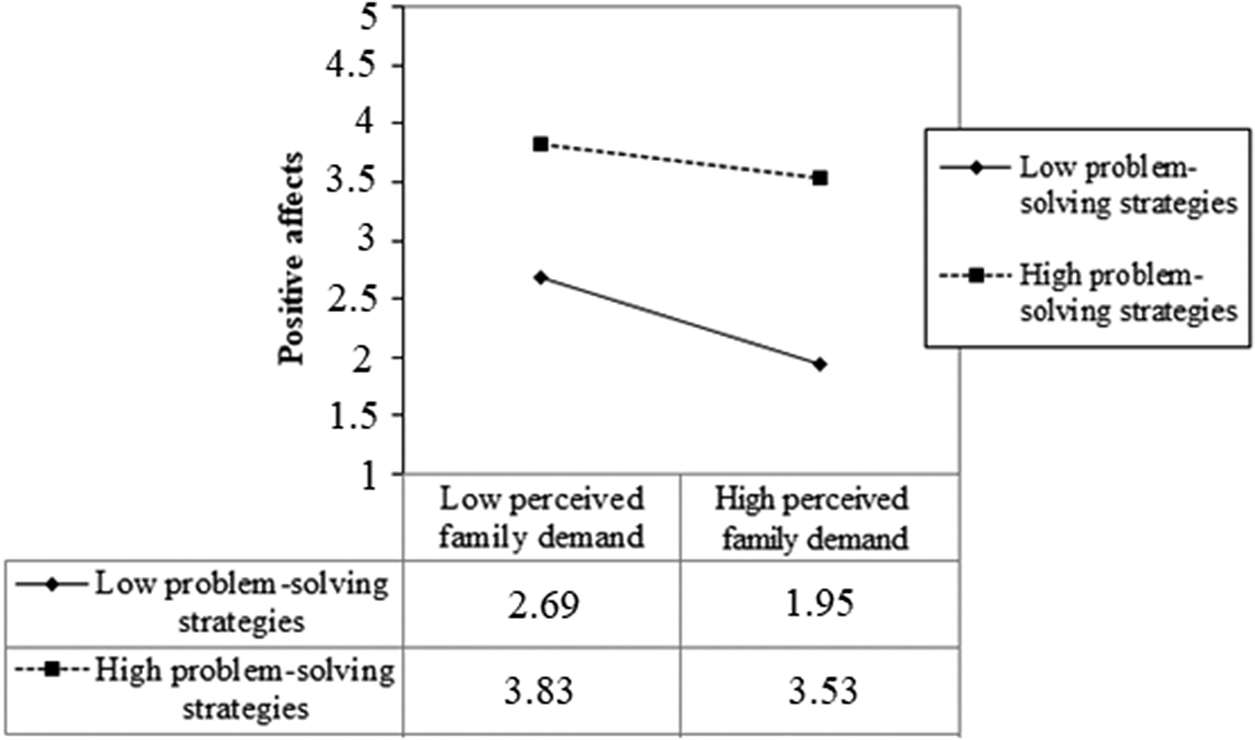
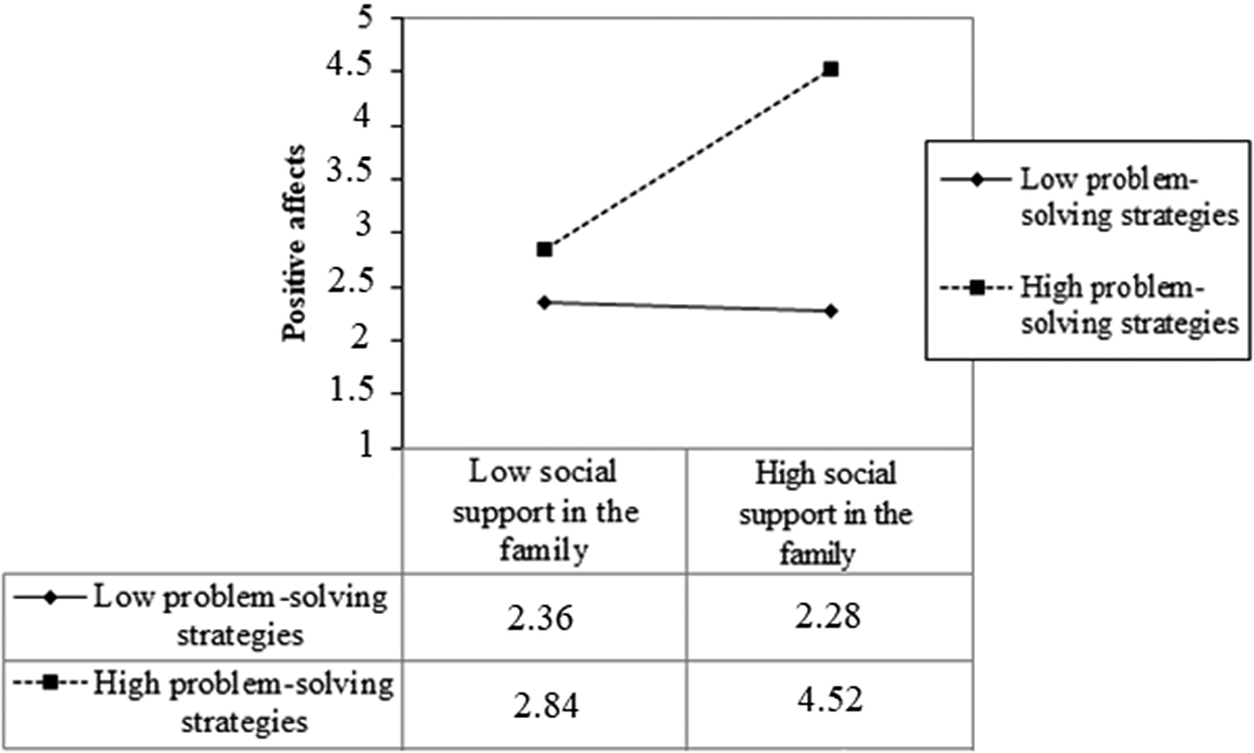
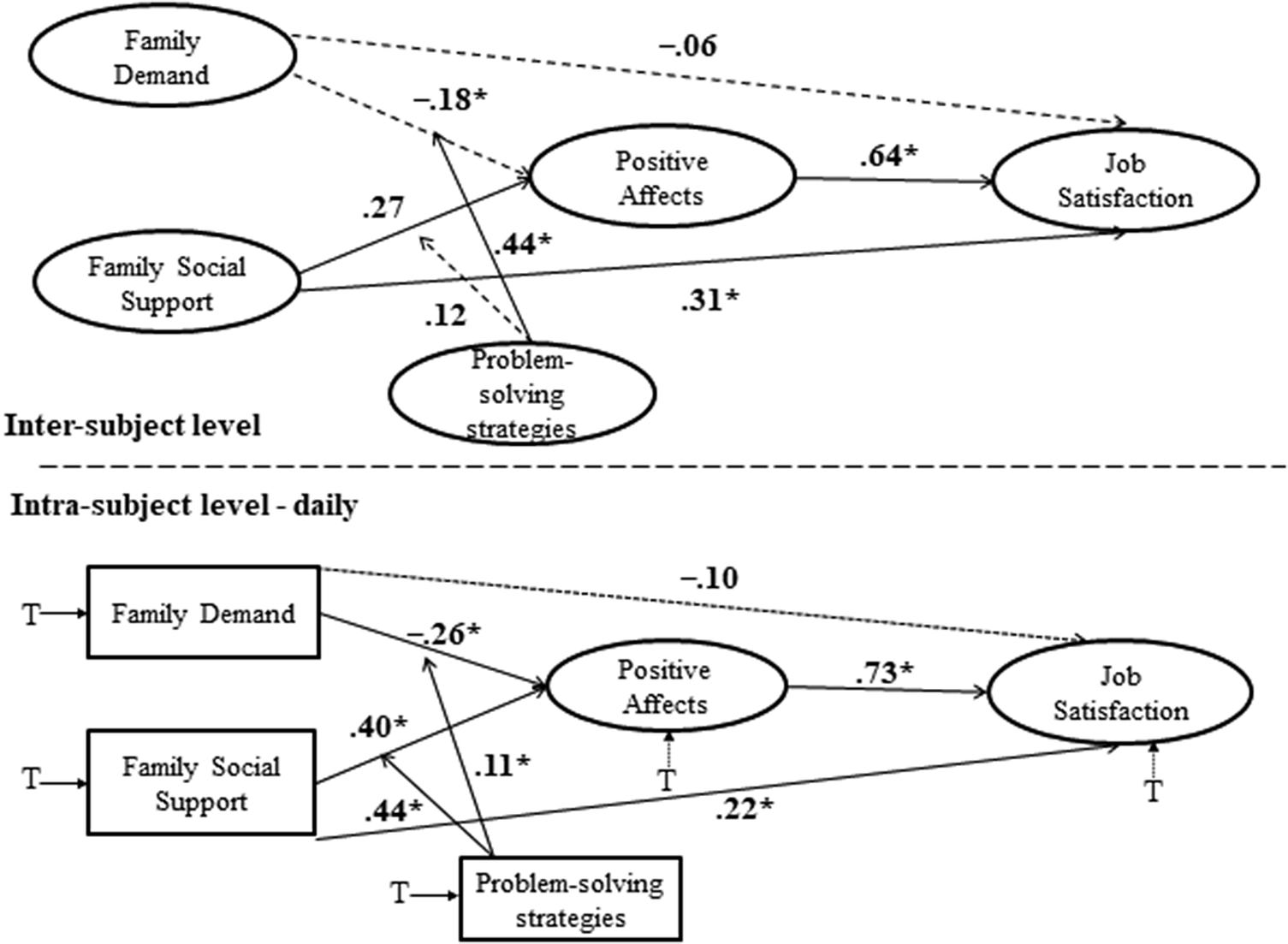
Finally Model 3 tested the moderation of the use of problem-solving coping strategies in the relationships between the independent variables and the mediating variable. At the intra-subject level, the use of problem-solving coping strategies moderated and weakened the negative relationship between perceived work demand and positive affects (β = .11; p < .001) (Figure 5); it also moderated and strengthened the positive relationship between social support at work and positive affects (β = .44; p < .001) (Figure 6). The time variable inserted at the intra-subject level had no significant association with the dependent variable. Nevertheless, maintaining this parameter in the model is important for controlling the variance of the intra-individual level. Aiming to better understand how to interpret the moderating effects, the objective was to test the effects of simple slopes using the procedures indicated by Preacher et al. (Reference Preacher, Curran and Bauer2006); such effects were inserted in Figures 5 and 6. These findings show that daily fluctuations in the use of problem-solving coping strategies moderated and weakened the relationship of daily fluctuations in perceived family demand with positive affects, which supports Hypothesis 11. It was also observed that daily fluctuations in the use of coping strategies moderated and strengthened the relationship of daily fluctuations in social support in the family with positive affects, which supports Hypothesis 12. Figure 7 shows the final model and the standardized regression parameters.
Problem-Solving Strategies of Coping as a Moderator in the Relation between Perceived Family Demand and Positive Affects at the Intra-Subject Level

Problem-Solving Strategies of Coping as a Moderator in the Relation between Social Support in the Family and Positive Affects at the Intra-Subject Level

Graphical Representation of the Final Model, with Standardized Standards
Note. Model fit indices: χ²(df) = 248.66 (66); CFI = .95;TLI = .93; RMSEA = .05.
* significant (p < .05); some portions of the mediator and dependent variables have been omitted.

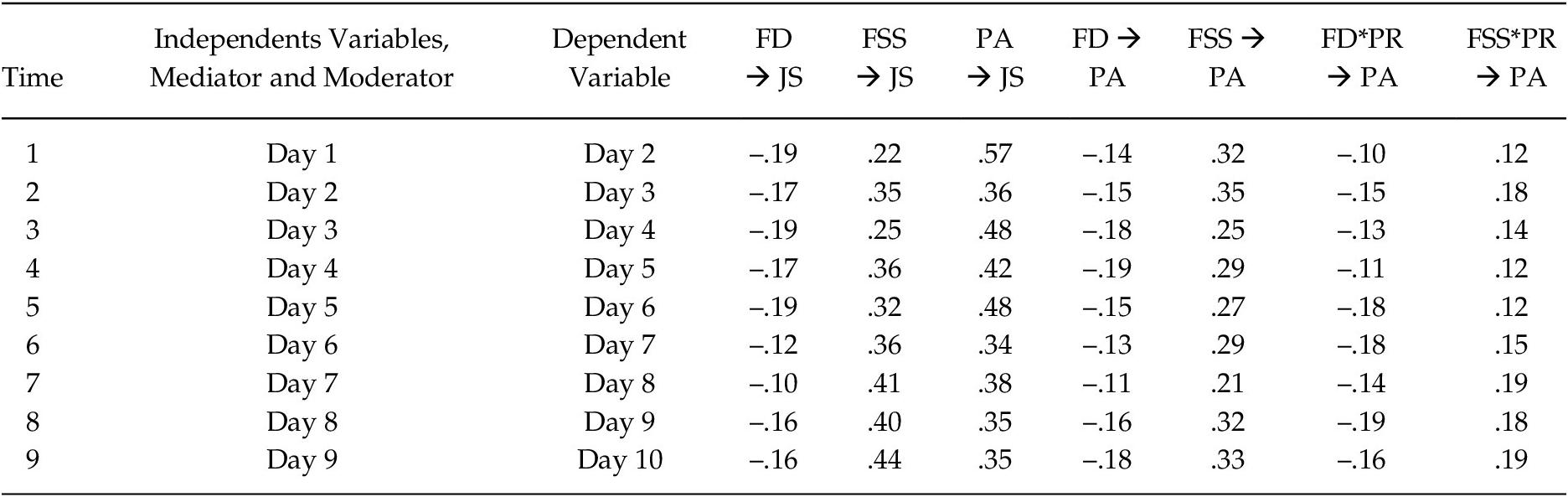
Considering the variables of perceived family demand, social support within the family, positive affects and problem-solving coping strategies tested one day, and job satisfaction tested the following day, Cross-Lagged Panel Analysis demonstrated that perceived work demand, social support at work and positive affects have significant relationships with family satisfaction. In addition, perceived work demand and social support at work also showed significant relationships with positive affects. These latter relationships were moderated by the problem-solving coping strategies over the nine different times tested; these results are shown in Table 6.
Results of Cross-Lagged Panel Analysis, in the Study of the Family to Work Interface

Note. FD = Family Demand; FSS = Family Social Support; PA = Positive Affects; JS = Job Satisfaction; PR = Problems Resolution. * Not significant.
Discussion
The objective of the present study was to examine the daily processes of the work–family interface through two different studies: The first study evaluated the processes of conflict and enrichment from work to family, and the second focused on the processes of conflict and enrichment from family to work. The results of the first study showed that, at the daily level, perceived demands at work as well as social support at work have significant relationships with family satisfaction, and that these relationships were mediated by positive affects. The study also demonstrated that the use of problem-solving coping strategies strengthened the positive relationship between social support at work and positive affects. However, the use of coping skills did not moderate the relationship between perceived family demand and positive affects; this relationship was moderated at the inter-subject level. These results mean that an individual presenting a high level of coping skills tends to experience a weakened relationship of perceived job demand with positive affects. These findings reinforce the conclusions of other studies (Novaes et al., Reference Novaes, Ferreira and Valentini2018; ten Brummelhuis et al., Reference ten Brummelhuis, ter Hoeven, Bakker and Peper2011) regarding the moderating role of positive personality characteristics.
A possible explanation for the results described is that the problem-solving coping strategies were considered to be a state in the hypothesis formulations but emerged as a trait with regard to their moderating role in the relationship between perceived work demand and positive affects. This interpretation is corroborated by Heck and Thomas’s (Reference Heck and Thomas2009) argument that coping strategies can be used at both the daily (state) and individual (trait) levels.
The findings of the second study showed that, at the daily level, perceived family demands as well as family social support showed significant relationships with job satisfaction, and that these relationships were mediated by positive affects. The study also demonstrated that the use of problem-solving coping strategies weakened the negative relationship of perceived family demands with positive affects. Furthermore, the use of the problem-solving coping strategies strengthened the positive relationship of family social support with positive affects. Both studies further showed that the relationships observed remained significant when the variables were tested at different times: the independent variables, mediating variable and moderator variable on one day, and the dependent variable on the following day.
The results of the present study make important contributions to the literature on the work–family interface. One important theoretical contribution of this research was to verify how the different daily processes of the work–family interface can occur and how these processes can influence the subject’s well-being. In practical terms, one of the ways an individual can achieve well-being on a given day is by reducing their perceived levels of demand from work and family, as the findings indicate that these constructs negatively influence satisfaction with family and work alike. These results are similar to those of other studies (Achour et al., Reference Achour, Boerhannoeddin and Khan2011; Achour et al., Reference Achour, Grine, MohdNor and MohdYusoff2015) that also indicated negative relationships between work and family demands and family and work well-being. In summary, this study revealed that individuals who experience (or perceive themselves to experience) many demands from their work or family have difficulty adjusting their working life to their family life or vice-versa, which may diminish their positive results in the other role (Haar et al., Reference Haar, Roche and ten Brummelhuis2018).
Individuals can also achieve better family and work outcomes on a given day when they receive support from their management, co-workers and family members, given the study’s finding of a positive relationship between social support at work and social support at home with family and work satisfaction, respectively. Such results may reinforce the findings of previous studies (Gabardo-Martins et al., Reference Gabardo-Martins, Ferreira and Valentini2017a; Tement, Reference Tement2014; Thompson & Prottas, Reference Thompson and Prottas2006) regarding the importance of social support from one domain for well-being in the other domain. These findings suggest that support from one’s boss, co-workers and family members constitutes rewarding resources from one domain that can facilitate the individual’s assessment of the other domain (Tement, Reference Tement2014; ten Brummelhuis & Bakker, Reference ten Brummelhuis and Bakker2012).
The findings obtained in both studies also showed that positive affects play a mediating role in the relationships between perceived demand and social support in one domain with satisfaction in the other domain, which aligns with the findings of previous studies investigating the role of personal resources as a link in the relationship of work to family and family to work (Brosch & Binnewies, Reference Brosch and Binnewies2018; Carlson et al., Reference Carlson, Hunter, Ferguson and Whitten2014; Slöetjes, Reference Slöetjes2012; Tement, Reference Tement2014). These results are also consistent with the Work–Family Resource Model (ten Brummelhuis & Bakker, Reference ten Brummelhuis and Bakker2012), which postulates that personal resources can be depleted in the presence of contextual demands in one domain, which results in diminished positive outcomes in the other domain, and that these resources can be developed in the presence of contextual resources in one domain, thereby increasing positive outcomes in the other domain.
Another observation in the present study concerns the moderating role of the daily use of problem-solving coping strategies in the respective relationships of positive affects with perceived work demand, perceived family demand, social support at work, and social support in the family. Our findings reinforce the conclusions of other studies (Novaes et al., Reference Novaes, Ferreira and Valentini2018; ten Brummelhuis et al., Reference ten Brummelhuis, ter Hoeven, Bakker and Peper2011) regarding the moderating role of positive personality characteristics on these same relationships.
Furthermore, rather than using direct measures of work–family conflict and work–family enrichment—which are susceptible to subjectivity bias—our study applied the Work-Home Resource Model, withing which conflict and enrichment are processes of the work–family interface. In this sense, the present study used different measures to test a process that in previous studies was tested by only one measure (such as the Work–Family Conflict Scale or the Work–Family Enrichment Scale). Furthermore, in one of our analyses—in contrast to previous studies on the work–family interface that tested their variables on the same day (e.g., Tement, Reference Tement2014)—we tested the contextual variables of a domain, the personal resource and the key resource on one day, and the result in the other domain on the following day. This method allowed us to observe the nature of the daily fluctuations in the work–family and family-work interface from one day to the next.
Moreover, the Work-Home Resource Model (ten Brummelhuis & Bakker, Reference ten Brummelhuis and Bakker2012) recognizes the role of time in the work–family interface processes. In accordance with the process view of that model, the present study used a diary design to test both the work process for the family as well as the family process for work. Thus, our findings demonstrated the temporal nature of the conflict and enrichment work–family processes advocated by the Work–Family Resource Model (ten Brummelhuis & Bakker, Reference ten Brummelhuis and Bakker2012), which have been underestimated in the current literature (Martinez-Corts et al., Reference Martinez-Corts, Demerouti, Bakker and Boz2015).
It is worth noting that our findings expand current understanding of the work–family interface in several ways by combining the use of conflict and work–family enrichment, both of which are considered prominent constructs in this area. Furthermore, our findings also provide empirical support for the Work–Family Resource Model (ten Brummelhuis & Bakker, Reference ten Brummelhuis and Bakker2012). Finally, this study makes a novel contribution in its use of a diary-based research design, which is able to achieve a much more detailed analysis than cross-sectional studies (Haar et al., Reference Haar, Roche and ten Brummelhuis2018).
Our results, which highlight the importance of perceived social support and the reduction of family demands in the family environment before work and at work as an antecedent of positive affects – and, consequently, of positive results – have a number of practical implications. Workers should be encouraged to better organize their domestic and work activities, so that they do not feel overwhelmed. Managers must encourage their employees to proactively plan their activities and manage time effectively. To promote job satisfaction, managers could also encourage a culture of collaboration in the workplace, so that employees know they will have support when they need it. Employees can also profit from increased social support and reduced demands from their activities, which may increase long-term health and well-being (Geurts & Sonnentag, Reference Geurts and Sonnentag2006).
Furthermore, considering the fact that the use of problem-solving coping strategies weakens the impact of demands and enhances not only the influence of social support on positive affects, but also the positive association of affects with the individual’s level of well-being, it would be advantageous for managers to implement training activities that help employees develop such problem-solving strategies to use in their daily activities. These interventions are fundamental for employees to present a positive state, which may be reflected in the achievement of well-being in both the organizational and family contexts.
This research had some limitations. The first concerns the use of self-reporting instruments, which are subject to bias. Considering, however, that the workers themselves have clearer ideas about their own work and family responsibilities, positive affects, and family and work contexts, it would be difficult to obtain accurate information using any method other than self-reporting (Spector, Reference Spector2006). Additionally, the fact that the same instruments were applied at the same time for five consecutive days in two rounds constitutes another potential vulnerability to the biases common to this method. However, as Doty and Glick (Reference Doty and Glick1998) report, although the method’s common bias is a cause for concern, this bias alone does not invalidate multiple research results. Moreover, aspects of the method’s common bias can be remedied by the use of a complex research model that employs a mediating and moderating variable; this can mitigate responses that follow implicit theories or induce illusory correlations (Podsakoff et al., Reference Podsakoff, MacKenzie, Lee and Podsakoff2003).
A second limitation is that, because this is not an experimental study, causal relationships have not been investigated. Future investigations can correct this shortcoming by adopting experimental designs that allow for a better understanding of the relationships between the variables used in the present study. A third limitation concerns the relatively small size of the sample, which indicated inter-subject variability. Future studies can be performed with larger sample sizes that test not only daily fluctuations but also inter-subject fluctuations. A fourth limitation is that data collection was performed online without the presence of the researchers, which may have engendered a lack of commitment and less reliable responses. To address this vulnerability, future research could use in-person data collection. Furthermore, the present study tested the moderating role of key resources only, neglecting the role of macro resources advocated by the Work–Family Resource Model (ten Brummelhuis & Bakker, Reference ten Brummelhuis and Bakker2012). Thus, future studies could further contribute to the advancement of work–family interface literature by including both types of resources (macro and key) in the models tested.
Finally, two different studies were used to test the work-to-family and family-to-work process, which can only demonstrate separate empirical evidence concerning the two directions of the work–family interface. To remedy this, future studies can investigate how the work domain influences the home domain and how this may further influence work outcomes, conjointly. Such studies could more efficiently demonstrate the bidirectionality of the work–family interface.
Considering the possibility that the demands and resources of one domain influence the result in the other domain at different times on the same day, it is suggested that future research test the process of the work–family interface in different situations (resources and family demands and personal variables: for example, before work or in the morning; and results in the other domain, such as after work, in the late afternoon, or at night,). For such data analysis, future researchers can use the Dynamic Structural Equation Models for the Affective (DSEM).
In summary, the findings of this study permit us to conclude that circumstances arising from the work context, in contact with personal aspects, can lead to greater overall satisfaction and quality of life in individuals’ family. Likewise, the circumstances within individuals’ family contexts, in contact with personal characteristics, can improve their satisfaction and performance at work, thereby generating benefits for organizations. Thus, this research suggests that work and personal resources—as well as key resources—benefit employees and employers alike in facilitating greater personal and organizational success.