


Introduction
Poultry in many countries are stunned prior to slaughter with electrical water-bath stunning for both secular and Halal markets. In the UK, this is predominantly small- to medium-sized plants and for Halal slaughter. However, there are widespread welfare concerns associated with water-bath stunning of poultry (Berg & Raj Reference Berg and Raj2015). Although supplanted by controlled atmosphere stunning systems (CAS) in some countries, worldwide water-bath stunning is still widely employed for secular and stunned Halal slaughter. For Halal slaughter, CAS stun-to-kill systems are not considered Halal-compliant (Sazili et al. Reference Sazili, Kumar and Hayat2023). Shackling associated with water-bath stunning has been shown to cause pain and distress (Gentle & Tilston Reference Gentle and Tilston2000; Bedanova et al. Reference Bedanova, Voslarova, Chloupek, Pistekova, Suchy, Blahova, Dobsikova and Vecerek2007; Gentle Reference Gentle2011). While restraint in an inverted position (on shackle or in a cone) is an unnatural and stressful position for poultry (Kannan & Mench Reference Kannan and Mench1996; Farm Animal Welfare Council [FAWC] 2009; Hindle et al. Reference Hindle, Lambooij, Reimert, Workel and Gerritzen2010). These issues are in addition to the widely reported welfare problems with water-bath stunning effectiveness, such as risk of painful pre-stun shocks and insufficient electrical current (Shields & Raj Reference Shields and Raj2010; Berg & Raj Reference Berg and Raj2015). There is a recognised need for refinement of stunning restraint systems that remove the need for shackling and inversion of conscious birds.
Head-only electrical stunning has been considered as an alternative to head-to-body water-bath stunning for both small- to medium-scale secular and Halal markets. These systems generally involve the restraint of poultry in either shackles or, more commonly, cones prior to stunning. Cone-based restraint systems range from small-scale manual placement of individual birds for small producer-processors (Gibson et al. Reference Gibson, Taylor and Gregory2016) to mechanised combined cone/shackle systems in higher throughput processing plants (Lambooij et al. Reference Lambooij, Reimert and Hindle2010, Reference Lambooij, Reimert, Verhoeven and Hindle2014). The use of cones is considered to reduce pain and discomfort associated with shackling alone, however, they still require inversion of conscious birds which will cause distress, while the mechanised system also still involves a degree of shackling, which would be painful.
A novel approach was the alternative stun/kill (ASK) system that was designed to improve poultry welfare by eliminating the need for live shackling, inversion and enabling more controlled and humane electrical stun-to-kill (Raj & Tserveni-Gousi Reference Raj and Tserveni-Gousi2000). The system employed upright restraint with head-only electrical stunning followed by a separate electrical killing current through the body. Proof of principle was established, although further refinement was identified by the researchers to ensure consistent performance and commercial viability (Raj et al. Reference Raj, Wilkins, O’Callaghan and Phillips2001; Tinker et al. Reference Tinker, Raj, Berry and O’Callaghan2006).
There is a recognised need for the development, refinement and implementation of new restraint and electrical stunning methods which reduce welfare harms, while remaining compatible with commercial and Halal requirements. The overall aim of the study was to build on the experience of the ASK project and to develop, optimise and evaluate humaneness of a novel upright restraint system for poultry slaughter, which does not require inversion or shackling of conscious birds. Birds in this study were not stunned as the focus was on validating the prototype as a restraint method.
Materials and methods
Study animals
All procedures were performed under Home Office Project Licence X7897A582. Fifty broiler chickens from a commercial indoor farm were purchased and relocated to a research unit where they were given five days to acclimatise to their surroundings prior to experimentation. Birds were group-housed in pens (pen 1: 3.5 × 6.1 m, and pen 2: 3.4 × 4.1 m; length × width), which were bedded with wood-shavings, with provision of perches and platforms and given ad libitum access to standard finisher feed (floor-based hopper feeders) and water (automatic bell drinkers). The broilers were 38 days old at the start of the experiment and 45 by the end. They were used for a maximum of five restraint cycles each and no more than twice in a 24-h period. A total of 50 birds were used with a maximum of 250 restraint cycles. Live birds were assessed for behavioural signs of distress and discomfort associated with restraint.
Restraint system
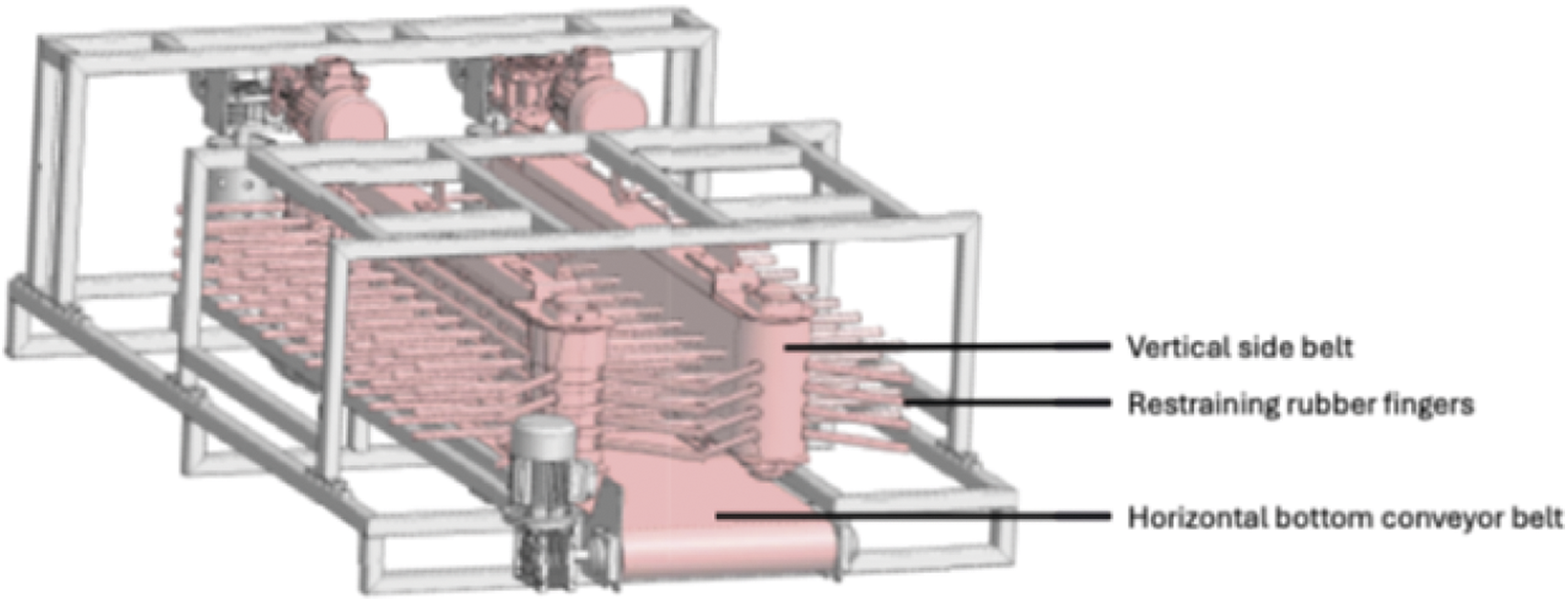
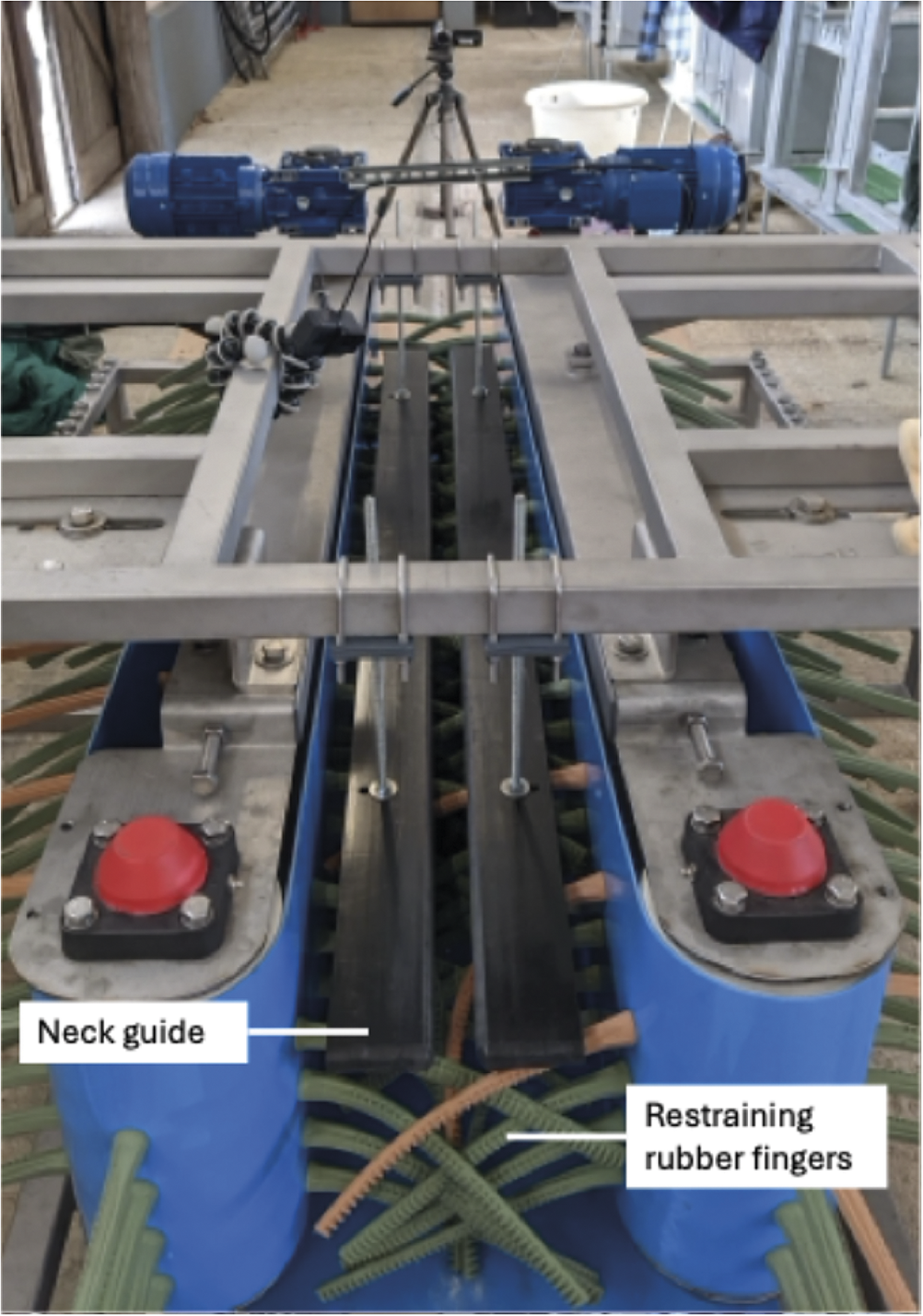
The restraint system was co-designed with Solutions for Research (no longer in business, Solutions for Research Ltd. Silsoe, UK). It consisted of a horizontal bottom conveyor belt, two vertical side-belts, one on each side of the conveyor, with 4 rows and 27 columns of rubber fingers (250 × 20 × 10 mm; length × width × thickness), manufactured by Plumatech (medium firmness; Plumatech, Plaintel, France) (Figure 1). These were designed to hold the broilers in an upright position, and to prevent wing flapping prior to and during stunning. Belt speed was adjustable, and all belts were synchronised to prevent misalignment of birds when in the restraint. The restraint also consisted of neck and head positioning guides (Figure 2). The guides allowed alignment of the head and neck for entry into the stunning electrodes (not fitted). They were composed of two pieces of plastic, held 10 cm above the top row of rubber fingers.
Three-dimensional computer-aided design (CAD) image of the prototype restraint system from the broiler chicken entrance position, with the horizontal bottom conveyor belt and vertical side-belts with restraining rubber fingers labelled. The neck position guides are not shown.

Figure 1 Long description
An three-dimensional CAD rendering shows the prototype inside a grey rectangular metal frame. The broiler travel path runs away from the viewer. A horizontal bottom conveyor forms the floor. On both sides, vertical belt assemblies carry four stacked rows of horizontal rubber fingers that project towards the centre to support and restrain the bird. Three callouts identify a vertical side belt, the restraining rubber fingers and the horizontal bottom conveyor belt. Drive motors and rollers are visible at the entrance and rear. Neck-position guides are not shown.
Top view of the upright broiler restraint system, with the entrance at the bottom (front) and the exit at the top (rear), showing the restraining rubber fingers and neck guide. Individual birds were manually placed at the entrance, with each bird’s neck guided into the neck guide. This image was taken before the funnel entry to the neck guide was introduced.

Figure 2 Long description
The view looks along the restraint from the entrance at bottom to the exit at top. Blue side belts stand on the left and right. Flexible green and orange restraining rubber fingers project inward from both sides and overlap across the lower passage. Two long black neck-guide strips create a narrow central channel leading towards the far end. Grey metal cross-members span above the belts. White labels identify the neck guide and restraining rubber fingers. No bird is present; the later funnel-shaped neck-guide entry is absent.
Data collection
Prior to live animal testing, multiple runs were performed with a mannequin bird to allow correction of entry position and rubber finger height. Following the successful completion of mannequin trials, a pilot study with two live broilers was performed. Birds were placed in the restraint in two runs to monitor level of restraint, signs of bird distress and injury, access to the head for placement of stunning electrodes and ease of placement. It was found that the birds could be adequately restrained. Data from these birds were for set-up and evaluation of initial design and not included in the overall study results.
On experimental days, birds were transported in batches of five, in a standard chicken crate, from the housing pens to the study room (a distance of 10 m). Each bird was fitted with a randomly assigned leg band for identification and placed with the other birds in a circular wire-mesh holding pen (150 × 100 cm; diameter × height). The pen was bedded with wood-shavings and supplied with water. Birds were allowed to acclimatise for 20 min following leg-band placement. The holding pen was in the same room as the restraint system to minimise additional handling. Before experimentation and throughout the acclimatisation period, the restraint system was operated continuously to familiarise the birds with its sound.
Behavioural assessment
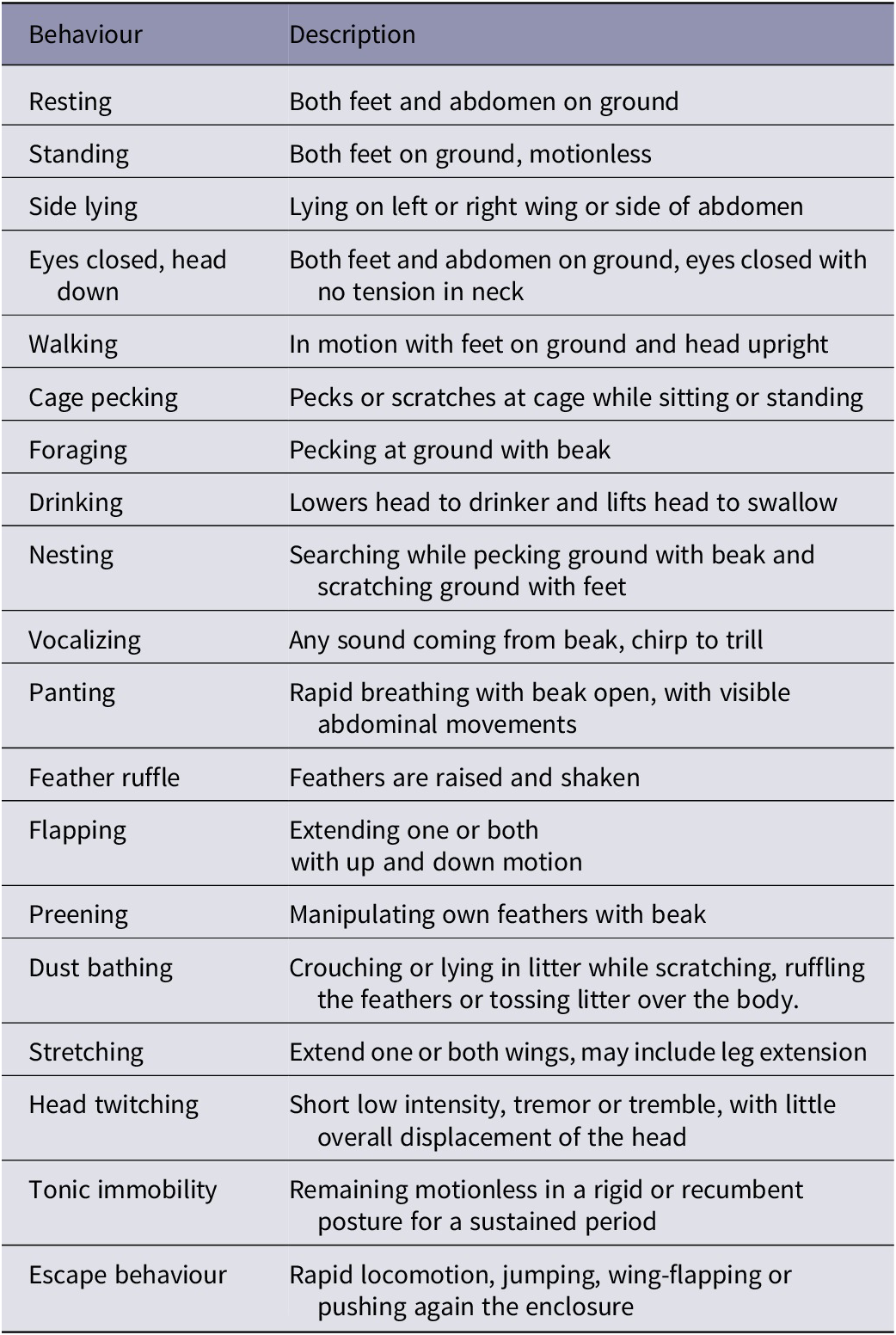
Bird treatment order was randomly allocated with a random number generator. After the acclimatisation period birds were evaluated using a behavioural assessment before and immediately after restraint in the circular holding pen (group pen of five birds), during restraint (continuous), and lesions/injury/condition before and after restraint. Behavioural evaluations, called Holding Area Assessments, were conducted directly before and after (birds were returned to the same group holding pen) each bird passed through the restraint system for their first trial. The assessments were 5 min in length, using a predesigned ethogram (Table 1). Some behaviours were mutually exclusive, for these only one state was recorded at any given sampling point (e.g. resting standing, side lying and walking). Other behaviours were recorded independently and could occur concurrently with a posture/activity state (e.g. standing and foraging). Behaviours and activities were recorded as binary outcomes (present or absent) with scan sampling, with 15-s intervals (total of 20 scans per bird) over 5 min. In addition, birds were weighed and assessed prior to and after restraint (after holding area assessments). The Bird ID, weight, overall condition and any lesions found on the face, legs, feet and body were documented.
Ethogram of the behaviours assessed in broiler chickens in the holding area assessment. Note some behaviours were mutually exclusive

Table 1. Long description
Nineteen behaviours are defined. Resting: feet and abdomen on ground. Standing: motionless on both feet. Side lying: on a wing or side of abdomen. Eyes closed, head down: resting with no neck tension. Walking: moving with head upright. Cage pecking: pecking or scratching the cage. Foraging: pecking the ground. Drinking: lowering to the drinker, then raising to swallow. Nesting: ground pecking and scratching. Vocalising: beak sound. Panting: open-beak rapid breathing with abdominal movement. Feather ruffle: raised feathers shaken. Flapping: wing extension with up-and-down motion. Preening: manipulating own feathers. Dust bathing: crouching or lying while scratching, ruffling or tossing litter. Stretching: wing extension, sometimes with leg extension. Head twitching: brief low-intensity tremor. Tonic immobility: sustained rigid or recumbent stillness. Escape: rapid movement, jumping, flapping or pushing against the enclosure.
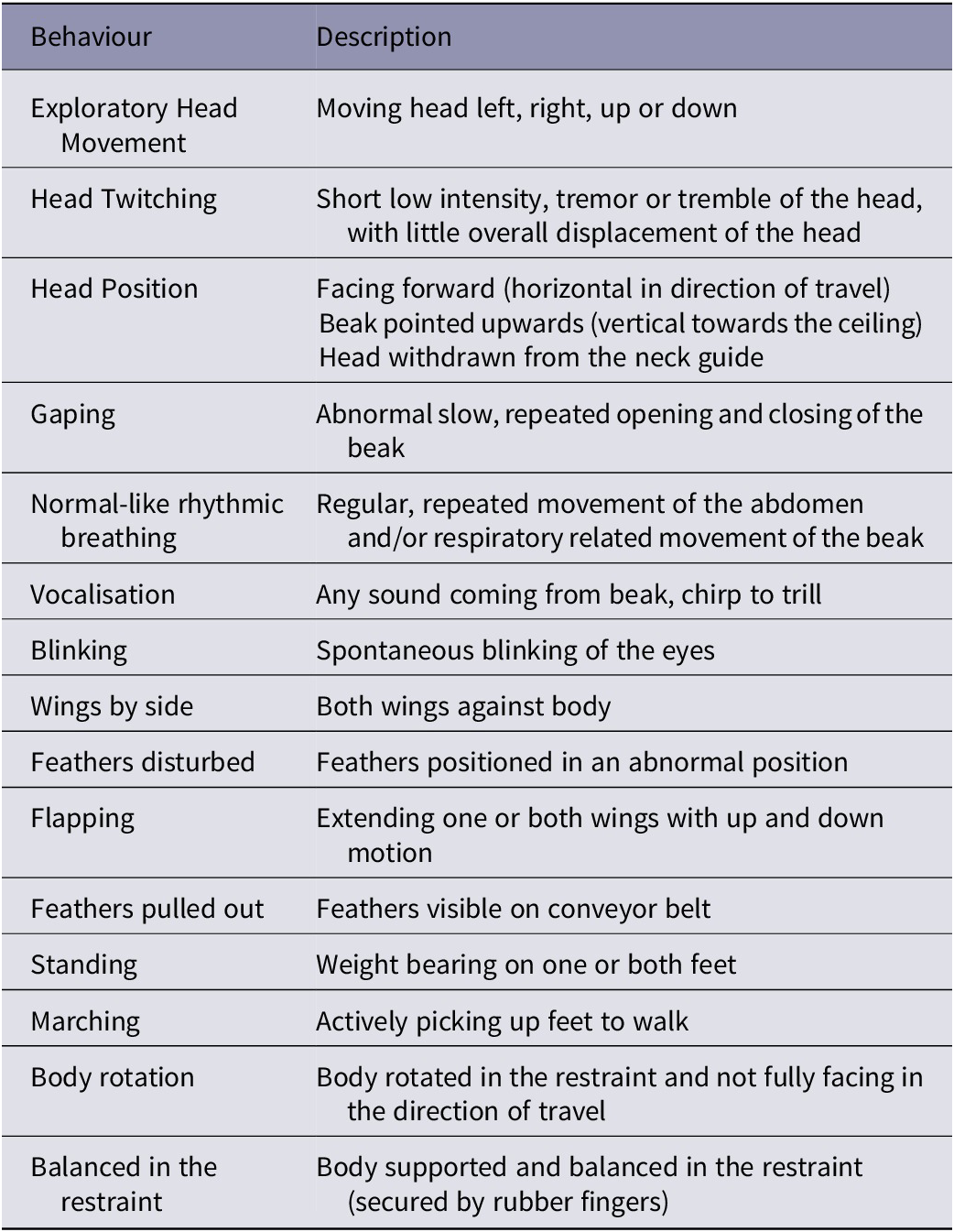
When positioned in the restraint, the positioning of the head, wings and feet were assessed with direct observations and post hoc video analysis using the ethogram in Table 2. Cumulative modifications to the restraint system were made throughout the trials to improve restraint performance.
List of head, body and feet positions assessed in broiler chickens during the restraint assessment

Table 2. Long description
Fifteen restraint measures are defined. Exploratory head movement: head moves left, right, up or down. Head twitching: brief low-intensity tremor. Head position: forward, beak upward or withdrawn from the neck guide. Gaping: slow repeated beak opening and closing. Normal-like rhythmic breathing: regular abdominal or respiratory beak movement. Vocalisation: beak sound. Blinking: spontaneous eye blink. Wings by side: both wings against the body. Feathers disturbed: abnormal feather position. Flapping: wing extension with up-and-down movement. Feathers pulled out: feathers visible on the conveyor. Standing: weight bearing on one or both feet. Marching: actively lifting feet to walk. Body rotation: not fully facing the direction of travel. Balanced: body supported and secured by the rubber fingers.
Statistical analysis
Descriptive statistics were conducted on all variables evaluating physical condition, (before and after restraint), behaviours presented in the restraint and behaviours observed before and after going through the restraint. Mixed effect binomial models, including bird ID as random effect to account for repeated measures, were used to assess differences in behaviour of birds in the holding assessment before and after going through the restraint. Change in mean bird weight throughout the study was assessed using ANOVA test.
Multivariate logistic regression was used to assess the relationship between modifications introduced in the restraint system and each behaviour accounting for the potential confounding effect of birds’ weight (as categorical variable) and number of times the bird has been in the restraint system. In order to attain sufficient observations, modifications that were similar were joined: speed 0.1 and 0.2 m s–1 were joined in one category; shape of neck-guide and width between neck guides decreased were joined in one category. Bird weight was categorised using the interquartile range as a cut-off.
Analysis was performed in R 3.5.1 (R Development Core Team 2008). The level of significance for all tests was P < 0.05.
Results
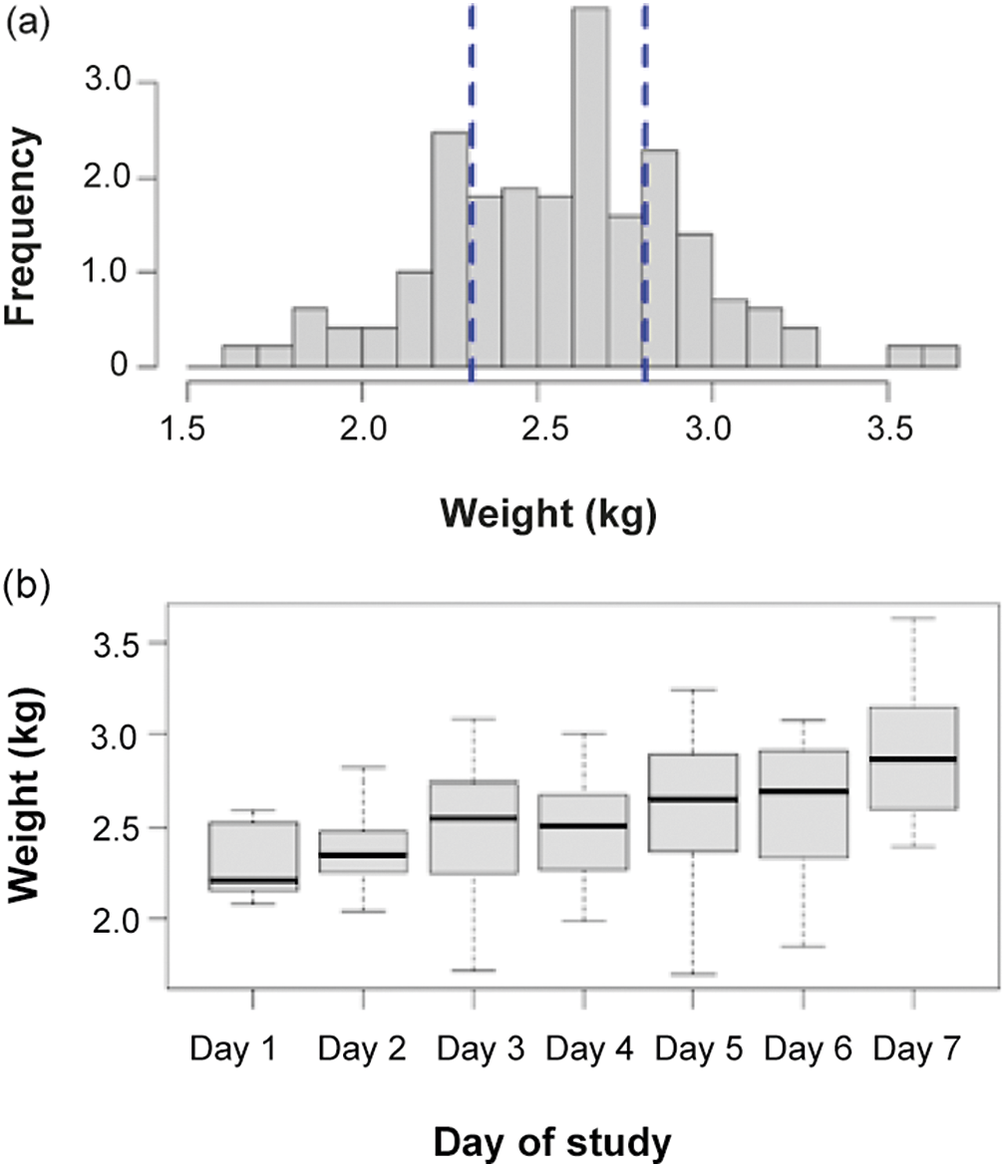
During the study the weight of the birds increased from a median of 2.2 (2.1–2.6) kg on the first day of the study to 2.9 (2.4–3.6) kg by day 7 (P < 0.001) (Figure 3). This allowed the restraint to be tested over a range of bodyweight, which would be encountered in commercial conditions.
(a) Histogram showing distribution of broiler chicken weights during the study with dashed lines showing interquartile range, and (b) boxplots showing birds’ weight stratified by day of the study.

Figure 3 Long description
Figure 3 (a) is a grey histogram of weights from about 1.6 to 3.7 kg, with frequency on the vertical axis and weight on the horizontal axis. Most measurements fall between about 2.3 and 2.9 kg, with the tallest bar near 2.6 kg. Two blue dashed lines mark the first and third quartiles at about 2.3 and 2.8 kg; they are not a symmetric plus-or-minus interval around the median. Figure 3 (b) shows seven grey boxplots, one for each study day. Median weight increases overall from 2.2 kg on day 1 to 2.9 kg on day 7, although days 3 and 4 overlap. Observed ranges are 2.1-2.6 kg on day 1 and 2.4-3.6 kg on day 7.
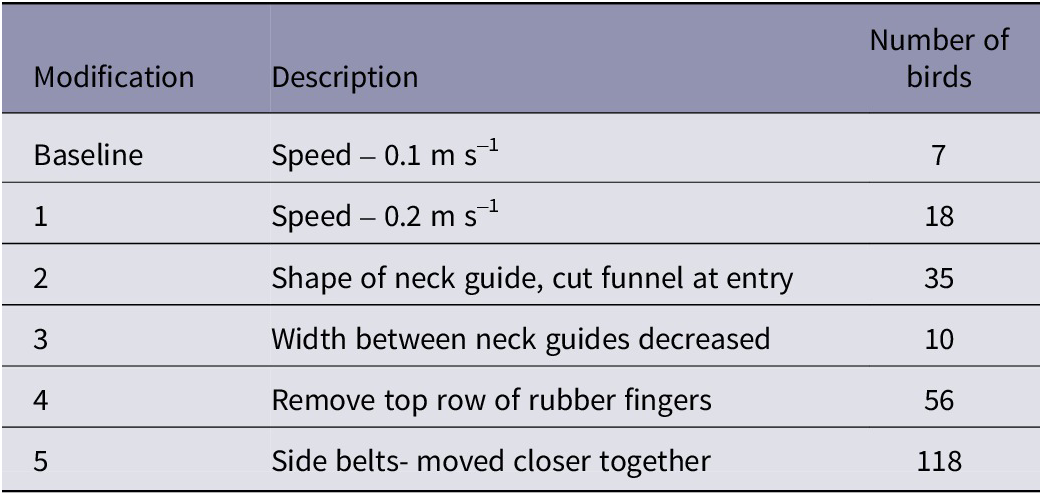
During the study, a series of cumulative modifications were made to improve restraint performance and ease of operation. These are presented in Table 3. In total, there were five modifications made over the course of the entire study, with the initial first seven birds (speed: 0.1 m s–1) serving as the unmodified baseline set-up.
Modifications made to the restraint system during the study and the total number of broiler chickens exposed to each cumulative modification. Note numbers exceed 50 because birds contributed to up to five runs

Table 3. Long description
The baseline used a conveyor speed of 0.1 m/s and involved 7 bird exposures. Modification 1 increased speed to 0.2 m/s, 18 exposures. Modification 2 cut a funnel shape at the neck-guide entry, 35 exposures. Modification 3 reduced the width between the neck guides, 10 exposures. Modification 4 removed the top row of rubber fingers, 56 exposures. Modification 5 moved the side belts closer together, 118 exposures. Counts exceed 50 because each bird could contribute up to five runs.
Holding area assessment
Three cumulative modifications were made to the restraint:
-
• Speed 0.1 m s–1: 7 birds
-
• Speed 0.2 m s–1: 18 birds
-
• Speed 0.2 m s–1 and alteration to the shape of the neck guide: 25 birds
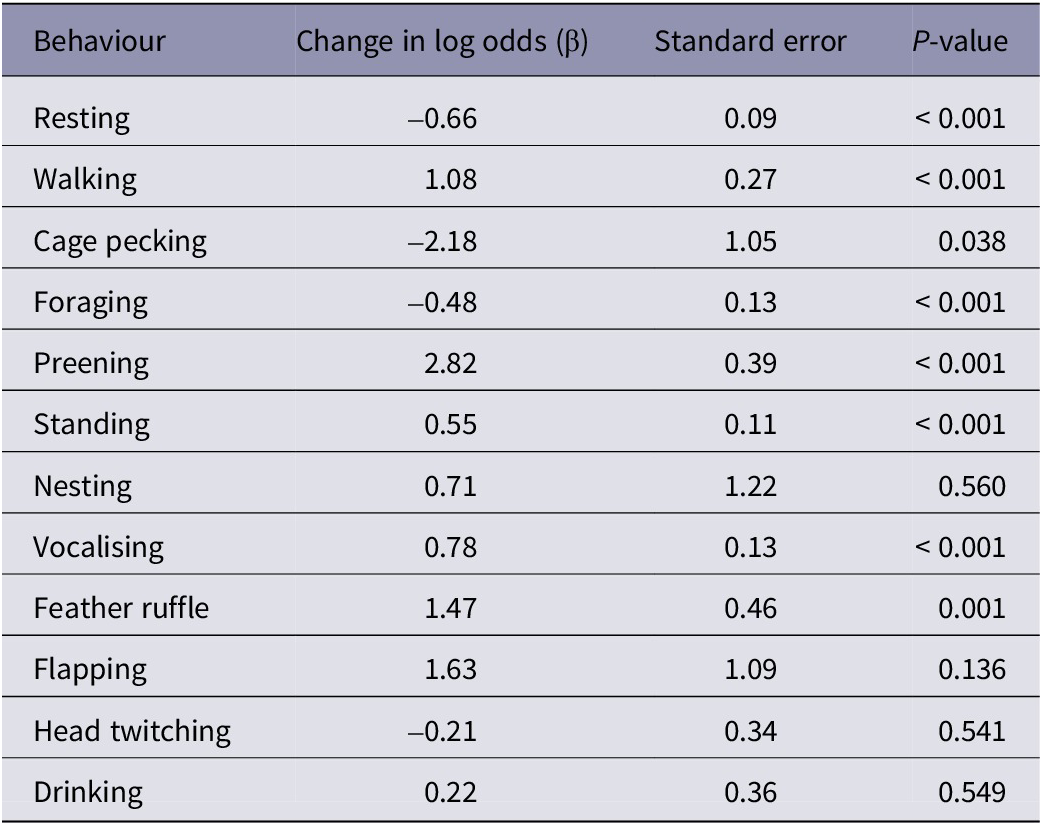
These modifications did not influence the holding area behaviours and were therefore grouped for analysis. Resting, cage pecking and foraging were significantly less likely after going through the restraint, while walking, preening, standing, vocalising and feather ruffle were significantly more likely (Table 4) (P = 0.001). Dustbathing, tonic and escape behaviour were not observed in any bird (before or after); panting and stretching were infrequently observed (three observations all in the same bird after going in the restraint for panting and six observations in different birds all before going in the restraint) and models did not converge because there was insufficient variation.
Differences in behaviour of broiler chickens in the holding assessment after passage through the restraint system. Behaviours were recorded every 15 s for 5 min before and after restraint and analysed using mixed-effects binomial models. Values are model coefficients representing the change in the log odds of each behaviour occurring after restraint relative to before restraint (reference). Positive values indicate that the behaviour was more likely after restraint, whereas negative values indicate that it was less likely

Table 4. Long description
Each row gives the change in log odds, standard error and P value after restraint versus before restraint; positive coefficients mean the behaviour was more likely after restraint. Values are: resting -0.66, 0.09, P<0.001; walking 1.08, 0.27, P<0.001; cage pecking -2.18, 1.05, P=0.038; foraging -0.48, 0.13, P<0.001; preening 2.82, 0.39, P<0.001; standing 0.55, 0.11, P<0.001; nesting 0.71, 1.22, P=0.560; vocalising 0.78, 0.13, P<0.001; feather ruffle 1.47, 0.46, P=0.001; flapping 1.63, 1.09, P=0.136; head twitching -0.21, 0.34, P=0.541; drinking 0.22, 0.36, P=0.549. Significant increases were walking, preening, standing, vocalising and feather ruffle; significant decreases were resting, cage pecking and foraging.
Physical condition
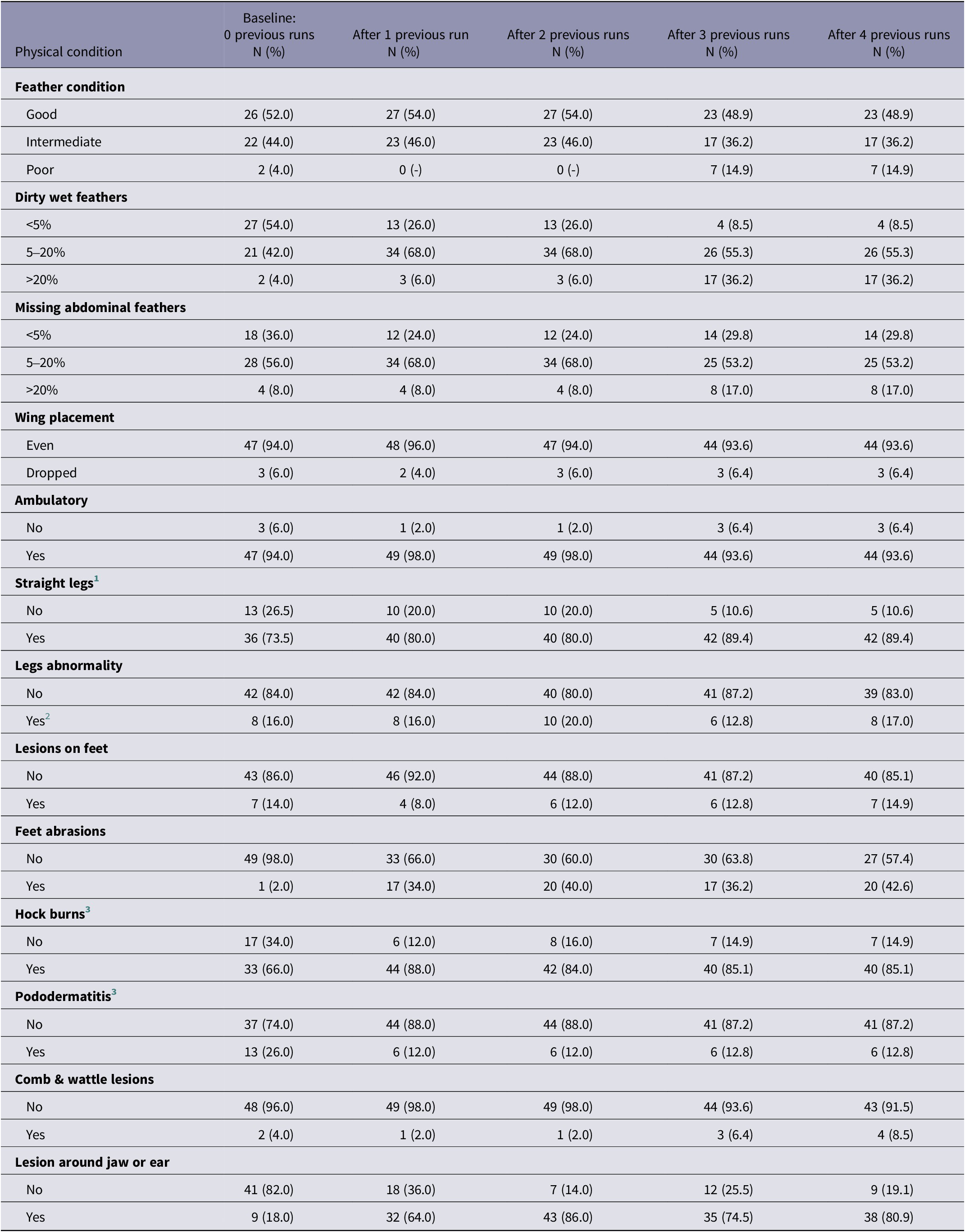
Characteristics considered to evaluate birds’ physical condition throughout the study are presented in Table 5. The proportion of dirty wet feathers, lesions on feet and feet abrasions increased throughout the study. These appeared unrelated to the repeated runs through the restraint and were associated more with growth rate and bedding conditions. The proportion of birds with localised blemishes around the jaw and ear increased during the study, potentially due to physical contact with the neck guide during the repeated runs. However, this was also seen to develop in some birds prior to experimentation.
Physical condition of broiler chickens at baseline and following repeated passages through the restraint system. The baseline assessment was conducted before the first restraint run. Subsequent assessments were conducted immediately before runs 2 to 5 and therefore followed one to four previous restraint runs, respectively. In rounds 4 and 5 only 47 birds were used

Table 5. Long description
Five assessments cover 50 birds at baseline and after one or two previous runs, and 47 after three or four runs; baseline straight-leg status was available for 49. From baseline to after four runs, poor feather condition rose from 4.0% to 14.9%; more than 20% dirty wet feathers rose from 4.0% to 36.2%; and more than 20% missing abdominal feathers rose from 8.0% to 17.0%. Even wings and ambulation remained about 94%. Feet abrasions rose from 2.0% to 42.6%. Jaw or ear lesions rose from 18.0% to 80.9%, peaking at 86.0% after two runs. Foot lesions remained near 8.0-14.9%; hock burns rose from 66.0% to 85.1%; pododermatitis fell from 26.0% to 12.8%; and comb or wattle lesions rose from 4.0% to 8.5%. Hock burns and pododermatitis were monitored as indirect indicators of ambulation or litter contact, not direct restraint injuries.
1 Note the baseline straight leg assessment is for 49 birds due to a recording error.
2 Included leg rotation, rash and swollen hocks.
3 Monitored as an indirect indicator of reduced ambulation or increased litter contact, rather than as a direct contact injury caused by the restraint system.
Cumulative modifications on welfare and effectiveness
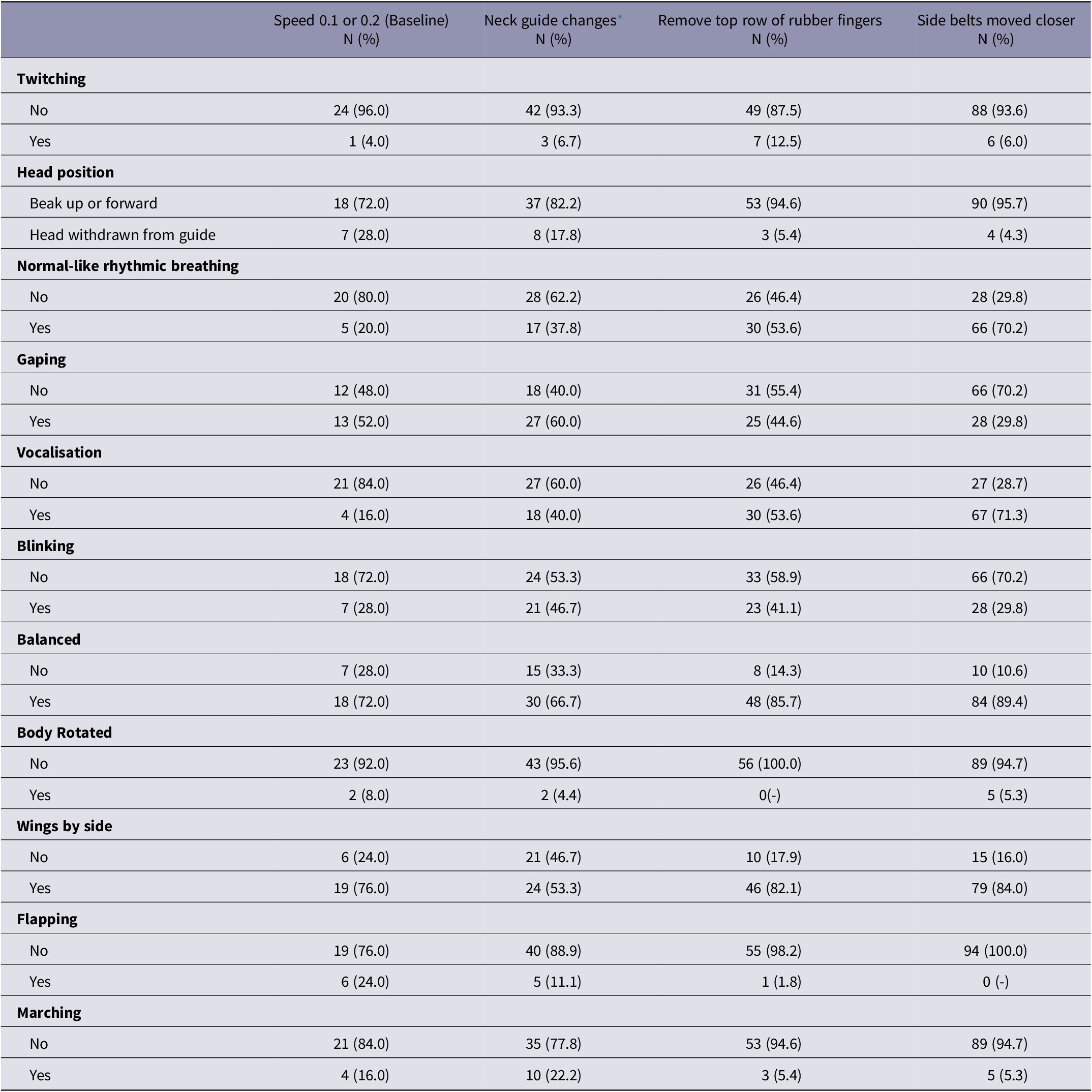
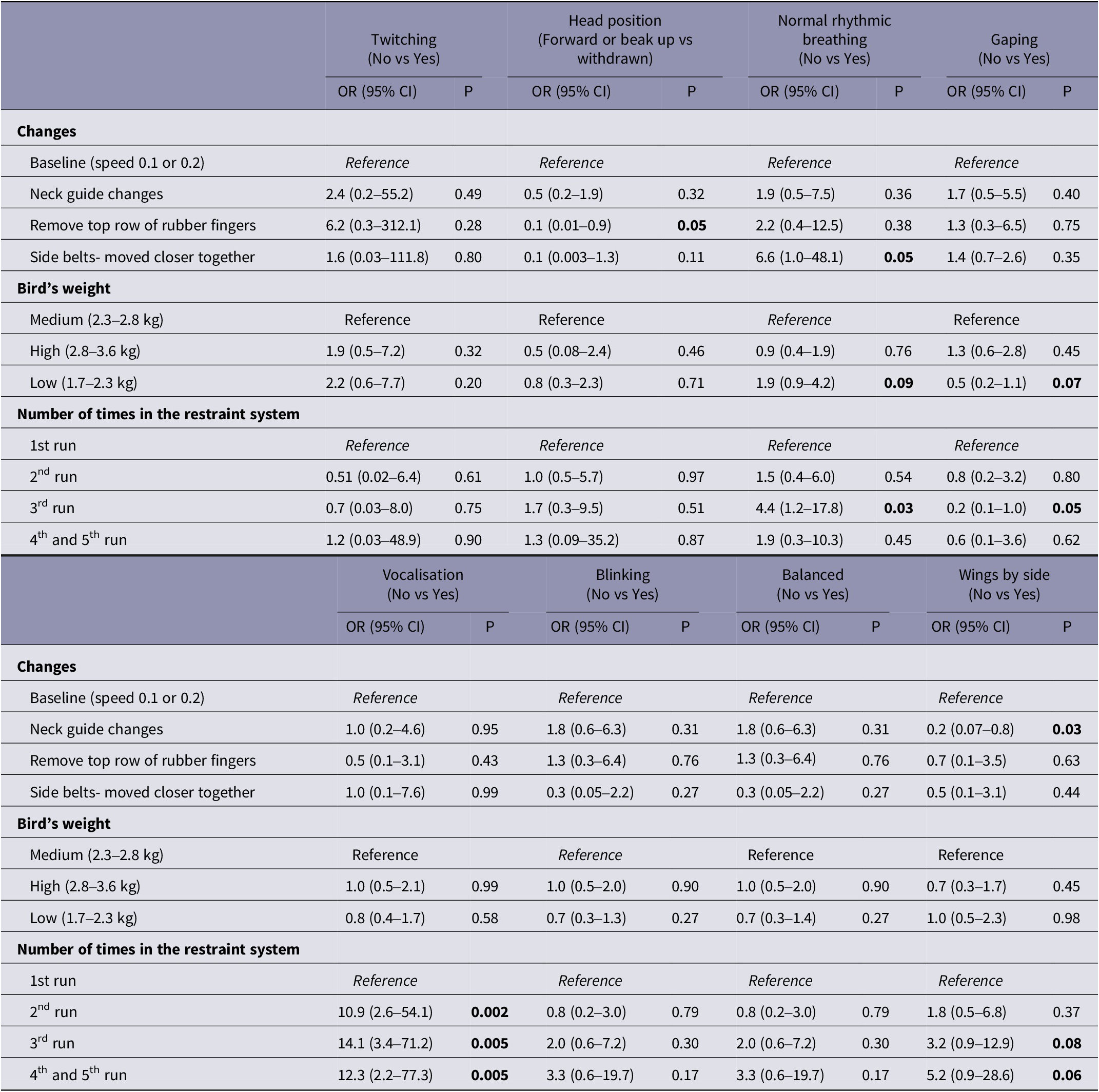
Five cumulative modifications were made in the restraint system during the study to improve performance and welfare of the birds during restraint. Number and proportion of birds presenting each behaviour while going through the restraint, stratified by modification to the restraint system, are presented in Table 6. Vocalisations significantly increased from the first to second time birds went through the restraint (Tables 6 and 7). After adjusting for birds’ weight and number of times each bird went through the restraint, neck guide changes (namely: shape of entry of the neck guide changed to a V-shape and reduced width between neck guides) decreased the odds of birds presenting even wings when going through the restraint (OR = 0.2; P = 0.03) compared to baseline. Removing the top row of rubber fingers reduced the odds of birds pulling their heads out of the neck guide (OR = 0.1; P = 0.05). The proportion of birds presenting normal-like rhythmic breathing increased as more changes were introduced. Modifying the position of the side-belts (closer together), resulted in birds being more likely to present normal-like rhythmic breathing while going through the restraint (OR = 6.6; P = 0.05), with birds in the ‘low’ weight category showing a trend towards significance and in the 3rd run significantly more likely to present normal breathing (Table 7).
Number (and percentage) of broiler chickens presenting different behaviours while going through the restraint system following modifications to the restraint

Table 6. Long description
Columns represent baseline speed, neck-guide changes, removal of the top rubber-finger row, and side belts moved closer, with 25, 45, 56 and 94 runs. Percentages for the stated outcome, in that order, were: twitching, 4.0, 6.7, 12.5, 6.0; head withdrawn, 28.0, 17.8, 5.4, 4.3; normal-like breathing, 20.0, 37.8, 53.6, 70.2; gaping, 52.0, 60.0, 44.6, 29.8; vocalisation, 16.0, 40.0, 53.6, 71.3; blinking, 28.0, 46.7, 41.1, 29.8; balanced, 72.0, 66.7, 85.7, 89.4; body rotated, 8.0, 4.4, 0, 5.3; wings by side, 76.0, 53.3, 82.1, 84.0; flapping, 24.0, 11.1, 1.8, 0; and marching, 16.0, 22.2, 5.4, 5.3. The neck-guide group combined a funnel-shaped entry with reduced guide width.
* Shape of neck guide, cut funnel (V entry) at entry and width between neck guides decreased.
Multivariable logistic regression to assess the relationship between modifications introduced in the restraint system and each behaviour accounting for the potential confounding effect of broiler chicken weight and number of times the bird has been in the restraint system. Relationships significant or trending towards significance indicated in bold

Table 7. Long description
Models assess twitching, head position, normal breathing, gaping, vocalisation, blinking, balance and wings by side, using baseline settings, medium weight and first run as references. Removing the top finger row reduced head withdrawal: OR 0.1, 95% CI 0.01-0.9, P=0.05. Closer side belts increased normal breathing: 6.6, 1.0-48.1, P=0.05. The third run increased normal breathing: 4.4, 1.2-17.8, P=0.03, and reduced gaping: 0.2, 0.1-1.0, P=0.05. Vocalisation rose on the second, third, and fourth or fifth runs: OR 10.9, 14.1 and 12.3; P=0.002, 0.005 and 0.005. Neck-guide changes reduced wings-by-side posture: 0.2, 0.07-0.8, P=0.03. Trends included low weight with more normal breathing and less gaping, and later runs with more wings-by-side posture. No significant association was identified for twitching, blinking or balance.
Discussion
The study demonstrated the feasibility of an upright restraint system for poultry intended for head-only electrical stunning. The system was designed to reduce the welfare issues associated with inversion and shackling during pre-stunning restraint. The refinements to the system made during the study generally reduced signs of distress and ensured the birds were correctly positioned. Variations in weight of the birds had a limited influence on the level of restraint. Taken together, these findings support the potential for this approach as a more humane alternative to water-bath stunning.
Although there were significant differences in some behaviours after going through the restraint, the majority of these indicated only mild discomfort and distress, and there were no cases of tonic immobility or escape-like behaviours at any stage post restraint that would suggest excessive fear had been induced (Jones & Faure Reference Jones and Faure1981; Jones Reference Jones1986; Nicol Reference Nicol1992). This contrasts with inversion and shackling, which have been suggested to cause pain, distress and fear (Kannan & Mench Reference Kannan and Mench1996; Bedanova et al. Reference Bedanova, Voslarova, Chloupek, Pistekova, Suchy, Blahova, Dobsikova and Vecerek2007; EFSA Panel on Animal Health and Welfare [AHAW] et al. Reference Nielsen, Alvarez, Bicout, Calistri, Depner, Drewe, Garin-Bastuji, Gonzales Rojas, Gortázar Schmidt, Miranda Chueca, Roberts, Sihvonen, Spoolder, Stahl, Velarde Calvo, Viltrop, Winckler, Candiani, Fabris, Van der Stede and Michel2019). This system could potentially be an improvement on systems currently available for both Halal and non-Halal markets. It should be noted however that in this study the focus was on proof of concept and initial evaluation of welfare, meaning no direct-matched, controlled comparisons were made with water-bath, cone head-only electrical stunning or CAS stunning.
The iterative refinement approach of this study, particularly the restraint modifications of altered neck guide shapes, belt position and finger positioning, significantly improved bird alignment without signs of overt pain, distress or trauma. For example, modifying the position of the side-belts (closer together), resulted in birds being 6.6 times more likely to present normal-like rhythmic breathing while going through the restraint, suggesting this change was potentially associated with reduced stress. However, this may instead suggest either that the birds became habituated to the repeated handling and restraint cycles (Jones Reference Jones1996; Jackson et al. Reference Jackson, Quino, Gautam, Gilpin, Still, Landers and Baker-Cook2025) or that birds are still in a stressed state but have become behaviourally unresponsive to the repeated episodes (Kannan & Mench Reference Kannan and Mench1997). This is supported by the association between repeated exposure and increased occurrence of vocalisations, potentially indicative of mild stress or familiarity effects. Notably, in commercial use, birds would enter only once, then be stunned and bled, so the multi-run observation should not be over-generalised to slaughter conditions.
In addition to restraint evaluation, behavioural assessments indicated increased vocalisation and alert behaviours after the first exposure to the restraint system, consistent with an arousal response to handling/novelty rather than pain (Elston et al. Reference Elston, Beck, Kachman and Scheideler2000). These changes could reflect heightened arousal rather than distress, as preening and feather ruffling are commonly observed as displacement/comfort behaviours during recovery and re-establishment of behavioural homeostasis post-disturbance, rather than as indicators of nociception (Zimmerman et al. Reference Zimmerman, Lundberg, Keeling and Koene2003; Edgar et al. Reference Edgar, Lowe, Paul and Nicol2011). Importantly, tonic immobility, escape attempts, and panting, which are robust indicators of severe stress, were not consistently observed, and no severe injuries or lesions attributable to restraint were evident. However, there was an increase in some localised blemishes and lesions around the jaw and ear as runs were repeated. This may have been due to external factors such as growth rates, with improvements to the neck guide made to address this. Prior to handling and experimentation, similar localised blemishes were observed. The changes observed were superficial (erythema and minor abrasions), focal to anticipated contact points, and not indicative of deeper tissue injury.
In comparison to the Alternative Stun/Kill (ASK) system previously developed by Tinker et al. (Reference Tinker, Raj, Berry and O’Callaghan2006), this study aimed to isolate and validate the restraint component alone. The central welfare improvement common to both approaches is the elimination of inversion and live shackling. However, ASK’s foam-roller design raised hygiene, durability and commercial adoption questions (Tinker et al. Reference Tinker, Raj, Berry and O’Callaghan2006). By contrast, the present design using washable rubber fingers and synchronised belts provides reliable mechanical restraint and straightforward hygiene management while retaining Halal compatibility via head-only electrical reversible stunning. In comparison with cone-based head-only systems, the current restraint offers similar control of head/neck alignment without inversion and leg restraint. Cones mitigate uncontrolled wing flapping and can reduce meat quality issues (Hillebrand et al. Reference Hillebrand, Lambooy and Veerkamp1996; Lambooij et al. Reference Lambooij, Reimert and Hindle2010), however they still require inversion of the conscious bird and, for automated systems, a certain degree of leg restraint (Lambooij et al. Reference Lambooij, Reimert and Hindle2010, Reference Lambooij, Reimert, Verhoeven and Hindle2014; Gerritzen et al. Reference Gerritzen, Hattum and Reimert2015). Therefore, they continue to expose conscious birds to an unnatural and stressful position (Shields & Raj Reference Shields and Raj2010) and the pain associated with shackling (Gentle & Tilston Reference Gentle and Tilston2000; FAWC 2009; Gentle Reference Gentle2011).
Part 2 of the project (published simultaneously; Gibson et al. Reference Gibson, Limon, Campbell, Chancellor, Fletcher, Berry and Lines2026) explores the introduction of head-only electrical stunning and potential approaches in which the restraint device can accommodate post-stun convulsions without increasing injury risk, which has been an issue in previous head-only electrical stunning studies (Gregory & Wotton Reference Gregory and Wotton1990; Hillebrand et al. Reference Hillebrand, Lambooy and Veerkamp1996). Although the system was tested under experimental conditions with individual birds, future work is needed to validate its scalability and performance close to commercial conditions.
Study limitations
Limitations of this study were that it was performed in controlled, non-commercial conditions with a limited sample size. However, this was unavoidable at this stage of development where assessment in controlled conditions was crucial for development and establishment of proof of concept. Also, the study did not include a sham-handled control group. Therefore, behavioural changes following passage through the system could not be separated fully from the effects of catching, transport, manual handling, noise generated by the restraint system and the test environment. These potential confounding effects were mitigated, although not eliminated, by providing a 20-min acclimatisation period following transport from the home pens, handling and leg-band placement, during which the restraint system operated continuously in the background to familiarise the birds with its sound.
Endocrine indices of physiological stress (glucocorticoids and catecholamines) were purposely not included in this study, as invasive endocrine sampling risks confounding stress response interpretation and the study therefore prioritised behavioural assessment at this developmental stage. Given the iterative nature and visibly distinct modifications of the restraint system, it was not practicable to blind observers to the configuration being assessed or to the stage of the study. Formal inter-observer reliability testing was also not undertaken due to logistical constraints. Consequently, potential observer bias and variation in the classification of behavioural and physical outcomes cannot be fully excluded.
The reuse of individual birds across successive, cumulative modifications of the restraint system was a further potential limitation. This introduced the possibility of within-bird carry-over effects and made it difficult to separate the effects of individual modifications fully from exposure order, despite adjustments for run number and bodyweight. As discussed above, repeated exposure may also have resulted in habituation or sensitisation. Nevertheless, this approach substantially reduced the number of animals required by avoiding the use of a separate naïve group for each modification and therefore represented a reduction under the 3Rs (Russell & Burch Reference Russell and Burch1959).
Animal welfare implications and Conclusion
In conclusion, this study successfully demonstrated the proof of concept for an upright restraint system that could facilitate head-only electrical stunning in broilers. This approach is designed to avoid the stress of live inversion and pain associated with pre-stunning restraint. While further integration with head-only electrical stunning and commercial testing are required, the upright restraint offers a promising route for addressing both the welfare concerns of current systems and the practical requirements of diverse processing contexts, including Halal production.
Acknowledgements
This study was funded by The Open Philanthropy Project and the Department for Environment, Food and Rural Affairs. The authors wish to thank Compassion in World Farming for all their help and support, John and Pete Richards for engineering the restraint, Moy Park Ltd for supplying the birds, and Christopher Davies for assistance in animal management and advice.
Competing interests
None.
Data-availability statement
The data that support the findings of this study are available from the corresponding author upon reasonable request.

 Open access

