INTRODUCTION
Many species of the pearl oyster (Pinctada radiata) exhibit great variation in the shell morphology throughout their distribution (Wada, Reference Wada1982; Beaumont & Khamdan, Reference Beaumont and Khamdan1991). This variation may be related to phenotypic plasticity (Kelly et al., Reference Kelly, Panhuis and Stoehr2012) and/or genetic variability (Benzie & Smith-Keune, Reference Benzie and Smith-Keune2006). Most morphogenetic investigations on the pearl oyster have focused on allopatric process, i.e. using samples from either end of a large geographic range with dissimilar environments with different ecological characteristics (Lind et al., Reference Lind, Evans, Taylor and Jerry2007; Tlig-Zouari et al., Reference Tlig-Zouari, Rabaoui, Irathni, Diawara and Ben Hassine2010) to ensure the existence of a physical barrier and lack of a gene flow between the populations (Gopurenko & Hughes, Reference Gopurenko and Hughes2002; Ward et al., Reference Ward, Ovenden, Meadows, Grewe and Lehnert2006). As a result, sympatric differentiation of morphogenetic characterisics in P. radiata has rarely been reported, although it has been shown that morphological characteristics of P. radiata populations may differ without physical barriers (Rajaei et al., Reference Rajaei, Poorbagher, Farahmand, Mortazavi and Eagderi2014).
The presence of the pearl oyster has a long history in the Persian Gulf (Elisabeth, Reference Elisabeth, Southgate and Lucas2008). There are two populations of P. radiata (Leach, 1814) in the northern Persian Gulf, i.e. in the Lavan and Hendourabi Islands. Despite the short distance between the two islands, these populations exhibit dissimilar morphology (Rajaei et al., Reference Rajaei, Poorbagher, Farahmand, Mortazavi and Eagderi2014). The Hendourabi Island population tended to be wider, while Lavan Island specimens tended to be longer, and the thickness of those from Lavan Island was greater than those of Hendourabi Island (Rajaei et al., Reference Rajaei, Poorbagher, Farahmand, Mortazavi and Eagderi2014). There is no physical barrier between the two islands suggesting a gene flow between the populations through westerly currents of the northern Persian Gulf (Persian Gulf Study Center, 2013). The major difference between the environmental parameters of the two islands originates in the oil industry. Lavan Island is the second largest oil-producing island in Iran with its environment having suffered from the storage and production of crude oil and ballast water. In contrast, Hendourabi Island is away from the petroleum industries suggesting that the marine biota of the island are less stressed than those from the Lavan Island.
The scope to which genetic divergence can happen in the absence of physical barriers to restrict the gene flow between populations is currently one of the most polemic topics in evolutionary biology, helping in the understanding of phenotypic plasticity, adaptive potential and speciation (Hoffman et al., Reference Hoffman, Peck, Hillyard, Zieritz and Clark2010). Few studies have investigated both phenotypic plasticity and genetic variability in populations of pearl oyster with dissimilar morphological features. The present study thus aimed to investigate whether the morphological differences between the close populations of P. radiata in the northern Persian Gulf reflects the genetic variability and thus probable sympatric genetic differentiation in P. radiata populations.
MATERIALS AND METHODS
Sampling
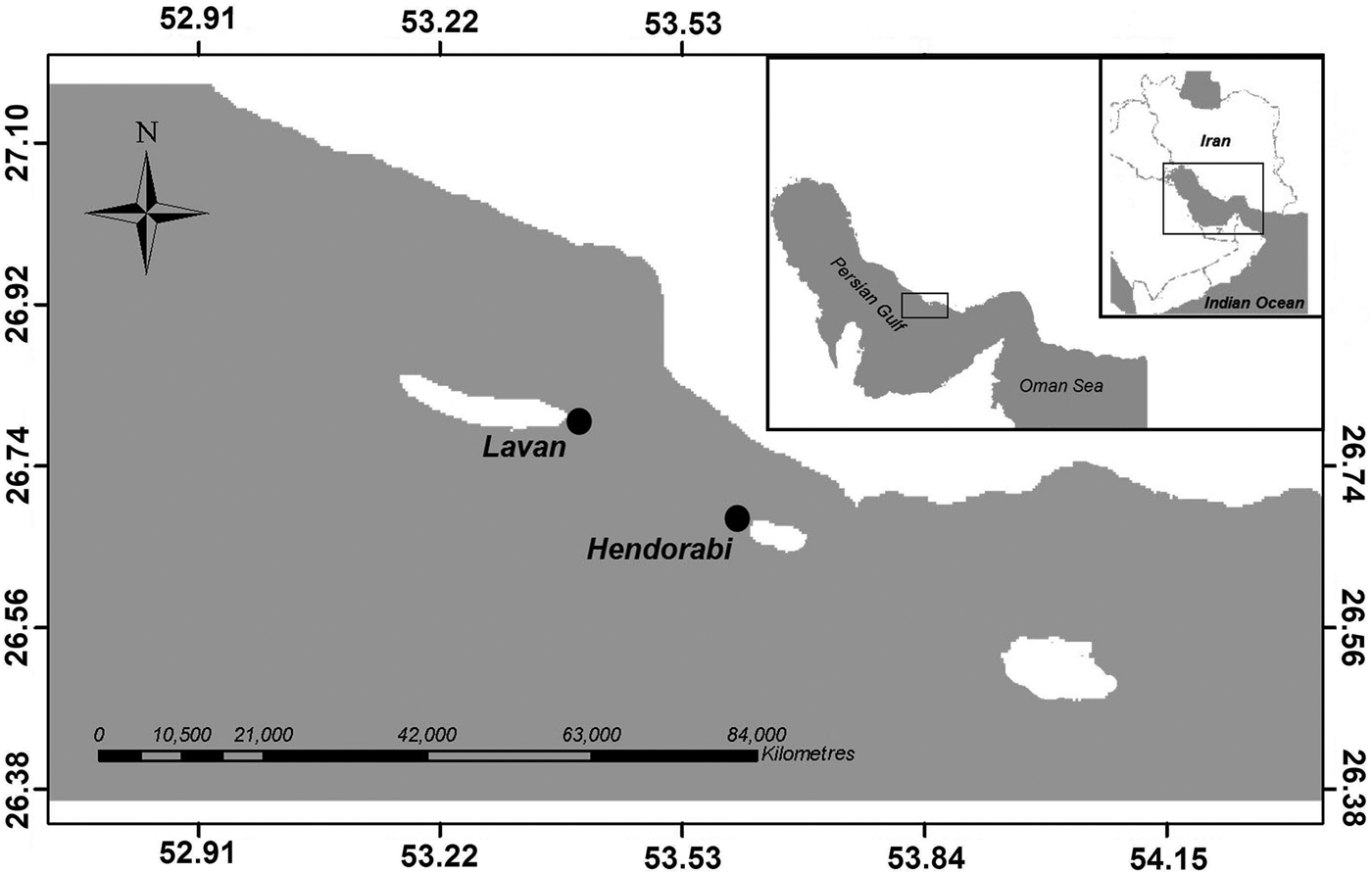
The present study was conducted in two islands of the northern Persian Gulf, i.e. Hendourabi and Lavan (Figure 1). One hundred and nineteen specimens of P. radiata were collected using scuba diving at a depth of 6–8 m in coastal waters of Hendourabi and Lavan. Forty specimens were transported to the laboratory in an ice box for heavy metal analysis. Seventy-nine specimens ranging from 35.10 to 79.12 mm shell height were digitized and used for geometric analysis and 52 specimens for genetic analysis were selected.
Sampling points of Pinctada radiata populations in the northern Persian Gulf (the Hendourabi and Lavan Islands).

Geometric morphometrics
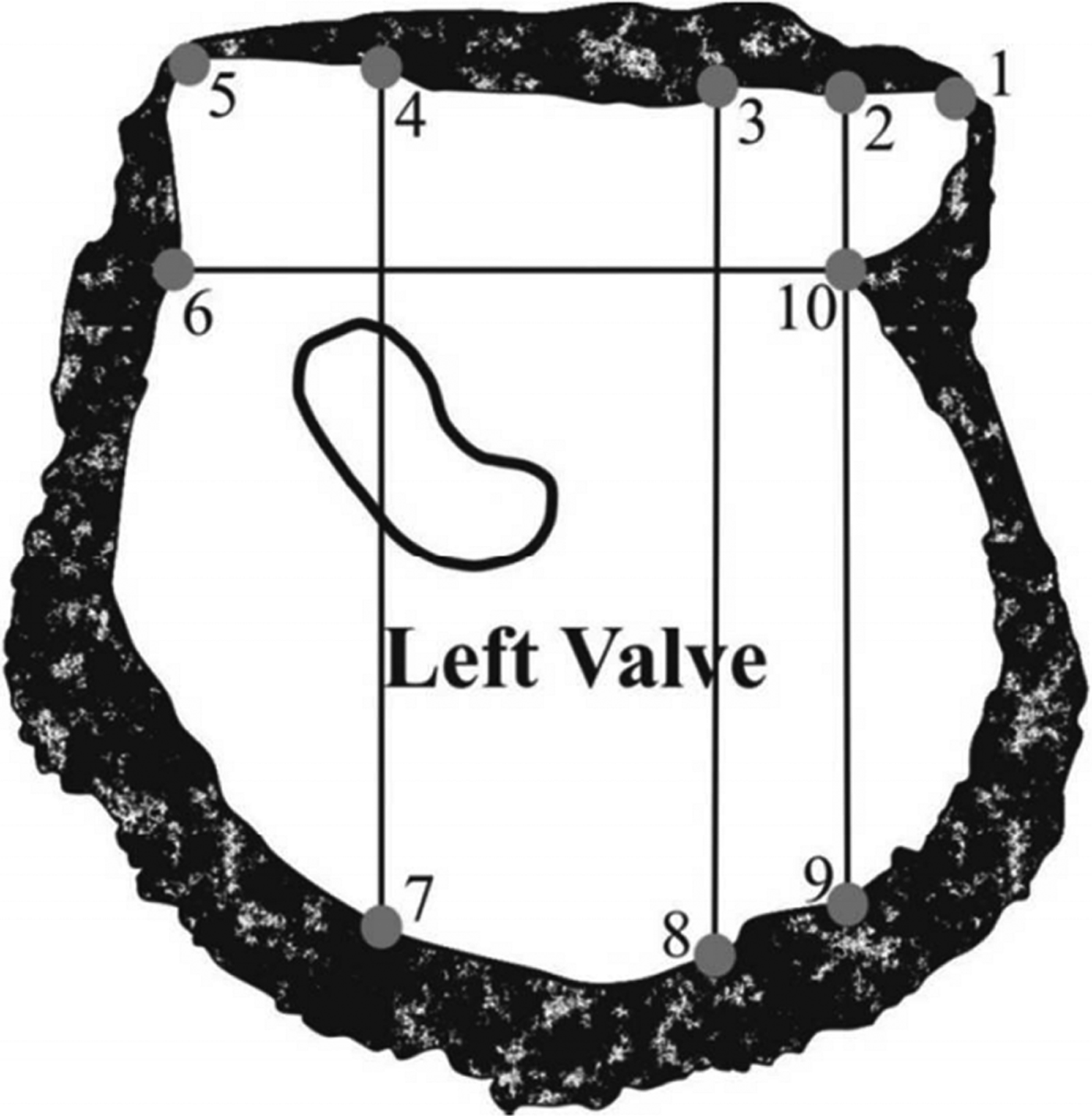
The left valve of each specimen was photographed using a Sony digital camera (30 cm distance and a right angle). The images were converted to TPS files using tpsUtil (version 1.46) and 10 landmarks were placed on the pictures using tpsDig, as shown in Figure 2 (version 2.14; Rohlf, Reference Rohlf2009, Reference Rohlf2010). The coordinates were transformed by procrustes superimposition using Coordgen6f (Sheets, Reference Sheets2001). To describe the shell shape variations among the populations, a canonical variant analysis (CVA) was performed using CVAGen6. Since the CVA suggested a significant difference between the populations, the tendency of direction of the landmarks was calculated to examine the shape variation in the specimens from Lavan and Hendourabi. This analysis was carried out using the TwoGroup6 software.
The position of the 10 landmarks used to define inner surface of the left shell shape of the pearl oyster. To improve the identification of points, all landmarks were painted with large points of permanent marker.
Heavy metal
The frozen specimens were transported to the laboratory in plastic bags. Half a gram of soft tissue was weighed to the nearest 0.001 g using an electronic scale. The freeze-dried tissues were digested in 10 ml HNO3 (99.99% Merck) at 150°C until appearance of a clear solution when a yellow colour was formed. The samples were filtered using an ashless filter paper. The remaining materials on the filter paper (mainly fat) were forced to pass the filter using warm distilled water and melting the materials to a final volume of 25 ml. The concentrations of metals were measured using atomic absorption spectrometry (Shaimadzu AA G70). In the present study, concentration of metals was expressed as μg g−1 wet weight. To examine a significant difference in concentration of Zn, Mg, Fe, Cu, Pb, Cd, Mn and Cr between specimens from the two islands the Hotelling's T 2 was applied using the R package ‘Hotelling’ version 1.0–2.
Genetic diversity
Fifty-two specimens were randomly selected (26 from each island). The adductor muscle was sampled (≈1 g) using biopsy and preserved in 96% ethanol. The preserved tissue was digested in lysis buffer (10 mg ml−1) and 30 µl Proteinase K for overnight at 55°C, followed by a phenol–chloroform–isoamyl alcohol purification protocol to extract total genomic DNA (Sambrook et al., Reference Sambrook, Fritsch and Maniatis1989). The quality and quantity of the genomic DNA samples were examined using 1% agarose gel electrophoresis and NanoDrop-ND1000.
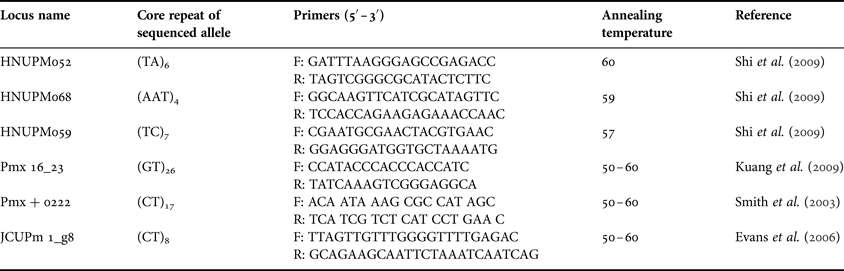
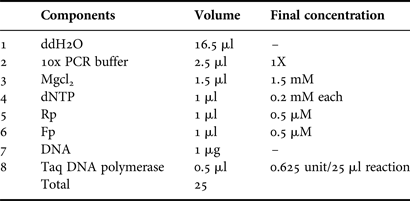
The screened microsatellites were the six polymorphic loci that had been isolated and characterized from genomic DNA (Table 1). Polymerase chain reaction (PCR) was conducted in 25 µl volumes using the conditions presented in Table 2. MgCl2 concentrations varied for each marker according to the original published conditions. Thermocycler programmes began with an initial denaturation step for 7 min at 96°C followed by 35 cycles of 94°C for 1 min, annealing temperature for 1 min and 72°C for 1 min, then a final extension step at 72°C for 7 min. The annealing temperature varied for the loci. Finally, the success of amplification was examined using 1.5% agarose gel electrophoresis. The PCR products were then separated on 4% MetaPhor® Agarose (FMC, Rockland, ME, USA) gels and visualized using ethidium bromide staining.
Microsatellite markers used in Pinctada radiata population study.
Amount of PCR components used in this study.
Number of alleles, observed heterozygosity (HO), expected heterozygosity (HE) and effective number of alleles (ne) were calculated using the software Popgen 1.32 (Nei, Reference Nei1973; Labate, Reference Labate2000). Genalex 6 was used to identify deviations from Hardy–Weinberg equilibrium (Peakall & Smouse, Reference Peakall and Smouse2005). Gene diversity, allelic richness (Rs) (Leberg, Reference Leberg2008), inbreeding coefficient (FIS) also were assessed for the two populations using FSTAT 2.9.3.2 (Goudet, Reference Goudet1995). For partitioning the proportion of variance among (F ST) and between (F IS) population genetic differences, an F-statistics was used (Weir & Cockerham, Reference Weir and Cockerham1984). Weighted estimates of global F ST and F IS (AMOVA; Excoffier et al., Reference Excoffier, Smouse and Quattro1992) were performed using arlequin 3.1 (Excoffier & Lischer, Reference Excoffier and Lischer2010). Furthermore the Garza–Williamson test, which is a statistic for bottleneck detection using microsatellite data was performed using this program. The formula is number of alleles/R (allele range) + 1 (Garza & Williamson, Reference Garza and Williamson2001).
RESULTS
Geometric morphometric
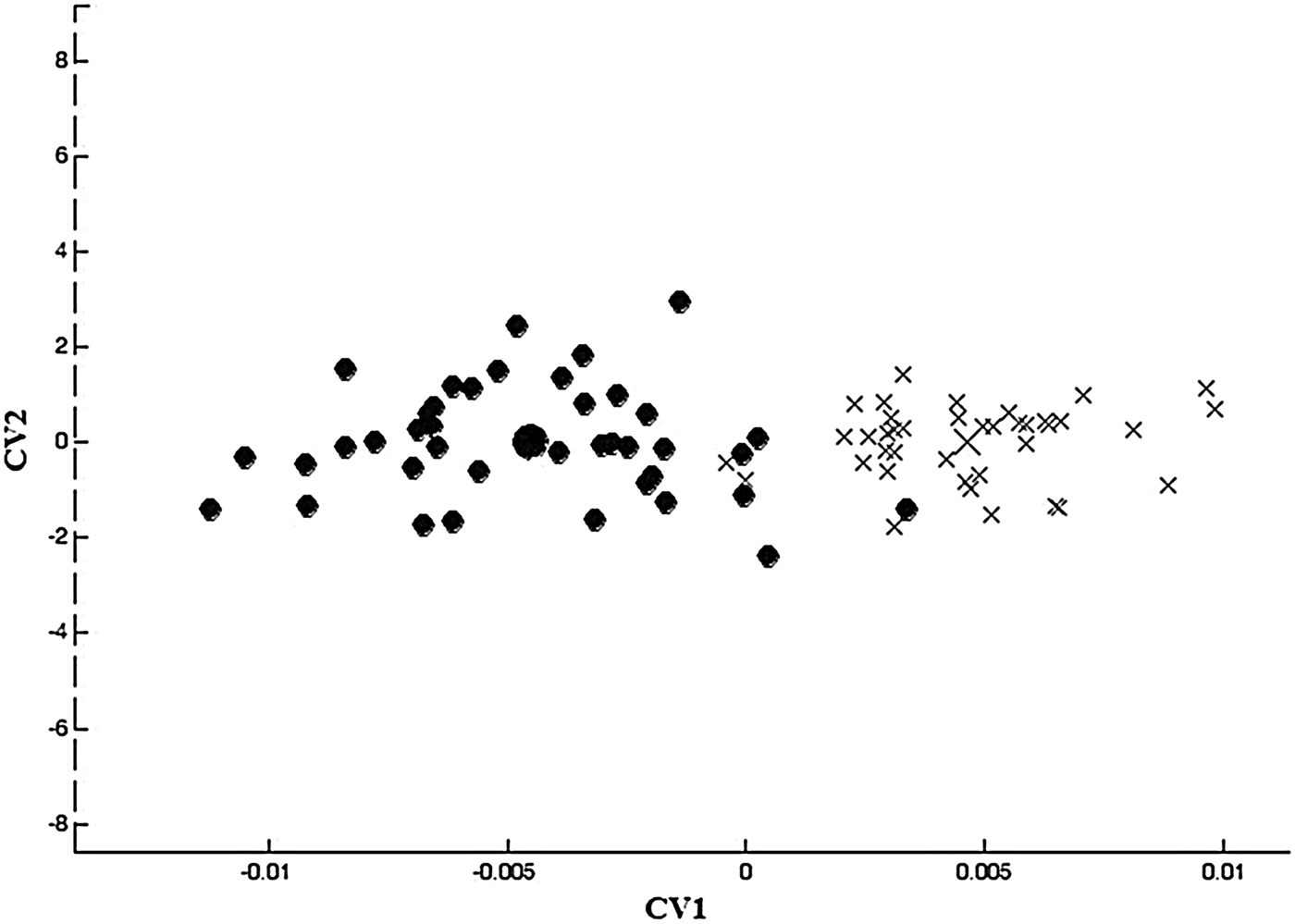
The canonical variable detected a significant difference between the two populations (P < 0.001, Figure 3).
Geometric morphometric. Distribution of scored frequencies generated by canonical variate analysis (CV1 and CV2 = the first and second canonical variate) from the specimens of Lavan (•) and Hendourabi (×).
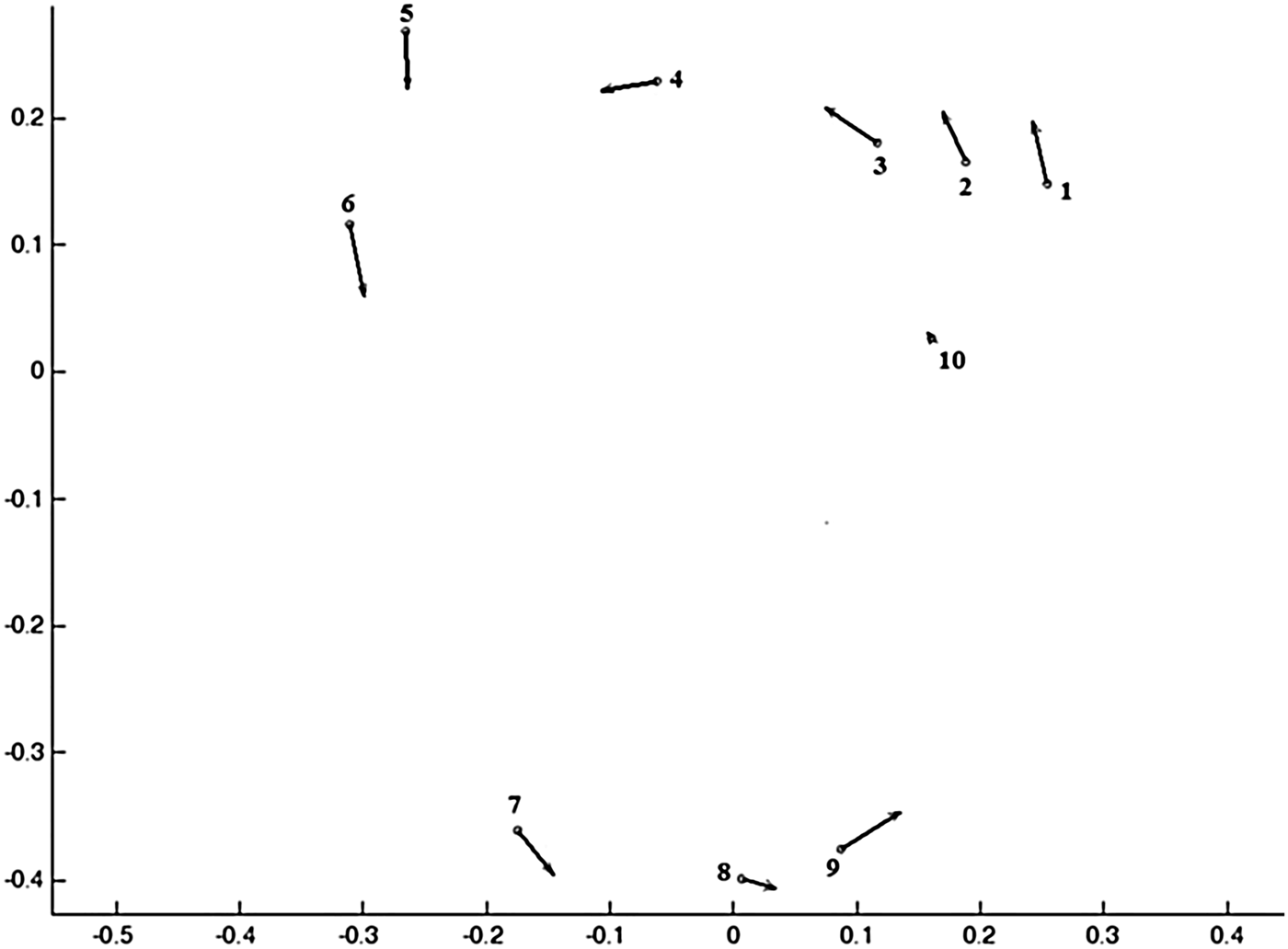
The shape of specimens from Hendourabi tended to be more depressed than those from Lavan. The landmark No. 10 had the least differentiation and the landmarks 5 & 6 had the most differentiation (Figure 4) indicating that the shells of the Lavan specimens were more stretched than those from Hendourabi. There was a major difference between specimens of Lavan and Hendourabi Islands in the dorsal lip (in the direction of lateral hinge teeth) with Lavan specimens having larger dorsal lips than those from Hendourabi.
Geometric morphometric. The tendency direction of landmarks from Lavan to Hendourabi generated by IMP TwoGroup6h. The numbers on the graph are the landmark as depicted in Figure 2.
Heavy metal
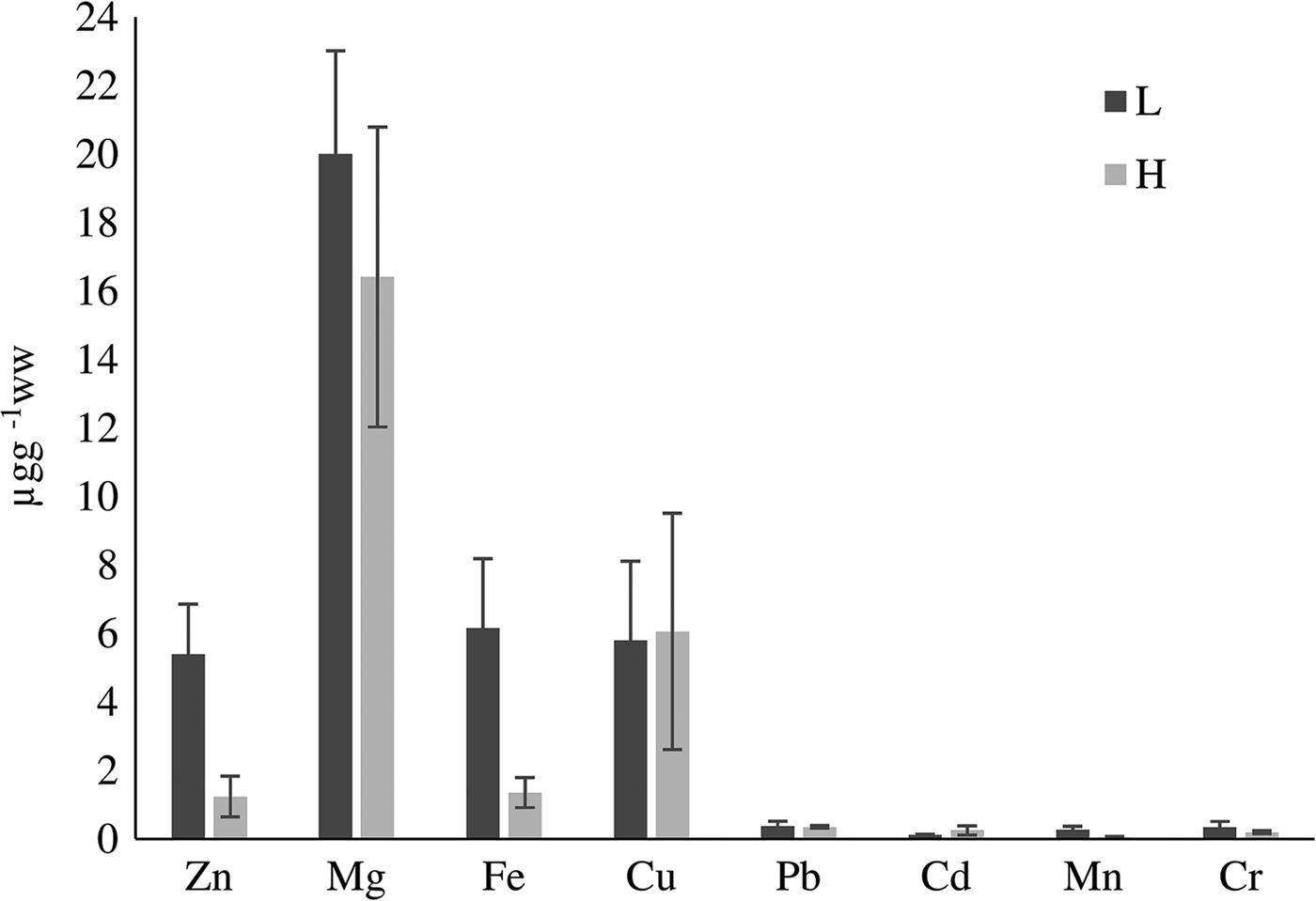
The average concentrations of Zn, Mg, Fe, Cu, Pb, Cd, Mn and Cr in soft tissue of the pearl oysters collected from Hendourabi and Lavan are presented in Figure 5. The highest concentration of Mn, Cr, Fe, Mg, Zn and Pb were found in the Lavan specimens while Cd and Cu were higher in the specimens from Hendourabi. Among the metals, Mg and Mn had the highest and lowest concentrations, respectively.
The mean concentration of Zn, Mg, Fe, Cu, Pb, Cd, Mn and Cr in soft tissues of the pearl oyster collected from the Hendourabi (H) and Lavan (L) Islands.
There was a significant difference between the specimens collected from Hendourabi and Lavan in concentrations of heavy metals (Hotelling's T 2 statistic = 30.208, df = 8, 30, P = 8.227 × 10⁻¹⁴).
Genetic diversity
The JCUPm 1_g8, Pmx + 0222 and Pmx 16_23 loci didn't show any band under different biochemical and annealing temperature condition and the HNUPM052, HNUPM059 and HNUPM068 loci are included in all analyses.
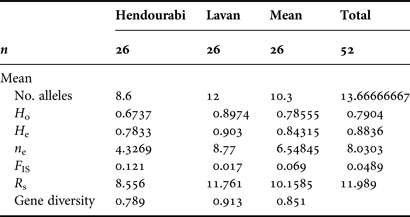
Genetic diversity varied across the samples of the two populations and loci. Levels of polymorphism among Hendourabi and Lavan in the microsatellite loci analysed in these two islands were variable, with the overall number of alleles ranging from seven alleles at the HNUPM059 locus in Hendourabi, to 13 alleles at HNUPM068 in Lavan. Expected heterozygosities were high (>0.7) in both Hendourabi and Lavan for all loci, and the observed heterozygosity for most loci was lower than expected heterozygosity. The mean observed heterozygosity (HO) differed among Hendourabi and Lavan (Hendourabi: 0.6737; Lavan: 0.8974), the locus HNUPM068 had the most difference. Estimation of effective number of alleles differs greatly between Hendourabi and Lavan (Mean Lavan: 8.77; Hendourabi: 4.3269). Allelic richness (RS) showed a distinct trend of fewer alleles per locus at Hendourabi than the Lavan, with a mean RS ranging from 8.556 in Hendourabi to 11.761 in Lavan. The mean RS of Lavan was significantly greater than that of Hendourabi (t-test, P = 0.040), which was also seen by the expected heterozygosity means (HE). The mean gene diversity of Lavan was also greater than Hendourabi (Table 3).
Genetic diversity statistics of Pinctada radiata populations, showing number of alleles, observed heterozygosity (H O); expected heterozygosity (H E); Effective number of alleles (n e), inbreeding coefficient (F IS), allelic richness (Rs) and gene diversity.
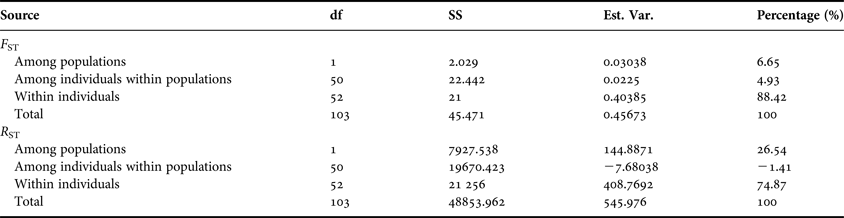
The pearl oyster individuals showed significant partitioning of genetic variation in Hendourabi and Lavan. The analysis of molecular variance (AMOVA) indicated that the proportion of the global genetic variation attributed to differences between the Hendourabi and Lavan populations was highly significant for both F ST (based on allele frequencies) and R ST (based on allele sizes) estimates (F ST = 0.06653; R ST = 0.26537, P < 0.001) (Table 4).
Analysis of molecular variance (AMOVA) describing the partitioning of genetic variation for two populations of the pearl oyster in Hendourabi and Lavan.
Global F ST = 0.06653, P < 0.001 ± 0.00001.
Global R ST = 0.26537, P < 0.001 ± 0.00001.
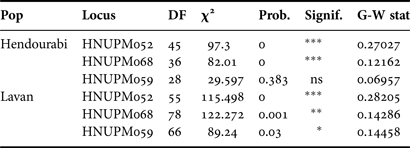
Except HNUPM059 in Hendourabi, all other loci had significant deviations from Hardy–Weinberg expectations of heterozygosity. The Garza–Williamson statistic for microsatellite data for all loci was lower than 0.6 which is an indicator of bottleneck (Garza & Williamson, Reference Garza and Williamson2001) in the populations of both Lavan and Hendourabi (Table 5).
Test of Hardy–Weinberg equilibrium and Garza-Williamson on two populations of the pearl oyster in Hendourabi and Lavan Islands.
ns, not significant.
*P < 0.05, **P < 0.01, ***P < 0.001.
DISCUSSION
The present study found a significant intraspecific morphological variability in P. radiata from two close islands of the Persian Gulf, Hendourabi and Lavan. The two islands have similar salinity, temperature and wave action (PGSC, 2013), which are the most important environmental factors influencing the morphological differentiation of the pearl oyster populations (Beaumont & Khamdan, Reference Beaumont and Khamdan1991; Tlig-Zouari et al., Reference Tlig-Zouari, Rabaoui, Irathni, Diawara and Ben Hassine2010). The major difference in environmental parameters of the two islands is the water and sediment characteristics, these being related to the petrochemical pollution and heavy metals concentration (Rajaei et al., Reference Rajaei, Poorbagher, Farahmand, Mortazavi and Eagderi2014). Our analyses of heavy metals also indicated significant differences in concentrations of the metals between the oysters collected from Hendourabi and Lavan confirming that Lavan is a more polluted and thus stressful environment than Hendourabi.
Our findings of the genetic analysis showed that the populations of P. radiata are genetically structured throughout Hendourabi and Lavan. The larval period of P. radiata lasts 16–30 days (Gervis & Sims, Reference Gervis and Sims1992), being long enough to let the larvae get a piggyback from the westerly currents of the Persian Gulf (PGSC, 2013) and move from Hendourabi to Lavan. Hence, the pearl oysters of Hendourabi and Lavan may have a chance to mix with each other. However, there is a poor genetic exchange between Hendourabi and Lavan populations in spite of absence of physical barriers between the two islands. The sympatric genetic differentiation of the genus Pinctada has been reported previously, for example, Benzie & Smith-Keune (Reference Benzie and Smith-Keune2006) found genetic discrepancies between the populations of P. maxima in southern Indonesia and north-west Australia. They assigned the dominant factor shaping the population differentiation to a historical separation of the Pacific and Indian Ocean basins (Benzie & Smith-Keune, Reference Benzie and Smith-Keune2006). Also, Lind et al. (Reference Lind, Evans, Taylor and Jerry2007) found that the population of P. maxima is genetically structured throughout its distribution. Both of them reported F ST 0.009 and 0.027, respectively, considerably lower than estimates of genetic differentiation presented here in Hendourabi and Lavan (F ST = 0.0665, P < 0.001). Based on our results, which examined these populations on a small spatial scale, P. radiata exhibits stronger genetic population structuring than those reported previously (Benzie & Smith-Keune, Reference Benzie and Smith-Keune2006; Lind et al., Reference Lind, Evans, Taylor and Jerry2007). Both Lind et al. (Reference Lind, Evans, Taylor and Jerry2007) and Benzie & Smith-Keune (Reference Benzie and Smith-Keune2006) assigned this differentiation to the existence of an impassable land barrier, which does not exist between Hendourabi and Lavan.
Regarding the Garza–Williamson statistic for microsatellite data (G-W stat lower than 0.6) for all loci that is an indicator of bottleneck (Garza & Williamson, Reference Garza and Williamson2001), the H-W disequilibrium may arise from the population demography experiencing a recent population size decrease that has caused a heterozygote deficiency.
Although the Hendourabi larvae may be able to be transferred to Lavan Island, our results suggest that they cannot tolerate the heavy metal pollution and are removed in a competition with Lavan larvae, which may be adapted to a high concentration of heavy metals. In this respect, Gifford et al. (Reference Gifford, MacFarlane, O'Connor and Dunstan2006) showed that the total growth of the oyster could be affected by high concentrations of zinc and lead. It has already been demonstrated that chemicals can support biological activities or have toxic effects on living organisms at high concentrations (Roesijadi & Robinson, Reference Roesijadi, Robinson, Malins and Ostrander1994), influencing the biodiversity of the marine species (Andersen et al., Reference Andersen, Maage and Johannessen1996). The genetic differentiation found between Hendourabi and Lavan populations can increase over time and probably result in speciation (sympatric speciation).
In conclusion, the findings of this study indicated that there are morphological and genetic differentiations in Hendourabi and Lavan pearl oysters, which are probably related to the stressful environment generated by heavy metal pollution in these islands. This seems to be a plausible explanation for the significant differences in the genetic diversity seen here between Hendourabi individuals, which generally have experienced a less polluted environment, and those from Lavan that have probably adapted to the heavy metal pollution. Since this genetic differentiation is slow due to stressful conditions in Lavan, such diversity will be lost far more quickly, significant variation or differences in genetic diversity most likely arising through loss rather than gain (Amos & Harwood, Reference Amos and Harwood1998).
ACKNOWLEDGEMENTS
The authors would like to thank the help from the Invertebrates Research Station of the Persian Gulf and Oman Sea, especially Mr Hosein Rameshi for providing samples, Dr Soheil Eagderi, Bita Khalili and Guity Sabadoust.