


“Being against something unites, while being for something divides.”
Przeworski (Reference Przeworski2024, 13)
When opposition political parties win elections against illiberal autocratic incumbents, they elicit euphoric public expectations demanding the reversal of autocracy and the resuscitation of democracy. New governments are pressured to seek justice for past autocratic repression (Nalepa Reference Nalepa2010; Reference Nalepa2022), eliminate corrupt or patrimonial practices under autocracy (Hassan Reference Hassan2020; Morse Reference Morse2019; Yadav and Mukherjee Reference Yadav and Mukherjee2016), dismantle the autocratic propaganda machine (Carter and Carter Reference Carter and Carter2023; Guriev and Treisman Reference Guriev and Treisman2022; Huang Reference Huang2015), restore neutrality and independence to the judicial system (Ginsburg and Moustafa Reference Ginsburg and Moustafa2008; Shen-Bayh Reference Shen-Bayh2022) and the bureaucracy (Cayton and Rosenfeld Reference Cayton, Rosenfeld, Roberts, Riedl, Pepinsky and Bunce2025), professionalize or re-professionalize the security forces (Greitens Reference Greitens2016; Lee Reference Lee2015), restore growth in a period of economic depression (Pepinsky Reference Pepinsky2009; Shih Reference Shih2020), and reform an uneven electoral playing field (Gandhi and Lust-Okar Reference Gandhi and Lust-Okar2009; Knutsen, Nygård, and Wig Reference Knutsen, Nygård and Wig2017). Yet, can newly victorious opposition actors actually succeed in implementing pro-democratic reforms to reverse autocracy after victory? If so, how do they do it? If not, why not?
Past research suggest that autocratic turnovers beckon democratization endogenously (Bratton and van de Walle Reference Bratton and van de Walle1997; Donno Reference Donno2013; Howard and Roessler Reference Howard and Roessler2006; Lindberg Reference Lindberg2009; van de Walle Reference Van de Walle and Schedler2006). Yet more recent research is skeptical about the democratizing power of new governments (Pop-Eleches and Robertson Reference Pop-Eleches and Robertson2014; Wahman Reference Wahman2013). Newly empowered elites take the reins of old authoritarian institutions and deploy them to consolidate power in their own self-interest, rather than reform them (Bianchi, Cheeseman, and Cyr Reference Bianchi, Cheeseman and Cyr2025; Hinfelaar, Kaaba, and Wahman Reference Hinfelaar, Kaaba and Wahman2021). Authoritarian legacies and successor parties jam the gears of new governments by structuring politics to their successors’ disadvantage (Loxton Reference Loxton2015; Reference Loxton2021; Miller Reference Miller2021). These structural conditions force newly empowered elites into governance dilemmas that hinder and delay reforms to reverse autocracy and to consolidate or re-consolidate democracy (Bill and Stanley Reference Bill and Stanley2025).
Although self-interest and structural conditions are important explanations of why it is so challenging to reverse autocracy, they are also incomplete. These analyses of post-turnover democratic trajectories typically underappreciate an important element of opposition victories: pre-electoral opposition coalition formation. Forming a pre-electoral coalition of multiple opposition parties increases the chances of defeating dominant autocratic incumbents in established electoral authoritarian regimes (Arriola Reference Arriola2013; Golder Reference Golder2006; Kraetzschmar Reference Kraetzschmar2013; Wahman Reference Wahman2013). They do so by coordinating both elite entry into the electoral arena and the mass mobilization of ideologically diverse voter support groups (Ong Reference Ong2022a). Such opposition coalition formation also increases the chances of resisting and defeating illiberal autocratic incumbents in newly backsliding democracies (Riedl et al. Reference Riedl, Friesen, McCoy and Roberts2024; Somer, McCoy, and Luke Reference Somer, McCoy and Luke2021; Thompson Reference Thompson2021; Tomini, Gibril, and Bochev Reference Tomini, Gibril and Bochev2023). Yet, as Przeworski reminds us in this article’s epigraph, pre-electoral unity to defeat an illiberal autocratic incumbent does not guarantee post-electoral cohesion.
We argue that two long-neglected endogenous weaknesses in newly victorious opposition coalitions work to undermine overall public confidence and efforts to reverse autocracy after victory, thus easily opening the door for autocratic comebacks. First, ideological and distributional differences between coalition elites lead to coalition intra-elite conflicts. Coalition partners maneuver to consolidate or regain partisan advantages after elections. Individual parties become more vested in achieving their individual long-treasured ideological goals than in cooperating with each other on compromise solutions. Resolving conflicts requires extraordinary efforts and prolonged time, resulting in fractured and ineffective governance.
Second, because opposition coalitions mobilize supporters of ideologically diverse opposition parties, those supporters vary significantly in their enthusiasm for democratic reforms post-electoral victory. This leads to opposing public pressures on new coalition governments. A coalition’s core supporters may exhibit effusive fervor in creating pro-democratic institutional change and so pressure a new coalition government to implement speedy and widespread reforms. Its more peripheral or moderate supporters may pressure the new government to delay reforms and prioritize other policy agendas such as economic growth or public order. Torn between both sets of supporters, new coalition governments vacillate between doing too much or doing nothing at all. Public confidence plummets as the new government satisfies no one.
Even more, the illiberal autocratic ex-incumbent is ever ready to take advantage of vacillating governance. Hasty reforms lead to accusations by the ex-incumbent of authoritarian actions and partisan revenge. Conversely, a lack of action leads to accusations of weakness and instability. Either way, ex-incumbents—framing themselves as the victims of new abuses of political power and as exemplars of past effective governance—counter-mobilize their supporters onto the streets and to the ballot box, generating momentum for a political comeback.
Combined, both intra-elite and intra-supporter conflicts work in a pincer-like movement to trap and paralyze the new government. Core devotees of the opposition coalition become frustrated by ineffective governance and lackluster reforms. Peripheral coalition supporters aghast at ineffective governance and surprisingly quick reforms abandon their support for the new government and switch sides back to the ex-incumbent. Moreover, once-moderate supporters of the ex-incumbents become hardened followers in the face of perceived political persecution and ineffective governance. Because it is so difficult to prevent these forces from fermenting a collapse in mass public support for a newly victorious opposition coalition, we term this phenomenon “the victory trap.”
Our argument applies broadly to opposition coalitions defeating newly dominant autocratic incumbents in regimes that have undergone recent democratic backsliding, as well as long-dominant autocratic incumbents in electoral authoritarian regimes (Bermeo Reference Bermeo2003; Reference Bermeo2016; Cleary and Öztürk Reference Cleary and Öztürk2022; Levitsky and Way Reference Levitsky and Way2020; Morse Reference Morse2012). Opposition coalitions in both regime types confront a similar set of autocratic institutional arrangements: a biased media and bureaucracy, a pliant judiciary, a co-opted or polarized civil society, unfree and unfair electoral rules, and selective repression by state security forces. When and where these opposition coalitions succeed in defeating autocratic incumbents despite there being unfree and unfair elections, a key priority remains the same for the new governments: how to implement their ambitious agenda to reverse autocracy and prevent autocratic comebacks. We identify the long-neglected endogenous weaknesses of victorious opposition coalitions as crucial factors for failed attempts to reverse autocracy and consolidate democracy.
Opposition victories are rare, but they may be liberal democracy’s best hope both in established electoral autocracies and regimes undergoing democratic backsliding. Of 286 autocratic elections held between 1990 and 2022, there were successful opposition victories in only 28 cases or just under 10% of all autocratic elections (Samet Reference Samet2024, 16). Of 10 severe case of democratic backsliding from 1990 onward, there was only one opposition coalition victory that arrested democratic backsliding (Riedl et al. Reference Riedl, Friesen, McCoy and Roberts2024, 162).
To demonstrate our argument, we process-trace two most-different cases of opposition coalition victories against dominant autocratic incumbents within the last decade that had most-similar outcomes: the aftermath of opposition coalition electoral victories in Malaysia in 2018 and in Poland in 2023.Footnote 1 Despite these countries’ many differences in electoral systems, geopolitical neighborhoods, partisan ideological cleavages, ethnic diversity, historical experiences, and length of experience with autocracy, we found striking similarities in both cases. Specifically, we show how coalition intra-elite ideological and distributional conflicts and coalition intra-supporter divergence jointly work to undermine public confidence and support for the new government, thus opening the door for autocratic comebacks within two years in both cases.
In Malaysia, the newly victorious Pakatan Harapan (PH) opposition coalition lost public support within 22 months because of ineffective governance and counter-mobilization by the ex-dominant incumbent via massive street protests. The PH collapsed from internal defections in February 2020, allowing the ex-autocratic incumbent party Barisan Nasional (BN) to re-seize executive power by joining with the defectors to form a new “backdoor” government. In Poland, the conservative candidate Karol Nawrocki, backed by the ex-backsliding incumbent Law and Justice Party (PiS), won the June 2025 presidential elections against the centrist Civic Coalition (KO) candidate Rafal Trzaskowski. Nawrocki’s victory ensured that KO’s re-democratization and governance agenda would continue to be stymied through presidential veto power, despite KO’s legislative victory against PiS 20 months earlier.
The implications of our argument are profound. At the minimum, it reveals a unappreciated paradox that occurs when opposition coalitions fight against autocratic dominant incumbents: having more partners within an opposition coalition not only makes electoral victory more likely but also makes post-election governance more difficult.Footnote 2 Although intra-coalition conflicts and compromise are par for the course in mature, consolidated democracies (Fortunato Reference Fortunato2021), the stakes are far higher in backsliding democracies or electoral autocracies where regime consequences are on the line. Ideologically diverse pro-democratic opposition coalitions contain within them the seeds of intra-coalition conflict and thus a potential return to autocracy and illiberalism.
Even more, intra-supporter divergence suggests that implementing pro-democratic reforms is exceedingly precarious. A coalition that moves too much too fast risks losing moderate supporters and turning the other half of the country against it, reminiscent of the democratizing “backlash” that O’Donnell and Schmitter (Reference O’Donnell and Schmitter1986, 96) warned about more than four decades ago. Yet, to move too little too slowly is to invite rapid disillusionment among their own core supporters. A tolerable pace and content of pro-democratic reforms preserving overall government stability and preventing autocratic return requires the strongest of political nous and may be ultimately illusive.
Electoral Victory and Reversing Autocracy
When newly victorious governments come to power after defeating a long-dominant autocratic incumbent, they encounter competing forces demanding their attention (O’Donnell and Schmitter Reference O’Donnell and Schmitter1986). Because an autocrat’s economic mismanagement is often a primary cause of turnover, a newly victorious government might prioritize enacting liberalizing economic reforms to generate economic growth (Hellman Reference Hellman1998; Pepinsky Reference Pepinsky2009; Przeworski Reference Przeworski1991). When repression from the ex-dominant autocratic regime is particularly severe or recent, public demand for transitional justice is likely to be very high (Nalepa Reference Nalepa2010; Reference Nalepa2022). At the same time, newly victorious governments also encounter pressures to implement pro-democratic reforms, such as new constitutions, and media or judicial reforms (Elster Reference Elster1993; Nugent Reference Nugent2020).
Yet, the record of new governments in successfully implementing democratic reforms and consolidate democracy is contingent or weak at best, or inconclusive at the worst (Mainwaring and Scully Reference Mainwaring and Scully2010; Sato and Wahman Reference Sato and Wahman2019; Wahman Reference Wahman2013). Much research studying party-system development has heavily emphasized the causal role of authoritarian legacies that stymie democratic consolidation (Diamond Reference Diamond1994; Encarnación Reference Encarnación2000; Higley and Gunther Reference Higley and Gunther1991; Hite and Cesarini Reference Hite and Cesarini2004; Mainwaring, O’Donnell, and Valenzuela Reference Mainwaring, O’Donnell and Valenzuela1992). In Eastern Europe, communist patterns of autocratic rule and political party development conditioned the shape of postcommunist constitutions, party–voter linkages, and interparty competition (Grzymala-Busse Reference Grzymala-Busse2002; Kitschelt Reference Kitschelt2015; Kitschelt et al. Reference Kitschelt, Mansfeldova, Markowski and Toka2008). In Latin America, military authoritarianism and pacted transitions also heavily shaped ideological cleavages, party system institutionalization, and patterns of party–voter linkages (Hagopian Reference Hagopian1993; Hagopian and Mainwaring Reference Hagopian and Mainwaring2005; Levitsky et al. Reference Levitsky, Loxton, Van Dyck and Dominguez2016; Mainwaring and Scully Reference Mainwaring and Scully1995; O’Donnell and Schmitter Reference O’Donnell and Schmitter1986). More recent literature on sub-Saharan Africa echoes these similar themes of authoritarian legacies (Bleck and van de Walle Reference Bleck and van de Walle2019; Lebas Reference Lebas2011; Riedl Reference Riedl2014).
These authoritarian legacies suggest two distinct paths for newly victorious governments. On one path, newly empowered political elites are relatively unconstrained. In fact, in pursuit of their own self-interest in consolidating power, they simply take over the reins of inherited authoritarian institutions and become autocratic themselves, rather than reform these institutions (Bianchi, Cheeseman, and Cyr Reference Bianchi, Cheeseman and Cyr2025; Hinfelaar, Kaaba, and Wahman Reference Hinfelaar, Kaaba and Wahman2021). Yet, this argument remains silent on how newfound political power is exercised within a coalition and under the watchful eye of the mass public. The material and ideological exercise of executive power can split political elites. An expectant mass public microscopically scrutinizes the performance of new politicians exercising their new powers via these inherited institutions. Unconstrained elite self-interest is a crucially important but incomplete explanation.
On the other path, Bill and Stanley’s (Reference Bill and Stanley2025) articulation of the “post-illiberal trilemma” encountered by Poland’s pro-democratic government under Prime Minister Donald Tusk suggests that newly empowered political elites are significantly constrained by autocratic legacies. In seeking to undo the autocratic damage wrought by the illiberal PiS government eight years earlier, Poland’s new government faced a trilemma of being effective, legal, and swift. In the ideal case, a new government might pursue pro-democratic reforms to reverse autocracy that satisfy all three conditions. In reality, however, new pro-democratic governments can only satisfy two of the three conditions. If a new government’s actions are swift and effective, they are unlikely to be completely legal. If a new government’s actions are swift and legal, they are unlikely to be large scale enough to be effective. Finally, if a new government’s actions are legal and effective, the reform process is likely to be excruciatingly slow.
In this article, we build on Bill and Stanley’s analysis to highlight its theoretical traction in the context of coalition governments, articulate and elaborate more clearly the consequences of this “post-illiberal trilemma,” and empirically illustrate its generalizability across cases. We argue that coalition intra-elite and intra-supporter conflicts are underappreciated in these new regimes, that the consequences of a trapped and paralyzed government are severe because of the enhanced risks of autocratic comebacks, and that it is highly generalizable not just for newly elected governments victorious over short-term backsliding governments like Poland but also for long-term dominant electoral autocracies like Malaysia.
Dual Pincers of the Victory Trap
Forming ideologically diverse opposition coalitions to maximize the chances of victory against an illiberal autocratic incumbent requires coordinating two simultaneous moves: (1) joint candidate selection and (2) joint campaigns (Ong Reference Ong2022a). In the former, opposition elites decide who to nominate as their sole candidate in executive elections or who and where to nominate as their candidates in legislative elections. Coalitions’ presidential candidate are frequently chosen based on their perceived popularity, organizational capabilities, or their financial ability to pay off their rivals (Arriola Reference Arriola2013). Opposition parties perceived to be more popular, more well organized, or have more financial resources are more likely to claim a larger share of legislative seats to contest (Ong Reference Ong2016).
Ideologically diverse opposition parties campaign jointly as a coalition through common policy manifestos, common party logos, and common campaign materials (Ong Reference Ong2022b). Their purpose is to mobilize ideologically diverse sets of supporters to aggregate their votes and vote for an opposition coalition’s candidate against the dominant autocratic incumbent. Common coalition manifestos, for instance, may include promises to implement democratizing reforms across several institutional and policy arenas or use vague language on ideologically contentious topics.
These two necessary and distinct features of pre-electoral opposition coalitions—elite and supporter coordination—are also the twin sources of deeply intractable problems that trap a new coalition government post-electoral victory.
Coalition Intra-Elite Distributional and Ideological Conflicts
Three post-electoral turnover dynamics sow discord among coalition elites. First and foremost, any pre-electoral promises by opposition coalition leaders to share post-election spoils are scarcely binding constraints on post-election governments. Newly victorious opposition leaders with newfound political powers are free to, and often do, renege on their pre-electoral promises (Beardsworth Reference Beardsworth, Lynch and VonDoepp2019; Kadima Reference Kadima2006). They may decide that it is more important to reward allies within their own parties than to share the spoils of power with their coalition partners. In Kenya, for instance, a victorious Mwai Kibaki had no qualms reneging on his pre-electoral promise to Raila Odinga to appoint him as prime minister (Murunga and Nasong’o Reference Murunga and Nasong’o2006). Or they may decide that their pre-electoral promises to enhance democracy are not in their self-interest. In Zambia, victorious opposition leaders repeatedly delayed constitutional reforms because the existing constitution proved to be so convenient for centralizing and consolidating powers (Hinfelaar, Kaaba, and Wahman Reference Hinfelaar, Kaaba and Wahman2021).
Second, because pre-electoral promises are nonbinding, any pre-electoral agreed distribution of the spoils of victory, based on some perceived pre-electoral level of distribution of political influence, is subject to post-electoral renegotiation based on actual outcomes. A perceived-to-be-weak opposition party may unexpectedly win more legislative seats than anticipated, thereby receiving larger share of cabinet positions. Or that party may be assigned to helm more powerful ministerial portfolios such as the ministries of finance or defense. A perceived-to-be-strong coalition partner may unexpectedly win fewer legislative seats than expected and therefore receive a smaller share of cabinet positions or be assigned to helm less consequential ministerial portfolios.
In such circumstances, the former will seek to consolidate their gains and test the boundaries of their newly gained political influence (Greene, Henceroth, and Jensen Reference Greene, Henceroth and Jensen2021). The latter will deny their losses and seek to reassert their prior dominance. In Honduras, for example, the Libre–PSH alliance soured when, after victory, members of the Libre Party defied the coalition’s previous agreement by boycotting the first sitting of Congress in protest of the PSH Party’s bid for the congressional presidency (Agence France-Presse 2022). Intra-elite dueling among coalition partners over distributive concerns leads to fractured and ineffective governance. Voters begin to discount the new government’s competence (Plescia and Kritzinger Reference Plescia and Kritzinger2022). In extreme cases in which divisions between coalition elites during renegotiations become too intense, coalitions can collapse altogether (Saunik and Ziegfeld Reference Saunik and Ziegfeld2025).
Third, whereas pre-electoral cooperation requires ideological compromises, post-election victory presents tantalizing opportunities for long-marginalized opposition parties to advance their own highly desired ideological goals. Party leaders may seek to implement their policy agenda through the cabinet ministries that they control or pressure the coalition leader into advancing their legislative agenda. When coalition partners block their counterpart’s policy agenda, fractured and ineffective governance again ensues. Partisan supporters of specific opposition parties become disillusioned by their failure to fulfill their long-desired ideological goals (Plescia, Ecker, and Meyer Reference Plescia, Ecker and Meyer2022). Voters again lose confidence in the new government when they observe intra-elite fracture and infighting (Fortunato Reference Fortunato2019; Reference Fortunato2021).
Coalition Intra-Supporter Divergence on Democratic Reforms
An ideologically diverse opposition coalition brings together ideologically diverse opposition supporters to oust an illiberal autocratic incumbent. After it is victorious, these ideologically diverse opposition supporters may naturally prioritize different policy agendas and have differences regarding the speed, scope, and means of reversing autocracy to re-democratize the country.
A coalition government’s core supporters typically exert significantly pressure on their newly empowered elites to reverse autocracy with swift, decisive action directed to a broad range of persons and institutions. In practice, this frequently gets personal— it means going after the ex-regime’s leaders, financial patrons, and partisan appointees across the bureaucracy, judiciary, civil society, and the media. Ex-regime leaders are investigated, prosecuted, and jailed; partisan appointees are sacked or reassigned; and financial patrons are pressured to pay up or switch allegiances. New governments are also pressured to aggressively pursue pro-democratic reforms, such as term limits on the executive and judiciary, changes to the appointment processes of major institutions to enhance transparency and inclusivity, or passing legislation to increase media freedoms and the overall freedom of speech. Not only are new governments racing against the gradual expiration of their “honeymoon period” after victory but also they must “satisfy popular demands that illiberal protagonists be brought to a reckoning or even to justice for their actions” (Bill and Stanley Reference Bill and Stanley2025, 28).
A new coalition government’s more peripheral or moderate supporters, however, might not welcome such enthusiasm for autocratic reversal. These supporters, some of whom may have been ex-supporters of the illiberal autocratic regime, might prioritize other policy agendas, such as economic growth, public order, or eliminating corruption. They may have temporarily supported the opposition coalition to get rid of specific leaders from the illiberal autocratic regime but might not have thought that the institutional structure required any massive overhaul. Consequently, they may press the new coalition government (or moderate component parties of the new coalition government) to delay, backtrack, or narrow the scope of drastic reforms and re-prioritize other policy agendas. When the faction of moderate supporters is disproportionately large for a new coalition government, the new government can scarcely ignore its demands.
Ultimately, new coalition governments frequently vacillate between swiftly implementing reforms, thereby pleasing their core supporters and upsetting peripheral supporters, or delaying and backtracking reforms, thereby disappointing their core supporters and pleasing more peripheral supporters. The haphazard manner in which autocratic reversal processes are undertaken offends everyone and satisfies no one. Public confidence in the new coalition government plummets, subtly opening the door to autocratic comebacks.
The greatest momentum for autocratic comebacks is generated by the illiberal autocratic ex-incumbents themselves, who seize on vacillating reform processes to frame them to their own advantage. A new coalition government’s inaction is a sign of governance instability and weakness. Alternatively, swift and decisive action to reform institutions or remove persons affiliated with the ex-incumbents may be framed as partisan revenge or as an abuse of power by the “real” autocrats. They may even claim that these processes violate the informal guardrails of forbearance and mutual tolerance that guide democracies (Levitsky and Ziblatt Reference Levitsky and Ziblatt2018). Either way, these rhetorical frames help fuel the ex-regime’s mass counter-mobilization against the new government, opening the door wider for an autocratic comeback.
Comparing the Aftermath of Opposition Victories in Poland and Malaysia
Contemporary Poland and Malaysia are two most-different cases of new governments attempting to reverse autocracy and rebuild democracy (Przeworski and Teune Reference Przeworski and Teune1970; Seawright and Gerring Reference Seawright and Gerring2008; Slater and Ziblatt Reference Slater and Ziblatt2013). Comparing them allows us to maximize the theoretical generalizability of the surprising similarities in endogenous weaknesses of opposition coalitions in two most-different settings: (1) an opposition coalition in Malaysia attempting to reverse autocracy after nearly a half-century of electoral authoritarianism and (2) an opposition coalition in Poland attempting to reverse illiberal autocratic behavior under eight years of democratic backsliding.Footnote 3
Table 1 lists the most salient political differences between the two countries. Theoretically, these differences might generate varying responses to opposition strategies under democratic backsliding and autocracy and subsequent reversal outcomes after autocratic defeat. Neighborhood influence from the European Union, for example, suggests that Poland might have an easier time defeating autocracy and implementing democratic reforms after PiS’s defeat in 2023. Ethnic homogeneity in Poland, in addition, also suggests one less social cleavage to contest over democratic reforms. In contrast, ASEAN’s non-interference rule from its mixed member state regimes and its ethnic diversity suggest a more treacherous pathway to conflict over re-democratization processes in Malaysia. Yet, as we reveal in our subsequent analyses, opposition parties in both regimes undertook practically the same formula to win and defeat autocratic, illiberal incumbents and encountered the same endogenous weaknesses post-victory, easily opening the door for autocratic comebacks in less than two years.Footnote 4
Salient Political Differences between Poland and Malaysia

Table 1 Long description
The table consists of three columns: Salient political differences, Poland, and Malaysia.
* Political system: Poland has an executive cabinet formed via elected legislative majority and an elected president with veto power. Malaysia has an executive cabinet formed via elected legislative majority and a rotating monarch with veto power.
* Legislative Electoral system: Poland uses party-list proportional representation via the D'Hondt method in multi-seat constituencies in Sejm. Malaysia uses first-past-the-post single-member districts.
* Presidential electoral system: Poland uses a two-round system with a simple majority winner. This is not applicable to Malaysia.
* Ethnic diversity: Poland is 98 percent Polish. Malaysia is 70 percent Malay-Bumiputera, 23 percent Chinese, and 7 percent Indians.
* Dominant partisan ideological cleavage: Poland is defined by left-right social cleavages and being pro- or anti-European Union. Malaysia is defined by ethnic and religious differences.
* Experience with autocracy: Poland had a postwar communist regime until 1989 and backsliding under P i S government from 2015 to 2023. Malaysia had 49 years under Alliance or B N government from 1969 to 2018.
* Neighborhood influence: Poland is influenced by liberal democracy in the European Union and autocracies in neighboring Russia and Belarus. Malaysia is influenced by a mix of autocracy and democracy from ASEAN guided by a non-interference rule.
In the rest of this article, we process-trace how victorious ideologically diverse opposition coalitions in both Poland and Malaysia faltered after defeating autocratic incumbents. Table 2 explicates the causal chain on how similar coalition intra-elite distributional and ideological conflict, when combined with similar intra-supporter divergence and episodes of counter-mobilization by autocratic ex-incumbents, leads to similar outcomes of autocratic comebacks. Leveraging interviews with government insiders and outsiders, public opinion survey data, and the secondary literature, our comparison of these two most-different cases emphasizes collecting converging pieces of evidence for enhancing the internal validity of our arguments (Slater and Ziblatt Reference Slater and Ziblatt2013).Footnote 5 We pay particular attention to demonstrating how governance dysfunction through intra-elite distributional and ideological conflicts leads to mass public dissatisfaction with the new government and a drop in public confidence among the coalition government’s own supporters, thereby paving the way for counter-mobilization and eventual autocratic comebacks.
Empirical Chain of Similarities between Victory Traps in Poland and Malaysia

Table 2 Long description
The table consists of nine rows comparing political variables between Poland and Malaysia.
1. Autocratic incumbent: P i S government 2015 to 2023 in Poland; B N government 1974 to 2018 in Malaysia.
2. Structural constraints left by autocrat: In Poland, P i S captured Constitutional Tribunal, public media, and presidential veto power. In Malaysia, state bureaucracy and security forces aligned with the ex-autocrat and legislative constraints on speech.
3. Victorious ideologically diverse opposition coalitions: October 2023 victory by K O coalition in Poland; May 2018 victory by P H coalition in Malaysia.
4. Examples of distributional conflict: Internal divisions within the Left and center-right fractures in Poland; Cabinet under-representation of D A P and party switching in Malaysia.
5. Key examples of ideological conflict: Abortion and tax policies in Poland; Education policy priorities like U E C certification versus jawi education in Malaysia.
6. Core supporter pressure for swift action: Pressure for liquidation of P i S media and removal of judges in Poland; Prosecution of Najib and purging of B N programs in Malaysia. Both used 100-day promise dashboards.
7. Peripheral supporter pressure to delay: Third Way voters in Poland less supportive of social changes; Economic concerns and anti-I C E R D rallies in Malaysia.
8. Counter-mobilization by ex-autocratic incumbent: Rallies regarding judiciary and media in Poland; Anti-I C E R D and anti-Rome Statute rallies in Malaysia.
9. Autocratic comeback: P i S aligned Karol Nawrocki wins 2025 presidency in Poland; P H government collapses in 2020 with B N reentering power in Malaysia.
Before detailing the evolution of our cases post-victory, however, it is important to emphasize two similar key attributes of the opposition coalitions in Poland and Malaysia. First, both opposition coalitions were highly ideologically diverse, which required significant pre-electoral ideological compromise. However, it also allowed the coalitions to aggregate votes from diverse constituencies toward a common goal: defeating the illiberal autocratic incumbent. Second, both coalitions won by very narrow margins, suggesting that a fair number of their peripheral, moderate supporters were temporary defectors from the illiberal autocratic ex-incumbent and that the illiberal autocratic ex-incumbent retained a sizable proportion of support from the rest of the population.
In Poland, the Civic Coalition ( Koalicja Obywatelska , KO), the Third Way ( Trzecia Droga ), and the Left ( Lewica ) defeated the incumbent Law and Justice ( Prawo i Sprawiedliwość , PiS) government in October 2023 after eight years of PiS rule. The election came with record turnout, topping even that from 1989, with more than 72.9% of eligible voters participating (Pawłowska et al. Reference Pawłowska, Uhlig, Szołucha and Korzeniowska2023). The opposition coalition ultimately won a slim majority of 248 of 460 seats: the centrist KO got 157 seats (63%), the center-right Third Way won 65 seats (26%), and the Left got 26 seats (10%). They formed a government under KO Prime Minister Donald Tusk. The composition of the parliament and coalition is presented in figure 1, where the dotted line reflects the 50% of seats needed for control. Parties are organized from left to right according to ideology on a traditional left–right axis.
Composition of Polish Sejm after the 2023 Elections

Figure 1 Long description
A horizontal stacked bar chart displays the following segments from left to right. Razem in purple with 5 seats. New Left in red with 21 seats. Civic Coalition in orange with 157 seats. Poland 2050 in olive green with 33 seats. P S L in bright green with 32 seats. Law and Justice in blue with 194 seats. Confederation in grey with 18 seats. A vertical dashed line separates Poland 2050 and P S L. Below the bar, brackets group the parties. A bracket labeled Left encompasses Razem and New Left. A bracket labeled Third Way encompasses Poland 2050 and P S L. Two larger brackets spanning from the far left through the Third Way group are labeled Coalition Government Members and Coalition Government Voters.
The opposition’s success was buoyed by its cross-ideological alliance, which offered voters disillusioned with PiS but equally skeptical of its long-standing counterweight KO an alternative in the center-right Third Way or the Left. The coalition campaigned on a forward-looking platform with an ambitious first-100-day agenda that included restoring state funding for IVF, providing raises to teacher salaries, and instituting policies aimed to improve Poland’s agricultural and shipping industries (KO 2023). With KO having previously been rejected by voters for its uninspiring and “indistinct” vision for Poland’s future (Grzymala-Busse Reference Grzymala-Busse2019, 40), these policy promises offered a breath of fresh air.
The coalition also made promises on two flashpoints of pre-election mobilization: legalizing abortion for up to 12 weeks and same-sex partnerships, two priorities of the Left (Tilles Reference Tilles2023). On both issues the coalition reached pre-election compromises, with KO leader Donald Tusk calling abortion a “number one priority” and endorsing civic unions. The Third Way, comprised of the moderate Poland2050 and conservative PSL parties, endorsed returning abortion laws to a relaxed 1993 law and acknowledged that they would support a bill on civic unions (Ambroziak Reference Ambroziak2023; Ptak and Paauwe Reference Ptak and Paauwe2024; Sitnicka Reference Sitnicka2023). While recognizing their ideational differences, the coalition agreed on these common policies at the time of their election.
In the May 2018 Malaysian general elections, the Pakatan Harapan (PH) opposition alliance toppled the long-dominant Barisan Nasional (BN) coalition that had ruled Malaysia for more than four decades. The PH coalition comprised the Democratic Action Party (DAP), a Chinese and Indian ethnic minority-aligned party; the Party Keadilan Rakyat (PKR), a multiethnic party led by long-standing opposition leader Anwar Ibrahim; Parti Pribumi Bersatu Malaysia (Bersatu), led by ex-autocratic prime minister Mahathir Mohamad; and Parti Amanah Negara (Amanah), a progressive Islamic party. These ideologically disparate opposition parties were united for one reason only: to topple the corrupt prime minister Najib Razak and the BN government he led.
United by that goal, the PH opposition coalition undertook three forms of coordination. First, they coordinated with each other to allocate only one PH candidate to run in each electoral district, thus aggregating anti-BN votes within each district and maximizing their chances of winning. Second, the PH effectively capitalized on ex-prime minister Mahathir Mohamad’s historical popularity among Malay-Muslim voters to win against the BN by nominating him as the prime minister-elect, should BN be defeated. As Dr. Mahathir Mohamad himself acknowledged in an interview, “They were making use of me, and I was making use of them to get rid of Najib.”Footnote 6 Third, they jointly campaigned based on an unprecedently large 150-page manifesto that proclaimed 65 distinct promises and special commitments (Ong Reference Ong2022b). They further streamlined those promises by vowing to implement 10 promises within 100 days, a pledge similar to that made by the Polish opposition coalition.
Ultimately, as did the Polish opposition coalition, the PH won a very slim majority of 113 parliamentary seats of a total of 222. Of these seats, 42 seats (37%) were won by the progressive Chinese-dominant Democratic Action Party (DAP), 47 seats (42%) were won by the moderate multiethnic Party Keadilan Rakyat (PKR), 11 (10%) were won by the moderate Islamist Party Amanah Negara (Amanah), and 13 seats (12%) were won by Mahathir’s conservative-leaning exclusively Malay Party Pribumi Bersatu (Bersatu). Despite Bersatu’s peripheral status—it comprised only 12% of the opposition coalition—this party’s elites and supporters would prove to be the downfall of the new PH government.
Intra-Elite Distributional and Ideological Conflicts
Poland
The coalition that emerged following Poland’s October 15, 2023, elections was marked by unity on its re-democratization promises, despite a wide diversity of views on policy matters. Yet, from the outset, the coalition was fractured on both the left and the right.
From the Left, members of the “Razem” (Together) party opted out of the government altogether. Its stated reason was that the coalition did not agree to implement any of its top nine programs. But, as leftist commentators noted at the time, Razem’s all-or-nothing approach to coalition negotiations “doesn’t work in politics” (Pacewicz Reference Pacewicz2023). Its partner in the Left, the New Left, was more willing to make ideological compromises and thus assumed all 5 ministerial positions allocated to the Left in the new 26-member cabinet. Although Razem agreed to vote in support of the Tusk government, its absence in the new cabinet bifurcated the Left: two parties in a joint parliamentary club but oddly not in government together.
Meanwhile, immediately after electoral results were revealed, the illiberal autocratic ex-incumbent PiS Party attempted to co-opt the PSL Party, the most right-leaning party within the opposition coalition, by wooing its chair with the promise of the prime ministership (Rzeczpospolita 2023b). Although PSL initially declined to cooperate with PiS, within only a few weeks of the new coalition government forming, PSL MPs started reporting their interest in supporting PiS on selective issues (Rzeczpospolita 2023a). From the start, the threat of defection from Razem and PSL hung like a sword of Damocles over the success of the coalition government. Defections from the leftmost or rightmost flanks of the coalition could spell the return of PiS, which had won the plurality of seats in the election. Walking the line and keeping everyone on board gained renewed importance for the new Tusk government.
The most important legislative issue reflecting the new government’s ideological fracture was liberalization of abortion laws. As mentioned earlier, this was a key pre-electoral policy proposal of the coalition. On the first day of the new parliament—before the coalition had even officially formed a government—members of the Left introduced two bills to liberalize the abortion laws (Dudek Reference Dudek2023; Graff and Korolczuk Reference Graff and Korolczuk2021; Lewica Reference Lewica2023). KO partially endorsed the bills, while the Third Way proposed its own more moderate alternative. The bills languished for months, as the moderate Third Way leader served as Sejm Marshal and controlled what bills came to the floor.
In the following months, various politicians began to make individual statements on their own views, with the moderate Third Way distancing itself from the abortion compromise it endorsed during the campaign. Tusk called out the Third Way for reneging in a March 2024 speech, in which he also (incorrectly) suggested that the 2020 court ruling limiting abortion was illegal because ex-incumbent PiS had stacked the judiciary chamber that issued the ruling (Chrzczonowicz Reference Chrzczonowicz2024b; Reference Chrzczonowicz2024a). This public back-and-forth put a spotlight on the issue, with the Sejm Marshal eventually relenting and bringing the abortion bills to committee. In the lead-up to the vote, a leader of PSL, the conservative faction of the Third Way, went on record suggesting he believed that “most of my colleagues” would vote in support, while leaving the caveat that “in our country there is freedom of voting” (Ambroziak Reference Ambroziak2024). This statement again toed the line, leaving the door open for PSL to defect from the coalition should it choose.
On the heels of the June 2024 European Parliament elections (when the Third Way had dramatically underperformed its October result), internal coalition fractures became more visible. A member of the centrist Poland2050 party spoke out against their conservative partner PSL on national television, stating, “I have the impression that this project [the partnership] was necessary in order to win against PiS.… I have the impression that we have kind of a hook in our backs, that was holding us back, precisely because the coalition partner [PSL] has dramatically different views to us on many issues” (TVN24 2024).
The next day, divisions also emerged on the Left, with Razem’s leader announcing that he “will no longer bite my tongue for the good of the coalition” (“‘Nic Nie Udało Załatwić Drogą Gabinetowych Rozmów" 2024). The party pointed to the lack of any progress on civic union and lamented that the New Left was instead pursuing what it called a “centre-right” program (Wiśniewska Reference Wiśniewska2024). By the end of the week, one of Poland’s leading newspapers Rzeczpospolita labeled the governing coalition as “schizophrenic” (Nizinkiewicz Reference Nizinkiewicz2024).
A month later, the first of the abortion bills came to a full vote. The coalition had adopted many amendments through the committee process that made the bill more conservative, suggesting that its members had sought to compromise. Yet, ultimately, the bill’s defeat came at the hands of the rightmost coalition member, PSL. The majority of PSL MPs voted against the policy. Although the coalition had made an honest effort to achieve a victory on the bill in the prior months, the reneging of PSL, which had hesitantly agreed to abortion compromises during the campaign and previous months, left many coalition supporters disillusioned. Many shared the views of one KO voter, who commented, “They made a big list of their first 100 days what they would do, and they didn’t do any of it.”Footnote 7
As another center-left activist noted, the coalition government also failed to legislate on other broadly popular topics. That the coalition would stand idle on those matters with broad public support was especially confounding for voters. The activist stated,
There is a level of paralysis that is hard to understand.… They say that the new government is not fulfilling its promises—any government does not fulfill its promises. But they say the new government lacks policies, yes, abortion and LGBT don’t get passed, but they also don’t pass sex-ed in schools. Sex education is something that maybe 70% of people support, but they are afraid of the Church and so they do not pass it. They say the president will hold it up.Footnote 8
Centre-right activists logged similar complaints, noting that a “fear to offend” left the Tusk government with a “lack of ambition” (Musiałek Reference Musiałek2024).
The 2025 presidential election was the most important result of the distributional conflict within the coalition government. At the outset, the coalition opted to run different candidates: four first-round candidates emerged from the coalition’s parties.Footnote 9 This was despite clear public opinion polling in the fall of 2024 suggesting that more than 76% of coalition party voters endorsed a single-candidate strategy (Kolanko Reference Kolanko2024). Focused on their own distributional and ideational grievances, the coalition did not attempt candidate coordination. Instead, the Sejm Marshal—running as the Third Way candidate—boldly stated he was not a “Tusk yes-man,” and the Razem candidate urged voters not to participate in the “PO-PiS war.” The New Left appeared to field its candidate in a challenge to Razem for control of the left, rather than in opposition to KO (Kolanko Reference Kolanko2024; Szczęśniak Reference Szczęśniak2025). Ultimately, the governing coalition’s own internal divisions prevented even perfunctory consideration of having a single candidate, despite the broad popular support for such a strategy.
With coalition elites split, the coalition’s leftist supporters defected electorally in protest of the coalition’s failures. When the KO-backed candidate Rafał Trzaskowski won the first round of the election, many supports of the leftist Razem candidate opted not to vote or—thumbing their nose at the coalition—voted for PiS in the second round of elections. Our calculations from official IPSOS exit poll data suggest that just under 17% of Razem supporters voted for PiS.Footnote 10 PiS-aligned Karol Nawrocki ultimately won the second-round election with 50.89% of the vote.
The fate of the coalition was perhaps best summarized by one voter, whose letter to the editor the day after the election gave this analysis: “Donald Tusk and the October 15 Coalition lost the election … this is because of publicly visible differences in the view of the coalition members … and the lack of the implementation of the commitments of the 2023 platform. This is because of the lack of a clear, legible for Poles government program. Hence the embittered, confused sovereign public and such an electoral result” (Wawrzeńczak Reference Wawrzeńczak2025).
Malaysia
The PH electoral victory over the BN generated euphoric expectations. Yet they were quickly quashed by open displays of reneging on PH’s pre-electoral promises, particularly those detailed in its manifesto. PH’s manifesto, for instance, called for the speaker of parliament to be chosen from among members of parliament and then to retire from partisan politics once chosen. When questioned by reporters about PH’s eventual choice of Mohamad Ariff Yusof, a former Court of Appeal judge who was not an elected member of parliament, Prime Minister Dr. Mahathir Mohamad famously uttered, “For certain reasons, we cannot adhere to the manifesto. Please remember that the manifesto is not a Bible; it is a guidance” (Chie Reference Chie2018).
To a degree, PH’s reneging on the manifesto and its pre-electoral promises occurred because the coalition did not expect to win. This incentivized the opposition coalition to make outsized pre-electoral promises that it could not keep. PH elites acknowledged that the manifesto’s promised reforms were crafted with scarcely any attention to details of their implementation if they won. In fact, many acknowledged that it would be very difficult to implement the reforms as promised. One PH politician who was involved in drafting the manifesto recalled that one of his first reactions to the news that PH had defeated BN was not one of happiness but rather, “Oh shit. Now we have to implement the manifesto.”Footnote 11 Another PH politician lamented that, given the clarity and comprehensiveness of the manifesto, “we painted ourselves into a corner.”Footnote 12
Intra-elite distributional conflicts soon became obvious in the appointment of cabinet ministers and deputy ministers. Despite winning only 13 legislative seats in the 113-seat winning coalition (12%), Dr. Mahathir Mohamad’s Bersatu party controlled 6 of 27 ministries (22.2%), including the crucial home affairs and education ministries (Mun Reference Mun2018). Thus, Bersatu controlled one ministry for every two legislative seats it won. In contrast, the PKR and DAP won 47 and 42 legislative seats but only controlled 7 and 6 ministries, respectively. This meant that the PKR and DAP controlled approximately one ministry for every seven legislative seats they won. As Ostwald and Oliver (Reference Ostwald and Oliver2020, 673) contend, this “asymmetric influence” not only reflected Dr. Mahathir Mohamad’s eagerness to protect and build his own political party for future electoral cycles but also, crucially, to moderate PH’s policy direction to preserve and protect Malay-Muslim political dominance and conservatism.
Even more, post-election analysis revealed that a maximum of only 30% of Malay supporters voted for PH (FMT 2018), suggesting that Malay-Muslims were a peripheral support base for PH. Because Malay-Muslims were the ethnic majority in Malaysia, it was important for Dr. Mahathir Mohamad both to shore up Malay-Muslim support for the new coalition government and to boost the influence of his own party Bersatu. With an eye on those two objectives, he tried to attract UMNO (the Malay component of the ex-autocratic BN regime) legislators to defect to Bersatu. By the beginning of 2019, 17 of UMNO’s 54 legislators had become independent or had joined Bersatu ("UMNO defectors Will Be Vetted" 2018). Yet, the more Bersatu tried to lure BN legislators to support the PH government, the more that PH-affiliated elites became disillusioned. They found it difficult to accept that their historic victory against the BN resulted in ex-BN legislators being part of the government.
Bersatu’s distributional insecurity spilled over into open ideological conflict with DAP over the new government’s policy reform agenda.Footnote 13 Although DAP leaders were enthusiastic about pursuing a progressive reform agenda that focused on institutional change as promised by PH’s manifesto, Bersatu leaders were much more moderate: they wanted to maintain the policy status quo of inter-ethnic consociationalism. Moreover, Bersatu’s leaders had mounting concerns that DAP’s policies in the ministries it controlled did not directly improve the material lives of Malay voters, especially those in semi-rural and rural areas (Wan Saiful Reference Saiful and Jan2020). The Malaysian economy languished as Lim Guan Eng, DAP’s leader and the newly minted finance minister, pursued a fiscally restrictive budget that did little to revive the economy in the short term (Ibrahim and Jaipragas Reference Ibrahim and Jaipragas2018). That Lim was Chinese led to the widespread public perception that the socioeconomic misery of the Malay-Bumiputera majority in the country was caused by suppression by a Chinese minority.
Bersatu’s ideological conflict with the DAP was most vividly represented in the recognition of UEC certificates (Soong Reference Soong2018), which are the educational qualifications that students from independent Chinese schools need for university entry and civil service jobs. Recognition of UEC certificates has been a long-standing policy goal of the DAP and had been long promised to its largely Chinese supporters. That such a recognition policy appeared easily implementable at the stroke of a pen but was not immediately put into effect by the new government generated significant distress and consternation among DAP supporters. A DAP leader noted that its partisan supporters were “overexcited, naïve, extremely impatient, and expected that everything could be achieved overnight.” When DAP’s promised policies were not implemented, however, they became “very vocal and very disruptive, adding fuel to the fire.”Footnote 14
Intra-Supporter Divergence and Counter-Mobilization by Ex-Regime Incumbents
Poland
The process of resuscitating democracy in Poland also faced a series of normative, legal, and institutional pitfalls remaining from PiS’s tenure. These structural constraints forced any action from the new government to recover democracy to navigate the trilemma of legal, quick, and effective actions (Bill and Stanley Reference Bill and Stanley2025). At the center of these challenges was the politicization of the state media and courts, whose capture had played a substantial role in the subversion of Poland’s rule of law under the PiS government (Pirro and Stanley Reference Pirro and Stanley2022). Undoing these institutional bulwarks was essential to restoring an even electoral playing field and was a top priority for the coalition’s voters. Restoring these institutions to liberal democratic norms required both coordination within the coalition and managing their voters’ expectations, as well as the ability to withstand a public relations storm from PiS, which regularly reframed efforts to restore liberal democratic norms and institutions as the coalition’s own attacks on the democratic rule of law.
One of the most visible reforms under PiS was the transformation of the main state news channel, TVP Info, into a de facto propaganda instrument for the party (Bill and Stanley Reference Bill and Stanley2025). Barely a month into office, and a few days before Christmas, the new government passed a resolution to restore the media’s impartiality and closed TVP to reboot its leadership and programming. In retaliation, the PiS-led TVP news team continued to broadcast from the channel’s YouTube page. On Christmas Eve, in a dramatic showdown, PiS Party Chair Jarosław Kaczyński and several PiS MPs hosted a midnight mass at the station’s headquarters. The stunt was well orchestrated: a priest led the service, carols were sung, and traditional Christmas borscht was served. Again seeking retaliation, the new government placed the entire station into liquidation before relaunching with a brand-new broadcast team (Glowacki Reference Glowacki2023; “Tak wyglądała wigilia w siedzibie TVP" 2023).
Post-Christmas public opinion polling from the widely regarded firm CBOS found that 94% of KO voters and 93% of both Third Way and the Left voters supported the public media changes (Roguska Reference Roguska2024). But even though the government’s voters endorsed the quick changes, they also expressed concern about the party’s methods: 68% of KO, 81% of Third Way, and 62% of the Left voters agreed with the statement that their new government should “work together with the [PiS] president to correct the public media situation,” signaling support for a more intentional, cross-partisan route to depoliticizing the media (Roguska Reference Roguska2024). Prominent human rights NGOs and regular PiS critics also questioned the legality of the new government’s strategy (Bill and Stanley Reference Bill and Stanley2025). From the outset, then, the TVP closure forced a trilemma-shaped wedge between the coalition, with the Third Way strongly urging a legal and effective path while their partners were more willing to accept quick and effective solutions.
The coalition’s decision to implement the speed-effective route for media reform opened the doors for PiS to attack the new government. PiS framed its Christmas feast as defending democracy, with Kaczyński launching critiques that the new government was attacking “media pluralism” and exerting “social control” (Glowacki Reference Glowacki2023). These events pointed to a bind that faced the coalition government. On the one hand, voters sought pro-democratization reforms and wanted them quickly. On the other hand, the speed and questionable legality of TVP’s liquidation created fodder for PiS to launch attacks questioning the new government’s own commitment to liberal democratic norms; these attacks appeared strong enough to spark questions in the minds of the government’s own supporters.
This mixed response, so early into the new government’s tenure, set the stage for more tepid responses to other re-democratization policy priorities. Putting pressure on the coalition, prominent media outlets launched trackers of the 100 first 100-day promises, which found that only 12 were met within the requisite time frame; the outlets then used platforms to pressure the government on its lack of success (Kapusta Reference Kapusta2024). Supporters in civil society and media continued to push for reforms, such as the removal of PiS-era judges and a depoliticization of the courts. Members of left and center-left civil society contended they could both support the new government while urging progress on issues like the courts. One civil society activist on the left noted that the justice minister “does not like us because we criticize him, even though things are a lot better than they were under PiS.”Footnote 15 To meet this supporter’s demands would require a questionably constitutional dismissal of all PiS-era justices. Such a move would surely be framed as undemocratic by PiS, risking further counter-mobilization. Yet inaction would invite further discontent from the coalition’s core supporters.
On the other side of the coalition, elites and supporters from the Third Way expressed their displeasure surrounding the quick, effective, and dubiously legal choices of their coalition partners. In February 2025, the Third Way’s leader addressed the challenges to restore the PiS-stacked Constitutional Tribunal to being a balanced legal body. He criticized the coalition government for failing to publish the tribunal’s rulings in its official journals and for withholding renumeration for active judges, deeming both actions unconstitutional. Yet, at the same time, underscoring the importance of the tribunal’s reform, a Third Way MP urged that PiS had turned an “institution, which should be a shield for citizens, into a sword and a club for striking the government.” When three seats to the tribunal opened, the Third Way voted against the set of PiS-endorsed judges (Woźnicki Reference Woźnicki2025). While not hastening court reforms, then, the faction also did not further facilitate PiS’s court.
Intra-coalition elite fracture on court reform was also reflected in intra-coalition fraction within mass public opinion. Table 3 shows negative public opinion toward the Constitutional Tribunal by party; in the table, the coalition members are bolded. In March 2024, shortly after the parliamentary elections, all three parties in the coalition shared poor evaluations of the tribunal. However, a year later, although KO opinion remained fairly static—as well as that of ex-illiberal PiS and the extreme right party Konfederacja—Third Way voters grew less critical of the illiberal judiciary (Feliksiak Reference Feliksiak2024; Gwiazda and Kawalec Reference Gwiazda and Kawalec2025).Footnote 16 To be sure, these data are only associational. Still, the key takeaway is that the division between the wholesale reforms pushed by KO/Left and the tepid approach of the Third Way at the elite level was also echoed by the public.
Negative Public Opinion toward the Constitutional Tribunal, by Party (2024–25)

Table 3 Long description
The table consists of three columns: Party name, March 2024, and March 2025. The data for each party is as follows:
* P i S: 21 in March 2024, increasing to 27 in March 2025.
* K O: 69 in March 2024, slightly decreasing to 68 in March 2025.
* Third Way: 55 in March 2024, decreasing to 46 in March 2025.
* Left: 77 in March 2024, with no data available (n/a) for March 2025.
* Konfederacja: 48 in March 2024, decreasing to 43 in March 2025.
The question of reforming the Constitutional Tribunal underscored how coalitional fracture led to oscillating policies among the coalition, leaving supporters and elite members exhausted while providing a rallying cry for PiS. No example better reflects PiS’s active counter-mobilization threat to the new government than the events surrounding the convictions of two PiS MPs on corruption and abuse of power charges and their pardon by PiS president Andrzej Duda in 2015 (Roskiewicz Reference Roskiewicz2024). Moving through the court system, the pardons were endorsed by the same PiS-politicized Constitutional Tribunal (but rejected by the Supreme Court, the second high court in Poland, which was not captured in the same manner as was the tribunal). After further legal maneuvering unfolded in the following years, the Warsaw District Court sentenced the PiS MPs to two years of prison and banned them from public office for five years.
In early 2024 the convicted MPs sought refuge at the Presidential Palace, with PiS staging a televised showdown before their eventual arrest. One of the MPs stated that the arrest was an “act of political revenge,” claiming that “as a political prisoner, I am starting a hunger protest from the first day of my imprisonment” (Senkowska and Skoumal Reference Senkowska and Skoumal2024). PiS officials proceeded to hosted a major march in Warsaw and claimed that more than 100,000 individuals turned out (Warsaw police estimated that crowds were closer to 35,000 [Onet 2024]). The next day—only 13 days into their two-year sentence—President Duda pardoned the two men. In July 2024 both men were elected as MEPs, granting them parliamentary immunity. The cycle then began, yet again, with the Warsaw district prosecutor launching new investigations into the individuals in 2025, resulting in the European Parliament stripping the then-MEPs of their immunity (Gostkiewicz Reference Gostkiewicz2025).
This strategy of counter-mobilizing supporters to stymie the new governing coalitions’ efforts to re-democratize was repeated when PiS launched a website in August 2024 titled “Stop Pathological Power.” The website hosted a portal for individuals to report “abuses by the patsy government,” suggesting to voters that the governing coalitions’ actions to restore democracy were hypocritically undemocratic in nature (Gałczyńska Reference Gałczyńska2024). Along with the website, PiS issued a statement highlighting the programmatic failures of the coalition government to pass new legislation; it emphasized the distributional and ideological fractures within the coalition as evidence of their inability to govern.
Armed with clear evidence of the governing coalition’s internal disarray and divisive policies, PiS doubled down on targeted efforts to mobilize their voters. PiS-backed candidate Karol Nawrocki greatly increased his attendance at pro-PiS civil society events, attending more than 75% of the gatherings across the country hosted by a prominent PiS-aligned civic organization in the months leading up to the election.Footnote 17 PiS mobilization focused on galvanizing the core of their supporters, with many meetings including celebrations commemorating veterans and gatherings in support of the “Stop Pathological Power” campaign. In this manner, PiS successfully returned to its grassroots, mobilizing its voters in opposition to perceived attacks on democracy by the new governing coalition.
Ultimately, PiS’s strategy was successful: over the course of the 2025 presidential campaign Nawrocki overcame a 17-point deficit in the polls to win the election and become Poland’s new president (POLITICO Poll of Polls, 2022). Nawrocki’s victory not only ensured PiS’s continued veto power over the coalition government but also reinforced the image of a united PiS fighting a fractured coalition, thus opening the door for questions about the survival of the new coalition and potential snap elections.
Malaysia
For the new Pakatan Harapan (PH) government and its newly appointed government ministers in May 2018, there were two key priorities in line with the pressures and expectations from their core supporters. The first was to investigate and charge the immediate prior Barisan Nasional (BN) prime minister Najib Razak for grand corruption. Najib’s 1MDB corruption scandal had been at the key target of PH’s ire during the entire election campaign (Hope and Wright Reference Hope and Wright2018). Within just three days of PH’s victory, the police barred Najib and his wife from leaving the country and began raiding Najib’s numerous apartments, including those linked to his family members, for ill-gotten gains and sensitive government documents. When the police eventually concluded their raids about a month later, they declared seizing 1,400 necklaces, 567 handbags, 423 watches, 2,200 rings, 1,600 brooches, 274 pairs of designer sunglasses, and 14 tiaras amounting to approximately US$273 million (Ellis-Petersen Reference Ellis-Petersen2018).
The new government’s second priority was to dismiss, transfer, or ignore people inside and outside government whom they deemed to be affiliated with or had sympathies with the former autocratic BN government and to dismantle or ignore signature programs associated with the BN.Footnote 18 In short, there was “a rush to purge.”Footnote 19 In one ministry, for example, its top civil servant presented the newly appointed minister with a list of all BN appointees, and the minister duly removed all of them at the stroke of a pen.Footnote 20 One signature BN-affiliated program abolished a mere three months after PH secured victory was the National Service program (Hassan Reference Hassan2018). It was perceived as a propaganda tool targeting youths for the former BN government.Footnote 21
Interviews with former government insiders revealed that there was such a “rush to purge” for various reasons. At the minimum, there was a dire lack of trust that the new government could work with former BN appointees or reform BN-affiliated programs to suit the purposes of the new government. BN appointees and programs were also frequently viewed as an impediment to the agenda of the newly elected government. Interviewees and news reports repeatedly mentioned that a “deep state” sought to obstruct their policies and projects (Siang Reference Siang2019).Footnote 22 Given the inexperience of many new government ministers, simply removing people and abolishing programs were seen as easy and appropriate things to do. Most importantly, these swift and decisive removals of elites affiliated with the ex-incumbents were also expected by their core supporters.
In addition to PH’s haste and enthusiasm for prosecution and purges, the coalition was also pressured by its own core supporters to implement its various manifesto pledges promising policy and democratization reforms, particularly its 100 promises to be implemented within 100 days.Footnote 23 The leading online news portal, Malaysiakini, launched a microsite tracking the degree to which PH implemented its 100-day manifesto.Footnote 24 Government ministers were constantly looking behind their backs, wary of the judgmental gaze of their own enthusiastic core supporters. In reply to a question on the supporters’ “sky-high” expectations for implementing its manifesto, Deputy Minister for International Trade and Industry Dr. Ong Kian Ming remarked, “The expectation was that this would be a blueprint that we would try to follow through on…. I knew that the expectations were unrealistic, but still I thought we needed to push as much as possible because we don’t know how long we had to implement this.”Footnote 25 Minister Yeo Bee Yin (Reference Yin2022, 342) further reflected that she had become “a straight-shooting minister who was always in a hurry. This combination sometimes drove officers to the brink. I was extremely impatient to get things done and pushed hard.”
Yet, these actions—Prime Minister’s Najib publicly speedy prosecution, the hasty purges of BN-affiliated officials and programs, and the rush to implement PH’s manifesto—alienated PH’s more peripheral supporters, who were temporary defectors from BN. Although they did not want Najib to remain as prime minister, they did not necessarily sign on to his public humiliation, the hasty purges, and the rush for reform. These swift actions also drained any sympathy BN supporters may have had for the PH government.
A massive public relations counter-campaign was waged to rehabilitate not only Najib’s image but also BN and UMNO’s image as enablers of Najib’s corruption. On Najib’s part, he deftly used social media to cultivate an image of a pitiful fallen leader, thereby cultivating a cult following among Malaysia’s motorcycle gangs.Footnote 26 Affectionally known as “Bossku”—slang for “My Boss”—he rode through Kuala Lumpur signing helmets and handing out stickers. A keen supporter produced a music track for him titled “Malu apa Bossku” or “Why Should My Boss Feel Ashamed?” His viral postings, memes, and hashtags on Facebook and Instagram helped repair his reputation for corruption and reestablish his credibility as a momentarily sidelined Malay leader (figure 2).
Former Malaysian PM Najib Razak Posing
Note. The image is from Mothership (Duad Reference Duad2019).

Najib’s revitalization alongside BN and UMNO’s rehabilitation can be largely attributed to two rhetorical frames used by the ex-regime incumbents. First, as theorized earlier, Najib and UMNO claimed that the PH was prosecuting them as a form of political vengeance (Anand Reference Anand2018). They even claimed that Najib was prosecuted in an authoritarian manner, in the same manner that then-opposition leader Anwar Ibrahim was prosecuted by the BN authoritarian regime in 1998. Second, together with the Islamist opposition party PAS, they accused the ethnically diverse PH government of being anti-Malay-Muslim (Chin Reference Chin2020; Dettman Reference Dettman2020; Tapsell Reference Tapsell, Cook and Singh2020, 197–200; Ufen Reference Ufen2021, 284–86). Almost any policy change advanced by PH in terms of democratization reforms, education reforms, rural development policies, or financial subsidy reforms were narrowly framed in terms of race, particularly as being threatening to the political dominance of Malay-Muslims. In essence, PH was repeatedly framed and accused of trying to rewrite the well-established “social contract” of Malay-Bumiputera dominance under the prior BN regime, rather than pursuing a race-neutral democratization agenda.
These two rhetorical frames allowed UMNO and PAS to counter-mobilize their supporters into the streets and to the ballot box, with the overall effect of causing the collapse of the PH government in February 2020 via internal defections. Large-scale street protests took place in December 2018 and May 2019. The first protest, numbering about 55,000 protestors, was mobilized against the PH government’s intention to ratify the International Convention on the Elimination of All Forms of Racial Discrimination (ICERD; Chin Reference Chin2018). Ratifying ICERD, protest organizers claim, would undermine the Malay-Bumiputera privileges that they had long enjoyed under the BN regime since the 1970s. The second, smaller protest was aimed at defending the “sovereignty of Islam” following the PH government’s intention to accede to the Rome Statute of the International Criminal Court (“Thousands March” 2019). Doing so, protest organizers claim, would expose the Malay royal rulers to being prosecuted by an international court. In the end, the PH government was forced to backtrack on ratifying both ICERD and the Rome Statute.
Abandoned by both its own and ex-regime supporters, broad mass public support for PH declined precipitously. Figure 3 shows a time-series of the Merdeka Center’s regular tracking survey of public opinion sentiment for two years before and after the historic May 2018 turnover (Ong Reference Ong2026). The survey asked whether respondents believed that the country was going in the right direction (blue line) or the wrong direction (red line). As we can clearly see, public sentiment that the country was heading in the right direction increased meteorically to above 60% after electoral turnover, exhibiting public support for the new coalition government helmed by Tun Dr. Mahathir Mohamad. In less than two years, however, those positive sentiments would crash to just over 20%.
Time Series of Survey Tracking Malaysian Public Opinion
Note: Compiled from Merdeka Center (Reference Center2023).

Figure 3 Long description
A line graph with the Y-axis labeled Proportion of Respondents from 0.0 to 0.8 and the X-axis labeled Month-Year from May-2016 to Feb-2020. Three lines are plotted: a solid blue line for Right Direction, a dashed red line for Wrong Direction, and a dotted black line for Non-response.
Under the heading Dato’ Sri Najib Razak (May-2016 to April-2018):
* The Wrong Direction line remains high, peaking near 0.7 in late 2016 before fluctuating between 0.5 and 0.6.
* The Right Direction line fluctuates at a lower level between 0.2 and 0.4.
* Non-response remains steady near 0.1.
A vertical blue dotted line marks the transition in April-2018.
Under the heading Tun Dr. Mahathir Mohamad (May-2018 to Feb-2020):
* Immediately following the transition, Right Direction sentiment spikes to a peak of 0.64 in June-2018, while Wrong Direction sentiment drops to its lowest point near 0.12.
* From mid-2018 to early 2020, the Right Direction line shows a steady decline, ending near 0.22.
* Conversely, the Wrong Direction line shows a steady increase, crossing above the Right Direction line in mid-2019 and ending near 0.6.
* Non-response sentiment shows a slight increase to 0.2 before stabilizing near 0.15.
The collapse in public support for the PH coalition government was also manifestd in electoral defeats in several by-elections throughout 2019 into early 2020. On the eve of PH’s collapse in January 2020, PH had lost five by-election contests in a row to the ex-regime incumbent BN (Hussin Reference Hussin2020). Even though millions of dollars were poured into campaigning and associated campaign promises, they could not sway the electorate who were both frustrated with PH’s failure to realize its numerous pre-electoral promises and attracted to UMNO and PAS’s rhetoric that Malays were under threat from PH’s policies.
By February 2020, in a so-called Sheraton Move, the PH coalition government collapsed. The Malay-only Bersatu and a small faction from PKR defected from PH to join a new coalition with BN and PAS. The plotters hatched and finalized their plan at the Sheraton Hotel just outside Kuala Lumpur; hence, the name. The new Malay-Muslim coalition government was called “Perikatan Nasional (PN)” or the National Alliance. Although new prime minister Muhyiddin Yassin was from Bersatu, other important cabinet appointments, such as the senior minister for security, the minister for defense, and the minister of energy and natural resources, were awarded to UMNO (Tayeb Reference Tayeb2021). In this manner, the ex-authoritarian regime found its way back into executive power.
When we asked government insiders what went wrong, they mentioned a lack of coordination among ministries and bureaucracies, a lack of an effective government communications plan, and a lack of impact on citizens’ everyday material lives as leading to rapid disillusionment among PH’s supporters. The government was like a “headless chicken with wings flapping with no coordination and legs running on their own.”Footnote 27 Political analysts and civic society groups routinely criticized the PH government for its policy reversals, incomplete policy reforms, and continuation of some of BN’s policies (Alhadjri Reference Alhadjri2019; Palansamy Reference Palansamy2019). Acknowledging the numerous criticisms of the government from its own supporters, Prime Minister Dr. Mahathir Mohamad acknowledged, “We are the victims of our own manifesto.… Of course, people are impatient. They want to see these laws cease immediately. This is just not possible.… And now we are being criticized for not keeping our promises” (PM 2019). When asked to reflect on what could have been done better, government insiders repeatedly mentioned regret over their hasty actions and opined that they would be better “change managers” if given a second chance.Footnote 28 Minister Yeo Bee Yin (Reference Yin2022, 342–43), reflecting on her own hasty actions, said, “I also wished that I could have better managed the ministry, officers and stakeholders. I should have been more patient and empathetic to moderate my nature which was result oriented, strict, and yes, fierce.”
Scope Conditions
It is worth briefly considering a series of threats to our inference or conditions that may limit the scope of our argument of the victory trap.
First, we address timing over the short and longer term. In the short term, if intra-coalition tensions are baked into an opposition coalitions’ structure, and all members understand that these differences exist ex-ante, then why does the relationship between the constituent parties change post-elections? Why does the equilibrium not hold? As discussed earlier, we point to changes in the power dynamic between coalition members in the immediate aftermath of electoral victory as one of the root causes. Although pre-electoral opposition coalitions may be united around their broader overarching goal of defeating an illiberal leader, they encounter two changes simultaneously after victory: (1) on achieving their first goal, electoral victory, they turn to new goals, like pursuing their long-sought partisan ideological agenda, and (2) arguments over distributions of power between members are no longer hypothetical or merely rhetorical. Indeed, as discussed earlier, intra-coalition tensions emerged in both Poland and Malaysia almost immediately post-election, as soon as cabinet talks began.
If a coalition could create more binding ex-ante decisions on governance or perhaps better telegraph their potential problems such that they can temper core supporters’ expectations of speed and better prepare peripheral supporters on the scope of democratic reforms, then perhaps they would not fall victim to the victory trap. In that context, the coalition must—at both elite and mass levels—remain aware of its distributional and ideological conflicts without falling victim to them. More concretely, coalition leaders can potentially more strongly facilitate an atmosphere of compromise between elites and between voters, so as to better preserve political stability.
Another concern may be that the paralysis that we observed of newly victorious governments caught in the victory trap are simply part of a longer-term ongoing process. In Malaysia, shifting coalitions of political parties have stabilized somewhat since the 2022 general elections. In those elections, long-time opposition leader Anwar Ibrahim led the PH to win 82 parliamentary seats, the most of any coalition of parties, yet it still fell far short of the 112 seats needed to secure a majority in parliament. He then formed a post-election “Unity” coalition government with the illiberal ex-autocratic incumbents BN (who won 30 seats), as well as a collection of political parties from the Eastern Malaysian states of Sabah and Sarawak. Under the watchful eyes of the mass public, particularly the progressive core supporters of PH, the new “Unity” coalition government continues to rhetorically signal that it intends to implement certain democratic reforms within its term to consolidate democracy.
In Poland, it has been only a few years since the October 2023 election. Although President Nawrocki’s 2025 electoral victory bodes ill for pro-democracy forces, it is also not a dramatic shift from the previous Duda presidency: both presidents were endorsed by PiS. It may simply be too early to say that the October 15 parliamentary coalition “failed”; after all, no post-presidential snap elections were ultimately called, and the coalition still holds executive power. This outcome still differs from PH’s collapse in Malaysia in 2020.
Still, we contend that autocratic reversal and re-democratization remain impeded in both cases. Consistent evidence in both countries leans toward continued paralysis or even backtracking on liberalizing democratic reforms, rather than decisive action to implement them. Poland’s coalition remains stalled in its re-democratization efforts, whereas PiS-aligned President Nawrocki has further ignited support on the right. If anything, his participation in the divisive 2025 Independence March (an event that in 2025 featured chants honoring Francisco Franco, anti-EU banners, and many racial and antisemitic slurs), marked a break from PiS leadership—but one moving further toward the extreme right and incorporating support from the fringe Konfederacja party (Chełminski et al. Reference Chełminski, Marcinkiewicz, Słowiński and Tymowski2025; Sitnicka Reference Sitnicka2025). In Malaysia, the PH government’s 2020 collapse has become a haunting memory seared into the minds of reform-minded politicians who are now extremely wary of moving “too far” or “too fast” (Weiss Reference Weiss2024, 2). This has resulted in the new “Unity” government slow walking many of its reform promises, being “especially careful not to let its actions outpace popular buy-in” (8). From this perspective, institutional stasis and democratic stagnation seems to be the most likely outcome, no matter the time horizon.
A number of additional explanations could also account for our findings. We account for a series of these, including regime context, partisan sorting, and economic performance in supplementary appendix A5, “Alternative Explanations.” We argue that these explanations cannot wholly account for our findings and that the endogenous weaknesses of pre-electoral opposition coalitions play a role in governance failure and paralysis at each step.
Conclusion
Pro-democracy coalitions who win power must deftly avoid and navigate a minefield of legal, institutional, and bureaucratic legacies left by the ex-incumbents. We illustrate that these challenges are compounded by weaknesses endogenous to these coalitions themselves. First, new governing coalitions must be able to overcome substantial internal distributional and ideological conflicts to pass policy or democratic reform legislation. Second, those coalitions must then navigate between the conflicting preferences and priorities of their different sets of supporters and be able to withstand the counter-mobilization from the ex-incumbent, who will sniff weaknesses like a shark in the ocean. This creates a task described by Polish legal scholar Wojciech Sadurski as “Sisyphean” in form (Sadurski Reference Sadurski2024).
Can any pre-electoral opposition coalition ever be strong enough to escape the dual pincers of the victory trap? Historical experience suggests that some rare conditions can indeed forge extraordinarily strong opposition coalitions that persist in consolidating democracy and reverse autocracy over time after their first victories. In Chile, there is significant consensus that its unique two-member district binomial election system generated strong structural incentives for the ideologically diverse Concertación coalition to stick together to win power and govern over two decades (Sehnbruch and Siavelis Reference Sehnbruch and Siavelis2014). These incentives also entrenched institutional arrangements for distributing and sharing governance power among its various coalition members. Pinochet’s repressive military regime also deepened fears of an autocratic comeback, further binding the disparate coalition members together. Yet, such rare circumstances mean that the counterfactual looms in the shadow: without such a unique electoral system and the immediate legacy of a highly repressive military regime, the ideologically diverse Concertación coalition might have easily fallen into the victory trap, become paralyzed, and opened the doors to an autocratic comeback, just like our cases in Poland and Malaysia.
Our findings also reveal a not-so-subtle paradox in the important task of reversing autocracy: to successfully implement democratizing reforms and overcome obstacles imposed by the ex-authoritarian regime, it may be necessary to act in a way that is authoritarian itself, such as removing ex-incumbents from the playing field. Removing incumbents who have violated the democratic process may create greater breathing room for pro-democracy coalitions to work through their internal divisions by removing the specter of counter-mobilization. This path was pursued in Brazil. There, former president Jair Bolsonaro was barred from running for office until 2030 for making unsubstantiated claims of electoral fraud. He was also charged with inciting a coup and, if found guilty, would have to serve a 40-year prison sentence. Yet such drastic action also risks the legitimate critique of their recipients: Are they undermining democracy itself in the process of saving it? Philosophically, political party bans may be justified as actions of a “militant democracy” that is necessary for democracy to thrive (Schupmann Reference Schupmann2024). Yet, in practical terms, one cannot deny that “militant democracy” contains shades of authoritarianism. It is in these situations where democracy and authoritarianism blend into each other. Who gets to decide what is democratic or not (Przeworski Reference Przeworski2024)?
Supplementary material
To view supplementary material for this article, please visit http://doi.org/10.1017/S1537592726105799.
Acknowledgments
We thank Laura Gamboa, Rachel Riedl, Aurel Croissant, the audience at the 2025 International Political Science Association World Congress, and anonymous reviewers for their comments and suggestions. We are also grateful to Winston Wee, Bryan Lee, and Chan Xin Ying for their research assistance. Financial and institutional support was provided by the National University of Singapore Start-Up Grant, the Ministry of Education Social Science and Humanities Research Fellowship, the Institute for European Studies at Cornell University, and an American Councils-Title VIII CRLT fellowship.
Data replication
Data replication sets are available in Harvard Dataverse at: https://doi.org/10.7910/DVN/7GDIYX


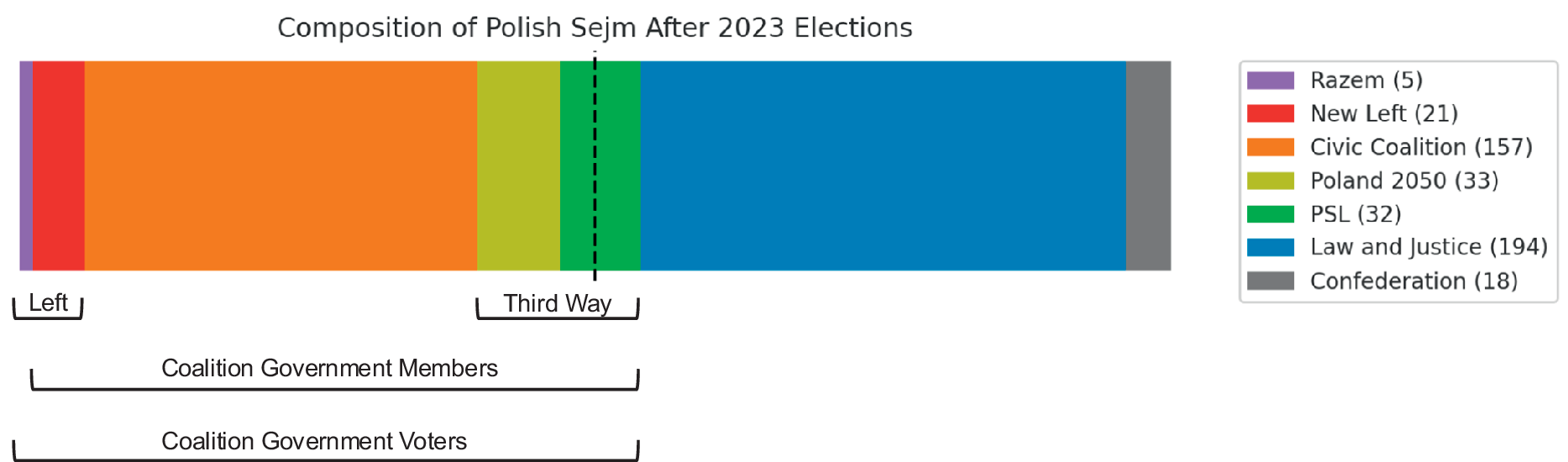
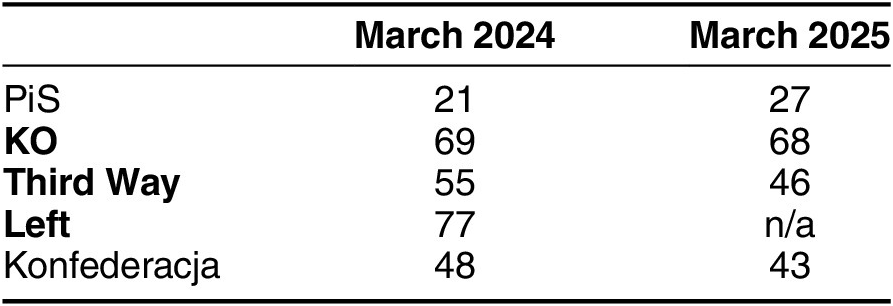


 Open access

