


Introduction
Two proglacial features are associated with rapid advance of a glacier terminus into an outwash plain in permafrost environments: (i) thrust-block moraines produced when a glacier terminus transfers longitudinal compressive stresses into the frozen proglacial outwash plain, causing failure and stacking of large faulted blocks (Reference Evans and EnglandEvans and England, 1991; Reference Evans and ReaEvans and Rea, 1999); and (ii) glacier naled (plural naledi; also referred to as icing or aufeis), which is an extrusive stratified ice accretion formed when successive discharge of water in winter inundates frozen ground or existing river ice or lake ice (Reference ÅkermanÅkerman, 1982). Glacier naled is characteristic of outwash plains, where high hydraulic potentials develop as a consequence of constrained drainage conditions, and it has potential to influence sedimentation and geomorphology on proglacial outwash plains (Reference ÅkermanÅkerman, 1982; Reference BaranowskiBaranowski, 1982; Reference Bennett, Huddart, Hambrey and GhienneBennett and others, 1998). Reference LiestølLiestøl (1969) was one of the first to discuss the association between naled accretions and glacier surging; he noted that the only known small glacier in the Dickson Valley area, west Svalbard, with proglacial naled was a surge-type glacier in its initial quiescent phase. As a consequence of an unstable glacial drainage system, basal cavities and enhanced basal melt rates, the winter runoff emanating from surge-type glaciers is likely to increase during the active surge phase, thereby producing proglacial naled accretions.
We believe that this paper is the first to report on thrust-block moraines composed of debris-rich naled. These landforms are termed thrust-block naled accordingly. Observations indicate that thrusting and stacking of naled blocks occurred in front of the terminus of Kuannersuit Glacier, West Greenland, during the final phase of a major surge event in 1995-98. Here, a model explaining the formation of thrust-block naled is presented.
Study Area
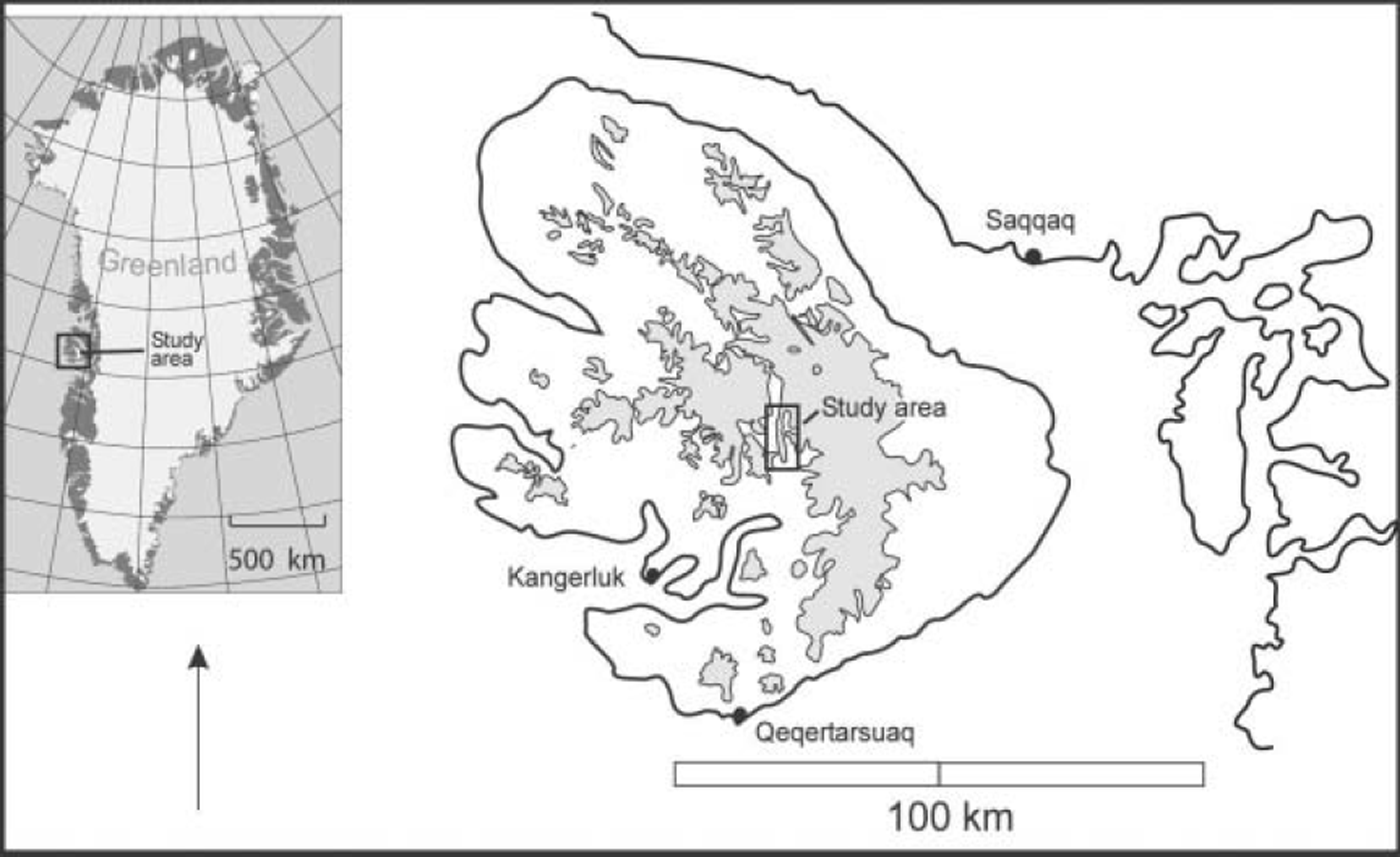
Kuannersuit Glacier (69˚46’N, 53˚15’W) is a 26 km long outlet glacier in central Disko Island, West Greenland (Fig. 1). The glacier belongs to the Disko-Nuussuaq surge cluster, described by Reference WeidickWeidick (1988). The latest surge event of Kuannersuit Glacier began in 1995. By the winter of 1997/98, the glacier terminus had advanced about 10.5 km down-valley and terminated on land in the central part of Kuannersuit Kuussuat (Kuannersuit Valley) adjacent to an ice-cored outwash terrace. Although the frontal advance ceased in 1998, the glacier surface remained chaotically crevassed in 1999. Since then, many of the crevasses have closed and the glacier surface has levelled.
Location map of Kuannersuit Glacier on Disko Island.
Naled assemblages are common features in the flat-bottomed valleys of Disko Island, and those that are derived from surge-type glaciers often survive the ablation period. The stratigraphy of naledi is characterized by horizontal laminae composed of candle ice crystals with vertical growth axes (Reference HambreyHambrey, 1984). The winter runoff contributing to naled formation in front of Kuannersuit Glacier is assessed to constitute 1-2% of the estimated annual discharge of 653 × 106m3 in 2001 (Reference Yde, Knudsen and NielsenYde and others, 2005).
Geomorphology
At least seven sheets of thrust-block naled dipping towards the glacier were stacked in a ∼ 1 3 0m wide zone between the ice-cored outwash terrace down-valley and up-sheared basal ice (Fig. 2). Thrust-block naled was not observed near the eastern corner of the glacier tongue and along the glacier margins. The thickness of the thrust-block naled sequences comprised about 3 m of naled ice underlain by boulder-rich glaciofluvial outwash sediments at least 15 cm thick.
Map showing the geomorphological context of the thrust-block naled. The locations L1 and L2 denote the basal ice sampling sites. The location of the sampling profile in the thrust-block naled is shown. The photo shows how one naled sheet was superimposed upon another. The framed naled sheet was at least 3.23 cm thick.
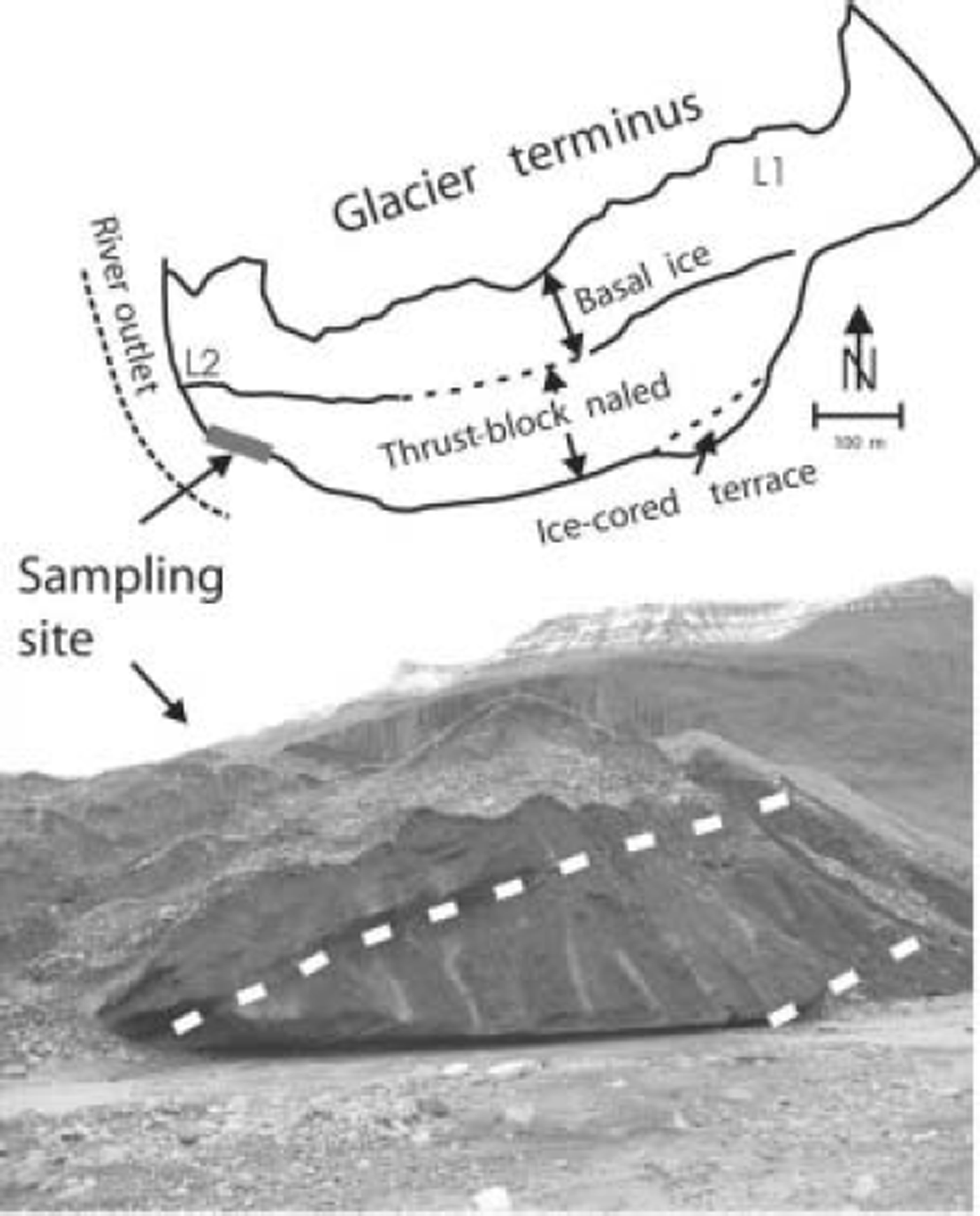
The adjacent basal ice dipped parallel with the thrust-block naled. It was characterized by a lower stratified debrisrich ice facies 1–2m thick, an intermediate banded ice facies 25–30m thick and an approximately 23 m thick upper ice facies that comprised 25–30 shear planes with meteoric glacier ice in between.
The proglacial outwash plain contained several ice-cored outwash terraces raised 3–5 m above the surrounding present outwash plain. These terraces most likely formed during the recession of the neighbouring Sorte Hak Glacier after its last surge, which occurred before 1898 (Reference SteenstrupSteenstrup, 1901).
Thrust-Block Naled Profile
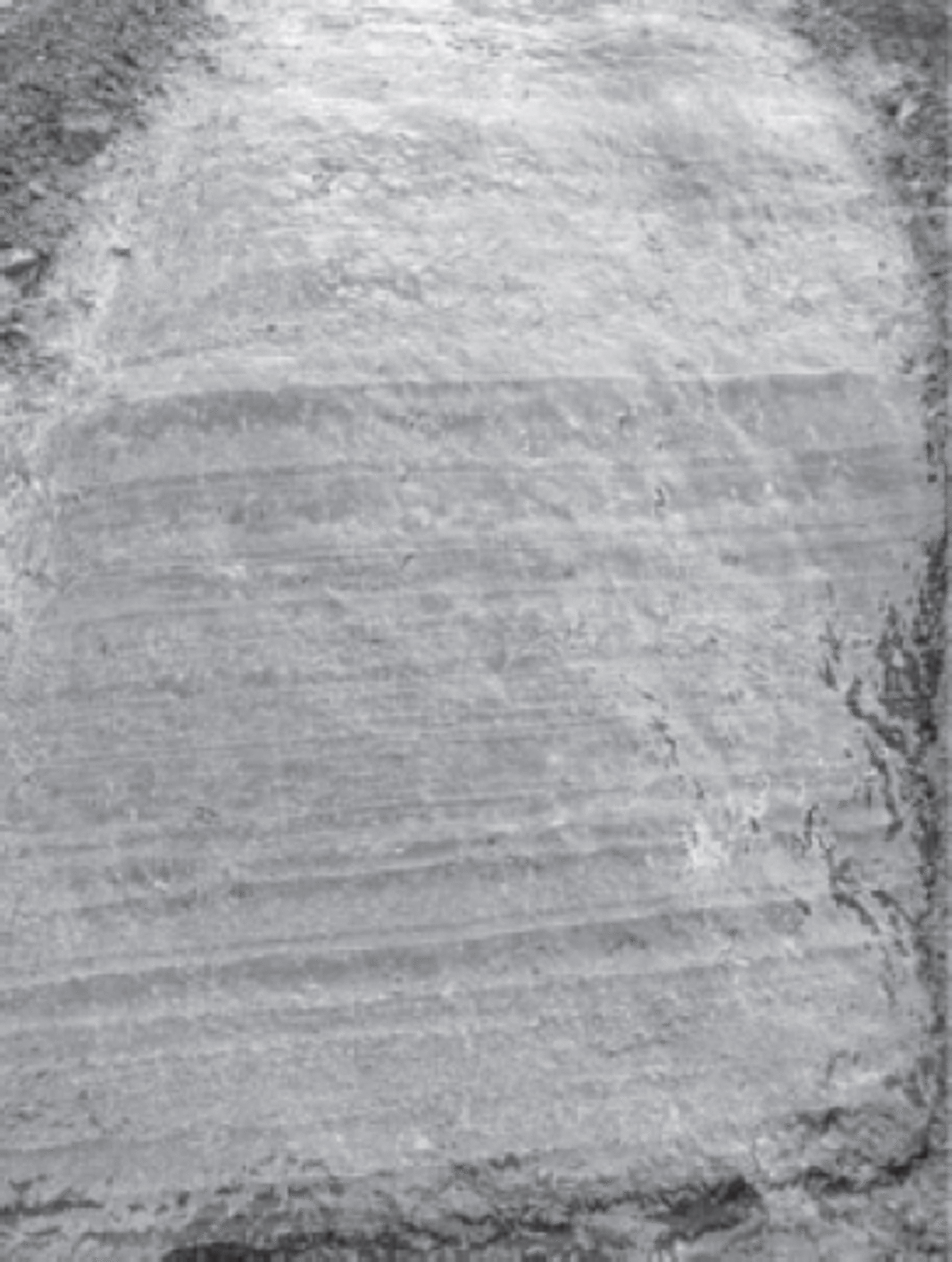
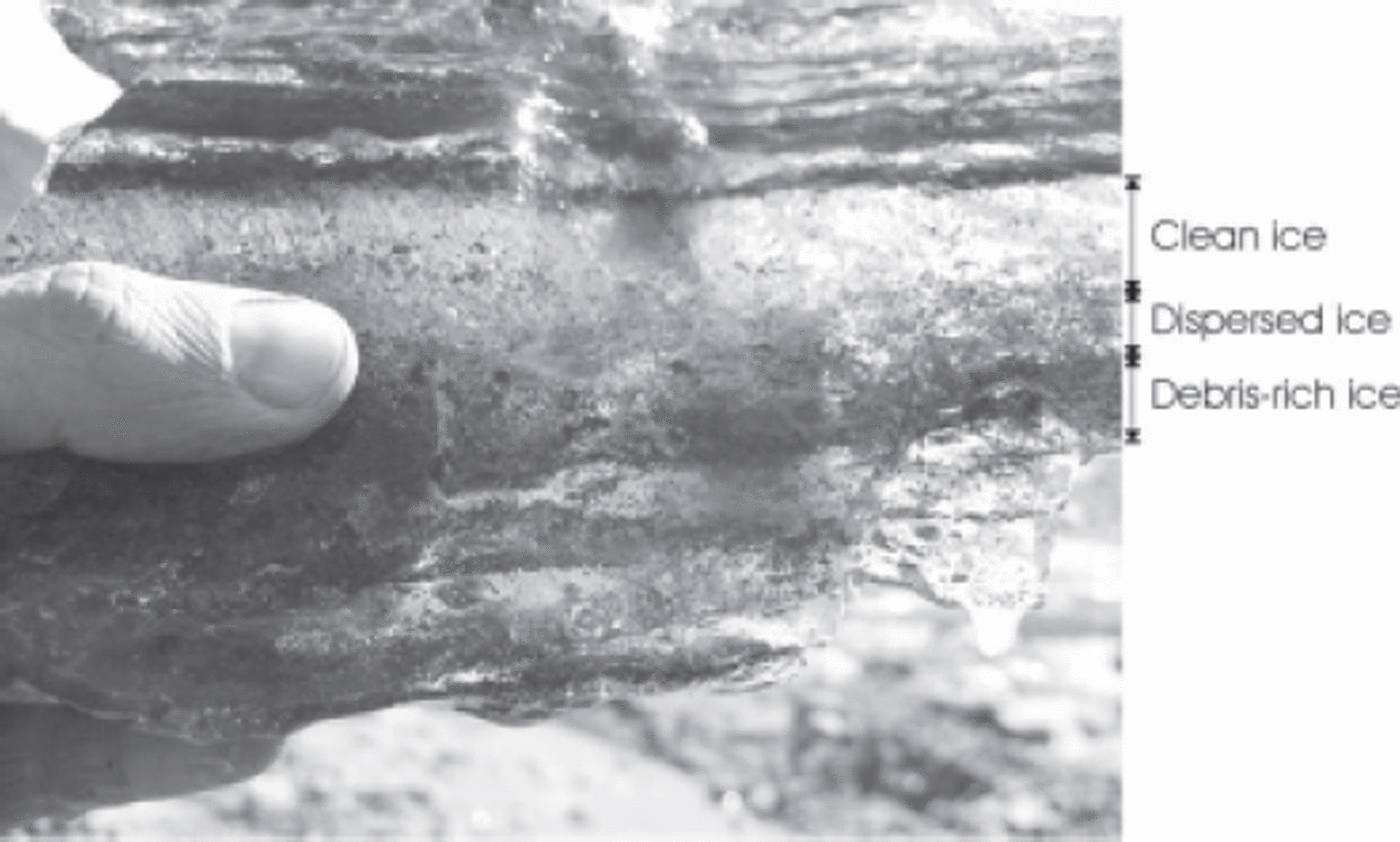
In July 2003, a profile was cleaned at the western edge of the thrust-block naled area (Fig. 2). The 3.08 m thick naled consisted of 128 distinct beds with an average thickness of 2.4 ± 2.1 cm (Fig. 3). The beds were composed of two or three laminae. Each bed was characterized by a debris-rich lamina and a clean-ice lamina, and the larger beds also comprised an intermediate dispersed lamina between clean ice above and debris-rich ice below, which contained aggregates in a matrix of debris-free ice (Fig. 4). Sublamination causing some variations in debris content occurred at an ice crystal scale. Both basal and top contacts were well defined, even in the thin layers of 0.2 cm that comprised only one or two ice crystals. The individual beds could be followed horizontally for several metres, and no internal deformation structures were observed in the thrust-block naled. However, the beds were highly variable in thickness, ranging from 0.2 to 14cm. Gas bubbles were generally absent, although some bubbles occurred at the interface between laminae and as sub-vertical strings a few centimetres in length interpreted as an indication of candle ice crystallography (Fig. 4).
Part of thrust-block naled profile with distinctive lamination. The profile covers ∼0.5 m.
Close-up view of part of thrust-block naled lamination. Beds consist of alternating laminae of debris-rich ice and clean ice, often separated by a lamina of dispersed ice. Note the sub-vertical bubble strings in the clean ice above the thumb, which are interpreted as evidence of metamorphic recrystallization from candle-ice to granular-ice crystallography.
Analytical Methods
Thrust-block naled samples were collected in polypropylene bags at 5 cm intervals along the vertical profile, and basal ice samples were collected at two locations denoted L1 and L2 in Figure 2. When the ice had thawed, water from each sample was carefully transferred to 20mL vials for stable-isotope analyses. Debris concentration was determined by evaporation using the remaining sample and assuming that the 20 mL water was debris-free. Glacier ice samples were collected for δ18O analyses along an 8km longitudinal transect on the lower part of the ablation area and transferred to 20 mL vials after thawing. δ18O bulk water samples were collected frequently in 20 mL vials at the main subglacial outlet within 24 hours on 26/27 July 2000.
Stable hydrogen and oxygen isotopic compositions were determined by mass spectrometry with an analytic accuracy of ±0.34‰ in δD and ±0.04‰ in δ18O. Thus, the deuterium excess d (d = δD−8δ18O) has a cumulative analytical accuracy of ±0.47‰.
The mineralogical composition and particle-size distribution were determined by X-ray diffraction analysis and laser diffraction, respectively, on 11 thrust-block naled samples and 13 basal ice samples.
Results
The stable-oxygen-isotope record from the thrust-block naled profile showed a mean δ18O composition of -20.05 ± 0.52‰, which was close to the isotopic range of meteoric glacier ice, -20.58±0.93‰, and bulk waters emanating from the main outlet, − 19.82 ± 0.07‰ in year 2000. However, basal ice attributed to the stratified facies using the basal ice terminology of Reference KnightKnight (1994) showed mean δ18O values of − 16.52 ± 1.94‰ (n = 9), indicating that contrasting formation processes operated at the glacier bed, causing enrichment of the heavy 18O isotope. Thus, as thrust-block naled was not isotopically distinctive from composite meltwaters, it could have been derived from them. In a closed system, i.e. with very limited evaporation in the frigid air and complete freezing of individual naled laminae, the isotopic composition of the naled must be equivalent to that of the source waters. However, naled laminations may contain distinct vertical and lateral variations in δ18O, as incipient production of frazil ice in supercooled water produces δ18O values about 3‰ heavier than the parent water composition (Reference CraigCraig, 1961). As the frazil ice accumulates as debris-free slush at the surface and in the distal part of the lamina, successive freezing of the lamina employs increasingly isotopically lighter residual water.
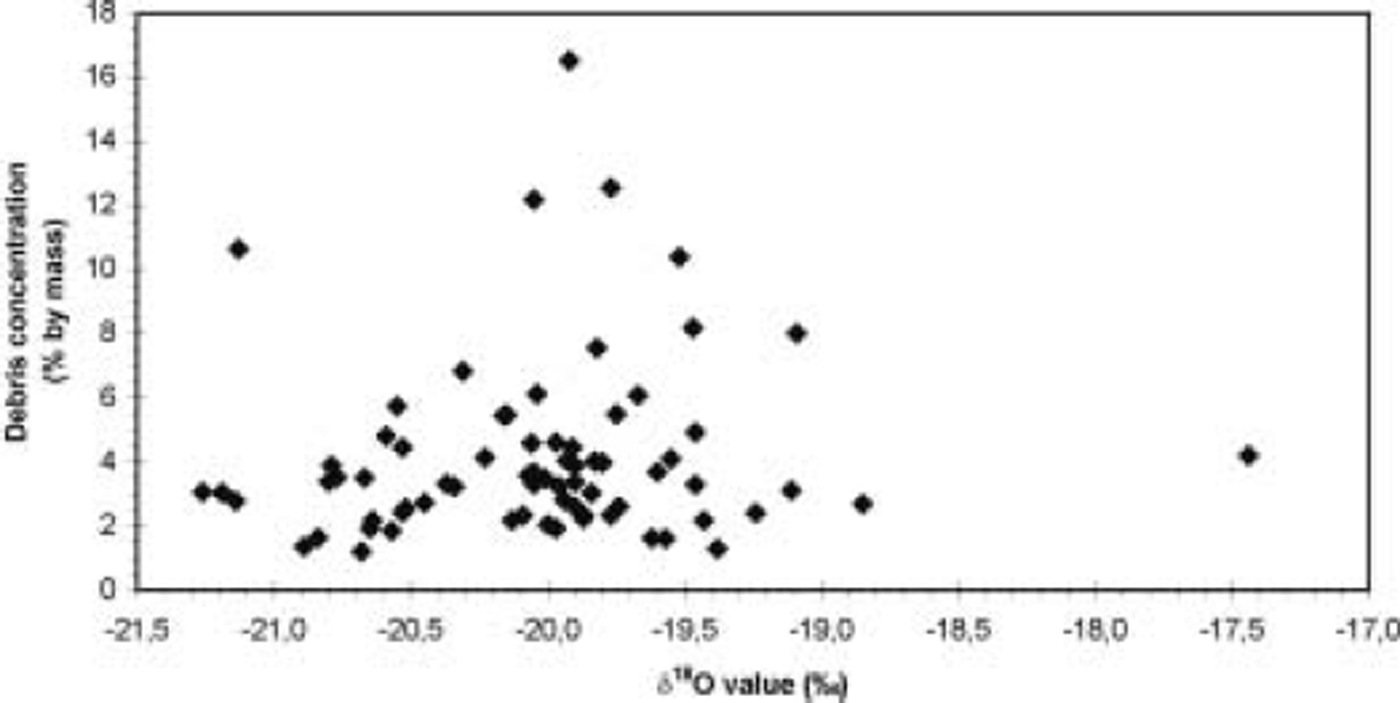
The debris concentration in the thrust-block naled was 4.2 ± 2.8‰ by mass. Although this is a relatively high value for naled assemblages, it is relatively low compared to the debris concentration of the basal stratified ice facies of 57.2 ± 17.5‰ by mass, and to available measurements of basal stratified ice facies from various glaciers (Reference Sharp, Jouzel, Hubbard and LawsonSharp and others, 1994; Reference Knight, Waller, Patterson, Jones and RobinsonKnight and others, 2002). The debris concentration of meteoric glacier ice near the terminus was 0.3 ± 0.1 % by mass. Figure 5 couples δ18O values with debris concentration. There was no correlation between δ18O values and debris concentration (r = 0.10; p = 0.41), at least when a 5 cm interval sampling scale was applied (Fig. 5). This does not preclude the possibility that a correlation prevailed within a single bed, but a more adequate sampling technique would need to be applied to show this.
Scatter plot of δ18O values (‰) vs debris concentration (% by mass). The sample showing a δ18O value of –17.44‰ was most likely polluted by rainwater runoff.
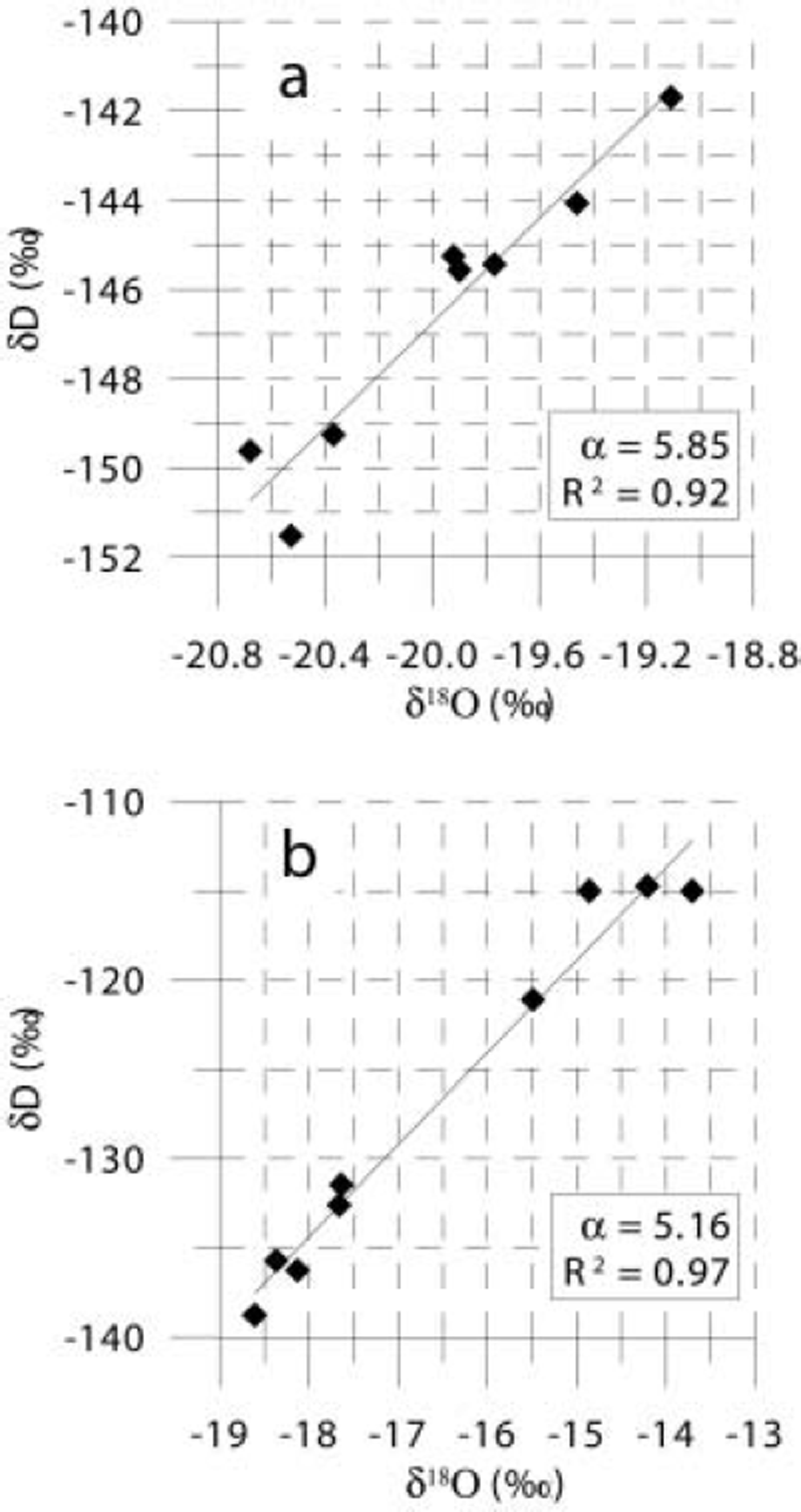
Co-isotope analysis is applied to discriminate different ice-forming mechanisms. In a δD– δ18O diagram (Fig. 6), the ice samples of thrust-block naled and basal stratified ice are aligned along freezing slopes a of 5.85 and 5.16, respectively. These slopes diverge from theoretical closed-system freezing slopes of 6.35 and 6.44, respectively (Reference Jouzel and SouchezJouzel and Souchez, 1982, equation 3), and from theoretical open-system freezing slopes of 6.47 and 6.56, respectively (Reference Souchez and JouzelSouchez and Jouzel, 1984, equation 7), if the median δ values in the samples are considered as representative for the initial water compositions (Reference Souchez, Samyn, Lorrain, Pattyn and FitzsimonsSouchez and others, 2004). However, the theoretical freezing slopes accord with the freezing slope of 6.75 found in meteoric glacier ice. Nothing indicates that oxide-hydroxide minerals distort the isotopic signature by ion exchange, as has been shown for basal ice at the margin of the Greenland ice sheet (Reference Souchez, Lemmens, Lorrain, Tison, Jouzel and SugdenSouchez and others, 1990). These findings suggest that isotopic fractionation has occurred in both thrust-block naled and basal stratified ice, although their freezing slopes may not be statistically significant from the freezing slope of meteoric glacier ice owing to the relatively small number of samples analyzed (Reference Glasser and HambreyGlasser and Hambrey, 2002).
δD– δ18O diagrams showing the relationship in thrust-block naled (a) and basal stratified ice facies (b) at Kuannersuit Glacier.
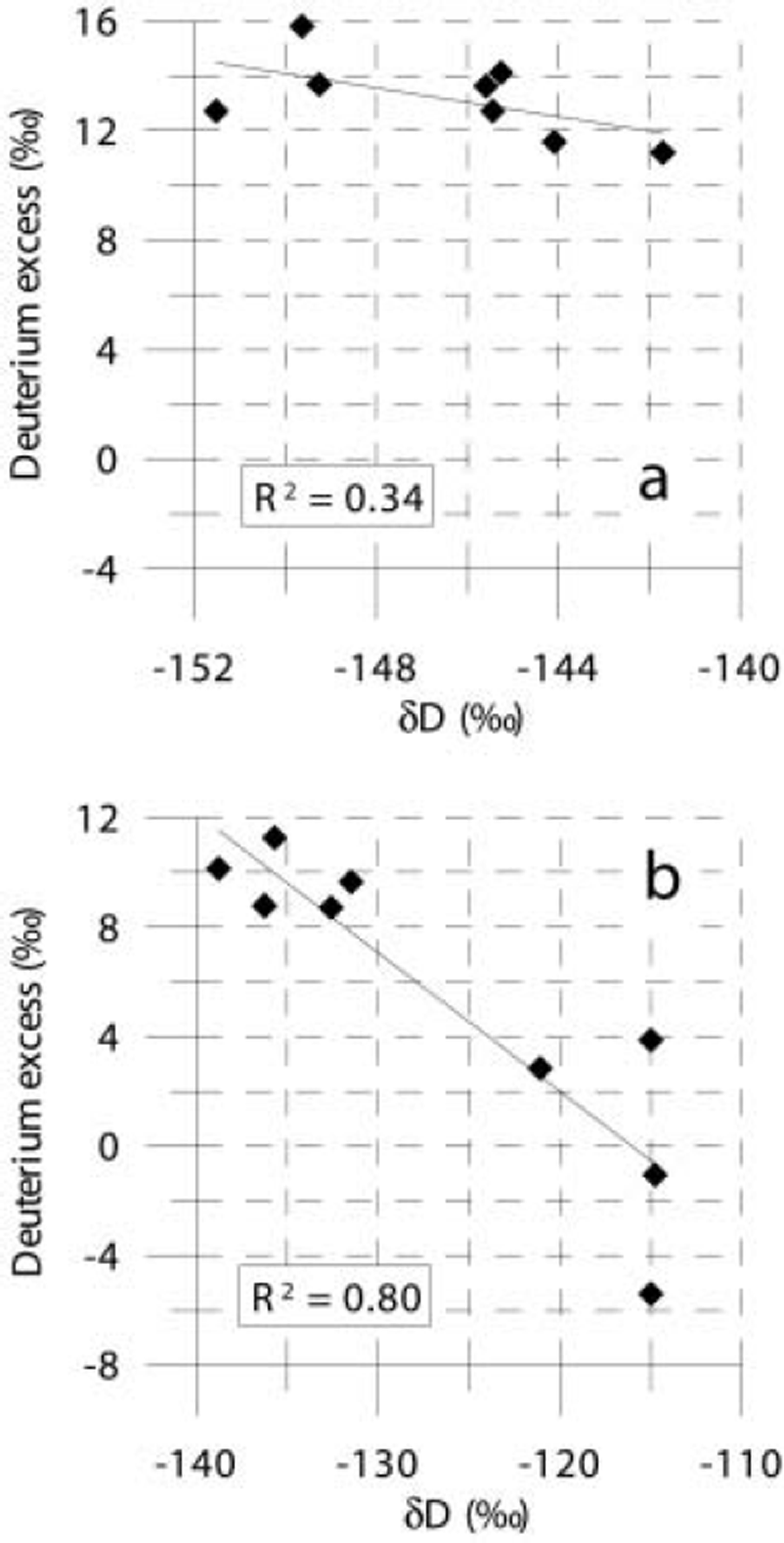
To differentiate between thrust-block naled and basal stratified ice, the relationship between δD and deuterium excess is considered. Figure 7a shows that no distinct trend existed in the thrust-block naled, and it is probably better defined as a distribution with a mean d value of 13.18±1.47‰ and independent of δD values. This observation corresponds with a similar absence of d–δD correlation found in two naledi from north Victoria Land, Antarctica (Reference Souchez, Jouzel, Lorrain, Sleewaegen, Stievenard and VerbekeSouchez and others, 2000). In contrast, an inverse relationship between d and δD (and δ18O) existed in the basal stratified ice (Fig. 7b). These results imply that while the basal stratified ice formed under boundary conditions dependent on regelation processes, the thrust-block naled was governed by kinetic parameters such as freezing rate, diffusion rate, partial freezing of parent waters, and boundary layer thickness, in addition to non-equilibrium processes and variations in the isotopic composition of parent waters, which will be the case during successive freezing events of thin bulk water layers mixed with snow.
d–δD diagrams of thrust-block naled (a) and basal stratified ice facies (b) at Kuannersuit Glacier.
The mineralogical composition of the debris in thrust-block naled varied significantly from the composition of the basal ice in two ways (Table 1). Clay minerals constituted a higher proportion in the thrust-block naled debris compared to the debris in the basal ice, and the plagioclase-to-pyroxene ratio showed a higher value relative to both the basal ice and the parent plagioclase-rich basalts. These findings suggest that sorting of particles based on specific gravity variations occurred when the naled was formed, whereas the basal ice facilitated no such sorting during its formation. The higher content of clay minerals, primarily smectite aggregates, in thrust-block naled indicates an origin as sequestrated fine-grained debris transported in meltwater, whereas the debris of the basal ice was most likely locally entrained.
Mineralogical composition of thrust-block naled, basal ice and an analysis of basaltic rock matrix at Kuannersuit Glacier, expressed in volume percentage. The amygdaloidal basalts in Kuannersuit Valley contain inclusions of zeolites such as stilbite and heulandite

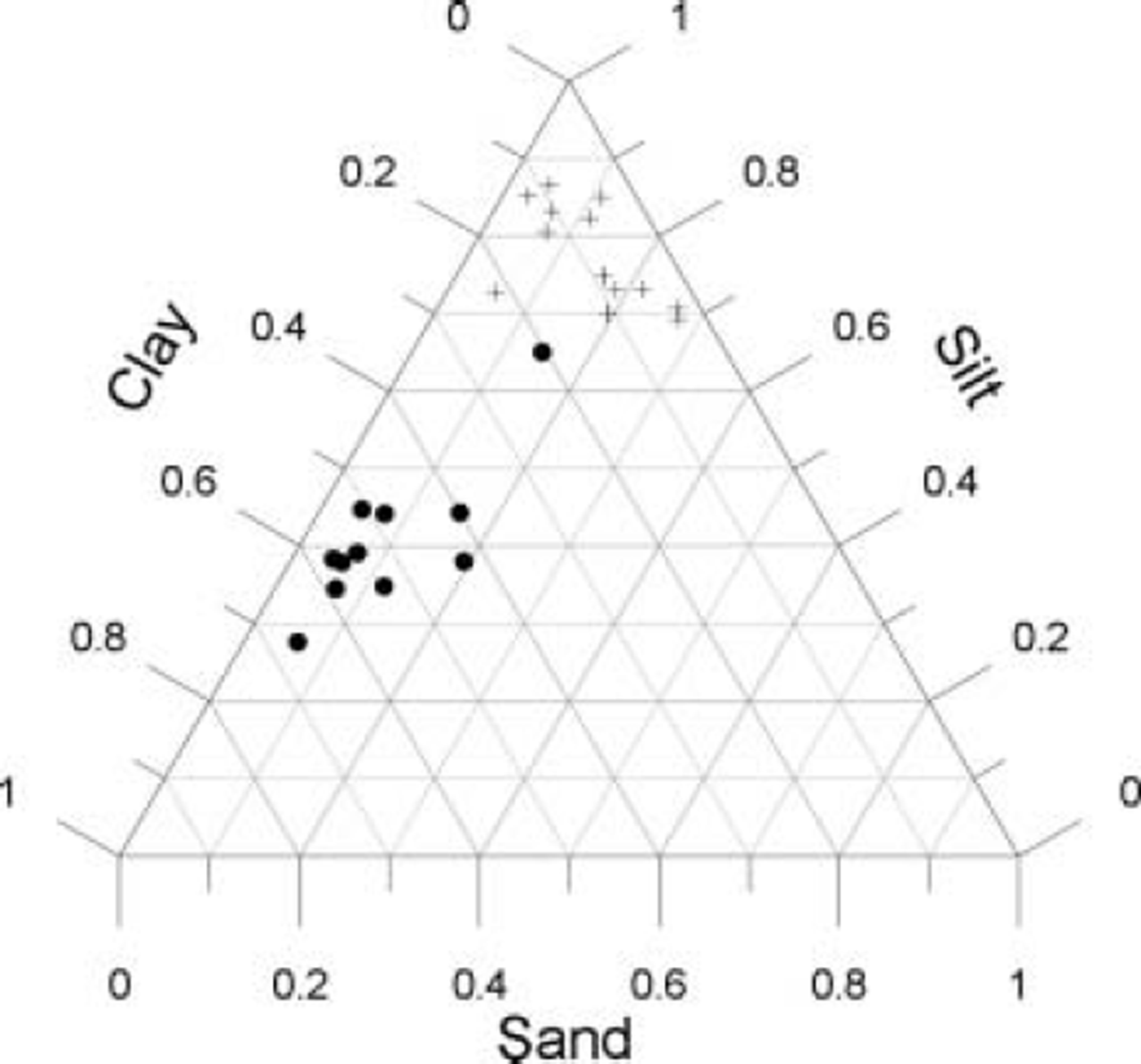
The particle-size distribution discriminates thrust-block naled from basal ice facies owing to a relatively higher clay fraction and depletion of silt (Fig. 8). The water velocities during winter runoff are believed to have been sufficient to transport fine-grained material in suspension to the outwash plain. The silt and sand fractions in the thrust-block naled can be explained by aeolian deposition during snowdrift events, or more likely by suspension in upwelling waters during high-discharge pulses. No gravel or larger particles were observed in the thrust-block naled.
Particle-size distribution (% mass) of debris in thrust-block naled (circles) and basal ice (crosses) at Kuannersuit Glacier.
Discussion
The results indicate that, even though thrust-block naled has many similarities with basal ice, it is possible to distinguish naled assemblages. The formation of naled beds composed of a clean-ice lamina above a debris-rich lamina most likely reflects a combination of deposition by gravity and rejection of suspended sediment from the freezing front within a water layer, which emerges at the surface of a growing naled assemblage and flows in the frigid air. The dispersed lamina can have formed either during in situ freezing, capturing aggregates in ice crystal boundaries, or as a consequence of metamorphosis during compression, where migrating water entrains debris at the debris-rich lamina interface. Recrystallization of sub-vertical candle ice into granular ice crystals, presumably caused by compression of the naled during stacking, makes it difficult to recognize thrust-block naled ice from basal ice. The relatively high debris concentration in surge-related naled is a consequence of dramatic changes in the glacier drainage configuration, the improved access to subglacially comminuted debris and the enhanced hydraulic potential in the proglacial area. Similar debris concentrations and the interlamination sequence with basal debris-rich ice, dispersed ice and top clean ice probably resemble basal ice formed by segregated congelation processes at the ice–sediment interface. However, the particle-size distribution, the absence of gravel, the mineralogical composition and the isotopic signature favour fluvial sediment transfer during slow water velocity.
The formation process of thrust-block naled during surge advance is most likely similar to the formation of thrust-block moraines (e.g. Reference HagenHagen, 1988; Reference Evans and EnglandEvans and England, 1991; Reference FitzsimonsFitzsimons, 1996). In winter, the coupling of horizontal pressure on proglacial naled and frozen sediments, caused by the advancing glacier, and upward vertical pressure promoted by the build-up of a high hydraulic potential below proglacial naled produces stress release by thrusting and stacking of naled blocks. The presence of proglacial naled of prominent thickness can have implications for whether landforms like thrust-block moraines form in front of surge-type glaciers, if the proglacial stresses are transmitted within the upper layers. Assuming that the increased proglacial naled thickness, owing to a surge event, facilitates an unfrozen water-saturated zone within the outwash deposits below, this zone can act as a lubricating boundary layer and, thus, be an obvious location for shearing to take place. At Kuannersuit Glacier, the shear planes were situated in the top layer of the outwash deposits, thereby separating the individual blocks by a horizon rich in boulders and gravel deposits.
Incorporation of naled beneath basal ice seems to be a plausible process below a transgressing surging glacier. Although it is circumstantial, the situation at Kuannersuit Glacier suggests that the glacier overrode annual thrust-block naledi during its active surge phase, only preserving the 1998/99 naled stacked in front of the glacier. Naled entrained and transported at the start of or during the surge event would be as heavily deformed and sheared as the basal ice, and mixed with dry-calved glacier ice and generated basal ice. Such naled will most likely be beyond recognition. Thus, the lack of internal deformation in the thrust-block naled indicates that the thrust-block naled formed during the termination of the surge event. Reference HambreyHambrey (1984) speculated that proglacial buried naled could be coupled to the bed of an advancing glacier and thereby explain some of the debris-rich stratification in basal ice layers. Surge-type glaciers are associated with more debrisrich basal ice layers relative to non-surge-type glaciers (e.g. Reference ClappertonClapperton, 1975), a process related to regelation ice produced by low-pressure refreezing in subglacial cavities. Parts of these basal ice layers may actually be recrystallized overridden naled, and a thorough re-examination of basal ice beneath and at the margin of surge-type glaciers is required in order to elucidate this issue.
Conclusions
This study has identified thrust-block naled stacked in front of Kuannersuit Glacier during the termination of a major terrestrial surge event. The thrust-block naled had retained the debris-rich lamination observed in proglacial naled related to the surge, although compression during stacking had altered ice crystallography. The thrust-block naled was distinguishable from basal stratified ice facies owing to lack of internal deformation structures, relatively low debris content, a more clay-rich particle-size distribution with lack of gravel and larger particles, a plagioclase-to-pyroxene ratio indicating that a sorting process favoured plagioclase particles with low specific gravity at the expense of heavier pyroxene particles, and no correlation between δD and deuterium excess d. Stable-oxygen-isotope analyses provided no signature differentiable from bulk meltwater or other ice facies.
Surge-type glaciers have significant potential for formation of thrust-block naled owing to rapid advance of the terminus and enhanced winter runoff during the active surge phase. Stacking and subsequent overriding of naled may have implications for the interpretation of basal ice layers of surge-type glaciers. However, thrust-block naled is not an unequivocal diagnostic criterion for surge-type glaciers, as non-surging glaciers have some capabilities for production of proglacial stresses during mass-balance induced rapid advance.
Acknowledgements
We thank C. Hammer of the Niels Bohr Institute, Copenhagen, Denmark, for providing the analyses of the oxygen isotope samples. Arctic Station in Qeqertarsuaq, Disko Island, gave local logistical support. R. Nielsen is acknowledged for map design. We thank I. Willis, P. Knight and N. Glasser for valuable comments and suggestions on an earlier version of the paper. The research was funded by grants from the Commission for Scientific Research in Greenland (KVUG) and from Carlsbergfondet. J.C. Yde received financial support from the International Research School of Water Resources (FIVA).



