Pediatric sickle cell disease (SCD) and preterm birth are medical conditions associated with increased risk for poor neurodevelopmental outcomes due to their impact on early brain development. Infants with SCD are at increased risk for prematurity, with a 29% elevated risk for low birthweight and a 79–92% elevated risk for very low birthweight and very preterm birth (Whiteman et al., Reference Whiteman, Salinas, Weldeselasse, August, Mbah, Aliyu and Salihu2013). Both conditions contribute to mild to moderate cognitive deficits in some affected children and share common areas of brain involvement; however, despite this comorbidity, little is known about the combined impact of SCD and preterm birth on neurodevelopmental outcomes. SCD is a complex genetic condition that significantly impacts physical and psychological functioning in approximately 1 of every 365 children of African descent born in the United States (Barbarin & Christian, Reference Barbarin and Christian1999; Edwards et al., Reference Edwards, Scales, Loughlin, Bennett, Harris-Peterson, De Castro and Johnson2005). SCD is marked by the production of abnormal hemoglobin and its effects on functioning are widespread, including both physical impairments as well as impairments in cognitive and behavioral functioning (Bakri, Ismail, Elsedfy, Amr, & Ibrahim, Reference Bakri, Ismail, Elsedfy, Amr and Ibrahim2014; Hijmans et al., Reference Hijmans, Fijnvandraat, Grootenhuis, van Geloven, Heijboer, Peters and Oosterlaan2010). Higher-risk genotypes of SCD (e.g., HbSS, HbSβ0) experience more severe complications, while lower risk genotypes (e.g., HbSC, HbSβ+) are generally associated with milder symptoms (Brosseau, Owens, Mosso, Panepinto, & Steiner, Reference Brousseau, Owens, Mosso, Panepinto and Steiner2010). Children with SCD are at increased risk for heterogenous medical complications, including medical comorbidities such as preterm birth and pain as well as life-threatening complications such as acute chest syndrome and cerebral infarction (Piel, Steinberg, & Rees, Reference Piel, Steinberg and Rees2017; Whiteman et al., Reference Whiteman, Salinas, Weldeselasse, August, Mbah, Aliyu and Salihu2013).
Cerebral infarction, also referred to as stroke, represents one of the most concerning complications of SCD due to its long-term impacts on neurocognitive and behavioral functioning. There are two primary presentations of cerebral infarction in the SCD population which include overt stroke and silent cerebral infarction. Children with SCD are at significantly increased risk for overt stroke compared to the general population, with approximately 10% of youth with more severe SCD genotypes experiencing an overt stroke before the age of 20 if no preventative treatment is available (Bernaudin et al., Reference Bernaudin, Verlhac, Arnaud, Kamdem, Chevret, Hau and Lesprit2011; Powars, Wilson, Imbus, Pegelow, & Allen, Reference Powars, Wilson, Imbus, Pegelow and Allen1978). Overt strokes are most commonly identified by accompanying physical symptoms (e.g., hemiparesis) and are typically associated with the narrowing or occlusion of larger blood vessels in the brain (Sundd, Gladwin, & Novelli, Reference Sundd, Gladwin and Novelli2019).
Silent cerebral infarction, marked by the absence of observable symptoms, is the most common form of neurologic complication for children with SCD and is estimated to occur in 37% of children before the age of 14 (Bernaudin et al., Reference Bernaudin, Verlhac, Arnaud, Kamdem, Chevret, Hau and Lesprit2011; Wang et al., Reference Wang, Pavlakis, Helton, McKinstry, Casella, Adams and Rees2008). Silent cerebral infarction is typically the result of occlusion in smaller blood vessels in areas of the brain with decreased blood flow (Bernaudin et al., Reference Bernaudin, Verlhac, Arnaud, Kamdem, Chevret, Hau and Lesprit2011; Pegelow et al., Reference Pegelow, Wang, Granger, Hsu, Vichinsky, Moser and Brambilla2001). Risk factors for silent cerebral infarction include decreased oxygen delivery to the brain due to lower hemoglobin levels and injury to cerebral vasculature (e.g., narrowing of blood vessels), although the precise mechanisms underlying silent cerebral infarction are unclear (Bernaudin et al., Reference Bernaudin, Verlhac, Arnaud, Kamdem, Vasile, Kasbi and Pondarré2015; DeBaun et al., Reference DeBaun, Armstrong, McKinstry, Ware, Vichinsky and Kirkham2012) Silent cerebral infarction is a risk factor for the occurrence of later overt strokes, with studies finding a 14-fold increase in risk for overt stroke among children with a prior SCI (Miller et al., Reference Miller, Macklin, Pegelow, Kinney, Sleeper and Bello2001). The rates of overt stroke and silent cerebral infarction are notably higher for children diagnosed with high-risk genotypes of SCD compared to lower risk genotypes (Manara et al., Reference Manara, Talenti, Rampazzo, Ermani, Montanaro, Baracchini and Colombatti2017; Prengler, Pavlakis, Prohovnik, & Adams, Reference Prengler, Pavlakis, Prohovnik and Adams2002; Prussien, Jordan, DeBaun, & Compas, Reference Prussien, Jordan, DeBaun and Compas2019). Chronic transfusion therapy and hydroxyurea are the current standards of care for primary and secondary stroke prevention (Verduzco & Nathan, Reference Verduzco and Nathan2009).
Both overt stoke and silent cerebral infarction can result in significant tissue damage. Brain imaging on children with SCD who have experienced cerebral infarction reveals the highest density of cerebral infarctions within the white matter of the frontal and parietal lobes (Brown et al., Reference Brown, Davis, Lambert, Hsu, Hopkins and Eckman2000; Ford et al., Reference Ford, Ragan, Fellah, Binkley, Fields, Guilliams and Lee2018; Pegelow et al., Reference Pegelow, Macklin, Moser, Wang, Bello, Miller and Zimmerman2002). However, widespread decreases in white matter density, which are thought to reflect axonal loss, demyelination, and cortical thinning, have been identified among children with SCD with no history of cerebral infarction (Choi et al., Reference Choi, O’Neil, Joshi, Li, Bush, Coates and Wood2019; Kawadler et al., Reference Kawadler, Clayden, Kirkham, Cox, Saunders and Clark2013; Manara, et al., Reference Manara, Dalla Torre, Lucchetta, Ermani, Favaro, Baracchini and Colombatti2021; Schatz, Finke, Kellett, & Kramer, Reference Schatz, Finke, Kellett and Kramer2002). In addition to structural changes, there is evidence of disruptions in brain connectivity in areas of the brain associated with higher order cognitive functions (Colombatti et al., Reference Colombatti, Lucchetta, Montanaro, Rampazzo, Ermani, Talenti and Sainati2016). Indeed, there is research indicating that more indirect pathophysiological mechanisms such as widespread inflammation and oxygen deprivation that are associated with SCD as well as non-medical factors may play a role (Brown et al., Reference Brown, Buchanan, Doepke, Eckman, Baldwin, Goonan and Schoenherr1993; Kawadler et al., Reference Kawadler, Clayden, Kirkham, Cox, Saunders and Clark2013; Prussien et al., Reference Prussien, Siciliano, Ciriegio, Anderson, Sathanayagam, DeBaun and Compas2020).
The areas of cognition impacted by these neurological complications are widespread. Children with SCD show deficits in both general intellectual functioning and specific domains of functioning (Berkelhammer et al., Reference Berkelhammer, Williamson, Sanford, Dirksen, Sharp, Margulies and Prengler2007; Hogan et al., Reference Hogan, Kirkham, Prengler, Telfer, Lane, Vargha-Khadem and de Haan2006). Higher order processes such as executive functioning as well as attentional processes appear to be particularly vulnerable to sickle cell related disease mechanisms (Berkelhammer et al., Reference Berkelhammer, Williamson, Sanford, Dirksen, Sharp, Margulies and Prengler2007; Hijmans et al., Reference Hijmans, Fijnvandraat, Grootenhuis, van Geloven, Heijboer, Peters and Oosterlaan2010), while findings on impairments in areas such as memory, language, and visuomotor functioning are more mixed (Berkelhammer et al., Reference Berkelhammer, Williamson, Sanford, Dirksen, Sharp, Margulies and Prengler2007). Research on cognitive functioning in pediatric SCD has largely focused on domain specific deficits; however, there is some evidence for more heterogeneous patterns of deficits across cognitive domains (Schatz, Finke, & Roberts, Reference Schatz, Finke and Roberts2004; Schatz, Puffer, Sanchez, Stancil, & Roberts, Reference Schatz, Puffer, Sanchez, Stancil and Roberts2009). Academic performance is also impacted, with youth with SCD showing higher rates of school absences, grade retention, and receipt of special education services than their peers (Berkelhammer et al., Reference Berkelhammer, Williamson, Sanford, Dirksen, Sharp, Margulies and Prengler2007; Epping et al., Reference Epping, Myrvik, Newby, Panepinto, Brandow and Scott2013; Karkoska, Haber, Elam, Strong, & McGann, Reference Karkoska, Haber, Elam, Strong and McGann2021; Schatz, Brown, Pascual, Hsu, & DeBaun, Reference Schatz, Brown, Pascual, Hsu and DeBaun2001). For both cognitive and academic functioning, the level of impairment correlates with the severity/type of cerebral infarction, with children with overt stroke evidencing the greatest impairment, followed by silent cerebral infarction and, lastly, those with no history of cerebral infarction (DeBaun et al., Reference DeBaun, Armstrong, McKinstry, Ware, Vichinsky and Kirkham2012).
Preterm birth, broadly defined as birth before 37 weeks of gestation, occurs in approximately 10% of births in the general population and is the leading cause of neonatal death worldwide (Blencowe et al., Reference Blencowe, Cousens, Chou, Oestergaard, Say and Moller2013). There are multiple risk factors for the occurrence of preterm birth that include genetics, maternal factors (e.g., advanced maternal age), multiple pregnancies, lifestyle factors (e.g., stress, substance use), and socioeconomic status (Blencowe et al., Reference Blencowe, Cousens, Chou, Oestergaard, Say and Moller2013). The long-term medical complications of survivors of preterm birth are varied and include increased risk for vision and hearing impairments, chronic lung disease, and cardiovascular disease (Blencowe et al., Reference Blencowe, Cousens, Chou, Oestergaard, Say and Moller2013). In addition to these physical complications, infants born preterm are at increased risk for adverse neurodevelopmental outcomes, with studies showing lower scores on broad measures of intelligence (i.e., IQ quotients) as well as more specific domains (Allotey et al., Reference Allotey, Zamora, Cheong-See, Kalidindi, Arroyo-Manzano, Asztalos and Birtles2018). The most commonly reported deficits are in executive functioning (e.g., working memory) and attentional processes (e.g., processing speed; Allotey et al., Reference Allotey, Zamora, Cheong-See, Kalidindi, Arroyo-Manzano, Asztalos and Birtles2018; Brydges et al., Reference Brydges, Landes, Reid, Campbell, French and Anderson2018; Böhm, Smedler, & Forssberg, Reference Böhm, Smedler and Forssberg2004; Lundequist, Böhm, & Smedler, Reference Lundequist, Böhm and Smedler2013). However, research has also noted marked heterogeneity in cognitive outcomes and developmental trajectories following preterm birth, which has been attributed to the variable impact of preterm birth on brain development (Dimitrova et al., Reference Dimitrova, Pietsch, Christiaens, Ciarrusta, Wolfers, Batalle and Price2020; Stålnacke, Lundequist, Böhm, Forssberg, & Smedler, Reference Stålnacke, Lundequist, Böhm, Forssberg and Smedler2015) Academic achievement and behavioral functioning are also impacted, with children born preterm scoring lower on tests of reading, spelling, and mathematics and evidencing increased symptoms of externalizing behavioral disorders such as ADHD (Aarnoudse-Moens, Weisglas-Kuperus, van Goudoever, & Oosterlaan, Reference Aarnoudse-Moens, Weisglas-Kuperus, van Goudoever and Oosterlaan2009; Breeman, Jaekel, Baumann, Bartmann, & Wolke, Reference Breeman, Jaekel, Baumann, Bartmann and Wolke2016). These deficits often persist from infancy through adulthood (Baron & Rey-Casserly, Reference Baron and Rey-Casserly2010; Breeman, Jaekel, Baumann, Bartmann, & Wolke, Reference Breeman, Jaekel, Baumann, Bartmann and Wolke2015).
The elevated risk for poor neurodevelopmental outcomes is thought to be linked to alterations in brain development. Preterm birth occurs during the third trimester, a critical period for brain development, which can increase susceptibility for brain insults during infancy and childhood (Vandewouw et al., Reference Vandewouw, Young, Mossad, Sato, Whyte, Shroff and Taylor2019). Although many brain structures are implicated, disruptions in white matter development are most common and have been linked to specific impairments in neurodevelopmental functioning among preterm children (Counsell et al., Reference Counsell, Edwards, Chew, Anjari, Dyet, Srinivasan and Rutherford2008; Volpe, Reference Volpe2019). Longitudinal brain imaging studies have found that preterm children evidence decreased total brain volume, as well as slower maturation of specific brain regions beginning in early childhood (Vandewouw et al., Reference Vandewouw, Young, Mossad, Sato, Whyte, Shroff and Taylor2019; Batalle et al., Reference Batalle, Hughes, Zhang, Tournier, Tusor, Aljabar and Nosarti2017). Dysconnectivity in neural networks linked to cognitive and behavioral functioning has also been identified among children born preterm (Boardman & Counsell, 2019).
SCD and preterm birth are independently associated with alterations in brain development; however, the combined impact of both conditions on neurodevelopment outcomes is unknown. The presence of co-occurring conditions that disrupt white matter development and are associated with cognitive impairments are suggestive of an additive effect on cognitive abilities. Indeed, preterm birth has been shown to be a specific risk factor for cognitive impairments for children with neurodevelopmental disorders such as autism (Brayette et al., Reference Brayette, Saliba, Malvy, Blanc, Ponson, Tripi and Bonnet-Brilhault2019). Furthermore, studies have identified greater cognitive impairment for preterm infants that sustain early brain insults (e.g., periventricular hemorrhage) than those without such early insults (Sherlock, Anderson, Doyle, & Victorian Infant Collaborative Study Group, Reference Sherlock, Anderson and Doyle2005; Vohr et al., Reference Vohr, Allan, Katz, Schneider, Tucker and Ment2014). There are parallel findings of greater cognitive impairment following repetitive brain insults in the adult traumatic brain injury (TBI) literature (Belanger, Spiegel, & D Vanderploeg, Reference Belanger, Spiegel and Vanderploeg2010; Vynorius, Paquin, & Seichepine, Reference Vynorius, Paquin and Seichepine2016). Although less is known on the impact of repetitive TBI on the developing brain, animal models support a link between repetitive brain injury in the immature brain and greater cognitive difficulties (Fidan et al., Reference Fidan, Lewis, Kline, Garman, Alexander, Cheng and Kochanek2016). These findings are in line with a “double hit” model, with the presence of one insult predisposing the individual to increased vulnerability when a second insult occurs, ultimately resulting in additive or synergistic effects of sequential brain insults on functioning.
The mechanisms by which co-occurring disorders with early neurological impacts may impact cognitive functioning in children is not well known. Young children can show remarkable resilience to early brain insults, which has been attributed to brain plasticity processes (Anderson, Spencer-Smith, & Wood, Reference Anderson, Spencer-Smith and Wood2011). The presence of multiple brain insults early in development may interfere with protective processes, such as brain plasticity, that buffer against the deleterious impact of brain injury. Cognitive reserve and brain reserve, defined as the resiliency afforded by functional brain networks and the structural morphology of the brain (e.g., brain volume, cortical thickness), are thought to mediate these resiliency processes by serving as a compensatory buffer against the functional impact of brain insult and pathology (Fay et al., Reference Fay, Yeates, Taylor, Bangert, Dietrich, Nuss and Wright2010; Stern, Reference Stern2017). Within the SCD literature, there is evidence that these compensatory processes, such as cerebrovascular reserve, are reduced which is linked to increased risk for cerebral injury (Kim, Leung, Lerch, & Kassner, Reference Kim, Leung, Lerch and Kassner2016; Nur et al., Reference Nur, Kim, Truijen, van Beers, Davis, Brandjes and van Lieshout2009). Additionally, within the pediatric TBI literature, cognitive reserve has been identified as a moderator of cognitive functioning following brain injury (Donders & Kim, Reference Donders and Kim2019).
Given the impact of pediatric SCD and preterm birth on early brain development as well as the increased prevalence of preterm birth in pediatric SCD, it is important to understand the combined impact of these two conditions on cognitive development. As such, the current study explores the additive effect of pediatric SCD and a history of preterm birth on neurodevelopmental functioning during early childhood. The relative impact of preterm birth and SCD on cognitive functioning was examined by retrospectively comparing children with higher risk SCD born preterm to comparison groups. Both domain-specific and heterogenous effects on cognition were examined given prior research indicating the presence of both patterns of cognitive deficits in the preterm population. Domain specific effects on cognitive functioning were examined using specific cognitive outcomes and heterogenous effects were measured using rates of abnormal cognitive screening results. Given that attentional processes and executive functioning are the most commonly observed cognitive deficits in both pediatric SCD and preterm birth, we hypothesized that there would be greater impairment on tests tapping into working memory and processing speed in children with SCD born preterm than in the comparison groups. Additionally, we hypothesized that children with SCD born preterm would evidence elevated rates of abnormal screenings.
METHOD
Participants
Participants included 189 children from four different groups: 20 children with high risk SCD born preterm (high risk SCD + preterm), 59 children with high risk SCD born at term (high risk SCD), 11 children with lower risk SCD genotypes/no SCD born preterm (lower risk SCD + preterm) and 99 children with lower risk SCD genotypes/no SCD born at term (lower risk SCD). Chronological age was used for all participants. All participants self-identified as African American and approximately one-fifth (20.37%) of children with SCD (both high and lower risk genotypes) were born preterm. Participants with lower risk SCD genotypes (i.e., HbSC, HbS/beta+ thalassemia) and no SCD were combined to form the lower risk SCD group as preliminary analyses revealed no significant differences in neurodevelopmental outcomes between the two groups on any cognitive measure. Preterm birth status and genotype severity was determined through medical chart review.
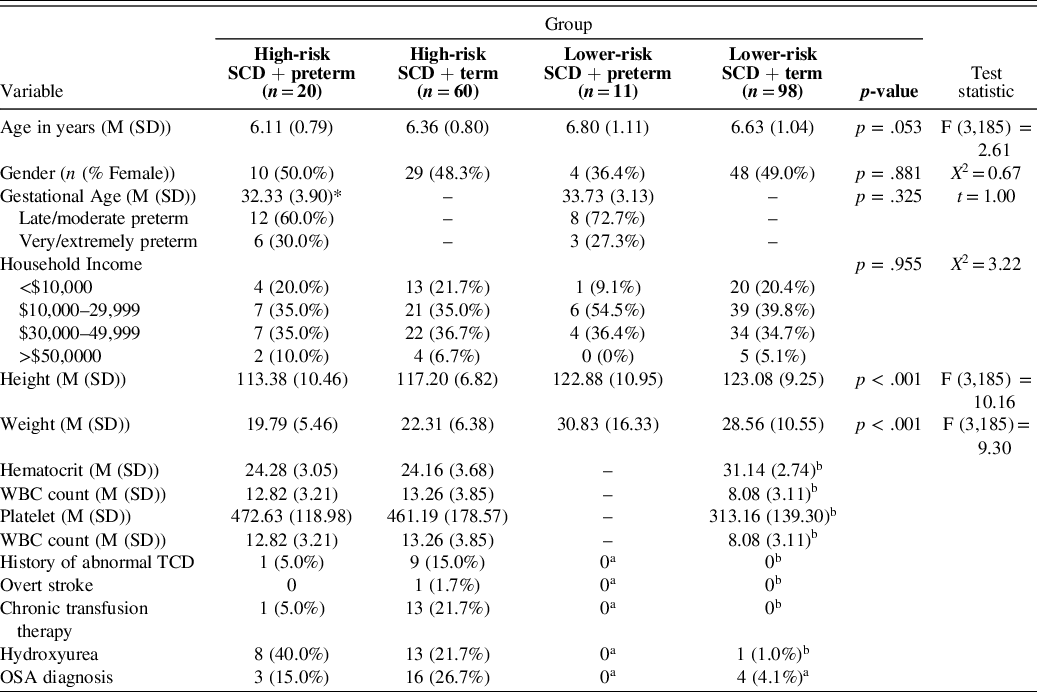
Participants diagnosed with SCD (both high and lower risk genotypes) were drawn from a larger longitudinal study monitoring and screening for the influence of SCD on neurodevelopment across childhood (Schatz et al, Reference Schatz, Puffer, Sanchez, Stancil and Roberts2009). Participants without SCD were children recruited from after school programs and summer care programs with predominantly African American children from Richland and Sumter counties in South Carolina. Participants without SCD were excluded if parents reported any major neurodevelopmental disorders or health conditions that could significantly impact cognitive functioning. Based on the aforementioned criteria, three participants were excluded for the following diagnoses: hemispherectomy, epilepsy, and TBI. No participants were excluded for attention deficit/hyperactivity disorder or learning disabilities. Participant characteristics and relevant medical factors are included in Table 1. All data included in this manuscript were obtained in compliance with the Helsinki Declaration.
Clinical characteristics of participants in the high risk SCD born preterm, high risk SCD born at term, lower risk SCD born preterm, and lower risk SCD born at term groups

Note. DVTMI = Beery Developmental Test of Visual-Motor Integration; OSA = Obstructive sleep apnea; TCD = Transcranial doppler; WBC = White blood count.
* gestational age missing for two participants.
a clinical characteristics reported for subset of participants diagnosed with SCD in the high risk SCD + term group (n = 2).
b clinical characteristics reported for subset of participants diagnosed with SCD in the lower risk SCD + term group (n = 25).
Procedure
Participants with SCD were administered a cognitive screening battery at the hematology/oncology clinic during the same visit as their bi-annual clinic appointment. Healthy control participants without SCD were assessed at school or program sites. A parent of all study participants completed informed consent as approved by an Institutional Review Board. Children and their parents were screened for English language proficiency to ensure they could adequately engage with all screening and assessment materials. The cognitive test battery was administered by licensed psychologists or trained psychology doctoral students and was completed in approximately 60–90 min. Testing results were disseminated to families via a feedback phone call and in a written report which included recommendations for psychoeducational services and follow-up testing, if indicated. Children also received books as compensation for their participation. Information on household income was collected at the time of testing as a proxy for socioeconomic status. Electronic medical records of children with SCD were reviewed following testing to collect information on relevant medical and demographic characteristics.
Measures
Tests sensitive to working memory and attentional processes
Select subtests from cognitive, achievement, and language batteries that task working memory and attentional processes were used to assess for domains sensitive to disease-related effects of SCD and preterm birth. Processing speed was measured through the Decision Speed subtest of the Woodcock-Johnson Test of Cognitive Abilities, 3rd Edition (WJ-III COG; Woodcock et al., Reference Woodcock, McGrew and Mather2001). On this task, pictures are organized in rows with each row containing two related pictures. Children are asked to mark the two related pictures in each row as quickly and accurately as possible within three minutes.
Syntactic processing, which has been shown to be sensitive to working memory processes, was measured through the Grammatical Understanding subtest from the Test of Language Development- Primary Version, Third Edition (TOLD-P:3; Newcomer & Hammill, Reference Newcomer and Hammill1997). The TOLD-P:3 has shown reliability at the subtest and domain level, strong validity, and a lack of cultural bias for African American children (Newcomer & Hammill, Reference Newcomer and Hammill1997). Children are instructed to select the picture that best demonstrates the meaning of sentences that have increasingly complex syntax. Completion of syntactic processing tasks draws on language specific knowledge and tasks memory systems that facilitate the storage and mental retrieval of verbally provided information. Prior studies on youth with SCD have found syntactical ability to be particularly sensitive to early cerebrovascular dysfunction (Sanchez, Schatz, & Roberts, Reference Sanchez, Schatz and Roberts2010). Furthermore, syntactic processing tasks have been linked to frontal brain regions that are also implicated in executive functioning abilities.
The Applied Problems subtest from the Woodcock-Johnson Tests of Achievement, 3rd edition (WJ-III ACH; Woodcock et al., Reference Woodcock, McGrew and Mather2001) measures quantitative knowledge and requires children to analyze and solve relatively simple math story problems. Math story problems are presented verbally, requiring children to mentally retain and manipulate information to perform increasingly difficult math calculations, thereby heavily taxing working memory systems.
Language and reading abilities
Expressive language ability was measured using the Oral Vocabulary subtest from the TOLD-P:3, which requires the child to provide definitions for orally presented words. Phonological processing was assessed using the Word Discrimination subtest from the TOLD-P:3, which requires the child to determine whether two similarly sounding words are the same word or different words (e.g., pig – pig versus big – pig). Early reading skills were measured through the Letter-Word Identification subtest from the WJ-III ACH. The Letter-Word Identification subtest requires the child to identify letters and words without having to know the meaning of a word.
Visual- motor integration
Visual-motor ability was assessed using the Beery Developmental Test of Visual-Motor Integration, 5th edition (DVTMI; Beery & Beery, Reference Beery2004). The DVTMI instructs children to copy increasingly complex geometric figures using a pencil and paper. Scaled scores were used for the TOLD-P:3 (M = 10, SD = 3) and standard scores were used for the WJ-III ACH and DVTMI (M = 100, SD = 15).
Medical chart review
A medical chart review was conducted for all participants with SCD. Details of the participants’ demographic characteristics, routine blood lab data, history of disease complications, and treatment history were obtained through medical chart review using a medical chart coding sheet to provide a structured form for the review of electronic and paper medical charts. Specific sickle cell genotypes were recorded and then dichotomized as either high risk or lower risk. Birth history (preterm vs term) was recorded along with gestational age when available. Information on specific SCD genotype and birth history was available for all participants. Hemoglobin, white blood cell counts, and platelet counts were recorded from routine blood lab data collected during the health maintenance visit at which the screening took place. History of overt stroke or abnormal transcranial doppler and prior treatment with therapeutic levels of hydroxyurea or chronic blood transfusion therapy were recorded from medical records as indicators of increased risk for cerebrovascular disease. Magnetic resonance imaging (MRI) was not recorded as it was unavailable for the majority of participants.
Statistical Analyses
All statistical analyses were conducted using the Statistical Package for the Social Sciences, 25th Edition (SPSS). Descriptive statistics provide information on demographic and medical characteristics of the sample. Factorial ANOVAs were conducted to examine the relationship between SCD risk (high risk; lower risk SCD), preterm birth status (preterm; full term), and neurodevelopmental outcomes. Neurodevelopmental outcomes included scores on specific tests of cognitive functioning. In order to evaluate the presence of any cognitive weakness, regardless of domain, scores on each cognitive test were categorized as abnormal if they fell ≥1.5 standard deviations below the population mean. This cut off point was selected based on data from previous studies on developing cognitive screening algorithms for pediatric SCD (DeBaun et al., Reference DeBaun, Schatz, Siegel, Koby, Craft, Resar and Lee1998; Schatz et al., Reference Schatz, Puffer, Sanchez, Stancil and Roberts2009). Log linear analyses were then conducted to examine the likelihood of at least one abnormal cognitive screening score by SCD risk and preterm birth status.
RESULTS
Results from descriptive analyses of key demographic and medical characteristics for the four groups are shown in Table 1. Chi squared tests and one-way ANOVAs revealed no significant differences between the four groups on age, gender, or household income. As expected, the high risk SCD groups had significantly lower height and weight compared to the lower risk SCD groups. An independent samples t-test revealed no significant difference in mean gestational age between the high risk SCD + preterm and lower risk SCD + preterm groups. There was similarly no significant difference in the proportion of preterm participants by preterm birth classification (late/moderate preterm, very/extremely preterm) across the two groups (X 2 = .117, p = .732, ϕ = .064). As such, gestational age was not included as a covariate in analyses.
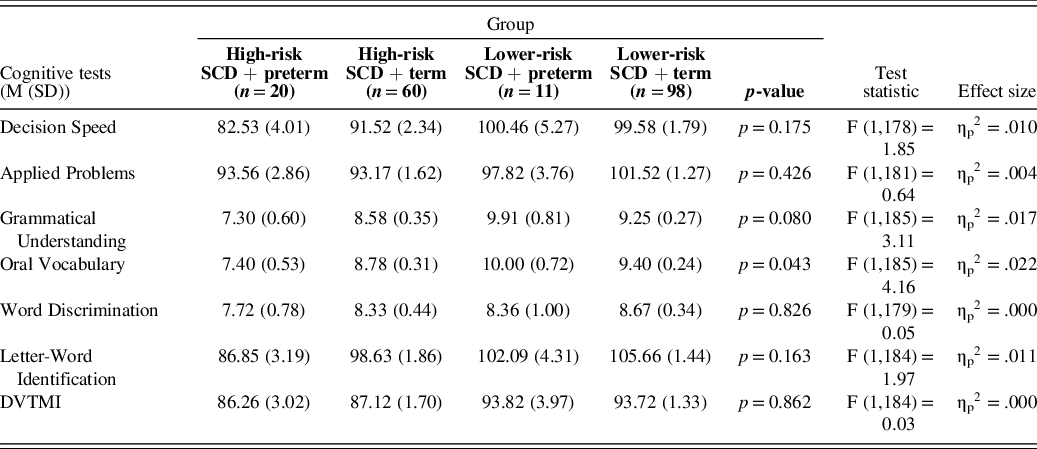
Factorial ANOVAs were run to examine the focused effects of SCD risk and preterm birth status on cognitive outcomes that are most commonly affected by the two conditions (i.e., processing speed, working memory; see Table 2). There was a significant main effect for SCD risk on the WJ-III Decision Speed test, WJ-III Applied Problems test, and TOLD-P:3 Grammatical Understanding test, with the high risk SCD group performing more poorly than the lower risk SCD group. The interaction effect on the TOLD-P:3 Grammatical Understanding test was approaching statistical significance (p = .08) in the hypothesized direction of comorbid high risk SCD and preterm birth associated with poorer performance. However, there were no statistically significant interaction effects between SCD risk and preterm birth status on these measures tasking attentional processes and working memory. Exploratory factorial ANOVAs were run for cognitive tasks assessing language and visual-motor skills. Exploratory analyses revealed a significant interaction effect between SCD risk and preterm birth status on the TOLD-P:3 Oral Vocabulary test, F(1,189) = 4.16, p = .043, ηp 2 = .022, with the high risk SCD + preterm group evidencing the poorest performance.
Results from factorial ANOVAs examining SCD risk (high risk; lower risk SCD), preterm birth status (preterm; term), and neurodevelopmental outcomes

Note. DVTMI = Beery Developmental Test of Visual-Motor Integration.
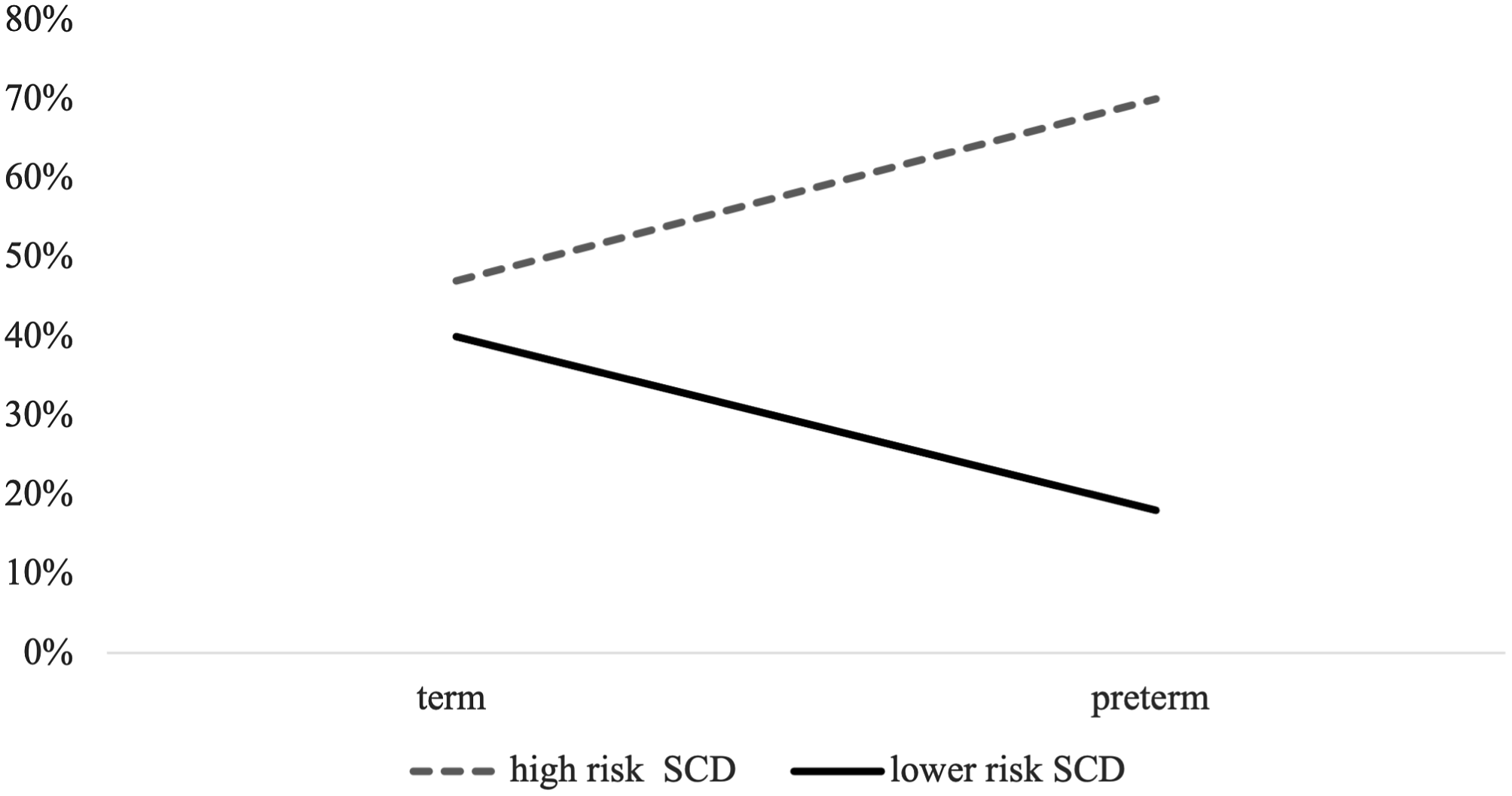
Log linear analyses were conducted to examine the impact of SCD risk and preterm birth status on rates of abnormal screening results. The high risk SCD + preterm group had the highest rate of abnormal screening results (70%), followed by high risk SCD (47%), lower risk SCD (40%), and lower risk SCD + preterm groups (18%). See Supplemental Table 1 for rates of abnormal screenings for each group by neurodevelopmental outcome. The three-way loglinear analysis for SCD risk (high, lower), preterm status (preterm, term) and screening outcome (normal, abnormal) indicated that the three-way interaction was statistically significant, G2(4) = 5.22, p = .027 (see Figure 1). To break down this effect, chi-squared tests were performed separately for the preterm and term groups. There was a significant association between SCD risk status and screening outcome (χ2(1) = 7.63, p = .006, ϕ = .496) for participants born preterm, but not for participants born at term (χ2(1) = 7.19, p = .396, ϕ = .067).
Graph showing the interaction between SCD risk, preterm birth status, and abnormal screening outcome.

DISCUSSION
SCD and preterm birth are commonly co-occurring conditions that are independently associated with elevated risk for poor neurodevelopmental outcomes. However, there has been no research to date exploring the combined effects of SCD and preterm birth on cognitive functioning. The current study compared cognitive functioning in children with high risk SCD born preterm to comparison groups to examine the additive effects of SCD and preterm birth on specific cognitive outcomes and increased risk for abnormal cognitive screening results.
Significant differences in working memory and processing speed were observed between the high risk SCD group and lower risk SCD group, which is in line with well-documented research on the negative impact of pediatric SCD on neurocognitive outcomes (Hijmans et al., Reference Hijmans, Fijnvandraat, Grootenhuis, van Geloven, Heijboer, Peters and Oosterlaan2010; Schatz et al., Reference Schatz, Finke, Kellett and Kramer2002; Schatz, et al., Reference Schatz, Puffer, Sanchez, Stancil and Roberts2009). However, results indicate that the combination of SCD and preterm birth did not confer greater risk for impairments on cognitive tests that assess working memory and processing speed, domains previously found to be sensitive to the individual disease-related impact of SCD and preterm birth. As such, the hypothesis of greater cognitive impairment on tests tapping into working memory and attentional processes in children with high risk SCD born preterm was not supported.
Exploratory analyses did reveal an association between comorbid SCD and preterm birth and deficits in expressive vocabulary, suggesting that language skills may be susceptible to the additive effect of the two conditions. There is some support for language deficits in young school age children with pediatric SCD, with deficits primarily identified for children at high neurologic risk (Schatz et al., Reference Schatz, Puffer, Sanchez, Stancil and Roberts2009). Language deficits have similarly been identified among children at varying degrees of prematurity (Guarini et al., Reference Guarini, Bonifacci, Tobia, Alessandroni, Faldella and Sansavini2019; Rabie, Bird, Magann, Hall, & McKelvey, Reference Rabie, Bird, Magann, Hall and McKelvey2015; Taylor et al., Reference Taylor, Klein, Anselmo, Minich, Espy and Hack2011). Research in both SCD and preterm populations has found that such language deficits can present independent of general cognitive deficits, indicating a need for domain specific investigations of functioning (Aylward, Reference Aylward2002; Schatz et al., Reference Schatz, Puffer, Sanchez, Stancil and Roberts2009). However, given the exploratory nature of these analyses, further research is needed to substantiate this finding.
The combination of high risk SCD and history of preterm birth was significantly associated with increased rates of abnormal cognitive screenings. This suggests that the neurodevelopmental risk imparted by comorbid SCD and preterm birth may manifest as heterogenous, rather than specific, patterns of cognitive deficits. There are many factors that may contribute to this heterogeneity in neurodevelopmental risk. Both high risk SCD genotypes and preterm birth are associated with injury to white matter tracts caused by acute neurologic injury (e.g., silent cerebral infarction) or diffuse neurologic processes such as delays in white matter development. Small variations in the location of white matter injuries can result in markedly different impacts on cognitive functioning due to the organization of the white matter tracts implicated in cognitive abilities in the brain. As such, heterogeneity in the affected domains of neurodevelopmental functioning may reflect heterogeneity in injury location. Future research may benefit from the inclusion of screening tools, such as functional MRI or cognitive evoked potentials, in addition to cognitive testing to assist in detecting abnormalities in brain functioning (Colombatti et al., Reference Colombatti, Ermani, Rampazzo, Manara, Montanaro, Basso and Sainati2015; Colombatti et al., Reference Colombatti, Lucchetta, Montanaro, Rampazzo, Ermani, Talenti and Sainati2016).
Heterogeneity in patterns of neurodevelopmental risk may also reflect developmental processes. Within the preterm literature there is evidence to suggest that heterogeneity in patterns of cognitive deficits may be more characteristic of younger age groups, with more selective patterns of cognitive deficits emerging later in life (Sansavini, Guarini, & Caselli, Reference Sansavini, Guarini and Caselli2011). Specifically, the development of more selective deficits in higher order cognitive functions (e.g., executive functioning) in older youth is thought to be influenced by “catching up” in more basic cognitive competencies and increased challenges with complex competencies due to elevated environmental demands (Sansavini et al., Reference Sansavini, Guarini and Caselli2011). Longitudinal research is needed to examine the development of cognitive abilities into middle/late childhood and adolescence for youth with comorbid SCD and preterm birth to explore how developmental processes impact neurodevelopment.
Finally, prior studies have demonstrated that neurodevelopmental outcomes for youth with SCD and preterm birth are impacted by social and environmental processes in addition to medical risk (Bills, Johnston, Shi, & Bradshaw, Reference Bills, Johnston, Shi and Bradshaw2021; Prussien et al., Reference Prussien, Siciliano, Ciriegio, Anderson, Sathanayagam, DeBaun and Compas2020; Yarboi et al., Reference Yarboi, Compas, Brody, White, Rees Patterson, Ziara and King2017; Wong & Edwards, Reference Wong and Edwards2013). This dynamic interplay between medical and environmental risk factors may lead to diverging developmental trajectories which can manifest as impairments in a variety of cognitive domains. There is a need for future research examining the interaction between other risk factors, such parent and family functioning, and the elevated medical risk imparted by multiple early brain insults.
These findings have important clinical implications for screening and intervention efforts. Screenings that solely target attention and executive functioning abilities may miss youth at increased risk for poor neurodevelopmental outcomes. As such, screening programs assessing a wider range of neurodevelopmental domains may be needed to identify early deficits in young children with high risk SCD born preterm. It is notable that the current study directly assessed for early cognitive delays, rather than solely relying on caregiver or provider reports, which may be important for detecting early deficits. Furthermore, the increased rates of abnormal screenings are suggestive of the need for increased preventative and intervention resources for this subset of children with SCD. The exploratory finding of a specific impairment in expressive language is concerning as early language skills play a vital role in the development of later academic abilities and skills among children entering elementary school.
There are a number of limitations associated with the current study. First, there is an unbalanced sample size across the four groups, with two groups notably smaller in sample size, thereby limiting statistical power. However, as SCD is a relatively rare disease population and this is the first study to date to examine cognitive functioning among children with comorbid SCD and preterm birth, these analyses make an important contribution to the literature. Another limitation is the lack of information on gestational age for all participants in the study. Specific gestational age was unavailable for two participants in the high risk SCD group born preterm and for children born at term. The cross-sectional nature of the current study limits conclusions related to changes in profiles of cognitive deficits across time for children with SCD born preterm. Future research is needed to determine when and if more specific patterns of cognitive deficits emerge. Finally, the current test battery was developed to be sensitive to screening for SCD-related neurocognitive effects, but its degree of sensitivity to the neurocognitive risk imparted by prematurity is not established.
In summary, this study is the first to examine the relationship between preterm birth and neurodevelopmental concerns in children with SCD. Findings suggest that preterm birth is associated with increased risk for abnormal developmental screenings and deficits in expressive language skills. Although further studies are needed to confirm and expand on these findings, this suggests a more diffuse pattern of cognitive risk for children with high risk SCD born preterm as opposed to the more focused effects found in the SCD literature. This more nuanced understanding of risk for children with comorbid SCD and preterm birth has the potential to aid in the early identification of cognitive deficits. For instance, neurodevelopmental concerns may not be evident on focused screeners that measure a limited number of cognitive domains. Current findings highlight the need for further investigation of the impact of preterm birth on cognitive functioning in pediatric SCD to aid in the development of more nuanced treatment approaches for this particularly vulnerable population.
SUPPLEMENTARY MATERIAL
For supplementary material accompanying this paper visit https://doi.org/10.1017/S1355617721001338
ACKNOWLEDGEMENTS
We thank our participants for their time and effort that makes this research possible.
FINANCIAL SUPPORT
This publication was made possible in part by Grant Number T32-GM081740 from NIH-NIGMS and R21DC017252 from NIH-NIDCD. Its contents are solely the responsibility of the authors and do not necessarily represent the official views of the NIGMS or NIH.
CONFLICT OF INTEREST
The authors have nothing to disclose.