Climate change accelerated by anthropogenic causes throughout the world has been shown to be of significant and ongoing concern for over two decades (Santer, Taylor, Wigley, & Johns, Reference Santer, Taylor, Wigley and Johns1996; Vitousek, Mooney, Lubchenco, & Melillo, Reference Vitousek, Mooney, Lubchenco and Melillo1997). The understanding of the interaction between climate and behaviour requires an interdisciplinary approach, including predictive economic models (Dasgupta, Reference Dasgupta2008), predictive climate models (Carleton & Hsiang, Reference Carleton and Hsiang2016), and an understanding of the relationship between attitudes and behaviour (Lynn & Longhi, Reference Lynn, Longhi, McFall and Garrington2011; Tikir & Lehmann, Reference Tikir and Lehmann2011). However, the latter presents several problems for researchers, as knowledge and awareness of environmental issues do not necessarily lead to behavioural outcomes (Hungerford & Volk, Reference Hungerford and Volk1990). Behaviour is not fixed by an individual’s beliefs, but it is fluid, dependent on experience, expectations and social norms, among others (Heimlich, Mony, & Yocco, Reference Heimlich, Mony, Yocco, Stevenson, Brody, Dillon and Wals2014). There is further concern that the quest to establish a causal climate change model from belief to behaviour is insensitive to the nuances of individual lives motivated by economic, social, and political factors interspersed among climate change beliefs and behaviours (Coutenay-Hall & Rogers, Reference Coutenay-Hall and Rogers2002). This is evident in the fact that the general population in wealthier countries are aware of climate change, yet they do not see the climate models’ predictions as an imminent threat, and thus individual attempt of mitigation of future risks is limited (Swim et al., Reference Swim, Clayton, Doherty, Gifford, Howard, Reser, Stern and Weber2009). Despite the complexity arising from the assumption that beliefs lead to behaviour, research on attitudes towards climate change is useful in helping to predict pro-environmental behaviour (Lynn & Longhi, Reference Lynn, Longhi, McFall and Garrington2011; Semenza et al., Reference Semenza, Hall, Wilson, Bontempo, Sailor and George2008; Shove, Reference Shove2010). By understanding the link between beliefs and their subsequent effect on individual behavioural outcome, research could guide effective implementation of climate change education, a critical factor in promoting sustainable development (Mochizuki & Bryan, Reference Mochizuki and Bryan2015; UNESCO, 2015, 2016).
Background
Perception of climate change
The lack of response by many nations shows a maladaptation to current and future risks caused by the climate. Predictive models show that temperature increase will cause increased mortality,economic damage, decrease in agricultural production, increased electricity consumption, and decreased labour productivity, among others (Carleton & Hsiang, Reference Carleton and Hsiang2016). Climate change may also cause increased magnitude and frequency of extreme weather events; future combinations of which, due to complex system interactions, may even magnify the impact of a single event; for example, on drinking water quality (Bertone, Sahin, Richards, & Roiko, Reference Bertone, Sahin, Richards and Roiko2016). Economic inequality, which influences the capability of individuals to survive severe climate disasters, is seen to be a great issue, as the severity of predicted damage that regions will encounter is disproportionately higher in poorer regions globally (Carleton & Hsiang, Reference Carleton and Hsiang2016; Garschagen et al., Reference Garschagen, Hagenlocher, Comes, Dubbert, Sabelfeld, Lee and Neuschäfer2016). The regions facing the greatest risk of impact from climate change are often socioeconomically disadvantaged and face a proportionally higher risk due to extreme change in temperature and precipitation (Pachauri et al., Reference Pachauri, Allen, Barros, John Broome, Cramer, Christ and Dasgupta2014). In fact, poverty itself prevents citizens from being able to cope with and survive extreme weather events due to poor infrastructure and poor economic sustainability (Garschagen et al., Reference Garschagen, Hagenlocher, Comes, Dubbert, Sabelfeld, Lee and Neuschäfer2016). Due to the global nature of the issue, a unified approach to combating climate change must include all levels educating the public; from policy makers and organisations, to individuals.
Climate change policy
Extensive research has been conducted that reports higher levels of education influence attitudes towards climate change and the development of pro-environmental behaviours (Harring & Jagers, Reference Harring and Jagers2018; Howell, Reference Howell2014; Lo & Chow, Reference Lo and Chow2015; Longhi, Reference Longhi2013; Lynn & Longhi, Reference Lynn, Longhi, McFall and Garrington2011; Ockwell, Whitmarsh, & O’Neill, Reference Ockwell, Whitmarsh and O’Neill2009; Semenza et al., Reference Semenza, Hall, Wilson, Bontempo, Sailor and George2008). Indeed, an individual’s willingness to act in pro-environmental ways must be preceded by an awareness of climate change issues, which often necessitates a greater understanding of scientific and statistical data. However, the assumption that a higher level of educational achievement leads to greater awareness does not necessarily imply that an individual will exhibit pro-environmental behaviour, such as with individuals who are aware that a smaller car is the environmentally friendly choice but would rather buy a larger car to promote their status and wealth (Sternäng & Lundholm, Reference Sternäng and Lundholm2011), or individuals who choose to buy an affordable house far away from work even though this would increase their carbon footprint in the form of longer commutes (Coutenay-Hall & Rogers, Reference Coutenay-Hall and Rogers2002). There are growing concerns, however, that individual change is being undermined by political and corporate entities that see no financial incentive in lobbying for climate change initiatives that both directly and indirectly affect their economic interests (Antonio & Brulle, Reference Antonio and Brulle2011; Moisander, Reference Moisander2007). The old notion that wealthier countries would be more concerned seems to be negated by the cost of climate disaster mitigation and uncertainty of current and future economic concerns (Kim & Wolinsky-Nahmias, Reference Kim and Wolinsky-Nahmias2014). Despite governments realising the future dangers of climate change, policy seems to be gridlocked by a concern for economic prosperity versus ecological sustainability (Antonio & Brulle, Reference Antonio and Brulle2011). Although efforts by many nations to mitigate climate change through policy are in their infancy, there is yet to be a realisation of any significant results of mitigation efforts when compared to previous trends of climate change at an international scale (Intergovernmental Panel on Climate Change, 2014). Furthermore, there seems to be a lack of action despite calls by researchers arguing the effectiveness of climate change education integrated into the curriculum for over a decade, which have seen limited implementation by governments (Anderson, Reference Anderson2013; Pruneau, Gravel, Bourque, & Langis, Reference Pruneau, Gravel, Bourque and Langis2003).
Factors relating to individual perception of climate change
Though pro-environmental behaviour generally aligns with the attitudes towards climate change, various constraints such as economic viability, living with someone having differing attitudes, and availability of infrastructure limits the behavioural outcome that attitude alone depicts (Longhi, Reference Longhi2013). Furthermore, awareness of climate change does not necessarily translate into pro-environmental behaviours. Studies about the psychological motivations of behaviours that may not have economic benefits for an individual must also be considered, as other potential inputs may explain the relation between the belief in climate change and whether or not that translates into pro-environmental behaviours (Kim & Wolinsky-Nahmias, Reference Kim and Wolinsky-Nahmias2014; Semenza et al., Reference Semenza, Hall, Wilson, Bontempo, Sailor and George2008). The public’s willingness to support policies that curb climate change through the limiting of greenhouse gas emissions is, in fact, higher than the public’s perception on the dangers of climate change (Stokes, Wike, & Carle Reference Stokes, Wike and Carle2015); although perhaps people may generally be inclined to support the morally just option of showing concern for environmental issues when it comes to how others (in this case, the governments) ought to deal with socio-scientific issues (Sternäng & Lundholm Reference Sternäng and Lundholm2011).
According to a meta-analysis by Hines, Hungerford, and Tomera (Reference Hines, Hungerford and Tomera1986/87), other areas antecedent to behaviour include the knowledge of action strategies, verbal commitment, locus of control, and an individual’s sense of responsibility as factors aside from awareness and belief. The motivational concept of self-efficacy, as described by Bandura (Reference Bandura1977, Reference Bandura1982, Reference Bandura1993), is a factor that may strongly influence an individual’s behaviour to align with their attitudes and beliefs towards climate change. Indeed, if an individual believes that their actions can positively influence the overall fight against climate change, then according to Bandura (Reference Bandura1977, Reference Bandura1982, Reference Bandura1993), their behaviour should correlate with their attitudes even when it is inconvenient to them. In cases such as ridesharing, which requires the individual to spend time and effort to organise and coordinate such behaviour, self-efficacy could be a variable of concern. Self-efficacy could potentially explain findings by Lynn and Longhi (Reference Lynn, Longhi, McFall and Garrington2011) that show education influences behaviour’s relation to attitudes, as an individual’s confidence to enact change increases through awareness and understanding of climate change (Bandura, Reference Bandura1977, Reference Bandura1982, Reference Bandura1993).
Climate change education
A concerted effort to implement educational reforms is necessary to create awareness of the realities of climate change and offer ways to reduce risk and adapt to the dangers that are inevitably forthcoming. Though such initiatives exist in the form of climate change education and education for sustainable development, there is no clear agenda or consensus on best practices (Anderson, 2012). Even though climate change is acknowledged by most, the cause is still often misattributed to the depletion of the ozone layer, signifying a confusion among the general public as to the real cause of climate change (Leiserowitz, Reference Leiserowitz2007). Enlightening citizens to the true cause of anthropogenic climate change would help raise awareness of the actions and behaviour that could lead to adverse consequences; however, education policy must consider how the message is framed in terms of the motivational outcome that would lead students to adopt environmentally friendly behaviour (Anderson, Reference Anderson2013; Smith & Leiserowitz, Reference Smith and Leiserowitz2014). Offering individual choices and actions that can mitigate climate risk could seem daunting and counter to self-efficacy concepts if an individual believes their actions will be offset by the collective actions of others.
Although other nations were also considered, the scope of this research is mainly centred on Australia and China. The former is reported to believe climate change to be a very serious and critical issue at a greater rate among the population compared to the latter (Anderson, Reference Anderson2013; Stokes et al., Reference Stokes, Wike and Carle2015). At the governmental level, both countries have highlighted the importance of climate change education to the societal wellbeing of their countries; however, while Australia remains gridlocked between environment and economy, China has favoured an experimental implementation of educational climate change reforms (Han, Reference Han2015; Tranter, Reference Tranter2014).
Based on the above considerations, the following research questions are sought to be answered through this current research study: (1) Is there a discrepancy between self-efficacy and pro-environmental behaviours, particularly between Australian and Chinese students? (2) Is there any other socio-demographic factor that might significantly affect an individual’s pro-environmental behaviour?
The current study follows in the analysis of environmental attitudes and behaviour applied by Lynn and Longhi (Reference Lynn, Longhi, McFall and Garrington2011), using items from the surveys conducted by the National Centre for Social Research for the Economic and Social Research Council’s project ‘Understanding Society’ (McFall & Garrington, Reference McFall and Garrington2011). The study looks to determine personal attitudes and behaviours with regard to climate change, specifically with university students from different cultural backgrounds, using the relevant questions from ‘Understanding Society’ addressed by Lynn and Longhi (Reference Lynn, Longhi, McFall and Garrington2011). It is hypothesised that participants from geographic locations with a greater imminent threat from climate change would possess higher self-efficacy and would show behaviour in accordance with the level of threat their geographic locations face. It is also hypothesised that participants from countries with stronger climate change education policies will show more climate change aware attitudes. In this specific case, China has been chosen as ‘stronger’ in term of policies, as their central government constantly reinforces environmental education into their political agenda, whereas Australian policies require democratic support, which is in contention with other ideologies and political entities and currently only being implemented in the state of New South Wales (Han, Reference Han2015; Stevenson, Reference Stevenson2007; Tranter, Reference Tranter2014). According to the hypothesis and above considerations, behaviours such as turning off the tap when brushing teeth or switching off the lights in unused rooms (i.e., behaviours that have an economically low impact and are negligible in terms of time commitment) should show correlations with individuals with high self-efficacy from nations that face a more imminent threat from climate change and/or a better climate change education system. This research seeks to advance the understanding of the construct of self-efficacy and how it factors into beliefs and behaviour of students with regard to climate change threats; an area that is curiously neglected in The Handbook of Environmental Education (Stevenson, Brody, Dillon, & Wals, Reference Stevenson, Brody, Dillon and Wals2013), which the authors believe to be of particular interest to bridge the gap between beliefs and behaviour.
Methods
The self-reported behaviour of participants from different countries — in particular, Australia and China — was collected and analysed. China represents the geographic location of greater risk within this study, in line with current World Risk Index reports (Garschagen et al., Reference Garschagen, Hagenlocher, Comes, Dubbert, Sabelfeld, Lee and Neuschäfer2016).
Data collection
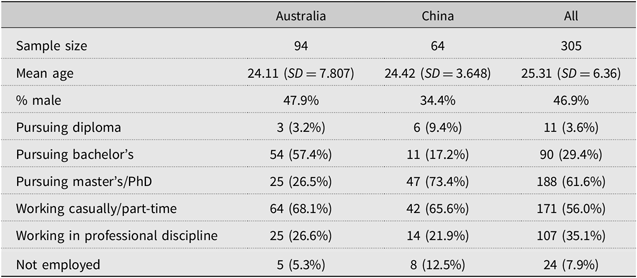
A representative sample (N = 305) of students from Bond University in Australia, aged between 17–59 years, was surveyed. The students’ responses to which country they had spent more time in throughout their lives determined whether they would be categorised in the Australian, Chinese, or other nationalities’ groups (Table 1).
General statistics of Australian, Chinese, and whole sample, and their educational and employment distribution

The convenience sample consisted of 94 Australians and 64 Chinese participants. The Australian domestic students consisted of 45 males and 49 females. Chinese international students consisted of 22 males and 42 females. While the means were similar at 24, the Australian students had a greater range of age and were more likely to be employed. Notably, Australian participants were mostly at university pursuing their bachelor’s degree (68.1%) while Chinese were pursuing their master’s or a PhD (73.4%).
A quantitative cross-sectional design was employed to collect data from participants using a self-administered questionnaire. A convenience sample was collected from Bond University students on campus, with researcher supervision to clarify any queries by participants.
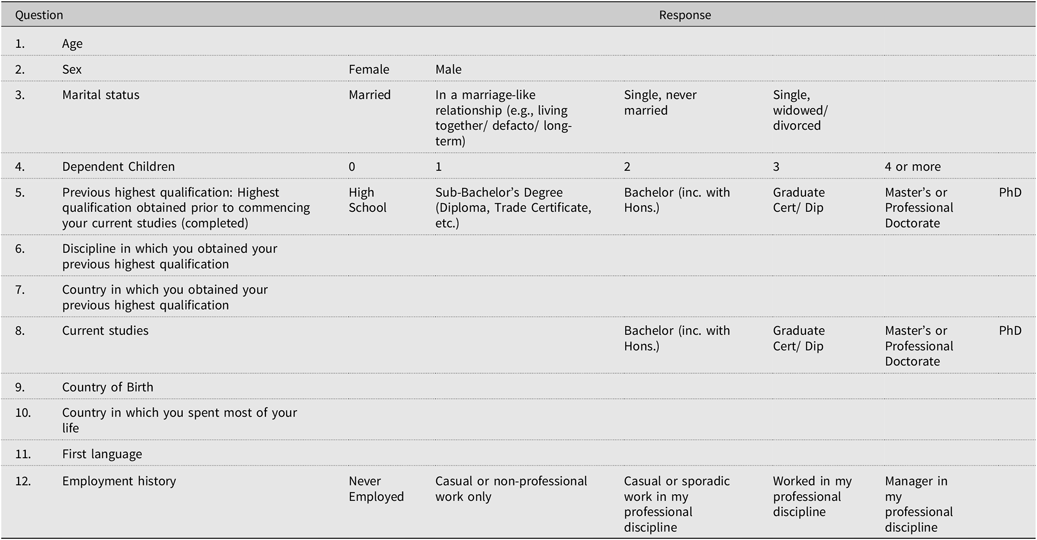
Participants in the study were asked for information relevant to the research question, including information on age, sex, marital status, number of dependent children, education, employment, country of birth, country in which most time was spent, and first language (see Section 1, Appendix).
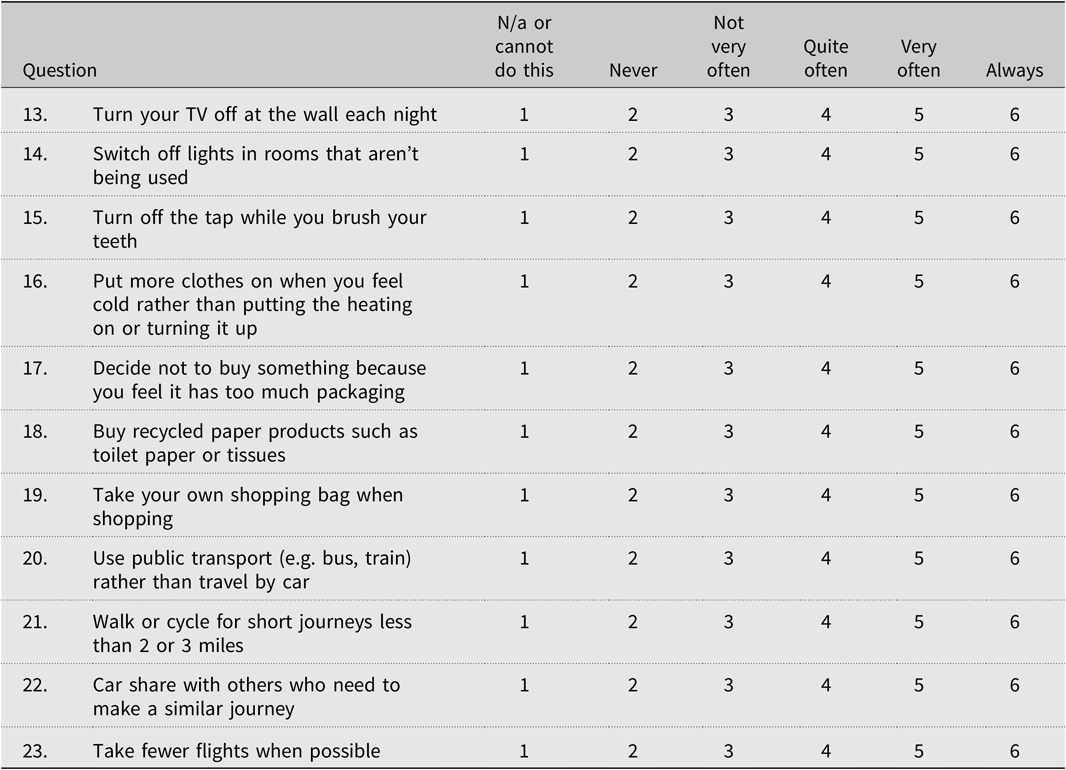
Section 2 of the questionnaire employs a 6-point Likert-type scale to collect information on participants’ environmental behaviour towards climate change, with 11 questions on participant behaviour that would influence their personal impact on the environment (1 = n/a, 2 = never, 3 = not very often, 4 = quite often, 5 = very often, and 6 = always). The response for not applicable (n/a) was included as some questions such as ‘Taking public transport instead of car’ would not be an option for some students. These measures include low-cost, non-time-consuming actions such as turning off the lights or the tap (#14, 15), energy (#13, 14, 16), water (#15), packaging/recycling (#17, 18, 19) and transport (#20, 21). Though it could be argued that the impact of individual recycling efforts measured in packaging/recycling is minimal in the larger context of global climate change, the measure provides a consumer-oriented environmental measure of buying behaviour. Various measures were included to gather data that encompasses the environmentally related decisions that participants make throughout their daily life.
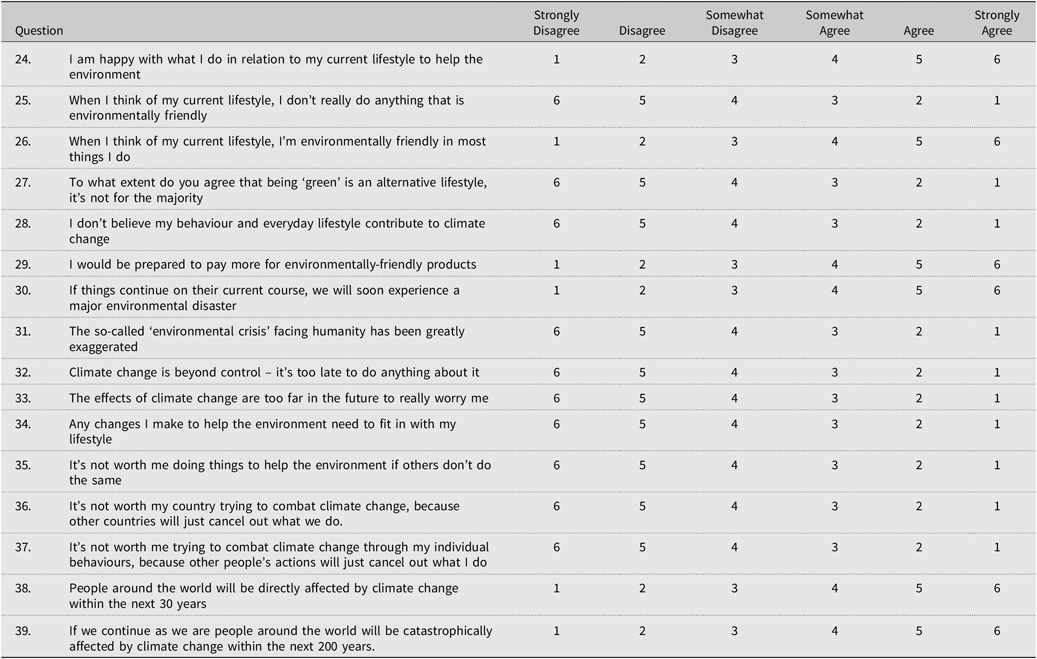
Section 3 collects data from 16 questions on the participants’ attitudes about climate change, particularly on their thoughts of their actions regarding climate change, their willingness to bear a financial cost for the benefit of the environment, as well as their beliefs about their ability to influence climate change personally and as a nation. Considering that the participants were at the university level and assumed to have been previously aware of climate change, a 6-point Likert scale was used to have respondents commit to a positive or negative response, with the option of strongly disagree, disagree, somewhat disagree, somewhat agree, agree, and strongly agree and the scale 1–6 dependent on the questions (6 being pro-environmental beliefs/ attitudes, and 1 indicating unfavourable beliefs/ attitudes towards climate change). A critical analysis of how participants answered questions relating to self-efficacy was conducted to estimate the effects of self-efficacy in determining motivation of pro-environmental behaviour. For this, eight questions (survey questions #24, 25, 26, 28, 29, 34, 35, 37) from the attitudes section of the survey were chosen under the parameter ‘Individual’s perceived capability to enact change’, with regard to pro-environmental behaviour towards climate change. The items were chosen following Bandura’s (Reference Bandura, Pajares and Urdan2006) guide for constructing self-efficacy scales and focused on the individuals’ perceptions about their ability to change behaviour, despite the complexity and magnitude of the global climate, which allows the self-efficacy construct of this study to be free from covariables such as self-esteem, locus of control, and outcomes expectancies.
Statistical analysis
Collected data were compiled for analysis using IBM’s Statistical Package for the Social Sciences (SPSS) to analyse the relation between attitudes and behaviour. Cronbach’s alpha was measured for internal reliability of survey questions for behaviour, attitude, and self-efficacy across the entire sample, the Chinese sample, and Australian sample.
An independent samples t test was used to analyse the difference between attitudes and self-reported behaviours of participants who have spent a greater amount of time in Australia compared to China. Analysis was carried out between the two groups in terms of: total self-efficacy score; low-cost, low time-consuming behaviour; an aggregate total of environmentally friendly behaviour; an aggregate total of environmentally friendly attitudes/beliefs; and subtotals based on the behaviour aggregate split by their relation to (1) water consumption, (2) energy consumption, (3) use of recycled material and packaging, and (4) transport behaviour.
A Pearson’s correlation analysis was conducted to assess the relation between self-efficacy and the six environmentally friendly behaviour variables used above: low cost, low time-consuming behaviour; aggregate total of environmentally friendly behaviour; and subtotals based on environmental behaviour split by their relation to (1) water consumption, (2) energy consumption, (3) use of recycled material and packaging, and (4) transport behaviour.
Bayesian network development
Bayesian networks (BNs) can be defined as probabilistic, directed acyclic graphs. They rely on the application of the Bayes’ theorem, which is used for inferring or updating the amount of ‘belief’ when new information is provided. In a BN, variables (or nodes) are connected by arcs, usually based on a prior understanding of the system to be modelled. The relationships between such nodes are numerically quantified through conditional probability tables (CPTs). A CPT is developed in order to display the conditional probability of a single variable with respect to the other(s) (e.g., What is the probability that my backyard is wet given that it rained this morning?), which can be populated either based on available data or qualitatively through experts’ or stakeholders’ input. More details on different components of a BN and how to build one can be found in, for example, Fenton and Neil (Reference Fenton and Neil2013). BN can be applied to model systems or datasets with limited information or high uncertainty (Chen & Pollino, Reference Chen and Pollino2012; Uusitalo, Reference Uusitalo2007) and represent a promising tool to reveal complex associations among disparate data types, including questionnaires (Noyes, Cho, Ravel, Forney, & Abdo, Reference Noyes, Cho, Ravel, Forney and Abdo2018). They have been applied in several different fields of research, including water resources management (Bertone et al., Reference Bertone, Sahin, Richards and Roiko2016), education (Fernández, Morales, Rodríguez, & Salmerón, Reference Fernández, Morales, Rodríguez and Salmerón2011; García, Amandi, Schiaffino, & Campo, Reference García, Amandi, Schiaffino and Campo2007; Xenos, Reference Xenos2004), and climate change related beliefs (Cook & Lewandowsky, Reference Cook and Lewandowsky2016), and they can deal with non-normal, non-linear data, outliers and small sample sizes, unlike a number of traditional statistical methods such as structural equation modelling (Mondiana, Pramoedyo, & Sumarminingsih, Reference Mondiana, Pramoedyo and Sumarminingsih2018).
To complement the traditional statistical data analysis, a naïve BN was developed and populated with the data from the questionnaire, including socio-demographic information. In a naïve BN, one parent node (which in this case is also the target variable) is connected to several child nodes and does not depend on any other nodes. Essentially, in this way all the potential predictors (i.e., child nodes) are equally considered, rather than assuming some specific relationships among variables such as with structural equation modelling. The downside is that among the different feature nodes, no interdependency is assumed. They are thus regarded as conditionally independent, hence the definition of ‘naive’. Because of this limitation, in order to ensure that the conditional independence assumption is valid for all the child nodes, a self-organising map (SOM) was developed to concurrently check for significant correlations among these several variables. SOMs are a type of artificial neural network performing dimensionality reduction (Kohonen, Reference Kohonen1998), effectively enabling to visually cluster correlated variables. This is because a SOM is composed of a number (one per variable) of topologically ordered colour maps: similar colour patterns among them would imply a correlation. This visual exploration represents a rapid and intuitive approach for identification of multiple interparameter relationships; unlike other analysis approaches, SOM allows for, for instance, non-linear relationships to be detected. A SOM was developed using the SOM toolbox (Vesanto, Reference Vesanto2000), in Matlab R2018a 64 bit (The Mathworks, Inc.).
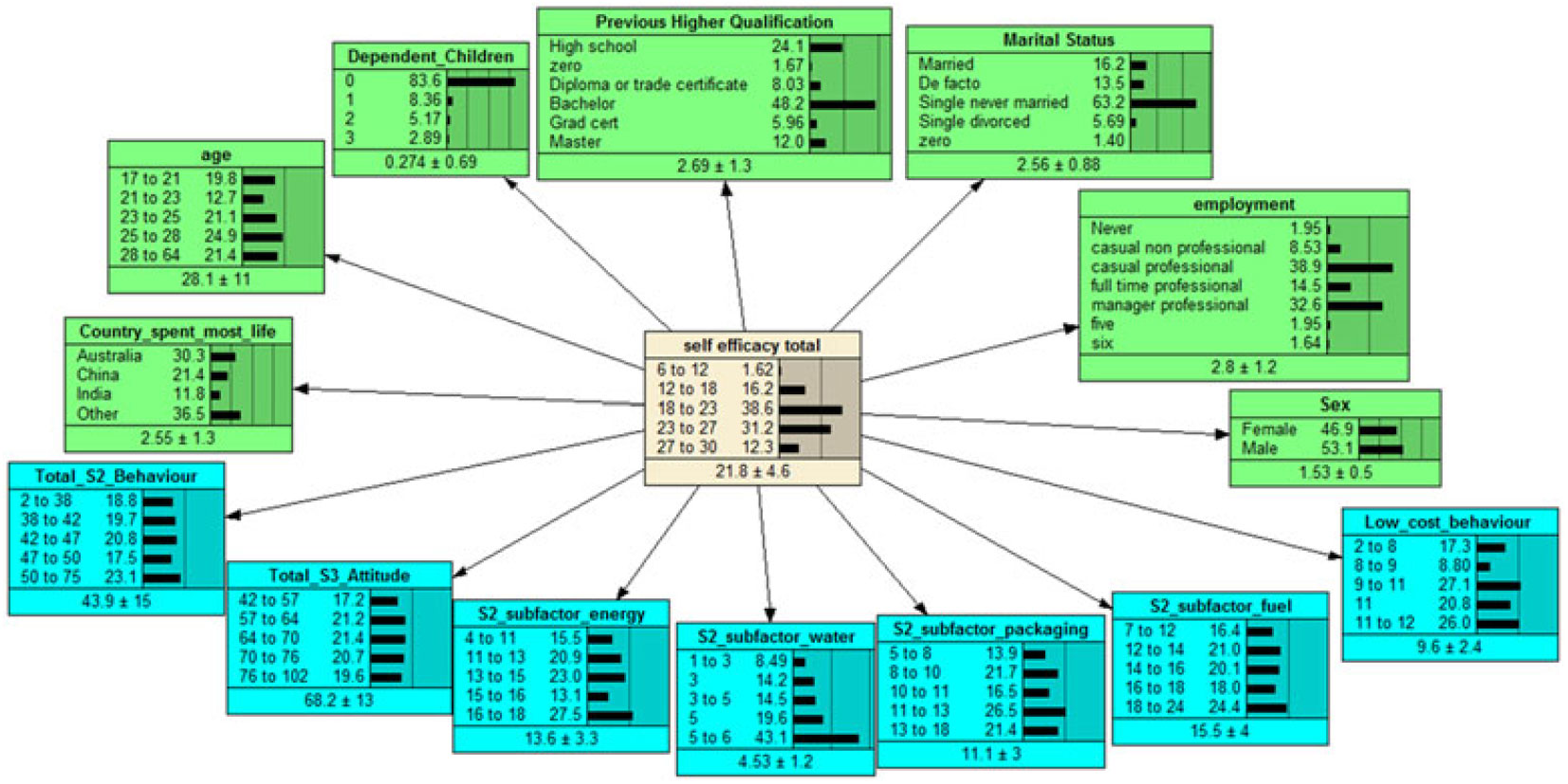
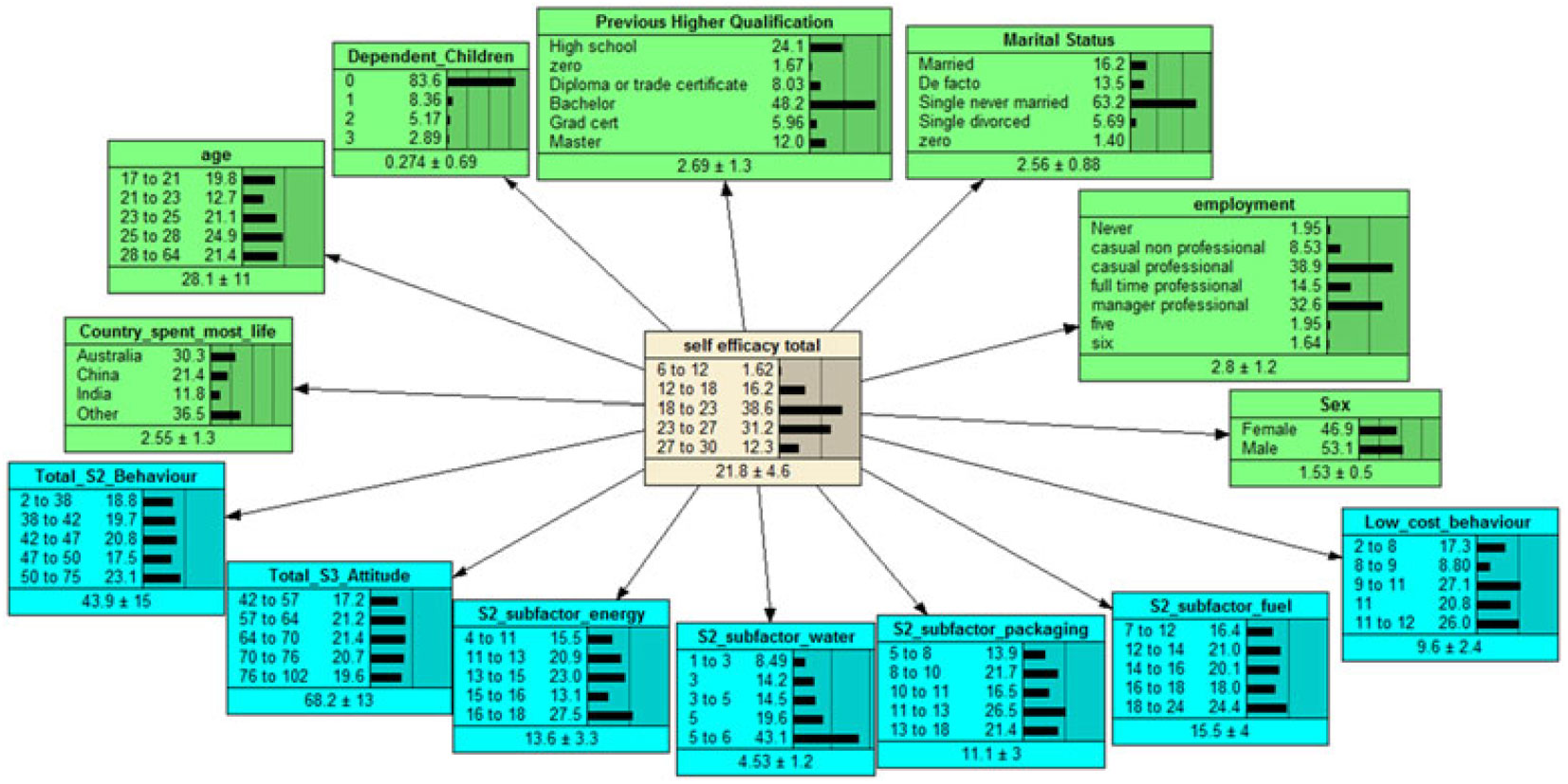
The developed naïve BN structure is illustrated in Figure 1. Blue nodes represent survey-related variables; the centre node is the only parent node, which is also the focus of the BN, that is, self-efficacy; while the green nodes are socio-demographic information of the survey participants. For those initially continuous variables (e.g., age), the node was discretised in a number of states (maximum 5) with intervals based on the data features, for optimal population of the CPTs. The aim of this BN was to identify potential to understand how self-efficacy relates to certain socio-demographic and other calculated features of the students participating in the survey. As explained above, a SOM was used in conjunction with the BN to ensure these child nodes are not interrelated and that in turn each individual relationship extracted from the BN is unique and not affected by other confounding factors.
Naïve Bayesian network structure.
Results
Statistical analysis results
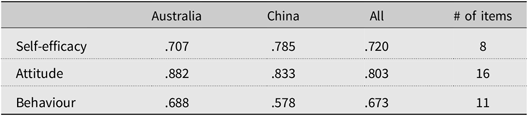
The internal reliability of self-efficacy and attitude were adequate, with correlation coefficients above .70 for interrelatedness. The behaviour measures scored slightly below .70 overall and slightly below .60 for the Chinese sample, likely due to the nature of the behavioural construct of the questionnaire comprising of questions relating to various subcategories of pro-environmental behaviour (i.e., transport, water, energy) (Table 2).
Cronbach’s alphas for aggregated factors from survey questions (items) separated into climate change attitude, environmentally friendly behaviour, and self-efficacy, the belief in one’s own ability to positively influence or impact climate change

Note: Self-efficacy variable is derived from 8 out of the 16 items used to assess total attitude toward climate change
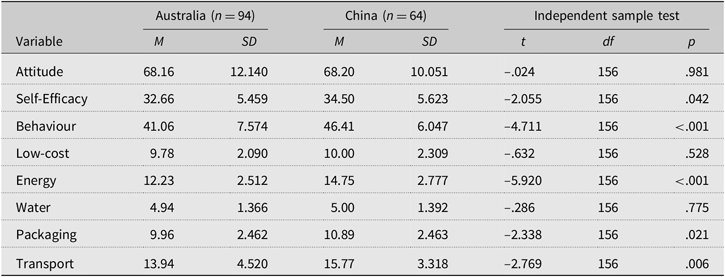
Despite no significant difference in attitude toward climate change, the self-reported behaviour of Australian students indicate that they are less environmentally friendly compared to the Chinese sample students. The analysis in Table 3 shows the self-reported behaviour to be in line with the hypothesised result, with Chinese pro-environmental behaviour reportedly higher. Further, the table shows that analysis yielded a slightly more pro-environmental stance for all subcategories under behaviour, with people who spent a longer time in China reporting their behaviour to be more environmentally friendly regarding reduced energy consumption, reduced packaging consumption, and reduced fuel consumption. The aggregate score on climate change attitudes showed no significant difference compared to results from Leiserowitz (Reference Leiserowitz2007), whose report indicated a significantly greater climate change concern in Australia.
Independent sample t test comparing the difference of means between Australia and China for the overall climate change attitude score, its subfactor, the self-efficacy score, and the total of the environmentally friendly behaviour score and its subfactors scores

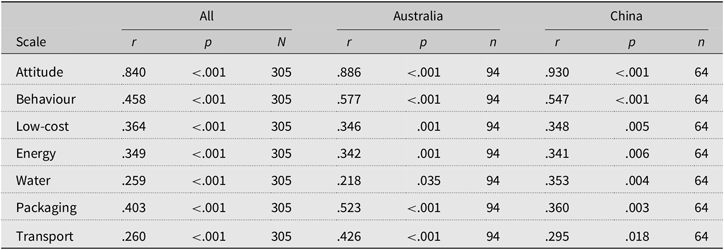
Table 4 shows Pearson correlations between the self-efficacy score and other variables that were analysed in the study. The hypothesis stated that self-efficacy would be a determining factor affecting the behavioural outcome, particularly for behaviours impacting the environment positively but having a low cost and low time commitment to the individual. The Pearson’s correlation analysis outputs show a low-moderate correlation with the hypothesised effect, slightly lower than the correlation between low-cost behaviour and overall attitude.
Pearson correlations between the self-efficacy score, and other variables, including the total attitude score, total behaviour score, and its subsets, low time and financial cost behaviours score, energy-related behaviour score, water-related behaviour score, packaging-related behaviour score, and transport-related behaviour score

The analysis between the self-efficacy measure of Australia and China showed little difference, with the sample from China having a slightly higher score. To understand the potential for self-efficacy to influence behaviour, and due to the lack of difference between Australia and China, further measures were analysed to find any potential relation between self-efficacy and self-reported behaviour throughout the entire sample population.
The Pearson’s correlation between the total environmentally friendly behaviour score and total environmentally friendly beliefs score was low-moderate. Despite the hypothesis that low-cost, low time-consuming environmentally friendly behaviour would yield higher environmentally friendly scores relative to high-cost ones, the correlation between self-efficacy and low-cost, low time-consuming behaviour was weak compared to the moderate correlation between self-efficacy and overall environmentally friendly behaviour. The assumption that low-cost, low time-consuming behaviour would relate to a greater score compared to overall behaviour was made to reflect the fact that financial barriers, namely the difference between domestic and international students, may limit an individual’s ability to align their behaviour with their beliefs. However, the correlation and t tests show that overall there was no difference between Australia and China. The self-efficacy correlation, on the other hand, shows that Australians with higher self-efficacy are more likely to exhibit pro-environmental behaviour in the subcategories of packaging and transport (moderate correlation) compared to Chinese and the overall sample which showed a weak correlation. This could be due to the fact that local Australians may have greater options for transport (i.e., car ownership) or may have more leeway in purchasing environmentally friendly products, as international students may be more likely to be cost conscious (i.e., buying furniture/appliances for a new rental flat).
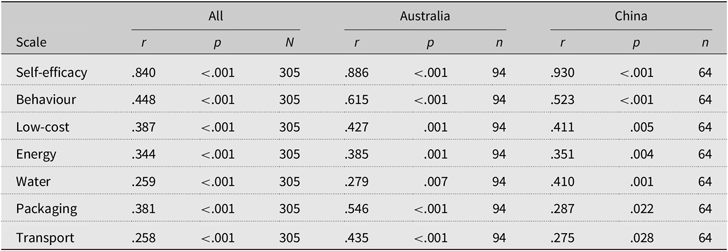
It could be that self-efficacy may be a significant predictor in pro-environmental behaviour even if there is financial or time loss, in order to align behaviour with attitudes (Bandura, Reference Bandura1993). The difference between Australia’s and China’s Pearson’s correlations for self-efficacy (Table 4) for the factors behaviour, energy, packaging, and transport is less compared to attitude (Table 5). The Pearson’s correlation between overall attitude and self-efficacy was high (>.8), indicating that the self-efficacy score, which consisted of an aggregate score of 8 items out of the 16 overall environmentally friendly attitudes items, may have predictive potential in determining an individual’s overall climate change attitudes. While education to increase the student’s explicit knowledge on climate change seems paramount to instigate behavioural changes, self-efficacy seems to be a necessary and useful measure to integrate into the educational curriculum.
Pearson correlations between the attitude score and other variables, including the self-efficacy score, total behaviour score, and its subsets, low time and financial cost behaviours score, energy-related behaviour score, water-related behaviour score, packaging-related behaviour score, and transport-related behaviour score

Bayesian network results
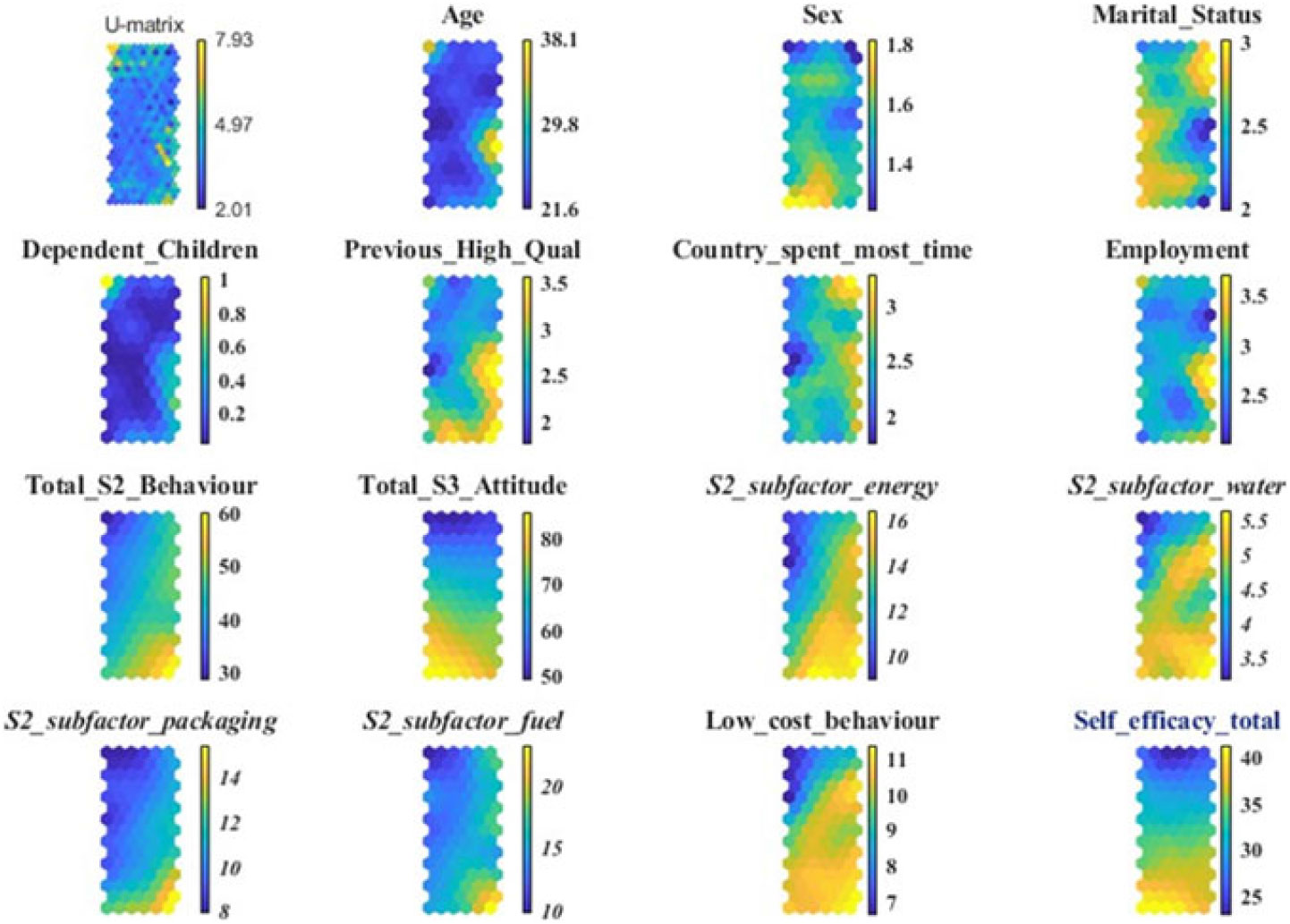
The BN focused more on the socio-demographic aspects of the participants and how these relate to self-efficacy. First, the SOM (Figure 2) was developed. It can be seen that the colour pattern of the target variable (i.e., self-efficacy) is rather different from all the potential inputs (e.g., socio-demographic variables), meaning that no individual parameter (and most likely not all the collected ones together) can explain the self-efficacy score on its own. Expected similar patterns can be seen between, for example, Total Behaviour and the different behavioural subfactors, since the former is a numerical combination of the latter. Importantly, different patterns were found between all the socio-demographic parameters. This is crucial for the naïve BN analysis: if, for instance, the BN found a correlation between self-efficacy and country, based on SOM analysis it would be possible to state that it is a true correlation, and not the byproduct of underlying confounding factors (e.g., education being substantially different based on country, thus education being the real predictor).
Self-organising map for Bayesian network key parameters.

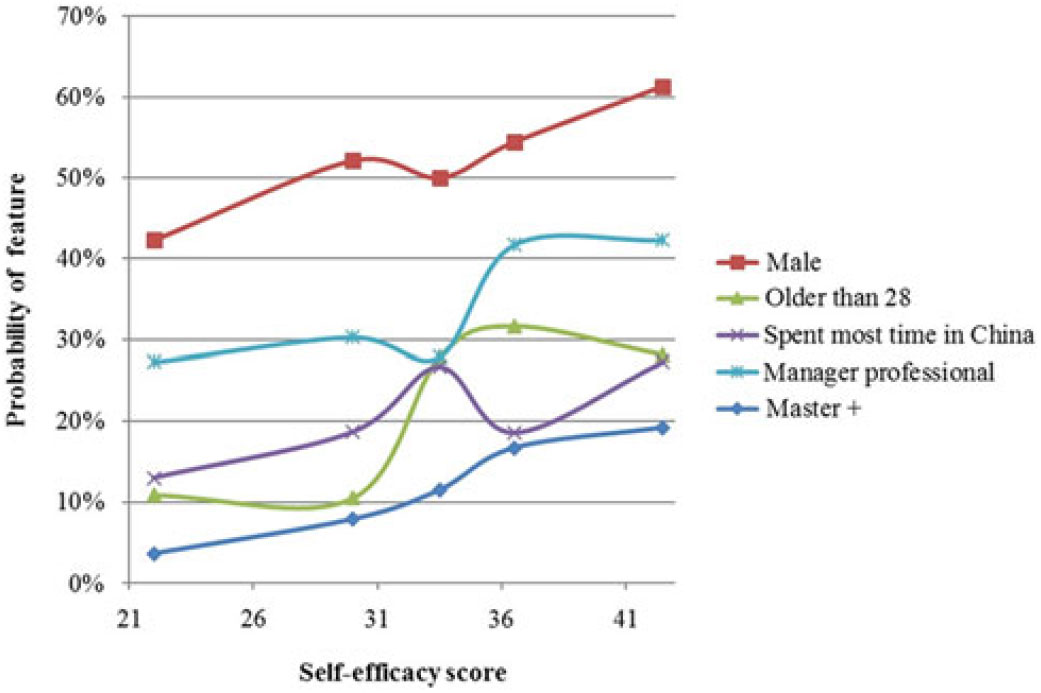
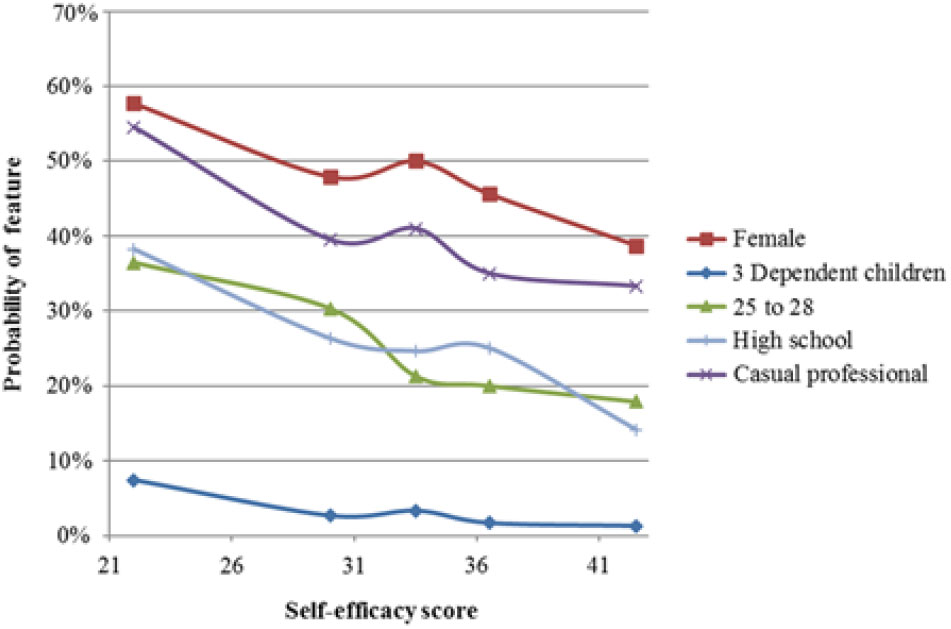
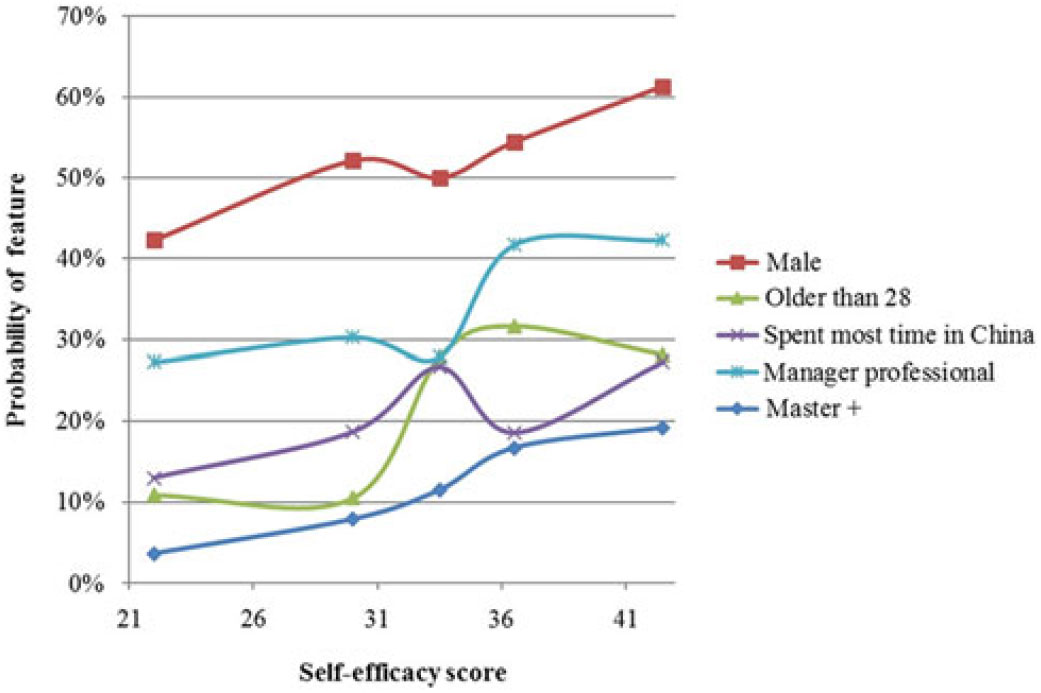
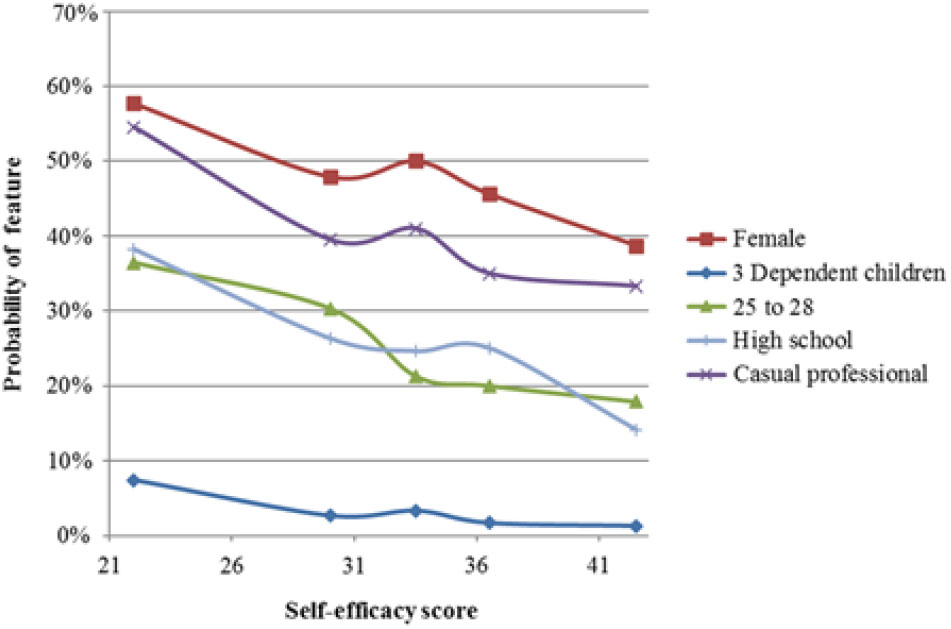
Based on the BN model and its CPTs, Figures 3 and 4 show how the probability of a student having certain features increase (Figure 3) or decrease (Figure 4) with higher self-efficacy scores. It can be noticed how:
The probability of a student being a male increases their self-efficacy, while it decreases for females, suggesting how males seem to have higher self-efficacy than females.
Older people have a higher probability off having high self-efficacy.
The probability of a participant being a manager or a professional, or having at least a master’s degree, increases their self-efficacy; the probability of a participant having completed only high school, or being employed on a causal basis, decreases their self-efficacy. This shows a clear relationship between level of education and employment and self-efficacy.
Participants with three dependent children have a higher chance of low self-efficacy.
Students who had spent most of their time in China were more likely to have a high self-efficacy score, while for students who had spent most of their time in Australia, there was no clear trend.
Relationships between self-efficacy score and probability of certain features; direct relationships
Relationships between self-efficacy score and probability of certain features; inverse relationships
Besides these specific outputs, the BN allows the user to enter a specific set of socio-demographic information of a particular student and estimate the student-specific likelihood of different self-efficacy levels, based on the conditional probabilities derived from the surveys of this study.
Discussion
The implementation of climate change policy to cause change in individual behaviour demands a better understanding of the disparity between the risk perception associated with geographic location and environmentally conscious behaviour (Kim & Wolinsky-Nahmias, Reference Kim and Wolinsky-Nahmias2014). Those who experience a climate-related disaster may over-attribute it to climate change, while others may perceive climate change to be geographically distant and outside of their individual concern (Swim et al., Reference Swim, Clayton, Doherty, Gifford, Howard, Reser, Stern and Weber2009; Van der Sluijs, Reference Van der Sluijs2012). Interestingly, the issue of rising temperatures remains controversial despite a global trend of concern for environmental issues; industrialised nations perceive the risk associated with rising temperatures to be less than developing countries (Marquart-Pyatt, Reference Marquart-Pyatt2015). This problem is further compounded by climate change accelerating outside of the range that has been experienced throughout human history, hindering the planning efforts of individuals and organisations due to the lack of information and evidence to reliably predict the extent of climate disasters in the future (Swim et al., Reference Swim, Clayton, Doherty, Gifford, Howard, Reser, Stern and Weber2009).
Geographic location is a logical factor in determining the risk that an individual, organisation, or nation may attribute to climate change, but it is not necessarily what determines environmental behaviour. In terms of awareness and perception of human cause, a nation’s wealth and education are greater indicators (Knight, Reference Knight2016). To promote sustainable behaviour, research has shown that appealing to emotions while developing a nation’s climate policy through, for example, marketing/ advertising efforts, can affect the climate change beliefs of individuals (Hall & Allan, Reference Hall and Allan2014; Howell, Reference Howell2014; Kim & Wolinsky-Nahmias, Reference Kim and Wolinsky-Nahmias2014; Semenza et al., Reference Semenza, Hall, Wilson, Bontempo, Sailor and George2008). While the results of the current study demonstrate that beliefs have a significant influence on individual climate change behaviour, the connection between how beliefs turn into behaviour remains unclear.
The study compared the self-reported behaviour and beliefs of those who have spent a majority of their time in Australia or China. Assuming no mitigation efforts, it is estimated that China will lose 12% annually in total manufacturing output by 2050 due to higher temperatures (Zhang, Deschenes, Meng, & Zhang, Reference Zhang, Deschenes, Meng and Zhang2017). Australia would face similar changes in temperature, according to Pachauri et al. (Reference Pachauri, Allen, Barros, John Broome, Cramer, Christ and Dasgupta2014); however, China is considered to be the country associated with greater vulnerability and risk to natural disasters, according to the World Risk Index report, due to the susceptibility of the national infrastructure and issues of adaptability for the large and relatively poorer population (Garschagen et al., Reference Garschagen, Hagenlocher, Comes, Dubbert, Sabelfeld, Lee and Neuschäfer2016). Despite this, Australia is considered to have a slightly greater exposure to climate risks according to the World Risk Index report; it is a relatively hotter country with more desert areas and less geographic diversity compared to China. A majority of the population and infrastructure is located along the coast, exposed to the risk of sea-level rise. Australia is also expected to become drier, which will increase the already large amount of arid land, particularly in interior regions (Pachauri et al., Reference Pachauri, Allen, Barros, John Broome, Cramer, Christ and Dasgupta2014). If the hypothesis is correct, results indicate that self-reported sustainable behaviour will be more prevalent in Australia, which is also reported to have a greater concern for climate change (Leiserowitz, Reference Leiserowitz2007). However, the analysis showed no significant differences in climate change beliefs nor in low-cost, low time-consuming environmentally friendly behaviour. China attained a higher score in overall measures of self-reported environmentally friendly behaviour, particularly for those relating to the economic use of electricity. Despite having over a 25-year history of attempts in educating and implementing sustainable development, and having a population that is generally more concerned about climate risks, it seems the Australian government’s awareness of climate risk has not translated into behaviour at the individual level, at least when compared to the more recent Chinese policies that have placed top-down pressure for change (Curran & Hollander, Reference Curran and Hollander2015; Han, Reference Han2015; Leiserowitz, Reference Leiserowitz2007).
In spite of being a significant contributor to climate change, China has taken a stance of leading through action rather than forcing other nations in binding agreements on carbon emissions (Dai, Xie, Xie, Liu, & Masui, Reference Dai, Xie, Xie, Liu and Masui2016; He, Reference He2010). Despite the efforts, however, the relation between economic prosperity and sustainable development presents issues for all nations, as the narrative of competing for wealth equating to success is fundamentally counter to cooperating to conserve the environment; at the individual level, this is further reinforced by education programs that often prioritise students’ test performance over environmental education (Witoszek, Reference Witoszek2018). A study by Sternäng and Lundholm (Reference Sternäng and Lundholm2011) explicitly focusing on environmental education highlights a confluence of these issues, where researchers had to convince the students being interviewed that they were not being assessed, as students seemed to be providing ‘ethically correct’ answers in line with their school. Interestingly, as students began to express their personal opinions, researchers were able to identify that moral reasoning of environmental problems differed between students’ opinion of ‘what individuals in society should do’ and ‘what the student would choose to do’ when faced with a socio-ethical dilemma. Educational efforts on sustainable development have only recently been implemented through environmental policy; however, the survey results of this study show that the efforts of the Chinese government to enact individual pro-environmental behaviour may be effective, albeit difficult to discriminate between students’ moral reasoning or actual individual behaviour (Han, Reference Han2015).
The lack of action being taken to insulate or mitigate risks associated with climate change from a policy and educational perspective is a worrisome trend. It is well known that with proper organisation and a concerted effort, economic benefits would be achievable through the implementation of appropriate sustainable, environmentally friendly policies and city planning (Bertone et al., Reference Bertone, Sahin, Stewart, Zou, Alam, Hampson and Blair2018; Hunt & Watkiss, Reference Hunt and Watkiss2011). However, it could be that wealthier nations, while being aware of the ongoing and future risk of climate change, are blinded by their economic prosperity and collectively believe that they are better equipped to deal with climate-related disasters as they become more prevalent in the future (Lo & Chow, Reference Lo and Chow2015). Notably, in the comparison of China and Australia by the World Risk Report, Australia is considered the safer region and more adaptable to disasters due to its economy and infrastructure despite having a slightly higher exposure to climate risks (Garschagen et al., Reference Garschagen, Hagenlocher, Comes, Dubbert, Sabelfeld, Lee and Neuschäfer2016). Perhaps the perception of safety created by societal safeguards causes individuals of those nations to feel secure without taking more individual steps to promote environmental behaviour, despite showing concern for the environment. Furthermore, the lack of action in the face of overwhelming evidence could largely be attributed to the uncertain nature of the future, particularly when dealing with abstract ideas such as the many variables influencing climate change (Marx et al., Reference Marx, Weber, Orlove, Leiserowitz, Krantz, Roncoli and Phillips2007; Moisander, Reference Moisander2007; Van der Sluijs, Reference Van der Sluijs2012). Many call for an emotional appeal to the global population in order to raise awareness and concern to commence the mitigation of risk at the individual level as soon as possible (Marx et al., Reference Marx, Weber, Orlove, Leiserowitz, Krantz, Roncoli and Phillips2007; Ockwell et al., Reference Ockwell, Whitmarsh and O’Neill2009; Panno, Carrus, Maricchiolo, & Mannetti, Reference Panno, Carrus, Maricchiolo and Mannetti2015). However, care must be taken, as instigating a strong emotion of fear has been known to cause the public to feel overwhelmed and disengage with the issue of climate change, while appealing to the emotion of worry could be useful to communicators promoting a constructive analytical approach that would be required to deal with the long-term complexities of the future climate (Smith & Leiserowitz, Reference Smith and Leiserowitz2014). A more holistic understanding of how beliefs and attitudes unfold into behaviour would be beneficial in targeting specific behaviour changes through suitable educational policies that are sensitive to regional differences and individual concerns. Policy focusing on relaying examples of pro-environmental behaviour and connecting individuals with like-minded groups could lead to a greater ability to take collective action (Howell, Reference Howell2014; Marx et al., Reference Marx, Weber, Orlove, Leiserowitz, Krantz, Roncoli and Phillips2007; Moisander, Reference Moisander2007).
When considering policy, governments must show a significant effort to educate citizens about a sustainable future that takes climate change into consideration. Although individual change is necessary to mitigate climate change, a significant part of policy is dictated by political and corporate interests, and with no clear solutions in sight, their best interests may not lie in bearing the cost of mitigation (Kim & Wolinsky-Nahmias, Reference Kim and Wolinsky-Nahmias2014). While better educated citizens are generally more aware of the issues surrounding climate change, the knowledge and awareness of climate change must be reinforced with actionable behaviour that aligns pro-environmental behaviour with the public’s beliefs (Han, Reference Han2015; Tranter, Reference Tranter2014). It could be that the behaviour of the Australians, showing less pro-environmental actions than Chinese, is linked to the political gridlock seen in many democratic countries (Antonio & Brulle, Reference Antonio and Brulle2011; Curran & Hollander, Reference Curran and Hollander2015), while the Chinese government, which owns its major industries, does not have to politically compete with itself to prioritise environment over economy (He, Reference He2010). China is by far a greater polluter due to its sheer demand for energy consumption; however, the disparity between the results showing more self-reported pro-environmental behaviour in this study while pro-environmental attitudes showed no significant differences is contrary to other studies such as Stokes et al. (Reference Stokes, Wike and Carle2015), who found that Australia showed both greater concern and willingness to limit greenhouse gas emissions compared to China.
The BN was used to analyse any further differences that could be statistically derived from the samples. The focus was placed on self-efficacy, which provided a greater indicator of behaviour in the Chinese sample as well as the overall sample when compared to attitude, despite self-efficacy being derived from half of the total attitude items (Australians had a higher correlation of attitude and behaviour when compared to the correlation of self-efficacy and behaviour). Mirroring this fact, the BN showed that high self-efficacy was more probable for the students from the Chinese sample, while there was no clear trend for the Australians, whose attitudes were more in line with their behaviour compared to self-efficacy. Despite not being a greater indicator for the Australians, self-efficacy maintained a relatively strong correlation while being economical in the number of questions asked to participants, which warranted a further investigation as to sociodemographic factors that may influence this measure. As a measure that reflects an individual’s perceived capability to positively affect climate change, the fact that participants’ actual ability to affect climate change, measured here in self-reported behaviour, could be influenced by honing self-efficacy in individuals through education, in line with a study by Lauren, Fielding, Smith, and Louis (Reference Lauren, Fielding, Smith and Louis2016) that correlated self-efficacy and its development as a tool in increasing pro-environmental behaviour. Another study by Meinhold and Malkus (Reference Meinhold and Malkus2005) also showed that self-efficacy correlates strongly with behaviour in adolescent groups, though their self-efficacy measure was general rather than specific towards the environment. Their data suggested that self-efficacy’s relation to behaviour may be an independent variable for males, while being a moderating variable for females. While being of a different age group, the BN in our study indicated the contrary, that is, that participants with higher self-efficacy were more likely to be male. Interestingly, girls throughout obligatory school (up to the age of 15), are known to agree with sentiments of pro-environmental attitudes, concern for climate change, and a belief that individual changes can influence the environment (Sjøberg & Schreiner, Reference Sjøberg and Schreiner2010). Though it would be interesting to see how self-efficacy changes throughout a larger range of ages, the BN prediction of self-efficacy in the limited age range of the samples in our study indicates that the 17- to 21-year-old range was neutral, 25–28 years was slightly inverse, and 28+ was positive, suggesting that participants’ perceived ability to impact climate change fluctuates throughout their life.
Perhaps more important than self-efficacy as a function of age is to empower the self-efficacy of the future generations who will ultimately bear the cost of mitigating climate change. Fortunately, young people from high polluting countries strongly support limiting emissions compared to their seniors (Stokes et al., Reference Stokes, Wike and Carle2015). However, if students experience repeated failure and a lack of ability to enact pro-environmental efforts, individually and as a society, then according to Bandura (Reference Bandura1982), self-efficacy would diminish during the critical phase throughout the early education cycles of students.
Despite the many uncertainties, there remains hope in educational reforms that could create citizens with a greater willingness and ability to cope with climate change. Educational institutions have clearly increased the focus on climate change awareness (Howell, Reference Howell2014; Lo & Chow, Reference Lo and Chow2015; Longhi, Reference Longhi2013; Lynn & Longhi, Reference Lynn, Longhi, McFall and Garrington2011; Ockwell et al., Reference Ockwell, Whitmarsh and O’Neill2009; Semenza et al., Reference Semenza, Hall, Wilson, Bontempo, Sailor and George2008). However, research suggests that students must be made aware of specific behavioural changes to achieve the desired outcomes, as well as develop a problem-solving mentality to deal with the complex uncertainties that climate problems exhibit (Anderson, Reference Anderson2013; Birkmann & Welle, Reference Birkmann and Welle2016; Pruneau et al., Reference Pruneau, Gravel, Bourque and Langis2003). Of critical importance is ‘educating the educators’, to make them capable of dealing with the task; though not necessarily time-consuming, policy must address the issue in order to transfer the behavioural outcomes to their students (Anderson, Reference Anderson2013; Witoszek, Reference Witoszek2018). Additionally, other outputs of the BN can provide important insights for policy-makers; for instance, because self-efficacy ‘naturally’ increases with the level of education, Australian and Chinese governments should focus their efforts on climate change education programs’ implementation at early stages of the students’ learning journey, such as in high school.
Research limitations
Despite the best efforts to conduct a survey, ultimately the behaviour of participants are self-reported and may be influenced by bias, where participants may feel inclined to report the ethically correct answer for both behaviour and attitudes. Due to being a convenience sample, there may be sample bias, such as that certain faculties and programs from remote areas of the campus may be under-represented. Furthermore, the study was conducted in a private university and the results may not be generalisable to public universities or the public in general.
Though the study systematically analysed the differences between Australian and Chinese students, there could be other factors that influence the differences that were not measured. Australia and China are vast countries, and the participants’ home locations within their country may influence their beliefs about the environment, which the surveys could include in future iterations and with larger sample sizes.
The survey, though attempting to find a broad measure of environmental behaviour, was comprised of multiple subcategories that would require further questions to improve reliability. Future research should look at these individual constructs separately as the aggregated totals do not consider that different categories have inherently different time and economic costs.
BN, combined with SOM, proved to be a very effective tool to extract patterns in questionnaire data; future work should seek to collect a larger dataset, in order to move away from a naïve BN structure and from the assumption of conditional independency among potentially correlated nodes. In this particular study, SOM revealed no correlation among the child nodes of the naïve BN, allowing the conditional independence assumption to be valid. However, if SOM analysis revealed correlations among some of them (e.g., age and education), then a naïve BN would not have been able to separate the individual influence that each of them would have on the target variable (e.g. self-efficacy). In this case, the only solution would be the collection of a larger dataset and the construction of a traditional BN.
Future research should also analyse and seek to further understand psychological and cultural factors that influence the behaviour of individuals. The relation between incurring personal loss and self-efficacy in order to achieve climate change goals must be further explored. Factors such as cultural identity and the beliefs associated with different cultures, such as collectivism and individualism, should be incorporated into the behavioural outcomes in the context of climate-change behaviour.
Conclusion
Though prevailing beliefs tend to support climate change mitigation, there is still disparity between personal belief and practical behaviour both at an individual and organisational level. In order to assess the role played by the physical threat posed by climate change, as well as the effectiveness of climate change educational policies, behavioural data were collected and analysed from a number of university students from China and Australia. The survey showed that Chinese students reported having behaviour that was more in line with their climate change attitudes and self-efficacy, despite having similar climate change attitudes and self-efficacy scores when compared to Australian students. Self-efficacy was found to be a predictor of pro-environmental behaviour while being comprised of half the questions from attitudes, and in the sample, was a greater predictor than attitudes score for the entire sample and for the Chinese sample. In addition, self-efficacy was correlated with socio-demographic features of the participants (e.g., age, level of education, gender) with a BN. Although limitations to this study exist, these findings seem to support that climate change educational policies in China have been more effective in changing learners’ behaviours. Thus, efforts to inform and empower students could result in long-term collective behavioural changes that may lead to remarkable economic benefits and effectively help mitigate and adapt to climate change. Future studies could analyse the Chinese education system’s efforts to implement sustainable development in their curriculum and determine effective practices that could be generalised to educate a wider range of students about climate change.
Acknowledgments
The authors received no financial support for the research, authorship, and/or publication of this article. The authors thank Dr. Grant Sinnamon for his professional advice and guidance during the course of this project.
Financial support
This research received no specific grant from any funding agency, commercial, or not-for-profit sectors.
Conflict of Interest
None.
Appendix – Survey
The following questions ask about you and your beliefs about the environment. Please follow the instructions and complete the questions by choosing (circle) a response to each question from those provided.
Demographic Questions

Behavioural questions related to carbon dioxide emissions.
Please answer the following questions using the response options provided (circle the response that best describes you).

Questions on attitudes and beliefs regarding climate change.
Please answer the following questions using the response options provided (circle the response that best describes you).

Subaru Ken Muroi BA, MA, MBA, is a Bond University College teacher, Language teacher at the University of Queensland, and research assistant at Griffith University, Australia. His interests are in the domain of cognitive systems, climate change, and education.
Edoardo Bertone, PhD is a lecturer at Griffith University, Australia. He has a civil engineering background, and a current focus on data-driven modelling, Bayesian network and system dynamics modelling applied to water resources management, water treatment optimisation, water-energy nexus, sustainable cities, environmental education and climate change adaptation fields.