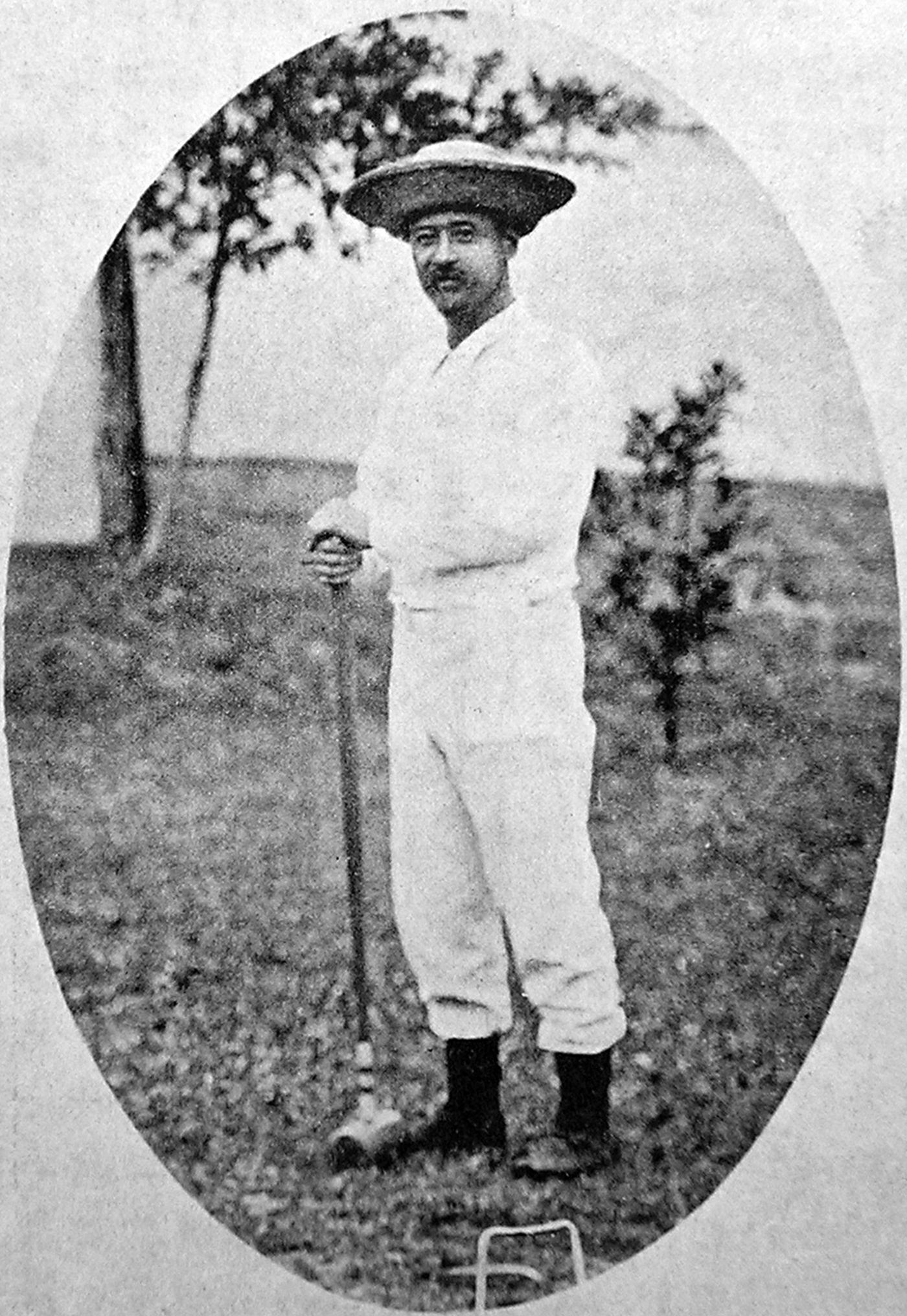
On a surprisingly cool summer day in 1899, a group of men from the club are gathered on the lawn of the Governor-General's residence in downtown Taihoku, Taiwan, for a round of croquet. Croquet has recently come to the island along with many other accoutrements of international colonial culture. The local photographer Arita Shunkō 有田春香 is in the group. His photographic studio, which is just a few blocks away on North Gate Street, is filled with the latest professional equipment and materials, but today he is carrying his new hand-held Kodak that he bought from the Tenshōdō store in Hiroshima. He turns his camera on the Governor-General, Kodama Gentarō 兒玉源太郎. Kodama obliges with a playful pose in his jaunty togs and Mona Lisa-like smile (see figure 1): a pose startlingly unlike any other of him (and there are many) in the colonial photographic record, where he always appears deadly serious in his medal-laden military uniform (cf. figures 4, 10). Although the photographer is a professional and the print is produced by the prestigious K. Ogawa Printing Factory, in its casual occasionality this image clearly is influenced by the genre of the snapshot that is beginning to make its way through popular culture around the globe. The pose, especially the smile, looks forward to the age of the “Kodak moment.”
Governor-General Kodama Gentarō, summer, 1899. Source: Shashin kurabu (1901). Courtesy of National Taiwan Library.

The question of the existential condition of the photographic image has long been debated. Is the image an index of the photographed subject, a fingerprint made in light and salts? Or is it a manufactured icon, a likeness produced only within specific cultural codes, as with other portraiture media? The intersection of the invention of the photographic image and the rise of modern science (represented by the daguerreotype, which fixed the image from a camera obscura in light-sensitive chemicals on metal media) first aligned photography with the evidential world. It was proof of its subject's existence at a given moment in time, and in the world of the daguerreotype, that subject was primarily the human portrait. Yet, as the technology became widespread, manipulated, divergent, and theorized, its indexical nature was challenged. This is, in part, the result of what Roland Barthes calls the “connotation procedures” of photography: trick effects, pose, objects, photogenia, syntax, and aestheticism (Barthes Reference Barthes and Heath1977, 20–25). But more important is the power of the surrounding discourse to bring the image into specific significance, most obviously seen in the authority of the caption to control the meaning of the image but more subtly seen in the way the photograph is broadly embedded in social discourses, from evidentiality to aestheticism. To move a photograph from one discursive system to another is to change the representation of the image. This is as true for portraiture as it is for other genres.
Responding in part to Barthes's postulation of the “evidential force” of photography in his Camera Lucida (Reference Barthes and Howard1981), John Tagg (Reference Tagg1993, 1–5) argues rather for photography's contingent nature. Tagg identifies the second half of the nineteenth century as a time when an ideology of surveillance intersected with the flourishing photographic medium, implicating the technology into the institutions of state administration, law enforcement, and social policy, primarily in Europe and the United States. In this disciplinary world, grandfather's portrait became his mug shot. In a similar but broader vein, James R. Ryan (Reference Ryan1997) explicates the photographic construction of the British Empire, exploring the military, anthropological, recreational, and educational applications of the medium to the imperial project. As might be expected, many of the practices surveyed by Tagg and Ryan are also found in the photographic culture of Meiji Japan, which overlaps with European institutional conditions both temporally and ideologically; yet there are also distinguishing contingencies of photography in Japan and of Japanese photography in the colony. Some of those contingencies are clearly evident in its colonial portrait photography and studio system.
The Historical Frame
In the early years of photography, technical and economic contingencies kept the medium deployed in a relatively narrow range of applications. But by the end of the nineteenth century, photographic practice had become widely embedded in fields of inquiry and in mundane social lives. Lemagny and Rouillé (Reference Lemagny, Rouillé and Lloyd1987, 62) write:
During the last decades of the nineteenth century, as the new fields of anthropology, experimental medicine, psychology and sociology were institutionalized, photography assumed a greater role in recording the diversity of human behavior, customs, and life styles. In the realm of studio portraiture, the middle and upper classes continued to memoralise their bustles and top hats, although the fluted column and ornate papier-mâché of the Second Empire and mid-Victorian period yielded to the cardboard canoes, bicycles and rustic fences considered chic by an age that re-established the Olympic Games.
It is this turn-of-the-century photographic technology and outlook that Japan brought to its early colonial project in Taiwan.
The timely convergence of Japan's colonization of Taiwan and the development of “third-generation” photographic materials and processes, especially the introduction of celluloid film and the perfection of the halftone printing process, gave the medium a position in the Japanese colonial effort that exceeded its significance in early British, French, and German colonial regimes.Footnote 1 This is especially evident when one considers the conditions of portraiture, which had been photography's driving economic force since its inception. Early portrait photography, especially the daguerreotype, quickly overwhelmed and extended the work of the portrait artist working in watercolors and oils. Although the technology was not available to all, a wide variety of people, from royalty to unnamed cousins, could sit for these portraits—all it took was twenty-five cents and fifteen minutes at the daguerreotype studio (Maddow Reference Maddow1977, 16–31; Newhall Reference Newhall1964, chap. 4). Yet, like the painted portrait, daguerreotypes were unique, non-reproducible images: one sitting, one long exposure, one image. The calotype (talbotype) paper negative liberated the photographer from the studio and allowed reproduction of a positive image, but the long exposure times and grainy medium limited the subjects largely to inanimate objects; the calotype portraits by David Octavius Hill were an important exception (Newhall Reference Newhall1964, 36–37). Only with the perfection of the collodion wet-plate process, which produced both speed and a very printable negative, could more animated images be made and circulated. At last one could smile for the camera and send copies to family and friends. In the world of portraiture, this potential became highly commercialized through the carte de visite, which generated a craze in the 1860s and led to the creation of the first photographic albums. This was the portrait technology that first made substantial inroads in Japan (Fraser Reference Fraser2011, 10). Toward the end of the century, the photographic experience was not only shared by many but also produced far from the studio and darkroom. Very fast dry-plate and film media gave photography new mobility and ease; the formal portrait moved toward the snapshot.
Although the earliest Japanese photographs of Taiwan, by Matsuzaki Shinji 松崎 晋二, who accompanied the 1874 Meiji military expedition to the east coast of the island, were made with cumbersome wet-plate techniques that required an on-site darkroom, the photography from the colonial period proper was produced with high-speed dry-plate or film media and was reproduced widely by halftone printing in the typeset pages of books and newspapers.Footnote 2 Regarding the improved technology of the 1890s, Beaumont Newhall (Reference Newhall1964, 175) wrote:
This important invention [halftone printing] was perfected at precisely the time that the technical revolution in photography was taking place. Dry plates, flexible film, anastigmat lenses and hand cameras made it possible to produce negatives more quickly, more easily, and of a greater variety of subjects than ever before. The halftone enabled these photographs to be produced in limitless quantities in books, magazines, and newspapers.
This Western technology reached Japan, and then Taiwan, with little delay. The first transfer took place largely through the agency of the influential photographer and printer Ogawa Kazuma 小川一真. Ogawa studied in Boston from 1882 to 1884 and returned to Japan with the materials and training to open a series of photographic establishments. In 1889, he founded the K. Ogawa Printing Factory (Ogawa Shashin Seihanjo) in Tokyo, which produced photochemical plates using both the deluxe collotype and the more common halftone processes.Footnote 3
Obviously, the European colonial powers also had this technology by the turn of the twentieth century, but since their initial colonial efforts had come decades, if not centuries, earlier, the seminal conditions of their colonies were only partially recorded, if at all. This is true for portraiture: the royal family and the colonial native were principal subjects of the carte de visite craze, but this came toward the end of the British colonial effort. This is one essential difference between European and Japanese colonial photographies: for Japan, colonization and third-generation photography were full partners from the very beginning of its imperialistic project. In fact, Karen Fraser (Reference Fraser2011, 9) argues that photography in Japan was linked from the beginning with Meiji modernity and cultural change. Whether by imitation or by an internal logic, early Japanese photographers had their equivalents of the royal family and the local “type.” The celebrated portraiture of the Meiji Emperor was at the elevated end of that spectrum; at the other end was the aboriginal “type” in Japan and Taiwan, which was grounded in early anthropological study.Footnote 4 Yet the Japanese extended their pool of portrait subjects far beyond these predictable figures, quickly populating social space between the imperial and the indigenous. Photographic portraiture of the upper and middle ranks of the colonial population, both ruler and subject, has a special position in the early ideological machinery of the Japanese colony, for this is where the photographic image most clearly demonstrates its constitutive power.
The Japanese Colonial Photographic Industry
Since there is no sustained description of the photographic industry in Taiwan during the Japanese colonial period, either contemporaneous with or subsequent to it, we must rely on a range of primary materials for this investigation.Footnote 5 The materials used here are found primarily in the holdings of the Taiwan Study Research Center (Taiwan Ziliao Yanjiu Zhongxin) of the National Taiwan Library, which includes approximately 160,000 volumes transferred from the Japanese Colonial Library (Taiwan Sōtokufu Toshokan) in 1946. There are several types of photographic records in that collection. For our purposes, the most important are the photo albums (shashinchō) and the various commercial directories and listings (meikan or meiroku), both of which contain portraits and other photographs, as well as textual materials such as narratives, notes, and commercial advertisements. Newspapers and other contemporaneous documentary materials provide supplementary information.
The photographic industry in early colonial Taiwan was dominated by Japanese nationals and was closely tied to that of the homeland, about which we do have extensive information (see Kinoshita Reference Kinoshita and Tucker2003). For example, the earliest extant photo album that takes the island as its subject, Taiwan gun gaisen kinen shashinchō (Album commemorating the military triumph in Taiwan), was produced in 1896 by the well-known Endō Photographic Studio of Sendai. The photographic plates in this album were produced by the famous K. Ogawa Printing Factory mentioned above—Ogawa is listed in the publication information, and the name “K. Ogawa” appears in Latin letters on several important images in the album.Footnote 6 Given the relatively undeveloped technological conditions in the early colony, it is not surprising that this and other early albums were produced wholly or in part in the homeland; yet, as early as 1899, some production had already moved to the island. Not only was Taiwan meisho shashinchō (Album of famous sites in Taiwan) issued by Taiwan shōpō (Taiwan commercial news), but its principal photographer was Ishikawa Genchirō 石河源一郎 of Taihoku (Taipei) City, the island's colonial capital; plate production and printing were still done in Japan by the K. Ogawa firm, however. Advertisements in this commercially oriented album offer more evidence of the island's widening photographic world: for example, ads for five other photographic studios appear beside Ishikawa's (three in Taihoku, two in Kiryō [Jilong]), as well as an ad for another album of photographs of the island. By 1901, a similar album, Taiwan miyage shashinchō (Album of Taiwan souvenirs), was issued as an entirely Taiwan-based production, albeit by Japanese nationals, suggesting the rapid development of an island-based photographic industry. These and other publications of the time allow us to begin to map the early photography studio system in Taihoku.
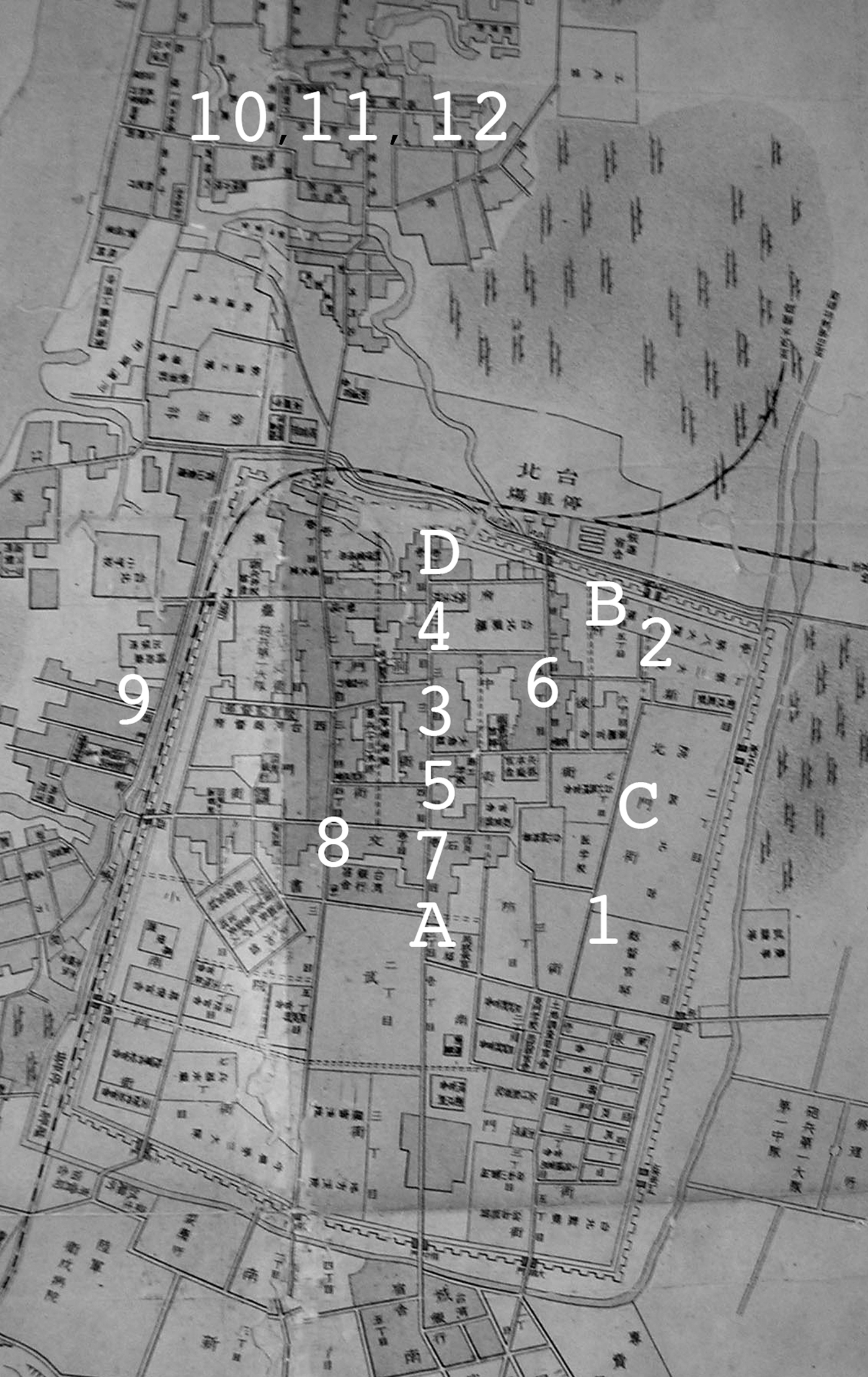
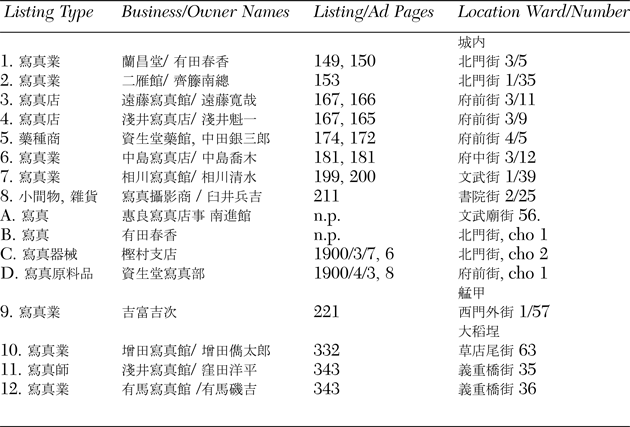
The 1900 Taiwan shishō meikan (Directory of political and business figures in Taiwan) is in two volumes: volume 1 includes 178 portraits and listings for colonial administrative and business personnel, and volume 2 is a directory of businesses in Taihoku, along with some advertisements for the same. Before discussing the portraits themselves, I want to mine the commercial listings and advertisements for data to help map photographic establishments in the city. The directory is organized geographically by commercial address without any topical or name indices, which are common in later directories; this means that locating a type of business or a certain establishment requires scanning the entire listing of about 130 pages, with the contents of a page ranging from twelve individual listings to a single advertisement. Thus, this is a passive, cartographic account of commerce in the city rather than a functional directory. A search for establishments directly related to the photographic industry yields at least twelve, including photographers, portrait studios, photography businesses, and supply houses (nos. 1–12 in table 1). In addition, the 1899 Taiwan meisho album contains advertisements for two other Taihoku studios (A and B in table 1). Contemporaneous newspaper advertisements for local photographic equipment stores expand table 1 to include C and D (Taiwan nichinichi shimpō [Taiwan daily news] 1900a, 6; 1900b, 8). Together this yields a listing of sixteen establishments in the city at the turn of the century (see figure 2 for corresponding map).
Map showing location of photographic establishments in Taihoku, 1900. Map source: detail of Taihoku shigai kaisei zenzu (1901), with author's annotations (nos. 10, 11, 12, approximate location). Original map courtesy of SMC Publishing.
List of photographic enterprises in Taihoku City, 1900.
This should be considered a substantial but no doubt incomplete representation of the photographic enterprise in the capital circa 1900. This industry was dominated by Japanese nationals and was minuscule compared to that of the homeland.Footnote 7 And in keeping with Japanese settlement patterns of the time, these establishments were concentrated in the central and northwestern part of the intramural city, although several businesses were further dispersed into the Chinese settlement areas: one in Mengjia and three in Dadaocheng, the latter of which had a significant European population.
Early colonial newspapers help plot the workings of the early photographic industry in Taiwan in other, more tangential ways. For example, a small advertisement from 1898 for the Era Studio in the Bunbubyō (Wenwumiao) ward (listed in table 1 as A) says that its photographer was trained in Hong Kong (Taiwan nichinichi shimpō 1898a, 5); elsewhere (Shashin kurabu 1901) mention is made of a photographer named Era Sandai 惠良三太, presumably the person referred to here. Hong Kong was the center of the early photographic industry in China, and there was a good deal of cultural commerce with Japan (Roberts Reference Roberts2013, 27). A month later, the newspaper carried an advertisement for photographic equipment offered by the large retail store Tenshōdō in Hiroshima, which includes an illustration of the recently released Kodak handheld camera with rolled film, suggesting an emerging clientele of amateur photographers on the island (Taiwan nichinichi shimpō 1898b, 8). That local audience is referred to explicitly in a 1900 advertisement for the Kashimura Store (C in table 1) that touts equipment designed for the amateur (shirōtoyō) (Taiwan nichinichi shimpō 1900a, 6). Unfortunately, given the vicissitudes of these early years, very little evidence of that world of early snapshot photography exists for Taiwan. There will be occasions, however, when the quality of the snapshot makes its presence felt in the formal portraits produced by the studio system during these early years.
Halftone printing technology allowed for the efficient reproduction of photographs in newspapers beginning in the late 1890s, which was first seen in Japan in 1904.Footnote 8 Again, this technology made its way quickly to Taiwan: the first halftone photograph to appear in a Taiwan newspaper, a relatively candid photograph of Governor-General Kodama Gentarō with his military advisers, was on the front page of the May 3, 1905, edition of Taiwan nichinichi shimpō (1905a). And on July 1, the newspaper published its first halftone-printed formal portrait, that of Suzuki Sōgen 鈴木宗言, head of the court of appeals; theretofore all portraits in the newspaper appear to be engravings, albeit often derived from photographs. Within five years, Taiwan nichinichi shimpō was filled with photographs, including numerous portraits. The ubiquity, size, and style of these newspaper photographs were intertwined with the changing nature of portraiture in Taiwan.
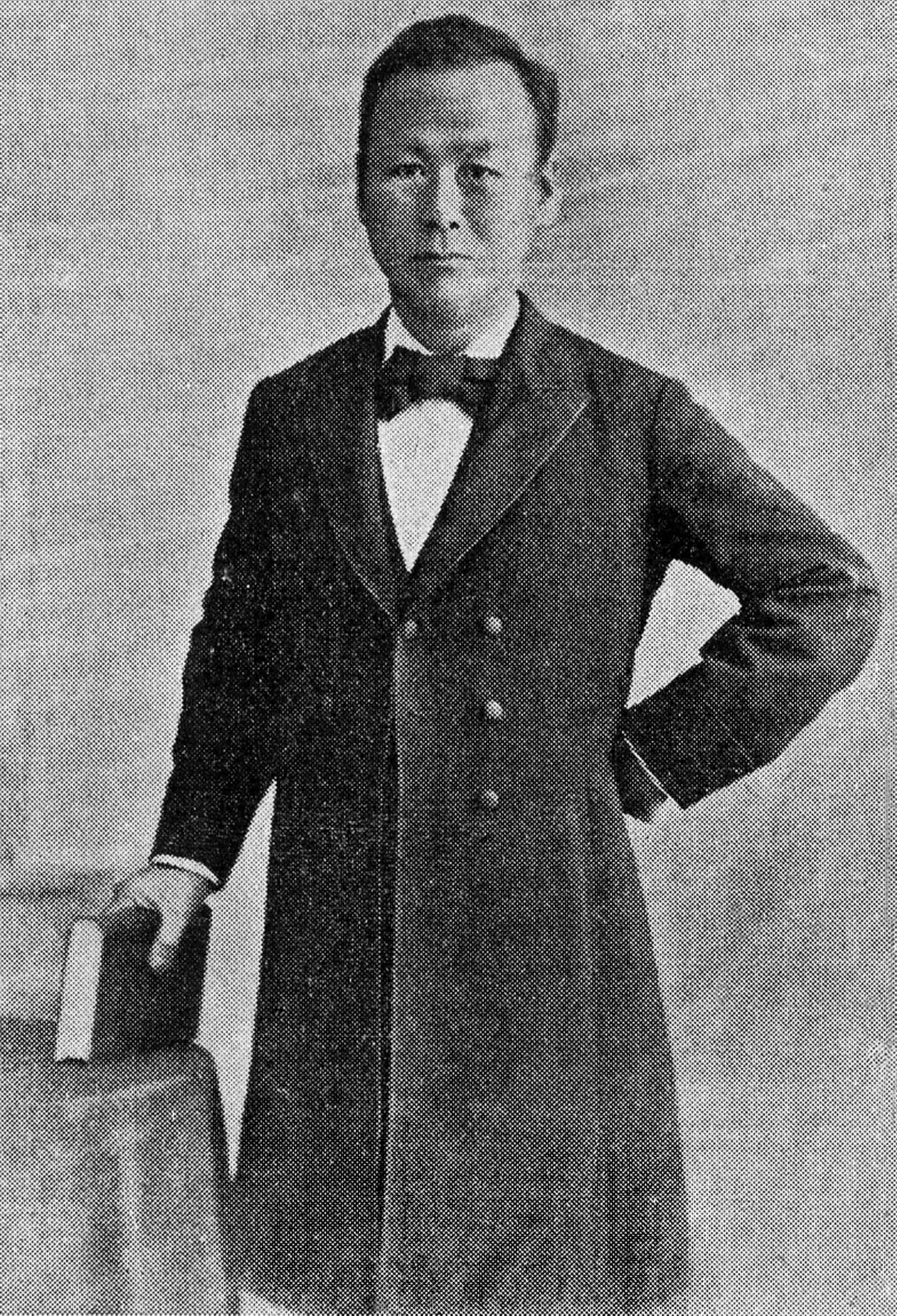
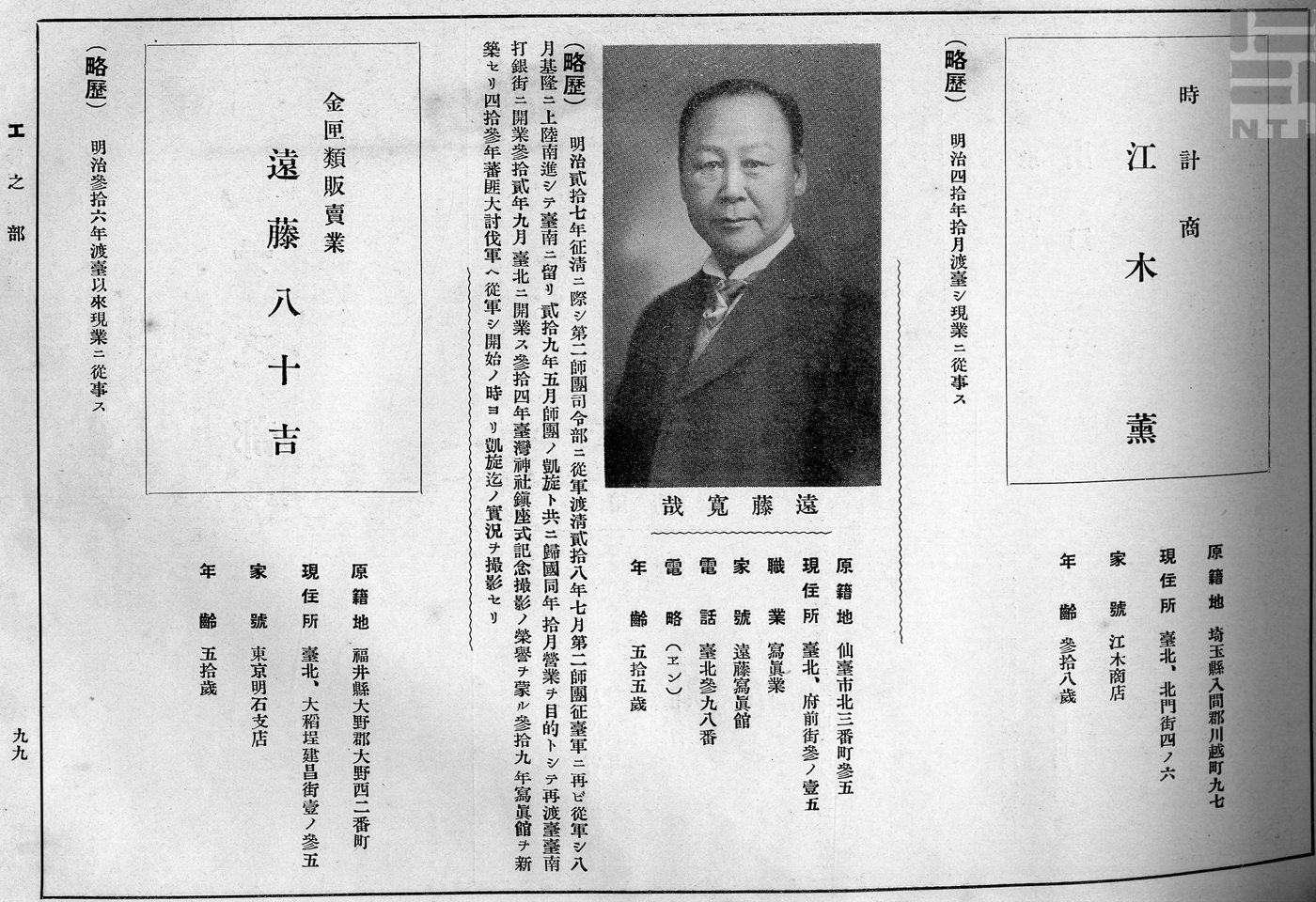
Although the dearth of contemporaneous records makes it difficult to probe deeply into the commercial activities of these individual establishments, some gleanings are possible. For example, the activities of the Endō studios in Taiwan (the Taihoku branch is no. 3 in table 1) were foreshadowed by an impressive array of work produced by the original studio in Sendai, established in 1878. This work ranged from its founder, Endō Rikurō 遠藤陸郎 (1845–1914), acting as official photographer for government expeditions to the Kurile Islands in 1891, to his younger brother, Endō Makoto 遠藤誠, photographing the Meiji Emperor and Empress in 1892, and then acting as military photographer for the expedition to occupy Taiwan in 1895, producing the illustrations for the 1896 Taiwan gun gaisen album. Another brother, Endō Hiroya 遠藤寛哉, was a military photographer for the 1894 expedition against Qing forces in China.Footnote 9 The studio's pedigree is further clarified in the full-page advertisement in the 1900 directory and in the biographical note for Hiroya in the 1912 Taiwan jitsugyō meikan (99). The 1900 advertisement lists the Sendai studio as the home office and three branches: in Taihoku, Tainan, and China (Taiwan shishō meikan 1900, 166). According to his biographical note, Endō Hiroya, who had been a military photographer since the beginning of the Sino-Japanese War, arrived in Taiwan in August 1895 and went on to Tainan (perhaps joining Makoto there). Hiroya stayed on in Tainan until May 1896, when he returned to Japan with the army. He went back to Taiwan in December of that year, however, to open a photographic studio in Tainan, and then founded the Taihoku branch in 1899. Although the 1900 business listing for the Taihoku branch is under the name Endō Hiroya (167), a photograph in the directory's portrait gallery presents Endō Makoto as the proprietor (kanshū) (see figure 3), suggesting that Makoto joined Hiroya to run the Taihoku studio. According to Fu Yue'an (Reference Yue'an1996, 46), Makoto died in Tainan in 1903. Another source says that the eldest sibling, Endō Rikurō, followed Hiroya and Makoto to Taiwan and joined the studio in Tainan in 1902—this is perhaps why Makoto was in Tainan when he passed away.Footnote 10 Subsequently, the 1911 Taiwan shōkōjin meiroku lists Endō Kokki 遠藤克已 (presumably Hiroya's son) as proprietor of the Taihoku branch, with Hiroya still owner; Endō Shun 遠藤俊, otherwise unknown, is listed under the Tainan studio (265).
Portrait of Endō Makoto, proprietor of the Endō Photographic Studio in Taihoku, 1900. Source: Taiwan shishō meikan (1900). Courtesy of National Taiwan Library.
The Endō studio in Taihoku was closely connected to the colonial authorities. When the Taiwan Shinto Shrine (Taiwan Jinja) was established in 1901, the studio was its official photographer, as it was for the military expeditions against the Taiwan aboriginal peoples that commenced in 1910. A Mr. Endō (either Makoto or Hiroya) is also on record for one of the earliest portraits (1899) of the very famous Gotō Shimpei 後藤新平, civil administrator of the colonial government (1898–1906) (see figure 10). Moreover, the Endō studio was very long lived. The Taihoku branch was still active under the ownership of Endō Kokki as late as 1937, one of over fifty photographic businesses and branches in the city, but the only one also listed in the original directory of 1900 (Taihokushi shōkōjin meiroku 1937, 217–19). Needless to say, these isolated points of reference hardly provide a full understanding of the Endō studio and its role in colonial society, but they offer a glimpse of its integration into the machinery of colonial politics and a sense of the vitality of the studio and industry over time.
The Portrait Gallery
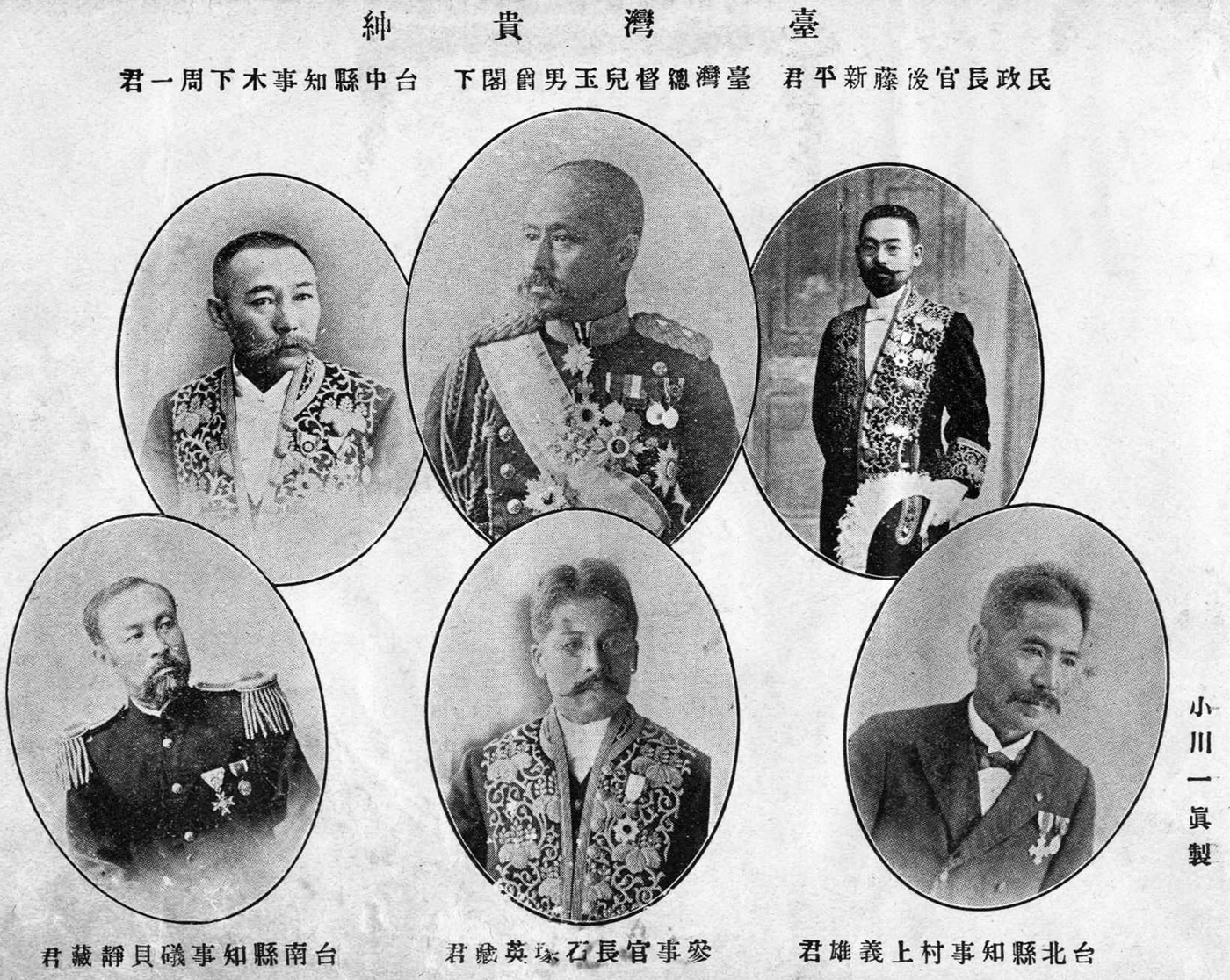
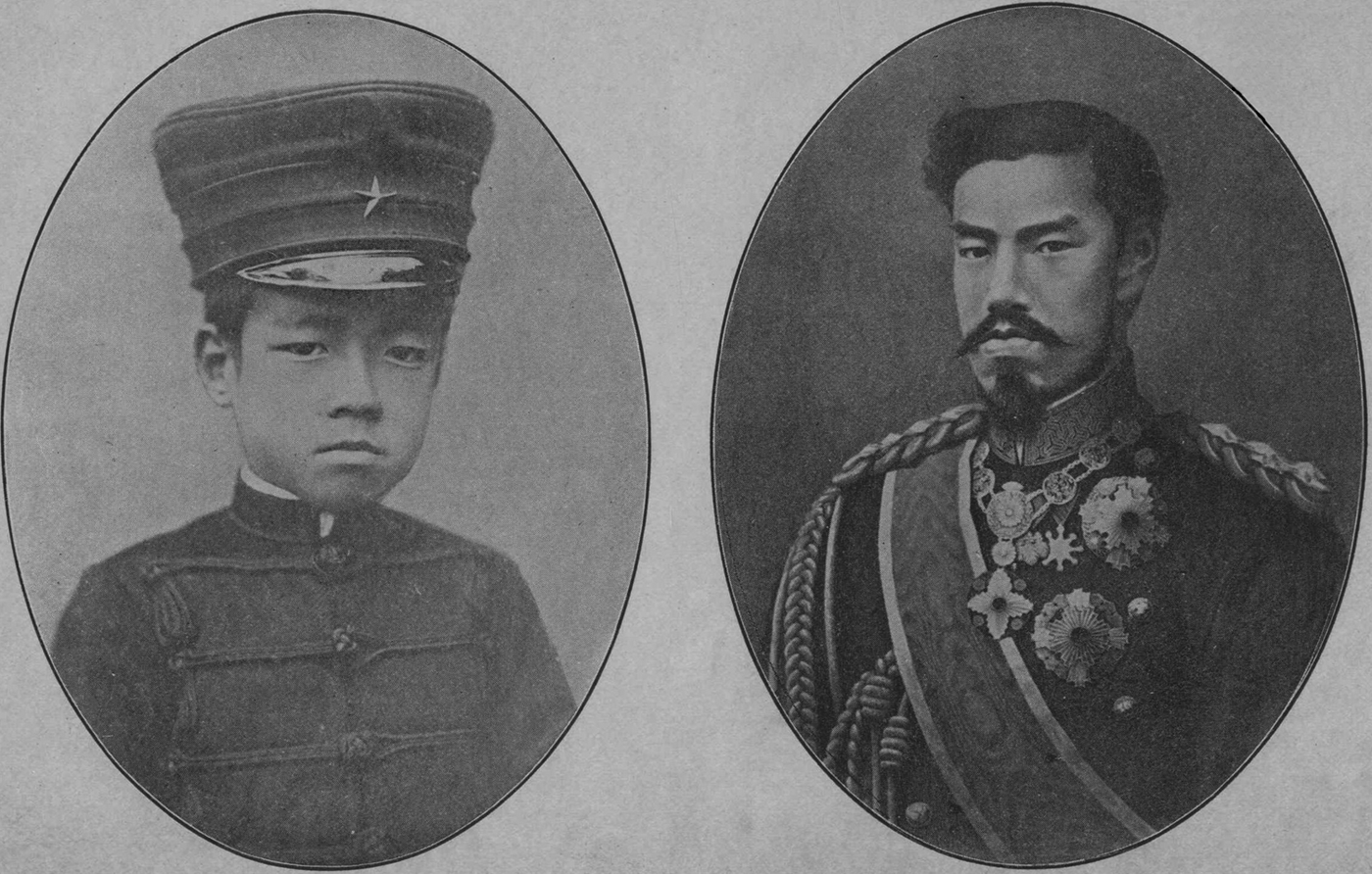
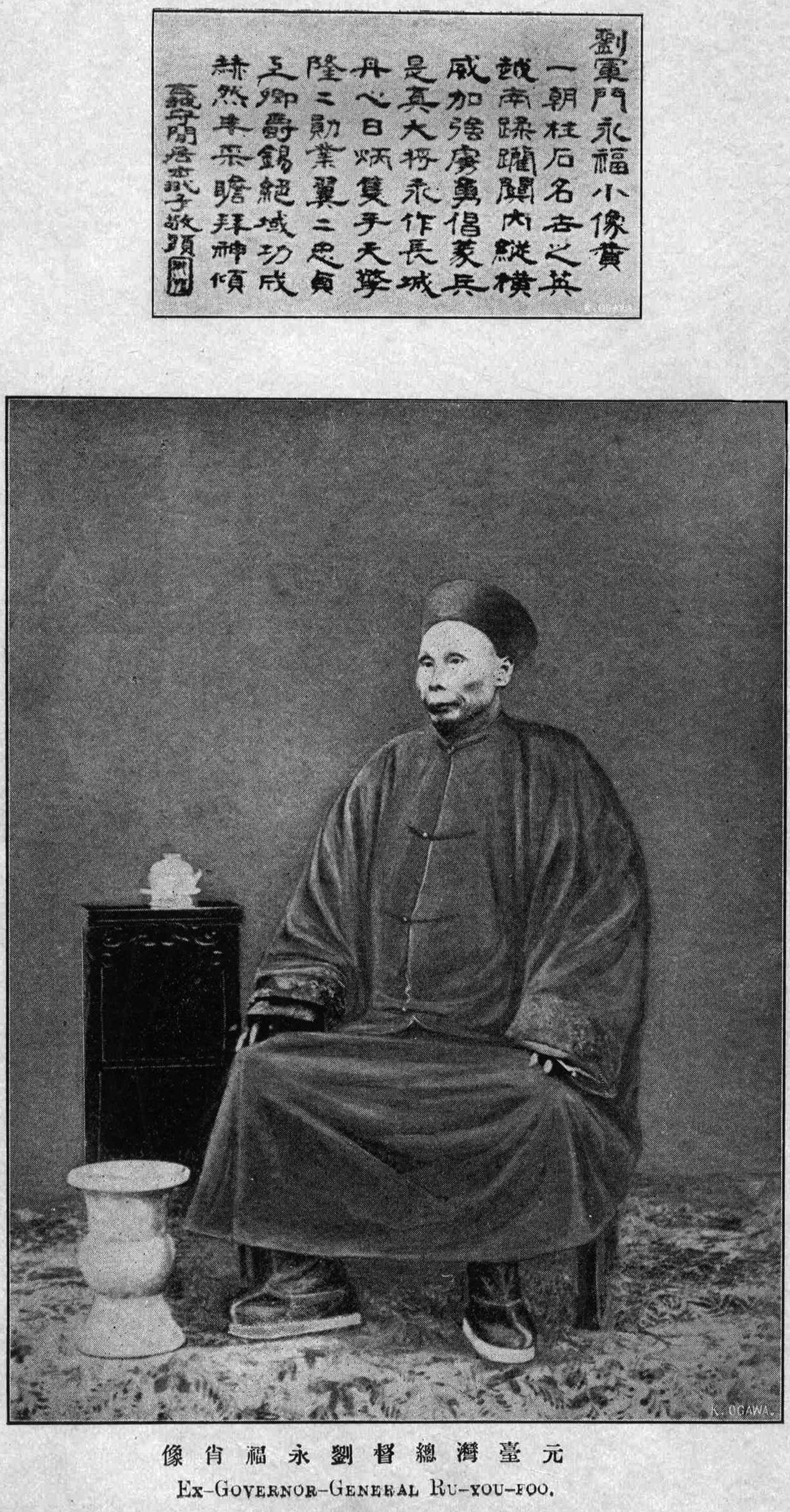
The most visible manifestation of the photographic studio system in Taiwan during these early colonial years is the formal portraits that are often arrayed at the front of various contemporaneous publications—what I call a “portrait gallery.” The 1896 illustrated account of the Japanese military expedition on the island, Taiwan gun gaisen kinen shashinchō, established this convention. As would be expected, the portraits there are of military personnel, beginning with the military commander of the expedition, Prince Kitashirakawa Yoshihisa 北白川宮能久親王, followed by other commanders and their officers, for a total of twenty-five images in seven pages. This type of gallery is repeated in a truncated form in the 1899 travel guide Taiwan meisho shashinchō, which has one page of portraits of the colonial governor-general and his civil officials (see figure 4). Broadly speaking, there is nothing unusual in either of these galleries. Most portraits follow the widely shared conventions of the time: either half or three-quarter body shots of uniformed, medal-laden figures, serious in demeanor, and with heads turned slightly away from the camera, approaching the three-quarter profile. There are some exceptions in the 1896 album, however. In the opening images, the Meiji Emperor and his heir apparent (the future Taishō Emperor) stare directly, nearly menacingly, at the camera, as if challenging its authority with their own (see figure 5). This pose remains the one most associated with the Meji Emperor, and set the tone for much of modern Japanese portraiture.Footnote 11 Another exception is the group portrait of military figures taken in the field after the attack on the Penghu islands; the poses of some of the figures adhere more closely to the conventions of the traditional East Asian “ancestor portrait”—face front, full body, seated with legs spread, which is seen in early portraiture in China as well (Roberts Reference Roberts2013, 14 et passim).Footnote 12 Later in the album, that pose is formally represented in the portrait of one of the important Taiwanese military leaders of the resistance against the Japanese, Liu Yongfu 劉永福, who sits stiffly in his official robes (see figure 6). Although this is an Ogawa print and reveals some of the conventional three-quarter profile of modern portraiture, the picture must be from an earlier time: the calligraphy colophon, titled “Commemorative Verse on the Portrait of Commander-in-Chief Liu Yongfu,” praises Liu as a pillar of the Qing nation for his military exploits against the French in Vietnam during the 1870s and 1880s, which is likely the time and place the portrait was taken. The Japanese recaptioned the photo “Ex-Governor-General Ru-You-Foo,” demoting Liu to his conquered, colonial position. Such vestiges of earlier portrait styles remain in the mix throughout most of the colonial period, but there was also a steady march toward a new, very modern look.
Opening portrait gallery of Governor-General Kodama Gentarō (top center) and his civil officials. Source: Taiwan meisho shashinchō (1899). Courtesy of National Taiwan Library.
Portraits of Meiji Emperor and heir apparent (the future Taishō Emperor). Source: Taiwan gun gaisen kinen shashinchō (1896). Courtesy of National Taiwan Library.
Portrait of Liu Yongfu, Qing military commander, relabeled in the Japanese album as “Ex-Governor-General Ru-You-Foo.” Source: Taiwan gun gaisen kinen shashinchō (1896). Courtesy of National Taiwan Library.
The portrait gallery takes an extravagantly elaborated form in the 1901 album Shashin kurabu: Ichimei Taiwan jimbutsu shashinchō (Photographing the club: Album of famous people in Taiwan). Here we have portraits of approximately ninety-six individuals, primarily four to a page, with short introductions and biographies provided on the versos. With one exception, all subjects are either Japanese bureaucrats or businessmen who belonged to this social and recreational club.Footnote 13 The portraits themselves are largely the expected sort, although there are a number of striking photographs that open the album.
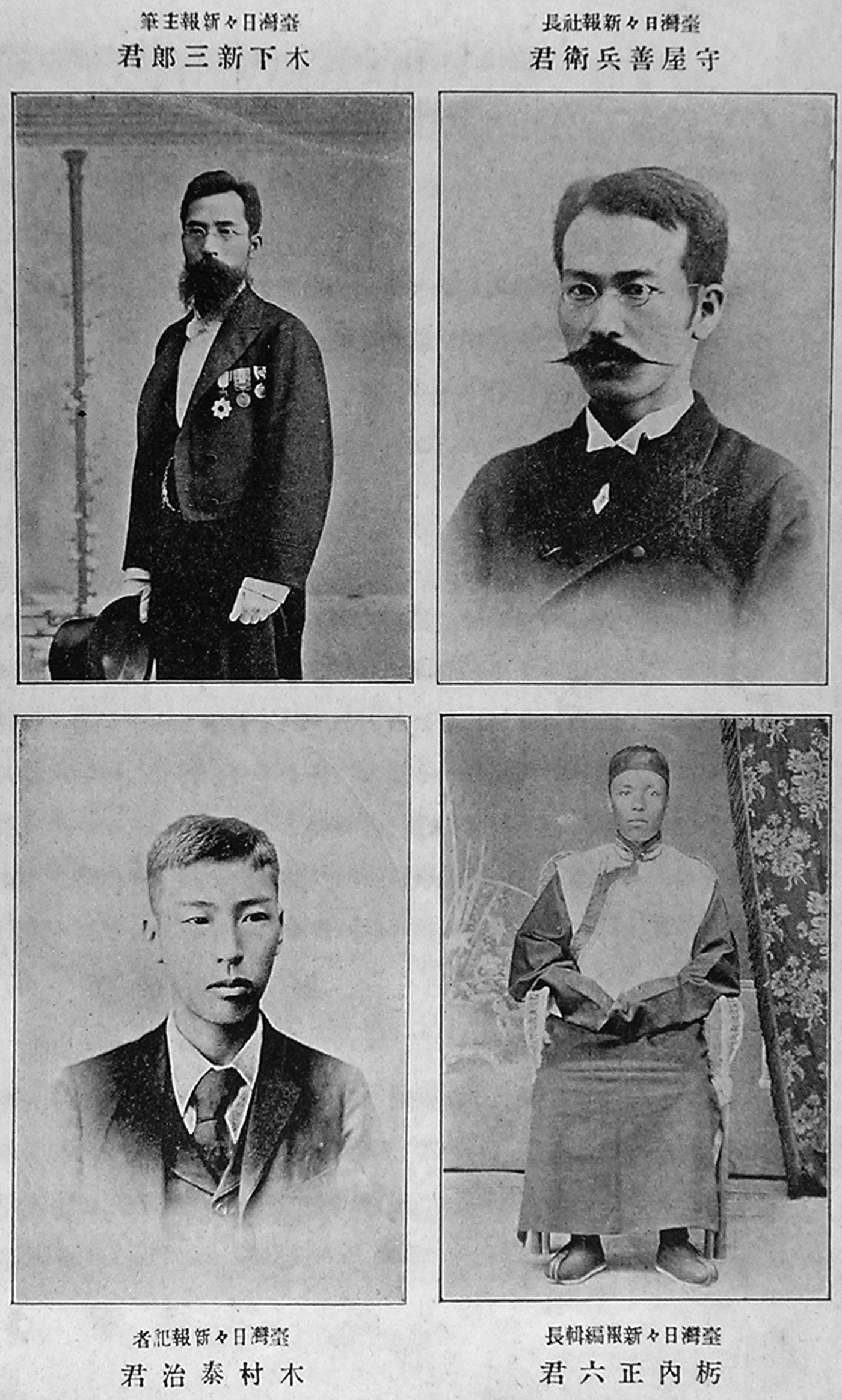
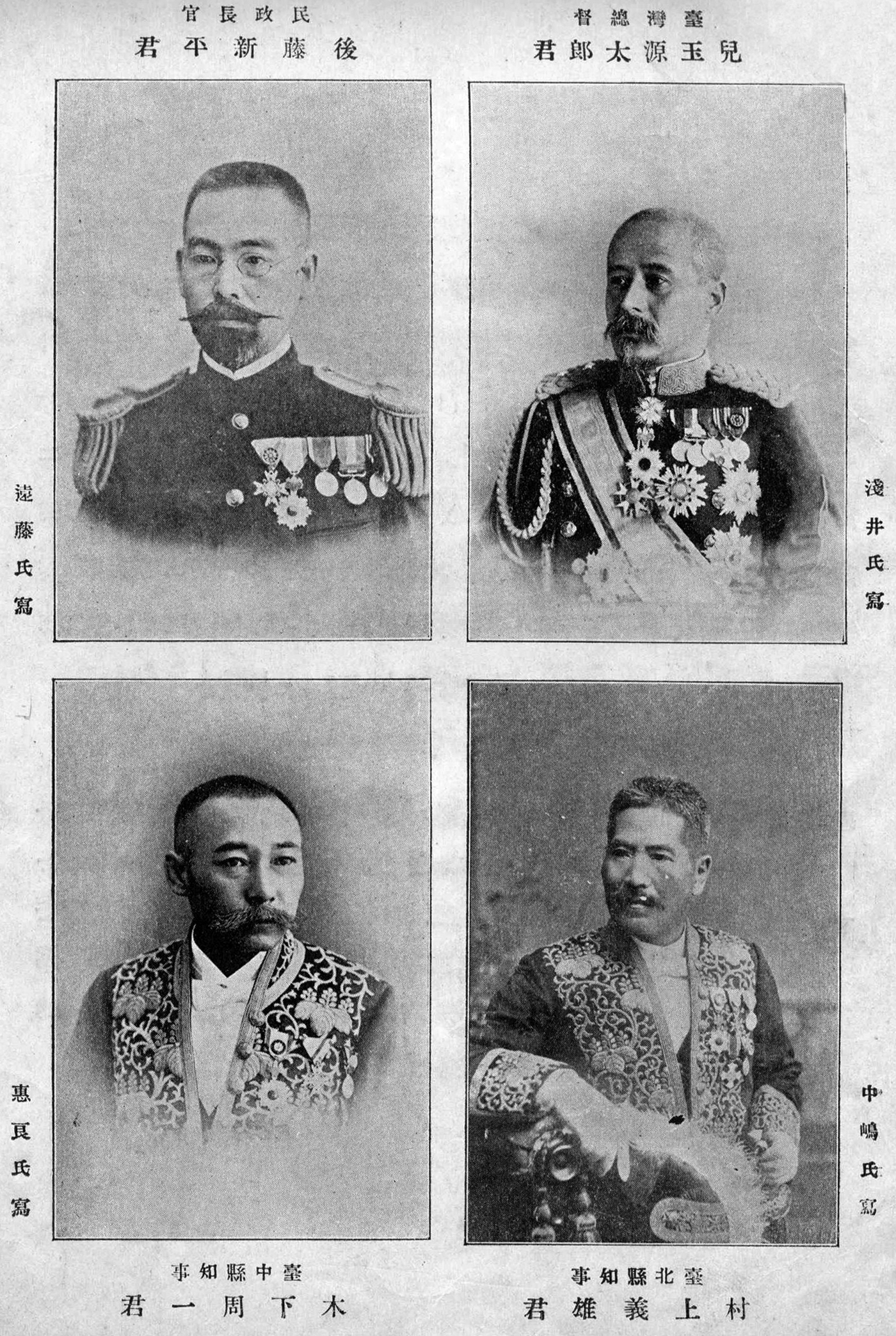
As expected, the gallery begins with the top-ranking military and civilian officials; here again are Governor-General Kodama and Civilian Administrator Gotō, along with the heads of Taihoku and Taichū counties (see figure 10). The following pages trace in detail the various levels of elite colonial society, depicting men in a variety of formal poses. For example, three-quarters of the way through this gallery, as we work our way through the colonial commercial world, are the portraits of members of the most important newspaper of the day, Taiwan nichinichi shimpō: the president, the editor-in-chief, an editor, and a reporter (see figure 7). Two of these portraits are standard bust views with a blank background (the lower half tastefully vignetted); another is a mid-range shot with a vague studio background. Except for the portrait on the lower right (to which I will return below), these all represent different versions of the standard photographic portrait at the turn of the twentieth century; they are remarkable only in their full participation in the conventions of colonial representation seen throughout the world.
Portraits of president, editor-in-chief, reporter, and editor of the Taiwan nichinichi shimpō (clockwise from upper left). Source: Shashin kurabu (1901). Courtesy of National Taiwan Library.
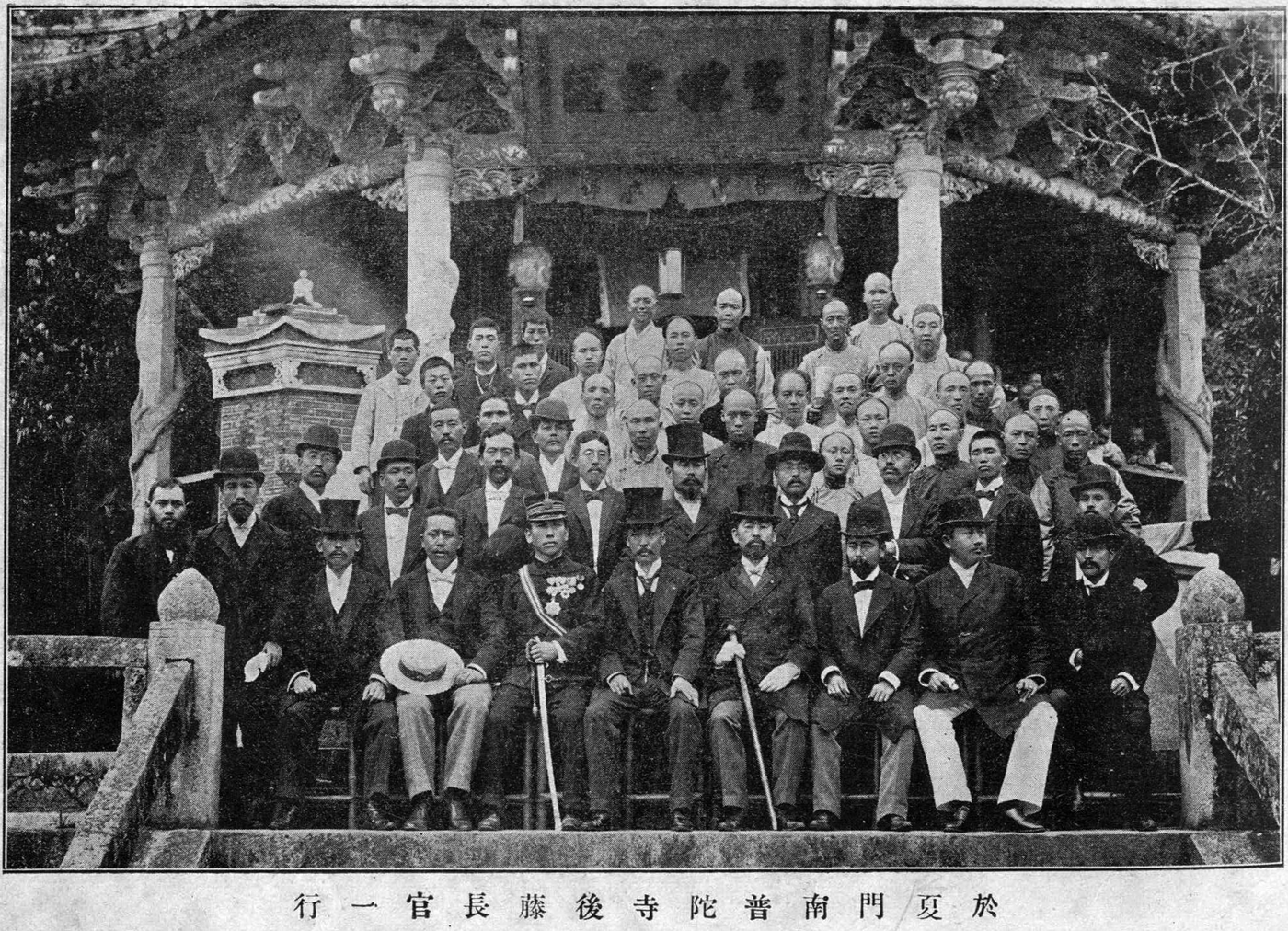
The array of portraits in the club album provides a survey of colonial power at the time and, with scrutiny, would certainly yield a wealth of information (biographical, social, and ideological), yet here I would like to turn to the set of six rather unusual, full-page photographs that prefaces the portrait gallery. Three are group photographs that document club activities, the most formal of which shows some of the club's most elite members on tour in southern China as part of a delegation led by Gotō Shimpei (see figure 8). Mimicking the pose of military leaders on campaign, the club members, centered by Gotō, pose on the steps of the Nanputuo Temple in Xiamen (Amoy) in May 1899. The shot offers a graduated display of colonial power: top hats and uniforms dominating the front; suits and derbies in the middle; and finally, in the back, the robes of the local hosts, a delegation of “islanders” (hontōjin), presumably Taiwanese living in Xiamen at the time. Two individuals at the far ends of this spectrum deviate from the standard pose. In the front row, second from right, a distinguished gentleman in a derby and white trousers gazes off camera, up and to his left, as if watching birds in flight. The pose seems as purposeful as that of the others, who stare sternly into the camera. In the far background, a man in monk's robes smiles brightly, as if unable to contain his natural mirth. Perhaps he does not know the protocol of the portrait, or perhaps his position in the religious community releases him from the grip of the standards of colonial modernity. In any case, seeing this lone smile in the sea of dour expressions, not only in this photograph but also in the album as a whole, reinforces, by counterpoint, the somber nature of the portrait genre at this time.
Group portrait of Taihoku Club members led by Gotō Shimpei on tour in southern China, 1899. Source: Shashin kurabu (1901). Courtesy of National Taiwan Library.
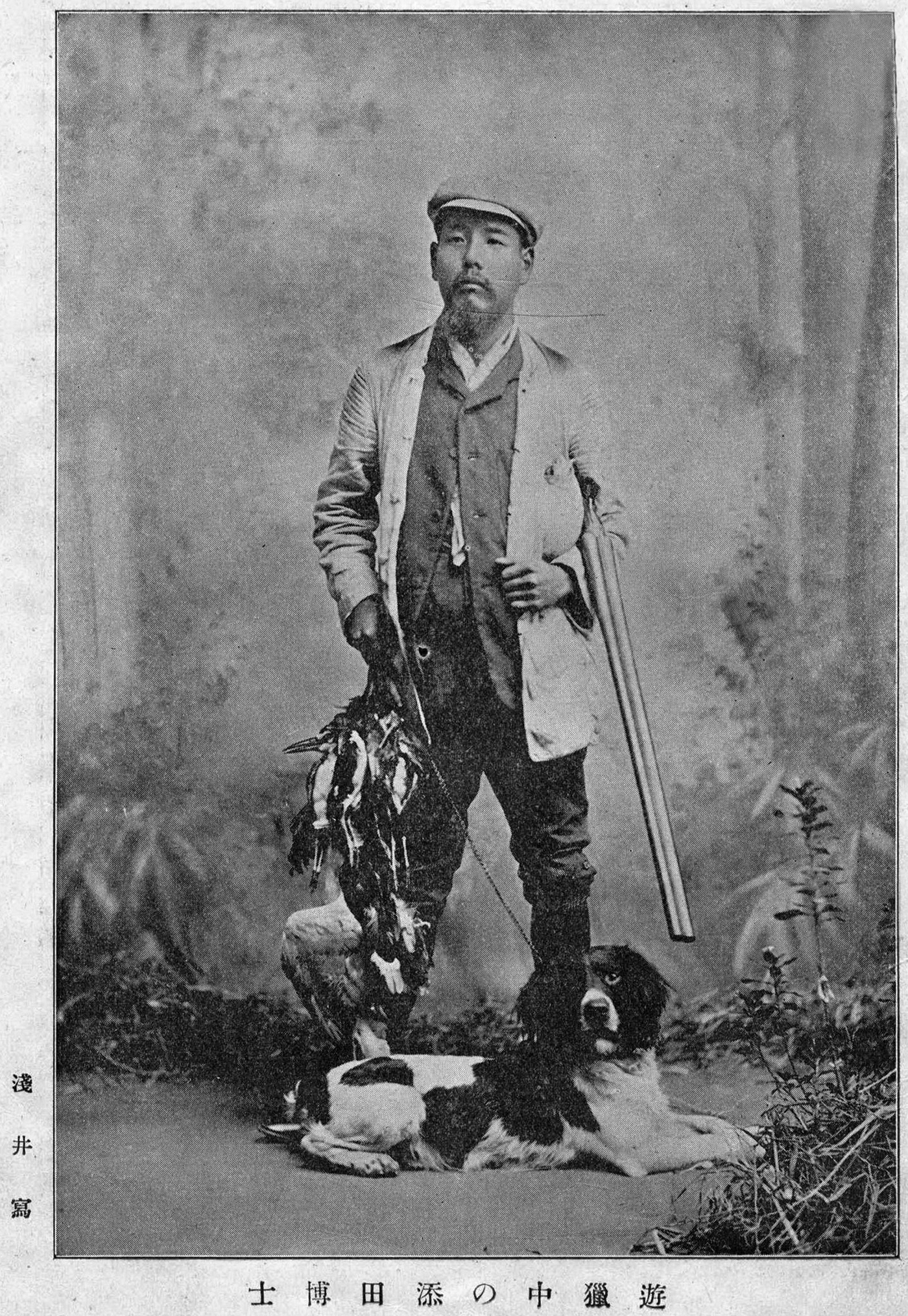
The other full-page photographs offer glimpses into the lives of individual club members. The images also suggest the presence of the photographer and his craft in colonial life. The last of these photographs, captioned “Dr. Soeda on a Hunting Trip,” shows Soeda Juichirō 添田壽一郎, doctor of law and head of the Taiwan Bank, in a most club-like pose: the gentleman hunter with his springer spaniel, shotgun, and bag of birds (see figure 9). Although we have no direct evidence, this Dr. Soeda appears to be the same figure in the front row of the group photo at the Xiamen temple who is gazing skyward, perhaps contemplating such a diversion.Footnote 14 Hunting and other sports were part of modern life in Japan, just as in other colonial societies.Footnote 15 James Ryan (Reference Ryan1997, 99) has noted that the photograph of a hunter “posed with a gun beside his recently killed prey” is a common representation of an “archetypal colonial figure.” That certainly fits the depiction of Dr. Soeda, even though this is a studio photograph with rather puny prey.
Portrait of Soeda Juichirō as gentleman hunter in a studio photograph captioned “Dr. Soeda on a Hunting Trip.” Source: Shashin kurabu (1901). Courtesy of National Taiwan Library.
The first two photographs in the album are, as might be expected, of Kodama Gentarō and Gotō Shimpei, but these diverge widely from their gallery portraits here and elsewhere. In these photographs, the two are pictured as full participants in the “club culture.” Gotō Shimpei's photograph is not entirely unusual. The photograph was taken at the time of his delegation's visit to the temple in Xiamen, and he is his typical dapper self, with top hat, double-breasted coat, and walking cane. But the photograph of Kodama, which I introduce in the anecdote that opens the essay, is remarkable in its deviation from the norm set by his formal portraits.
The Photographers
The Shashin kurabu album is not only dominated by studio-produced portraits; the photographers from those studios also have a marked presence throughout the album. Of the ninety-six photographs, sixty-seven are attributed to a specific photographer or studio. Some portraits also carry other attributions and incidental information. The photograph of Kodama as a croquet player is most fully documented, with not only a caption and attributions to the photographer and printer but also details of the occasion recorded at the end of the biographical note: “This photograph was taken by Arita Shunkō on a summer day in 1899 while sporting on the recreation grounds at the Governor-General's residence”—it is from that note that I have created the anecdote. In contrast, the Governor-General's formal portrait is attributed to another photographer and is much simpler, labeled just “Mr. Asai.” This should be Asai Kai'ichi 淺井魁 (no. 4 in table 1), who also photographed Soeda Juichirō as a hunter and produced seven other portraits in the album. All told, the album contains attributions to five different Taihoku photographers in fifty-two portraits and three advertisements. The remaining thirteen attributions are to photographers in Japan. The opening page of the gallery (see figure 10) gives a sense of this range, with four different photographers named Asai, Endō, Era, and Nakashima (presumably 4, 3, A, and 6, respectively, in table 1). Of the five Taihoku photographers, two dominate the album: Arita Shunkō, with fifteen attributions, including one advertisement, and Nakashima Kyōboko 中島喬木, with sixteen portraits and two advertisements. The close association of these two photographers with the club is attested not only in the number of attributions each holds but also in the album's closing image.
Portraits of colonial leaders: Civil Administrator Gotō Shimpei, Governor-General Kodama Gentarō, Taihoku District Chief Kinoshita Shū'ichi, and Taichū District Chief Murakami Giyū; by photographers Endo, Asai, Era, Nakashima (clockwise from upper left). Source: Shashin kurabu (1901). Courtesy of National Taiwan Library.
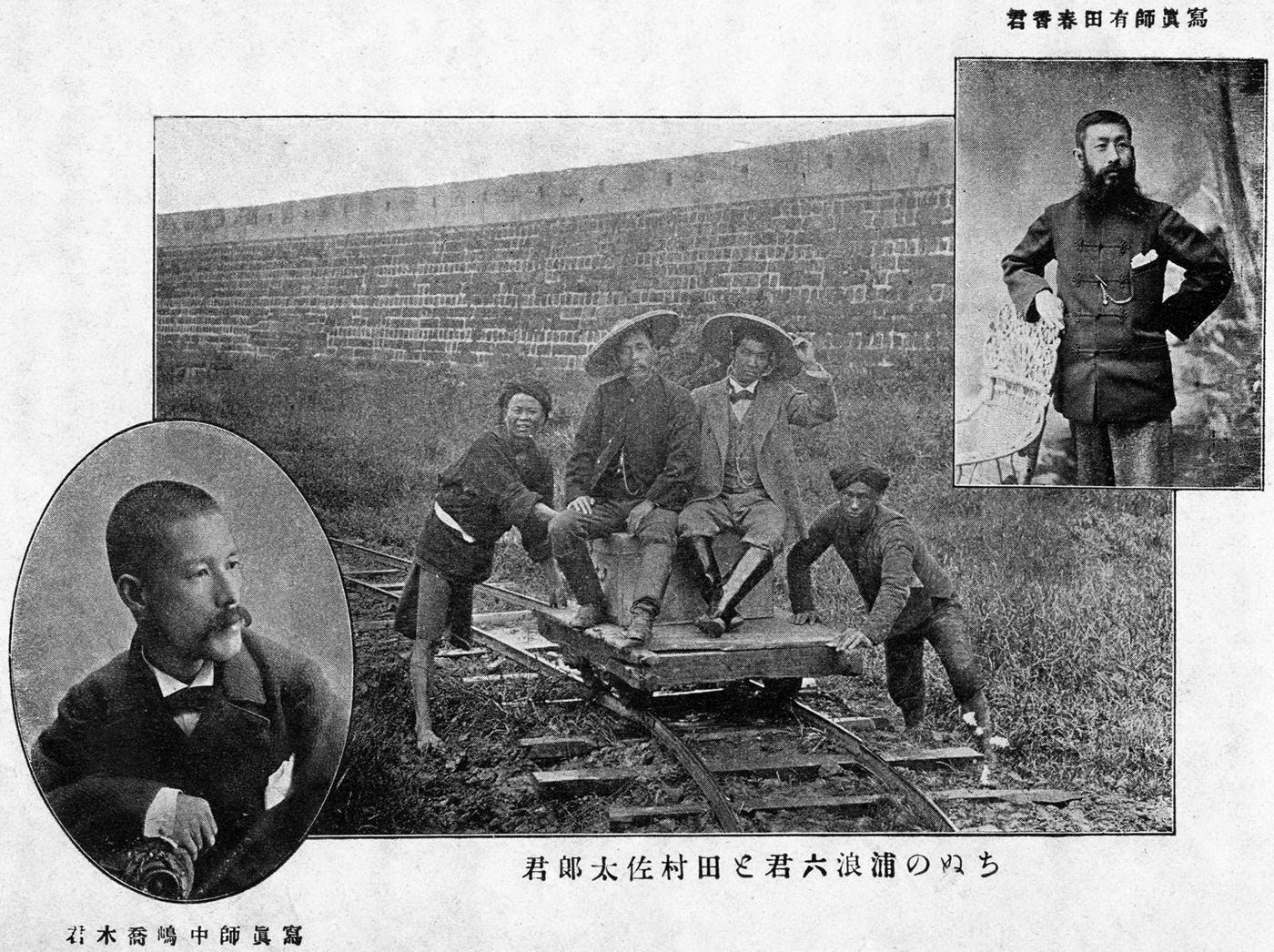
The album's elaborate portrait gallery closes with a composite photograph that offers a somewhat perplexing montage (see figure 11). At the center of the photograph is a “posed snapshot” of two colonial figures, the architect Tamura Satarō 田村佐太郎 (left) and his companion from Japan, the novelist Murakami Namiroku 村上波六, being propelled by local laborers on a rail pushcart outside the Taihoku city wall.Footnote 16 The image is purely “colonial” in the sense that it represents the local subject bearing the burden, literally, of the colonial ruler—equivalent to the many colonial photographs of sedan chairs and porters transporting the foreigner and his bags across exotic landscapes. The two gentlemen have donned their “local” hats to protect them from the tropical sun but are otherwise similarly “in uniform.” There seem to be gradations in their sartorial markings, however. The attire of Murakami, the visitor from the homeland, is relatively elegant and pristine (white shirt and tie, polished boots, etc.) compared to that of the local homelander, Tamura, whose outfit looks somewhat the worse for wear under colonial conditions. It is as if Murakami has not been sullied by the visit and remains the more perfect modern man from Tokyo. One supposes that is why there is no information on him in the verso note: he is not “of the island.” Needless to say, there is no information on the two laborers either, but for very different reasons.
Composite photograph, with architect Tamura Satarō center left, and novelist Murakami Namiroku center right; photographers Arita Shunkō upper right, Nakashima Kyōboko lower left. Source: Shashin kurabu (1901). Courtesy of National Taiwan Library.
This central photograph is flanked by portraits of the photographers, Arita Shunkō and Nakashima Kyōboko. These are standard studio portraits, copies of which were published in the 1900 directory discussed below, although with slightly different treatments (see figure 13, upper left for Nakashima). According to the short biographies, Nakashima came to Taiwan in 1896, first worked at the Asai studio, and then set up his own shop (no. 6 in table 1); similarly, Arita came to the island in 1897 and set up shop in 1898. The relationship of the photographers to the center snapshot is unclear, however—there are no attributions or clarifying notes. Is this meant to represent their work? If so, it is an interesting choice, suggesting the future of their craft: outdoor “action” photography that was the hallmark of the new small cameras, although this photograph is clearly posed. Moreover, the transparent manipulative treatment of the materials, Barthes's (Reference Barthes and Heath1977) so-called connotation procedures, announces the presence of the photographer and his craft in graphic ways. In the end, this composite self-portrait (if that is what is being represented here) poses more questions than answers about the photographers and their profession, questions that must await another line of inquiry. What continues to be evident is the overwhelming product of their labors: the public portraits of colonial gentlemen.
The Businessman Style
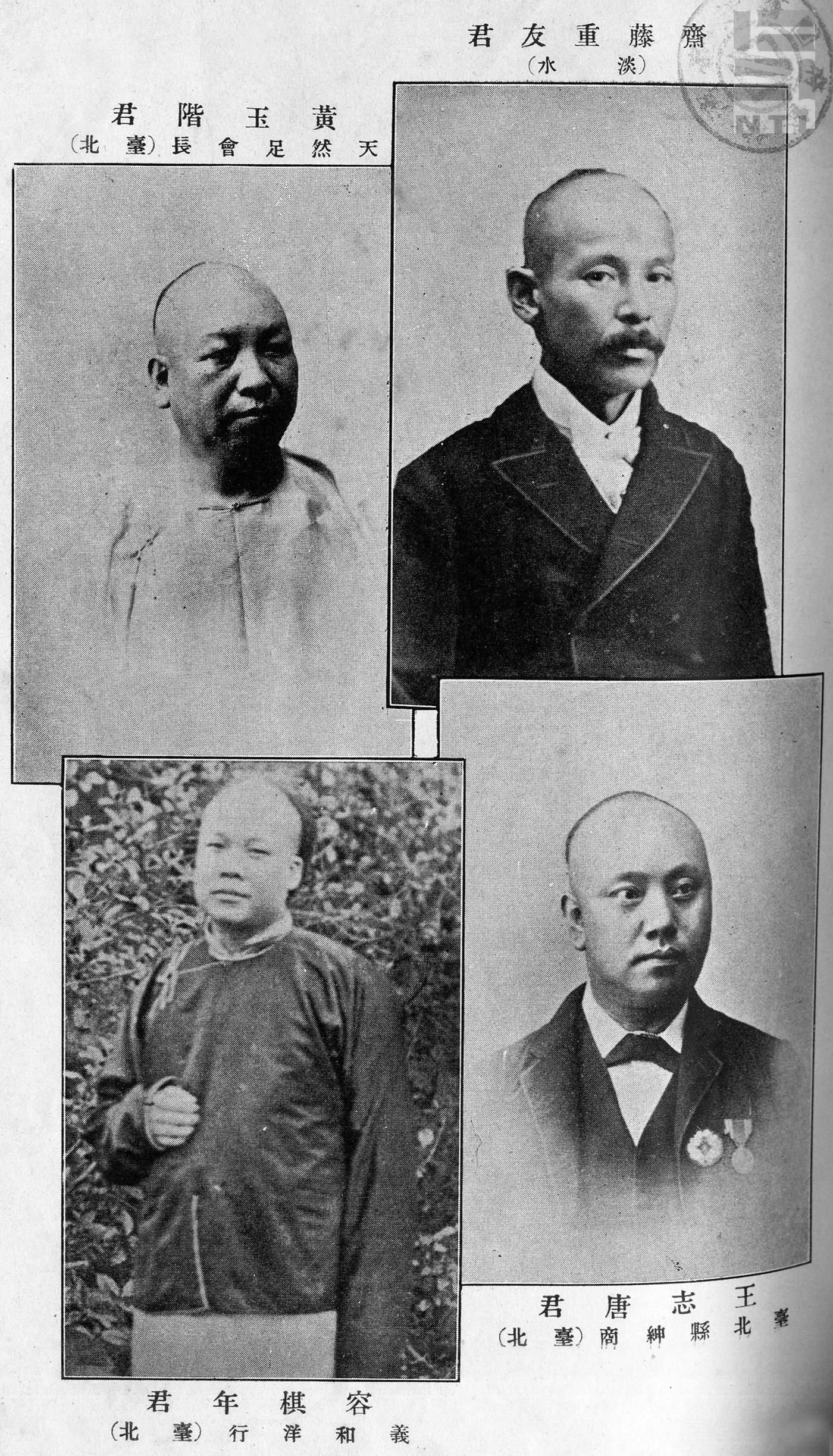
We now return to the Taiwan shishō meikan business directory of 1900 and consider its portraiture, along with other visual contents. The 178 portraits in forty-five pages range widely in both subject and style. The directory opens again with a full-page photograph of Governor-General Kodama and his colonial leadership—although the photograph is new, in pose and style it is almost an exact copy of the portrait in the 1899 album (see figure 3)—and concludes with something quite new: photographs depicting three Taiwanese figures, a civic leader and two businessmen (see figure 12). The civic leader, Huang Yujie 黃玉階, was the first doctor of Chinese medicine licensed by the colonial authorities and the head of a civic improvement society, Tenran Zukai 天然足會. He appears here in local dress and with what appears to be a Manchu-style queue, which was de rigueur for Chinese men. The two Taiwanese businessmen contrast starkly with each other, representing two reactions to the colonial world. Rong Qinian 容棋年 (lower left) was photographed casually outside in local attire and also sporting a queue; he stares into the camera with seemingly little accommodation of the modern despite his position in a Western firm (yōkō). In contrast, the formal studio portrait of Wang Zhitang 王志堂 (lower right) shows him in fully modern colonial attire, including a modest collection of medals, looking away from the camera, as if toward a future of colonial modernity into which he hopes to be remade.
Concluding portrait page of 1900 directory, Taiwan shishō meikan: Civic leader Huang Yujie, Tamsui resident Saitō Shigetomo, businessman Wang Zhitang, and businessman Rong Qinian (clockwise from upper left). Courtesy of National Taiwan Library.
Happenstance, it would seem, led to the inclusion of the portrait of Wang's Japanese counterpart on this page (upper right): Saitō Shigetomo 齋藤重友 from Danshui (Tamsui) is listed without title or profession, as if he were closer to the Taiwanese in his diminished colonial status. However, a comparison of Saitō and his Taiwanese companions reveals a number of status and ethnic markers in their portraits. This is obviously so with Huang and Rong, but even the mimic man Wang cannot fully embody Saitō's colonial modernity. Although almost identical in clothing, pose, and even male-pattern baldness, Saitō's full mustache establishes his racial and colonial position. Throughout the early portrait galleries, Japanese colonial leaders sport a variety of beards: for example, the twenty-three individuals in the portrait gallery of the 1896 Taiwan gun gaisen expedition album and the six on the first page of the 1899 Taiwan meisho travel guide all have either mustaches or beards (see figure 4 for the latter). And even with a much wider cross-section of the elite in the 1901 club album, including a number of very young men, more than two-thirds (and almost all the top-ranked officials) display some type of facial hair. This was true for their European colonial counterparts and may be seen as Japanese mimicry of the European colonial image (the uniform for the face), but we should remember that the bearded hero was also prominent in Japanese samurai culture, at least before the Edo period. For the majority of Chinese colonial subjects, their raciality makes this one form of mimicry that they could not easily affect, even if they wanted to. They could cut off their queues, dress in a variety of colonial uniforms, and outfit themselves with other modern paraphernalia, but they seldom could grow the Japanese- and European-style beards, even in adult maturity. Their beardlessness made them appear as “children” of the Japanese patriarchs of the colony. I will return to this question of mimicry and the colonial beard in the final section of the essay.
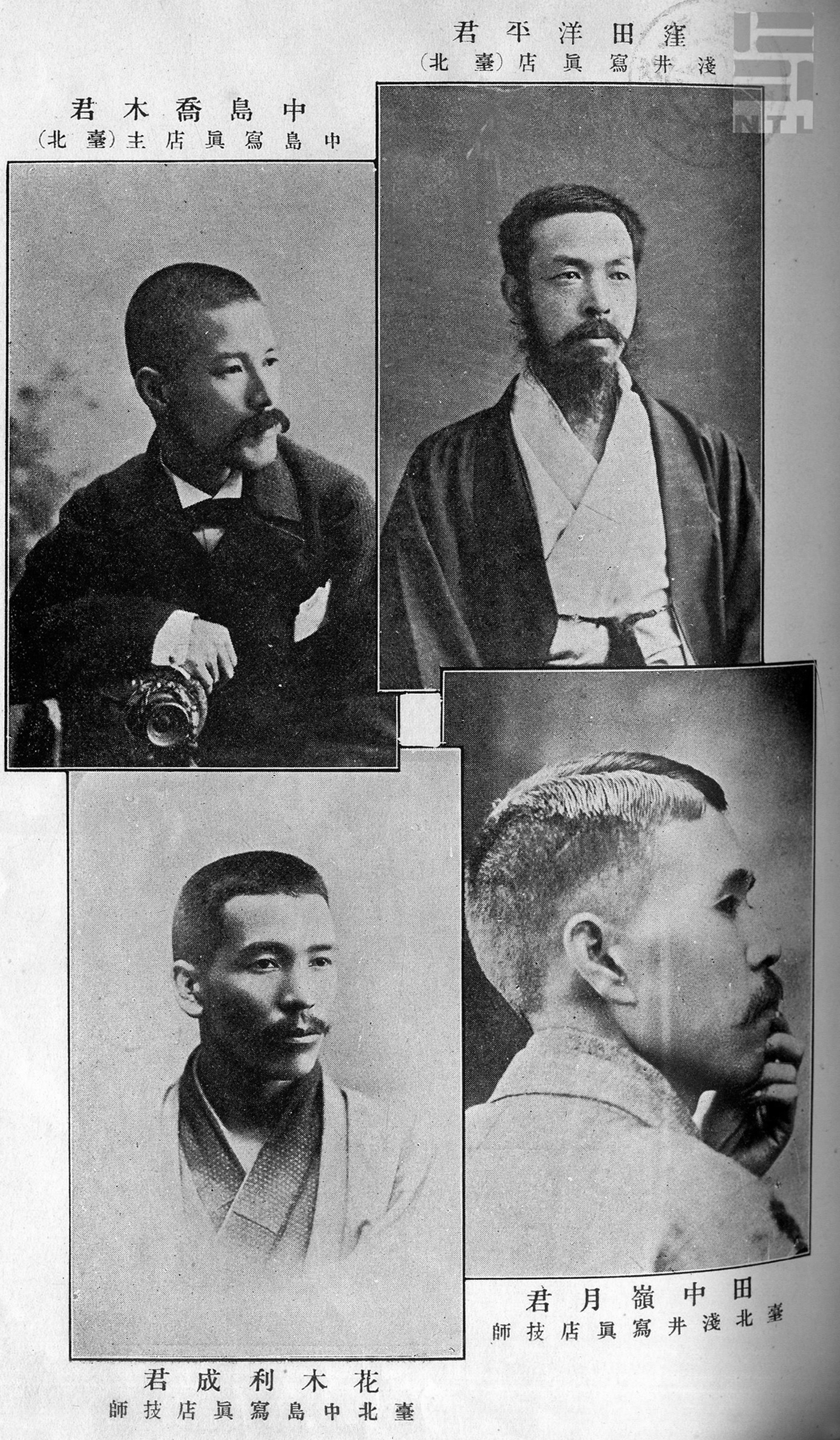
The style of portraiture throughout the 1900 directory is largely uniform and in line with standards seen in the other albums, yet I would like to note some deviations, both residual and innovative, remembering that they are a small minority in a sea of convention. One element in some of these portraits is the staging that anachronistically echoes the conventions of old daguerreotype and other long-exposure technologies, a phenomenon that Walter Benjamin (Reference Benjamin and Jennings1999, 515) sharply criticized as a crass commercialization of the old portrait style, which he considered to possess “aura” and dignity. In first-generation photography, extended exposure time meant that both camera and subject had to remain immobile for the duration of the session, which, in the beginning, lasted several minutes. This was easy enough for the camera and the inanimate subject, but for portraits, various mechanical devices were employed to brace the very animate human body. Chairs with arms were the most practical, especially when outfitted with an invisible head brace; this often led to a certain throne-like pose that coincidentally echoes the formal East Asian ancestral portrait. The table and short pillar upon which the subject could lean also provided stability and allowed for the introduction of other atmospheric props, such as books, vases, and the like. And of course there could be no smiling, for ideological as well as practical reasons. Remnants of those conventions are evident in some of the portraits shown here, even though the speed of the film did not require them—one twenty-fifth of a second being a common shutter speed by this time. The once necessary had become the fashionable (see figure 3 for an example). On the side of innovation, there are several forward-looking props and poses. There is a studio shot of a businessman in his sporting outfit and with a pet dog, as seen in the club album's photograph of Dr. Soeda. In addition, there is an interesting form of self-representation in a page dedicated to owners and employees of several photography studios, seen especially in the highly innovative depiction of a contemplative Tanaka Minezuki 田中嶺月 in full profile (see figure 13, lower right). Finally, although colonial attire dominates, a number of figures in the directory wear the traditional Japanese kimono, a statement of Japanese ethnicity within the world of colonial mimicry. It is difficult to say whether this was a residual or innovative effect within the context of the early photography. The kimono could be residual in the sense of quoting a tradition but innovative in the insertion of Japaneseness into the representation of the modern nation.
Portraits of photographers/owners and technicians of photography studios in Taihoku: photographer Nakashima Kyōboko upper left, technician Tanaka Minezuki lower right. Source: Taiwan shishō meikan (1900). Courtesy of National Taiwan Library.
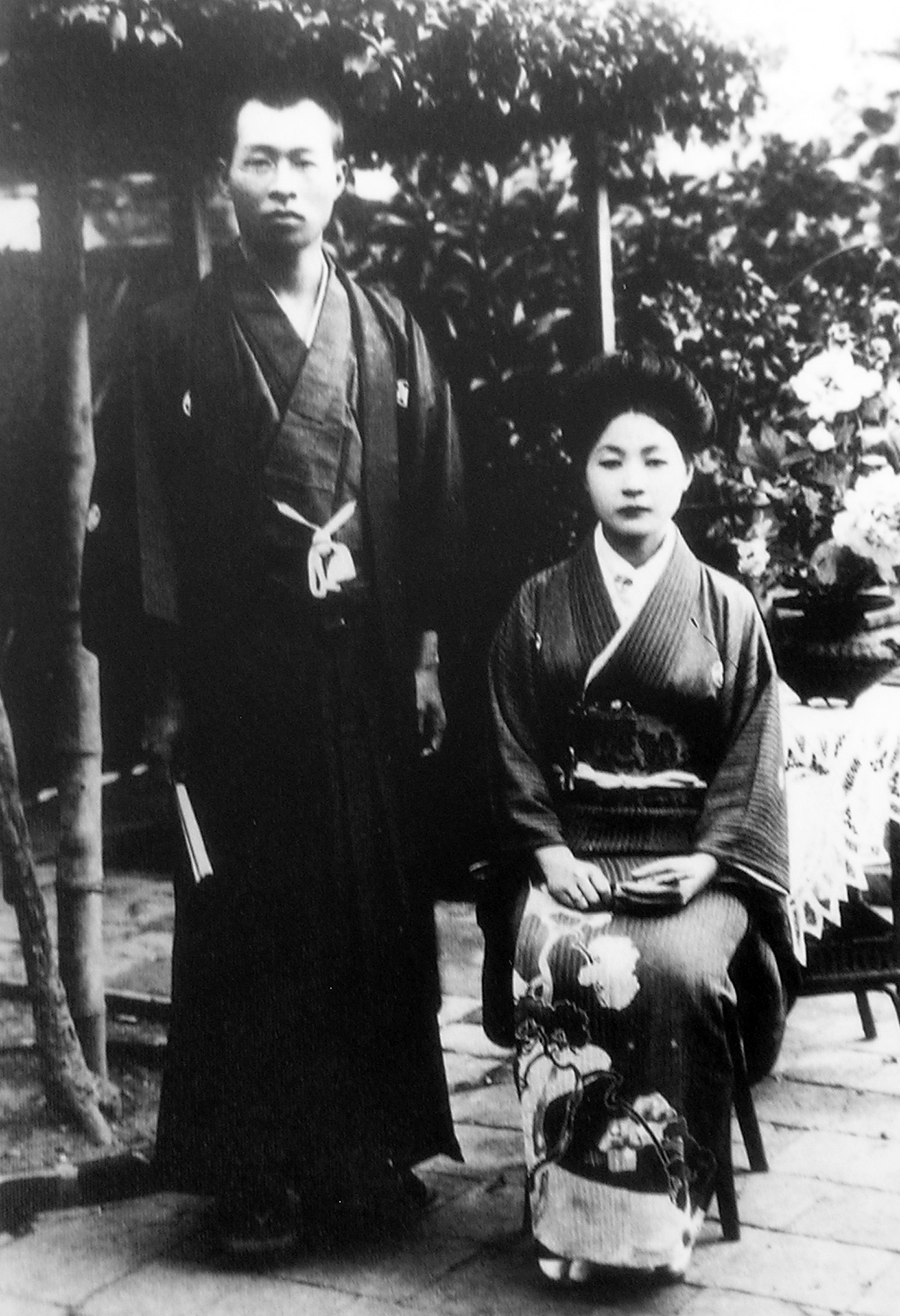
As the colonial regime moved inevitably toward the modern, the Japanese kimono was reserved more and more for special occasions marked by either formality or Japaneseness, most notably any event with Shintō connotations. This is true not only for the Japanese population of the island, however; a significant portion of the colonized population, especially the urban elite, and among them especially women, adopted the kimono for special occasions. One of the most stunning examples of this mimicry is the 1917 wedding portrait of the Taiwanese intellectual leader Lin Maosheng 林茂生 and his wife (see figure 14). Although such occasions can project the ambivalence of mimicry that Homi Bhabha discusses in the world of South Asian and African colonial regimes, here, there is an element that marks the mimicry as particularly East Asian. This is related directly to the question of racial difference and the effectiveness of the mask. Bhabha observes that colonial mimicry “is the desire for a reformed, recognizable Other, as a subject of difference that is almost the same, but not quite” (Bhabha Reference Bhabha1994, 86; italics in original). He adds “but not quite” in part because of the highly racialized worlds of European colonialism, leading him to the revision “almost the same but not white” (87). Race and ethnicity also played a decisive role in Japanese colonial policy, including brutal acts of oppression and terror, especially against the Taiwan aboriginal people, yet Japanese colonial rhetoric of the so-called East Asian dōbun (shared script) and dōka (shared culture) policies also downplayed racial difference.Footnote 17 This racial blurring seems to find visual form in some of the photography of urban elite populations. Although the Taiwanese could never actually “become Japanese,” in the still and mute frame of the photograph, they could sometimes “be as Japanese.” Cultural knowledge may or may not allow us to decipher Lin Maosheng's ethnicity, but the challenge is stronger when we try to parse the ethnicity of his bride. Is she Tomoko or Ling? Only the caption will let us know.
A 1917 wedding photograph of Lin Maosheng and his wife in traditional Japanese dress. Source: Xie (Reference Senzhan1993). Courtesy of Lin Zongren.
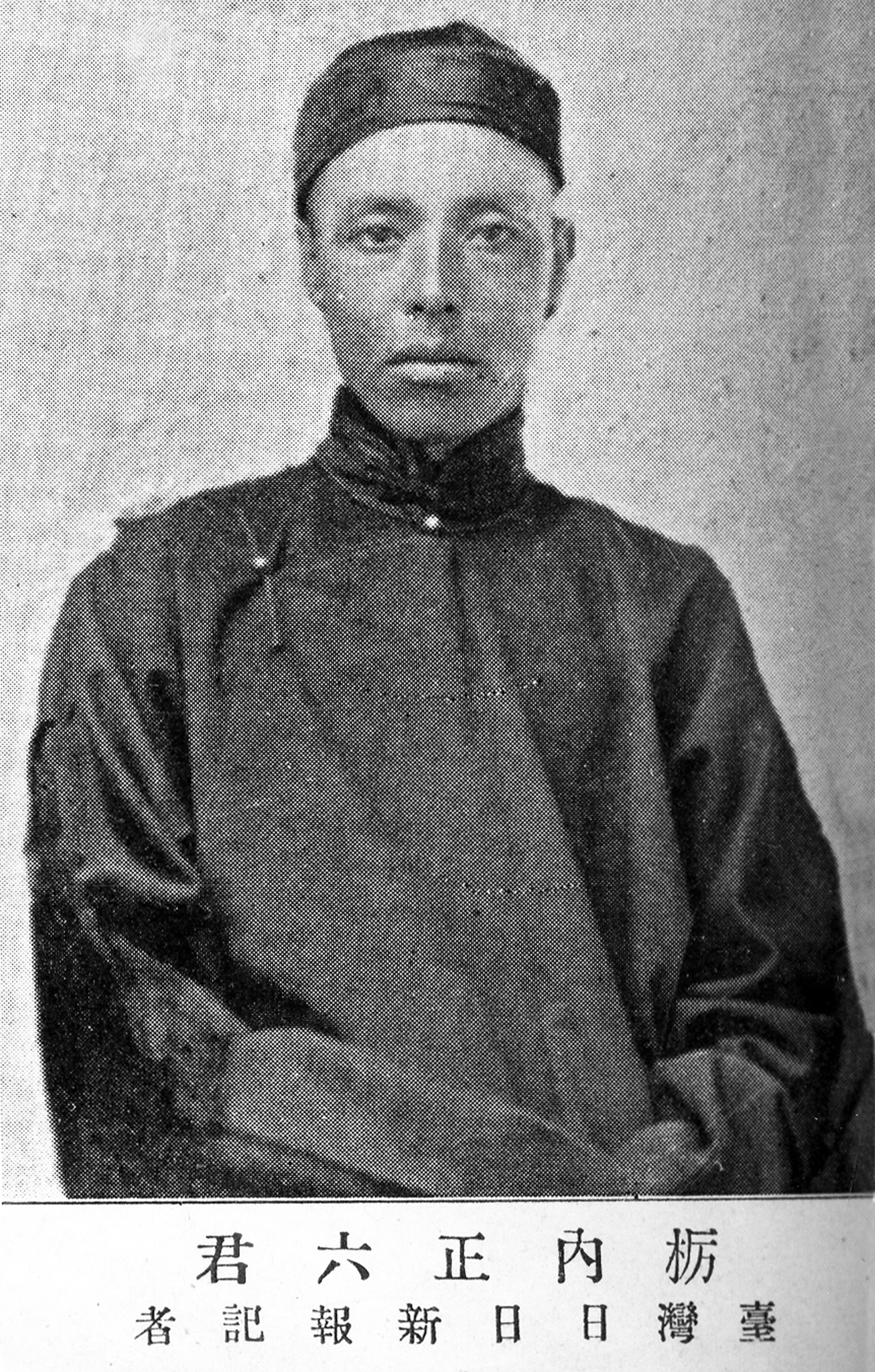
This racial ambiguity and colonial mimicry sometimes assumed odd configurations in Taiwan. One figure in the 1900 directory reverses the standard colonial conventions of representation: the Taiwan nichinichi shimpō reporter Tochiuchi Seiroku 栃内正六 appears in the silk robes and cap of a traditional Chinese scholar, a veritable mandarin staring directly at the camera (see figure 15). This is a most peculiar form of self-presentation. Other colonial photographies provide examples of this type of reverse mimicry, such as Jean Geiser's 1870 “Couple Européen en costume Algérien” (Khemir Reference Khemir1994, 24–25). There, however, the Europeans seem to suggest a mock ethnographic photograph filled with irony—they are very much “playing pretend.” In other settings, this reverse mimicry can take on a suggestion of espionage, as when the colonial figure seeks to pass as his subject in order to make clandestine entry into that society; Sir Richard Burton, British colonial author and adventurer, was notorious for his success with this type of mimicry. The Tochiuchi photograph, however, seems to be an example of reverse colonial mimicry without irony or subterfuge. How can that be?
Taiwan nichinichi shimpō reporter Tochiuchi Seiroku in silk robes and cap of a traditional Chinese scholar. Taiwan shishō meikan (1900). Courtesy of National Taiwan Library.
Elsewhere I have written on the possible ambiguous cultural relationship between the colonial ruler and his subject in Taiwan when the subject (Han Taiwanese) has command over highly valued cultural capital that members of the ruling colonial elite want to possess, especially as manifested in Chinese literati culture, which enjoyed considerable esteem and symbolic value in Japan (Allen Reference Allen2012, 102–3). I would argue here that the portrait of Tochiuchi Seiroku might be seen as a visualization of this cultural ambiguity. Although we can never retrieve Tochiuchi's intent, there seems to be a remarkable blurring of colonial distinctions in this image. First, he apparently chose this portrait as a form of self-representation in a formal colonial document of record. Second, there is nothing in the pose that suggests a playful stance: his choice of costume seems to be in earnest. Moreover, this also applies, perhaps even more strongly, to his 1901 club album portrait (see figure 7, lower right), in which he again poses as a Chinese gentleman, both in clothing and posture: head-to-toe in mandarin robe, cap, and boots, in a full-body, spread-leg “ancestral pose.” And in both photographs, Tochiuchi is not bearing the most prominent racial marker of the Japanese ruling elite: a beard or a mustache.Footnote 18
In both portraits of Tochiuchi Seiroku the racial and cultural lines are clearly blurred, and in particularly East Asian ways. Viewers may claim to be able to decipher Tochiuchi's ethnicity, but the line of distinction between the colonial ruler and the subject is nothing like that seen in European colonial photography. Tochiuchi could be taken for Wang, although seldom could Jones be taken for either Wang or Gupta. A particularly clear example of this is in the similar sartorial habits of the Jesuits in China who also wore Chinese robes, but their “big noses and beards” clearly distinguished them from the Chinese population (cf. Roberts Reference Roberts2013, 13–14, fig. 3; compare Wu Reference Hung, Cody and Terpak2011, 86, fig. 18). Throughout the colonial period, this racial and cultural blurring follows several trajectories, the most important of which is the one in which portraiture of the Taiwanese subject and the Japanese ruler becomes closer in kind by moving toward a new standard of the modern male identity. These changes are clearly visible in the evolution of business directories over the next thirty years.
The Evolution of the Business Directory
As photographic albums proliferated throughout the colonial period, the prominence of the formal portrait gallery diminished markedly. At the same time, directories of businessmen and other professionals grew in stature and complexity, introducing several innovative variations. These directories provide important social documentation of the period. Among much other data, they offer a diachronic record of public portraiture of an elite and middle-elite segment of the population. The National Taiwan Library's Sōtokufu collection holds at least thirteen such directories for Taihoku (or Taiwan with a Taihoku section) subsequent to the 1900 directory: 1911, 1912, 1919, 1927, 1933, 1934, 1934 (two), 1936, 1937, 1937 (two), 1938, and 1943, 1943 (two).
The ten years between the first Taiwan business directory and the next two (from 1911 and 1912) brought dramatic changes in both the content and the form of the genre. First, these two directories are populated with a wide range of Taiwanese figures: for example, the Taihoku section of the 1912 Taiwan jitsugyō meikan lists more than 200 Taiwanese, compared to approximately 300 Japanese. This directory is again organized generally by locale (Taihoku, Giran [Yilan], Tōgen [Taoyuan], etc.), but the listing under each locale is by individual, rather than by address as in the 1900 directory. Although the Japanese residents (naijin) are listed separately from the Taiwanese (hontōjin), all individual listings are arranged by kana pronunciation of last names, including the Chinese names. The Japanese reading of Chinese names is a marker of the unusual linguistic complications of the two populations, as well as a clear sign of colonial hierarchy. In contrast, the 1911 directory, Taiwan shōkōjin meiroku, is organized first by profession and then by locale and individual, with Japanese and Taiwanese listed together. For example, professional photographers have a mixed listing of thirty-four island-wide, with nine in the Taihoku-Kiryō area (265–67). Thus, both directories are much more searchable (in different ways) than the 1900 one.
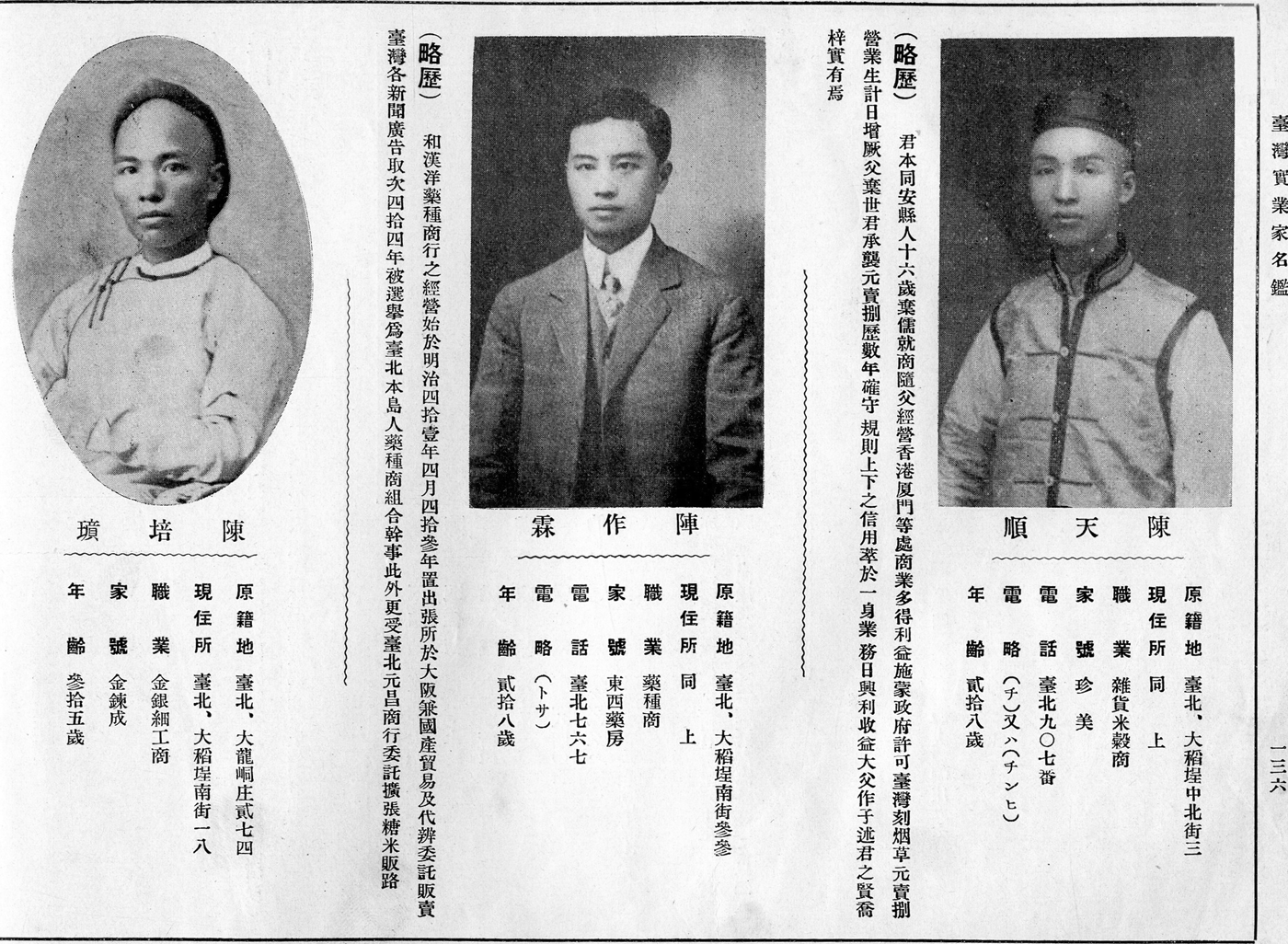
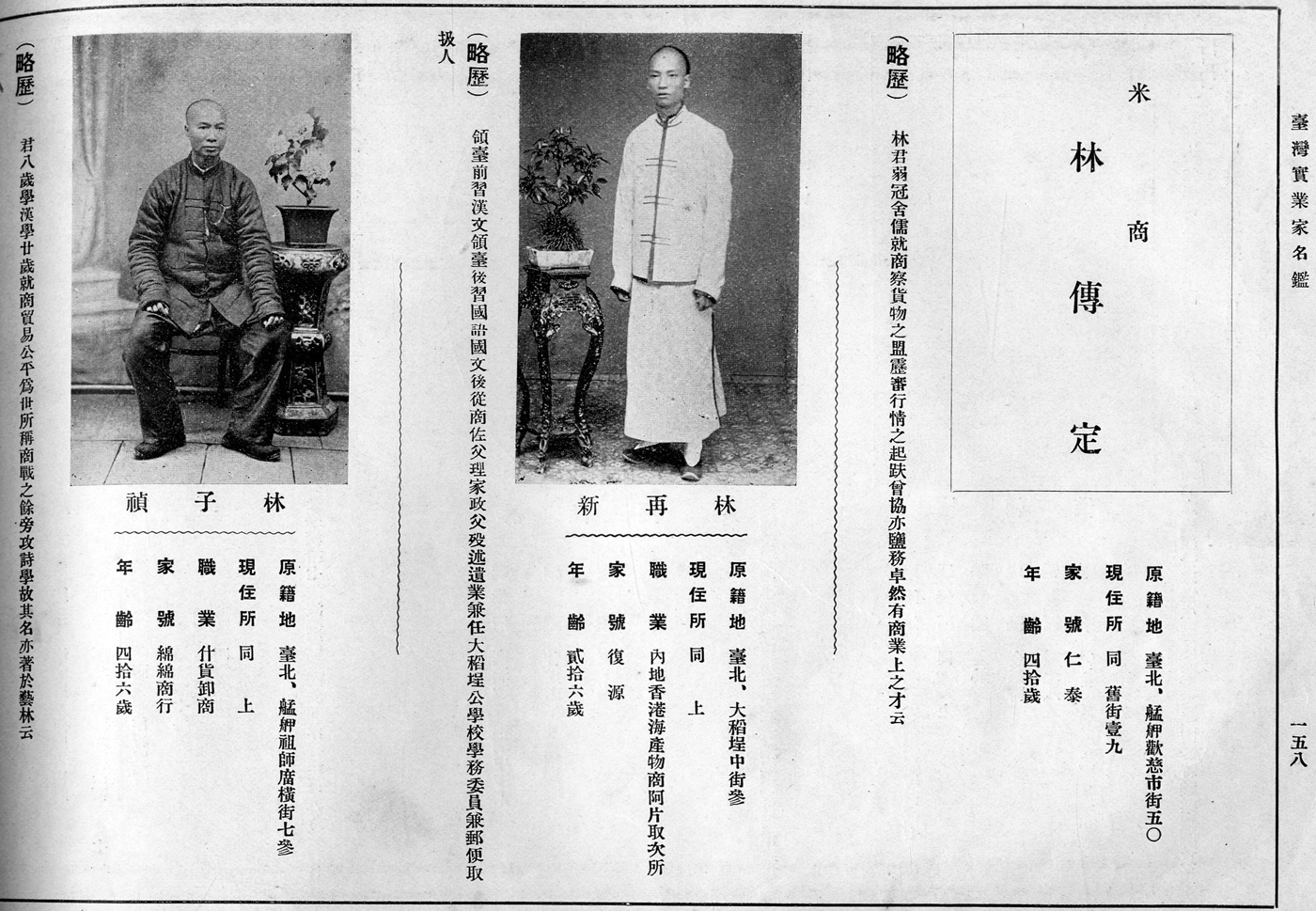
For our purposes, the 1912 directory is a particularly revealing document. As a listing of individuals that includes personal data and images, it compares well with volume 2 the 1900 directory and with the 1901 club album, despite its much wider subject pool. The structure and content of its listings are quite uniform, typically composed of a photograph of the individual and basic information (place of birth, age, profession, business address, and telephone number), usually supplemented by a short biographical note similar to those in the club album. If there is no photograph, the space is occupied by a basic “name card” (see figure 16). By this time, portrait studios were widespread on the island, and portraiture was readily available to the elite and middle-elite populations, both Japanese and Taiwanese. Despite this shared accessibility, images often still retain clear ethnic distinctions. Members of the Japanese elite were photographed almost exclusively in suits and ties (occasionally in uniforms or traditional attire) in half-body or bust poses. Some Taiwanese figures are also pictured in this style, but more often the clothing and poses are older in style and more “Chinese,” that is, traditional clothing and full-body pose, sometimes still in the old “ancestral portrait” style. Sample pages from the Chen and Lin sections of the directory show this range (see figures 17 and 18). The rapidly expanding subject pool partly accounts for the range of sartorial styles in the Taiwanese portraits: these were members of the local merchant class who were largely elided from early albums and directories. The wider range of representation also reflects the spreading presence of the photographic industry across the island, and captures noteworthy cultural and social phenomena.
Photograph of studio owner Endō Hiroya; the two other profiles show the use of the name card in place of the photograph. Source: Taiwan jitsugyō meikan (1912). Courtesy of National Taiwan Library.
Listings of Taiwanese with the surname Chen. Source: Taiwan jitsugyō meikan (1912). Courtesy of National Taiwan Library.
Listings of Taiwanese with the surname Lin. Source: Taiwan jitsugyō meikan (1912). Courtesy of National Taiwan Library.
One of the most remarkable aspects of the 1912 Taiwan jitsugyō meikan is the relative density of portraiture for the Taiwanese figures compared to that for the Japanese. For example, of the 228 “islanders” listed for the Taihoku area, 137 (60 percent) have portraits, yet for the 372 Japanese listings, only 160 (43 percent) include portraits. This trend is even more pronounced beyond the Taihoku area. In total, the album lists more than twice as many Japanese as Taiwanese (1,054 vs. 427), but the latter are twice as likely to have a portrait with their listing: 284 (67 percent) of the Taiwanese have portraits instead of just a name card, while only 322 (31 percent) of the Japanese do. On the surface, this means that while the professional photographic enterprise remained firmly (albeit not exclusively) in the hands of the Japanese, the studios' clientele was increasingly Taiwanese.Footnote 19 And if the statistics for this formal portraiture hold for other products of the photographic industry, such as wedding and family photographs, school portraits, and the like, that increase would be even more substantial, given the popularity of those genres during the later years of the colony.
What might be made of this data? The high proportion of photographic representation of the Taiwanese subject so early in the colonial project is obviously a special condition of Japanese colonialism: the technology and industry were available to allow it to happen. Yet one wonders what drew the Taiwanese elite into the photographic studio in such numbers. Was the prestige value of the portrait especially significant for members of the Taiwanese business elite who wanted to be included in the colonial commercial system? Or was there an inherent cultural or class disparity in the two subject pools that yielded the results—that is, did Taiwanese individuals represent a much thinner slice of the upper echelons of their society and therefore have the resources for investing in these portraits? Or were the Taiwanese just interested in “looking Japanese”? Even if that were the rationale, these early portraits are still filled with socially constructed signs of ethnicity, whether or not they were meant to be.
Later Colonial Trends
The general format of the Taiwan business directory remains largely stable through the subsequent decades, but its specific content reflects changes in the colonial social structure. This is seen, for example, in the demographics of photographers on the island. Whereas in 1911, of nine photographic studios or stores in the Taihoku area, none was Taiwanese-owned, in 1927, five of twenty-two were owned by Taiwanese, and in 1936, at the peak of colonial photographic culture, fifteen of fifty-one listings in Taihoku were designated as Taiwanese-owned (Taiwan shōkōjin meiroku 1911, 265–66; Taiwan shōkō meiroku 1927, 842–43; Taihokushi shōkōjin meiroku 1936, 223–25). Data from the 1937 directory is slightly less Taiwanese-dense (fourteen of fifty-four establishments are Taiwanese), but here we find a first-time listing for the photographer Zhang Cai 張才 and his studio in the Dadaocheng area (Taihokushi shōkōjin meiroku 1937, 217). Zhang became one of the famous “three musketeers” of photographers who transitioned from the colonial to the postwar period, helping maintain an indigenous photographic community in Taiwan after the coming of Chinese Kuomintang rule in 1945. That transition was not without its disruptions, however. During the height of the Pacific War, a 1943 directory lists only nine photographic studios in the city, and none was Taiwanese (Taihoku shōkōjin meiroku 1943, 202–3).Footnote 20 Wartime austerity obviously was changing the local economy, particularly in the areas of luxury and leisure. That austerity is even more dramatically evident in a companion volume of biographical listings, the 1943 reissue of the 1934 Taiwan jinshi kan in which all entries consist merely of names and other printed information, with no images.
Other developments in the conventions of public portraiture can be traced from the early directories into the following decades. First is the increasing presence of Taiwanese business and civic leaders, with a continued high percentage of their portraiture; for example, of the ninety-three listings for the surname Chen in the 1934 Taiwan jinshi kan, eighty-one (87 percent) of them have portraits, while only twenty-one (54 percent) of the first thirty-nine Japanese listings have portraits. The significant ethnic markings and older conventions of the portraiture in the early directories diminish over the years, such that by the 1930s, almost all portraits, of both Japanese and Taiwanese, are uniform in presentation and styling: most men are dressed in coat and tie, and the image is waist- or bust-high with a frontal gaze. Although some mustaches remain, the extravagant full colonial beard, which so distinguished colonial rulers in the early decades, has largely disappeared. This convention of the clean-shaven gentleman follows a worldwide phenomenon that arose with the invention of the safety razor by Gillette in 1901 and the spreading fashionableness of the clean-shaven face, with its link to youth and modernity, in the following decades, especially after World War I. The collateral effect of this practice in colonial Taiwan was to move the Taiwanese and Japanese male populations closer together in representational terms. It might be said that this leads to the apparent Japanese mimicry of the Taiwanese, in the sense that the Taiwanese were always more “clean shaven” and the Japanese became increasingly so. In addition, there are no full-body poses in these later albums, either of the East Asian or daguerreotype style; even half-body poses are rare. The images are more and more truncated.
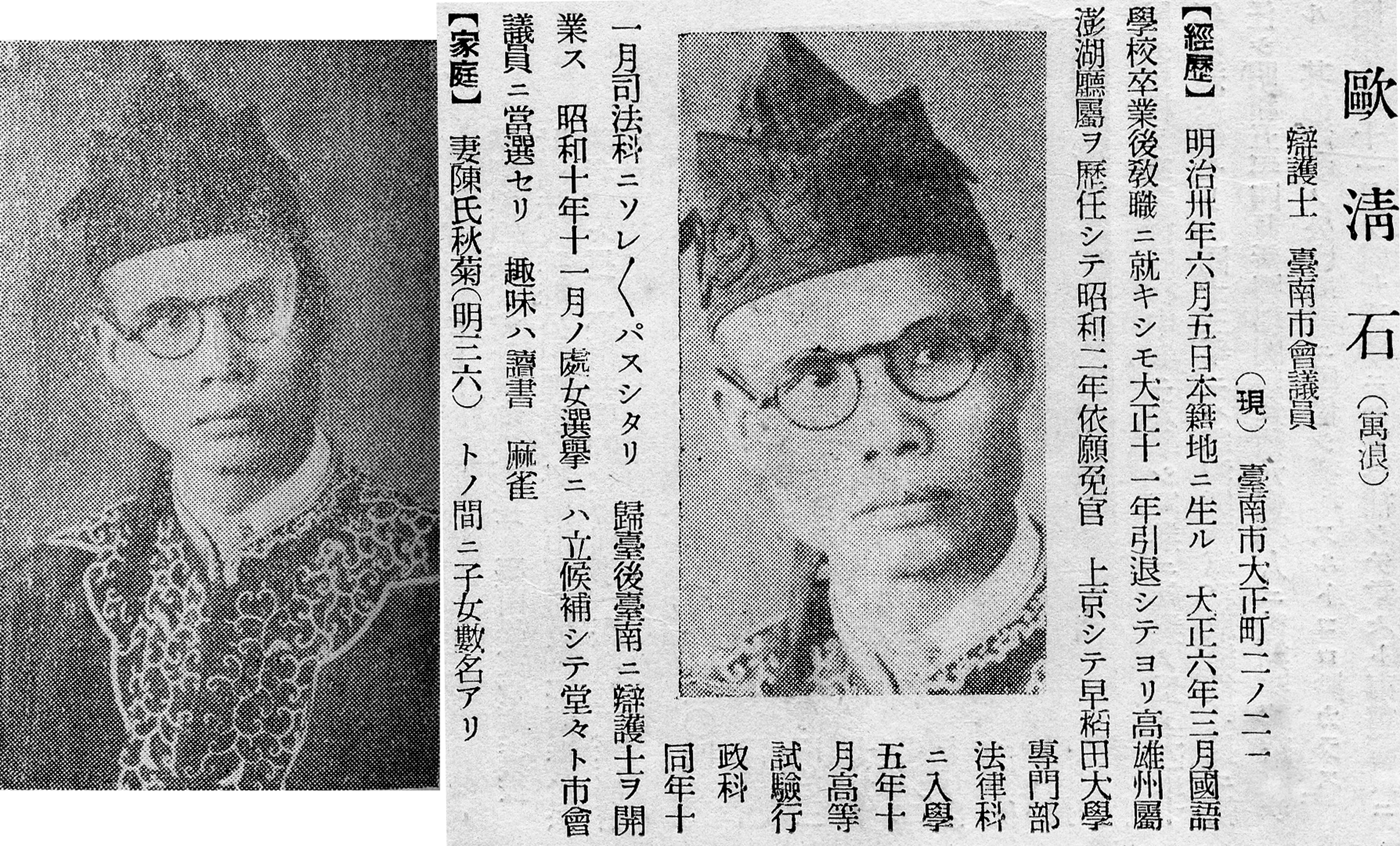
This truncation of the portrait reaches its near limit in the 1937 Taiwan jinshi kan, in which most portraits are reduced to a shoulder-and-head shot, as the image approaches “mug shot” material, diminishing even further any possible sartorial markers of ethnicity. This is evident in the portraits of jurist Ou Qingshi 歐清石 between 1934 and 1937, as the same photograph is used but is significantly cropped in the latter (see figure 19). This also seems to be aligned with a changing perception of what makes identity, moving away from the somatic and sartorial to the psychological and internal, with the face, especially the eyes, becoming the primary site of the individual. This is parallel to (if not intertwined with) the emerging filmic attention to the extreme close-up, which was becoming the shot for conveying emotion and intimacy. In effect, portrait photography had transitioned from a dramatic representation, in which identity is projected from the “stage” with one's whole body, to a filmic representation. The increasing use of the portrait in newspapers of the time reinforces this trend. In early examples, the newspaper portrait photograph is usually quite large in format, sometimes an eighth of a page, but the proliferation of images in later years necessitated reducing their size, most often to no more than the width or height of the standard newspaper column. For the portrait, this meant more and more focus on the head shot.
In these later directories, there are still some bows toward ethnicity, especially with older Taiwanese men who appear occasionally in a Chinese silk jacket, although sometimes adorned with colonial medals and topped off with a derby (Taiwan jinshi kan 1934, 11–12). There is also occasionally just the opposite: Xie Quanzai 謝權在, a young Taiwanese man from Pingdong, wears a Japanese kimono and has a pencil mustache (85). And finally, a few portraits of women begin to appear in these listings: Chen Jin 陳進, a Tokyo-educated artist, is presented in a kimono, while her contemporary Chen née Shi Man 陳石氏滿, a Tokyo-educated physician practicing ophthalmology in Taihoku, appears in a Western-style blouse (127, 139).
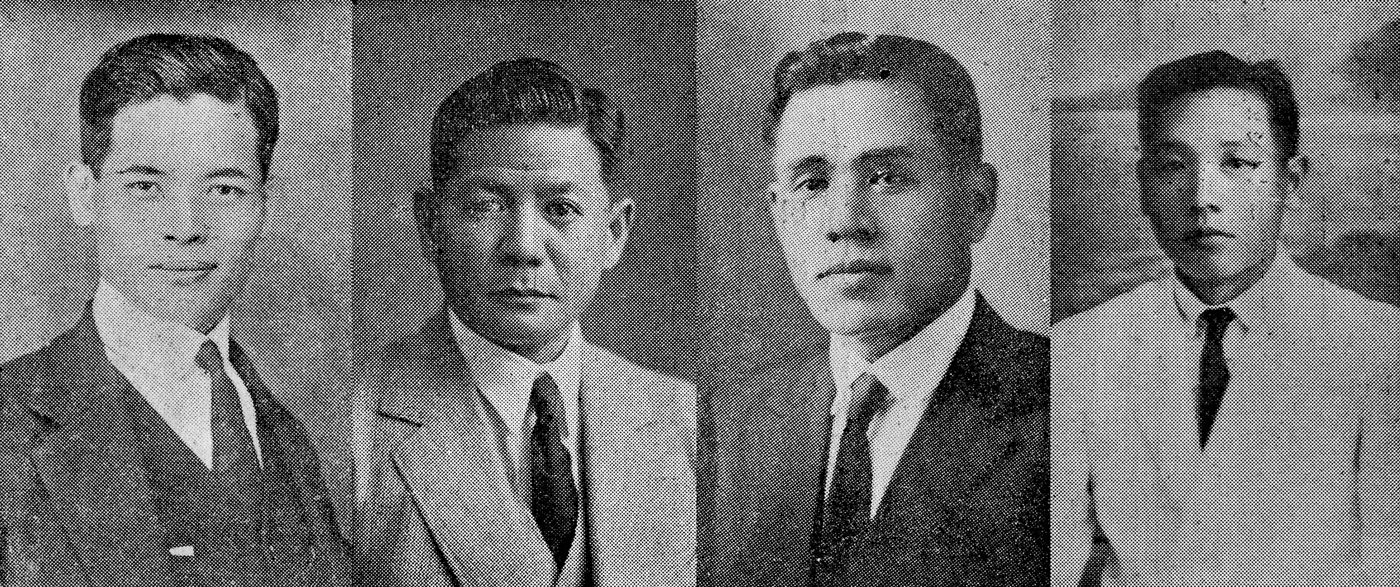
Despite the obvious real-world divisions that persist between the Japanese colonialists and their Taiwanese subjects throughout the colonial period, in terms of visual representation, at least in public portraiture, an unusual form of colonial mimicry evolved. This is mimicry of a “third kind,” in which the two populations accept the model of “another other” for their own: the image of a young, clean-shaven man of modernity wearing a Western suit in a mug-shot presentation. Combined with the relatively ambiguous racial differences in the populations, this moves the portrait toward a model that in effect draws Hashimoto, Kondō, Chen, and Hong into one image; they are indeed “the same” (see figure 20). In the end, Chen could never become Hashimoto, no more than Hashimoto could become Jones, but in some ways, Chen and Hashimoto could become mutually equal mimic men of Jones. Although there were other markers that maintained colonial identities and divisions, such as personal names and spoken language, this visual ambiguity of the photographic portrait conspires with other social convergences, such as those involved in literary and calligraphic arts, to further confuse cultural distinctions that are the base of colonial rule. In fact, during the kominka (making of imperial subjects) movement of the late colonial period, policies sought to blur these distinctions even further with the displacement of Chinese names, language, and religion for those of the metropole (so Chen could become Hashimoto, at least “in name”). Homi Bhabha (Reference Bhabha1994, 86) argues that colonial mimicry is “at once resemblance and menace,” by which I understand him to mean that a subversive menace emerges from the final difference (“excess/slippage”) that is produced in mimicry: it is the “not quite” that mocks the arbitrariness of colonial power. In Taiwan's public portraiture, this menace seems to come from another quarter. In the shared mimicry of “another other,” the Taiwanese colonial subject was able to claim an authenticity that achieves parity with that of his colonial rulers. They are both “not quite” in the same way.
Japanese and Taiwanese gentlemen: Misters Hashimoto, Kondō, Chen, and Hong. Source: Taiwan jinshi kan (1934). Courtesy of National Taiwan Library.
Acknowledgments
Research for this article was conducted under a Taiwan Studies Fellowship from the Ministry of Education, ROC, Taiwan. I express my gratitude to that office and to the Office of Cultural Affairs at the Taiwan Economic and Cultural Council in Chicago, Illinois.