Patients with single ventricle heart disease frequently require numerous interventions in the first year of life. Resource utilisation in this population clearly increases as surgical outcomes improve and mortality rates decrease.Reference Czosek, Anderson, Heaton, Cassedy, Schnell and Cnota1–Reference Oster, Kelleman, McCracken, Ohye and Mahle3 Decreased comfort care, along with a growing number of palliative surgeries that lead to longer initial hospital stays, provides reasons for the high healthcare utilisation of this population.Reference Dean, Hillman, McHugh and Gutgesell4 Furthermore, patients with shunt dependency have more unplanned admissions for disease management as well as elective admissions for diagnostic testing.Reference Czosek, Anderson, Heaton, Cassedy, Schnell and Cnota1, Reference Dean, Hillman, McHugh and Gutgesell4 This equates to a high burden of cost for these complex patients, especially during the first year of life.
Exploring ways to reduce the economic burden of this population has not been routinely studied, and initiating large cost-cutting strategies in this fragile population remains challenging. Yet, the necessity of routine, planned admissions and diagnostic testing can be evaluated as a potential target.
Outpatient cardiac catheterisation has been shown to be safe and effective in patients with CHD; however, infants with single ventricle physiology are excluded from prior studies given their higher morbidity and mortality rates.Reference Arpagaus, Gray and Zierler5–Reference Cumming8 Substantial variability in post-procedure care exists in these patients following cardiac catheterisation, and recent reports suggest that same-day discharge can be performed safely.Reference Colombo, Spaeder and Hainstock9
The purpose of this study was to investigate the economic implications of planned same-day discharge versus universal overnight hospital admission following routine pre-surgical cardiac catheterisation in infants with single ventricle heart disease.
Materials and methods
Model development
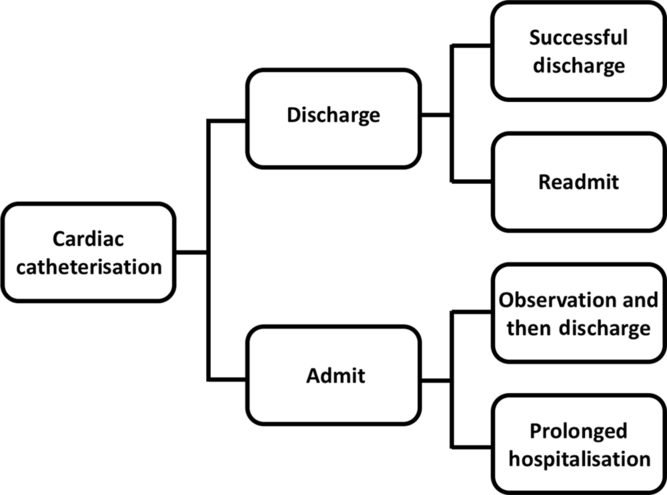
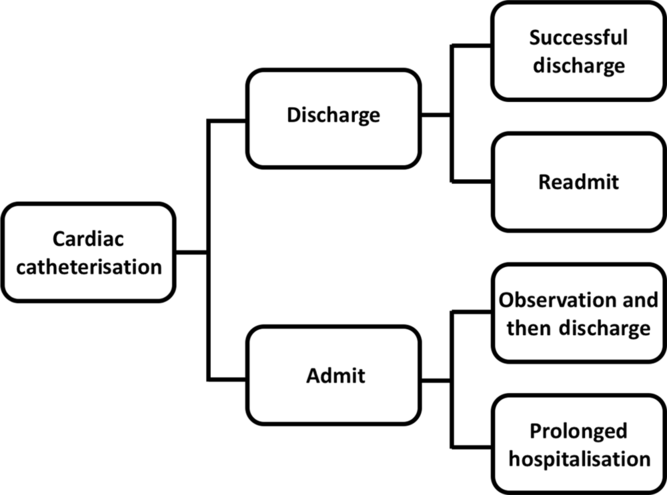
Because a robust body of literature on safety and efficacy of same-day discharge following cardiac catheterisation in infants with single ventricle physiology and shunt dependency does not exist, a probabilistic decision-tree analysis with sensitivity analysis was performed. The basis of the decision model is displayed graphically in Figure 1. At the conclusion of the cardiac catheterisation, assuming the patient was well appearing, one of the two theoretical decisions could be made. The first is that they could be immediately discharged and either do well or be readmitted soon thereafter. The second option would be to admit for observation and either successfully discharge the next morning or remain hospitalised for further care. The model is based on the a priori decision that the child would be able to be discharged successfully based on their clinical situation entering the catheterisation. For example, a patient who is considered high risk because of their current clinical status entering the cardiac catheterisation or one that had a planned admission for immediate surgery would not be appropriate for this decision model. Baseline probabilities of each node of the tree combined with the cost data evaluated the comparative dominance of one decision (immediately discharge) versus the other decision (routinely admit). All computer modelling was performed with the assistance of TreeAge Pro Healthcare version 2015 (TreeAge Software, Williamstown, MA).
Decision tree comparing routinely admitting patients to the hospital following cardiac catheterisation for observation versus routinely discharging.
Base case estimates
Few studies exist that explore the safety and efficacy of discharging the same day following routine cardiac catheterisation. Consequently, this makes it challenging to develop robust base case estimates for probabilities in the decision tree. Nonetheless, our institution over the last decade has had variable practice patterns in the utility of same-day discharge following catheterisation in shunt-dependent patients. The benefit of this, for the purpose of this study, is that it provided reasonable base case estimates for all nodes in the tree.
We identified all patients less than 1 year of age who underwent routine, pre-surgical cardiac catheterisation at our institution between 2007 and 2015. Patients were included for analysis if they had unpalliated single ventricle physiology; a systemic to pulmonary artery shunt in place; or a stented ductus arteriosus prior to the procedure and successfully underwent subsequent cardiac catheterisation. Only outpatients arriving to the procedure in baseline health were included in the analysis. Patients were excluded if they were hospitalised at the time of cardiac catheterisation, underwent cardiac catheterisation as a result of acute illness or hypoxemia, or had a pre-planned hospitalisation to follow the procedure. We structured the inclusion and exclusion criteria in this manner to ensure that all patients who contributed to the base case estimates met the model definition and the a priori assumption of a well-appearing child presenting for routine pre-surgical catheterisation. Decision to discharge a patient fell under the discretion of one of the three supervising interventionalists. The decision was based on general guidelines which included those of a well-appearing child who was clinically back to their base status including saturation, absence of a fever, respiratory status and perfusion.
All included patients were categorised into four possible outcomes. From there, baseline probabilities were calculated and attributed to each group for use in the model. For the purpose of the study, readmission was defined as within 48 hours of discharge from the cardiac catheterisation.
Cost data and statistical analysis
Costs attributed to the initial cardiac catheterisation, possible overnight observation and potential readmission were gathered from a hospital administrative database. Cost for each patient evaluated was calculated as a fixed ratio of applicable charge data based on the inpatient or procedural setting that the encounter was taking place. All costs were appropriately adjusted to and reported in 2015 U.S. dollars to reflect rates of inflation during the course of the study period.
The rationale for reporting and calculating costs from the healthcare sector perspective in this method was in keeping with current commendations from the Panel on Cost-Effectiveness in Health and Medicine.Reference Sanders, Neumann and Basu10 Furthermore, it was felt that using Medicare cost standards to theoretically calculate costs would not fully capture the variable clinical courses that patients with single ventricle physiology can take. Median cost data was used to represent data given its non-parametric nature. Median costs of each arm of the decision tree provided the base case estimates for each node that were then subjected to appropriate sensitivity analyses.
Sensitivity analyses
To test the base case assumptions for dominance of each decision, sensitivity analyses were performed surrounding each variable (one-way) and combinations of variables (two-way). Given that no prior cost data for this population in this setting was available in the literature, interquartile ranges of our gathered data were utilised to start. If the interquartile range did not provide break-even points, the ranges were expanded further. Readmission probabilities were subjected to challenge as well over all ranges deemed clinically reasonable. Additionally, a probabilistic sensitivity analysis using a Monte Carlo simulation was performed to evaluate dominance of one decision over the other using the initial determined ranges of all variables at once. There were 100 cycles performed representing the infant single ventricle catheterisation volume of a larger program.
Regulations and compliance
Institutional Review Board approval was obtained prior to data collection and maintained throughout the duration of the study.
Results
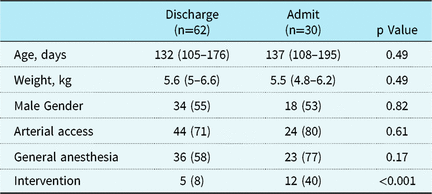
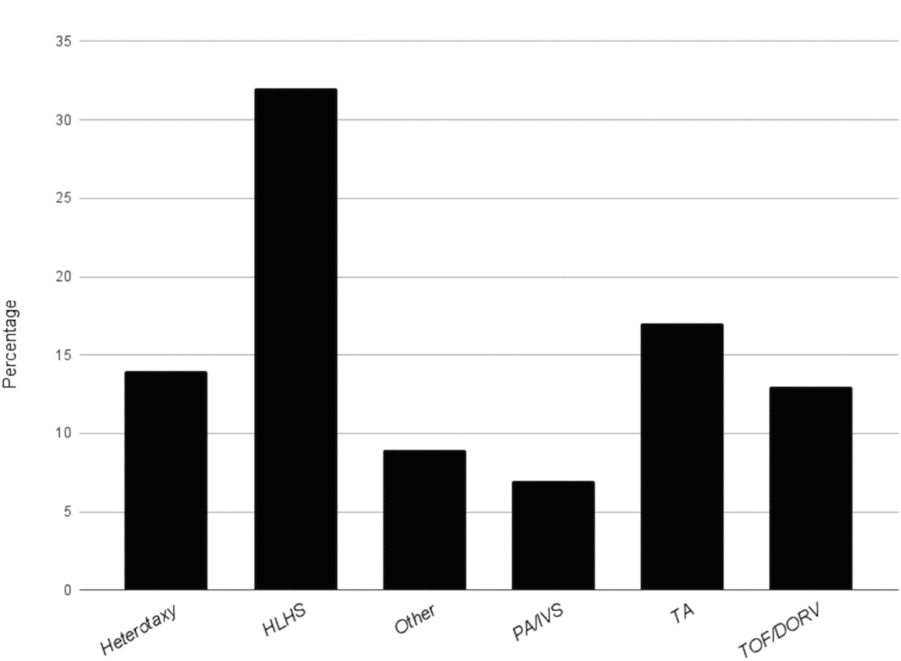
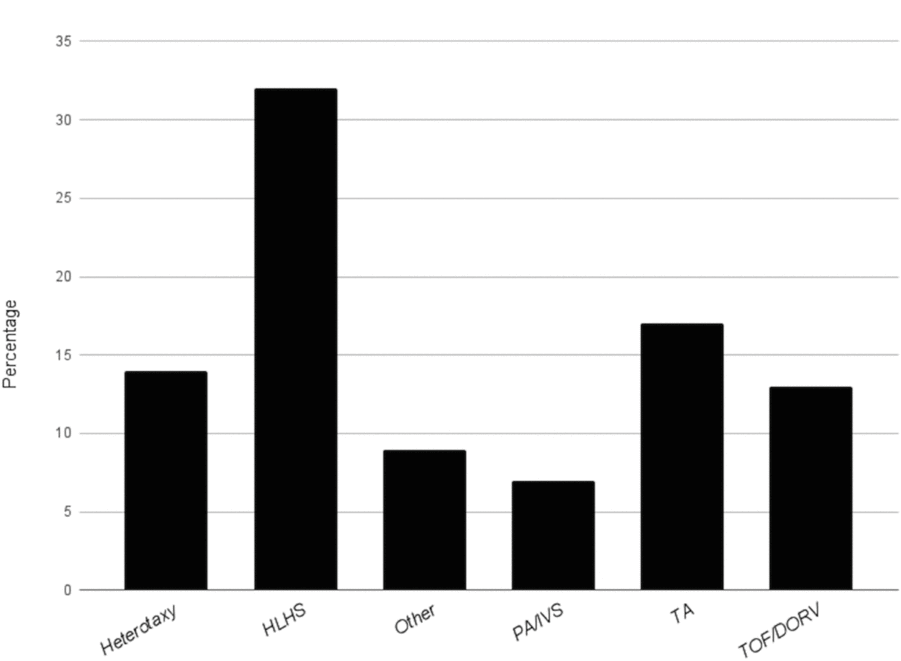
A total of 92 patients with single ventricle physiology were included in the analysis. Median age in the discharged group was 132 days, and 137 days in the admitted group (Table 1).Reference Colombo, Spaeder and Hainstock9 The most common diagnosis was hypoplastic left heart syndrome (34.8%) (Fig 2).Reference Colombo, Spaeder and Hainstock9 Sixty-two patients were discharged the same day as cardiac catheterisation. Two of those patients were readmitted to the hospital within 48 hours. Thirty patients were routinely admitted to the hospital; of those 18 were admitted for hospital observation only, staying in the hospital for less than 24-hour total admission time. The remaining 12 patients were admitted to the hospital for a prolonged hospitalisation for greater than 24 hours.
Baseline characteristics for discharged patients versus patients admitted to the hospital.

Values are median (interquartile range) or n (%). kg=kilogram. Adopted from “Safety of outpatient cardiac catheterisation in infants with single ventricle congenital heart disease” by Colombo, JN, Spaeder, MC, and Hainstock, MR. Cardiology in the Young. 2018; 28(12). Reprinted with permission.
Bar graph representing distribution of patient population by type of CHD. HLHS=hypoplastic left heart syndrome; PA/IVS=pulmonary atresia/intact ventricular septum; TA=tricuspid atresia; TOF=tetralogy of Fallot; DORV=double outlet right ventricle. Other=aortic atresia (n=1), hypoplastic right ventricle (n=2) and double inlet left ventricle (n=6). Adopted from “Safety of outpatient cardiac catheterisation in infants with single ventricle congenital heart disease” by Colombo, JN, Spaeder, MC, and Hainstock, MR. Cardiology in the Young. 2018; 28(12). Reprinted with permission.
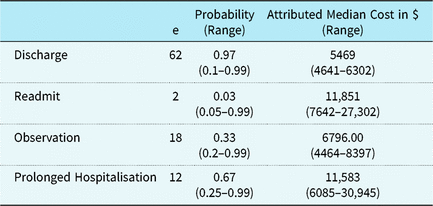
Patients discharged on the same day as the procedure accrued the lowest attributed hospital cost ($5469) while patients readmitted to the hospital had the highest attributed cost ($11,851) when factoring both their initial catheterisation plus their readmission. Table 2 displays the base case probability and cost of each group.
Baseline characteristics of patient population utilising varied probability ranges and attributed median cost.
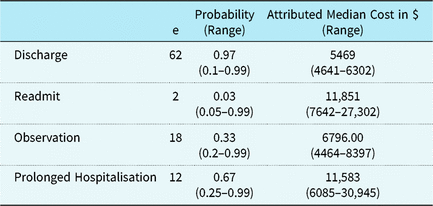
Interquartile range.
One-way sensitivity analysis
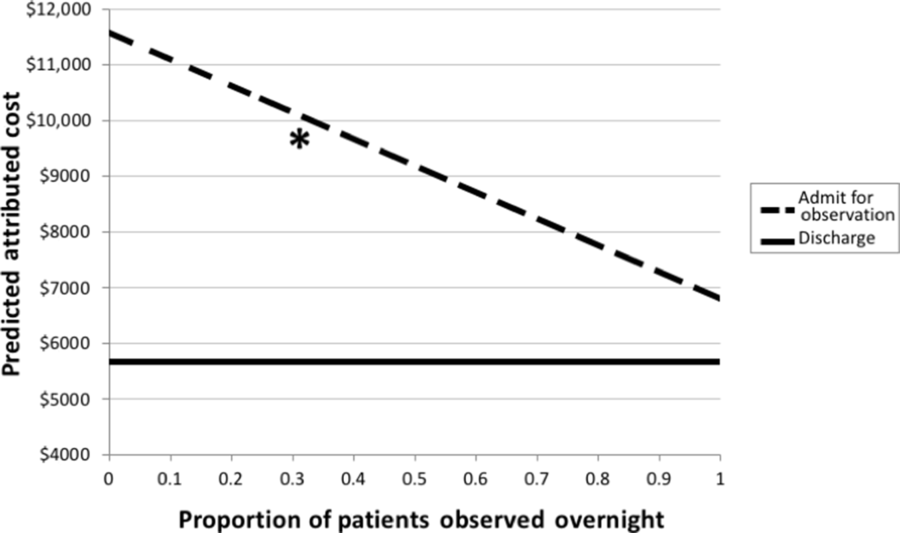
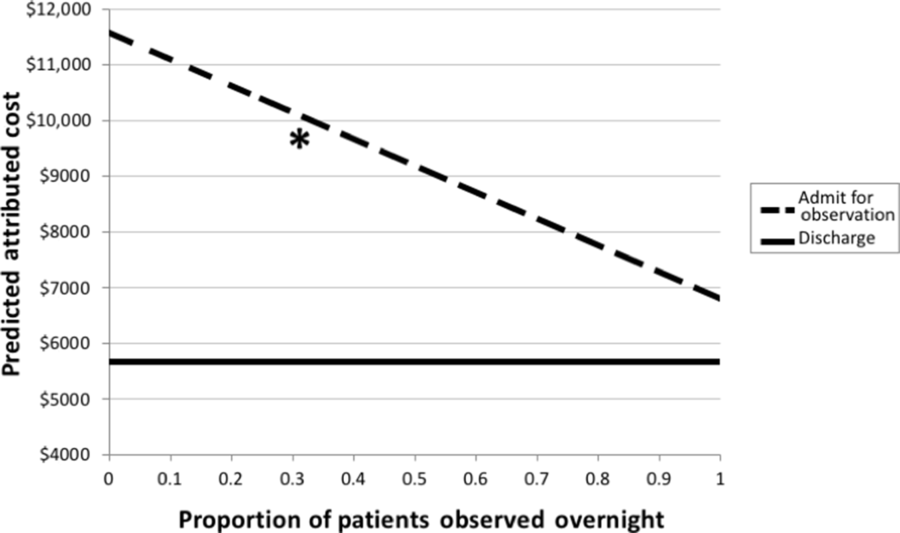
Results of a one-way sensitivity analysis that allows for variation of the proportion of observed patients as it compares to cost are displayed in Figure 3. The cost of same-day discharge remains stable (solid line) in this analysis. At baseline, 33% of patients were observed in the hospital following cardiac catheterisation (as indicated by the asterisk) and able to be discharged the next day. The attributed cost decreases as more patients are admitted for observation (dashed line). This is because as the number of patients routinely observed overnight increases, the number of unexpected readmissions decreases thus lowering the cost to the entire cohort. The two lines never intersect, indicating that it is always less costly to discharge the patient immediately after cardiac catheterisation, given the overall low readmission rate observed.
One-way sensitivity analysis varying proportion of observed patients as it relates to cost while the discharge rate remains stable.
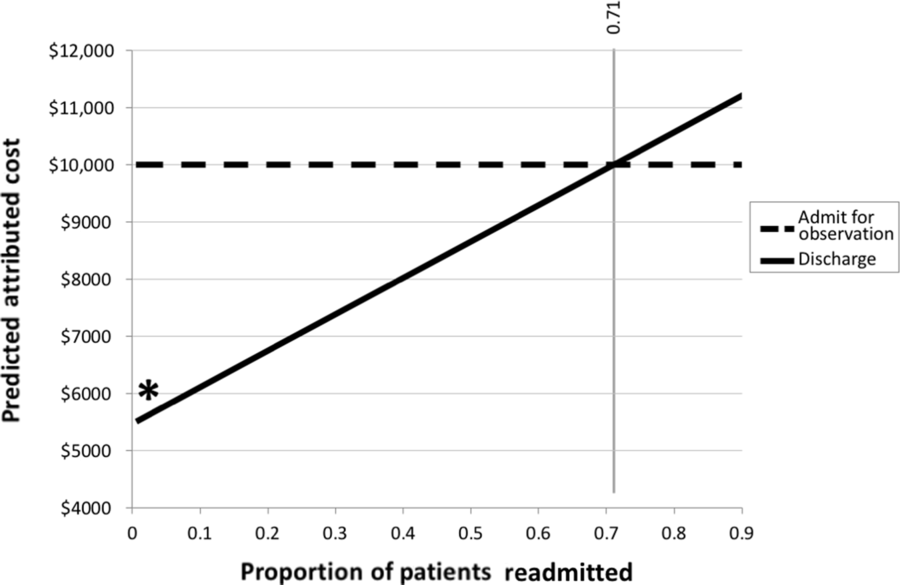
As the readmission rate was so low, allowing this to vary to explore economic dominance was required. This is demonstrated in a one-way sensitivity analysis seen in Figure 4. At baseline, 3% of patients (represented by the asterisk) were readmitted to the hospital within 48 hours of discharge after cardiac catheterisation. As the readmission rate increases on the graph (solid line), the cost increases proportionally. Here, a break-even point is seen where the two lines intersect, indicating that the readmission rate would need to increase to 71% for the cost of same-day discharge to equal that of universal observation for all patients after cardiac catheterisation.
One-way sensitivity analysis varying probably of readmission as it relates to cost while the cost of observation remains stable.

Two-way sensitivity analysis
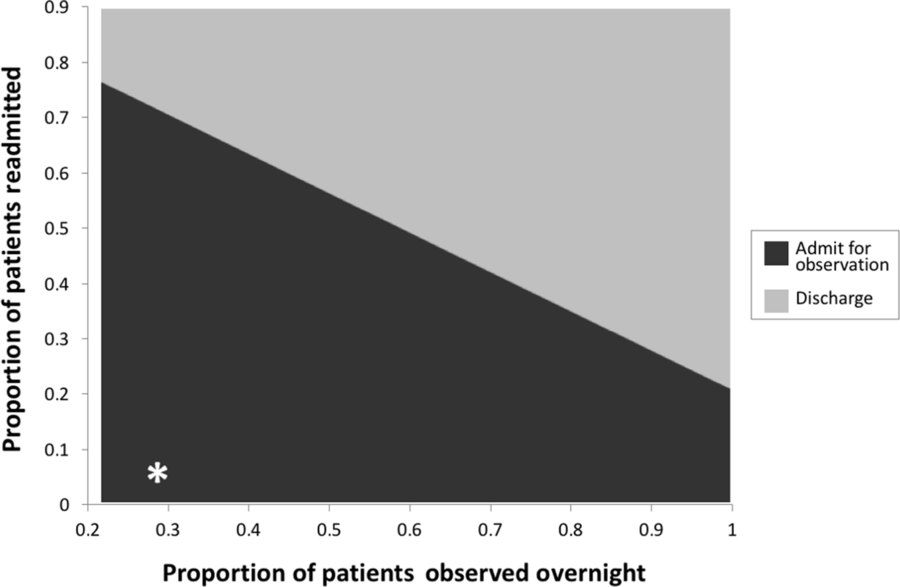
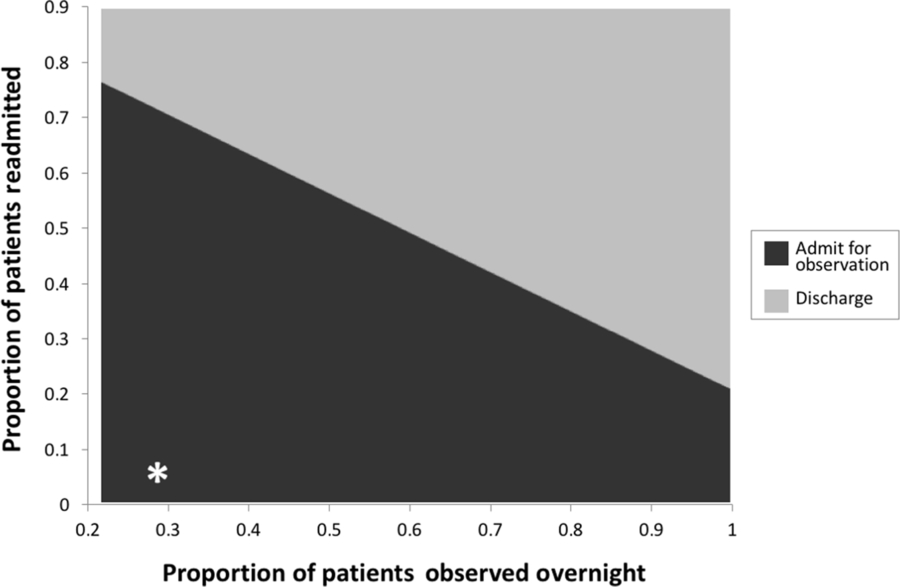
Two-way sensitivity analyses were performed to explore relationships of variables. Figure 5 represents a two-way sensitivity analysis where both the proportion of patients observed and the proportion of patients readmitted are allowed to vary as these two variables are logically related. The portion of the figure in black represents when it is more costly to routinely admit the patient following cardiac catheterisation. The portion in grey represents where it is more costly to routinely discharge the patient following cardiac catheterisation. The asterisk represents the initial base case estimates. Base case estimates fall solidly in the black region demonstrating that it is overall more costly to routinely admit. This remains true over a large range of what would be clinically reasonable estimates of both variables.
Two-way sensitivity analysis allowing variation of both probability of readmission and probability of overnight observation.
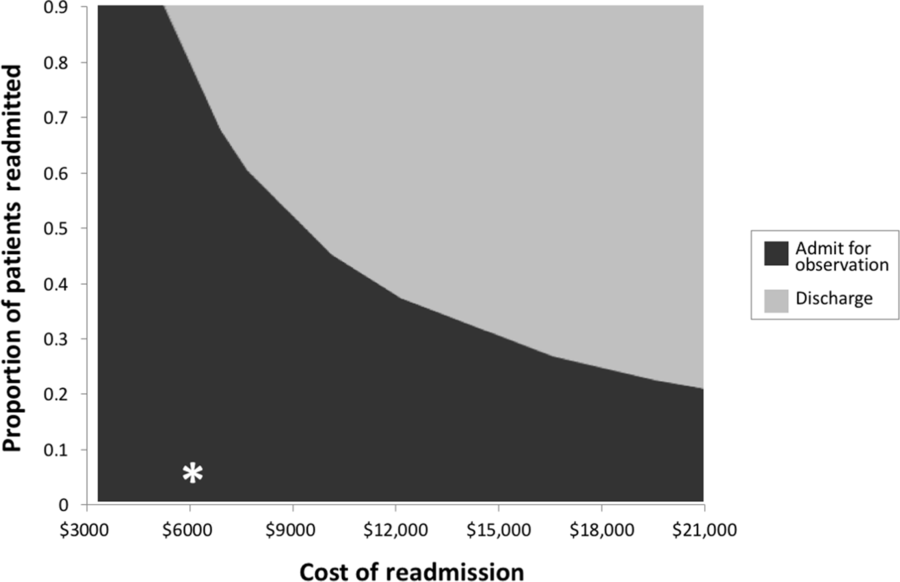
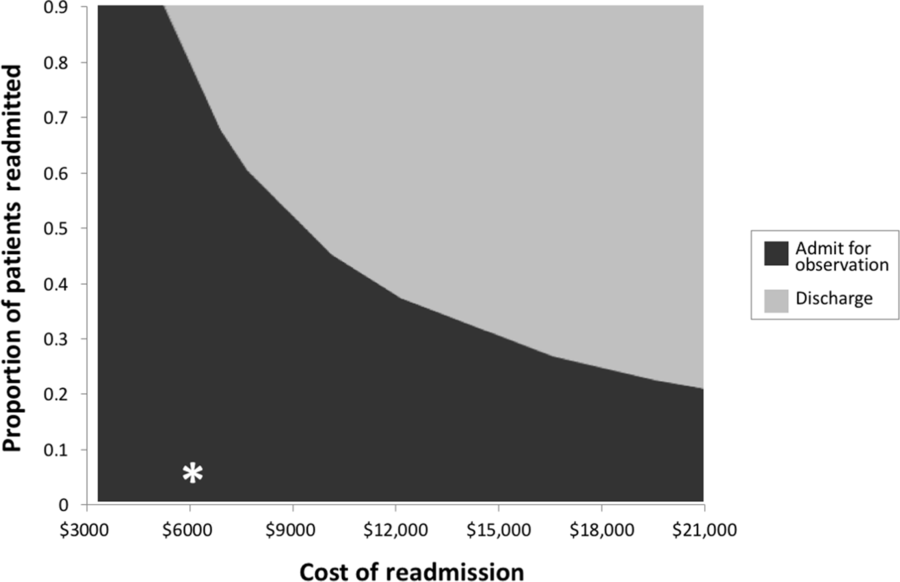
An additional two-way analysis allowing variation of both readmission rates and cost of readmission is demonstrated in Figure 6. Black on the graph, again represents, it being more costly to routinely admit the patient following cardiac catheterisation. Grey represents where it is more costly to routinely discharge the patient following cardiac catheterisation. The cost of readmission was allowed to vary to over $21,000 (doubling the baseline readmission cost), but with the current readmission rate being so low it remains less costly to discharge all patients despite increasing cost.
Two-way sensitivity analysis allowing variation of the proportion of patients readmitted compared to the cost of readmission.
Multi-variate sensitivity analysis
Monte Carlo simulation was performed demonstrating a multi-variate sensitivity analysis. This randomly reassigns patients from the initial decision tree (Fig 1) to simulate a real-life scenario. Using a sample size of 100 infants, median cost remained lower in the discharged group compared to the observed group, $5469 versus $6796, respectively.
Discussion
CHD represents one of the most costly reasons for hospitalisation in the pediatric population.Reference Gordon, Rodriguez, Lee and Chang11 Patients with single ventricle CHD carry a higher morbidity rate adding to the economic strain. Additionally, today more patients are undergoing surgical palliation with less options for comfort care further driving up cost.Reference Dean, Hillman, McHugh and Gutgesell4, Reference Gordon, Rodriguez, Lee and Chang11 Overall, research is lacking in ways to lessen this burden as resource utilisation continues to increase.
We sought to study the economic implications for care following pre-surgical cardiac catheterisation in patients with single ventricle physiology examining same-day discharge versus routine universal overnight hospitalisation as a means to cut cost. The results demonstrated that it is overall less costly to discharge patients on the same day as the procedure, assuming they appear well at the conclusion of the case, and have returned to their baseline clinical status. This result was driven by an overall low admission rate among this cohort lending credence to the accuracy of clinical decision making about these children at the conclusion of the procedure. As the patients are monitored 4–6 hours after cardiac catheterisation, their needs during this time are easily assessed to determine if they are safe for discharge. This likely resulted in lower readmission rates and overall decreased cost for same-day discharge. Furthermore, we demonstrated that readmission rates would need to increase too far above what would be deemed clinically reasonable (over 70%) for it to become more expensive to discharge all patients following the procedure.
Waldman et al, was one of the first reports to explore same-day cardiac catheterisation.Reference Waldman, Young and Pappelbaum12 Their cohort included 645 patients of which, roughly two-thirds had an elective procedure. Fifty-six percent of patients were discharged home on the same day as the procedure, including patients as young as 5 weeks of age. In addition to demonstrating safety with only one readmission, they also evaluated cost of same-day discharge finding an average savings of 80% in overall charge and 29% in total cost.Reference Waldman, Young and Pappelbaum12 This result was mirrored in a larger cohort from Canada during the same era where 45% of patients under 1 month of age and 83% under 1 year of age were discharged home shortly after catheterisation without complication.Reference Cumming8 Neither of these reports focussed on infants with single ventricle physiology, however.
More recently in 2003, a hypothetical cost-consequence analysis was performed in Switzerland to evaluate cost and safety of same-day discharge versus hospitalisation after cardiac catheterisation or interventional electrophysiology procedure. This was hypothetical as all patients who underwent cardiac catheterisation in Switzerland were admitted to the hospital the day prior to the procedure and must be monitored overnight. Most of their cohort (74%) would have been discharged with the remaining 23% requiring overnight hospitalisation using previously published guidelines (University of Washington).Reference Arpagaus, Gray and Zierler5 In addition, they demonstrated the cost of same-day discharge would be only slightly less expensive (reduction of cost by ~10%) compared to overnight hospitalisation as most discharged patients underwent an intervention during catheterisation driving up the cost.Reference Arpagaus, Gray and Zierler5
Currently, no other studies have assessed the cost of hospitalisation following cardiac catheterisation in pediatric patients with single ventricle physiology. Thus, we allowed for a wide range of cost readmission rates since previous published studies could not aid in the development of the sensitivity analysis. Regardless of this fact, allowing readmission rates to vary along with the financial data demonstrated that it was the readmission rate that dominated the decision outcome. This becomes an important conclusion, as these results need to be applicable across a range of financial environments since numerous factors affect overall cost.
With the overall cost of single ventricle palliation increasingReference Dean, Hillman, McHugh and Gutgesell4 and nearly 80% of healthcare cost attributed to physician’s decisions,Reference Djulbegovic and Elqayam13, Reference Cassel and Guest14 finding ways to decrease cost and improve medical decision making is optimal. According to Berwick and Hackbarth, more than 30% of healthcare cost can be attributed to inappropriate utilisation demonstrating the importance of reducing wasted expenditures.Reference Berwick and Hackbarth15 As additional hospitalisations are common in patients with single ventricle physiology, efforts should be made to reduce unnecessary testing. This study may be a way to decrease added expenses in this population without jeopardizing care.
All forms of single ventricle CHD were analysed. This included shunt-dependent patients who may have underwent a biventricular repair later on. These patients may represent a more stable population with lower rates of readmission and shorter hospitalisations. Wide ranges in the sensitivity analysis were utilised to mitigate this limitation. Furthermore, utilising attributed costs, cost comparisons among groups, and wide dollar ranges were used in the sensitivity analyses performed to significantly reduce the inherent inaccuracy of financial data. Despite these comprehensive maneuvers to reduce this bias, there is still considerable economic variation from institution to institution that can exist and reduce the generalisability of the results.
Same-day discharge following routine cardiac catheterisation in patients with single ventricle physiology is less costly compared to universal overnight admission. In part, this is likely due to the overall low readmission rate following the assessment of a well-appearing child at discharge. This study demonstrates an important cost-limiting step on a complex population of patients who require frequent hospitalisations and high resource utilisation.
Acknowledgements
None.
Financial support
This research received no specific grant from any funding agency, commercial or not-for-profit sectors.
Conflict of interest
None.
Ethical standards
None.