


I. Introduction
In January 2020, Ralph Lauren, the well-known fashion brand, faced controversy after releasing pants featuring the symbol of Phi Beta Sigma, a historically African American fraternity, without obtaining permission. The incident drew widespread media attention and provoked criticism for cultural appropriation.Footnote 1 At the annual shareholder meeting in July 2020, the company appointed Darren Walker, who is recognized for his extensive experience in charitable nonprofit organizations, as a new independent director. The Chairman, Ralph Lauren, welcomed Walker, stating, “His strength of character, diverse experience, and deep passion for positively impacting the world were powerfully apparent—and I knew we could deeply benefit from his perspective on our Board.” The President and CEO, Patrice Louvet, added, “We believe he will not only add to the wealth of our existing expertise, but bring new perspectives as we deliver value for all of our stakeholders around the world.”Footnote 2
The presence of independent directors with experience in the charitable sector (hereafter, “charity directors”) has been growing in U.S. public companies. As shown in Figure 1, the proportion of companies with charity directors on their boards increased from 14% in 2007 to 20% in 2021, which coincides with an eightfold increase in the average number of media-reported corporate ESG incidents per firm. As in the Ralph Lauren example, ESG incidents often trigger reputational crises, and we argue in this article that charity directors can bring capabilities for restoring stakeholder trust and organizational legitimacy. We investigate the prevalence of board skill adjustments through the appointment of new charity directors in response to ESG incidents and examine how these appointments relate to companies’ future ESG outcomes.
Figure 1 plots trends in the prevalence of ESG incidents and the presence of charity directors in our sample from 2007 to 2021. The solid line, plotted on the left
$ y $
 -axis, represents the average number of incidents per firm. The dashed line, displayed on the right
$ y $
 -axis, indicates the proportion of firms with charity directors on their boards.

FIGURE 1 Long description
The X axis represents Year, ranging from 2005 to 2021 in five-year increments. The left Y axis measures the Average number of incidents from 0 to 2. The right Y axis measures the percentage of firms with charity directors from 0.14 to 0.2.
* The solid blue line representing Average number of incidents begins at approximately 0.3 in 2007. It shows a sharp upward trend with minor fluctuations, peaking at roughly 2.1 in 2014, followed by a volatile plateau between 1.7 and 2.1 through 2021.
* The dashed red line representing the percentage of firms with charity directors starts at 0.14 in 2007. It exhibits a steady, near-linear increase over the entire period, reaching approximately 0.17 in 2016 and ending at its peak of 0.2 in 2021.
A legend at the bottom identifies the solid blue line as Average number of incidents and the dashed red line as percentage of firms with charity directors.
We find that firms are more likely to appoint charity directors in response to ESG incidents, particularly when these incidents receive significant media attention and involve areas closely aligned with charity directors’ expertise. The market reacts favorably to such appointments, especially when these directors’ biographies filed with the U.S. Securities and Exchange Commission (SEC) highlight their charity experience. Furthermore, we provide evidence supporting that firms effectively involve charity directors in improving ESG performance, rather than merely appointing them as symbolic placeholders (i.e., engaging in ESG window dressing).
Despite the important role of the board of directors in corporate governance, there is a gap in our understanding of how companies optimize and adjust their board composition in response to changing board skill set requirements. Our study helps to bridge this gap by examining a highly policy-relevant circumstance—negative ESG incidents—wherein companies may need to update their board’s skill sets to address these challenges. Although recent studies have documented the negative value implications of ESG incidents for investors, little attention has been given to how companies respond to these incidents.Footnote 3 We propose that experiencing an ESG incident can make salient the lack of human capital within the existing board to effectively oversee ESG issues.
Drawing on the literature on nonprofit organizations, we argue that charity directors can provide firms with distinctive capabilities to manage reputational crises following ESG incidents. Nonprofits, which operate as mission-driven organizations governed by the nondistribution constraint, signal integrity and foster public trust (Weisbrod (Reference Weisbrod1975), Hansmann (Reference Hansmann1980)). Their emphasis on social capital and community engagement equips nonprofit professionals with specialized expertise in stakeholder management and building organizational legitimacy (Moore (Reference Moore2000), Putnam (Reference Putnam2000)). When ESG incidents harm corporate reputations, directors skilled in rebuilding stakeholder trust and signaling renewed commitment to social responsibility can create value. We propose that appointing directors with charitable sector experience enhances firms’ capacity to respond to and recover from ESG-related reputational challenges.
To test our main hypothesis on the appointment of charity directors and their effectiveness in addressing ESG concerns, we construct a sample of firms and director appointments by merging the BoardEx and CRSP-Compustat databases. We obtain ESG incident data from RepRisk, a comprehensive database of daily ESG incident news. Our final sample consists of 44,696 firm-year observations, representing 5,730 U.S. public companies from 2008 to 2021.
In our analysis at both the firm and director appointment levels, we find that firms are more likely to appoint charity directors following negative ESG-related news reported in the preceding year. In particular, the likelihood of appointing new charity directors increases when these incidents receive significant media attention from influential global media outlets such as CNN and Forbes or when they trigger large negative stock market reactions. Additionally, incidents related to social issues, such as community or employee relations, that align more closely with the expertise of charity directors show a stronger association with their appointment.
Next, we examine the stock market’s response to new charity director appointments. Our analysis shows positive and statistically significant abnormal returns of 62.6–93.1 basis points on the appointment day when the firm experienced ESG incidents in the preceding year. This positive market reaction offsets 57.2%–65.5% of the market value loss attributed to these incidents. In contrast, appointments made in the absence of ESG incidents generate a negative and statistically insignificant market reaction, suggesting that the market does not value such appointments in normal times. We then perform a textual analysis of director biographies in Form 8-K and proxy statements disclosed around the appointment. We find that the market reaction to charity director appointments following ESG incidents is statistically significant only when firms emphasize the director’s charity experience in these biographies. These findings suggest that the market views the appointment of a new charity director after ESG incidents as a value-enhancing response to ESG concerns, particularly when the company makes the director’s experience in charitable organizations salient to investors.
To better understand why charity directors receive positive market reactions, we conduct two tests. First, we examine whether generic ESG language in biographies drives the effect. For noncharity directors, greater ESG vocabulary salience is positively, but statistically insignificantly, associated with announcement returns, indicating that the market values charity experience specifically rather than general ESG emphasis. Second, we analyze skill requirements in job postings for senior roles at nonprofits and S&P 500 firms, collected from LinkedIn, to identify sector-specific skills. Unlike biographies written for investors, job postings reveal the skills that organizations demand. Nonprofit postings emphasize community engagement and social impact, closely aligned with the social dimension of ESG, whereas corporate postings focus on customers and sales. Consistent with this distinction, charity directors’ biographies contain more nonprofit-specific skill terms. Moreover, post-incident appointments of noncharity directors whose biographies highlight these skills are also associated with positive and statistically significant market reactions, although the effect is smaller than that observed for charity director appointments. Together, these findings suggest that the market rewards nonprofit-related expertise, especially expertise relevant to managing social issues, with charity experience serving as a strong signal of such skills.
Although our evidence shows that the market values charity directors appointed after ESG incidents, we cannot fully rule out the possibility that firms appoint directors with charitable backgrounds primarily to enhance their public image, rather than to draw on their expertise to improve ESG policies. To address this concern, we examine changes in future ESG outcomes following charity director appointments and provide evidence that firms actively involve these directors in addressing ESG issues.
First, we examine whether firms experience fewer incidents after appointing charity directors. We find that appointing new charity directors after ESG incidents is associated with fewer workforce- and community-related incidents in subsequent years. To provide evidence consistent with a causal interpretation, we employ an instrumental variable (IV) approach following Knyazeva, Knyazeva, and Masulis (Reference Knyazeva, Knyazeva and Masulis2013) and subsequent studies (e.g., Ellis, Fee, and Thomas (Reference Ellis, Fee and Thomas2018), Di Giuli and Laux (Reference Di Giuli and Laux2022)). Specifically, we instrument charity director appointments with the local supply of candidates, measured by the density of active charities within 100 miles of firm headquarters. Using this instrument, we continue to find improvements in the workforce dimension following charity director appointments, supporting our main conjecture that aligning director expertise with firm needs can improve ESG outcomes.
Next, we present additional evidence suggesting the involvement of new charity directors in improving ESG performance. If firms genuinely seek oversight of ESG issues, they should appoint directors with sufficient capacity. We, therefore, distinguish between overboarded and nonoverboarded charity directors.Footnote 4 Applying the IV approach, we find that appointments after ESG incidents and subsequent reductions in social incidents occur primarily with nonoverboarded directors. This supports the conjecture that charity directors create value when they have the capacity to engage actively with ESG issues.
Finally, we examine the role that new charity directors assume on boards. Since governance and nomination committees typically oversee sustainability issues (Ernst and Young (2021)), we test whether charity directors are more likely to serve on these committees. Relative to other directors appointed after ESG incidents, charity directors are more likely to be assigned to governance and nomination committees, suggesting that firms involve them in shaping ESG policies.Footnote 5
Our article contributes to the literature on the value of specific director experience, such as financial and industry expertise (Goldman, Rocholl, and So (Reference Goldman, Rocholl and So2009), Minton, Taillard, and Williamson (Reference Minton, Taillard and Williamson2014), White, Woidtke, Black, and Schweitzer (Reference White, Woidtke, Black and Schweitzer2014), von Meyerinck, Oesch, and Schmid (Reference von Meyerinck, Oesch and Schmid2016), Di Giuli and Laux (Reference Di Giuli and Laux2022), and Guo and Mobbs (Reference Guo and Mobbs2023)). Recent work has linked directors’ experience to corporate social responsibility (CSR). For example, Iliev and Roth (Reference Iliev and Roth2023) show that U.S. directors with experience on foreign boards subject to sustainability regulatory changes can improve their firms’ sustainability performance, and Chen, Hermes, and Hooghiemstra (Reference Chen, Hermes and Hooghiemstra2022) and Liu, Hou, and Main (Reference Liu, Hou and Main2025) find that directors from not-for-profit organizations are associated with CSR improvements. We complement these studies by focusing on ESG incidents as circumstances that prompt firms to appoint directors whose expertise matches their specific needs, highlighting the importance of context in evaluating director expertise.
We also contribute to the literature on corporate ESG incidents. This literature has largely focused on how market participants, such as equity investors, analysts, and creditors, respond to negative ESG incidents (Kölbel, Busch, and Jancso (Reference Kölbel, Busch and Jancso2017), Burke, Hoitash, and Hoitash (Reference Burke, Hoitash and Hoitash2019), Gantchev, Giannetti, and Li (Reference Gantchev, Giannetti and Li2022), Houston and Shan (Reference Houston and Shan2022), and Derrien, Krüger, Landier, and Yao (Reference Derrien, Krüger, Landier and Yao2025)). Corporate responses have received less attention, with only a few recent studies addressing this question. Colak, Korkeamäki, and Meyer (Reference Colak, Korkeamäki and Meyer2024) examine CEO turnover following ESG incidents, DeLisle, Grant, and Mao (Reference DeLisle, Grant and Mao2024) document more negative management tone after environmental and social incidents, and Akey, Lewellen, Liskovich, and Schiller (Reference Akey, Lewellen, Liskovich and Schiller2026) show that firms increase CSR investments, measured by charitable donations, after negative reputation shocks. Our study complements these studies by documenting targeted, rather than uniform, corporate responses to negative reputational shocks. Specifically, we show that firms acquire new human capital by appointing charity directors to address corporate incidents related to social issues, thus updating the board’s skill set with expertise closely aligned with current needs.
Our study also contributes to the literature on interactions between for-profit corporations and nonprofit organizations. While prior research often takes a negative perspective, suggesting that directors’ charity affiliations may lead to CEO entrenchment or misuse of corporate resources (Masulis and Reza (Reference Masulis and Reza2015), Cai, Xu, and Yang (Reference Cai, Xu and Yang2021)), we show that charity directors can add value when firms have a clear demand for their skills. Hence, we provide a more nuanced view of the benefits arising from the connection between for-profit and nonprofit organizations.
Our study has important policy implications. As firms face increasing pressure to address ESG issues, it remains unclear which responses both alleviate ESG concerns and enhance shareholder value. Our finding that appointing directors with nonprofit experience can help firms address stakeholder concerns informs future policy guidance aimed at strengthening ESG practices. Moreover, our results emphasize nonprofit expertise in managing employee and community relations as valuable human capital in corporate director searches.
II. Conceptual Framework
We develop a conceptual framework, drawing on insights from the nonprofit organization literature, to develop our main hypothesis regarding the appointment of charity directors following ESG incidents. ESG incidents can significantly affect the relationship between firms and their stakeholders. Such incidents may impair trust by signaling misalignment between corporate actions and societal expectations, damage the firm’s reputation, and increase scrutiny from regulators, investors, and advocacy groups, all of whom demand credible responses. In the wake of these incidents, boards face the critical task of restoring credibility and rebuilding social capital, which refers to the trust and cooperative relationships with employees, investors, and communities that underpin effective stakeholder engagement and provide legitimacy to operate.
We argue that charity directors bring distinctive capabilities to this task, rooted in the historical role and institutional features of nonprofit organizations. Nonprofits emerged to address gaps in the provision of public goods that arise from the limitations of both governments and markets. Unlike governments, which respond to the preferences of the median voter, or firms, which are primarily driven by profit motives, nonprofits serve a diverse range of unmet social needs with support from individuals seeking to advance the public good and create a positive social impact (Weisbrod (Reference Weisbrod1975)). A defining feature of the nonprofit sector is the nondistribution constraint, which prohibits distributing earnings to those in control of the organization (Hansmann (Reference Hansmann1980)). This structural characteristic reduces opportunism and fosters perceptions of trustworthiness, positioning nonprofit leaders as credible stewards of the public interest. Moreover, nonprofit leaders are often viewed as social entrepreneurs, motivated by values such as social impact, equity, and community well-being rather than financial returns (Young (Reference Young1983), James (Reference James1987), Rose-Ackerman (Reference Rose-Ackerman1996), and Anheier and Toepler (Reference Anheier and Toepler2022)).Footnote 6
These institutional features cultivate a distinctive set of capabilities among nonprofit leaders that are highly relevant to the challenges firms face after ESG incidents. First, nonprofit leaders develop expertise in reconciling competing interests and negotiating solutions that satisfy diverse constituencies, as they must simultaneously address the demands of donors, beneficiaries, regulators, and communities. These skills are particularly valuable when ESG controversies create conflict among corporate stakeholders. Second, because nonprofits operate at the intersection of private markets, government, and civil society, their leaders build relationships across institutional boundaries. As a result, charity directors bring cross-sector social capital—networks that span business, government, and advocacy groups (Coleman (Reference Coleman1990), Putnam (Reference Putnam2000))—which can offer firms credible channels for stakeholder engagement after ESG shocks. Finally, because nonprofits operate under resource constraints and continual public oversight, their leaders acquire expertise in preserving legitimacy through transparent governance, mission alignment, and persuasive communication. These capabilities translate directly into effective crisis management and reputation repair in corporate settings.
Therefore, we hypothesize that appointing charity directors after ESG incidents generates value by enabling firms to rebuild trust, engage stakeholders, and leverage social networks to repair reputational damage.
III. Data and Summary Statistics
A. Sample Construction
We construct our main sample by merging the BoardEx, CRSP/Compustat Merged (CCM) database, and RepRisk. Because RepRisk data are available from 2007, our sample spans the period from 2008 to 2021, allowing us to use 1-year lagged variables.
We first extract board information from BoardEx. Our focus is on the professional experience of independent directors, particularly experience in charities. We define a director as a charity director if they have employment experience up to the current year in organizations classified by BoardEx as “Charities.”Footnote 7 If at least one board member is identified as a charity director, we classify the firm as having a charity director in that year. As shown in Supplementary Material Table A2, the BoardEx data include 69,071 firm-year observations covering 9,968 unique firms. We then merge the BoardEx data with firm financial data from the CCM database. To be included in our sample, a firm must be listed on the NYSE, AMEX, or NASDAQ, have nonmissing total assets, and have a valid stock price at the end of the fiscal year. These criteria yield 49,035 firm-year observations for 6,342 unique firms.
We obtain ESG incident data for our sample firms from RepRisk, which records ESG incidents identified from daily negative news reports and is increasingly used in empirical ESG literature (e.g., Kölbel, Busch, and Jancso (Reference Kölbel, Busch and Jancso2017), Li and Wu (Reference Li and Wu2020), and Glossner (Reference Glossner2021)).Footnote 8 During our sample period, RepRisk records 75,686 incidents associated with firms in our sample. As shown in Figure 1, incidents initially increased from 2007 to 2014 and remained relatively stable thereafter.Footnote 9 After linking RepRisk to our BoardEx-CCM sample, our final firm-year sample comprises 44,696 observations from 5,730 unique firms for the period 2008–2021. To examine individual director appointments, we also construct an announcement sample, in which each observation is an announcement of a new independent director appointment. This sample contains 11,265 announcements, of which 275 (2.4%) are charity director appointments.
B. Measuring ESG Incidents
We use several ESG incident measures from RepRisk. First, RepRisk categorizes each incident into one or more dimensions of environment (E), social (S), and governance (G). These dimensions capture ESG issues defined in line with major international standards for responsible business conduct, such as the OECD Guidelines for Multinational Enterprises, which call on companies to mitigate adverse impacts on workers, communities, and the environment.Footnote 10
RepRisk also evaluates each incident along three parameters: severity, reach, and novelty. Severity captures the consequences of the incident and the extent to which it reflects corporate irresponsibility and is classified as low, medium, or high. Reach reflects the prominence of the news sources reporting the incident: global news outlets are classified as high reach, national or regional media as medium reach, and local media or social media as low reach. Novelty indicates whether the company has previously faced similar issues in the same country and is classified as high or low. Together with the E, S, and G dimensions, these parameters allow us to assess the relevance of incidents in our analysis.
Moreover, RepRisk uses incident-level data to construct the RepRisk Index (RRI), a daily measure of companies’ overall exposure to ESG-related reputational risks. The RRI ranges from 0 to 100, with higher values indicating greater risk exposure. It increases following new incidents, with the magnitude depending on incident severity, reach, novelty, and the firm’s incident history over the prior 2 years, and gradually declines in the absence of new incidents.Footnote 11
We construct four types of firm-year ESG incident measures: i) an indicator for any incident; ii) the total number of incidents; iii) indicators for high-severity, high-reach, or high-novelty incidents; and iv) the firm’s peak RRI during the year.
C. Summary Statistics
Table 1 presents descriptive statistics for ESG incident measures and charity director measures in our firm-year sample. Panel A shows that 20.5% of firm-year observations are associated with at least one ESG incident, with an average of about 1.5 incidents per firm-year. The mean value of the highest RRI reached by a firm in a year is 7.3. High-reach, high-severity, and high-novelty incidents occur in 7.0%, 1.4%, and 18.4% of firm-year observations, respectively. We further decompose high-reach incidents by E, S, and G dimensions. For example, high-reach social incidents occur in 3.6% of firm-year observations, about twice as often as high-reach environmental incidents.

TABLE 1 Long description
The table is divided into three vertical sections. All panels share the same column headers: No. of Obs., Mean, Std. Dev., p5, p50, and p95.
Panel A. E S G Incident Measures (Firm-Year Level) with 44,696 observations:
* Incident (0/1): Mean 0.205, Std. Dev. 0.404, p95 1.000.
* No. of incidents: Mean 1.468, Std. Dev. 8.438, p95 6.000.
* Highest R R I: Mean 7.276, Std. Dev. 13.344, p95 36.000.
* High-reach incidents (0/1): Mean 0.070, Std. Dev. 0.255, p95 1.000.
* High-severity incidents (0/1): Mean 0.014, Std. Dev. 0.115, p95 0.000.
* High-novelty incidents (0/1): Mean 0.184, Std. Dev. 0.387, p95 1.000.
* High-reach E incidents (0/1): Mean 0.016, Std. Dev. 0.126, p95 0.000.
* High-reach S incidents (0/1): Mean 0.036, Std. Dev. 0.185, p95 0.000.
* High-reach G incidents (0/1): Mean 0.043, Std. Dev. 0.202, p95 0.000.
Panel B. Charity Director Measures (Firm-Year Level) with 44,696 observations:
* Charity director presence (0/1): Mean 0.166, Std. Dev. 0.372, p95 1.000.
* % of charity directors: Mean 0.020, Std. Dev. 0.049, p95 0.125.
* New charity director (0/1): Mean 0.016, Std. Dev. 0.127, p95 0.000.
* Charity director left (0/1): Mean 0.014, Std. Dev. 0.119, p95 0.000.
Panel C. Experience of New Charity Directors (Director Level) with 726 observations:
* Charity experience—board (0/1): Mean 0.424, Std. Dev. 0.495, p95 1.000.
* Charity experience—nonboard senior (0/1): Mean 0.360, Std. Dev. 0.480, p95 1.000.
* Charity experience—high (0/1): Mean 0.713, Std. Dev. 0.452, p50 1.000, p95 1.000.
* Charity experience—current (0/1): Mean 0.508, Std. Dev. 0.500, p50 1.000, p95 1.000.
Panel B in Table 1 summarizes the prevalence of charity directors in our firm-year sample. Among the 44,696 firm-year observations, 7,425 (16.6%) have at least one director with charity experience serving on the board. On average, charity directors account for 2.0% of board members. The dummy variable New_charity_director (0/1) equals 1 if the firm appoints at least one new director with charity experience in a given year, while Charity_director_left (0/1) equals 1 if at least one charity director departs from the board. New charity director appointments occur in 1.6% of firm-year observations, while charity director departures occur in 1.4%. These two events rarely coincide, as only 4.1% of firm-year observations with a new charity director appointment also involve the departure of an existing charity director.
Our firm-year sample includes 726 new charity directors with nonmissing biographical characteristics, such as age and gender. Panel C in Table 1 provides detailed information on their charity experience.Footnote 12 At appointment, 71.3% of these charity directors had held high-level positions in charities, either as board members (42.4%) or in senior-level nonboard roles (36.0%),Footnote 13 indicating substantial involvement in these organizations. Additionally, 50.8% held charity positions when appointed to the board, while the rest had held such positions previously.
Our study examines corporate responses to ESG incidents by focusing on new charity directors appointed as independent directors following such incidents. Specifically, 206 out of the 726 charity directors in Panel C were appointed after ESG incidents. Panel A in Supplementary Material Appendix Table A6 compares these directors with noncharity directors appointed after ESG incidents. Charity directors are slightly older, more often female, more likely to hold a doctorate, and hold fewer corporate directorships on average. We control for these differences in our regression analyses.
Additionally, we consider three other types of director experience documented in the literature—media, finance, and industry experience—to rule out the possibility that they correlate with charity experience and affect director appointments or firm outcomes. Media experience is defined as board or senior-level roles in media firms (Di Giuli and Laux (Reference Di Giuli and Laux2022)), which may affect news coverage and is, therefore, particularly relevant for firms facing media scrutiny for ESG controversies. Finance experience is defined as prior employment in major banks, investment firms, large audit firms, or senior-level finance-related roles (Custódio and Metzger (Reference Custódio and Metzger2014)), which may influence firm risk-taking and financing decisions (Güner, Malmendier, and Tate (Reference Güner, Malmendier and Tate2008), Minton, Taillard, and Williamson (Reference Minton, Taillard and Williamson2014)). Industry experience is defined as prior directorships or senior-level roles in firms within the same Fama–French 12-industry classification and may provide sector-specific expertise (Wang, Xie, and Zhu (Reference Wang, Xie and Zhu2015), von Meyerinck, Oesch, and Schmid (Reference von Meyerinck, Oesch and Schmid2016)). Panel A in Supplementary Material Appendix Table A6 shows that, relative to noncharity directors, charity directors appointed after ESG incidents are less likely to have finance experience, more likely to have industry experience, and equally likely to have media experience.
Finally, because director political ideology can influence firms’ ESG practices (Di Giuli and Kostovetsky (Reference Di Giuli and Kostovetsky2014)), we control for director ideology using a conservatism score provided by the Database on Ideology, Money in Politics, and Elections (DIME) (Bonica (Reference Bonica2024)).Footnote 14 The score places individuals on a liberal–conservative spectrum based on their political donation records and the ideology of donation recipients; lower (higher) values indicate more liberal (conservative) ideology. Panel A in Supplementary Material Appendix Table A6 shows that charity directors are more liberal than noncharity directors. We control for conservatism scores at the board and director levels.
IV. Charity Director Appointments After ESG Incidents
This section examines whether firms appoint charity directors following ESG incidents and how the stock market reacts to these appointments.
A. Past ESG incidents and Charity Director Appointments
To test whether firms appoint directors with charity experience in response to ESG incidents, we estimate the following linear probability model on our firm-year sample:

where
$ New\_ Charity\_{Director}_{i,t} $
 is a dummy variable equal to 1 if firm
$ i $
 appoints a new charity director in year
$ t $
 .
$ {Incident}_{i,t-1} $
 represents firm
$ i $
 ’s incident record in year
$ t-1 $
 , measured as follows: i) a dummy variable for any incident (Incidents (0/1)), ii) the highest RRI value reached (Highest_RRI), or iii) a dummy variable for being in the top 5% of the sample by the highest RRI (Highest_RRI_among_top_
$ 5\% $
 (0/1)).
$ {\boldsymbol{X}}_{i,t-1} $
 denotes control variables, including indicators for existing charity, media, finance, and industry directors on the board; average board political conservatism score; other board and governance characteristics; and firm financial variables. We include firm fixed effects (
$ {\alpha}_i $
 ) to mitigate the influence of time-invariant firm characteristics, such as corporate culture, that may affect both charity director appointments and ESG incidents. We also include year fixed effects (
$ {\delta}_t $
 ) to account for common year-level factors, such as public attention to ESG issues and regulatory changes.
In the firm-year analysis, a charity director appointment reflects two firm decisions: i) appointing a new director and ii) selecting one with charity experience. To isolate the latter, we also examine the announcement sample, where each observation is a director appointment announcement, and estimate the following model:

where
$ New\_ charity\_{director}_{p,i,t} $
 is a dummy variable equal to 1 if director
$ p $
 , appointed by firm
$ i $
 in year
$ t $
 , has charity experience.
$ {Incident}_{i,t-1} $
 and
$ {\boldsymbol{X}}_{i,t-1} $
 are defined as in equation (1).
$ {\boldsymbol{Z}}_{p,i,t} $
 is a vector of director-level controls measured at appointment, including director age, gender, education, corporate board tenure, political conservatism, indicators for finance, media, and industry experience, and an overboarding indicator (Chen, Tran, Wu, and Zhivotova (Reference Chen, Tran, Wu and Zhivotova2022)). All specifications include firm and year fixed effects. Definitions of all variables used in the analyses are provided in the Appendix.
Table 2 presents the firm-year regression results in columns 1–3 and the announcement-level results in columns 4–6. Given the low mean of the dependent variable, coefficients are multiplied by 100 for readability.Footnote 15 The results show that past ESG incidents are positively associated with a higher likelihood of appointing new charity directors. Specifically, column 3 shows that when a firm’s highest RRI reaches the top 5% of the sample, the probability of appointing a new director with charity experience in the following year increases by 0.8 percentage points (=0.773/100). This association is statistically significant at the 10% level. In economic terms, the magnitude corresponds to 48.3% of the sample mean and 6.1% of the sample standard deviation.Footnote 16

TABLE 2 Long description
The table is titled Charity Director Appointments and Past E S G Incidents. It features six columns under the main heading New Charity Director (0/1). Columns 1 through 3 are categorized as Firm-Year Level, and columns 4 through 6 are categorized as Announcement Level.
Key variables and their coefficients include:
* Incidents (0/1): 0.064 in column 1 and 1.255* in column 4.
* Highest R R I: 0.007 in column 2 and 0.041* in column 5.
* Highest R R I among top 5% (0/1): 0.773* in column 3 and 3.014*** in column 6.
* Log board size: Values range from -1.706*** to -1.709*** in columns 1-3, and 5.242*** to 5.306*** in columns 4-6.
* Existing charity directors on board (0/1): Highly negative and significant across all columns, ranging from -10.171*** to -13.446***.
* Board gender ratio: Positive and significant in columns 1-3 (approx. 3.12), but negative and non-significant in columns 4-6.
* Firm size: Positive and significant in columns 1-3 (approx. 0.48), but non-significant in columns 4-6.
* Log age: Only reported for columns 4-6, showing positive significance (approx. 4.25***).
* Male: Only reported for columns 4-6, showing negative significance (approx. -2.47***).
* Doctorate: Only reported for columns 4-6, showing positive significance (approx. 3.05***).
Summary statistics at the bottom show:
* N: 44,696 for columns 1-3 and 11,265 for columns 4-6.
* Within adjusted R-squared: 0.031 for columns 1-3 and approximately 0.045 for columns 4-6.
* Firm F E and year F E: Yes for all columns.
Standard errors are provided in parentheses below each coefficient. Asterisks indicate statistical significance: * for 10%, ** for 5%, and *** for 1%.
The announcement-level results show a similar pattern. Conditional on appointing a new director in year
$ t $
 , firms whose highest RRI reaches the top 5% in year
$ t-1 $
 are 3 percentage points more likely to appoint a director with charity experience (see column 6). Columns 4 and 5 show that both experiencing ESG incidents and having a higher peak RRI in year
$ t-1 $
 are associated with a greater likelihood of appointing a charity director in the following year. Columns 1 and 2 show positive but statistically insignificant estimates at the firm-year level, where the analysis does not condition on new director appointments. Overall, these findings provide supporting evidence that firms are more likely to appoint new directors with charity experience following ESG incidents.
B. Heterogeneity in ESG Incidents and Charity Director Appointments
Firms may respond more strongly to certain types of ESG incidents than to others. The nature and consequences of an ESG incident are likely to shape the firm’s response, as stakeholders may exert different levels of pressure depending on the perceived impact of the incident. In this subsection, we examine whether firms are more likely to appoint charity directors following ESG incidents with greater impact. Because appointing directors with relatively rare experience entails search costs and opportunity costs from foregoing more conventional candidates, firms should be more willing to incur these costs when the skills of charity directors are particularly valuable.
We first consider heterogeneity in ESG incidents based on RepRisk’s three parameters discussed in Section III: incident severity, media reach, and incident novelty. We define three dummy variables, denoted by
$ High\hbox{-} reach\left(\hbox{-} severity,\hbox{-} novelty\right)\_{incidents}_{i,t-1} $
 , which equal 1 if firm
$ i $
 experienced at least one high-reach, high-severity, or high-novelty incident in year
$ t-1 $
 , respectively, and 0 otherwise. Using each of these indicators as our main variable of interest, we estimate the regressions specified in equations (1) and (2). To jointly assess their incremental associations with charity director appointments, we also estimate specifications that include all three dummy variables simultaneously.
As shown in Table 3, charity director appointments are primarily driven by high-reach incidents at both the firm-year and announcement levels. Compared with an otherwise similar firm, a firm experiencing ESG incidents reported by highly influential media is associated with a 1.1 percentage point (=1.084/100) higher probability of appointing a new charity director in the following year (column 1). This magnitude corresponds to 67.8% of the sample mean and 8.5% of the sample standard deviation. The joint specification in column 4 confirms that high-reach incidents, rather than high-severity or high-novelty incidents, are more strongly associated with subsequent charity director appointments. At the announcement level, high-reach incidents remain positively and significantly associated with the appointments of charity directors (columns 5 and 8). Taken together, these findings suggest that firms’ selection of new directors with charity experience is particularly sensitive to how widely their ESG issues are reported by the media.

TABLE 3 Long description
The table is titled New Charity Director (0/1) and is divided into two main sections: Firm-Year Level (Columns 1 through 4) and Announcement Level (Columns 5 through 8).
Key variables and their coefficients (with standard errors in parentheses):
* High-reach incidents (0/1): Shows positive and significant coefficients in Column 1 (1.084**), Column 4 (1.224***), Column 5 (2.666**), and Column 8 (2.540**).
* High-severity incidents (0/1): Shows non-significant coefficients in Column 2 (0.537), Column 4 (0.485), Column 6 (-0.105), and Column 8 (-0.245).
* High-novelty incidents (0/1): Shows non-significant coefficients in Column 3 (-0.165), Column 4 (-0.393), Column 7 (0.864), and Column 8 (0.447).
Summary Statistics and Controls:
* Number of Observations: 44,696 for the Firm-Year Level and 11,265 for the Announcement Level.
* Within adjusted R-squared: Ranges from 0.031 in the Firm-Year Level to 0.045 or 0.046 in the Announcement Level.
* Controls: All columns include Board controls, Firm controls, Firm F E (Fixed Effects), and Year F E. Director controls are only included in the Announcement Level (Columns 5 through 8).
Statistical significance is indicated by asterisks: * for 10 percent, ** for 5 percent, and *** for 1 percent levels.
High-severity incidents are not significantly associated with the appointment of new charity directors unless they are reported by influential media outlets (see columns 2, 4, 6, and 8). The contrast between high-reach and high-severity incidents may reflect the agenda-setting effect of mass media. Negative coverage by influential media can pose significant threats to companies’ reputations and increase stakeholder pressure.Footnote 17 This raises the cost of ignoring these incidents and consequently prompts corporate responses to address them. These findings are consistent with Kölbel, Busch, and Jancso (Reference Kölbel, Busch and Jancso2017), who emphasize high media coverage as a necessary condition for ESG incidents to increase financial risk.Footnote 18
We next examine which ESG dimension—environmental (E), social (S), or governance (G)—of high-reach incidents is more strongly associated with subsequent charity director appointments. Because this test focuses on heterogeneity among incidents, we restrict the sample to firms that experienced at least one incident in year
$ t-1 $
 . In other words, conditional on having an incident in the previous year, we examine which dimension of high-reach incidents is associated with a higher likelihood of appointing a new charity director. We create three dummy variables that equal 1 if firm
$ i $
 experienced at least one high-reach incident in the E, S, or G domain, respectively, in year
$ t-1 $
 , and 0 otherwise. Incidents spanning multiple ESG dimensions are counted separately in each relevant dimension. We estimate the specifications in equations (1) and (2), replacing the main variable of interest with each dimension-specific indicator. We also estimate a joint specification that includes all three indicators simultaneously.
Panel A in Table 4 shows that charity director appointments are primarily associated with social incidents, rather than environmental or governance incidents (columns 2, 4, 6, and 8). According to RepRisk, social incidents include issues related to community and workforce relations.Footnote 19 As discussed in the conceptual framework in Section II, charitable organizations aim to enhance public welfare through social and cultural objectives that benefit the communities (Weisbrod (Reference Weisbrod1975), Hansmann (Reference Hansmann1980)). Their leaders, therefore, develop strong interpersonal and communication skills, which are crucial for engaging and bringing together stakeholders with varying interests, including donors and community members (Hyndman and Jones (Reference Hyndman and Jones2011), Worth (Reference Worth2020)). Social incidents are, therefore, more closely aligned with the experience and expertise of charity directors.Footnote 20

TABLE 4 Long description
The table is titled Charity Director Appointments and Past Incidents in E, S, and G. It consists of 8 columns under the main heading New Charity Director 0/1. Columns 1 through 4 represent the Firm-Year Level, and columns 5 through 8 represent the Announcement Level.
Panel A: High-Reach Incidents, Defined by RepRisk.
- High-reach E incidents (0/1): Coefficients range from -0.027 to -2.240, none showing statistical significance.
- High-reach S incidents (0/1): Shows positive significance across multiple models. Column 2 is 1.253**, Column 4 is 1.353**, Column 6 is 3.726**, and Column 8 is 3.837**.
- High-reach G incidents (0/1): Coefficients range from 0.155 to 2.267, none showing statistical significance.
- Number of Observations: 9,161 for columns 1-4; 2,811 for columns 5-8.
- Within adjusted R-squared: Ranges from 0.025 to 0.057.
Panel B: High-Impact Incidents, Defined by Stock Market Reactions.
- High-impact E incidents (0/1): Coefficients range from -1.819 to 0.798, none showing statistical significance.
- High-impact S incidents (0/1): Shows positive significance in Column 2 (0.927*), Column 6 (2.376**), and Column 8 (3.322**).
- High-impact G incidents (0/1): Coefficients range from -1.088 to 0.123, none showing statistical significance.
- Number of Observations: 9,161 for columns 1-4; 2,811 for columns 5-8.
- Within adjusted R-squared: Ranges from 0.025 to 0.055.
Both panels include Board controls, Firm controls, and Firm F E and year F E for all columns. Director controls are only included for columns 5 through 8. Standard errors are clustered at the firm level and reported in parentheses. Asterisks indicate significance levels: * for 10 percent, ** for 5 percent, and *** for 1 percent.
Thus far, we have identified incidents with high impact using RepRisk’s media-reach classification. To further validate our analyses, we use stock market reactions to ESG incidents as an alternative proxy for incident impact, reflecting investor attention to these incidents. Incidents that generate larger negative stock returns likely attract greater investor attention and may prompt firms to respond. Specifically, for each firm-year, we calculate the total abnormal returns associated with ESG incidents by summing the abnormal returns on incident days throughout the year, excluding days that coincide with mergers and acquisitions (M&A) announcements or earnings announcements. A firm is classified as having high-impact environmental, social, or governance incidents in a given year if the total abnormal return associated with incidents in that dimension falls in the lowest 20% of the sample.
We then replace the incident measures in equations (1) and (2) with dummy variables for high-impact incidents and reestimate the regressions. Panel B in Table 4 shows that charity director appointments are mainly driven by social incidents that generate substantial negative stock market reactions and therefore attract high investor attention (see columns 2, 4, 6, and 8, although the coefficient in column 4 is insignificant). This finding is consistent with the Panel A results based on RepRisk’s media-reach classification. In Supplementary Material Appendix Table A11, we use the lowest 10%, 15%, and 25% as alternative cutoffs to define high-impact incidents. High-impact social incidents are the only dimension consistently associated with a higher probability of charity director appointments across all definitions, with some variation in statistical significance.
Although our appointment tests control for other director credentials, including media, finance, and industry experience, we conduct placebo tests to verify that charity experience drives the association with high-impact social incidents. Supplementary Material Appendix Tables A13 and A14 examine appointments of directors with these alternative credentials after excluding those who also have charity experience in columns 1–4, and after excluding all charity director appointments, including those in the comparison group, in columns 5–8. We find no statistically significant evidence that these alternative appointments are positively associated with prior-year high-reach or high-impact social incidents. Instead, the joint test in column 4 of Table A14 shows that media director appointments are less likely following high-impact social incidents, while industry director appointments are more likely following high-impact environmental incidents.
We conduct placebo tests to examine whether charity director appointments are sensitive to governance-only incidents. These incidents do not overlap with environmental or social incidents and are more likely to reflect internal control or oversight failures than stakeholder issues. This distinction is consistent with prior ESG research, which often treats governance separately from environmental and social concerns (Gantchev, Giannetti, and Li (Reference Gantchev, Giannetti and Li2022), He, Kahraman, and Lowry (Reference He, Kahraman and Lowry2023)). Supplementary Material Appendix Table A15 shows no association between governance-only incidents and charity director appointments, even when these incidents receive greater media or investor attention, supporting our interpretation that firms respond specifically to social incidents. Our main findings remain robust when excluding governance-only incidents (Supplementary Material Appendix Table A16).
Overall, our findings indicate that companies are more likely to appoint charity directors following ESG incidents, particularly social incidents that attract substantial media or investor attention. This pattern suggests that charity director appointments can serve as a strategic response to ESG concerns. Moreover, the alignment between charity directors’ expertise and the nature of social incidents supports the view that companies adapt their boards’ skill sets to meet the new capabilities required by changing circumstances.
C. Market Reactions to Charity Director Appointments
Do shareholders perceive charity director appointments following ESG incidents as valuable? On the one hand, shareholders may expect these appointments to help repair stakeholder relations, restore social capital, and improve future ESG performance. On the other hand, shareholders may see little value if the appointments are perceived as mere window dressing with no real impact or if the expected benefits do not justify the costs, such as forgoing directors with other credentials. Alternatively, shareholders may have already anticipated these appointments as part of the firm’s broader strategy and therefore may not react significantly to the appointment announcement.
In this section, we examine market reactions to new charity director appointments following ESG incidents. We estimate the following model:

where
$ {r}_{p,i,t} $
 is the abnormal return on the announcement day when director
$ p $
 is appointed to the board of firm
$ i $
 in year
$ t $
 . We estimate the expected return using the CAPM model, the Fama–French 3-factor model, and the Fama–French 3-factor plus momentum model, over the estimation window [−255, −46] relative to the announcement date. The abnormal return is then calculated as the raw return minus the expected return.Footnote
21
The variable of interest,
$ Charity\_{experience}_{p,i,t} $
 , is a dummy variable equal to 1 if director
$ p $
 has charity experience, and 0 otherwise.
$ {\boldsymbol{Z}}_{p,i,t} $
 is a vector of other director characteristics at the time of appointment, including other credentials, such as media, finance, and industry experience, as well as age, gender, education, corporate board experience, political conservatism, and overboarding status.
$ {\boldsymbol{X}}_{i,t-1} $
 is a vector of firm-level controls measured as of the nearest reporting date before the announcement, including a dummy variable indicating whether the new director replaces a departing director announced on the same day. We also include firm and year fixed effects in all regressions.
We estimate equation (3) using the announcement-level sample, where each observation represents the announcement of a new independent director appointment. To ensure robustness, we exclude announcements that coincide with other major events, such as earnings or merger announcements within the [−3, 3]-day window, as well as announcements involving other director appointments or multiple director departures on the same day.Footnote 22 These restrictions reduce the sample to 4,920 announcements, including 126 new charity director appointments.
Table 5 presents the results. To examine whether the value of charity experience is concentrated among firms facing heightened ESG risk following an ESG incident, we divide the sample into appointments following ESG incidents in the prior year (columns 1–3) and appointments without preceding ESG incidents (columns 4–6). The coefficients are multiplied by 100 for readability.

TABLE 5 Long description
The table presents regression results for Appointment Announcement-Day Returns across six columns. Columns 1 through 3 represent firms After Incidents, and Columns 4 through 6 represent firms Not After Incidents. For each group, the models used are C A P M, F F 3, and F F 3 plus Mom.
* Charity experience (0/1): For firms After Incidents, coefficients are positive and significant: 0.931 (C A P M), 0.698 (F F 3), and 0.626 (F F 3 plus Mom.). For firms Not After Incidents, coefficients are negative and non-significant: -0.347, -0.478, and -0.361.
* Log board size: Shows negative significance for firms After Incidents (-1.994 to -2.219) but non-significant results for firms Not After Incidents.
* Existing charity directors on board (0/1): Positive and highly significant for firms After Incidents (0.723 to 1.002) and negative and significant for firms Not After Incidents (-0.960 to -1.103).
* Doctorate: Negative and significant only for firms Not After Incidents (-0.749 to -0.796).
* Other variables including Board independence, Board gender ratio, CEO is Chair, Institutional ownership, Firm size, Log age, Male, M B A, and various experience dummies (Media, Finance, Industry) generally show non-significant or mixed results.
* Number of Observations: 1,263 for firms After Incidents and 3,657 for firms Not After Incidents.
* Within adjusted R-squared: Ranges from 0.064 to 0.072 for After Incidents and 0.000 to 0.006 for Not After Incidents.
* All specifications include Firm F E and year F E.
In columns 1–3, appointments of directors with charity experience following ESG incidents are associated with announcement-day abnormal returns that are 62.6–93.1 basis points higher than those for appointments of otherwise similar directors without charity experience. The coefficients are statistically significant. To assess the economic magnitude of this positive market reaction, we compare it with stock return losses associated with ESG incidents. Following the approach used to identify high-impact ESG incidents in Panel B in Table 4, we compute the total abnormal returns related to ESG incidents in the year preceding the director appointment announcements, focusing on the incidents corresponding to the appointments analyzed in columns 1–3 in Table 5. As shown in Panel B in Supplementary Material Appendix Table A17, firms experienced average abnormal return losses of 99.9–142.2 basis points around ESG incidents in the year before charity director appointments.Footnote 23 This comparison suggests that the positive market reaction to charity director appointments offsets approximately 57.2% to 65.5% of these losses.Footnote 24
In contrast, columns 4–6 show no statistically significant market reactions to charity director appointments when appointments are not preceded by ESG incidents. This suggests that, absent a specific demand for their skills, shareholders may not view the costs of appointing charity directors, such as higher search costs, the opportunity cost of foregoing other qualifications, or agency costs, as justified.Footnote 25 However, shareholders do appear to value charity directors when their expertise is relevant to the challenges firms face, such as managing the aftermath of ESG incidents.
D. Market Reaction and Charity Experience in SEC-Filed Biographies
In the aforementioned analyses, we classify directors as charity directors based on work experience reported in BoardEx. However, it remains unclear whether companies appoint these directors specifically for their nonprofit experience and whether shareholders are aware of their nonprofit backgrounds. To provide additional evidence that directors’ charity experience drives our results, we exploit the fact that the SEC does not mandate disclosure of directors’ experience in nonprofits, in contrast to the required disclosure of directorships at other public firms. Consequently, firms have discretion over how much information to disclose regarding directors’ charity experience. When a firm views such experience as relevant and valuable, it has an incentive to emphasize this aspect, thereby drawing investors’ attention to the director’s charity background.
To assess the salience of charity experience among directors identified by BoardEx as charity directors, we perform a textual analysis of their biographies. For each director appointment, we obtain the biography from the SEC Form 8-K announcing the appointment or, if unavailable, the earliest proxy statement containing it.Footnote 26 We then search each biography for words related to charity experience (“charity words”) and measure their prominence, such as their share of biography content.Footnote 27 Greater use of such words should make the director’s charity experience more salient to investors. Supplementary Material Appendix Table A19 summarizes the presence of charity words among charity directors in the announcement-level sample used in Table 5; 80.2% of charity directors have charity words in their biographies, with an average of 3.2 charity words or 2.2% of biography content. These figures are higher for appointments following ESG incidents than for those without prior ESG incidents, suggesting that firms emphasize charity experience more strongly when it is relevant to post-incident challenges, thereby increasing its salience to investors.
We reexamine the market reaction tests by splitting charity director appointments following ESG incidents into high- and low-salience groups based on the emphasis on charity experience in director biographies. Specifically, we classify charity directors as high-salience if the percentage of charity-related words in their biography exceeds the median among charity directors appointed after incidents and as low-salience otherwise (median = 1.98%). We hypothesize that the positive market reaction to charity director appointments is concentrated among directors whose charity experience is more visible to investors.
Panel A in Table 6 presents the results. Relative to noncharity directors, high-salience charity directors are associated with positive and statistically significant announcement returns, ranging from 90.1 to 136.7 basis points across columns 1–3. By contrast, low-salience charity directors are not associated with statistically significant differences in announcement returns relative to noncharity directors, as shown in columns 4–6. Therefore, the positive market reaction to charity director appointments after incidents is driven by directors whose charity experience is highly salient. This finding suggests that investors expect greater value creation when charity experience is more relevant to the appointment, as reflected in the firm’s emphasis on such experience.

TABLE 6 Long description
Panel A: The Salience of Charity Experience in the Biographies of Charity Directors. This panel compares High-Salience (Columns 1 to 3) and Low-Salience (Columns 4 to 6) charity experience. For High-Salience, the Charity experience (0/1) coefficient is 1.367 (C A P M), 1.006 (F F 3), and 0.901 (F F 3 plus Mom.), with statistical significance at the 5 percent and 10 percent levels. For Low-Salience, coefficients are much lower (0.119, 0.148, and 0.081) and not statistically significant. Number of observations is 1,242 for high-salience and 1,239 for low-salience.
Panel B: The Salience of Nonprofit Skill Sets in the Biographies of Noncharity Directors. This panel shows results for High-salience nonprofit skill sets (0/1) across three models. The coefficients are 0.270 (C A P M), 0.389 (F F 3), and 0.416 (F F 3 plus Mom.), with the latter two being significant at the 10 percent level. Number of observations is 1,218. Both panels include controls for board, firm, and director, as well as firm F E and year F E.
A potential concern is that our results may reflect firms’ general emphasis on ESG-related language in director biographies following ESG incidents, rather than investors’ valuation of charity experience. After ESG incidents, firms may use ESG-related terms that overlap with charity-related words to highlight a director’s ESG expertise, signal attention to ESG issues, or demonstrate commitment to reputational repair. Such language could generate positive market reactions independent of the director’s actual charity background. Supplementary Material Appendix Table A21 shows that, among directors appointed after ESG incidents, charity directors indeed have more ESG-related words in their biographies than noncharity directors. To address this concern more systematically, we conduct a placebo test that excludes charity directors and examines whether ESG-related language alone predicts positive market reactions. Specifically, we classify noncharity directors appointed after ESG incidents as having high ESG-word salience if the percentage of ESG-related words in their biography exceeds the sample median of 0.47%.Footnote 28 Supplementary Material Appendix Table A22 reports the results. Among noncharity directors appointed after ESG incidents, high ESG-word salience is associated with positive but statistically insignificant announcement returns, and the estimated magnitude is much smaller than the effect associated with charity experience in Table 5. These findings suggest that the positive market reaction to charity director appointments is not driven merely by firms’ use of ESG-related language in director biographies, but instead reflects investors’ valuation of directors’ charity experience.
E. Identifying the Distinct Value of Charity Experience
The SEC-filed director biographies, as analyzed previously in this study, may be tailored by firms and therefore may not accurately reflect directors’ underlying skill sets. To better understand what distinguishes charity directors from noncharity directors in ways valued by the market, we analyze job postings for senior roles in nonprofit and for-profit organizations. Unlike director biographies, which may contain language strategically selected by firms for public filings, job postings provide an independent source of information on the skills demanded in each sector. This demand-side approach allows us to identify the types of expertise that individuals with nonprofit sector experience are more likely to possess.
We collect job postings for senior-level and board positions from LinkedIn in April 2025, obtaining 7,104 postings from nonprofit employers and 89,149 from S&P 500 companies, which represent for-profit employers.Footnote 29 To identify nonprofit skill sets relative to those in the for-profit sector, we apply the term frequency-inverse document frequency (TF-IDF) method to the skill requirement sections of these postings.Footnote 30 Supplementary Material Figure A3 presents the top 30 most distinctive terms for nonprofit postings in Panel A and for-profit postings in Panel B. The contrast is clear: nonprofit postings emphasize skill requirements related to community, social, education, and health care.Footnote 31 The top phrases associated with “community” include community organization, community-based, and community engagement, while those linked to “social” include social work, social service, and social justice. These recurring terms in nonprofit skill requirements align closely with the social dimension of ESG and are consistent with the societal role of nonprofits discussed in Section II. By contrast, for-profit postings highlight terms related to customers, sales, engineering, and retail, reflecting a stronger emphasis on commercial operations and technical expertise rather than social impact.Footnote 32
Based on this analysis, we construct a list of nonprofit skill sets by selecting the top 1% of the 3,863 terms with higher TF-IDF values in nonprofit postings than in S&P 500 postings. We remove generic or irrelevant wordsFootnote 33 and add “foundation,” “charity,” and “charitable” to capture language directly related to the nonprofit sector. This process yields a list of 32 nonprofit-specific skill terms, reported in Supplementary Material Appendix Table A23. We measure the alignment between each director’s biography and nonprofit-specific skill terms by calculating the frequency of these terms in the biography. As shown in Supplementary Material Appendix Table A24, among directors appointed after ESG incidents, charity directors’ biographies show greater alignment with nonprofit skill terms than those of noncharity directors. On average, nonprofit skill terms account for 3.9% of charity directors’ biographies, more than twice the corresponding share for noncharity directors, at 1.6%. This difference is statistically significant and suggests that charity directors’ disclosed expertise is more closely aligned with the skills specifically demanded in nonprofit roles.
If these nonprofit-specific skills are indeed what the market values when firms respond to ESG incidents, then noncharity directors with similar skill profiles, though rare, should also be viewed favorably by investors. To test this, we exclude all charity directors and examine whether noncharity directors with high salience of nonprofit-specific skill terms in their biographies also receive positive market reactions when appointed following ESG incidents. We define high salience as a percentage of nonprofit-specific skill terms above the sample median of 1.15%. Panel B of Table 6 shows that, for noncharity directors appointed after ESG incidents, high salience of nonprofit-specific skill terms is associated with positive and statistically significant announcement returns, although both the magnitude and significance are weaker than those observed for charity experience in Table 5.
Overall, these findings show that charity experience is associated with nonprofit-specific skills that emphasize community and social aspects. These skills help explain the positive market reaction to charity director appointments and are consistent with our earlier finding that charity director appointments primarily follow incidents involving social issues.
V. Charity Director Appointments and Future ESG Incidents
Although we find a positive market response to the appointment of new charity directors following ESG incidents, these appointments may reflect ESG window-dressing rather than a genuine commitment to improving ESG performance. Firms may appoint directors with charity backgrounds primarily to enhance their public image in response to ESG concerns, and the intent behind such appointments may not be readily apparent to investors. In this section, we examine whether charity director appointments have real effects by analyzing their relationship with subsequent ESG incidents.
Our primary tests of real effects rely on an IV approach to address potential endogeneity in charity director appointments. Before turning to the IV analysis, we first present baseline evidence on the association between these appointments and future ESG incidents using a Poisson specification.
A. Baseline Evidence on Future Incidents
We estimate a Poisson specification with high-dimensional fixed effects using the Poisson Pseudo-Maximum Likelihood (PPML) method. This approach is well-suited for count data such as ESG incidents and produces consistent estimates that are robust to excess zeros, overdispersion, and high-dimensional fixed effects (Cohn, Liu, and Wardlaw (Reference Cohn, Liu and Wardlaw2022)). Charity directors may prioritize specific ESG issues based on their assessment of the associated benefits and costs, and their expertise may be better suited to addressing some issues than others. To capture this potential heterogeneity, we use RepRisk’s granular classifications and group incidents into five distinct types: i) emissions and resource use, ii) community, iii) workforce, iv) product responsibility, and v) transparency. The first four follow Gantchev, Giannetti, and Li (Reference Gantchev, Giannetti and Li2022), while transparency includes issues such as excessive management compensation and misleading communication. Incidents spanning multiple categories are counted separately in each category.
We estimate the following Poisson model:

where
$ Number\_ of\_{incidents}_{i,t+1} $
 is the number of ESG incidents of a given type for firm
$ i $
 in year
$ t+1 $
 .
$ New\_ charity\_{director}_{i,t} $
 equals 1 if firm
$ i $
 appoints at least one new charity director in year
$ t $
 who remains on the board for at least 1 year.Footnote
34 The vector
$ {\boldsymbol{X}}_{i,t} $
 includes all controls from equation (1), augmented with indicators for new director appointments and charity director departures, the number of prior incidents, firm fixed effects (
$ {\alpha}_i $
 ), and year fixed effects (
$ {\delta}_t $
 ).
Supplementary Material Table A25 reports the baseline results. Charity director appointments following ESG incidents are associated with fewer subsequent ESG incidents. Over the 1-year horizon, the estimates indicate a statistically significant association with fewer community-related incidents (Panel A, column 3). Because ESG issues may take time to materialize or resolve, we also examine a 2-year horizon and find a negative and significant association between charity director appointments and future workforce incidents (Panel B, column 4). For other categories and total incidents, the estimated associations are generally negative but statistically insignificant. To address preexisting differences between firms appointing charity directors and those that do not, we repeat the baseline analysis using propensity score matching. Supplementary Material Appendix Table A26 shows that new charity director appointments remain negatively associated with workforce-related incidents over both the 1- and 2-year horizons.
These baseline results are suggestive but do not establish causality. Directors may selectively join firms with different ESG trajectories, or unobserved firm characteristics may jointly affect both appointments and future ESG outcomes. For example, charity directors may prefer to join companies that are inherently less likely to experience future ESG incidents, potentially to protect their reputations.Footnote 35 To address these endogeneity concerns, our main analysis uses an IV approach to isolate plausibly exogenous variation in charity director appointments.
B. Instrumental Variable Analysis
Following Knyazeva, Knyazeva, and Masulis (Reference Knyazeva, Knyazeva and Masulis2013) and subsequent studies (Ellis, Fee, and Thomas (Reference Ellis, Fee and Thomas2018), Di Giuli and Laux (Reference Di Giuli and Laux2022)) in the director labor market literature, we use local variation in the availability of potential directors with charity experience as a supply-driven instrument for the appointment of charity directors. This instrument is based on the premise that director candidates face time constraints and are therefore more likely to accept board positions in their vicinity. Consequently, the supply of the local director pool influences appointments.
Specifically, we measure the number of active charitable organizations within a 100-mile radius of the firm’s headquarters.Footnote 36 Our instrument is a dummy variable for a high supply of charity directors, equal to 1 if a firm is in the top 10% of the sample based on the number of active charitable organizations in its vicinity, and 0 otherwise.Footnote 37
Because the standard two-stage least squares method is designed for linear models and cannot accommodate nonlinear specifications such as Poisson regressions, we employ a fixed-effects Poisson control-function (FE Poisson/CF) approach, following the methodology outlined in Lin and Wooldridge (Reference Lin, Wooldridge and Tsionas2019).Footnote 38 This approach proceeds in two stages. First, we estimate a fixed-effects OLS regression of the endogenous variable on the IV and controls and obtain the residuals. Second, we include these residuals, together with the endogenous variable, as an additional regressor in the fixed-effects Poisson regression for the number of incidents. The first-stage residuals serve as a control function that addresses endogeneity while preserving the nonlinear structure of the Poisson specification. Specifically, we estimate the following equations:


where equation (5) is the first-stage regression, and
$ {\boldsymbol{X}}_{i,t} $
 denotes the same set of control variables as in equation (4). Equation (6) is the second-stage fixed-effects Poisson specification augmented with the control function
$ {\hat{u}}_{i,t} $
 .
In Panel A in Table 7, we present the results of the FE Poisson/CF estimation. In the first-stage regression reported in column 1, we predict the likelihood of appointing new charity directors using the 1-year lagged local supply of charity directors. Firms located in areas with a high supply of charity directors are more likely to appoint charity directors following ESG incidents, with the effect statistically significant at the 5% level. The first-stage F-statistic of 14.87 indicates that this high local supply variable is not a weak instrument.

TABLE 7 Long description
The table is divided into three panels: Panel A (Baseline I V Results), Panel B (Control for Local Economic Characteristics), and Panel C (Control for Local Corporate Director Supply). Each panel contains 7 columns. Column 1 is the First Stage estimating the probability of appointing a charity director. Columns 2 through 7 are the Second Stage estimating the number of incidents in year t plus 1 for: All Issues, Emissions and Resource Use, Community, Workforce, Product Responsibility, and Transparency.
* Panel A: The instrument High charity director supply (0/1) in Column 1 has a coefficient of 0.029 (significant at 5 percent) and an F-statistic of 14.870. The variable of interest, New charity director (0/1), shows a significant negative impact on Emissions and Resource Use (-4.467 at 5 percent) and Workforce (-6.809 at 1 percent).
* Panel B: Controls for population density, per capita income, and unemployment rate. High charity director supply remains significant at 0.032. New charity director (0/1) remains significant for Workforce incidents (-5.879 at 5 percent). Population density shows a significant negative correlation with All Issues, Emissions, and Workforce incidents.
* Panel C: Controls for local corporate director supply. High charity director supply is 0.027 (significant at 5 percent). New charity director (0/1) shows a significant negative impact on Workforce incidents (-7.034 at 5 percent). Local director supply is positively correlated with Emissions and Resource Use (0.341 at 1 percent).
All panels include approximately 7,176 to 7,351 observations and control for board and firm characteristics, as well as firm and year fixed effects.
In the second-stage regressions reported in columns 2–7, we examine the effect of appointing charity directors after ESG incidents, instrumented with the high local supply of potential charity directors, on future incidents. We find that appointing charity directors after ESG incidents reduces the number of workforce-related incidents in the subsequent year. This effect is statistically significant at the 1% level and economically meaningful. Specifically, holding other factors constant, a 1-standard-deviation increase in the probability of appointing charity directors following prior incidents leads to a 12.69% reduction in the expected number of workforce incidents. This corresponds to 0.195 fewer workforce incidents in year
$ t+1 $
 for firms that experienced a prior incident in year
$ t-1 $
 . We also observe a statistically significant reduction in environmental incidents, but the effect is smaller in magnitude and statistically weaker.Footnote
39
We argue that our instrument—the availability of potential charity directors in a firm’s vicinity—plausibly satisfies the exclusion restriction for the following reasons. First, as noted by Atanasov and Black (Reference Atanasov and Black2016) and Masulis (Reference Masulis2020), while access to local directors may affect firms’ headquarters location choices, firms typically select their locations early in their life cycle and rarely relocate. In our sample, the average firm age is 19 years, suggesting that headquarters locations were established well before ESG issues gained significant attention. It is, therefore, unlikely that the availability of ESG-qualified director candidates influenced firms’ location choices.
Second, local charity density does not appear to proxy for stronger stakeholder protection, which could independently explain the negative association between charity director appointments and ESG incidents. To examine this possibility, we assess the county-year correlation between the density of charities and the number of ESG incidents. As reported in Supplementary Material Appendix Table A27, the number of charities in a county shows no statistically significant negative correlation with the average number of workforce-related incidents among firms in the county. Instead, charity density is positively and significantly correlated with product responsibility incidents and positively but insignificantly correlated with total incidents, emissions and resource-use incidents, and transparency-related incidents. These patterns are inconsistent with the concern that local charity density directly reduces ESG incidents and thereby explains our IV results.
Third, our supply-driven instrument may capture local economic conditions, which could also affect corporate ESG outcomes, potentially violating the exclusion restriction. To mitigate this concern, we additionally control for local economic characteristics of the county where the firm’s headquarters are located, including population density, per capita income, and the unemployment rate. The results in Panel B in Table 7 show that our main findings—the negative effect of charity director appointments on future incidents, particularly workforce-related incidents—remain quantitatively similar. However, the estimated effect on environmental incidents becomes statistically insignificant.
Finally, certain regions may have high densities of both corporations and charitable organizations, raising the possibility that our instrument captures the broader pool of potential directors rather than the supply of charity director candidates specifically. To address this concern, we include an additional control for the local supply of corporate directors using a measure similar to that constructed by Knyazeva, Knyazeva, and Masulis (Reference Knyazeva, Knyazeva and Masulis2013).Footnote 40 Panel C in Table 7 shows that including this control does not materially change our first-stage estimates, and our second-stage estimates continue to indicate a statistically significant reduction only in workforce incidents.
In Table 8, we examine whether the effect of charity director appointments extends to future ESG incidents measured over the subsequent 2-year horizon. The results show statistically significant reductions in incidents related to workforce issues, emissions and resource use, and community relations. These findings suggest that the impact of charity director appointments is not short-lived. The significant effect on environmental issues over the 2-year horizon, which is not robust over the 1-year horizon, suggests that ESG dimensions may differ in the time required for charity director appointments to translate into observable reductions in incidents.Footnote 41

TABLE 8 Long description
Fallback
Overall, using the density of charities near a firm’s headquarters as an instrument, we find evidence that newly appointed charity directors help reduce future ESG incidents, especially workforce-related incidents.Footnote 42 The stronger and more robust effect for workforce-related incidents is consistent with the conceptual framework in Section II, which suggests that charity directors’ nonprofit experience may be especially relevant for stakeholder-oriented issues involving employee well-being, workplace conditions, fairness, and organizational legitimacy. This finding is also consistent with the nonprofit-specific skills identified in Supplementary Material Figure A3, which emphasize community and social aspects rather than environmental or governance issues. These findings suggest that charity directors’ influence is likely strongest in ESG domains that are closely aligned with the stakeholder-oriented expertise and social oversight skills they develop through nonprofit experience.
VI. Charity Directors’ Involvement in ESG Practices
In this section, we further examine the involvement of newly appointed charity directors in firms’ ESG practices by analyzing their oversight capacity and board roles.
A. Oversight Capacity of Charity Directors
We examine how the appointment of new charity directors and their effectiveness in improving ESG performance depend on their oversight capacity to actively monitor and advise on corporate ESG policies. Specifically, we classify charity directors appointed following incidents as either overboarded or nonoverboarded. Following Chen, Tran, Wu, and Zhivotova (Reference Chen, Tran, Wu and Zhivotova2022), we define overboarded directors as those concurrently holding five or more corporate directorships and nonoverboarded directors as those holding fewer than five. We then rerun the tests on charity director appointments and future incidents to examine whether the effects differ by oversight capacity.
If post-incident appointments are intended to bring in and leverage new expertise, firms should prefer nonoverboarded charity directors over otherwise similar overboarded directors. Conversely, if these appointments are mainly driven by window-dressing motives, firms should show no significant distinction between overboarded and nonoverboarded charity directors. To examine heterogeneity by overboarding status, we augment equation (2) by incorporating an interaction term between the overboarded director indicator and the respective measure of the firm’s incident record.Footnote 43 The results are reported in Table 9. The negative coefficients on the interaction terms indicate that the probability of being appointed as a new charity director is significantly lower when the appointment follows ESG incidents and the director is overboarded. In other words, charity director appointments following ESG incidents are primarily driven by nonoverboarded directors. Additionally, as reported in Supplementary Material Appendix Tables A30 and A31, we consistently find that appointments of charity directors following high-reach and high-reach social incidents are primarily driven by nonoverboarded directors. These findings suggest that, when facing ESG challenges, firms seek charity directors with sufficient capacity to be actively involved in board activities.

TABLE 9 Long description
The table presents regression results for the dependent variable New charity director (0/1) across three columns.
Row-by-row data:
* Incidents (0/1): Column 1 shows 1.722 with two asterisks (standard error 0.013).
* Highest R R I: Column 2 shows 0.057 with two asterisks (standard error 0.000).
* Highest R R I among top 5% (0/1): Column 3 shows 3.655 with three asterisks (standard error 0.044).
* Incidents (0/1) times Overboarded director (0/1): Column 1 shows minus 4.351 with three asterisks (standard error 0.056).
* Highest R R I times Overboarded director (0/1): Column 2 shows minus 0.149 with three asterisks (standard error 0.000).
* Highest R R I among top 5% (0/1) times Overboarded director (0/1): Column 3 shows minus 4.571 with two asterisks (standard error 0.099).
* Overboarded director (0/1): Column 1 is 0.184 (0.001), Column 2 is 0.613 (0.005), and Column 3 is minus 0.771 (0.005).
Model Statistics:
* No. of Obs.: 11,265 for all columns.
* Within adjusted R-squared: 0.046 for Column 1, and 0.047 for Columns 2 and 3.
* Board controls, Firm controls, Director controls, Firm F E, and Year F E are all marked as Yes for all three columns.
Similarly, if the reduction in future incidents is attributable to the expertise and efforts of newly appointed charity directors, the effect should be driven by nonoverboarded directors, who are more likely to have the capacity to fulfill their board duties. Conversely, if the reduction is unrelated to the involvement of new charity directors, the distinction between overboarded and nonoverboarded directors should be irrelevant.
To distinguish between these possibilities, we decompose new charity director appointments at the firm-year level according to whether the appointed director is overboarded. We treat the appointment of a nonoverboarded charity director as the endogenous variable of interest because our instrument, high local charity director supply, should primarily affect the ease of appointing directors with available time and capacity. In contrast, overboarded directors, who already hold multiple corporate directorships, are less likely to be drawn from the local candidate pool and face binding time and governance constraints, making their appointments less responsive to local supply shocks.Footnote 44
Specifically, we define New_charity_director—Nonoverboarded as an indicator equal to 1 if the firm appoints at least one nonoverboarded charity director in a given year, and we predict this variable using our instrument. We also control for appointments of overboarded charity directors using New_charity_director—Overboarded, an indicator equal to 1 if the firm appoints new charity directors in a given year and all of them are overboarded. This approach ensures that identification comes from variation in capacity-relevant appointments rather than from overall appointment activity. We then replace the original dummy variable New_charity_director with New_charity_director—Nonoverboarded in equations (5) and (6) and estimate the IV specifications.
Panel A in Table 10 shows that the negative effect of charity director appointments on future workforce and environmental incidents over the following year is driven by nonoverboarded new charity directors. The point estimates are similar in magnitude to the baseline IV estimates reported in Panel A in Table 7. Although appointments of overboarded charity directors are also negatively associated with incidents in these two categories, their statistical significance and economic magnitudes are smaller than those of nonoverboarded appointments. Extending the analysis to the 2-year horizon, Panel B in Table 10 shows results that are quantitatively similar to those in Panel A in Table 8. Additionally, Supplementary Material Appendix Tables A33 (1-year horizon) and A34 (2-year horizon) further incorporate controls for local economic characteristics and local corporate director supply, analogous to Panels B and C in Tables 7 and 8. The results continue to indicate that the reduction in incidents, especially workforce incidents, is largely attributable to nonoverboarded charity director appointments. Taken together, these findings support the notion that appointing new directors whose expertise aligns with the firm’s needs and who have sufficient oversight capacity plays a crucial role in improving firm ESG outcomes.

TABLE 10 Long description
The table is divided into seven columns: (1) First Stage, (2) All Issues, (3) Emissions and Resource Use, (4) Community, (5) Workforce, (6) Product Responsibility, and (7) Transparency.
Panel A: One-Year Horizon
* New charity director—Nonoverboarded (0/1): Shows significant negative coefficients for Emissions and Resource Use (-4.687**) and Workforce (-7.124***).
* High charity director supply (0/1): In the First Stage, the coefficient is 0.027**.
* New charity director—Overboarded (0/1): Shows significant negative coefficients for Emissions and Resource Use (-0.319**) and Workforce (-0.391*).
* Statistics: Number of observations ranges from 7,176 to 7,351. F-statistic for the first stage is 12.922. Pseudo R-squared values range from 0.437 to 0.680.
Panel B: Two-Year Horizon
* New charity director—Nonoverboarded (0/1): Shows significant negative coefficients for Emissions and Resource Use (-7.089***), Community (-3.979*), and Workforce (-4.212*).
* High charity director supply (0/1): First Stage coefficient remains 0.027**.
* New charity director—Overboarded (0/1): Shows a significant negative coefficient for Emissions and Resource Use (-0.451***).
* Statistics: Number of observations ranges from 5,932 to 7,351. F-statistic for the first stage is 12.922. Pseudo R-squared values range from 0.457 to 0.704.
Both panels include board controls, firm controls, firm F E, and year F E. Standard errors are provided in parentheses below the coefficients.
B. Committee Assignments of Charity Directors
We examine the committee assignments of charity directors appointed after ESG incidents. Assignments to committees overseeing sustainability-related policies would indicate greater scope for these directors to influence ESG decisions. By contrast, assignments to roles unrelated to their expertise, or the absence of meaningful committee roles, would suggest more limited involvement in ESG governance.
Panel B in Supplementary Material Appendix Table A6 shows the distribution of committee memberships among directors appointed after ESG incidents. Most directors serve on at least one committee, with an average of 1.5 committee assignments in the appointment year and no significant difference between charity and noncharity directors. We focus on five key board committees: governance, audit, compensation, nomination, and ESG. While ESG committees are explicitly dedicated to ESG oversight,Footnote 45 only 4.5% of firm-year observations in our sample have a stand-alone ESG committee. Moreover, a recent survey by Ernst and Young (2021) shows that governance committees, often combined with nomination committees, are commonly responsible for overseeing ESG issues (see Supplementary Material Appendix Figure A5). Consistent with this survey evidence, Panel B in Supplementary Material Appendix Table A6 shows that charity directors differ significantly from noncharity directors in their assignment to governance and nomination committees.
We further examine which committees charity directors tend to join by estimating director-level multivariate OLS regressions for new directors appointed after ESG incidents. The dependent variable is an indicator equal to 1 if a new director serves on a given committee in the appointment year, and 0 otherwise. The key independent variable is an indicator for whether the new director has charity experience. We control for both firm and director characteristics and include firm and year fixed effects.
Supplementary Material Appendix Table A35 presents the results. Among new directors appointed after ESG incidents, those with charity experience are more likely to serve on governance committees and nomination committees and less likely to serve on audit committees, with these differences being statistically significant. The association with compensation committee membership is negative but statistically insignificant. Charity experience is positively, but not statistically significantly, associated with ESG committee membership.
Overall, charity directors are more likely to be assigned to governance and nomination committees than to audit committees. This evidence supports the view that firms recognize charity directors’ experience and place them in positions that align with their expertise and allow them to influence ESG policies.
VII. Conclusions
This article examines firms’ strategic responses to ESG incidents by focusing on the appointment of directors with charity experience and its implications for ESG outcomes and shareholder value. We find that firms are more likely to appoint charity directors after ESG incidents, particularly social incidents that receive greater media attention or trigger stronger negative stock market reactions. The stock market responds positively to these appointments, particularly when companies highlight charity experience in SEC filings. Evidence from nonprofit job postings further suggests that charity directors possess distinctive expertise in community and social issues—skills less common among noncharity directors and consistent with the role of nonprofits in society in providing public goods and fostering social capital.
We provide evidence of a causal link between charity director appointments and subsequent reductions in ESG incidents, particularly workforce-related incidents. This effect is driven primarily by nonoverboarded directors, who are more likely to have the capacity to engage actively in board activities. We also find that newly appointed charity directors are disproportionately assigned to governance and nomination committees, where ESG oversight is often concentrated.
Overall, our findings highlight the tangible value that charity directors bring to companies in addressing ESG concerns and show how firms adapt their board structures and skill sets when circumstances necessitate the acquisition of new expertise.
Appendix
Variable Definitions
Director-Related Variables
- New charity director (0/1):
-
Indicator variable that takes the value of 1 if this new independent director has charity experience and 0 otherwise. Source: BoardEx.
- Charity experience—board (0/1):
-
Indicator variable that equals 1 if the director has board experience in charities and 0 otherwise. Source: BoardEx.
- Charity experience—nonboard senior (0/1):
-
Indicator variable that equals 1 if the director has senior-level nonboard experience in charities, defined as positions with titles including any of the following keywords—President, CEO, CFO, COO, Chairman, Chairwoman, Chief of staff, Chief executive, Founder, Treasurer, Partner, Owner, Trustee, Head—and 0 otherwise. Source: BoardEx.
- Charity experience—high (0/1):
-
Indicator variable that equals 1 if the director has high-level experience in charities, defined as the union of board experience and senior-level onboard experience and 0 otherwise. Source: BoardEx.
- Charity experience—current (0/1):
-
Indicator variable that equals 1 if the director holds a current position in charities at the time of appointment and 0 otherwise. Source: BoardEx.
- Charity words (0/1):
-
Indicator variable that equals 1 if there are charity-related words in the director’s biography. Biographies are extracted from SEC Form 8-K announcing the director’s appointment or SEC proxy statements, whichever appears earlier. The list of charity words is presented in Supplementary Material Table A20. Source: SEC Edgar.
- # Charity words:
-
The number of charity-related words in the director’s biography. Biographies are extracted from SEC Form 8-K announcing the director’s appointment or SEC proxy statements, whichever appears earlier. Source: SEC Edgar.
- % Charity words:
-
The proportion of charity-related words relative to the length of the biography. Biographies are extracted from SEC Form 8-K announcing the director’s appointment or SEC proxy statements, whichever appears earlier. Source: SEC Edgar.
- High- (Low)-salience charity experience (0/1):
-
Indicator variable that equals 1 if the percentage of charity words in the director’s biography is above (below) the median value among all charity directors appointed after incidents. Source: SEC Edgar.
- ESG words (0/1):
-
Indicator variable that equals 1 if there are ESG-related words in the director’s biography. Biographies are extracted from SEC Form 8-K announcing the director’s appointment or SEC proxy statements, whichever appears earlier. The list of ESG words is presented in Supplementary Material Table A30. Source: SEC Edgar.
- # ESG words:
-
The number of ESG-related words in the director’s biography. Biographies are extracted from SEC Form 8-K announcing the director’s appointment or SEC proxy statements, whichever appears earlier. Source: SEC Edgar.
- % ESG words:
-
The proportion of ESG-related words relative to the length of the biography. Biographies are extracted from SEC Form 8-K announcing the director’s appointment or SEC proxy statements, whichever appears earlier. Source: SEC Edgar.
- High- (Low)-salience ESG words (0/1):
-
Indicator variable that equals 1 if the percentage of ESG-related words in the director’s biography is above (below) the median value among all directors appointed after incidents. Source: SEC Edgar.
- Nonprofit skill terms (0/1):
-
Indicator variable that equals 1 if there are nonprofit-specific skill terms in the director’s biography. Biographies are extracted from SEC Form 8-K announcing the director’s appointment or SEC proxy statements, whichever appears earlier. The list of nonprofit skill terms is presented in Supplementary Material Table A23. Source: SEC Edgar.
- # Nonprofit skill terms:
-
The number of nonprofit-specific skill terms in the director’s biography. Biographies are extracted from SEC Form 8-K announcing the director’s appointment or SEC proxy statements, whichever appears earlier. Source: SEC Edgar.
- % Nonprofit skill terms:
-
The proportion of nonprofit-specific skill terms relative to the length of the biography. Biographies are extracted from SEC Form 8-K announcing the director’s appointment or SEC proxy statements, whichever appears earlier. Source: SEC Edgar.
- High- (Low)-salience nonprofit skill sets (0/1):
-
Indicator variable that equals 1 if the percentage of nonprofit-specific words in the director’s biography is above (below) the median value among all directors appointed after incidents. Source: SEC Edgar.
- Log age:
-
Natural logarithm of the director’s age. Source: BoardEx.
- Male (0/1):
-
Indicator variable that takes the value of 1 if the director is a male and 0 otherwise. Source: BoardEx.
- Doctorate (0/1):
-
Indicator variable that takes the value of 1 if the director holds a qualification with a name containing any of the following keywords: PhD, doctorate, doctor, doctoral, and 0 otherwise. Source: BoardEx.
- MBA (0/1):
-
Indicator variable that takes the value of 1 if the director holds a qualification with a name containing “MBA,” and 0 otherwise. Source: BoardEx.
- Tenure in corporate boards:
-
The accumulated time (years) that a director has served on boards of public and private companies. Source: BoardEx.
- Current number of directorships:
-
The sum of the total current number of listed boards sitting on, the total current number of unlisted boards sitting on, and the total current number of other boards sitting on. Source: BoardEx.
- Audit committee member (0/1):
-
Indicator variable that takes the value of 1 if the director sits in the audit committee in the year and 0 otherwise. Source: BoardEx.
- Compensation committee member (0/1):
-
Indicator variable that takes the value of 1 if the director sits in the compensation committee in the year and 0 otherwise. Source: BoardEx.
- Nomination committee member (0/1):
-
Indicator variable that takes the value of 1 if the director sits in the nomination committee in the year and 0 otherwise. Source: BoardEx.
- ESG committee member (0/1):
-
Indicator variable that takes the value of 1 if the director sits in ESG-related committees in the year and 0 otherwise. ESG-related committees are defined as committees with names containing any of the following keywords: CSR, ESG, environ*, social, or sustain*. Source: BoardEx.
- Overboarded director (0/1):
-
Indicator variable that takes the value of 1 if the director holds five or more concurrent company directorships (including the one of interest). Source: BoardEx.
- Media experience (0/1):
-
Indicator variable that takes the value of 1 if this director has experience in board or senior-level roles in media firms. The definition for media firms follows Di Giuli and Laux (Reference Di Giuli and Laux2022). Source: BoardEx.
- Finance experience (0/1):
-
Indicator variable that takes the value of 1 if this director has experience in major banks, investment firms, large audit firms, or senior-level finance-related roles. Source: BoardEx.
- Industry experience (0/1):
-
Indicator variable that takes the value of 1 if this director has experience in board or senior-level roles in firms with the same Fama–French 12-industry classification.
- Director conservatism score:
-
The contributor CFScore of the individual in the DIME database. Source: DIME.
Board Related Variables
- Charity director presence (0/1):
-
Indicator variable that takes the value of 1 if a firm has independent directors with charity experience on its board and 0 otherwise. Source: BoardEx.
- % of charity directors:
-
Number of independent directors with charity experience scaled by board size. Source: BoardEx.
- New charity director (0/1):
-
Indicator variable that takes the value of 1 if a firm appoints at least one new independent director with charity experience to the board in a given year and 0 otherwise. Source: BoardEx.
- New charity director—Nonoverboarded (0/1):
-
Indicator variable that takes the value of 1 if a firm appoints at least one new nonexecutive director with charity experience to the board in a given year, and at least one of the newly appointed charity directors is not overboarded. Source: BoardEx.
- New charity director—Overboarded (0/1):
-
Indicator variable that takes the value of 1 if a firm appoints at least one new independent director with charity experience to the board in a given year, and all of the newly appointed charity directors are overboarded. Source: BoardEx.
- Charity director left (0/1):
-
Indicator variable that takes the value of 1 if at least one independent director with charity experience leaves the board in a given year and 0 otherwise. Source: BoardEx.
- Existing charity directors on board (0/1):
-
Indicator variable that takes the value of 1 if the firm had existing charity directors before the potential new charity director appointment of interest and 0 otherwise. Source: BoardEx.
- New director appointment (0/1):
-
Indicator variable that takes the value of 1 if the firm appoints at least one new director to the board and 0 otherwise. Source: BoardEx.
- Log board size:
-
Natural logarithm of the number of directors. Source: BoardEx.
- Board gender ratio:
-
The proportion of male directors. Source: BoardEx.
- Board independence:
-
The proportion of independent directors. Source: BoardEx.
- Board succession factor:
-
Measurement of the clustering of directors around retirement age. Source: BoardEx.
- CEO is chair (0/1):
-
Indicator variable that takes the value of 1 if the CEO is also the chairman of the board and 0 otherwise. Source: BoardEx.
- Institutional ownership:
-
Fraction of shares outstanding held by institutional investors. Source: Thomson 13F.
- Replacement (0/1):
-
Indicator variable for director appointment announcements. It takes the value of 1 if this is the only director appointment announcement made by the firm, and there is one director departure announcement made by the firm on the same day and 0 otherwise. Source: BoardEx.
- High charity director supply (0/1):
-
Indicator variable that takes the value of 1 if the firm falls within the top 10% of the sample, ranked by the number of active charitable organizations in a 100-mile radius of the firm’s headquarters and 0 otherwise. Source: NCCS IRS Business Master File.
- Population density:
-
Log of population density of the county where the firm headquarters is located. Source: U.S. Census Bureau.
- Per capita income:
-
Natural logarithm of the per capita income of the county where the firm headquarters is located. Source: U.S. Bureau of Economic Analysis.
- Unemployment rate:
-
The unemployment rate of the county where the firm headquarters are located. Source: U.S. Bureau of Labor Statistics.
- Local director supply:
-
Natural logarithm of the number of public firms headquartered within 100 miles of the firm’s headquarter, excluding firms in the same 4-digit SIC industry. Source: Compustat.
- Existing media directors (0/1):
-
Indicator variable that takes the value of 1 if the firm had existing directors with media experience and 0 otherwise. Source: BoardEx.
- Existing finance directors (0/1):
-
Indicator variable that takes the value of 1 if the firm had existing directors with finance experience and 0 otherwise. Source: BoardEx.
- Existing industry directors (0/1):
-
Indicator variable that takes the value of 1 if the firm had existing directors with industry-specific experience and 0 otherwise. Source: BoardEx.
- Board conservatism score:
-
The average political conservatism score of all directors on the board. Source: DIME.
ESG Incidents and ESG Outcomes Variables
- Incident (0/1):
-
Indicator variable that takes the value of 1 if the firm experiences ESG incidents during a given year and 0 otherwise. Source: RepRisk.
- Number of incidents:
-
The number of ESG incidents of the firm in a given year. Source: RepRisk.
- Highest RRI:
-
The peak value of the RepRisk Index the firm reached during a given year. Source: RepRisk.
- Highest RRI among top 5% (0/1):
-
Indicator variable that takes the value of 1 if Highest RRI is among the top 5% of the firm-year sample, and 0 otherwise. Source: RepRisk.
- High-reach incident (0/1):
-
Indicator variable that takes the value of 1 if the firm experiences high-reach ESG incidents during a given year and 0 otherwise. Source: RepRisk.
- High-severity incident (0/1):
-
Indicator variable that takes the value of 1 if the firm experiences high-severity ESG incidents during a given year and 0 otherwise. Source: RepRisk.
- High-novelty incident (0/1):
-
Indicator variable that takes the value of 1 if the firm experiences high-novelty ESG incidents during a given year and 0 otherwise. Source: RepRisk.
- High-reach E incident (0/1):
-
Indicator variable that takes the value of 1 if the firm experiences high-reach environmental incidents during a given year and 0 otherwise. Source: RepRisk.
- High-reach S incident (0/1):
-
Indicator variable that takes the value of 1 if the firm experiences high-reach social incidents during a given year and 0 otherwise. Source: RepRisk.
- High-reach G incident (0/1):
-
Indicator variable that takes the value of 1 if the firm experiences high-reach governance incidents during a given year and 0 otherwise. Source: RepRisk.
- Total abnormal returns of ESG incidents:
-
For each firm-year, the sum of abnormal returns on days of incidents, excluding those that coincide with M&A announcements or earnings announcements. Source: RepRisk & CRSP.
- High-impact E incident (0/1):
-
Indicator variable that takes the value of 1 if the total abnormal returns of environmental incidents experienced by a firm in a given year is among the lowest 20% of the sample and 0 otherwise. Source: RepRisk & CRSP.
- High-impact S incident (0/1):
-
Indicator variable that takes the value of 1 if the total abnormal returns of social incidents experienced by a firm in a given year is among the lowest 20% of the sample and 0 otherwise. Source: RepRisk & CRSP.
- High-impact G incident (0/1):
-
Indicator variable that takes the value of 1 if the total abnormal returns of governance incidents experienced by a firm in a given year is among the lowest 20% of the sample and 0 otherwise. Source: RepRisk & CRSP.
- G-only incidents (0/1):
-
Indicator variable that takes the value of 1 if the firm experiences governance-only incidents during a given year and 0 otherwise. Governance-only incidents are those classified exclusively under the governance category by RepRisk. Source: RepRisk.
- High-reach G-only incidents (0/1):
-
Indicator variable that takes the value of 1 if the firm experiences governance-only high-reach incidents during a given year and 0 otherwise. Source: RepRisk.
- High-impact G-only incidents (0/1):
-
Indicator variable that takes the value of 1 if, for a firm in a given year, the total abnormal return related to governance-only incidents is among the lowest 20% of the sample, and 0 otherwise Source: RepRisk & CRSP.
- Emissions and resource use incidents:
-
The firm’s number of incidents on issues related to climate change, greenhouse gas emissions, and global pollution; local pollution; impacts on landscapes, ecosystems, and biodiversity; overuse and wasting of resources; waste issues; animal mistreatment; products (health and environmental issues); and supply chain issues. Source: RepRisk.
- Community incidents:
-
The firm’s number of incidents on issues related to impacts on communities, local participation issues, and social discrimination. Source: RepRisk.
- Workforce incidents:
-
The firm’s number of incidents on issues related to forced labor, child labor, freedom of association and collective bargaining, discrimination in employment, occupational health and safety issues, and poor employment conditions. Source: RepRisk.
- Product responsibility incidents:
-
The firm’s number of incidents on issues related to animal mistreatment; controversial products and services; products (health and environmental issues); supply chain issues. Source: RepRisk.
- Transparency incidents:
-
The firm’s number of incidents on issues related to executive compensation issues; misleading communication. Source: RepRisk.
Firm Financial Variables
- Firm size:
-
Natural logarithm of the total assets of the firm. Source: CRSP/Compustat Merged (CCM).
- Book-to-market ratio:
-
Book value per share scaled by market value per share. Source: CCM.
- Leverage:
-
The sum of long-term debt and debt in current liabilities scaled by total assets. Source: CCM.
- ROA:
-
Net income scaled by total assets. Source: CCM.
- Dividend:
-
Dividends scaled by total assets. Source: CCM.
- Dividend missing:
-
Indicator variable that takes the value of 1 if dividends are missing in the CRSP/Compustat Merged Database, and 0 otherwise. Source: CCM.
- SG&A:
-
Selling, general, and administrative expense scaled by total assets. Source: CCM.
- SG&A missing:
-
Indicator variable that takes the value of 1 if selling, general, and administrative expense is missing in the CRSP/Compustat Merged Database and 0 otherwise. Source: CCM.
Supplementary material
To view supplementary material for this article, please visit http://doi.org/10.1017/S0022109026103056.


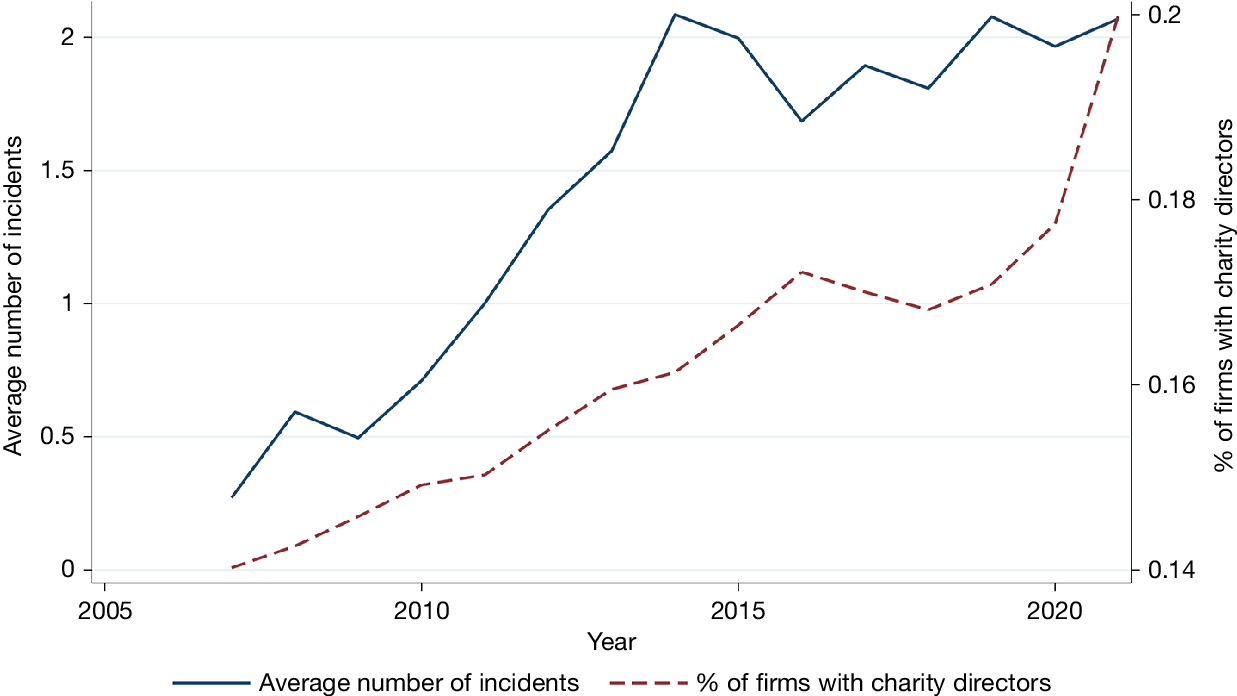


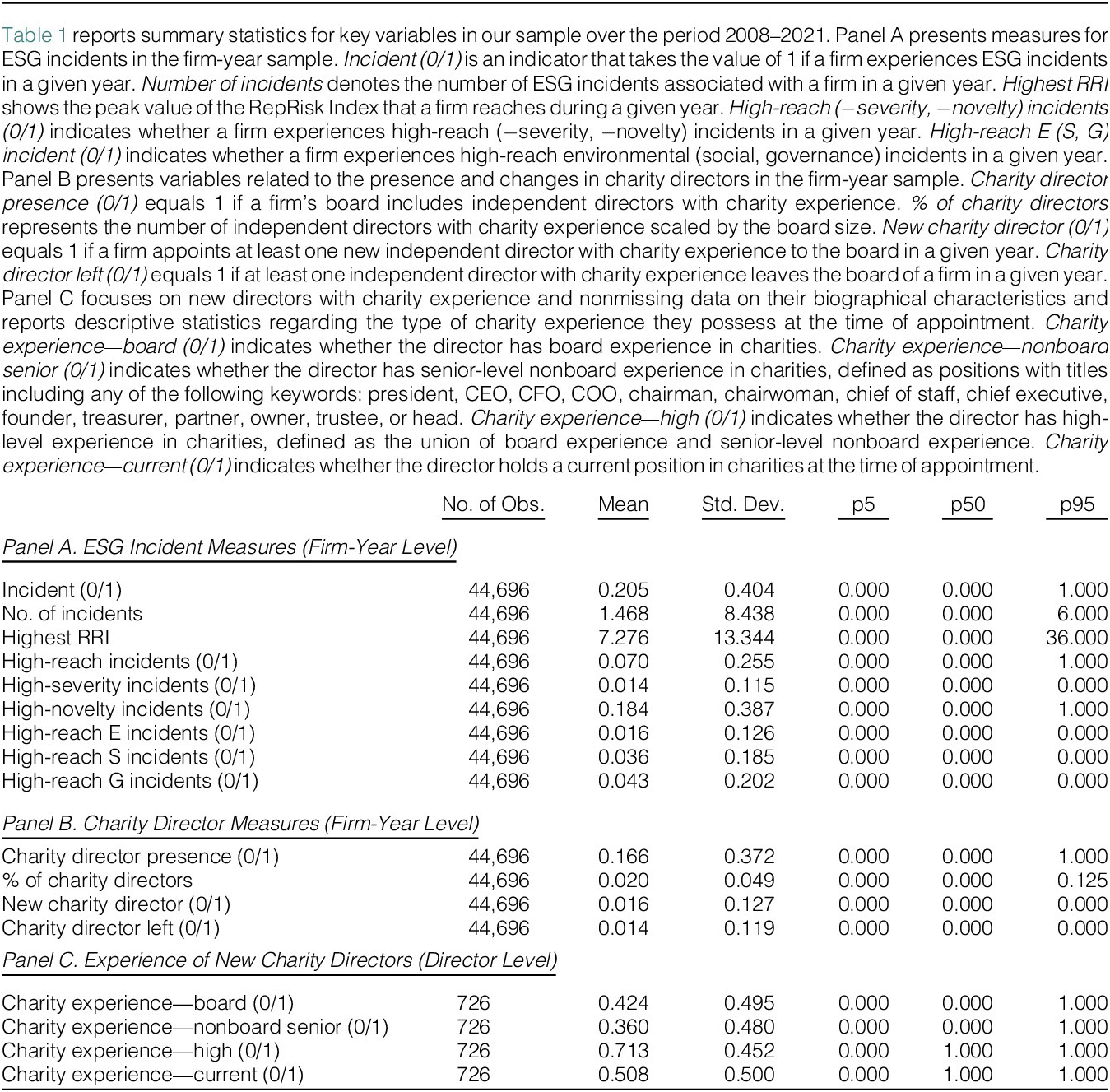
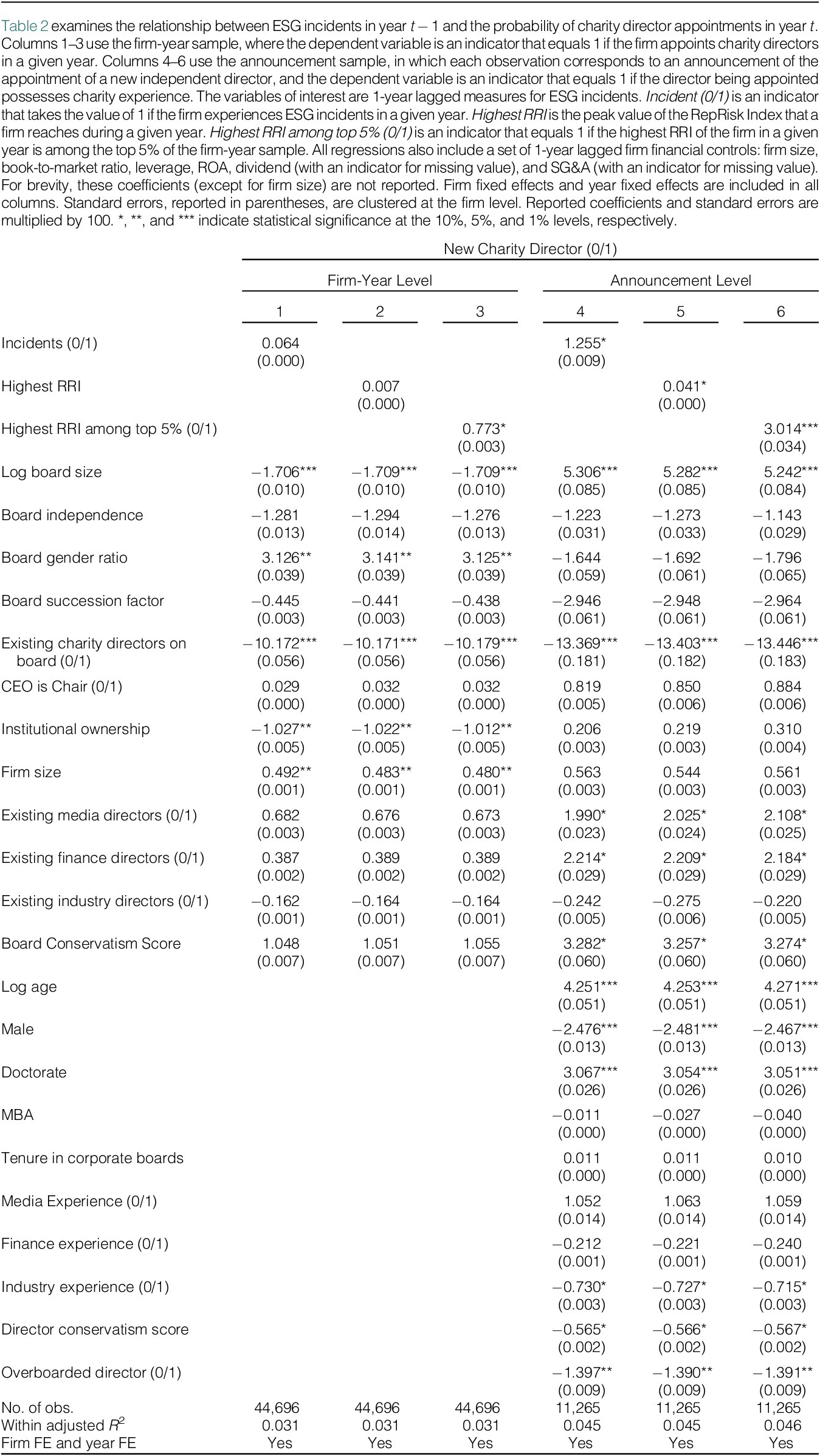
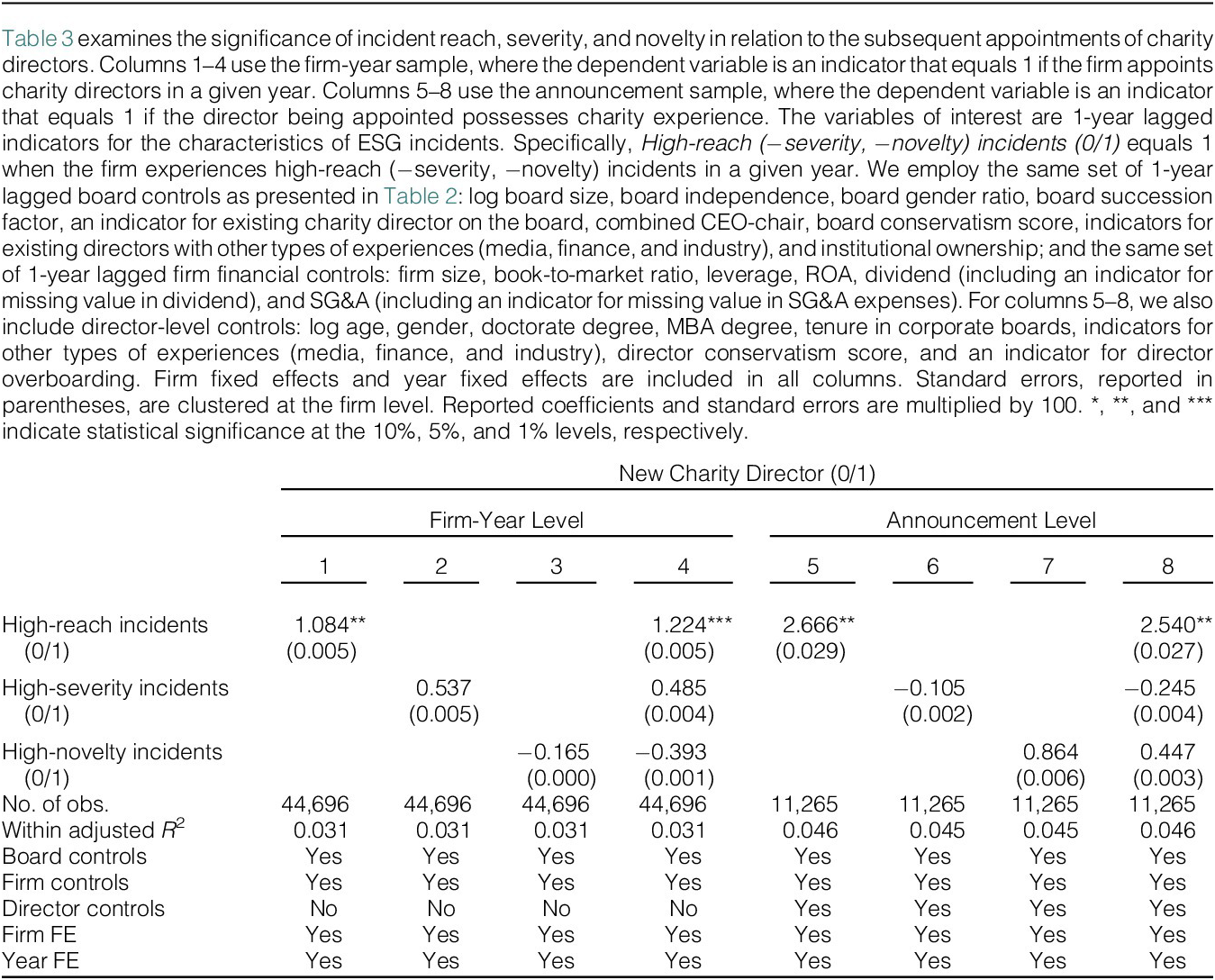
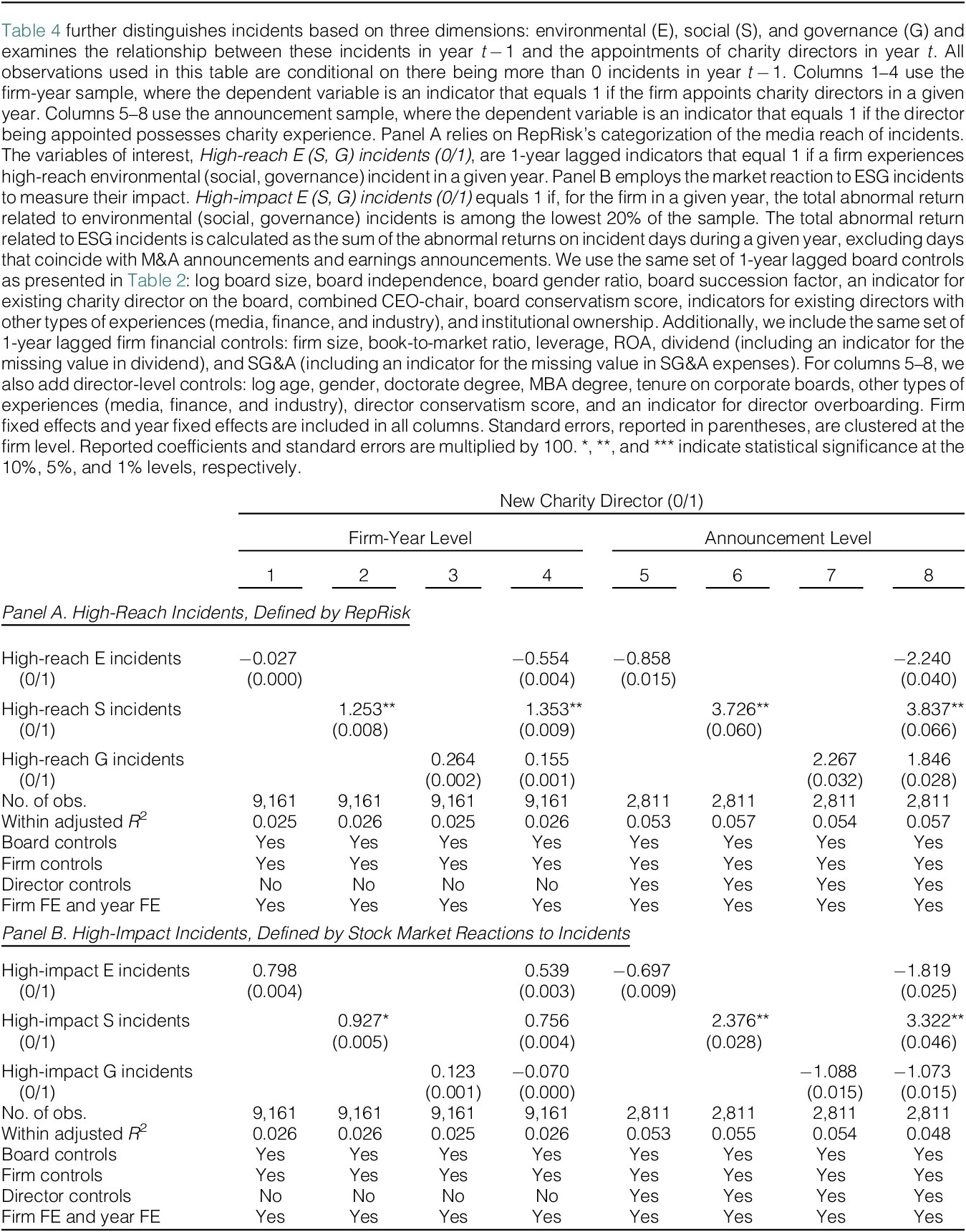
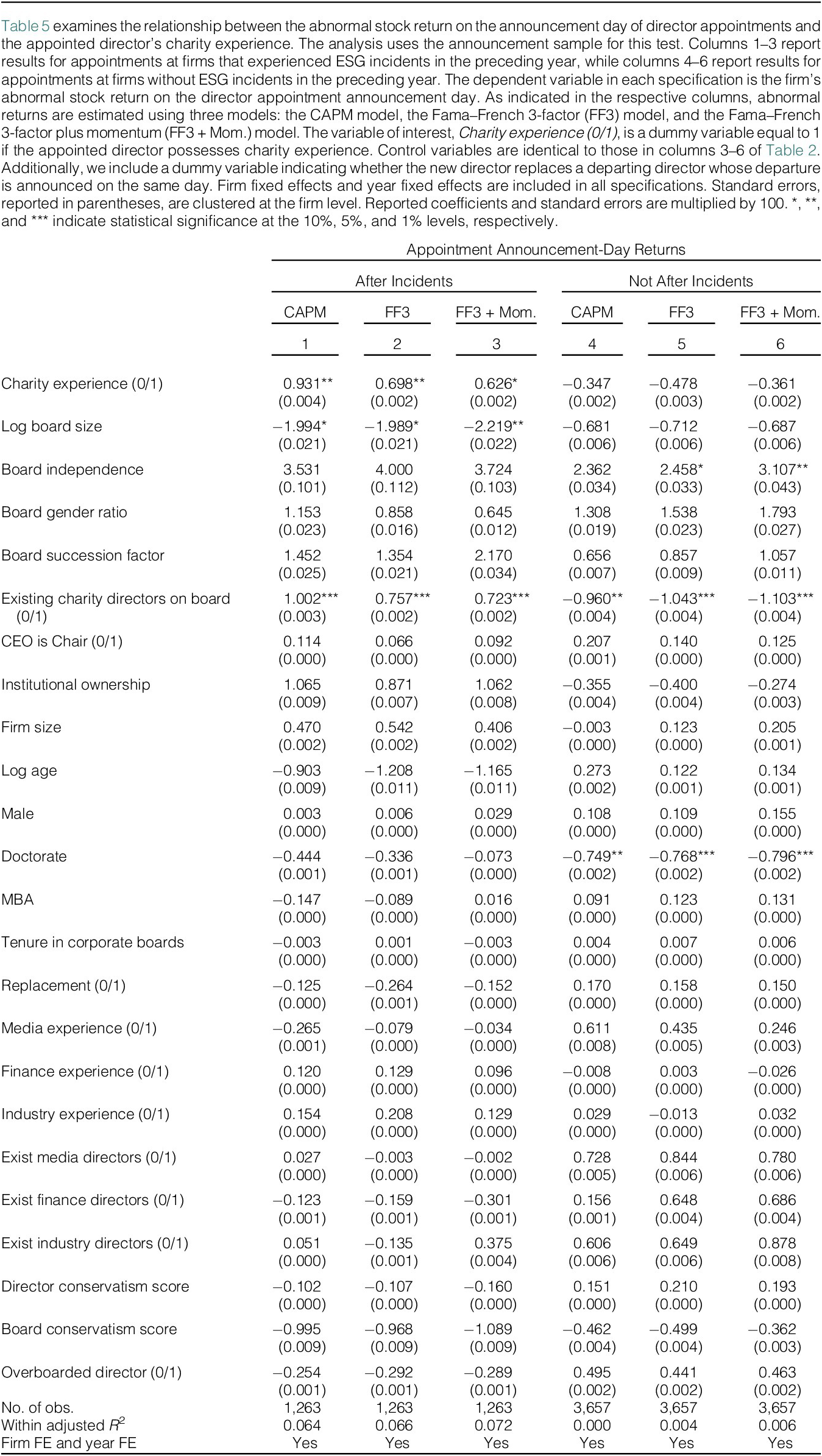
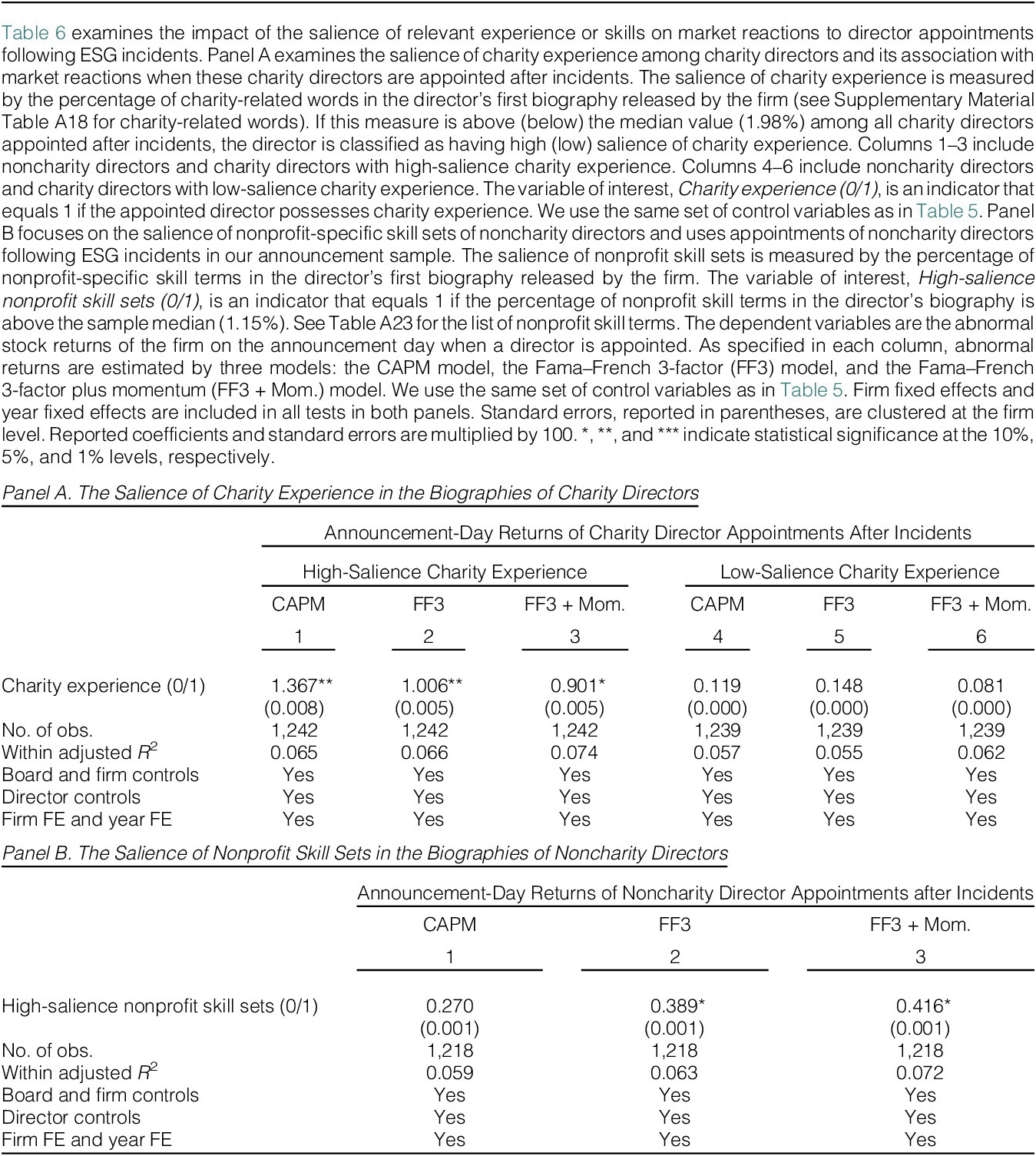
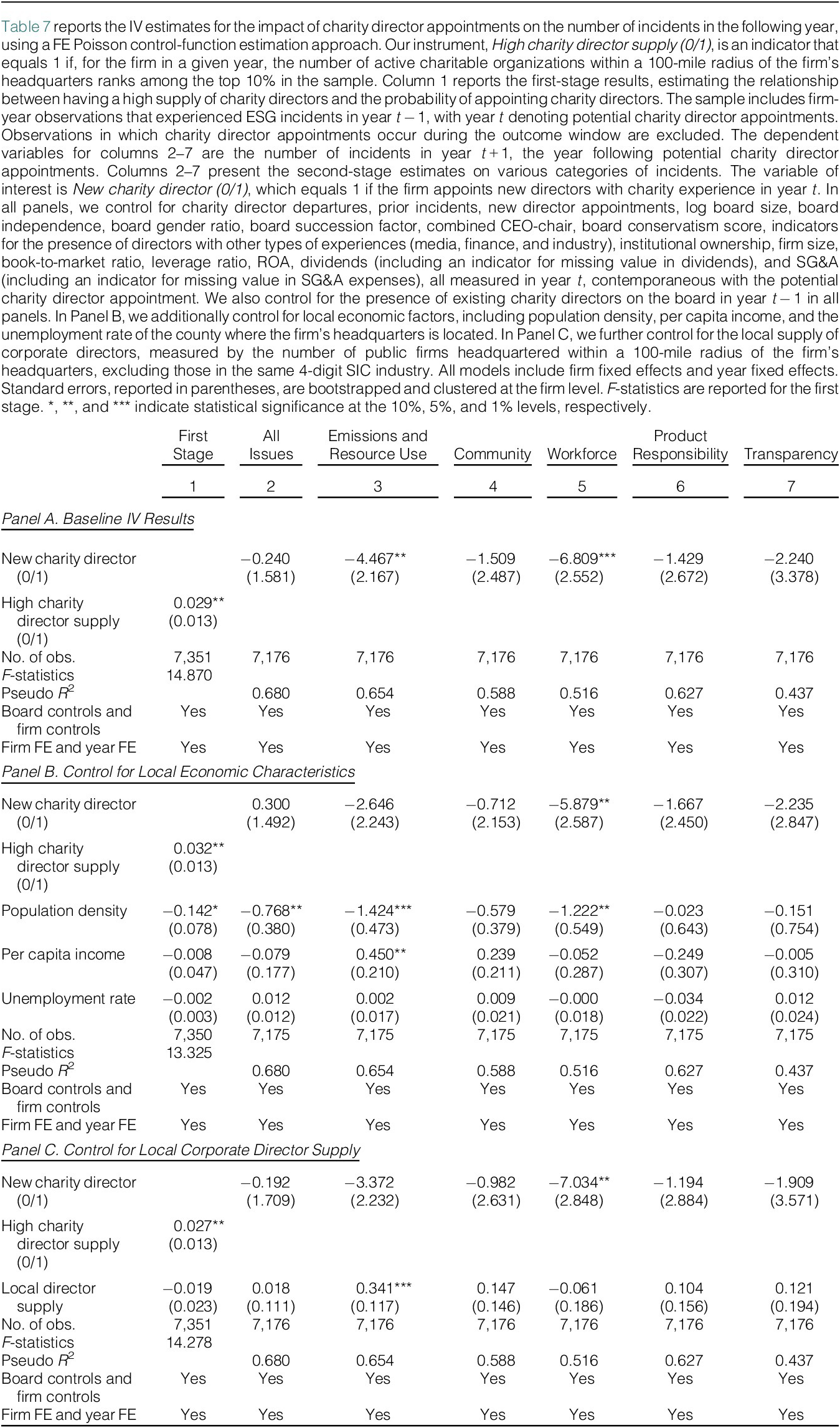
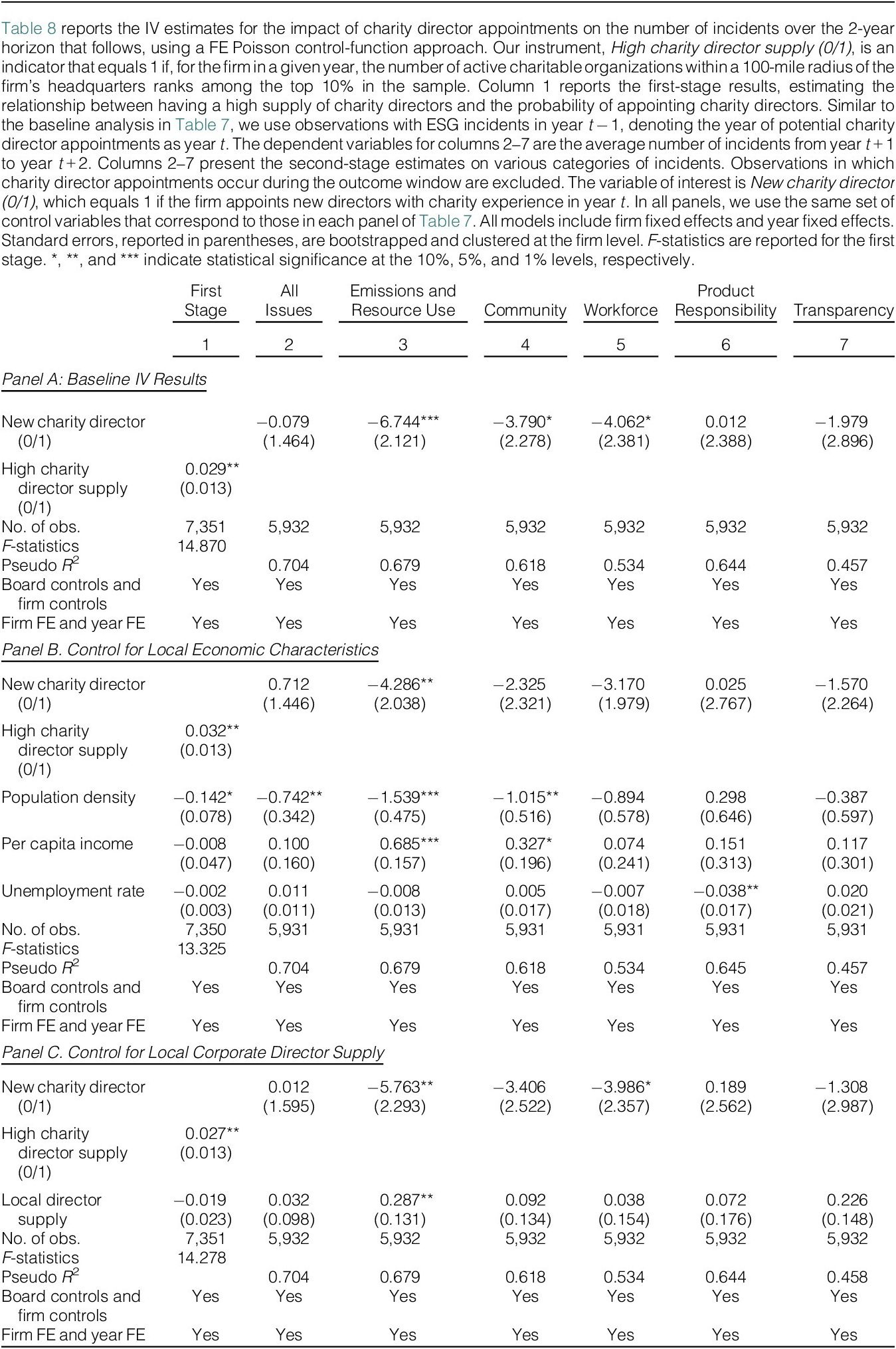
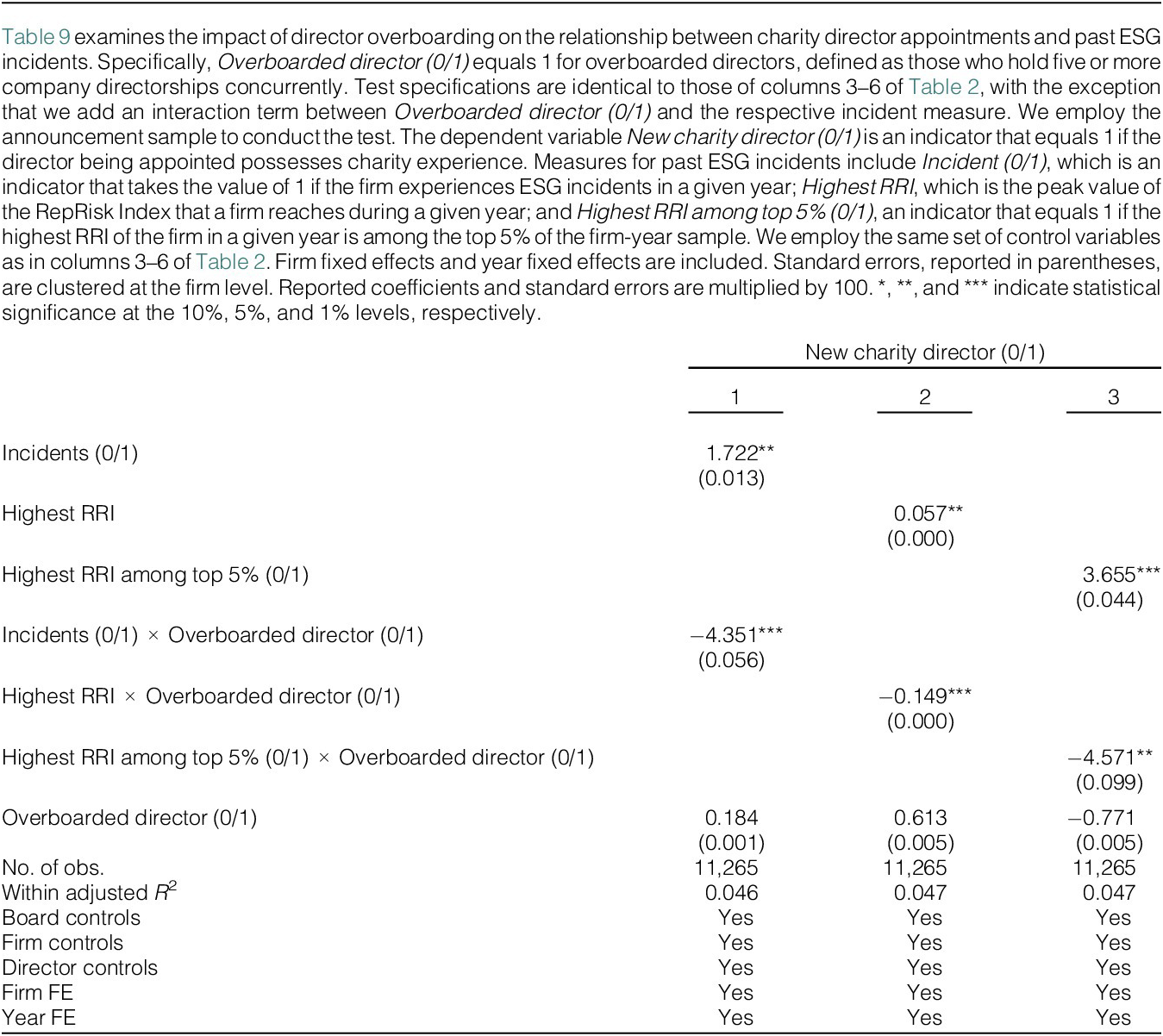
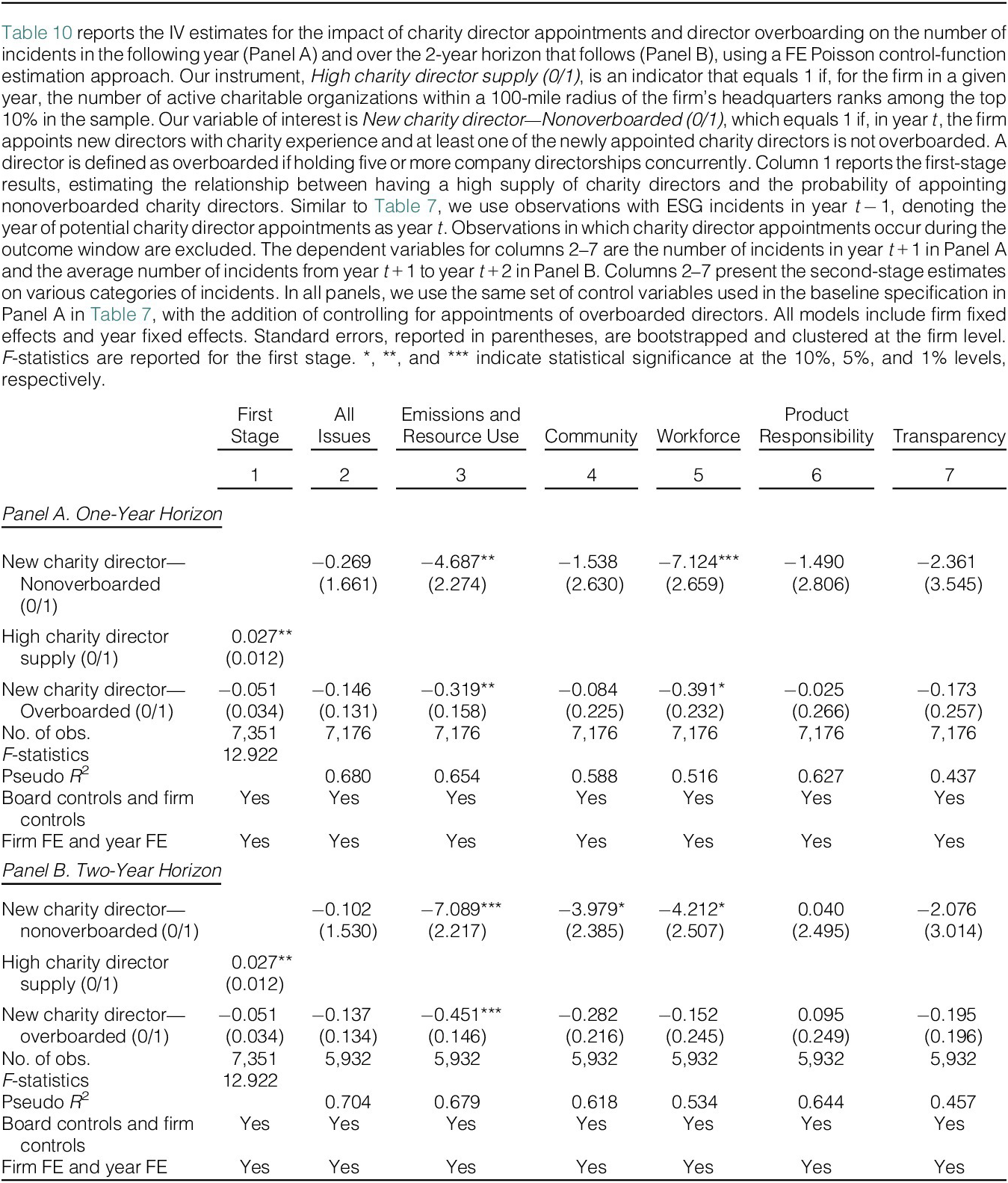


 Open access

