Introduction
During the last century, countries all over the world have been going through demographic transitions typified by declining mortality as well as fertility. Lower infant as well as adult mortality has resulted in larger numbers of persons surviving to older ages reaching 80 years or higher. With lower birth rates, the age structure of populations has been changing. The proportion of younger persons has been declining while that of older persons has been increasing, thus resulting in more aged populations than in the past. Different countries in the world are at different stages of the demographic transition; more developed countries are generally further ahead in the transition than the less developed ones. At the same time, an epidemiologic transition has occurred whereby many elderly people suffering from chronic disease conditions such as hypertension, diabetes, heart disease and arthritis, can survive for several years. The above is also true for persons with functional, cognitive and other disabilities. All the above factors have resulted in exacerbating the amount of care needed by elderly people (Legare and Martel Reference Legare and Martel2003; Tomassini Reference Tomassini2007; World Health Organization 2002; Yount and Khadr Reference Yount and Khadr2008).
The growth in number of elderly people, some of whom may be diseased or disabled, is posing new challenges for caretakers. Historically, the family acted as the major caretaker of elderly people in most countries, including Kuwait. These traditional arrangements have been changing with the forces of modernisation, urbanisation and the increased educational level of populations, including that of women. Residential arrangements where family members were traditionally the main caretakers of elderly people have been changing, with increasing numbers of elderly people living alone, or without any co-resident children, in higher- as well as lower-income countries (Legare and Martel Reference Legare and Martel2003; Mehio-Sibai, Beydoun and Tohme Reference Mehio-Sibai, Beydoun and Tohme2009; Yount and Khadr Reference Yount and Khadr2008).
Alternative arrangements for care have been instituted by various countries, such as the establishment of public or private old-age care facilities. Formal institutional care typically is scarce, expensive, and often viewed as an unacceptable form of care for older adults in some societies (Sinunu, Yount and El Afify 2008). A less expensive and increasingly common alternative to formal care is reliance on foreign live-in domestic workers as major caretakers of older, non-institutionalised persons. The above trend has been facilitated by the availability and willingness of foreign workers, especially from Asian countries such as the Philippines, Sri Lanka, Indonesia and others, to travel overseas and take up the caring roles in the homes of strangers. While this is a growing phenomenon, very few research studies have looked at the extent and effects of reliance on domestic workers for care of elderly people. The goal of the present paper is to add to the knowledge on the subject by analysing the caretaking role of live-in foreign workers in homes of older Kuwaiti men and women.
Growth in the foreign domestic worker population
The employment of foreign live-in domestic workers has become a truly global phenomenon during the last two to three decades. At the beginning of this century, an estimated 6.5 million Filipinos were employed overseas; more than half were women of whom two-thirds were employed as domestic workers in more than 130 countries (Parrenas Reference Parrenas2001). Between 1999 and June 2001, 690,000 Indonesian women left their country to work overseas as domestic workers (International Organization for Migration 2008). In receiving countries, the number of women domestic workers exceeded 200,000 in Hong Kong. Italy had an estimated one million domestic workers, and of all migrant women in France, about half were engaged in domestic work (International Organization for Migration 2008). Singapore had more than 100,000 migrant domestic workers amounting to one such worker per eight households in 1999 (Yeoh, Huang and Gonzalez Reference Yeoh, Huang and Gonzalez1999). Israel reportedly has 54,000 documented and 40,000 undocumented foreign home-care workers (Ayalon Reference Ayalon2009a). Canada has had a live-in care-giver programme since 1992 to facilitate the migration of domestic workers (Chang Reference Chang2000). It is estimated that the United States of America hosts 2.5 million domestic workers, many of whom are reportedly working illegally (International Trade Union Confederation 2010).
The oil-rich Middle Eastern countries are among the largest recipients of migrant workers. Non-national foreign workers and their families outnumber nationals in several of the oil-rich countries (Shah Reference Shah2009). In the six Gulf Cooperation Council (GCC) countries, the percentage of domestic workers among all expatriates is substantial. There are an estimated 1.2 million domestic workers in Saudi Arabia and about 600,000 such workers in the United Arab Emirates (Human Rights Watch 2009). Kuwait had about 370,000 domestic workers in June 2010 (Public Authority of Civil Information 2010).
Effects of care by foreign domestic workers
Despite the rising number of foreign domestic workers in a wide range of countries, research on the old-age care provided by such workers is scant. Existing research on this topic centres on two themes. The first focuses on the effects of care by domestic workers on the health, happiness, and satisfaction of elderly people and their families. The second theme focuses on the social, psychological and health effects for the domestic workers and their families, who often remain in the country of origin.
Research on the effects of care by domestic workers raises several questions about the impact on wellbeing of elderly people. In a qualitative study of 23 totally impaired persons cared for by live-in Filipino caretakers in Israel, many of the impaired participants experienced violations of trust that resulted in perceived abuse and neglect of the older person, and intensified the family's fears about this care-giving arrangement (Ayalon Reference Ayalon2009a). In another study that looked at the perspective of social workers involved in the process of care of elderly people by live-in Filipino caretakers in Israel, four major challenges were identified. They included the prominent differences between the cultures of the sending and receiving countries, as well as legal, social and economic disparities inherent in the care relationship (Ayalon, Kaniel and Rosenberg Reference Ayalon, Kaniel and Rosenberg2008). Satisfaction with live-in versus live-out caretakers was evaluated through face-to-face interviews in a study of 93 elderly people in Israel. Recipients looked after by live-in (N=39) caretakers reported a higher level of satisfaction than those looked after by a live-out caretaker (N=54) (Iecovich Reference Iecovich2007).
Studies on the effects of live-in domestic work on the workers themselves consistently suggest that such work is often undervalued and is invisible until some problems arise (Brush and Vasupuram Reference Brush and Vasupuram2006; Chang Reference Chang2000; Jureidini Reference Jureidini2009; Jureidini and Moukarbel Reference Jureidini and Moukarbel2004; Loveband Reference Loveband2004; Parrenas Reference Parrenas2001). A majority of the studies on domestic workers consist of small-scale surveys using qualitative methodologies. It has been reported that domestic workers are subject to exploitation throughout the migration process and the arduous nature of their labour is often poorly compensated. Residence in private homes makes them vulnerable to verbal, physical and sometimes sexual abuse (Human Rights Watch 2008; Shah and Menon Reference Shah and Menon1997). Perceptions about such workers range from ambivalent to negative in some receiving countries such as Singapore, as judged from qualitative research with employers (Yeoh, Huang and Gonzalez Reference Yeoh, Huang and Gonzalez1999).
The Kuwait context: domestic workers in a society undergoing rapid socio-demographic and epidemiological change
Kuwait is a small oil-rich country with a population of 3.6 million persons in 2010. Only 31.8 per cent of the total population comprised Kuwaiti citizens, while the remaining 68.2 per cent consisted of temporary foreign workers, including domestic workers (Public Authority of Civil Information 2010). The heavy reliance on foreign workers has been a defining characteristic of Kuwait's history, especially following the discovery and development of the oil industry. Kuwaiti citizens and highly paid foreigners are allowed to sponsor a domestic worker. Recruitment of such workers is usually arranged through private companies following permission granted by the Ministry of Labour and Social Affairs and Ministry of Interior. Households with a larger number of residents are allowed to hire more workers. Domestic workers are not covered by the country's labour laws that regulate the employment of other private-sector workers. A majority of domestic workers in Kuwait are from Sri Lanka, Philippines, Indonesia and India. The usual monthly salary of a domestic worker ranges between KD 40 and 60 (US $140 and 210) in addition to food and lodging (Shah Reference Shah2010b).
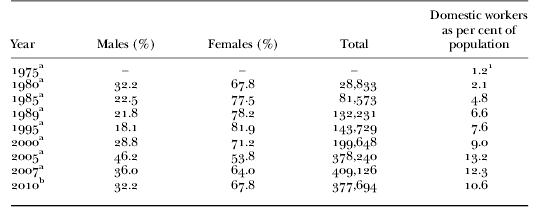
Domestic workers became an increasingly larger percentage of the population during the last three decades. Their number went up from only about 28,000 in 1980 to 377,694 in 2010, comprising 2.1 and 10.6 per cent of the country's population in the respective years (Table 1). A majority of domestic workers are employed by Kuwaiti citizens who numbered 1,133,214 in June 2010. Thus, the country had about 3.0 citizens for every domestic worker in 2010 (Public Authority of Civil Information 2010). According to a national survey in 1999, 13 per cent of the 1,689 sampled households had no domestic workers, 44 per cent had one, and 43 per cent had two or more. Households with multiple workers were relatively richer and had more residents who were children or older persons aged 60 or more (Shah et al. Reference Shah, Yount, Shah and Menon2002).
Number and percentage of male and female domestic workers in Kuwait's population
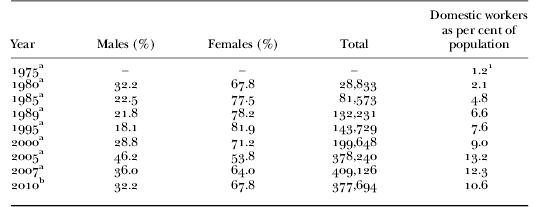
Note: 1. Female domestic workers only.
Sources: a. Shah (Reference Shah2010a). b. Public Authority of Civil Information (2010).
Kuwait is undergoing fairly rapid demographic and epidemiological transitions. During the last four decades, life expectancy at birth for Kuwaiti citizens increased from 63.0 to 73.5 years for men and from 66.2 to 79.1 years for women (Shah Reference Shah2010a), accompanied by a rise in chronic illnesses. In a survey of older Kuwaitis conducted in 2005–06, the prevalence of doctor-diagnosed diabetes, hypertension and heart disease among those aged 50 or more was reported to be 53.4, 50.6 and 17.5 per cent, respectively (Shah, Behbehani and Shah Reference Shah, Behbehani and Shah2010). Increasing life expectancy of elderly people, many of whom suffer from long-term illnesses, results in the need for greater care of this subgroup than was true in the past.
At the same time, several major socio-demographic changes are taking place that are likely to reduce the family's ability or willingness to take care of elderly people, thus increasing the reliance on foreign domestic workers. First, literacy and educational levels of both sexes have increased rapidly during the last four decades which may have generated attitudinal changes regarding care of the elderly. In 2007, more than 95 per cent of men as well women were literate, while 34 per cent of men and 39 per cent of women among all persons aged 10–39 had attained a high school or higher level of education (Shah Reference Shah2010a).
Second, massive changes have occurred in the labour force participation rate of women which may be associated with attitudinal and behavioural changes. From only 2 per cent in 1965, the percentage of women aged 15+ participating in the labour force increased to 41 per cent in 2007. Among the younger women aged 25–39, who might be expected to provide major caretaking functions for elderly people, about 70 per cent were economically active in 2007, and were occupied in roles outside the home and family (Shah Reference Shah2010a).
Third, fertility of Kuwaiti women has declined from about seven children in 1965 to about four children in 2009 (Department of Vital Statistics and Health Records 2009; Shah Reference Shah2010a). The percentage of potential children as caretakers has therefore declined, although a vast majority of men and women have at least one living child. Furthermore, the percentage of never married women, as well as divorced persons, has been increasing during the last four decades (Shah Reference Shah2010a). Unmarried and divorced persons do not have a child or spouse to co-reside and seek assistance from, and may seek such assistance from domestic workers.
Fourth, rapid changes have also taken place in living arrangements of elderly people during the last few years. In a comparison of the living arrangements of persons aged 60 or more in two surveys conducted in 1999 and 2005–06 (on which the present paper is based), it was found that the percentage of those living without any co-resident children increased from approximately 5 per cent to about 25 per cent, respectively. The percentage of those living alone increased from 1 to 7.4 per cent (Shah et al. Reference Shah, Badr, Yount and Shah2011).
Perhaps as a result of the expected traditional role of the family in looking after elderly people, the country does not have any alternative formal arrangements for this group. The only exception is an institution run by the Ministry of Social Affairs where elderly people without adequate family support may reside. Residence in the Ministry of Social Affairs institution is a source of social stigma. Also, there are no privately organised institutions or old-age homes for persons who are not able to reside with their families. In the case of persons needing long-term medical care, patients are sometimes left in the government hospitals by the family, since this is considered more respectable. The problem of long-stay patients in government hospitals has been increasing over time.
Objectives
Given the heavy reliance of Kuwaiti citizens on domestic workers outlined in Table 1, the paper has three specific objectives: (a) to examine the age and gender differences in the amount of care provided by domestic workers versus various family members, (b) to assess the socio-demographic characteristics of elderly people that affect the probability of care by a domestic worker rather than a family member, and (c) to assess whether or not care by a family member versus a domestic worker is related to the physical, functional and psychological health status of older men and women. We hypothesise that those with poorer health outcomes would be more likely to be looked after by live-in domestic workers rather than by family members as a result of their greater need for care and assistance.
Methods
Sample
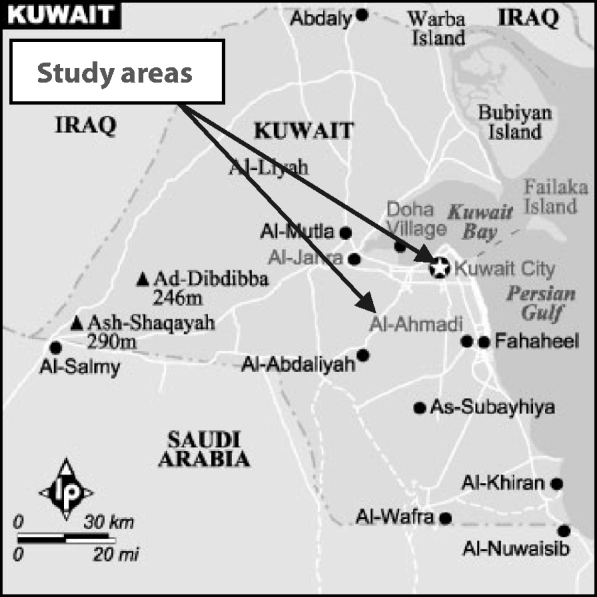
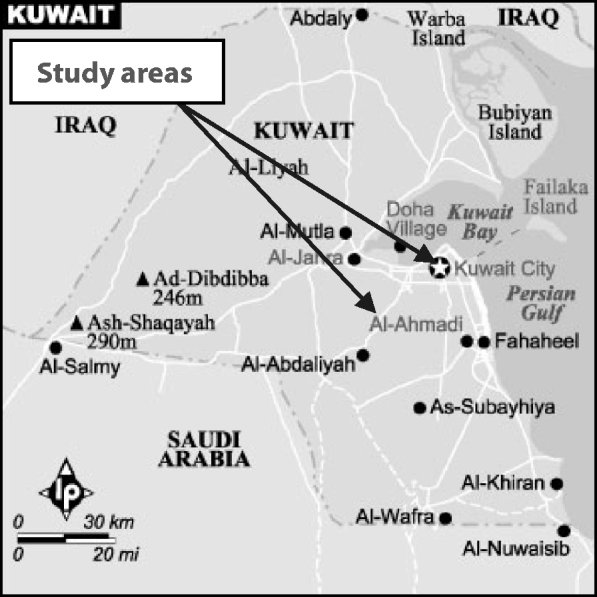
A cross-sectional survey of Kuwaiti households was conducted during April 2005 to December 2006, and Kuwaiti adults 50 years or older were eligible to participate. Non-Kuwaitis, consisting of foreign workers and their families, were not included in the study. Kuwait is divided administratively into six different areas (governorates). Our survey was conducted in two governorates: Capital and Ahmadi. Capital (Kuwait City in Figure 1) was chosen to represent the most urbanised governorate and Ahmadi to represent one of the two least urbanised governorates. In January 2005, these two governorates had 41,205 persons aged 50 or older, about 60 per cent in Capital and 40 per cent in Ahmadi. A proportionately representative sample was therefore chosen from each governorate. Our objective was to interview a total of about 800 persons from each group aged 50–59, 60–69 and 70 or older. The target number was chosen to give us reliable estimates of the prevalence of general health status, major chronic illnesses, living arrangements, disability and functional health.
Map of Kuwait showing the study areas.
A multistage cluster sampling technique was used. Within each governorate, residential areas (mantaqas) were randomly selected. Each mantaqa consists of sub-areas or qitaas, which were randomly selected at the next stage. Within each selected qitaa all households were visited, and households with at least one person aged 50 or more were included. Of the 1,903 eligible households, 1,490 (78.3 per cent) agreed to participate. These households had 2,605 persons aged 50 or more, of whom 2,487 (95.5 per cent) participated in the study. Thus, 6 per cent of the population aged 50 or more was covered in our survey. A proxy respondent, usually a close relative, was interviewed in 5.4 per cent of the cases where the respondent was not able to answer, primarily due to old age or functional impairment.
The Ethics Committee of the Faculty of Medicine, Kuwait University, approved the study. Verbal consent was obtained from each respondent before interviewing him/her.
Data and methods
A questionnaire to measure psycho-social health, physical health, disability and social support was developed by the authors in English and translated into Arabic. Trained Arabic speakers conducted face-to-face interviews. A household listing was done for each resident of the eligible household that agreed to participate (N=1,490 households). A total of 8,210 persons were residing in the 1,490 sampled households of whom 1,550 (18.9 per cent) were domestic workers.
Variables
Care
Assistance of domestic workers was measured for two different situations, first in terms of activities of daily living (ADL) performed routinely by the respondent, and second in terms of illness, by asking the following questions.
1. Six questions on whether or not the older person needed assistance in conducting his/her routine activities and, if so, who assisted most of the time with ADL (eating, dressing, bathing), and with shopping, managing money, using transportation, cooking and cleaning. The two questions on cooking and cleaning were asked only for women since participation in this type of activity is considered to be culturally inappropriate for the majority of men, especially in the older age groups analysed by us.
2. A question on who usually takes care of him/her whenever he/she gets sick. The frequencies of usual care during illness were examined for the whole sample aged 50 or more. The rest of the analysis was restricted to those aged 70 or more because there were very few under this age group who needed help with these activities.
Men and women were compared throughout the analysis.
Socio-demographic explanatory variables
Five socio-demographic characteristics of the respondent were used as explanatory variables, namely gender, marital status (currently married versus widowed/divorced/separated), level of education (some schooling versus never been to school), Bedouin or non-Bedouin cultural background, and the number of co-resident children. In addition to the above, total monthly income of the household was also used as an explanatory variable, since household income was expected to be associated positively with the presence of domestic workers who might provide care to older members of the household.
Health status
Health status was measured through several self-reported indicators, including perceived health status, prevalence of doctor-diagnosed chronic illnesses, presence of various types of disability (visual, hearing and functional) and psychological health. A scale of depressive symptom experience from the Mexican Health and Aging Study (Soldo, Wong and Palloni Reference Soldo, Wong and Palloni2003) was used. The scale consists of ten items measured on a Likert scale ranging from ‘Never’ to ‘Most of the time’ used to assess the depression symptoms indicating psychological health. For example, a question was asked on whether the respondent had poor appetite during the previous seven days, and whether this occurred most of the time, sometimes, seldom or never. A weight of three was given to the item if it occurred most of the time and a weight of zero was given if it never occurred. The ten items were summed to arrive at a composite score of depressive symptom experience, with a range between zero and 30.
Analysis
The significance of bivariate associations between type of care-giver (domestic worker versus family member) and health outcome variables were tested by using Chi-square test and Student's t-test. Multivariate analysis was conducted by using binary logistic regression in order to ascertain the relative strength of association between socio-demographic characteristics and care by a domestic worker, rather than a family member, during illness among those aged 70 or more. In the logistic regression, care by a domestic worker was defined as 1 (34.8%) and by family members as 0 (65.2%). A p-value of <0.05 was considered to be significant.
Results
Domestic workers in our sample
Domestic workers comprised 19 per cent of all residents in our sampled households. Of the 1,490 households, 29.8 per cent did not have any domestic workers, 53.4 per cent had one such worker, and 16.8 per cent had two or more. The availability of domestic workers was higher among the older men and women aged 70 or more (N=808) compared with the total sample; 20.5 per cent of them had no domestic workers, 50.2 per cent had one and 29.2 per cent had two or more. As reported by their employer, most (89.9%) domestic workers were women, and more than half were aged 26–35 with a mean age of 33.0 years.
Care-giver for older Kuwaitis
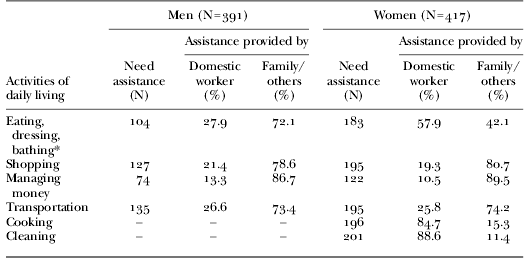
Among the 391 men and 417 women aged 70 or more, 27 and 44 per cent, respectively, needed assistance to carry out their ADL such as eating, changing clothes and bathing. Among those who needed assistance, about 28 per cent of men and 58 per cent of women received such assistance, most of the time, from domestic workers (Table 2). About one-fifth of men and women who needed assistance with shopping relied on domestic workers, and about one-quarter relied on them for using transportation. However, in the case of those needing assistance with managing their money, relatively few (13% men and 11% women) relied on domestic workers while the remaining got such assistance from family members. Among women needing assistance with cooking and cleaning a large majority (85 per cent or more) received such assistance from domestic workers, as expected.
Percentage distribution of assistance provided by family members versus domestic worker in performance of various activities among Kuwaiti men and women aged 70 or more (N=808), among those who needed assistance
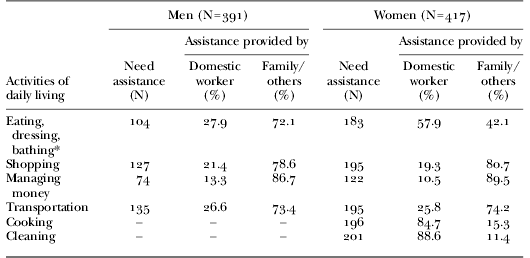
Significance level: * p<0.001 (gender difference).
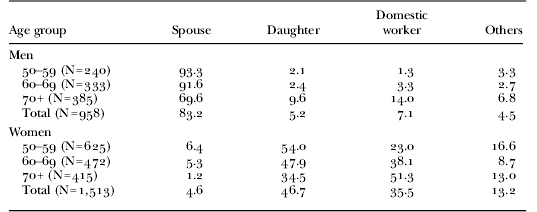
In terms of care-giving when the older person is sick, we found a striking gender difference (Table 3). Wives were a major care-giver in the case of men; more then 90 per cent of the men aged 50–69 years were looked after by their wife when sick. The wife's role in caretaking seemed to decline with age, however. Among men age 70 or more, only about 70 per cent were looked after by their wife while 10 per cent were looked after by a daughter and 14 per cent by a domestic worker. Among women, on the other hand, the husband played a negligible role in taking care of a sick wife at all ages. Among women aged 70 or more, only about 1 per cent of the husbands looked after the wife when ill. A daughter or a domestic worker were the main caretakers of older women aged 70 or more during illness, providing 35 and 51 per cent of such care, respectively. As women got older, the percentage looked after by a daughter declined while the percentage looked after by a domestic worker increased. Among women aged 50–59, about one-quarter were looked after by a domestic worker when sick, while among those aged 70 or more, 51 per cent were looked after by a domestic worker. Thus, domestic workers are playing a central role in the care of older women in Kuwait, both in terms of assisting with ADL and looking after them when sick.
Percentage distribution of person who usually takes care of older men and women during illness
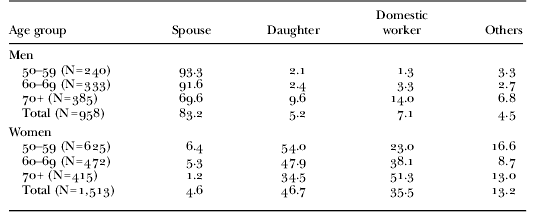
The role of the domestic worker was especially large among those aged 70 or more living alone (N=72 out of 808), where almost 80 per cent reported that they were looked after by a domestic worker when sick. The percentage was also very high in case of couples living without any co-resident children, especially so in the case of wives. About 86 per cent of the women living with a spouse only were looked after by a domestic worker when sick (data available on request).
Among the 808 respondents aged 70 or more, 39 (4.8%) were bedridden of whom 30 (3.7%) were women. About 90 per cent of the bedridden women were living with their children. During illness a domestic worker looked after them in 37 per cent of the cases, a daughter in 26 per cent, a nurse in 20 per cent and another relative in the remaining cases. In terms of ADL, a domestic worker provided them with assistance in about 45 per cent of the cases (data available on request).
Socio-demographic correlates of caretaking by a domestic worker
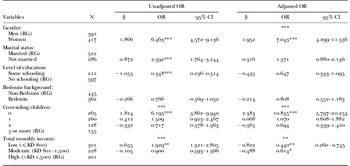
Unadjusted and adjusted odds ratios of being looked after by a domestic worker when sick are given in Table 4 in relation to several socio-demographic characteristics and household income of elderly people aged 70 or more. Controlling for other variables, gender was highly significant with women being seven times more likely than men to be looked after by a domestic worker when sick (p<0.001). Also, those living without any co-resident children were 10.8 times more likely to be looked after by a domestic worker when sick compared with those who had three or more co-resident children. Neither marital status nor educational level nor Bedouin/non-Bedouin background was significantly associated with caretaking by a domestic worker. Household income was directly associated with being looked after by a domestic worker when sick. That is, those who had a household income of KD 800 (£1,777) or less were about 44 per cent less likely to be looked after by a domestic worker when sick compared with those who had a household income of KD 1,500 (£3,331) or more.
Logistic regression of the socio-demographic correlates of being cared for by a domestic worker during illness among Kuwaiti men and women aged 70 or more (N=808)

Notes: OR: odds ratio. CI: confidence interval. RG: reference group.
Significance levels: * p<0.05, ** p<0.01, *** p<0.001.
Caretaking by a domestic worker versus family member in relation to health outcomes
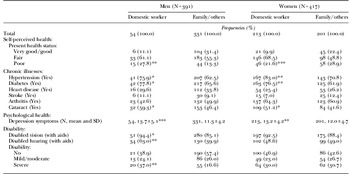
Several health indicators were compared for the respondents who reported to be looked after by domestic workers versus family members when sick. In general, a larger percentage of those looked after by domestic workers perceived themselves to be in worse health, and ranked lower on many health indicators (Table 5). Significantly smaller percentages of men as well as women who were looked after by a domestic worker perceived their health to be good/very good compared with those looked after by a family member. The percentage that reported doctor-diagnosed hypertension or diabetes was significantly higher among men as well as women looked after by a domestic worker than a family member. Also, those looked after by domestic workers had a significantly higher mean score on the depressive symptoms scale than those looked after by family members (mean=13.7 versus 11.3 among men, and mean=13.2 versus 12.0 among women).
Association between selected health status variables and care-giving by domestic workers versus family members during illness among Kuwaiti men and women aged 70 or more (N=808)

Note: SD: standard deviation.
Significance levels: * p<0.05, ** p<0.01, *** p<0.001 (difference between domestic worker versus family/others in the same sex).
Among men, a significantly larger percentage of those looked after by a domestic worker had hearing or vision disability compared with those looked after by a family member. Also, a larger percentage of men looked after by domestic workers reported severe levels of disability (37%) than those looked after by family members (17%). Contrary to men, disability differences according to type of caretaker were not statistically significant for women.
Multivariate analysis was conducted to assess the net association of health-related factors with caretaking by a domestic worker versus a family member, after controlling for socio-demographic characteristics and household income of respondents. The strong associations of care by a domestic worker with female gender, lack of co-resident children and higher family income persisted after the addition of all the health-related variables shown in Table 5. Two health-related factors emerged as significant correlates of care by a domestic worker, namely perceived health and the score for depressive symptom experience. Those who perceived their health to be fair (odds ratio (OR): 2.7; confidence interval (CI): 1.5–4.9) or poor (OR: 2.2; CI: 1.1–4.3) were more than twice as likely to be cared for by a domestic worker compared with those who considered their health to be good or very good. Also, the unit increase in reported depressive symptom total score increased the likelihood of a respondent being looked after by a domestic worker rather than a family member by 5 per cent.
Discussion
During the last three decades domestic workers have become an increasingly larger segment of Kuwait's population. They comprised 19 per cent of all residents in our sampled households and were playing very important roles in providing assistance in performance of ADL and in looking after elderly people when sick. The likelihood of being looked after by a domestic worker had strong positive associations with being a woman, living without any co-resident children, and in richer households. Respondents who were looked after by a domestic worker ranked poorer on several health indicators than those who were looked after by a family member when sick.
Among those aged 70+ who needed assistance with ADL, about 28 per cent of men and 58 per cent of women were assisted mostly by domestic workers. Furthermore, 51 per cent of women and 14 per cent of men were looked after by domestic workers when they were sick. Among those living alone, more than 80 per cent were looked after by a domestic worker when sick. The shift of care from a family member to a domestic worker, as illustrated by our findings, is a relatively recent phenomenon among the Kuwaiti population. Prior to the massive inflow of domestic workers in the last three decades, family members were the traditional care-givers, with women playing pivotal roles.
Several socio-economic changes within the Kuwaiti society, described in the introductory section, may explain the shift away from traditional caretaking practices. Rising educational level, increased participation of women in the labour force, and changing attitudes towards co-residing with children are likely to be central among these factors. Employment outside the home is bound to place heavy demands on a woman's time and her ability to take care of an older parent or parent-in-law and she is therefore likely to depend on substitute caretakers in the form of domestic workers. At the same time, care of an older person by a domestic worker in a household, especially where the younger women are employed, seems to have become socially and culturally acceptable, despite the deviance from traditional norms.
The proportion of elderly people living without a co-resident child has increased almost five times (from 5 to 25%) during the last decade, as mentioned earlier. The lack of co-resident children is bound to be a major constraint in providing assistance with ADL or when elderly people are sick. In our study, multivariate analysis indicated that those without a co-resident child were 10.8 times more likely to be looked after by a domestic worker rather than a family member. It is possible that the easy availability of domestic workers has in fact acted as a facilitator of changes in living arrangements of elderly people. One consequence of this change is that the caring tasks provided earlier by a family member are now performed by the live-in domestic worker.
In addition to the socio-economic changes mentioned above, the relatively low cost at which a domestic worker may be hired is probably an important factor in the growth of reliance on domestic workers. The monthly wage of a domestic worker amounts to a fairly small percentage of the total monthly income of a Kuwaiti household in our survey (median household monthly income=KD 1,300 (US $4,420). The current affluence of Kuwaiti households is a relatively recent phenomenon enabled by the discovery and export of oil, combined with government policies to share this wealth with nationals in the form of increased salary and allowances, free education and health care, and generous subsidies on many items (Shah Reference Shah2010a). Our results showed that the adjusted odds of being looked after by a domestic worker were significantly higher among the richer compared to the poorer respondents.
Despite the increased reliance on domestic workers to assist with ADL and during illness, however, the family continues to play a major role in the care of elderly people. We found that a family member assisted the older men as well as women in the performance of tasks that involved activities and spaces outside the house, such as shopping, using transportation to go to places, and money management. Thus it seems that there is a greater reliance on domestic workers for the performance of the routine ‘chores’ such as cooking, cleaning and personal care of the older individual and the family continues to play the major role in the older person's interaction with the public spheres of life. Furthermore, about 85 per cent of the bedridden persons lived with their children. Our findings about the continued important role of the family despite the presence of live-in domestic workers are consistent with the experience of Israel where family members continue to play major, though different, roles in the care of elderly people than the ones played prior to the domestic worker's arrival (Ayalon Reference Ayalon2009c).
Gender was found to be a very significant factor associated with the care of elderly people by a domestic worker. Multivariate analysis showed that women were seven times more likely than men to be looked after by a domestic worker rather than a family member when ill. A major reason for this is that women, especially wives, play the caring role in the case of sick men as is considered socio-culturally appropriate. When the wife falls ill, however, the husband rarely acts as the caretaker. His domain, especially among older Kuwaitis, is generally considered to comprise of activities outside the house, and he is not expected to take care of an ailing wife. Furthermore, fewer women than men in Kuwait have spouses who may act as potential caretakers because of the higher frequency of widowhood among women resulting both from their longer life expectancy and the lower incidence of re-marriage compared to men (Shah Reference Shah2004). Previous research among the oldest old in China showed that the role of the wife was a critical factor in the health status of a man, and provided the best protection regardless of the presence of children (Li, Zhang and Liang Reference Li, Zhang and Liang2009). In our study, a significantly larger percentage of men who were looked after by a domestic worker when ill suffered from various disabilities than those looked after by a family member (mainly the wife) which further highlights the important role a wife seems to play in sustaining the health of the husband.
Among the other female members of the household, the daughter was found to play a major role in the care of elderly people, especially mothers. The central role that daughters play in looking after older parents/relatives has been reported in previous studies around the world (Fleming Reference Fleming1998). As women got older, however, the percentage of daughters who were able or willing to take care of them declined with a concurrent increase in care by domestic workers. One of the factors related to decline in care by a daughter is the fact that daughters typically leave the parental home once they get married. They either move to the husband's parental home or set up their own residence. Hence, the number of potential daughters who could act as caretakers declines as the mother ages. Furthermore, a larger percentage of women than men aged 70+ are now living alone (8.4 and 1.1%, respectively) and dependence on the domestic worker is much higher among those living alone.
We had hypothesised that those with poorer health outcomes would be more likely to be looked after by live-in domestic workers rather than by family members. Our findings were generally consistent with the above hypothesis. Respondents who were looked after by domestic workers perceived themselves to be in relatively poorer health; larger percentages of them suffered from hypertension and diabetes, and reported higher depressive symptom scores. In the multivariate analysis, perceived health was significantly poorer among those looked after by domestic workers and their depressive symptom score was significantly higher. Being cared for by a domestic worker rather than a family member might raise the feelings of social isolation, and low emotional support from children and family, which in turn may enhance the potential of depression in later life as found in previous research (Djernes Reference Djernes2006).
Previous literature does not provide any guidance on whether we should expect any association between health status and care by a family member versus a domestic worker. Despite the significant differences found in our analysis, the sequential order implicit in the positive association between care by a domestic worker and poorer health is not obvious and remains a limitation of our study. We do not know the extent to which care by a domestic worker during illness represents a more general pattern of caring experienced by the respondent in his/her everyday life. If care during illness is representative of a much broader range of situations, this variable is likely to carry considerable weight in health-care outcomes of elderly people. In the Kuwaiti culture, care of elderly people by family members is expected, desired and accorded a high degree of social approval, as in many other cultures. An older person looked after by a family member is likely to feel more satisfied with the care arrangement. A person devoid of such care, on the other hand, may feel neglected, which might exert short- or long-term consequences on health. However, our cross-sectional data do not enable us to establish the possible ‘causal’ pathway inherent in the association between the type of caretaker and health outcomes.
Satisfaction with care by a live-in domestic worker is another area on which we do not have any information in our study. If the older person is satisfied with such assistance, he/she may actually feel gratified by the kind of support received, and the caretaking arrangement may not carry any negative health impacts. The above perceptions may also be conditioned by the duration for which the older person has been cared for by a domestic worker, the quality of their interactions, trust placed on the caretaker, and the general perception about his/her skill level and competence. Each of the preceding factors has been noted as an important element in the satisfaction of elderly people and their families with the caretaking arrangement (Ayalon Reference Ayalon2009a, Reference Ayalon2009b, Reference Ayalon2009c; Keitzman, Benjamin and Matthias Reference Kietzman, Benjamin and Matthias2008), and should be addressed in future studies.
Conclusion and implications beyond Kuwait
A survey of older Kuwaitis age 70 or more found that domestic workers played a substantial role in providing assistance in activities of daily living and in providing care during illness. The likelihood of being looked after by a domestic worker rather than a family member during illness was significantly higher among women, those living without any co-resident children and in richer households. Furthermore, those looked after by a domestic worker rather than a family member reported significantly poorer health on several indicators. In terms of the implications of our findings for the future, three expectations may be highlighted. First, reliance on domestic workers will increase with continued ageing of the population, high levels of women's participation in the labour force, and the tendency towards more independent living by elderly people, unaccompanied by children. The above expectation presumes that a large majority of elderly people will continue to reside in private homes rather than in formal institutions, as observed in case of some frail older Egyptians who were placed in long-term care facilities in Cairo, despite the norms of family care (Sinunu, Yount and El Afify Reference Sinunu, Yount and El Afify2009). Second, if current gender differences persist, a much larger proportion of older women than men will rely on domestic workers for care. Finally, a decline in the perceived as well as psychological health status of the older person is likely to increase reliance on domestic workers as a substitute source of care by the family. The country does not currently have a routine system of information that may provide data on the socio-demographic and health dynamics of ageing. There is thus an urgent need to regularly conduct studies that would enable health planners to develop a comprehensive understanding of such dynamics to better meet the health needs of elderly people in the years to come.
The findings of our study may have several implications for other Arab, as well as non-Arab, countries undergoing rapid social, economic, demographic and epidemiological transitions as Kuwait. With increasing life expectancy combined with an expansion of chronic illnesses, the number of persons requiring assistance from family and non-family sources will increase. The proportion of the population requiring such assistance will be higher in countries where fertility decline is faster and the number of children as potential caretakers of elderly people is therefore smaller. Among those needing assistance, the proportion of women will be much larger than men both as a result of their longer survival and the absence of a spouse. If the trend towards living without co-resident children continues to rise, the need for alternate sources of care will exacerbate. Institutional care for elderly people that is rarely available in most developing countries will need to be developed by the government or private agencies. In the meantime, live-in domestic helpers are likely to fill in the caretaker gap at an increasing pace. The observed trend of an increase in live-in foreign workers in a multitude of countries suggests that this phenomenon will accelerate in the future. The supply of such workers is likely to remain abundant with the addition of more sending countries than in the past. The abundance of such workers is likely to keep their wages low. Our knowledge about the process of hiring domestic workers, the multiple roles they play in the family and the consequences of their presence in the household is very weak. There is a need to conduct research on many aspects relating to the social, economic, and psychological costs and benefits of the entire process of care by foreign live-in workers, both for the health and wellbeing of the elderly people and the domestic workers.
Acknowledgement
This work was supported by the Kuwait Foundation for Social Sciences (grant number KFAS 2003-1302-02).