Just what might the influenza pandemic of 1918 have meant to the people who witnessed it? As many as one in twenty people alive on Earth may have died of the flu.Footnote 1 Mortality was even more severe in some populations. In villages near Nome and Bristol Bay, about half the inhabitants perished.Footnote 2 And the symptoms of pandemic influenza were strange and unsettling.Footnote 3 The question of the lived experience of the flu—of the affective response to the disease, of how people made sense of this worldwide catastrophe—has preoccupied historians of the pandemic. “Americans of the early 20th century were not unfamiliar with epidemics, and life-threatening illnesses from tuberculosis to polio remained common features of their lives,” Nancy Bristow writes. All the same, “nothing had prepared Americans for the scourge they now found in their midst.”Footnote 4 They experienced the epidemic as a personal rather than a collective trauma, historians have argued. The dead, according to this interpretation, were mourned not with monuments, orations, or public ceremonies, but in private—in letters, diaries, and poems, and in the thoughts of the bereaved.Footnote 5
Recently, however, several economic historians have put forward a contrasting interpretation, suggesting that Americans were largely indifferent to the danger of lethal infection. This interpretation proceeds from the fact that the flu did not cause an economic crisis. At most, the flu might have contributed to a mild recession primarily caused by other factors.Footnote 6 That no depression occurred suggests that Americans did not modify their economic behavior during the pandemic. “Americans in 1918 may have become accustomed to the risk of dying from infectious disease,” write Brian Beach, Karen Clay, and Martin Saavedra in a recent review of the literature.Footnote 7 In 2020, by contrast, voluntary and official countermeasures against the coronavirus caused deflation and mass unemployment. These recent events motivate a reexamination of the lived experience of pandemic influenza from an economic point of view. Did consumer behavior in 1918 reflect the mortal terror of infection that historians have described? Or is the mild recession evidence that Americans were cavalier about the risk of contagion, or that they bore their fate with stoic resolve?
To answer these questions, I propose a different explanation of the economy’s resilience in 1918. My account begins with an elementary observation about the relationship between economic output and the composition of consumer demand. Due to the low level of productivity in the early twentieth century, meeting the country’s basic needs required more labor and other real resources. Demand for what contemporaries thought of as staples and necessities remained robust throughout the pandemic, and at the time, the industries that produced these basic goods employed most of the country’s workers, machines, factories, and raw materials. Householders and health officers did try to prevent the flu’s spread by reducing economic activity, limiting the consumption of certain goods and services regarded as luxuries or frills. But all goods and services were costly to produce, and households could afford few discretionary purchases, so there were few opportunities to reduce consumer expenditure when the flu struck. Most enterprises carried on as best they could. Their customers continued to patronize them, and their employees continued to report for work. And those who were healthy enough to work remained employed.Footnote 8
So far, my explanation is intuitive but incomplete, because I have not addressed how consumers distinguished necessary from discretionary expenditures. The economic effects of precautions against influenza depended not only on whether consumers could afford to satisfy wants as well as needs, but also on how they defined the two. There is no transhistorical category of necessary economic goods that can be reduced to the physiology of the human organism.Footnote 9 Human desires are delimited by social custom and positive law, religious practice, and theological inclination.Footnote 10 Advertisers synthesize new wants, and addiction calcifies them. Income does not necessarily correspond to satisfaction.Footnote 11 Even the traditional neoclassical hypothesis of an invariant, stationary utility function can yield changing consumer preferences if tastes and habits are considered as inputs to utility, as George Stigler and Gary Becker showed in a canonical model.Footnote 12 Karl Marx argued that the wages thought necessary to perpetuate a worker’s existence were “products of history,” a reflection of social conditions, not biological facts.Footnote 13 For this reason, he referred to the labor required to meet a worker’s basic needs as “socially necessary.” I will return to this concept in the conclusion. An explanation of economic stability in 1918 requires an account of how Americans determined which goods were absolutely necessary, and which ones could be forsaken in the interest of disease control.
To make these decisions, householders, physicians, workers, businessmen, and elected officials invoked and debated a concept they called “essential business.” In this article, I avoid anachronistic assumptions about which industries are essential and nonessential. Instead, I interpret consumer behavior in 1918 using the language that these historical actors themselves also used to justify their choices. This methodological decision derives from an understanding of the historical determinants of human wants that is well established in diverse traditions of economic thought and throughout the modern social sciences.Footnote 14 What people think is essential is historically contingent.
Above all, my approach to the concept of essential business is consistent with how economists, journalists, trade unionists, industrialists, and bureaucrats themselves talked about the changing standard of living during the Progressive Era. Contemporaries understood what they called “the American standard of living” to be nationally specific, historically determined, and a subject of political contestation. As I explain in the first section of this article, the flu struck at a transitional moment in U.S. economic history, when a consumer society was coming into being. The variety of goods and services that households could afford to consume increased. Economic growth decoupled from capital investment, savings, and the nineteenth-century virtues of frugality and thrift. Spending habits were shifting, and for the first time, consumer behavior became a topic of sustained social and political commentary.Footnote 15 During the Progressive Era, as historians have argued, consumption was understood as a privilege of citizenship and a form of participation in a democratic polity. The American standard of living was a basket of consumer goods that embodied both the privileges and obligations of citizenship.
In the second section of the article, I examine how Americans invoked this collective understanding of the economic rights and duties of the citizen as they mobilized for the First World War. The phrase “essential business” meant essential to the military interests of the American state. Prior to the epidemic, the term referred to military suppliers. The state deployed the words “essential” and “nonessential” to police forms of consumption that squandered labor and materiel. But economic mobilization required judgments about civilian demands. “The abnormal conditions of war demand sacrifices. It is the price of victory,” declared the federal War Industries Board. “Only actual needs, not fancied wants, should and can be satisfied.”Footnote 16 Essential business was, I suggest, a capacious and ambivalent concept, inseparable from debates about the American standard of living, and from the period’s novel uncertainties and anxieties about consumption. After the flu’s lethal second wave struck Boston in September 1918, spreading to other American cities in October, the same military logic justified restricting nonessential businesses to protect soldiers and the civilian labor force from infection. Yet the duties of citizenship included not just merely abstaining from the consumption of certain goods, but also interpreting, implementing, and enforcing public-health regulations. My evidence on the flu contributes to an understanding of state capacity and American governance during the Progressive Era. Contrary to the assumption of a small or weak state that is unambiguously differentiated from the market, the historical record suggests instead an interdependence between voluntary and mandatory action, between the private and the public spheres.
Consumers and citizens responded to the flu with a collective, patriotic effort to limit consumption in the interest of public health. County and city health boards closed theaters and other places of amusement, ordered the windows opened on streetcars, and required glasses at soda fountains to be sterilized. There is evidence that these actions reduced influenza mortality.Footnote 17 Meanwhile, however, citizens made their own decisions about public health and economic necessity, contesting, supplementing, and anticipating official policies. For example, shoppers postponed visits to stores, sometimes purchasing instead by phone or mail order. As a result, the flu’s economic effects were largely uncorrelated with the stringency of official public-health measures.Footnote 18 This behavioral response was, however, constrained by low household incomes and prevailing fashions and mores. I argue in the third section that consumers spent what they had to conform to the standards enforced by the communities in which they lived. Spending habits remained traditional, conservative, cautious, and “defensive.”Footnote 19 To forgo goods and services deemed essential would have been to transgress fundamental norms of decency and respectability, norms that originated in the notion of citizenship and belonging in a national community.
Americans were neither indifferent nor inured to the dangers of infectious disease. To those who experienced it, the flu was a “dread malady,” and “prompt and forcible methods” to contain it were a “grim necessity.” This included “individual sacrifices” on the part of “various business interests.”Footnote 20 In 1918, however, those interests accounted for just a fraction of economic activity. Consumers, capitalists, advertisers, doctors, mayors, and military planners agreed about the propriety and necessity of most of the objects of consumption. Their judgments derived from a common understanding of the citizen’s rights and duties in economic life. “I’d feel like a criminal, personally, if I were a business man and insisted on keeping open in a time like this,” a participant in a meeting of the Hospital and Health Board in Kansas City said, adding, “… if my business were not an essential one.”Footnote 21 And most business was essential business.
An American Standard of Living
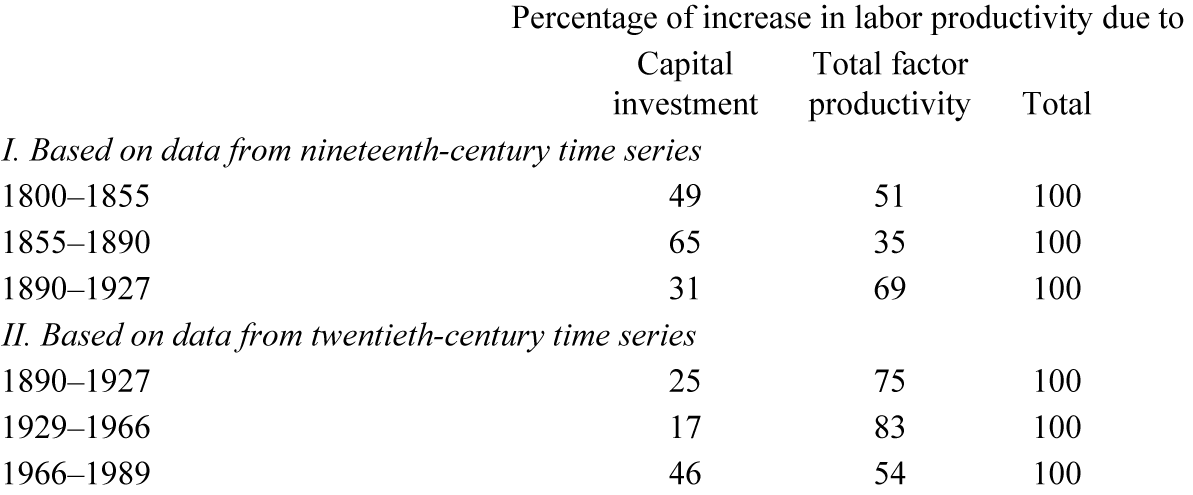
A characteristically modern consumer society began to develop in the United States in the late nineteenth and early twentieth centuries. Two factors distinguished this consumer society from earlier systems of monetary exchange. The first was a quantitative shift in the sources of economic growth. During the nineteenth century, growth had derived from capital investment. Between about 1855 and about 1890, roughly two-thirds of improvements in output per hour resulted from increases in the quantity of capital available to each worker. Around 1910–20, however, economic growth accelerated, outpacing the accumulation of new capital.Footnote 22 In the twentieth century, capital would still contribute to improved productivity, but new investment accounted for less than a third of the increase in output per hour in the period 1890–1966 (see Table 1). The usual hypothesis is that science, technology, or management technique replaced capital as the source of gains in productivity.Footnote 23 These factors are, however, difficult to observe or measure.Footnote 24 Economists aggregate them all under the miscellaneous heading of “total factor productivity.” This accounting term refers to any improvements in the productivity of labor that cannot be attributed to measurable, tangible capital investment recorded on corporate balance sheets.
How Labor Became More Productive. The real quantity of goods and services that a worker in the United States could produce in an hour increased in the nineteenth and twentieth centuries. This table shows to what extent that increase is attributable to measurable capital investment. After 1890, the percentage of growth in productivity due to capital investment diminished. Growth derived from other factors, collectively termed “total factor productivity.” The table is adapted from Moses Abramovitz and Paul David, “American Macroeconomic Growth in the Era of Knowledge-Based Progress: The Long-Run Perspective,” in The Cambridge Economic History of the United States, ed. Robert E. Gallman and Stanley L. Engerman, vol. 3 (Cambridge: Cambridge University Press, 2000), 23.

The change in the sources of growth presented an opportunity for new industries. As investment demand declined in relation to output, the firms with the best prospects no longer supplied the market for investment goods, but rather for consumption goods. For example, the metals industry retooled, turning out tin cans for storing processed foods instead of rails for laying railroads.Footnote 25 To exploit this expanding market, business adopted the high-volume, low-margin strategies characteristic of the Progressive Era.Footnote 26 Department stores began to sell goods on installment.Footnote 27 A burgeoning advertising industry sold trademarked goods and ready-made clothes by the turn of the twentieth century. Advertising required setting the price of goods in advance, putting an end to over-the-counter haggling.
This new reality was a challenge to the austere republican ethic of frugality and hard work inherited from the antebellum period. Until the close of the nineteenth century, saving had been necessary to finance the capital investment required for economic growth. But as total factor productivity improved, growth became less dependent on saving and investment. As James Livingston argues, increased total factor productivity attenuated the association of thrift with national prosperity, alleviating the stigma attached to consumption.Footnote 28 The consumer was becoming American businesses’ most important customer. Consumers’ fickle habits could no longer be dismissed out of hand. Nonetheless, new critiques of consumption replaced the older ethic, reflecting modern anxieties about the conformity and passivity of American consumers and their unscientific approach to spending money.Footnote 29 Growth through total factor productivity generated new portraits of the rational and prudent consumer, new notions of American virtue in an economy regulated by consumption.
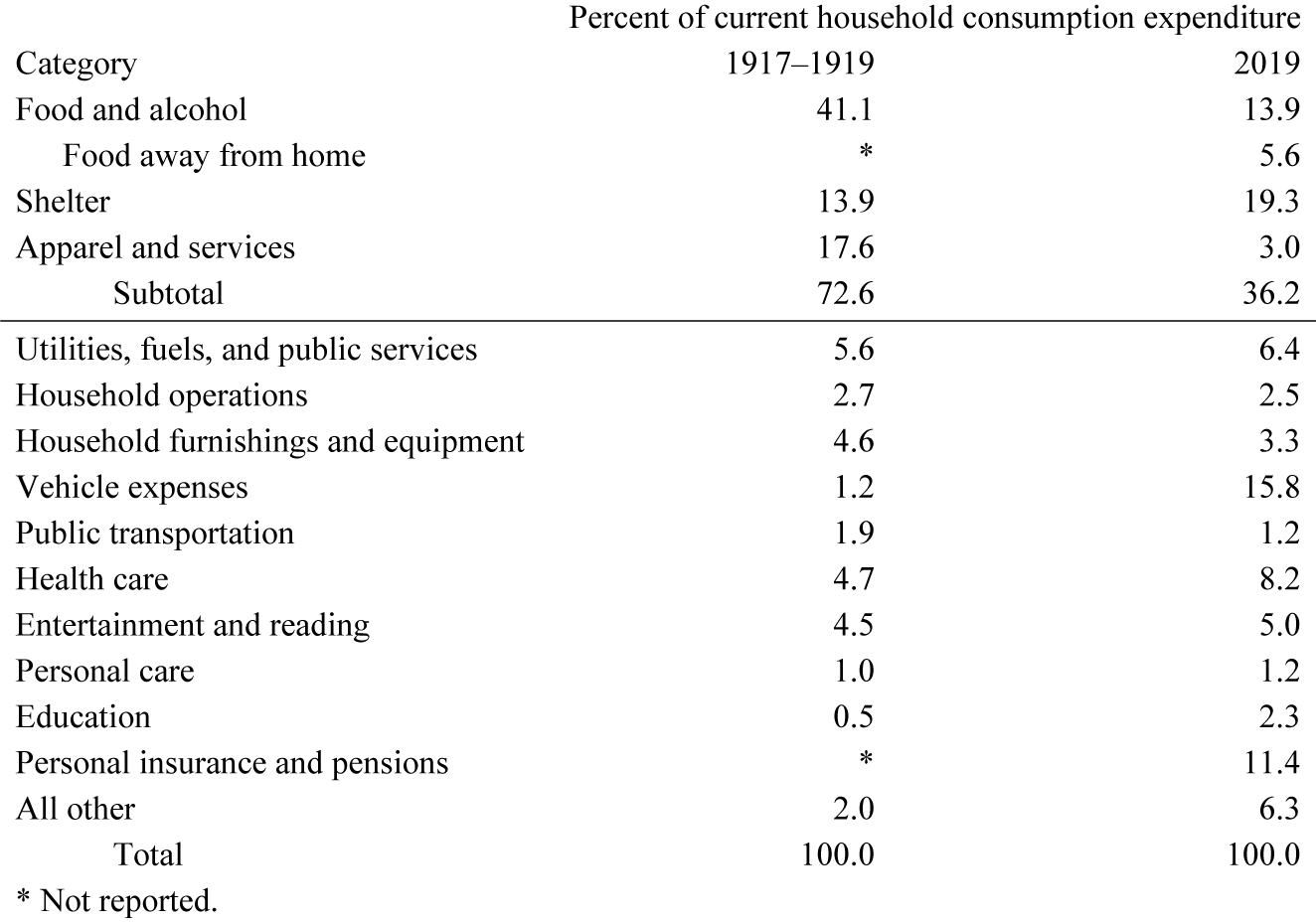
The consumer society’s development was gradual, however. Familiar old hardships still dictated the routines of the household. Studies of working- and middle-class budgets conducted in the early twentieth century show that discretionary spending was not yet quantitatively significant as a share of consumer expenditure. Consumers allocated most of their budgets to the satisfaction of basic needs. Most Americans “had relatively small amounts of money for paid recreation, movies, excursions, vacations, household help, or vehicles,” Daniel Horowitz writes. “The evidence does not point to a new world of ease and mass consumption.”Footnote 30 The most comprehensive of these surveys was conducted by the Bureau of Labor Statistics from 1917 to 1919.Footnote 31 The bureau found that the necessities of food, shelter, and clothing accounted for 73 percent of the typical household’s budget. Spending at restaurants was a luxury not reported in the BLS survey, but other early twentieth-century surveys suggest that meals away from home amounted to less than 10 percent of the total budget for food.Footnote 32 For comparison, Table 2 provides BLS data from before the COVID-19 epidemic. The share of the budget allocated to food, shelter and clothing had dwindled to just 36 percent by 2019. Today, the average household spends nearly as much on food away from home as on food at home.
A Century of Transformation in Household Spending. Figures for 1917–1919 are quoted from Eva Jacobs and Stephanie Shipp, “How Family Spending Has Changed in the U.S.,” Monthly Labor Review 113 (March 1990): 22. Figures for 2019 are quoted from U.S. Bureau of Labor Statistics, “Consumer Expenditures Report 2019,” report no. 1090 (December 2020), 4.

The constraints of the household’s budget for entertainment account in part for the great popularity of cheap amusements. Recording, manufacturing, and showing films required a minimum of labor and other productive resources. Movies were inexpensive relative to vaudeville and other live entertainments, for example.Footnote 33 New forms of commercialized leisure and mass media were affordable enough that households could enjoy them without adding a major item of expenditure to the household accounts. Parents could send younger children to the movies alone to keep them out of the way and out of trouble. Some forty thousand unattended children could be found in New York’s nickelodeons on any given day.Footnote 34 A family of two parents and nine children in Fall River, Massachusetts, all participants in the BLS survey, purchased no fewer than 540 tickets to the movies in the course of the year, about one per week per member of the household. Yet even this exceptional family spent a total of just $52 on tickets to the movies during the year.Footnote 35
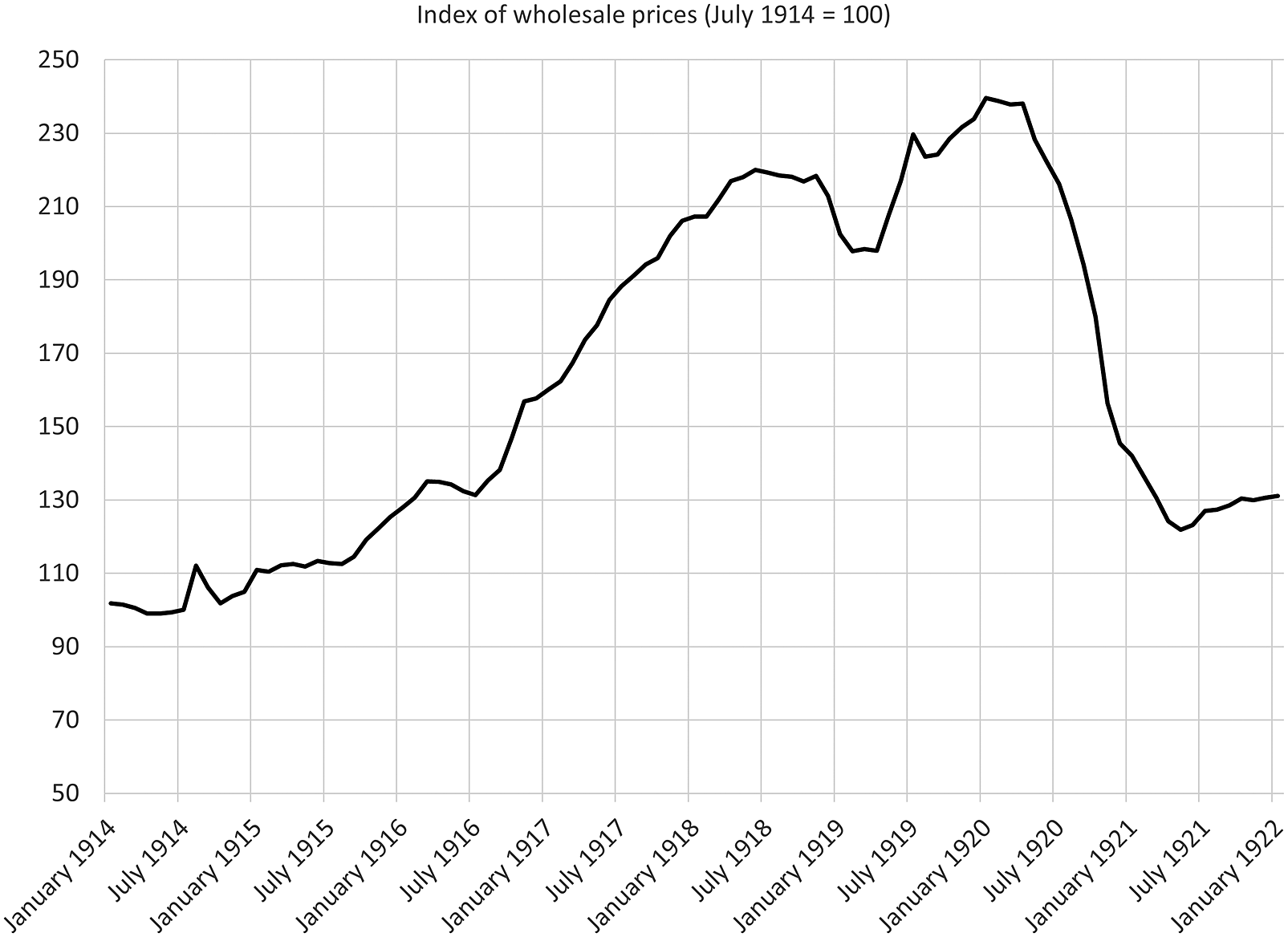
These facts about household consumption in 1918 clarify why the flu did not cause an economic crisis. There was indeed an economic contraction in late 1918 and early 1919, but this was a recession of “exceptional brevity and moderate amplitude,” according to Wesley C. Mitchell and Arthur F. Burns. Both economists witnessed the flu, and they did not mention the pandemic as a cause of the contraction.Footnote 36 The main reason for the pause in industrial activity seems to have been the end of wartime production and the transition to the civilian market.Footnote 37 According to Bradstreet’s, a business weekly, households and industries postponed purchases, anticipating that prices would decline with an end to the war.Footnote 38 Wholesale prices declined beginning in July, before the flu struck (see Table 3). François Velde confirms Burns and Mitchell’s assessment using contemporary and retrospective measures of national income, industrial production, automobile sales, retail sales, employment, bank clearings, and business failures.Footnote 39 The moderate recession of 1918–19 coincided with the epidemic, but had different causes, resulting chiefly from rumors of peace.
Inflation during and after the First World War. Compiled from Bradstreet’s, later Dun and Bradstreet’s. National Bureau of Economic Research Macrohistory Database, in Federal Reserve Economic Data, Federal Reserve Bank of St. Louis, St. Louis, MO, https://fred.stlouisfed.org/series/M04049USM052NNBR (accessed January 24, 2023).

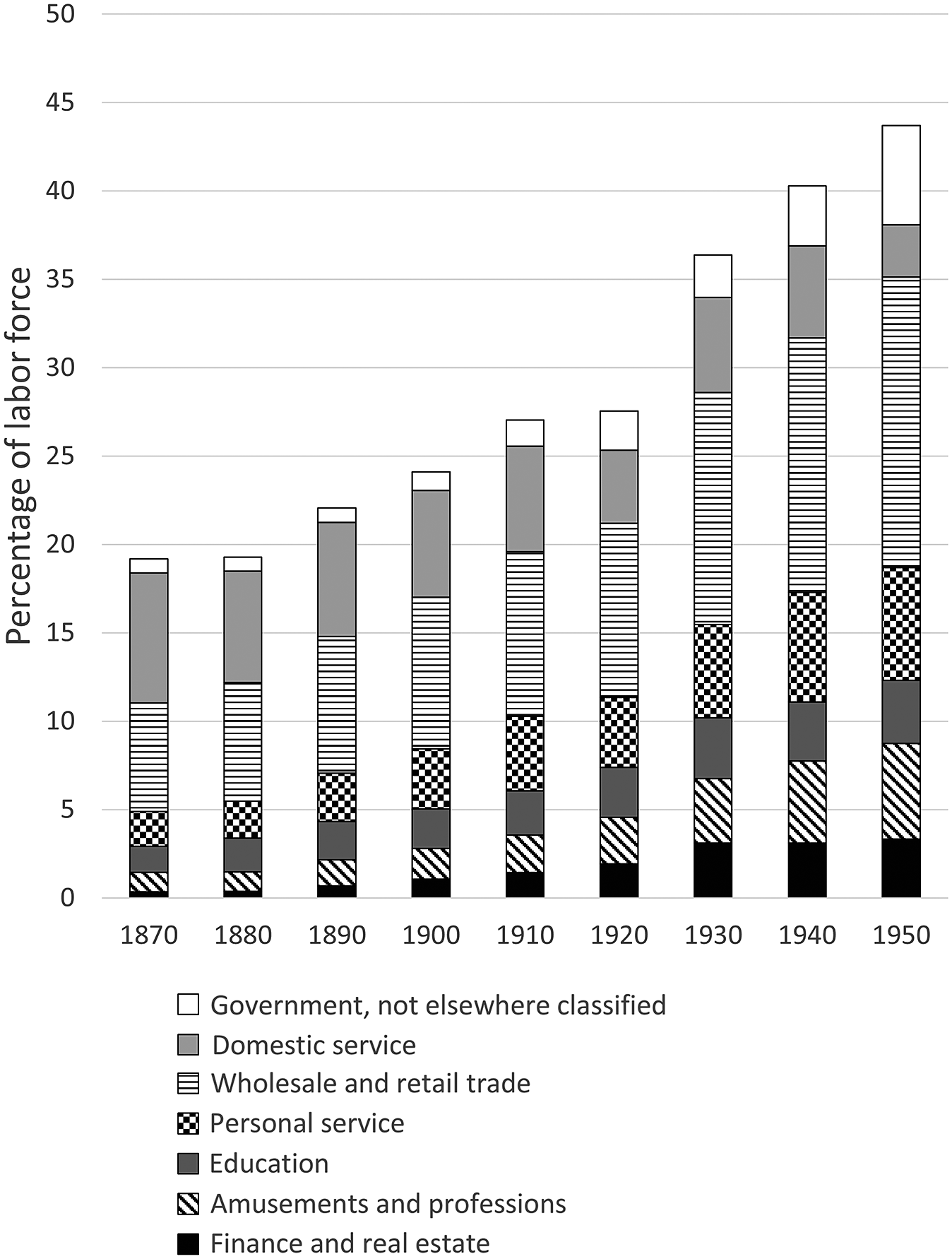
The flu did interrupt the business of leisure and entertainment, but these sectors accounted for a trivial share of employment. During the flu, public-health officers closed cinemas and other places of amusement. Pleasure seekers stayed home, and men had their hair cut outdoors (see Figure 1). Yet these decisions affected few workers. Most Americans worked in agriculture or industry at the time of the flu. The 1920 Census found 27.6 percent of the labor force employed in services (see Table 4). Recent Census data yield a comparable figure of 78.2 percent.Footnote 40 In Ohio, for example, restaurants and saloons employed less than 1 percent of the state’s wage earners.Footnote 41 For an account of the flu’s economic history, however, these data are not completely satisfying. As I have suggested, consumer behavior during the flu depended not only on the level of income and the composition of demand, but also on consumers’ relationships to the articles of consumption. One factor that influenced how consumers decided which purchases were essential or nonessential was the prevalence of wage labor. When consumer goods were bought with wages, their moral and political significance changed.
Employment in Services Prior to 1950. Professional services are, for example, law and medicine, while personal services include laundries, hotels, restaurants, and barbershops. This chart is based on Census data reported by George J. Stigler, Trends in Employment in the Service Industries (Princeton, N.J.: Princeton University Press, 1956), 7.

Services in the pandemic. An outdoor barbershop at the University of California, Berkeley on January 30, 1919. American Unofficial Collection of World War I Photographs, box 115A, Records of the War Department General and Special Staffs, Record Group 165, National Archives, College Park, MD, https://catalog.archives.gov/id/26428662 (accessed January 24, 2023).

Wage labor was a second novel attribute of the consumer society. At the turn of the century, wage labor had only recently become the typical way to make a living in the United States. In New England and the Mid-Atlantic, farmers and their dependents continued to produce for their own households until about the middle of the nineteenth century. Only gradually did competition from large, flat, mechanized farms raising grain on rich prairie soil force these families into factory work.Footnote 42 Even after Emancipation, Americans continued to analogize wage labor to chattel slavery. Both systems rendered workers dependent on a master and deprived them of the full value of what they produced. During the late nineteenth century, however, Americans gradually ceased to associate wages with dependency and servitude. Wages could, if they were high enough, guarantee the worker’s independence and autonomy. As Lawrence Glickman has argued, the eventual acceptance of wage labor redefined American citizenship as a prerogative to consume.Footnote 43
On the one hand, this new politics of consumption enabled those without formal political power to challenge the economic order. By mobilizing their collective purchasing power, women householders effectively opposed trusts’ and landlords’ power over prices and rents, demanded dependable dating and grading of foodstuffs, and penalized employers who refused to come to terms with striking workers.Footnote 44 In the South, African Americans protested Jim Crow by boycotting segregated streetcars, anticipating the tactics of the postwar civil rights movement.Footnote 45 Consumption became thoroughly political—a form of participation in public discourse. Nonetheless, the segregation of the spaces of consumption remained a fundamental limitation of African Americans’ access to the American standard of living, and thus of their status as citizens.Footnote 46 And the rhetoric of the citizen as a consumer was also deployed to disenfranchise newcomers. Arguing that high wages were patriotic, some labor organizers used Chinese immigrants and their spartan spending habits as a convenient foil. Chinese men spent less on shelter, because they lived alone in boarding houses rather than providing for a wife and children; on their clothing, which the white population regarded as effeminate; and on books and education, betraying their purportedly ineradicable foreignness to both American society and Christian civilization.Footnote 47 Inadequate consumption was unmanly and un-American. Some immigrants from Europe purchased new, American clothes immediately on arrival.
Resolving disputes over wages and salaries required defining the American standard of living—that is, determining just what level of consumption was sufficient to confer the status of citizenship.Footnote 48 Surveys such as the one conducted by the BLS constitute a record of the continuing debate on the levels of consumption considered normal and acceptable.Footnote 49 In the early twentieth century, statisticians did not yet use random sampling to calculate average consumer expenditures for a population. Instead, they excluded households they regarded as atypical from their surveys, or else published explicitly normative standards based on their findings. Then, researchers typically drew up multiple illustrative budgets and published them with their results. One budget represented mere subsistence, and others represented certain minimum levels of decency and comfort. Researchers used these prescriptive standards to support organized labor’s demands for better wages, or to claim that workers were already receiving enough and living extravagantly.
Workers and bosses agreed, however, that the American standard of living would improve over time. They were unwilling to foreclose future increases in wages or the demand for consumer products. “If the ruling wage rate is only a living wage, the consumer can buy nothing more than the necessities of life. As wages rise the market rises for comforts and luxuries,” wrote Bethlehem Steel president Eugene Grace in 1926.Footnote 50 “The American standard of living of the year 1903 is a different, a better and a higher standard than the American standard of living of the year 1803,” stated John Mitchell of the United Mine Workers. This standard entitled even unskilled workers to a house with six rooms, plumbing, and “carpets, pictures, books, and furniture.”Footnote 51 Change over time in the standard of living complicated any effort to determine wages on a strictly rational basis. “The bizarre notions of beauty possessed by the designers of clothing are incomprehensible to ordinary mortals, but … society must stand ready to provide the worker with a wage sufficient to enable him to conform to the accepted fashion,” wrote BLS commissioner Royal Meeker.Footnote 52 Culture and history, Meeker and his contemporaries argued, determined what standard of living the American worker could demand.
Citizenship in Wartime
The First World War further transformed the relationship between citizenship and consumption. Citizens were called upon to use their discretion concerning what was and was not essential. Yet not only did consumers fulfill their duties to the state as they conceived them, forsaking their enjoyments for the sake of national defense, they also debated and delineated the state’s claims on themselves as citizens. The epidemic required consumers to exercise certain capacities of citizenship—deliberation, judgment, enforcement, and sacrifice. Using the category of essential business to deliberate about their economic activity during the wartime pandemic, Americans justified their consumption in terms of their membership in, and obligations to, a national polity.
Warfare consumed an extraordinary share of the country’s resources in 1918. Federal spending as a share of gross national income had increased to 22 percent from 4 percent the year before.Footnote 53 The increase in military spending is one intuitively plausible explanation for the absence of an economic crisis in 1918. Military expenditures might have stimulated demand, counteracting reduced household consumption.Footnote 54 But for the war, perhaps, authorities would have quarantined shipyards and garment factories, causing mass unemployment. At the very least, unemployment in nonessential industries might have been more pronounced had laid-off workers been unable to find other jobs with military contractors. For example, when theaters closed in Portland, Oregon, some members of the traveling cast of “My Soldier Girl” found work in the city’s shipyards.Footnote 55 The most persuasive evidence for this hypothesis comes from neutral countries, where the flu coincided with a severe recession. In Sweden, the number of poorhouse inmates increased in the fall of 1918.Footnote 56 In some regions of Spain, wages declined as much as 30 percent.Footnote 57
But there are three reasons to suppose that the war did not moderate, but rather exacerbated the effects of the flu. First, the stimulus to aggregate demand from military spending was never great. Capitalists and bureaucrats were not able to increase production in response to the military’s requirements. The U.S. economy was already near capacity in 1916.Footnote 58 The war effort did not provide employment for workers who would otherwise have been unemployed. Instead, procurement displaced production for the civilian market. Second, by the fall, the circumstance of war was no longer contributing to national income, but subtracting from it, as civilian purchasers worldwide postponed spending in the hope of peace and a fall in prices. (This likely explains the recession in neutral countries. Wartime inflation was global, implicating the economies of both neutral states and combatants.Footnote 59) If this explanation is correct, then rather than readily finding jobs in essential industries, workers displaced by the flu had to compete with those laid off due to the recession in the civilian market.
Finally, the war effort justified restrictions on Americans’ consumption that might have been intolerable in peacetime. By the fall of 1918, the war had already taught Americans the necessity of restricting their consumption, and had given them a language for talking about these restrictions. Disease control was a matter of national defense. And war had altered the relationship between Americans’ economic freedoms and their duties to the state.Footnote 60 In wartime, the state assumed control over the minutiae of economic life, making demands of its citizens, both through express order and moral suasion, that might have been regarded as illegitimate under other circumstances.
The practicalities of mobilization reflected ideas about citizenship that were typical of the Progressive Era. Neither coercion nor specific instruction from the authorities would be necessary to enroll the truly patriotic citizen in the collective project of state-making. Such citizens were assumed to align their own material interests with the state’s. The war effort was “the spontaneous common purpose of a free people,” recalled Bernard M. Baruch, chairman of the War Industries Board.Footnote 61 This Progressive, voluntarist ideal informed how the war effort was administered. No overbearing federal bureaucracy was required. Rather, the state could call on private citizens or on local authorities to parse and execute its regulations. Herbert Hoover, then in charge of the federal Food Administration, controlled inflation with an army of some 800,000 volunteers who monitored prices in stores. Instead of imposing sanctions, federal and local authorities simply discouraged consumers from patronizing those unpatriotic retailers who flouted the government’s published price lists. Meanwhile, millions of housewives pledged to limit consumption of food by planning meatless and wheatless meals for their families, canning produce, and serving leftovers.Footnote 62
The term “essential” was used colloquially to refer to several distinct categories of wartime regulation. For one, Baruch’s War Industries Board set itself the task of reducing civilian demand by eliminating unnecessary products. The board’s charge explained its tasks: “It stimulates and expands the production of those materials essential to the war program and at the same time it depresses and curtails the production of those things not of a necessitous nature.”Footnote 63 Manufacturers produced fewer models of agricultural machines, washing equipment, and men’s accessories. Clothes were produced with less material, and purveyors of fabrics no longer offered free samples. Bakers agreed to stop accepting returns of unsold bread from grocers. Fewer tints of paint were sold. To conserve cloth, floorwalkers at Macy’s gave up the cutaway suits that had been their uniform for decades.Footnote 64
Bradstreet’s noted approvingly that the War Industries Board did not have the legal authority to compel these changes, which were made in consultation with patriotic businessmen. “It is indeed a very difficult proposition for even an expert to decide what is and is not essential business,” the newspaper reported. “Most of us have impressions about what should be deemed non-essential, but these impressions are as various as the individuals who hold them.” Even a florist could be considered essential, according to the article, since the sale of flowers produced income in the form of rent, wages, and returns to capital.Footnote 65 For Bradstreet’s, perhaps, flowers represented pure consumption, aesthetic pleasure for its own sake. A flower contributed nothing to warmth, nourishment, or the capital stock, wilting after a few days. But this was the dilemma of the consumer society. Consumption was always essential to the people whose incomes it guaranteed.
For young men and their families, conscription was the legal context in which the concept of essential industry mattered the most. According to the “work-or-fight” regulation issued on May 23 by E.H. Crowder, provost marshal general in charge of the selective service, young men in “non-useful” occupations had to serve or find new jobs. Those men included idlers and gamblers, such as “attendants of bucket shops and race tracks, fortune tellers, clairvoyants, palmists and the like,” as well as waiters, elevator operators, footmen and doormen, domestic servants, and retail clerks. Another group deemed not gainfully employed were athletes and other entertainers, “excepting actual performers in legitimate operas, concerts, or theatrical performances.”Footnote 66 This definition reflected traditional, producerist attitudes, prizing manual labor and stigmatizing nonessential workers as unproductive and unpatriotic (see Figure 2). Crowder’s classifications of industry were legally separate from those of the War Industries Board, but local draft boards could consult the latter when deciding individual cases, which evidently caused some confusion among the general public. He called on employers to determine whether the release of their workers for military service was in the national interest. And registrants were themselves free to request an exemption on the basis that their work was essential.Footnote 67 Essential business was defined by federal and local officials, employers, and their workers, all of whom were asked to judge the state’s claims on men’s loyalty.
“Vital Work or the Trenches.” Appearing on the front page of the Boston Globe on May 24, 1918, this cartoon satirized men in nonessential jobs. They had just been ordered to contribute to the war effort by finding other work, or else by fighting overseas.

In the United States, flu broke out first in military cantonments, so soldiers and sailors were the disease’s initial victims. But the flu also endangered the civilian labor force required to provision the troops. As the flu spread, the terms “essential” and “nonessential” were transferred from the context of military procurement to that of disease control. In Chicago, authorities prohibited all public gatherings “not essential to the war.”Footnote 68 Implementation of such rules depended not on enforcement but on the compliance of citizens, who were asked to decide for themselves whether a meeting was essential. “The public should do the patriotic thing,” said the chairman of the health board in Des Moines, Iowa.Footnote 69
The state attempted extraordinary intrusions into Americans’ private lives. In Louisville, Kentucky, the health board exhorted women to refrain from visiting one another.Footnote 70 In Spokane, Washington, those who engaged in dancing and card-playing, even in private homes, were threatened with prosecution. “It is dangerous for people to remain facing each other at a card table,” one physician said. “The people of Spokane are individually honest, and we expect them to obey the regulation, without question.”Footnote 71 Announcing imminent closures, the Boston Daily Globe concluded, “Bostonians will be confronted today with the problem of doing nothing or taking a walk.”Footnote 72 The editor of a newspaper in Waupaca County, Wisconsin, observed that the quarantine of “isolated families to a degree seldom known in city life,” and that the result was “forced retirement into oneself.”Footnote 73 In Lowell, Massachusetts, a “holy calm” descended the morning after a quarantine was imposed.Footnote 74
In at least in some jurisdictions, the logistical responsibility for enforcing quarantines and dispatching doctors and nurses fell to the local Council of Defense.Footnote 75 These bodies possessed “the general function and power to carry on activities for war.”Footnote 76 Yet their formal statutory authorities, like those of the Council of National Defense, were vague or nonexistent.Footnote 77 They occupied themselves with conserving food, selling Liberty bonds, and registering men for the draft. They organized auxiliary militias or police forces, ensuring foreign-born workers’ loyalty through social assistance or surveillance. State officials organized state councils at the request of the Council of National Defense. Some states also established a system of councils at the level of the county, city, village, or township. In other states, these organizations were, again, left to local initiative. A report from Washington lamented that “only in communities of vigor do councils of defense exist.”Footnote 78
Perhaps no community better demonstrated the vigor expected of Americans in wartime—or the tangled conceptions of authority and state power that Progressivism produced—than the town of Challis in Custer County, Idaho. In early November, the county sheriff arrested a hunting party of six prominent citizens from a neighboring town for violating a quarantine. The men “stole past” the quarantine stations established to guard Challis against the flu, “running the blockade at night” and exposing the town to infection, according to the county’s Council of Defense.Footnote 79 The district court issued a writ of habeas corpus for the hunters on November 5, and the judge telephoned to have the men released from the jail in Challis.
But the town’s telephone operator was prevented from taking the judge’s message. “The girl felt that it was her duty to do so,” but her manager “ordered the ’phone placed out of commission” and said “to kick the — ’phone into the street,” because “they did not want the orders from the court.” The judge himself left for Challis the next day to enforce his writ. “On approaching Challis we met about 150 armed people, also a barracade [sic] across the road, consisting of wagons with hay racks and barbed wire,” said an attorney who accompanied him. The judge found the sheriff and the chairman of the county health board in contempt of court, and asked the governor for troops to restore order. “There is no rioting,” the Council of Defense protested, “but a calm determination of law-abiding citizens to maintain their rights.” Boise agreed. The secretary of the state Board of Health wired county officials to confirm that they had acted within their authority. The attorney general was of the opinion that the judge himself could be sanctioned for disregarding the quarantine.Footnote 80
The people of Custer County invoked the power and authority of the state in different ways and for incompatible purposes. The judge sought to serve a writ of habeas corpus, a right provided by the federal Constitution. The county board of health appealed to the police power of the state of Idaho. The Council of Defense, responsible for the community’s military and economic strength, had a special claim to represent the state’s interests. But it was legally autonomous from the distant national government prosecuting the war, and, like the health board, depended on private persons to enforce its directives. In Custer County, Americans acted on behalf of the state as they understood it, whether or not they had the authority to do so, and regardless of their official status.
Any explanation of the fact that no economic crisis occurred in 1918 requires a consideration of the role of government—and in turn, an analysis of who exercised state power and by what means. It is often assumed that in the early twentieth century, Americans enjoyed limited government in accordance with the doctrines of individualism and laissez faire. The administrative capacity of the state’s few public employees was minimal. Such a state, it seems, would be simply incapable of containing pandemic influenza. The recent economic literature on the flu implicitly and reflexively adopts this common misinterpretation, rather than critically examining the state as it was. Researchers assert, without evidence, that disease control was lax.Footnote 81 Perhaps this claim has seemed self-evident due to a tacit assumption that the state was too weak to act decisively. When the flu struck, federal administrators and county and city boards of health put the economy before public health, the reasoning goes. “Health officials in 1918 did not think that doing more than they did was worth the cost,” Velde writes.Footnote 82 According to this interpretation, the lack of a depression is unsurprising. Americans of the period did not turn to the state for protection from social ills, including infectious diseases. From this point of view, an individualist philosophy of limited government, fortitude, and rugged self-sufficiency limited health officials’ options.
This reasoning ignores the variety of manifestations of state power in the Progressive Era. Private citizens acted with public motives. Decentralized administration through delegation and consultation was an instrument of governance—evidence not of the state’s weakness, but its strength. Though diffuse, the state’s power could assume coercive, violent forms.Footnote 83 And economic principles did not prevent Americans from invoking this power to control the pandemic. There was “a general theory deeply ingrained in our political habits to the effect that Government should not interfere with the processes of business,” admitted Baruch, chairman of the War Industries Board. For the war effort, however, “there would be no hesitation anywhere in acquiescing in restrictions affecting fortunes or freedom.”Footnote 84 Responsibility for preventing flu usually fell to the county or municipality.Footnote 85 But although local authorities were inconsistent in their efforts to prevent infection, they were energetic, and they had enthusiastic support.
During a pandemic, ordinary people of necessity evaluate medical evidence for themselves, select the appropriate precautions, and attempt to impose those decisions on others. “Every citizen should feel these days that he or she is a health officer,” editorialized the Winnipeg Tribune (Manitoba, Canada).Footnote 86 In the COVID-19 epidemic, too, mandatory non-pharmaceutical interventions could explain only a fraction of observable variation in employment and interpersonal contacts.Footnote 87 Even stay-at-home orders, the most restrictive policies enacted in the United States, accounted for less than a quarter of new unemployment claims.Footnote 88 Governments worldwide could do little more than formalize and rationalize precautionary measures that their constituents were already pursuing.Footnote 89 Notions of civic duty, state power, and national identity suffused private, voluntary consumer behavior. Public, mandatory regulation responded to popular initiative, and the state depended on citizens for compliance and enforcement. This experience, like that of the 1918 influenza, shows the entanglement of public and private life, of the market and the state.Footnote 90 There is no autonomous economic domain in which consumers endogenously maximize utility in the abstract, unencumbered by societal norms, political allegiances, and other facts of history. Nor can policymakers shape the economy from without—exogenously, independent of the material relations of power on which political authority is predicated.
Essential Business
In this section, I examine the flu’s effects on business, with an emphasis on retail sales of textiles and apparel. This was the largest category of household expenditure after food (see Table 2). I draw two conclusions. First, the flu’s economic effects seem to have been independent of the leniency or stringency of local regulations. Private citizens, acting in the state’s interest as they conceived it, supplemented official, mandatory public-health policies. These deputies acted on their civic duty as they understood it, making judgments for themselves, their neighbors, customers, and employees about appropriate consumption during a pandemic. Disease control in 1918 transcended region as well as party.Footnote 91 So did the flu’s economic effects. The lack of a depression cannot be attributed to lax disease control.
Second, although the flu’s effects on retail were geographically widespread, they were also moderate. Again, the low level of household incomes already limited retail spending to urgent and necessary expenditures. “The charge so frequently made that the American workingman is extravagant in expenditures for clothing for himself and his family seems hardly borne out by the facts,” wrote BLS commissioner Meeker.Footnote 92 Most of the textiles that men and women actually purchased were necessary to show that they fulfilled their sexual and economic roles as members of the American body politic.
Complaints in the business press in October and early November about the effect of the pandemic on retail were universal, regardless of the stringency of local regulations. Only in a few jurisdictions, such as St. Louis, Missouri, and Wisconsin, did authorities order retailers to close. Others restricted hours and crowding. But businesses were expected to act in the national interest, whether or not doing so was legally required. In Des Moines, there were no official short hours, but the health board encouraged women to shop early in the day, while department-store managers agreed to open late so that their clerks could avoid rush-hour crowds.Footnote 93 Retailers remained open in Ohio, where employment in retail and wholesale trade increased as usual in advance of the holidays.Footnote 94 Yet in Cincinnati, Bradstreet’s stated, “retail trade suffers, owing to poor attendance, the epidemic and restrictions.” Many shoppers apparently feared infection. “Owing to the severe epidemic, the public is not patronizing the stores,” Bradstreet’s correspondent in Montreal reported, “… and a good many will not purchase at all except through the telephone.”Footnote 95 In New York, the authorities were probably more lenient than in any other major city in their response to the pandemic. Retailers had to modify their hours to reduce crowds, but schools, churches, and businesses except for theaters remained open. Yet according to the Wall Street Journal, the retail depression was worse in New York than anywhere in the country.Footnote 96 The newspaper’s staff evidently did not believe that the economic effects of the flu depended on official policies.
Even in the absence of regulations, employers and consumers acted to protect themselves and the nation’s security. In Lowell, not only did bars and saloons expel their patrons at 5 p.m. on Saturday, October 5, in accordance with an order from the health board. “The greater part of Lowell’s business life was snuffed out, for many of the stores not strictly involved in the board’s order voluntarily closed their doors in a spirit of commendable co-operation.”Footnote 97 In South Philadelphia, where the flu was especially severe, businesses closed voluntarily to reduce further contagion. Shopkeepers were lauded for dedicating their time instead to the sick and the dying.Footnote 98 In Oakland, bars, cafés, saloons, and restaurants closed voluntarily because they had no customers.Footnote 99
After all restrictions were lifted in Fall River, Massachusetts, shoppers still stayed home, and theaters remained mostly empty. “People are apparently not taking any chances,” commented a reporter.Footnote 100 The losses incurred by movie houses and theaters seem to have been almost total during the period of the epidemic. In some cities, theater interests opposed public-health officials, as might be expected.Footnote 101 Elsewhere, however, owners of theaters advocated stricter quarantines. Attendance was poor prior to mandatory closures, and managers wanted the epidemic quelled so that they could profitably reopen for business.Footnote 102 In Portland, Oregon, they won a stricter ban. A reporter for the Oregonian described the bizarre sight of empty streetcars on Portland’s main streets. The headline declared, “All Portland Bows to Will of Nation.”Footnote 103 Whether the purpose was to free up manpower for the draft, to conserve flour and fabric for the troops overseas, or to stop the flu’s spread, abstention from nonessential purchases was regarded as a patriotic sacrifice.Footnote 104
The pandemic dislocated the routines of leisure and sociality in which retail spending was embedded. Outside of New York, churches and schools were closed. Retailers were still open in Portland, but “precautions taken by authorities to stamp out influenza have affected retail trade in all lines,” according to Bradstreet’s. “Public meetings of all kinds were postponed pending lifting of the quarantine, so Portland had nothing to attract its attention to the business center,” the Oregonian reported.Footnote 105 “There was a 2 a.m. appearance to Portland’s downtown streets” on the evening after the quarantine was imposed. “The glare of electric lights in front of many theaters was gone… . The festive crowd of pleasure seekers was conspicuous by its absence.” Large outdoor gatherings, notoriously for Liberty Loan parades, remained acceptable. In Omaha, Nebraska, citizens held a massive picnic at a community stove in a city park. According to the World Herald, one thousand people visited the stove on the first Sunday of the quarantine. These picnickers were glad to recall a time “when life was less complex and people less sophisticated. When there were no commercial agencies working for their pleasure.”Footnote 106
Shopping was another form of commercialized leisure that the flu disrupted. Department stores offered cheap entertainment to their visitors, who could admire the wares for sale without making purchases.Footnote 107 According to the Wall Street Journal, “practically all” Woolworth stores were closed on Saturday nights, evidently a lucrative hour during a normal week.Footnote 108 Not only were the flu’s economic effects largely independent of the decisions of local authorities. The quarantines that were imposed affected more businesses than the recent economic literature has assumed.
The pandemic did coincide with a measurable decline in retail sales. Using an index published in 1929, Velde calculates that revenue decreased about 13 percent at clothing, dry-goods, and five-and-ten stores between August 1918 and October 1918.Footnote 109 Due to the sheer volume of retail sales, retailers’ losses in dollars may have exceeded the rest of the service sector’s. In Birmingham, Alabama, department stores lost an estimated $160,000 due to the pandemic. The city’s theaters lost $90,000.Footnote 110 That these losses were not so extreme as to cause a recession was due to the level of household income. Consumer demand had not yet diversified.
Although households spent large sums on clothes and dry goods, contemporaries agreed on the propriety of these expenditures. “It is, of course, essential that necessary shoes shall be provided for the use of our soldiers, seamen, and our civilian population,” read a circular from Washington.Footnote 111 Meeker observed that norms of dress were no less obligatory for being socially conditioned. “Clothes were first invented, not for protection against heat, cold, and wet, but for adornment, and it is for the purpose of ornamentation that clothes are largely worn today,” he wrote. “… Few men and women among the workers in this country are willing to appear in public unless they can dress near enough to the mode or the standard of fashion so as not to attract critical attention.”Footnote 112 Local standards of respectability necessitated most purchases of textiles, which did not breach the consumer’s duties as a citizen.
Welfare allowances for indigent households offer cogent evidence. The provincial government of Manitoba in Canada granted $53.90 a month to Margaret Nilsson of Winnipeg, a working-class mother of three widowed by the influenza. The total included $11 for apparel. Nilsson complained that the $14 she was allocated for rent was insufficient, and she received permission to move out of the city to reduce her cost of living.Footnote 113 This was a parsimonious budget. The resources of the Mothers’ Allowance were all but exhausted by the pandemic. Nonetheless, the agency assumed that Nilsson would have to spend 20 percent of her allowance on clothes and fabrics. A large share of consumer expenditure purchased clothes that the household and the state agreed were essential.
Nor were households in a position to postpone retail purchases until the epidemic had passed. Consumers bought clothes as needed. Households could afford to own only a few outfits at any one time. These items wore out quickly through regular use, and they had to be replaced often. Clothes were made from organic fabrics as more durable, synthetic fibers were not yet available. Household-budget surveys show that households made frequent purchases of clothes, regardless of income. The BLS study found that a man would buy a new suit about once every eighteen months and new shoes once every five months.Footnote 114 According to a 1907 study of working-class households in New York, a man would be expected to purchase a new suit for himself each year, while a woman would be expected to buy materials for three new dresses.Footnote 115 Many households bought new apparel with the seasons. Even if fashion was clothing’s main purpose, as Meeker argued, protection from the elements was also critical, particularly before automobiles and central heating. Bradstreet’s reported complaints from retailers across the continent that due to unusually warm weather in the autumn of 1918, customers were still wearing summer outfits rather than buying winter wear. Clothes designed for warmth were heavier and costlier, another reason that so much had to be spent on apparel.
For the wage worker, dressing well was an assertion of dignity. Contemporaries decried wage labor, whether performed by men or women, as a form of prostitution. Women were in fact subject to frequent sexual harassment at work.Footnote 116 Proper dress may have deterred advances from male supervisors by indicating a woman’s economic security and independence. For their part, employers also demanded that employees look neat and orderly at work.Footnote 117 According to researchers interviewing cotton-mill workers in Georgia and the Carolinas, a frugal, “minimum” standard of living required several pairs of shoes annually, in addition to a cheap new suit for a male worker or materials for six dresses for a female worker. “Their work demands that they be on their feet all day long,” the researchers observed. “… The lint, dust, and oil of the cotton mill is particularly hard on clothing.” Footnote 118 Workers wore out their clothes on the job.
Cautious and conservative buying habits reflected consumers’ limited means. Standards of dress remained formal. In the decade preceding the flu, for example, women were beginning to wear dresses cut above the floor, but it was not until 1926 that Sears Roebuck offered skirts hemmed above the knee in its mail-order catalogs. Men wore hats and high, stiff collars (see Figure 3). In 1918, the typical household still spent less on women’s clothing than on men’s, which, unlike that of women, was usually sold ready-made rather than sewn at home.Footnote 119 This fact is quite instructive. Women did the shopping for the household. Advertisers addressed women in their copy. Progressive reformers worried that women were particularly susceptible to advertisers’ psychological manipulations. Labor leaders scrutinized working women’s fashions.Footnote 120 By contrast, men’s sartorial choices were tacitly assumed to be sensible and rational. It does not seem that federal bureaucrats had men’s clothes in mind when they inveighed against “fancied wants.” And yet, as buyers of clothes, women were thrifty and discerning. New marketing practices were responsive to their interest in capitalizing on sales and bargains. “When economies are necessary they are made largely at the expense of the wife’s wardrobe,” Meeker wrote.Footnote 121 Household incomes precluded extravagance or experimentation in fashion. Expenditures on clothing were robust, despite the campaign to conserve textiles for the war effort and the collective attempt to restrict nonessential business during the epidemic. The predominance of essential business in textiles and other sectors prevented a general crisis.
“Values That Spell Economy.” Advertising copy in the Sears, Roebuck mail-order catalog for fall 1918 emphasized the durability of these relatively inexpensive suits. Lawrence B. Romaine Trade Catalog Collection. Mss 107. Department of Special Collections, Davidson Library, University of California, Santa Barbara.

In specific industries, sickness reduced the supply of labor. Weekly figures from the U.S. Geological Survey show a decline in national output of bituminous coal of 25.5 percent between the end of September and the middle of November. The lack of coal constrained iron and steel production. Outbreaks among workers idled textile mills as well. The federal government was unable to fulfill military orders for copper due to illness at smelters and refineries. Because of the lack of healthy telephone operators in Brooklyn, the telephone system was operating at just 55 percent capacity. North of 59th Street in Manhattan, operators were refusing nonemergency calls. Illness affected labor in the household, too. Sickness among wives compelled “changes in the habits of thousands of otherwise dignified husbands,” who became responsible for preparing food and caring for children, according to the Wall Street Journal. Footnote 122
And at the level of the household, a breadwinner’s sickness or death had acute financial consequences. By the end of 1918, the life-insurance sector had paid out approximately $70 million to survivors of the epidemic’s victims.Footnote 123 Yet these benefits were unavailable to many. African Americans could purchase at best discriminatory, substandard policies from main-line life insurers—if they were not denied coverage entirely.Footnote 124 In all, just half of the households in the Bureau of Labor Statistics survey carried life insurance more generous than an “industrial” policy, which was in effect only burial insurance.Footnote 125 A decent funeral was obligatory in working-class culture, but few households could afford more.Footnote 126 Other forms of social insurance were inadequately funded. Applications from women widowed by the flu overwhelmed administrators of mothers’ allowances.Footnote 127 Illness did not affect aggregate macroeconomic variables, such as rates of interest and unemployment. Yet the burdens on some households and communities were more severe than the aggregate data suggests.
Conclusion
Pandemic influenza had vanished almost entirely in the continental United States by the spring of 1919. Meanwhile, inflation destabilized social hierarchies. To protect the real value of their wages, some four million workers struck during the postwar expansion that began in the late spring of 1919 and continued for about a year in the United States.Footnote 128 Unions in Logan County, West Virginia, armed fifteen thousand miners to fight against their bosses’ hired guns. Led by veterans of the fighting in Europe, the miners were suppressed only with air support from the 88th Bomber Squadron.Footnote 129 General strikes paralyzed Seattle, Winnipeg, and other cities.Footnote 130 For workers in Winnipeg, writes Esyllt Jones, the epidemic affirmed a sense of solidarity based on the shared experience of illness, while the manifest failure to control the disease embarrassed the city’s elite.Footnote 131 As its value declined, money ceased to function as an index of social distinction. “A colored woman in a cotton dress and shawl walked into a store in Georgia and asked for a pair of a certain type of shoe,” reported the Saturday Evening Post in 1920. The salesman told her they cost $25. “‘I didn’t ask you the price,’ was her answer; and she bought two pairs.”Footnote 132
At first, the Federal Reserve was reluctant to control inflation, in part because the Wilson administration opposed an increase in rates. To restrain the expanding supply of money, the Fed urged its constituent banks to distinguish between “essential and non-essential credits” by extending loans only for legitimate purposes.Footnote 133 The Fed at last raised rates modestly on November 4, 1919. The rate on short-term commercial paper increased to 4¾ percent. On November 29, Governor Benjamin Strong of the New York branch warned that the moment for further action to reduce prices had passed. A recession was already imminent, and to increase rates again would be to invite a crisis.Footnote 134 But Strong went on leave the next month due to ill health. In January 1920, the rate was advanced abruptly to 6 percent. Economic conditions deteriorated that spring. In Congress, lawmakers representing agricultural districts excoriated the Fed, demanding a reduction in rates.Footnote 135 But as prices remained high, the Fed increased rates again to 7 percent in June. “There was a natural, if regrettable, tendency to wait too long before stepping on the brake, as it were, then to step on the brake too hard, then, when that did not bring the monetary expansion to a halt very shortly, to step on the brake yet again,” wrote Milton Friedman and Anna Schwartz.Footnote 136 The result was a severe recession.
The Federal Reserve’s decisions had several consequences. First, labor’s hopes were frustrated. Unemployment increased, and union membership dwindled. Strikes continued in 1921 and 1922, but these were defensive actions, organized not by a militant rank-and-file seeking to remake capitalism, but by the leadership, which sought to defend workers’ prerogatives against employers who demanded longer hours at lower wages.Footnote 137 Second, the Ku Klux Klan reappeared, capitalizing on farmers’ distress as the prices of agricultural commodities plummeted. The Klan boasted six million members by 1924 and became a powerful force in the Democratic Party.Footnote 138 Third, the Federal Reserve’s decision to increase rates propagated deflation overseas. When U.S. rates increased, the dollar appreciated against the French franc and the pound sterling. The Bank of France and the Bank of England increased their rates in response. Banks elsewhere followed suit. The Federal Reserve’s policies established the economic conditions for a worldwide political reaction.Footnote 139
Inflation is a typical economic consequence of pandemics. Since the Black Death in the 14th century, epidemic diseases have generally increased prices via a reduction in labor supply, yielding medium-term benefits for surviving workers in the form of greater real wages.Footnote 140 Although the costs of the First World War were the principal cause of the inflation that followed, the flu may have contributed to higher prices.Footnote 141 The inflation set in around the close of 2020 was to be expected on the basis of the historical record. By contrast, the initial effects of the coronavirus had few if any precedents. The recession that began in March 2020 was deflationary rather than inflationary. This crisis had no analogue in 1918.
The anomalous COVID-19 recession was due to the changing nature of consumption. Since the influenza pandemic, increasing incomes have enabled households to consume a greater variety of goods and (especially) services, while the share of workers employed in meeting basic needs has diminished. The industries that predominate in a consumer society are at risk during a pandemic because they depend on discretionary spending that households can readily defer. In 2020, this shift in the composition of demand amplified the economic effects of social distancing, which were insignificant in 1918. One precondition of the COVID-19 recession was the increase in household incomes and the transformation of consumer demand.
Another was how Americans of the twenty-first century distinguished what was essential from what was not. The category of essential business encompassed much less of the economy than in 1918. At the time of the flu, prominent figures in business, government, and organized labor, as well as the economic profession, confidently predicted the indefinite expansion of the quantity and variety of consumer goods that would be regarded as necessary and indispensable. But in the years after the First World War, Progressive economists, public intellectuals, and popular authors became concerned that consumer demand would not keep pace with productive capacity. They argued that wages had to be improved, and wealth and income redistributed, for business to remain profitable.Footnote 142 The shift in the pattern of U.S. economic growth around the turn of the twentieth century resulted in underemployment and underutilization of capital. Due to growth in total factor productivity, these resources were no longer needed to satisfy demand.Footnote 143 To absorb rapidly increasing output would require an increase in the American standard of living—a more equitable distribution of purchasing power, together with an expansion of the norms mandating and authorizing the use of that power to consume.
Across the Atlantic, the European Left was using Marx’s term “socially necessary labor” to conceptualize similar relationships among output, incomes, and norms of consumption. I find this concept useful for understanding the economic effects of pandemic disease. In Marx’s system, socially necessary labor is the real cost, in terms of labor inputs, of the real prevailing wage, in terms of consumers’ goods.Footnote 144 Because this real wage is no mere quantitative aggregate, but depends on law, custom, and political power, the concept of “socially necessary” labor emphasizes the normative aspects of consumption—the attitudes and conventions that demarcate luxuries from necessities and determine consumer behavior in an epidemic. The recent experience of nonessential workers, who risked unemployment during the COVID-19 pandemic, suggests that these norms have not relaxed proportionally to the increase in productivity. From the Marxist point of view, nonessential workers constitute a vast human surplus whose labor is no longer socially necessary.
Unemployment has since resolved, and it might seem that the exceptional circumstances of a pandemic reveal little about persistent trends in U.S. economic history. But even in normal conditions, it is easier for workers to demand raises when they can claim that prevailing social norms require an improvement in their standard of living. If they make products that consumers feel are necessities, consumers will pay for better wages and benefits rather than purchasing other goods instead, so employers can better afford to meet workers’ demands. Finally, whether an ever-more affluent middle class is in the habit of saving or displaying its wealth affects total consumer spending, and thus the demand for workers’ labor. Basic features of the twenty-first-century economy, such as excessive saving and the decline in workers’ bargaining power, may be due in part to the long-run stability of norms of consumption.Footnote 145 On my reading of Marx, these norms are more than merely aesthetic. They are constitutive of the material relations of production, as the contrast between the pandemics of 1918 and 2020 shows. The share of the labor supply deemed socially necessary has diminished, in an economy that has largely ceased to be essential.