I. INTRODUCTION
Superhard materials have attracted considerable attention during recent years, due to the importance in fundamental science and technological applications such as cutting tools, high-temperature environments, and hard coating applications.Reference Solozhenko, Andrault, Fiquet, Mezouar and Rubie1–Reference Peng, Liu, Fu and Yang6 Therefore, intensive experimental and theoretical efforts have been focused on the synthesizing and designing new materials with compressibility and hardness comparable to diamond, which is known as the hardest and least compressible material so far.Reference Wu, Hao, Liu and Meng7 Scientific attempts to synthesize or theoretically predict new superhard materials are focused on two classes of superhard materials. The first one is the compounds formed by light elements (LEs) (B, C, N, and O), such as diamond, cubic boron nitride (c-BN), and carbon nitrides, etc.Reference Sun, Jhi, Roundy, Cohen and Louie8–Reference Li, Wang, Oganov, Cui, Ma and Zou11 The second one is the borides, carbides, nitrides, and oxides of transition metals (TMs).Reference Levine, Tolbert and Kaner12–Reference Zhao and Wang14 There are a great number of studies on these materials in the literature. For instance, Wang et al.Reference Wang, Arai, Sasaki and Fan15 investigated various structures of IrN2 as candidates of the new phase, and they found that the most stable monoclinic structure has higher bulk modulus than pyrite PtN2. In another study, Wu et al.Reference Wu, Zhao, Xiang, Hao, Liu and Meng16 studied the structural, elastic, and electronic properties of IrN2 for various space groups and presented that monoclinic P21/c phase with arsenopyrite-type structure is energetically more stable than the other phases and exhibits high bulk modulus of 373 GPa. Young et al.Reference Young, Sanloup, Gregoryanz, Scandolo, Hemley and Mao17 synthesized IrN2 and OsN2 at high pressures and temperatures using laser-heated diamond anvil cell techniques. It is showed that the synthesized materials have bulk moduli comparable with those of the traditional superhard materials, and the bulk modulus of IrN2 was measured as 428 GPa. Yu et al.Reference Yu, Zhan and Zhang18 studied the elastic properties and electronic structure of PtN2 with the pyrite structure and expressed that calculated shear modulus of 214 GPa suggests that PtN2 is harder than some well-known hard materials such as TiN, SiC, and boron carbide. At the same time, Gou et al.Reference Gou, Hou, Zhang, Sun, Gao and Gao19 calculated hardness of PtN2 and showed that PtN2 with pyrite structure possesses excellent mechanical properties. Yu and ZhangReference Yu and Zhang20 investigated three noble metal nitrides (IrN2, AgN2, and AuN2) and they found that these noble metal nitrides are stable with the fluorite structure. It is reported that the filling of all the small tetrahedral interstitials makes the phases difficult to compress, resulting in large bulk moduli.Reference Yu and Zhang20
On the other hand, Hao et al.Reference Hao, Xu, Wu, Zhou, Liu, Cao and Meng21 investigated the structural, elastic, and electronic properties of ReB2 and WB2 by mean of first-principles calculations and showed that ReB2 and WB2 can be regarded as potential candidates of ultraincompressible and hard materials. Liang and ZhangReference Liang and Zhang22 supported that ReB2 is ultraincompressible and a potentially superhard material. However, Wang’s calculationsReference Wang23 show that both ReB2 and TcB2 are potentially superhard materials on the basis of their large bulk moduli and also their large shear to bulk modulus ratios. Cumberland et al.Reference Cumberland, Weinberger, Gilman, Clark, Tolbert and Kaner24 synthesized OsB2 and measured its compressibility. They reported that OsB2 is highly incompressible hard material.
Gou et al. studied some 5d TM carbides MC (M = W, Re, Os, Ir) with hexagonal tungsten carbide-type structure, and their results indicate that the incompressibility of ReC exceeds that of diamond under higher pressure.Reference Gou, Hou, Zhang and Gao25 In another study, WangReference Wang26 showed that the compounds ReC and TcC with the hexagonal WC-like structure are ultraincompressible and hard materials due to the very large bulk and shear moduli. Guo et al.Reference Guo, Xu, He, Yu, Liu and Tian27 investigated osmium carbide for different hypothetical structures, and the results indicated that OsC with FeSi structure, NiAs structure, and CoSn structure satisfies the mechanical stability criteria. However, Gu et al.Reference Gu, Krauss and Steurer28 studied superhard and ultraincompressible nature of some TM borides. And Zhang et al.Reference Zhang, Wang, Cui, Ma, Niu and Zou29 investigated electronic structure and hardness of osmium borides, carbides, and oxides with first-principles, and their results suggested that the large occupations and high strength of the covalent bonds are crucial for a superhard material, and there is no clear connection between bulk modulus and hardness in these osmium compounds. Generally, in the second-class materials, the TM elements have high valence electron density, while the interstitial atoms such as boron, carbon, nitrogen, and oxygen are small and strong bond-forming elements.
Furthermore, it is known that two design parameters are important for selection of superhard TM compounds, i.e., a high valence electron density of TM and the presence of directional covalent bonding.Reference Wen-Jie, Hong-Bin and Yuang-Xu30, Reference Zhao, Xu and Wang31 Recently, four noble metal nitrides of Pt, Ir, Os, and Pd have been synthesized under extreme conditions (in the range of 60 GPa and 2000 K, respectively).Reference Gregoryanz, Sanloup, Somayazulu, Badro, Fiquet, Mao and Hemley32–Reference Crowhurst, Goncharov, Sadigh, Zaug, Aberg, Meng and Prakapenka35 Due to potential practical applications, there is considerable interest in investigating the crystalline structure, stability, elasticity, and electronic structures of noble metal nitrides.Reference Sahu and Kleinman36–Reference Aberg, Sadigh, Crowhurst and Goncharov49
Based on the above experimental and theoretical explorations, the best way of synthesizing new superhard materials could be an extensive search for LE-rich TM compounds, where LE–LE bonds are easily formed.Reference Wen-Jie, Hong-Bin and Yuang-Xu30, Reference Zhao, Xu and Wang31 In the previous studies, the structural, elastic, and electronic properties of ReN4Reference Wen-Jie, Hong-Bin and Yuang-Xu30 and OsN4Reference Zhao, Xu and Wang31 were performed systematically. Their calculations show that ReN4 and OsN4 exhibit large bulk and shear moduli and small Poisson ratio. And they have suggested that these nitrogen-rich materials are ideal candidate for a superhard material, due to the high elastic constants.
In the present work, first-principles calculations on the structural, mechanical, and electronic properties of rhenium, osmium, and tungsten tetranitrides, XN4 (X = Re, Os, W), with orthorhombic Pbca structure have been studied. The bonding characteristics of them are clarified by Mulliken overlap populations and electron density maps. It is well known that it is difficult to describe hardness only by macroscobic physical properties such as bulk and shear moduli.Reference Gao, He, Wu, Liu, Yu, Li, Zhang and Tian50 Therefore, their microhardnesses are calculated by three different methodsReference Gao, He, Wu, Liu, Yu, Li, Zhang and Tian50–Reference Li, Wang, Zhang and Xue53 to obtain acceptable and reliable results, and the results are discussed. For ReN4 and OsN4, density of states (DOS) and electron density analysis in the literatureReference Wen-Jie, Hong-Bin and Yuang-Xu30, Reference Zhao, Xu and Wang31 are improved, and the bonding characteristics and superhard nature of them are revealed obviously. For WN4, the fully new results are presented.
II. METHOD OF CALCULATION
The structural parameters and electronic properties calculations have been performed using the plane-wave pseudopotential approach to the density functional theory (DFT) by Cambridge Sequential Total Energy Package (CASTEP).Reference Clark, Segall, Pickard, Hasnip, Probert, Refson and Payne54 The electronic wave functions were obtained by using a density-mixing minimization method for the self-consistent field calculation, and the structures were relaxed by using the Broyden, Fletcher, Goldfarb, and Shannon method.Reference Fischer55 The exchange–correlation effects are treated within Local Density Approximation-Ceperley/Alder as parameterized by Perdew/Zunger (LDA-CAPZ).Reference Ceperley and Alder56, Reference Perdew and Zunger57 To describe interactions between electrons and core ions, the Vanderbilt ultrasoft pseudopotentialsReference Vanderbilt58 were used. The tolerances for geometry optimization were set as following: (i) the difference in total energy between two iterative cycles being within 5 × 10⁻⁷ eV/atom, (ii) the maximum ionic Hellmann–Feynman force within 0.01 eV/Å, (iii) the maximum ionic displacement within 5 × 10⁻⁴ Å, and (iv) the maximum stress within 0.02 GPa. The wave functions are expanded in the plane waves up to a kinetic energy cutoff of 400 eV. The numerical integration of Brillouin zone was performed using a 8 × 5 × 5 Monkhorst–Pack k-points (it is corresponding to k-point separation of 0.025 1/Å). For sensitivity of the calculations, precise Fast Fourier Transform (FFT) grid of 36 × 50 × 60 is chosen.
Additionally, the structural and elastic properties of studied tetranitrides were also calculated by using Vienna Ab initio Simulation Package (VASP)Reference Kresse and Hafner59–Reference Kresse and Furthmüller63; the electron–ion interaction was considered in the form of the projector augmented wave method.Reference Kresse and Joubert64, Reference Blochl65 Other calculation parameters such as approximation, functional, cutoff energy, and k-points are the same those of CASTEP case.
Hardness is defined as the resistance offered by given material to external mechanical action, which is endeavoring to scratch, abrade, indent, or affect in any other way its surface.Reference Gao66 However, it is an important mechanical property and is a measurable quantity in experiments. And it can be calculated by different methods presented in the literature. We used three different hardness methods in this study. In the first method (Gao’s method), the resistance force of the bond to external action can be evaluated by energy gap or electronic nature of the material, and hardness of the μ-type particular bond in the structure is given by,

where  is valence electron density,
 is ionicity of the bond, and d is bond length. However, the total hardness of the structure is geometric average of all bond hardnesses. The detailed information about this method can be found in Refs. Reference Gao, He, Wu, Liu, Yu, Li, Zhang and Tian50, Reference Guo, He, Liu, Tian, Sun and Wang67, Reference Phillips68. In the second method (Simunek’’s method), hardness calculation is built on bond strength quantity (Sij), and it is associated with reference energy, atomic radius, coordination number, and bond length.Reference Simunek and Vackar51 For more complex crystal with different binary systems, hardness can be expressed as following:
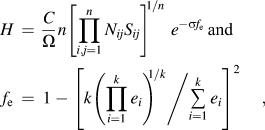
where C and σ are special constants, n is number of different binary bond systems in the structure, Ω is volume of the cell, f e is ionicity factor, and Nij is number of the n-type bond. The detailed information about this method can be found in Ref. Reference Simunek and Vackar51. In the third method (Xue′'s method),Reference Li, Wang, Zhang and Xue53 the method is built on electronegativity (EN), and it is associated with valence electron number and covalent atomic radius.Reference Li, Wang, Zhang and Xue53 The bond hardness is directly related to bond EN, and for a multibond crystal hardness, expression is given as

where Xij is EN of the bond, which is formed by i and j atoms, and f i is ionicity of the bond. The detailed information about this method can be found in Ref. Reference Li, Wang, Zhang and Xue53. Furthermore, this method appeared an interesting/important results and showed a target for searching of superhard materials that the structures with dense nitrogen–oxygen and nitrogen–nitrogen binary systems may be harder than diamond.
III. RESULTS AND DISCUSSION
A. Structural and mechanical properties
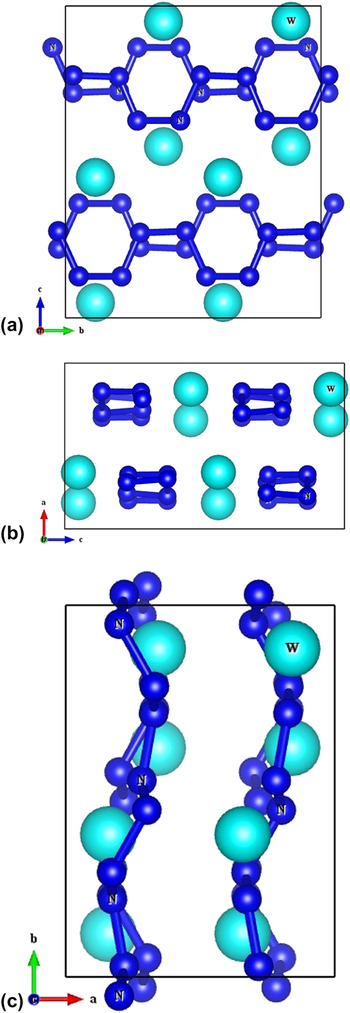
XN4 (X = Re, Os, W) tetranitrides have orthorhombic crystal structure (see Fig. 1); space group of the unit cell is Pbca, No: 61. The initial structure model is derived from the related compound of ReP4Reference Jeitschko and Rühl69 because chemically related compounds have often similar structure.Reference Wen-Jie, Hong-Bin and Yuang-Xu30, Reference Zhao, Xu and Wang31 To supply better initial structure to first-principles calculations, and then to reduce computational time, FORCITE70 optimizations are performed first, which is a molecular mechanics module for potential energy and geometry optimization calculations of arbitrary molecular and periodic systems using classical mechanics. FORCITE offers support for Condensed-Phase Optimized Molecular Potentials for Atomistic Simulation Studies (COMPASS), Universal forcefield (UFF), and DREIDING (generic forcefield); therefore, with this wide range of forcefields, it can be used for any material. After this step, the first-principles plane-wave density functional calculations were done by using CASTEP and VASP. The calculated structural parameters and formation enthalpies for the unit cell of XN4 (X = Re, Os, W) are shown in Table I. Formation enthalpy is calculated as,

Orthorhombic crystal structure of XN4 along (a) a-axis, (b) b-axis and (c) c-axis. Dark blue colored and turquoise spheres represent nitrogen and transition metal atoms, respectively.

Calculated equilibrium lattice parameters (a, b, c), equilibrium volumes (V 0), and formation enthalpies (ΔH) for the unit cell of XN4 (X = Re, Os, W) with the literature data.

where E(XN4), E solid(X), and E solid(N2) are total energies of XN4, solid TM, and solid N2 (taken from its α-phaseReference La Placa and Hamilton71), respectively. It is seen that all the compounds are thermodynamically stable, due to the negative formation enthalpies. However, WN4 is the most stable structure, and ReN4 follows it. Further, the calculated lattice parameters for ReN4 and OsN4 are quite accord with the available data. It is shown that the a- and c-lattice parameters of WN4 are greater than those of the others. For WN4 with orthorhombic Pbca structure, there is no experimental or theoretical data to which we can compare. Thus, we hope that the present results for TM tetranitrides, especially for WN4, may be useful for future theoretical and experimental studies.
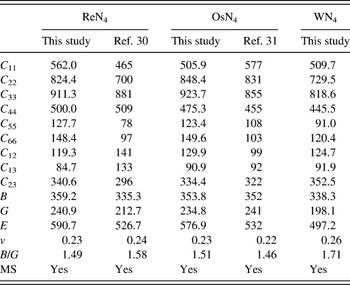
On the other hand, the elastic constants of solids provide a link between the mechanical and dynamical behavior of crystals and give important information concerning the nature of bonding and the operating forces in solids. In particular, they can provide information on the stability and stiffness of materials, and their ab initio calculations require precise methods. For this purpose, to study the mechanical stability and to determine related mechanical properties such as bulk, shear, and Young moduli of XN4 (X = Re, Os, W) compounds, we have calculated the second-order elastic constants for optimized ground-state geometries of the compounds by using the “stress–strain” technique.Reference Wu, Hou and Zhu72 However, for orthorhombic crystals, there are nine independent elastic constants (C 11, C 22, C 33, C 44, C 55, C 66, C 12, C 13, and C 23) and mechanical stability conditionsReference Wu, Zhao, Xiang, Hao, Liu and Meng16 are given as,
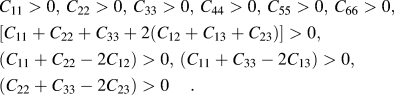
Calculated elastic constants are listed in Table II with available reference values. As shown in Table II, calculated values are consistent with literature values, and they satisfy all mechanical stability conditions. Therefore, we can say that these compounds are elastically/mechanically stable. And also, calculated elastic constants are greater than other theoretical values.Reference Wen-Jie, Hong-Bin and Yuang-Xu30, Reference Zhao, Xu and Wang31 Among the elastic constants, C 33 is the highest for all compounds, and C 22 and C 11 follow it.
Calculated elastic constants (Cij), bulk modulus (B), shear modulus (G), Young modulus (E) in GPa and Poisson’s ratio (ν), and mechanical stability (MS) for rhenium, osmium, and tungsten tetranitrides.

Furthermore, the bulk (B), shear (G) and Young (E) moduli, and Poisson’s ratio (v) are relevant to elastic constants within Reuss–Voigt–Hill approximationReference Hill73 and can be calculated as followsReference Wu, Zhao, Xiang, Hao, Liu and Meng16:



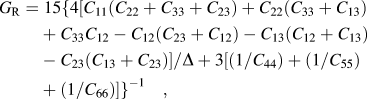





where V and R subscripts stand for Voigt and Reuss, respectively. Voigt moduli correspond to the upper bounds of the modulus, while Reuss moduli correspond to the lower bounds. The bulk modulus is a measure of resistance to volume change by applied pressure.Reference Young, Sanloup, Gregoryanz, Scandolo, Hemley and Mao17 Among the tetranitrides, ReN4 has the highest bulk modulus, and WN4 has the lowest. And that of OsN4 is comparable to that of ReN4. On the other hand, the shear modulus (G) of a material is a measure of resistance to reversible deformations upon shear stress.Reference Young, Sanloup, Gregoryanz, Scandolo, Hemley and Mao17 The shear modulus of WN4 is the smallest among the three compounds. The calculated value of ReN4 is the largest one. However, the Young’s modulus (ratio between stress and strain) provides useful information about the measure of the stiffness of the solids. From Table II, the calculated Young’s modulus (E) of ReN4 is larger than those of OsN4 and WN4. Moreover, B/G ratio can be used mechanical characterization of the compounds. A high (low) B/G value is associated with ductility (brittleness). The critical value, which separates ductile and brittle materials, is about 1.75. The calculated values of the B/G are 1.49, 1.50, and 1.70 for rhenium, osmium, and tungsten tetranitrides, respectively, and lower than 1.75, which means that these materials can be regarded as brittleness.
The Poisson’s ratio ν and Young’s modulus E are very important properties for industrial applications.Reference Yang, Lu, Yu and Chen74ν provides more information about the characteristics of the bonding forces than any of the other elastic constants. The lower limit and upper limit of ν are given 0.25 and 0.5 for central forces solids, respectively.Reference Watt and Peselnick75 The Poisson’s ratio characterizes the stability of the crystal against shearing strain. For a typical metal, the value is supposed to be 0.33; for the ionic–covalent crystal, the value is situated between 0.2 and 0.3; the strong covalent has even small Poisson’s ratio, which is usually below 0.15.Reference Ding, Xiang, He and Hu76 Calculated ν values are equal to 0.23, 0.23, and 0.26 for rhenium, osmium, and tungsten tetranitrides, respectively, and those of ReN4 and OsN4 agree with literature values.Reference Wen-Jie, Hong-Bin and Yuang-Xu30, Reference Zhao, Xu and Wang31 The calculated Poisson’s ratios indicate that the interatomic forces in the XN4 (X = Re, Os, W) are not central, and there are ionic and covalent bonding in these crystals.
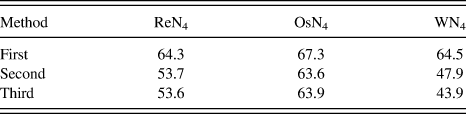
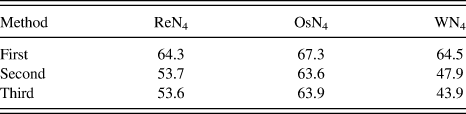
On the other hand, calculated hardness values of XN4 (X = Re, Os, W) compounds obtained from three different hardness methods presented in Sec. II above are listed in Table III. It is seen that all hardness values calculated by each method are greater than 40 GPa; therefore, XN4 (X = Re, Os, W) compounds can be characterized as superhard materials. However, hardnesses of these tetranitrides are comparable to c-BN (63.1 GPa), β-C3N4 (60.4 GPa), wurtzite-BN (49.6), boron carbide B13C2 (58.6 GPa), boron suboxide B6O (43.7 GPa), etc. On the other hand, N–N bonds are harder than N–X bonds and have the lowest ionicity, and then the highest covalency. Among the structures, OsN4 are harder than the others, due to the shortest bond length of N2 pairs and the smallest volume.
Calculated hardness values (in GPa unit) by three different methods for XN4 (X = Re, Os, W) compounds.
B. Band structure and density of sates
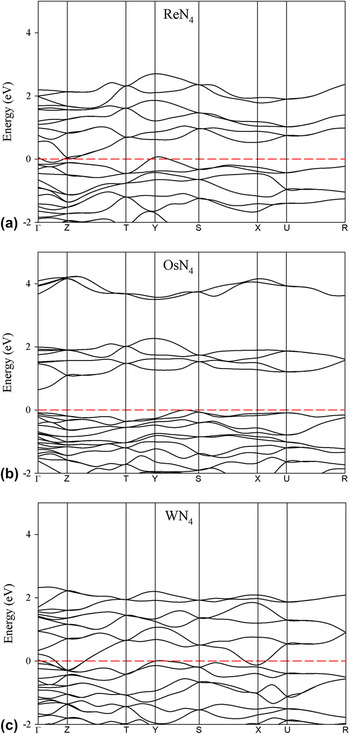
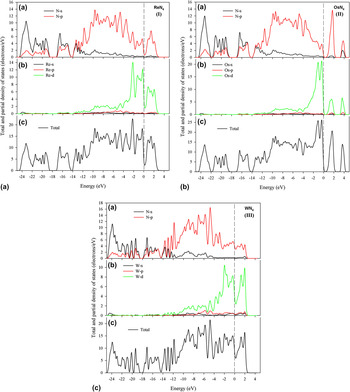
We have computed the band structure of XN4 (X = Re, Os, W) along the high symmetry directions in the first Brillouin zone and the corresponding partial density of the states. The calculated band graphs are given in Figs. 2(a)–2(c), and corresponding total and partial density of states (PDOS) are shown in Figs. 3(a)–3(c). It is seen from Figs. 2(a) and 2(c) and Figs. 3(a) and 3(c) that valence and conduction bands overlap considerably, thus, there is no energy gap, and finite N(E f) exists at the Fermi level for ReN4 and WN4. Therefore, ReN4 and WN4 are metallic. However, it can be seen from Figs. 2(b) and 3(b) for OsN4 that there is small band gap about 0.64 eV, which is good agreement value of 0.7 eV in Ref. Reference Zhao, Xu and Wang31, thus, OsN4 is semiconductor. It is considering that the DFT generally underestimates the band gap often by 30–50%; the true band gap for OsN4 could be 1.0–1.4 eV.Reference Zhao, Xu and Wang31 From this behavior of OsN4, it can be said that a covalent interaction occurs between the constituent elements.
Calculated electronic band structure of (a) rhenium, (b) osmium and (c) tungsten tetranitride.

Total and partial density of states for (I) rhenium, (II) osmium and (III) tungsten tetranitrides. (a), (b) and (c) sections in each figure are density of states for nitrogen, transition metal and total, respectively. The vertical dashed line represents the Fermi level.

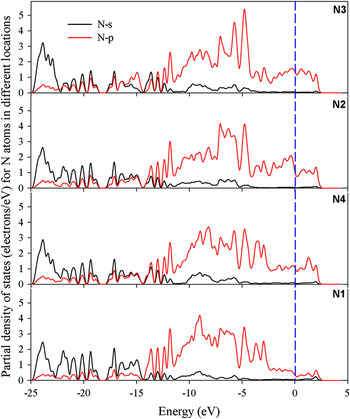
Furthermore, the DOS and especially PDOS can be used to clarify possible hybridization cases and the orbital characters of the states in a given crystal. It can be seen from Figs. 3(a)–3(c) that the lowest valence states originate from N-s states with minor presence of N-p states (from −25 to −18 eV). At the higher energies, contributions of N-p states start to increase. From −14 eV to the Fermi level, N-p and X-d states are dominant on DOS. For ReN4 and WN4, finite DOS at the Fermi level comes from N-p states and X-d states. At the upper energies from the Fermi level, DOS consists of N-p and X-d states. At the same time, the total DOS at the Fermi level is equal to 5.00 and 7.87 states/eV for ReN4 and WN4, respectively. Therefore, it is expected that the electrical conductivity in WN4 would be higher than that of ReN4. Moreover, the presented DOS and PDOS curves cannot reveal bonding/interactions between N atoms. Therefore, we calculated PDOS for N atoms of WN4 located at different sites and presented in Fig. 4. N2 pairs in I-plane are generated by N1 and N4 atoms, and N2 pairs in II-plane are generated by N2 and N3 atoms. This bonding situation can be seen from strong interaction/hybridization between p-states of N1 and N4 atoms and between p-states of N2 and N3 atoms, near the Fermi level. Also, hybridization between I- and II-planes (N1 and N2 atoms), in other words, interplanar hybridization, is not stronger than intraplanar hybridizations.
Calculated partial density of states of nitrogen atoms at different locations. N1 and N4 form N2 pairs, and they stay in I-plane. N2 and N3 form other N2 pairs, and they stay in II-plane.

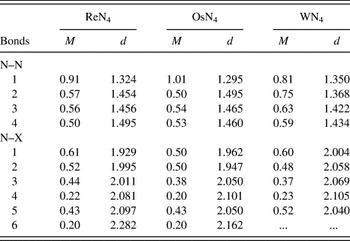
Generally, Mulliken bond overlap population values can be used to characterize the nature of the bonds in a given crystal structure as covalent or ionic. The positive and negative values of the population indicate bonding and antibonding states, respectively. However, if Mulliken population value of the bond is very small (or zero), bond is more ionic (ideal ionic), namely, as M→0, bond ionicity increases. And higher positive value of M indicates a high degree of covalency in the bond.Reference Guan, Liu, Jin, Guo, Zhao, Wang and Fu77–Reference Li, Gao, Xiao, Min, Fan, Ma and Yi79 Calculated Mulliken bond overlap populations of the characteristic bonds in the structures are listed in Table IV with bond lengths. The Mulliken population values of the other bonds, which are not listed in Table IV, are negative; therefore, they have antibonding character and are not considered here. There are four kind of bonds between nitrogen atoms, and there are six kind of bonds between TM and nitrogen atoms. And there are eight bonds in each kind of bond group. Therefore, number of total bonds in unit cell for ReN4 and OsN4 is 80. In WN4, number of total bonds decreases to 72; one N–W bond is broken due to negative Mulliken population. It is seen from Table IV that the population value of first kind of N–N bonds (N2 pairs formed by N2-N3 atoms) are the highest and are the shortest in all structures, and then, the covalency of these bonds are higher than the others. However, all N–N bonds are shorter than N–X bonds.
Calculated Mulliken bond overlap populations (M) and lengths (d, Å) for the characteristic bonds of rhenium, osmium, and tungsten tetranitrides.

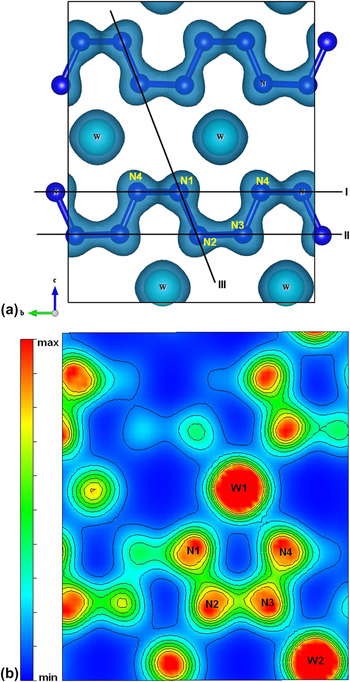
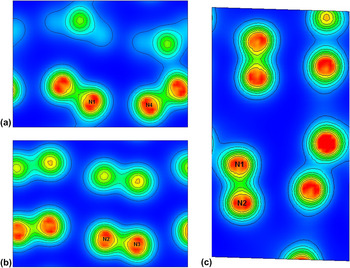
To appear the bonding characteristics in XN4 (X = Re, Os, W) compounds and to support Mulliken bond populations, three-dimensional (3D) charge density and two-dimensional (2D) charge density slices in different planes are plotted, and then, it is observed that electron density distributions in rhenium, osmium, and tungsten tetranitrides are very similar. 3D and 2D electron density distributions for WN4 are shown in Figs. 5 and 6, respectively.
3D charge density for WN4 and 2D density slice including N2 pairs which is formed by N1-N4 and N2-N3 atoms.

2D density slice including N2 pairs in (a) I-, (b) II-, and (c) III-planes.

It is seen from Figs. 5 and 6 that the bonding between nitrogen atoms (N2 pairs) is mainly covalent because of high-density distribution along the bonds and strong hybridization between N-p states near the Fermi level. Additionally, the nearly spherical charge distribution around X atoms indicate that the bonding between X and N atoms has an ionic component. Also, it can be expected a small covalent character in X–N bonds due to low-density distribution along the bonds and hybridization between N-p states and X-d states vicinity of the Fermi level.
IV. SUMMARY AND CONCLUSION
In summary, the first-principles calculations were performed to obtain the structural, mechanical, and electronic properties of XN4 (X = Re, Os, W) compounds. The structural parameters are in good agreement with the experimental data. Calculated formation enthalpies and elastic constants showed that rhenium, osmium, and tungsten tetranitrides with ReP4-type structure are thermodynamically and mechanically stable. And WN4 is the most energetic structure. From calculated band structure and DOS, ReN4 and WN4 are metallic, while OsN4 is semiconductor. On the other hand, as a result of complete Mulliken population analysis and from electron density graphs, the bonding in XN4 (X = Re, Os, W) is a mixture of covalent, ionic, and metallic. Furthermore, calculated hardness values in excess of 40 GPa indicate that rhenium, osmium, and tungsten tetranitrides with ReP4-type structure are superhard materials. However, to the best of our knowledge, there is no any study for WN4. Therefore, we hope that the presented results for WN4 will be useful for future studies.
ACKNOWLEDGMENTS
This work is supported partly by the State of Planning Organization of Turkey under Grant No. 2001K120590.