Highlights
-
• We did not identify a treatment interaction between cerebral microbleeds and random assignment to dabigatran (vs. aspirin) for the outcomes of hemorrhagic transformation or excellent functional outcome at 90 days in patients with minor non-cardioembolic ischemic stroke.
-
• Dabigatran treatment appears safe in patients with minor non-cardioembolic stroke and microbleeds.
-
• These exploratory subgroup analyses were underpowered to exclude the potential for treatment effect, particularly in patients with higher microbleed burden.
Introduction
Cerebral microbleeds are 2–10 mm hypointense foci detectable on blood-sensitive MRI sequences that indicate prior brain microhemorrhages in patients with underlying hemorrhage-prone cerebral small vessel disease, such as arteriolosclerosis or cerebral amyloid angiopathy. Reference Puy, Pasi and Rodrigues1 Microbleeds are present in approximately 30% of patients with ischemic stroke and are associated with an increased risk of hemorrhagic transformation (HT) and poor outcome following thrombolysis or endovascular thrombectomy. Reference Wilson, Ambler and Lee2–Reference Choi, Kim and Kang5 The association of microbleeds with HT of recent ischemic strokes in patients receiving anticoagulation is less well studied.
Dabigatran, a direct thrombin inhibitor, has been approved for secondary stroke prevention in patients with atrial fibrillation. Dabigatran 150 mg daily, compared to warfarin, was reported to be associated with a lower risk of ischemic stroke with a reduced risk of intracranial hemorrhage in patients with atrial fibrillation. Reference Connolly, Ezekowitz and Yusuf6 The safety of dabigatran in patients with acute minor non-cardioembolic ischemic stroke was assessed in the DATAS-II (Dabigatran Treatment of Acute Stroke II) randomized trial. DATAS-II trial suggested that early treatment with dabigatran vs. aspirin within 72 hours of symptom onset was not associated with a significantly higher risk of asymptomatic HT in patients with acute minor non-cardioembolic ischemic stroke or transient ischemic attack (TIA). However, a higher incidence of asymptomatic petechial HT was reported in patients assigned to dabigatran vs. aspirin (7.8% vs. 3.5%). Reference Butcher, Ng and Sheridan7 Of note, the original analysis did not find an association between baseline microbleeds on MRI and the risk of HT at 30 days. However, it remains unknown whether these associations vary among different subgroups of distribution and severity of microbleeds. Additionally, the comparative safety of dabigatran versus aspirin in patients with versus without microbleeds was not specifically addressed. In this post hoc analysis, we aimed to determine the contribution of microbleeds to the risk of HT of the qualifying infarct on day-30 MRI and excellent clinical outcome (modified Rankin Scale [mRS] of 0–1) at 90 days. Additionally, we sought to investigate whether the effect of dabigatran compared with aspirin is modified by microbleeds on MRI. We hypothesized that microbleeds would be associated with an excess risk of HT and a lower probability of achieving a mRS score of 0–1 at 90 days, but there would be no treatment interactions between microbleeds and dabigatran treatment for these outcomes.
Methods
Study design
The detailed trial protocol and main findings are reported elsewhere. Reference Butcher, Ng and Sheridan7,Reference Ng, Sharma and Benavente8 The study protocol was approved by the institutional review boards of each participating center. To ensure diverse representation, where possible and appropriate the DATAS-II trial sought woman site principal investigators and steering committee members from different levels in their career. Patients or their legally authorized representatives were provided with written informed consent. In brief, DATAS-II (Dabigatran Treatment of Acute Stroke II; clinicaltrials.gov NCT02295826) was a multicenter, open-label, blinded endpoint randomized trial conducted in six stroke centers across Canada. Patients with acute minor non-cardioembolic ischemic stroke or TIA were randomly assigned to dabigatran or aspirin for 30 days, underwent a baseline and a follow-up 30-day MRI and were followed for three months. The primary outcome was symptomatic HT within 37 days of randomization. Reference Butcher, Ng and Sheridan7,Reference Ng, Sharma and Benavente8 This is a post hoc analysis of patients with an interpretable susceptibility-weighted MRI sequence, allowing for microbleed detection as part of their baseline MRI.
Study participants
Patients were eligible for the trial if they were 18 years old or older, diagnosed with TIA (irrespective of ABCD2 score)/minor ischemic stroke (National Institutes of Health Stroke Scale [NIHSS] score ≤ 9), and presented within 72 hours of symptom onset. Reference Johnston, Rothwell and Nguyen-Huynh9 Exclusion criteria were estimated acute diffusion-weighted imaging (DWI) lesion volume ≥ 25 mL, treatment with a thrombolytic/endovascular thrombectomy, additional pathology identified on brain imaging, planned carotid endarterectomy/stent within 30 days, creatinine clearance rate (CrCl) < 30 mL/minute, ongoing bleeding risks defined by the site investigator, history of spontaneous intracranial bleeding, contraindication to dabigatran or aspirin, an indication for anticoagulation, contraindications to MRI or life expectancy < 90 days. Reference Pedraza, Puig and Blasco10 Study participants qualified for this subgroup analysis if they had an interpretable blood-sensitive MRI sequence at baseline MRI availabel for microbleed detection. This study adhered to the Consolidated Standards of Reporting Trials reporting guideline. Reference Piaggio, Elbourne, Altman, Pocock and Evans11
Intervention
Patients were randomly assigned in a 1:1 ratio to receive aspirin 81 mg daily or dabigatran 150 mg twice daily for 30 days. The dose of dabigatran was adjusted to 110 mg twice daily for patients older than 80 years old and/or having a CrCl of 30–50 mL/minute. Reference Cockcroft and Gault12 Patients were followed up for three months. After 30 days, dabigatran was discontinued, and aspirin 81 mg daily was initiated for patients who were assigned to dabigatran treatment.
Data collection
Demographic information, medical history, clinical and neuroimaging data were collected at randomization. All data were collected, stored and analyzed at Population Health Research Institute. Race/ethnicity was self-reported. NIHSS, mRS and neuroimaging outcomes were assessed by investigators masked to the treatment assignment.
Imaging acquisition and analyses
All individuals underwent a baseline MRI prior to randomization and a follow-up MRI at 30 days following randomization, including DWI, apparent diffusion coefficient, fluid-attenuated inversion recovery (FLAIR) and susceptibility-weighted imaging (SWI)/GRE-T2* (gradient recalled echo T2*-weighted) sequences based on the imaging protocol at each center.
Microbleeds and white matter hyperintensities were centrally adjudicated using SWI/GRE-T2* and FLAIR MRI sequences, respectively by two trained raters at McMaster University who were blinded to treatment allocation and individual clinical data. Microbleeds and white matter hyperintensities were identified using the Standards for Reporting Vascular Changes on Neuroimaging and Fazekas scale. Reference Wardlaw, Smith and Biessels13,Reference Fazekas, Chawluk, Alavi, Hurtig and Zimmerman14 Disagreements were resolved by consensus. Baseline MRI was used for rating microbleeds where an interpretable blood-sensitive sequence was availabel, and if not availabel at baseline, then the day-30 MRI was used instead. HT on the day-30 MRI SWI/GRE-T2* sequence was reported centrally at the DATAS-II Imaging Core Laboratory at the University of Alberta based on modified European Cooperative Acute Stroke Study criteria. Reference Fiorelli, Bastianello and von Kummer15,Reference Renou, Sibon and Tourdias16 Petechial hemorrhages were classified as hemorrhagic infarction type 1 (HI1) if they could only be detected on SWI/GRE-T2* sequences or hemorrhagic infarction type 2 (HI2) if they were visible on other MRI sequences as well. Reference Butcher, Ng and Sheridan7,Reference Fiebach and Bohner17 Parenchymal hemorrhages (PH) were defined as PH1 if they occupied less than one-third of the primary infarct volume and PH2 if they occupied ≥ 1/3 infarct volume. Remote ICH was defined as any ICH not topographically related to the infarct lesion. In this study, subdural, epidural and subarachnoid hemorrhage also were categorized as remote ICH.
Microbleeds were categorized based on i. presence or absence, ii. their distribution; strictly lobar (lobar microbleeds with or without cerebellar involvement), strictly deep (deep hemispheric/brainstem, cerebellar or both) or mixed (both lobar and deep/brainstem), and iii. severity; absent (0 microbleeds), mild (1–2 microbleeds), moderate (3–10 microbleeds) and severe (> 10 microbleeds). Reference Shoamanesh, Pearce and Bazan18,Reference Shoamanesh, Hart and Connolly19
Outcomes
The primary outcome was any incident HT of the qualifying infarct on day-30 MRI, and the secondary outcome was excellent functional outcome defined as a mRS score of 0–1 at 90 days.
Statistical analysis
Patient characteristics were compared using independent t-test for continuous variables and Fisher exact test or Chi-square for categorical variables as appropriate. To determine the baseline clinical and neuroimaging features independently associated with microbleed presence, we entered variables associated with microbleeds in the univariable logistic regression analysis (p-value < 0.2) into a stepwise multivariable logistic regression model. The contribution of microbleeds to the risk of HT on day-30 MRI was measured using Firth’s penalized multivariable logistic regression model, and the risk of achieving a mRS score of 0–1 at 90 days was calculated using multivariable robust Poisson regression model adjusted for treatment assignment and variables independently associated with microbleed presence. These analyses were repeated for microbleed location and severity subgroups. Due to the small number of patients with severe microbleed number (> 10), they were collapsed into one group inclusive of patients with moderate microbleed number (3–10 microbleeds) to form a moderate-severe microbleed category (3 or more microbleeds) for these analyses. Additionally, we assessed whether there is an interaction between treatment assignment and microbleeds using Firth’s penalized logistic regression model for risk of HT and robust Poisson regression model for achieving mRS score of 0–1 and calculating the p-value for interaction. All analyses followed the intention-to-treat paradigm. P-values were two-sided, and a p-value of < 0.05 was considered statistically significant. For interaction analysis, we considered a p-value of < 0.1 as statistically significant. The analyses were conducted between February 8, 2023, and March 28, 2023, using STATA software, v.17.0.
Results
A total of 251 of 305 (82.3%) DATAS-II participants who were enrolled between February 2015 and March 2018 had an interpretable SWI (n = 245, 97.6%) or GRE-T2* (n = 6, 2.4%) sequence as part of their study MRI and were included in these post hoc analyses. The mean (SD) age was 66.4 (12.7), and 36.2% were female. The median (interquartile range [IQR]) time from symptom onset to randomization was 40 (27–55) hours, and the median (IQR) NIHSS score was 1 (0–2). Patients included in this analysis had similar baseline characteristics compared to excluded patients, except for better baseline functional status (Figure 1 and Table S1).
CONSORT flow diagram.

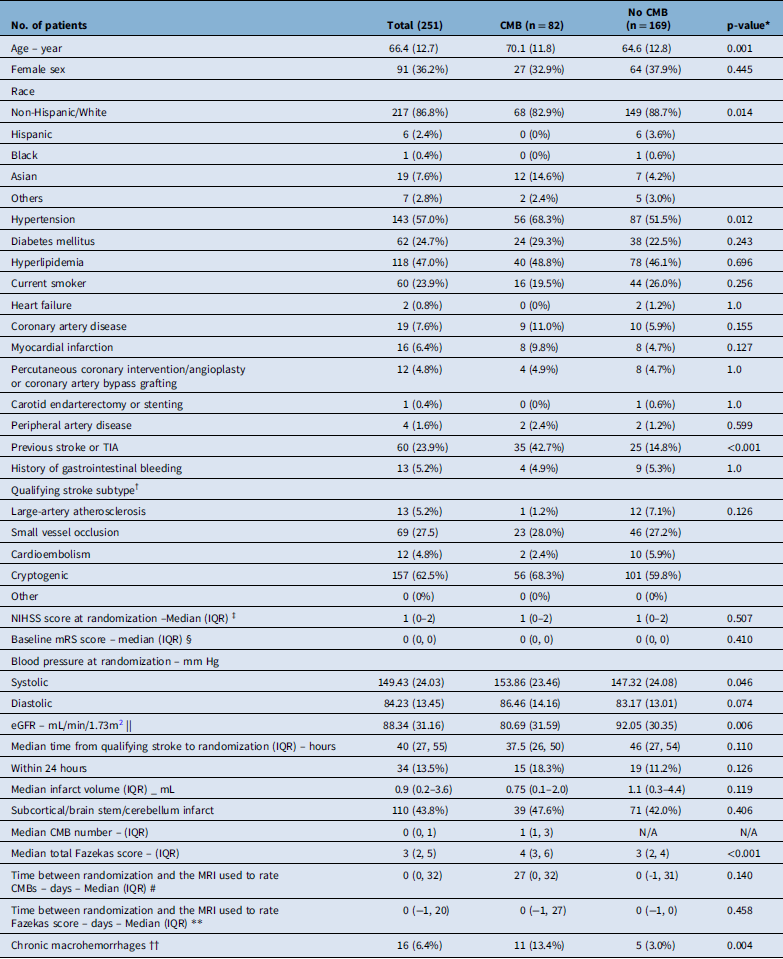
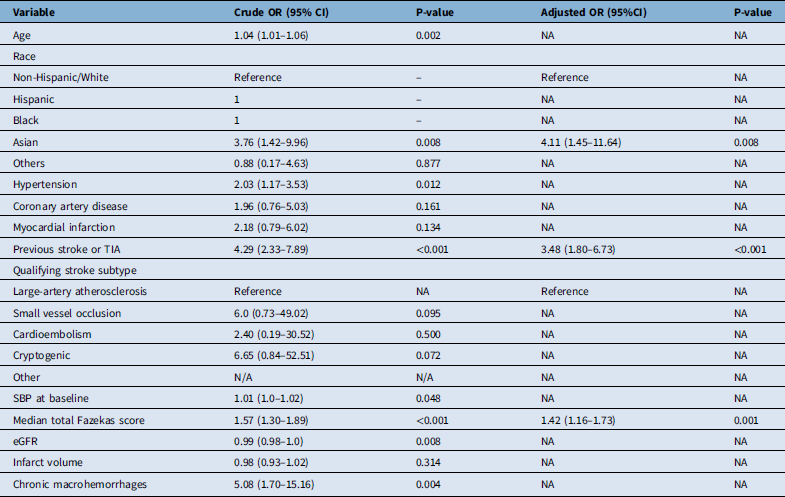
The inter-rater reliability was excellent for both microbleed presence (Cohen к=0.82, p-value < 0.001) and white matter hyperintensities severity – measured by Fazekas scale – (interclass correlation = 0.91, 95% confidence interval [CI] 0.87–0.93). Microbleeds were present in 82 of 251 patients (33%). The severity of microbleeds was mild in 59 (72%), moderate in 19 (23%) and severe in 4 (5%) of the participants with microbleeds. The median number of CMBs in patients categorized as moderate-severe (3 or more microbleeds) was 4 (IQR 3–8). Additionally, microbleeds were distributed as strictly deep in 19 (23%), strictly lobar in 46 (56%), and mixed in 17 (21%). Patients with microbleeds were older, less likely to have non-Hispanic/White ethnicity, more likely to have Asian ethnicity, history of hypertension, previous stroke/TIA, higher systolic blood pressure and lower estimated glomerular filtration rate at randomization plus more severe white matter hyperintensities and chronic macrohemorrhages on their baseline MRI (Table 1). The baseline characteristics of patients stratified by the presence of microbleeds, and treatment arms are presented in Table S2. The associations with Asian ethnicity (adjusted odds ratio [aOR], 4.11; 95% CI, 1.45–11.64), previous stroke/TIA (aOR, 3.48; 95% CI, 1.80–6.73) and severity of white matter hyperintensities on MRI (aOR per one unit increase in total Fazekas score, 1.42; 95% CI, 1.16–1.73) withstood adjustment (Table 2).
Baseline characteristics by the presence of cerebral microbleeds

CMB, cerebral microbleed, eGFR estimated glomerular filtration rate, IQR interquartile range, mRS modified Rankin Scale, NIHSS National Institutes of Health Stroke Scale, and TIA transient ischemic attack. Data is presented as mean (SD) or median (IQR) for continuous and number (%) for categorical variables. * p-value for continuous variables is calculated using t-test or Wilcoxon Rank Sum test. The p-value for categorical variables is calculated using Fisher’s exact or Chi-square test as appropriate. † TOAST criteria applied by the local investigators. ‡ Scores on the NIHSS range from 0 to 42, with higher scores representing worse neurologic deficits. § Scores on the mRS range from 0 to 6, with higher scores representing worse functional deficits. || eGFR calculated according to the local laboratory. # Baseline MRI unavailabel or inadequate in 114 (45.2%) participants. ** Baseline MRI unavailabel or inadequate in 64 (25.5%) participants. †† Any chronic intracranial hemorrhage other than microbleeds was counted as chronic macrohemorrhage.
Univariable and multivariable models of patient characteristics associated with microbleed presence

eGFR estimated glomerular filtration rate, OR odds ratio, SBP systolic blood pressure, and TIA transient ischemic attack.
Outcomes
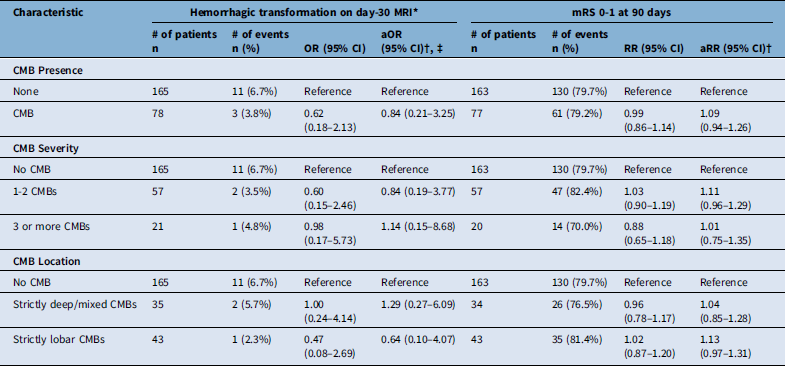
Symptomatic HT did not develop in any of the trial participants throughout the study follow-up. Asymptomatic HT was present in three (1.2%) patients at baseline MRI (all categorized as HI2), of whom one was assigned to dabigatran and two to aspirin, and no evidence of incident or worsening of HT was observed on their day-30 MRI. Asymptomatic HT was observed in 14 (6%) patients on 30-day MRI, all graded as HI1. No PH1 or PH2 occurred in any of the study participants. The risk of incident HT was not different between patients with vs. without microbleeds (3.8% vs. 6.7%, aOR, 0.84; 95% CI, 0.21–3.25).
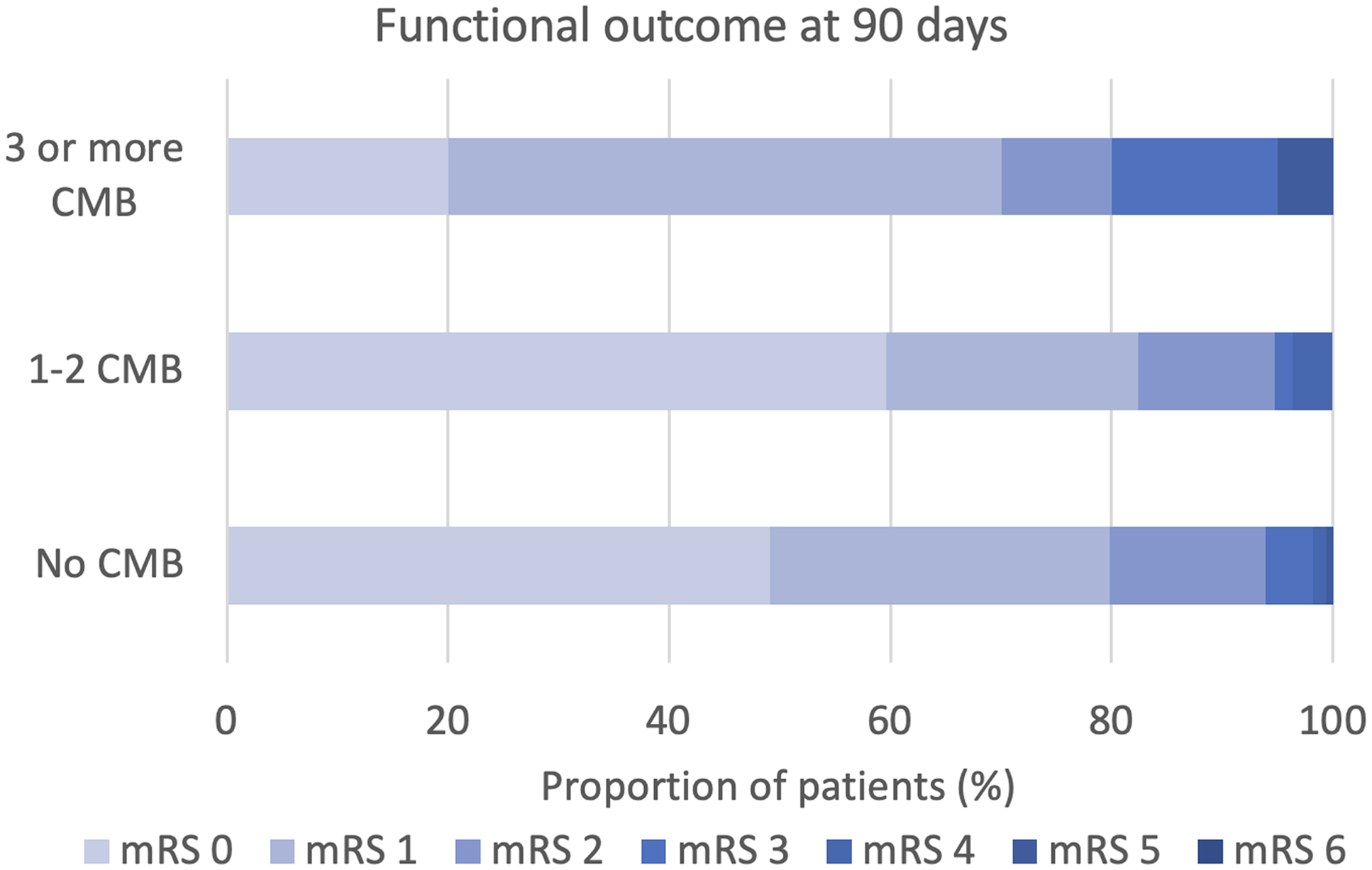
Over a median (IQR) follow-up of 91 (55–148) days, 191 (80%) patients achieved an excellent functional outcome (mRS 0–1). The proportion of patients achieving an excellent functional outcome at 90 days did not differ between patients with and without microbleeds (79.2% vs. 79.7%, adjusted relative risk [RR], 1.09; 95% CI, 0.94–1.26). These results remained largely consistent for different subgroups of microbleed severity and location (Table 3). Excellent functional outcome was numerically less frequent among patients with 3 or more microbleeds (Figure 2). Thirty-five (14.3%) participants underwent follow-up MRI outside of the ± 5-day window, and removing these patients from the analysis did not modify the relationship between microbleeds and HT. Additionally, we assessed the effect of asymptomatic HT on day-30 MRI on functional outcomes at 90 days. Eleven (84.6%) patients with asymptomatic HT on day-30 MRI vs. 177 (79.7%) patients without HT achieved an mRS score of 0–1 at 90 days (p-value for chi-square test = 0.669).
Functional outcome at 90 Days stratified by microbleed severity. CMB = cerebral microbleed.

Risk of outcomes by cerebral microbleed status

CMB cerebral microbleed, mRS modified Rankin Scale, OR odds ratio, RR relative risk. *Any incident hemorrhagic transformation visible on the day-30 MRI. † Adjusted for Asian Ethnicity, previous stroke/TIA, total Fazekas score, and treatment assignment. ‡ Firth’s logistic regression is used due to the low rate of hemorrhagic transformation.
Effect of treatment assignment
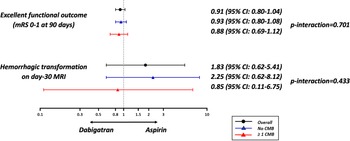
Among patients with microbleeds, asymptomatic HT was present in 3% of patients randomized to dabigatran vs. 4% randomized to aspirin (OR, 0.85; 95% CI, 0.11–6.75). The proportion of patients with excellent functional outcome among patients with microbleeds who were randomized to dabigatran was 74% vs. 84% with aspirin (RR, 0.88; 95% CI, 0.69–1.12). The effect of dabigatran on the risk of asymptomatic HT on day-30 MRI or the probability of achieving an excellent functional outcome at 90 days was not modified by microbleed presence, severity or location (p-value for interaction > 0.05) [Table S3-4, and Figure 3].
The effect of dabigatran in patients with vs. without microbleeds for clinical outcomes. CMB = cerebral microbleed; mRS = modified Rankin scale; The effect of treatment assignment on the outcomes is reported as odds ratio (95% confidence interval [CI]) for hemorrhagic transformation and as relative risk (95% CI) for excellent functional outcome.

Sensitivity analysis
In a sensitivity analysis excluding patients without blood-sensitive sequences on baseline MRI, the risks of incident HT on 30-day MRI and achieving mRS 0–1 at 90 days were similar among those with and without microbleeds (Table S5). The effect of dabigatran versus aspirin on the study outcomes was not modified by the presence of microbleeds (Table S6).
Discussion
In this post hoc analysis of a randomized clinical trial including patients with acute minor non-cardioembolic ischemic stroke/TIA, microbleeds were common and associated with Asian ethnicity, history of ischemic stroke/TIA and white matter hyperintensity severity. Patients with microbleeds were not at a higher risk of HT on 30-day MRI compared to those without microbleeds. Patients with and without microbleeds had similar functional outcomes at 90 days. Dabigatran did not increase the risk of HT in patients with microbleeds relative to aspirin. The effect of early treatment with dabigatran on the risk of HT or attaining excellent functional outcome was not modified by the presence, location, or severity of microbleeds.
One-third of the included participants in this study had at least one microbleed on their baseline or 30-day MRI, which is consistent with previous reports of patients with ischemic stroke. Reference Wilson, Ambler and Lee2,Reference Cordonnier, Al-Shahi Salman and Wardlaw20 In the present study, the risk of asymptomatic HT was not higher in patients with microbleeds; in fact, HT events were numerically less frequent in the microbleed subgroup. Although microbleeds have been suggested to increase HT risk after ischemic stroke, a previous study on patients with ischemic stroke who did not receive thrombolytic therapy demonstrated no association between the presence of microbleeds and the risk of HT. Reference Elsaid, Fahmi, Shehta and Ramadan21–Reference Nagaraja, Farooqui, Zahid and Kaur23 Our study may be underpowered to detect such associations, and considering the small number of HT events in our study and particularly the absence of PH1/PH2, we cannot rule out the contribution of microbleeds to the risk of more severe HT. The small number of HT events in our study might be due to less severe strokes in our participants (median NIHSS of 1) and the exclusion of patients with larger infarct volume (DWI lesion volume > 25 mL; median 0.9 mL [IQR 0.2–3.6]) and those receiving thrombolytic therapy. Furthermore, it has been reported that the association between microbleeds and the risk of incident HT is more robust among those with greater severity of microbleeds, and only four patients in our study had > 10 microbleeds, preventing any conclusions for this higher severity subgroup. Reference Dannenberg, Scheitz and Rozanski24
Previously, it was shown that the presence of 5 or more microbleeds on baseline MRI in patients with ischemic stroke who received thrombolytic therapy was associated with poor functional outcomes defined as mRS > 2 at 3–6 months. Reference Charidimou, Turc and Oppenheim25 Similarly, an observational study in Japan suggested that the presence of microbleeds was independently associated with poor functional outcome at 90 days, defined as mRS of 3–6. Reference Sakuta, Yaguchi and Sato26 However, the present study did not identify any statistically significant differences in the odds of achieving a mRS score of 0–1 at 90 days between patients with vs. without microbleeds, irrespective of microbleed severity or distribution. Albeit patients with 3 or more microbleeds were numerically less likely to achieve excellent functional outcome. This could be due to less severe stroke in our participants, which is generally associated with a better functional outcome and the fewer number of patients with severe microbleeds in our dataset.
Consistent with prior studies investigating treatment interactions between microbleeds and direct oral anticoagulants, we found no heterogeneity in the treatment effect of dabigatran vs. aspirin with microbleed presence, severity or location for the risk of any HT at 30-day MRI or excellent functional outcome at 90 days. Reference Shoamanesh, Hart and Connolly19,Reference Balali, Hart and Smith27 However, this should be interpreted cautiously as the number of patients with microbleeds in each treatment arm was small. Overall, our results suggest that early treatment with dabigatran may be safe in patients with minor acute ischemic stroke/TIA and microbleeds on MRI within the confines of our patient population (low severity of CMB number and small infarcts).
Strengths/Limitation
This study had several strengths, including central adjudication of microbleeds with excellent inter-rater agreement by raters blinded to patient data and treatment assignment, the ability to assess the effect of randomly assigned direct thrombin inhibition on clinical outcomes in patients with hemorrhage-prone cerebral small vessel disease marked by microbleeds on MRI and the multicenter prospective sample of well-characterized non-cardioembolic ischemic stroke patients with a standardized MRI protocol.
Our study is limited by the low number of patients with severe microbleed burden (>10) and the absence of PH1/PH2, preventing us from deriving estimates on the risk of HT for these groups. The low number of HT events resulted in wide confidence intervals around our estimates for this outcome, and thus, our results regarding the treatment effect of dabigatran in patients with microbleeds for the risk of HT should be interpreted cautiously. The exclusion of patients with moderate-to-severe ischemic stroke, in addition to almost 20% of the trial participants being excluded from this post hoc analysis due to lack of the prerequisite MRI sequence, and the predominant white ethnicity of our Canadian population may limit the generalizability of our results. Our generalizability may have been further limited by selection bias towards patients with better clinical status who were able to undergo MRI. Thirteen percent of patients with acute ischemic stroke have been reported to develop new microbleeds in the first weeks following their infarct. As such, we are unable to determine for certain whether microbleeds identified only on the 30-day MRI were present at baseline pre-randomization. We attempted to mitigate this potential for bias in sensitivity analysis of microbleed presence vs. absence excluding those without blood-sensitive sequences as part of their baseline MRI which did not alter our findings. However, due to small numbers, we were unable to confirm this for microbleed number or topography. It is important to distinguish our results focused on the risk of HT and functional outcomes with early anticoagulation in patients with microbleeds from other studies examining the risks and benefits of long-term antithrombotic use in this high-risk subgroup of ischemic stroke patients. Reference Shoamanesh, Pearce and Bazan18,Reference Shoamanesh, Hart and Connolly19,Reference Balali, Hart and Smith27 Lastly, this was a post hoc analysis with limited number of included participants and future studies with larger sample size are required to validate the safety of direct oral anticoagulants, including novel factor XIa inhibitors in patients with microbleeds.
Conclusion
We did not identify an increased risk of HT on 30-day MRI or attaining excellent functional outcome at 90 days in patients with acute minor non-cardioembolic ischemic stroke/TIA and microbleeds on MRI participating in the DATAS-II trial. Early treatment with dabigatran may be safe in patients with minor acute ischemic stroke or TIA who have evidence of hemorrhage-prone cerebral small vessel disease on MRI. However, the low number of event rates led to broad uncertainty surrounding the point estimates for the outcome of HT and there were few patients with high microbleed burden in our trial.
Supplementary material
The supplementary material for this article can be found at https://doi.org/10.1017/cjn.2024.371.
Acknowledgements
AS is supported by the Martha and Owen Boris Chair in Stroke Research and Care and the Heart and Stroke Foundation of Canada (HSFC). Jodi Miller was responsible for data management and technical issues with the stored data.
Author contributions
Concept and design: P.B., A.S.
Acquisition, analysis, or interpretation of data: All authors.
Drafting of the manuscript: P.B., A.S.
Critical revision of the manuscript for important intellectual content: A.S., K.B., K.N., R.J., S.K, A.K., M.S.
Statistical analysis: P.B., A.S.
Administrative, technical, or material support: Jodi Miller, M.S., K.B.
Supervision: A.S.
Funding statement
The trial was funded by the Canadian Institutes for Health Research (CIHR) [G327075]. Additional support was provided by Alberta Innovates Health Solutions, Population Health Research Institute, Canada Research Chairs Program and the Heart, and Stroke Foundation of Alberta, Northwest Territories, and Nunavut. None of the funding organizations had any role in study design, data collection, analysis, interpretation, or manuscript preparation. The manufacturer of dabigatran (Boehringer Ingelheim) had no role in the design or conduct of the study and did not provide monetary or in-kind support. The trial sponsor was The Governors of the University of Alberta.
Competing interests
The trial sponsor was the University of Alberta.
Disclosure
Dr Butcher has received grant support from CIHR and National Health & Medical Research Council Australia, served as a Data Safety Monitoring Board or advisory board of National Institutes of Health (NIH) [CREST-2 Trial] and received speaker’s fees from AstraZeneca. Dr Kasner has received grant support from Bayer, WL Gore, Daiichi Sankyo, and DiaMedica, royalties from UpToDate, consulting fees from Bristol-Myers Squibb and served as Data Safety Monitoring Board of AstraZeneca. Dr Katsanos has received grant support from HSFC and CIHR and consulting fees from Diamedica Therapeutics Inc., Bayer Inc., and Abbvie Inc. Dr Sharma has received grant support from CIHR, consulting fees from Janssen, Vividion, Bayer, Anthos, AstraZeneca, served as Data Safety Monitoring Board or advisory board of Vividion and Novartis and has a leadership or fiduciary role in Research committee for Canadian stroke consortium (CSC). Dr Shoamanesh has received grant support from CIHR, HSFC, NIH, British Heart Foundation, Medical Research Future Fund, consulting fees and speaker’s fees from Bayer AG, Daiichi Sankyo, AstraZeneca, Servier, served as a Data Safety Monitoring Board or advisory board of Bayer AG and Alnylam and has a leadership or fiduciary role in European Stroke Organization Guidelines Committee, CSC Research Committee and International CAA Board of Directors.