Introduction
Recurrent respiratory papillomatosis is a rare but potentially serious condition caused by the human papilloma virus, particularly types 6 and 11. The disease, which occurs in both juvenile and adult onset forms, is characterised by benign epithelial tumour of the airway that most frequently affects the larynx, but can also spread along the entire aero-digestive tract. Recurrent respiratory papillomatosis is the most common benign neoplasm of the larynx in children and the second most frequent cause of childhood hoarseness.Reference Shehab, Sweet and Hogikyan1
Currently, no medical or surgical cure exists. The mainstay of treatment remains repeated surgical removal, either with laser, cold steel instruments or a microdebrider. Laryngeal papillomas are notoriously unpredictable in their clinical behaviour and have a propensity to recur. Treatment can be extremely frustrating and prolonged. In chronic cases, the lesions can undergo malignant transformationReference Andrews and Myer2–Reference Kimberlin4 or lead to involvement of the tracheopulmonary tree.
Recent work suggests that an intralesional injection of cidofovir may have some potential as an adjunct in the treatment of recurrent respiratory papillomatosis.Reference Chung, Akst and Koltai5 More recently, some authors have expressed concerns about the potential side effects of cidofovir, suggesting that it may have carcinogenic potential.Reference Donne, Hampson, He, Day, Salway and Rothera6
There is as yet no standardised treatment protocol or guidelines available in the UK for the management of recurrent respiratory papillomatosis. In view of this, we investigated the management practices of surgeons treating paediatric recurrent respiratory papillomatosis in the UK using a web-based survey.
Materials and methods
In order to evaluate the current trend in the management of paediatric laryngeal papillomata in the UK, we invited all members of the British Association of Paediatric Otorhinolaryngology to complete a web survey questionnaire (Appendix I). An e-mail that included a hyperlink to the survey was sent to all members. Late responders were reminded one month later via e-mail. The survey responses submitted by the members were collected and the results were analysed.
Results
Thirty-five members of the British Association of Paediatric Otorhinolaryngology completed the questionnaire. Twenty-three of the respondents were treating paediatric laryngeal papilloma (Figure 1). Nineteen respondents preferred to use the microdebrider, 12 preferred laser, and 5 preferred cold steel along with either laser or a microdebrider. Amongst the microdebrider users, 10 used a microdebrider exclusively, 7 used laser and 2 used both cold steel and laser. Amongst the laser users, two respondents preferred to use laser exclusively and two respondents used laser with cold steel.
British Association of Paediatric Otorhinolaryngology members’ responses to the survey question ‘Do you treat children with laryngeal papilloma??’

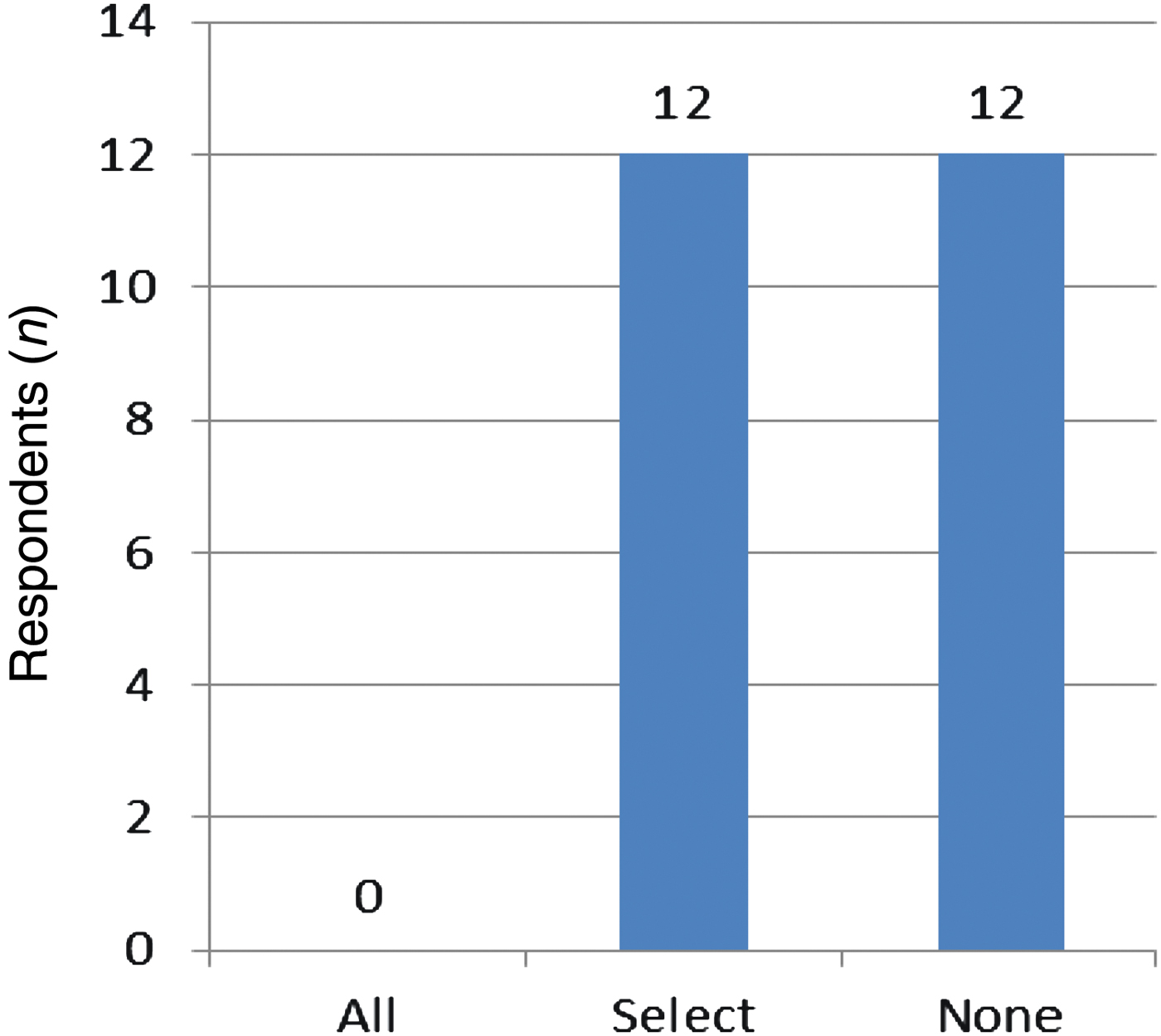
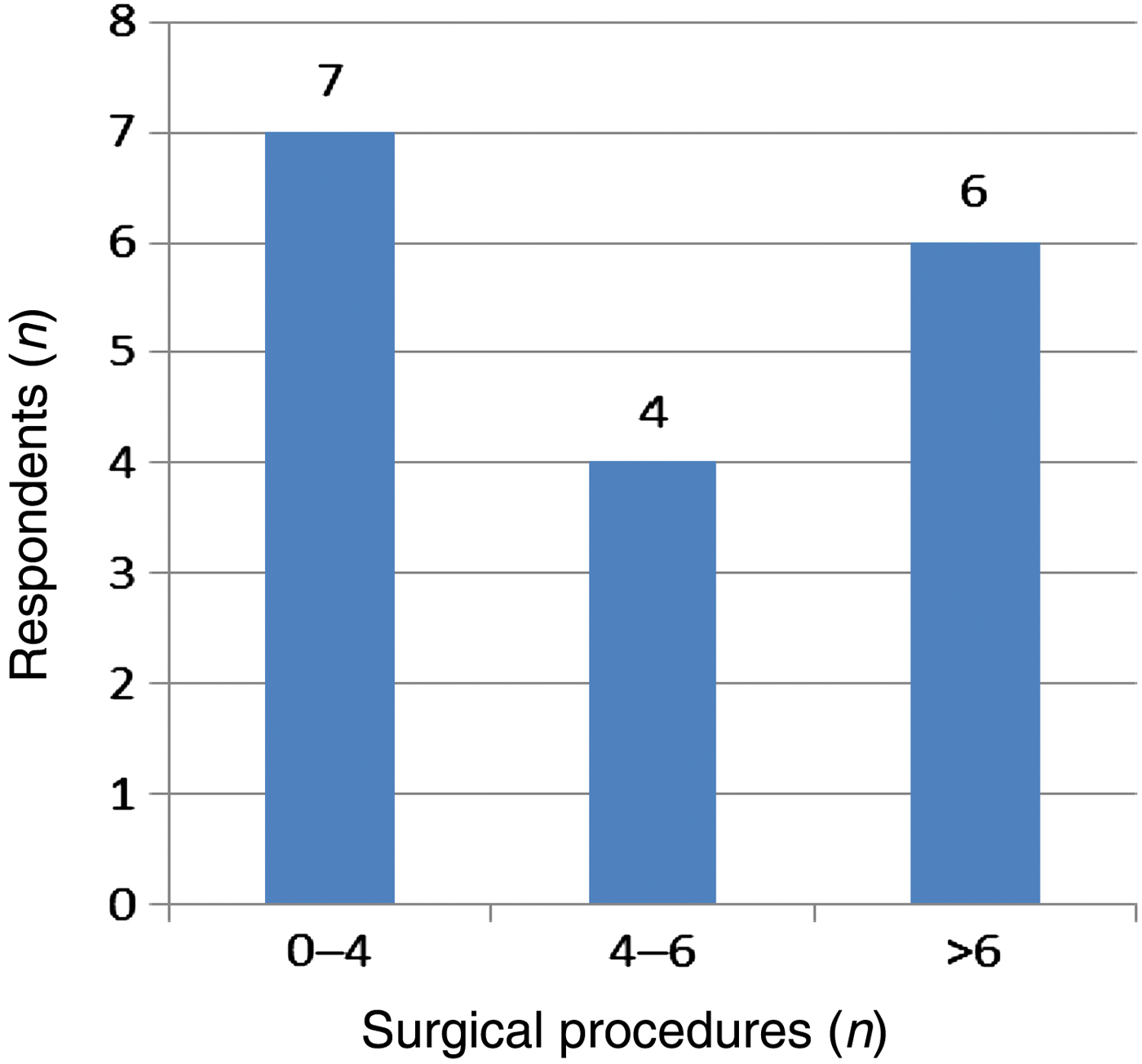
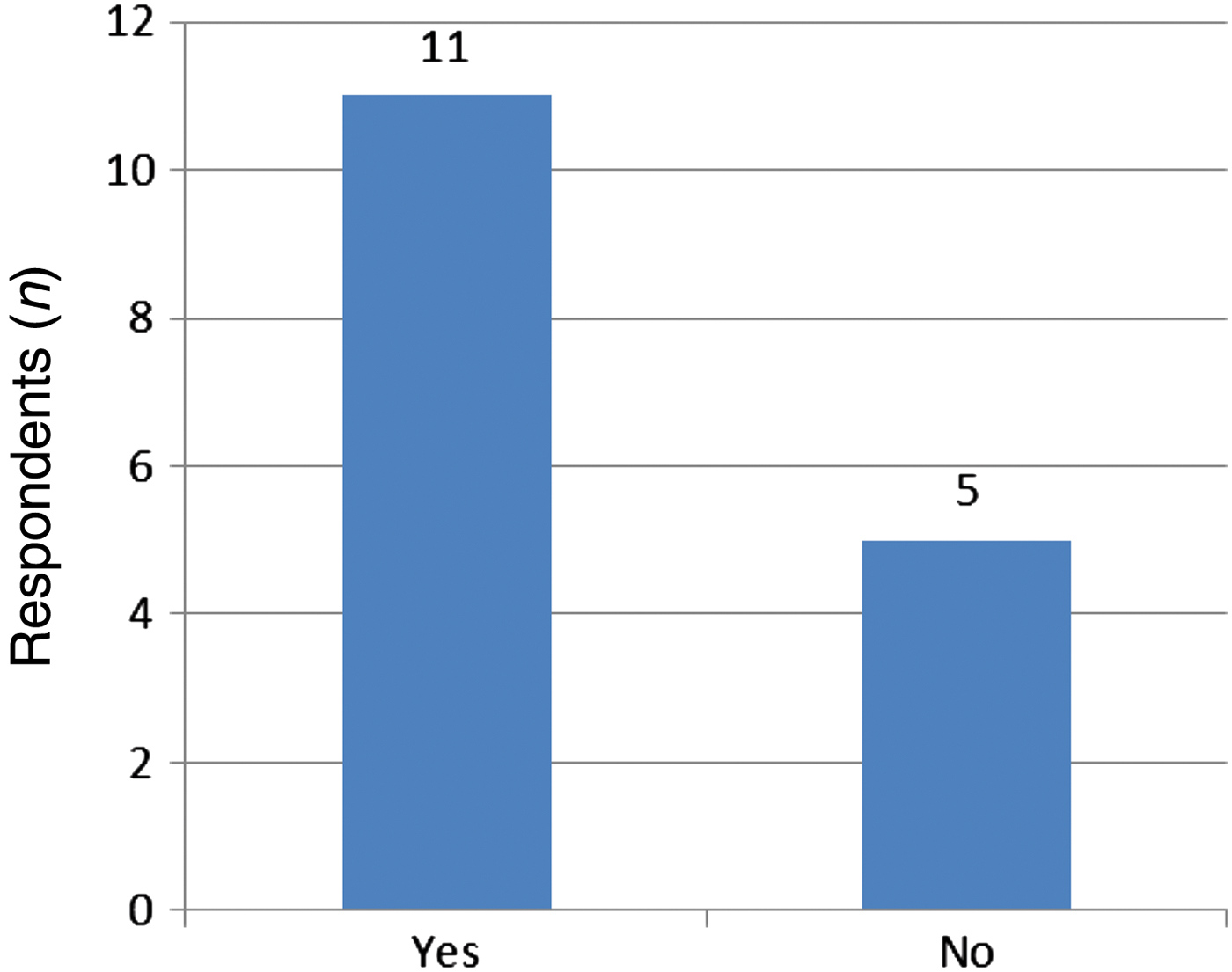
Twelve surgeons used cidofovir for selected patients and 12 surgeons did not use cidofovir for any patients (Figure 2). Seven of the respondents considered the use of cidofovir after 0–4 surgical procedures, four respondents considered cidofovir after 4–6 surgical procedures and six respondents considered cidofovir after more than 6 surgical procedures (Figure 3). With regard to patient consent, 11 of the respondents warned patients about the possible side effects of cidofovir and 5 respondents gave no warning to their patients (Figure 4). Twenty-two out of 23 respondents did not use any adjuvant therapy when treating paediatric laryngeal papillomas. One surgeon reported using interferon, zinc supplements and Gardasil® (the latter of which is a recombinant (quadrivalent) vaccine for human papillomavirus types 6, 11, 16 and 18).
British Association of Paediatric Otorhinolaryngology members’ responses to the survey question ‘Do you use cidofovir in: all patients, selected patients or no patients??’

British Association of Paediatric Otorhinolaryngology members’ responses to the survey question ‘After how many procedures would you consider using cidofovir??’

British Association of Paediatric Otorhinolaryngology members’ responses to the survey question ‘With regard to consent, do you warn of any specific side effects of cidofovir??’

Discussion
Recurrent respiratory papillomatosis is a difficult and frustrating condition to treat. Many patients require multiple procedures in order to maintain airway and voice over a protracted period. Therefore, an effective adjunctive treatment would be highly desirable for otolaryngologists treating this disease.
Cidofovir acts as a cytosine nucleotide analogue and suppresses DNA replication, with a high affinity against viral DNA synthesis. It is only licensed for the treatment of cytomegalovirus retinopathy in patients with acquired immunodeficiency syndrome.7 It has been used increasingly over the last decade as an adjuvant therapy for recurrent respiratory papillomatosis.Reference Soma and Albert8 Its use has been advocated in patients with moderate to severe recurrent respiratory papillomatosis who require frequent surgical intervention, and there are published reports that indicate the efficacy of cidofovir in a proportion of patients.Reference Naiman, Ayari, Nicollas, Landry, Colombeau and Froehlich9, Reference Chadha and James10 The studies published so far have comprised small study populations; however, response rates have consistently been reported in approximately 60 per cent of patients.Reference Donne, Hampson, He, Day, Salway and Rothera6 The long-term outcomes remain unknown. Nevertheless, there is no agreed consensus regarding the most appropriate dose, frequency or duration of therapy for cidofovir treatment when given intralesionally.
Seven of those who responded to our survey considered the use of cidofovir after 0–4 surgical procedures, four respondents considered it after 4–6 surgical procedures and six respondents considered it after more than 6 surgical procedures. There was no consensus demonstrated regarding when it would be appropriate to use cidofovir. The paucity of studies makes an evidence-based decision difficult.
Intralesional administration of cidofovir after surgical debulking delivers the medication directly to the site of disease and is thought to have fewer systemic side effects than intravenous infusion. Cidofovir is known to be nephrotoxic when administered intravenously, and animal studies have reported the induction of mammary adenocarcinoma in rats with intravenous usage.Reference Dikkers11 Despite these concerns, there are no reports of malignant transformation in humans.Reference Donne, Rothera and Homer12
With regard to consent, 11 respondents warned patients about the possible side effects of cidofovir and 5 respondents did not give any warning to patients (Figure 4). Recurrent respiratory papillomatosis carries a small but definitive risk of malignant transformation without cidofovir injection. A single case of dysplasia has been reported in conjunction with the use of cidofovir in humans. This case, reported by Wemer et al. in 2005, describes the development of moderate and severe dysplasia within laryngeal papillomas, which were treated with intralesional cidofovir injections over a 27-month period.Reference Wemer, Lee, Hoffman, Robinson and Smith13 However, no cases of malignancy have been reported in patients receiving cidofovir treatment. Cidofovir is little studied, and there is no comprehensive monitoring mechanism to track malignancy that develops in patients who have received cidofovir. Physicians may be reluctant to report problems that arise given our legal climate.Reference Inglis14 In light of the concerns described above and the lack of current knowledge regarding the use of cidofovir, the authors feel that parents and patients should be made aware of these issues before agreeing to treatments.
The manufacturers of the drug, Gilead, have recently issued advice warning clinicians that cidofovir has not been tested in children and should not be used ‘off licence’ (i.e. used outside the terms of the licence). During the period 23 April 2009 to 22 April 2010, 87 per cent of 46 adverse event reports received by the company involved the use of Vistide® (manufacturers’ trade name for cidofovir), either for an unapproved indication or via an unapproved route of administration. The most frequent and serious of these adverse reactions were renal toxicity, ocular toxicity and neutropenia, which is consistent with the safety profile of Vistide. The warning included reports on nephrotoxicity, neutropenia, oncogenicity and even some fatalities. The reports of renal toxicity following topical administration of Vistide suggest that topical application of Vistide does not prevent a patient experiencing systemic toxicities associated with the product.Reference Tjon Pian Gi, Dietz, Djukic, Eckel, Friedrich and Golusinski15, 16
• Intralesionally injected cidofovir may be beneficial in treating recurrent respiratory papillomatosis
• There is no standardised treatment protocol or UK guidelines available for management of this disease
• This paper reports a web survey of the current UK trends in management of paediatric laryngeal papillomata
• There was no consensus regarding when cidofovir should be introduced to the treatment regime
• Despite carcinogenic concerns, some surgeons seem to be administering cidofovir without appropriate warning
We recognise that there are limitations associated with our questionnaire. In terms of determining a threshold for cidofovir use, we based this on the number of procedures only. It might be argued that the number of procedures within a specific period of time could be used as another parameter, or that the age of the patient may play a role in this decision. This single parameter was used for clarity and simplicity, and to encourage a maximal number of responses.
A similar web-based survey of all American Society of Pediatric Otolaryngology members residing in the US, Canada, Europe and Australia was carried out in 2004. It evaluated 74 practitioners in 62 separate practices who were managing 700 children with recurrent respiratory papillomatosis. Of those patients who received adjuvant medical therapies, 150 (21 per cent) were administered cidofovir, accounting for more than two-thirds of the total. Sixty-one per cent of the patients treated with cidofovir were reported to have had a beneficial response to the treatment.Reference Schraff, Derkay, Burke and Lawson17 No other recently published evidence is available to enable evaluation of the current treatment practice for recurrent respiratory papillomatosis using cidofovir.
Conclusion
There appear to be only a small number of clinicians treating recurrent respiratory papillomatosis in children on a regular basis in the UK. The survey revealed widespread usage of the microdebrider, although the laser was still employed by some. There was no consensus as to when cidofovir should be introduced to the treatment regime. Despite concerns of carcinogenesis, some surgeons seem to be administering this treatment without warning patients of the potential side effects. The lack of consensus, and the lack of evidence on which to base one, highlights the need for data collection amongst the clinicians treating this condition, and for further trials that examine both the efficacy and safety of cidofovir.
Paediatric laryngeal papilloma treatment survey results*