BACKGROUND
Major emergencies involving mass casualty events (MCEs) trigger a sudden unanticipated demand for health care services that exceed normal response capabilities of the principal response agencies (PRAs) and create a significant burden on health care systems. An MCE is defined as any event that overwhelms the local health care system with a number of casualties that vastly exceed the local resources and capabilities in a short period of time.Reference Ben-Ishay, Mitaritonno and Catena 1 This type of event requires exceptional emergency arrangements and additional or extraordinary assistance. Surge capacity is defined as a health care system’s ability to manage a sudden or rapidly progressive influx of patients at a given point in time, and is often a significant weakness in terms of a disaster or public health emergency response.Reference Barbisch and Koenig 2 Following a mass shooting or bomb blast, the survival rates of victims will be dependent upon the ability of hospitals and ambulance services to “surge up”Reference Welzel, Koenig, Bey and Visser 3 - Reference Osgood, Scanlon and Jotwani 5 and allocate scarce resources.Reference Timbie, Ringel and Fox 6 Survival rates will be dependent upon how well prepared ambulance service providers and hospital-based emergency health care providers (HCPs) are to provide care under conditions of duress.
Yet HCPs may or may not be adequately prepared to respond. Competence in major emergency preparedness is multifactorial and requires specialized education and training,Reference Hsu, Thomas and Bass 7 - Reference Klein, Burkle and Swienton 10 and workforce development for mass casualty and public health emergency events is often a major challenge for health systems.Reference Walsh, Craddock and Gulley 11 - Reference Khoury, Halberthal and Hymes 14 Nurses, in particular, may receive inadequate preparation for MCEs.Reference Gebbie and Qureshi 15 - Reference Veenema, Griffin and Gable 19
Emergency Planning in the Republic of Ireland
In Ireland, the Office of Emergency Planning provides support to the Government Task Force on emergency planning (chaired by the Minister for Defence) and identifies the following as potential major emergencies: severe weather, flooding, chemical spills, transportation accidents, accidents at sea, pollution accidents, bombs/explosions, nuclear accidents, and infectious disease outbreaks. 20 Ireland’s Framework for Major Emergency Management 21 is based on an “All-Hazards” approach and details arrangement, which will facilitate principal emergency services in scaling up the response required for a full-scale emergency. The three PRAs in Ireland are An Garda Siochána (Police Service), the Ambulance Service, and the Fire Service. Under the Framework for Major Emergency Management different PRAs lead the efforts, depending upon the type and scope of the event, and specific plans are in place to address nuclear incidents and infectious disease outbreaks. An Garda Siochána, the Health Service Executive (HSE), and the local authorities are the PRAs charged with managing the response to an MCE. Twenty-nine of Ireland’s 32 hospitals have accident and emergency departments (EDs) and as such would be expected to be able to receive victims in a large-scale major emergency. 21 Ireland’s Escalation Directive 27/11/2015 and the System Wide Escalation Framework and Procedures 22 are plans consisting of tiered and incremental actions for hospitals within an interdisciplinary and multiprovider system for a response to address current challenges with ED overcrowding and accommodate unexpected surge in demand for health care services. The framework seeks to ensure that admission, discharge, and escalation (surge capacity) procedures are organized in a controlled and planned way that supports and ensures the delivery of optimum patient care within national targets and in compliance with the Escalation Directive.
Ireland’s emergency HCPs will undoubtedly play a significant role in creating surge capacity in response to a sudden unanticipated demand for emergency medical and nursing care. The purpose of this study was to assess emergency responders and HCP preparedness and service readiness for responding to an MCE in Ireland. We aimed to assess the (1) current level of knowledge, skills, and self-perceived abilities in Ireland’s emergency health care workforce as it relates to an MCE response; and (2) coordination and communication between prehospital providers and hospitals to support on-scene coordination.
METHODS
Selection and Recruitment of Participants
To investigate Ireland’s emergency health care workforce readiness for an MCE, a cross-sectional study using a purposive sample of Ireland’s emergency responders and HCPs was conducted over a 3-month period in spring 2017. The research proposal was reviewed and approved by the National Emergency Medicine Programme working group, who validated the selection of hospitals and provided e-mail access to the Emergency Nursing Interest Group. The participant information sheet and a letter outlining the study requesting permission to carry out the research were sent to the Chief Executive Officer (CEO), Chief Nursing Officer (CNO) or Emergency Manager of each of the four respective hospitals, and to the Chief Emergency Planning Officer (HSE National Ambulance Service) and Chief Fire Officer (Dublin Fire Brigade). Upon securing all permissions, an e-mail invitation to participate was sent directly to the participants where e-mail addresses were available or to the nurse manager of each of the four EDs outlining the study and objectives.
Survey Development
The Major Emergency Preparedness in Ireland Survey (MEPie) is a rapid, self-administered questionnaire developed to assess hospital-based emergency HCPs and prehospital care emergency provider’s knowledge, skills, and self-perceived abilities to participate in a large-scale major emergency response involving mass casualties. The introductory paragraph described the intent of the survey, provided assurance of anonymity, and indicated that the approximate time to complete the survey would be less than 20 minutes (this was based on a beta test of the survey in Qualtrics). MEPie used the following definition for major emergency according to the Framework for Major Emergency Management, 21 (p15) and it was listed on the survey tool:
A major emergency is any event which, usually with little or no warning, causes or threatens death or injury, serious disruption of essential services or damage to property, the environment or infrastructure beyond the normal capabilities of the principal emergency services in the area in which the event occurs, and requires the activation of specific additional procedures and the mobilization of additional resources to ensure an effective, co-ordinated response. 21 (p15)
The MEPie survey’s 53 multiple-choice questions were conceptualized to encompass five specific domains:
(1) Baseline knowledge of major emergency planning
(2) Knowledge of major emergency operations
(3) Knowledge of core major emergency clinical response activities
(4) Self-assessed clinical competence for a major emergency response
(5) Perception of communication and coordination across PRAs
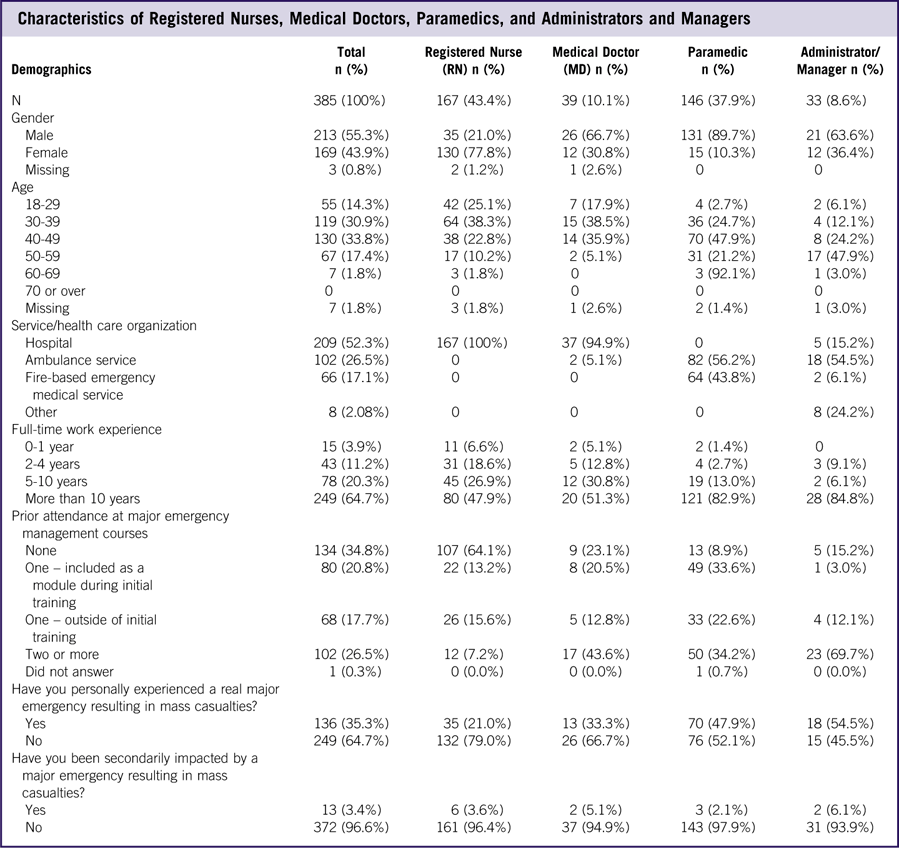
Although no uniquely identifiable information was collected, the survey included a series of demographic questions to describe and classify the respondents (Table 1). Due to the novel nature of this assessment in Ireland, the researchers used a rigorous standard multistage process for developing and refining the MEPie tool. Conceptual domains were identified through a review of the existing peer-reviewed literature, previously published questionnaires,Reference Garbutt, Peltier and Fitzpatrick 23 - Reference Kaiser, Barnett and Hsu 24 and refined through focus groups with emergency HCPs. Prior to piloting the survey, it was pretested and edited by 7 subject matter experts to ensure appropriate Irish terminology. The survey was then pilot-tested for construct validity with Irish emergency HCPs prior to deployment with a resultant content validity index of 0.92.
Characteristics of Registered Nurses, Medical Doctors, Paramedics, and Administrators and Managers

Ethics
Participation in this study was voluntary, independent, and all responses were anonymous. Confidentiality of information was ensured, and no financial incentive to participate in the study was offered. Written informed consent was obtained, and participants could withdraw from the study at any time. Ethical approval was granted a priori by the Royal College of Surgeons in Ireland Research Ethics Committee, and, as all data were collected such that individual subjects could not be identified or exposed to risks or liabilities, the evaluation was deemed exempt by each of the respective hospital ethics committees.
Data Collection and Analysis
The survey was distributed to study participants between March and May 2017. Qualtrics was chosen as the software platform to house the MEPie survey due to its ease of use for respondents and its simplicity in allowing the research team to create, disseminate, collect, and summarize the survey data. Participants received either an e-mail invitation to participate in the study or were invited to participate by a supervisor in their workplace.
Participants had three options to take the survey: online by accessing the survey directly via URL, via a mobile device (smartphone or tablet) using a QR code (barcode), or by recording their answers on a paper version of the survey. Paper copies of the survey were provided to those participants who did not have an e-mail address or who preferred this option. Paper survey data were then entered manually by research staff directly into the Qualtrics online survey link.
Summary statistics were used to characterize the respondents. Responses were assessed for missing data, in particular, patterns of non-response. The distributions of responses to questions concerning key outcomes (level of current knowledge and confidence related to a major emergency involving mass casualties) were compared between registered nurses, medical doctors, paramedics, and administrators and managers. The chi-square test, Fisher exact test, and Kruskal-Wallis test were used as appropriate. Bonferroni adjusted P values<0.05 were deemed significant. Furthermore, following the Kruskal-Wallis test, if there was evidence of a statistically significant difference, Dunn’s multiple-comparison test (using a Bonferroni correction) was used to investigate pairwise differences. All analyses were conducted in Qualtrics and Stata 13. 25
RESULTS
Demographics
Demographic characteristics of respondents are summarized in Table 1. A total of 385 respondents participated in the study with an overall survey response rate of 59% for hospital-based providers, 10% for fire-based emergency medical service, and unknown for the ambulance service. Most respondents were registered nurses (43.4%) followed by paramedics (37.9%) and medical doctors (10.1%). Of these professionals, 55% were male and 44% were female. Most respondents reported having 10 or more years of full-time work experience in their respective health care discipline (Table 1). Overall, the majority of respondents were between 30 and 49 years of age; however, this varied slightly across professional disciplines (ie, nurses, doctors, paramedics, and administrators/managers). Of the respondents in this survey, doctors tended to be slightly younger and administrators/managers slightly older (Table 1). Overall, 64.7% of respondents had never experienced a real major emergency resulting in mass casualties, and percentages of respondents reporting having attended one or more major emergency management courses varied considerably. Only 36% of nurses compared with 77% of medical doctors, 91% of paramedics, and 85% of administrators/managers reported having some training.
Responsibility and Level of Current Knowledge Related to a Major Emergency Involving Mass Casualties
Responsibility
Respondents were asked to identify the individual responsible for intra-hospital emergency operations in an MCE, and 23.4% of nurses, 10.3% of medical doctors, 69.9% of paramedics, and 36.4% of administrators/managers responded that they were “not sure.” In all professional disciplines,<20% identified the correct person responsible (Hospital Chief Executive Officer). Additionally, respondents were asked to identify the person responsible for prehospital emergency operations in an MCE, and 24.6% of nurses, 25.6% of medical doctors, 24.0% of paramedics, and 24.2% of administrators/managers responded that they were “not sure.” Overall, 29.4% identified the correct person responsible (HSE Controller of Operations), but this varied across disciplines with only 22.8% of nurses, 7.7% of medical doctors, 39.7% of paramedics, and 42.4% of administrators/managers identifying the correct person.
Level of Current Knowledge
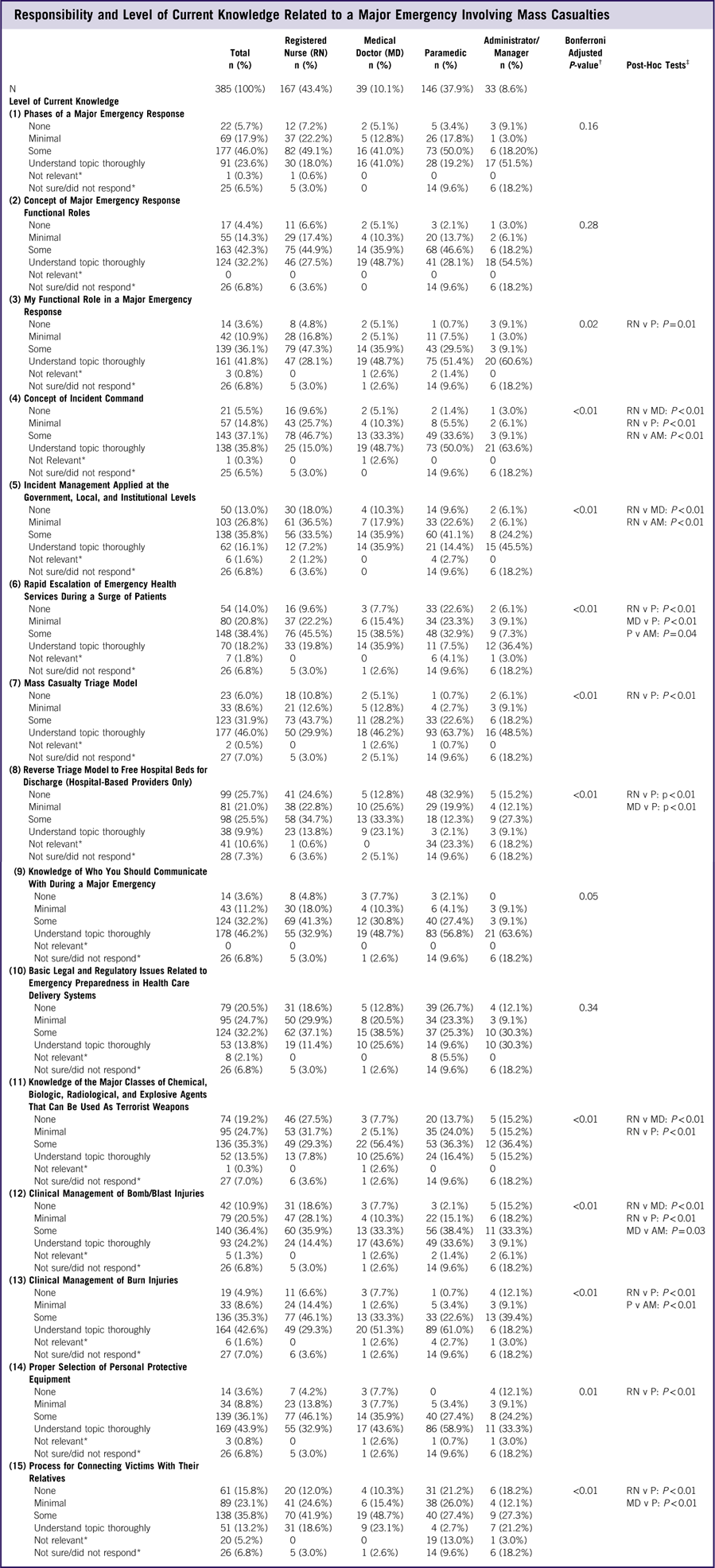
Table 2 summarizes the level of current knowledge regarding major emergencies involving mass casualties of the survey respondents. In general, knowledge varied depending on the aspect of the major emergency in question and, additionally, varied across professional disciplines. Overall, only 23.6% of respondents reported having thorough knowledge of the phases of a major emergency response. The percentage of respondents with thorough knowledge of the concept of major emergency response functional roles was slightly higher at 32.2%, and even higher at 41.8% for those who indicated that they have a thorough understanding of their functional role in a major emergency response. However, less than half of respondents (46.0%) indicated that they have a thorough understanding of the Mass Casualty Triage Model, and only one-third (35.8%) of survey respondents indicated that they have a thorough understanding of the concept of incident command. Approximately half (46.2%) of survey respondents indicated that they have a thorough knowledge of whom to communicate with during a major emergency; however, more than half of respondents (53.8%) indicated that they do not. Health care workers responding to the survey also indicated that 77.9% of respondents have some or a thorough understanding of the clinical management of burn injuries. This included 75.4% of nurses, 84.6% of medical doctors, and 83.6% of paramedics who all indicated that they have either some or a thorough understanding of managing burn injuries. Similarly, 80.0% of respondents said that they had either some or a “thorough” knowledge of the proper selection of personal protective equipment (PPE). Significant differences were seen across disciplines (Table 2) for “My functional role in a major emergency response” (P=0.02), “Concept of incident command” (P<0.01), “Mass Casualty Triage Model” (P<0.01), “Clinical management of burn injuries” (P<0.01), and “Proper selection of PPE” (P=0.01), with nurses, in general, reporting slightly less knowledge.
Responsibility and Level of Current Knowledge Related to a Major Emergency Involving Mass Casualties

* Excluded from analysis
† Kruskal-Wallis
‡ Dunn’s multiple-comparison test
Between 13% and 18% of respondents indicated that they have a thorough knowledge of incident management applied at the government, local, and institutional levels, rapid escalation of emergency health services during a surge of patients, and process for connecting victims with their relatives. Again, in general, nurses and administrators/managers reported less knowledge, except for in relation to the process for connecting victims with their relatives. Only 30% of paramedics and 48.5% of administrators/managers said they had some or a thorough knowledge, compared with 71.8% of medical doctors and 60.5% of nurses.
Roughly 1 in 4 (24.2%) survey respondents indicated that they have a thorough knowledge of clinical management of bomb/blast injuries. However, when examined by a health discipline, nearly half of the nurses (49.7%) responded that they had “none,” “minimal,” or “were not sure/did not respond” to this survey question. This contrasts significantly with the knowledge level of other providers. The majority of medical doctors (76.9%) and paramedics (72.0%) indicated that they have some or a thorough knowledge of this clinical skill. Less than 50% of respondents indicated that they have some or a thorough knowledge, when asked about the reverse triage model to free hospital beds for discharge, basic legal and regulatory issues related to emergency preparedness in health care delivery systems, and knowledge of the major classes of chemical, biologic, radiological, and explosive agents that can be used as terrorist weapons. Some significant differences were seen across disciplines for knowledge of the major classes of chemical, biologic, radiological, and explosive agents that can be used as terrorist weapons (P<0.01), with nurses appearing to have, in general, reported less knowledge and 59.2% of nurses reporting they had “none” or “minimal” knowledge of these agents. The survey question on reverse triage model to free hospital beds for discharge was for hospital-based providers only (Table 2); however, 51.0% of nurses and 43.5% of medical doctors indicated that their level of knowledge of this reverse triage model is “none,” “minimal,” or “not sure.”
Knowledge of Core Major Emergency Clinical Response Activities
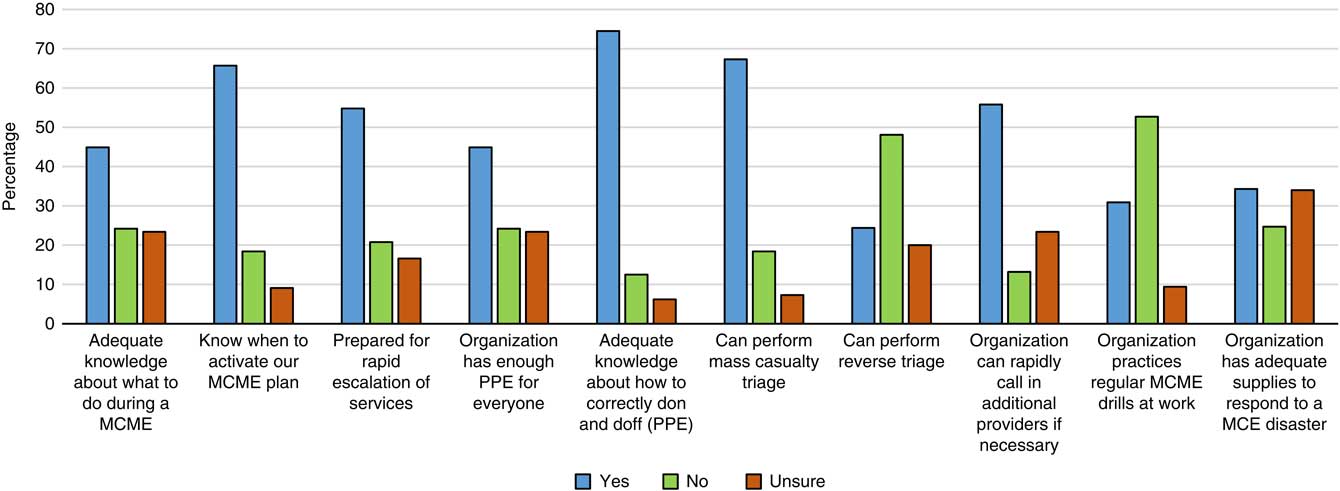
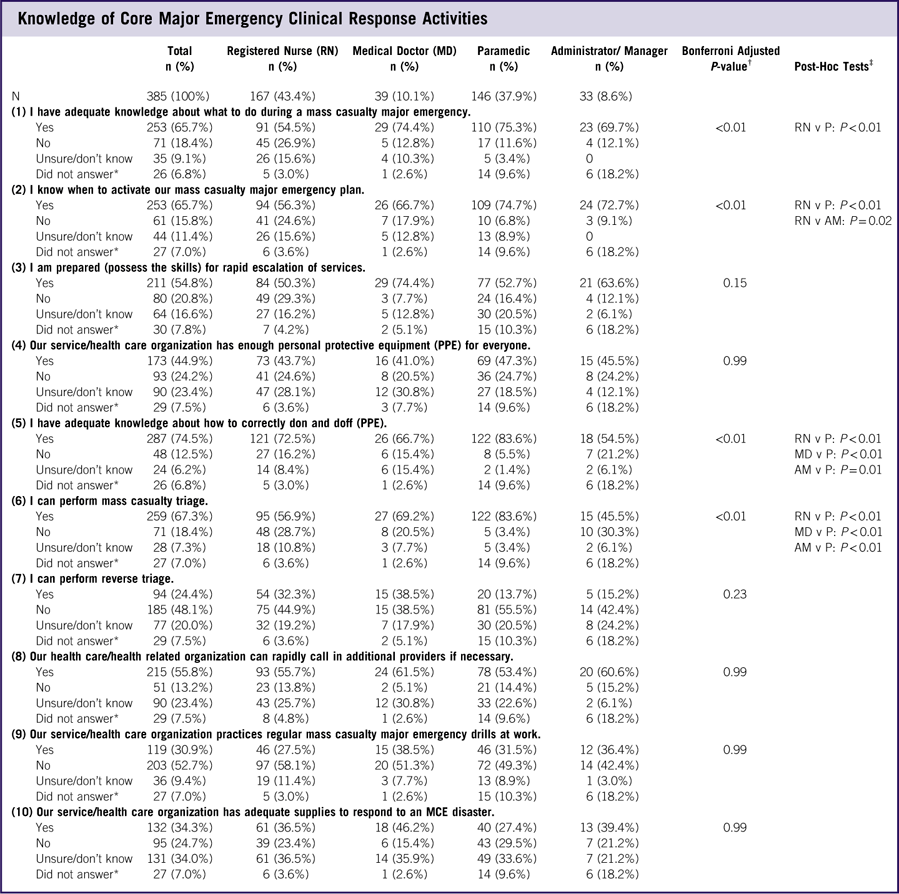
Table 3 and Figure 1 show respondents’ knowledge of core clinical response activities. Overall, 65.7% feel that they have adequate knowledge about what to do during a mass casualty major emergency, 65.7% know when to activate the mass casualty major emergency plan, 74.5% have adequate knowledge about how to correctly don and doff PPE, and 67.3% can perform mass casualty triage. Significant differences were seen across professional disciplines, with nurses, in general, reporting less knowledge of MCE clinical response activities. For example, when nurses were asked whether they have adequate knowledge about what to do during an MCE, 42.5% indicated “No” or “Unsure/don’t know.” When asked whether they know when to activate the mass casualty major emergency plan, 40.2% of nurses indicated “No” or “Unsure/don’t know.” However, more nurses (72.5%) compared with medical doctors (66.7%) and administrators/managers (54.5%) (but less than paramedics [83.6%]) felt that they have adequate knowledge about how to correctly don and doff PPE.
Percentages of respondents answering ‘yes’, ‘no’, ‘unsure/don’t know’ to questions regarding knowledge of core Major Emergency clinical response activities. Abbreviations: MCME, mass casualty major emergency; PPE, Personal Protective Equipment; MCE, mass casualty event.

Knowledge of Core Major Emergency Clinical Response Activities

* Excluded from test
† Chi-square/Fisher exact test
‡ Dunn’s multiple-comparison test
Regarding performing mass casualty triage, 56.9% of nurses, 69.2% of medical doctors, and 83.6% of paramedics indicated that they have knowledge of this. However, a large percentage of respondents indicated that they do not know, or are unsure, whether they are prepared (possess the skills) for rapid escalation of services (37.4%) or whether they can perform reverse triage (68.1%). These numbers include 39.5% of nurses and 28.2% of medical doctors who indicated that they do not have the knowledge or are unsure whether they can perform mass casualty triage. Additionally, 64.1% of nurses and 56.4% of medical doctors indicated that they do not have knowledge or are unsure whether they can perform reverse triage. In relation to their service/health care organization, a large percentage of respondents indicated that they do not know or are unsure whether they have enough PPE for everyone (47.6%), can rapidly call in additional providers if necessary (36.6%), practice regular mass casualty major emergency drills at work (62.1%), or have adequate supplies to respond to an MCE disaster (58.7%). There was no evidence of significant differences across professional disciplines (Table 3).
Self-Assessed Clinical Competence for a Major Emergency Involving Mass Casualties
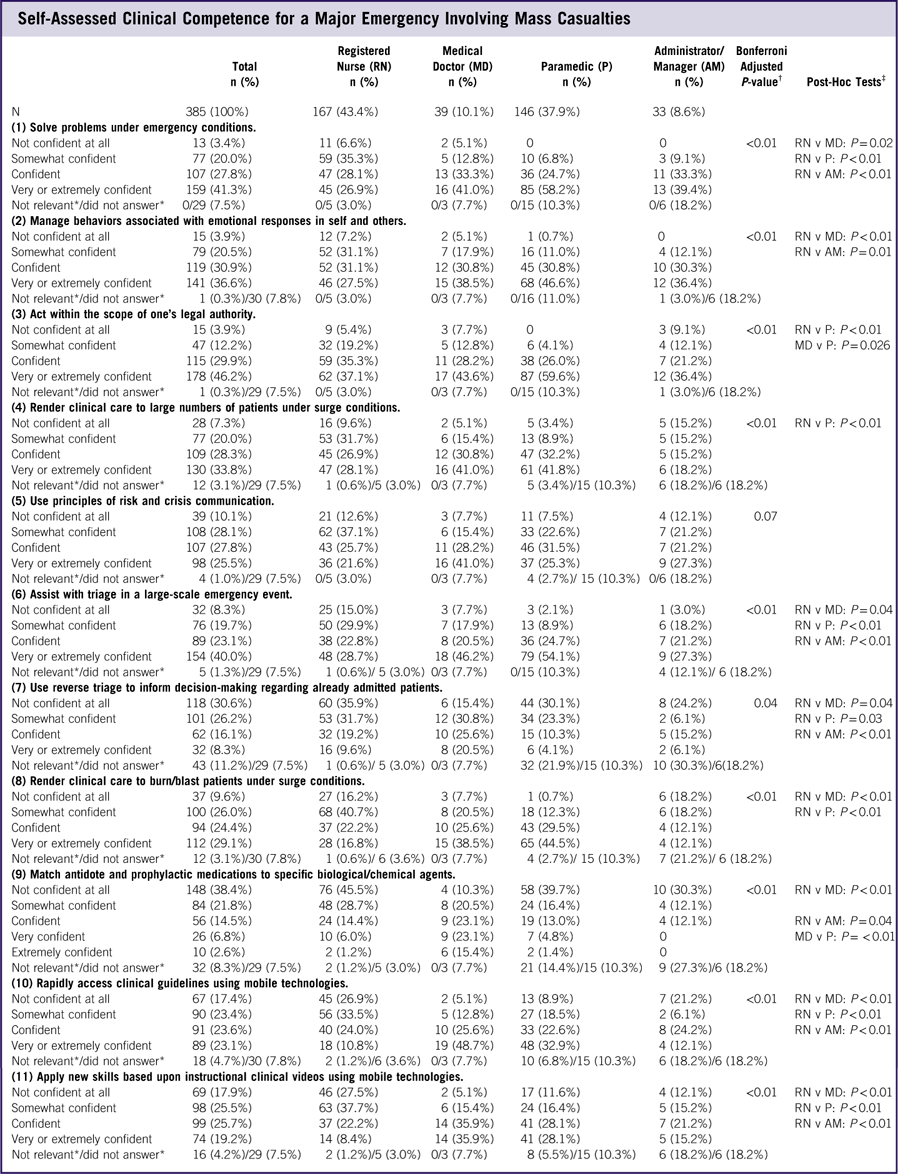
Table 4 displays respondents’ level of confidence regarding clinical competence for a major emergency involving mass casualties. Levels of confidence varied, both between various aspects of clinical competence and across professional disciplines. Overall, less than 4% of respondents felt “Not confident at all” to solve problems under emergency conditions, to manage behaviors associated with emotional responses in self and others, and to act within the scope of one’s legal authority. However, the percentages differed significantly across disciplines (P<0.01), ranging from 0% to 9% (Table 4).
Self-Assessed Clinical Competence for a Major Emergency Involving Mass Casualties

* Excluded from test
† Kruskal-Wallis test
‡ Dunn’s multiple-comparison test
Overall, 45.9% of respondents either did not feel confident at all or did not answer the survey question regarding their confidence in matching antidote and prophylactic medications to specific biological/chemical agents. Other areas where respondents indicated “Not confident at all” included when using reverse triage to inform decision-making regarding already admitted patients (30.6%). Nurses made up the largest group of survey respondents who indicated a lack of clinical confidence in this area, with 35.9% who indicated “Not confident at all.” Additionally, 17.9% of respondents indicated “Not confident at all” when applying new skills based upon instructional clinical videos using mobile technologies, 17.4% when rapidly accessing clinical guidelines using mobile technologies, 10.1% when using principles of risk and crisis communication, 9.6% when rendering clinical care to burn/blast patients under surge conditions, 8.3% when assisting with triage in a large-scale emergency event, and 7.3% when rendering clinical care to large numbers of patients under surge conditions. Significant differences were seen across professional disciplines (P<0.05) (Table 4). In general, the highest percentages for those “Not confident at all” were seen for nurses, followed closely by administrators/managers.
DISCUSSION
The responsibility of the national authority charged with assuring emergency preparedness in any country consists of three main functions, including the establishment of national policies, creation of standards and criteria for the implementation of the policies, and control as well as monitoring the actual application of the policies and standards.Reference Adini and Peleg 26 Physicians, nurses, and prehospital HCPs must be prepared to respond to any major emergency involving mass casualties.Reference Lynn 27 Employed across diverse settings, Ireland’s emergency HCPs are well positioned to partner with health system leaders and the HSE to improve preparedness and response capabilities for an MCE. All HCPs responding to the needs of populations affected by an MCE require an understanding of the phases of emergency response, the emergency command system, functional roles for treatment, and fundamental concepts of response.Reference Khoury, Halberthal and Hymes 28 An HCP response to an MCE will require knowledge of rapid escalation of services, treatment at the scene, mass casualty triage, and the clinical management of victims.Reference Moran, Webb and Brohi 29 The primary findings from this study suggest that emergency health care workers have knowledge gaps when it comes to their awareness of MCE national plans, systems, and processes. It would also seem that services are not without fault, with it being unclear whether clear lines of communication and direction exist around how an MCE would be responded to from the level of those who are first on the scene (first responders) through to follow on care and treatment in the acute hospital setting. This is important because the key points of medical response are a robust regional health system (monitored by the HSE) and the coordination of medical and hospital resources.Reference Carles, Levraut and Gonzalez 30
Baseline Knowledge of Major Emergency Planning
Arguably, if an MCE is to be effectively dealt with by front-line staff, then there is an onus on those staff to know who is responsible for initiating the MCE service action plan. In particular, the Nursing Department’s role and understanding of the MCE service action plan is critical.Reference Khoury, Halberthal and Hymes 28 The average number of participants across all groups who indicated that they are not sure who is responsible for initiating the intra-hospital MCE plan is 22%. An average of 15% of all participants are not sure who is responsible for initiating the MCE prehospital MCE plan. At its most basic level, these figures show that the professionals most responsible for treating patients during an MCE may, in fact, not know who initiates the MCE plan within their service. Even more startling is that of all those who identified an intra-hospital MCE initiator, 62.7% identified the wrong person, with 45.2% giving the wrong name of the prehospital MCE initiator. It should therefore not be surprising that those sampled knew little about the MCE plan within their organization or nationally. There is a clear need for information to be disseminated among prehospital and hospital health care groups about who is primarily responsible for the initiation and oversight of the service MCE plan.
Knowledge of Major Emergency Operations
Ireland is currently experiencing ED overcrowding, 31 staff recruitment and retention issues, challenges to patient through-put due to high bed occupancy rates, and an inability to discharge patients home in a timely manner, which results in further ED congestion.Reference Liston, Conyngham and Brady 32 - Reference Brick, Lowes and Lovstrom 34 When asked whether their ambulance service or health care organization has a major emergency plan, of the 359 people who answered this question, 16 individuals or 5% indicated they are not sure. When asked whether respondents have knowledge of the System Wide Escalation Framework and Full Capacity Protocol, of the 360 participants who answered this question, approximately half indicated that they are aware but do not know the details (33.1%) or they do not know what it is (13.3%). When asked whether they have knowledge of the action/task card, over one-third (33.9%) had no idea what an action/task card is. When asked whether the triggers for activating the major emergency plan for their service/health care organization are clearly specified and known to those responsible, nearly 1 in 5 respondents (20.9%) said no. These key findings highlight a knowledge gap within the Irish emergency response system. This may be partially due to the ongoing pressures that acute care staff are under, although it is unclear whether knowledge gaps exist in other domains of their practice and employment. There is a clear and basic need for this knowledge gap to be urgently addressed by the Irish Department of Health through identifying staff in areas that will be required to be most responsive to an MCE, and providing these staff with the necessary knowledge around issues such as the national and service emergency plan and task card. 35
Knowledge of Core Major Emergency Clinical Response Activities
Knowledge of one’s specific role and responsibilities is critical to an effective response.Reference Lowe, Millar, Dignon and Ireland 36 , Reference Steinemann, Kurosawa and Wei 37 In this study, significant gaps were reported in relation to participants’ knowledge of core MCE response activities. Approximately one-quarter of participants had no or minimal knowledge of the phases of a major emergency response, with one-fifth having no or minimal knowledge of what their role would be in the case of an MCE. In contrast, studies post Norway (2011) and Boston (2013) terror attacks demonstrated that HCPs and firefighters had a clear understanding of their roles.Reference Pedersen, Gjerland and Rund 38 , Reference Gates, Arabian and Biddinger 39 Major emergencies involve rapid escalation. In this study, the findings indicate that one-third (35.4%) of participants had no or minimal knowledge of what rapid escalation entails. Central to dealing with the rapid escalation of an increased number of people requiring hospital admission is reverse triage, the practice of freeing up hospital beds for emergency event casualties. In fact, the ability to care for the influx of multiple patients at one time is predicated upon the ability of hospital personnel to evacuate the ED of the existing patients.Reference Gates, Arabian and Biddinger 39 Nearly one-half (47.3%) of participants in this study had no or minimal knowledge of what reverse triage is or entails. This calls into question the suitability of hospital services and staff to move quickly in freeing up beds for the imminent arrival of mass casualty patients. As well as knowledge gaps in relation to core clinical responses, data also show gaps in relation to some of the factors that may cause an MCE. For example, 44.5% of participants had no or minimal knowledge of explosive and blast devices, with one-third (33%) having no or minimal knowledge of how to deal with bomb blast injuries. The absence of knowledge of core activities and of what might cause an MCE shows a startling lack of preparedness within the Irish health system for the casualties of an MCE to be treated quickly and effectively.
Self-Assessed Clinical Competence for a Major Emergency Response
Further, participants were asked about their own level of competency in how they would perform when dealing with an MCE. Just under 1 in 5 participants (18.6%) disclosed that they would not know what to do in the case of an MCE. Furthermore, 27% either did not know or were not sure how to activate their hospital MCE plan. These data are in keeping with Irish health care staff being underprepared for an MCE. Other areas with significant knowledge gaps were in the areas of reverse triage skills, where 67.9% identified a deficient skill level in reverse triage, whereas 47.8% of participants did not know whether protective equipment was available for them in their service. In a similar vein, 62.1% were not sure whether their organization had facilitated MCE drills. On a more positive note, 46.8% of participants said that they would be able to access clinical guidelines using mobile technology during an emergency, with 53.2% confident that they would be able to use the principles of risk and crisis communication during an emergency. Despite there being clear knowledge and skill gaps among participants, 44.7% did say that they could learn and apply new skills quickly if their organization made clinical skills (based upon institutional clinical guidelines) available via mobile technology.
Perception of Communication and Coordination Across Primary Response Agencies
Communication and coordination between prehospital responders and hospitals are critical to an effective response. Yet almost half of the respondents (47.89%) indicated that they are unsure whether existing collaborative arrangements between prehospital providers and hospitals would support on-scene coordination. Furthermore, 17.46% of respondents stated that they believe the collaborative arrangements currently in place between prehospital providers and hospitals do not support on-scene coordination. Almost half of the respondents (46.2%) indicated that they are unsure whether existing communication channels between prehospital providers and hospitals would support on-scene coordination. An additional 17.8% of respondents said that existing communication channels between prehospital providers and hospitals do not support on-scene coordination. These findings show a further gap in the ability of the Irish health service to adequately respond to an MCE. It is clear that there does not exist an emergency response health system that could seamlessly be operationalized if an MCE were to occur. There is a clear need for first responder services and national acute hospital services to develop coordinated and known about action pathways, which would provide optimal level interventions in the case of an MCE. A further issue to be considered in the enhancement of communication MCE channels is the involvement of staff in the development, rolling out and education of new, refined, and updated response systems that would be relevant across any number of first responder groups and professions and acute hospital services. Without this approach, the awareness that many staff do not have will continue to exist.
Low Knowledge/High Confidence
Of 108 respondents who indicated “No” or “Unsure/don’t know” when asked whether they have adequate knowledge about what to do during an MCE, 17.6% indicated that they are “Very” or “Extremely” confident about solving problems under emergency conditions. Of 108 respondents who indicated “No” or “Unsure/don’t know” when asked whether they have adequate knowledge about what to do during an MCE, 14.8% indicated that they are “Very” or “Extremely” confident about assisting with triage in a large-scale emergency. These results are alarming in that they suggest that there are HCPs highly confident to respond, despite a lack of knowledge as to what to do. Overconfidence in emergency HCPs may result in variations in practice patterns and poor health outcomes for patients.
LIMITATIONS
This study was conducted within a defined time period and population and thus may not be generalizable to other emergency responders or HCPs outside of the Republic of Ireland. Given this, our findings align with similar studies conducted with health professionals in other settingsReference Ben-Ishay, Mitaritonno and Catena 1 and may be valuable in prompting other countries to evaluate emergency HCP preparedness. Survey research limits the level of evidence, with a potential sampling bias in this case due to the use of specific and limited access listservs or access to paper surveys in the workplace. The electronic survey accommodated the pool of respondents willing and able to use and access the survey using a computer or mobile device; however, the true potential response rate is unknown because the actual number of people (prehospital emergency responders) who received an invitation via an e-mail list or listserv is unknown.
CONCLUSION
Major emergencies involving mass casualties are rare events, yet they create an onerous burden for a health care system’s preparedness and response. This is the first study conducted in the Republic of Ireland that investigated prehospital and hospital emergency HCP preparedness for a major emergency involving mass casualties. The results demonstrate that deficits exist in HCP knowledge, skills, and abilities to participate in a large-scale MCE. Results also suggest a poor knowledge base of existing major emergency response plans. In totality, the results suggest that the prehospital and acute care health system in Ireland may be unable to rapidly escalate and meet the demands of an MCE. The opportunity exists to address these challenges and greatly improve the capacity for a major emergency response.
RECOMMENDATIONS
These findings from this study should alert prehospital and hospital leaders and the HSE to the critical need to enhance staff major emergency preparedness education, training, and follow-up evaluation. Health care leaders should (1) involve HCPs in the review and update of existing emergency response plans, (2) widely disseminate information regarding the specifics of these plans and functional roles, (3) implement ongoing education and regular emergency operation drills, (4) engage in focused activities to enhance communication and coordination across prehospital providers (all groups providing emergency medical services) and between prehospital and hospital providers, and (5) pursue the use of mobile technology for the dissemination of Ireland’s emergency operations plans and clinical guidelines for response.
Abbreviations
ED – emergency department
HCP – health care provider
HSE – Health Service Executive
MCE – mass casualty event
PRA – principal response agency
Acknowledgments
This study was funded by a Fulbright U.S. Scholar grant, Fulbright U.S. Scholar Program, Council for International Exchange of Scholars (CIES), Institute of International Education (IIE), Washington, DC, in collaboration with the Fulbright Commission of Ireland, Dublin.
The authors would like to gratefully acknowledge Fiona Margaret McDaid and Sinead Lardner for their review of this manuscript.
Competing Interests
The authors have declared that no competing interests exist.
Funding
This study was funded by a Fulbright U.S. Scholar grant, Fulbright U.S. Scholar Program, Council for International Exchange of Scholars (CIES), Institute of International Education (IIE), Washington, DC, in collaboration with the Fulbright Commission of Ireland, Dublin.