Introduction
The two volcanic crater lakes of Barombi Mbo and Barombi Kotto, in the south-west region of Cameroon, are well-known transmission foci of urogenital schistosomiasis and soil-transmitted helminthiasis (STH). The occurrence of Schistosoma haematobium in these villages was first reported in the early 1950s, with egg-patent infection prevalences of 91% in Barombi Mbo and 76% in Barombi Kotto (Zahra, Reference Zahra1953). Subsequent studies have shown significant changes and dynamic variation in parasite transmission levels in both villages over recent decades. In 1969, the prevalence of urogenital schistosomiasis was 76.8% in Barombi Mbo and 64.2% in Barombi Kotto (Duke and Moore, Reference Duke and Moore1976a). Thereafter, a 6-year control project focused on urogenital schistosomiasis and based on a two-pronged attack, i.e. snail control using N-tritylmorpholine molluscicide and mass chemotherapy within the human populace with niridazole, was implemented in both villages. This control programme, pioneered by Brian Duke and Peter Moore, reduced the overall infection intensities in both villages to <1% (Duke and Moore, Reference Duke and Moore1976a,Reference Duke and Mooreb,Reference Duke and Moorec). However, this exciting progress could not be sustained and the programme ceased in 1975 when the funding ceased.
A decade later, the prevalence of urogenital schistosomiasis in these endemic foci recrudesced, returning up to 50 and 76% in Barombi Mbo and Barombi Kotto (Moyou Somo et al., Reference Moyou Somo, Tagni Zukam, Kouamouo, Enyong and Ripert1987). Evidence perhaps of cryptic environmental transmission at these endemic villages progressing towards more obvious and continuous transmission with egg-patent infections within communities, witnessing the long-term failure of the control programme in maintaining gains after stopping interventions. Indeed, subsequent follow-up studies in these villages have demonstrated very high transmission dynamics of urogenital schistosomiasis, with significant fluctuations of infection prevalence – up to 98% in Barombi Kotto – and rapid reinfection rates post-treatment with praziquantel (Kimbi et al., Reference Kimbi, Wepnje, Anchang-Kimbi, Tonga, Ayukenchengamba, Njabi, Kouodjip Nono, Nyabeyeu and Lehman2015; Ndamukong et al., Reference Ndamukong, Ayuk, Dinga, Akenji, Ndiforchu and Titanji2001; Nkengazong et al., Reference Nkengazong, Njiokou, Teukeng, Enyong and Wanji2009). In later years, attention was also given to STH which was co-endemic in these villages. STH infection prevalence was shown to be 90% in Barombi Mbo and 58% in Barombi Kotto in 2004 (unpublished results).
Taking advantage of renewed momentum for the control of neglected tropical diseases (NTDs) with preventive chemotherapy, the Cameroon Ministry of Public Health officially launched the national programme for the control of schistosomiasis and STH in 2004. Starting with a very limited budget, the control programme gradually mobilized national and international partners, to enable a rapid scaling-up of activities that encompassed all endemic regions and health districts from 2007 (Tchuem-Tchuente, Reference Tchuem-Tchuente and Rodriguez-Morales2012). Since then, national deworming campaigns were implemented annually, focusing mainly on the treatment of school-age children with mebendazole and praziquantel. Mebendazole was distributed in all health districts for STH, and praziquantel in districts highly and moderately endemic for urogenital and intestinal schistosomiasis. This intervention strategy can be considered the minimum public health rapid impact package against these two diseases.
With the general realization that preventive chemotherapy campaigns might miss WHO 2020 targets with regard to deworming treatment coverage, in November 2014, a multidisciplinary implementation research network entitled COUNTDOWN was formed to investigate and support the scale-up of interventions against NTDs. COUNTDOWN focused upon implementation research in four countries in sub-Saharan Africa: Cameroon, Ghana, Liberia and Nigeria. The Cameroon programme was officially launched in Yaoundé in October 2015 (Stothard et al., Reference Stothard, Kabatereine, Archer, Al-Shehri, Tchuem-Tchuente, Gyapong and Bustinduy2016).
One of the key objectives of the COUNTDOWN was to develop and optimize strategies to expand preventive chemotherapy against schistosomiasis and STH in order to explore interruption of transmission locally. Part of the research portfolio was devoted to reigniting interests at the volcanic crater lakes Barombi Kotto and Barombi Mbo, given their historical significance, especially since data were available for assessing long-term trends of infection prevalence for both S. haematobium and STH. Hence, within the framework of the COUNTDOWN programme, detailed epidemiological surveys were conducted in these villages (i) to assess the epidemiological levels of urogenital schistosomiasis and STH across the villages and subsets of populations [i.e. preschool-aged children (PreSAC), school-aged children (SAC) and adults], and the infection transmission dynamics in each demographical group; (ii) to determine the snail species involved in the transmission in both villages and environmental transmission potential; and (iii) to develop and recommend long-term control measures to critically evaluate prospects for interruption of disease transmission and local elimination.
Materials and methods
Study sites
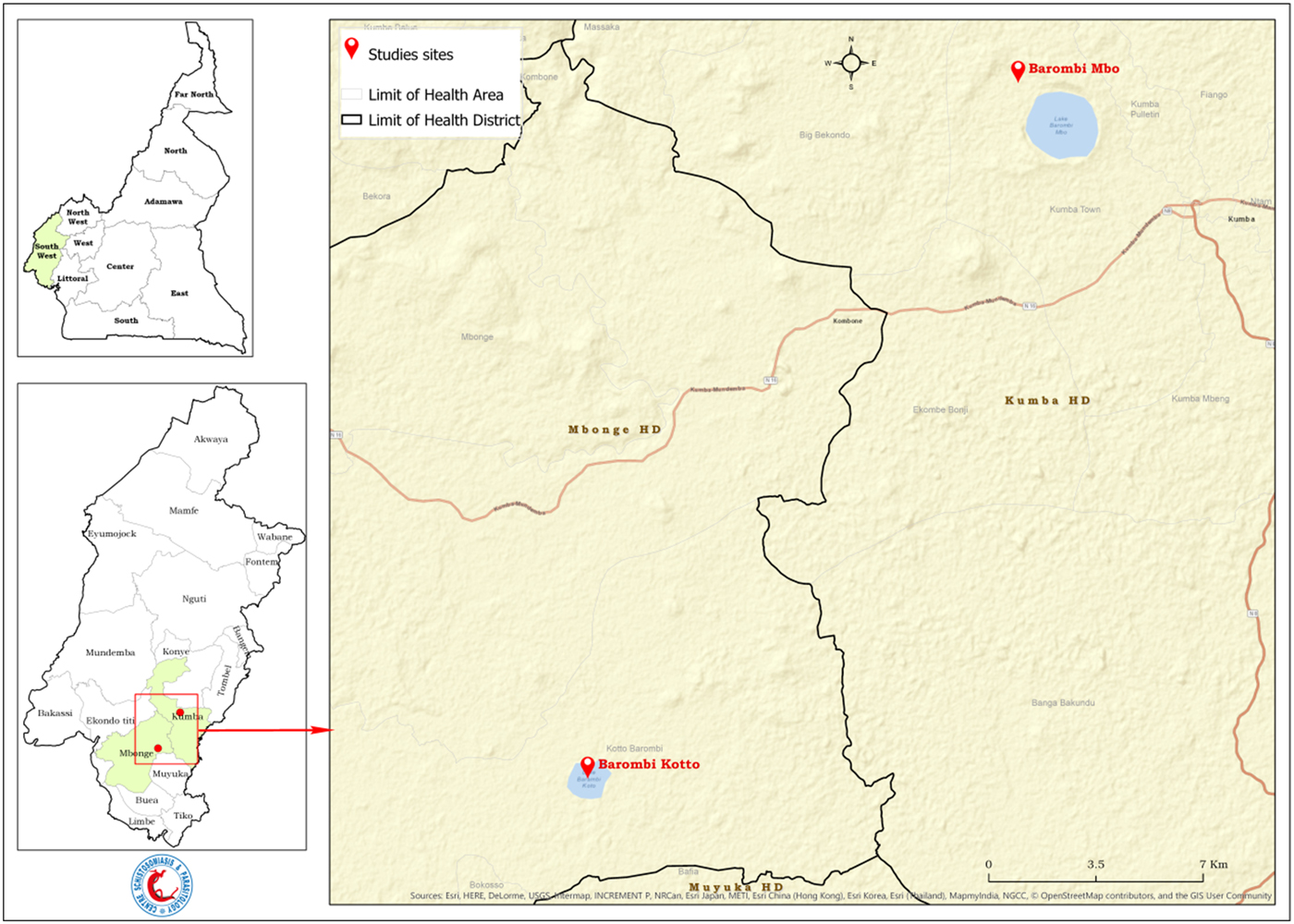
The villages of Barombi Mbo and Barombi Kotto lie on the two crater lakes, to which they give their names, in the forest zone of the South-West region of Cameroon, and are approximately 40 km apart (Fig. 1). Lake Barombi Kotto is just over 1 km in diameter, and in most places <6 m deep. There is a small inlet stream on the southern shore, and an outlet stream on the opposite side. The crater around the lake rises to about 50–70 m. Barombi Kotto village (4°28′N × 9°16′E) comprises two parts: the island and the mainland. The island of volcanic rock is situated in the middle of the lake and comprises the original village of Barombi natives (about a thousand inhabitants). The mainland, on the south-western side of the lake, is larger and is inhabited by a shifting population of some 1800–4000 people belonging to other tribes. All schools of Barombi Kotto are situated on the mainland, and there is no school on the island. Therefore, school children leaving in the island have to travel daily from the island by dugout canoe to the mainland. The main water input into the lake is from an inflowing stream called Tung Nsuria which is the main source of drinking water in this community. Lake Barombi Mbo is just over 2 km in diameter, and some 100 m deep over most of its area. The slopes of the crater around the lake rise to 150 m and are covered with virgin rain-forest. Barombi Mbo village (4°40′N × 9°24′E), with a population of about 200–300, lies about 400 m back from the north-west shore of the lake. There are two main seasons: the raining season (March–October) and a dry season (November–February). These lakes support a lot of socio-economic activities like fishing, tourism, swimming and laundry, and provide water for drinking and domestic chores. Farmers fetch water from this lake to mix agrochemicals for the spraying of cocoa and other agricultural crops.
Map of Cameroon showing the location of Barombi Kotto and Barombi Mbo crater lake villages, in the South-West region of Cameroon.

Parasitological surveys
Parasitological surveys were conducted in the villages of Barombi Mbo and Barombi Kotto in 2015 (October–December) and 2017 (May–August). The results were compared with data from our previous studies carried out in these two villages between 1999 and 2004. To assess the levels of infections across the different age groups, parasitological surveys targeted PreSAC, SAC (enrolled and non-enrolled) and adults; and were conducted in schools and within communities. As populations of these two villages were very low, a target sample size of 400 participants from Barombi Kotto and 100 from Barombi Mbo was set, powered to 95% with 5% precision.
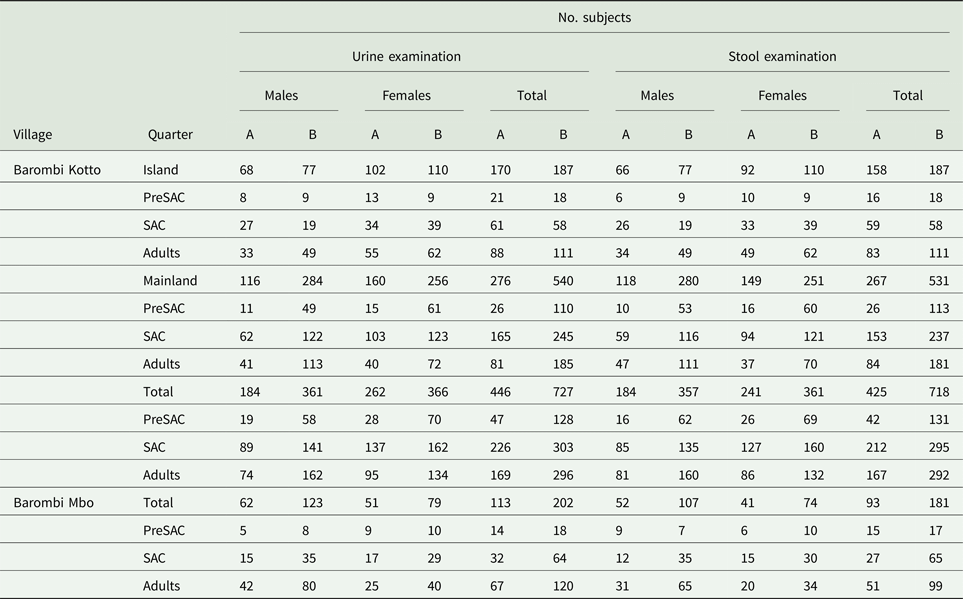
For the preliminary study (October–December 2015), in Barombi Kotto, surveys were conducted in five schools and one community. A total of 498 subjects, aged 0.5–100 years, with mean (s.d.) of 19.65 (18.27) years, provided urine and/or stool samples [182 (36.55%) people from the island, 315 (63.25%) people living on the mainland and one subject with missing information on this variable]. In Barombi Mbo, surveys were carried out in the single existing school and community, and involved a total of 117 subjects, aged 1.0–95.0 years, with mean (s.d.) of 24.83 (20.48) years. The detailed composition of the study population by villages, communities and age groups is summarized in Table 1. The geographical coordinates of each of the sampled schools and communities were recorded with global positioning system (GPS) devices. Stool and urine samples were collected from participants between 11.00 AM and 02.00 PM, in 60 mL plastic screw-cap vials, transported to our field laboratory and processed the same day. In the laboratory, stool samples were processed according to the Kato–Katz method. A single Kato–Katz thick smear slide was prepared per stool sample, using 41.7 mg templates. Each slide was read twice; immediately after slide preparation for hookworm eggs, and later for schistosome and other STH eggs. Urine samples were tested using the filtration method. Each urine sample was agitated to ensure adequate dispersal of eggs, 10 mL of urine were filtered through a Nucleopore® filter, and filters were examined by microscopy for the presence of schistosome eggs. Schistosome and STH infections were recorded; number of eggs was counted and intensities of infections were calculated and expressed as eggs per gram of feces (epg) or eggs per 10 mL of urine (egg/10 mL).
Preliminary surveys (A) and follow-up surveys (B): composition of the study populations by village, quarter, age group and sex of participants in Barombi Kotto and Barombi Mbo, Cameroon

Age groups: PreSAC, preschool-aged children (0–4 years); SAC, school-aged children (5–14 years); adults, ⩾15 years. Sums for all age groups may be less than totals because of missing values occurring (but randomly) at the age group level.
A = preliminary surveys; B = follow-up surveys.
Treatment and follow-up surveys
At the end of the preliminary parasitological survey conducted in October–December 2015, all populations of Barombi Kotto and Barombi Mbo who participated in the study were treated with 40 mg kg−1 of praziquantel and a single tablet of mebendazole 500 mg. In order to assess the level of reinfections post-treatment, a follow-up study was later conducted in Barombi Kotto between May and June 2017 and in both villages in August 2017. Within these follow-up surveys, urine and stool samples were collected and processed as described above. A total of 737 subjects providing urine and/or stool samples were registered for the study in Barombi Kotto, and 207 persons in Barombi Mbo. Details of the study populations are given in Table 1.
Snail surveys
Freshwater Snail surveys were conducted in shorelines of Barombi Kotto and Barombi Mbo lakes. Snails were collected at two fixed sampling points in Barombi Kotto lake in October 2015, March 2016, June 2016 and June 2017. In Barombi Mbo lake, snail surveys were carried out in two fixed sites in December 2015, June 2016 and August 2017. At each site, collectors searched by hand and with metal collection sieves, recording all aquatic snails encountered for a period of 30 min. GPS coordinates, altitude and location photographs were taken. All collected snails of medical importance were identified morphologically according to David S. Brown's keys (Brown, Reference Brown1994). Snails were counted and transferred into plastic cups containing mineral water. Snails were subsequently exposed to natural or artificial light for 2 h. Cercariae shedding tests were conducted twice a week for a period of 35 days or until the death of all collected snails. The water was decanted and viewed under a dissecting microscope for cercariae searching, and cercariae were identified following the method described by Frandsen and Christensen (Frandsen and Christensen, Reference Frandsen and Christensen1984). Only Schistosoma species cercariae were recorded.
Statistical analyses
Data were entered in Microsoft Excel spreadsheet, checked and validated. The data were then exported into the R software (Version 3.4.0) for statistical analyses. Helminth prevalence was calculated with 95% binomial confidence intervals. Where necessary, the χ 2 test for equality of proportions was used to check for dependence between helminth infection and other variables like village site, survey (preliminary or follow-up), gender, age group. Frequency distribution of expected species richness was estimated based on the null model (Janovy et al., Reference Janovy, Clopton, Clopton, Snyder, Efting and Krebs1995), and its comparison with the observed species richness was based on the χ 2 test of independence. Intensity of infection was estimated in terms of arithmetic mean (AM) and geometric mean (GM) (Montresor et al., Reference Montresor, Crompton, Hall, Bundy and Savioli1998), with respective 95% bootstrap confidence intervals based on 2000 draws with replacement from the original subsample. Multivariable logistic regression analysis was conducted for S. haematobium infection associations with independent variables: age, gender, quarter [Barombi Kotto (mainland or island) or Barombi Mbo], village site and survey (preliminary or follow-up) were included as core variables in the model. The variance inflation factor was used to check for multicollinearity. Level of statistical significance was set at 5%.
Results
Prevalence and intensities of schistosomiasis
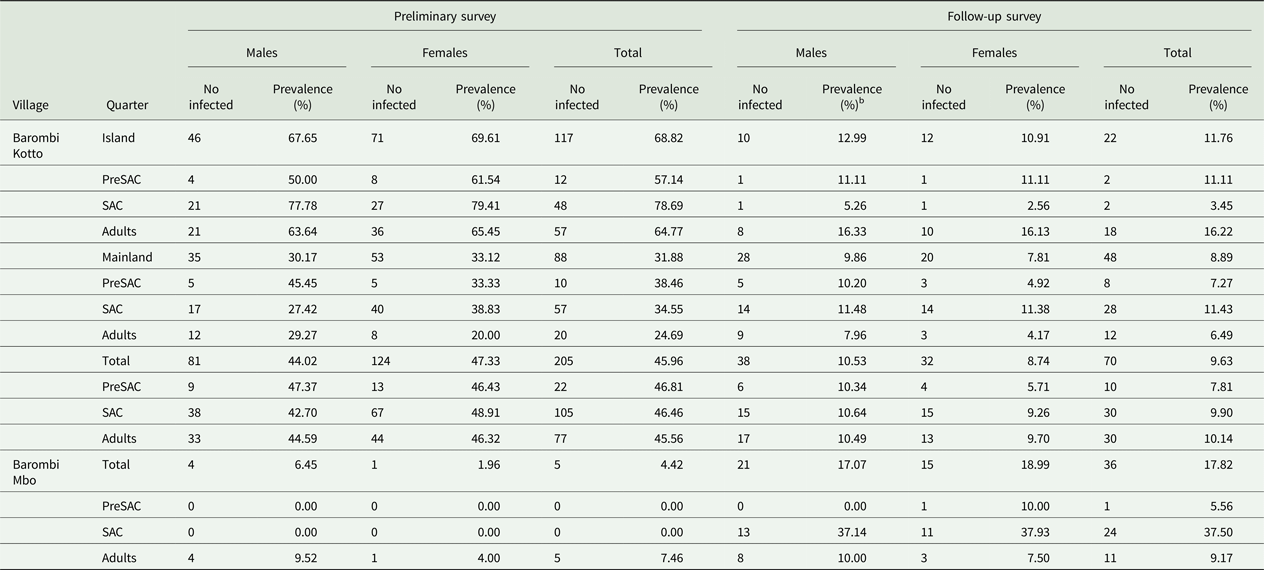
In Barombi Kotto, of the 446 and 727 people who provided urine samples at the preliminary and follow-up surveys, 205 and 70 were infected with S. haematobium, giving overall infection prevalences of 46.0 and 9.6%, respectively (Tables 2 and 3). This decline in prevalence between the two surveys was statistically significant (χ 2 = 199.3, d.f. = 1, P < 0.0001). Overall, the prevalence was higher in people living on the island than in those on the mainland, and the difference was highly significant at the preliminary surveys (68.8 vs 31.9%; χ 2 = 56.32, d.f. = 1, P < 0.0001), in contrast to the follow-up surveys (11.8 vs 8.9%; χ 2 = 1.01, d.f. = 1, P = 0.3148).
Prevalence of S. haematobium infections by village, quarter, age group and sex of participants in preliminary and follow-up surveys in Barombi Kotto and Barombi Mbo, Cameroon

Age groups: PreSAC, preschool-aged children (0–4 years); SAC, school-aged children (5–14 years); adults, ⩾15 years.
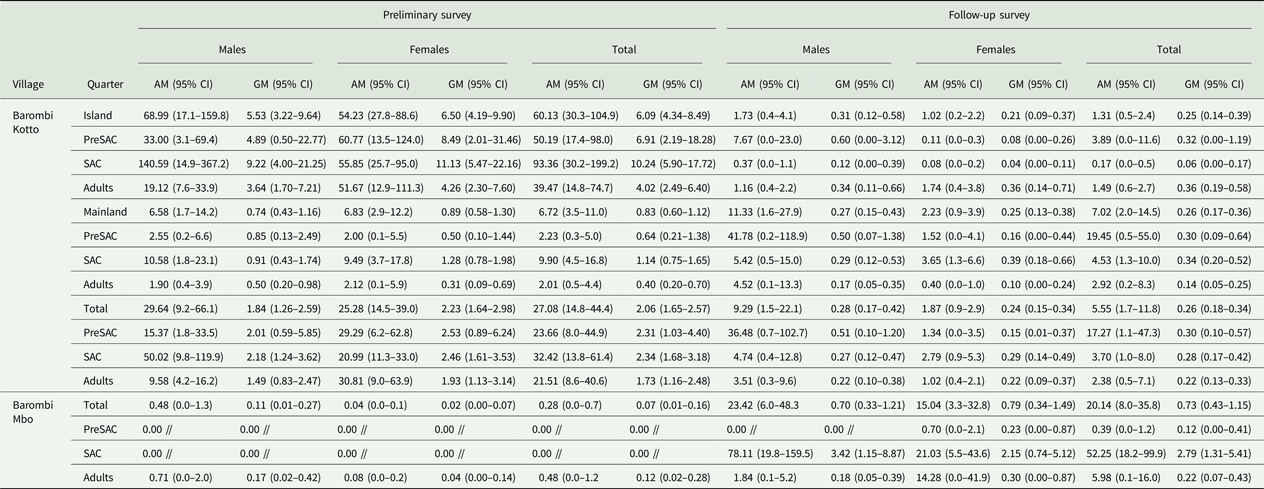
Intensity of infection [in terms of arithmetic mean (AM) or geometric mean (GM)] of S. haematobium with respective 95% bootstrap confidence intervals by village, quarter, age group and sex of participants in preliminary and follow-up surveys in Barombi Kotto and Barombi Mbo, Cameroon

Age groups: PreSAC, preschool-aged children (0–4 years); SAC, school-aged children (5–14 years); adults, ⩾15 years. The two quantities (AM and GM) are presented with their respective 95% bootstrap confidence intervals based on 2000 draws with replacement from the original subsample.
In Barombi Mbo, the prevalence of S. haematobium significantly increased from 4.4% at the preliminary survey to 17.8% at the follow-up survey (χ 2 = 10.34, d.f. = 1, P = 0.0013). Only adult populations were found positive for Schistosoma at the preliminary surveys, whereas all three age groups were positive at the follow-up surveys. In both Barombi Kotto and Barombi Mbo, no case of S. mansoni, nor S. guineensis was found from all stool samples examined.
The comparison of infection prevalences between the two villages showed significant difference in prevalence at both preliminary (χ 2 = 63.99, d.f. = 1, P < 0.0001) and follow-up (χ 2 = 9.70, d.f. = 1, P value = 0.0018) surveys. There was no significant difference in infection prevalence between males and females in both surveys in Barombi Kotto (44.0 vs 47.3% in the preliminary survey and 10.5 vs 8.7% in the follow-up survey) and Barombi Mbo (6.5 vs 2.0% in the preliminary survey and 17.1 vs 19.0% in the follow-up survey) (P > 0.05). Differences in infection prevalence across age groups were not significant in Barombi Kotto in both surveys (ranging from 46.0 to 46.8% in the preliminary survey and 7.8–10.1% in the follow-up survey); whereas in Barombi Mbo the difference was not significant at the preliminary survey (ranging from 0.0 to 7.6%) (P > 0.05), but was significant at the follow-up survey where SAC had higher prevalence (37.5%) than adults (9.2%) and PreSAC (5.6%) (χ 2 = 24.91, d.f. = 2, P < 0.001).
The overall S. haematobium mean egg counts in Barombi Kotto was significantly higher at the preliminary survey [27.08, IC95 = (14.8–44.4), GM = 2.06, IC95 = (1.65–2.57)] than at follow-up [5.55, IC95 = (1.70–11.8), GM = 0.26, IC95 = (0.18–0.34)]. On the contrary, the mean egg counts in Barombi Mbo was significantly lower at the preliminary survey [0.28, IC95 = (0.00–0.70), GM = 0.07, IC95 = (0.01–0.16)] than at follow-up [20.14, IC95 = (8.00–35.80), GM = 0.73, IC95 = (0.43–1.15)]. In general, the S. haematobium infection intensities were not dependent on age groups and gender in both villages and both surveys (Table 3). Further analysis of data showed a decline of the proportion of heavy-intensity infections (>50 eggs/10 mL of urine) from 20% at the preliminary survey to 14% at follow-up survey in Barombi Kotto.
Effects of other variables on the probability of S. haematobium infection
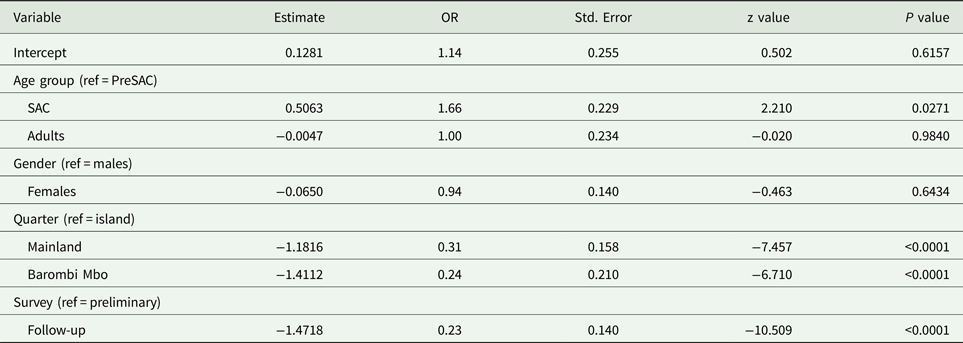
The results of the logistic regression model on the effects of covariates on the probability of S. haematobium infection are given in Table 4. The odds (probability) of S. haematobium infection in SAC were 66.0% more than that for PreSAC, while the odds of infection in adults were not significantly different from that for PreSAC. With respect to gender, the odds of infection in males and females were not significantly different. People living in Barombi Kotto mainland and those living in Barombi Mbo had, respectively, 69.0 and 76.0% lesser odds of S. haematobium infection compared with those living in Barombi Kotto Island. The odds of S. haematobium infection in the preliminary survey were 77.0% more than those of the follow-up survey.
Multivariable logistic regression analysis of the effects of independent variables on the probability of S. haematobium infection

Age groups: PreSAC, preschool-aged children (0–4 years); SAC, school-aged children (5–14 years); adults, ⩾15 years. Odds ratio (OR).
Prevalence and intensities of STH
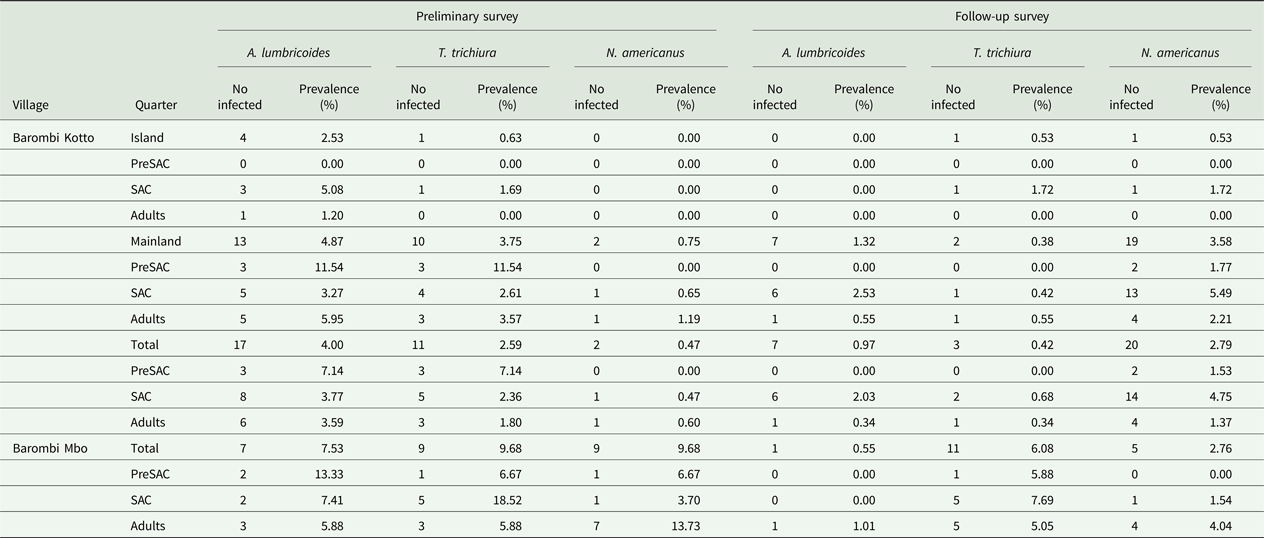
Overall, the prevalence of the three intestinal nematode species was below 10% at all surveys in both villages (Tables 5 and 6). At the preliminary surveys, the village of Barombi Mbo was highly infected compared with Barombi Kotto, with infection prevalence of 7.5 vs 4.0% for A scaris lumbricoides (χ 2 = 1.42, d.f. = 1, P = 0.2327), 9.7 vs 2.6% for T richuris trichiura (χ 2 = 8.51, d.f. = 1, P < 0.005) and 9.7 vs 0.5% for Necator americanus (χ 2 = 26.85, d.f. = 1, P < 0.0001), respectively. At the follow-up surveys, difference in prevalence between the two villages was not significant, except for T. trichiura, 6.1% in Barombi Mbo vs 0.4% in Barombi Kotto (χ 2 = 26.62, d.f. = 1, P < 0.0001). A significant drop in the prevalence of A. lumbricoides from the preliminary to the follow-up surveys was observed in both villages. For T. trichiura, the drop (2.6–0.4%) was significant only in Barombi Kotto. For N. americanus, a drop was observed (9.7–2.8%) in Barombi Mbo, while a significant increase (0.5–2.8%) was instead observed in Barombi Kotto. With regards to Barombi Kotto quarters, there was no significant difference in prevalence between those living on the island vs mainland for A. lumbricoides and N. americanus in the preliminary surveys, and A. lumbricoides and T. trichiura in the follow-up survey (Table 5).
Prevalence of STH infections by village, quarter and age group of participants in the preliminary and follow-up surveys in Barombi Kotto and Barombi Mbo, Cameroon

Age groups: PreSAC, preschool-aged children (0–4 years); SAC, school-aged children (5–14 years); adults, ⩾15 years.
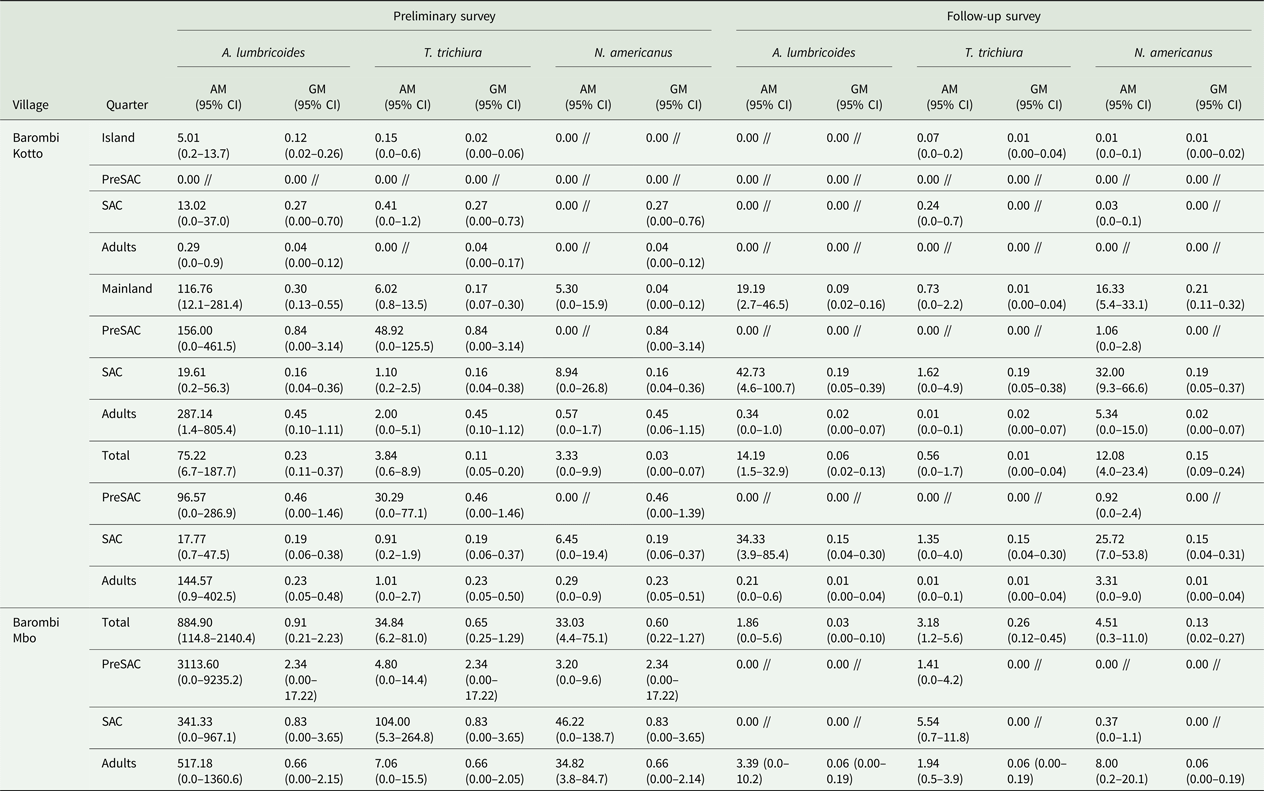
Intensity of infection [in terms of arithmetic mean (AM) or geometric mean (GM)] of STH with respective 95% bootstrap confidence intervals by village, quarter and age group of participants in the preliminary and follow-up surveys in Barombi Kotto and Barombi Mbo, Cameroon

Age groups: PreSAC, preschool-aged children (0–4 years); SAC, school-aged children (5–14 years); adults, ⩾15 years. The two quantities (AM and GM) are presented with their respective 95% bootstrap confidence intervals based on 2000 draws with replacement from the original subsample.
Globally, the mean egg counts for A. lumbricoides at the preliminary surveys in both villages were highest compared with the other intestinal nematodes. Barombi Mbo had higher mean egg counts for all intestinal nematodes, with AM for A. lumbricoides being 884.90, IC95 = (114.80–2140.40) [GM = 0.91, IC95 = (0.21–2.23)] compared with 75.22, IC95 = (6.70–187.70) [GM = 0.23, IC95 = (0.11–0.37)] in Barombi Kotto. Mean eggs for all intestinal nematodes dropped considerably in the follow-up surveys compared with the preliminary surveys (Table 6). For Barombi Mbo, AM were below 5.00 while GM were below 0.30, indicating a significant drop. Mean egg counts for all intestinal nematodes were globally higher in the island than mainland in Barombi Kotto in both surveys (Table 6).
Helminth species richness
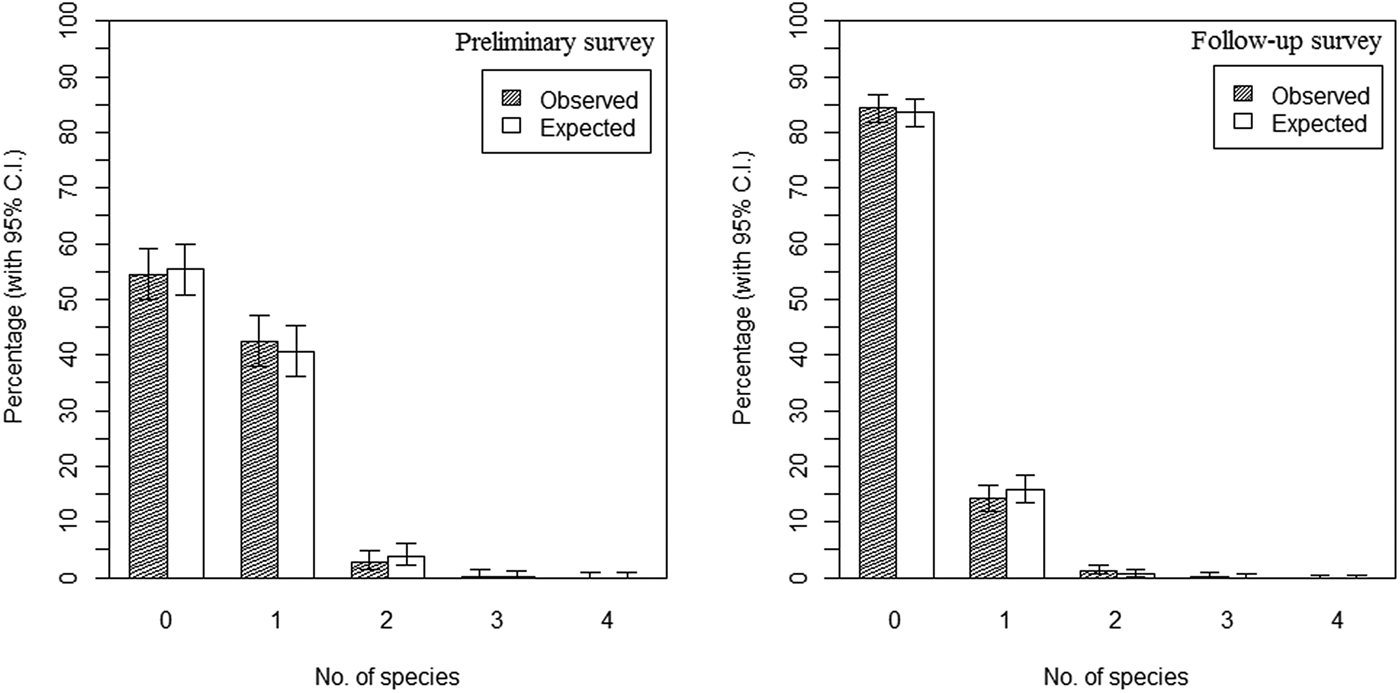
Data on the prevalence of S. haematobium and intestinal nematodes were available for 464 people in the preliminary survey and 884 people in the follow-up survey. Figure 2 shows the frequency distribution of observed and expected species richness across the sub-samples of the populations. For the observed species richness, of the 464 subjects in the preliminary survey, 45.5% were infected with at least one of the four species of helminths recorded, as oppose to only 14.1% of the 884 subjects in the follow-up survey; the largest proportion of people being negative (54.5 vs 84.5%). At the preliminary and follow-up surveys, 42.5 and 14.1% of participants were infected with a single species; 2.8 and 1.1% with two species; 0.2% in both surveys with three species; and none with four species of parasites, respectively. The decrease in proportion of subjects carrying, 0–4 species respectively was statistically significant in both surveys. There was no statistically significant difference between the observed and expected species richness in both the preliminary survey  $(\chi _2^2 = \; 2.11,\; \; P = 0.4661)$ and the follow-up survey
 $(\chi _2^2 = \; 2.11,\; \; P = 0.1278)$. For the observed data, the overall mean ± s.d. number of species of helminths harboured per subject was 0.49 ± 0.57 and 0.17 ± 0.42 in the preliminary and follow-up surveys, respectively.
Frequency distribution of observed and expected (null model of Janovy et al., Reference Janovy, Clopton, Clopton, Snyder, Efting and Krebs1995) species richness for all the study subjects in the Barombi Kotto and Barombi Mbo villages, south-west Cameroon. The results are based on 464 subjects in the preliminary survey  ${\rm (}{\bi \chi} _2^2 = {\bi \;} 2.11,{\bi \; \; P value} = 0.4661)$ and 884 subjects in the follow-up survey
 ${\rm (}{\bi \chi} _2^2 = {\bi \;} 2.11,{\bi \; \; P value} = 0.1278)$ that provided both urine and stools. The χ 2 results were obtained by comparing the observed and expected frequencies of 0, 1 and >1 species, as expected frequencies for three and four species were <5.

Schistosomiasis and STH over the past two decades
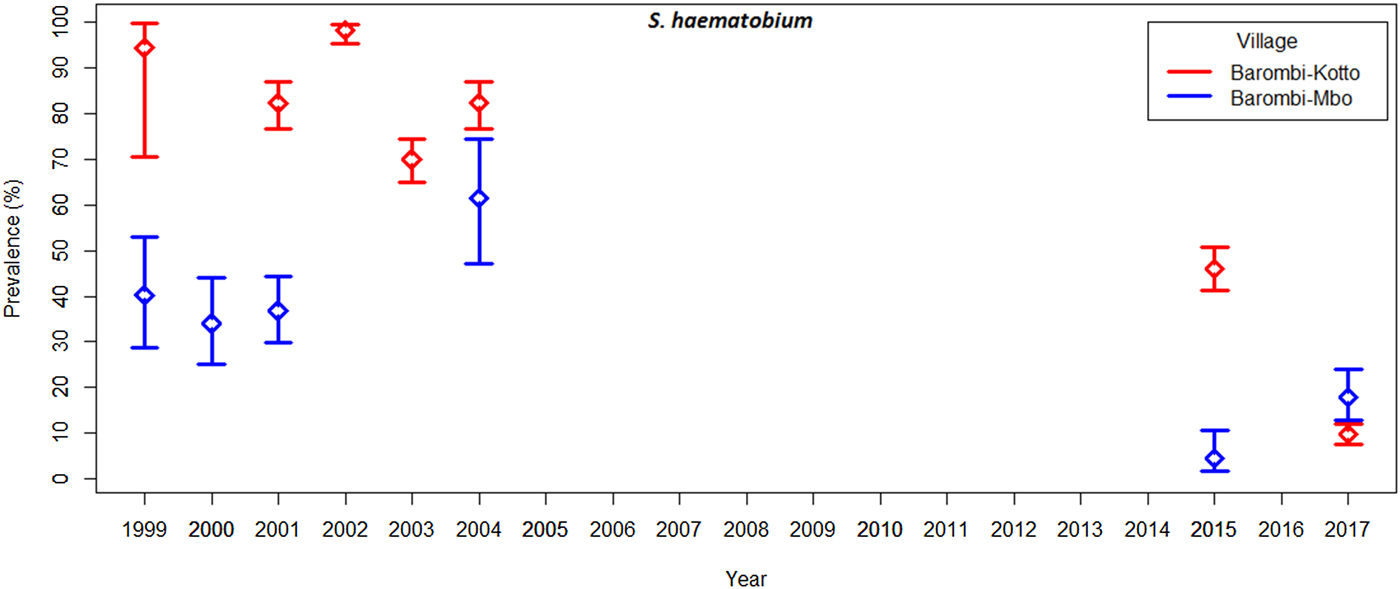
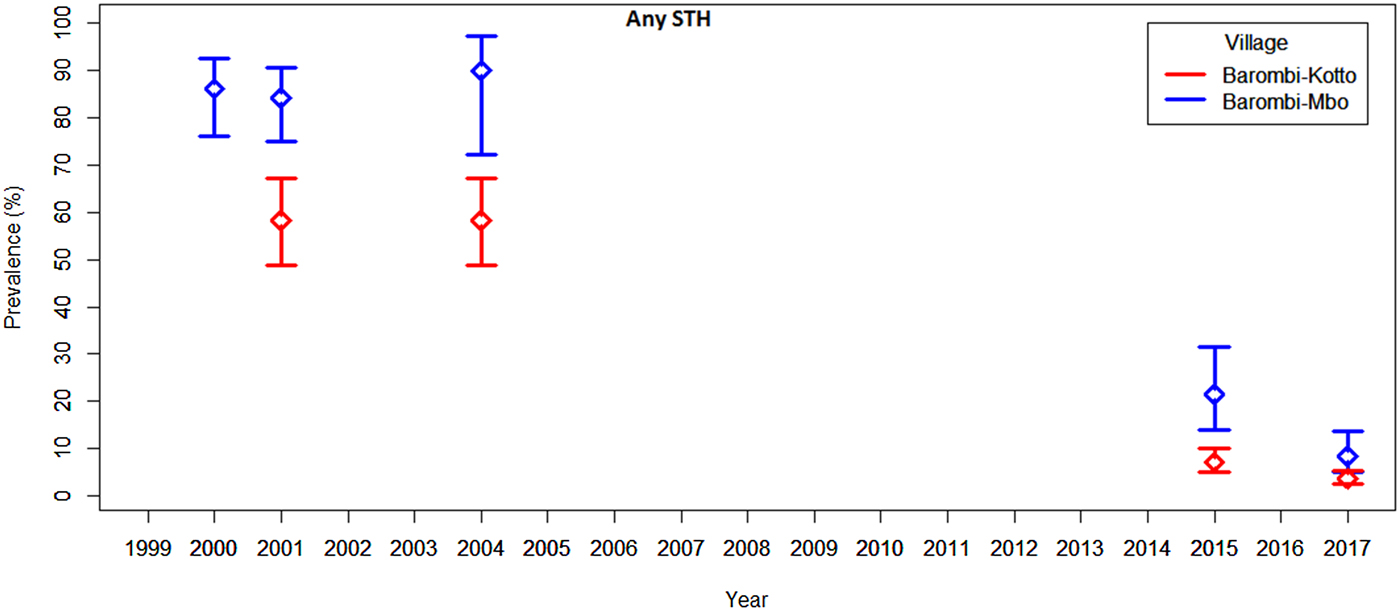
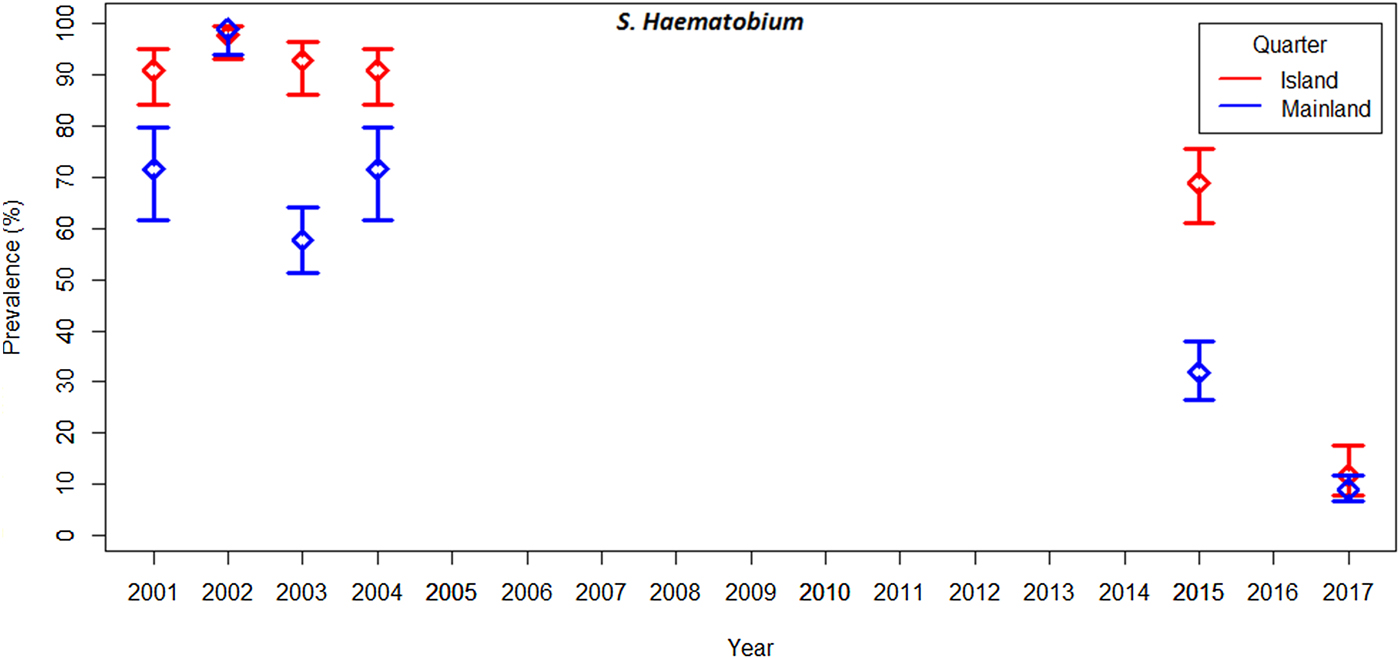
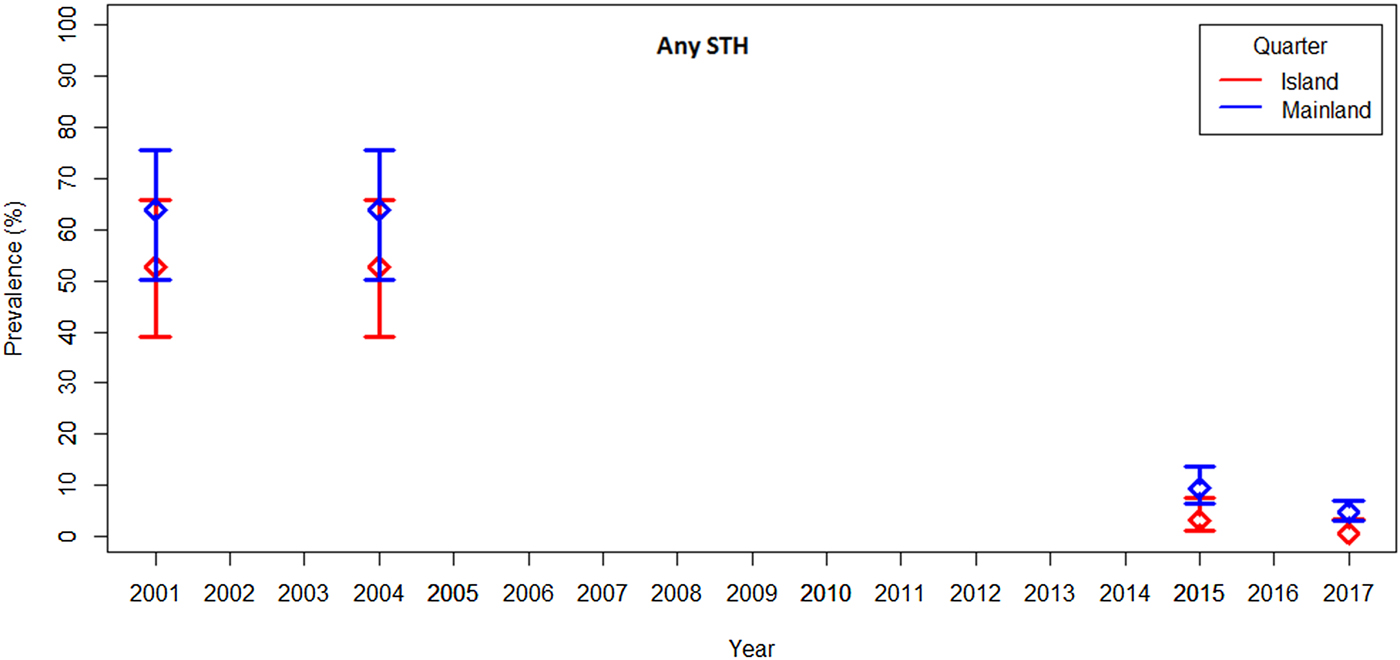
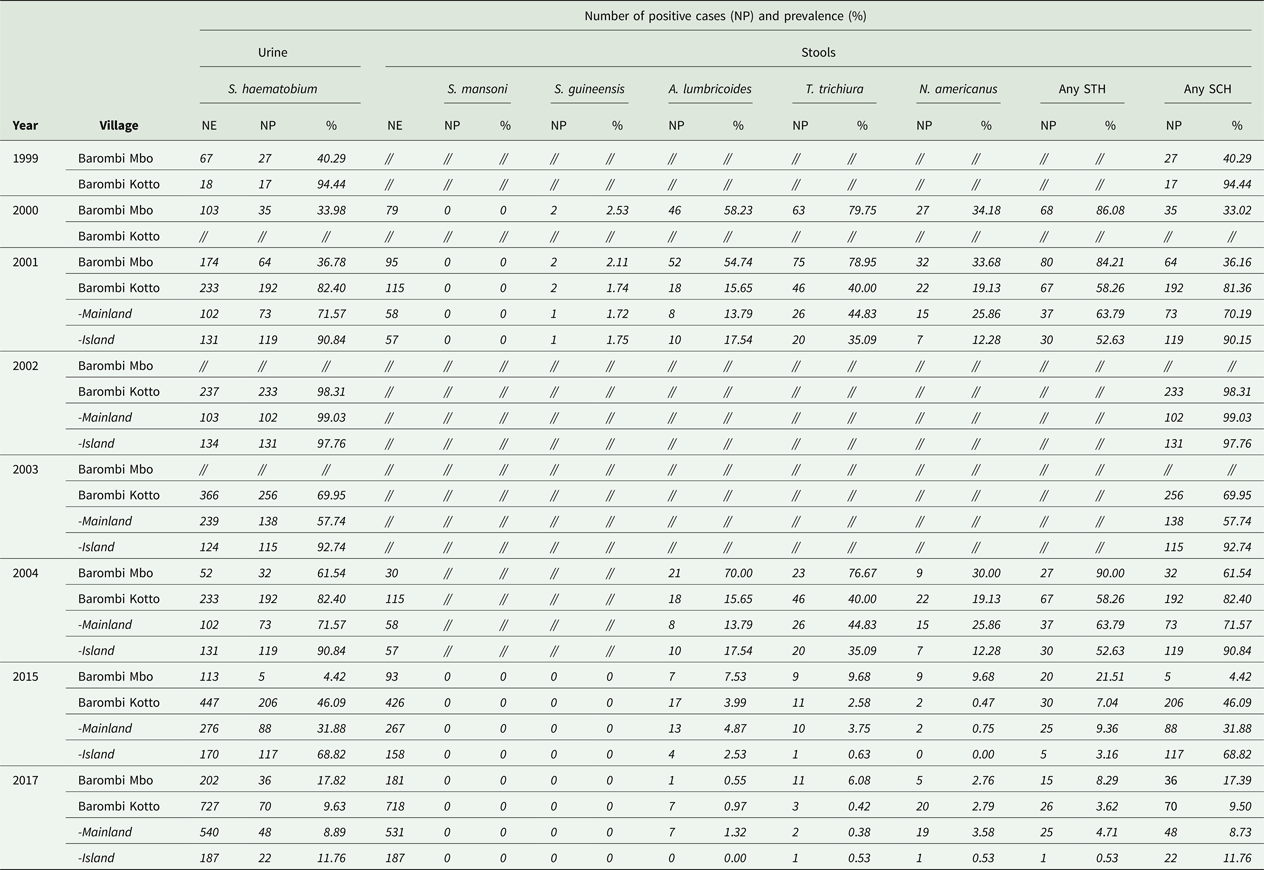
To further assess the change in schistosomiasis and STH transmission in Barombi Kotto and Barombi Mbo at the study time points in the past two decades, we compared the present results with those from our previous epidemiological data collected in these villages since 1999. The data are summarized in Table 7, and the differences are illustrated in Figs 3–6. These data showed that for the study time points, the prevalence of schistosomiasis was always higher in Barombi Kotto than in Barombi Mbo, with prevalence up to 98.31% in 2002. On the contrary, STH were most prevalent in Barombi Mbo. The results also showed a significant decline of schistosomiasis prevalence in Barombi Kotto, and STH prevalence in both villages, from over 58% in 2004 to <20 and 10% in 2017 for schistosomiasis and STH, respectively.
Evolution of S. haematobium prevalence (with 95% CI) in Barombi Kotto and Barombi Mbo, south-west Cameroon, between 1999 and 2017. Deworming of children in schools was conducted annually in both villages between 2004 and 2015.

Evolution of STH prevalence (with 95% CI) in Barombi Kotto and Barombi Mbo, south-west regions of Cameroon, between 1999 and 2017. Deworming of children in schools was conducted annually in both villages between 2004 and 2015.

Evolution of S. haematobium prevalence (with 95% CI) in the mainland and island settings of Barombi Kotto, south-west Cameroon, between 1999 and 2017. Deworming of children in schools was conducted annually in both villages between 2004 and 2015.

Evolution of STH prevalence (with 95% CI) in the mainland and island settings of Barombi Kotto, south-west Cameroon, between 1999 and 2017. Deworming of children in schools was conducted annually in both villages between 2004 and 2015.

Prevalence of schistosomiasis and STH in Barombi Kotto and Barombi Mbo villages in the South West region of Cameroon between 1999 and 2017

Snail surveys
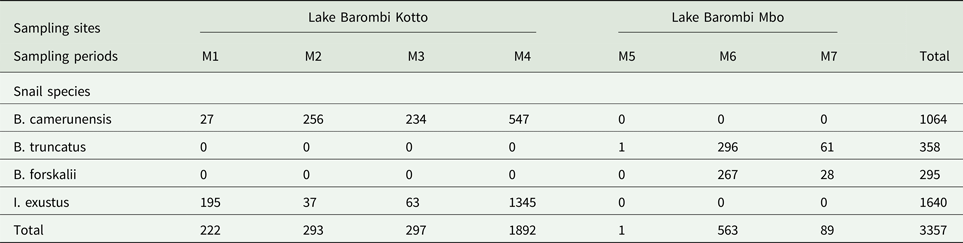
Between 2015 and 2017, a total of 3357 freshwater snails were collected across the two water bodies – 2704 snails collected in Barombi Kotto and 653 snails in Barombi Mbo – including three Bulinus species (B. camerunensis, B. truncatus and B. forskalii) and one Asian invasive snail species (Indoplanorbis exustus). Bulinus camerunensis and I. exustus were found in Barombi Kotto only, whereas B. truncatus and B. forskalii were collected only in Barombi Mbo. The malacological fauna of the two crater lakes is summarized in Table 8. The cercariae shedding tests revealed a production of schistosome cercariae from B. camerunensis only: about 0.5% were found positive in Barombi Kotto. Although no molecular characterization was conducted, the schistosome species was probably S. haematobium. None of the snails collected in Barombi Mbo were found shedding schistosome cercariae during the study period.
Snail abundance in the study carried out from October 2015 to August 2017 at Barombi Ktto and Barombi Mbo villages, south-west Cameroon, stratified by sampling site and sampling period

Months where surveys were conducted. M1 = October 2015, M2 = March 2016, M3 = June 2016, M4 = June 2017, M5 = December 2015, M6 = June 2016, M7 = August 2017.
Discussion
This research work primarily aimed at comparing schistosomiasis and STH prevalence in the two study villages of Barombi Kotto and Barombi Mbo in two surveys conducted in 2015 (preliminary survey) and 2017 (follow-up survey). We further compared our results with results obtained from our previous surveys conducted between 1999 and 2004 in these crater lake villages. It is important to highlight that only urogenital schistosomiasis is endemic at the crater lakes and given the local absence of Biomphalaria snails, there has been no previous or current transmission potential for intestinal schistosomiasis caused by S. mansoni. This study shows that S. haematobium and intestinal nematodes are in sharp decline in the villages of Barombi Kotto and Barombi Mbo, although they remain common helminth infections among people. The intermediate snail hosts for S. haematobium are common in both lakes but it might be considered the limnology of Barombi Kotto harbours a broader diversity of species (Campbell et al., Reference Campbell, Stothard, O'Halloran, Sankey, Durant, Ombede, Chuinteu, Webster, Cunningham, LaCourse and Tchuem-Tchuente2017).
Previous investigations have been conducted in these foci, and it appears that schistosomiasis prevalence has been increasing gradually since the cessation of the control interventions in 1975, rising from <15% (Duke and Moore, Reference Duke and Moore1976a) to up to 98% in Barombi Kotto in 2002 and 62% in Barombi Mbo in 2004. Detailed analysis of Barombi Kotto samples showed that children living in the Island were more affected, as they showed the highest prevalence and intensities of schistosomiasis at all instances. This confirms observations by Duke and Moore (Reference Duke and Moore1976a) who reported infection levels of 91.8% in Barombi Kotto island and 46.6% on the mainland, before the implementation of the schistosomiasis control programme. This difference in the distribution pattern of schistosomiasis between the island and mainland could be explained by the geographical localization of the two settings in relation to the lake and the ensuing water contact pattern, which is obviously greater for islanders. Indeed, the village schools, as well as all the islanders’ farms, are on the mainland, and their supplies of drinking water, apart from such rainwater as they can collect in drums, has to be fetched by canoe from the inlet stream. In consequence, most people living in the island visit the mainland every day, leading to several daily water contacts as they enter the lake water when getting in and out of their canoes. Schoolchildren cross the lake several times per day (at least twice), and their exposure is therefore higher than that of any other age group. Moreover, water contacts are intensified by other activities such as bathing, swimming, washing clothes and fishing.
The observed differences in intestinal nematodes between the two villages remain enigmatic. Interestingly, the difference between the two villages drops after treatment, with the smallest difference in prevalence observed at the follow-up surveys. Further studies are required for evaluating the difference in the socioeconomic states of the two villages including sanitation infrastructure and diet. Most children were infected with at least one parasite species, and many of them harboured multiple species infections. Multiparasite infections have previously been shown in other settings in Cameroon (Tchuem Tchuente et al., Reference Tchuem Tchuente, Behnke, Gilbert, Southgate and Vercruysse2003). The analyses of okur past data showed a highly significant association between A. lumbricoides and T. trichiura, which corroborates previous work in other endemic regions (Booth and Bundy, Reference Booth and Bundy1992; Brooker et al., Reference Brooker, Booth and Guyatt1999; Flores et al., Reference Flores, Esteban, Angles and Mas-Coma2001). There was no significant difference in infections between boys and girls, contrary to observations by Tchuem Tchuente et al. (Reference Tchuem Tchuente, Behnke, Gilbert, Southgate and Vercruysse2003) who reported heavier infections in boys, and by Flores et al. (Reference Flores, Esteban, Angles and Mas-Coma2001) who in contrast observed higher intensities in girls. This is indicative of the variability of gender-related infection prevalence and/or intensities.
The positive association between A. lumbricoides and T. trichiura may be related to a common transmission pattern, and could be favoured by behavioural factors. Indeed, A. lumbricoides and T. trichuria are both transmitted by the fecal–oral route. The eggs of both species are resistant and can persist for some time in the village environment, in dust, soil and on vegetables. Social and behavioural factors that lead to infection with one species will increase the probability of infection with the other species (Booth and Bundy, Reference Booth and Bundy1995).
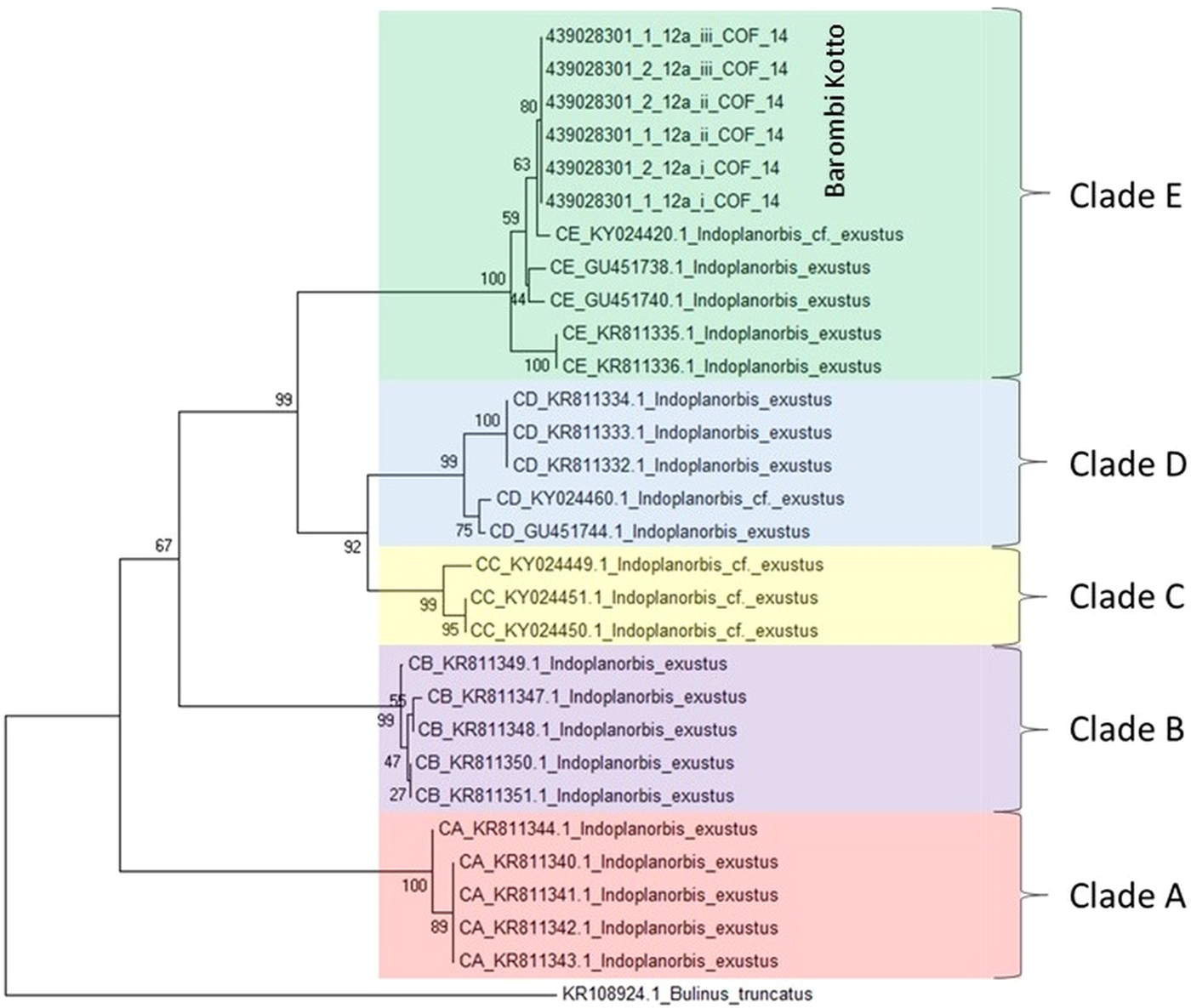
Interestingly, the malacological surveys revealed very significant changes in the snail fauna over time. In our previous studies conducted in 2003–2004, the presence of B. forskalii was observed for the first time in lake Barombi Kotto only, whereas in 2016–2017 this species was only found in Barombi Mbo, and none was collected in Barombi Kotto. Also, in 2016 we described for the first time the presence of I. exustus, an invasive species from Asia, in the lake Barombi Kotto (Campbell et al., Reference Campbell, Stothard, O'Halloran, Sankey, Durant, Ombede, Chuinteu, Webster, Cunningham, LaCourse and Tchuem-Tchuente2017). To ascertain the putative origin of this invasive species, several specimens of I. exustus have been subjected to DNA barcoding with the cytochrome oxidase sub-unit I following protocols of Kane et al. (Reference Kane, Stothard, Emery and Rollinson2008). Figure 7 shows that these snails group with the widely dispersed ‘clade E’ occurring throughout much of Indo-China (Gauffre-Autelin et al., Reference Gauffre-Autelin, von Rintelen, Stelbrink and Albrecht2017). The observation of the long-range colonization potential of I. exustus, as well as the more local dispersal of B. forskalii demonstrate the need for regular malacological surveillance as both species have never been reported in Barombi Kotto previously. Although these snail species are not compatible with S. haematobium, they play roles in transmission of other trematodes and may play a decoy role with S. haematobium by drawing away schistosome miracidia that might otherwise develop in local compatible Bulinus intermediate hosts, i.e. B. camerunensis in Barombi Kotto and B. truncatus in Barombi Mbo. However, a more malignant role could be the risk of transmission of new schistosomes in this locality, in particular S. guineensis. In Cameroon, four species of Bulinus are known to be involved in the transmission of S. haematobium; i.e. B. camerunensis, B. globosus, B. senegalensis and B. truncatus.
Molecular phylogram based upon cox-1 sequences of I. exustus demonstrates snails from Barombi Kotto represent ‘clade E’, a widely dispersed group in Indo-China previously reported from Oman only.

The findings in Barombi Kotto, especially the absence of B. truncatus, are quite surprising as historically previous studies showed the occurrence of both B. truncatus and B. camerunensis in the Barombi Kotto lake (Duke and Moore, Reference Duke and Moore1976b; Nkengazong et al., Reference Nkengazong, Njiokou and Asonganyi2013). In our studies conducted in 2003–2004, we collected 593 B. truncatus, 769 B. camerunensis and 3 B. forskalii from Barombi Kotto; and 282 B. truncatus from Barombi Mbo. The results also revealed 5.6 and 6.4% of B. truncatus from Barombi Kotto and Barombi Mbo shedding S. haematobium cercariae, respectively. None of B. camerunensis and B. forskalii snails was found positive (unpublished results). A possible explanation of the current absence of B. truncatus in Barombi Kotto could be the invasive I. exustus snails recently introduced to the lake, which may be a biological competitor that has successfully out-competed B. truncatus. Future malacological surveillance is important not only to understand these trends but also prepare for focal snail control with chemical molluscicides.
Finally, in terms of disease control, our studies showed some prospects for the elimination of schistosomiasis and STH at the Barombi crater lakes. The significant decline of infection prevalence from over 50% to <20%, and the maintenance of transmission at very low levels over the past few years are indicative of the possibility to achieve interruption of transmission. To demonstrate this, it would be essential to develop further operational research in these settings. This is one of our objectives stimulated by the COUNTDOWN project, and beyond which we envisaged to conduct more intensive integrated interventions as recommended by the TES Conference 2017 (Ministry of Public Health Cameroon, 2017). Intensification of interventions will be focused on the WHO Regional Office for Africa ‘PHASE approach’, which refers to integrated implementation of a package of preventive chemotherapy, health education, access to safe drinking water, sanitation and hygiene, and environmental improvement, including snail control (World Health Organization, 2013).
Acknowledgements
LATT, LC and JRS participate in the four-country research programme consortium COUNTDOWN. We are grateful to the help and support of the communities at Barombi Mbo and Barombi Kotto. We would also like to thank the Centre for Schistosomiasis and Parasitology field staff, technicians and all people who contributed in any way for their assistance and help with the collection of information and data necessary for this study.
Financial support
This study was funded as part of the COUNTDOWN research programme consortium, by the Research and Evidence Division of the Department for International Development, UK. The funders had no role in study design, decision to publish or preparation of the manuscript.
Conflict of interest
None.
Ethical statement
The study was approved by the National Ethics Committee of Cameroon (Nr 2016/11/833/CE/CNERSH/SP), and was a public health exercise through the Ministry of Health and the Ministry of Education. Study protocols were also approved by the Liverpool School of Tropical Medicine Research Ethics Committee (M1516-18 and M1516-06) as COUNTDOWN project. Stool and urine samples were collected from children in schools and adults in communities, with the approval of the administrative authorities, school inspectors, directors and teachers. The objectives of the study were explained to schoolchildren and their parents or guardians, and to participants from whom written informed consent was obtained. People willing to participate were registered. Each person was assigned an identification number and results were entered in a database and treated confidentially. No identification of any participant can be revealed upon publication. All people who participated in the study were treated with praziquantel and mebendazole.