Introduction
Local animal breeds can be perceived as a living part of the world's cultural heritage. Hence, conservation of these populations with their genetic structure is not only scientifically, but historically and culturally motivated. The main elements of genetic conservation programmes include maintenance of optimal population size, minimisation of inbreeding rate and preservation of within-population genetic variability over time. In the context of admixture processes in some populations, monitoring of inter- and intra-population genetic variability is necessary.
For many years Poland was the leader in the production of goose meat in the European Union, as a result of a resilient expansion in the beginning of the 21st century. From 2000 to 2006 meat production almost tripled from 6,800 to 18,400 tonnes and is still maintained at this level (FAOSTAT, 2018). Such a rapid increase influenced not only the changes in goose population size in Poland but also the breed utilisation. Nowadays the most popular goose breed in Poland is the White Kołuda, which accounts for more than 90% of goose meat production. White Kołuda geese are the result of over 50 years of breeding and are a registered trademark in EU countries. They were derived from imported goslings of the White Italian breed and comprised from two parental lines. Paternal line (W33) has been selected for many years to improve muscularity and reproduction, whereas maternal line (W11) was selected to improve fertility traits, mainly the numbers and percentage of fertilised eggs. More details on the genetic structure of those lines are given by Rosiński (Reference ROSIŃSKI2000), Szwaczkowski et al. (Reference SZWACZKOWSKI, WĘŻYK, STANISŁAWSKA-BARCZAK, BADOWSKI, BIELIŃSKA and WOLC2007), Wolc et al. (Reference WOLC, BARCZAK, WĘŻYK, BADOWSKI, BIELIŃSKA and SZWACZKOWSKI2008) and Krawczyk et al. (Reference KRAWCZYK, OBRZUT and ZWIERZYŃSKI2014).
Despite the observed upward trend in the demand for goose meat in Poland, there was no positive impact on the state of their genetic resources. The biggest threat is caused by the excessive use of industrial systems. Those systems are targeted at high production and influence the usage of a narrow range of commercial lines characterised by high genetic uniformity, excluding the utilisation of local lines (Hoffmann, Reference HOFFMANN2009; Groeneveld et al., Reference GROENEVELD, LENSTRA, EDING, TORO, SCHERF, PILLING, NEGRINI, FINLAY, JIANLIN, GROENEVELD and WEIGEND2010). As a consequence, over the last few decades, global genetic resources lost over 82 poultry breeds (FAO, 2016), including five well documented cases of extinction of local Polish geese breeds. It is worth emphasising that these numbers are probably an underestimate because of incomplete data provided by many countries.
Escalating genetic uniformity of livestock, despite the advantages resulting from production equalisation, poses many threats for animal farming. Breeding targeted at obtaining homogeneous and highly productive individuals narrows the gene pool and impoverishes allele polymorphism. The importance of high allele polymorphism is often linked with increased susceptibility and tolerance against pathogens. Evidence of positive association between genetic diversity and higher survival rates of infectious diseases have been reported (Murray et al., Reference MURRAY, WOOLHOUSE, TAPIO, MBOLE-KARIUKI, SONSTEGARD, THUMBI, JENNINGS, VAN WYK, CHASE-TOPPING, KIARA, TOYE, COETZER, DEC BRONSVOORT and HANOTTE2013; Adeyemo et al., Reference ADEYEMO, SALAKO, EMIKPE, OGIE and OLADELE2012; Feng et al., Reference FENG, LIAN, HUANG, ZHU and LIU2013; Wang et al., Reference WANG, LUPIANI, REDDY, LAMONT and ZHOU2014). It is worth emphasising that, along with the progressive erosion of the allele pool, the odds for irreversible loss of potentially important genes rise emphatically. However, preservation of animal genetic resources should not be perceived as creation of ‘allele museums. Nowadays, especially in wealthier eastern countries, the demand for high quality animal products beneficial to human health can be provided by local breeds (Thorton, Reference THORTON2010). Waterfowl meat, besides being tasty, reflects the dietary demands of today's consumer. The high nutritional value of waterfowl meat is a consequence of an optimal composition of amino acids and high percentage of polyunsaturated fatty acids, combined with a beneficial ratio of omega 6 to omega 3 oils (Pingel, Reference PINGEL2011). Furthermore, studies on fatty acid and essential amino acid composition performed on local goose breeds, revealed higher contents of beneficial nutritional compounds in comparison to commercial lines (Pasternak, Reference PASTERNAK2012; Haraf et al., Reference HARAF, WOŁOSZYN, OKRUSZEK, ORKUSZ and WEREŃSKA2014). This indicated that local goose breeds, despite their low usage in breeding today, should be preserved in the best possible condition.
It is important to remember that the Polish goose population constitutes a significant share of both the European and global populations. According to current knowledge, no summarised reports on genetics and breeding of the population are available in published literature. Thus, the aim of this review was to present the current status of realised conservation programmes for geese breeds in Poland in the context of global tendencies.
State of genetic resources and conservation methods
The global geese population is estimated at 327 million with 205 known breeds. Europe is inhabited by 19.1 million, of which 4.42 million occur in Poland. However, the status of the vast majority of breeds (133) has been categorised by the FAO as unknown. Only 25 breeds are defined as ‘not at risk’, clearly indicating a need for improvement in data collection and the addition of subsequent populations to genetic conservation programmes (FAOSTAT, 2018; FAO, 2016). Interestingly, 64% of geese breeds exist within Europe. Meanwhile in Asia, which is inhabited by more than 86% of the total population, only 20% of breeds exist (FAO, 2016).
In spite of the poor condition of many local geese populations, only 12 countries provide conservation programmes (FAO, 2016). The most favourable approach of animal genetic resources (AnGR) protection, called in situ conservation, is based on encouraging farmers through various subsidies to maintain local breeds in their place of origin. During the last few decades, many European countries, supported by organisations such as FAO are increasingly implementing this method (Woelders et al., Reference WOELDERS, ZUIDBERG and HIEMSTRA2006). In situ conservation may be combined with one of the ex situ methods which are: ex situ in vivo based on maintaining living birds outside traditional regions in conservation stations and reserves or ex situ in vitro based on the storage of frozen biological material, such as embryos, sperm cells and DNA. Conservation programmes should be provided for at least half of the total goose breeds. Unfortunately, the number of in situ and ex situ conservation programmes for rare breeds is still insufficient. During the last decade, the number of publications on the conservation of animal genetic resources increased significantly, with special contributions in the first and second editions of the Report On the State of the World's Animal Genetic Resources for Food and Agriculture. Nevertheless, in the future, research based on molecular analysis of genetic diversity, which provides detailed information about diversity within and between the breeds, should be considered for geese in Europe and Asia (Kranis et al., Reference KRANIS, GHEYAS, BOSCHIERO, TURNER, YU, SMITH, TALBOT, PIRANI, BREW, KAISER, HOCKING, FIFE, SALMON, FULTON, STROM, HABERER, WEIGEND, PREISINGER, GHOLAMI, QANBARI, SIMIANER, WATSON, WOOLLIAMS and BURT2013). A good example of successful research based on the molecular approach is the ‘Development of a SNP diversity panel in chicken’, provided by the Technical University in Munich for 100 chicken breeds as a part of the Synbreed project.
Apart from being a top producer of goose meat in Europe, Poland possesses a large number of unique native breeds of chickens, geese and ducks. Currently, the conservation programmes provided by the Research Institute of Animal Production include 14 goose, 10 duck and 11 chicken breeds. The conservation programmes are aimed at the protection of each population from becoming extinct, through providing genetic equilibrium at an unchanged level, while maintaining the characteristic phenotypic traits of males and females (Książkiewicz et al., Reference KSIĄŻKIEWICZ, CALIK, SZUKALSKI and KAPKOWSKA2012).
History and status of goose conservation flocks in Poland
Goose breeding in Poland is highly developed and possesses a long and rich history. Traditional goose breeding in Poland can be dated back to the beginning of the 19th century, when Warsaw was one of the main European exchange centres of living geese, selling over three million birds per year. Nevertheless, the majority of the breeds have been derived from backyard homestead, where they were maintained in small flocks. Polish breeds were named after regions, often distant from each other. Distribution across the country and the lack of intense selection resulted in large genetic diversity among the goose breeds, making them excellent material for conservation purposes.
The first documented breeding activities on geese were undertaken in 1956 by the National Research Institute of Animal Production in Zootechnical Experimental Station in Zator (near Cracow), when the Zatorska breed was created on the basis of four local breeds; Podkarpacka, Garbonosa, Suwalska and Pomorska (Rabsztyn, Reference RABSZTYN2006). A few years later, a breed called Pomorska (Po), one of the most popular breeds at that time, were used as material for selection, resulting in the creation of the P11 line, which has been used for crossbreeding until today. The Pomorska was used for the creation of the Kartuska and Rypińska breeds. The origins of the rest of the Polish local breeds are not precisely defined, thus the main criterion of classification is the region of their origin. In 1962, the first breeding flock of White Italian geese were imported to Poland, which turned out to be a revolutionary change in the breeding structure, resulting in a displacement of the local breeds by imported individuals (Rosiński, Reference ROSIŃSKI2000).
As a consequence of the extinction of four local breeds (Poleska, Rzeszowska, Kujawska, Wieruszowska), and the displacement of local breeds by the White Italian in the 1970s, the first conservation programmes for local geese breeds were implemented. Poland was one of the first countries in Europe to provide such programmes for geese. Nowadays, there are the following 14 breeds included under a common genetic conservation programme: Garbonosa (Ga), Kartuska (Ka), Kielecka (Ki), Lubelska (Lu), Podkarpacka (Pd), Pomorska (Po), Suwalska (Su), Rypińska (Ry), Landes (LsD-01), Romańska (Ro), Słowacka (Sł), Kubańska (Ku) also known as Kubaniecka, Biłgorajska (Bi) and Zatorska (ZD-1).
Most of the populations are kept in the Waterfowl Genetic Resource Station of the National Research Institute of Animal Production in Dworzyska. The Biłgorajska breed is housed by the Wrocław University of Environmental and Life Sciences and a private breeder in Puchaczów, whereas the Zatorska breed is kept by the University of Agriculture in Kraków. Performance tests and breeding documentation for the populations studied were carried out by the National Poultry Council – Chamber of Commerce in Warsaw. However, the National Research Institute of Animal Production in Krakow (for twelve breeds), and the Wrocław University of Environmental and Life Sciences (for the Biłgorajska breed) and the University of Agriculture in Kraków (for the Zatorska breed) are responsible for scientific aspects on the genetic conservation programme, which is financially supported by the Polish Ministry of Agriculture and Rural Development. In each population, selection is focused on the breed pattern which produces the characteristic phenotypic traits of the males and females of a given breed (according to the regulation of Polish Ministry of Agriculture and Rural Development (43/15) issued on December 9th, 2015).
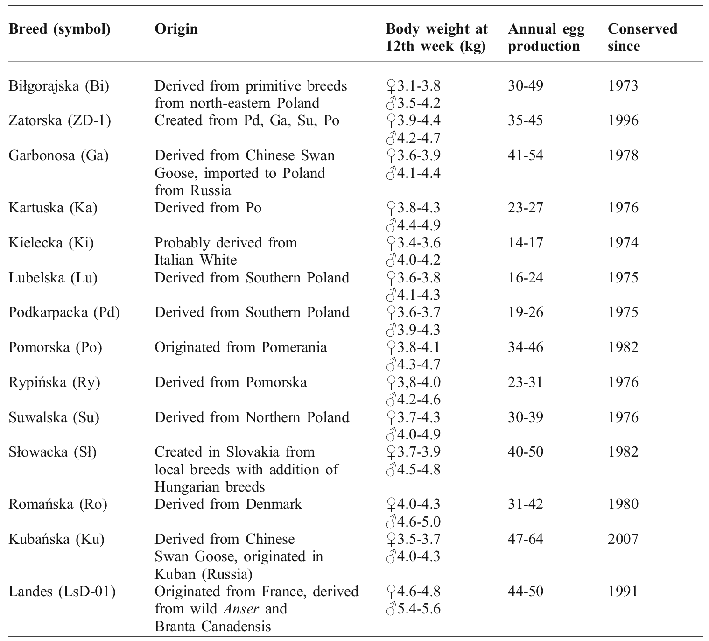
The information about the origin and basic production traits of breeds included in conservation programmes in Poland is presented on Table 1. The provenance of the breeds included in the conservation programmes is highly diverse. The conserved populations originate from the primitive local flocks, and individuals imported from other countries. In addition, as mentioned by Smalec (Reference SMALEC1991) and Wrzaszcz (2011), genetic conservation programmes contain breeds which can be classified into two groups, those derived from Anser cygnoides (Ku, Ga) or from Anser anser (the rest of the breeds), indicating a high variability of alleles among the conserved populations.
The origin and basic performance traits for goose breeds under conservation programme in Poland (Smalec, Reference SMALEC1991; Mazanowski, Reference MAZANOWSKI2012).

Breeds derived from Anser anser: (Bi, ZD-1, Ka, Ki, Lu, Pd, Po, Ry, Su, Sł, Ro, LsD-01) and Anser cygnoides: (Ga, Ku).
Inter and intra population genetic variability
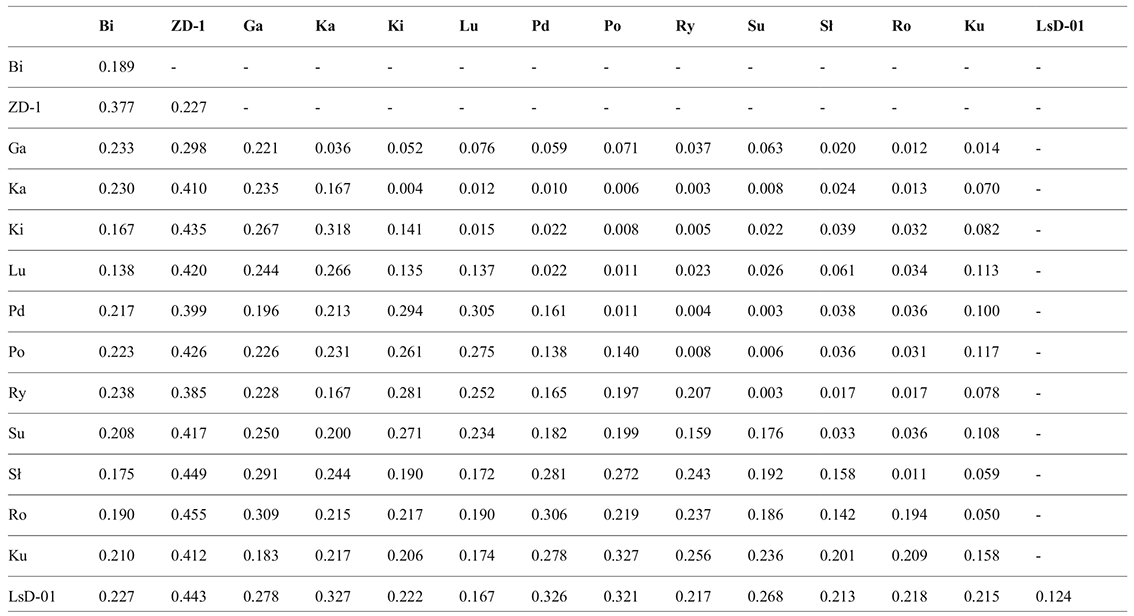
The first complex study on genetic variability based on blood serum protein polymorphism of geese breeds maintained under a conservation programme was carried out by Smalec (Reference SMALEC1991) and involved 10 out of 14 conserved breeds. The results of genetic distances were estimated using Nei's method (Nei, 1974) and are presented in the upper part of Table 2. The largest distance was estimated between the Pomorska and Kubańska breed. The large distance between the Pomorska and Kubańska was expected, due to the fact that the progenitors of those species are derived from different genera, later confirmed by the studies performed with RAPD-PCR by Wrzaszcz (2011). The Kubańska originated in the Kuban region (southern Russia), while the Pomorska comes from Pomerania (northern part of Poland). The results of the analysis performed by Wrzaszcz (2011), presented in the lower part of Table 2, reported the largest genetic distance between Zatorska and Romańska. The smallest values were present between Biłgorajska and Lubuska and between Pomorska and Podkarpacka. Parada et al. (Reference PARADA, KSIĄŻKIEWICZ, KAWKA and JASZCZAK2012) on the other hand, estimated the genetic distances between eight populations (Rypinska, Kartuska, Lubelska, Pomorska, Podkarpacka, Kielecka, Suwalska, Garbonosa) using microsatellite DNA markers. For the above populations, the obtained indicated the same tendencies of genetic distances, which were low compared to those reported by Smalec (Reference SMALEC1991) and Wrzaszcz (2011).
The observed heterozygosity, obtained on the basis of microsatellite markers estimated by Wrzaszcz (2011), ranged from 0.124 for Landes to 0.227 for Zatorska breeds (Table 2). Parada et al. (Reference PARADA, KSIĄŻKIEWICZ, KAWKA and JASZCZAK2012) obtained higher values of heterozygosity with values from 0.45 for Pomorska to 0.55 for Kielecka and Suwalska breeds. In short, these parameters were low and they were not associated with the population sizes, which were similar for analysed populations. These values indicated medium genetic variability in conserved flocks. Higher heterozygosity parameters were obtained by Li et al. (Reference LI, CHEN, YANG, SONG and TANG2007) for 13 Chinese native geese breeds on the basis of microsatellite markers, but the differences could be explained by a higher number of genotyped individuals and longer time of isolation from the other breeds.
Observed heterozygosity (diagonal) estimated by Wrzaszcz (2011) and genetic distances between Polish goose breeds maintained under conservation programmes estimated by Nei's method (1975) by Smalec (Reference SMALEC1991) in upper triangle and by Wrzaszcz (2011) in lower triangle.

Bi – Biłgorajska, ZD-1 Zatorska, Ga - Garbonosa, Ka - Kartuska, Ki - Kielecka, Lu - Lubelska, Pd - Podkarpacka, Po - Pomorska, Ry - Rypińska, Su - Suwalska, Sł - Słowacka, Ro - Romańska, Ku – Kubańska, LsD-01 - Landes
Population parameters
So far only one survey by Krawczyk et al. (Reference KRAWCZYK, OBRZUT and ZWIERZYŃSKI2014) has reported population parameters for the Polish geese conservation flocks. Between 2004-2012 four breeds: Ga, Ki, Lu, Pd were analysed in terms of population structure and basic performance traits. The obtained results indicated an increase in effective population size, especially after 2009, and, in consequence, a drop in the inbreeding level (estimated at 0.26). Nevertheless, the study was performed excluding the majority of the conserved breeds. Therefore, an extended research is still needed to evaluate the condition of the overall geese genetic resources in Poland.
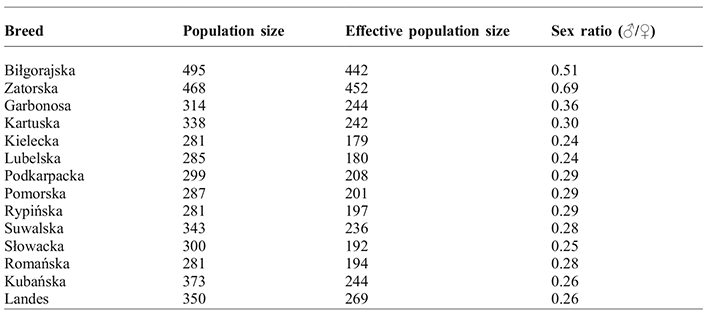
The majority of Polish geese populations (except the Zatorska breed) have not been pedigreed. Hence, estimation of the parameters is usually limited to an effective population size, as well as some recorded traits only. Studies on all geese populations under a genetic conservation programme were performed by Dobrzański et al. (Reference DOBRZAŃSKI, KRAWCZYK, CALIK and SZWACZKOWSKI2017). The main focus was on surveying population sizes and sex ratios, estimating hypothetical inbreeding rates, effective population sizes and dependences between hypothetical inbreeding and performance traits. As shown in Table 3, goose population sizes maintained by the National Research Institute of the Animal Production varied from 281 to 373. Slightly more numerous (495 and 468) were flocks of the Biłgorajska and Zatorska, which are maintained by other entities (the Wroclaw University of Environmental and Life Sciences as well as the University of Agriculture in Krakow, respectively). Those values highly exceed FAO recommendations, which state that the minimal population size for conservation flocks should be a total of 75; 50 females and 25 males.
Comparing the population size of Polish conservation flocks to similar programmes in Europe, it can be seen that in most of the cases the values of this indicator were higher than those estimated in Czechia (average 56.26) and Slovakia (average 116.03; Hrncar et al., Reference HRNCAR, GARDIANOVA, MINDEK, WEIS, SVOBODOVA and VANICKOVA2012; Moula et al., Reference MOULA, PHILIPPE, ANTOINE-MOUSSIAUX, LEROY and MICHAUX2014). Additionally, the least numerous flocks in Poland did not reach the low values seen for Slovak Goose (34) and Poule de chair (7) (Hrncar et al., Reference HRNCAR, GARDIANOVA, MINDEK, WEIS, SVOBODOVA and VANICKOVA2012; Moula et al., Reference MOULA, PHILIPPE, ANTOINE-MOUSSIAUX, LEROY and MICHAUX2014). The most similar flocks in terms of population size are registered in Hungary, but their scores fluctuate considerably from year to year (Lan Phuong et al., Reference LAN PHUONG, DONG XUAN, KOVACS and SZALAY2016). In Poland, population sizes of conserved geese breeds are slightly more numerous than ducks, which average around 200 individuals, being less numerous than chickens, which often exceed 500 individuals. Due to permanent financing, sizes of the conservation flocks have not fluctuated significantly over the years. This fact considerably reduces the risk of a ‘bottleneck’ effect which is crucially important in the case of genetic diversity preservation.
Current state of goose conservation flocks in Poland (Dobrzański et al., Reference DOBRZAŃSKI, KRAWCZYK, CALIK and SZWACZKOWSKI2017).

Observed sex ratios in conservation flocks varied considerably from 0.24 to 0.69. The minimum values of this indicator are not precisely specified, but researchers assumed that, for poultry, the sex ratio should not be below 0.2, because of the direct connection between sex ratio and effective population size (FAO 1992).
The effective population size (Ne) is commonly used to monitor genetic variation in isolated populations. By using this indicator, the size of a population that delivers alleles to the next generation could be determined. According to Meuwissen and Wooliams (Reference MEUWISSEN and WOOLIAMS1994) an effective population size of 30 to 250 is necessary for natural selection to compensate for inbreeding depression. Nevertheless, Lynch et al. (Reference LYNCH, CONERY and BURGER1995) suggest that the Ne of a rare breed should exceed 500 animals for long term preservation. Values of Ne in the analysed populations ranged from 179 to 269, thus fulfilling the aforementioned minima recommended by FAO (2016). As expected, the highest values were observed for Zatorska and Biłgorajska breeds. This was obviously affected by relationships between the effective population size and sex ratio. Other breeds indicated values of Ne close to 200, evidencing proper maintenance. Effective population size in the Polish geese conservation flocks is, in most cases, larger than that observed in Czechia, Slovakia and Hungary (Hrncar et al., Reference HRNCAR, GARDIANOVA, MINDEK, WEIS, SVOBODOVA and VANICKOVA2012; Moula et al., Reference MOULA, PHILIPPE, ANTOINE-MOUSSIAUX, LEROY and MICHAUX2014; Lan Phuong et al., Reference LAN PHUONG, DONG XUAN, KOVACS and SZALAY2016). Nevertheless, increasing the values closer to 500 individuals, which are present in Polish chicken conservation flocks, should be considered.
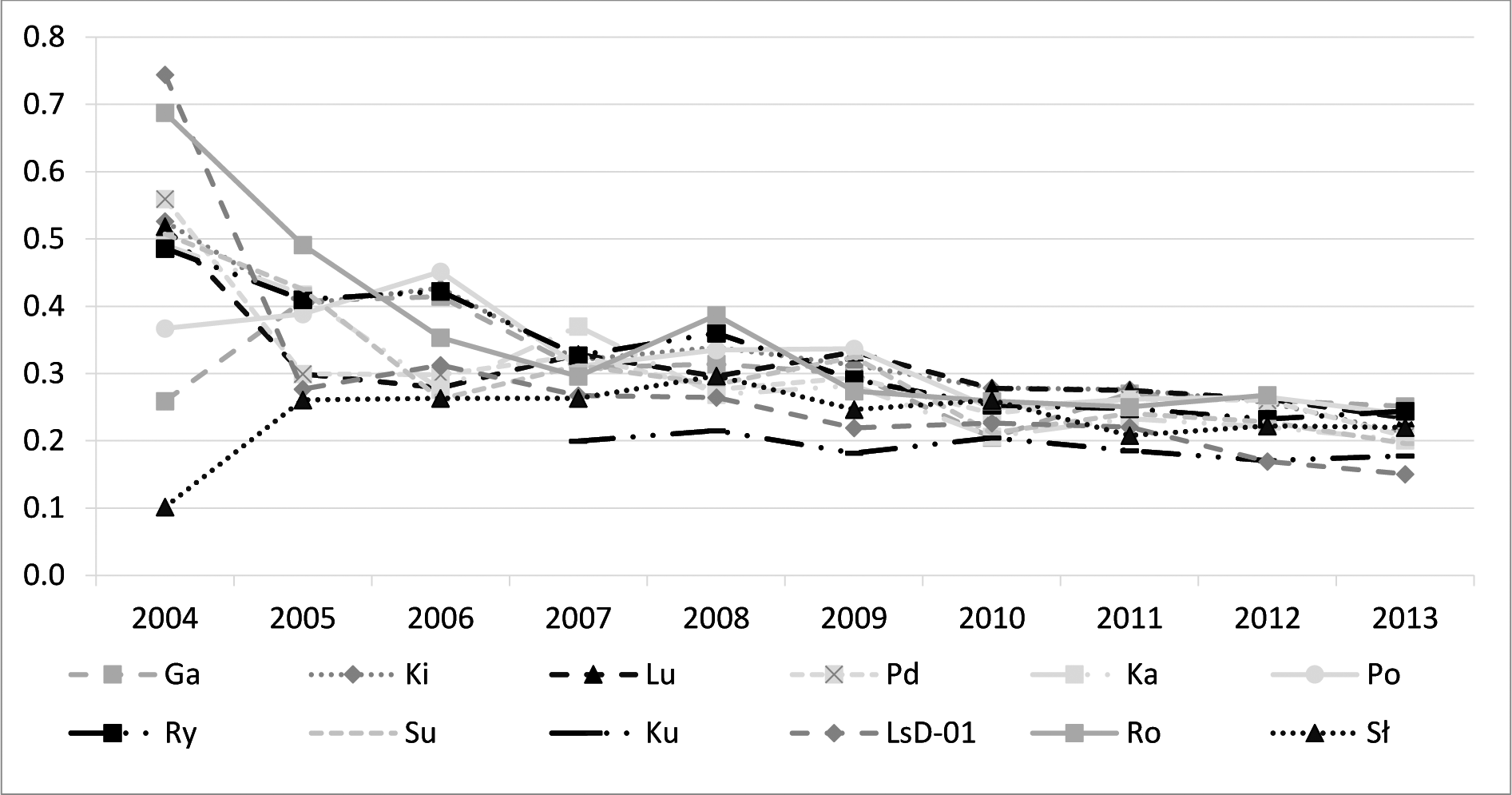
Increased inbreeding in small and isolated populations can result in the decreased survival of young individuals, with simultaneous negative effects on reproduction (Rabsztyn, Reference RABSZTYN2006; Graczyk et al., Reference GRACZYK, ANDRES, KAPKOWSKA and SZWACZKOWSKI2018). As reported by Dobrzański et al. (Reference DOBRZAŃSKI, KRAWCZYK, CALIK and SZWACZKOWSKI2017), the estimated hypothetical annual inbreeding rate in the conservation flocks from 2004 to 2013 varied from 0.1% to 0.74%, with the highest values being determined for Landes and Romańska breeds (0.74%, 0.68, respectively in 2004; Figure 1). Nevertheless, after one-year old individuals were added to the flocks with the highest inbreeding, a considerable improvement in their condition was observed. In the remaining populations, hypothetical inbreeding coefficients did not fluctuate within and among breeds and remained below the maximum level of 1-4% recommended by FAO. Noteworthy in this respect is the work of Parada et al. (Reference PARADA, KSIĄŻKIEWICZ and JASZCZAK2011) on chromosome aberrations performed on five breeds (Lu, Ki, Ka, Ry, Su). In this case the overall frequency of aberrations was below 5%, assuring that inbreeding is not negatively affecting populations included in genetic conservation programmes.
Increase in hypothetical inbreeding for 12 Polish goose conservation breeds (Dobrzański et al., Reference DOBRZAŃSKI, KRAWCZYK, CALIK and SZWACZKOWSKI2017).
Ga - Garbonosa, Ka - Kartuska, Ki - Kielecka, Lu - Lubelska, Pd - Podkarpacka, Po - Pomorska, Ry - Rypińska, Su - Suwalska, Sł - Słowacka, Ro - Romańska, Ku – Kubańska, LsD-01 – Landes.

Unfortunately, for the majority of geese populations, pedigree data is not available. Pedigree information was used to analyse Zatorska by Rabsztyn (Reference RABSZTYN2006) and Graczyk et al. (Reference GRACZYK, ANDRES, KAPKOWSKA and SZWACZKOWSKI2015). The pedigree completeness index for five generations at a level of 59.12% and the effective population size (calculated from the regression of year of hatching) of 111.6 was reported by Graczyk et al. (Reference GRACZYK, ANDRES, KAPKOWSKA and SZWACZKOWSKI2015) for the years 1990-2013. The average inbreeding level across populations was estimated to range from 0.4 to 3.29% in the years 1970-2001 by Rabsztyn (Reference RABSZTYN2006) and most recently at 1.46% for the years 1990-2013 by Graczyk et al. (Reference GRACZYK, ANDRES, KAPKOWSKA and SZWACZKOWSKI2015). In addition, average individual increases in inbreeding was low and amounted to 0.1% for the years analysed by Rabsztyn (Reference RABSZTYN2006) and 0.35% for the period covered by Graczyk et al. (Reference GRACZYK, ANDRES, KAPKOWSKA and SZWACZKOWSKI2015). These results are satisfying in terms of genetic diversity preservation and confirmed that, for this particular breed, the conservation programme was properly maintained. Nevertheless, the pedigree information in studies concerning analysis of effectiveness of a conservation programme is crucial and should be performed for other breeds under various conservation programmes in Poland.
Dobrzański et al. (Reference DOBRZAŃSKI, KRAWCZYK, CALIK and SZWACZKOWSKI2017) estimated the Spearman's rank correlations between hypothetical inbreeding increases and recorded production traits for geese breeds in the conservation programme. In most cases, the results obtained were statistically insignificant because of insufficient data. Nevertheless, for two breeds, Rypińska and Romańska, a significant negative correlation between the percentage of fertilised eggs and hypothetical inbreeding levels was found. Negative correlations between the hypothetical inbreeding increment and hatchability were found in Romańska, Podkarpacka and Kielecka breeds. These results corresponded with a survey performed by Rabsztyn (Reference RABSZTYN2006), which indicated that an increase of inbreeding by 1% could lead to negative trends in the number of laid eggs (-0.12 egg per year), hatchability (-0.18%) and fertility (-0.13%). Additionally, results obtained by Graczyk et al. (Reference GRACZYK, ANDRES, KAPKOWSKA and SZWACZKOWSKI2018) indicated a negative effect of inbreeding on fertility (-0.02) and hatchability (-0.02). Similar results were published by Leroy (Reference LEROY2014), indicating large inbreeding effects on poultry reproduction traits. Positive correlations between hypothetical inbreeding increment and body weight were obtained for Lubelska and Kartuska breeds. This result is intelligible because of low increases in inbreeding which did not cause performance depression. Similar results were obtained by Niknafs et al. (Reference NIKNAFS, ABDI, FATEMI, ZANDI and BANEH2013) in a survey on inbreeding effects in chickens.
Recently Graczyk (et al., 2017) estimated genetic parameters (phenotypic and genetic correlations as well as heritability (h2)) for laying performance of the Zatorska breed. The results of h2 were low and phenotypic and genetic correlations were estimated with high standard errors. Unfortunately, genetic parameters for traits of other conserved goose populations were not estimated, because (as already mentioned) Zatorska is the only breed with pedigree data.
Challenges of the future
Over the last decade an upward trend in terms of publications, and implementation of new conservation programmes has been seen around the world. Nevertheless, classical in vivo approaches should be supported by the usage of in vitro methods. The combination of these two reduces possible threats for the conserved species, such as epidemics, changes in governmental subsidies and changes derived from the maintenance of a small population, such as inbreeding (Paiva et al., Reference PAIVA, CONCEPTA and BLACKBURN2016). In the case of poultry, cryopreservation of gametes is still a challenge. Because of difficulties caused by the reproductive system structure, the size of female oocytes and the presence of only male sexed chromosomes in semen, in vitro conservation is not as effective as it should be. Subsequently, the development of new, long term methods of conserving reproductive cells and germs is needed (Weigend et al., Reference WEIGEND, ROMANOV and RATH2004). The cost of storage of genetic material under deep-freezing is considerably smaller than that of the maintenance of live birds (Sawicka et al., Reference SAWICKA, BRZEZIŃSKA and BEDNARCZYK2011). The applied cryoconservation methods include semen, gametes, blastodermal and primordial cells. The advantages and limitations of artificial insemination in geese have been discussed by Łukaszewicz (Reference ŁUKASZEWICZ2010). Two main points were noted: spermatogenesis and genetics by physiological interactions. Unfortunately, the majority of experiments on the application of cryoconservation have been performed using chickens (Tonus et al., Reference TONUS, CLOQUETTE, ECTORS, PIRET, GILLET, ANTOINE, DESMECHT, VANDERPLASSCHEN, WAROUX and GROBEL2014; Miyahara et al., Reference MIYAHARA, MORI, MAKINO, NAKAMURA, OISCHI, ONO, NIRASAWA, TAGAMI and TAGAMI2014).
Nakamura (Reference NAKAMURA2016) reported a five-step procedure for ex-situ conservation in poultry genetic resources: the collection of embryonic tissues containing primordial germ cells (PGC) from target lines or breeds; purification or culture of PGCs; PGC storage in liquid nitrogen; PGC transplantation to sterilised recipient embryos and recovery of populations by mating of male and female recipients.
The need for high resolution molecular data for precise characterisation of the unique phenotypes is obvious. The examples of detected alleles and methods used have been given in the literature (Bennewitz et al., Reference BENNEWITZ, EDING, RUANE and SIMIANER2007; Mwai et al., Reference MWAI, HANOTTE, KWON and CHO2015). Nevertheless, the latest research performed by Eynard et al. (Reference EYNARD, WINDIG, HIEMSTRA and CALUS2016), based on the use of SNP chips, indicated that, because chip construction focused on determination of common allele variants rather than rare ones, SNP chips may not be the best tool to analyse genetic diversity. Hence, optimisation of methods used to characterise rare alleles and their possible loss should be considered.
Additionally, the improvement in molecular data collection and its accessibility should be taken into consideration. Major databases concerning AnGR have been focused on one breed and are not connected with one another. Projects like ADAPTmap, which is ‘developed to improve coordination among otherwise independent projects for genotyping, re-sequencing and phenotyping of goat breeds’ should be provided for every species.
Over the last few decades, global warming has become an increasingly important challenge, not only for animal husbandry. Geese belong to the earliest domesticated birds and, in contrast to other poultry species, have been distinguished by a lower adaptation to intensive rearing. On the other hand, geese are characterised by their lower environmental and nutritional requirements. Despite this, they are still under pressure from global warming. Fregley (Reference FREGLEY1996) defined acclimation as ‘a response developed by an animal to an individual source of stress within the environment’. Acclimation to high temperatures involves a response that leads to a reduction in heat load. Consequently, this affects feed intake and alters many physiological processes, influencing health as well as performance and reproductive traits (Nardone et al., Reference NARDONE, RONCHI, LACETERA, RANIERI and BERNABUCCI2010). The impact of heat stress on animal performance traits, including poultry, has been the subject of interest for many authors (He et al., Reference HE, LI, AROWOLO, YU, CHEN, HU and HE2019; West, Reference WEST2003). Unfortunately, the number of reports on climate change impacts on geese has been negligible (e.g. Li et al., Reference LI, LI, ZHANG, CHENG, GUO, LIU and YANG2018).
Conclusions
In the case of geese genetic conservation programmes currently in Poland and analysed in this survey, all recommendations of the FAO, relating to population size, sex ratio and inbreeding levels have been maintained at proper levels. Nevertheless, a lack of pedigree data on conserved populations limits the ability to determine their exact state.
Acknowledgments
The authors gratefully acknowledge the helpful comments of anonymous reviewers who contributed to the improvement of this manuscript.