1. Introduction
The Yangtze River Delta (YRD) is located at the mouth of the Yangtze River in China, and includes the cities of Shanghai, Jiangsu, Zhejiang and Anhui. It is one of the most active, open and innovative regions in China. Since 2006, cruise tourism in China has made great progress. China has become the second largest cruise market in the world, after the United States. The development of China's cruise economy has entered the stage from cruise tourism to the development of the whole cruise industry chain. However, there is only one mother port for cruise ships in the YRD – Shanghai Wusongkou International Cruise Port (SWICP). SWICP is on the south side of the YRD near Shanghai, about 100 m away from shipping lanes where many vessels go up and down from the Yangtze and Huangpu rivers. It is also dangerous when cruise ships go alongside the terminal to load or disembark passengers, especially with passenger numbers hugely increasing. It is time that a new, more suitable site should be found to meet the development of cruise tourism. With the implementation of the national strategy of integration in the YRD, the cities of Jiangsu, Zhejiang, Anhui and Shanghai have made use of their respective resource advantages to mutually cooperate and develop together. This makes possible the selection of a new site for the cruise ship home port elsewhere in the YRD. The selected cruise ship home port will be able to better meet the needs of cruise development in the YRD.
Cruise ports are divided into three categories: cruise home port, link port and node port (Zhang et al., Reference Zhang, Huang and Ye2006). The cruise home port is the operating base of the cruise company and the port of departure for cruise ships. Such a port plays a great role in consumption, capital flow, logistics and information flow in its region, and can bring great economic benefits and social impact for the region. In the past, decisions on the site selection for a cruise home port often only paid attention to natural, technical, economic and urban conditions (Lv et al., Reference Lv, Mai and Tan2016), ignoring the safety aspects related to the port, channel, scenic locations visited, and the logistical support of cruises. This resulted in insufficient attention being paid to cruise safety issues. Due to the limitations of natural conditions, facilities and management measures, it is often difficult to take more effective measures to prevent accidents happening during cruise tourism.
Based on the analytic hierarchy process (AHP), this paper studies the selection of a site for the new cruise home port in the YRD from the perspective of safety. There are five sections in the paper for this purpose. In section 1, existing research on site selection, the safety situation of cruise operations and the impact of safety on the cruise economy in the YRD are discussed. The algorithm for site selection using AHP is introduced in section 2. In section 3, AHP is used to analyse the selection of the site of the cruise home port in the YRD from the point of view of safety. From the aspect of the economic and social background, the result of the site selection is analysed in section 4. Finally, the conclusion of the site selection process is given in section 5.
2. Basic data for this study
2.1 Existing studies related to site selection
Site selection was first proposed by Weber in 1909 (Ren et al., Reference Ren, Ge, Wang, Liu and Tao2015). Yoon et al. (Reference Yoon2008) put forward the problem of site selection of multi-allocated hub and hub network design. Their research considers not only fixed and variable connection costs, but also direct transportation between non-hub nodes. Yang et al. (Reference Yang, Shi, Chen and Bao2014) researched optimisation of the container transportation channel in the Yangtze River in 2013, mainly considering the characteristics of inland river transportation, and set up a model optimisation channel from dry and high-water periods as well as various vessel types. O'Kelly (Reference O'Kelly1986, Reference O'Kelly2004) first proposed a mathematical model of the site selection of hub port location in 1986 by studying the network of passenger aircraft. His formula was about the problem of single allocation of multi-hub station median, and the result of site selection of hub port was obtained by establishing the optimal model of transportation cost.
Machow et al. (Reference Machow and Kanafani2004) analysed the problem of liner shipping between American ports by using the discrete selection model. The results of the model show that the most important influencing factor is the site of the port. Low et al. (Reference Low, Shao and tang2009) evaluated inland river ports based on a novel network-based hub port assessment (NHPA) model. The model was intended to be useful for port operators and policy makers to select suitable carriers. Du (Reference Du2012) used AHP to study the site selection of a port, and evaluated the advantages and disadvantages of alternative port sites. Peng (Reference Peng2014) carried out the grade evaluation of the current port based on the concept of low carbon environmental protection and sustainability, and determined the evaluation index system and evaluation method for a green port. Asgari et al. (Reference Asgari, Hassani, Jones and Nguye2015) used AHP methods to establish a hierarchy for the sustainable development of major ports in the United Kingdom. Tan et al. (Reference Tan, Li, Zhang and Yang2015) established the M/M/1 queuing model from the geographical location, service price and capacity of inland river ports of the Yangtze River, which derived the maximum income for the whole supply chain. They discussed the economy of the logistics network in 2009, and analysed its advantages and disadvantages using a quantitative study.
There are alternative current research methods on site selection in other domains. Hočevar et al. (Reference Hočevar, Oliveira and Krofel2021) used generalised linear mixed models to test which environmental features and human infrastructure are important for wild lynx when they choose resting sites. Zhu et al. (Reference Zhu and Zhang2020) constructed a gravitational model of tourism distribution to suggest tourism sites in Shanxi Province. Zhou et al. (Reference Zhou, Cai, Wang and Wang2021) proposed a micro-siting optimisation method based on a central force optimisation algorithm to improve the efficiency of micro-siting of offshore wind farms. Mahmoudi et al. (Reference Mahmoudi, Aydi and Ibrahim2021) showed the integration of geographic information system (GIS) data and multi-criteria evaluation to determine a suitable artificial recharge site with treated wastewater for Ariana, Tunisia. Baldin de Lacerda et al. (Reference Baldin de Lacerda, Sarmento dos Santos-Neto and Martins2021) designed a model conducted through the flexible interactive tradeoff (FITradeoff) approach, according to the preferences of the decision maker. A natural gas distribution company was selected to test this model.
2.2 Safety of cruise ship operations in the YRD
Shanghai cruise passengers, 97% of whom travel through SWICP, account for more than 30% of cruise passengers in China. Therefore, accidents in cruise operations and the distribution of cruise factors in SWICP can provide a reference for the site selection of a cruise home port in the YRD.
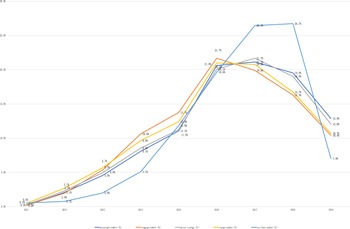
From Figure 1, it can be found that the number of cruise accidents is positively correlated with the number of cruise passengers, volume of luggage, gross tonnage and number of voyages. One of the reasons for the sharp decline in cruise accidents in 2019 is the reduction of cruise voyages in that year, and another is that cruise ships acquired priority of navigation rights. In addition, the maritime administration has taken measures to try to use water area near the slope of the north channel of the Yangtze River Estuary for navigation, which greatly improves the navigation capacity of vessels with ultra-wide size, such as cruise ships.
Statistics of cruise operation accidents at SWICP, 2011–2019 (ratio of annual accidents to total accidents) (Source: accident statistics of SWICP)

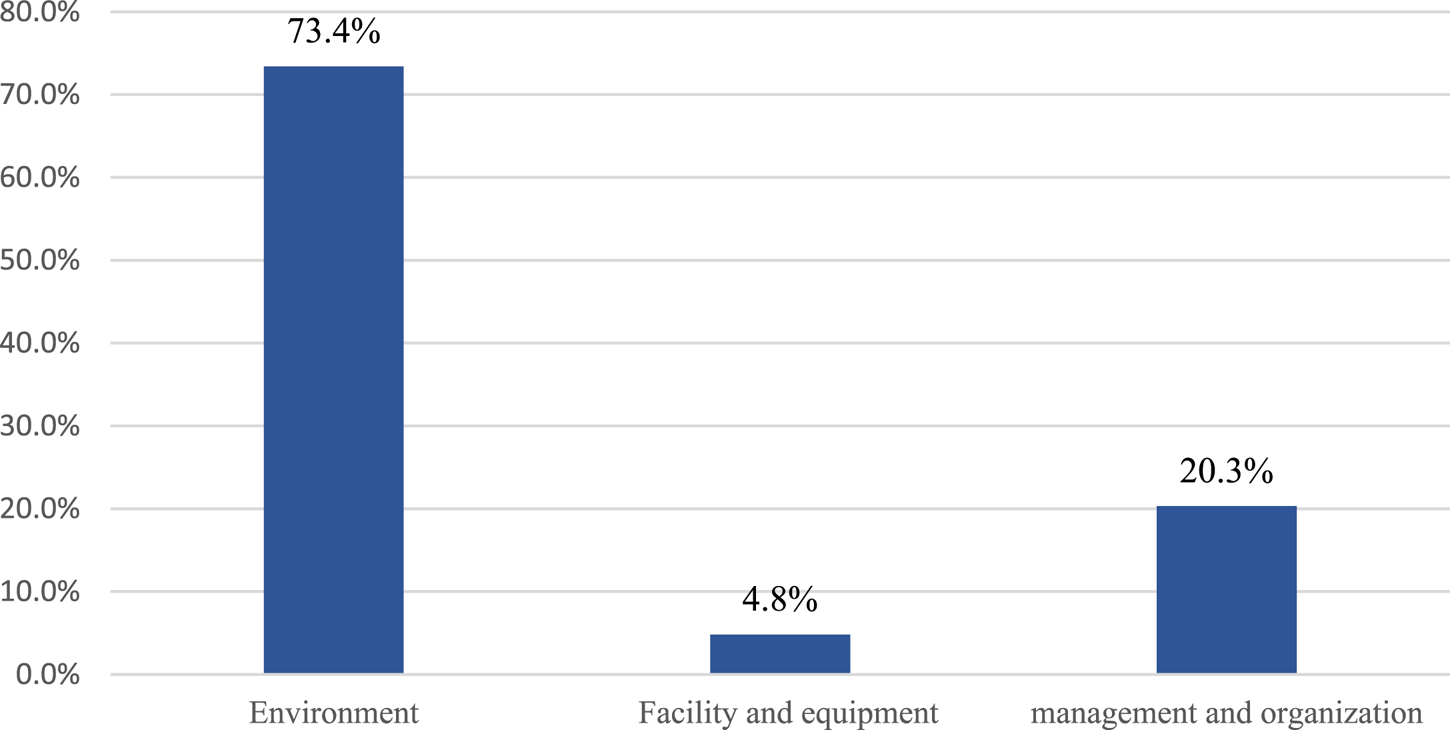
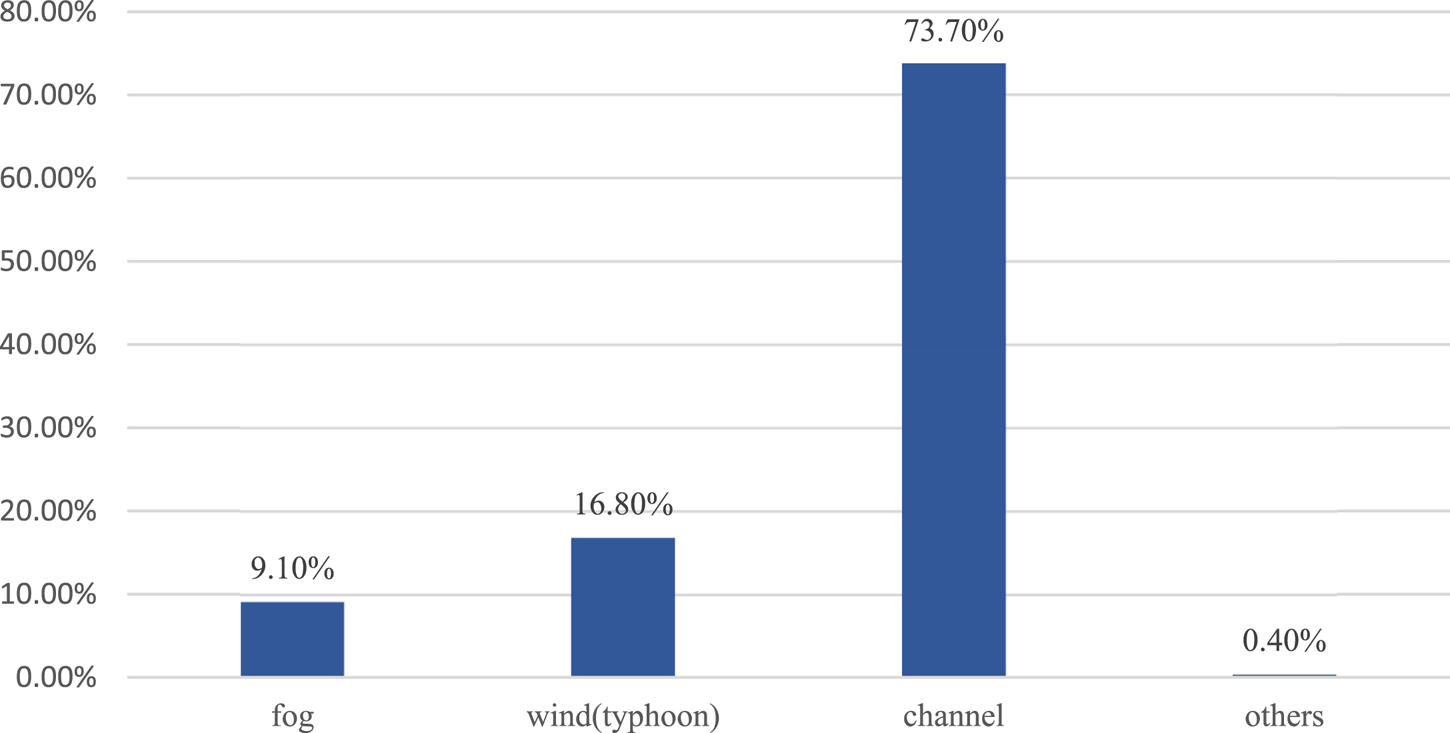
From Figures 2 and 3, it can be found that environmental factors, especially channel-related factors, play a major role in cruise operation accidents. Therefore, it is necessary to find an alternative site for a cruise home port in the YRD from the perspective of promoting the development of China's cruise industry chain and cruise economy.
Proportion of causes of cruise operation accidents at SWICP, 2011–2019 (ratio of number of accidents per cause to total number of accidents) (Source: accident statistics of SWICP)

Proportion of cruise accidents caused by various factors in the environment at SWICP, 2011–2019 (ratio of number of accidents per cause to total number of accidents) (Source: accident statistics of SWICP)

2.3 Impact of safety on cruise economy in the YRD
The safety problems encountered in cruise tourism are becoming an obstacle to the development of the cruise economy in China. The YRD's characteristic climate, such as strong winds and fog, can make it difficult for cruise ships to get alongside the wharf on time. This causes complaints from passengers that they did not leave the cruise on time as required, and they demand compensation for their losses due to wasted time. Bad channel situation may cause cruise ship engine failure, stranding and other safety accidents. The narrow area on the wharf and shortage of room for waiting passengers can result in local traffic jams, which easily cause traffic safety accidents, passenger conflicts and other public safety incidents. If the customs inspection is not timely, the material supply efficiency not high, and the food hygiene not guaranteed, it is difficult for the cruise to provide good service for passengers, which reduces the interest of tourists in travelling on cruise ships. Faced with the COVID-19 outbreak in China at the end of 2019 (Wang and Xu, Reference Wang and Xu2021), it was difficult to put forward effective safety precautions that would enable cruise tourism to continue. This has had a severe impact on the development of the cruise economy in the YRD. In addition, poor transportation and the poor sanitary conditions surrounding scenic spots in the YRD will also have a negative impact on the development of cruise tourism and its derivative industries, which will damage the economic benefits of the cruise industry.
From the bottom of the hierarchy upwards in Maslow's hierarchy of needs, the needs are: physiological (e.g., food and clothing), safety (e.g., job security), love and belonging needs (friendship), esteem, and self-actualisation, and needs lower down in the hierarchy have to be satisfied before individuals can attend to needs higher up (McLeod, Reference McLeod2022). There are also five levels of demand theory in the development of the cruise industry, which are, from low to high: social and cultural effects, related industries and tourism economic zone, port wharf, tourism fleet and consumer satisfaction. Consumer satisfaction is the most basic need of the cruise industry. The industry chain of the cruise economy can develop only to meet the needs of consumers. Therefore, cruise tourism safety is the most basic requirement for the development of the whole industry chain of the cruise economy.
3. Analysis of site selection of cruise home port
AHP is used to analyse the site selection of the cruise home port in the YRD from the point of view of safety. AHP was proposed by Professor T. L. Saaty in the 1970s and is now widely used as a multi-criteria evaluation method combining qualitative and quantitative measures (Gao and Liu, Reference Gao and Liu2020). This method facilitates making decisions on complex and fuzzy problems because of its strong manoeuvrability and wide application. The analysis process of this method can be divided into four steps (Shan, Reference Shan2010): (1) analysing the relationship between indicators and constructing hierarchical structure models; (2) constructing pairwise comparison judgement matrices for each level; (3) calculating relative weights for single sorting and consistency checking; and (4) calculating synthetic weights and performing hierarchical total sorting and overall consistency checking. More details can be found in Appendix A.
3.1 Establishing the index system of cruise home port
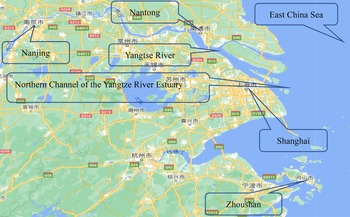
Based on natural and economic conditions, there are three places in the YRD which could be selected for alternative cruise home ports: Nantong, Shanghai and Zhoushan. Their positions are shown in Figure 4.
Location of Nantong, Shanghai and Zhoushan in the YRD (Source: www.weiyun001.com/NewChannel/trace/shipname/Quantum%20of%20the%20Seas)

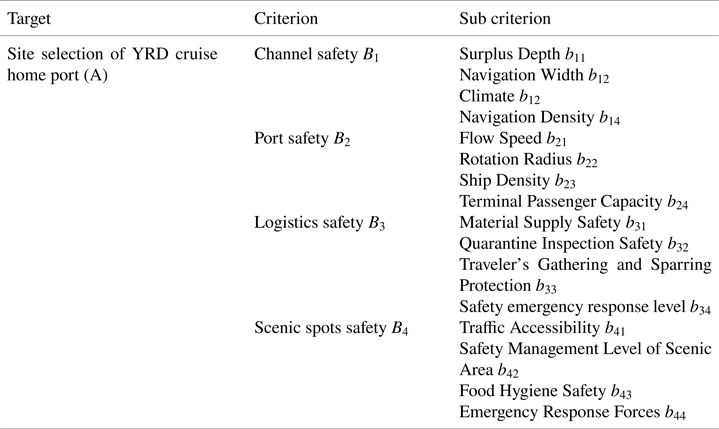
The index of the criterion layer includes four aspects related to cruise tourism safety. These are: channel, scenic spot, port and logistics support. The project layer consists of three places: Shanghai (C1), Zhoushan (C2) and Nantong (C3). The indicators are shown in Table 1.
Index system of site selection

According to subsection 1.2 above, the main causes of current cruise operation accidents relate to the channel. Port logistics support is also related to the safety of the cruise operation. Low efficiency of the port passenger transportation system on land may lead to cruise operation incidents, such as cruise flight delays, discomfort to cruise passengers, and failure to avoid typhoons and other bad weather. In addition, as a part of cruise tourism, the safety of scenic spots visited also needs attention. Unhygienic food in the scenic spots may cause cruise tourists to become sick. The inconvenience of transportation between scenic spots and the cruise ship may make the cruise passengers lose interest in sightseeing. Furthermore, the lack of adequate medical facilities at the scenic spots risks cruise passengers not being treated or rescued when needed. All the above may hinder the development of the cruise economy.
3.2 Analysis of site selection of cruise home port
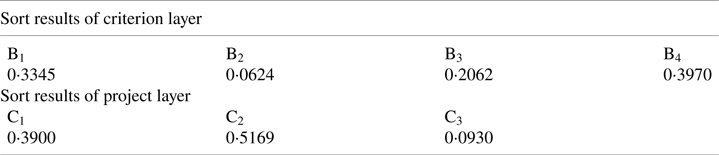
The authors contacted five experts with many years of experience of sailing, maritime safety supervision in maritime safety administrations or port and shipping research. These experts evaluated the safety of the three alternative sites proposed for the cruise home port in the YRD based on their own work experience. According to the AHP analysis and ranking results, the findings in Table 2 were obtained. More detail about the calculation process can be found in Appendix B.
Ranking results of hierarchical layer

From the point of view of safety, it was found that the best site for a cruise home port in the YRD is Zhoushan, followed by Shanghai and Nantong. In terms of the safety criteria that affect the selection of the site of the cruise home port, the importance, from highest to lowest, is safety of: scenic spots visited, the channel, logistics and the port.
Because the ports of the YRD have always attached great importance to safety, their safety measures are nearly perfect. However, with regard to safety measures concerning scenic spots, the channel and logistics, it is difficult to meet the needs of cruise tourism. Cruise passengers come from different countries and regions with different customs and habits. There is often a short time schedule at scenic spots for passengers’ arrival and departure, causing risks which are more than the scenic areas can deal with. At the same time, there are many narrow shipping channels with unfavorable climate in the YRD, which causes many cruise accidents. In addition, whether the food and drinking water on the cruise is hygienic is also a concern for tourists.
3.3 Analysis of sort results of projects
According to the analysis above, the environment is particularly important for the safety of the cruise operation. The rationality of the results of the site selection of the cruise home port in the YRD is discussed from the perspective of safety of the scenic areas, channel, logistics and port. Other factors, such as prevention of disease, etc., are also considered in the site selection.
3.3.1 Zhoushan port
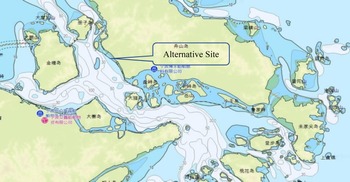
Zhoushan belongs to Zhejiang Province of China, which is famous for its strong business culture. Zhoushan Port has a natural deep-water channel, excellent port water depth and many natural scenic spots. Because of the barrier of the island, it is protected against typhoons in summer and autumn, strong winds in winter and foggy weather in spring. The potential site of the cruise home port of the YRD in Zhoushan is shown in Figure 5.
The alternative site of cruise home port of the YRD in Zhoushan (Source: http://www.shipxy.com/)

In terms of logistics, Zhoushan as a cruise home port in the YRD is not as good as Shanghai, mainly because Zhoushan is an island and the current traffic is underdeveloped. But at present, the construction of transportation infrastructure is being strengthened in the YRD. During the 14th Five-Year Plan period in China, Zhoushan will be connected with other areas such as Shanghai and Zhejiang by more roads, railways, aircraft and vessels. Therefore this deficiency will soon be remedied.
As for the safety of scenic spots, Zhoushan is slightly lower than Shanghai. As a world-famous international metropolis, Shanghai has very mature experience in safety. It would be easy to improve the safety level of the scenic spots near Zhoushan in a short time, however.
At the same time, because of the distance of Zhoushan Port from large cities, large-scale safety incidents are easy to deal with, and infectious diseases, such as COVID-19, are easier to isolate. It has unique advantages as the choice of cruise home port in YRD. These advantages outweigh those of Shanghai and Nantong, which are densely populated and have a shortage of port resources.
3.3.2 Shanghai port
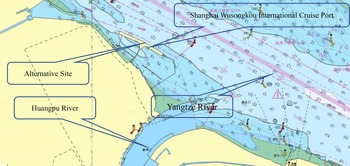
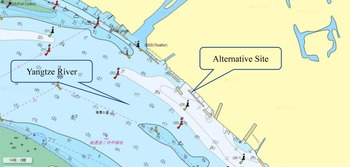
Shanghai, with developed shipping and port industries, is the first estuary port to enter the Yangtze River from the East China Sea. The potential site of the cruise home port of the YRD in Shanghai is shown in Figure 6.
The alternative site of cruise home port of the YRD in Shanghai (Source: http://www.shipxy.com/)

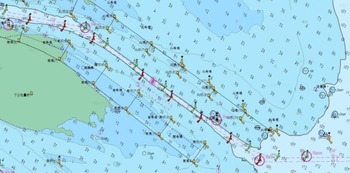
Compared with Zhoushan and Nantong, there are better logistics and safety experience at scenic spots, convenient transportation and higher levels of passenger safety and security. However, due to the narrow channel of the Northern Channel of the Yangtze River Estuary, its traffic flow is larger and port resources available for building cruise terminals are scarce. The situation of the Northern Channel of the Yangtze River Estuary is shown in Figure 7.
The Northern Channel of the Yangtze River Estuary (Source: http://www.shipxy.com/)

Although cruise ships have acquired priority of navigation rights in the Yangtze River, more and more vessels now enter the Yangtze River since the depth of the Yangtze River channel was dredged to 12·5 m deep from Nanjing in Jiangsu Province to the East China Sea. This priority will become difficult to maintain with more and more cruise ships based at Shanghai.
3.3.3 Nantong port
Nantong belongs to Jiangsu Province, on the north side of Shanghai city. Nantong port is an inland river port in the Yangtze River. Its distance to the Yangtze River estuary is 108 nautical miles. The potential site of the cruise home port of the YRD in Nantong is shown in Figure 8.
The alternative site of cruise home port of the YRD in Nantong (Source: http://www.shipxy.com/)

If the site of the cruise home port of the YRD is Nantong, then cruises have to spend more time in the Yangtze River, in which there is a high density of shipping and the channel safety is not guaranteed. In addition, Nantong is densely populated and hence relatively poor ability to deal with emergencies such as COVID-19, it also lacks experience in receiving large numbers of cruise passengers. It is far away from the scenic spots on land, which makes it difficult to meet the needs of tourists on cruise ships. All the above show that Nantong Port is not very suitable as the cruise home port in the YRD.
In four aspects of the AHP criterion layer, Nantong has no advantage in the site selection of the cruise home port in the YRD. The only other advantage is that Nantong is located in Jiangsu Province, which has the largest economic volume and the largest population in the YRD, so potential passenger resources might be relatively larger than at the other two alternative sites.
4. Economic and social background analysis of the site selection
The YRD comprises 3·7% of China's territory. In 2021, it had 16·2% of China's population and created about 25% of China's GDP (Outlook Weekly, 2021). Its urbanisation rate is greater than 60%. Annual research funds and effective invention patents in the YRD account for about one-third of those of all of China (YICAI, 2019), and high-level universities and research institutions account for one-quarter of those in China (people.cn, 2020). This region represents China's economic and technological level and is an important window for China's reform and opening up to the world.
At the end of 2019, the Central Committee of the CPC and State Council of the PRC (2019) promulgated ‘the Outline of the Development Plan for Regional Integration in the Yangtze River Delta’, which requires promoting the development of regional integration in the YRD, improving economic cohesion, regional connectivity and policy synergy, promoting the integration of port and shipping resources in the YRD to optimise the port lay out and form a world-class port group with reasonable division of labour and mutual cooperation. Selection of the site for the regional cruise home port is part of this policy.
Different regions within the YRD have different resources with respect to ports, land and talents. The layout of the cruise industry chain in the YRD should be based on these resources, see Table 3. Although Shanghai could become the site of the cruise home port in the YRD, it lacks port, land and marine tourism resources. Zhoushan has abundant port resources but lacks talents. At the same time, 20,000 km2 of the administrative area of Zhoushan is sea. Therefore, Shanghai as the cruise home port of the YRD is not much better than Zhoushan. Third, Shanghai can rely on talents and technical advantages to develop cruise design and also its construction industry, legal and investment personnel training. Nantong's economic situation is between Shanghai and Zhoushan and it can be engaged in cruise personnel training business, cruise daily material production and supply work.
Economic and social development of Zhoushan, Shanghai and Nantong (Source: https://baike.baidu.com)

5. Conclusion
In short, it is concluded that the order of site selection for the cruise home port is Zhoushan, Shanghai and Nantong. On this basis, the comparative advantages related to channel, port, logistics support and scenic spots, of safety in the alternative ports as cruise home ports are further analysed. The development of regional integration in the YRD will inevitably lead to the unified allocation of various industrial chains in the region according to the carrying capacity of resources. The same is true of the cruise industry.
When the site selection of the cruise home port is done in reality, the convenience of land transportation and the level of regional economic developmental will be considered, as well as the innovation of cruise tourism products and the change of people's tourism concepts. In addition, it should furtherly consider the protection of the rights and interests of passengers through improving the protection mechanisms to ensure that people can enjoy physical and mental relaxation and acquire unexpected gains from cruise tourism.
Appendix A
A.1 Constructing the hierarchical model
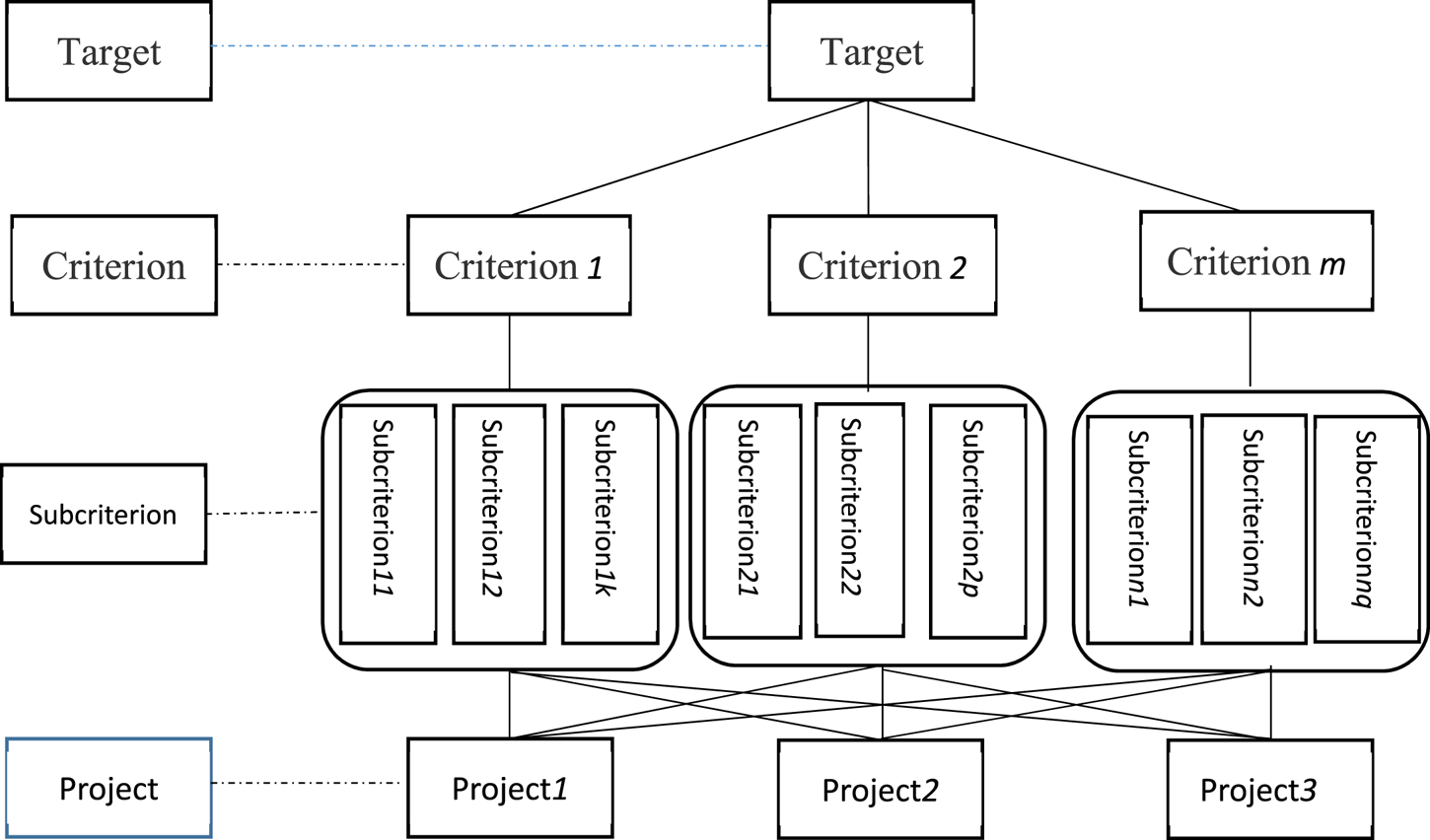
This paper classifies the risk factors involved in the occurrence of emergencies at a cruise port and constructs the hierarchical structure model of each factor. The evaluation index system can be decomposed to the target layer, criterion layer and project layer to construct the hierarchical structure model, as shown in Figure A1.
Hierarchical structure

A.2 Constructing the judgement matrix in each level
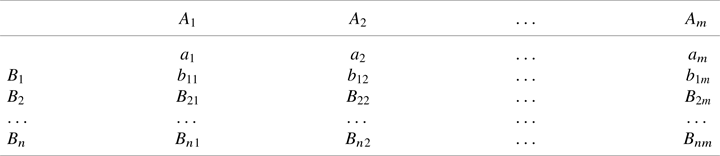
After the hierarchy is determined, it is necessary to compare the degree of influence of different indicators on the whole. The next layer of the target layer has different elements like B1, B2, … Bm. The judgement matrix formed by pairwise comparison of these factors is shown in Table A1.
Comparative judgement matrix

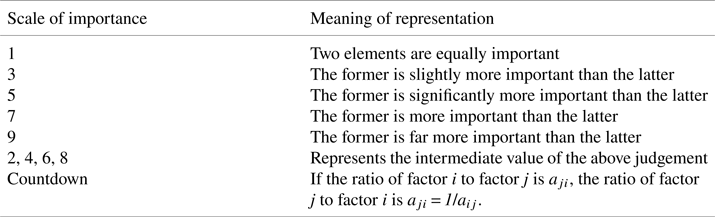
According to past experience, it is most reasonable to judge the value of the matrix at 1–9 scale in pairwise comparison. The values of scale importance are shown in Table A2.
Scale implications

A.3 Calculating relative weights, single sorting and consistency checking
When calculating the relative weight, we need to calculate the maximum eigenvalue λ max and its corresponding eigenvector W of the judgement matrix A by hierarchical backordering. Finally, the weight of the factors at the same level corresponding to the previous level is obtained after normalising the eigenvector W.
The principle of relative weights calculating, single sorting and consistency checking is as follows: because the judgement matrix is B, a positive reciprocal matrix, each element in the judgement matrix needs to satisfy the following properties:


If the results of each comparison are consistent, they need to be met:

If the matrix that satisfies the formula above is the consensus matrix, it is often encountered that the judgement matrix is not a consistent matrix in the actual operation process, so the consistency check is needed after calculating the weight of the judgement matrix.
First, the product of each factor B of each row in the judgement matrix is calculated: ${m_i} = \prod\nolimits_{i = 1}^n {{b_{ij}}} ,\;\; i\, = \,1,\textrm{ }2, \cdots n$ . And second, the n-square root of m i is calculated as: $\; \overline {{w_i}} = \sqrt[n]{{{m_i}}}$
 . Again, the vector $\bar{w} = {({\overline {{w_1}} ,\overline {{w_2}} , \ldots , \, \overline {{w_n}} } )^T}$
 is normalised by $\hat{w} = \frac{{\overline {{w_i}} }}{{\mathop \sum \nolimits_{j = 1}^n \overline {{w_j}} }}$
 . Finally, the maximum characteristic λmax of B is calculated as shown in Equation (A5).

The ${({B\hat{w}} )_i}$ in Equation (A5) is the NO i subvector of the vector $B\hat{w}$
 . The vector $\hat{w}$
 is the weight of the Bi factor.
The consistency check process is shown below:
Step 1: calculation of consistency indicators (CI): ${\mathrm{\lambda }_{\textrm{max}}} - n$

The λ max is the maximum characteristic root, and the n is the order of the judgement matrix.
Step 2: Find the corresponding average random consistency indicator (RI). When $n = 1,\textrm{ }2,\textrm{ }3, \cdots ,\textrm{ }9$ , the values of RI are shown in Table A3.
Values of RI

Step 3: calculate the ratio of consistency (CR):
When $CR = \frac{{CI}}{{RI}} < \; 0\cdot10$ , we can judge that the judgement matrix can meet the requirements of consistency, otherwise we need to re-judge the judgement matrix.
A.4 Calculation of synthetic weights
In order to calculate the total order of hierarchy and the weight of the total order of hierarchy, the weight of a single rule is needed to synthesise from top to bottom. The principles of the calculation are as follows:
B layer total ranking weight

If the upper layer (A layer) and the next layer (B layer) respectively contain m factors, such as${A_1}, \cdots ,{A_m}$ , and n factors, such as ${B_1}, \cdots ,{B_n}$
 , their weights respectively are $a1, \cdots ,am$
 in the A layer and ${b_{1j}}, \cdots ,{b_{nj}}$
 in the B layer (${b_{ij}}$
 =0 if the Bi is not related to the Aj). The calculation method for the hierarchical total ranking weight, such as ${b_1}, \cdots ,{b_n}$
 in the B layer is ${B_i} = \sum\nolimits_{i = 1}^m {{b_{ij}}{a_i},} \;i\, = \,1, \cdots ,n$
 .
If the pairwise comparison judgement matrix of the factors related to Aj in the B layer passes the consistency check in the single sort, the single sort consistency index is $CI(j)\textrm{ }(j\, = \,1, \cdots ,m)$ . The corresponding average random consistency index is RI (j) which will be calculated. Then the random consistency ratio of the total ranking of B layer is:

If the CR < 0·10, it can be considered that the overall ranking results of the hierarchy have satisfactoru consistency.
A.5 Calculation of maximum feature root and corresponding feature vector
The key task of AHP is to construct the judgement matrix, and then find its maximum characteristic root λ max and feature vector. The asymptotic normalisation coefficient (ANC) has the characteristics of order preservation, permutation invariance and compatibility under strong conditions. For this reason, the ANC is used to calculate the sort vector of the judgement matrix. By using this method, the calculation steps of the maximum λ max and its eigenvectors are as follows:
Let A = (a ij)m×n) be the judgement matrix, and B = (b ij)m×n, in which:

Let ${\mathrm{\beta }_\textrm{j}} = {({b_{1j}},{b_{2j}}, \cdots ,{b_{nj}})^T}$ , then ${\mathrm{\beta }_\textrm{j}}$
 is the normalised vector of the j column vector of the judgement matrix A. Again, let ${w_i} = \frac{1}{n}\sum\nolimits_{i = 1}^n {{b_{ij}},} \;i = 1,2, \cdots ,n$
 . From the above calculation, the order vector $w\, = \,(w1,w2, \cdots ,wn)T$
 of the judgement matrix is obtained. That is how the ANC works. The approximate value of the maximum characteristic root of the judgement matrix A = (a ij)m × n is:

In fact, the average value of the normalised A column vector is taken as the A eigenvector in the ANC.
Appendix B
B.1 Criteria layer judgement matrix
According to the scores obtained from experts, the criterion level judgement matrix, the results of hierarchy analysis and the consistency test are given in Tables B1–B3.
Criteria layer judgement matrix

Results of the hierarchy of criteria

One-time inspection of the standard layer

B.2 Project layer judgement matrix
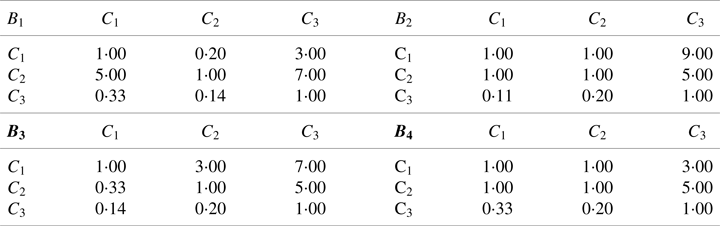
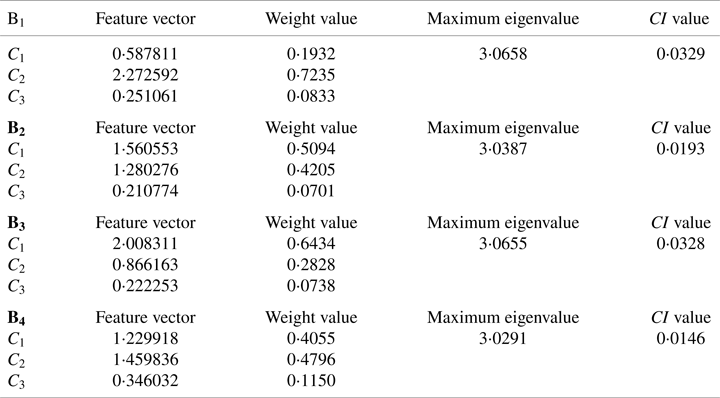
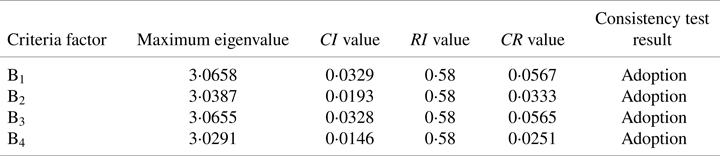
At the same, the project-level judgement matrix, the results of hierarchical analysis, and one-time test are given in Tables B4–B6.
Project layer judgement matrix

Results of hierarchical analysis of criteria

One-time test of the standard layer