One of the biggest challenges facing current archaeological work in museums is addressing the vast collections of archaeological material that are legacies of past excavations. In many cases this material has little or no documentary or contextual information to provide the spatiotemporal information so important to archaeological analysis. What, then, is to become of these “orphaned” collections (Voss and Kane Reference Voss and Kane2012)? This study addresses this question considering a framework of New Materialism and focusing on concepts of entanglement (Hodder Reference Hodder2012, Reference Hodder2016) and assemblage (Jervis Reference Jervis2019). These concepts are used to develop new understandings of the interpretive potential of poorly documented collections that will offer insights into their role in current archaeological understandings of the past and help us imagine how they can contribute to future research and analysis.
The issues of orphaned or legacy collections and the curation crisis of space to house collections in museum archives are challenges that have been discussed extensively over the past 30 years, particularly in relation to contract archaeology or cultural resource management (see Kersel [Reference Kersel2015] for a recent review). In Brazil, this crisis has been unfolding over several decades in the aftermath of cultural and environmental resource protection legislation that requires archaeological assessment of infrastructure projects (Caldarelli and Santos Reference Caldarelli and dos Santos2000). Today, 98% of the archaeological work in the country is done under the auspices of preventive archaeology (Moraes Wichers Reference Moraes Wichers2014). The practical implications of housing and conserving archaeological collections have brought about not only a crisis in storing this material in perpetuity but also a reexaminination of the integration of museum studies and archaeology and a renaissance in curatorial method and practice (Bruno Reference Bruno1996, Reference Bruno2014; Godoy and Santos Reference Godoy and dos Santos2017; Moraes Wichers Reference Moraes Wichers2014). As Moraes Wichers (Reference Moraes Wichers2014:31) points out, the role of museums in managing the archives and documents created in the process of archaeological research is what makes future reinterpretation by other social actors possible. Nevertheless, few studies that discuss the importance of safeguarding archaeological collections and the role of museums in offering spaces for reinterpretation and social engagement address the very real issue of the myriad collections housed within museums that have little or no documentary evidence associated with their artifact collections (although see De Blasis and Morales Reference De Blasis and Morales1997; Gondim et al. Reference Gondim, Scherer and Gilson2017; Morales Reference Morales2015).
In this case study, I focus on a collection of ceramic artifacts, excavated in 1963 by Oldemar Blasi, from a Jesuit mission site that was occupied for a short period in the early seventeenth century. The collection is housed at the State Museum of Paraná, Museu Paranaense, in Curitiba, Brazil. Little was published about this collection based on the initial excavations at the site (Blasi Reference Blasi1966, Reference Blasi1971). Later excavations at the mission site took place in the 1980s and 1990s (Chmyz Reference Chmyz1985, Reference Chmyz2001; Chmyz et al. Reference Chmyz, Sganzerla and Volcov1990), but the material excavated in 1963 was never integrated into this analysis. Although the mission site was occupied for only 20 years, it has the potential to offer unique insights into the early wave of Spanish colonization in the Province of Guairá that set the stage for the prosperous Jesuit missionizing efforts that continued until their expulsion in 1767. The assemblage also enables us to examine how archaeological and curatorial research and practice have developed in Brazil since the 1960s and how such practices have affected archaeological interpretations and paradigms that continue to influence research today. This case study, then, seeks to examine the entangled pasts and present of this assemblage and explore how the life history, or itinerary (Joyce Reference Joyce, Joyce and Gillespie2015), of these artifacts is enmeshed in contemporary archaeological research. In doing so, my goal is to bring insight into how such legacy collections can afford new understandings of the past while also acting to shape current and future interactions with other assemblages, across several times and places.
Reimagining Archaeological Collections in Museums as Entangled Assemblages
This case study is influenced by several developments in contemporary archaeological theory that have refocused our attention on the role and agency of objects, the wider implications such objects have, and how they are entangled across times and spaces. Current work in the area of New Materialism (i.e., Hodder and Lucas Reference Hodder and Lucas2017; Olsen Reference Olsen2010; Olsen et al. Reference Olsen, Shanks, Webmoor, Witmore, Olsen, Shanks, Webmoor and Witmore2012; Witmore Reference Witmore2014) focuses discussion on the objects themselves—a return to materiality—and reiterates the idea that archaeological assemblages are not a static portrayal of what occurred in the past but rather are a dynamic collection of things that represent a range of processes, dependencies, and entanglements both in the past and present. In particular, as Olsen and colleagues (Reference Olsen, Shanks, Webmoor, Witmore, Olsen, Shanks, Webmoor and Witmore2012:6) point out, “archaeology does not discover the past as it was; archaeologists work with what has become of what was; what was, as it is, always becoming.” As Jervis (Reference Jervis2019:17) also highlights, “The past is not ‘recorded’ in things and the archaeological record is not representative of the past, rather it is a participant in the mediation on the past in the present.” This approach echoes the social life of things (Appadurai Reference Appadurai1988), in that the objects we use on a daily basis are loaded with meanings through their use and through their interactions with people and other objects. However, as Joyce (Reference Joyce, Joyce and Gillespie2015) and Joyce and Gillespie (Reference Joyce and Gillespie2015) have developed further, these biographies are not linear but rather are spatialized and temporalized flows in which “objects enter relations on a trajectory, carrying relations with them” (Jervis Reference Jervis2019:98). Importantly, such an approach not only forces us to recognize our contemporary engagement with archaeological objects as part of this trajectory (Joyce Reference Joyce, Joyce and Gillespie2015) but also underscores that these flows form meshworks that become entangled across time and space.
Tied up in the discussions of contemporary archaeology is a recent focus on assemblages as contemporary constructions. In Harrison's (Reference Harrison2011:156) discussion of contemporary archaeology as surface archaeology, he argues that assemblages should no longer be considered as distinct, stratified entities of humans and nonhuman objects; instead, these hierarchical relationships should be flattened, “moving away from an idea of the past and present as stratified, towards a notion of the past and present as a single surface. In the same way that the past is immanent within the present on this surface plane, all of the components of the assemblages at the surface are equally implicated in the production of the past and present.” Further, in Horning's (Reference Horning2011:163) response to Harrison's article, she argues that this destratification must not only flatten the stratigraphy between humans and nonhuman objects but also “destratify our understandings of being in time with past, present and future. The pasts that we construct as archaeologists always exist in the present, as do the many and varied pasts and memories constructed by others as we all negotiate the extant, physical traces of lives past in our todays.” If we consider the flattening and destratifying of museum collections, we can begin to see them as contemporary assemblages of various human–object interactions (in themselves assemblages or entanglements) that exist in the present and that represent a range of events or societies, including our contemporary perception of archaeology, the past, and the methods used to analyze collections over time.
The concept of entanglement (Hodder Reference Hodder2012, Reference Hodder2016) also offers new ways of looking at museum collections; it requires us to consider the various relationships between humans and objects and among the objects themselves. These concepts of entanglement and assemblage are not new as they build on several decades of discussion across philosophy and social sciences. From Deleuze and Guattari (Reference Deleuze and Guattari2004) through Latour (Reference Latour2005) and Ingold (Reference Ingold2007, Reference Ingold2011, Reference Ingold2015), these connections have been envisioned in different ways as networks, meshworks, and rhizomes. Although the emphases vary in terms of how these linkages or connections are conceptualized and applied, the underlying idea is that the linkages form the meaning of our social and material relationships. As Ingold (Reference Ingold2011) notes, it is not necessarily the points of connection along the lines that are important in the entanglements but rather the happenings in between, the material flows and movements contributing to the ongoing formation of ourselves and our environments. Jervis (Reference Jervis2019:48) emphasizes this point in his discussion of assemblage theory, in that archaeological collections are gathered:
They are assemblages formed by the pulling together of heterogeneous components. This process of gathering pulls together components from different places, which have emerged along different trajectories and transforms them into something else. As such, as well as being an assemblage in itself, each component is a component of other assemblages. Therefore, any assemblage is a territorializing process, but is also deterritorialized, causing entities to overflow their bounds, with implications which might be affective across scales or vast distances. These may have implications for how an archaeological deposit itself, as a territorialization of things from different places, finds meaning but also creates opportunities for thinking about how assemblages might “explode” as we map these different paths to reveal the complex relations which ultimately result in deposition.
In the context of museum collections, not only do these concepts have interesting implications for understanding past societies and behavior—reconstructing these entanglements between a previous society and their material world—but they also require us to reimagine our own relationships with these objects and artifacts and how their meaning changes and is modified and caught up along the lines that connect objects, humans, spaces, and times.
We must therefore consider that despite being stored and sometimes forgotten in the archives, these archaeological collections are contemporary, with distinct life histories that are in constant development. Recently, Latour's (Reference Latour2005) actor network theory (ANT) has been applied to the study of museum collections to begin to envision these collections as processes that are alive, have contemporary agency, and “create and transform vast social and material assemblages” (Byrne et al. Reference Byrne, Anne Clarke, Torrence, Byrne, Clarke, Harrison and Torrence2011:15). Contemporary to these theoretical developments, several archaeologists in Brazil have begun to grapple with the role of museums in archaeological practice and outreach and the musealization of archaeology (see, for example, the special issue on the musealization of archaeology, Revista de Arqueologia 26[2] and 27[1], 2013–2014). Reflections on how archaeological assemblages are used to reinforce or undermine colonial histories and epistemologies—as well as on the role of memory in collection and display, education, and public history—have highlighted the importance of archaeological museum collections in constructing and consolidating identities, histories, and cultural heritage. Nevertheless, little attention has been given to addressing the practicalities of working with legacy collections that form the bulk of many museum archives in Brazil, nor have the concepts of entanglement or assemblage been applied to such orphaned collections.
Boxes of Pot Sherds
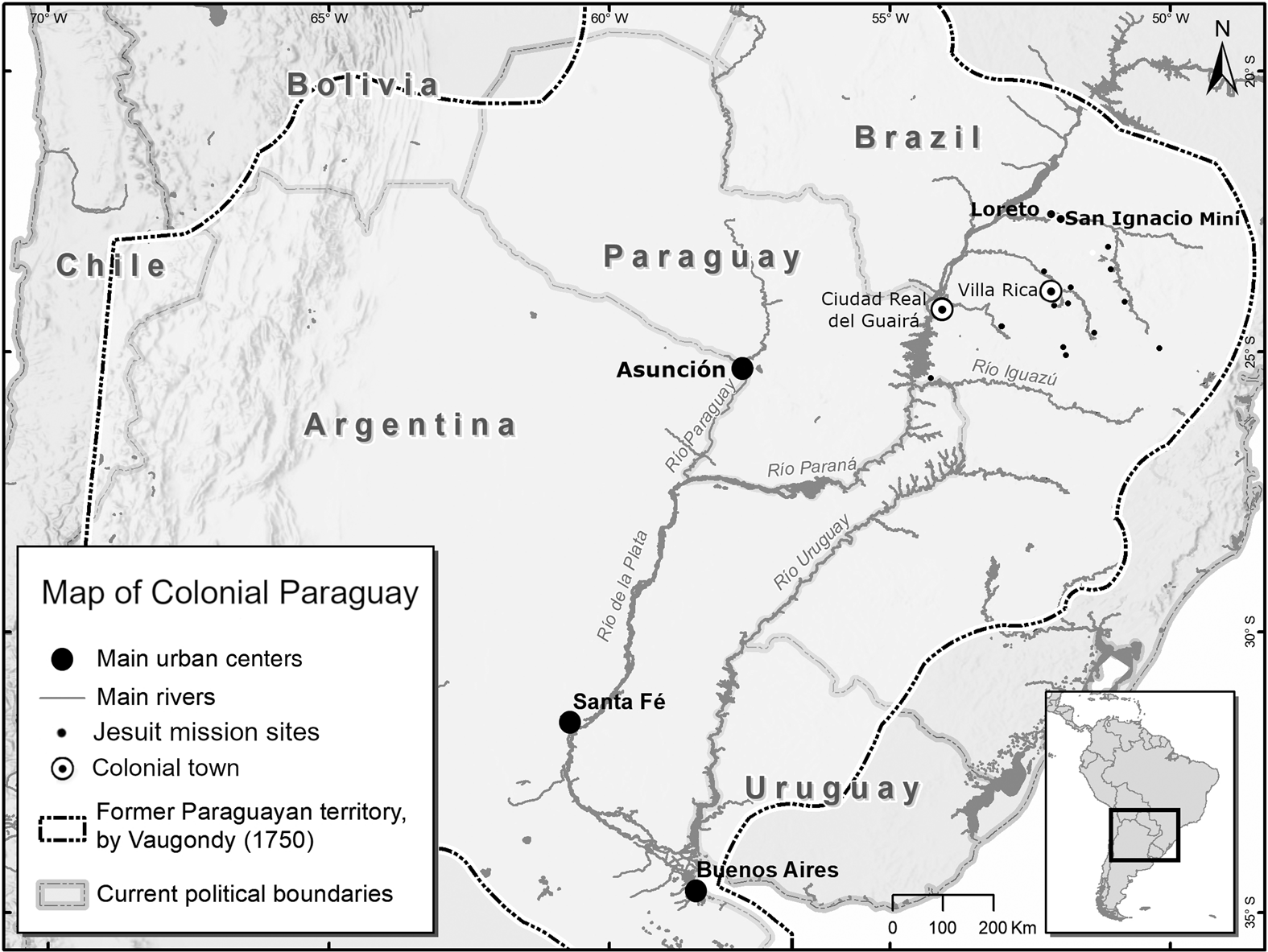
This case study focuses on a collection of ceramic artifacts excavated from one of the first Spanish Jesuit missions, San Ignacio Miní, founded in the Province of Guairá in 1610, in what is now Paraná State in Southern Brazil (Figure 1). This collection of 2,214 ceramic sherds is the focus of my postdoctoral research and is housed at the Museu Paranaense in Curitiba, Paraná. When I began my analysis, the collection was divided randomly across a number of boxes, but the documentation so important to archaeological interpretation had yet to be located in the museum archives. Because the museum has changed locations six times since the original excavation, the collection had been stored, moved, reboxed, relabeled, and so on, a number of times, during which fragments were broken and became unglued, mixed up, separated, or lost altogether. Through the course of my analysis, several pieces of information, including field notes and drawings, were brought together to better understand the archaeological excavation and the initial interpretations of the site; nevertheless, my focus here is on studying the itinerary (Joyce Reference Joyce, Joyce and Gillespie2015) of the ceramic collection as it has interacted with different people, contexts, things, times, and places over the past 500 years. By telling the story of this collection and exploring the paths taken, I hope to give new weight to similar collections that may be deemed “useless” to archaeological study because of their lack of contextual documentation and information. Olsen (Reference Olsen2010:37–38) notes, “Little emphasis is placed on things qua things, and the possibility that they themselves might be indispensable constituents of the social fabric that is studied.” Thus, what I attempt to do here is trace this history or itinerary to understand what these things—this particular collection of pot sherds, reconsidered as an assemblage—have to say about the various people, objects, spaces, places, and pasts with which they interacted.
Map of the colonial territory of Paraguay, including colonial towns and Jesuit mission sites.

Guaraní Pottery in Mission Life
The pottery assemblage is made up of a wide range of vessel types, decorations, and forms, ranging from large painted cooking/storage vessels to small pinch pots, clay pipes, and balls. How this collection came to be assembled has much to do with the spatial organization of early mission sites in the Province of Guairá, changing gender and labor roles within Guaraní society, and larger geopolitical conflicts occurring on the frontiers of Spanish and Portuguese colonies in the seventeenth century—but, most importantly, the excavation itself. The pottery was gathered in 1963 through the excavation of a 7 × 5 m trench between two house walls to a depth of 75 cm. All ceramic artifacts found during this excavation, except for bricks and floor tiles, were collected, brought to Curitiba to be housed at the Museu Paranaense, and cleaned, cross-mended, labeled, and analyzed. It is important to emphasize that this particular assemblage of ceramics was not used together, simultaneously or even necessarily in relation to each other, during the occupation of the mission; instead, it was gathered over a period of 20 years through the fabrication, use, and discarding of vessels and the abrupt abandonment of the mission in 1631 and then reassembled through excavation and storage as heritage objects. Through their individual and collective life trajectories, these potsherds were becoming an assemblage of objects that are made relational, invoking a meshwork of relationships across times and spaces.
At the time of contact with the Spanish in the early sixteenth century, the Guaraní were semi-sedentary agriculturalists with a history of approximately 2,000 years in Southern Brazil (Bonomo et al. Reference Bonomo, Angrizani, Apolinaire and Noelli2015; Brochado Reference Brochado1980). The Guaraní planted manioc, sweet potato and other tubers, a variety of beans, and peanuts, among many other cultivars (Noelli and Corrêa Reference Noelli and Corrêa2016); they also took advantage of the rich natural forest resources available in the Atlantic Forest biome, including pine nuts (from Araucaria angustifolia) and yerba mate (Ilex paraguariensis; Nimmo and Nogueira Reference Nimmo and Medeiros Nogueira2019), along with hunting and fishing. Guaraní villages were made up of five or six extended family groups (each of 10–60 nuclear families) that lived together in large communal houses. Archaeologically, the Guaraní tradition is identified by a distinct material culture, including large ceramic vessels and shallow bowls, most often with corrugated, nail-incised, or painted polychrome (red or black lines over white slip) decoration, as well as lip plugs (tembetás), polished stone axes, and burial urns (Bonomo et al. Reference Bonomo, Angrizani, Apolinaire and Noelli2015; Brochado Reference Brochado1980; Noelli Reference Noelli, Lima and Prous2008). At the time of contact, the Guaraní in the Province of Guairá had a distinct ceramic tradition with consistent forms and decorative styles, including plate vessel forms (ña'embé or teembiru’) and large urns and cooking vessels (yapepó and kambuchi; Brochado and Monticelli Reference Brochado and Monticelli1994; Noelli Reference Noelli1993; Noelli et al. Reference Noelli, Brochado and Corrêa2018). In Guaraní society, ceramic production was a female task (Almeida Reference Almeida2015; Schmitt and Avello Reference Schmitt and Avello2013), and the majority of precontact Guaraní pottery used the coiled technique, with some instances of molded vessels and pinch pots (Noelli et al. Reference Noelli, Brochado and Corrêa2018; Tocchetto Reference Tocchetto1991).
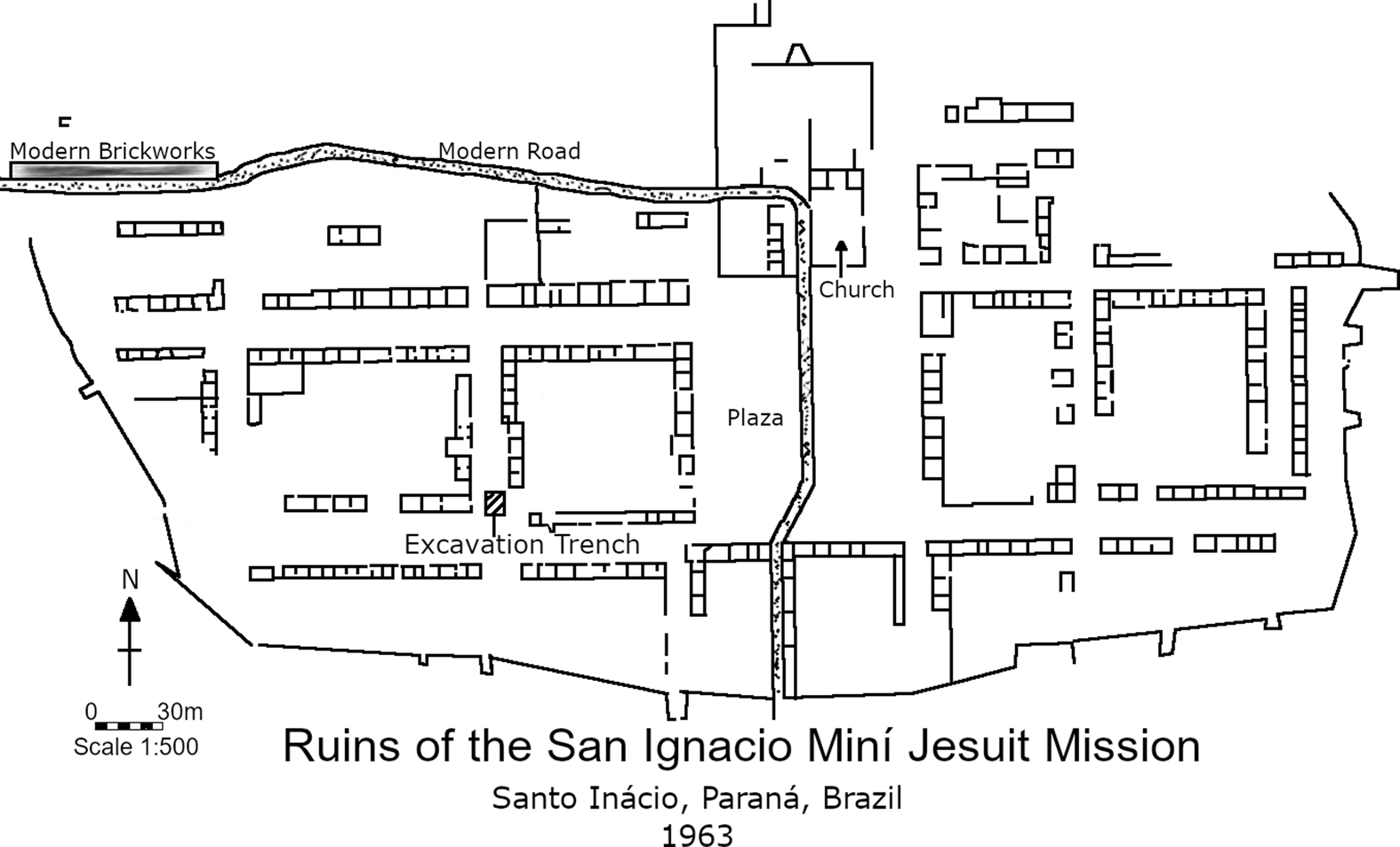
At the end of the sixteenth century, Spanish occupation in the Río de la Plata basin beyond the colonial hubs, such as Asunción, was sparse and, in some areas, quite tenuous. The Province of Guairá was established to further consolidate Spain's presence in the frontier region with the Portuguese territory to the north (Cushner Reference Cushner2006), and several Jesuit missions and towns were built there. San Ignacio Miní, along with the nearby mission of Nuestra Señora de Loreto do Pirapo, was founded in 1610 by two Jesuits, José Cataldino and Simón Masetta (Furlong Reference Furlong1962). These two were the earliest and largest of the 15 missions founded in the province. San Ignacio Miní housed a large church, quarters for the priests, a cemetery, several blocks of homes for the neophytes organized in a grid pattern, and a system of fortifications around the village (Figure 2; Blasi Reference Blasi1966; Chmyz Reference Chmyz2001). By 1617, the mission was home to 850 Guaraní families that included 500 children who studied in the mission school (Furlong Reference Furlong1962). The mission cultivated grapes, sugarcane, corn, potatoes, peanuts, and manioc and had herds of cattle, sheep, and goats (Parellada Reference Parellada2009). Although all of the missions and Spanish towns in Guairá were abandoned in the 1630s after suffering increasingly violent attacks by Portuguese slave raiders (known as bandeirantes and considered to be heroes of Portuguese colonization), these early mission sites were important prototypes in the development of the mission project, offering test cases in the organization and spatial design of mission life.
Illustration of the San Ignacio Miní Ruins as mapped and developed by Blasi (Reference Blasi1966). The ruins show a rectilinear plan, with a large central plaza, the church on the north side of the plaza, neophyte dwellings distributed to the east and west of the plaza, and ramparts and fortifications to the east, south, and west (published with permission from Museu Paranaense).

As part of the mission project, the Jesuits were quick to establish schools and teach trades appropriate for civilized Christian men, which included art, music, ceramic tile and brick production (Tocchetto Reference Tocchetto1991), and wheel-made pottery (Ormezzano Reference Ormezzano2012). Although there may have been a gradual movement of pottery making to the male sphere, in this early phase of missionization it is likely that women continued to produce the vessels used by the family for cooking, storage, and serving. Coiled, pinched, and wheel-made pottery are all part of the assemblage, the most abundant vessel form being a flat-based deep bowl, known in other Spanish colonial contexts as the plato hondo (Jamieson Reference Jamieson2000). This vessel form is absent from earlier Guaraní ceramic traditions, and the flat bases are typical of European-influenced pottery (Chmyz Reference Chmyz1963; Ribeiro Reference Ribeiro, Lima and Prous2008). The assemblage also shows the continued use of decorative techniques such as corrugated and painted polychrome that are particularly indicative of Tupiguarani ceramic traditions (Machado et al. Reference Machado, Schneider and Schneider2008). What is noticeably lacking in the assemblage are the large cooking and storage urns that are common in the Guaraní ceramic tradition (Noelli et al. Reference Noelli, Brochado and Corrêa2018; Ribeiro Reference Ribeiro, Lima and Prous2008): the majority of the ceramics are small and more suitable for individual servings or food preparation for small groups.
At this point on the itinerary of the assemblage, the sherds are a site of negotiated practice, memory, gender roles, technology, foodways, and family structure. The use of Guaraní decorative techniques, such as painted polychrome, along with the coiled production method ensured their continued use through memory, aesthetics, and practice and was likely an extension of the relationship between women potters and the wares they were producing. Considering the location where they were discarded—between two blocks of the neophyte houses—these vessels were likely produced in the neophytes’ homes for use by the family. Their presence and use in the home offered the neophytes, particularly women, the ability to continue traditional Guaraní production practices, teaching their daughters and maintaining memory in a physical form. Because life in the Jesuit missions was strictly managed and controlled, these objects embody the cultural memory of the Guaraní.
The smaller vessel forms, in contrast, suggest an enabling of Jesuit and colonial prescriptions to mold family life, with a focus on the nuclear family and the individual. The large urns and vessels used for cooking and storage typical of precolumbian Guaraní ceramics have been related to foodways centered around large extended families (Noelli Reference Noelli2000). In contrast, this assemblage of mostly smaller wares, with its high incidence of individual serving vessels, shows that neophyte family life was being modified to focus on the nuclear family, an important aspect of Jesuit doctrine (Sarreal Reference Sarreal2014). Thus, the objects that enable communal food preparation and consumption were no longer necessary and as such are less common in the assemblage. The move toward smaller families is also reflected in the architectural organization of the mission, with individual family dwellings organized around central patios (Figure 2). Interestingly, the organization of neophyte homes around central patios found at this early mission site do not occur in later iterations of Jesuit-Guaraní missions, which move instead toward barracks-style residences (Sarreal Reference Sarreal2014). Such a change in spatial organization suggests that, although the architecture at San Ignacio Miní was a step toward breaking up the large extended Guaraní families, the patios enabled the continuation of communal life and perhaps were able to conceal the continuation of traditional family and gender practices, such as ceramic production by women in the home.
Thus, this assemblage is in a state of transition between earlier iterations of Guaraní ceramic production and distinctly European wares. Considering that the site was occupied by Guaraní neophytes almost 80 years after first contact with conquistadores in the Río de la Plata basin, the abundance of European-style elements is not surprising. Despite the relative remoteness of the province, it had continued contact with both the Spanish and Portuguese and was already being influenced not only by European styles but also the significant impacts of colonialization. Although the Jesuits were adamant that there be a break from previous “barbaric” practices, such as polygamy and the cohabitation of large communal families, this transition was already occurring before the Jesuits set up their missions in Guairá. Disease and slavery had decimated the Guaraní population since first contact, and families were already beginning to disassemble into smaller, more agile groups (Kern Reference Kern2012). Considering that even in the deepest deposit of the excavation trench (50–75 cm) the most abundant vessel type was the plato hondo, an individual serving vessel, it is likely that such stylistic elements had already been incorporated into Guaraní ceramic production, both by choice and necessity, before these families moved to this mission site.
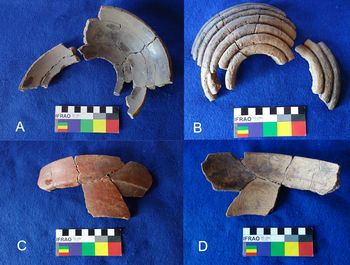
One noticeable feature of this particular assemblage of ceramic sherds is the number of vessels that I was able to reconstruct during analysis. One hundred and twenty-five vessels were cross-mended with two or more sherds, some of which included pieces from all three of the 25 cm excavation layers, and others constituted almost complete vessels (Figure 3). This act of reconstruction, which is a clear intersection of my contemporary analysis with this pottery at their place and time of destruction, enables a reassembling of the objects, giving new meaning to their forms and how they came to be in pieces. Thus, the act of destruction likely occurred at a specific moment, which could coincide with the abandonment of the mission itself.
Vessels reconstructed during ceramic analysis of the San Ignacio assemblage, both of which include fragments from all three excavation layers: (a–b) coiled bowl with brown slipped interior; (c–d) large painted polychrome bowl (published with permission from Museu Paranaense). (Color online)

Beginning in 1628, the bandeirantes escalated the violence against indigenous people of the region and began attacking mission sites, particularly those located closer to the Portuguese territory. As the missions continued to be attacked, the Jesuit priests began migrating with the neophytes into the interior, seeking refuge in the larger missions such as San Ignacio Miní and Loreto. Finally, in 1631, because of the increasing violence and the lack of response from the governor in Asunción, the Jesuits decided to abandon the remaining two missions and escape with more than 12,000 neophytes along the rivers of the province (Furlong Reference Furlong1962; Montoya Reference Montoya1639a), eventually reestablishing San Igancio Miní in the current province of Misiones, Argentina. After the missions were abandoned, the bandeirantes sacked their buildings and set fire to the complexes to destroy them (Furlong Reference Furlong1962). The neophytes had left their pottery behind, but it was possibly the presence of these vessels as surrogates of the Guaraní in the abandoned mission that led to their destruction. Descriptions of the sacking of the mission suggest that the bandeirantes destroyed the Guaraní houses when they arrived and found the mission abandoned (Furlong Reference Furlong1962). Thus, these reassembled pots may have stood not only for the Guaraní bodies that the bandeirantes were unable to capture but also the culture and lifeways that they were intent on destroying.
After it was abandoned, the site of the San Ignacio Miní mission remained relatively untouched for almost 250 years. It was occupied again briefly in the 1860s by an indigenous aldeia, or reserve, established by the Brazilian government. In 1865, the site was visited by two German engineers, Joseph and Franz Keller, hired to map the “unoccupied” territories of the interior, during which they identified the ruins of the church and the mission buildings, along with the fortifications built around the city (Departamento de Terras do Estado do Paraná 1933).
Oldemar Blasi and the 1963 Excavation
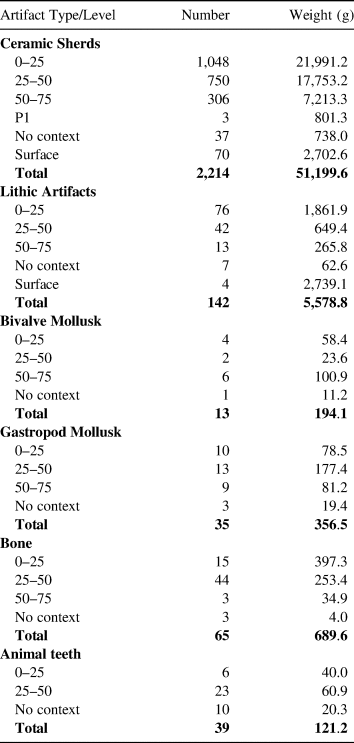
As noted earlier, this assemblage came into being in September 1963, when Blasi conducted an excavation at the San Ignacio Miní mission site. The archaeological work included a survey to map the ruins of the taipa de pilão, or rammed earth, walls of the mission complex (conducted in 1961) and the excavation of one trench, 7 × 5 m, completed in 1963 (Blasi Reference Blasi1966, Reference Blasi1971). Along with the assemblage of ceramics, the excavated material includes a small collection of lithic artifacts, as well as animal and human bone fragments and shells (Table 1). After excavation, the assemblage was transported to the Museu Paranaense where Blasi was employed; the fragments were cleaned and labeled according to excavation level, and when possible, the sherds were cross-mended. To Blasi, these ceramic artifacts offered a means to put into practice the analytical tools that he had been developing through his research and training in archaeology and to engage with the creation of typologies and classifications that were key to the burgeoning scientific approaches then being developed in Brazilian archaeology.
Summary of Archaeological Artifacts Constituting the 1963 Assemblage.

Blasi was part of a new group of academic archaeologists in Southern Brazil who were deeply influenced by both French and American schools of archaeological thought (Barreto Reference Barreto2000). Blasi had spent a year studying under the tutelage of the American archaeologist Wesley Hurt at the University of South Dakota (Ceccon Reference Ceccon2011). In a letter on June 5, 1957, to his boss and mentor José Loureiro Fernandes at the Museu Paranaense, Blasi notes that most of his time has been dedicated to archaeological study, “acquiring good laboratory practices, and now preparing to be part of an archaeological research project, during the months of July and August, on the margins of the Missouri River, near Gettysburg, South Dakota” (p. 66).Footnote 1 Blasi also spent time studying the American collections at the Smithsonian Museum of Natural History in Washington, DC, under the supervision of Clifford Evans. After returning to Brazil, Blasi continued his work at the Museu Paranaense and at the newly created Center for Archaeological Teaching and Research (Centro de Ensino e Pesquisas Arqueológicas; CEPA) at the Federal University of Paraná. In 1958, Hurt returned to Brazil to lead a course at CEPA in conjunction with an archaeological excavation that the two had conducted together at the shell mound site, Sambaqui do Macedo, from August to October 1958 (Ceccon Reference Ceccon2011; Hurt and Blasi Reference Hurt and Blasi1960).
The excavation at the San Ignacio Miní mission site thus came at a formative time not only in Blasi's career but also in the development of archaeological method and theory in Brazil. It was during the 1950s and 1960s that archaeologists began to piece together the phases and traditions of precolumbian groups across the country, often with a strong focus on ceramic assemblages and typologies. This process of identifying, characterizing, and mapping across space and time the archaeological complexes or traditions of Brazil was supported throughout the 1960s by PRONAPA (National Program of Archaeological Research), a program coordinated by Betty Meggers and Clifford Evans of the Smithsonian Institute (Barreto Reference Barreto2000; Symanski Reference Symanski, Morales and Moi2009). This program trained several generations of archaeologists and has had a lasting impact on archaeological thought across the country. Excavations at other contact period sites were also being undertaken throughout the 1960s in the region (see, for example, Brochado et al. Reference Brochado, Lazarotto and Steinmetz1969; Chmyz Reference Chmyz1963), which led to the definition of type wares of early colonial contact sites, including plain red-slipped decoration and the predominance of flat bases, as well as the Neo-Brazilian tradition referring to later colonial occupation sites (Chmyz Reference Chmyz1976).
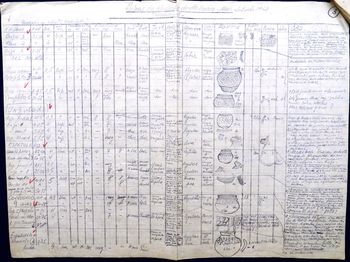
Blasi's engagement with this ceramic assemblage was clearly influenced by the work going on around him. This influence is most evident through the detailed spreadsheet he created to map and classify the various ceramic types identified in the assemblage (Figure 4). This spreadsheet is a detailed outline of the types of ceramics, forms, decoration, provenience, drawings, and notes, and it demonstrates Blasi's attempts to organize the assemblage into a consistent typology; it is remarkably similar to the computerized spreadsheets used by many archaeologists today. Different vessel forms and rim shapes are described and drawn but labeled inconsistently across the spreadsheet. Form a, for example, changes throughout from an independent restricted form with a restricted neck and mouth flaring out at the rim, to an unrestricted plato hondo, with its form being linked to the differing decorative styles found in the assemblage. Despite these inconsistencies, the spreadsheet makes clear that Blasi was trying to make sense of this assemblage in a systematic way, using his previous experiences and knowledge to mold this collection into something manageable and knowable. Other archaeologists in Paraná were doing similar work at the time. Chmyz (Reference Chmyz1963) provides a brief description of ceramics excavated from test pits at the site of the Spanish town Ciudad Real de Guairá, also in the Province of Guairá, and offers a comparative analysis with another Spanish-Indigenous contact era site from Chaco, excavated in 1945. A typology and terminology associated with these sites were beginning to take form. The San Ignacio assemblage had significant potential to help shape these discussions; however, Blasi's work was never published in detail, nor was it ever compared to other precolumbian or contact period archaeological sites in the region.
Blasi's ceramic analysis spreadsheet (page 3 of 11), including measurements, depth, decoration, texture, form, drawings, and notes (published with permission from Museu Paranaense).

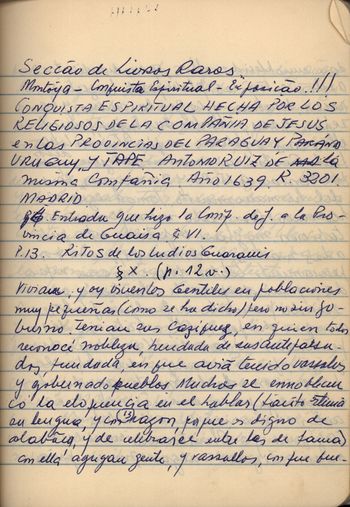
Blasi's work with this assemblage also included archival research conducted during a trip to Europe in 1964, in which he consulted the Biblioteca Nacional de Lisboa and the Arquivo Histórico Ultramarino in Portugal, the Archivo General de Indias and Biblioteca Nacional de Madrid in Spain, and other archives in Italy. In one of his field notebooks, Blasi transcribed several documents that he found. One entry is of particular importance to this assemblage. During his visit to the Biblioteca Nacional de Madrid, the rare books section was having an exposition of Antonio Ruiz de Montoya's seminal work, Conquista espiritual hecha por los religiosos de la Compañia de Iesus en las provincias del Paraguay, Parana, Uruguay y Tape (Reference Montoya1639a). In his notes (Figure 5), Blasi registers his delight, surprise, and recognition of the importance of encountering this exposition, adding three exclamation marks to the title of the written entry. Whereas such works are shared digitally today through a wide range of online archives, in 1964 access to such a work was likely a unique experience for Blasi, and no other work of Montoya's is included in the transcribed notes. Montoya's work is particularly relevant because he lived and worked in the Province of Guairá, founding many of the missions in the 1620s and spending much of his time at both San Ignacio Miní and the nearby mission Nuestra Señora de Loreto do Pirapo. His descriptions of Guaraní life are therefore indispensable for understanding life at the mission site that Blasi had excavated only the year before.
Page 77 of Blasi's field notebook used during archival research in Europe (published with permission from Museu Paranaense).

Despite his extensive work on the ceramic artifacts and forays into archival research, only two articles on this assemblage were published (Blasi Reference Blasi1966, Reference Blasi1971); at some later time, possibly in 1967 when Blasi took over as museum director, the assemblage was boxed up and stored in the museum archive. Unfortunately, it was never given the opportunity to engage with other collections. Over time, Blasi's original work of organizing and cataloging the collection was lost due to displacements and reorganizations of the museum and its collections. Inconsistent policies, changing management, and the continuous evolution of storage and curation practices also resulted in the separation of the documentation related to the site from the assemblage. However, even though the assemblage was placed in permanent storage, it was never forgotten because it is an important collection for the history of Paraná, and pieces of the assemblage were selected and included as part of the museum's now permanent exhibit on the Spanish occupation of the province of Guairá. The safeguarding of this assemblage, and of others like it, over the past 60 years also helped shape a narrative of the institution as a legitimate actor in the stewardship of the state's cultural heritage.
Contemporary Analysis and Affordances
My contemporary analysis, which began in 2016, picks up this meshwork of times, places, objects, and theoretical and methodological developments, offering new affordances to this specific assemblage of ceramics. In particular, my analysis has taken a step back from the collection to look at wider networks and connections that crosscut the use of these objects, their initial excavation and analysis or transformation into heritage objects, and other people and places that interacted with these objects. One important outcome of this process is rethinking how contemporary archaeological discussions of Guaraní ceramics came to be and how this assemblage could afford different perspectives on current terminology and practice.
Innovative work on Guaraní ceramics in Brazil has brought the ethnohistorical understanding of ceramic production and use to the study of the extensive Guaraní ceramic tradition. One of the key sources for the linguistic and ethnohistorical interpretations used today is the work of Montoya, particularly his documentation of the Guaraní vocabulary and language (Montoya Reference Montoya1639b, Reference Montoya1876a, Reference Montoya1876b). Over the past 30 years, this work has meticulously identified and cataloged precontact Guaraní ceramics based on the language and phrases described by Montoya (Brochado and Monticelli Reference Brochado and Monticelli1994; La Salvia and Brochado Reference La Salvia and Brochado1989; Noelli et al. Reference Noelli, Brochado and Corrêa2018). The goal of this work is to demonstrate the historical linguistic regularities of the Guaraní as they correspond to ceramic technology, thus enabling a theoretical approach characterized by a standardization of language used to refer to pottery across all Guaraní sites studied to date (Noelli et al. Reference Noelli, Brochado and Corrêa2018:168). This work has had an enormous impact on Guaraní ceramics analysis in archaeology, with the vocabulary first described by Montoya often being correlated with ceramic forms, functions, and styles. Nevertheless, my current interaction with the San Ignacio assemblage signals caution in using such an approach.
Montoya resided in the missions of Nuestra Señora de Loreto and San Ignacio Miní for several years, founding many of the later missions in the Province of Guairá and then fleeing with the Guaraní when the threat of the bandeirante attack finally reached San Ignacio Miní (Furlong Reference Furlong1962). Therefore, much of his ethnographic and linguistic observations likely occurred while he was living with the Guaraní in the missions of Guairá, principally in the two largest mission centers including San Ignacio Miní. The use of terminology and vocabulary that Montoya documented has to be considered as reflecting the context in which he was observing Guaraní practice and culture. Yet, at the point on the itinerary when this assemblage could have had a lasting impact on these burgeoning theories, it was left out of such analyses and discussions because it was never published or made public.
If we look at the assemblage of ceramic artifacts from San Ignacio, we can see some interesting contradictions between Montoya's daily context and how the ethnohistorical Guaraní linguistic terms are applied to the precontact ceramic tradition. One element in particular that drew my attention is that certain vessel forms common in Guaraní ceramics traditions are mostly absent from the assemblage from San Ignacio Miní. The vessels called kambuchi or cambuchí were defined by Montoya as vessels to contain liquids (Brochado and Monticelli Reference Brochado and Monticelli1994; La Salvia and Brochado Reference La Salvia and Brochado1989). This term has been correlated in the Guaraní ceramic tradition to jars or vessels with multiple angled shoulder sections; large kambuchi vessels are also often found as funerary urns in archaeological contexts. Although large cooking and storage vessels are part of the San Ignacio assemblage, none reach the dimensions of the funerary urns found in the Guaraní tradition, and no form with multiple shoulder sections was identified. Similarly, Montoya defines the vessel form ñaetá as a cooking vessel, which Brochado and Monticelli (Reference Brochado and Monticelli1994) link to vessels often used as lids of kambuchi vessels in funerary contexts, with rim diameter dimensions varying from 30 to 48 cm for medium-sized vessels and greater than 50 cm for large ñaetá. I identified similar forms to those depicted by Brochado and Monticelli (Reference Brochado and Monticelli1994), but the largest example was 42 cm in diameter, and the majority were between 28 and 32 cm. Finally, the flat-based plato hondos found predominantly in this collection, which are a clear indication of European influence not only on ceramic production but also on food practices, are likely the forms called ña'embe that are described as platos by Montoya and are not the typical Guaraní bowl forms identified by Brochado and Monticelli (Reference Brochado and Monticelli1994) and Noelli and colleagues (Reference Noelli, Brochado and Corrêa2018).
Although the integration of linguistic sources with the vast archaeological data associated with the Guaraní has brought significant insights into Guaraní ceramic production and food practices, analysis of the San Ignacio assemblage raises questions regarding the extent to which the linguistic work of Montoya can be applied to precontact Guaraní daily life. This assemblage, and others like it from early mission sites, must be brought into these conversations to ensure that the context in which Montoya lived and worked is considered. My point is not to invalidate this important work, but to consider that archaeological assemblages from these early missions are essential to understanding this meshwork of language and ceramic form, function, and meaning. To date, no detailed data from excavations conducted at this mission site or other mission sites in Paraná, Brazil, have been made publicly available. As Harrison (Reference Harrison2011:76) notes, “Relationships between museum objects are only developed once the material is taken from the field and assembled in new ways with material from other expeditions and considered as a collection.” At this moment in the trajectory of the San Ignacio assemblage, we are afforded the opportunity to do just that—to begin to understand contemporary entanglements with other collections and assemblages across times and spaces.
From the perspective of museum collections, it is important to consider the dependencies of place, space, and meaning connecting museums and the archaeological and ethnographic collections on which they depend. Hodder notes in his discussion of entanglement that the concept accepts the contributions of relationality, ontology, engagement, and symmetry, “but argues further that humans and things do not just relate to each other. Rather they are dependent on each other in ways that are entrapping and asymmetrical” (Reference Hodder2016:9). Thus, the existence of orphaned or legacy archaeological collections in museums around the world creates dependencies that must be considered in a discussion of entanglement. As things, these institutions are dependent on the assemblages that they house (other things) to provide them with the legitimacy to be considered historical, archaeological, or ethnographic and to be able to act on their visitors in meaningful ways. Without the assemblages that are housed within, museums would lack the meaning and weight given to them as stewards of the past. Conversely, orphaned archaeological collections are given meaning and importance as cultural heritage resources because of their location housed in such institutions, despite that fact that they may have little to no documentation or contextual information, which may render them “useless” to archaeological inquiry. If these collections are to be maintained within museums as forgotten relics of outdated archaeological methods, then neither the museum nor the assemblages are playing an active role in this interdependent relationship. As is shown by this case study, there is a clear need to revisit these orphaned archaeological collections not only to reanalyze previous work but also to enable the possibility of new affordances to connect the many times, spaces, places, and meanings across which they have engaged and are entangled.
Conclusion
What is clear from this analysis is that archaeological collections without complete archival information still have value, but the methods used to explore these collections must change. It is important to rethink how we approach these collections: we should not approach them as legacies or artifacts of outdated methods, but as contemporary collections that reflect past societies, the historiography of the discipline, and the continuing development and evolution of museum curation practices. We must also rethink how these assemblages are presented both for future analysis and for the public. By demonstrating interconnections between various kinds of data and information as entanglements of objects, humans, places, and times, the assemblage becomes dynamic and demonstrates the ever-evolving life histories not only of archaeological collections but also of the museums or institutions in which they are housed. An approach of entangled assemblages offers possibilities to present archaeological collections in their complexity, enabling new affordances across other sites, researchers, objects, and places. As this case study shows, the 1963 San Ignacio Miní assemblage may have limited interpretive value on its own, but comparisons with other assemblages afford new entanglements and interconnections that enable us to better understand life in the Guaraní mission and our contemporary engagement with the histories of the assemblage. Several threads or flows that are entangled in this collection could be further developed through such comparisons; for example, the changing gender and family roles within Guaraní missions could have only come to light considering contemporary theoretical concerns with issues of gender and sexuality in archaeology. As part of this process, this project will make the 1963 collection available publicly for future analysis, enabling such connections to occur. However, there must be a commitment to making the data available from all these assemblages and archaeological analyses in the region.
Considering that museum collections are entrapped quite literally within the museums in which they are housed, and that the objects within these collections have recurring and varying relationships and dependencies with humans, other objects, and spaces throughout their life trajectories, we can begin to imagine that their interpretive value may not come solely from their role as excavated archaeological material. Rather, their value may lie in the interactions, relations, and dependencies that brought them to their current state. As Der and Fernandini (Reference Der, Fernandini, Der and Fernandini2016) point out, we must focus on the multiscalar, multidimensional, and multitemporal entrapments that emerge from these interactions. Jervis (Reference Jervis2019:18) also notes that there must be a creative engagement with the material that is not caught up in the assumed dichotomies of nature/society, human/object but rather explores the “mediatory role of these things in building multiple conceptualizations of past worlds.” Thus, in this analysis I attempt to read the entangled itinerary of one assemblage of objects, bridging several pasts with the present, all with the goal of offering new understandings of how this archaeological material can interact with contemporary and future archaeological analyses.
Acknowledgments
This project was supported by a CAPES postdoctoral research fellowship (PNPD/CAPES) from the Department of History, Universidade Estadual de Ponta Grossa, and in collaboration with the Museu Paranaense, Curitiba, Brazil. I would like to thank Dr. Claudia Parellada for her continuous support and assistance working with the collection, and Dr. Alessandra Izabel de Carvalho for assistance with the project.
Data Availability Statement
The archaeological data included in the analysis are currently being integrated into the Museu Parananese Pergamum Online Archive (http://www.memoria.pr.gov.br/biblioteca/index.php?id_biblioteca=5).