Introduction
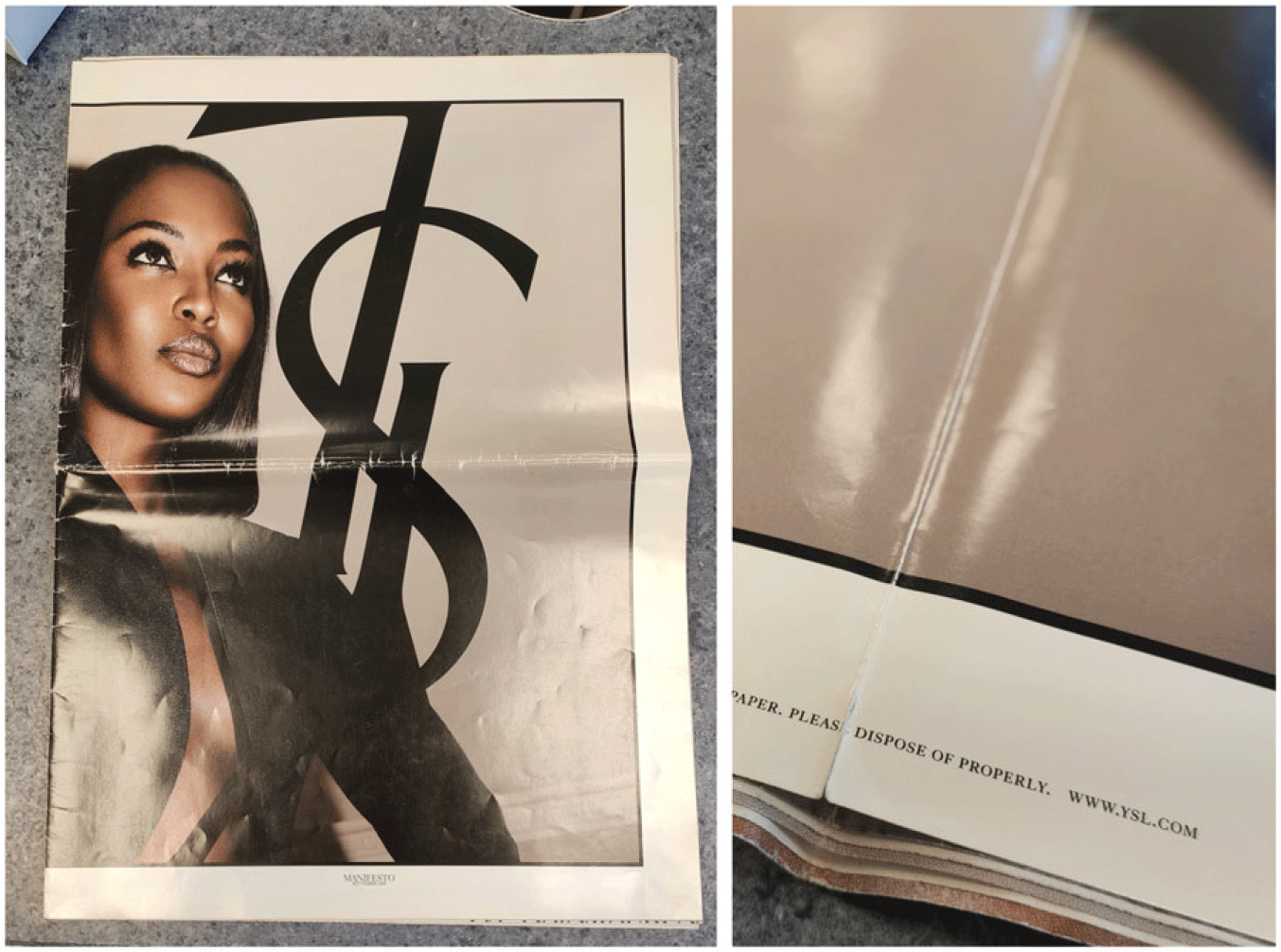
The majority of the shelves at the recently opened International Library of Fashion Research (ILFR) are given to minimalistic grey archive boxes that contain various pieces of fashion ephemera, including lookbooks, runway invitations, postcards, posters, catalogues, show notes and press releases. One such example is found inside a box containing a copy of the 2008 Yves Saint Laurent Manifesto. Spanning twenty pages and showcasing photographs from that season’s ad campaign with model Naomi Campbell, the large-format promotional publication has an intriguing detail on the back cover: next to the copyright statement are the words ‘Please dispose of properly’ (Fig. 1). This statement reveals the underlying tension in preserving fashion ephemera. What was once designed to be thrown away at the end of the season after it had served its purpose has been assigned new value as it has been admitted into the library or archive. This contradiction lies at the heart of the ILFR collections.
Front and back of Yves Saint Laurent Manifesto, Autumn/Winter 2008-9. Collection of International Library of Fashion Research.

ILFR came into being as the result of a seed donation of 5000 pieces of contemporary printed matter that had originally belonged to the cultural theorist Steven Mark Klein, who had spent decades collecting fashion ephemera. Klein gifted his entire collection to Norwegian editor Elise By Olsen, who established ILFR in Oslo, in the grounds of the National Museum. Initially a digital institution, the Library first opened to the public in November 2022. The collection has grown to include books and magazines, but ephemera nevertheless remains at the core of the Library’s identity and mission. This presents challenges in terms of collecting and preservation, and in defining the scope of what a fashion library is for. Utilising a set of semi-structured interviews with core staff at ILFR, particularly director Elise By Olsen and head librarian Ilaria Trame, as well as an object study of ephemera in the collection, this article aims to examine the role of fashion ephemera in a library setting.
The library and the continuation of fashion ephemera
The role of the ‘fashion library’ is a complex notion in an academic context. Fashion as a discipline is both creative and scholarly, but is simultaneously a field that is dominated by commercial and industry interests. Fashion’s printed culture reflects this duality of purpose, presenting an often paradoxical landscape for students and researchers to navigate. As Roland Barthes indicates, fashion’s print culture exists at an intersection of text and image, becoming a multimodal object that is complex to define.Footnote 1 When researching fashion through its printed material, students must be aware of the conflicting purposes implicit within the text or object. Where libraries mediate access to this material, they play a crucial role in guiding researchers through the landscape of fashion’s printed culture. As libraries must balance the need to support scholarly inquiry with the recognition of fashion’s commercial underpinnings, this prompts a consideration of the purpose of this material in library contexts, and the wider role of fashion ephemera in research.
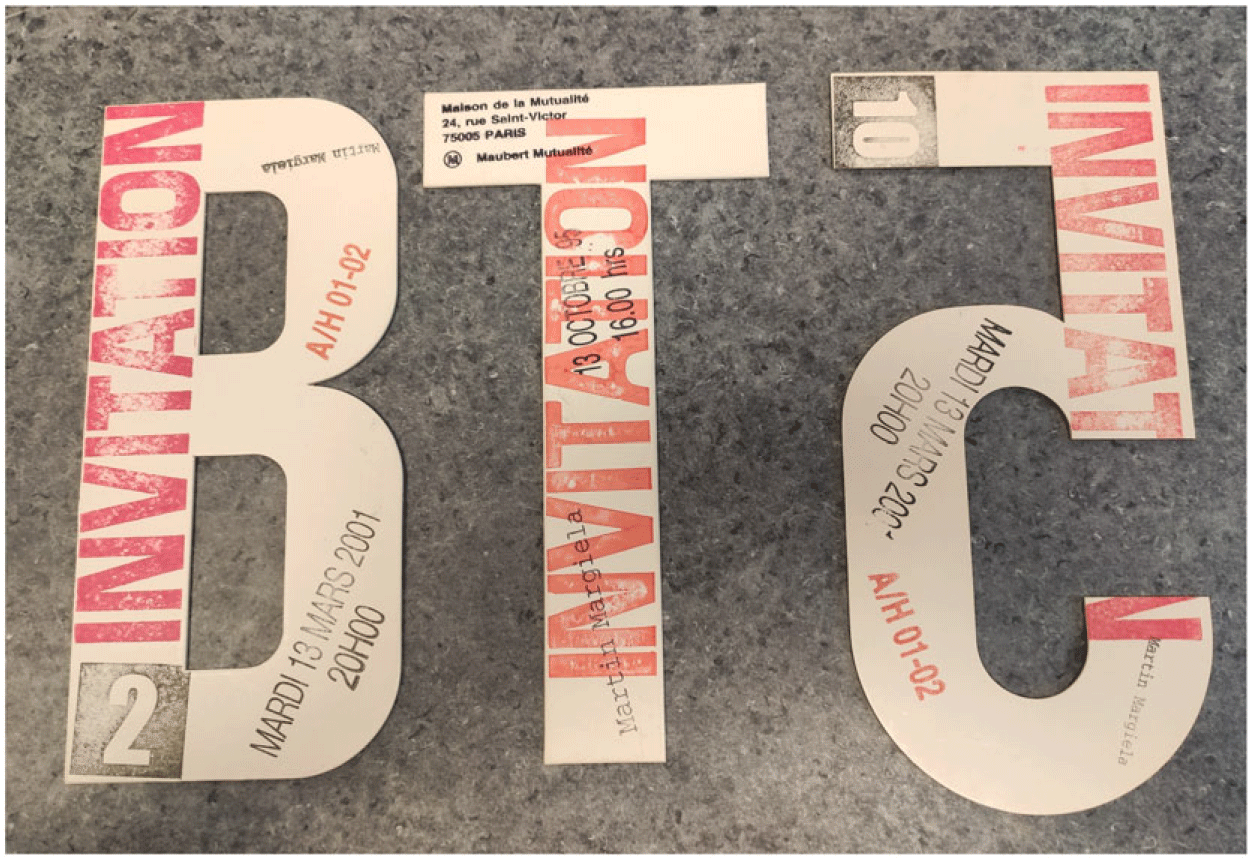
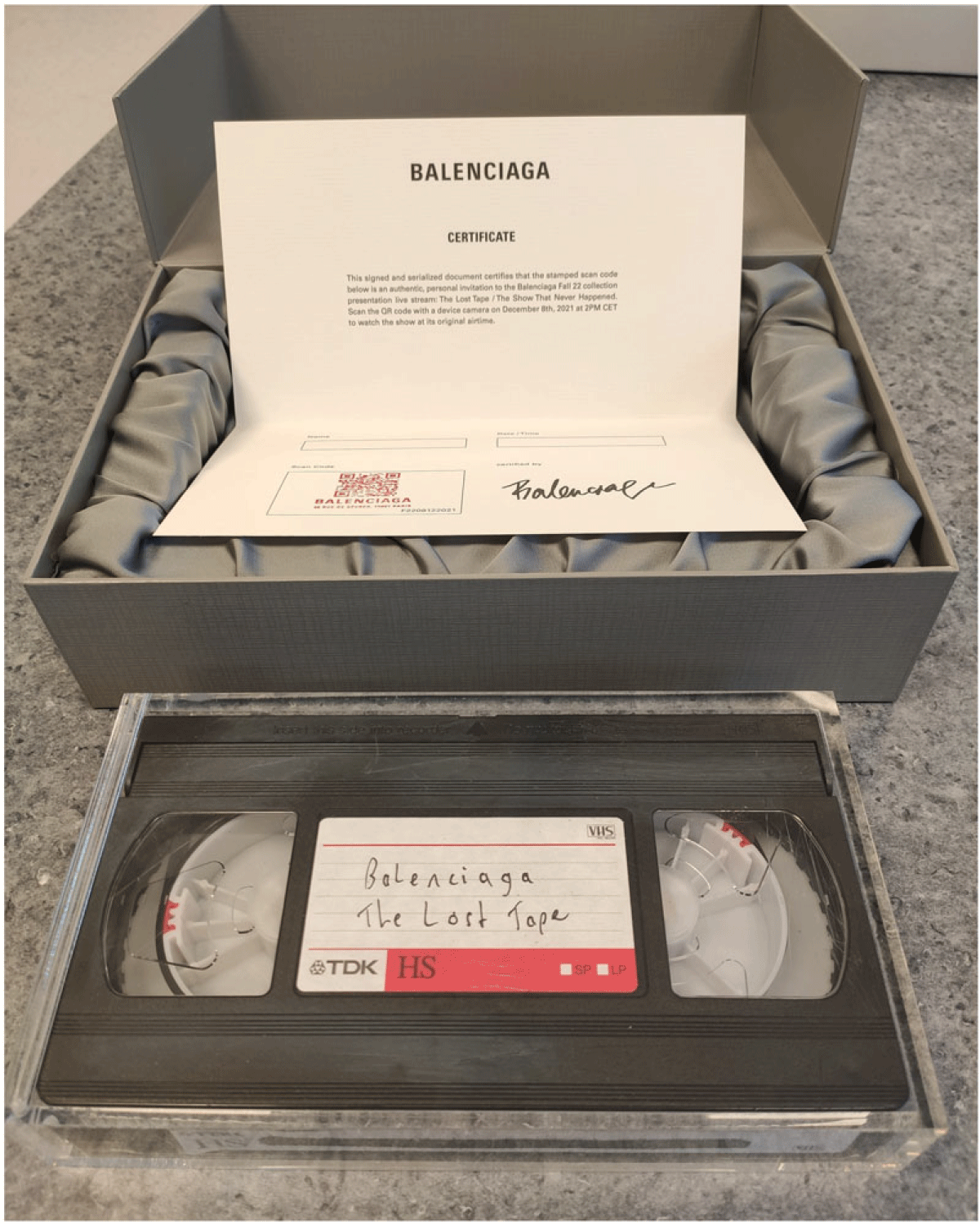
There are numerous obstacles to collecting ephemera generally, including issues with cataloguing and sourcing, however fashion-specific ephemera presents some unique challenges, surrounding production, format and distribution. Items such as runway invitations are highly exclusive in their distribution; their rarity as objects does not therefore just stem from their disposability, but also their inherent exclusivity. Other items may be more accessible but only available for a few days or hours, associated with a promotional event, such as the aforementioned YSL Manifesto, which was freely distributed in London, New York, Paris, Milan, Hong Kong and Tokyo on September 7, 2008, between 11am-7pm local time, limiting access to this object in both place and time. Where libraries that hold art ephemera maintain their collections through connections with artists and galleries,Footnote 2 fashion ephemera lacks similar centralized distribution networks. Due to its limited availability, fashion ephemera can often be sourced on the resale market at inflated prices, their rarity heightening their desirability as objects. The demand for rare fashion publications has spurred the emergence of specialized bookshops, which capitalize on the interest in and scarcity of ephemera. The high price points these objects often command can also be attributed to the high-quality format they are produced in, which embodies the exclusiveness of fashionable luxury products. While ephemera is frequently characterized by its inexpensiveness to produce and distributeFootnote 3 – hence its throwaway nature – fashion ephemera rarely exhibits this quality. Show invitations in particular have grown increasingly lavish, transforming from simple cards into complex three-dimensional objects (Figures 2 and 3), reinforcing the idea of these objects as collectible, their intangible appeal validated through their visual extravagance. However, the difficulty with obtaining and storing this type of media problematizes the place of fashion ephemera within library collections.
Maison Martin Margiela, c.1995-2001, assorted show invitations. Collection of International Library of Fashion Research.

Balenciaga, Fall 2023, The Lost Tape Collection Invitation. Collection of International Library of Fashion Research.

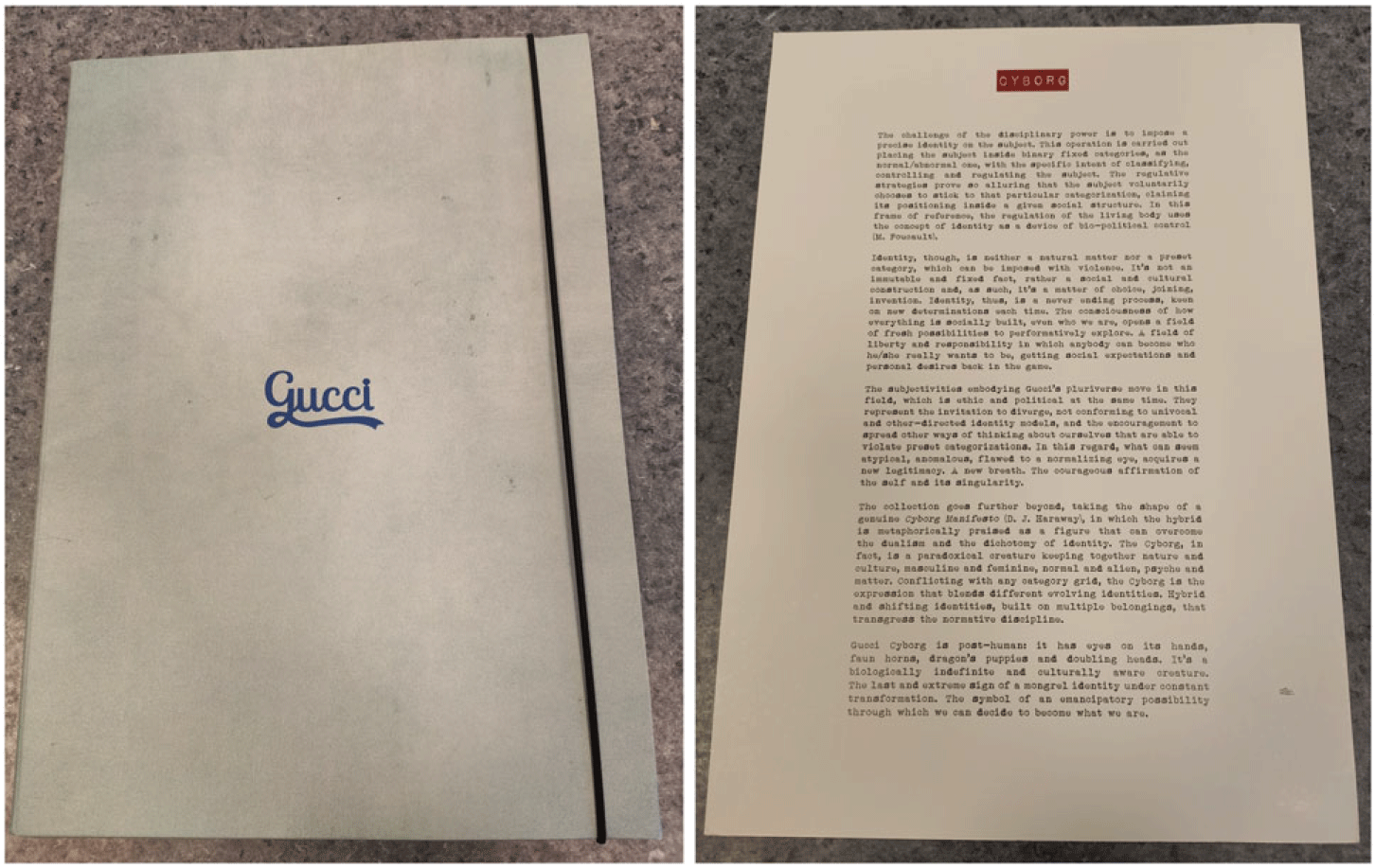
Although ‘fashion ephemera’ can describe all kinds of material with broad connection to fashion, the ILFR collections mainly comprise documentary sources specific to the promotional work of the fashion industry. These objects record the production of runway shows, the creation of advertising campaigns, the contents of collections - official narratives created by the design houses. Frequently paratextual items, an adjunct to the runway show or collection, they are nevertheless an important source for researchers, providing information about how the garments at the centre of this discourse were intended to be presented, viewed and interpreted. This is particularly the case with show notes, documents provided to attendees at runway shows explaining the collection themes and design intentions. Once a simple rundown of the garments on display, to assist journalists in their reporting, these have evolved into artistic works in themselves, designed as a continuation of the visual language of the collection they describe, and noted to contain ‘poems, autobiographical pamphlets, entire paper apparatuses complete with glossaries, ecumenical messages that sound like papal bulls,’Footnote 4 in place of simplistic clothing descriptions. Although peripheral objects, seldom available beyond the confines of the runway presentation itself, they contain clear messaging about how a designer wishes their collection to be understood by the press and wider public, as well as a record of the runway show as a theatrical performance. ILFR has collected show notes from a number of luxury fashion houses, offering a level of access rarely available to researchers. An example of show notes as research object is found in Gucci’s Autumn/Winter 2018 collection, titled ‘Cyborg’, in reference to the philosopher Donna Haraway’s 1985 work A Cyborg Manifesto (Fig. 4). Presented in a Gucci-branded folder, the notes comprise a typed sheet of paper, with accompanying citations to Haraway and French philosopher Michel Foucaut, providing context for a collection inspired by themes of post-humanism, fantasy, and hybridisation. This appropriation of theoretical frameworks to describe a fashion collection is only possible through the use of accompanying documentation and textual references. By making the subtextual explicit, these notes allow for a deeper understanding of the conceptual underpinnings of the collection, highlighting the intellectual and cultural dimensions that inform the brand’s creative vision. These notes form an interpretive bridge between the designer and attendees at the show, influencing how the collection was subsequently reported on, and have now become a critical document for fashion researchers documenting this era of Gucci’s design history.
Gucci, Fall/Winter 2018-2019, Cyborg Show Notes. Collection of International Library of Fashion Research.

Originally intended to be discarded, much of this material was rarely preserved by the design houses who created it. However, it has subsequently become important to the understanding of fashion heritage, with designers at luxury fashion houses often seeking inspiration from their brand archives. Therefore, in addition to the academic value fashion ephemera has, it has also a revived prominence within the industry that once discarded it. Through forging industry connections, ILFR has acquired a role as a repository, and the initial seed donation has been built upon with donations from major global fashion houses (including Balenciaga, Hermes, Schiaparelli and Comme des Garcons). The collections at ILFR thus represent a confluence between fashion as an industry and as an object of academic study.
In many ways, this is an archival act. However, the decision to present ILFR’s collections of fashion ephemera as a library was a conscious and deliberate one. Elise By Olsen reflects that Klein’s collection could have formed the centre of a project space, but after some initial exploration it became clear that ‘it was important that it was a library, not an archive, not a storage space, not a mausoleum.’Footnote 5 ILFR utilize the underlying mechanisms of the library, as a site of engagement with information and knowledge production, to bring researchers into active contact with these collections. Olsen reflects that the institutionalized language offered a sense of cultural legitimacy, transforming what may have been a collection of impassive objects into an active, discursive space, which allows the ephemera on the shelves to become a ‘point of departure for larger conversation.’Footnote 6 Rather than endorsing the notion of the designer as sole creative genius, Olsen views the ephemera at ILFR as a part of refocusing the networks supporting fashion discourse, ‘the curators, the thinkers, the critics, the journalists, the educators, even architects, all the practitioners around the labour.’Footnote 7 She therefore describes ILFR as an ‘alternative infrastructure,’Footnote 8 which seeks to decentralize fashion discourse, both in terms of its physical location outside of typical fashion centres and also in how it reconfigures the internal hierarchies of the fashion industry. The library thus fulfils its function as a neutral and democratising space, accessible to the public and free to use, and notably removed from the elitism that defined the initial creation, distribution and access to these objects.
Ephemeral materialities
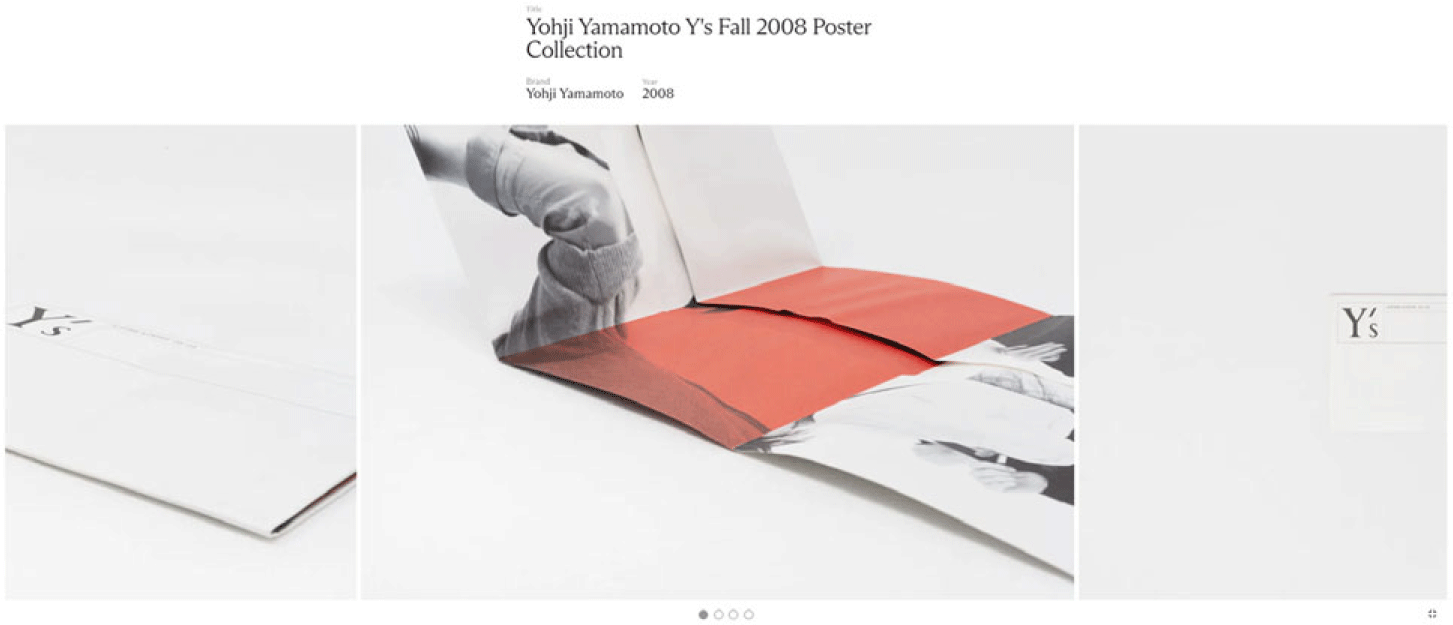
It has been noted that the act of accessioning ephemera into library collections decontextualizes it from its original purpose, adding new layers of meanings as it is catalogued and classified.Footnote 9 ILFR organize their ephemera alphabetically by the names of the designer, supporting how their users seek out this material. Marco Pecorari, however, cautions against such a straightforward approach, stating that treating these items solely as a record through which to analyse the work of a designer denies their objecthood.Footnote 10 The materiality of objects is crucial in understanding their significance. Fashion ephemera are not just carriers of information but also tangible artifacts that embody the aesthetic and cultural context of their time. This attitude is supported by head librarian, Ilaria Trame, who has a reflexive definition of library collections: ‘how do you define a book? Because for me, if it’s put on that shelf, that VHS cassette is a book because you can actually read it as an object.’Footnote 11 In many cases, the collections of ILFR challenge the nature of print ephemera. Invitations and press releases are often skeuomorphic, taking the form of VHS tapes, pop-up books, photographic slides, jigsaw puzzles and vinyl records. Despite their varying physical permutations, these objects nevertheless belong to the print tradition. ILFR acknowledge the inherent tangibility of the printed object, and their online catalogue contains detailed photography of the items in their collection, emphasising the folds of the paper, the dimensions of an object (Fig. 5). Even in a digital iteration, the materiality of these items is not lost.
ILFR digital catalogue record for Yohji Yamamoto, Fall 2008 Poster Collection. Image reproduced with the permission of International Library of Fashion Research.

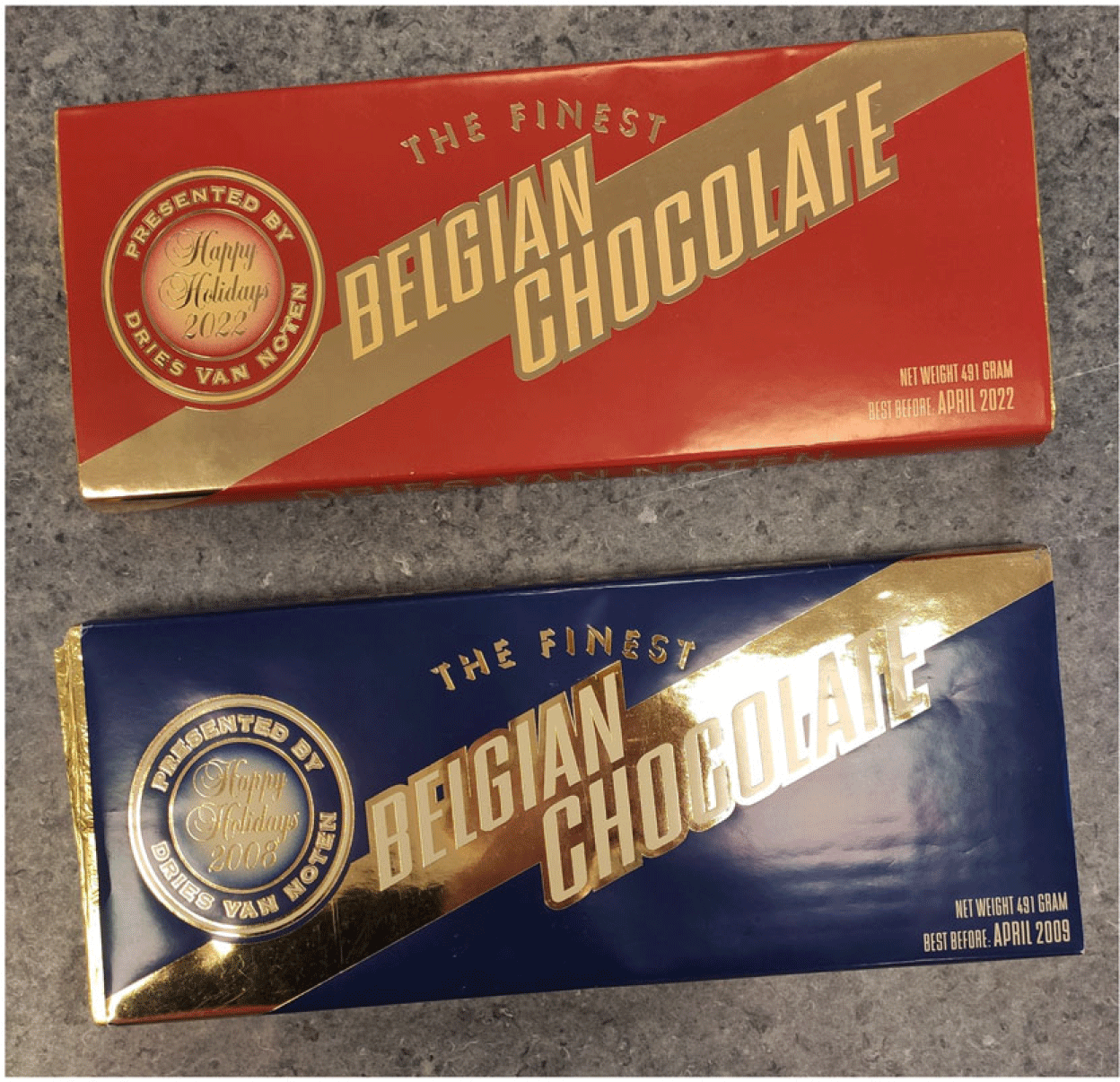
In part because they were made to be disposed of, these objects are often fragile or in the slow process of deterioration. One issue of Visionaire magazine, which arrived at ILFR still in its factory seal, featured an original photographic print which disintegrated the moment it was opened. Many items in the collection are also fundamentally perishable, ephemeral in the sense that they were made to be consumed – the collection contains vials of perfume, a lighter, a cigarette, scented candles, living moss and chocolate bars (Fig. 6), which all present a problem for storage and preservation. Trame comments that the candles, produced for Visionaire by Barbara Kruger and Bruce Weber in 2006, could not be placed on the usual shelves, as ‘the whole library would have smelled and the perfume would have been lost.’Footnote 12 These are stored in a specialist glass container, but this will not preserve the scent forever. This material was not created with the idea that it should be preserved, and it does not sit easily within the library environment.
Dries Van Noten, 2008 and 2022, Chocolate Bars. Collection of International Library of Fashion Research.

Judith Clark challenges the idea of viewing items like fashion invitations within the museum space as cultural artefacts, positing their intended disposable nature as an important aspect of their existence in an industry dominated by seasonal turnover and new collections.Footnote 13 This is part of the reason why, although ILFR staff note they have expert conservation support from the National Museum, they choose to embrace the inherent ephemerality of their collections. Although the material in their collection could be damaged by consistent handling, they do not take an archival approach to preservation. Trame believes that ‘a library, in its name, involves a sense of accessibility and consultation’Footnote 14 that supersedes concerns about conservation. They rarely require white gloves for handling objects, and while Olsen confesses she worries about damage, she leans into the transience and what she refers to as ‘the gentle degradation’Footnote 15 of print. If this material was not accessible on library shelves, she imagines it would be stored in her attic, and ‘would be bleached and dusty.’Footnote 16 Because people visit ILFR due to an interest in the materiality of the objects, Trame states they ‘try to value the consultation part rather than the preservation part. And in a way this is another way of caring for the material, not as in preserving it, but as in giving it to others.’Footnote 17 It is a rejection of Jacques Derrida’s definition of Archival Desire, which suggests that the need to archive is an attempt to avert decay, stemming from deeper existential anxiety about the impermanence of life.Footnote 18 Olsen instead argues the reverse – ‘damage is not death, but having it being stored in a loft or in a collection behind all these walls, that is death.’Footnote 19 The impermanence of print underscores the transient nature of ephemeral materials. The very nature of ephemera includes the inevitability of disposal, a reminder of their originally brief existence despite their extended life within the library.
Conclusion
Fashion ephemera occupies a difficult place in library contexts, but collecting it offers value to researchers engaged in the history of fashion, material culture and ongoing work in the fashion industry. As a library environment, ILFR redresses the devaluation of fashion critique through the establishment of an intellectual space dedicated to this material, elevating fashion ephemera from mere archival objects to active elements of scholarly discourse.
In emphasizing the material nature of these objects, ILFR recontextualizes fashion ephemera as tangible objects with historical and cultural significance, thereby bridging the gap between their original context and their renewed importance to the fashion industry. We see this work through objects like the YSL Manifesto, which was never originally distributed in Oslo and was printed many years before ILFR was established, yet in entering into a library collection it has thereby taken on renewed significance beyond its intended purpose. Although the YSL Manifesto contains the directive to ‘dispose of properly,’ ILFR is fulfilling this promise by ensuring that such materials are preserved and contextualized within a broader cultural framework, thus being gradually ‘disposed of’ in a manner that honours their lasting value.
Acknowledgments
This research would not have been possible without the support of ARLIS/UK. The author is the recipient of the ARLIS Research Award 2024, which was used to travel to the International Library of Fashion Research in Oslo. The author is also indebted to Elise By Olsen, Ilaria Trame, Else Thorenfeldt and all the staff at International Library of Fashion Research for their support and time contributing to this article and ongoing related projects.