INTRODUCTION
Trophic ecology is a key aspect on the biology of an organism since it helps to understand its demography and reproductive biology (Rossi et al., Reference Rossi, Ribes, Coma and Gili2004). Besides, ecological information is important to ecosystem management by assessing secondary production. Although there is evidence suggesting that the feeding ecology of benthic suspension feeders may be important in understanding littoral ecosystems, natural diets and feeding rates of benthic suspension feeders are still poorly understood (Ribes et al., Reference Ribes, Coma and Rossi2003).
Many studies emphasize the importance of active filter feeders such as bivalves and polychaetes in energy transference. On the other side, the role of passive feeders has been generally ignored or assumed minimal. However, many studies and revisions show the importance of these organisms in the marine food web, with emphasis on cnidarians (hydroids and octocorals) inhabiting shallow waters (Gili et al., Reference Gili, Alva, Coma, Orejas, Pages, Ribes, Zabala, Arntz, Bouillion, Boero and Hughes1997; Gili & Coma, Reference Gili and Coma1998; Genzano, Reference Genzano2005). These organisms may act significantly in energy transfer from plankton to benthos.
The octocoral Carijoa riisei (Duchassaing & Michelotti, 1860) inhabits a great variety of substratum and water conditions, being found in turbid and turbulent waters, in shadowed caves associated to sponges and hydroids, in estuaries adhered to Rhizophora mangle roots, and encrusting water vessels (Rees, Reference Rees1972).
Carijoa riisei commonly occurs from Florida (USA) to Santa Catarina state (Brazil) and throughout the Caribbean (Perez, Reference Perez, Tabarelli and Silva2002); nevertheless, it is also registered from Hawaii, other Pacific regions and also in the east Atlantic Ocean (Concepcion et al., Reference Concepcion, Crepeau, Wagner, Kahng and Toonen2008). The species is considered non-indigenous and invasive in Hawaii, dispersed by maritime vectors (Grigg, Reference Grigg2003), and was found competing and overgrowing black corals colonies (Kahng & Grigg, Reference Kahng and Grigg2005). Due to this, it is very important to monitor patterns of distribution and abundance, as well as to investigate its ecology (growth, recruitment, mortality, reproduction, feeding behaviour, predation and dispersal).
This species is very abundant on the southern Pernambuco coast, where it was diversely studied (Neves et al., Reference Neves, Lima and Perez2007; Souza et al., Reference Souza, Rodrigues, Neves and Perez2007), although published papers on its feeding ecology are non-existent in Brazil, and scarce worldwide. The only data published are from Hawaii based on a limited amount of C. riisei gut content analyses and indicate the species feed on zooplankton in the 200–1200 µm range (Kahng & Grigg, Reference Kahng and Grigg2005).
This paper is the first of a series of articles that focus on the trophic ecology of C. riisei from Porto de Galinhas beach (Pernambuco, north-east Brazil). The objective of this study was to determine qualitatively and quantitatively the diet of this octocoral and analyse its distribution and composition in a one-year period on two different depths of the same ecosystem.
MATERIALS AND METHODS
Study site
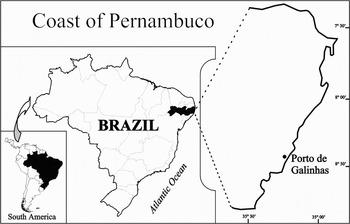
The study site is located at Porto de Galinhas beach on the Pernambuco shore (Brazil) (8°30′20″S 35°00′34″W) (Figure 1). This area is characterized by the presence of a wet (W) and a dry (D) season. The dominant weather, during April and June, is the autumn–winter rain with about 70–75% of the annual pluvial index (Chaves, Reference Chaves1996). This beach is characterized by beachrock forming extensive bands along the seashore. The width, length and thickness of these beachrock formations are variable and the greater part of them get exposed during the low tide. The sampling point is known as ‘Piscina dos 8’ or ‘Boca da Barra’. It is a natural pool with 8 m of depth at its deeper point. The samples were carried out along a wall 6 m deep, where a population of C. riisei is established from the surface down to the bottom.
Geographical localization of the Porto de Galinhas beach in the coast of the state of Pernambuco, Brazil.

Methodology
Haphazardly, 30 colonies greater than 10 cm long were collected during low tide in January, June and October 2006 and March 2007 at 2 m and 6 m deep at the time of sampling. Colonies were placed immediately in 10% formaldehyde solution to stop digestion. Sampling was always undertaken between 0900–1030 h to avoid potential variations in stomach contents associated with circadian rhythms (Genzano, Reference Genzano2005). Water temperature and salinity were measured on-site with a field thermometer and a hand-held refractometer. In order to get some relative values of the water current between the two depths, plaster balls, of approximately the same size, were fixed on a steel rod for 24 hours. Five plaster balls at each depth were used and they were weighed dry before and after the experiment. The difference between the initial and final weight was used as representative of the amount of plaster dissolved and so of the difference in water movement (modified from Muus, Reference Muus1968).
The gastric content of 35 polyps, haphazardly taken from the colonies collected at each depth in every sampling, were isolated by dissection and then measured, counted and identified to the lowest possible taxonomic level.
The number of individuals per taxa (relative abundance), the total number of individuals (absolute abundance), richness (number of species) and frequency of occurrence per polyp gastric cavity were determined. From this set of prey items, the Shannon–Wiener diversity index (H′) and evenness (Krebs, Reference Krebs1989) were assessed for each sampling situation.
Prey items were divided in to higher taxonomic groups and classified in to six categories according to the occurrence frequency: very common (more than 70% of total samples); common (from 30 to 69% of total samples); present (from 10 to 29% of total samples); scarce (from 5 to 9% of total samples); rare (from 1 to 4% of total samples); and unusual (less than 1% of total samples).
Prey biomass
Prey biovolumes (BV) were estimated from meristic data, assuming the geometric shape that suited best the natural form (Hillebrand et al., Reference Hillebrand, Dürselen, Kirschtel, Pollingher and Zohary1999; Ribes et al., Reference Ribes, Coma and Rossi2003; Rossa et al., Reference Rossa, Bonecker and Fulone2007). Prey biomass was estimated from BV using conversion factors for wet weight (specific weight 1.025 g cm−3; Hall et al., Reference Hall, Weimer and Fred Lee1970), dry weight (13% of wet weight; Beers Reference Beers1966) and organic carbon content (50% of the dry weight; Coma et al., Reference Coma, Gili, Zabala and Riera1994, Reference Coma, Gili and Zabala1995, Reference Coma, Ribes, Orejas and Gili1999).
To estimate the real contribution of each item, such as potential in vivo food, the weighed biovolume (WBV) was estimated, which determines the real biomass incorporated by the organism with higher precision. WBV is expressed as percentage and calculated using the following equation (López-Fuerte et al., Reference López-Fuerte, Beltrones and Aguero2007):
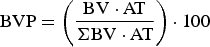
where BV = biovolume and AT = total abundance.
Hypothesis test
Chi-square (χ2) (Sokal & Rohlf, Reference Sokal and Rohlf1996) was used to test the following hypotheses: (1) richness and abundance of food items are different between the studied months; and (2) richness and abundance of food items are different between the two studied depths. The t-test (Hutchinson) (Zar, Reference Zar1996) was used to evaluate the hypothesis that the diversity of species would be significantly different: (a) between the studied depths; and (b) between the studied months.
The significance level used in all statistical tests was a = 0.05.
RESULTS
Salinity and temperature remained homogeneous during the whole study, with means of 37.7±0.56 ‰ and 27.6±0.41°C, respectively.
Diet
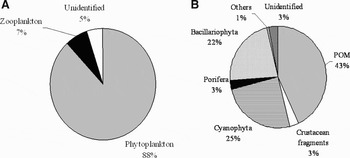
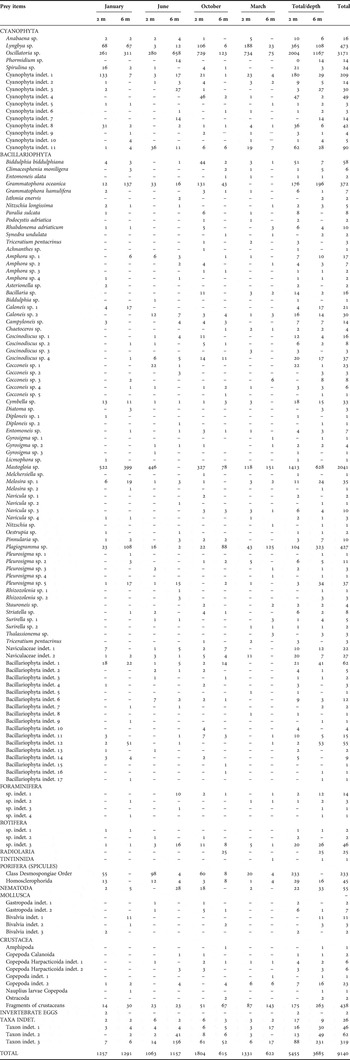
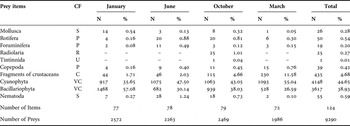
The results showed the occurrence of 102 items from the phytoplankton and 25 from the zooplankton (Table 1; Figure 2A), moreover the presence of particulate organic matter (POM) and unidentified items inside the gastric cavity of C. riisei polyps (Figure 2B). Among the unidentifiable items, three demanded more attention for showing higher abundance (Table 1).
Relative abundance (%) of prey items captured by Carijoa riisei during the sampling period at Porto de Galinhas beach. (A) Nature of prey; (B) taxonomic group of prey. POM, particulate organic matter.

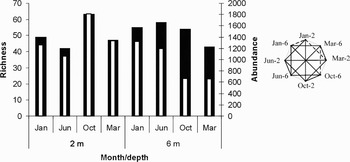
Richness and abundance of prey items captured by Carijoa riisei during the sampling period at Porto de Galinhas beach. Inset shows χ2 test of abundance with significance level for each month/depth tested. ———, significant; –––, not significant; ○, abundance; •, richness.

Number and type of prey items captured by Carijoa riisei during the sampling period at Porto de Galinhas beach in the two analysed depths.

Indet., indeterminate.
Particulate organic matter, which includes organic detritus but also unidentifiable prey items in an advanced stage of digestion, was also regularly found. According to Coma et al. (Reference Coma, Ribes, Orejas and Gili1999), due to the difficulties in assigning a numerical value to POM (i.e. they easily break during dissection), they have not been included in further calculations.
The phylum Porifera was represented by great quantity and diversity of siliceous spicules among the polyp content (2.58% of the total items; Figure 2B). The spicules evidenced the presence of six sponge orders of class Demospongiae. The order Homosclerophorida was identified for possessing characteristic spicules (diods and calthrops) (Table 1). The spicules, although abundant and frequent in the gastric cavity, were not used in data analyses because they were not considered octocoral preys.
The gastric content showed clear predominance of phytoplankton (87.5%) (Figure 2A). Phytoplankton species were distributed among Bacillariophyta and Cyanophyta. Cyanophytes were the most abundant group with 4148 specimens distributed among 17 morphotypes, adding up to 44.65% of the total content, followed by diatoms with 38.93% in the four sampling months (Table 2). Diatoms totalled 3617 specimens and were distributed among 85 different morphotypes (Table 1), nine of which accounted for 89.94% of total diatoms.
Classification of frequency (CF), total (N) and relative (%) abundance of prey items captured by Carijoa riisei during the sampling period at Porto de Galinhas beach.

VC, very common; C, common; P, present; S, scarce; R, rare; U, unusual.
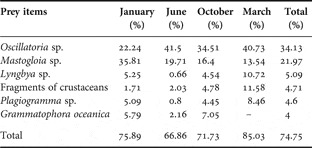
Of the 127 prey items recorded, six are responsible for 74.75% of total gastric content (Oscillatoria sp., Lyngbya sp., Mastogloia sp., Grammatophora oceanica, Plagiogramma sp. and crustacean fragments).
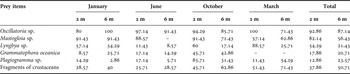
Cyanophyte Oscillatoria sp. was the most representative species, responding for 34.13% of the total consumption, followed by the diatom Mastogloia sp. (21.97%) (Table 3). Besides being quantitatively important, these species showed high frequency (Table 4). A classification of frequency (CF) of prey items captured by C. riisei during the sampling period is presented in Table 2.
Relative abundance (%) of the six most important food items captured by Carijoa riisei during the sampling period at Porto de Galinhas beach.

Frequency (%) of the six most important food items found in gastric cavities of the polyps of Carijoa riisei during the sampling period in Porto de Galinhas beach.

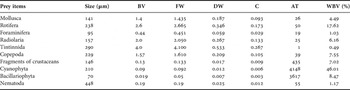
Prey items found in the polyp gastric cavity during the study varied from 40 µm protists to 4 mm cyanophytes. Due to the great predominance of diatoms, the mean prey size was 112.7 µm. In mean, the greatest preys were nematodes and the smallest were diatoms (Table 5).
Prey biomass of the items captured by Carijoa riisei in Porto de Galinhas beach. Conversion of biometric measurements to biovolume (BV, mm3 × 10−3), fresh weight (FW, μg; specific weight 1.025 g cm−3), dry weight (DW, μg, 13% fresh weight) and organic carbon (C, μg, 50% dry weight). WBV, weighted biovolume (BV.AT/∑BV.AT). 100. The size and the total number (AT) of food items captured in the annual cycle is also shown.

Biomass and carbon
Diatoms and cyanophytes were items with smaller biovolumes (Table 5) and, in consequence, showed low carbon contribution per individual, while rotifers, radiolarians, tintinids and copepods had the greater biovolumes and carbon contribution (Table 5). This pattern is the inverse of total abundance (AT) of each prey item, where phytoplankton represented 83.58% and zooplankton only 7.4% (Table 2).
However, when the weighed biovolume (WBV) of each prey is estimated, which combines absolute abundance and biovolume, the ingested biomass is more precisely represented and cyanophytes sum up to 46% of total prey biomass ingested by the octocoral (Table 5). On the other hand, items with high biovolume but low abundance (such as tintinids, molluscs and radiolarians) have a smaller contribution in biomass on C. riisei diet (Table 5). Still, rotifers showed greater specific volumes and, even though they accounted for only 55 specimens, were responsible for the second greatest biomass contribution.
Tested hypothesis
A comparison between richness, abundance, diversity and evenness was made between the two studied depths in each sampling month, and between months at each depth.
The richness of the prey items was significantly different (χ2 = 4.2; gl = 1; P = 0.04) between June and October at 2 m depth; while other combinations were not significantly different (Figure 3; Table 6).
Data summary of the prey items captured by Carijoa riisei during the sampling period in Porto de Galinhas beach.

Regarding abundance, significant differences were observed related to both depth and seasonality, which corroborated the tested hypothesis (Figure 4; Table 7). The lower abundance occurred in March at 6 m and the higher took place in October at 2 m depth (Figure 3; Table 6).
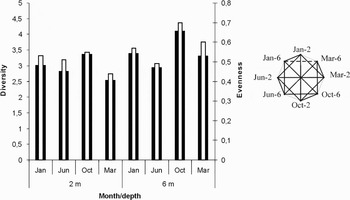
Diversity and evenness of prey items captured by Carijoa riisei during the sampling period at Porto de Galinhas beach. Inset shows χ2 test of diversity with significance level for each month/depth tested. ———, significant; –––, not significant; ○, evenness; •, diversity.

Chi-square test (χ2) of absolute abundance of the prey items captured by Carijoa riisei at the same month or at the same depth in Porto de Galinhas beach.

NS, not significant; *, P < 0.05.
Diversity values showed significant differences between prey items related to both depth and seasonality (Figure 4; Table 8), except for January and March at 6 m depth. The preys were subjected to seasonal and bathymetrical variations, with the highest diversity recorded for October at 6 m (H′ = 4.1) and the lowest in March at 2 m (H′ = 2.6) (Figure 4; Table 6).
t-test (Hutchinson) of diversity of the prey items captured by Carijoa riisei at the same month or at the same depth in Porto de Galinhas beach.

NS, no significant; *, P < 0.05.
Evenness values oscillated with diversity, with the highest recorded for October at 6 m (0.7) and the lowest in March at 2 m (0.45) (Figure 4; Table 6).
DISCUSSION
Carijoa riisei diet was composed of a wide scope of preys, where diatoms and cyanophytes predominate, being abundant and frequent throughout the year. Among the zooplanktonic items, crustacean fragments were the more abundant. The results show a wide trophic niche for C. riisei demonstrating its polyphagous character. According to Acuña & Zamponi (Reference Acuña and Zamponi1995), other cnidarians such as anemones from the intertidal zone of Argentina also behaved as polyphagous, feeding even on insect larvae.
Many studies treated zooplankton as the main food source for anthozoans and hydrozoans (Lewis, Reference Lewis1982; Sebens & Koehl, Reference Sebens and Koehl1984; Coma et al., Reference Coma, Gili and Zabala1995; Rossi et al., Reference Rossi, Ribes, Coma and Gili2004). On the other hand, Fabricius et al. (Reference Fabricius, Benayahu and Genin1995) and Fabricius (Reference Fabricius1996) first noted herbivory in octocorals. Also, Ribes et al. (Reference Ribes, Coma and Gili1999) found a great variety of potential preys for the gorgonian Paramuricea clavata, especially phytoplankton, although the species feed regularly on particulate organic carbon.
Coma et al. (Reference Coma, Ribes, Orejas and Gili1999) recorded a great amount of diatoms among the gastric cavity content of hydroids but it was considered secondary prey, while it was very frequent in C. riisei throughout the year. Gravier-Bonnet & Mioche (Reference Gravier-Bonnet and Mioche1996) also considered diatoms the main food resource for the hydrozoan Nemalecium lighti. Likewise, Orejas et al. (Reference Orejas, Gili and Arntz2003) cite diatoms and dinoflagellates as the main food source for Antarctic octocorals. On the other hand, phytoplanktonic organisms showed, in general, little presence in the octocoral Corallium rubrum diet in the Mediterranean (Tsounis et al., Reference Tsounis, Rossi, Laudien, Bramanti, Fernández, Gili and Arntz2005).
Migné & Davoult (Reference Migné and Davoult2002) concluded that Alcyonium digitatum has preference for zooplankton, which would justify its description as carnivorous. However, the study recorded that this species is also capable of feeding on phytoplankton, showing trophic opportunism regarding food sources. The carnivorous habit was also recorded for octocoral Leptogorgia sarmentosa (Rossi et al., Reference Rossi, Ribes, Coma and Gili2004). Carijoa riisei, however, showed the inverse pattern, with numerical predominance of phytoplankton.
Among the phytoplanktonic organisms preyed by C. riisei, cyanophytes were the most abundant group. These organisms are not cited frequently among the food items of octocorals nor other passive suspension feeding cnidarians.
Ribes et al. (Reference Ribes, Coma and Rossi2003) suggest that the ingestion of phytoplanktonic organisms depends both on the size and abundance of the prey. The preying of greater, not abundant items was equivalent to the ingestion of small, abundant items, indicating that the food was captured according to its availability.
The great amount of diatoms reduced the mean prey size (112.7 µm), according to the results from Coma et al. (Reference Coma, Gili, Zabala and Riera1994), which found small preys (100 to 200 µm) in the octocoral Paramuricea clavata. Still, the main preys found for this species at Mendes Islands were zooplanktonic organisms (nauplii, invertebrate eggs, larvae and copepod eggs), which is the opposite of that found in this study. Carjoa riisei, as other octocorals (Coma et al., Reference Coma, Gili, Zabala and Riera1994; Orejas et al., Reference Orejas, Gili and Arntz2003; Rossi et al., Reference Rossi, Ribes, Coma and Gili2004; Tsounis et al., Reference Tsounis, Rossi, Laudien, Bramanti, Fernández, Gili and Arntz2005), preys on small items, which characterizes a suspensivorous filtrating habit.
Carijoa riisei also captured a large quantity of spicules, which have no nutritional value. This reinforces the idea that it selects a prey by size and not by type of prey. The mean spicule size was 112 µm, near the general mean size of preys.
Coma et al. (Reference Coma, Ribes, Orejas and Gili1999), state that although phytoplanktonic organisms are the most abundant in the gastric cavity of the hydroid Nemalecium lighti, they contribute relatively little carbon.
From Table 5, it is possible to observe an inverse pattern between biovolume values and absolute abundance, which may lead to bias on the interpretation, overestimating or underestimating the real importance of the prey in energy transference along the trophic web. Thus, weighed biovolume (WBV) values showed a different order than that of total abundance, approximating to the real contribution of each prey item, the potential in vivo food source. This way, items that would pass unobserved such as rotifers, which represented only 0.54% of total prey, are shown having a weighed biovolume of 17.62%, constituting the second most important item in potential biomass, behind only cyanophytes, which represented 46.01% (Table 5). These results are not surprising since rotifers may show high biomass values (Rossa et al., Reference Rossa, Bonecker and Fulone2007), and may represent even up to more than 70% of total biomass in some ecosystems (Hardy et al., Reference Hardy, Robertson and Koste1984).
Accordingly, the phytoplanktonic gastric content of C. riisei (cyanophytes + diatoms) represented a weighed biovolume of 54.48% in the octocoral diet. This result would be overestimated if only the phytoplanktonic absolute abundance was analysed, which represents 83.58% of the polyp gastric content (Table 2); or underestimated, if only the low organic carbon values were analysed (0.003 µg C for diatoms and 0.006 µg C for cyanophytes). Yet, by analysing the WBV values, it is made clear that the organic carbon income of C. riisei diet does not come mainly from the phytoplankton. This way, in contrast with abundance data, C. riisei diet shows a proportional equilibrium between phytoplankton and zooplankton biomass considering the weighed biovolume results.
Despite the fact that the consumption of larger plankters would be of greater benefit in terms of fulfilling energy needs, passive suspension feeding depends on many uncertainties and eventualities and requires strategies for collecting and accumulating microsize POM, particularly bacteria, protists, phytodetritus and zoodetritus (Widding & Schlichter, Reference Widding and Schlichter2001). The question as to whether or not living phytoplankton or phytodetritus can be used by anthozoans has been the subject of considerable controversy in the literature (Slattery et al., Reference Slattery, McClintock and Bowser1997; Bak et al., Reference Bak, Joenje, de Jong, Lambrechts and Nieuwland1998; Schlichter & Brendelberger, Reference Schlichter and Brendelberger1998; Sebens et al., Reference Sebens, Grace, Helmuth, Maney and Miles1998; Anthony, Reference Anthony1999, Reference Anthony2000). Nevertheless, Widding & Schlichter (Reference Widding and Schlichter2001) suggest that the trophic utilization of microsize POM (including phytoplankton) does not seem to be primarily a question of whether or not algae can be digested by corals, but rather a problem in the collection and accumulation of minute particles out of a highly diluted suspension. Thus, these food components are of trophic importance only for those suspension feeders which possess effective mechanisms for collecting and accumulating these items. In fact, other passive suspension feeders such as hydroids on upwelling systems have faecal pellets as the most important prey item (Orejas et al., Reference Orejas, Gili, Alvá and Arntz2000). Carijoa rissei, as an azooxanthellate species depends totally on heterotrophy and utilizes different prey components, including POM, according to its trophic specialization. However, as POM has not been included in some analysis of the present study, it could have been underestimated (or other preys overestimated).
Carijoa riisei diet did not show difference in prey richness throughout the studied months or between the different depths, indicating a continuous extension of its trophic niche. Nevertheless, total abundance of preys varied between months and depths. This variation may be related to the availability and energetic income from each prey. The major diet part is composed of planktonic organisms, among which populational oscillations (seasonal and bathymetric) are common (Sorokin, Reference Sorokin and Dubinsky1990; Neumann-Leitão & Matsumura-Tundisi, Reference Neumann-Leitão and Matsumura-Tundisi1998). The large trophic niche of the species permits the octocoral to alter its diet to accompany the seasonal variations. Thus, the diversity of ingested preys also varied throughout the year, but cyanophytes and diatoms were still dominant in all months and depths in the polyp cavity. Other species of planktonic organisms also show seasonal variation in their diets (Ribes et al., Reference Ribes, Coma and Rossi2003; Genzano, Reference Genzano2005). The present result shows the prey used by C. riisei at the morning and, due to the mobility of plankton, diet can change along the day. Further studies considering daily cycles will clarify this question.
The differences found in abundance and diversity between the two studied depths may reflect not only the seasonal abundance oscillations of planktonic preys, but also characters of the local hydrodynamics. Tsounis et al. (Reference Tsounis, Rossi, Laudien, Bramanti, Fernández, Gili and Arntz2005) concluded that the variability of hydrodynamic processes must have a greater influence in the feeding taxa of the red coral Corallium rubrum than seasonal changes in seston composition. Carijoa riisei colonies at 6 m deep are close to the sandy bottom and exposed to a higher hydrodynamic. Results of water movement using plaster balls showed values 8% higher at 6 m than at 2 m. So, a great amount of particles may be resuspended and make available other prey items. Nevertheless, to better understand whether the hydrodynamic, the mobility or population changes of the plankton affect the diet of C. riisei it is necessary to include in this study the plankton analyses. It will allow verifying the selectivity of this octocoral species to type and size of prey. These data will be presented and discussed in the next paper of the series.
Considering that the octocoral C. riisei showed prey diversity variation throughout the year and that its diet is composed mainly of planktonic organisms, which suffer populational oscillation related to seasonal cycles, it is likely that its diet variation, added to the amplitude of its feeding niche, reflects an opportunistic character.
ACKNOWLEDGEMENTS
We thank the following for help with specimen identifications: Leandro Ferreira, Gabriela Oliveira e Gloria Silva-Cunha (Oceanografia—UFPE). Raftmen Junior of Porto de Galinhas, Porto Point Dive Shop, Aquaticus, LACMAR (Zoologia—UFPE), Bárbara Neves (GPA—UFPE) and Gabriel Genzano (UNMdP, Argentina) for their invaluable assistance with the field and laboratory work; CAPES (Brazil) for the Masters research fellowship of Ana Karla Lira. This work was funded by CNPq (Edital MCT/CNPq 02/2006—Universal, Processo 485991/2006-3).