Introduction
Infective endocarditis in the pulmonary position is uncommon in the general population but clinically consequential in CHD. Affected patients are often young, undergo repeated surgical and transcatheter interventions, and remain exposed to prosthetic right ventricular outflow tract material across decades of follow-up. This population therefore occupies a distinctive risk environment in which turbulent flow, foreign material, cumulative bacteraemia exposure, and serial reintervention interact.
A procedure-only explanation for infective endocarditis after pulmonary valve replacement is unlikely to be sufficient. Registry and device-specific analyses indicate that bovine jugular vein-based prostheses behave differently from homografts and that the apparent contrast between transcatheter pulmonary valve replacement and surgical pulmonary valve replacement may narrow when surgical comparator groups include Contegra or other higher-risk substrates. Reference Groning, Tahri, Sondergaard, Helvind, Ersboll and Orbaek Andersen1,Reference Stammnitz, Knauth and Hörer2 Within transcatheter pulmonary valve replacement cohorts, crude infective endocarditis rates have generally been higher after Melody than after Sapien implantation, but adjusted studies also emphasise age, prior infective endocarditis, conduit anatomy, residual right ventricular outflow tract gradient, and post-implant obstruction. Reference Stammnitz, Knauth and Hörer2–Reference Lourtet-Hascoet, Malekzadeh-Milani and Houeijeh5
Recent meta-analyses comparing transcatheter pulmonary valve replacement and surgical pulmonary valve replacement, including the 2025 review by Chongmelaxme et al., have reported an increased risk of infective endocarditis during follow-up after transcatheter pulmonary valve replacement. Reference Chongmelaxme, Kua, Amornvetchayakul, Chawviriyathep and Kerdklinhom6,Reference Ahmed, Ismayl, El-Shaer, Aboeata and Goldsweig7 However, infective endocarditis has generally been evaluated as one outcome among several. The present review addresses the magnitude, timing, and clinical relevance of infective endocarditis specifically, using study-level event data, cumulative absolute risk differences, numbers needed to harm, sparse-event sensitivity analyses, and device-material context.
Rationale and added value
This review distinguishes early from late infective endocarditis, translates relative effects into clinically interpretable absolute risks, explores material-context subgroups, and incorporates time-varying evidence. Its purpose is to provide a clinically meaningful interpretation of infective endocarditis risk after pulmonary valve replacement rather than to duplicate previous broad outcome reviews.
Material and methods
Design and reporting framework
This systematic review and meta-analysis was conducted in accordance with the Preferred Reporting Items for Systematic Reviews and Meta-Analyses 2020 statement. Reference Page, McKenzie and Bossuyt8 The review was not prospectively registered. The objective was to compare the risk of infective endocarditis after transcatheter pulmonary valve replacement versus surgical pulmonary valve replacement in patients with congenital or post-surgical right ventricular outflow tract disease.
Eligibility criteria
Eligible studies were comparative human studies directly reporting outcomes after transcatheter pulmonary valve replacement or transcatheter pulmonary valve implantation versus surgical pulmonary valve replacement and including infective endocarditis as an outcome. Retrospective and prospective cohort studies, registry analyses, and database studies were eligible. Narrative reviews, editorials, case reports, non-comparative series, conference abstracts without extractable outcome data, and preprints were excluded.
The primary endpoint was cumulative infective endocarditis during follow-up. Early infective endocarditis, as defined by the individual studies, was prespecified as a secondary endpoint. Studies reporting only time-varying hazards without extractable event counts were retained for qualitative synthesis.
Search strategy and study selection
PubMed/MEDLINE was searched through March 2026 using combinations of terms related to transcatheter pulmonary valve replacement, transcatheter pulmonary valve implantation, surgical pulmonary valve replacement, Melody, Sapien, Contegra, homografts, and infective endocarditis. The search was supplemented by backward and forward citation tracking of eligible studies and relevant systematic reviews. Reference Chongmelaxme, Kua, Amornvetchayakul, Chawviriyathep and Kerdklinhom6,Reference Ahmed, Ismayl, El-Shaer, Aboeata and Goldsweig7,Reference Ribeiro, Teixeira, Lopes, Costa, Pires and Gonçalves9,Reference Çekirdekçi, Bugan, Onar and Çekirdekçi10
Two reviewers independently screened titles, abstracts, and full texts for eligibility. Data extraction was performed independently in duplicate using predefined variables, including study design, valve type, sample size, follow-up duration, and early and late infective endocarditis events. Disagreements were resolved by consensus.
Risk of bias assessment
Risk of bias was assessed using the Risk of Bias In Non-randomized Studies of Interventions tool. Reference Sterne, Hernán and Reeves11 Because treatment allocation was strongly influenced by anatomy, prior interventions, and device suitability, confounding by indication was considered a major source of bias. Certainty of evidence was evaluated using the Grading of Recommendations Assessment, Development and Evaluation framework. Reference Guyatt, Oxman and Vist12
Statistical analysis
Odds ratios with 95% confidence intervals were pooled using inverse-variance random-effects models. Studies with zero events in both treatment groups were excluded from the primary relative-effect analysis because they provide no information on comparative treatment effects but were retained in sensitivity and absolute-risk analyses. Heterogeneity was assessed using the I 2 statistic.
Sensitivity analyses included continuity-corrected models, Mantel–Haenszel pooling, log-risk-ratio analyses, leave-one-out analyses, and prediction intervals. Exploratory subgroup analyses were performed according to transcatheter valve platform and surgical comparator material. These analyses were based on aggregate study-level characteristics and were therefore considered ecological and hypothesis generating. They were used to contextualise the overall transcatheter pulmonary valve replacement-versus-surgical pulmonary valve replacement comparison, not to establish causal mediation by substrate or to rank individual valve platforms.
To facilitate clinical interpretation, absolute risk differences were calculated and expressed as excess infective endocarditis cases per 1,000 procedures during study-reported follow-up. Number needed to harm were derived when the pooled absolute risk difference confidence interval did not cross zero. All analyses were performed using aggregate study-level data.
Results
Study selection and characteristics
Nineteen peer-reviewed comparative cohort studies met the eligibility criteria. Reference Caughron, Kim and Kamioka13–Reference Fischer, Enders, Baumgartner, Diller and Kaleschke30 Fifteen studies contributed extractable long-term infective endocarditis data, six reported early infective endocarditis events, and one additional study (Fischer et al., 2024) provided time-varying hazard estimates without directly extractable event counts and was therefore included qualitatively. The study selection process and synthesis allocation are shown in Supplementary Figure S1.
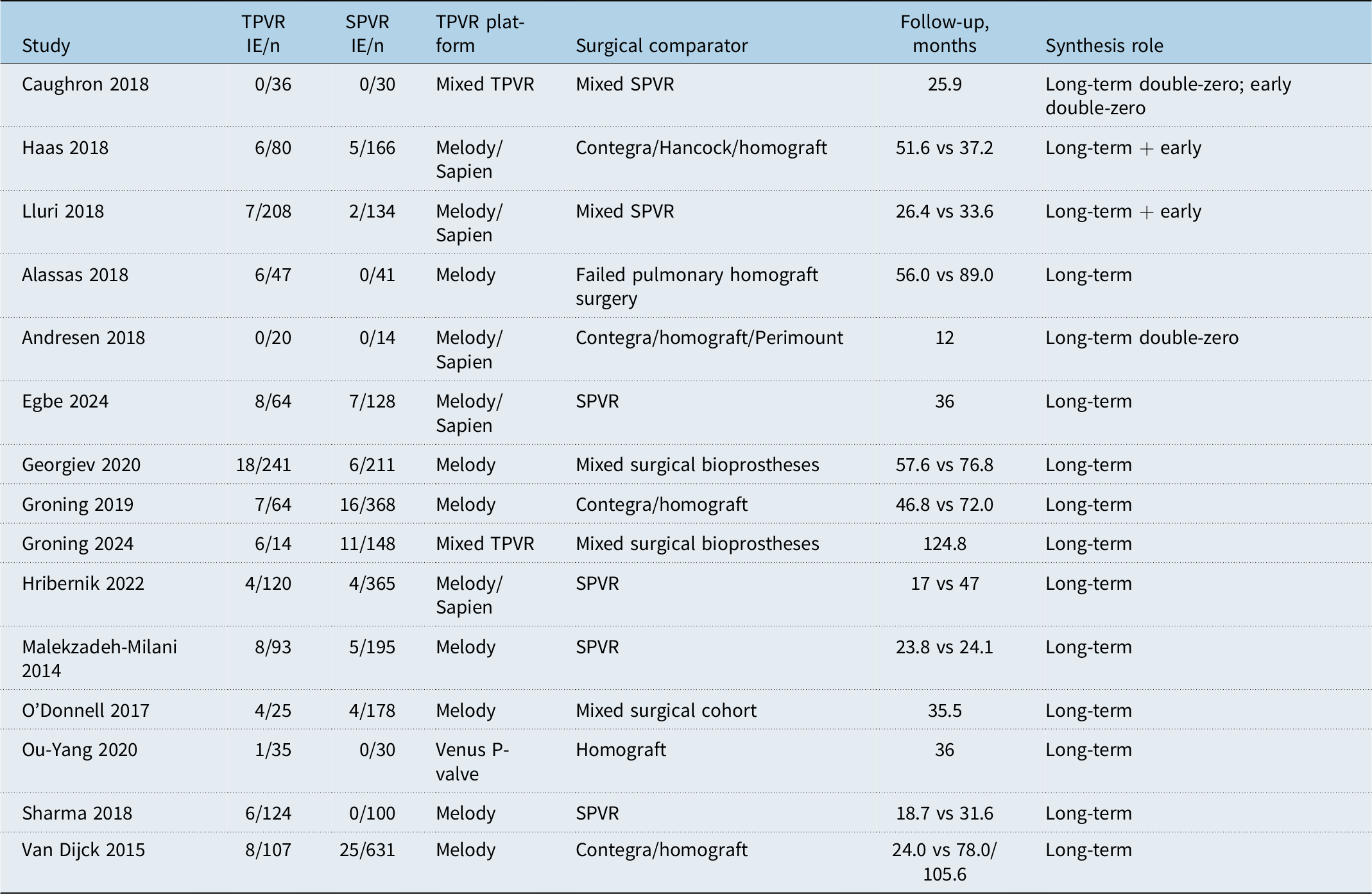
All included studies were observational. Surgical comparator groups were heterogeneous and included homografts, Contegra conduits, bioprosthetic valves, and mixed surgical cohorts. Transcatheter cohorts consisted predominantly of Melody valves, with smaller numbers of Sapien and other platforms. Follow-up ranged from approximately 12 months to more than 10 years. Detailed study characteristics are presented in Table 1.
Long-term follow-up infective endocarditis extraction table

Table 1. Long description
A table comparing infective endocarditis extraction across different studies. The table has 13 rows and 7 columns. Column headers are Study, TPVR IE/n, SPVR IE/n, TPVR platform, Surgical comparator, Follow-up, months, and Synthesis role. Row 1: Study, Caughron 2018; TPVR IE/n, 0/36; SPVR IE/n, 0/30; TPVR platform, Mixed TPVR; Surgical comparator, Mixed SPVR; Follow-up, months, 25.9; Synthesis role, Long-term double-zero; early double-zero. Row 2: Study, Haas 2018; TPVR IE/n, 6/80; SPVR IE/n, 5/166; TPVR platform, Melody/Sapien; Surgical comparator, Contegra/Hancock/homograft; Follow-up, months, 51.6 vs 37.2; Synthesis role, Long-term + early. Row 3: Study, Lluri 2018; TPVR IE/n, 7/208; SPVR IE/n, 2/134; TPVR platform, Melody/Sapien; Surgical comparator, Mixed SPVR; Follow-up, months, 26.4 vs 33.6; Synthesis role, Long-term + early. Row 4: Study, Alassas 2018; TPVR IE/n, 6/47; SPVR IE/n, 0/41; TPVR platform, Melody; Surgical comparator, Failed pulmonary homograft surgery; Follow-up, months, 56.0 vs 89.0; Synthesis role, Long-term. Row 5: Study, Andresen 2018; TPVR IE/n, 0/20; SPVR IE/n, 0/14; TPVR platform, Melody/Sapien; Surgical comparator, Contegra/homograft/Perimount; Follow-up, months, 12; Synthesis role, Long-term double-zero. Row 6: Study, Egbe 2024; TPVR IE/n, 8/64; SPVR IE/n, 7/128; TPVR platform, Melody/Sapien; Surgical comparator, SPVR; Follow-up, months, 36; Synthesis role, Long-term. Row 7: Study, Georgiev 2020; TPVR IE/n, 18/241; SPVR IE/n, 6/211; TPVR platform, Melody; Surgical comparator, Mixed surgical bioprostheses; Follow-up, months, 57.6 vs 76.8; Synthesis role, Long-term. Row 8: Study, Groning 2019; TPVR IE/n, 7/64; SPVR IE/n, 16/368; TPVR platform, Melody; Surgical comparator, Contegra/homograft; Follow-up, months, 46.8 vs 72.0; Synthesis role, Long-term. Row 9: Study, Groning 2024; TPVR IE/n, 6/14; SPVR IE/n, 11/148; TPVR platform, Mixed TPVR; Surgical comparator, Mixed surgical bioprostheses; Follow-up, months, 124.8; Synthesis role, Long-term. Row 10: Study, Hribernik 2022; TPVR IE/n, 4/120; SPVR IE/n, 4/365; TPVR platform, Melody/Sapien; Surgical comparator, SPVR; Follow-up, months, 17 vs 47; Synthesis role, Long-term. Row 11: Study, Malekzadeh-Milani 2014; TPVR IE/n, 8/93; SPVR IE/n, 5/195; TPVR platform, Melody; Surgical comparator, SPVR; Follow-up, months, 23.8 vs 24.1; Synthesis role, Long-term. Row 12: Study, O’Donnell 2017; TPVR IE/n, 4/25; SPVR IE/n, 4/178; TPVR platform, Melody; Surgical comparator, Mixed surgical cohort; Follow-up, months, 35.5; Synthesis role, Long-term. Row 13: Study, Ou-Yang 2020; TPVR IE/n, 1/35; SPVR IE/n, 0/30; TPVR platform, Venus P-valve; Surgical comparator, Homograft; Follow-up, months, 36; Synthesis role, Long-term. Row 14: Study, Sharma 2018; TPVR IE/n, 6/124; SPVR IE/n, 0/100; TPVR platform, Melody; Surgical comparator, SPVR; Follow-up, months, 18.7 vs 31.6; Synthesis role, Long-term. Row 15: Study, Van Dijk 2015; TPVR IE/n, 8/107; SPVR IE/n, 25/631; TPVR platform, Melody; Surgical comparator, Contegra/homograft; Follow-up, months, 24.0 vs 78.0/105.6; Synthesis role, Long-term.
IE = infective endocarditis; SPVR = surgical pulmonary valve replacement; TPVR = transcatheter pulmonary valve replacement.
Long-term infective endocarditis
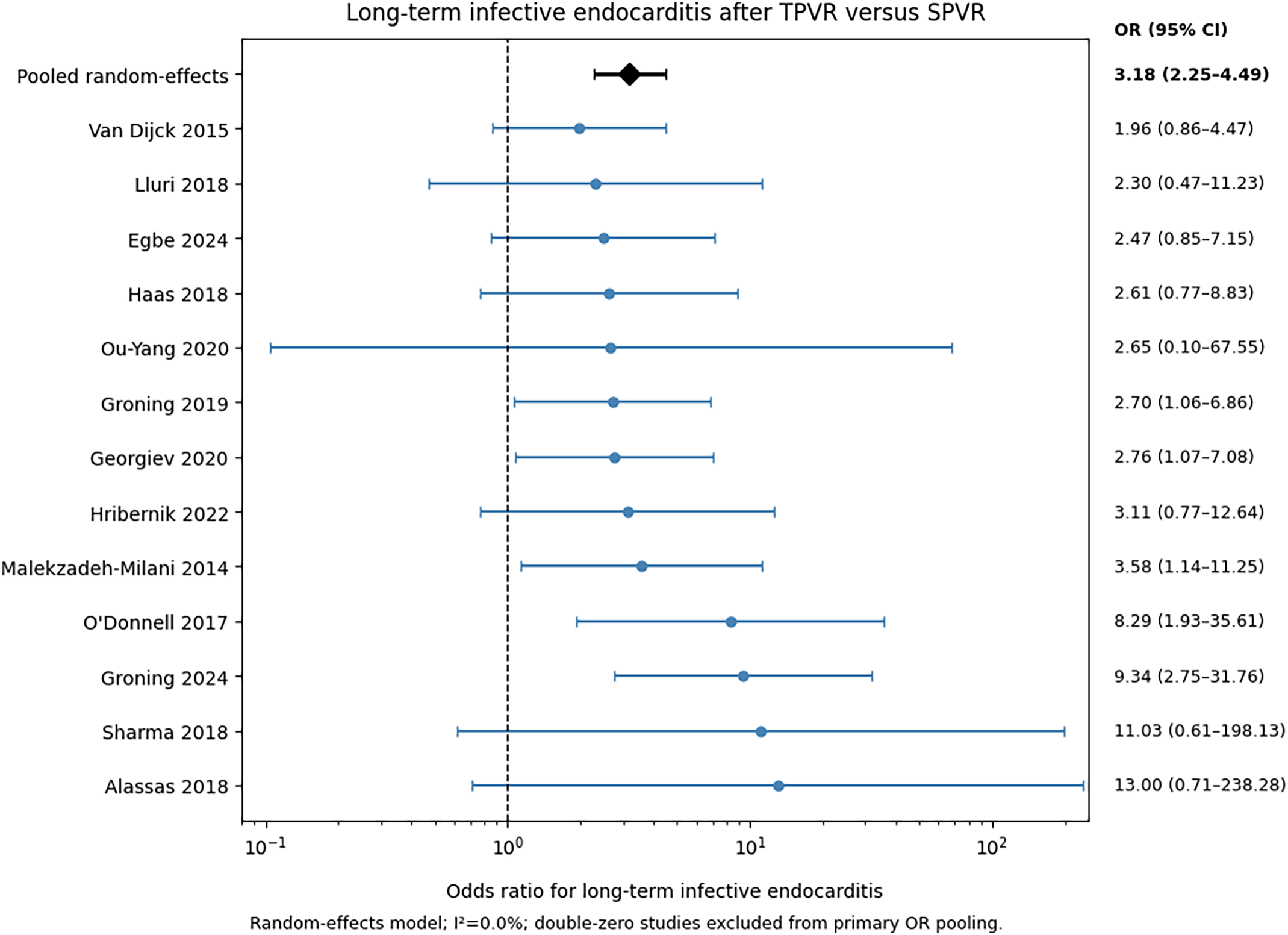
In the primary long-term analysis, transcatheter pulmonary valve replacement was associated with a significantly higher risk of infective endocarditis than surgical pulmonary valve replacement (odds ratio 3.18, 95% confidence interval 2.25–4.49; I 2 = 0.0%; Figure 1), indicating negligible between-study heterogeneity.
Random-effects meta-analysis of long-term infective endocarditis after TPVR versus SPVR. Forest plot showing study-level and pooled odds ratios (ORs) for long-term infective endocarditis (IE) following TPVR compared with SPVR. Studies with zero events in both groups were excluded from the primary relative-effect analysis. TPVR was associated with significantly higher long-term IE risk than SPVR (OR 3.18, 95% confidence interval [CI] 2.25–4.49), with negligible between-study heterogeneity (I 2 = 0.0%). Squares represent study-specific effect estimates, horizontal lines indicate 95% CIs, and the diamond represents the pooled random-effects estimate.

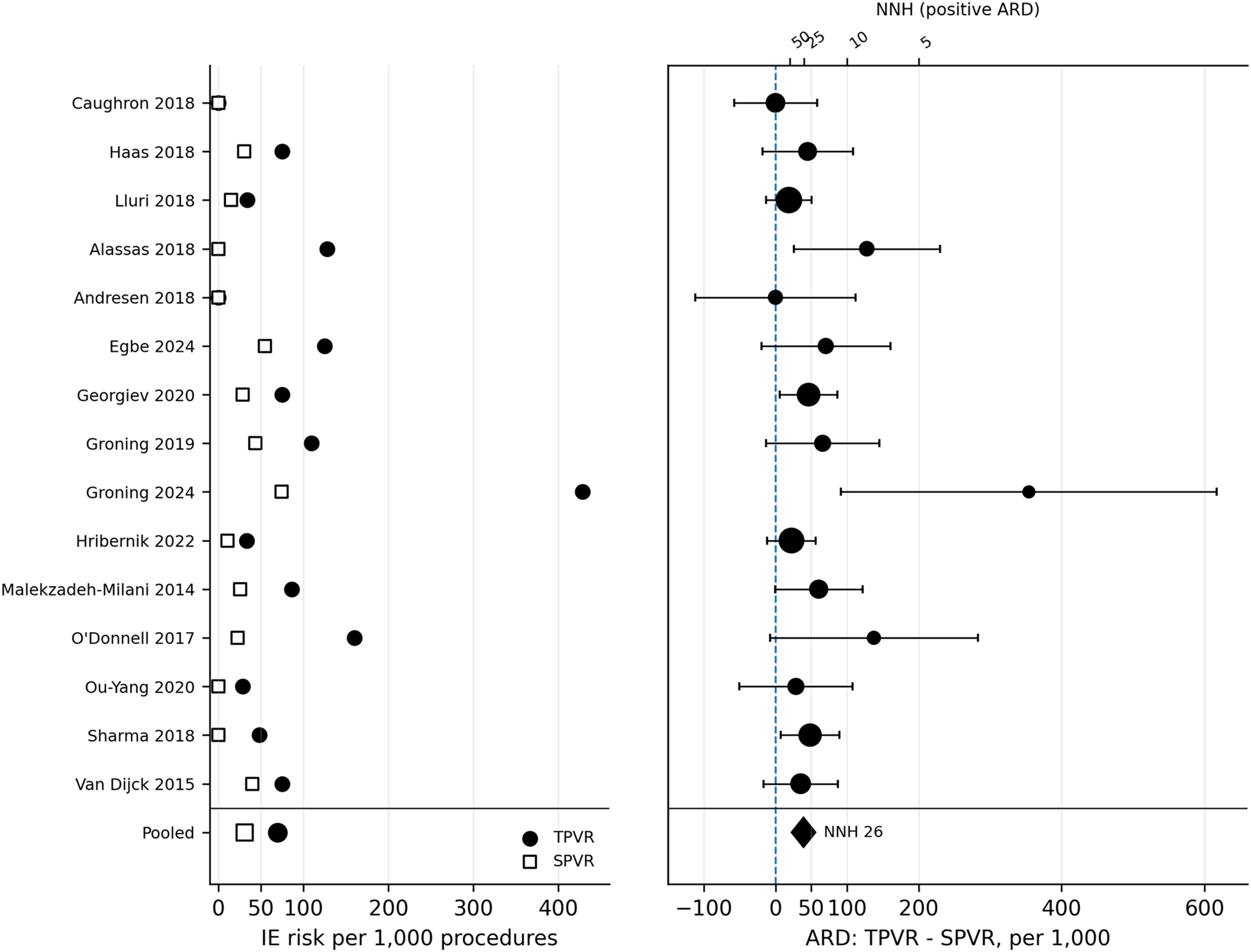
On the absolute scale, infective endocarditis occurred in 89 of 1,278 patients after transcatheter pulmonary valve replacement (69.6 cases per 1,000 procedures) and in 85 of 2,739 patients after surgical pulmonary valve replacement (31.0 cases per 1,000 procedures). The pooled absolute risk difference was +39.2 cases per 1,000 procedures (95% confidence interval 22.7–55.6), corresponding to approximately one additional infective endocarditis event for every 26 transcatheter pulmonary valve replacement procedures compared with surgical pulmonary valve replacement (number needed to harm 26, 95% CI 18–44). The pooled absolute risk difference confidence interval did not cross zero, supporting the clinical interpretability of the derived number needed to harm estimate. Absolute risks and pooled absolute risk differences are illustrated in Figure 2.
Absolute infective endocarditis risks and absolute risk difference after TPVR versus SPVR. Absolute risks are presented as cumulative IE cases per 1,000 procedures over study-reported follow-up. The left panel shows study-level absolute risks after TPVR and SPVR. The right panel shows pooled and study-level absolute risk differences (ARDs; TPVR − SPVR) with 95% confidence intervals (CIs) and the corresponding number needed to harm (NNH) scale. Positive ARD values indicate higher cumulative IE risk after TPVR. Point size reflects inverse-variance weight in the random-effects absolute-risk model.

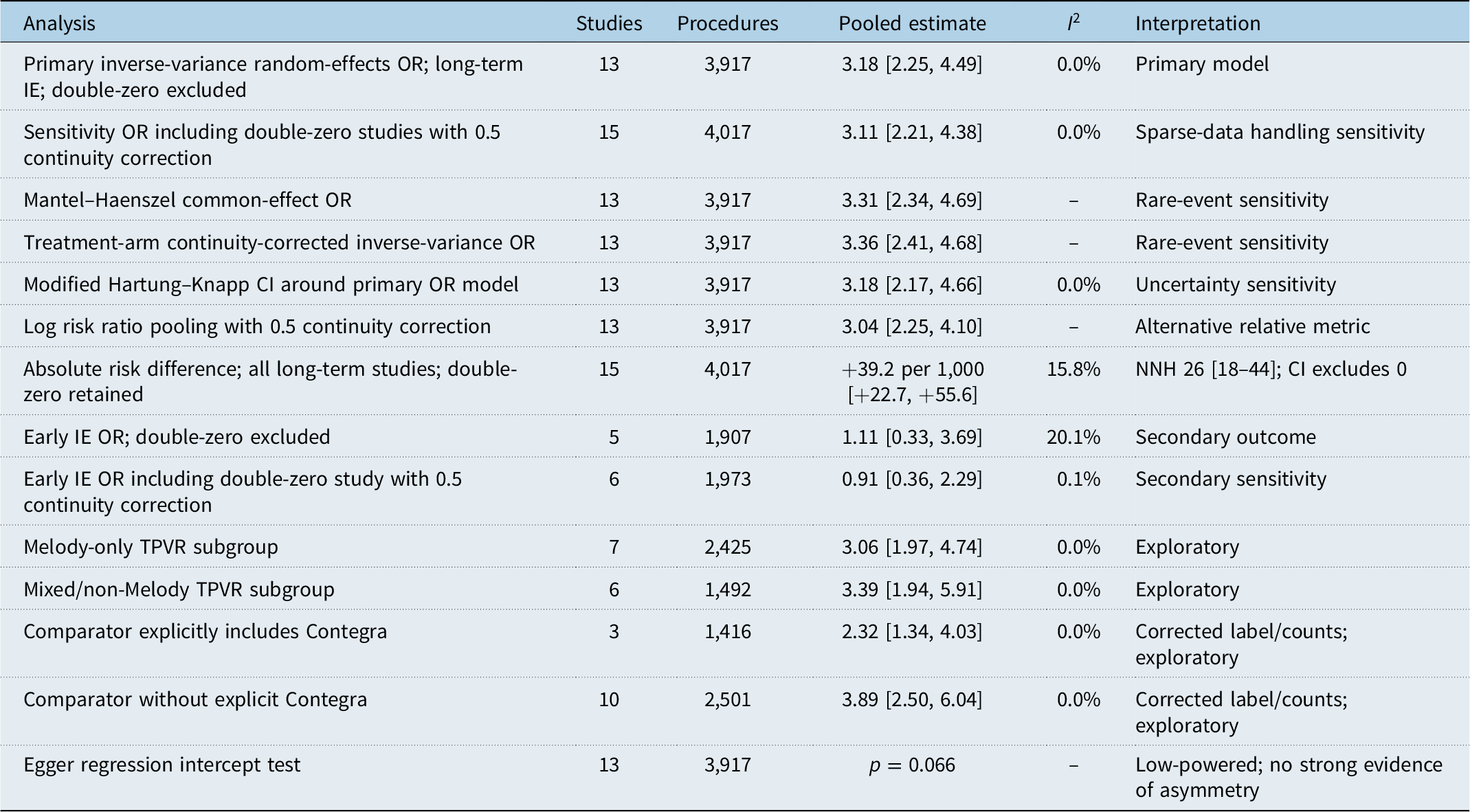
Sensitivity analyses yielded highly consistent results across alternative statistical models. Inclusion of studies with zero events in both groups produced a similar pooled estimate (odds ratio 3.11, 95% confidence interval 2.21–4.38), supporting the robustness of the primary findings. Leave-one-out analyses did not materially alter the direction or magnitude of the association. The 95% prediction interval for the pooled absolute risk difference remained positive, suggesting persistence of the excess risk across a range of plausible future settings. Detailed robustness analyses are summarised in Table 2.
Main quantitative findings and robustness analyses

Table 2. Long description
A table with 15 rows and 6 columns. The columns are labeled Analysis, Studies, Procedures, Pooled estimate, I squared, and Interpretation. The table presents various analyses of studies, including primary and sensitivity models, rare-event sensitivity, uncertainty sensitivity, alternative relative metric, absolute risk difference, secondary outcome, secondary sensitivity, exploratory, and Egger regression intercept test. Each row provides details on the number of studies, procedures, pooled estimate with confidence intervals, I squared value, and interpretation. Notable entries include the primary model with an odds ratio of 3.18, rare-event sensitivity models, and exploratory analyses for different subgroups.
CI = confidence interval; IE = infective endocarditis; NNH = number needed to harm; OR = odds ratio; SPVR = surgical pulmonary valve replacement; TPVR = transcatheter pulmonary valve replacement.
Early infective endocarditis
Early infective endocarditis did not differ significantly between transcatheter pulmonary valve replacement and surgical pulmonary valve replacement (odds ratio 1.11, 95% confidence interval 0.33–3.69; I 2 = 20.1%). The pooled absolute risk difference was −2.9 cases per 1,000 procedures (95% confidence interval −14.5 to +8.7). Because the confidence interval crossed zero, no clinically meaningful number needed to harm could be derived.
The early analysis was limited by the small number of events and heterogeneous definitions of early infective endocarditis across studies. Forest plot results are shown in Supplementary Figure S2, and study-level data are summarised in Supplementary Table S1.
Subgroup and qualitative analyses
Exploratory subgroup analyses, based on aggregate study-level characteristics, suggested that the excess long-term infective endocarditis signal persisted across transcatheter valve platforms and surgical comparator materials (Table 2 and Supplementary Table S2). These analyses were ecological and underpowered; therefore, they should be interpreted as contextual and hypothesis-generating rather than causal. Studies including Contegra-containing surgical comparator groups showed lower relative effect estimates, supporting the importance of prosthetic material context when interpreting infective endocarditis risk. However, subgroup findings should be interpreted cautiously because of ecological subgrouping and limited sample sizes.
The time-varying analysis reported by Fischer et al. (2024) Reference Fischer, Enders, Baumgartner, Diller and Kaleschke30 could not be incorporated into the primary meta-analysis because event counts were not extractable. Nevertheless, the study provided important temporal information, demonstrating no significant increase in early infective endocarditis risk but substantially higher hazards during later follow-up after transcatheter pulmonary valve replacement compared with surgical pulmonary valve replacement. These findings are consistent with the temporal pattern suggested by the pooled analyses, in which no clear excess was observed early after intervention whereas risk accumulated during longer follow-up.
Risk of bias and certainty of evidence
Most studies were judged to be at serious overall risk of bias according to the Risk Of Bias In Non-randomized Studies of Interventions framework, primarily because treatment allocation was influenced by anatomy, previous interventions, and device suitability.
According to the GRADE framework, certainty of evidence was low for long-term infective endocarditis and very low for early infective endocarditis (Supplementary Table S3). Although the long-term association remained highly consistent across studies and sensitivity analyses, certainty was limited by the observational design and potential residual confounding.
Discussion
The present study demonstrates a consistent association between transcatheter pulmonary valve replacement and increased long-term infective endocarditis risk compared with surgical pulmonary valve replacement. Compared with surgical pulmonary valve replacement, transcatheter pulmonary valve replacement was associated with approximately threefold higher cumulative infective endocarditis odds (odds ratio 3.18, 95% confidence interval 2.25–4.49) and a clinically meaningful cumulative excess risk. The pooled absolute risk difference was +39.2 infective endocarditis diagnoses per 1,000 procedures over study-reported follow-up, corresponding to one additional infective endocarditis diagnosis for approximately every 26 transcatheter pulmonary valve replacement procedures compared with surgical pulmonary valve replacement. Importantly, this effect remained highly consistent despite differences in anatomy, indication, device platform, comparator material, and follow-up duration, with negligible statistical heterogeneity (I 2 = 0.0%).
The observed association should not be interpreted as evidence of a purely procedural mechanism. Early infective endocarditis did not differ significantly between treatment strategies, suggesting that the excess long-term risk is unlikely to be explained exclusively by peri-procedural mechanisms. Furthermore, attenuation of the relative effect in studies incorporating Contegra-containing surgical comparator groups suggests that prosthetic material influences the observed contrast between treatment strategies. On the absolute scale, however, clinically relevant excess risk remained evident even in these settings. Finally, elevated pooled effects were observed in both Melody-dominated and mixed-platform cohorts, suggesting that the association extends beyond a single transcatheter device while remaining compatible with device-specific modulation. Accordingly, the primary conclusion of this review remains the overall long-term infective endocarditis comparison between transcatheter pulmonary valve replacement and surgical pulmonary valve replacement. The material-context analyses are secondary and hypothesis-generating. They help explain why the aggregate comparison should not be interpreted as a pure access-route effect, but they do not prove substrate-specific causality and should not be used as stand-alone evidence to rank valve platforms in individual patients.
Relationship to previous evidence
The present findings should be interpreted alongside recent comparative transcatheter pulmonary valve replacement-versus-surgical pulmonary valve replacement meta-analyses. Chongmelaxme et al. Reference Chongmelaxme, Kua, Amornvetchayakul, Chawviriyathep and Kerdklinhom6 and Ahmed et al. Reference Ahmed, Ismayl, El-Shaer, Aboeata and Goldsweig7 both reported higher rates of infective endocarditis following transcatheter pulmonary valve replacement. However, in those analyses, infective endocarditis represented one component of a broader comparison of clinical outcomes.
The current review was designed to address a more focused clinical question. Rather than treating infective endocarditis as a secondary endpoint within a larger outcome framework, this study specifically evaluated the magnitude, timing, and clinical interpretation of infective endocarditis risk. Several features distinguish the present analysis from previous reviews, including separation of early and late infective endocarditis, explicit reporting of study-level event data, translation of relative effects into absolute risk differences and number needed to harms, extensive sparse-event sensitivity analyses, assessment of device-material context, and incorporation of time-varying evidence not readily captured by conventional cumulative pooling.
Consequently, the interpretation shifts from a simple statement that transcatheter pulmonary valve replacement is associated with higher infective endocarditis odds towards a broader risk framework in which prosthetic material, conduit substrate, residual haemodynamics, and patient selection likely contribute to the observed association.
The broader literature supports a material-context interpretation of the present findings. Registry-based analyses have demonstrated higher infective endocarditis rates among bovine jugular vein-containing prostheses, including both Melody valves and Contegra conduits, than among homografts. Reference Groning, Tahri, Sondergaard, Helvind, Ersboll and Orbaek Andersen1,Reference Stammnitz, Knauth and Hörer2 Although crude comparisons frequently suggest higher risk with Melody than with Sapien valves, adjusted analyses increasingly emphasise the importance of residual right ventricular outflow tract gradients, previous infective endocarditis, conduit anatomy, and patient-specific characteristics. Reference Stammnitz, Knauth and Hörer2–Reference Lourtet-Hascoet, Malekzadeh-Milani and Houeijeh5
The time-varying analysis reported by Fischer et al. Reference Fischer, Enders, Baumgartner, Diller and Kaleschke30 further supports the concept that excess risk emerges predominantly during later follow-up rather than immediately after implantation. This observation is consistent with the present pooled analyses, which demonstrated no convincing early excess but a substantial cumulative long-term signal.
These observations have important implications for contemporary right ventricular outflow tract management. The available evidence suggests that infective endocarditis risk should not be viewed solely through a transcatheter-versus-surgical lens. Instead, decision-making should incorporate prosthetic material, conduit substrate, expected residual gradient, prior infective endocarditis history, coronary anatomy, and anticipated haemodynamic performance. The current synthesis supports such a risk-adapted framework but does not identify a single causal pathway responsible for the observed association.
Clinical implications
Although transcatheter pulmonary valve replacement was associated with a higher long-term infective endocarditis risk, this finding should be considered alongside the established clinical benefits of transcatheter therapy. Rather, the results support careful patient selection and continued attention to preventive and surveillance strategies. Current guideline recommendations emphasise dental prophylaxis for prosthetic valves, lifelong oral hygiene, elimination of active dental infection before elective valve implantation, and prompt investigation of unexplained fever or bacteraemia. Reference Delgado, Marsan and de Waha31,Reference Wilson, Gewitz and Lockhart32 In patients with pulmonary prostheses, increasing Doppler gradients should not be dismissed as minor technical findings, as they may represent early evidence of prosthetic dysfunction, obstructive vegetations, or occult infection.
The clinical decision is also not equivalent to minimising infective endocarditis risk alone. In selected patients, transcatheter pulmonary valve replacement may defer a third, fourth, or fifth redo sternotomy and preserve future surgical options; in others, a surgical homograft or non-bovine jugular vein substrate may be preferable when prior infective endocarditis, expected residual gradient, conduit anatomy, or device-material considerations make late infection risk less acceptable. This trade-off is the reason the present review reports both relative effects and cumulative absolute risk difference/number needed to harm rather than presenting the OR as a complete decision metric.
The present findings also support careful attention to residual right ventricular outflow tract obstruction. Although the available evidence remains observational, multiple registries and device-specific analyses consistently identify residual gradients, previous infective endocarditis, and bovine jugular vein-containing prostheses as markers of increased risk. These factors should therefore be incorporated into procedural planning and long-term follow-up.
The present review was designed to evaluate infective endocarditis occurrence rather than subsequent management. Comparative studies did not consistently report antibiotic duration, medical treatment success, valve explantation, recurrent infection, or survival after infective endocarditis, precluding quantitative synthesis of these clinically important outcomes. Contemporary management increasingly individualises treatment, with selected patients managed medically, whereas others require repeat intervention. These outcomes remain important priorities for future comparative studies and patient-level meta-analyses.
What is new
Previous meta-analyses established that transcatheter pulmonary valve replacement is associated with a higher incidence of infective endocarditis than surgical pulmonary valve replacement. The present review extends that evidence in several important ways.
First, it demonstrates that the excess signal is predominantly a long-term phenomenon rather than an immediately post-procedural complication. Second, it translates relative effects into clinically interpretable absolute-risk measures, identifying an excess of approximately 39 infective endocarditis diagnoses per 1,000 procedures and a number needed to harm of 26. Third, it highlights the importance of prosthetic material and conduit context, emphasising that interpretation of infective endocarditis risk should not rely solely on a transcatheter-versus-surgical dichotomy. Finally, incorporation of time-varying evidence suggests that conventional cumulative analyses may underestimate important temporal patterns in risk evolution.
What is next
Future studies should move beyond procedure-based comparisons and focus on patient-level determinants of infective endocarditis risk, including prosthetic material, conduit substrate, residual right ventricular outflow tract gradients, prior infective endocarditis, and age at intervention.
Individual-participant-data meta-analyses and patient-time analyses would provide a more precise understanding of when excess risk emerges and how it interacts with repeated interventions and competing risks. Additional comparative data are also needed for contemporary Sapien-based transcatheter pulmonary valve replacement strategies, as much of the current literature remains dominated by Melody valve experience.
Ultimately, future research should aim to identify which patients derive the greatest benefit from transcatheter therapy while maintaining the lowest achievable infective endocarditis risk.
Limitations
Several limitations should be acknowledged. First, all included studies were observational, and residual confounding by indication remains unavoidable. Treatment allocation in right ventricular outflow tract practice is strongly influenced by anatomy, conduit suitability, prior procedures, coronary relationships, and institutional preferences.
Second, the review was not prospectively registered, and the archived search package did not contain auditable title-screening counts, duplicate counts, or complete full-text exclusion logs. Although these limitations are reported transparently, they reduce methodological certainty.
Third, follow-up duration differed substantially across studies, and cumulative odds ratios do not account for patient-time exposure. Consequently, pooled estimates should not be interpreted as incidence-rate ratios. Fourth, definitions of early infective endocarditis varied among studies. Fifth, subgroup analyses were ecological and underpowered and should therefore be regarded as hypothesis-generating rather than causal. Finally, aggregate reports did not consistently permit stratification of absolute risk differences or number needed to harms according to procedural era, patient age, or centre volume. The available comparative reports also did not provide consistent post-infective endocarditis management data, including antibiotic duration, valve explantation, redo intervention, recurrence, mortality after infective endocarditis, or survival after multiple redo sternotomies. These outcomes are central to shared decision-making but could not be pooled without individual-patient data or more granular event-level reporting.
Despite these limitations, the principal long-term effect estimate remained highly consistent and robust across multiple sensitivity analyses, including alternative sparse-event approaches, leave-one-out analyses, and prediction-interval assessments.
Conclusions
Across comparative observational studies, transcatheter pulmonary valve replacement was associated with a reproducibly higher long-term risk of infective endocarditis than surgical pulmonary valve replacement, whereas evidence regarding early post-procedural infective endocarditis remained inconclusive. The cumulative absolute translation is clinically tangible: approximately 39 additional infective endocarditis diagnoses per 1,000 procedures over study-reported follow-up, corresponding to one additional infective endocarditis diagnosis for every 26 transcatheter pulmonary valve replacement procedures.
The observed signal is consistent and clinically relevant but is best interpreted as reflecting the combined influence of prosthetic material, conduit substrate, residual haemodynamics, and patient selection rather than catheter access alone. Contemporary right ventricular outflow tract management should therefore remain risk-adapted, material-conscious, and attentive to residual gradients and long-term surveillance.
Supplementary material
The supplementary material for this article can be found at https://doi.org/10.1017/S104795112612438X.
Acknowledgements
None.
Financial support
The authors report no external funding for this work.
Competing interests
The authors declare no conflicts of interest relevant to the content of this manuscript.
Ethical standard
This study is a systematic review of previously published data. No new patient data were collected, and no identifiable individual information was accessed. Therefore, ethical approval and informed consent were not required. Extracted datasets, analytic code, and digitised survival data are available from the corresponding author upon reasonable request.