Introduction
Often, amnestic single or amnestic multiple domain MCI corresponds to prodromal AD. In patients with MCI, cognitive impairment does not meet the criteria for dementia as their general intellectual functioning and daily life activities remain intact for some time (Winblad et al., Reference Winblad, Palmer and Kivipelto2004).
In studies examining the course of amnestic MCI, the rates of conversion to dementia vary depending on the follow-up period and conceptual definition: 12% per year for 4 years (Petersen, Reference Petersen2004) and 23% across two years (Busse et al., Reference Busse, Bischkopf, Riedel-Heller and Angermeyer2003). This rate remains comparable with other studies that found that only one-third of individuals with amnestic MCI have an increased risk of AD (Bozoki et al., Reference Bozoki, Giordani, Heidebrink, Berent and Foster2001), whereas others improve, reverting to a normal level of cognitive functioning over a two-year period (Ganguli et al., Reference Ganguli, Dodge, Shen and DeKosky2004). Other investigators showed that 34%–100% of individuals with MCI develop AD over 4 to 5 years (Bennett et al., Reference Bennett2002) while across 9.5 years the conversion is 100% (Morris et al., Reference Morris, Storandt and Miller2001).
Different criteria have been used to define the features that may predict progression to dementia. In particular, researchers have focused on decline in episodic memory because it is known to be affected earliest and most profoundly in AD (Bozoki et al., Reference Bozoki, Giordani, Heidebrink, Berent and Foster2001). Moreover, neuroimaging studies of MCI individuals suggest that abnormalities in the temporal, parietal, and posterior cingulate regions are most predictive of progression to dementia (Anchisi et al., Reference Anchisi, Borroni and Franceschi2005).
A number of factors may influence the progression from MCI to AD (e.g. Monastero et al., Reference Monastero, Palmer, Qiu, Winblad and Fratiglioni2007; Ritchie et al., Reference Ritchie2010). BPS may be among them. They include depression, anxiety, agitation, apathy, irritability, aberrant motor behavior, or eating disorders, among others. BPS prevalence ranges from 43% to 59% in people with MCI (Barnes et al., Reference Barnes, Alexopoulos, Lopez, Williamson and Yaffe2006) and affects 50%–80% of persons with dementia (Lyketsos et al., Reference Lyketsos, Lopez, Jones, Fitzpatrick, Breitner and DeKosky2002).
Among the different BPS, apathy seems to be increasingly common as dementia worsens (Teng et al., Reference Teng, Lu and Cummings2007; Pocnet et al., Reference Pocnet, Rossier, Antonietti and von Gunten2013). The role of depressive symptoms in the progression of MCI to AD is controversial (Holtzer et al., Reference Holtzer, Tang, Devanand, Albert and Wegesin2003; Modrego and Ferrandez, Reference Modrego and Ferrandez2004; Rozzini et al., Reference Rozzini, Chilovi, Trabucchi and Padovani2005; Nguyen and Zonderman, Reference Nguyen and Zonderman2006), but higher levels of depressive symptoms were associated with an increased incidence rate of MCI (Barnes et al., Reference Barnes, Alexopoulos, Lopez, Williamson and Yaffe2006; Geda et al., Reference Geda, Knopman and Mrazeck2006; Monastero et al., Reference Monastero, Mangialasche, Camarda, Ercolani and Camarda2009) as well as more rapid cognitive decline (Mega et al., Reference Mega, Cummings, Fiorello and Gornbein1996; Yaffe et al., Reference Yaffe, Blackwell, Gore, Sands, Reus and Browner1999). Each additional anxiety symptom almost doubled the risk of conversion from MCI to AD (Palmer et al., Reference Palmer, Berger, Monastero, Winblad, Bäckman and Fratiglioni2007). However, other studies have found almost no correlation between BPS and the level of cognitive impairment (Rozzini et al., Reference Rozzini, Chilovi, Trabucchi and Padovani2005; Lam et al., Reference Lam, Leung, Lui, Leung and Chiu2006).
Thus, the role of specific BPS on cognitive changes in patients with early cognitive impairment remains unclear. Hence, we wished to evaluate the possible influence of changes in specific BPS, in particular depression and apathy, on further cognitive decline in MCI and AD patients as compared to cognitively healthy individuals.
Methods
Participants
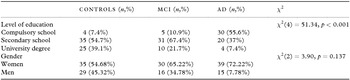
The total sample consisted of 164 participants including 46 patients with MCI (amnestic single and multiple MCI) (30 women and 16 men), 54 patients at an early stage of AD dementia (39 women and 15 men), and 64 control participants without cognitive disorders (35 women and 29 men). There was no significant difference between the groups according to gender (χ2 (2) = 3.97, p = 0.137). However, the level of education differed in the three groups (χ2(4) = 51.34, p < 0.001) (Table 1).
Differences between the three groups according to level of education and gender variables

Note. n = number of participants; % = the differences between the three groups as a percentage.
Materials and procedure
Assessment of behavioral and psychological symptoms
The Neuropsychiatric Inventory (NPI-Q) (Cummings, Reference Cummings1997) was used to define the presence and severity of BPS. The NPI-Q has wide acceptance as a measure of BPS associated with cognitive disorders and good reliability and construct validity (Cummings and McPherson, Reference Cummings and McPherson2001). It rates symptoms in 12 domains: delusions, hallucinations, agitation, depression, anxiety, euphoria, apathy, disinhibition, irritability, aberrant motor behavior, sleep disturbance, and eating disorders. Each BPS is assessed according to a three-level severity scale ranging from 1 to 3, yielding a maximal total NPI score of 36. The NPI is a fully structured informant-based interview used at baseline and at two-year follow-up.
Assessment of cognitive status and daily living functioning
Initial and follow-up cognitive functioning was evaluated using the Mini-Mental State Examination (MMSE; Folstein et al., Reference Folstein, Folstein and McHugh1975) and the Informant Questionnaire on Cognitive Decline (IQCODE; Jorm and Jacomb, Reference Jorm and Jacomb1989). The MMSE permits a quick screening of the patient's global cognitive functioning level. The IQCODE evaluates a subject's cognitive and functional level change. It is a 16-item scale filled out by a relative. Lower MMSE scores and higher IQCODE scores indicate cognitive dysfunction.
Daily living was evaluated by family members twice, two years apart, using the ADL scale (Katz, Reference Katz1998) and the Instrumental Activities of Daily Living scale (IADL) for which good reliability and construct validity have been reported (Lawton and Brody, Reference Lawton and Brody1969). The ADL is a hierarchical scale including six activities: bathing, dressing, going to the toilet, transferring, continence, and feeding. The IADL is an eight-item scale evaluating the patient's dependency level for activities including shopping, using the public transportation system, cooking, house cleaning, doing laundry, using the phone, taking medication, or managing a budget. Low ADL and IADL scores indicate reduced or lost autonomy.
Procedure
The individuals with MCI and AD were recruited within the geriatric and gerontopsychiatric structures of the university hospitals of Lausanne and Geneva. The control participants were recruited through newspaper announcements and word of mouth. All the patients had a comprehensive medical, psychiatric, neuropsychological, and psychosocial evaluation. Most often, the patients also had a cerebral magnetic resonance imaging as well as a number of standard laboratory tests. This investigation yielded AD diagnosis according to the International Classification of Diseases, tenth edition (Word Health Organization, 1993) as well as the National Institute of Neurological and Communicative Disorders and Stroke and the Alzheimer's Disease and Related Disorders Association (NINCDS–ADRDS) criteria (McKhann, Reference McKhann, Drachman, Folstein, Katzman, Price and Stadlan1984). Only patients with a Clinical Dementia Rating scale (CDR) score of 0.5 for MCI and 1 for AD were included (Morris, Reference Morris1993). Regarding participants with MCI, only those with amnestic single and multiple domain forms were taken into account. The diagnosis of MCI was clinical and based on the criteria proposed by Winblad et al., Reference Winblad, Palmer and Kivipelto2004. MCI was diagnosed in individuals with mild cognitive decline as corroborated by an informant and confirmed by a neuropsychological examination including the MMSE (Folstein et al., Reference Folstein, Folstein and McHugh1975), the spontaneous and cued recall 48-items task (Buschke, Reference Buschke1984) to test episodic memory, while to assess executive functions, we used three tests proposed by the GREFEX manual (Godefroy et al., Reference Godefroy2010): a verbal fluency task (categorical and literal fluency in 2 minutes), a flexibility task (the Trail Making Test), and an inhibition task (the Stroop test). Only individuals who did not satisfy the NINCDS–ADRDA criteria for AD or other types of dementia were selected for MCI diagnosis (McKhann et al., Reference McKhann, Drachman, Folstein, Katzman, Price and Stadlan1984). Only patients accompanied by their family members (adult child or spouse caregivers) and older than 55 years were included. Physical illness and major psychiatric disorders that could put the patient at risk such as psychotic illness, bipolar disorder or alcohol dependence were exclusion criteria. Furthermore, we wished to exclude those with elevated anxiety and depression scores as defined by a score equal to or higher than ten on either of the two sub-scales of the Hospital Anxiety and Depression scale (HAD, Zigmond and Snaith, Reference Zigmond and Snaith1983) to rule out as much as possible any major concomitant affective comorbidity deserving a separate affective diagnosis. In addition, school education of less than five years and consent refused by the patient or by their relative are also part of exclusion criteria.
The goals of the project were explained to the participants and their proxies. Among the patients asked to participate in the study, about half agreed to participate and signed the informed consent form, meaning that only people with a basic interest did participate. Proxies had to be family to live in the same household or nearby, to know the participant and their habits well, and to take care of their needs. In the case of mild AD patients, only the spouse or an adult child taking care of or being in contact with the participant on a daily basis were included. Other family members or professional carers may have intervened occasionally, but on a clearly minor level. Regarding MCI participants, they are still autonomous for daily activities, and the family members participating in this study declared that they are well aware of the habits of their relative. Therefore, the caregivers included were likely to be the pivotal caregivers.
Each participant completed the MMSE twice, two years apart. Their family members completed the NPIQ and the IQCODE, ADL, and IADL scales. Therefore, BPS, cognitive status, and daily living functioning in both the patients and the control participants were assessed identically.
This prospective pilot study was approved by the Ethics Committee of the Faculty of Medicine of the University of Lausanne (Protocol 85/2008). The research complies with the ethical rules of the Swiss Society for Psychology (SSP).
Statistical analysis
All analyses were performed with SPSS, Version 22, and R (R Development Core Team, 2009). Descriptive statistics were used to evaluate demographic and clinical characteristics. Then, Spearman correlations between BPS, cognitive level, daily living, and demographic variables (education, gender, and age) were calculated at the beginning (T1) and two years later (T2), and between T1 and T2.
In order to determine BPS change for each group between T1 and T2, NPI-Q variables were dichotomized as being absent (value 0) or present (value 1). The differences were then calculated between the measures at T2 and T1 (delta) for each group. Delta “−1” indicates deterioration, “0” absence of change and “+1” improvement. The Wilcoxon test was used to determine possible differences between the three groups of participants for each specific BPS. Differences regarding the changes in the total BPS scores between the three groups were determined using the Kruskal–Wallis non-parametric test and non-parametric multiple comparisons. In addition, we have adjusted for age, gender, and level of education using Poisson regressions to confirm possible differences.
To identify changes in cognitive level (MMSE, IQCODE) and daily living functioning (ADL, and IADL scales) between T2 and T1, the index change (delta) was computed for each group.
We then tried to explain the evolution of the cognitive functioning in amnestic MCI group, considering the large variability of BPS over two years in this group. For this, we used the original non-dichotomized NPI-Q variables to perform multiple regressions. The selection of the most parsimonious model was made using the step-by-step method and the AIC (Akaike Information Criterion) to assess the trade-off between the goodness of fit of the model and the complexity of the model (Akaike, Reference Akaike1974).
Results
Clinical variables of the three groups at T1 and T2
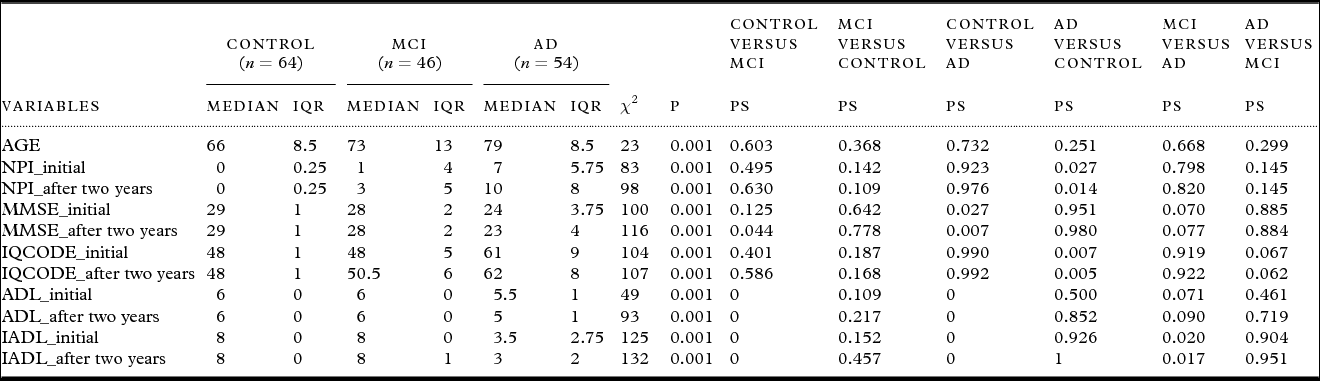
Table 2 shows the comparisons between the three groups for both the initial and follow-up assessments. For the MCI group, the total scores for ADL, IADL, and MMSE are similar at baseline and at two-year follow-up. This contrasts with the cognitive functional level perceived by their proxies that tends to worsen and with global BPS severity, which almost doubles after two years. AD patients declined for almost all clinical variables. No changes were identified in the control group between the two assessments.
Demographics and descriptive statistics
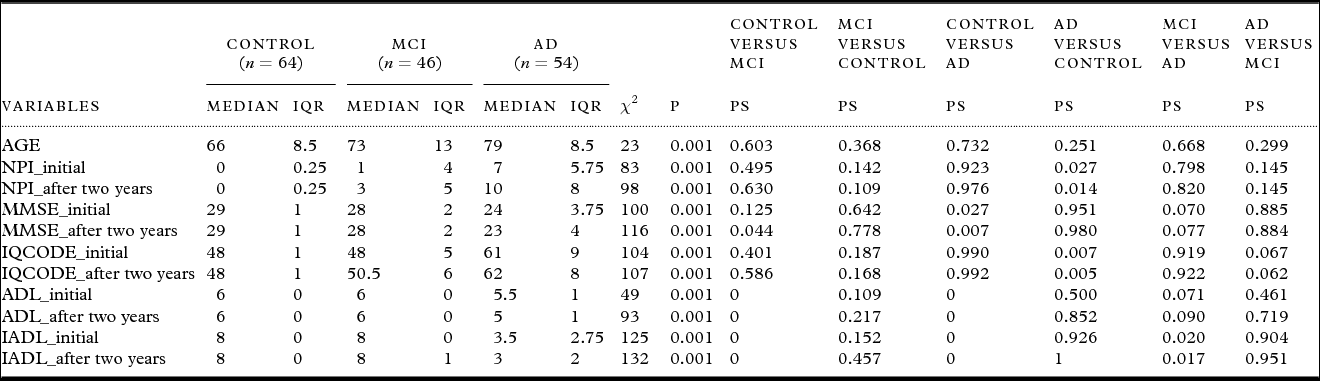
Note. IQR = interquartile range; χ2 (2) of Kruskal–Wallis test, **p < 0.001; PS = probabilities of superiority of second group.
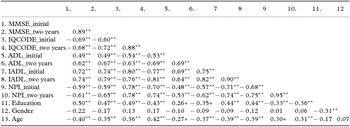
The Spearman and point-biserial correlations between age, gender, education, and total scores of BPS, cognitive level, and daily functioning are shown in Table 3. Gender had no impact on BPS, cognitive level or daily living functioning. However, several correlations between clinical outcomes obtained at either T1 or T2 and between the two assessments were associated with a high (r ≥ 0.50) or medium effect size (r ≥ 0.30). For example, the total NPI-Q and IQCODE scores correlated positively with each other, but negatively with the total scores of the MMSE, ADL, and IADL measured both initially, two years later, and between T1 and T2 (see Table 3).
Correlations between BPS, cognitive level, daily living, education, gender, and age

Note. For education and gender point-biserial correlations are presented. For other variables Spearman correlations were performed, given that the distribution of results was not normal. **p < 0.001; *p < 0.005.
Evolution of BPS, cognitive, and daily living functioning in the three groups over two years
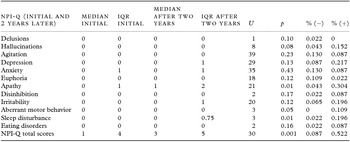
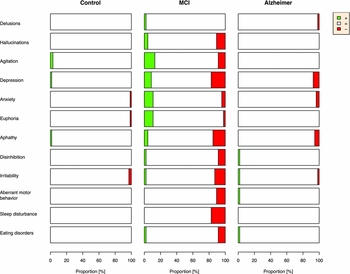
Figure 1 shows significant differences between the three groups regarding the evolution of BPS over two years (χ2 (2) = 63.201, p < 0.001), between the control and MCI groups (z = 5.806, p < 0.001), between MCI and AD patients (z = 5.031, p < 0.001), but no significant differences between the control and AD groups (z = 0.609, p = 0.542). Using Poisson regressions and having controlled for age, gender, and level of education, we found that the BPS differences were due only to the variable “group” (χ2(2) = 196.78, p < 0.001) showing that, in the MCI patients, BPS assessed at T2 were clearly distinct from those at T1 (β = 2.863, p < 0.001) as compared to the AD and control groups. Table 4 indicates that some symptoms newly occurred or worsened in the MCI group (i.e. hallucinations, depression, apathy, irritability, aberrant motor behavior, sleep disturbance, eating disorders, and total scores of symptoms). Some symptoms tended to improve slightly or to remain stable during the two years (i.e. delusions, euphoria, agitation, anxiety, disinhibition).
Evolution of BPS in participants with amnestic MCI over two years

Note. IQR = interquartile range; U = Wilcoxon Test, ***p < 0.001; **p < 0.01; *p < 0.05; % (−) = the proportion of negative differences means improvement in symptoms;% (+) = the proportion of positive differences translate into worsening symptoms; df = 46.
Differences regarding the evolution of BPS over a two-year period in three groups. Note: The colors indicate the direction of the evolution of the symptoms: green or the sign “+” indicate an improvement of scores; red or “−” means worsening; white or “=” means that no change has occurred. The values representing the percentage changes (positive or negative) are indicated in Table 4.

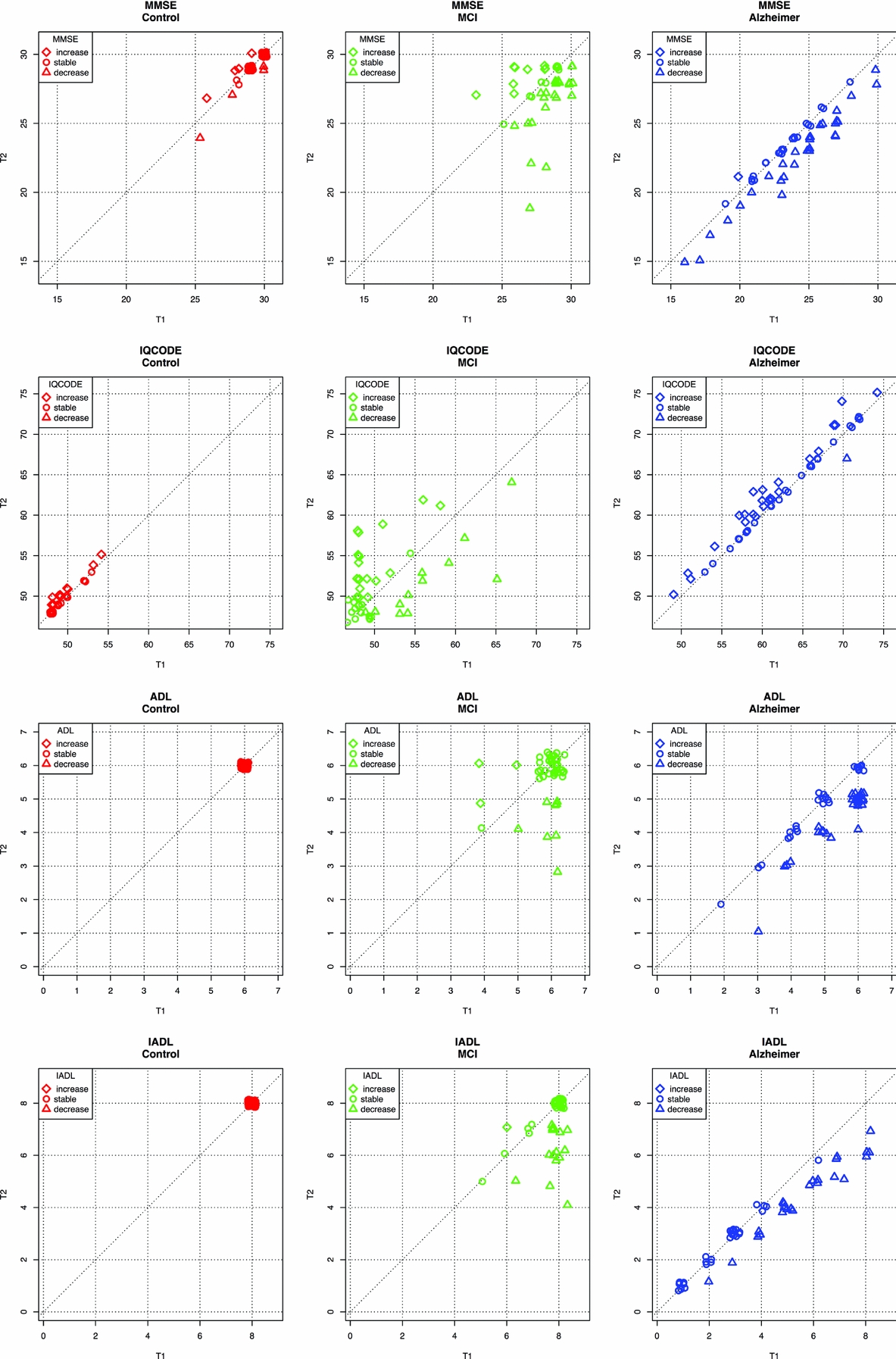
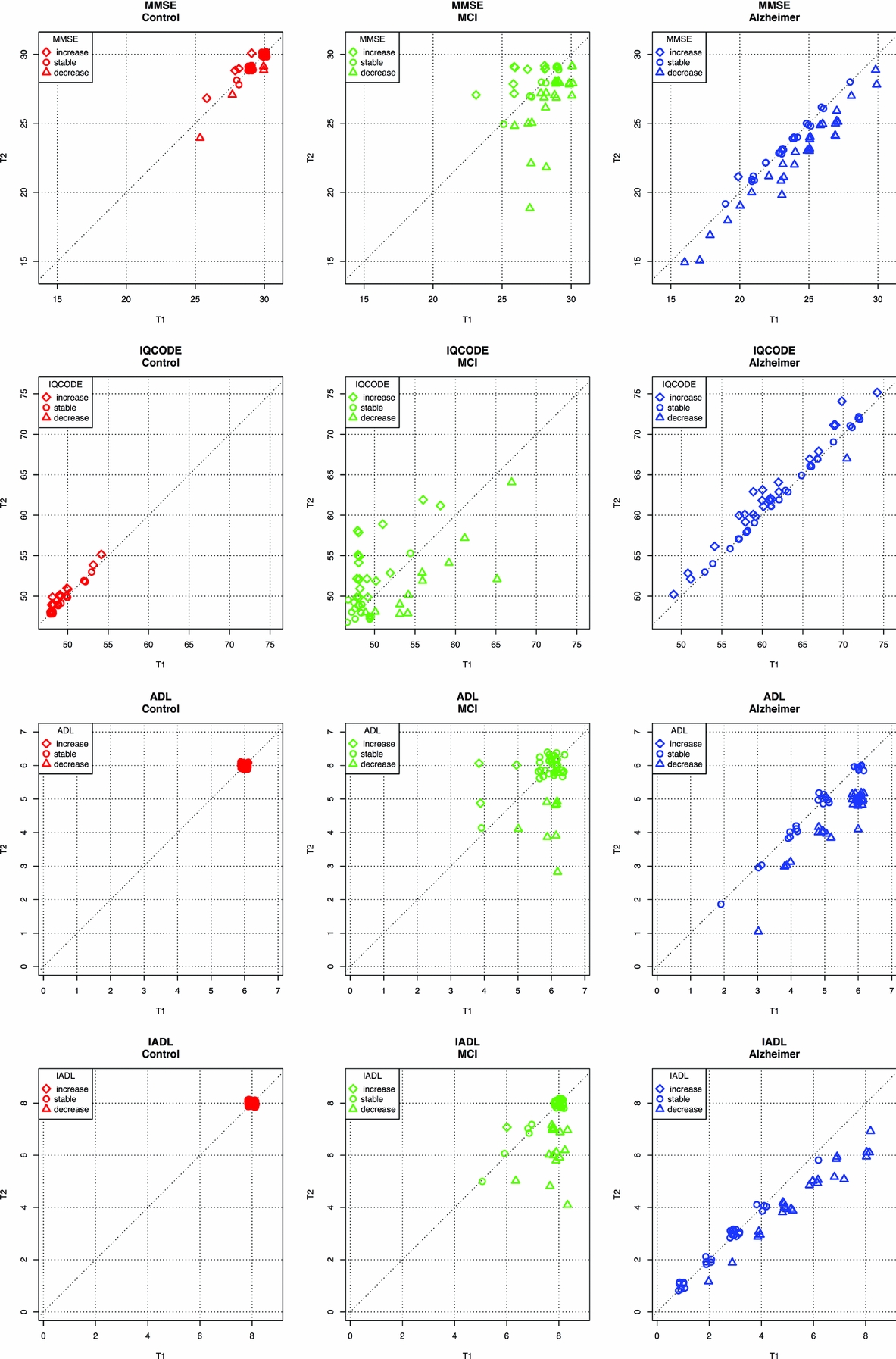
The MMSE scores of most MCI patients remained almost unchanged over the two years as opposed to the perception of some family members (see Figure 2). However, in the AD patients BPS hardly changed, while the cognitive capacities worsened continuously. All variables remained stable in the control group (see Figures 1 and 2).
Differences in global cognitive levels and in daily living functioning in the three groups over two years.
Relationship between specific BPS and cognitive or daily living functioning in MCI patients
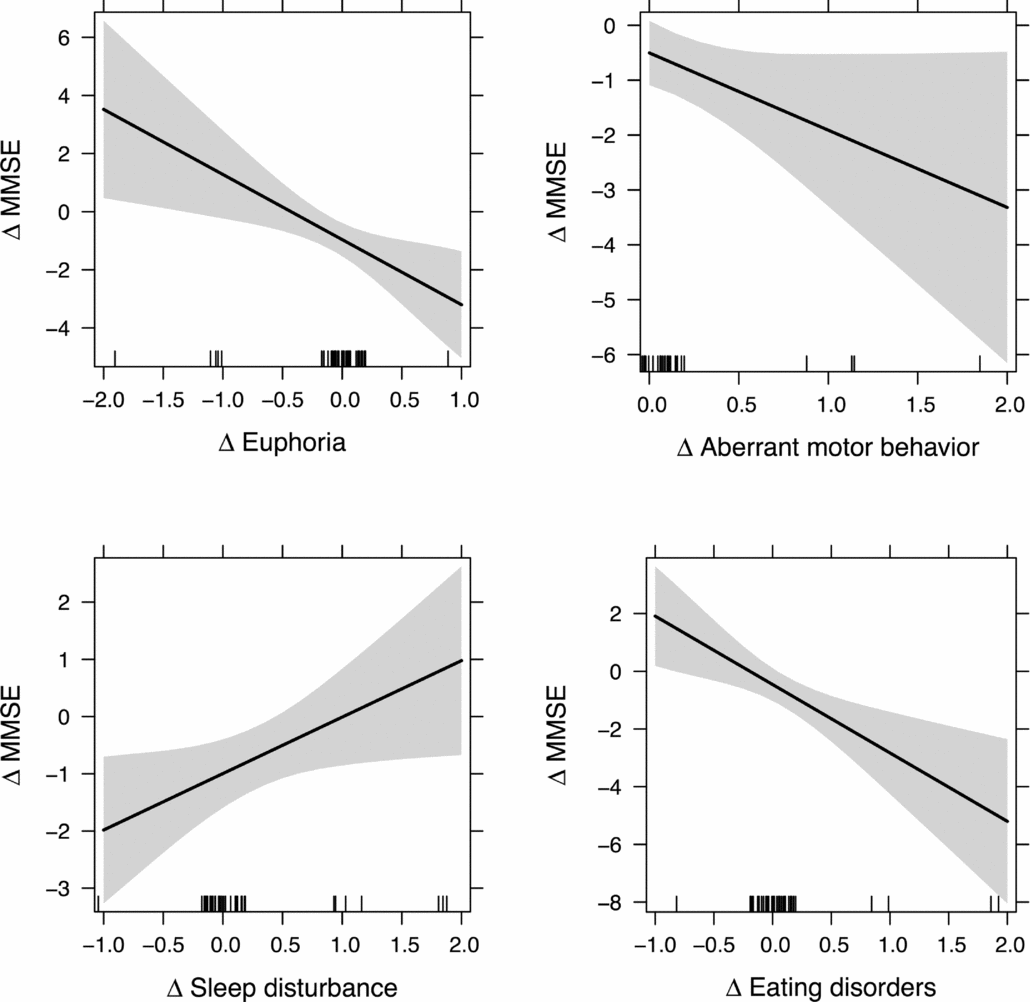
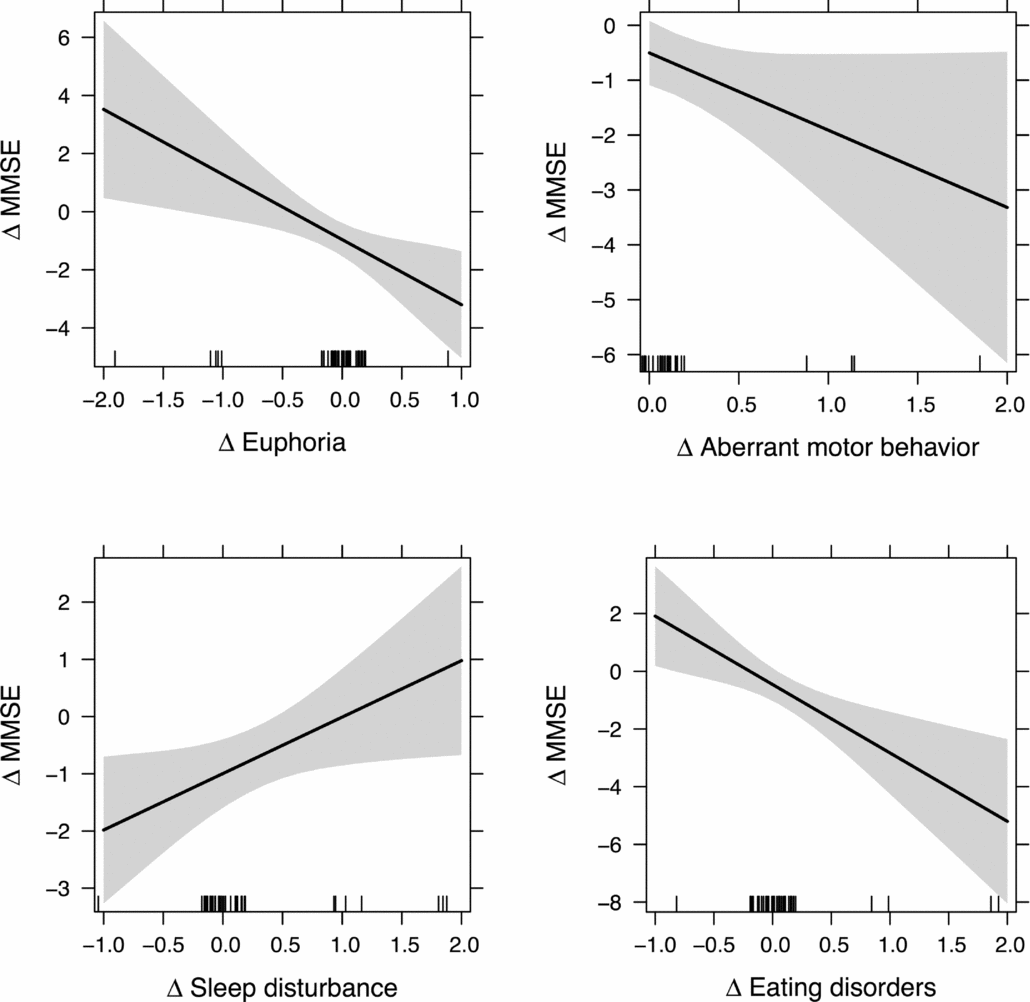
Multiple regressions showed that changes in four specific BPS over a two-year period could partly explain the changes of the MMSE score in the MCI group (R 2 = 0.33, F(4, 41) = 5.09, p = 0.001): sleep disturbance (t(41) = 2.32, β = 2.221, p > 0.002), euphoria (t(41) = −2.32, β = −2.221, p > 0.006), eating disorders (t(41) = −2.54, β = −2.570, p > 0.01), and aberrant motor behavior (t(41) = −1.89, β = −1.41, p > 0.06). Thus, an increase of euphoria scores, eating disorders, and aberrant motor behavior, as well as worsened sleep quality are related to the progression of cognitive deterioration in patients with MCI (Figure 3). IQCODE, ADL, and IADL scores were not associated with BPS.
Graph of the influence of specific BPS (NPI-Q) on cognitive status (MMSE) in the MCI group, over a two-year period. Note: The vertical axis represents the change of the MMSE score over two years (delta) and the horizontal axis shows the change of specific BPS (delta), i.e. euphoria, eating disorders, aberrant motor behavior, and sleep disturbance. The straight line represents the interaction between the evolution of these variables (cognitive level and BPS). The symptom changes for each participant with MCI are shown at the bottom of each figure by a small vertical stroke; the majority of participants with MCI are concentrated around the 0 (see Figure 2).
Discussion
This study confirms that BPS are frequent in patients with MCI and AD, but that their severity and evolution over two years vary considerably. Although, there are strong correlations between the T1 and T2 measurements, the variability between T1 and T2 was more pronounced in those with MCI than in participants with AD. Some BPS tend to improve (delusion and euphoria), others newly occur or worsen (hallucinations, depression, apathy, aberrant motor behavior, sleep disturbance, irritability, eating disorders, and total scores of symptoms), while others still remain almost unchanged (agitation, anxiety, and disinhibition). Similarly, previous studies showed a non-uniform evolution of specific symptoms in MCI patients (Bozoki et al., Reference Bozoki, Giordani, Heidebrink, Berent and Foster2001; Lyketsos et al., Reference Lyketsos, Lopez, Jones, Fitzpatrick, Breitner and DeKosky2002; Petersen, Reference Petersen2004; Palmer et al., Reference Palmer, Berger, Monastero, Winblad, Bäckman and Fratiglioni2007; Teng et al., Reference Teng, Lu and Cummings2007). A partial explanation of this variability could be the pharmacological or non-pharmacological treatments of BPS but, unfortunately, in our study this information is not available.
The current findings raise the question of whether such symptoms reflect specific neuropathological changes in the brain or indicate a subjective reaction to cognitive change. Our findings suggest that some mood symptoms (i.e. anxiety, agitation) that begin very early may represent a reaction to the initial phases of cognitive deterioration. However, others BPS (hallucinations, apathy, depression, irritability, aberrant motor behavior, sleep disturbance, eating disorders) occur later or worsen in the MCI group, which may indicate their subsequent conversion to AD. Indeed, these specific BPS are also found in the early stages of AD. For example, apathy as the most frequent BPS in early AD, followed by depression and irritability, are also reported by other investigators (Mega et al., Reference Mega, Cummings, Fiorello and Gornbein1996; Lyketsos et al., Reference Lyketsos, Lopez, Jones, Fitzpatrick, Breitner and DeKosky2002; Holtzer et al., Reference Holtzer, Tang, Devanand, Albert and Wegesin2003; Pocnet et al., Reference Pocnet, Rossier, Antonietti and von Gunten2013) and found to be correlated with atrophy, hypoperfusion, or hypometabolism in the frontal and anterior cingulate cortices (Craig et al., Reference Craig1996; Zubenko, Reference Zubenko2000; Apostolova et al., Reference Apostolova2007). Therefore, some BPS may have a neurobiological basis related to the neurodegenerative process. One might think that the changes in specific BPS occur jointly with some cognitive changes, even if the cognitive impairment can be very subtle at first in MCI individuals.
Contrary to what we expected in the beginning, our findings show no link between depression and apathy and cognitive decline, although both depression and apathy are symptoms that tend to worsen over time. However, other specific changes in BPS were associated with a rapid deterioration of the global cognitive level in MCI patients. In particular, an increase of euphoria, eating disorders, and aberrant motor behavior, as well as worsened sleep quality, predicted decline in cognitive functioning. Copeland et al. (Reference Copeland, Daly, Hines, Carol, Gunther and Albert2003) explain that the excitement that accompanies some of these symptoms may affect cognitive abilities such as attention or working memory. In our study, the global cognitive functioning was evaluated using MMSE, which does not seem sensitive enough to detect progression of cognitive impairment over time among very mildly impaired individuals. In addition, the period of two years to follow-up was not enough to accurately estimate the rate of conversion of individuals with MCI to AD-type dementia. It is possible that the memory problems will progress within the next few years, but this does not necessarily mean that a diagnosis of AD will be made within the same follow-up period.
Unlike other studies (Ganguli et al., Reference Ganguli, Dodge, Shen and DeKosky2004), we did not find significant links between improvement of specific symptoms and a positive evolution of cognitive functioning, leading the people with MCI to revert to a normal level of cognitive functioning. Furthermore, no significant links between specific BPS and daily functioning were found, although minor changes of instrumental ADLs have been observed. This confirms previous findings on the preservation of everyday activities for some time in the MCI stage (Winblad et al., Reference Winblad, Palmer and Kivipelto2004).
Overall, our results are consistent with those of other studies that found that changes in specific neuropsychiatric symptoms would predict the progression of cognitive decline in individuals with MCI (Bozoki et al., Reference Bozoki, Giordani, Heidebrink, Berent and Foster2001; Petersen, Reference Petersen2004; Monastero et al., Reference Monastero, Mariani, Camarda, Ingegni, Averna and Senin2006; Petersen, Reference Petersen2007; Monastero et al., Reference Monastero, Mangialasche, Camarda, Ercolani and Camarda2009).
Strengths and limitations of the study
The sample of amnestic MCI patients was small and this may have led to an underestimation of the association of changes in specific BPS on cognitive decline. Hence, replication of this study in a larger sample is mandatory. Life events or socioeconomic status should be taken into account as these could better explain BPS fluctuation. Although the analyses were adjusted for significant age or level of education differences, findings ought to be replicated with more similar groups. Furthermore, detailed information on psychiatric antecedents was unavailable. The strength of our study ensues mainly from the use of well-validated instruments allowing to compare the two well-characterized clinical groups with the healthy control participants.
Perspectives and practical implications
Our findings hold important implications for the field of ageing psychology since people with MCI must cope differently in this transitional period compared to healthy people without cognitive disorders. Clinicians need to consider that the spectrum of symptom changes is not linear and that some symptoms may disappear or be replaced with others, which may influence the cognitive abilities of patients with MCI. Understanding the relationship between neuropsychiatric pattern changes and cognitive and functional decline may enable a better prediction of the evolution of this disease.
Conclusions
Our findings confirm a higher variability of BPS over time in amnestic single and multi-domain MCI than in AD. Moreover, our results provide evidence of associations between cognitive and non-cognitive factors in the MCI group, suggesting that changes in some BPS could favor cognitive decline. However, longitudinal study designs, including both biological and psychosocial parameters, will shed light on the dynamics of developmental processes that may explain the observed differences. Refining our understanding of these processes is necessary to respond effectively to the demands of an aging society and the increasing number of patients with dementia.
Conflict of interest
None.
Description of authors’ roles
Cornelia Pocnet: collected the AD and healthy data, and participated in the MCI data collection, carried out some statistical analysis, wrote the manuscript;
Jean-Philippe Antonietti: responsible for the statistical design and creating figures;
Alessia Donati: supervised and collected MCI data;
Julius Popp: participated in the MCI data collection and provided feedback for writing the paper;
Jérôme Rossier: participated in the implementation of the project and provided feedback for writing the paper;
Armin von Gunten: designed the MCI study, carried it out, and provided feedback for writing the paper.
Acknowledgments
This research was financed by a Swiss National Science Foundation research grant FNS 3200B0-122263 and a grant from the Swiss Alzheimer Association to Armin von Gunten and Jérôme Rossier.