Disasters, both natural and manmade, have been prevalent in recent times, affecting millions of people.Reference Simpson, Wissbecker and Sephton1 Merapi, meaning Mountain of Fire, is one of the most active volcanoes in Indonesia,Reference Hort, Vöge, Seyfried and Ratdomopurbo2 and possibly the world.Reference Sagala3, Reference Surono, Pallister and Boichu4 The eruption of Mt Merapi in October 2010 resulted in extensive environmental damage; several hamlets disappeared under volcanic ash and rock. The eruption forced the evacuation of more than 300 000 people from 4 districts in Yogyakarta and Central Java,Reference Surono, Pallister and Boichu4 damaged many villages, and resulted in the loss of a large area of fertile land.Reference Wartatmo5 The psychological and environmental impact of this event on the survivors has been relatively unknown.
BACKGROUND
Danger does not disappear after a volcano erupts. Volcanic activity may produce sudden bursts of gas from the crater, and soil structure may be drastically changed by volcanic flows.Reference Feldman and Tilling6 Secondary volcanic hazards such as landslides and mud and debris flows may occur and, in some cases, may last for years, or centuries, after the event.Reference Witham7 One of the longlasting impacts of a volcanic eruption is the environmental degradation of the local area.
To our knowledge, no research to date has focused on survivors’ emotional response to the environmental damage resulting from a volcanic eruption. Most publications regarding the mental health impact of volcanic eruptions addressed victims’ responses to the disaster or to living in a relocation shelter. However, the investigation of the emotional effects of living in a suddenly degraded, destroyed, or changed environment gained some prominence after the publication of studies that investigated the impact of open-cut or open-pit mining and drought in Australia. Connor and coauthorsReference Connor, Albrecht, Higginbotham, Freeman and Smith8 and Higginbotham et alReference Higginbotham, Connor, Albrecht, Freeman and Agho9 investigated environmental distress caused by open-cut mining in the Upper Hunter Valley, and Sartore and colleaguesReference Sartore, Kelly, Stain, Albrecht and Higginbotham10 investigated farming communities’ experience of drought in New South Wales, Australia. The research found that people experienced feelings of psychosocial distress, which included feelings of hopelessness and depression as a result of changes in their environment.
As a result of these findings, Albrecht has created the term solastalgia to describe the set of feelings and state of mind identified in people who live in damaged landscapes.Reference Albrecht11 While nostalgia is the emotion experienced by someone who misses the hometown they lived in previously,Reference Albrecht11, Reference Albrecht, Sartore and Connor12 solastalgia is the emotion experienced by people who have never moved away from their home environment.Reference Albrecht11, Reference Albrecht, Sartore and Connor12 Rather, those who experience solastalgia live in a damaged environment and long for it to return to its previous state. Previous research indicates that people experiencing solastalgia may also experience increasing emotional distress that includes feelings of hopelessness for the future,Reference Barton13 depression, suicide, and substance abuse.Reference Albrecht11 However, the link between solastalgia and other mental health outcomes has not yet been established.
While solastalgia was originally coined by Albrecht with regard to the distress caused by mining and drought, he suggested that it may also be applicable to environmental damage caused by natural disasters, floods, forest fires, land clearing, terrorism, and industrialization.Reference Sartore, Kelly, Stain, Albrecht and Higginbotham10 The Mt Merapi eruption in Indonesia caused widespread destruction to the environment, and we hypothesized that it may also have caused environmental distress and solastalgia. We, therefore, conducted a study to develop, translate, and test an Indonesian version of the Environmental Distress Scale (EDS) that may be used as a tool to reliably measure environmental distress related to environmental damage in Indonesia.
METHODS
The 4-phase study included modification of the EDS instrument, translation and back translation, pilot study, and test and retest of the tool. The study took place in Yogyakarta, Indonesia, between September 2012 and February 2013. This 4-phase methodology was recommended to achieve a minimum standard for instrument development and translation in cross-cultural studies.Reference Maneesriwongul and Dixon14
The original EDS has 8 elements: place attachment, frequency, observation, threat, impact, solastalgia, action, and trustworthiness. All elements have 5-point rating scales except for observation and trustworthiness, which have 2 options. Place attachment illustrates the ties an individual has with the environment in which they live (from strongly agree to strongly disagree). The observation element measures the environmental damage experienced or observed by survivors (yes or no), and the frequency element measures how frequently the environmental damage is felt by the respondents (from never to nearly always).
The threat element measures the extent to which the environmental damage is experienced as threatening by the respondents (from unthreatening to very threatening), and the impact subscale measures the impact of the environmental damage experienced by the respondents (biopsychosocial and economical). Solastalgia measures respondents’ feelings concerning the changes in their environment. The impact and solastalgia elements have agree or disagree as options. The action element measures whether respondents use actions to reduce the threats or improve the environment (yes or no). Trustworthiness, the last component of the EDS, measures peoples’ opinions about the reliability of environmental information provided by various sources (from never trustworthy to always trustworthy).Reference Higginbotham, Connor, Albrecht, Freeman and Agho9
The tool, which was originally tested with populations in Upper Hunter Valley, Australia, demonstrated strong internal consistency (Cronbach alpha=0.79-0.96) and test-retest reliability (ICC=0.67-0.73).Reference Higginbotham, Connor, Albrecht, Freeman and Agho9
Tool Modifications
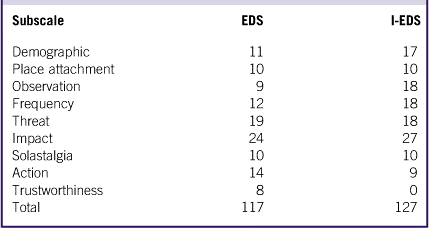
Several steps were required to modify the EDS instrument. First, we conducted a literature review to identify the impact of the environmental damage related to the eruption. One of us (S.W.) visited the area affected by the eruption and interviewed 7 key stakeholders including the head of the subdistrict, staff officers, and nurses. These people shared their observations of the psychosocial distress experienced by residents living near Mt Merapi. The findings of the literature review and interviews were then combined with the situation observed by the researcher during the preliminary study to modify the questions in the instrument. While the original version of the EDS incorporates 117 items (including background questions), the Indonesian version (I-EDS) contained 127 items (see Table 1).
Comparison of EDS and I-EDS Item Numbers

Abbreviations: EDS, Environmental Distress Scale; I-EDS, Indonesian version of the EDS.
The revisions to these items (additions and reductions—see Table 1) were performed by incorporating the feedback from the key stakeholders. The element omitted in the revised I-EDS was trustworthiness, in particular, the trustworthiness of information provided by the government or media, which consisted of 8 questions. This element was removed based on the result of the interviews conducted with informants in the pilot-testing phase, as the issue was considered inapplicable in this context. According to those interviewed during the pilot testing, no local people received information about the environmental destruction in their area.
After each element in the I-EDS is a small space for individual responses. The I-EDS total score was calculated by summing the individual scores for each subscale and weighing the score according to the number of items, which resulted in a sum of all weighted scores. The higher the score for each subscale indicated the greater the element is experienced by the respondent except in the case of solastalgia. For example, in the place attachment subscale, the larger the number the greater the person’s attachment to the environment. However, in the solastalgia subscale, a lower score indicated the person’s greater experience of solastalgia.
The Translation Process
The adapted Brislin translation modelReference Jones, Lee, Phillips, Zhang and Jaceldo15 was used in this study. Two translators translated the EDS from English into Indonesian language. One translator was a lecturer in the English Language Department, Universitas Gadjah Mada, Indonesia, and the other worked for a legal translating agency in Indonesia. Neither translator had a medical background. The translation was reviewed by a bilingual, doctoral-level Indonesian nurse to confirm semantic equivalence and cultural relevance. The word landscape required extensive discussion among translators to identify an appropriate Indonesian equivalent.
The I-EDS was back translated into English by different individuals who had no knowledge of the English EDS instrument. The retranslation was conducted by an English-speaking teacher working in Indonesia. The back translation was compared with the original instrument by 3 of us (S.W., K.U., and C.W.), of whom 2 are native English speakers. This step was performed to examine discrepancies or equivalence of translation between the original instrument and the back-translated instrument, a strategy that is recommended by Brislin et al.Reference Brislin, Lonner and Thorndike16(p.58)
With the completion of the translation and back-translation process, 4 questions were identified as not having retained the intent or meaning of the original version of the EDS. The translation and back translation process was repeated to ensure congruence of meaning between the original and target versions of the instrument.Reference Jones, Lee, Phillips, Zhang and Jaceldo15
Sousa and Rojjanasrisat stated that if an agreement cannot be reached or if concern continues with the translation of the instrument, the steps of the process should be repeated.Reference Sousa and Rojjanasrirat17 Two Indonesian nurses who had lived and worked for more than 5 years in an English-speaking country repeated the translation and back-translation of the problematic items. The reviewers then compared the resulting back-translated items with the original version. After these steps were completed, no discrepancies were found.
Pilot Study
In the pilot study, feasibility, readability, and the estimated completion time were tested. Convenience sampling was used to recruit 30 participants for the pilot test of the adapted version of the I-EDS. The pilot study was conducted in 1 hamlet of the Mt Merapi region affected by the volcanic eruption. The respondents were recruited by visiting homes in the community.
The I-EDS pilot survey took the respondents approximately 20 to 30 minutes to complete. Face validity was also assessed during this step, as respondents gave their feedback about each item after they completed the survey.Reference Nunnaly and Bernstein18 Several items of the questionnaire were found to be inaccurate and were further revised after one of us (S.W.) considered the respondents’ feedback and the researcher’s own observations during data collection. For instance, the question in the I-EDS impact element originally included the English word saddened, which had been translated as sedih (sad) in Indonesian. Survey participants felt that the word prihatin (concerned) better captured the meaning and intent of the question. The wording was therefore changed. In the question related to place attachment: “I am angry at the thought of the government forcing me to leave this place,” disappointment was used instead of anger, as it was perceived as a less unhealthy emotion from a cultural perspective. As a result, this item was also changed in the final version of the I-EDS.
Main Study
Systematic stratified sampling was used to recruit 80 survivors from 2 different hamlets in the Mt Merapi region. While the original intent was to recruit a larger sample for this phase of the study, time and funding issues prevented this. One of us (S.W) recruited participants for the survey after receiving information about the hamlets’ setting and demography from hamlet chiefs. Stratified sampling employed in this research was performed by dividing the sample based on hamlet, age, and gender.
At each hamlet the researcher systematically visited every resident’s house at 5 house intervals.Reference Schofield19 Inclusion criteria for respondents were as follows: (1) adult, older than 18 years old; (2) experienced the 2010 eruption of Mt Merapi; (3) able to communicate in Indonesian; and (4) willing to consent to participate in the study. Respondents were excluded if they had a history of severe mental illness such as schizophrenia or depression and/or had hearing or speaking difficulty.
Ethical Issues
Ethical approval to conduct the study was received from the James Cook University Human Ethics Review Committee (HERC) (H4902) and the Institutional Review Board of the Faculty of Medicine, Universitas Gadjah Mada, Indonesia. The study was conducted in accordance with the ethical standards of the Helsinki Declaration, as revised in 2004.
Survey respondents were offered a participant information sheet written in Indonesian and given the opportunity to ask questions before beginning the survey. Research assistants helped participants who were unable to read the information sheet and/or the consent form themselves by reading the documents out loud. Participants who agreed to take part in the study were required to sign an informed consent form.
Data Analysis
Data were analyzed using the Statistical Package for Social Sciences (SPSS) version 21 software (IBM SPSS). Data entry was conducted by one of us (S.W.) and audited for accuracy by another (P.B.). Descriptive statistics were used to summarize demographic characteristics. Internal consistency of the I-EDS was assessed by calculating the Cronbach alpha separately for the test and retest results. Pearson correlation coefficients were calculated between the subscales and the total EDS score as well as between all items to further assess internal consistency.
Differences between test and retest results were calculated, and absolute agreement (%) was noted per item. A Bland and Altman plot of differences against averages of test and retest results was created, and a Pearson correlation coefficient was calculated to assess the relationship between differences and averages.Reference Bland and Altman20 The intraclass correlation coefficient (ICC) between test and retest results was calculated together with the 95% confidence interval (95% CI).
Exploratory principal component factor analysis, followed by Varimax rotation with Kaiser normalization, was conducted. The Kaiser rule and scree plotsReference Cattell21 were used to decide on the number of factors.
RESULTS
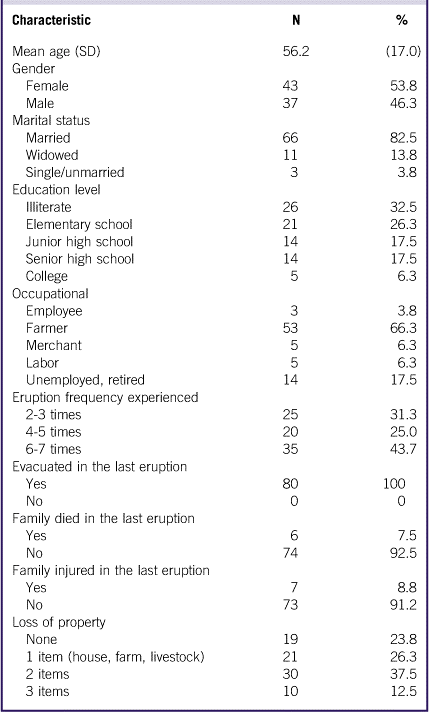
The demographic characteristics are summarized in Table 2. The majority of respondents were women (n=43; 53.8%), married (n=66; 82.5%), worked as farmers (n=53; 66.3%), and had a lower level of education (n=61; 76.3%). Respondents’ ages ranged from 22 to 100 years (n=80; mean [SD]=56.2 years [17.0 years]).
Demographic Characteristics and Personal Losses of the Survivors of the Mt Merapi Eruption, Indonesia, January 2012 (N=80)

Reliability
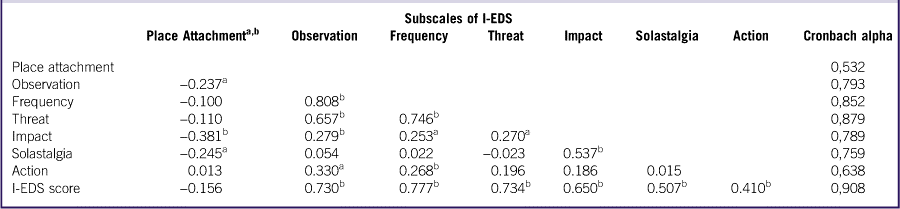
The Cronbach alpha coefficients for the I-EDS for the test (0.908) and retest (0.916) suggested very good internal consistency. Pearson correlation coefficient scores between the subscales and the total score were all significant at the 0.01 level, except for the place attachment subscale (Table 3). The place attachment subscale had a significant negative corrrelation with the observation, impact, and solastalgia subscales; the observation subscale had a significant positive correlation with 4 subscales (frequency, threat, impact, and action); the frequency subscale had a positive correlation with all subscales except the place attachment and solastalgia subscales; the threat subscale had a significant correlation with all subscales except for solastalgia and action; the impact subscale had a significant correlation with all subscales except the action subscale; and the solastalgia subscale had a positive correlation with the impact element.
Pearson Correlation Coefficients Between the I-EDS Subscales and Total Score (First Test) (N=80)
Abbreviation: I-EDS, Indonesian version of the Environmental Distress Scale.
a Correlation is significant at P=.05 level.
b Correlation is significant at P=.01 level.
Overall agreement for the single item in each subscale ranged between 40% and 100%. Overall agreement values for the subscales were place attachment (n=80; 68.8%-98.8%), observation (n=80; 66.3%-90%), frequency (n=80; 50%-76.3%), threat (n=80; 45%-76.3%), impact (n=80; 40 %-97.5%), solastalgia (n=80; 46.3%-70%), and action (n=80; 71.3%-100%). The scatter plot of test and retest I-EDS results indicated that the respondents’ score in the first test (mean=13.58; SD=1.36) was very similar to that in the retest (mean=13.50; SD=1.36). The Bland and Altman plot showed good overall concordance between the test and retest results (see Figure). The Pearson correlation coefficient between averages and differences of the test and retest values of I-EDS components was not statistically significant (r=0.032; P=.079; n=80).
The Bland and Altman Plot Shows Good Overall Concordance Between the Test and Retest Results. The 2 solid horizontal lines indicate the zero difference and the mean observed difference; the 2 dotted horizontal lines indicate the mean observed difference +2 SD of the differences; the ascending line indicates the linear regression line between differences and averages.
The ICC of the test and retest results for the I-EDS weighted total was 0.81 (95% CI=0.72, 0.87), indicating good overall reproducibility. Results for the subscales of I-EDS were 0.63 (95% CI=0.72-0.87) for place attachment, 0.74 for observation (95% CI=0.62-0.82), 0.80 for frequency (95% CI=0.70-0.86), 0.76 for threat (95% CI=0.65-0.84), 0.70 for impact (95% CI=0.58-0.80), 0.62 for solastalgia (95% CI=0.47-0.74), and 0.51 for action (95% CI=0.33-0.66).
Structure of I-EDS
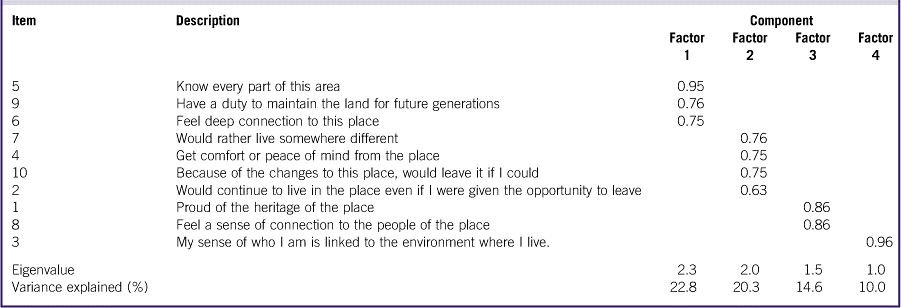
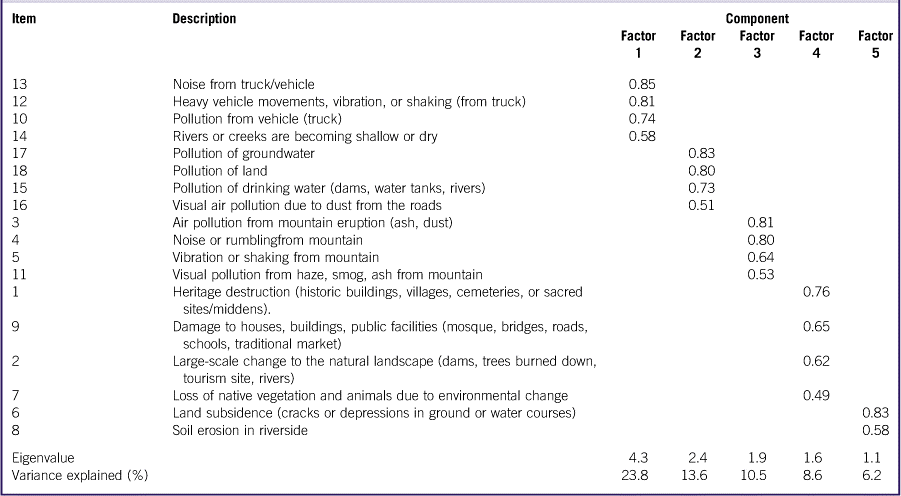
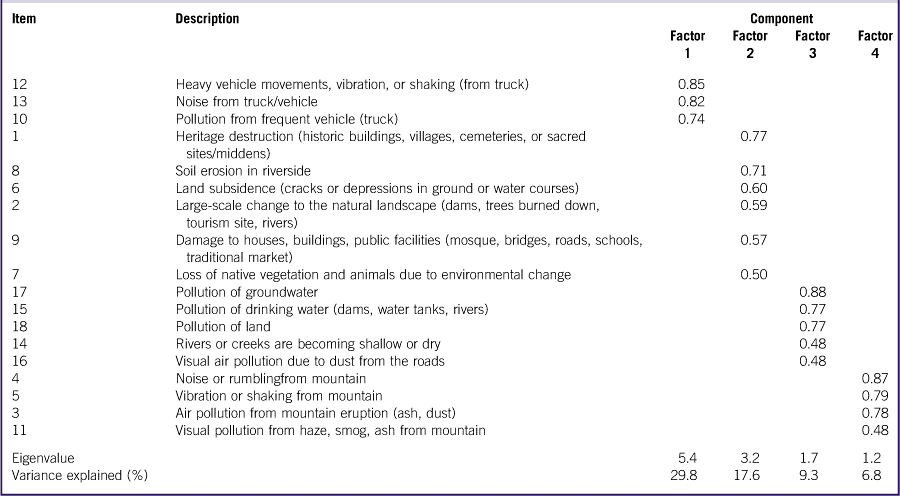
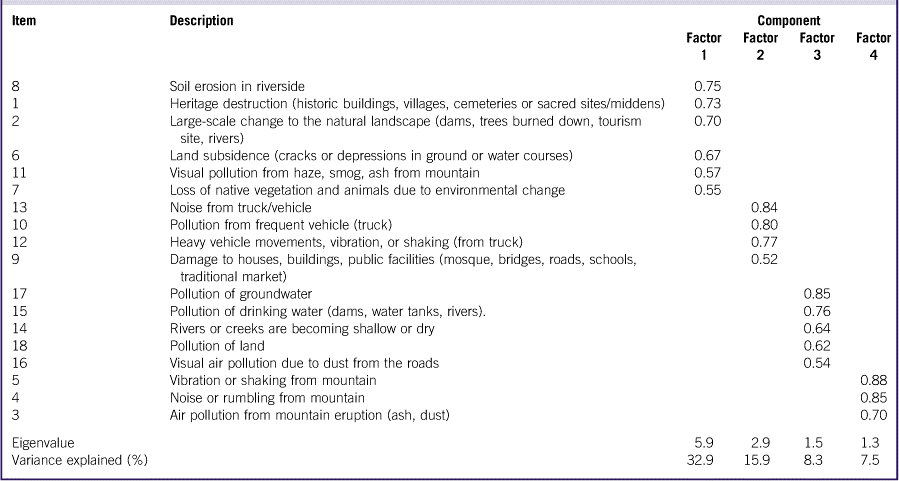
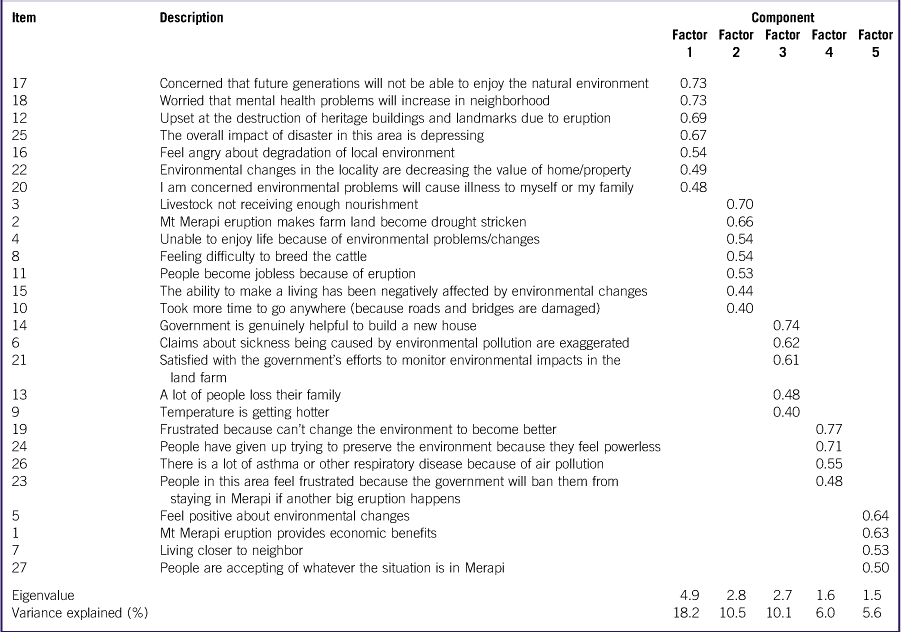
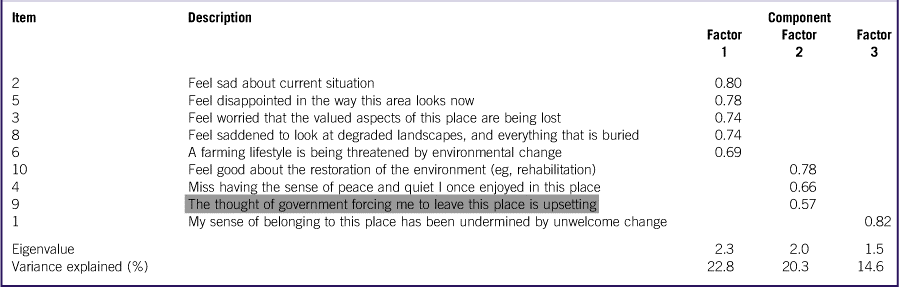
The principal component analysis revealed that the I-EDS had a different number of underlying factors for each subscale. Place attachment, frequency, and threat subscales each had 4 factors, accounting for 67.7%, 63.5%, and 64.6% of the total variance, respectively. The observation subscale had 5 factors, which accounted for 62.7%, while the solastalgia subscale had only 3 factors, which accounted for 60.1% (Tables 4-9). However, in this study, the action element factor met with unsatisfactory results, as the element could not be statistically identified.
Result of Exploratory Factor Analysis Showing Internal Structure of the I-EDS Place Attachment Subscale (n=80)
Abbreviation: I-EDS, Indonesian version of the Environmental Distress Scale.
Result of Exploratory Factor Analysis Showing Internal Structure of the I-EDS Observation Subscale (N=80)
Abbreviation: I-EDS, Indonesian version of the Environmental Distress Scale.
Result of Exploratory Factor Analysis Showing Internal Structure of the I-EDS Frequency Subscale (N=80)
Abbreviation: I-EDS, Indonesian version of the Environmental Distress Scale.
Result of Exploratory Factor Analysis Showing Internal Structure of the I-EDS Threat Subscale (N=80)
Abbreviation: I-EDS, Indonesian version of the Environmental Distress Scale.
Result of Exploratory Factor Analysis Showing Internal Structure of the I-EDS Impact Subscale (N=80)
Abbreviation: I-EDS, Indonesian version of the Environmental Distress Scale.
Result of Exploratory Factor Analysis Showing Internal Structure of the I-EDS Solastalgia Subscale (N=80)
Abbreviation: I-EDS, Indonesian version of the Environmental Distress Scale.
Place attachment consists of feeling familiar and tied to the environment, having responsibilities to the land, as well as identity factors. There are 4 similar factors in observation, frequency, and threat subscales: truck activity, pollution, volcano activity, and infrastructure and habitat consequences from the eruption. Factor analysis of the impact element revealed 5 factors: anxiety related to environmental damage due to disaster, impact of damage on daily life, dissatisfaction with the occurrence, desperation, and positive feelings or lessons taken from the disaster. Factors related to solastalgia included melancholia, solace, and loss of control.
DISCUSSION
The I-EDS described here is, to our knowledge, the first adaptation of the EDS scale and the first scale to be adapted and translated into Indonesian language to measure the psychosocial impacts of environmental damage from a natural disaster. Previous research indicates that people experience feelings of psychosocial distress including feelings of hopelessness and depression as a result of changes in their environment.Reference Connor, Albrecht, Higginbotham, Freeman and Smith8-Reference Sartore, Kelly, Stain, Albrecht and Higginbotham10
Our findings showed that the I-EDS has good reliability, which makes it suitable for assessing the psychosocial impact of environmental degradation on survivors of natural disaster in Indonesia. The research showed that Cronbach alpha values for I-EDS subscales (ranging from 0.64-0.88) were lower than those for the original EDS (0.79-0.94); however, the Cronbach alpha value for total I-EDS (0.91 in the first test and 0.92 in the retest) showed that I-EDS is an instrument with satisfactory internal consistency. In particular, the scale as a whole has a high level of internal consistency, which means that researchers can reliably measure environmentally-related distress responses with the I-EDS total score (weighted score).
The I-EDS total score has high correlation with all elements except the place attachment subscale. The frequency, observation, and threat subscales were created and developed from the same questions, therefore they were highly correlated with each other.
The only element with correlation to almost all elements of the I-EDS was the impact subscale. Solastalgia was negatively correlated to place attachment and positively correlated to the impact subscales, meaning that the higher the respondents’ solastalgia score, the lower their place attachment scores. The experience of solastalgia determined by the EDS and I-EDS was indicated by a lower score rather than a higher score. Therefore, in this study, higher place attachment scores and lower solastalgia scores indicated that more people are emotionally distressed by the destruction of their environment. It was of interest that the Higginbotham et alReference Higginbotham, Connor, Albrecht, Freeman and Agho9 study showed no correlation between place attachment and solastalgia, while the findings of this study were in line with their findings that place attachment is an influential factor in the development of solastalgia.
In terms of construct validity, I-EDS had patterns different from the original EDS. The current study found a number of different constructs for each element; however, the work by Higginbotham et al identified only 1 factor, as all subscales were combined to become 1 score before its factor analysis was analyzed.Reference Higginbotham, Connor, Albrecht, Freeman and Agho9 Therefore, further comparison to each element could not be explained more deeply in this report.
The place attachment component, or the strength of an individual’s ties to their environment, had no effect on the threat appraisal element in the Indonesian cohort. This finding contradicted the findings from Higginbotham et al.Reference Higginbotham, Connor, Albrecht, Freeman and Agho9 It was assumed that this observation was owing to the small size of our study sample.
The impacts on physical health seemed to be less significant to participants in the Indonesian research than it was in the Australian study. Higginbotham et al found that people in the Upper Hunter Valley raised strong concern about physical health because they feared that the mining byproducts caused cancer and other chronic diseases.Reference Higginbotham, Connor, Albrecht, Freeman and Agho9 In the Indonesian research, people were more concerned with the psychosocial aspects of disaster.
It was noted that the survivors in this study also reported positive outcomes from the eruption. They said that the positive impacts included new occupations for locals, such as laborers at sand mining companies. Participants also commented that new housing arrangements meant they were living closer to their neighbors. The proximity of houses was believed to enhance their psychosocial lives because they could better share their trials and tribulations. The findings may have indicated a different context in mining-related damage and natural disasters.
In the specific context of a volcano, the uncertainty of the event and the outcomes may have been influential. In other words, it is highly likely the volcano will erupt again in the near future, but the exact time is unpredictable. According to Surono et alReference Surono, Pallister and Boichu4, Mt Merapi will erupt again in the next 4 to 6 years; it is predicted to occur in a faster cycle than its previous cycle of 6 to 8 years. As a result, the locals who live near Mt Merapi worry about their future and the future of generations to come, and they also express concern about the psychosocial impact of the future eruptions, which result in heavy casualties.
The difference between environmental degradation in this and previous research sites, however, may not be so pronounced, as the Mt Merapi landscape has recently been altered by mining as well. During the scoping and observation phase, which was undertaken 2 years after the eruption, a researcher noted that the environment was dominated by the reconstruction of villagers’ houses and sand mining in several rivers. In reality, the distress experienced by locals may now be related to the impact of the sand mining and housing industry more than the volcanic eruption.
The results of the solastalgia factor analysis conducted in this study are in keeping with Albrecht’s argument that solastalgia consists of 3 factors: loss of control, solace, and melancholia.Reference Albrecht22 In its original concept, solastalgia comes from the words solace (related with comfort), desolation (connected to abandonment), and algia (pain).Reference Albrecht11, Reference Albrecht, Sartore and Connor12, Reference Albrecht23 People who experience solastalgia feel a loss of comfort, a sense of being abandoned by the environment,Reference Albrecht23 and a powerlessness and hopelessness as a result of environmental changes. Thus, they will feel discomfort or sadness related to the destruction of the environment, and may even feel endangered by the environment. In addition, because damage to the environment can result in damage to resources (eg, it may cause scarcity of water and make the soil unsuitable for farming), people may feel a further sense of powerlessness and hopelessness related to the environment and its failure to provide for them as it did previously.
Limitations
In general, the I-EDS was similar to the EDS in that both effectively assess the biopsychosocial impact of environmental damage on survivors. The present study had some limitations. In particular, the sample size of 80 respondents was small for psychometric testing. Recruitment in this study was guided by the chief of each hamlet who identified relevant communities; however, we believe that a representative sample was achieved. In addition, some of the English words used in the instrument had no Indonesian equivalent and aspects of the translated I-EDS may have remained unsuitable within the Indonesian context. Therefore, further research should involve a larger sample size and further adaptation of parts of the questionnaire to enhance its suitability for use in a number of different contexts, in addition to volcanic eruptions, and to accommodate the different educational backgrounds and cultural contexts of potential survey respondents.
CONCLUSIONS
The current study was conducted to develop and test an Indonesian version of the EDS to provide a tool to reliably measure environmental distress related to environmental damage in Indonesia. Environmental damage has been shown to result in psychosocial distress and solastalgia. The findings of this study supported the work of Higginbotham et alReference Higginbotham, Connor, Albrecht, Freeman and Agho9 who developed and tested the original EDS for measuring the impact of environmental degradation on psychosocial distress.
We believe that this study provided evidence that the I-EDS is a reliable instrument for assessing the environmental distress experienced by survivors of a natural disaster. The Indonesian version of the scale will be useful for nurses and other health workers in Indonesia to assess the impact of environmental damage from natural disasters. A better understanding of the emotional impact related to environmental degradation following natural disasters also will provide these workers with valuable information to assist individuals and communities to overcome the impact of untoward events and enhance community resilience. Given the increasing number of disasters occurring in Indonesia, having access to a valid and reliable tool for assessing the level of environmental distress offers clinicians the opportunity to readily diagnose and prevent the development of significant psychosocial problems that may become chronic if left untreated.
Acknowledgments
All study participants are acknowledged for their time and participation. We also acknowledge the research assistants who assisted with the data collection for this study.
Funding and Support
Funding was received from the School of Nursing, Midwifery and Nutrition, and the Graduate Research School at James Cook University, Queensland, Australia. Ms Warsini is supported by a James Cook University International student scholarship.