




No CrossRef data available.
Article contents
The current status of onchocerciasis in the forest/savanna transition zone of Côte d'Ivoire
Published online by Cambridge University Press: 16 April 2004
Abstract
Onchocerca volvulus exists in at least two strains in West Africa, while its black-fly vectors consist of sibling species, dwelling in the savanna and forest/transition zones. In transition and degraded forest zones both parasite strains and different sibling species of the vector can be sympatric. The strain of parasite in infected humans and in vector black-flies was determined in two bioclimes along the Bandama river of Côte d'Ivoire. The upper Bandama is located in the savanna bioclime while the Middle Bandama is located in a degraded forest zone. At both sites, savanna-dwelling sibling species of the Simulium damnosum sensu lato species complex predominated. The severe-strain of O. volvulus was the predominant strain at both sites. However, severe-strain parasites represented a significantly larger proportion of those found in the vector population than in the human population in the degraded forest of the Middle Bandama. These data suggest that in degraded forest areas recently invaded by savanna-dwelling species of S. damnosum s.l. transmission of the severe-strain of the parasite might be more efficient than transmission of the mild-strain.
Information
- Type
- Research Article
- Information
- Copyright
- © 2004 Cambridge University Press
INTRODUCTION
Two distinct strains of Onchocerca volvulus are known to exist in West Africa. The forest or ‘mild’ strain is endemic to the rain-forested bioclime of West Africa while the savanna or ‘severe’ strain is endemic in the savanna bioclime. Epidemiological and experimental studies have suggested that the severe-strain is more capable of inducing ocular disease (especially in the anterior chamber of the eye) than the mild-strain (Duke, 1981; Dadzie et al. 1989; Remme et al. 1989). Previous studies have demonstrated that the two strains of O. volvulus can be distinguished on the basis of hybridization with strain-specific DNA probes (Erttmann et al. 1987; Erttmann et al. 1990), and that the results from molecular identification correlate with those obtained by ophthamological and epidemiological methods (Zimmerman et al. 1992).
O. volvulus in West Africa is transmitted by members of the Simulium damnosum sensu lato species complex. The six sibling species of S. damnosum s.l. inhabit different bioclimes. Two sibling species (S. sirbanum and S. damnosum sensu stricto) are found in savanna habitats, while four species (S. yahense, S. squamosum, S. sanctipauli and S. soubrense) are primarily forest/transition-zone dwellers. Analyses of populations where savanna and forest/transition zone-dwelling species of S. damnosum s.l. are sympatric have demonstrated that the savanna and forest/transition-zone-dwelling black-fly species are equally capable of transmitting both parasite strains (Toé et al. 1997b). However, experimental studies have suggested that the savanna-dwelling species more efficiently support the development of the severe-strain than the mild-strain O. volvulus (Duke, Lewis & Moore, 1966). Conversely, the forest-dwelling sibling species of S. damnosum s.l. more efficiently support the development of mild-strain parasites (Duke et al. 1966).
Over the past 30 years, the natural ecology of O. volvulus has been altered by human activity, drought and desertification. The Onchocerciasis Control Programme in West Africa (OCP) was a large-scale internationally supported programme that was active from 1975–2002. The OCP succeeded in eliminating onchocerciasis as a public health problem in onchocerciasis endemic areas of 10 of the 11 countries in West Africa where the programme was active (Hougard et al. 2001; Etya'ale, 2002). The sole exception to this success was Sierra Leone, where political instability interfered with the programme's activities in the 1990s. Vector control was the key intervention employed by OCP until the microfilaricide ivermectin (Mectizan®) became available in the early 1990s as a donation from Merck, Sharpe and Dohme. Since that time Mectizan® was used by OCP as a control measure, either alone or in conjunction with vector control (Boatin et al. 1997). OCP's intensive vector control activities reduced the populations of the savanna-dwelling species of S. damnosum s.l. and eliminated transmission in large parts of West Africa (Philippon et al. 1990; Bissan et al. 1995). Conversely, the destruction of the rain-forests of West Africa has resulted in the displacement of forest/transition-zone-dwelling species of S. damnosum s.l. by savanna-dwelling species (Walsh, Molyneux & Birley, 1993; Wilson et al. 2002). However, little is known concerning the effect that these factors have had upon the traditional relationship of the vector and parasite in West Africa. In the current study, we report the results of a study examining the vector and parasite populations at two sites along the Bandama River in Côte d'Ivoire. One of these sites is located in the savanna bioclime, while the second is in an area of degraded forest.
MATERIALS AND METHODS
Study sites and sample collection
Study sites were located along the Bandama River in Côte d'Ivoire (Fig. 1). The Upper Bandama site is located in the savanna within the original area of the OCP. Vector control activities in the Upper Bandama area began in February 1975. Before the beginning of the operations, this focus was hyperendemic for onchocerciasis, with an estimated prevalence of infection greater than 60% (Boatin et al. 1997). The high intensity of transmission in this area had resulted in the desertion of this part of the Bandama valley by the local human population (Philippon, 1976). Periodic data collected by the OCP's entomological and epidemiological units demonstrated that the OCP's vector control activities had dramatically reduced both the intensity of transmission and the development of new infections in the human population (DeSole, Remme & Dadzie, 1990; Philippon et al. 1990).

Fig. 1. Location of collection sites. The clear zone on the map indicates the area of the Upper Bandama (savanna bioclime), the grey zone the area of the Lower Bandama (degraded forest bioclime) and the hatched zone the area of the coastal Bandama. Asterisks indicate the approximate location of the villages from which microfilariae were collected and circles indicate the approximate location of sites from which infected blackflies were collected.
The middle Bandama site is located in an area that originally was within the rain-forest bioclime of Côte d'Ivoire. However, as a result of human activity, annual fluctuations in rainfall and desertification over the past two decades, this area has been converted to wooded savanna. The Middle Bandama is within the Southern Extension Zone of the OCP and vector control activities began in this area in 1979. Similar to the Upper Bandama, the Middle Bandama was hyperendemic for onchocerciasis, with an infection prevalence greater than 60% (Philippon & Sékétéli, 1998). However, this area exhibited a mild form of the disease in which onchocercal ocular disease was rare (Philippon et al. 1998).
Skin microfilariae from the villages in the Upper and Middle Bandama were obtained from individuals residing in this area as part of routine epidemiological monitoring activities carried out by the OCP. Villagers were informed as to the purpose of the skin snipping by the OCP field teams and consented to the procedure. Microfilariae were preserved dried on microscope slides as previously described (Toé et al. 1997a). Infective larvae were collected from flies collected by the OCP during the period 1992–1998 as part of its entomological monitoring activities. Blackflies were collected by the OCP's field teams following standard procedures (Davies et al. 1981), and kept alive in individual tubes for later identification and dissection.
Identification of vectors
Adult blackflies were identified by morphological criteria, as previously described (Wilson, Post & Gomulski, 1993). This technique is based on the analysis of morphological characters including the colour of the procoxa and the antenna, the colour of the arculus and the wing tuft silks, the colour of the scutellum silks and the colour of the ninth abdominal tergite silks. Morphological methods allowed the separation of adult blackflies into savanna-dwelling species (S. damnosum s.s. and S. sirbanum) and forest/transition-zone-dwelling species (S. sanctipauli, S. leonense, S. squamosum and S. yahense).
Parasite identification
Parasites were identified to the strain level, as previously described (Unnasch & Meredith, 1996). In brief, DNA was extracted from individual microfilariae or infective larvae by adsorption to a silica slurry. The resulting DNA was then used as a template in a PCR targeting a tandemly repeated DNA sequence specific to parasites of the genus Onchocerca (Zimmerman, Toé & Unnasch, 1993). The sequence of the primers used in the PCR were GATTYTTCCGRCGAAXARCGC and CXRTRTAAATXTGXAAATTC, where R=A or G, Y=C or T and X=A, G, C or T. Amplifications were carried out in a volume of 50 μl in a solution containing 60 mM Tris–HCl (pH 9·0), 15 mM (NH4)2SO4, 2 mM MgCl2, 0·2 mM each dATP, dCTP, dGTP and dTTP, 0·5 μM of each primer, 2·5 units of Taq polymerase (Roche Diagnostics) and 2·5 μl of template DNA. Cycling conditions consisted of 30 repeats of 94 °C for 30 sec, 37 °C for 1 min, and 72 °C for 30 sec. Amplification products were separated by electrophoresis in a 2% agarose gel, and the gel was used to prepare a Southern blot, following standard procedures. The amplification products were then characterized on the basis of hybridization to species- and strain-specific oligonucleotide probes, as previously described (Toé, Merriweather & Unnasch, 1994). In brief, PCR products hybridizing to the O. volvulus-specific oligonucleotide probe OVS-2 were classified as O. volvulus, while those that did not hybridize to OVS-2 were classified as having been derived from other Onchocerca species (in this area, primarily O. ochengi). Samples hybridizing to OVS-2 were further classified on the basis of their hybridization pattern to the strain-specific probe pFS-1 (Erttmann et al. 1987). Samples hybridizing to pFS-1 were classified as belonging to the mild-strain of O. volvulus, while those that did not hybridize to pFS-1 were classified as belonging to the severe-strain (Zimmerman et al. 1992).
RESULTS
The proportions of forest/transition-zone and savanna-dwelling species of S. damnosum s.l. collected at the Upper and Middle Bandama sites during the period 1992–1998 are shown in Fig. 2. Essentially all of the flies collected at the Upper Bandama focus in both the rainy and dry seasons were savanna-dwelling species, in keeping with the savanna bioclime in the area. In contrast, while the majority of flies collected at the Middle Bandama collection points were also savanna-dwelling species, more than 10% of the flies collected during the rainy season were classified as forest/transition-zone-dwelling species (Fig. 2). The species composition of the infected flies collected at the two collection points was not significantly different from that seen in the total population (data not shown).

Fig. 2. Composition of blackfly collections obtained from the Upper and Middle Bandama during 1992–1998. Flies were classified using morphometric keys into savanna- and forest/transition-zone-dwelling sibling species as described in the Materials and Methods section. Error bars indicate 95% confidence intervals for the proportions shown. A total of 56 222 flies were collected.
DNA isolated from microfilariae collected from infected humans residing in the Middle and Upper Bandama foci, and from infective larvae dissected from flies, were used as templates in the Onchocerca specific O-150 PCR. All of the microfilarial samples tested produced amplification products in the O-150 PCR, as did 195/203 (96%) of the infective larvae. The resulting PCR amplification products were then classified on the basis of hybridization to the O. volvulus species-specific oligonucleotide probe OVS-2 as described in the Materials and Methods section. As expected, all of the microfilariae derived from infected humans hybridized to OVS-2, in keeping with previous studies suggesting that this probe was 100% sensitive for the detection of O. volvulus (Toé et al. 1994). In contrast, 69% of the infective larvae isolated from flies collected from the Upper Bandama were classified as O. volvulus, as compared with 89% of the larvae from the Middle Bandama (Fig. 3).

Fig. 3. Proportion of parasites classified as Onchocerca volvulus or non-O. volvulus from infected flies collected from the Upper and Middle Bandama. Infective larvae isolated from flies were classified by O-150 PCR followed by hybridization to the O. volvulus-specific oligonucleotide OVS2 as described in the Materials and Methods section. Error bars indicate 95% confidence intervals for the proportions shown. Larvae from a total of 194 infected flies were classified.
The O. volvulus microfilariae and infective larvae were then classified as belonging to the severe or mild-strain on the basis of hybridization to the mild-strain specific probe pFS-1, as described in the Materials and Methods section. All of the microfilariae and 99% of the L3 collected from the Upper Bandama were classified as belonging to the severe-strain (Fig. 4). In contrast, larger proportions of mild-strain parasites were seen in the Middle Bandama. A total of 33% of the infective larvae found in the forest/transition-zone-dwelling species of S. damnosum s.l. were classified as belonging to the mild-strain, while 19% of the infective larvae in the savanna-dwelling blackfly sibling species were classified as belonging to the mild-strain (Fig. 5). This difference was not significant (P=0·226; Fisher's exact test). However, 67% of the microfilariae collected from infected humans at the Middle Bandama were classified as belonging to the mild-strain of the parasite (Fig. 5). This was significantly higher than the proportion of mild-strain infective larvae (21%) found in the infected flies collected at this site (P<0·0001; Fisher's exact test).

Fig. 4. Strain identification of parasites collected from the Upper Bandama. Parasites were classified as belonging to the severe or mild-strain by O-150 PCR, followed by hybridization with the mild-strain specific probe pFS-1, as described in the Materials and Methods section. Error bars indicate 95% confidence intervals surrounding the proportions indicated in the graph. Microfilariae from 84 infected humans and L3 from 72 infected flies were classified.

Fig. 5. Strain identification of parasites collected from the Middle Bandama. Parasites were classified as belonging to the severe or mild-strain by O-150 PCR, followed by hybridization with the mild-strain specific probe pFS-1, as described in the Materials and Methods section. Error bars indicate 95% confidence intervals surrounding the proportions indicated in the graph. Microfilariae from 48 infected humans and L3 from 80 infected flies were classified.
DISCUSSION
The data presented above suggest that the savanna-dwelling species of S. damnosum s.l. predominate in both the Upper and Middle Bandama regions. This was expected in the Upper Bandama, as this area has always been a savanna habitat. However, the predominance of the savanna-dwelling species at the middle Bandama is a recent phenomenon. In studies conducted by the OCP in 1982, forest/transition-zone species of S. damnosum s.l. accounted for 94% of the S. damnosum s.l. collected at this site. This proportion has decreased over the past two decades, with parallel increase in the proportion of savanna-dwelling vectors. According to OCP records, the savanna-dwelling species became the majority species in the 1988–1990 time-period (OCP, unpublished data). From studies of data collected in Ghana, a similar replacement of forest-dwelling species of S. damnosum s.l. with savanna-dwelling species was reported (Walsh et al. 1993). This process was correlated with a decrease in the amount of rainforest cover and an increase in savanna grassland and urban areas in Ghana over the past 20 years (Wilson et al. 2002). The data presented here support the conclusion of the previous report, which suggested that one result of deforestation was the replacement of rain-forest-dwelling species of S. damnosum s.l. with savanna-dwelling species.
All of the microfilariae examined in this study produced PCR amplification products, and all of the microfilarial PCR products hybridized to the O. volvulus specific oligonucleotide OVS-2. This was in agreement with previous studies that have suggested that this probe is 100% sensitive for the detection of O. volvulus (Toé et al. 1994). However, only 89% of the infective larvae collected from the Middle Bandama and 69% of the larvae from the Upper Bandama which were positive in the PCR assay produced PCR products recognized by OVS-2. It is known that several different species of Onchocerca are endemic to West Africa, including O. ochengi, O. armillata, O. raillieti and O. dukeii (Omar & Garms, 1981; Garms, 1985; Philippon et al. 1990). These are parasites of ungulates and do not infect humans. The vector for many of these parasites is not known (Séchan, 1984), but O. ochengi is transmitted by the same sibling species of S. damnosum s.l. that serve as vectors for O. volvulus (McCall, Townson & Trees, 1992). It is therefore likely that those larvae that produced PCR products which did not hybridize to OVS-2 were O. ochengi or one of the other ungulate parasites of the genus Onchocerca endemic to this region. In this regard, it is interesting to note that O. ochengi is a parasite of domestic cattle and cattle are more prevalent in the savanna of the Upper Bandama than in the degraded forest of the Middle Bandama. The higher concentration of cattle in the Upper Bandama would be expected to bring about an increased density of O. ochengi-infected animals in this region, and a corresponding increase in the proportion of flies infected with O. ochengi.
In a series of classical studies, Duke and co-workers demonstrated that the vector competence of the savanna- and forest-dwelling sibling species of S. damnosum s.l. was dramatically different for the two strains of O. volvulus (Duke et al. 1966). This finding led to the development of the transmission complex hypothesis, which suggested that savanna-dwelling species of S. damnosum s.l. were efficient vectors for only the severe-strain of O. volvulus, while the forest/transition-zone-dwelling species were efficient vectors of the mild-strain of the parasite. More recently, studies examining the prevalence of infection of sympatric populations of forest/transition-zone and savanna-dwelling species of S. damnosum s.l. with severe and mild-strain parasites revealed no significant differences in infection rates with the severe and mild strains of the parasite among the different sibling species (Toé et al. 1997b). This finding suggested that transmission complexes were not playing an important role in the biology of O. volvulus transmission and that the forest/transition-zone- and savanna-dwelling species were capable of transmitting both parasite strains with equal efficiency under natural conditions. The data presented above support this finding, as the proportion of forest/transition-zone- and savanna-dwelling blackflies carrying larvae of the two strains were not significantly different.
As mentioned above, the mild-strain of O. volvulus has historically been endemic to the rain-forest habitats of West Africa, where the vectors have historically been the forest/transition-zone-dwelling species of S. damnosum s.l. The climatic and anthropogenic changes that have resulted in the massive deforestation of much of the rain forests of West Africa have apparently also resulted in the replacement of the forest species of S. damnosum s.l. with savanna-dwelling species in many areas. This has the effect of replacing the historical vectors of the mild-strain of O. volvulus with a new vector species. In this regard, it is interesting to note that the prevalence of severe-strain-infective larvae in vector black-flies collected in the Middle Bandama region was significantly greater than the prevalence of severe-strain microfilariae collected from the human population residing in this area (P<0·0001; Fisher's exact test). There are at least three possible explanations for this finding. First, it is possible that the mild-strain parasites in this region represent the descendants of the parasite population that has historically existed in this area, while the savanna parasites may have been introduced to this area by the invading savanna-dwelling species of S. damnosum s.l. If this is the case, it could be hypothesized that the population of severe-strain parasites was on the whole younger and therefore more fertile than the population of mild-strain parasites, making them more infectious to the vector population. Alternatively, it is possible that the high proportion of severe-strain parasites in the vectors may reflect a difference in the degree of host–vector contact in the populations of individuals infected with the two strains, with those infected with the severe-strain having more contact with the vector population. Finally, it is possible that the differences in vector competence noted by Duke and co-workers are an adaptive phenomenon. In this case, one might predict that while both strains of the parasite are capable of being transmitted by the different vector sibling species, when a new vector species is introduced into an area, it might transmit the homologous strain of the parasite more efficiently than the heterologous strain. However, this hypothesis would predict that while the severe-strain larvae would be over-represented in the savanna-dwelling vectors that have invaded the area over the past 20 years, they would not be over-represented in the forest/transition-zone-dwelling vectors that historically have been the vector species endemic to the area. In fact, when the infected forest/transition-zone-dwelling vectors were analysed alone, severe-strain larvae were still significantly over-represented based upon what would be predicted from their prevalence in the human population (P=0·035; Fisher's Exact test). This analysis therefore supports the hypothesis that the over-representation of the severe-strain larvae in the vectors is more likely to be some property of the parasite population itself and not due to the interaction of the vector and parasite populations.
Because methods to distinguish the different strains of O. volvulus were developed over the past 10 years, they were not available to classify the parasite population present in the Middle Bandama before the deforestation of this area. However, previous studies have demonstrated an almost perfect correspondence of epidemiological disease classification and strain classification using the strain-specific probe pFS-1 (Zimmerman et al. 1992). Epidemiologically, the Middle Bandama exhibited a mild disease pattern at the start of the OCP, and therefore it is likely that mild-strain parasites were endemic to this location before the area became deforested. If this was the case, the data presented here demonstrate that deforestation may result in the introduction of severe onchocerciasis into an area, and that once introduced, the severe-strain may be efficiently transmitted, perhaps eventually resulting in the replacement of the mild-strain of O. volvulus with the severe-strain. If so, the spread of severe onchocerciasis into deforested areas may be one consequence of the anthropogenic and climatic changes that have occurred in West Africa over the past two decades.
The data presented above suggest that replacement of the forest vector by savanna vectors in the middle Bandama may have led to an expansion of the savanna-strain of O. volvulus in this area, increasing the risk of severe onchocerciasis. Several measures were taken by the OCP to reduce this threat. These included efforts to assist in national capacity building and decision making, and implementation of an entomological surveillance system based upon screening vector populations for determination of the infectivity rate (Yamèogo et al. 1999). Furthermore, bi-annual Mectizan® distribution is currently underway in the Middle Bandama. The results presented here suggest that it is likely that Mectizan® distribution through community directed treatment will be required to maintain the successes of the OCP in this area. It is hoped that such large-scale Mectizan® distribution in Bandama basin may be maintained through the participation of the Ministry of Health and non-governmental donor agencies, potentially in conjunction with any emerging Progamme for the Elimination of Lymphatic Filariasis.
We would like to thank the Onchocerciasis Control Programme in West Africa (OCP) for providing us with financial support and access to unpublished data. We are grateful to Dr B. A. Boatin for his continued support, which has made this publication possible. We also thank Drs Tarig Higazi and Naomi Lang-Unnasch for critically reviewing the manuscript.
References
REFERENCES
BISSAN, Y.,
HOUGARD, J. M.,
DOUCOURE, K.,
AKPOBOUA, A.,
BACK, C.,
POUDIOUGO, P.,
SIB, A. P.,
COULIBALY, Y.,
GUILLET, P. &
SESAY, I.
(1995).
Drastic reduction of populations of Simulium sirbanum (Diptera: Simuliidae) in central Sierra Leone after 5 years of larviciding operations by the Onchocerciasis Control Programme.
Annals of Tropical Medicine and Parasitology
89, 63–72.CrossRefGoogle Scholar
BOATIN, B.,
MOLYNEUX, D. H.,
HOUGARD, J. M.,
CHRISTENSEN, O. W.,
ALLEY, E. S.,
YAMEOGO, L.,
SEKETELI, A. &
DADZIE, K. Y.
(1997).
Patterns of epidemiology and control of onchocerciasis in West Africa.
Journal of Helminthology
71, 91–101.CrossRefGoogle Scholar
DADZIE, K. Y.,
REMME, J.,
ROLLAND, A. &
THYLEFORS, B.
(1989).
Ocular onchocerciasis and intensity of infection in the community. II. West African rainforest foci of the vector Simulium yahense.
Tropical Medicine and Parasitology
40, 348–354.Google Scholar
DAVIES, J. B.,
SEKETELI, A.,
WALSH, J. F.,
BARRO, T. &
SAWADOGO, R.
(1981).
Studies on biting Simulium damnosum s.l. at a breeding site in the Onchocerciasis Control Programme area during and after an interruption of insecticidal treatments.
Tropical Medicine and Parasitology
32, 17–24.Google Scholar
DESOLE, G.,
REMME, J. &
DADZIE, K. Y.
(1990).
Epidemiological impact of vector control. I. Incidence and changes in prevalence and intensity of Onchocerca volvulus infection.
Acta Leidensia
59, 119–126.Google Scholar
DUKE, B. O. L.,
LEWIS, D. J. &
MOORE, P. J.
(1966).
Onchocerca–Simulium complexes. I. Transmission of forest and Sudan-savannah strains of Onchocerca volvulus, from Cameroon, by Simulium damnosum from various West African bioclimatic zones.
Annals of Tropical Medicine and Parasitology
60, 318–336.Google Scholar
DUKE, B. O. L.
(1981).
Geographical aspects of onchocerciasis.
Annales of the Belgian Society of Tropical Medicine
61, 179–186.Google Scholar
ERTTMANN, K. D.,
UNNASCH, T. R.,
GREENE, B. M.,
ALBIEZ, E. J.,
BOATENG, J.,
DENKE, A. M.,
FERRARONI, J. J.,
KARAM, M.,
SCHULZ-KEY, H. &
WILLIAMS, P. N.
(1987).
A DNA sequence specific for forest form Onchocerca volvulus.
Nature, London
327, 415–417.CrossRefGoogle Scholar
ERTTMANN, K. D.,
MEREDITH, S. E. O.,
GREENE, B. M. &
UNNASCH, T. R.
(1990).
Isolation and characterization of form specific DNA sequences of Onchocerca volvulus.
Acta Leidensia
59, 253–260.Google Scholar
ETYA'ALE, D.
(2002).
Eliminating onchocerciasis as a public health problem: The beginning of the end.
British Journal of Ophthalmology
86, 844–846.CrossRefGoogle Scholar
GARMS, R.
(1985).
Morphological differentiation from Onchocerca volvulus of first stage larvae of an unknown filarial species commonly found in Simulium sanctipauli s.l. in Liberia.
Tropical Medicine and Parasitology
36, 255–256.Google Scholar
HOUGARD, J. M.,
ALLEY, E. S.,
YAMEOGO, L.,
DADZIE, K. Y. &
BOATIN, B. A.
(2001).
Eliminating onchocerciasis after 14 years of vector control: A proved strategy.
Journal of Infectious Diseases
184, 497–503.CrossRefGoogle Scholar
McCALL, P. J.,
TOWNSON, H. &
TREES, A. J.
(1992).
Morphometric differentiation of Onchocerca volvulus and O. ochengi infective larvae.
Transactions of the Royal Society of Tropical Medicine and Hygiene
86, 63–65.CrossRefGoogle Scholar
OMAR, M. S. &
GARMS, R.
(1981).
Histochemical differentiation of filarial larvae found in Simulium damnosum s.l. in West Africa.
Tropical Medicine and Parasitology
32, 259–264.Google Scholar
PHILIPPON, B.
(1976).
Etude de la transmission d'Onchocerca volvulus (Leuckart, 1893) (Nematoda, Onchocercidae) par Simulium damnosum (Theobad, 1903) (Diptera, Simuliidae) en Afrique tropicale.
Travaux et documents de l'ORSTOM, 1–308.Google Scholar
PHILIPPON, B.,
REMME, J. H.,
WALSH, J. F.,
GUILLET, P. &
ZERBO, D. G.
(1990).
Entomological results of vector control in the Onchocerciasis Control Programme.
Acta Leidensia
59, 79–94.Google Scholar
PHILIPPON, B. &
SÉKÉTÉLI, A.
(1998).
The beginning of the OCP and the status of onchocerciasis in western Africa before control measures.
Cahier Santé
8, 27–31.Google Scholar
REMME, J.,
DADZIE, K. Y.,
ROLLAND, A. &
THYLEFORS, B.
(1989).
Ocular onchocerciasis and intensity of infection in the community. I. West African savannah.
Tropical Medicine and Parasitology
40, 340–347.Google Scholar
SÉCHAN, Y.
(1984).
Développement d'onchocerques animales chez le vecteur de l'onchocercose humaine Simulium sirbanum (Vajime et Dunbar, 1975), en zone subsahélienne du Mali Afrique de l'ouest.
Travaux et documents de l'ORSTOM
178,
234.Google Scholar
TOÈ, L.,
MERRIWEATHER, A. &
UNNASCH, T. R.
(1994).
DNA probe based classification of Simulium damnosum s.l. borne and human derived filarial parasites in the Onchocerciasis Control Programme area.
American Journal of Tropical Medicine and Hygiene
51, 676–683.Google Scholar
TOÈ, L.,
BACK, C.,
ADJAMI, A. G.,
TANG, J. M. &
UNNASCH, T. R.
(1997 a).
Onchocerca volvulus: Comparison of field collection methods for the preservation of parasite and vector samples for PCR analysis.
Bulletin of the World Health Organization
75, 443–447.Google Scholar
TOÈ, L.,
TANG, J.,
BACK, C.,
KATHOLI, C. R. &
UNNASCH, T. R.
(1997 b).
Vector–Parasite transmission complexes for onchocerciasis in West Africa.
The Lancet
349, 163–166.Google Scholar
UNNASCH, T. R. &
MEREDITH, S. E. O.
(1996).
The use of degenerate primers in conjunction with strain and species oligonucleotides to classify Onchocerca volvulus. In
Species Diagnostic Protocols: PCR and other Nucleic Acid Methods (
ed. J. P. Clapp
), pp. 293–303.
Humana Press,
Totowa, NJ, USA.
WALSH, J. F.,
MOLYNEUX, D. H. &
BIRLEY, M. H.
(1993).
Deforestation: effects on vector-borne disease.
Parasitology
106,
S55–S75.CrossRefGoogle Scholar
WILSON, M. D.,
POST, R. J. &
GOMULSKI, L. M.
(1993).
Multivariate morphotaxonomy in the identification of adult females of the Simulium damnosum Theobald complex (Diptera: Simuliidae) in the Onchocerciasis Control Programme area of West Africa.
Annals of Tropical Medicine and Parasitology
87, 65–82.CrossRefGoogle Scholar
WILSON, M. D.,
CHEKE, R. A.,
FLASSE, S. P.,
GRIST, S.,
OSEI-ATEWENEBOANA, M. Y.,
TETTEH-KUMAH, A.,
FIASORGBOR, G. K.,
JOLLIFFE, F. R.,
BOAKYE, D. A.,
HOUGARD, J. M.,
YAMEOGO, L. &
POST, R. J.
(2002).
Deforestation and the spatio-temporal distribution of savannah and forest members of the Simulium damnosum complex in southern Ghana and south-western Togo.
Transactions of the Royal Society of Tropical Medicine and Hygiene
96, 632–639.CrossRefGoogle Scholar
YAMÈOGO, L.,
TOÈ, L.,
HOUGARD, J.-M.,
BOATIN, B. A. &
UNNASCH, T. R.
(1999).
Pool Screen PCR for estimating the prevalence of Onchocerca volvulus infection in Simulium damnosum sensu lato: Results of a field trial in an area subject to successful vector control.
American Journal of Tropical Medicine and Hygiene
60, 124–128.CrossRefGoogle Scholar
ZIMMERMAN, P. A.,
DADZIE, K. Y.,
DESOLE, G.,
REMME, J.,
ALLEY, E. S. &
UNNASCH, T. R.
(1992).
Onchocerca volvulus DNA probe classification correlates with epidemiological patterns of blindness.
Journal of Infectious Diseases
165, 964–968.CrossRefGoogle Scholar
ZIMMERMAN, P. A.,
TOÈ, L. &
UNNASCH, T. R.
(1993).
Design of Onchocerca DNA probes based upon analysis of a repeated sequence family.
Molecular and Biochemical Parasitology
58, 259–269.CrossRefGoogle Scholar

Fig. 1. Location of collection sites. The clear zone on the map indicates the area of the Upper Bandama (savanna bioclime), the grey zone the area of the Lower Bandama (degraded forest bioclime) and the hatched zone the area of the coastal Bandama. Asterisks indicate the approximate location of the villages from which microfilariae were collected and circles indicate the approximate location of sites from which infected blackflies were collected.
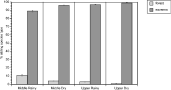
Fig. 2. Composition of blackfly collections obtained from the Upper and Middle Bandama during 1992–1998. Flies were classified using morphometric keys into savanna- and forest/transition-zone-dwelling sibling species as described in the Materials and Methods section. Error bars indicate 95% confidence intervals for the proportions shown. A total of 56 222 flies were collected.
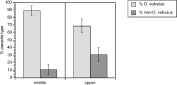
Fig. 3. Proportion of parasites classified as Onchocerca volvulus or non-O. volvulus from infected flies collected from the Upper and Middle Bandama. Infective larvae isolated from flies were classified by O-150 PCR followed by hybridization to the O. volvulus-specific oligonucleotide OVS2 as described in the Materials and Methods section. Error bars indicate 95% confidence intervals for the proportions shown. Larvae from a total of 194 infected flies were classified.
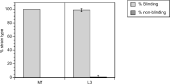
Fig. 4. Strain identification of parasites collected from the Upper Bandama. Parasites were classified as belonging to the severe or mild-strain by O-150 PCR, followed by hybridization with the mild-strain specific probe pFS-1, as described in the Materials and Methods section. Error bars indicate 95% confidence intervals surrounding the proportions indicated in the graph. Microfilariae from 84 infected humans and L3 from 72 infected flies were classified.
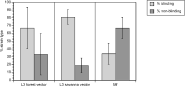
Fig. 5. Strain identification of parasites collected from the Middle Bandama. Parasites were classified as belonging to the severe or mild-strain by O-150 PCR, followed by hybridization with the mild-strain specific probe pFS-1, as described in the Materials and Methods section. Error bars indicate 95% confidence intervals surrounding the proportions indicated in the graph. Microfilariae from 48 infected humans and L3 from 80 infected flies were classified.
 You have
Access
- 7
- Cited by